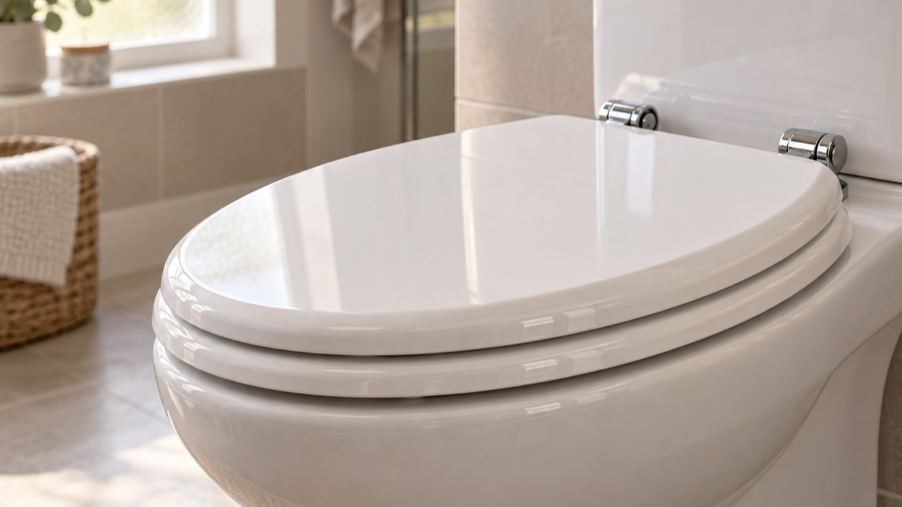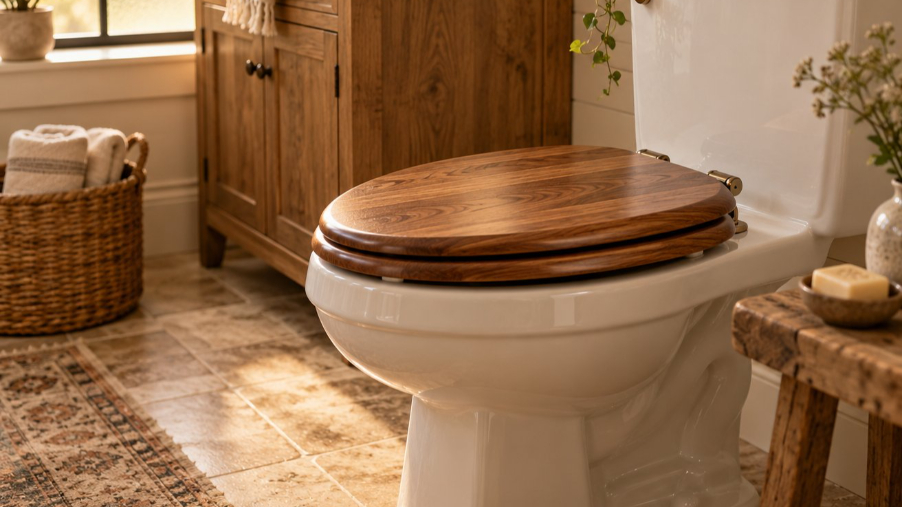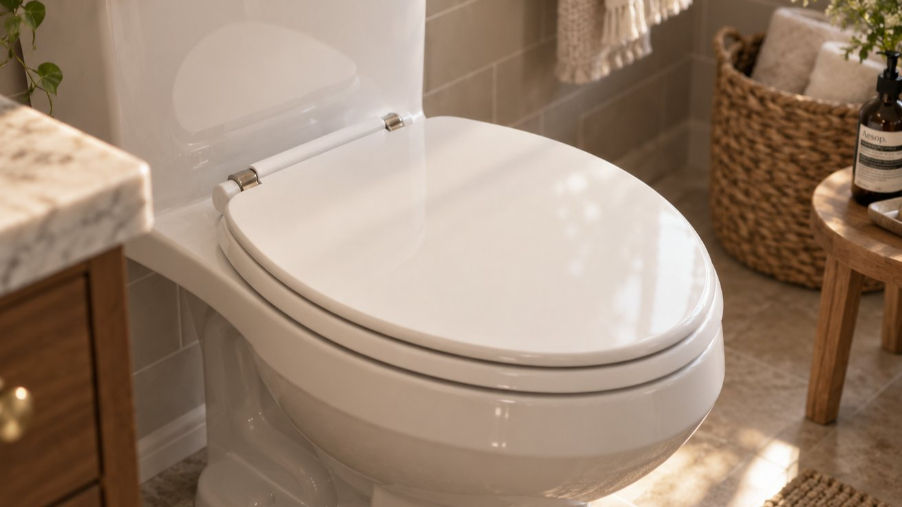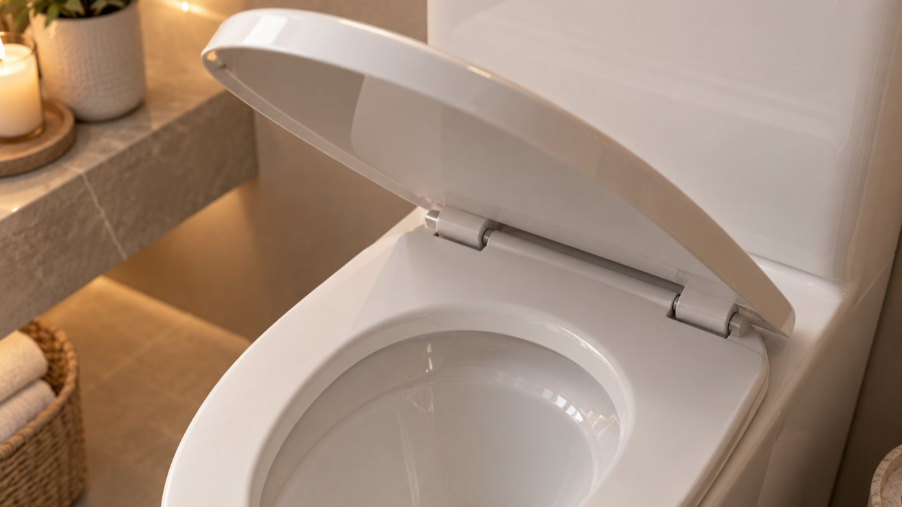
What Is a Round Wood Toilet Seat and Why Choose One
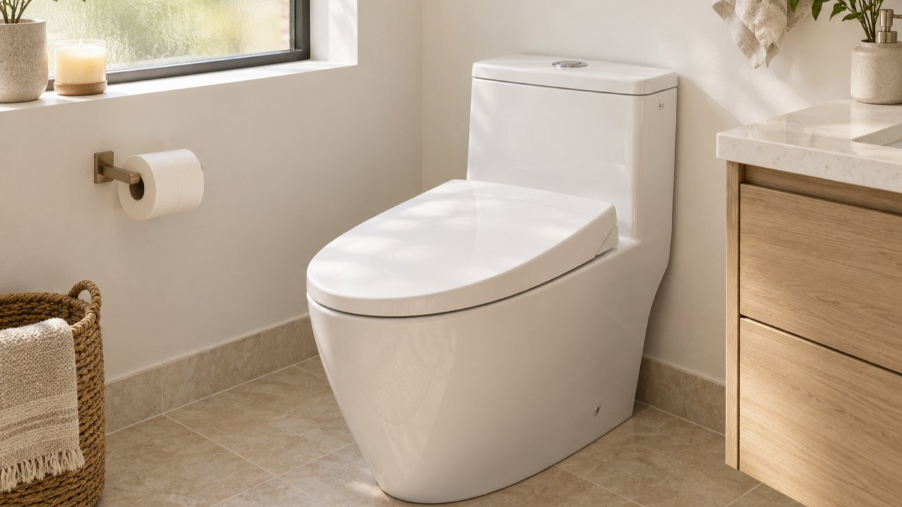
A round wood toilet seat is a toilet seat crafted from solid wood or wood-composite material, specifically shaped to fit standard round (circular-front) toilet bowls. These bowls typically measure approximately 16.5 inches from the mounting holes to the front of the rim, making them the most common bowl shape in older homes and compact bathrooms across the United States. If you have ever sat down on an ice-cold plastic seat during a winter morning, you already understand the appeal of switching to wood.
This guide goes beyond the product listings that crowd most search results. Instead of pushing you toward a cart, it walks you through everything you actually need to know — materials, sizing, installation, damper mechanisms, and long-term care — so you can make a confident, informed decision about your next toilet seat wood round purchase.
Defining the Round Wood Toilet Seat
Every toilet seat, regardless of material, shares the same basic anatomy. The seat ring is the open oval you sit on. The lid is the cover that folds down over the ring. The hinge assembly connects both pieces to the toilet bowl through two bolt holes at the rear of the rim. And the small rubber or silicone bumpers on the underside of the seat and lid prevent direct contact with the porcelain, reducing noise and protecting the bowl's finish.
Round bowls — as opposed to elongated ones — have a circular front profile and a shorter overall footprint. You will find them most often in residential bathrooms built before the mid-1990s, in half-baths, powder rooms, and any space where square footage is limited. A wooden toilet seat round in shape is designed to match this specific bowl contour precisely, sitting flush against the rim without overhang or exposed edges.
Why Wood Remains a Popular Seat Material
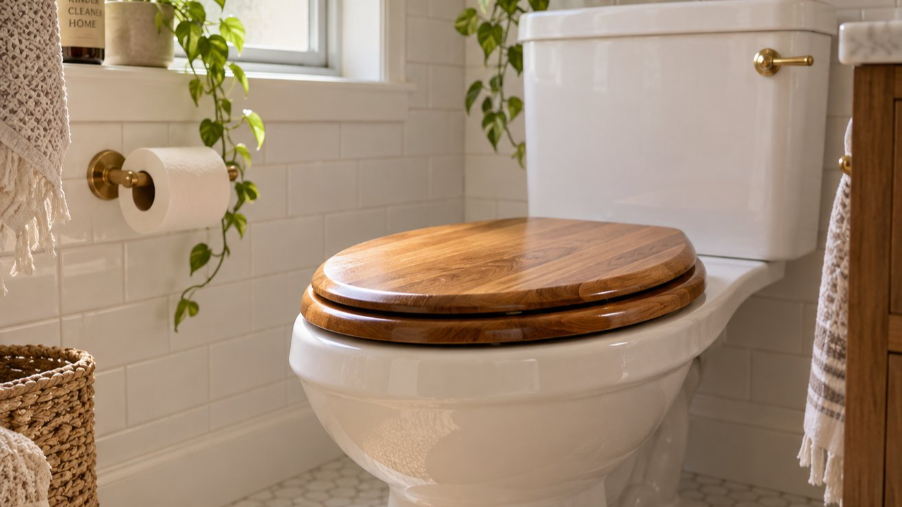
Imagine resting your hand on a polished oak tabletop versus a sheet of cold acrylic. That tactile difference is exactly what separates a wood toilet seat from its plastic counterpart. Wood naturally retains ambient warmth, so it never delivers that unpleasant chill on contact — a detail that matters far more than it sounds.
Unlike plastic, a wood toilet seat feels warm on contact and adds a natural, finished look that many homeowners prefer.
Beyond temperature comfort, wooden toilet seats carry a heavier, more substantial feel. Where a lightweight plastic seat can shift or flex slightly under weight, a quality wood or MDF seat stays planted and solid. That added heft translates into a sense of durability and craftsmanship that many homeowners associate with a well-finished bathroom.
Aesthetically, wood is remarkably versatile. Natural grain finishes bring warmth to rustic and farmhouse-style spaces. White or black enameled wood seats blend seamlessly into modern and minimalist bathrooms. Painted and vintage-look options open the door to eclectic and traditional designs. This range of finishes and wood types — from solid oak to molded wood composites — means a wooden toilet seat can complement virtually any decor rather than simply blending into the background.
Yet for all its popularity, surprisingly few online resources explain what a round wood seat actually is, how its components work together, or why the material still holds its own against modern plastics. That foundational knowledge gap is exactly what this article fills — starting with one of the most common fitting mistakes homeowners make: confusing round bowls with elongated ones.
Round vs. Elongated Toilet Seats and How to Measure
A toilet seat that doesn't match the bowl shape underneath it is more than a cosmetic annoyance. It wobbles, exposes the raw porcelain rim, and creates gaps that trap moisture and bacteria. The frustrating part? Round and elongated bowls look similar enough at a glance that many homeowners order the wrong size without realizing it until the seat is out of the box.
Round vs. Elongated Bowls Explained
The distinction comes down to the front profile of the bowl and one simple measurement. A round bowl has a circular front — almost like a complete circle when viewed from above — and measures roughly 16.5 inches from the mounting bolt holes at the rear to the very front edge of the rim. An elongated bowl, by contrast, has an oval or egg-shaped front that extends about two inches farther forward, bringing the total length to approximately 18 inches or more.
That two-inch difference changes everything about seat fit. A toilet seat round wood model placed on an elongated bowl will leave the front of the porcelain rim exposed, creating an uncomfortable and unhygienic gap. Flip the mistake — put an elongated wood toilet seat on a round bowl — and the seat overhangs the front, shifts under weight, and looks visibly wrong. Neither scenario is something you want to discover after you have already tossed the packaging.
Round bowls remain the standard in many residential bathrooms, particularly in compact spaces like half-baths, powder rooms, and older homes built before the elongated shape gained mainstream popularity. If your bathroom is tight on floor space, there is a strong chance you are working with a round bowl. Elongated bowls, meanwhile, tend to appear in newer construction and larger primary bathrooms where the extra two inches of length is not a spatial concern.
Keep in mind that manufacturers produce both wooden toilet seats elongated and round versions, often under the same product line. The shape designation is not about the material — it is purely about the bowl it is designed to fit. So whether you are shopping for wood toilet seats elongated or round, the material options remain identical. The only variable is the contour.
How to Measure Your Toilet for the Correct Seat
You do not need any special tools for this — just a standard tape measure and about thirty seconds. Here is the process:
- Lift the existing seat and locate the two bolt holes. These are the openings at the rear of the bowl rim where the hinge hardware passes through. You will see one hole on each side, spaced a few inches apart.
- Measure from the center point between the two bolt holes straight to the front edge of the bowl rim. Hold the tape measure taut and aim for the very tip of the rim at the front-center of the bowl.
- Read your measurement. If it falls at approximately 16.5 inches, you have a round bowl — and a seat labeled "round" will fit. If the number lands closer to 18.5 inches, you are looking at an elongated bowl and need an elongated toilet seat wood model instead.
When the measurement falls somewhere in between, lean toward the shape that is closest and double-check the bowl's visual profile. A clearly circular front almost always confirms a round bowl, while a noticeably oval or pointed front signals elongated. Some compact elongated toilets can blur the line, but they still require an elongated seat despite their shorter footprint.
One detail that catches people off guard: a wooden toilet seat elongated in shape will not work on a round bowl, even if the color and material are a perfect match for your bathroom. Always confirm the bowl shape before committing to a purchase. This is especially important when ordering online, where product photos can make both shapes look nearly identical.
Getting the shape right is the first step — but shape alone does not guarantee a perfect fit. Bolt spacing, rim contour, and material weight all play a role in how securely a seat sits on the bowl, which brings up a deeper question worth exploring: does it actually matter whether that seat is made from wood or plastic?
Wood vs. Plastic Toilet Seats Compared
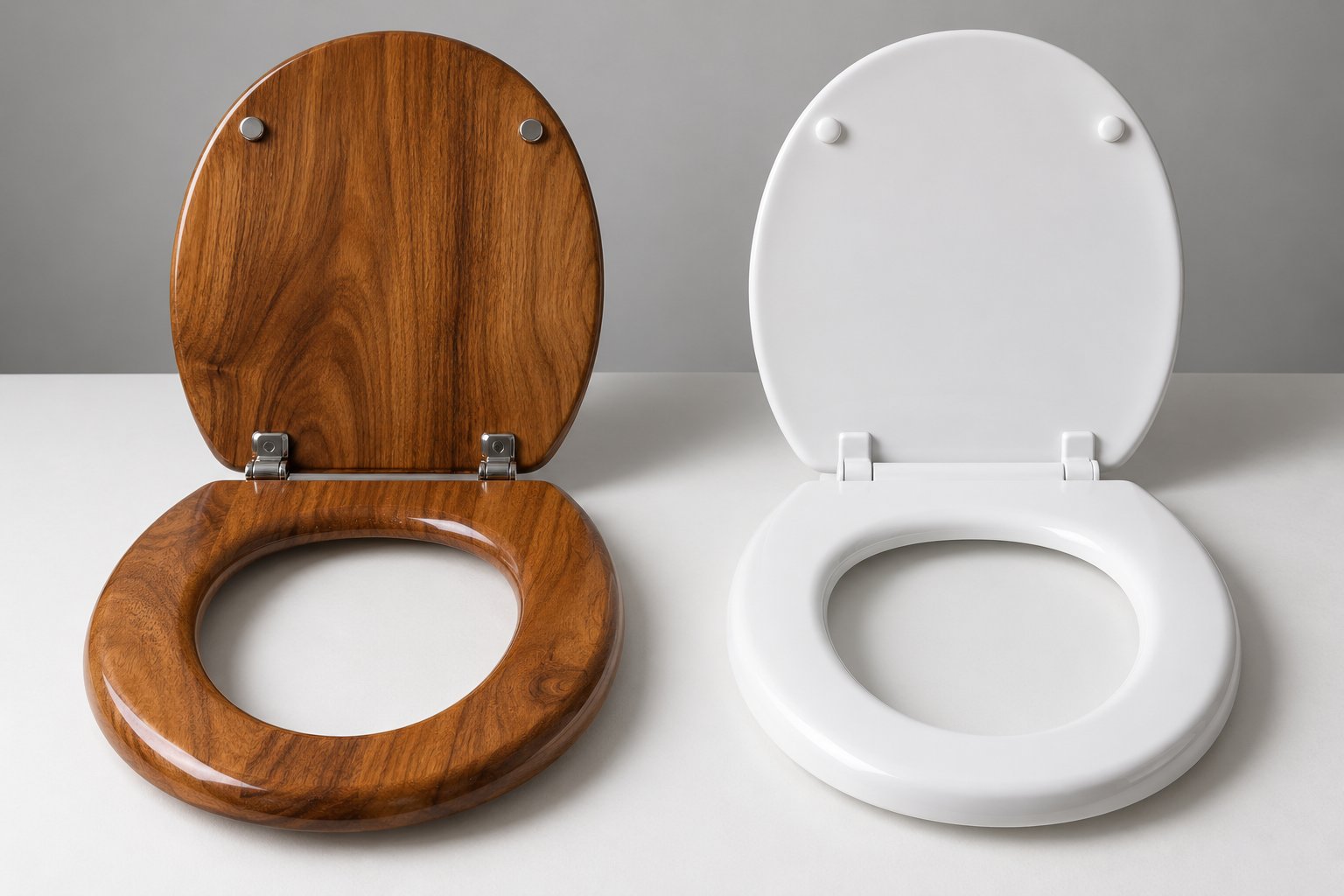
It matters more than you might think. The wood or plastic toilet seat debate is one of the most common questions homeowners quietly search for — and one of the least thoroughly answered anywhere online. Both materials have genuine strengths and honest trade-offs, and understanding them saves you from buyer's remorse down the road. Let's break the comparison into the three areas that actually affect your daily experience.
Comfort, Temperature, and Feel
Picture a January morning, bare feet on tile, and you lower yourself onto the seat. If it's plastic, you flinch. That initial cold shock fades after a few seconds as the material reaches skin temperature, but the moment of discomfort is real and repeats every single time. A wood seat, on the other hand, stays closer to room temperature because wood is a natural insulator. You'll notice the difference immediately — and so will everyone else in your household.
Weight plays a role in perceived quality, too. Most plastic seats weigh between one and three pounds. A wood or MDF seat typically comes in between four and seven pounds. That extra heft keeps the seat planted on the bowl, reduces lateral shifting, and gives the whole fixture a more substantial, premium feel when you raise or lower the lid. For anyone seeking a non plastic toilet seat that feels genuinely solid, wood delivers that tactile upgrade without adding complexity.
Durability and Moisture Resistance
Here is where misconceptions run deep. Many homeowners assume wood will inevitably warp in a humid bathroom. In reality, properly sealed and enameled wood seats are engineered specifically for moisture-heavy environments. The baked-on enamel or lacquer finish creates a protective shell that repels water, resists stains, and prevents the underlying wood fibers from absorbing humidity. With reasonable care — wiping up standing water, keeping the bathroom ventilated — a quality wood seat can last 10 to 20 years.
Plastic seats are inherently waterproof, which is a legitimate advantage. They will never absorb moisture regardless of how humid the room gets. However, plastic is prone to its own set of problems over time: hairline cracks from repeated stress, yellowing or discoloration from chemical cleaners, and a tendency to become scratched and dull. A cracked plastic seat cannot be repaired — it must be replaced entirely. So while plastic resists water effortlessly, it doesn't necessarily outlast a well-maintained wood alternative.
When weighing toilet seats wood or plastic, think about it this way: plastic tolerates neglect better, but wood rewards consistent care with a longer and more attractive lifespan.
Aesthetics and Style Range
If your bathroom has any design personality at all, the seat material shapes how finished the room looks. Plastic seats generally come in solid, uniform colors — white, bone, biscuit, black — with a smooth, somewhat generic surface. They blend in without adding character.
Wood opens up a much broader aesthetic palette. Natural oak or walnut grain finishes bring organic warmth to rustic, farmhouse, or transitional spaces. White and black enameled wood seats fit seamlessly into modern and coastal-inspired bathrooms. Vintage-look and painted finishes suit eclectic or period-style rooms. That range is why many homeowners choose wood or plastic toilet seats based on decor alone — and wood consistently wins in spaces where design intent matters.
| Factor | Wood Toilet Seat | Plastic Toilet Seat |
|---|---|---|
| Comfort | Warm to the touch; natural insulation | Cool on contact; temperature-neutral over time |
| Durability | Long-lasting with proper care (10-20 years) | Moisture-proof but prone to cracking (5-10 years) |
| Weight | Heavier (4-7 lbs); more stable on the bowl | Lighter (1-3 lbs); can shift under weight |
| Aesthetics | Natural grain, enameled, vintage, and painted options | Uniform solid colors; limited decorative range |
| Maintenance | Periodic attention to finish; avoid harsh chemicals | Simple wipe-down; tolerates most cleaners |
| Price Range | Moderate to premium ($40-$200) | Budget to moderate ($15-$75) |
The table above makes the trade-offs clear at a glance. A plastic or wood toilet seat each serves a different set of priorities. If low maintenance and budget are your primary concerns, plastic handles the job. If comfort, visual warmth, and a premium feel rank higher on your list, wood is the stronger choice — particularly in a bathroom you have invested time and money into designing.
Of course, deciding on wood is only half the equation. Not all wood seats are created equal, and the specific type of wood or composite inside that enamel finish affects everything from weight and durability to how the hinge hardware is attached.
Types of Wood Used in Round Toilet Seats
The label "wood toilet seat" covers a surprisingly wide spectrum of materials — and the differences between them are not just cosmetic. The type of wood or wood-composite beneath the finish directly shapes the seat's weight, moisture resilience, price point, and even how effectively hinge hardware and damper mechanisms can be integrated. Here is what you are actually choosing between.
Solid Hardwood Options
Solid wood toilet seats are crafted from natural wood boards that are cut, shaped, sanded, and sealed into their final form. Because each piece of timber carries unique grain patterns, no two seats look exactly alike — which is a significant part of their appeal.
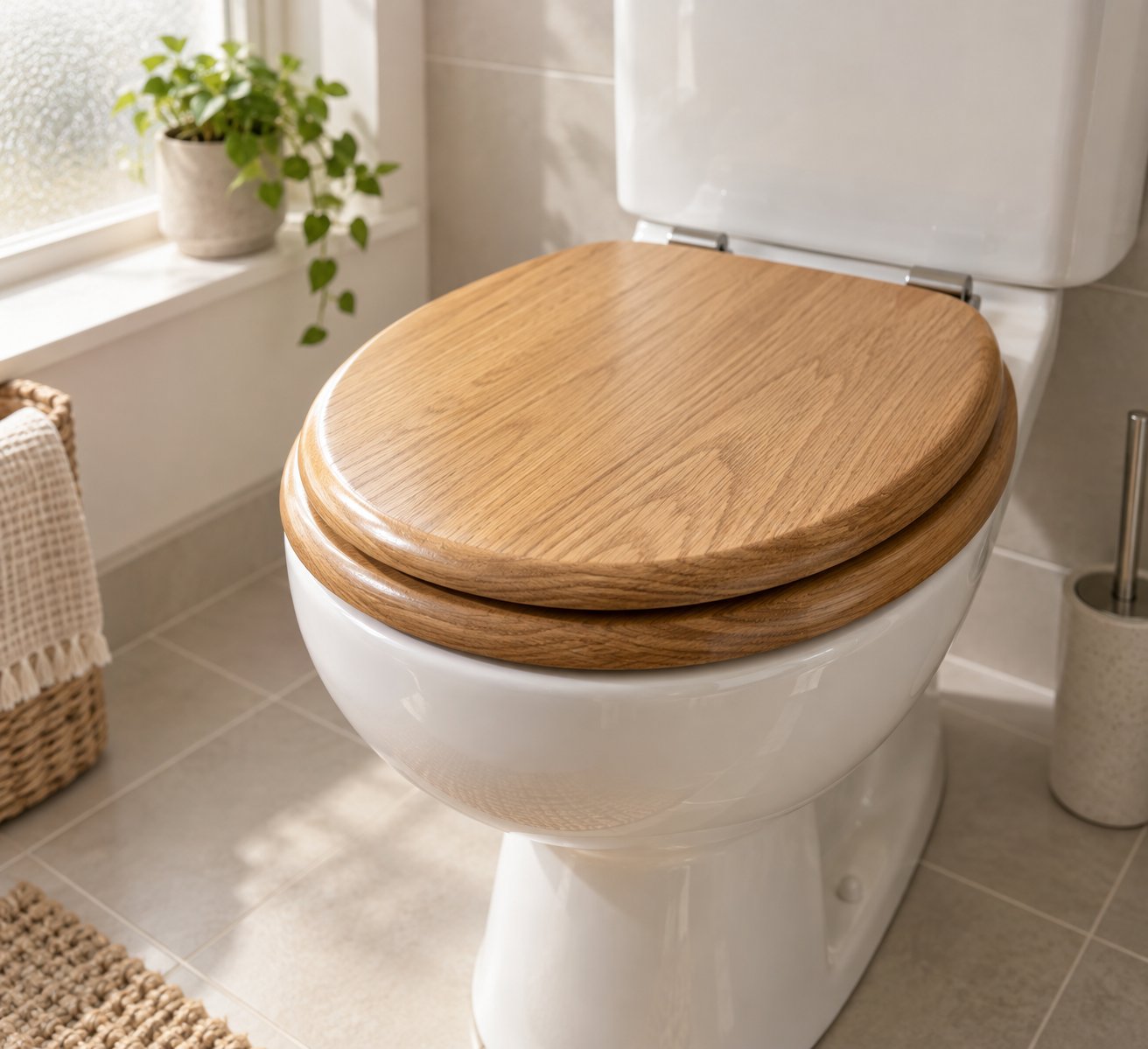
A solid oak toilet seat is one of the most popular choices in this category. Oak's prominent grain pattern gives it visual depth, and the wood itself is dense enough to resist everyday wear. It feels heavy in your hands — a reassuring sign of quality when you are comparing options at a hardware store or scrolling through listings online. A walnut toilet seat delivers a similar premium experience but in richer, darker tones that suit warm traditional and transitional bathroom designs. Bamboo rounds out the solid-material lineup as an eco-conscious alternative; it is technically a grass rather than a hardwood, yet it offers natural moisture resistance and a clean, contemporary look.
The trade-off with all solid wood toilet seats is maintenance. Natural wood is more sensitive to humidity and temperature swings than engineered alternatives. Without proper sealing, it can absorb moisture over time, potentially leading to warping, cracking, or surface expansion. That does not make solid wood a bad choice — it simply means these seats reward attentive care.
MDF and Molded Wood Composite Seats
If solid hardwood sits at the artisan end of the spectrum, MDF and molded wood composites occupy the practical middle ground — and they dominate the mass market for good reason.
MDF (medium-density fiberboard) is manufactured by breaking down wood residuals into fine fibers, combining them with resin, and pressing the mixture under high heat and pressure. The result is a dense, uniform panel with no natural grain variation, knots, or weak spots. That consistency makes MDF an ideal substrate for enameled finishes: the surface is perfectly smooth, so paint and lacquer adhere evenly without the imperfections that natural wood grain can introduce.
A molded wood toilet seat takes this concept a step further. Compressed wood fibers are placed into precision molds and formed into the exact seat shape under controlled pressure and temperature. The molded structure is then coated with multiple layers of enamel or lacquer. Because the entire seat is shaped in a single mold, dimensions stay consistent across large production runs — which is why you will find toilet seat molded wood construction in hotels, rental properties, and most retail bathroom aisles.
Compared to solid wood, MDF and molded wood composites resist warping more effectively when properly sealed, cost less to produce, and deliver a reliably stable platform for hinge and damper hardware. They still carry that satisfying heft that separates wood-category seats from hollow plastic alternatives.
Enameled Wood Finishes
Regardless of whether the base material is solid oak or MDF composite, the finish is what stands between the wood and your bathroom's humidity. An enameled wood toilet seat receives a baked-on coating — typically multiple layers of enamel or high-grade lacquer — that creates a hard, glossy shell over the wood substrate. This finish repels water, resists stains, and makes daily cleaning straightforward.
Think of the enamel layer as body paint on a car: it protects the material underneath while defining the seat's color and sheen. White enameled seats are the most common, but the same coating process works for black, bone, biscuit, and custom colors. The wood beneath provides the weight, the solid feel, and the thermal warmth — the enamel handles the moisture defense.
Here is a quick reference for the main material types and what each brings to the table:
- Solid Oak — Natural grain, premium look and feel, requires proper sealing to manage moisture
- Solid Walnut — Rich dark tones, distinctive grain, premium price point
- Bamboo — Eco-friendly, naturally moisture-resistant, clean contemporary aesthetic
- MDF Composite — Smooth uniform surface, dimensionally stable, cost-effective, ideal for enameled finishes
- Molded Wood — Precision-formed shape, highly consistent quality, durable enamel coating, suited for mass production
Your material choice ripples outward into details you might not immediately consider. A heavier solid wood seat demands different hinge hardware — and a differently calibrated damper mechanism — than a lighter molded wood model. That engineering relationship between seat material and hinge performance is exactly where the real quality differences between toilet seats begin to emerge.
Understanding Soft-Close Hinges and Damper Mechanisms
That engineering relationship between seat material and hinge performance is not just a technical footnote — it is the difference between a toilet seat that closes gracefully for years and one that starts slamming within months. You have probably seen terms like "Whisper Close" or "Stay Tite" stamped on packaging without any explanation of what is actually happening inside the hinge. Let's fix that.
Standard, Quick-Release, and Soft-Close Hinge Types
Every toilet seat attaches to the bowl through some form of hinge, but the type of hinge dramatically affects how the seat behaves day to day. There are three main categories worth understanding:
- Standard hinges — These are basic metal or plastic pivot points. They hold the seat and lid in position and allow both to swing open and closed freely. There is no speed control, which means the lid drops at whatever speed gravity dictates. On a heavy wood seat, that drop produces a sharp crack against porcelain that echoes through the house.
- Quick-release hinges — These function like standard hinges during normal use but include a release mechanism — usually a button or lever — that lets you detach the entire seat from the bowl without unscrewing any bolts. The benefit is thorough cleaning access: you can lift the seat away, scrub the rim and bolt area, and snap it back into place in seconds.
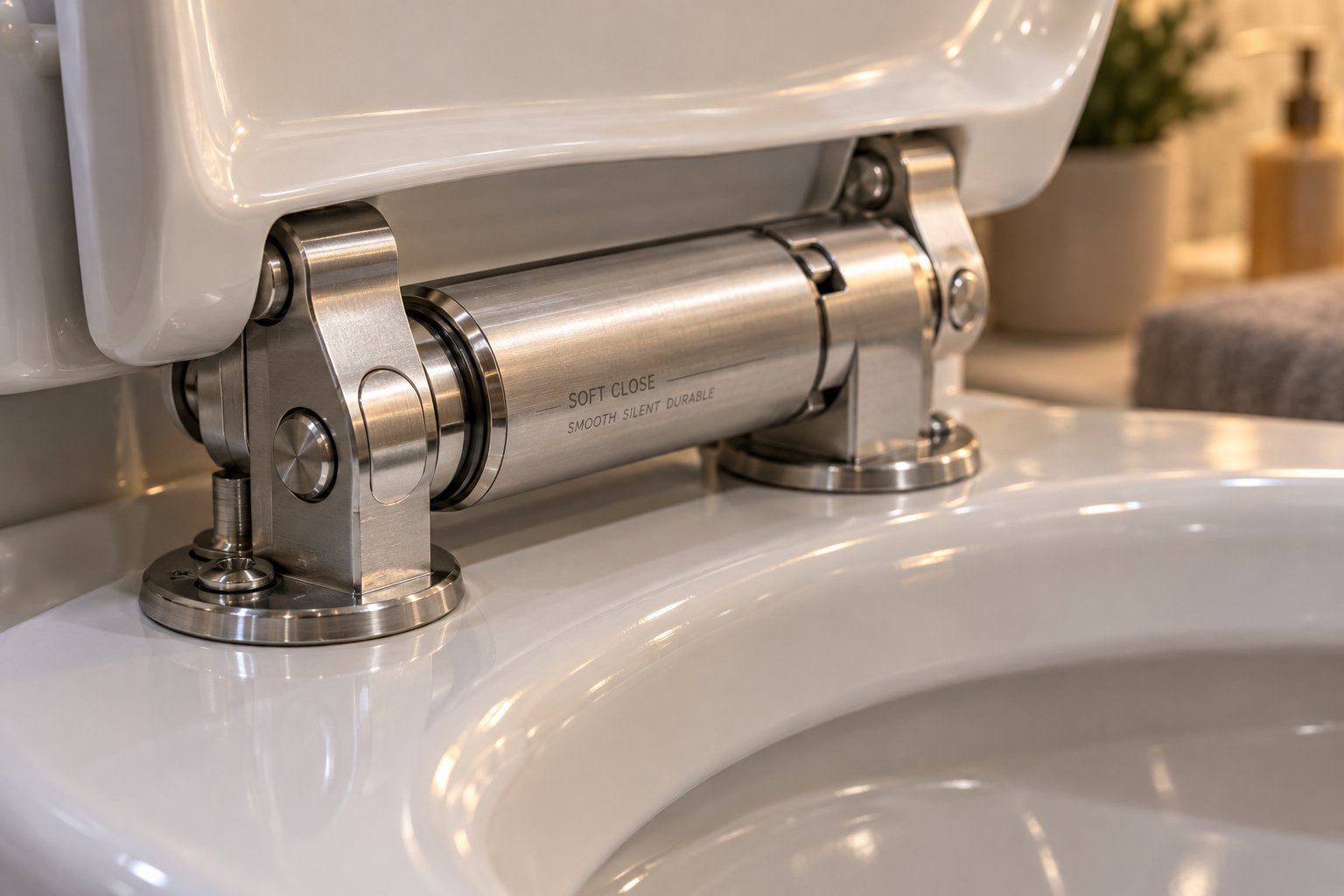
- Soft-close (slow-close) hinges — This is where the damper enters the picture. A soft close round toilet seat uses a built-in damper mechanism — either hydraulic or friction-based — that resists the downward motion of the lid and seat ring. When you nudge the lid past its tipping point, instead of free-falling, it descends at a controlled, nearly silent pace. The entire close takes a few seconds, eliminating slams entirely.
Many modern seats combine quick-release and soft-close functionality into a single hinge assembly, giving you both the cleaning convenience and the noise-free close. If you are shopping for a round soft close toilet seat, look for listings that explicitly mention both features rather than assuming one includes the other.
How Soft-Close Dampers Work in Wood Seats
Here is where material weight becomes a critical variable. A soft close wooden toilet seat weighs significantly more than its plastic equivalent — often two to three times as much. That extra mass generates more momentum as the lid falls, which means the damper inside the hinge must apply greater resistance to slow the descent smoothly.
Most soft-close dampers are compact rotary units that use silicone oil as the damping medium. As the lid swings downward, an internal rotor turns through this fluid, and the viscosity of the oil creates controlled resistance. The torque — the rotational force the damper applies — must be precisely calibrated to the weight of the specific seat it serves. An MDF seat, a solid oak seat, and a resin seat each demand different torque settings. Too little torque, and the heavy lid overwhelms the damper, descending too fast or slamming in the final inch. Too much torque, and the lid stalls mid-close, hovering awkwardly instead of completing its arc.
The quality of the damper mechanism is the single biggest factor in whether a soft-close wood toilet seat performs reliably over years of daily use.
This is why manufacturers of wood toilet seat soft close models cannot simply borrow dampers designed for lightweight plastic seats. The physics do not translate. A damper rated for a two-pound polypropylene lid will fail within weeks under a six-pound oak seat — either burning through its cycle life prematurely or losing damping force as the internal components wear under load they were never engineered to handle.
Reputable seat manufacturers address this by sourcing dampers purpose-built for heavier materials. Tianyun's MDF / Metal Damper, for example, is designed specifically for MDF, wooden, resin, and metal toilet seat structures. It offers custom torque calibration matched to the seat's weight profile and OEM-compatible mounting configurations that integrate directly into a manufacturer's existing hinge design. When you encounter a soft close toilet seat round model that closes smoothly and consistently — even after thousands of cycles — there is a strong chance it uses a damper engineered with this level of material-specific precision.
So what should you look for when evaluating a wood soft close toilet seat? First, check whether the product listing specifies the damper type or references material-matched torque calibration. Generic descriptions like "soft close" without further detail can indicate a one-size-fits-all damper that may not hold up under the weight of a solid wood or MDF seat. Second, look for cycle-life ratings — quality dampers maintain stable performance across tens of thousands of open-close cycles, even in the humid environment of a bathroom. And third, pay attention to whether the slow close round toilet seat you are considering includes a round toilet seat soft close mechanism with quick-release capability, since that combination offers both daily convenience and easier long-term maintenance.
The damper is invisible once the seat is installed, tucked inside the hinge housing where you will never see it work. But every time the lid glides shut without a sound, that hidden component is doing its job — and its quality determines whether that silence lasts six months or six years. Getting the hinge and damper right matters, but even the best mechanism cannot compensate for a seat that does not physically fit the bowl underneath it.
Sizing and Compatibility for a Proper Fit
A seat labeled "round" does not automatically mean it will sit perfectly on every round toilet in existence. Bowl shapes vary by manufacturer, rim contours differ by model year, and even bolt hole placement can shift just enough to turn a straightforward installation into a frustrating puzzle. Before you order a wood round toilet seat online — where returns mean repackaging a bulky item and waiting days for a replacement — a few quick measurements can save you time, money, and a trip back to the post office.
Bolt Spacing and Mounting Hole Alignment
Every toilet seat attaches to the bowl through two bolt holes at the rear of the rim. On the vast majority of round toilets sold in North America, the distance between the centers of those two holes is 5.5 inches (approximately 140mm). This measurement has been the industry standard for decades, and most wooden toilet seats round models are engineered around it.
However, "most" is not "all." Older toilets — particularly those manufactured before the 1980s — may use slightly different bolt spacing. European imports and certain designer models can also deviate from the 5.5-inch standard. If the bolt holes on your toilet are even a quarter inch off from the holes in the hinge posts of your new seat, the bolts either will not drop through cleanly or will sit at a slight angle, creating instability and uneven pressure on the porcelain rim.
The fix is simple: grab a tape measure, place the end at the center of one bolt hole, and measure straight across to the center of the other. If it reads 5.5 inches, you are working with standard spacing and virtually any round wood toilet seat will align correctly. If it reads anything else, note the exact distance and look for seats with adjustable hinge hardware or contact the manufacturer to confirm compatibility before purchasing.
Bowl Contour and Seat Overhang Considerations
Even when two toilets are both classified as "round" with identical bolt spacing, they can have noticeably different rim profiles. One manufacturer might produce a bowl with a wider, flatter rim, while another uses a narrower, more curved edge. That variation matters because it determines whether your new seat sits flush on the rim or overhangs on one side while leaving a gap on the other.
Imagine setting a dinner plate on a bowl — if the bowl's lip is wider than the plate's edge, you get an exposed rim. If the lip is too narrow, the plate extends past it. The same principle applies to wooden round toilet seats. A seat designed to cover a standard rim width will look and feel slightly different on a wider or narrower bowl, even though the overall round shape matches.
Weight is another factor that does not get enough attention during a round toilet seat replacement. Wood seats are heavier than plastic — typically between 4 and 7 pounds depending on the material type. That weight, combined with the user's body weight, places ongoing stress on the hinge hardware and the bolt connections. Lightweight plastic bolts that came with the toilet originally may not be robust enough for a heavier seat. Check whether the new seat includes its own mounting hardware, and verify that the hardware is rated for the combined load.
Before you click "buy," run through this quick compatibility checklist:
- Confirm round bowl shape — Measure from the bolt holes to the front rim (approximately 16.5 inches confirms round; closer to 18.5 inches means elongated)
- Measure bolt hole spacing — Standard is 5.5 inches center-to-center; note any deviation
- Check bowl rim width — Ensure the seat will cover the rim fully without excessive overhang or exposed porcelain
- Verify mounting hardware compatibility — Confirm that replacement bolts, nuts, and washers are included or that your existing hardware fits the new seat's hinge posts
- Confirm weight rating if needed — Heavier wood seats require sturdier hinge hardware; verify the bolts and hinges can handle the combined weight of seat and user
These five checks take under five minutes and eliminate the most common reasons people end up returning wood toilet seats round models that technically had the right shape but still did not fit their specific toilet. Compatibility is not just about round versus elongated — it is about making sure every contact point between the seat and the bowl is properly matched.
With the right measurements confirmed and the correct seat in hand, the next step is getting it onto the bowl securely — and that process has its own set of details worth walking through before you pick up a wrench.
How to Install a Round Wood Toilet Seat
You have the right seat, the measurements check out, and the box is sitting on your bathroom floor. The good news? Swapping a toilet seat is one of the simplest home upgrades you will ever tackle — no plumber required, no special tools, and typically under fifteen minutes from start to finish. The bad news? A few small missteps during installation can crack porcelain, strip threads, or leave you with a seat that rocks side to side every time you sit down. Here is exactly how to handle both the removal and the installation cleanly.
Removing Your Old Toilet Seat
Before the new wooden toilet seat cover goes on, the old one has to come off. Start at the back of the seat where it meets the bowl. You will see two bolt caps — small plastic covers that hide the mounting hardware. Flip them open with your fingernail or gently pry them up with a flathead screwdriver.
With the caps out of the way, you will find a bolt head on top and a nut underneath the bowl rim. Hold the nut from below with pliers or an adjustable wrench while turning the bolt counterclockwise with a screwdriver from above. On a seat that is only a few years old, both bolts should loosen without drama.
Older installations are a different story. Metal bolts exposed to years of bathroom humidity can corrode badly enough that they refuse to budge. If you encounter rusted hardware, apply a penetrating oil like WD-40 to both the top and underside of each bolt and let it soak for five to ten minutes. A gentle tap with the wrench handle can help break the bond. For plastic bolts that spin freely without loosening, grip the nut firmly from below while turning — or, as a last resort, carefully saw through the bolt with a mini hacksaw. Work slowly to avoid scratching or cracking the porcelain.
Once both bolts are free, lift the old seat and lid straight up off the bowl. Set them aside and take a moment to clean the mounting area thoroughly. The exposed rim around the bolt holes tends to accumulate grime, mineral deposits, and residue that you normally never see. A disinfectant wipe or a damp cloth with mild cleaner handles it quickly. Make sure the surface is dry before moving on — moisture trapped between the bowl rim and the new seat creates the exact conditions that degrade finishes over time.
Installing the New Round Wood Seat
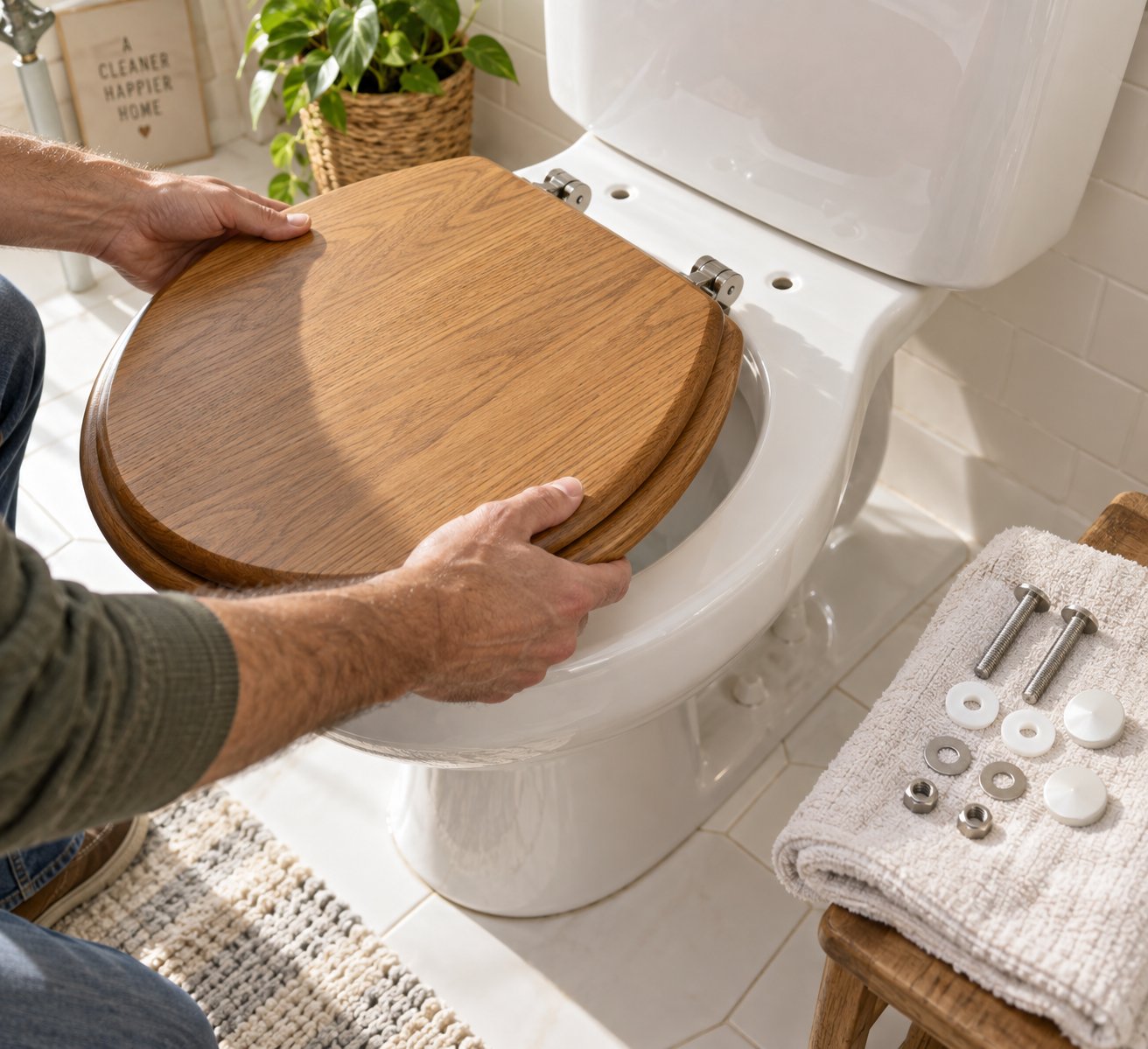
Unbox the new seat and lay out every component. A typical toilet seat wood round package includes the seat ring, the lid attached via the hinge assembly, two mounting bolts, two nuts, washers, and sometimes separate bumper pads. Verify nothing is missing before you start — discovering a missing washer halfway through is the kind of minor frustration that derails the whole experience.
With everything accounted for, follow these steps:
- Unpack and inspect. Confirm all hardware is present — two bolts, two nuts, washers, and bumpers. Check the wood toilet lid and seat ring for any shipping damage or finish imperfections.
- Position the seat. Set the seat on the bowl with the hinge posts aligned directly over the bolt holes. The seat should sit centered on the rim with no front overhang or side gaps.
- Insert the bolts. Drop each bolt down through the hinge post and through the corresponding hole in the bowl rim. The bolt head or washer should rest flat on top of the hinge post.
- Hand-tighten the nuts. Reach beneath the bowl rim and thread each nut onto its bolt by hand. Turn clockwise until snug — finger-tight is the goal at this stage.
- Center and align. With both nuts loosely in place, gently shift the seat left or right until it is perfectly centered on the bowl. The front of the seat should follow the bowl's contour evenly.
- Tighten firmly — but carefully. Use a wrench or pliers to snug each nut an additional quarter to half turn beyond finger-tight. Alternate between both sides to keep pressure even. Avoid over-torquing, which can crack the porcelain or strip the bolt threads.
- Attach bumper pads. If the bumpers are separate adhesive components rather than molded into the seat, press them firmly into position on the underside of the seat ring and lid. These small pads prevent direct wood-to-porcelain contact and keep the seat from sliding.
Sit down gently and test. The seat should feel stable with no lateral wobble or rocking. If it shifts, lift off and recheck the bolt alignment — even a slight offset in the hinge posts can create instability that worsens over time.
Common Installation Mistakes to Avoid
The most frequent error — and the most expensive one — is over-tightening the mounting bolts. Porcelain is strong under compression but brittle under concentrated point loads. Cranking down on a bolt with too much force can crack the bowl rim, and a cracked toilet is not a repair — it is a replacement. Tighten until firm, then stop.
Using incompatible hardware ranks a close second. If the bolts from a previous plastic seat are thinner or shorter than what the new wooden toilet cover requires, they may not grip securely or could pull through under load. Always use the hardware that ships with the new seat. If you are reusing old bolts for any reason, confirm they match the diameter and thread pattern of the new hinge posts.
Skipping the alignment check before final tightening is another common misstep. A toilet seat cover wood model that is off-center by even a fraction of an inch looks crooked from the doorway — and once the bolts are fully tightened, repositioning means loosening everything and starting over.
Finally, if you have chosen a soft close toilet seat wooden model or any wood slow close toilet seat, expect a brief break-in period. Some damper mechanisms need a handful of open-close cycles before the silicone oil inside distributes evenly and the closing speed stabilizes. During the first few days, the lid may descend slightly faster or slower than its intended pace. This is normal behavior, not a defect — the damper is settling into its operating range.
With the seat secured and the lid closing smoothly, the installation itself is complete. But a properly installed seat still needs proper care to maintain its finish, its fit, and its performance over the years ahead.
Cleaning and Maintaining Your Wood Toilet Seat
A wood toilet seat that looks flawless on day one can look worn within a year if you clean it the wrong way — or neglect it entirely. The irony is that most wood seats fail not because the material is inherently fragile, but because homeowners treat them exactly like plastic. Different material, different rules. Here is how to keep your seat looking and performing like new without turning maintenance into a chore.
Daily and Weekly Cleaning Best Practices
You do not need specialty products to keep an enameled wood seat clean. A soft cloth dampened with warm water and a small amount of mild dish soap handles everyday grime, body oils, and light dust effectively. For a slightly deeper weekly clean, a non-abrasive bathroom cleaner — something labeled safe for finished surfaces — works well. Spray it on, let it sit for thirty seconds, and wipe it away with a soft cloth or sponge.
Here is the critical part most people skip: dry the seat after every cleaning. Instead of letting the surface air-dry with residual moisture pooling around the hinges and bumpers, take ten seconds to wipe it down with a dry towel. That thin film of water you leave behind seems harmless, but over weeks and months, it works its way into micro-imperfections in the finish — especially along edges and seams — and starts the slow process of undermining the protective coating from within.
Equally important is knowing what not to use. Harsh chemical cleaners containing bleach, ammonia, or abrasive particles are the fastest way to destroy a wood seat's finish. Bleach-based sprays strip the enamel's gloss and can cause yellowing. Ammonia attacks lacquer coatings, leaving them cloudy and soft. Abrasive powders and scrubbing pads — even the "gentle" green ones — create microscopic scratches that trap bacteria and moisture, turning a stain resistant toilet seat into one that stains easily. If you want toilet seats that don't stain, protect the finish that prevents staining in the first place.
Preventing Warping, Peeling, and Discoloration
The two primary enemies of any wood toilet seat are standing moisture and chemical exposure. Every form of damage you want to avoid — warping, peeling enamel, discoloration, delamination — traces back to one or both of these causes. The good news is that prevention requires awareness more than effort.
Think about your bathroom environment for a moment. Steam from a hot shower fills the room twice a day. Splashed water sits on the closed lid until someone notices. A wet towel draped over the seat after a bath stays there for hours. Each scenario introduces prolonged moisture contact that a properly ventilated, properly dried seat would never experience. The finish on an enameled wood seat is engineered to repel water on contact — but it is not designed to sit submerged or damp indefinitely.
Follow these preventive habits to extend the life of your seat significantly:
- Wipe up standing water promptly — Splashes around the hinge area and along the rim are especially prone to causing finish breakdown
- Use your bathroom exhaust fan — Run it during showers and for at least ten minutes afterward to reduce ambient humidity
- Avoid placing wet towels or items on the closed lid — A damp washcloth left overnight creates a moisture trap against the enamel surface
- Never use abrasive scrubbing pads — Even light abrasion creates entry points for moisture and bacteria
- Periodically inspect the underside of the seat — Flip the seat up and check the bottom surface and the area around the hinge posts for early signs of finish cracking, bubbling, or discoloration
That last point deserves extra attention. The top of the seat gets daily visual inspection simply because you see it every time you walk into the bathroom. The underside, however, lives in a humid microclimate between the seat ring and the bowl — warm, damp, and rarely checked. Finish degradation almost always starts on the bottom before it becomes visible on top. Catching it early means you can address the issue — sometimes with a touch-up sealant — before it progresses to the point of no return.
When to Replace a Wood Toilet Seat
Even the best-maintained wood seat has a lifespan. Bathroom renovation specialist Manny Kavouklis notes that wooden and padded seats typically last three to five years under normal conditions, though a high-quality enameled seat with diligent care can exceed that range. The key is recognizing the signs that tell you maintenance is no longer enough and replacement is the smarter move.
Watch for these indicators:
- Visible cracking or peeling of the finish — Once the enamel or lacquer shell is compromised, moisture reaches the wood substrate directly, and deterioration accelerates rapidly
- Persistent discoloration or staining that cleaning cannot remove — As plumber Scott Eyman explains, stubborn stains often indicate material breakdown where bacteria and moisture have penetrated the surface, making the seat no longer truly hygienic
- Loosening hinges that no longer hold adjustment — If you have tightened the bolts multiple times and the seat still wobbles or shifts, the hinge posts or bolt holes may be stripped beyond repair
- Swelling, bubbling, or splitting at the seams — These are telltale signs of moisture retention inside the wood itself, and no amount of surface treatment will reverse internal water damage
- Rough or sticky texture on the surface — A worn finish that flakes or feels tacky to the touch has lost its protective function entirely
One misconception worth addressing directly: wood toilet seats are not inherently less sanitary than plastic. A properly maintained enameled wood surface is nonporous, smooth, and just as resistant to bacterial growth as any plastic seat. The hygiene concern only becomes valid when the finish degrades — exposing raw wood fibers that can harbor bacteria and absorb moisture. As long as the enamel shell remains intact, a non staining toilet seat made from wood performs identically to plastic from a cleanliness standpoint. The material underneath matters far less than the condition of the protective layer on top.
Replacing a seat that has reached the end of its service life is not a failure of the material — it is a normal part of bathroom upkeep. And when that time comes, you have the opportunity to upgrade not just the seat itself but the specific combination of material, finish, and features that best suits your bathroom's style and your household's daily routine.
Choosing the Right Round Wood Toilet Seat for Your Bathroom
Knowing how to care for a wood seat is only valuable if you pick the right one in the first place. And "right" does not just mean the correct bowl shape or bolt spacing — it means selecting the specific combination of finish, material, and internal hardware that fits your bathroom's personality and your household's expectations for daily performance. This is where every detail covered in this guide converges into a single purchasing decision.
Matching Your Seat to Your Bathroom Aesthetic
Think of your toilet seat the same way you think about cabinet hardware or a faucet finish — it is a small detail that quietly shapes the room's overall impression. The wrong choice blends in at best and clashes at worst. The right choice makes the bathroom feel intentionally designed.
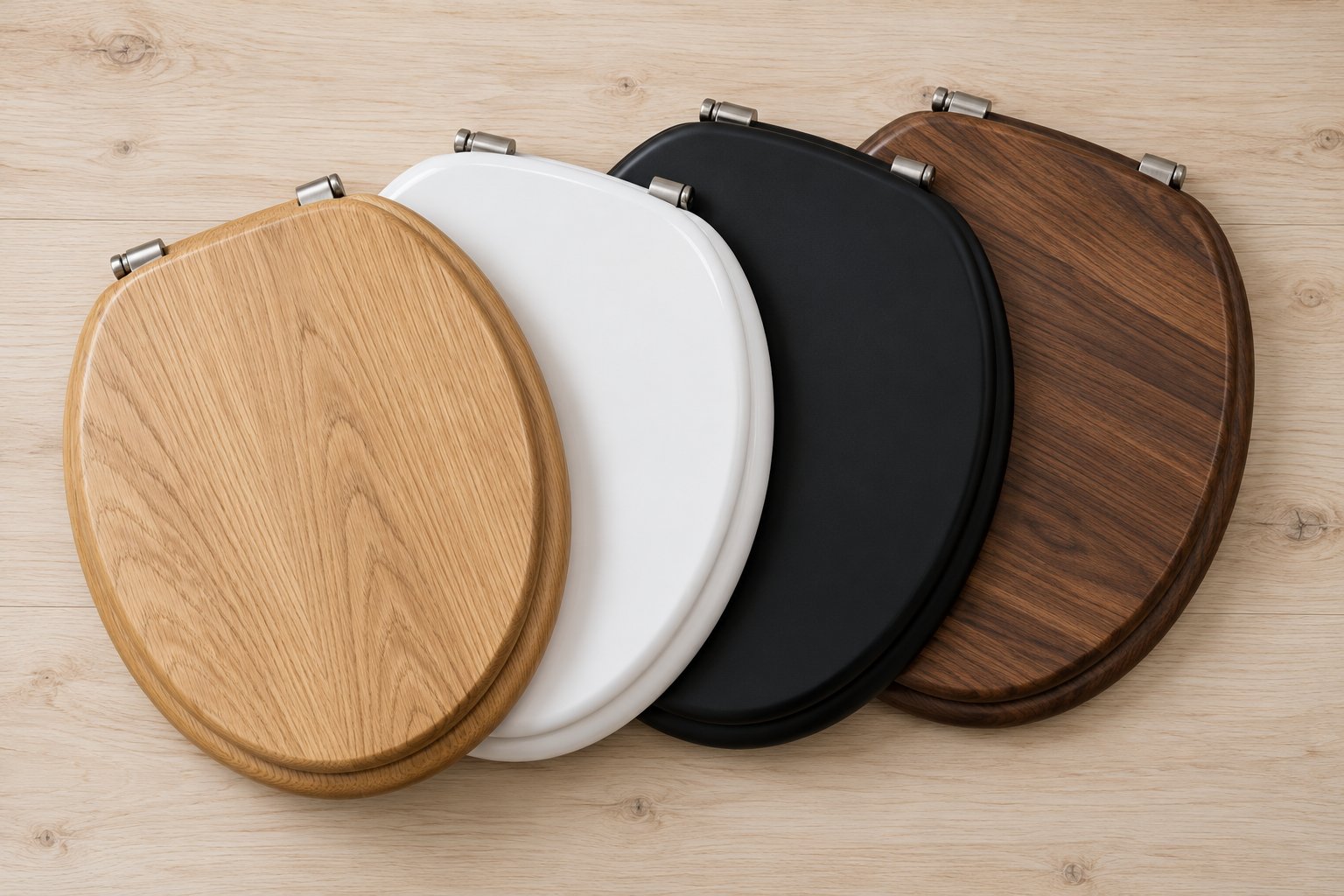
Wood toilet seats offer an unusually broad range of finishes, and each one suits a different design language. A natural oak grain finish, for instance, brings organic texture and warmth that feels right at home in rustic, farmhouse, or cottage-style bathrooms. The visible grain becomes a subtle design element rather than something you try to hide. Walnut tones — deeper, richer, and more refined — complement warm traditional and transitional spaces where darker woods appear in vanities, mirrors, or shelving.
Prefer something more contemporary? A black wooden toilet seat creates bold visual contrast against white porcelain and light-toned walls, lending a modern, editorial quality to the room. It is a statement piece in a space where most people default to white. On the opposite end of the spectrum, a white enameled wood seat disappears into coastal, minimalist, and classic bathroom designs — you get all the tactile and thermal benefits of wood without any color competition.
For homeowners drawn to character and nostalgia, a vintage toilet seat in an antique or distressed finish adds personality that a brand-new plastic seat simply cannot replicate. These finishes work beautifully in period bathrooms, Victorian-era homes, and eclectic spaces where design elements span different decades intentionally. A brown toilet seat in warm, medium tones occupies the versatile middle ground — neither too dark nor too light — fitting seamlessly into transitional bathrooms that blend traditional warmth with updated fixtures.
Here is a quick guide to the most popular finish options and the styles they pair with best:
- Natural oak grain — Rustic, farmhouse, cottage
- White enameled wood — Modern, coastal, traditional, minimalist
- Black wood — Contemporary, bold contrast, editorial
- Brown or walnut tones — Warm traditional, transitional, mid-century
- Decorative or painted finishes — Eclectic, vintage, period-specific
Notice the pattern: every bathroom style on this list has at least one wood finish that feels like it belongs. That versatility is something plastic — limited mostly to solid white, bone, and biscuit — cannot match. When you invest in a bathroom's design, the best wooden toilet seat is one that honors that investment rather than undermining it with a generic appearance.
Key Features to Prioritize When Buying
Aesthetics get you excited about a seat, but features determine whether you are still happy with it a year from now. Every chapter in this guide has pointed toward specific quality markers — here they are consolidated into the selection criteria that matter most.
Correct round sizing comes first, always. Confirm that 16.5-inch measurement and the 5.5-inch bolt spacing before anything else. A gorgeous wooden loo seat in the perfect finish means nothing if it does not physically fit your bowl.
Quality wood or MDF material with a proper moisture-resistant finish is your durability foundation. Whether you lean toward solid hardwood for its premium character or MDF composite for its dimensional stability and value, verify that the seat features a baked-on enamel or multi-layer lacquer coating. That finish is your first line of defense against bathroom humidity, and it directly determines how long the seat maintains its appearance.
A reliable soft-close damper mechanism separates a quality wooden commode seat from a mediocre one more than any other single component. This is the part most shoppers overlook — and the part that fails first on cheaply built seats. As discussed earlier, the damper must be calibrated to the specific weight of the seat material. A damper designed for a two-pound plastic lid will burn out quickly under a five-pound MDF or solid wood lid.
This calibration challenge is exactly why the damper source matters. Manufacturers using purpose-engineered components — like the Tianyun MDF / Metal Damper, designed specifically for MDF, wooden, resin, and metal seat structures — can tune the soft-close performance to the exact weight profile of each seat model. That level of material-specific torque calibration delivers consistent, smooth closing action across tens of thousands of cycles, even in humid bathroom environments. When a product listing specifies the damper type or references material-matched engineering, it signals that the manufacturer has prioritized long-term reliability over cost-cutting.
Sturdy hinge hardware with quick-release capability rounds out the mechanical requirements. Hinges should feel solid when you open and close the seat — no wobble, no lateral play, no creaking. Quick-release functionality, while not mandatory, dramatically simplifies cleaning and makes periodic inspections of the underside and bolt area far more practical. You are far more likely to actually maintain a seat that is easy to remove and reattach.
Appropriate weight and thickness for a solid feel is the final tactile checkpoint. Pick up the seat before installing it. Does it feel substantial in your hands? A wooden wc seat with real heft — generally in the four-to-seven-pound range — signals dense material and thorough construction. If it feels hollow, thin, or surprisingly light for a product labeled as wood, the internal material may be lower-quality composite or the walls may be thinner than they should be.
A well-chosen round wood toilet seat combines the right material, a properly calibrated soft-close damper, and secure hinge hardware to deliver comfort and durability for years.
Ultimately, the best wooden toilet seat is not the most expensive one on the shelf or the one with the longest feature list — it is the one where every component, from the wood substrate to the enamel finish to the damper inside the hinge, has been selected and engineered to work together as a system. When those elements align, you get a wooden lavatory seat that feels warm on a cold morning, closes without a sound, cleans up easily, and still looks sharp years down the line. That is the seat worth choosing — and with the sizing knowledge, material understanding, and quality benchmarks covered in this guide, you are fully equipped to find it.
Frequently Asked Questions About Round Wood Toilet Seats
1. How do I know if my toilet needs a round or elongated seat?
Measure from the center point between the two rear bolt holes to the front edge of the bowl rim. A reading of approximately 16.5 inches indicates a round bowl, while roughly 18.5 inches means you have an elongated bowl. Round bowls are most common in older homes, half-baths, and compact bathrooms, so if your space is on the smaller side, you likely need a round seat.
2. Are wood toilet seats more hygienic than plastic ones?
A properly maintained enameled wood toilet seat is just as hygienic as plastic. The baked-on enamel or lacquer finish creates a nonporous, smooth surface that resists bacterial growth identically to plastic. Hygiene only becomes a concern if the protective finish cracks, peels, or wears away, exposing the raw wood fibers beneath. Regular cleaning with mild soap and prompt drying keeps the finish intact for years.
3. Why does a soft-close damper matter in a wood toilet seat?
Wood and MDF seats weigh two to three times more than plastic seats, generating significantly more momentum when the lid falls. A soft-close damper must be precisely calibrated to the seat's weight to control the descent smoothly. Purpose-engineered dampers, such as the Tianyun MDF / Metal Damper designed for wood, MDF, resin, and metal structures, provide custom torque calibration that ensures consistent, silent closing across tens of thousands of cycles without premature wear.
4. How long does a round wood toilet seat typically last?
With proper care, a high-quality enameled wood toilet seat can last 10 to 20 years. Lifespan depends heavily on maintenance habits: wiping up standing water, avoiding harsh chemical cleaners like bleach or ammonia, ensuring good bathroom ventilation, and periodically inspecting the underside for early signs of finish degradation. Neglecting these steps can shorten the seat's useful life to just three to five years.
5. What cleaning products should I avoid on a wood toilet seat?
Avoid bleach-based sprays, ammonia-containing cleaners, abrasive powders, and scrubbing pads, including so-called gentle green scouring pads. These products strip, cloud, or scratch the enamel or lacquer finish that protects the wood from moisture. Instead, use mild dish soap with warm water or a non-abrasive bathroom cleaner labeled safe for finished surfaces, and always dry the seat with a towel after cleaning.
Apply This Insight to Your Project
Tell us what you are building and how the topic “Toilet Seat Wood Round: Ditch Cold Plastic and Never Look Back” relates to your application. Our engineering team can help evaluate the next step.