What Is a Round Toilet Seat and Why It Matters
Ever stood in a hardware store aisle staring at a wall of toilet seats, completely unsure which one actually fits your bathroom? You're not alone. The difference between a seat that clicks into place perfectly and one that wobbles, overhangs, or never quite feels right often comes down to a single detail: whether your toilet bowl is round or elongated. And surprisingly, most people have never checked.
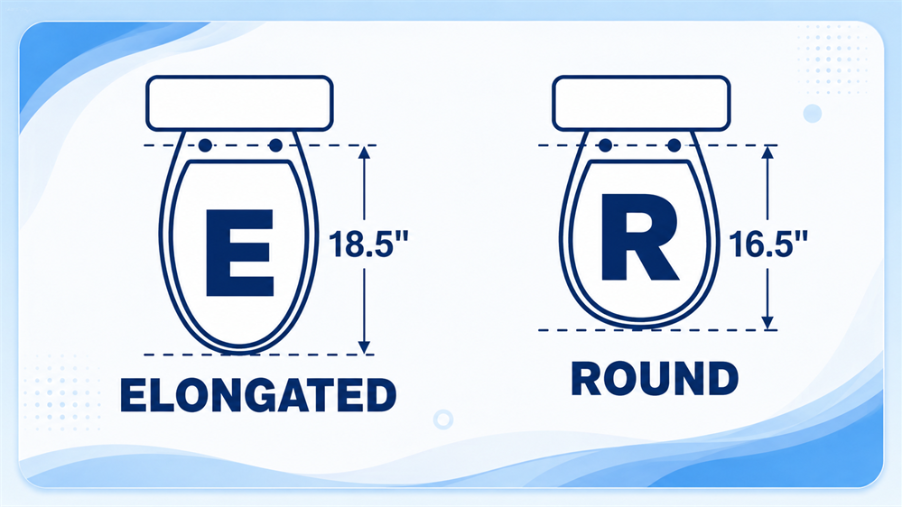
A round toilet seat is a seat designed specifically for round-front toilet bowls — compact fixtures that measure approximately 16.5 inches from the center of the mounting bolt holes to the front edge of the rim. Here's an important clarification that trips up many shoppers: the term "round" doesn't mean the bowl forms a perfect circle. It actually refers to a slightly oval, more circular shape that's noticeably shorter from front to back than its elongated counterpart. You'll sometimes see it labeled as a "round-front" seat, which is technically the more precise term, though retailers and manufacturers use both interchangeably.
Standard round toilet seat dimensions: approximately 16.5 inches from mounting holes to front rim, with a bolt-hole spread of roughly 5.5 inches center to center.
What Exactly Is a Round Toilet Seat
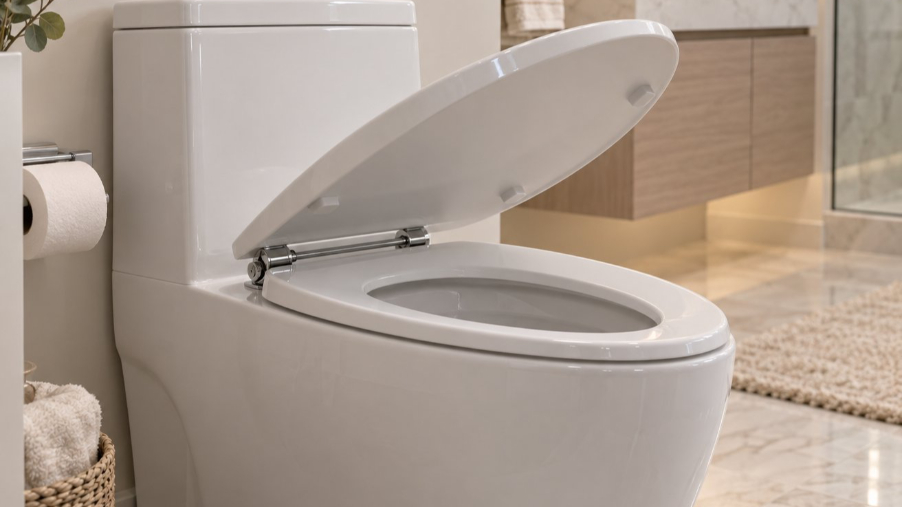
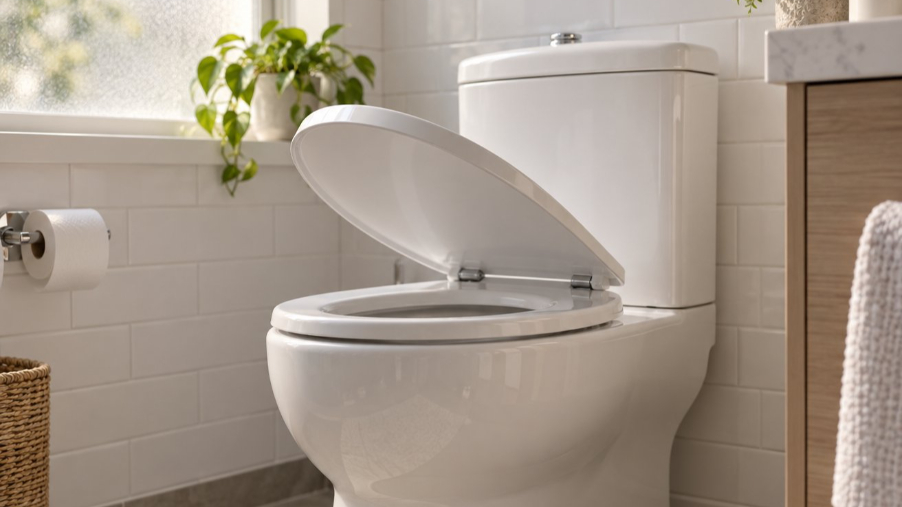
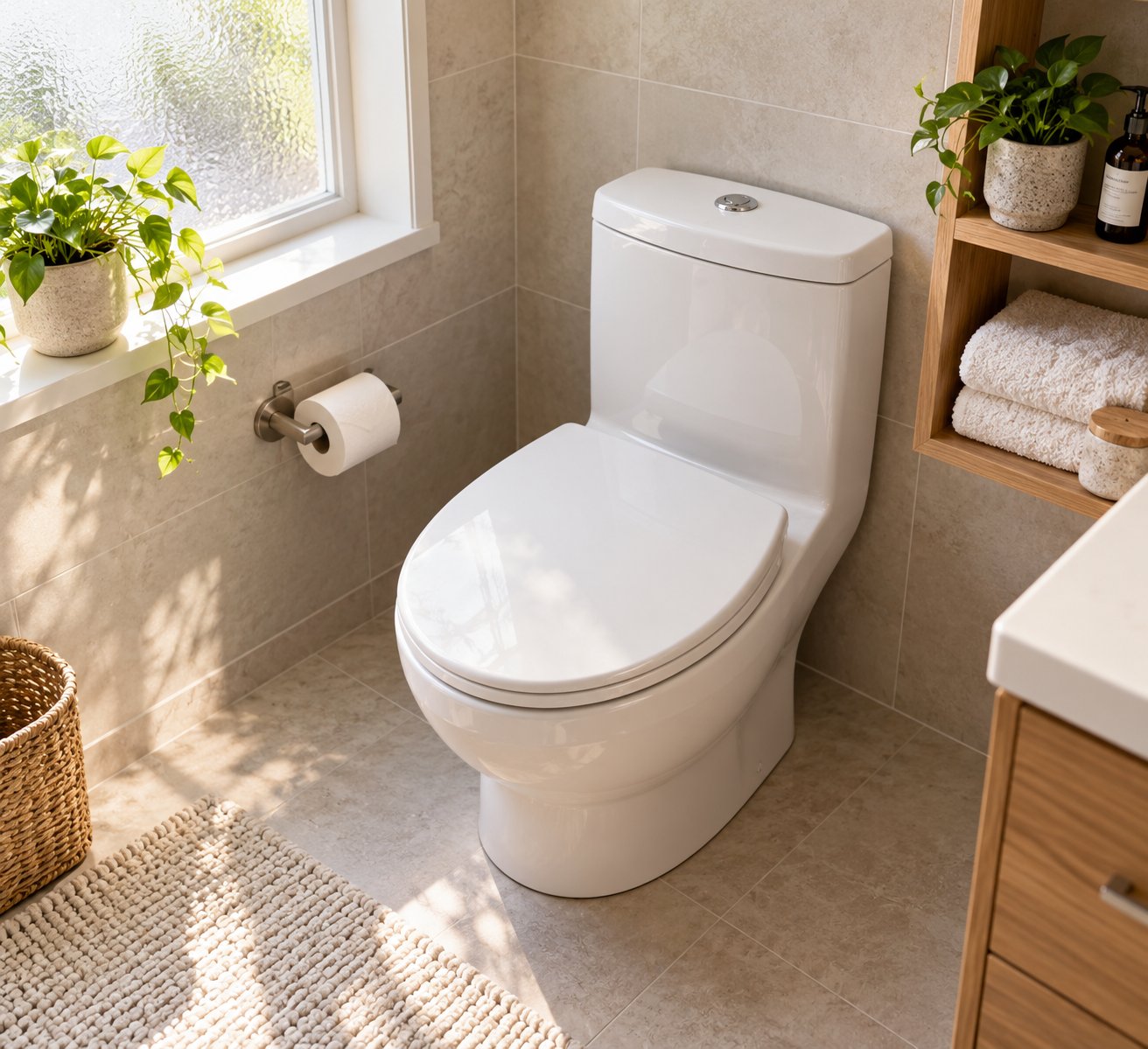
Picture a toilet bowl that looks almost circular when you glance down at it. That compact, gently curved profile is the hallmark of a round-front design. Compared to elongated models — which extend about two inches farther toward the front — round toilet seats sit closer to the tank and take up less floor space. This makes them the go-to choice for smaller bathrooms, half-baths, and powder rooms where every inch counts.
The seat itself mirrors the bowl's shape. It consists of the ring you sit on, a lid that covers it, and a hinge system that attaches to the bowl through two bolt holes at the rear. Whether you're looking at a basic plastic model, a heavy duty toilet seat built for commercial use, or even a round padded toilet seat designed for extra comfort, the underlying shape and bolt-hole spacing remain consistent across virtually all standard round seats sold in the United States.
Who Should Read This Guide
This guide is built for anyone who needs clarity before making a purchase — not a sales pitch. Specifically, you'll find it useful if you fall into one of these groups:
- Homeowners replacing a worn or cracked seat who want to get the right fit on the first try without guessing at sizes.
- Renters unsure whether their toilet is round or elongated and hesitant to buy the wrong type.
- Anyone overwhelmed by the sheer variety of round toilet seats on the market — from soft-close models and quick-release designs to wood finishes and round padded toilet seat options.
- Contractors and property managers sourcing multiple seats and needing a reliable reference for material types, durability ratings, and feature comparisons.
Throughout this article, you'll find straightforward guidance on measuring your bowl, comparing materials side by side, evaluating features like soft-close dampers and antimicrobial coatings, and ultimately choosing a seat that fits both your toilet and your priorities. Every recommendation is rooted in practical knowledge — not brand loyalty.
The key to getting this right starts with understanding exactly how round and elongated seats differ, and why grabbing the wrong shape is the most common mistake people make.
Round vs Elongated Toilet Seats and How They Differ
Choosing between a round or elongated toilet seat sounds like a simple decision — until you bring the wrong one home. The two shapes aren't interchangeable, and the differences go beyond aesthetics. They affect comfort, bathroom layout, compliance with building codes, and even how much you spend. Understanding exactly what separates them helps you avoid the hassle of returns and the frustration of a seat that never feels quite right.
Dimensional Differences Between Round and Elongated Seats
The core distinction is length. A round seat toilet typically measures about 16.5 inches from the center of the mounting bolt holes to the front edge of the bowl. An elongated seat stretches that measurement to roughly 18 to 18.5 inches — a difference of approximately two inches. That might not sound like much on paper, but it fundamentally changes how the seat fits, feels, and functions.
Here's what stays the same regardless of shape: the bolt-hole spacing. Both round and elongated seats use a standard bolt spread of about 5.5 inches, center to center. This universal mounting distance means the rear hinge hardware is often compatible across both types, which is exactly why some shoppers mistakenly assume the seats themselves are interchangeable. They aren't.
The width is another factor worth noting. Round bowls are generally about 14 to 14.5 inches across at their widest point, while elongated bowls tend to be slightly narrower relative to their length, creating that distinctive oval silhouette. When you place an elongated seat on a round bowl, the extra two inches of length hang over the front rim. The result? A seat that looks awkward, shifts under weight, and never quite secures flush against the porcelain.
When a Round Seat Is the Better Choice
Elongated seats often get marketed as the more comfortable option because of their larger seating area. That's a fair point for many adults — but comfort isn't the only criterion, and there are plenty of scenarios where a round seat wins outright.
Imagine a narrow powder room where the toilet sits just inches from the vanity or the opposite wall. Those two extra inches on an elongated bowl can make the space feel cramped and may even violate minimum clearance requirements in local building codes. A round bowl with a properly fitted seat keeps the room functional and code-compliant without sacrificing usability.
Round seats also shine in children's bathrooms. The shorter bowl length makes it easier for kids to sit comfortably and reach the floor, which builds confidence during potty training. For added comfort in these settings, a cushioned round toilet seat can provide a softer surface that younger users find less intimidating than hard plastic or thermoset options.
In commercial restrooms — especially multi-stall layouts — round bowls paired with open-front seats remain the standard. Many state plumbing codes mandate this configuration for hygiene reasons, and the compact footprint allows facility managers to fit more stalls into the available space.
| Factor | Round Toilet Seat | Elongated Toilet Seat |
|---|---|---|
| Typical Length (bolt holes to front rim) | ~16.5 inches | ~18 to 18.5 inches |
| Ideal Bathroom Size | Small to mid-size; powder rooms, half-baths | Standard to large bathrooms |
| Comfort Profile | Adequate for most users; preferred for children | More support for larger adults |
| Common Settings | Residential, commercial, multi-stall restrooms | Residential master baths, modern renovations |
| Material Options | PP, UF thermoset, wood, cushioned round toilet seat | PP, UF thermoset, wood, padded |
| Price Range | $10 - $80+ | $15 - $100+ |
Can You Use an Elongated Seat on a Round Toilet
This question comes up constantly — and the short answer is no, you shouldn't. While the bolt holes will technically align because of the universal 5.5-inch spacing, the seat itself will extend past the front of the bowl by roughly two inches. That overhang creates several real problems:
- Wobbling and instability: The unsupported front section flexes under weight, making the seat feel loose even when the bolts are tight.
- Aesthetic mismatch: The elongated seat visibly overhangs the round bowl, creating an unfinished, mismatched appearance that's hard to ignore.
- Accelerated wear: The uneven stress distribution puts extra pressure on the hinge points, wearing out bolts, rubber washers, and dampers faster than normal use would.
- Safety concern: A seat that shifts or tilts forward under load is a falling hazard, especially for elderly users or young children.
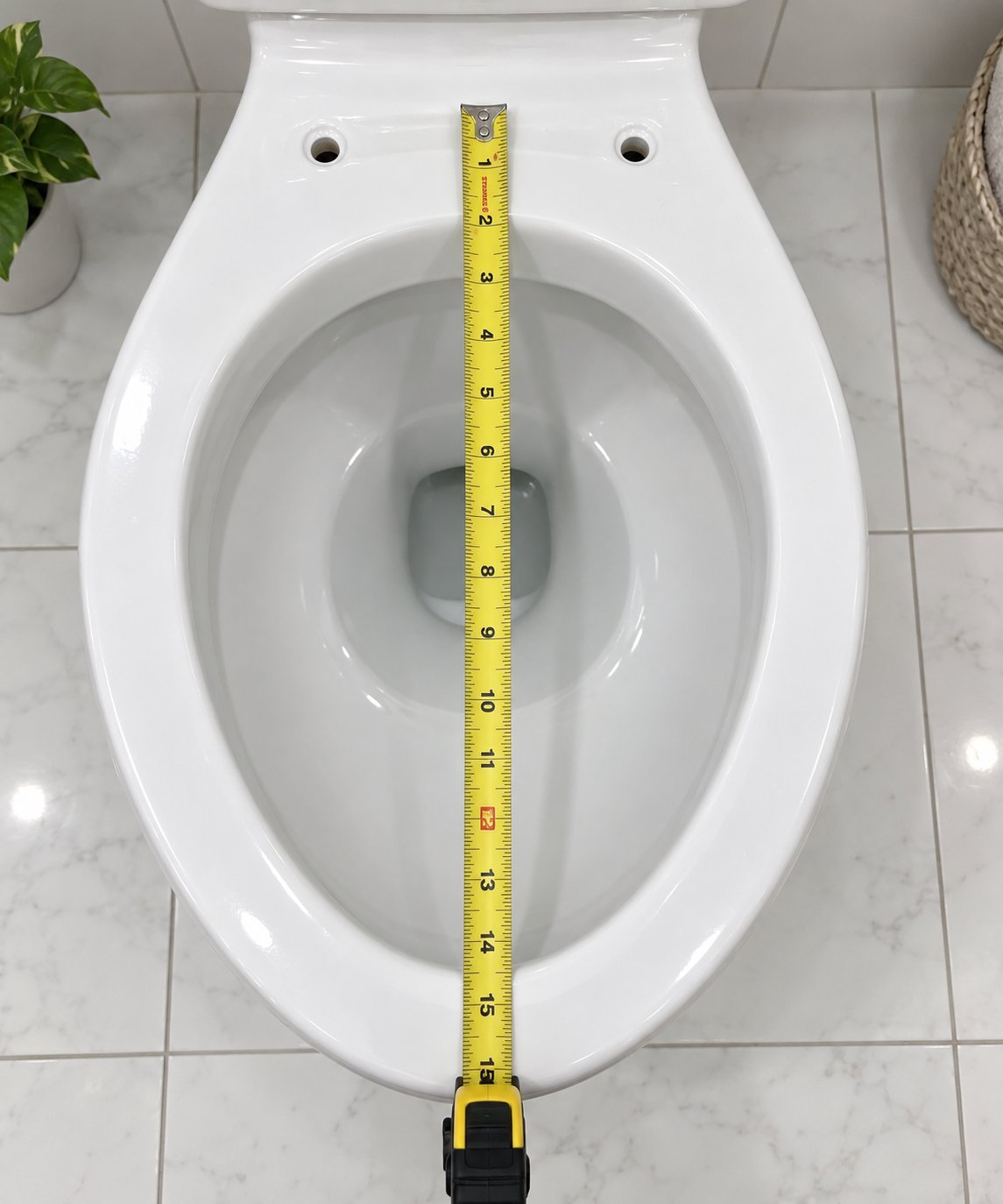
If you're unsure whether your toilet is round or elongated, there's a quick way to verify before you shop. Grab a tape measure and check the distance from the center of the rear bolt holes straight forward to the tip of the bowl's front rim. Under 17 inches? You have a round bowl. Over 17 inches? It's elongated. This single measurement — which takes less than 30 seconds — eliminates the guesswork entirely.
For anyone exploring materials like a toilet seat wood round option or something more utilitarian in molded plastic, knowing your bowl shape first prevents every other decision from going sideways. And if you want to be absolutely precise about getting that measurement right, the next section walks you through the full process step by step.
How to Measure Your Toilet for a Round Seat
A tape measure, thirty seconds, and three numbers — that's genuinely all it takes to know exactly which seat your toilet needs. Yet most people skip this step, rely on a visual guess, and end up with a seat that wobbles, overhangs, or gets returned. The irony? Measuring a toilet bowl is easier than measuring a window for curtains, and the consequences of getting it wrong are far more annoying.
Whether you're replacing a cracked seat, upgrading to a soft-close model, or switching from plastic to a toilet seat round wood finish, every smart purchase starts right here — at the bowl itself.
How to Measure Your Toilet Bowl for a Round Seat
Three measurements tell you everything you need to know. You'll check the bolt-hole spread, the bowl width, and — most critically — the length from the bolt holes to the front rim. Grab a standard tape measure and follow these steps:
- Lift the seat and lid completely out of the way. You need a clear view of the bare bowl rim. If your current seat blocks access to the bolt holes, remove the plastic caps covering them so the hole centers are visible.
- Measure the bolt-hole spread. Place the tape measure at the center of the left mounting hole and extend it to the center of the right mounting hole. On virtually all standard toilets sold in the U.S., this distance is approximately 5.5 inches. If your measurement lands in that range, your toilet accepts universal-mount seats — both round and elongated hinge hardware will physically attach. This is also why bolt-hole spacing alone can't tell you which shape you need.
- Measure the bowl length (bolt holes to front rim). This is the measurement that matters most. Find the midpoint between the two bolt holes — roughly the center of that 5.5-inch span. From that center point, extend the tape measure straight forward to the very tip of the bowl's front edge. Don't angle the tape or curve it along the bowl's inner surface; keep it in a straight line from back to front.
- Measure the bowl width. Stretch the tape across the widest point of the bowl, from the outer edge of the left rim to the outer edge of the right rim. Round bowls typically fall between 14 and 14.5 inches wide. This measurement helps confirm your bowl shape and ensures the seat you order won't overhang the sides.
- Record and compare your numbers. A bolt-to-rim length of approximately 16.5 inches confirms a round bowl. A length closer to 18 to 18.5 inches means you have an elongated bowl. Anything in between — say 17 to 17.5 inches — may indicate a compact elongated design, and you'll want to check the toilet manufacturer's specifications before ordering.
A few common mistakes trip people up during this process. Measuring from the back of the tank instead of from the bolt holes is the most frequent error — it adds several inches and produces a meaningless number. Another pitfall: measuring along the inside curve of the bowl rather than in a straight line across the top of the rim. Both mistakes can lead you to buy an elongated seat for a round bowl, which creates the exact fit problems covered in the previous section.
If you're shopping for a round toilet seat with open front — the U-shaped style common in commercial restrooms — these same measurements apply. The open-front gap at the front of the seat doesn't change the overall seat dimensions; it simply removes a small section of material from the front center.
Understanding Round Toilet Seat Sizes and Variations
Here's where things get a little nuanced. While 16.5 inches is the widely cited standard for round bowls, not every manufacturer hits that number precisely. You'll encounter slight variations — some round bowls measure closer to 16 inches, others land at 16.75 inches. These small differences exist because toilet manufacturers design their own molds, and dimensional tolerances can shift by fractions of an inch across brands and production runs.
You might see references to a "16-inch seat" online or in product descriptions. This typically refers to round seats designed for bowls on the shorter end of the round spectrum. Most standard round seats are engineered with enough tolerance to fit bowls ranging from about 16 to 16.75 inches, so a quarter-inch variation rarely causes issues. Where problems arise is at the boundary between round and compact elongated — that 17-inch zone — where a standard round seat may feel tight at the front and an elongated seat will definitely overhang.
Some manufacturers also offer a round toilet seat with large opening, designed to provide a wider or more generous inner aperture while keeping the outer footprint within standard round dimensions. These seats are popular among users who find conventional round openings too narrow for comfort. The outer bolt-hole spacing and overall length remain the same, so they mount identically to any other round seat — the difference is purely in how much sitting area the opening provides.
Material choice can subtly affect fit perception as well. Round wood toilet seats and molded-wood composites tend to be slightly thicker than plastic or thermoset alternatives, which can make the seat feel higher off the rim. This doesn't change compatibility with your bowl, but it's worth noting if seat height is a concern for accessibility or personal preference.
Rule of thumb: if your bolt-to-rim measurement is under 17 inches, you almost certainly need a round seat. At or above 17 inches, measure again carefully and check your toilet's model number to confirm whether you need a round or compact elongated seat.
Verifying these dimensions before clicking "add to cart" takes less than a minute and saves you the hassle — and cost — of processing a return. Retailers report that incorrect sizing is one of the top reasons toilet seats get sent back, and the fix is always the same: measure first, order second.
With the right measurements in hand, the next decision becomes more interesting than numerical: what material should your seat actually be made from? The options range far wider than most people expect, and each one brings a distinct set of trade-offs in durability, comfort, and maintenance.
Round Toilet Seat Materials Compared
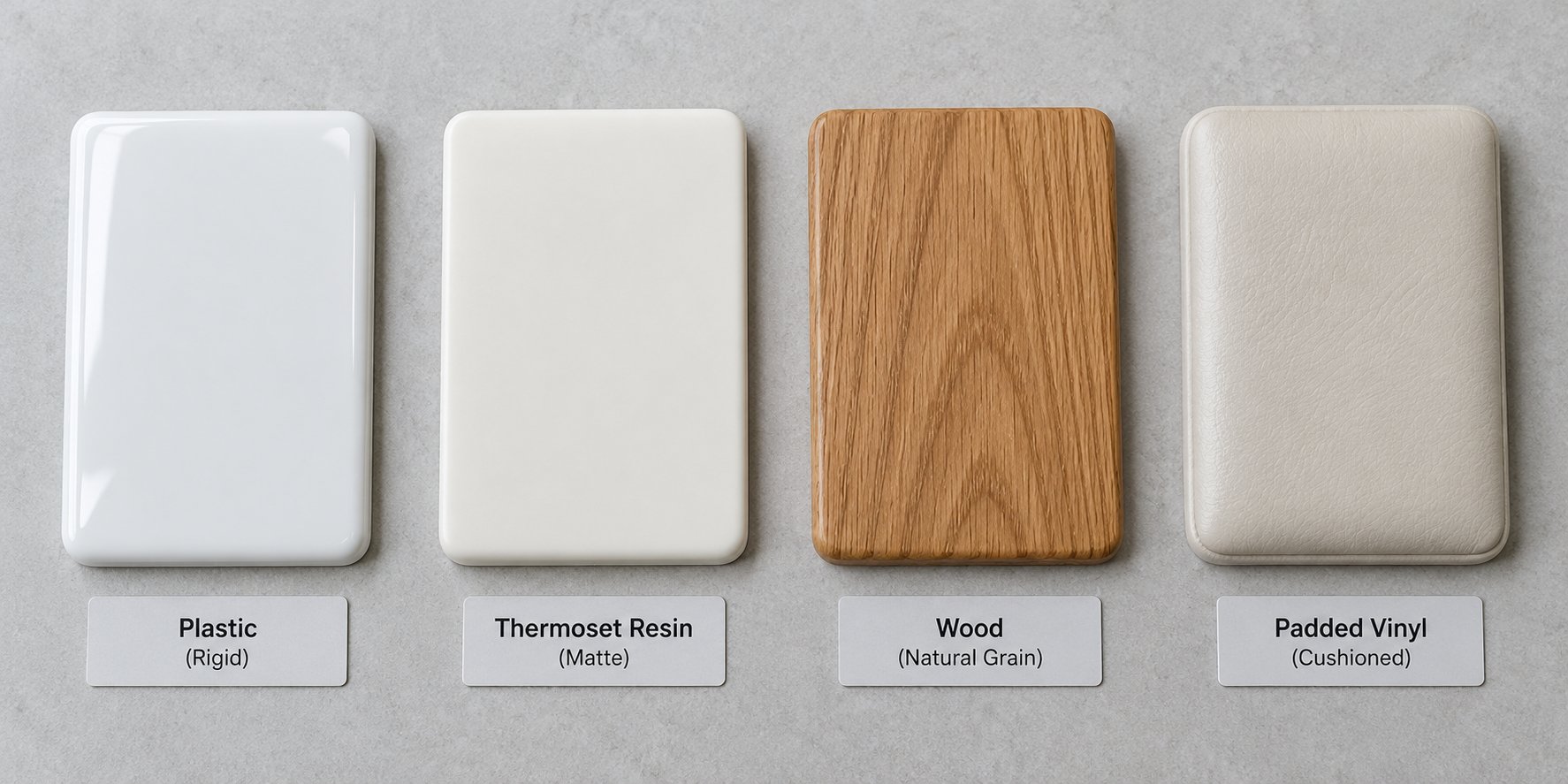
Your bowl shape is locked in and your measurements are confirmed — so what should your round commode seat actually be made of? This is where most buyers hit an unexpected wall. Walk through any home improvement aisle or browse toilet seats at Home Depot online, and you'll find seats that look nearly identical on the shelf but differ dramatically in how they feel, how long they last, and how they hold up to daily cleaning. The material underneath that glossy finish determines everything from scratch resistance to whether the seat yellows within a year.
Here's a straightforward breakdown of every major material you'll encounter, with honest trade-offs for each.
Plastic and Polypropylene Round Toilet Seats
Polypropylene — commonly abbreviated as PP — is the workhorse of the budget-friendly toilet seat market. If you've ever picked up a lightweight round seat priced under $25 and noticed it flexed slightly in your hands, you were almost certainly holding a PP seat.
What makes PP popular is its practicality. It's lightweight, resistant to most household chemical cleaners, moisture-proof, non-toxic, and inexpensive to produce. For rental properties, kids' bathrooms, or any setting where the seat will eventually need replacing without much financial sting, polypropylene makes strong sense.
The downsides? PP is a softer plastic. It's more prone to surface scratching, and over time — typically within two to three years of regular use — it can begin to yellow or show signs of wear. It also lacks the rigid, premium feel of denser materials. If longevity and aesthetics rank high on your priority list, PP may feel like a temporary solution rather than a lasting upgrade.
For sanitaryware brands or OEM manufacturers sourcing PP seat covers at scale, production-ready programs do exist. Tianyun's PP and UF seat cover line, for instance, pairs polypropylene covers with compatible dampers, hinges, and fixing systems — a useful resource for anyone exploring the manufacturing or wholesale side of toilet seat procurement rather than retail purchasing.
Thermoset Urea Formaldehyde and Heavy-Duty Options
Step up from PP and you land on urea formaldehyde, or UF — a thermoset resin that behaves very differently from standard plastic. UF seats are created by molding powdered resin under high temperature and pressure, producing a surface that feels almost ceramic to the touch: smooth, hard, and noticeably heavier than polypropylene.
Why does that matter? Density translates directly into durability. UF seats resist scratches, chipping, and discoloration far better than PP. They won't yellow the way softer plastics do, and their rigidity means they maintain their shape under heavier loads without flexing. This makes them a go-to choice for commercial restrooms, high-traffic rental units, and any household that wants a seat to last five years or longer without visible degradation.
The trade-offs are modest but real. UF seats cost more — generally ranging from $20 to $70 — and they're heavier, which means slamming is louder if the seat lacks a soft-close damper. They can also crack under sharp impact rather than flexing like PP would, though this is uncommon under normal use.
The same Tianyun manufacturing program mentioned above covers UF material as well, offering brands and contractors a single source for both PP and UF options with integrated hinge and damper systems designed for round toilet applications.
Wood, Molded Wood, and Specialty Materials
A wood toilet seat round option brings something no plastic or thermoset can replicate: warmth. Sit down on a solid wood or molded-wood composite seat on a cold morning and you'll immediately notice the difference — the surface doesn't feel icy the way plastic and UF do. That tactile warmth, combined with a natural grain appearance, makes wood seats a favorite for homeowners who treat the bathroom as a design space.
Solid wood seats — typically oak, bamboo, or maple — are heavier, more expensive, and require more care. They need periodic treatment to resist moisture absorption and prevent warping. Molded-wood composites offer a middle ground: they're made from compressed wood fibers coated with a moisture-resistant finish, giving them the look and heft of real wood with better water resistance. Both types fit standard round mounting hardware identically to plastic or UF seats.
Beyond wood, specialty options widen the field further. Cushioned and padded seats use a vinyl-covered foam layer for a softer sitting experience, which appeals to users with mobility issues or anyone who simply prefers a gentler surface. Round decorative toilet seats — featuring printed patterns, embossed textures, or novelty designs — can add personality to a powder room or guest bath, though durability of printed surfaces varies widely by manufacturer. These decorative options are best suited for low-traffic settings where aesthetics outweigh heavy-duty performance.
| Material Type | Durability | Comfort | Weight | Ease of Cleaning | Price Range | Best Use Case |
|---|---|---|---|---|---|---|
| PP (Polypropylene) | Moderate; may yellow in 2-3 years | Standard; slight flex | Light | Excellent; chemical-resistant | $15 - $40 | Budget replacements, rentals, kids' bathrooms |
| UF (Urea Formaldehyde) | High; scratch and chip resistant | Firm, ceramic-like feel | Medium-Heavy | Excellent; resists discoloration | $20 - $70 | Heavy-duty residential, commercial, long-term use |
| Solid Wood | High with maintenance; can warp if untreated | Warm to the touch | Heavy | Moderate; needs periodic treatment | $40 - $100+ | Design-focused bathrooms, premium residential |
| Molded Wood Composite | Good; moisture-resistant coating | Warm, natural feel | Medium-Heavy | Good; coated surface wipes clean | $30 - $70 | Residential upgrade with wood aesthetic |
| Cushioned / Padded | Low-Moderate; vinyl can crack over time | Soft, pressure-relieving | Light-Medium | Fair; seams can trap moisture | $15 - $45 | Accessibility, comfort priority, guest baths |
| Decorative / Printed | Low-Moderate; print may fade | Varies by base material | Light-Medium | Fair; avoid abrasive cleaners on prints | $20 - $60 | Powder rooms, themed or low-traffic spaces |
Each material serves a different scenario, and there's no single "best" answer. A polypropylene seat that lasts two solid years in a rental unit is just as valid a choice as a UF thermoset seat engineered to shrug off a decade of heavy use. What matters is matching the material to your actual priorities — budget, appearance, durability, and how much cleaning effort you're willing to invest.
Material choice shapes the foundation, but it doesn't tell the whole story. The features built into that seat — how it closes, how it detaches for cleaning, and whether it's designed for residential or commercial hygiene standards — can make an equal or even greater difference in daily satisfaction.
Essential Features to Look for in a Round Toilet Seat
A seat can be the right shape, the right size, and made from the ideal material — and still disappoint you every single day if it slams shut at 2 a.m., refuses to stay clean around the hinges, or wobbles under anyone over 180 pounds. Features are where the daily experience lives, and they're the one category most buyers overlook entirely while fixating on color and price.
Think of it this way: material determines how long your seat lasts, but features determine how much you enjoy using it. Whether you're browsing toilet seats near me at a local hardware store or comparing options online, these are the specifications worth scrutinizing before anything else.
Soft-Close and Slow-Close Mechanisms Explained
If you've ever been jolted awake by the sharp crack of a toilet seat slamming down, you already understand why a soft close round toilet seat ranks at the top of most buyers' wish lists. The mechanism is straightforward: small hydraulic or friction-based dampers are built into the hinge assembly. When you release the lid or seat, those dampers control the descent, lowering it gradually and silently over a few seconds instead of letting gravity do its noisy worst.
The practical benefits extend well beyond noise reduction. In households with young children, a soft-close seat eliminates the risk of little fingers getting pinched by a falling lid — a genuine safety upgrade that costs almost nothing extra. The controlled closing motion also reduces impact stress on the hinge bolts and the porcelain bowl rim, which means less hardware loosening over time and a longer overall lifespan for the seat itself.
You'll see both "soft close" and "slow close" used in product descriptions, sometimes even within the same listing. These terms are functionally interchangeable in the consumer market. Some manufacturers prefer one label over the other, but the underlying technology — damped hinges that prevent slamming — is identical. The best round toilet seat options in most price brackets now include this feature as standard, even on budget polypropylene models. If a seat you're considering doesn't offer it, treat that as a meaningful gap rather than a minor omission.
One thing worth noting: damper performance can degrade over several years, especially in cheaper seats. The hydraulic fluid inside the damper mechanism gradually loses viscosity, which may cause the seat to close slightly faster than it did when new. Higher-quality dampers — particularly those paired with UF thermoset or solid wood seats — tend to maintain consistent closing speed for longer.
Quick-Release Hinges and Easy-Clean Designs
Imagine trying to scrub the crevice between the back of your toilet seat and the bowl — that tight, awkward gap where grime accumulates faster than anywhere else. With a standard fixed-hinge seat, you're twisting a rag into impossible angles and still missing half the buildup. Quick-release hinges solve this problem entirely.
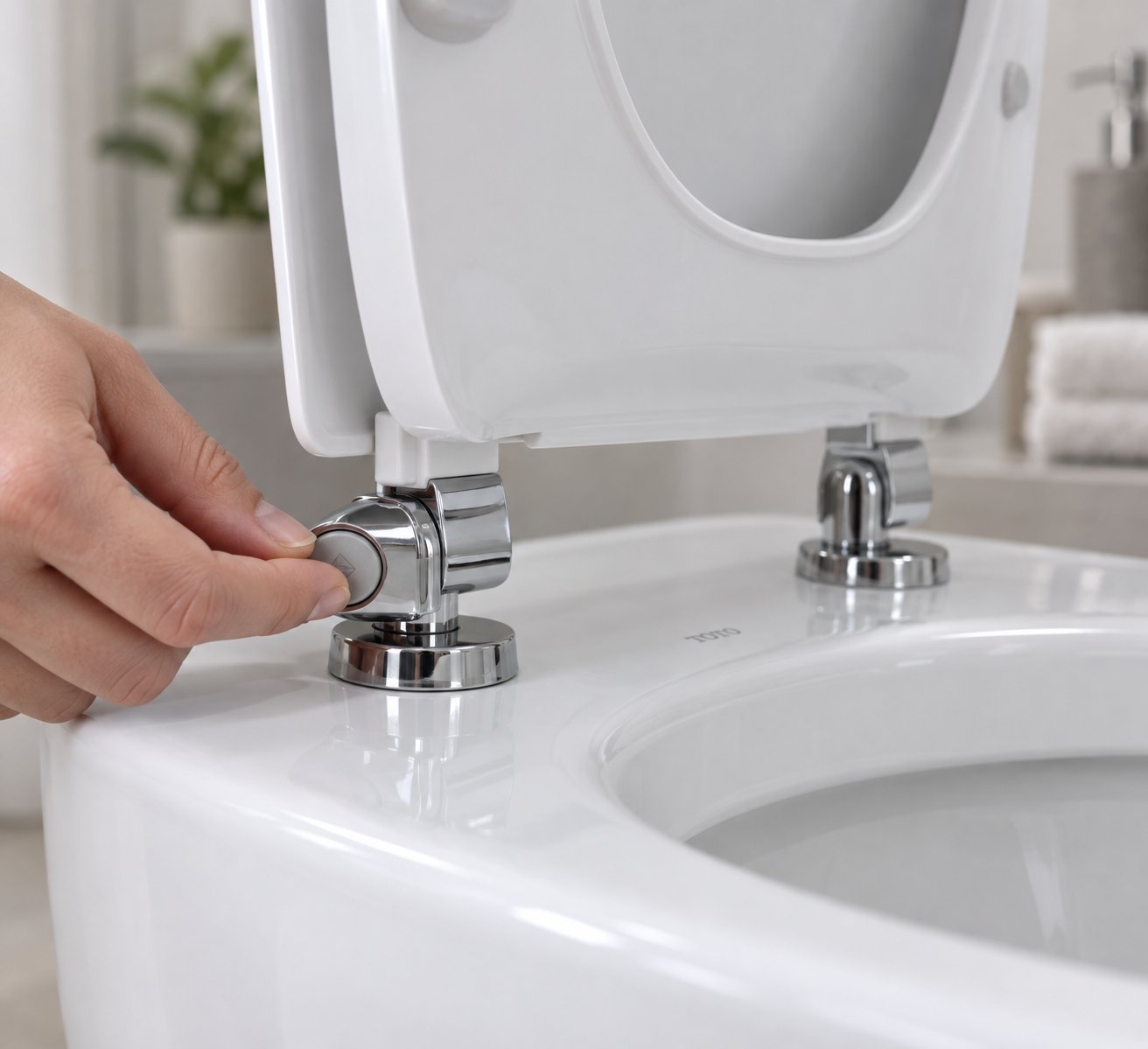
A quick-release mechanism allows you to detach the entire seat from the bowl in seconds — usually by pressing a button or releasing a latch on each hinge — without touching a single bolt. Lift the seat straight up, clean the bowl rim thoroughly, wipe down the seat's underside, and snap it back into place. The whole process takes under a minute, and the difference in hygiene is dramatic.
Hinge mounting styles fall into two broad categories:
- Top-fix hinges tighten from above the bowl rim, making installation possible without reaching underneath the toilet. These are especially convenient in tight spaces or for anyone who finds kneeling behind a toilet uncomfortable.
- Bottom-fix hinges secure with nuts from the underside of the bowl. They tend to feel more robust and are less likely to loosen over time, though installation requires access beneath the rim.
Both styles are available with quick-release functionality. If ease of cleaning is a top priority — and for most households it should be — look for seats that combine quick-release with top-fix mounting. This pairing gives you the fastest installation and the simplest ongoing maintenance routine.
Hinge material also matters more than most product listings suggest. Plastic hinges are lightweight and corrosion-proof but can flex or crack under heavy lateral stress. Stainless steel or zinc-alloy hinges add rigidity and longevity, particularly on heavier wood or UF seats where the hinge bears more weight each time the lid opens and closes.
Open-Front vs Closed-Front Round Seats
Walk into a restaurant restroom or an office building bathroom and you'll probably notice the toilet seat has a gap at the front — a U-shaped opening where the seat doesn't fully close into an oval. That's an open-front seat, sometimes called a u shaped toilet seat, and it exists for a specific reason: hygiene compliance.
Most U.S. plumbing codes require open-front seats in public and commercial restrooms. The gap reduces contact between the seat and the user's body in the front area, minimizing the transfer of bacteria. It also makes the seat easier to use without touching it to adjust positioning. If you're sourcing seats for a business, medical facility, or any publicly accessible restroom, a u shaped toilet seat in the round configuration is likely a code requirement, not just a preference.
Closed-front seats — the fully oval design most people picture when they think of a toilet seat — are the residential standard. They provide a complete seating surface, look cleaner aesthetically, and pair well with soft-close lids. Unless your local code or specific accessibility needs dictate otherwise, a closed-front seat is the typical choice for home bathrooms.
Regardless of which front style you choose, the remaining features still apply. Both open-front and closed-front round seats are available with soft-close dampers, quick-release hinges, and antimicrobial coatings. The front shape doesn't limit your feature options — it simply addresses a different set of needs.
Before you commit to a seat, run through this feature checklist to make sure nothing important slips through the cracks:
- Soft-close or slow-close dampers: Prevents slamming, protects fingers, reduces hinge wear.
- Quick-release hinge mechanism: Enables full seat removal for deep cleaning in seconds.
- Antimicrobial coating: Inhibits bacterial growth on the seat surface between cleanings — especially valuable in shared or high-traffic bathrooms.
- Weight capacity rating: Standard residential seats typically support 250 to 300 pounds; heavy-duty models go up to 500 pounds or more. Always verify this spec if durability is a concern.
- Hinge material: Plastic for budget builds, stainless steel or zinc alloy for long-term strength.
- Mounting style: Top-fix for convenience, bottom-fix for maximum stability.
- Front type: Closed-front for residential, open-front for commercial or code-mandated settings.
Checking these seven points takes less time than reading a product description — and it filters out seats that would frustrate you within months.
Features handle the functional side of ownership, but a toilet seat doesn't exist in a vacuum. It sits in a room with a history, a design language, and practical constraints shaped by decades of building standards. The reasons round seats became — and remain — the default in so many settings reveal something worth understanding before you finalize your choice.
Why Round Toilet Seats Remain the Standard in Many Settings
Every fixture in your bathroom has a backstory shaped by engineering trade-offs, building codes, and the physical dimensions of the rooms we live in. Toilet seats round in shape didn't become the North American residential default by accident — they earned that position through decades of practical logic that still holds true today, even as elongated models gain popularity in new construction and remodels.
Understanding why this shape persists helps you appreciate whether it's still the right call for your space — or whether the industry has simply moved on.
A Brief History of the Round Toilet Bowl
When indoor plumbing became widespread across American homes in the early-to-mid 20th century, bathrooms were small by modern standards. Builders treated them as utilitarian spaces — five-by-seven-foot rooms tucked behind bedrooms and hallways with just enough clearance for a toilet, a pedestal sink, and a tub. The round-front bowl, with its compact 16.5-inch profile, fit those tight footprints perfectly.
Plumbing conventions reinforced the trend. Drain rough-in distances, floor flange placements, and minimum clearance requirements all evolved around that shorter bowl length. Manufacturers standardized their molds accordingly, and by the mid-century building boom, the round white toilet seat was as universal in American homes as the white porcelain bowl beneath it. Supply chains, replacement parts, and installation practices all orbited around this single dominant shape.
Elongated bowls existed during this era, but they were largely confined to upscale or institutional settings where larger bathrooms allowed the extra two inches of length. It wasn't until bathroom sizes began expanding in the 1980s and 1990s — driven by the rise of master suites and open floor plans — that elongated models started claiming significant residential market share.
Why Commercial Spaces Still Prefer Round Seats
Walk into a multi-stall restroom at a gas station, small retail shop, or older office building, and you'll likely find round bowls. The reasons are both financial and spatial.
Cost efficiency plays a major role. Property managers replacing seats across dozens or hundreds of units find round toilet seat covers and open-front seats consistently less expensive than their elongated equivalents. When you're sourcing in bulk, even a few dollars per unit adds up quickly — and the simpler geometry of round seats means fewer compatibility headaches across mixed-age toilet inventories.
Space savings matter just as much. In multi-stall layouts, every inch counts. The International Plumbing Code requires a minimum compartment size of 30 inches by 60 inches for a floor-mounted water closet. Shaving two inches off the bowl's front-to-back length makes it easier to hit that minimum while still providing comfortable access to the stall door. For facility planners designing tight restroom footprints, round bowls provide breathing room that elongated models consume.
It's worth noting a code nuance here: the IPC specifies that water closets for public or employee use should be of the elongated bowl type with open-front seats. In practice, however, many older commercial installations use round bowls, and local jurisdictions often apply their own amendments. If you're outfitting a new commercial restroom, always check your local code requirements before defaulting to either shape.
Round Seats in Small Bathrooms and Powder Rooms
Here's where the round bowl's original advantage hasn't aged a day. That roughly two-inch difference between a round and elongated bowl translates directly into usable floor space — and in a powder room or half-bath, two inches can determine whether the bathroom door swings freely or clips the front of the toilet.
Interior designers and contractors continue recommending round bowls for layouts under 35 square feet. In these spaces, the compact profile keeps the room from feeling cramped, maintains compliant clearances from walls and vanities, and leaves enough standing room for comfortable use. A round bowl also sits proportionally better against a pedestal sink or narrow vanity — a visual balance that elongated models can overwhelm in small rooms.
For homeowners renovating older homes, the choice is often already made. Many pre-1990 residences were plumbed with round-bowl rough-in distances, meaning the drain sits closer to the wall than modern elongated installations require. Swapping to an elongated bowl in these situations may demand repositioning the floor flange — a plumbing project that's significantly more expensive and invasive than simply replacing the seat on the existing round bowl.
The practical reality? Millions of American homes still have round toilets, and they're not going anywhere. The shape remains the most space-efficient option for tight layouts, the most cost-effective option for multi-unit properties, and a perfectly functional option for any household that doesn't feel compelled to chase the elongated trend.
The enduring relevance of this shape also means something encouraging for buyers: the market for round seats is robust, competitive, and full of options. From color-matched basics to decorative statement pieces, the range of aesthetic choices available for round bowls is wider than most people expect — and worth exploring before you settle on plain white by default.
Color and Style Options for Round Toilet Seats
Plain white by default — that's the choice most people make without ever realizing there was a choice at all. And for many bathrooms, white is exactly right. But what if your toilet bowl is bone, your fixtures are matte black, or your powder room could use a shot of personality? The color and finish of your round toilet seat cover affect the look of the room more than you'd expect from a single fixture, and getting the shade wrong creates a mismatch that's surprisingly hard to unsee.
Fortunately, the options available for a round toilet bowl go well beyond the standard glossy white. Knowing what's out there — and when each option makes sense — helps you make a confident selection rather than a safe-but-boring one.
Matching Your Round Seat Color to Your Bathroom
White dominates the toilet seat market for good reason: it matches the overwhelming majority of porcelain bowls sold in the United States. A clean white round plastic toilet seat on a white bowl creates a seamless, unified look that works in virtually any bathroom style, from modern minimalist to traditional tile.
Here's the catch most buyers don't anticipate — not all whites are the same. One manufacturer's "white" may lean slightly warm with a creamy undertone, while another's runs cooler with a bluish tint. Place a cool-white seat on a warm-white bowl, and the difference is obvious in natural light. It won't look broken, but it will look off, like mismatched socks you can't quite ignore.
The same issue multiplies with neutral shades like bone, biscuit, and almond. These colors sit in a narrow band between white and beige, and each manufacturer defines them slightly differently. A "bone" seat from one brand may look noticeably darker or yellower than the "bone" bowl it's meant to match. If your toilet is any shade other than pure bright white, your safest bet is ordering the seat from the same manufacturer as the bowl — or at minimum, comparing color swatches side by side before committing. As industry sources note, color coordination between seat and bowl remains one of the most practical ways to create a cohesive bathroom appearance.
Does the seat have to match the bowl? Not strictly. Modern design trends have loosened the old rule that everything must be identical. A deliberately contrasting seat — like a matte black seat on a white bowl — can look intentional and stylish. The key word is "deliberately." A slight color mismatch reads as a mistake; a bold contrast reads as a design choice. If you're going to deviate from matching, commit to it fully.
Decorative and Colored Round Toilet Seats
For homeowners who want their bathroom to express a little more personality, decorative and colored seats open up a surprisingly wide range of possibilities. A wooden round toilet seat with a natural oak or walnut finish can warm up a bathroom that feels too clinical. A solid black seat on a white bowl creates a striking modern contrast that pairs beautifully with black faucets and hardware. A deep navy or vintage blue seat can anchor a coastal or retro-themed space without overwhelming the room.
Printed and patterned seats push the envelope further — think botanical designs, seashell motifs, or geometric patterns sealed beneath a clear resin coating. These are conversation pieces, best suited for low-traffic powder rooms or guest baths where aesthetics take priority over heavy-duty durability. The printed layer on these seats is typically sandwiched between a base material and a clear topcoat, which protects the design from direct wear. However, abrasive cleaners or harsh scrubbing can dull or scratch that topcoat over time, gradually diminishing the print's clarity.
Durability is the honest trade-off with most decorative options. A colored or printed surface may show wear patterns sooner than a uniform white seat, especially along the areas where thighs contact the rim repeatedly. Solid-color seats in black or dark shades tend to hold up better than printed designs because the pigment runs through the material rather than sitting on top of it. If you're choosing a decorative seat for a bathroom that sees daily use by the whole family, expect to replace it more frequently than a plain white UF or PP seat would require.
- White: Universal matching — works with nearly every bowl and bathroom style. The safest and most widely available option.
- Bone / Biscuit / Almond: Best for older fixtures where the bowl isn't pure white. Always verify the shade against your specific bowl before purchasing.
- Black: Ideal for modern bathrooms with coordinated dark hardware. Creates intentional contrast on white bowls.
- Blue (navy, vintage, or sky): Suited for themed or vintage-inspired spaces — coastal bathrooms, retro designs, or playful kids' bathrooms.
- Decorative prints and patterns: Best reserved for powder rooms and guest baths where the seat sees lighter use and visual impact matters most.
One practical tip worth remembering: if you're ordering online and can't compare colors in person, check whether the retailer offers free returns. Color mismatches are one of the most common reasons round toilet seat covers get sent back, and a forgiving return policy protects you from a shade that looked perfect on screen but clashes with your bowl in person.
Color and finish give your seat its visual identity — but even the most perfectly matched seat won't stay looking good forever without proper care. Knowing how to maintain your seat, troubleshoot common problems, and recognize when replacement is overdue keeps your investment looking and performing the way it should.
Troubleshooting and Maintaining Your Round Toilet Seat
A toilet seat that felt rock-solid on day one can start shifting, squeaking, or yellowing within months — and most people assume the seat itself is defective. In reality, the majority of round toilet seat problems trace back to a handful of fixable causes that have nothing to do with product quality. A loose bolt, a worn rubber washer, or the wrong cleaning product can turn a perfectly good seat into an annoyance faster than you'd expect.
The flip side? Most of these issues take less than ten minutes and zero specialized tools to resolve. Knowing which problems are fixable and which ones signal it's time for a replacement round toilet seat saves you from both unnecessary spending and unnecessary frustration.
How to Fix a Loose Round Toilet Seat
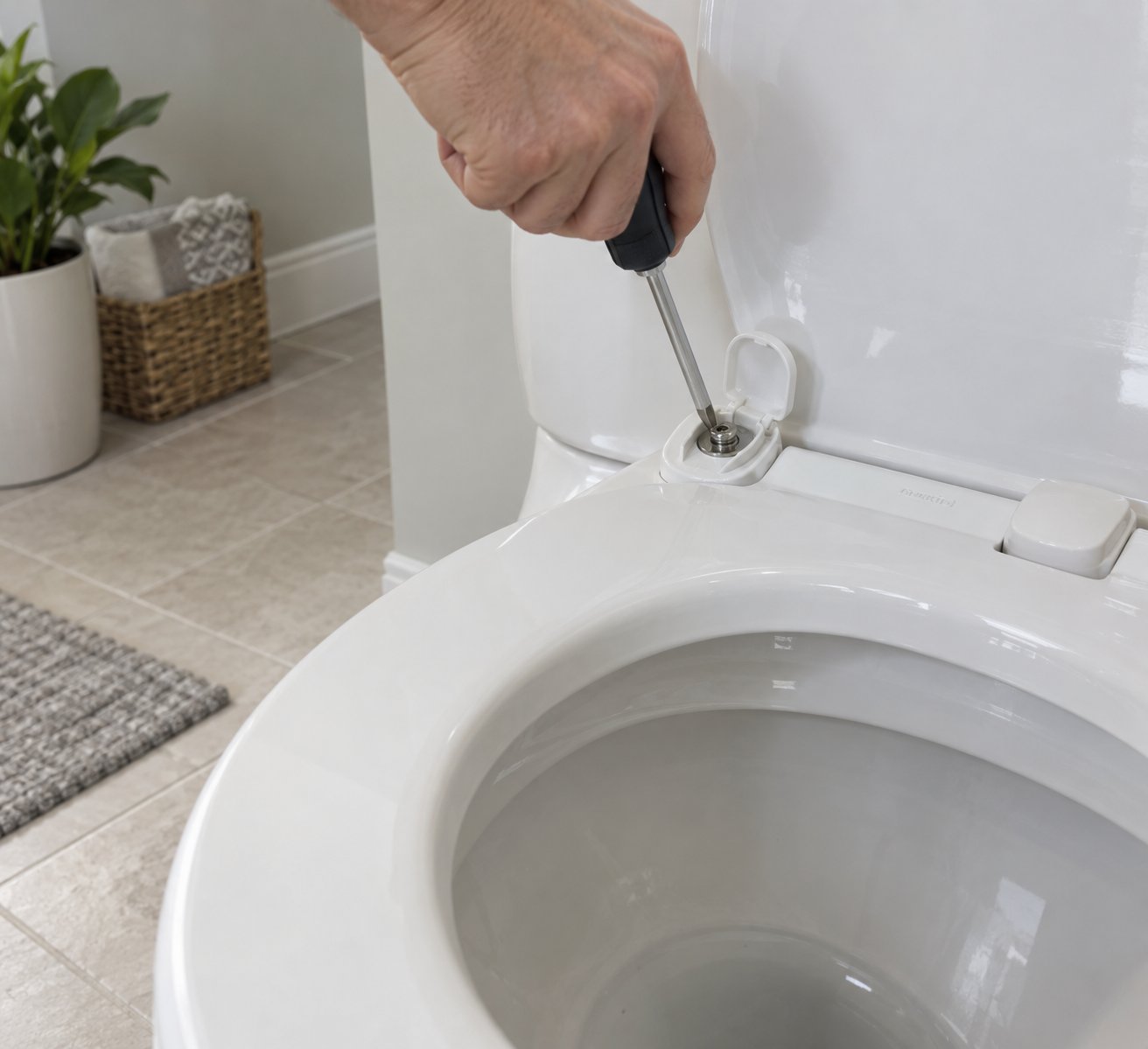
A seat that slides side to side or rocks when you sit down is the single most common complaint — and the single easiest fix. The culprit is almost always the mounting hardware at the back of the bowl, where two bolts pass through the seat's hinge and into the toilet's bolt holes.
Why does this happen? Three reasons, usually working together:
- Vibration and repeated use: Every time someone sits down, shifts weight, or stands up, micro-movements work the bolts incrementally looser. Over weeks and months, those tiny shifts add up until the seat noticeably wobbles.
- Plastic fatigue: Many budget seats use plastic bolt assemblies. Plastic under sustained compression gradually deforms — a process called creep — which reduces the clamping force even though you never touched the bolts.
- Undertightening at installation: If the bolts weren't snugged firmly when the seat was first installed, the loosening process starts almost immediately.
Fixing it takes about five minutes. Pop open the plastic caps covering the bolt heads at the rear of the seat. Using a flathead screwdriver or the wing-style tightening tool that came with the seat, hold the bolt head from above while reaching beneath the bowl to hand-tighten or wrench the nut from below. You want the seat snug against the bowl rim — firm enough that it doesn't shift laterally, but not so tight that you crack the porcelain. A quarter-turn past finger-tight is a reliable benchmark for most hardware.
If tightening doesn't hold — meaning the seat loosens again within a few days — the bolts and rubber washers have likely worn past their useful life. Replacement bolt kits are inexpensive, widely available at any hardware store, and universally sized to fit standard round toilet bowls. Swap the entire bolt assembly, including the rubber grommets and washers that cushion the hardware against the porcelain, and the wobble should disappear for good.
Removing Yellowing and Stains from a Round Seat
White seats don't stay white forever — especially polypropylene ones. Yellowing, ring-shaped stains, and discoloration around the hinges are common complaints that often prompt premature replacement when a simple cleaning technique would have restored the surface.
The approach depends on your seat's material:
- Plastic and PP seats: A thick paste made from baking soda and a few drops of water is one of the most effective and gentle solutions. Apply the paste directly to the stained areas using a microfiber cloth or an old toothbrush, let it sit for about 20 minutes, then scrub gently and wipe clean. As Good Housekeeping recommends, repeating the process usually fades stubborn marks with each application. This method is mildly abrasive enough to lift grime without scratching the plastic surface.
- UF thermoset seats: These resist discoloration better than PP, but they're not immune. Use a non-abrasive bathroom cleaner or a diluted hydrogen peroxide solution. Avoid scouring pads — the thermoset surface is hard, but aggressive abrasives can dull its gloss finish over time.
- Wood and molded-wood seats: Skip the baking soda paste and stick to warm, soapy water. Wood surfaces — even coated composites — can absorb moisture through scratches in their finish, leading to swelling or warping. For deeper stains on solid wood, a light application of mineral oil or a wood-specific cleaner can restore color without damaging the protective coating.
One important warning: avoid using undiluted bleach on any toilet seat material. Bleach can chemically react with plastic and PP surfaces, actually accelerating yellowing rather than reversing it. On wood, it strips protective finishes. On UF thermoset, it's less damaging but still unnecessary when gentler alternatives work just as well. If you've been using a bleach-based cleaner and noticing your seat getting more discolored, the cleaner itself is likely part of the problem.
For seats with quick-release hinges — the kind discussed in the features section — detaching the seat entirely before cleaning makes the process dramatically easier. Place the removed seat upside down on an old towel, and you'll have full access to every surface, including the underside of the hinges where hidden grime accumulates fastest.
When to Replace Your Round Toilet Seat
Cleaning and tightening can only do so much. At a certain point, the seat has simply served its time, and no amount of baking soda or new bolts will bring it back. Most seats last roughly five to seven years depending on material, usage intensity, and maintenance habits — but age alone isn't the deciding factor. Condition is.
Run through this checklist. If your seat hits two or more of these markers, a replacement round toilet seat is the smarter move over continued repair attempts:
- Visible cracks in the seat ring or lid. Cracks aren't just cosmetic — they harbor bacteria in crevices that cleaning can't reach, and they weaken the seat structurally. A cracked PP or UF seat can eventually snap under load.
- Permanent discoloration that cleaning cannot remove. If the baking soda method, hydrogen peroxide, and proper cleaners have all failed, the staining has likely penetrated below the surface. This is especially common with older polypropylene seats exposed to years of chemical cleaners.
- Persistent wobbling despite tightened or replaced hardware. When the seat shifts even after fresh bolts and washers, the hinge mounting points on the seat itself have deformed. No amount of hardware swapping can compensate for a warped hinge channel.
- Broken or cracked hinges. A snapped hinge is an immediate replacement trigger. The seat can't be safely secured to the bowl with compromised hinges, and improvised fixes — tape, adhesive, zip ties — are neither safe nor sanitary.
- Degraded round toilet seat soft close function. If your seat once lowered itself gently and now drops with increasing speed or slams the last inch, the damper mechanism has worn out. On most seats, the damper isn't independently replaceable — it's integrated into the hinge assembly, meaning the entire seat needs replacing to restore that controlled close.
- Peeling, bubbling, or flaking surface coating. This primarily affects painted, printed, or vinyl-covered cushioned seats. Once the top layer starts separating, moisture infiltrates the base material, accelerating deterioration from the inside out.
- Persistent odor even after thorough cleaning. Hairline cracks and worn surface textures can absorb moisture and bacteria over time, creating a smell that survives every cleaning cycle. If the seat smells despite being visually clean, the material itself has become compromised.
Replacing a round seat is a straightforward job — typically under fifteen minutes with nothing more than a wrench and the new seat's included hardware. If your round toilet bowls are standard-sized and you've already confirmed your measurements from earlier in this guide, ordering the right replacement is equally simple. Match your bolt-to-rim length, choose your preferred material, verify the features you want, and you're set.
A well-maintained seat stretched to its full lifespan followed by a timely replacement beats both extremes — replacing too early out of frustration or holding on too long out of neglect. With all the sizing, material, feature, and maintenance knowledge behind you, the only step left is pulling everything together into a single decision framework you can use the moment you're ready to shop.
Your Complete Round Toilet Seat Buying Checklist
Eight sections of sizing data, material comparisons, feature breakdowns, and maintenance advice — that's a lot of information to carry into a purchase decision. The good news? Every insight distills into a single, actionable checklist you can reference on your phone while standing in the store or scrolling through product listings online. No guesswork, no second-guessing, no returns.
Your Round Toilet Seat Buying Checklist
Before you add anything to your cart, run through each of these decision points in order. Skipping even one — especially the first — is how mismatched seats end up boxed for return shipping.
- Measure bolt-to-rim length: Confirm the distance from the center point between your mounting holes to the front tip of the bowl. Under 17 inches means you need a round seat. This single measurement eliminates the most common buying mistake — confusing a round or oblong toilet seat shape and ending up with the wrong fit.
- Verify bolt-hole spacing: Confirm the standard 5.5-inch center-to-center spread. Non-standard spacing is rare but does exist on older or imported fixtures.
- Confirm the round bowl shape visually: A compact, nearly circular profile when viewed from above — not the elongated oval that extends noticeably farther forward from the round toilet tank area.
- Choose your material: PP (polypropylene) for budget-friendly replacements and rentals. UF (urea formaldehyde) for long-term durability and scratch resistance. Wood or molded-wood composite for warmth and design appeal. Cushioned or padded for comfort-first priorities. A cork toilet seat or other specialty material for unique aesthetic statements in low-traffic spaces.
- Prioritize key features: Soft-close dampers for quiet, safe operation. Quick-release hinges for effortless deep cleaning. Antimicrobial coating for shared or high-traffic bathrooms.
- Select your color: Match the bowl exactly — or commit to a deliberate contrast. Compare shades in person when possible, especially for bone, biscuit, or almond tones.
- Verify weight capacity: Standard seats handle 250 to 300 pounds. Heavy-duty models support 500 pounds or more. Check the spec sheet rather than assuming.
- Decide on front type: Closed-front for residential use, open-front for commercial or code-mandated settings.
- Consider opening size: If standard round openings feel too narrow, look for a round toilet seat with extra large opening — the outer dimensions stay standard, but the inner aperture provides more comfort.
Print this list, screenshot it, or bookmark this page. Having it in hand while you shop turns a frustrating process into a five-minute decision.
Where to Source Quality Round Seat Covers
For individual homeowners, sourcing is straightforward. Home improvement retailers, plumbing supply stores, and major online marketplaces all carry extensive round seat inventories across every material and feature combination covered in this guide. Filter by your measurements, preferred material, and must-have features, and you'll narrow the field quickly.
The sourcing question gets more nuanced for professionals. Sanitaryware brands, contractors outfitting multi-unit properties, and OEM manufacturers need production-grade consistency — not one-off retail purchases. Tianyun's PP and UF seat cover program serves this segment specifically, offering both polypropylene and urea formaldehyde seat covers paired with integrated dampers, hinges, and fixing systems engineered for round toilet applications. For anyone evaluating OEM or wholesale options, it's a practical starting point that covers both major material categories in a single manufacturing pipeline.
Beyond dedicated manufacturers, plumbing wholesalers and distributor networks remain reliable channels for bulk purchasing. Many allow you to specify exact color matching, hinge type, and damper specifications when ordering in volume — details that matter far more when you're outfitting 50 units than when you're replacing one seat at home.
Whether you're a homeowner replacing a single worn seat or a brand manager evaluating decorative round toilet seats for a product line, the decision framework stays the same. Confirm the shape — round or oblong toilet seat — lock in your measurements, match the material to your use case, and verify the features that affect daily experience. Every chapter in this guide exists to make that process faster, more confident, and free of the costly guesswork that sends so many seats back in the box.
Frequently Asked Questions About Round Toilet Seats
1. How do I know if my toilet needs a round or elongated seat?
Measure from the center point between the two rear mounting bolt holes straight forward to the front tip of the bowl rim. If that distance is approximately 16.5 inches or under 17 inches, your toilet requires a round seat. A measurement of 18 to 18.5 inches indicates an elongated bowl. The bolt-hole spacing (typically 5.5 inches center to center) is the same for both shapes, so it cannot be used to distinguish between them. This quick measurement takes under 30 seconds and prevents the most common toilet seat buying mistake.
2. Can you put an elongated toilet seat on a round toilet bowl?
While the bolt holes will technically align due to the universal 5.5-inch spacing, an elongated seat on a round bowl is not recommended. The extra two inches of length creates front overhang, causing the seat to wobble under weight, look visually mismatched, and place uneven stress on the hinge hardware. This accelerates wear on bolts, washers, and dampers, and can pose a safety risk for children and elderly users. Always match the seat shape to your verified bowl shape for a secure, stable fit.
3. What is the best material for a round toilet seat?
The best material depends on your priorities. Polypropylene (PP) is lightweight, affordable, and chemical-resistant, making it ideal for rentals and budget replacements, though it may yellow within two to three years. Urea formaldehyde (UF) thermoset offers superior scratch and chip resistance with a ceramic-like feel, lasting five years or longer without visible degradation -- a strong choice for heavy-duty residential or commercial use. Solid wood and molded-wood composites provide warmth and aesthetic appeal but require more maintenance. For brands or OEM manufacturers sourcing PP or UF seat covers at production scale, suppliers like Tianyun (tianyuntech.com/pp-uf-cover) offer both material types with integrated dampers, hinges, and fixing systems.
4. Why does my round toilet seat keep coming loose?
Three factors typically cause loosening: vibration from repeated sitting and standing that gradually works bolts free, plastic fatigue (creep) in budget bolt assemblies that reduces clamping force over time, and undertightening during initial installation. To fix it, open the bolt caps at the rear of the seat, hold each bolt head from above with a screwdriver, and tighten the nut from beneath the bowl until the seat is snug but not over-compressed against the porcelain. If the seat loosens again within days, replace the entire bolt kit including rubber grommets and washers.
5. What does soft-close mean on a round toilet seat?
Soft-close (also called slow-close) refers to small hydraulic or friction-based dampers built into the seat's hinge assembly. These dampers control the lid and seat descent, lowering them gradually and silently over a few seconds instead of allowing a noisy slam. Key benefits include noise reduction, finger-pinch protection for children, and less impact stress on hinge hardware and the porcelain rim. This feature is now available across most material types and price points. Note that damper performance can degrade over several years as internal fluid loses viscosity, with higher-quality dampers maintaining consistent speed longer.
Apply This Insight to Your Project
Tell us what you are building and how the topic “Toilet Seats Round Fit Secrets: One Measurement Changes Everything” relates to your application. Our engineering team can help evaluate the next step.