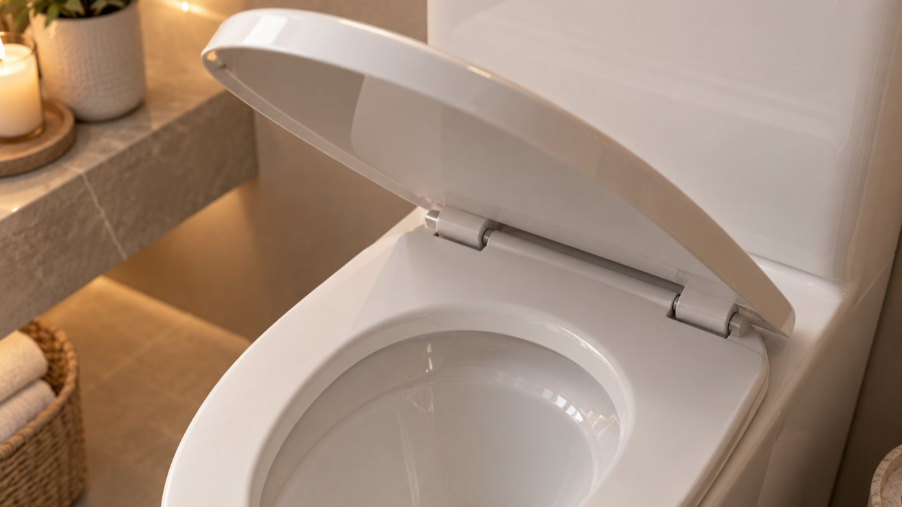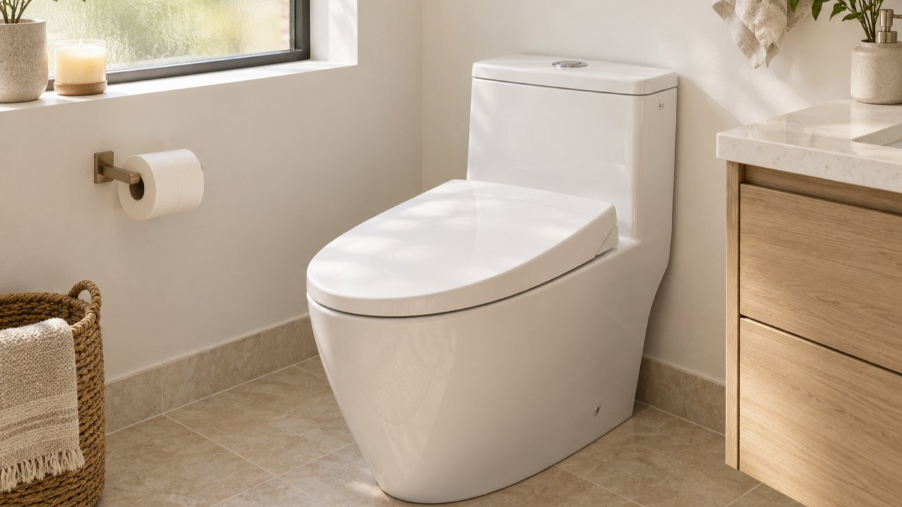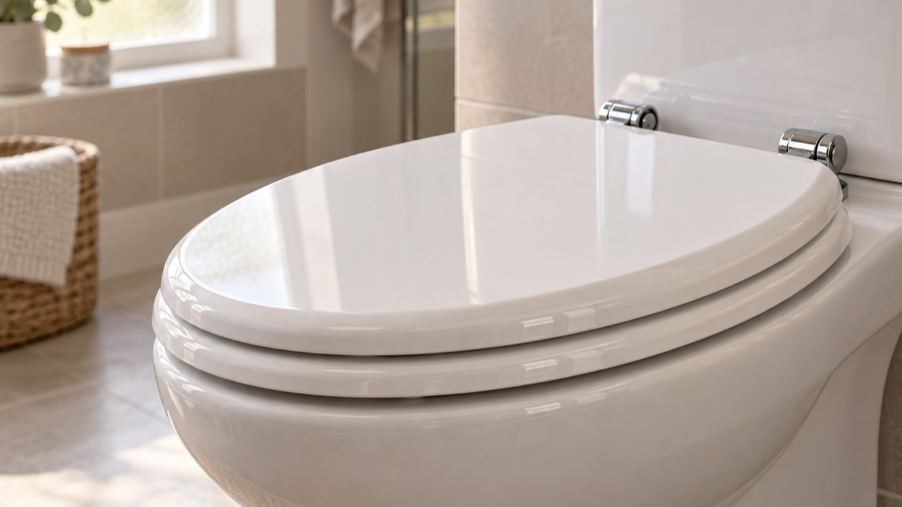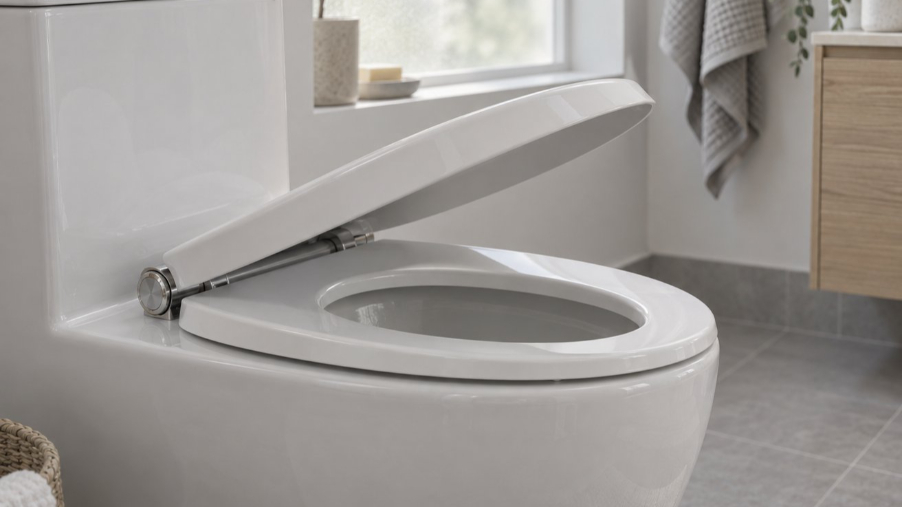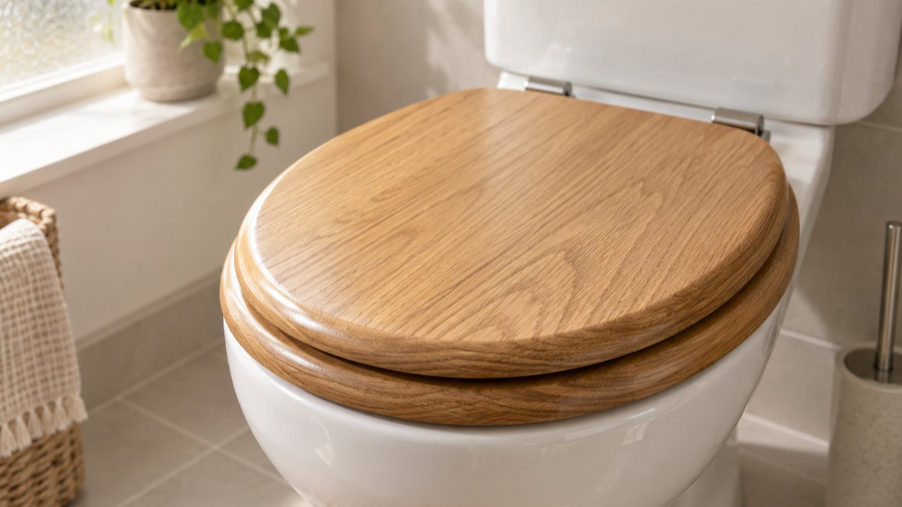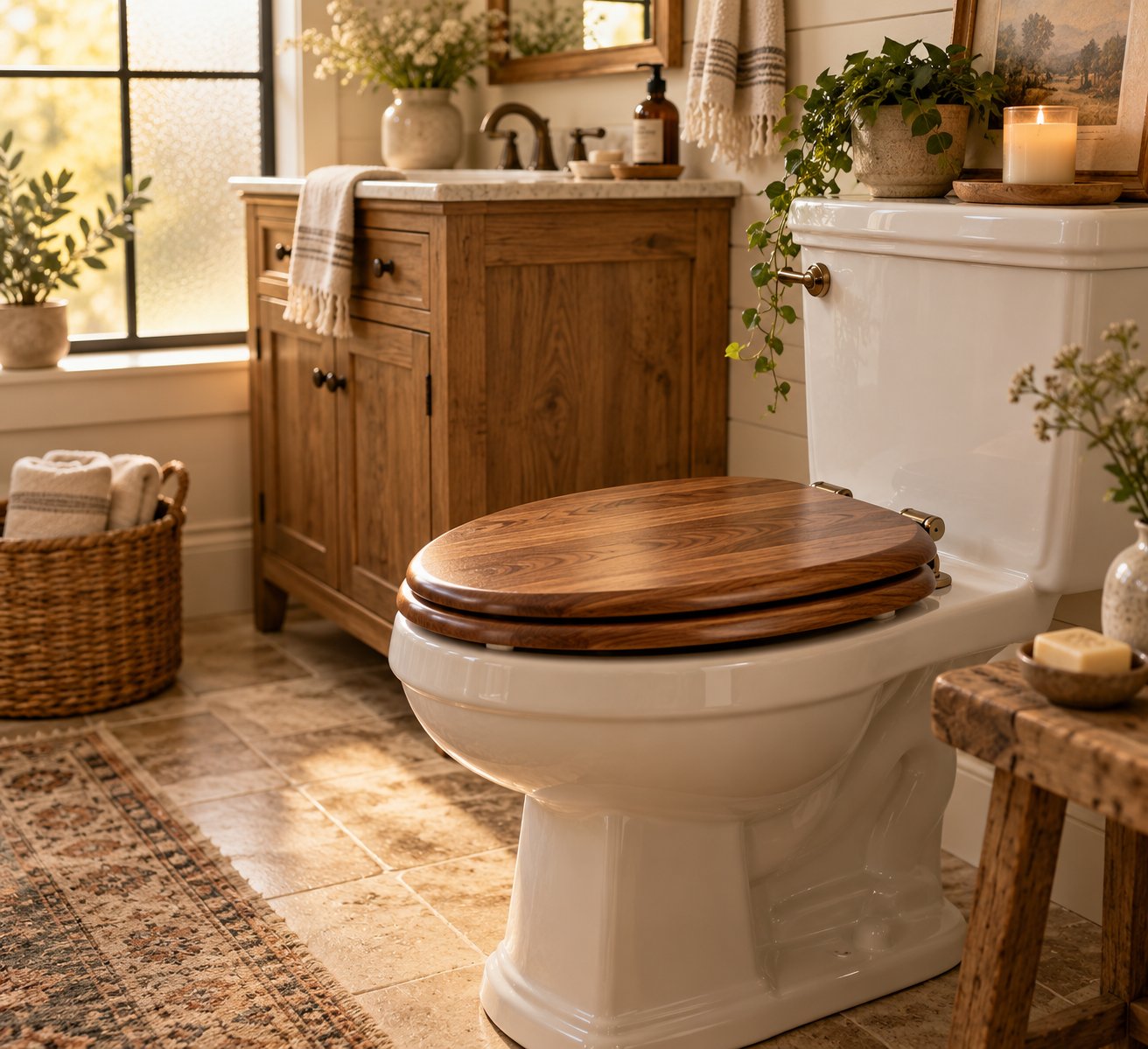
What Makes a Wood Elongated Toilet Seat Different
A wood elongated toilet seat is an oval-shaped seat crafted from wood or wood-composite materials, designed to fit elongated toilet bowls that measure roughly 18 to 18.5 inches from the mounting holes to the front rim. Unlike its round counterpart, which spans about 16.5 inches, the elongated profile provides a larger seating area and a sleeker silhouette that suits most modern and traditional bathrooms alike. It is one of those bathroom fixtures that quietly shapes the entire feel of a room, yet rarely gets the attention it deserves.
Defining the Wood Elongated Toilet Seat
Picture the classic oval shape you see on most full-size toilets, then imagine it made from real timber or engineered wood rather than hollow plastic. That is the core idea. The elongated design stretches approximately two inches longer than a round bowl seat, offering noticeably more comfort for adults. What qualifies as "wood" in this category, though, is broader than many buyers expect. A wooden toilet seat might be milled from solid hardwood like oak or walnut, compressed from wood fibers into a dense molded-wood panel, built from MDF with a protective enamel coating, or finished with a thin real-wood veneer over a composite core. Each of these materials delivers a different balance of weight, grain visibility, moisture tolerance, and price, yet they all share the unmistakable substance that separates a wood toilet seat from a plastic one.
Why Homeowners Still Prefer Wood
Plastic toilet seats dominate the mass market for good reason: they are affordable, lightweight, and waterproof straight out of the box. So why do homeowners keep reaching for wood? The answer usually starts the moment you sit down.
Wood toilet seats offer a warmer surface temperature than plastic or resin, making them immediately more comfortable in cooler climates and seasons, especially in bathrooms without radiant floor heating.
That natural warmth is not a marketing gimmick. Wood is a poor conductor of heat, so it does not pull warmth away from your skin the way plastic and resin do. Beyond comfort, a wooden lavatory seat adds visual weight and a premium feel that plastic simply cannot replicate. Whether your bathroom leans farmhouse, rustic, mid-century, or transitional, wood introduces texture and warmth that tie a design together. The sturdier feel under your hands when you lift the lid, the satisfying heft when the seat is closed, and the rich grain pattern or smooth enamel finish all contribute to a sense of quality.
Durability plays a role, too. A well-finished wooden WC seat resists the flexing and hinge cracking that plagues thinner plastic models, and many solid or molded-wood seats outlast budget plastic alternatives by years. The trade-off is that wood demands a bit more attention to moisture protection, but modern finishes have narrowed that gap considerably.
This guide walks you through everything you need to choose confidently: the different wood materials and how they compare, the finish types that determine longevity, precise measuring steps so your new seat fits perfectly, installation best practices, and honest advice on when wood is the right call and when it is not. The differences between material types, it turns out, matter far more than most product listings reveal.
Types of Wood Used in Elongated Toilet Seats
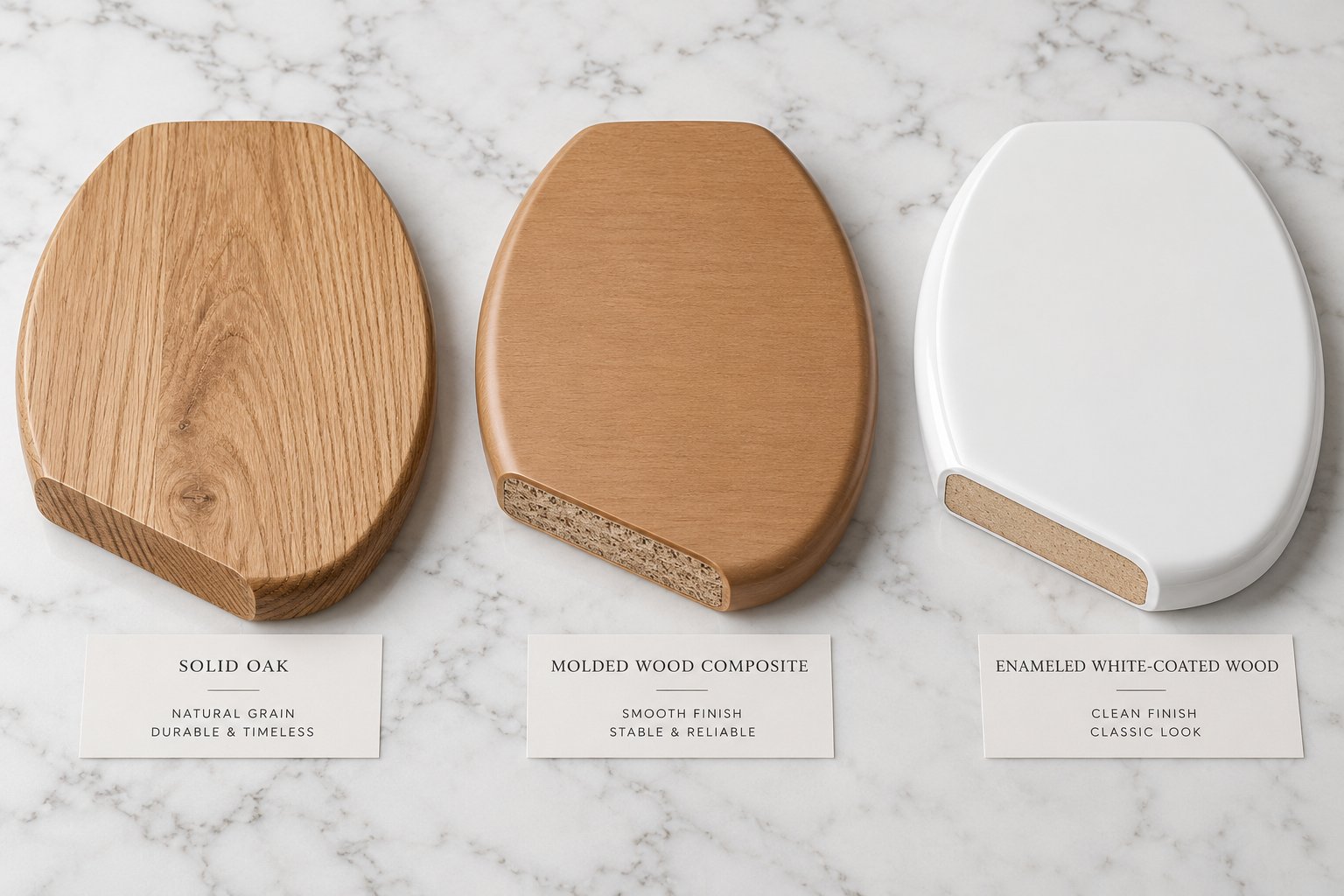
Not all wooden toilet seats are built from the same stuff. The word "wood" on a product label can mean anything from a slab of solid oak to a compressed panel of wood fibers bonded with resin. Each material behaves differently in a bathroom environment, carries a different price tag, and suits a different set of priorities. Understanding these categories is the fastest way to avoid buyer's remorse.
Solid Hardwood Options - Oak, Walnut, and Bamboo
Solid wood seats are milled directly from natural timber. Oak, walnut, mahogany, and bamboo are the species you will encounter most often. When you pick one up, you will notice the weight immediately; these are the heaviest seats on the market, and that heft translates into a reassuringly sturdy feel on the bowl.
The real draw, though, is the grain. A solid wood toilet seat displays unique grain patterns that no two pieces share, making it a genuine design statement in bathrooms with rustic, traditional, or artisan aesthetics. A walnut toilet seat, for example, brings deep chocolate tones and swirling cathedral grain that an engineered product simply cannot reproduce.
The trade-off? Solid hardwood is more sensitive to humidity. Without a high-quality protective finish, natural wood can warp, crack, or expand when exposed to repeated moisture cycles. Prices also run higher, typically ranging from $40 to $120 or more, reflecting both material cost and the labor-intensive production process.
MDF and Molded Wood Composites
If you have ever shopped for an elongated wood toilet seat at a home-improvement store, chances are most options on the shelf were molded wood. These seats are manufactured by compressing wood fibers and resin under high pressure and temperature, producing a dense, uniform panel that is then shaped in a mold.
The result is impressive consistency. Unlike natural timber, molded wood resists cracking and warping because its internal structure is evenly distributed. Multiple layers of paint or lacquer seal the surface, boosting moisture resistance well beyond what raw hardwood offers out of the box. Molded wood seats are widely used in residential homes, hotels, rental properties, and commercial bathrooms for exactly these reasons. Pricing is moderate, usually falling between $20 and $60, making them the workhorse of the wooden loo seat category.
MDF-core seats follow a similar logic. Medium-density fiberboard provides a stable, warp-resistant base that accepts paint, enamel, or veneer finishes easily. For mass-market production where uniform quality matters more than visible grain, MDF and molded wood composites are the go-to choice.
Enameled and Veneer-Finished Seats
Imagine combining the practical strengths of an engineered core with either a rock-hard painted shell or a thin slice of real wood on top. That is exactly what enameled and veneer-finished seats deliver.
Enameled seats start with a wood or MDF core, then receive a hard enamel paint layer that completely seals the surface. This creates the strongest moisture barrier available on a toilet seat elongated wood buyers can find, and it opens the door to virtually any color: classic white, matte black, espresso brown, or custom shades to match cabinetry. Cleaning is effortless because the glossy coating leaves no pores for moisture or bacteria to penetrate.
Veneer options take a different approach. A thin layer of real hardwood is bonded over a composite core, giving you authentic wood appearance and texture at a fraction of solid-timber cost. Veneer seats look and feel remarkably close to their solid counterparts but benefit from the dimensional stability of the engineered base beneath.
Material Comparison at a Glance
| Material Type | Durability | Moisture Resistance | Price Range | Best For |
|---|---|---|---|---|
| Solid Hardwood (Oak, Walnut, Bamboo) | High, but susceptible to cracking without proper finish | Low to moderate - requires quality sealant | $40 - $120+ | Design-focused bathrooms, rustic or traditional decor |
| MDF / Molded Wood Composite | High - consistent internal structure resists warping | Moderate to good - sealed surface repels moisture | $20 - $60 | Everyday residential use, rentals, hotels, commercial spaces |
| Enameled / Veneer-Finished | Moderate to high - depends on core and coating quality | Good to excellent - enamel creates a strong moisture barrier | $25 - $80 | High-humidity bathrooms, color-matched designs, easy maintenance |
The material you choose sets the foundation, but it is only half the equation. The finish applied over that material determines how well your elongated wood toilet seat holds up against daily moisture, cleaning products, and the general wear of everyday bathroom life.
Wood vs. Plastic Elongated Toilet Seats
Knowing the material options within the wood category is useful, but the bigger question most buyers wrestle with first is simpler: should I go with wood or stick with plastic? Both have genuine strengths, and neither is universally superior. The right answer depends on your bathroom's climate, your design priorities, and how much maintenance you are willing to accept. Here is an honest, side-by-side look at what each material actually delivers.
Warmth, Comfort, and Aesthetics
Sit down on a plastic toilet seat in an unheated bathroom on a January morning, and you will understand the appeal of wood in about two seconds. Plastic is a relatively good thermal conductor, which means it pulls heat away from your skin on contact. Wood behaves in the opposite way. It insulates rather than conducts, so the surface feels close to room temperature the moment you sit. In cooler climates or bathrooms without radiant heating, that difference is not trivial - it is the single most-cited reason homeowners choose a wooden toilet seat over a plastic one.
Then there is the visual side. A wooden toilet adds texture and warmth to a bathroom in ways that plastic struggles to match. Whether it is a honey-toned oak seat in a farmhouse-style powder room or a dark enameled seat in a transitional master bath, wood carries an inherent richness. Plastic seats, by contrast, tend to read as utilitarian. They are available in white, off-white, black, and occasionally gray or pastel shades, but even the best-finished plastic lacks the grain, depth, and visual weight that wood provides. If your bathroom renovation prioritizes character and a premium feel, wood has a clear edge.
Comfort goes beyond temperature, too. The extra weight of a wood seat - typically two to three times heavier than a comparable plastic model - creates a planted, stable feeling on the bowl. There is no flexing, no lateral shift, and no hollow sound when the lid closes. You will notice the solidity every time you use it.
Durability, Weight, and Cleaning Compared
Here is where the comparison gets more nuanced, and where honesty matters most.
Wood seats are heavier and feel significantly more substantial, but that mass comes with a caveat: if the protective finish chips, cracks, or wears through, moisture can reach the wood core. Once water infiltrates, warping, swelling, and finish peeling can follow. Proper sealing and periodic inspection keep this risk low, but it is a maintenance commitment that plastic simply does not require.
Plastic seats are inherently resistant to moisture and will never absorb water regardless of finish condition. Their non-porous surfaces make wiping down quick and straightforward. The downside? Thinner plastic seats can flex under heavier users, hinge points are prone to cracking over time, and prolonged UV exposure near a bathroom window can cause yellowing or surface brittleness. Under normal household conditions, a plastic seat typically lasts five to seven years before showing visible wear.
A well-maintained wood or molded-wood seat, on the other hand, can last seven to ten years or longer, especially if it uses enameled or polyurethane-sealed finishes that shield the core from humidity. For a toilet seat round wood or elongated, the lifespan advantage often tips toward wood when the finish is kept intact.
Price sits somewhere in the middle of the debate. Standard plastic seats are the most affordable option on the market. A basic wooden toliet seat costs more than entry-level plastic but often less than premium slow-close plastic models loaded with features like quick-release hinges and antimicrobial coatings. In other words, a quality wood seat round option or elongated model competes directly with mid-range plastic in terms of price-to-value.
Head-to-Head Comparison
| Feature | Wood Elongated Seat | Plastic Elongated Seat |
|---|---|---|
| Surface Warmth | Warm to the touch immediately; insulates against cold | Cold on contact, especially in unheated bathrooms |
| Weight / Feel | Heavier and more solid; minimal flex or movement | Lighter; can flex slightly under load on thinner models |
| Moisture Resistance | Depends on finish quality; vulnerable if seal is compromised | Inherently waterproof; non-porous surface repels moisture |
| Cleaning Ease | Smooth when enameled; natural finishes need gentler products | Very easy; non-porous surface wipes clean quickly |
| Aesthetic Appeal | Natural grain, rich texture; suits traditional, rustic, and transitional designs | Clean and modern; limited texture; can look utilitarian |
| Typical Price Range | $20 - $120+ depending on material and finish | $10 - $80+ depending on features |
| Lifespan | 7 - 10+ years with proper finish maintenance | 5 - 7 years under normal household use |
Neither material wins every category. Plastic is the lower-maintenance, moisture-proof option that suits busy households and high-humidity spaces. A wooden toilet seat is the comfort-first, design-forward choice that rewards owners who invest a little care in upkeep. The deciding factor often comes down to a question that has nothing to do with the seat itself: what kind of finish does it carry, and how well does that finish protect the wood underneath?
Understanding Finish Types and Their Impact on Durability
The finish on a wood elongated toilet seat is not just a cosmetic choice - it is the single biggest factor determining how long that seat will last in a humid bathroom. Two seats built from identical oak cores can have wildly different lifespans depending on what is protecting the surface. Think of the finish as armor: the right type shields the wood from moisture, cleaning chemicals, and daily wear, while the wrong type (or a deteriorating one) leaves the core exposed to everything a bathroom can throw at it.
Natural, Stained, and Oil Finishes
If showcasing real wood character is the priority, these three finish families are where you will look first.
A natural finish applies a clear protective coat - typically polyurethane or lacquer - directly over raw wood, preserving the original color and grain pattern. You will see every knot, swirl, and color shift the timber offers. On an oak toilet seat, for instance, a natural finish highlights the distinctive cathedral grain and golden-amber tone that make oak so popular in bathroom fixtures. It is the closest you can get to the raw beauty of the wood while still having a moisture barrier in place.
Stained finishes take it a step further. A pigmented stain is applied to the wood before the protective clear coat goes on, changing the seat's tone without hiding the grain. Walnut, cherry, ebony, and driftwood are common stain choices. This approach lets you match an elongated molded wood toilet seat to your vanity, flooring, or trim color - a detail that matters when you are pulling a cohesive design together. Staining also gives buyers restoring a vintage toilet seat setup the freedom to age-match new hardware to period-appropriate tones without sourcing rare antique materials.
Oil finishes work differently from coatings that sit on top of the surface. Penetrating oils like tung oil or Danish oil soak into the wood fibers, nourishing and hardening them from within. The result is a soft, matte sheen and a tactile warmth that film-forming finishes cannot replicate. The trade-off? Oil finishes do not create a continuous moisture barrier the way polyurethane or enamel does. They require periodic reapplication - typically every six to twelve months in a bathroom environment - to maintain protection. For a powder room or guest bathroom that sees lighter use, this is manageable. In a high-traffic family bathroom with daily showers, oil finishes demand more attention than most homeowners want to give.
Enameled and Painted Finishes
When moisture protection and color flexibility matter more than visible grain, enameled and painted finishes are the practical winners.
An enameled toilet seat molded wood or MDF core receives multiple coats of hard enamel paint, creating a smooth, non-porous shell that completely seals the wood beneath. This is the same principle behind factory-finished bathroom cabinetry, where sealed paint or clear-coat finishes consistently outperform lightly sealed wood in humid conditions. The enamel surface is easy to wipe, resists staining, and blocks water penetration even in bathrooms where ventilation is not ideal.
Color options open up dramatically with enamel. Classic white remains the most popular choice, but matte black, espresso brown, gray, and custom-matched hues are all available. Painted finishes follow the same logic - a pigmented coating applied in multiple layers over a primed surface - though they may not achieve quite the same hardness as a true baked enamel. Either way, these finishes suit high-humidity environments better than any natural-look alternative, and they are the easiest to keep clean with standard bathroom products.
For homeowners working on a vintage toilet seat restoration or designing a period-inspired bathroom, enameled finishes offer another advantage: they can replicate the look of classic porcelain or painted fixtures from earlier decades while providing a level of moisture protection that original materials never had.
How Finish Affects Longevity in Humid Bathrooms
Here is the insight that catches many buyers off guard: finish quality matters more than wood species when it comes to moisture protection. A well-enameled MDF seat can outperform a poorly sealed solid oak toilet seat by years, simply because the enamel creates a complete moisture barrier while the inadequate sealant on the oak lets water creep in at bolt holes, edges, and micro-cracks.
Humidity is relentless. Steam from a shower condenses on every surface, and water vapor lingers in poorly ventilated rooms long after the fan shuts off. The U.S. EPA recommends keeping indoor humidity below 60 percent, ideally between 30 and 50 percent, to prevent mold and moisture damage. A toilet seat's finish is what stands between that humid air and the wood core underneath.
Not all finishes demand the same level of upkeep. Here is how they stack up, from lowest maintenance to highest:
- Enameled / Painted - hardest shell, strongest moisture barrier, virtually no routine maintenance beyond normal cleaning
- Polyurethane-sealed - durable clear coat that protects well but can wear through at contact points over several years
- Stained and sealed - good protection while intact, but stain does not add moisture resistance on its own; the clear coat does the heavy lifting
- Oil-finished - beautiful feel, but requires reapplication every six to twelve months in a bathroom setting
- Raw / Unfinished - no protection at all; absorbs water immediately and will warp, stain, or mold in a humid bathroom
The practical takeaway is straightforward. If your bathroom runs humid and ventilation is limited, lean toward enameled or polyurethane-sealed finishes. If your bathroom is well-ventilated and you enjoy the ritual of periodic maintenance, oil or natural finishes reward you with unmatched warmth and character. Matching the finish to the environment is what separates a seat that looks great for a decade from one that starts peeling within a year.
A perfect finish, though, only performs as intended when the seat actually fits the bowl it sits on. And that is where the most common - and most avoidable - purchasing mistake happens.
How to Measure Your Toilet for the Perfect Fit
Buying a beautiful wooden seat toilet owners will love using every day means nothing if the seat does not actually fit the bowl. It sounds obvious, yet ordering the wrong size remains the single most common mistake people make when replacing a toilet seat. The problem is that elongated and round bowls look surprisingly similar at a glance, and guessing based on appearance alone leads to returns, frustration, and wasted time. A tape measure and about three minutes are all you need to get it right the first time.
Elongated vs. Round - How to Tell What You Have
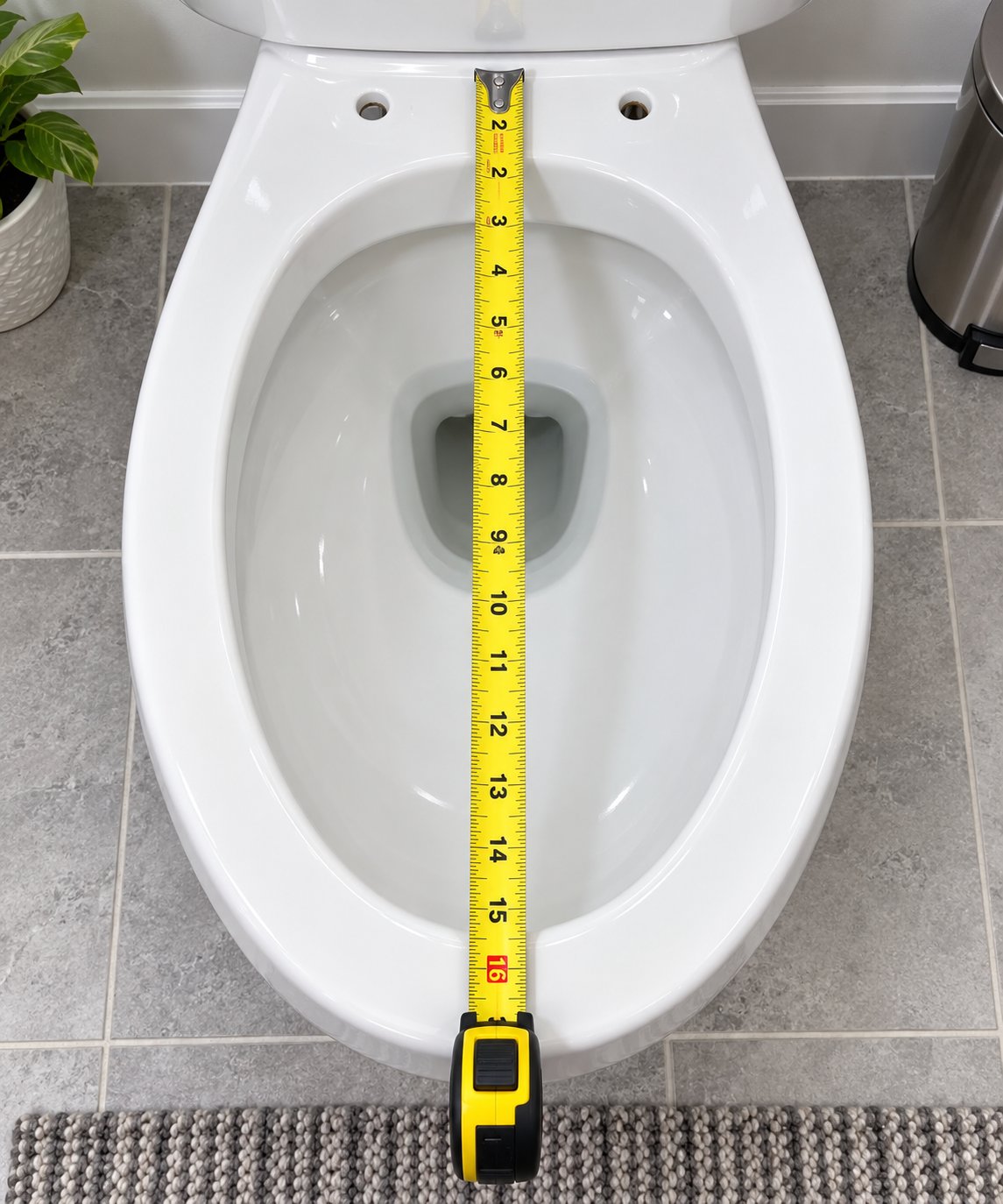
The quickest, most reliable method is a single straight-line measurement. Lift your existing seat out of the way, then measure from the center of the two bolt holes at the back of the bowl straight forward to the very front edge of the rim. That one number tells you everything:
- Approximately 18.5 inches - you have an elongated bowl. This is the shape a wood elongated toilet seat is designed to fit.
- Approximately 16.5 inches - you have a round bowl. You need a round seat, not an elongated one.
- Around 17 inches - you likely have a compact elongated bowl. These typically accept an elongated seat, but always cross-reference with the toilet manufacturer's spec sheet before ordering.
That two-inch gap between round and elongated may not sound like much, but it is the difference between a seat that sits flush on the rim and one that overhangs awkwardly or leaves exposed porcelain at the front. Measure the bowl itself, not your old seat - a previous owner may have installed a mismatched seat, which is exactly the problem you are trying to avoid.
Bolt Spacing and Hinge Compatibility
Bowl length determines shape, but bolt spacing determines whether the seat's hinges will line up with the holes in your porcelain. The good news? Residential toilets are remarkably standardized here. The two mounting holes at the back of the bowl are spaced approximately 5.5 inches apart, center to center, across virtually all manufacturers. Whether your toilet is from a budget line or a premium brand, this dimension almost never varies.
Where things get more interesting is hinge style. Wood seats come with several hinge configurations, and the type you choose affects both installation convenience and long-term stability:
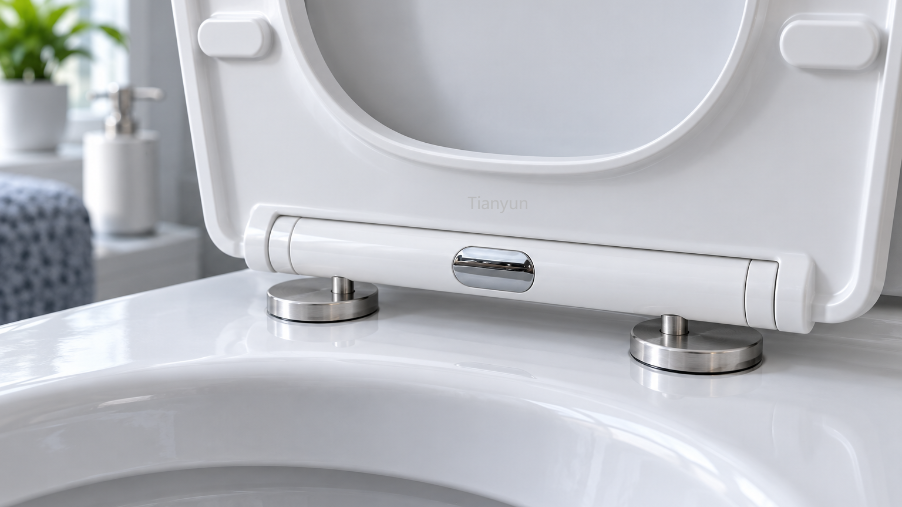
- Standard bolt hinges - plastic or metal bolts drop through the bowl's mounting holes and tighten with a nut underneath. This is the most common setup on wooden commode seat models and works universally, though it requires reaching behind the bowl to secure the nuts.
- Top-tightening hinges - the fastener tightens from above, so you never need to reach under the bowl. These install faster and stay tight more reliably over time.
- Quick-release hinges - the seat unclips from the hinge plate for easy removal and cleaning, a practical feature when maintaining a wood finish that needs occasional attention.
Material matters here, too. Some wood seats use metal hinges, which are heavier-duty and better suited to the extra weight of a solid or molded-wood seat. Others use plastic hinges, which are lighter and less expensive but may wear faster under a heavier lid. Since wood seats weigh two to three times more than their plastic counterparts, hinge quality directly affects how stable and wobble-free the seat remains after months of daily use.
Your Step-by-Step Measuring Checklist
Before you add any seat to your cart, run through these four checks. They take less time than reading this paragraph:
- Measure bolt-hole-to-front-of-bowl length. From the center point between the two mounting holes, measure straight to the front outer edge of the rim. Record the number: roughly 16.5 inches means round, roughly 18.5 inches means elongated.
- Measure bolt-hole center-to-center spacing. Confirm the distance between the centers of the two mounting holes. It should be approximately 5.5 inches. If it is not, you may have a non-standard or European-style toilet that requires a specialty seat.
- Measure bowl width at the widest point. Stretch the tape across the bowl at its widest span. Most elongated bowls fall between 14 and 14.5 inches wide. This measurement helps verify that the seat you are considering will not overhang the sides.
- Check clearance between the tank and the bolt holes. Some toilets, especially one-piece or skirted designs, have limited space between the front of the tank and the mounting holes. Measure this gap to ensure the seat's hinge mechanism will fit without bumping the tank when the lid opens fully.
Always measure your existing toilet before ordering - never assume your bowl shape based on appearance alone.
Write these four numbers down and keep them handy while you shop. They eliminate guesswork entirely and ensure that your new seat drops onto the bowl like it was made for it. Getting the fit right is the foundation, but how the seat behaves once it is mounted - specifically, how the lid closes - is where the next critical decision comes in, especially given the extra weight wood brings to the equation.
Why Soft-Close Hinges Matter More on Wood Seats
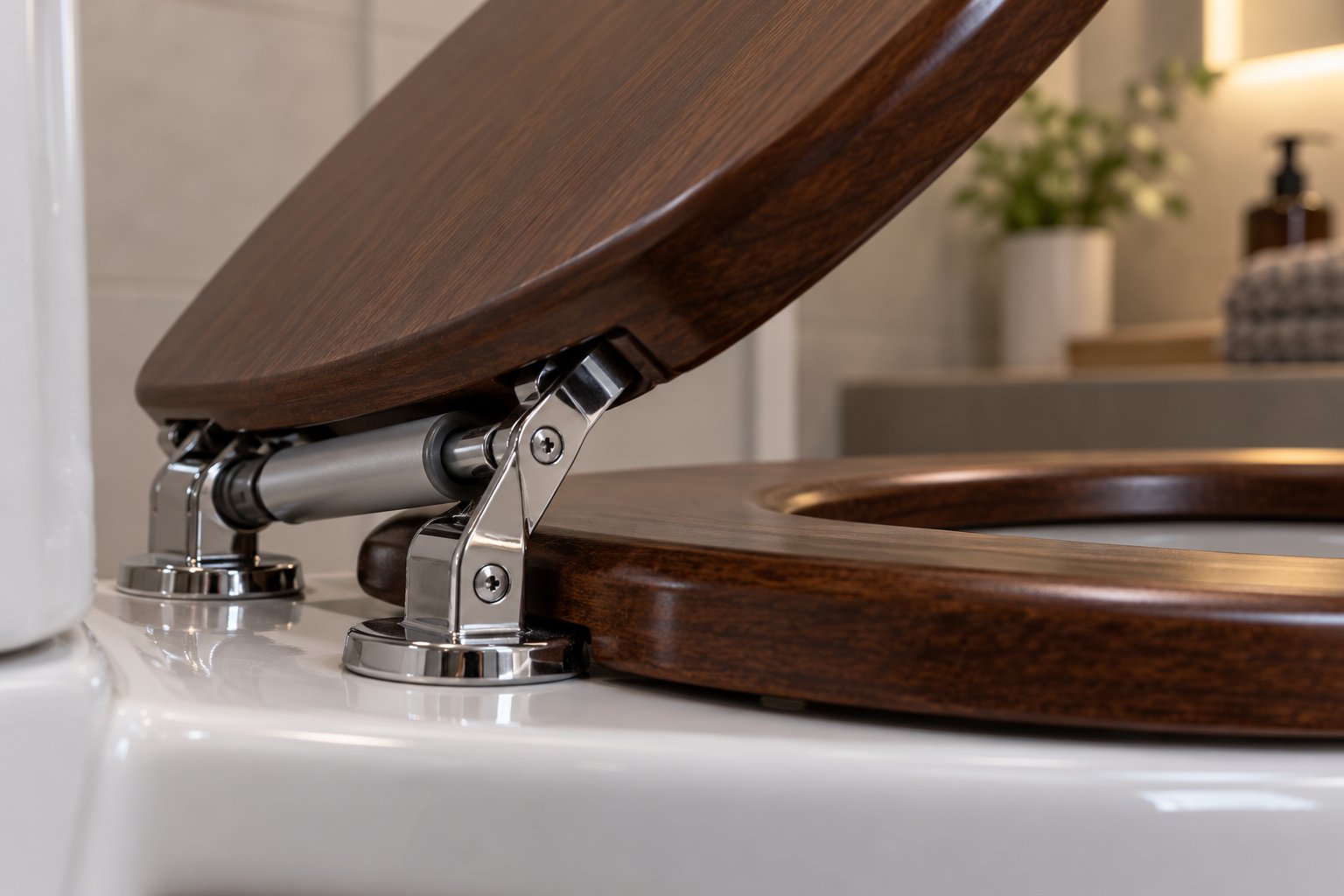
A wood elongated toilet seat can weigh two to three times more than a comparable plastic model. That extra mass is part of the appeal - it feels solid, planted, and premium on the bowl. But it also means gravity hits harder when someone lets the lid drop. A slamming plastic lid is annoying. A slamming wood or MDF lid is louder, more jarring, and genuinely capable of cracking the enamel finish on the seat itself or chipping the porcelain rim beneath it. Whether you are dealing with an elongated seat, a toilet seat wood round configuration, or even a heavy mahogany toilet seat on a guest-bath bowl, a soft-close hinge is not a luxury feature - it is protective hardware.
How Soft-Close Dampers Work on Wood Seats
The concept is straightforward. A damper integrated into or mounted alongside the hinge applies controlled resistance as the lid descends, turning what would be a free-fall slam into a slow, quiet arc. Most modern soft-close toilet seat dampers use a rotary damping mechanism where internal fluid resistance - typically silicone oil paired with precision-engineered rotors - slows the lid's rotation through the hinge axis.
Here is the detail that matters most and that many buyers overlook: the damper's torque must be calibrated to the seat's weight. A damper engineered for a lightweight plastic lid cannot generate enough resistance to control a dense MDF or solid-wood seat. The lid will still close too fast, the damper will strain under loads it was never designed for, and the mechanism will wear out far sooner than its rated cycle life. For wood toilet seats round or elongated, the damper and the seat have to be matched as a system, not pieced together from mismatched parts.
What Separates a Reliable Damper from a Cheap One
Imagine two dampers that look nearly identical on the outside. One maintains smooth, consistent closing speed after 50,000 cycles. The other starts skipping, speeding up, or sticking after a few thousand. The difference comes down to engineering precision and environment-specific design.
A high-quality damper delivers stable torque output across tens of thousands of open-close cycles, resists the corrosive effects of bathroom humidity on internal seals and components, and is purpose-built for the weight class of the seat it serves. Manufacturers who engineer dampers specifically for MDF, wooden, resin, and metal seat structures can fine-tune torque curves precisely - unlike generic one-size-fits-all units that try to split the difference between a featherweight plastic lid and a hefty round wooden toilet seat.
For seat manufacturers and OEM buyers working on wood-style toilet seat projects, this distinction is critical. Purpose-built solutions like Tianyun's MDF / Metal Damper offer custom torque calibration and OEM mounting designs tailored specifically to wood, MDF, resin, and metal seat structures, giving producers a direct path to stable soft-close performance without the trial-and-error of adapting plastic-grade hardware.
When evaluating any soft-close damper for a toilet seat wood application, whether you are a homeowner comparing products or a manufacturer sourcing components, these are the criteria that separate dependable mechanisms from disposable ones:
- Torque consistency - the damper should deliver the same closing speed on cycle 50,000 as it does on cycle one
- Cycle life - reliable dampers are tested to 50,000 to 100,000 cycles under realistic load conditions
- Humidity resistance - internal seals and materials must withstand constant bathroom moisture without degrading or leaking
- Material-specific design - the damper's torque range should match the weight and leverage profile of wood, MDF, or metal seats rather than defaulting to plastic-seat specs
- Mounting flexibility - hinge integration should accommodate various seat geometries and bowl configurations, including both wood toilet seats round and elongated formats
A soft-close damper is only as good as its weakest specification. Consistent torque with poor humidity resistance still leads to early failure. High cycle ratings mean nothing if the torque is mismatched to the seat weight. The best results come from systems where every variable - torque, sealing, materials, and mounting - is engineered as a unified package for the specific seat type it will serve.
Solid damper hardware protects the seat's finish, the porcelain bowl, and your ears for years. But even the best hinge system only performs correctly if the seat is installed properly - and installation mistakes are surprisingly common with heavier wood models.
Installing a Wood Elongated Toilet Seat Step by Step
You have picked the right material, confirmed your measurements, and chosen a seat with quality soft-close hardware. The box is sitting on the bathroom floor. What happens next should take fifteen to twenty minutes at most - but rushing through it or skipping a step can lead to cracked wood, misaligned hinges, or a seat that wobbles from day one. Wood toilet seats are less forgiving of installation errors than their plastic counterparts, so a little patience here pays off for years.
Tools and Preparation
The good news? You do not need a professional toolkit. Gather these basics before you start:
- Adjustable wrench or pliers - for gripping and turning nuts beneath the bowl
- Flathead or Phillips screwdriver - check the bolt heads on your new seat to determine which type you need
- A clean cloth or rag - for wiping down the bowl rim and cleaning up any debris
- Penetrating oil (optional) - only necessary if you are removing an old seat with corroded bolts
Start by removing your old seat. Flip open the bolt covers at the back of the bowl, then unscrew the mounting bolts by turning them counterclockwise. Hold the nut from underneath with pliers or a wrench while you turn the bolt from above. If the bolts spin freely but will not come loose, corrosion is likely bonding the nut to the bolt. A spray of penetrating oil and five minutes of patience usually break the bond. In stubborn cases, a mini hacksaw can cut through a metal bolt without damaging the porcelain - just work slowly and protect the rim with a folded towel.
Once the old seat is off, wipe down the entire bowl rim, paying close attention to the area around the bolt holes. Grime, mineral deposits, and old washer residue can prevent the new seat from sitting flat. A clean, dry surface is essential for a stable mount.
Mounting the New Wood Elongated Seat
Unbox your new seat and confirm that all mounting hardware is included - most toilet seats wooden or otherwise ship with bolts, nuts, washers, and any hinge-specific components. Lay everything out so nothing gets lost mid-install. Then follow these steps:
- Align the hinge holes with the bolt holes. Set the seat on the bowl so that the hinge holes line up directly over the two mounting holes in the porcelain. Do not force anything into position - the holes should match naturally if you measured correctly.
- Insert the mounting bolts from the top down. Feed each bolt through the hinge and down through the corresponding hole in the bowl. If your hardware includes washers, place them on the bolts before they go through the porcelain, following the manufacturer's order.
- Hand-tighten the nuts from below. Reach under the back of the bowl and thread the nuts onto the bolts. Turn clockwise by hand until they are snug against the underside of the rim. This is just the initial hold - do not use tools yet.
- Center the seat on the bowl and adjust position. With the nuts only hand-tight, you still have room to slide the seat slightly forward, backward, or side to side. Look at the seat from above and verify it is centered, with even overhang on both sides and the front edge aligned with the bowl rim.
- Tighten firmly - but do not over-torque. Use your wrench or pliers to snug the nuts down while holding the bolt head steady with a screwdriver from above. Alternate between the left and right bolt, tightening each a quarter-turn at a time to keep pressure even.
That final step deserves extra emphasis. Over-tightening is the most common installation mistake with wood toilet seats, and the consequences are more serious than with plastic. Forcing the bolts can crack the seat material at the hinge mount, compress the wood fibers until they split, or even chip the porcelain rim underneath. The goal is firm and stable, not cranked down with maximum force. When the seat no longer shifts under hand pressure, you are there - stop tightening.
Post-Installation Checks
Before you put the tools away, spend two minutes verifying everything is right:
- Open and close the lid several times. The motion should feel smooth and controlled. If the seat has soft-close dampers, confirm that the lid descends slowly and evenly without speeding up at the end of its arc.
- Check for lateral movement. Grab the sides of the seat and try to shift it left and right. Any wobble means the bolts need another quarter-turn - but remember, only a quarter-turn. Recheck after each small adjustment.
- Sit down and test stability. Apply your normal weight and shift slightly. A properly mounted seat should feel completely planted with zero rocking or sliding.
- Inspect the hinge covers. If your seat includes snap-on plastic caps over the bolt heads, press them into place now. These covers keep moisture out of the bolt area and give the installation a finished look.
The entire process, from removing the old seat to closing the hinge covers on the new one, is one of the simplest bathroom upgrades you can tackle. No plumber required, no specialty tools, and no reason to second-guess yourself if you follow the steps in order. Round wood toilet seats install using the same method - the only variable is bolt-hole-to-rim length, which you already confirmed during the measuring stage.
A clean install sets the stage for years of reliable performance. Still, even a perfectly mounted seat will eventually face the wear patterns unique to wood - and knowing how to spot and address those issues early is what keeps a minor cosmetic flaw from becoming a replacement-worthy problem.
Common Wood Toilet Seat Problems and How to Fix Them
Even a perfectly installed wood elongated toilet seat will show signs of wear eventually. Wood lives and breathes in a bathroom environment - it expands with humidity, contracts when dry, and absorbs the stress of thousands of open-close cycles over the years. The difference between a seat that ages gracefully and one that deteriorates quickly almost always comes down to how early you catch problems and how you respond. Most issues are surprisingly fixable if you know what to look for.
Cracking, Peeling, and Finish Degradation
Hairline cracks are the most common structural complaint owners have about wooden toilet seats elongated or round. They tend to appear in two predictable spots: near the bolt holes at the rear of the seat and along the front edge where the lid contacts the ring when closed.
The usual culprits? Over-tightened mounting bolts and repeated slamming. Bolts that are cranked down too hard compress the wood fibers around the hinge mount until they split - a problem you will not notice immediately because the crack often starts beneath the surface and works its way outward over weeks. Slamming creates impact stress at the contact point between lid and ring, gradually fatiguing the finish and the wood beneath it. If your seat lacks a soft-close damper, every drop of the lid is a micro-impact event that adds up.
Peeling finish tells a slightly different story. When you see paint, enamel, or clear coat flaking away, moisture has almost certainly penetrated a compromised seal. The weak points are predictable: bolt holes (where hardware compresses and flexes the coating), the front edge (where splashed water pools before dripping off), and the underside of the ring (where condensation collects). Once water gets beneath the finish, it swells the wood or MDF core, pushing the coating off from underneath.
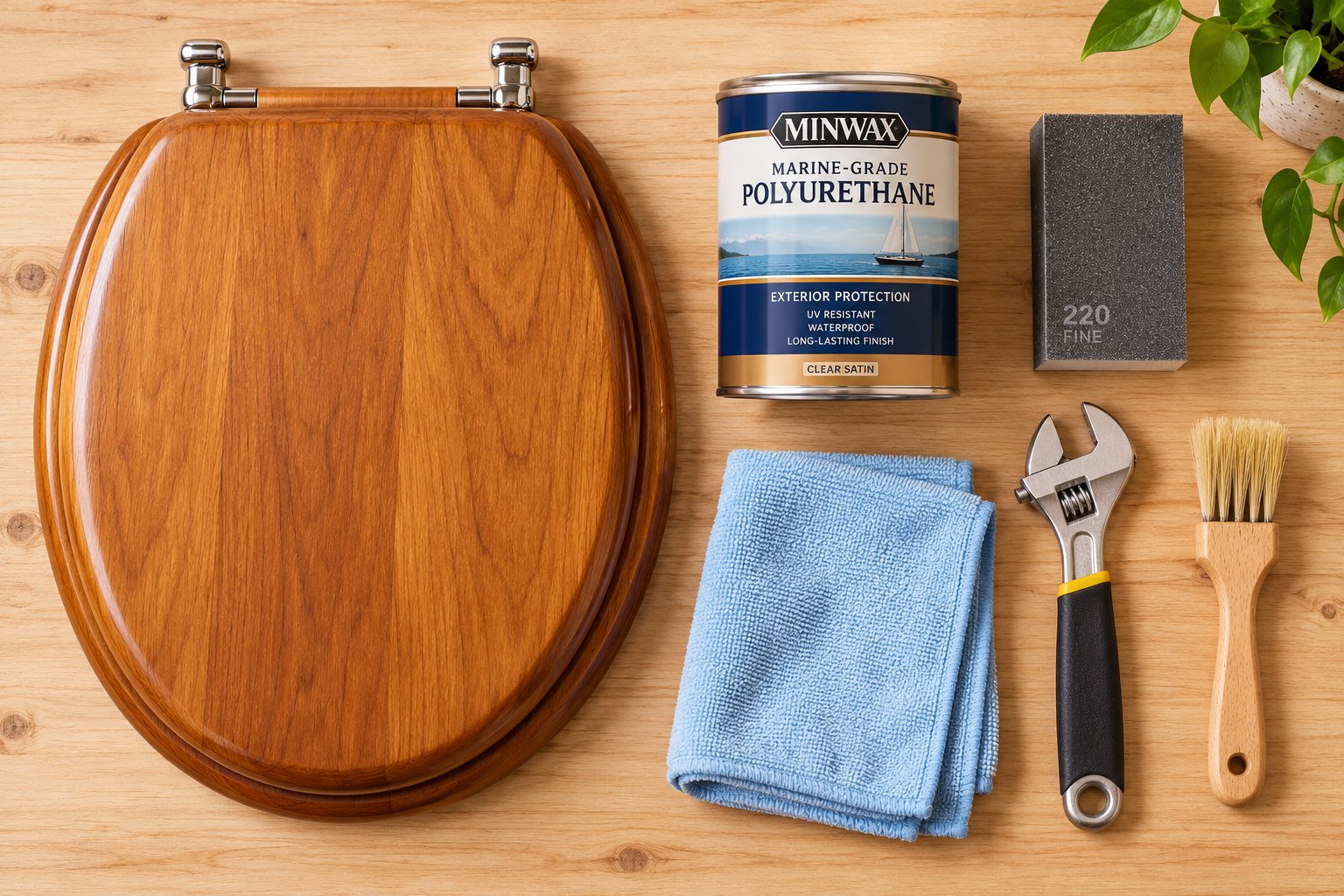
The fix depends on severity. For hairline cracks in solid wood, prying the crack open slightly and working wood glue into the gap with a nozzle applicator can restore structural integrity. Clamp the repair closed, wipe away excess glue immediately, and let it cure overnight before reinstalling the seat. For peeling finish, sand the affected area lightly, clean away all loose material, and re-seal the exposed wood with marine-grade polyurethane - the same waterproof coating used on boat decks. Pay special attention to bolt-hole areas during seasonal inspections. A thin brush coat of polyurethane around those openings once or twice a year takes five minutes and prevents the moisture intrusion that leads to peeling in the first place.
Yellowing and Discoloration
You scrub a white-painted wood toilet seat until it looks perfect, and two weeks later the yellowish tint is back. Sound familiar? This is one of the most frustrating issues owners face, and it persists because the problem is not dirt - it is a material change happening to the surface itself.
White-enameled and painted wood seats yellow for several reasons. UV exposure from bathroom windows or overhead lighting degrades certain pigments and clear coats over time, shifting white toward cream or amber. Chemical cleaners accelerate the process dramatically. Bleach and strong bathroom cleaners strip the protective top layer of the finish, and once that layer degrades, the material underneath absorbs more contaminants, reacts with air, and discolors in ways that no amount of scrubbing can reverse. Off-gassing from certain sealants or adhesives used during manufacturing can also contribute, especially in the first year after purchase.
The key distinction is between surface yellowing and material yellowing. If the discoloration is light and recent, a paste of baking soda and hydrogen peroxide applied gently can lift some of the staining without further damaging the finish. But if the yellow tone is even, deep, and no longer responds to cleaning, the finish itself has chemically changed. At that point, you are looking at either refinishing or replacing the seat.
Prevention is far easier than correction. Switch to a non-abrasive, pH-neutral bathroom cleaner - no bleach, no ammonia, no harsh solvents. Wipe the seat down regularly with a soft cloth rather than abrasive pads. And if your bathroom gets direct sunlight, consider a UV-filtering window film; it protects every surface in the room, not just the seat.
Loosening Hinges and Seat Movement
A wood soft close toilet seat that slides side to side or rocks when you sit down is not just annoying - it is actively wearing out its own hardware. Every lateral shift grinds the bolt against the porcelain mounting hole, enlarges the hole incrementally, and loosens the nut underneath. Left unchecked, the wobble gets worse in a self-reinforcing cycle until the seat feels genuinely unstable.
Why does this happen more with wood than plastic? Weight. A heavier seat wood construction generates more inertia with every shift of your body, putting proportionally more stress on the hinge hardware than a lightweight plastic seat would. Loose mounting bolts are one of the most common reasons a toilet seat becomes unstable, and the added mass of wood accelerates the loosening process.
The immediate fix is simple: re-tighten the mounting bolts. Hold the nut from below with pliers while turning the bolt head clockwise from above. A quarter-turn at a time, alternating sides, until the seat feels firm. Check this every two to three months as part of your regular bathroom maintenance routine.
If the bolts keep loosening despite re-tightening, the hardware itself may be worn. Stripped bolt threads, compressed rubber washers, or cracked plastic nuts lose their grip permanently. Replace the entire mounting kit rather than fighting with degraded parts. For a longer-term upgrade, consider switching to metal hinges with rubber stabilizing bumpers. Metal resists the fatigue that weakens plastic hinge components under heavy loads, and rubber bumpers between the seat and the bowl rim absorb lateral forces that would otherwise transfer directly to the bolts.
Quick-Reference Troubleshooting Checklist
- Cracking → Likely Cause: Over-tightened mounting bolts or repeated slamming without a soft-close damper → Fix: Apply wood glue into hairline cracks, clamp overnight, re-seal with marine-grade polyurethane; install a soft-close damper to prevent future impact damage
- Finish Peeling → Likely Cause: Moisture penetrating a compromised seal at bolt holes or front edge → Fix: Sand loose material, re-seal exposed areas with marine-grade polyurethane; inspect bolt-hole zones seasonally
- Yellowing / Discoloration → Likely Cause: UV exposure, bleach-based cleaners degrading the finish, or sealant off-gassing → Fix: Switch to pH-neutral cleaners; try baking soda and hydrogen peroxide paste for mild cases; replace the seat if discoloration is deep and irreversible
- Loosening / Wobble → Likely Cause: Bolt hardware loosening under the extra weight of a wood seat → Fix: Re-tighten bolts every two to three months; replace worn washers or stripped bolts; upgrade to metal hinges with rubber stabilizing bumpers
- Moisture Warping → Likely Cause: Water infiltrating unsealed wood in a high-humidity bathroom with poor ventilation → Fix: Improve bathroom ventilation; re-seal all exposed wood surfaces; for severe warping, replace the seat and choose an enameled or polyurethane-sealed model
Most of these problems are preventable with seasonal inspections and the right cleaning products. A five-minute check of the bolt areas, finish condition, and hinge tightness twice a year catches small issues before they become replacement-worthy failures. Knowing how to maintain what you have is valuable - but equally important is knowing whether a wood seat is the right fit for your bathroom in the first place, or whether your specific situation calls for a different approach entirely.
Who Should Choose a Wood Elongated Toilet Seat
You have seen the materials, the finishes, the measuring process, the installation steps, and the maintenance realities. All of that information leads to one practical question: is a wood elongated toilet seat actually the right choice for your bathroom? The honest answer depends less on the seat itself and more on the room it will live in, the people who will use it, and the level of upkeep you are genuinely willing to commit to. Here is how to match the decision to your real-world situation.
Ideal Use Cases for Wood Elongated Seats
Some bathrooms practically call out for a wooden toilet seat elongated design. If any of the following scenarios sound like yours, wood is likely to deliver exactly the experience you are after:
- Traditional, farmhouse, or rustic bathroom decor - a wood seat ties directly into warm-toned vanities, shiplap walls, and natural stone or tile. It reinforces the design language instead of interrupting it the way a glossy plastic seat can.
- Homeowners who prioritize warmth and tactile comfort - if stepping into a cold bathroom is part of your daily routine and radiant floor heating is not in the budget, a toilet with wood seat makes a noticeable comfort difference every single morning.
- Guest bathrooms and powder rooms - these spaces see lighter use and heavier visual scrutiny. A well-finished wood toilet seats elongated model adds a premium impression without demanding the constant upkeep a high-traffic family bathroom would require.
- Vintage bathroom restorations - period-appropriate bathrooms from the early to mid-twentieth century relied heavily on painted and enameled wood fixtures. A quality wood toliet seat in the right finish can anchor an authentic restoration without sacrificing modern durability.
- Transitional and mid-century modern designs - the clean lines of an enameled elongated seat in matte black or warm white bridge the gap between classic warmth and contemporary simplicity, complementing mixed-material palettes where wood, metal, and stone coexist.
In each of these cases, the seat is not just a functional object - it contributes to the room's identity. That is where wood toilets genuinely earn their premium over plastic alternatives.
When Another Material Might Be a Better Fit
Recommending wood for every bathroom would be dishonest. Certain conditions tip the balance toward other materials, and recognizing those situations saves you money, frustration, and a premature replacement cycle.
- Extremely high-humidity bathrooms without adequate ventilation - if your bathroom lacks an exhaust fan, has no operable window, and steams up heavily during every shower, even the best-finished wood core is fighting a losing battle against persistent moisture. Excess humidity damages wooden fixtures through swelling, warping, and finish degradation. In these environments, a high-quality plastic seat with soft-close hinges is the more practical investment until you can improve airflow.
- Commercial or high-traffic restrooms - office buildings, restaurants, and public facilities demand rapid cleaning cycles, resistance to harsh commercial disinfectants, and the ability to absorb daily abuse from dozens of users. Plastic and duroplast seats handle this punishment better and cost less to replace when the time comes.
- Households with very young children - toddlers slam toilet lids. Repeatedly. With enthusiasm. Even with a soft-close damper, a seat in a bathroom that doubles as a playground for small hands faces accelerated wear. A sturdy plastic model with a built-in child seat or a lightweight family seat design, like those engineered with thermoplastic construction, may be a smarter choice during the early years. You can always upgrade to wood once the slamming phase passes.
- Bathrooms where bleach-based cleaning is non-negotiable - if household members have health conditions requiring aggressive sanitization, the harsh chemicals involved will degrade wood finishes faster than they will affect non-porous plastic surfaces.
None of these scenarios mean wood is a bad product. They simply mean it is the wrong product for that particular context. Honest self-assessment here prevents the disappointment that comes from blaming the seat for a problem the environment created.
Making the Right Long-Term Investment
Choosing a wood toliet seat that performs beautifully for years comes down to aligning three variables: material, finish, and hardware.
Material sets the baseline. Solid hardwood delivers the richest grain and most premium feel but demands more moisture vigilance. MDF and molded wood composites offer consistent performance and better resistance to warping at a lower price. Enameled options provide the strongest moisture barrier with the widest color range. Match the material to your bathroom's humidity level and your maintenance tolerance.
Finish determines durability. As covered earlier, an enameled or polyurethane-sealed surface protects the core far more reliably than an oil or natural finish in a typical bathroom. If your space is well-ventilated and you enjoy periodic upkeep, natural and oil finishes reward you with warmth and character. If convenience is the priority, enamel wins.
Hardware - specifically hinge and damper quality - is the variable most buyers underestimate. The seat material and finish can be perfect, but if the soft-close mechanism fails or the mounting hardware loosens, the entire experience suffers. A well-engineered damper system protects both the seat's finish and the porcelain bowl from slam damage across tens of thousands of cycles. Purpose-built options like Tianyun's MDF / Metal Damper, designed specifically for wood, MDF, resin, and metal seat structures, illustrate the kind of material-matched engineering that separates lasting performance from early failure. When evaluating any wood seat purchase, check whether the damper was designed for the seat's actual weight class - not borrowed from a plastic-grade parts bin.
When all three variables align with your bathroom's conditions and your personal priorities, a wood elongated toilet seat becomes one of the simplest and most satisfying upgrades you can make. It changes the feel of the room every time you walk in, adds warmth on contact every time you sit down, and rewards careful selection with years of dependable, attractive service. Few bathroom improvements deliver that kind of return for so little effort.
Frequently Asked Questions About Wood Elongated Toilet Seats
1. How do I know if I need an elongated or round toilet seat?
Measure from the center of the bolt holes at the back of the bowl straight to the front edge of the rim. If the measurement is approximately 18.5 inches, you have an elongated bowl and need an elongated seat. If it reads about 16.5 inches, your bowl is round. Never rely on visual guesswork - a quick tape-measure check prevents costly ordering mistakes and unnecessary returns.
2. Are wood toilet seats more durable than plastic ones?
A well-finished wood or molded-wood toilet seat can last seven to ten years or longer, compared to five to seven years for a typical plastic seat. However, wood durability depends heavily on finish quality. Enameled and polyurethane-sealed wood seats resist moisture effectively, while poorly sealed solid wood can deteriorate faster than plastic in humid bathrooms. The key is matching the finish type to your bathroom's humidity level and maintaining the seal around bolt holes and edges.
3. Why is a soft-close hinge important on a wood toilet seat?
Wood seats weigh two to three times more than plastic models, so a dropped lid creates significantly more noise and impact force. Without a soft-close damper, repeated slamming can crack the seat's enamel finish and even chip the porcelain bowl rim. Crucially, the damper must be calibrated specifically for the seat's weight - a damper designed for lightweight plastic will not properly control a heavier MDF or hardwood lid. Purpose-built dampers like Tianyun's MDF / Metal Damper are engineered with custom torque settings for wood and MDF structures, ensuring consistent soft-close performance over tens of thousands of cycles.
4. How do I stop my wood toilet seat from yellowing?
Yellowing on white-painted or enameled wood seats is typically caused by UV exposure, bleach-based cleaners, or off-gassing from sealants. Prevent it by switching to non-abrasive, pH-neutral bathroom cleaners and avoiding bleach or ammonia products entirely. If your bathroom receives direct sunlight, UV-filtering window film helps protect the finish. For mild existing discoloration, a gentle paste of baking soda and hydrogen peroxide can lift surface staining without damaging the coating.
5. What is the best wood toilet seat material for a high-humidity bathroom?
Enameled MDF or molded wood composite seats perform best in high-humidity bathrooms. The enamel coating creates a nearly impenetrable moisture barrier over the engineered wood core, which itself resists warping better than solid timber. Solid hardwood seats like oak or walnut look stunning but require diligent finish maintenance in steamy environments. If your bathroom lacks proper ventilation and runs consistently humid, an enameled composite seat paired with a quality soft-close hinge system offers the best balance of durability, aesthetics, and low maintenance.
Apply This Insight to Your Project
Tell us what you are building and how the topic “Wood Elongated Toilet Seat: Match The Grain, Fit, And Finish” relates to your application. Our engineering team can help evaluate the next step.