What Is an Elongated Toilet Seat and Why Does It Matter
Ever bought a toilet seat only to find it wobbling, overhanging, or leaving an awkward gap along the rim? That frustration almost always traces back to one simple mismatch: the seat shape does not match the bowl shape. Understanding exactly what makes a seat "elongated" eliminates the guesswork and saves you from a return trip to the store.
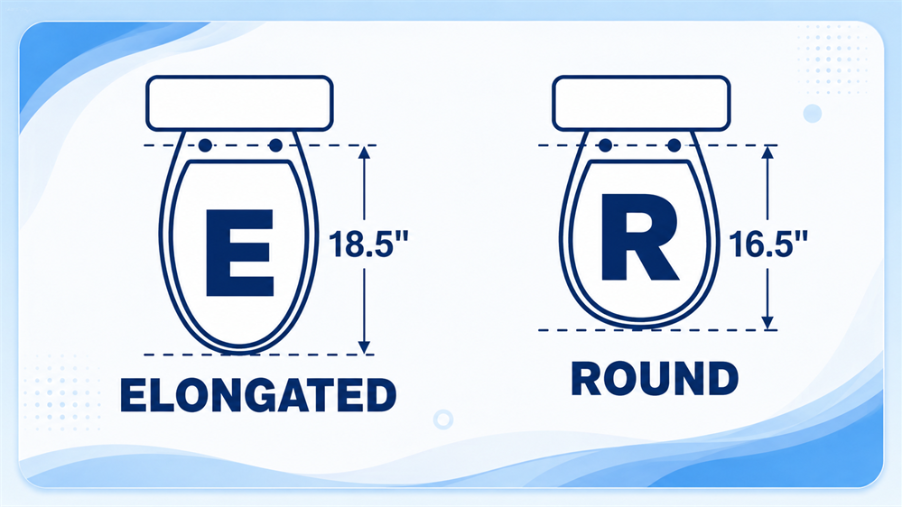
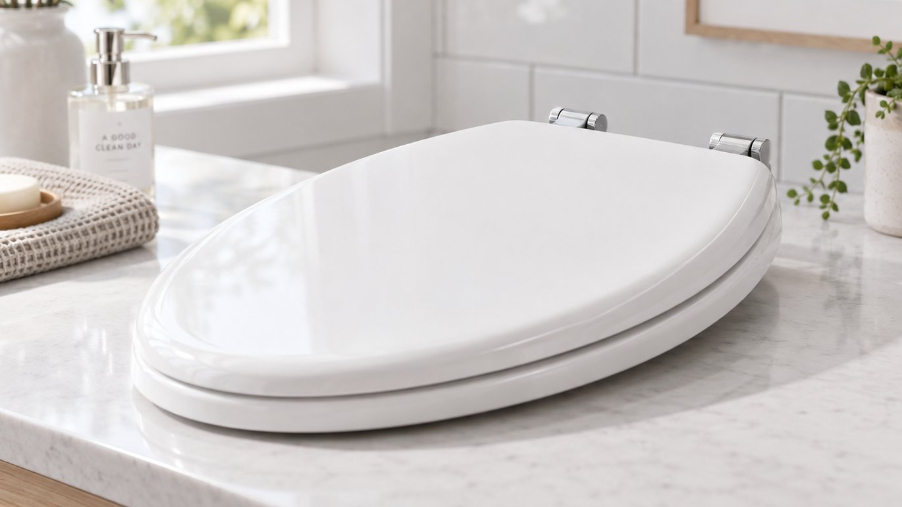
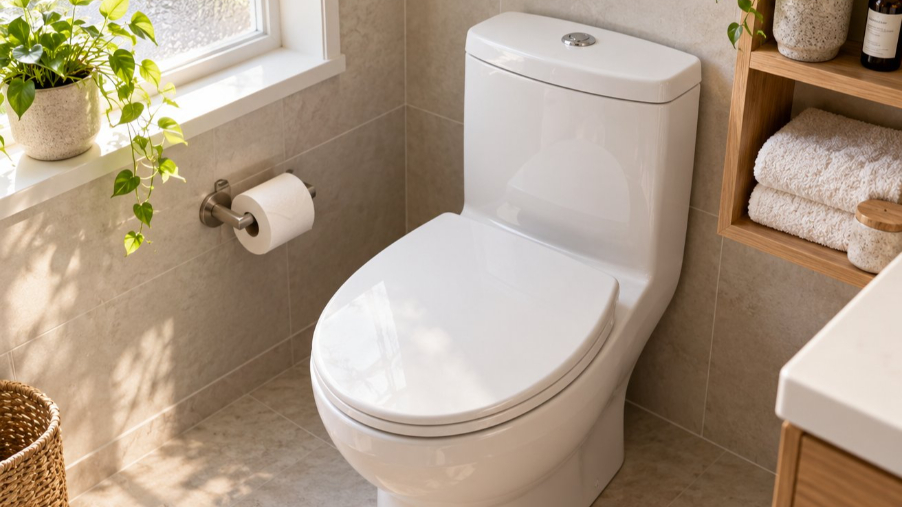
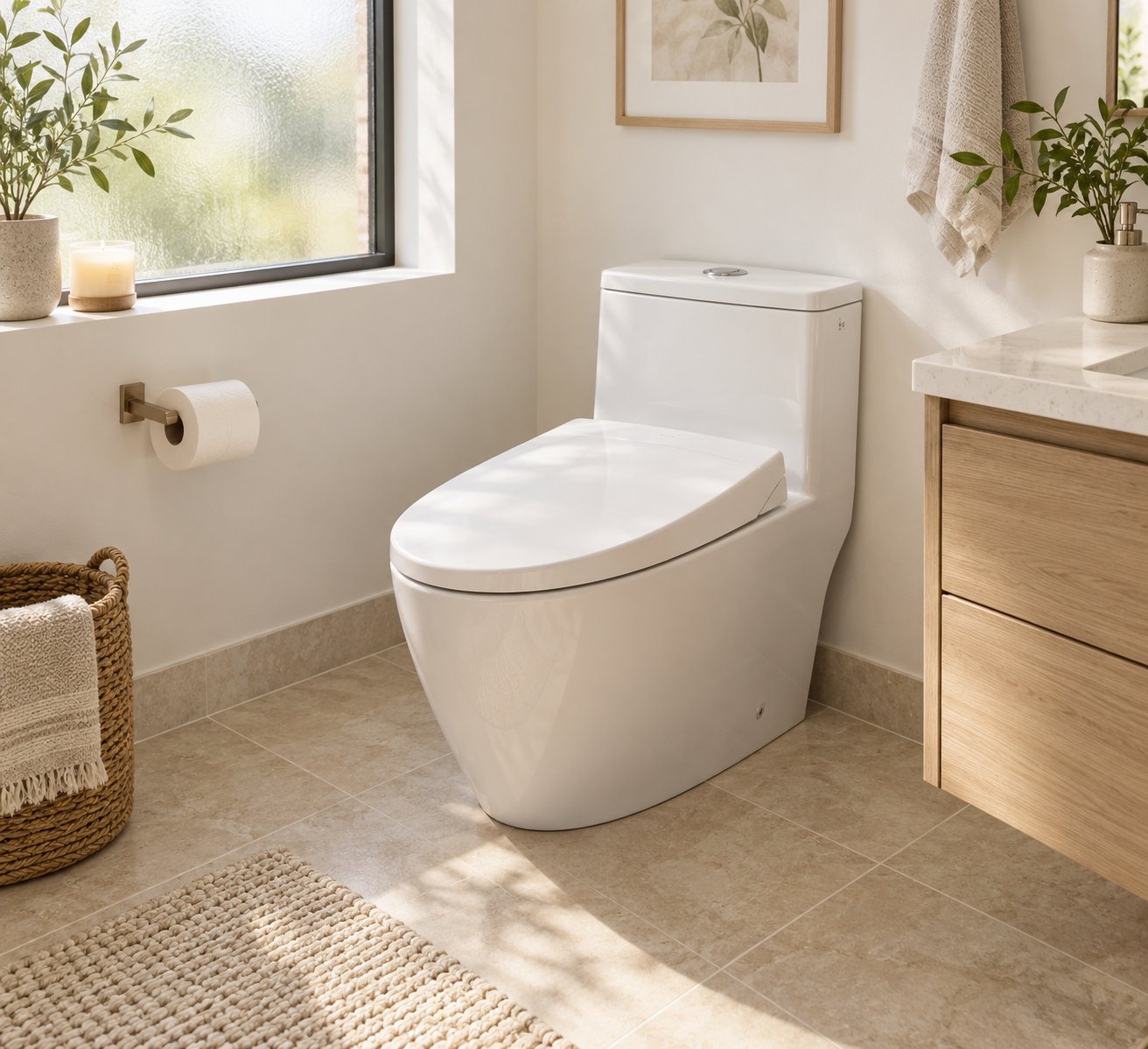
An elongated toilet seat is an oval-shaped seat that measures roughly 18.5 inches from the center of the mounting bolt holes to the front tip of the seat, approximately 2 inches longer than a standard round seat.
This extra length is the defining characteristic. Where a round seat spans about 16.5 inches front to back, elongated toilet seats extend to around 18 to 18.5 inches, creating a wider, more supportive seating surface. The distinction matters more than most people realize - especially for larger adults seeking comfortable toilet seats for large people or households upgrading a main bathroom.
What Makes a Toilet Seat Elongated
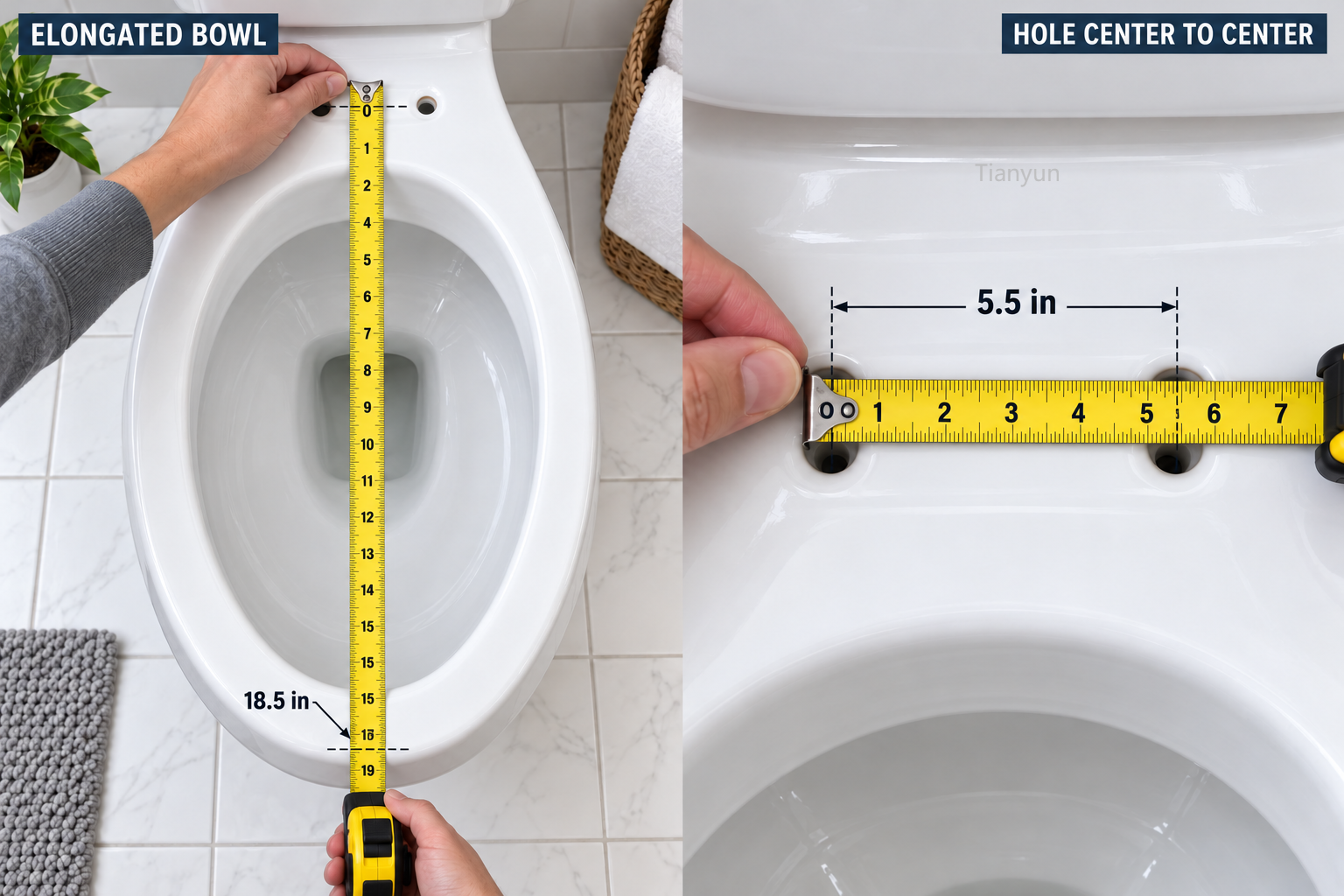
Three measurements define the elongated profile. First is the front-to-back length: roughly 18.5 inches measured from the bolt holes to the very front of the seat. Second is the bolt-hole spacing, which sits at a standard 5.5 inches center-to-center on virtually all residential toilets in the United States. Third is the overall oval silhouette - wider through the middle and tapered at the rear, compared to the nearly circular outline of a round seat.
You will sometimes see elongated models referred to by other names, including an oblong toilet seat cover, but they all follow the same dimensional standard. Compact elongated versions do exist, fitting an oval profile into a slightly shorter footprint of 17 to 17.5 inches - but the classic 18.5-inch measurement remains the benchmark.
Why Bowl Shape Dictates Seat Shape
Here is the critical rule: the bowl shape dictates the seat shape, not the other way around. Installing a round seat on an elongated bowl leaves two or more inches of exposed porcelain at the front - an uncomfortable ledge that collects moisture and bacteria. Flip the scenario, and an elongated seat on a round bowl overhangs the rim, creating instability and an unsightly gap.
Either mismatch leads to the same problems: the seat shifts during use, cleaning becomes harder, and hygiene suffers. Lowe's toilet buying guide reinforces this point, noting that elongated bowls specifically require an elongated seat while round bowls need a rounded one. Confirming your bowl shape before purchasing any oblong toilet seat cover is, without question, the single most important step in the entire process.
So how do you actually tell these two shapes apart - and what happens when the differences go beyond a simple tape measure? The answer involves a few precise measurements that anyone can take in under a minute.
Elongated vs. Round Toilet Seats Compared
Knowing your bowl shape is step one. Step two is understanding why that shape matters for daily comfort, bathroom layout, and long-term satisfaction. The differences between an elongated and a round seat go well beyond two inches of length - they affect how weight is distributed, how much clearance your bathroom needs, and which user groups benefit most.
The table below breaks down the comparison across the dimensions that actually influence a buying decision.
| Feature | Elongated Seat | Round Seat |
|---|---|---|
| Front-to-Back Length | ~18.5 inches | ~16.5 inches |
| Comfort Level | Higher - more surface area distributes weight evenly | Adequate for short sessions; less support for larger adults |
| Space Required (Front Clearance) | Needs ~2 inches more clearance in front of the bowl | Saves ~2 inches, better for tight layouts |
| Common Use Cases | Master baths, family bathrooms, ADA-compliant settings | Powder rooms, half-baths, small apartment bathrooms |
| Aesthetic Profile | Modern, sleek oval silhouette | Traditional, compact circular profile |
| Availability of Accessories | Widest selection - bidet seats, heated options, specialty materials like a wood elongated toilet seat | Good availability, but fewer advanced accessories |
| Weight Capacity Options | Standard to heavy duty toilet seat models (400+ lbs) | Mostly standard capacity (250-300 lbs) |
Comfort and Ergonomic Differences
Imagine sitting on a chair where the seat pan is two inches too short - your thighs hang off the edge, and your weight concentrates on a smaller area. That is essentially what happens when a larger adult uses a round seat. The extra two inches in a toilet seat elongated design redistributes body weight across a broader oval surface, reducing contact pressure on the thighs and providing more front-to-back support.
This ergonomic advantage is why elongated bowls dominate master bathrooms, commercial restrooms, and ADA-compliant installations. For heavier individuals, a heavy duty toilet seat in the elongated shape offers reinforced hinges, thicker seat walls, and weight ratings of 400 pounds or more - options that are far less common in the round category. The oblong toilet seat shape simply provides more real estate to engineer sturdier construction.
Space Requirements and Room Layout
Comfort comes with a trade-off: footprint. A round bowl saves roughly two inches of projection in front of the toilet, and in a tight powder room or narrow half-bath, those two inches can be the difference between meeting code and failing inspection. The International Plumbing Code requires a minimum of 21 inches of front clearance from the bowl rim to any obstruction - a wall, a vanity, or a door swing. Round seats make hitting that mark easier in rooms where every inch is already spoken for.
If your bathroom feels spacious, you will likely never notice the extra projection. But in layouts under 56 inches deep from the back wall to the nearest obstacle, a compact round bowl may be the only shape that fits comfortably without crowding the walkway or restricting the door.
Which Shape Fits Your Bathroom
Here is a practical decision shortcut. Grab a tape measure and record the distance from the front mounting bolts on your toilet to the nearest wall, cabinet, or obstruction directly ahead. If that clearance exceeds 21 inches, an elongated seat will fit comfortably and still meet plumbing code minimums. If clearance falls between 18 and 21 inches, a round seat is the safer choice - or consider a compact elongated model that splits the difference.
Also factor in who uses the bathroom most. A guest powder room visited briefly favors a space-saving round seat. A family bathroom shared by adults benefits from the supportive oval shape. And if accessibility matters - aging-in-place planning, mobility considerations, or bariatric needs - the elongated profile paired with a raised or heavy duty seat is almost always the right call.
The shape question, though, only gets you halfway. The real confidence comes from knowing your exact measurements - bolt spread, bowl length, and bowl width - before you start shopping.
How to Measure Your Toilet for the Right Elongated Seat
A tape measure and sixty seconds - that is all it takes to guarantee the seat you order actually fits the bowl you own. Skipping this step is the single biggest reason people end up with returns, wobbly seats, or awkward overhangs. Whether you are browsing toilet seats Amazon offers, eyeing a luxury toilet seat upgrade, or shopping at your local home center, the process is identical. Grab a flexible tape measure or even a rigid ruler, and let's walk through it.
How to Measure Bolt Spread and Seat Length
Start at the back of the bowl where two bolt holes sit on either side of the hinge area. These are the mounting holes that anchor any seat to the porcelain. Measure from the center of one bolt hole to the center of the other. On the vast majority of residential toilets sold in the United States, this bolt spread is 5.5 inches. If your measurement matches, you can shop confidently knowing that standard seats will align with your hardware.
Next comes the measurement that separates elongated toilet bowls from round ones. Place the end of your tape measure at the midpoint between those two bolt holes - not at the back wall of the tank, but right between the bolts. Stretch the tape straight forward to the very front tip of the bowl rim. A standard elongated bowl will read approximately 18 to 18.5 inches. A round bowl, by contrast, will land near 16.5 inches. That gap of roughly two inches is the defining difference, and it tells you exactly which seat category to shop in.
One important note: some older toilets and certain proprietary models use non-standard bolt spacing. European-style fixtures, wall-hung toilets, and a handful of vintage American models may have bolt holes set wider or narrower than 5.5 inches. If your measurement comes in at anything other than 5.5 inches, write it down and look specifically for seats designed to accommodate that spacing - or use adjustable mounting kits that bridge the gap.
Understanding Compact Elongated Sizing
Here is where many shoppers get tripped up. Compact elongated toilets have gained popularity in bathroom renovations because they deliver the comfort of an oval profile within a footprint closer to a round bowl. Lowe's notes that these models "have the larger shape of an elongated toilet but can fit in the space of a round toilet" - making them ideal when you want ergonomic support without sacrificing square footage.
The catch? A compact elongated bowl typically measures 17 to 17.5 inches from bolt holes to front rim. That is roughly an inch shorter than a full-size elongated bowl. If you install a standard 18.5-inch elongated seat on a compact bowl, the seat will overhang the front rim by about an inch - creating an unstable lip that shifts under weight and looks out of proportion.
Compact elongated bowls still require an elongated toilet seat, but you need one sized specifically for that shorter profile. Many manufacturers label these as "compact elongated" on the packaging. If you see no such label, compare the seat's listed length against your bowl measurement. A mismatch of more than a quarter inch in either direction is enough to cause problems.
Are Elongated Toilet Seats Universal
The short answer: mostly yes, with a few important exceptions. Elongated seats are interchangeable across most major brands - Kohler, American Standard, TOTO, Mansfield - as long as two conditions hold true. The bolt spread must match (5.5 inches standard), and the bowl length must correspond to the seat length. Meet those criteria, and any standard elongated seat will bolt on securely regardless of the brand stamped on the porcelain.
The exceptions come from manufacturer-specific designs. Some one-piece toilets integrate proprietary hinge channels or recessed mounting systems that only accept the brand's own seat. High-end models, including certain elongated bidet toilet seat platforms, may use unique hardware because they route water lines and electrical connections through the mounting area. Wall-hung toilets also tend to use specialized brackets that differ from floor-mounted models.
Before you finalize any purchase, record these three measurements and keep them handy:
- Bolt spread - the center-to-center distance between the two mounting holes (standard is 5.5 inches)
- Bowl length - measured from the midpoint between the bolt holes to the front tip of the bowl rim (approximately 18.5 inches for standard elongated, 17 to 17.5 inches for compact elongated)
- Bowl width - the widest point across the bowl opening, typically 14 to 14.5 inches for elongated models, which confirms the oval profile and ensures full seat coverage
With those three numbers in hand, you eliminate virtually all fit-related guesswork. The seat you choose will sit flush against the rim, anchor solidly through the bolt holes, and cover the bowl opening completely - no gaps, no overhang, no wobble.
Fit is the foundation, but the material sitting between you and the porcelain matters just as much for daily comfort and long-term durability. The differences between a basic plastic seat and a premium duroplast or wood option are more significant than most buyers expect.
Elongated Toilet Seat Materials Explained
Two seats can look nearly identical on a store shelf - same oval shape, same white finish, same bolt spacing - yet one yellows within a year while the other still looks fresh after five. The difference is almost always material. The substance a long toilet seat is made from determines how it feels under you, how it handles cleaning chemicals, how it ages in sunlight, and ultimately how often you replace it. Most shoppers never think past "plastic or not plastic," but the material spectrum is wider and more consequential than that.
Polypropylene and Standard Plastic Seats
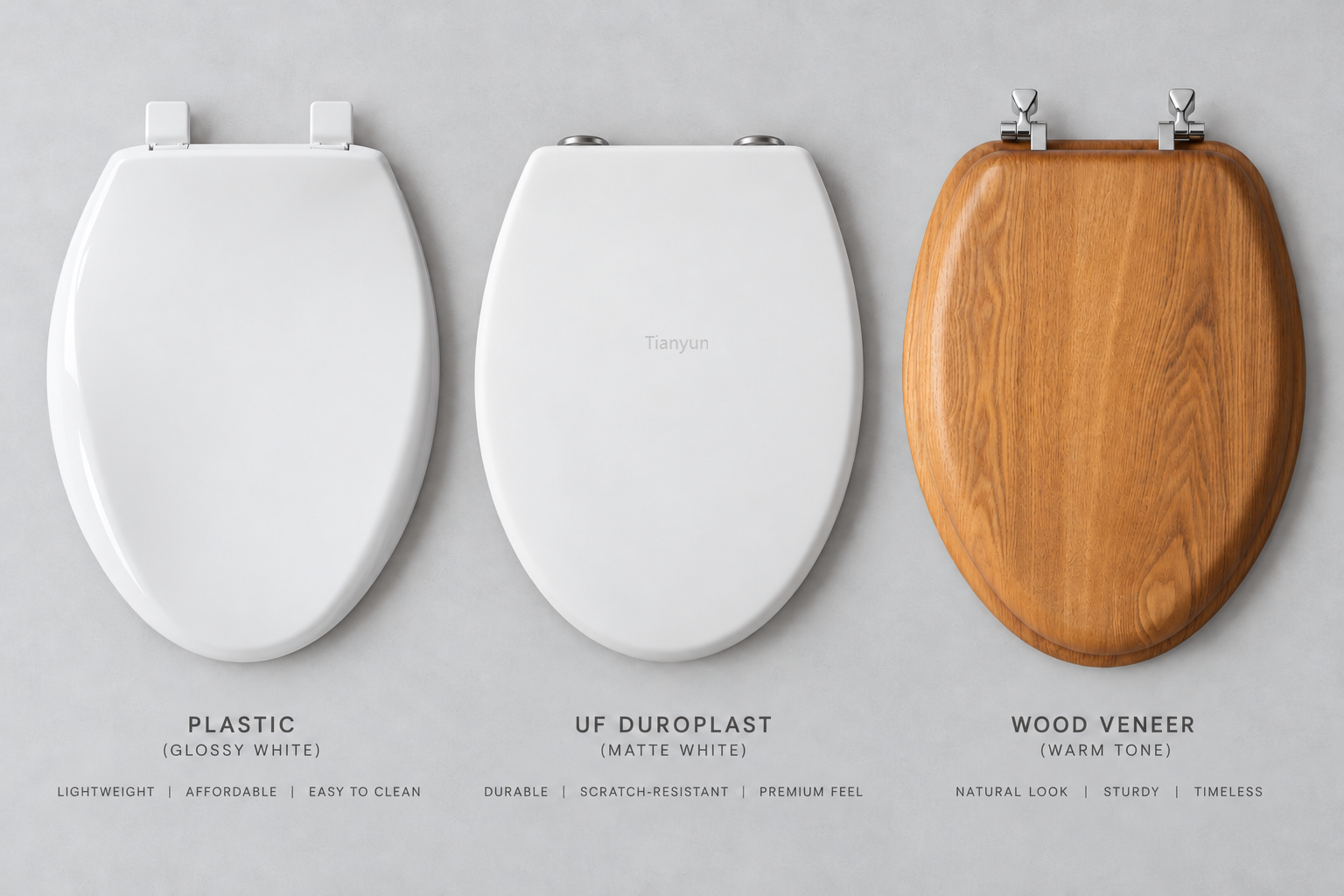
Polypropylene - commonly abbreviated as PP - is the workhorse of residential toilet seats. If you have ever picked up a seat at a hardware store and noticed it felt light and slightly flexible, you were almost certainly holding a PP model. It is affordable, stain-resistant, easy to mold in a wide range of colors (from classic toilet seat elongated white to biscuit, bone, and even bold accent shades), and simple to manufacture at scale.
That accessibility, however, comes with a quality range that most buyers underestimate. A budget PP seat with thin walls and plastic hinges may cost half the price of a thicker-walled version with reinforced hinge posts - but it will flex under heavier users, develop hairline cracks around the bolt holes faster, and lose its glossy finish within a couple of years. For anyone shopping for a toilet seat for big people, a bargain-bin PP seat is a false economy. Look for PP seats with wall thicknesses above 3 mm and hinge assemblies that incorporate metal inserts or stainless steel bolts rather than all-plastic hardware.
On the supply side, production-grade PP covers vary significantly depending on the manufacturer's tooling and material formulation. Companies like Tianyun produce PP seat covers engineered for sanitaryware brands and OEM programs, pairing each cover with matched dampers, hinges, and fixing systems so that the finished product performs as an integrated unit rather than a collection of mismatched parts. That level of component integration is what separates a seat that still closes smoothly after three years from one that starts slamming after six months.
Duroplast and UF (Urea-Formaldehyde) Seats
Pick up a UF seat next to a PP seat and you will notice the difference immediately - it is heavier, denser, and gives off a solid, almost ceramic-like tap when you knock on it. UF stands for urea-formaldehyde, a thermoset resin often marketed under the name "duroplast." Unlike thermoplastic PP, which softens when heated and can be re-melted, duroplast cures permanently during manufacturing. Once set, it cannot be reshaped, and that chemical stability translates directly into real-world performance.
Scratch resistance is noticeably superior. Where a PP surface can pick up fine scratches from abrasive cleaners or belt buckles, a UF surface shrugs off the same contact. UV stability is another major advantage - duroplast resists the yellowing that plagues standard plastic seats exposed to bathroom lighting or window sunlight. If you are installing a long toilet seat in a bright, sunlit bathroom and want it to stay white for years instead of drifting toward a dingy cream, UF is the material to specify.
The trade-off is price. UF seats typically cost 30 to 60 percent more than comparable PP models. They are also heavier, which means hinge quality matters even more - a duroplast lid paired with a cheap plastic hinge will stress the mounting points faster than the same lid on a stainless steel hinge. This is why sourcing programs from manufacturers like Tianyun's PP / UF Seat Cover line emphasize pairing the UF cover with appropriately rated dampers and fixing kits - the material is only as durable as the hardware holding it in place.
Wood and Specialty Materials
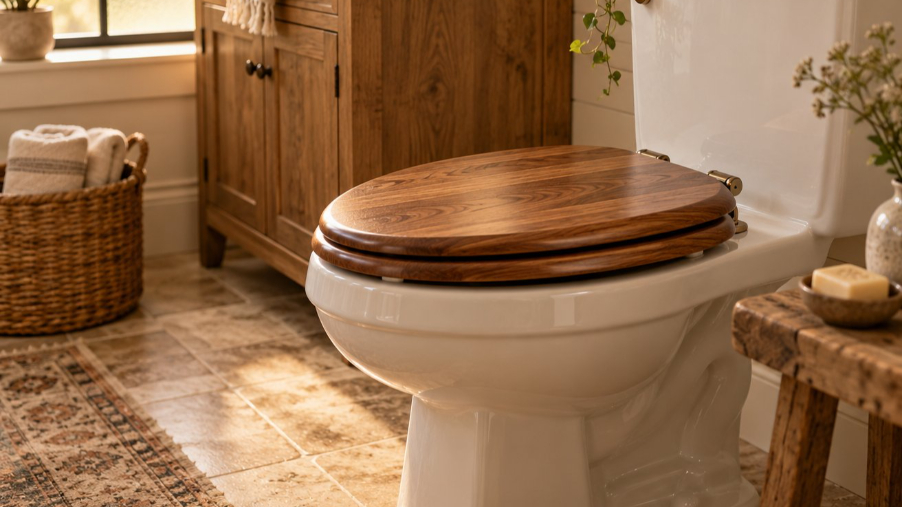
Wood toilet seats occupy a niche that plastic simply cannot replicate. Molded wood - compressed wood fibers bonded with resin and coated in a smooth enamel finish - is the most common type. It feels warm to the touch in a way no plastic ever will, and it delivers a traditional, furniture-like aesthetic that suits cottage-style, farmhouse, and vintage bathrooms.
Enameled wood seats add a layer of glossy paint and a clear topcoat for extra moisture protection, while bamboo options appeal to buyers looking for a renewable-material story. Both look striking, but honesty matters here: wood seats are heavier than either PP or UF, and they demand more careful maintenance. The enamel coating is the moisture barrier. If that coating chips or cracks - from a dropped bottle, a careless cleaning tool, or simple wear at the hinge points - water seeps into the compressed wood core and causes swelling, warping, and eventual delamination.
Hinge material also makes a bigger difference on wood seats because of the added weight. Plastic hinges flex and fatigue faster under a heavy wooden lid, so metal hinges - ideally stainless steel or zinc alloy - are strongly recommended. If you are choosing a wood enlongated seat for a primary bathroom that sees daily use, budget for one with chrome or stainless hardware rather than saving a few dollars on an all-plastic hinge assembly.
| Attribute | Polypropylene (PP) | UF / Duroplast | Wood (Molded / Enameled) |
|---|---|---|---|
| Weight | Light (1.5 - 2.5 lbs) | Medium-Heavy (3 - 4 lbs) | Heavy (4 - 6 lbs) |
| Scratch Resistance | Moderate - susceptible to abrasive cleaners | High - thermoset surface resists fine scratches | Moderate - depends on enamel coating integrity |
| Yellowing Resistance | Low to Moderate - UV and chemicals cause discoloration | High - resists yellowing significantly longer | Moderate - enamel protects but can dull over time |
| Price Tier | Budget to Mid-Range ($15 - $40) | Mid-Range to Premium ($35 - $80) | Mid-Range to Premium ($40 - $90) |
| Feel | Lightweight, slightly flexible, room-temperature surface | Dense, ceramic-like solidity, room-temperature surface | Warm to the touch, substantial, furniture-like feel |
| Best Hinge Pairing | Reinforced plastic or stainless steel | Stainless steel with precision damper | Stainless steel or zinc alloy - mandatory for weight |
Each material serves a different balance of budget, aesthetics, and longevity. PP covers the widest market because it hits the lowest price point without sacrificing basic functionality. UF wins on durability and appearance retention, making it the smart upgrade for anyone who values a seat that still looks new years down the road. Wood delivers a sensory and visual experience that neither plastic can match - but it asks for more care in return.
Material, though, is only half the equation. The hinges, dampers, and surface treatments built into a modern elongated seat determine whether it closes quietly, lifts off for easy cleaning, or resists bacterial buildup - features that separate a merely functional seat from one that genuinely improves daily bathroom experience.
Must-Have Features in Modern Elongated Toilet Seats
A seat can be the perfect shape, the ideal material, and still disappoint you every single day - if the hinges slam, the surface stains, or cleaning underneath requires a wrestling match with corroded bolts. Features are what transform a basic toilet seat oval in profile into something that actually makes your bathroom routine quieter, cleaner, and less frustrating. The problem is that most product listings bury these details in spec sheets, and most buyers never think to ask about them until something goes wrong.
Here is what to look for - ranked by the features that make the biggest practical difference in daily use.
Slow-Close and Quiet-Close Hinges
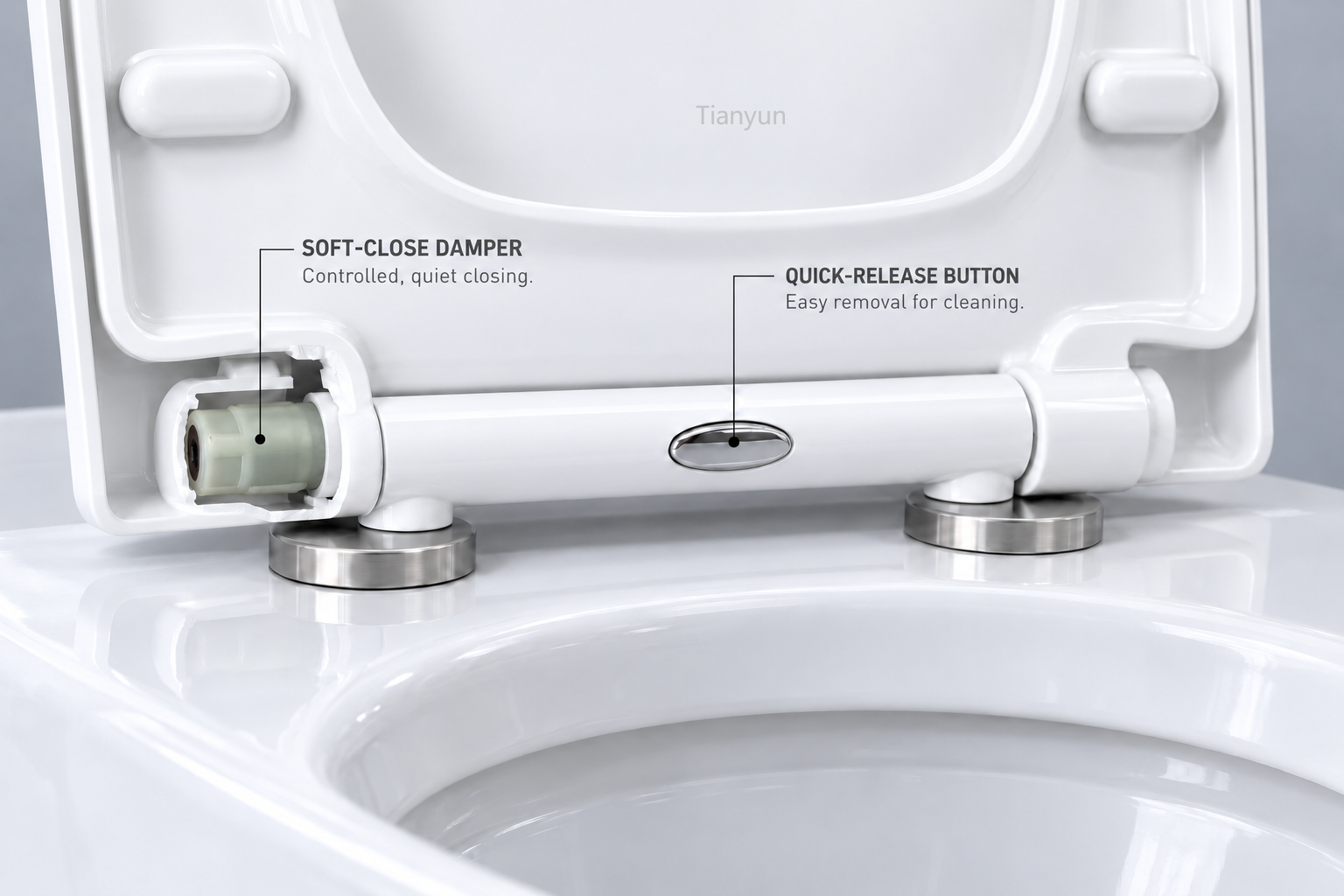
If you have ever been jolted awake at 2 a.m. by a toilet seat crashing down, you already understand why slow-close hinges top this list. These mechanisms use small hydraulic or pneumatic dampers embedded in the hinge assembly to control the descent of both the seat and the lid. You lift a finger off the lid and it glides down silently over several seconds, eliminating the slam that chips porcelain, cracks plastic, and wakes the entire house.
The technology itself is straightforward, but damper quality varies enormously. Budget dampers - the kind found in entry-level seats you might spot while browsing toilet seats on Amazon - often rely on simple silicone-filled cylinders that lose resistance within 12 to 18 months. The closing speed gradually increases until the seat is practically free-falling again. Precision-engineered dampers, by contrast, use calibrated fluid resistance and tighter manufacturing tolerances to maintain a consistent closing speed for years. When evaluating any elongated seat, ask whether the damper is replaceable. A seat with a swappable damper cartridge can be refreshed inexpensively instead of replaced entirely when the mechanism eventually wears.
Quick-Release Mechanisms for Easy Cleaning
Here is an uncomfortable truth: the area between the hinge posts and the back of the bowl rim is one of the dirtiest spots in any bathroom. Moisture, bacteria, and mineral deposits accumulate in that tight gap, and conventional seats bolted permanently in place make it nearly impossible to clean thoroughly without a toothbrush and a lot of patience.
Quick-release mechanisms solve this by letting you detach the entire seat from the bowl in seconds - no tools required. Two common designs dominate the market. Top-fix push-button systems feature a button at each hinge post; press both buttons simultaneously and the seat lifts straight up and off. Bottom-mount slide-off systems use a channel and latch arrangement that lets you slide the seat forward and away from the mounting plate. Both styles expose the full hinge area and rear rim for wiping, spraying, and disinfecting - then the seat clicks right back into position.
For households with children or anyone prioritizing hygiene, quick-release is arguably the most underrated feature on a large toilet seat. It turns a ten-minute scrubbing ordeal into a thirty-second wipe-down.
Bidet Integration and Heated Seat Technology
Electronic bidet seats have moved well beyond niche luxury. These advanced units replace a standard seat entirely and add posterior and feminine wash functions, adjustable warm water temperature, warm air drying, and - yes - heated seating surfaces that eliminate the cold-porcelain shock on winter mornings. Models like those reviewed by Bob Vila typically offer three to five temperature settings for both seat warmth and water, along with features like self-cleaning stainless steel nozzles and built-in deodorizers.
One detail worth noting: bidet seats are manufactured almost exclusively in the toilet seat oval shape - meaning elongated - because the internal chassis needs room for nozzle assemblies, water reservoirs, heating elements, and control boards. Round bidet seats exist but offer far fewer options. If you have been considering a bidet upgrade, owning an elongated bowl gives you access to the broadest selection of models, from budget-friendly units to feature-packed smart seats with wireless remotes and night lights.
These seats do require a nearby GFCI electrical outlet, which not every bathroom has adjacent to the toilet. Factor in the potential cost of adding an outlet if your bathroom is not already wired for one.
Non-Slip Bumpers and Antimicrobial Surfaces
Small rubber or silicone bumpers on the underside of the seat and lid serve two purposes that are easy to overlook. First, they prevent the seat from shifting laterally during use - critical for heavier adults and anyone using a large toilet seat rated for higher weight capacities. Second, they cushion the seat against the porcelain rim, preventing micro-scratches and hairline cracks that develop over time from hard plastic sitting directly on a glazed surface.
Antimicrobial coatings add another layer of protection. These treatments - typically silver-ion or zinc-based compounds integrated into the seat surface during manufacturing - inhibit the growth of bacteria, mold, and mildew between cleanings. They do not replace regular cleaning, but they slow the rate at which microbial colonies establish on high-touch surfaces, keeping the seat fresher for longer between wipe-downs.
When comparing seats, use this prioritized checklist to evaluate which features matter most for your household:
- Slow-close hinges - protects porcelain, eliminates noise, extends seat life
- Quick-release mechanism - dramatically simplifies cleaning and hygiene maintenance
- Non-slip bumpers - prevents shifting, protects the bowl's glazed finish
- Antimicrobial coating - slows bacterial growth between routine cleanings
- Heated seat - comfort upgrade, especially in colder climates or poorly heated bathrooms
- Bidet functionality - the most comprehensive upgrade, replacing the seat entirely with an integrated wash system
Every feature on this list adds value, but slow-close and quick-release deliver the highest return for the lowest added cost. They are worth prioritizing even on a tight budget. Bidet and heated seat functions, meanwhile, represent a larger investment - but one that fundamentally changes how you experience your bathroom.
Features, of course, only matter if the seat is installed correctly. A slow-close hinge cannot do its job if the mounting bolts are cross-threaded, and a quick-release mechanism is useless if the old seat's rusted hardware will not come off in the first place.
Step-by-Step Elongated Toilet Seat Installation
Rusted bolts, corroded nuts, cracked plastic caps - these are the real obstacles standing between you and a fresh seat. The actual installation itself is one of the simplest home repairs you will ever tackle, usually taking less than fifteen minutes from start to finish. But skipping a step or forcing a stuck bolt can crack porcelain, strip threads, or leave the new seat loose before you even sit down. Here is a complete walkthrough that covers every scenario, from a clean swap to dealing with hardware that refuses to cooperate.
Tools and Hardware You Will Need
Before you touch the old seat, gather everything in one spot. Hunting for a wrench mid-project while balancing a nut underneath the bowl is a recipe for frustration and skinned knuckles.
- Adjustable wrench or pliers - for gripping nuts beneath the bowl; an adjustable wrench offers better leverage and is less likely to strip the nut than standard pliers
- Flat-head screwdriver - for prying open hinge caps and driving slotted bolt heads
- Penetrating oil (such as PB Blaster or WD-40 Specialist) - essential for corroded metal bolts that will not budge
- Towel or rag - to clean the mounting area and cushion the porcelain while you work
- New seat kit with included bolts, nuts, and washers - most quality elongated seats ship with their own mounting hardware; use the included kit rather than reusing old bolts
If you are replacing a tall toilet seat or a heavy duty elongated toilet seat, check whether the packaging includes specialized mounting hardware. Raised seats and bariatric models sometimes use wider washers or longer bolts to accommodate thicker seat bases, and standard hardware may not fit.
Removing the Old Elongated Seat
Every elongated toilet lid and seat attaches to the bowl through two bolt holes at the rear. The removal process is straightforward - unless corrosion has turned those bolts into immovable obstacles.
Start by locating the bolt caps. These small plastic covers sit on top of the hinge area and snap open with a flat-head screwdriver or a fingernail slid under the rear edge. Pry gently - the caps are brittle on older seats and crack easily, though that hardly matters if you are discarding the old unit anyway.
With the caps off, you will see the bolt heads. Here is where the process splits depending on your hardware type:
Metal bolts: Hold the nut underneath the bowl firmly with your adjustable wrench or pliers. From above, use the screwdriver to turn the bolt head counterclockwise. If the bolt spins freely without loosening, the nut is spinning too - grip it tighter or switch to locking pliers for a more secure hold. If the bolt will not turn at all, corrosion is the culprit. Spray penetrating oil generously around both the bolt head and the nut, wait at least ten minutes, and try again. A second application and another ten-minute soak usually breaks even stubborn rust. Horow's maintenance guide confirms that rusted-in-place bolts are among the most common installation headaches, and patience with penetrating oil saves far more time than brute force.
Plastic bolts: These will not rust, but they can strip if overtightened during the original install. If the bolt head spins without engaging the nut, skip the wrench entirely and cut through the bolt shaft with a hacksaw or an oscillating multi-tool fitted with a cutting blade. Slide a piece of cardboard between the bolt and the porcelain to protect the glaze while you cut.
Once both bolts are out, lift the old seat and elongated toilet lid straight up and set them aside. Wipe down the exposed bolt holes and the rear rim with your rag - this area collects years of grime that you will never see while the seat is in place. A quick spray of bathroom cleaner and a thorough wipe-down ensures the new seat sits on a clean, flat surface.
Installing the New Seat Step by Step
With the mounting area clean and dry, unpack the new seat and lay out all included hardware. Most kits contain two bolts, two nuts, rubber or nylon washers, and sometimes decorative bolt caps. Confirm everything is present before you start - discovering a missing washer halfway through installation means another trip to the hardware store.
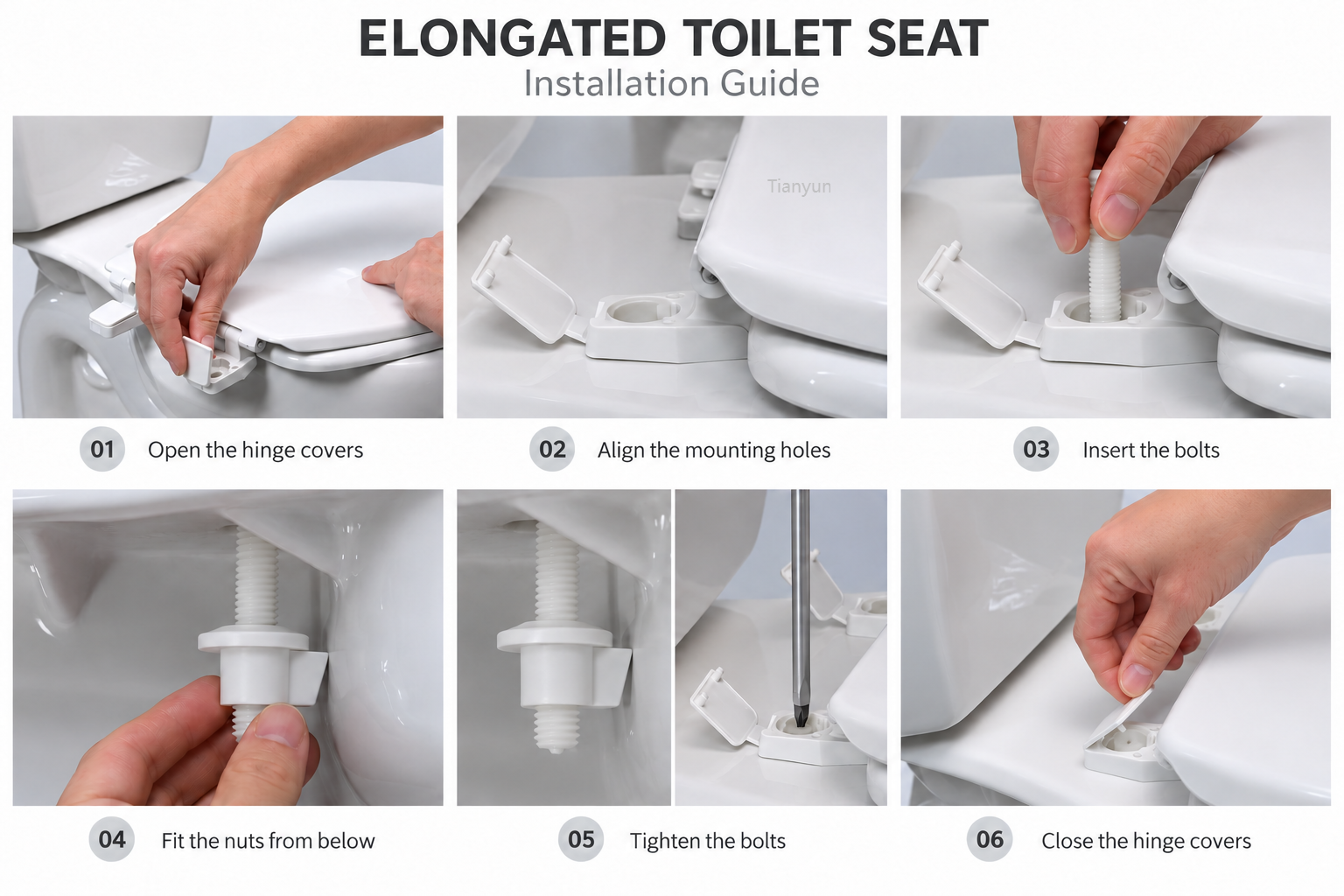
1. Align the hinge holes. Set the new seat on the bowl so that the hinge holes line up directly over the bolt holes in the porcelain. Slide the seat forward and back until the holes center perfectly. Decorative elongated toilet seats with sculpted edges or French-curve profiles sometimes have slightly offset hinge geometry, so do not force alignment. If the holes do not match, double-check that the seat is oriented correctly - the wider part of the oval faces front.
2. Insert bolts from above. Drop each bolt down through the seat's hinge hole and into the porcelain bolt hole. If the kit includes a rubber washer or gasket that sits between the hinge and the porcelain, place it now. This washer creates a cushion that prevents the seat from rocking on the hard ceramic surface and adds friction that resists loosening over time.
3. Hand-tighten nuts from below. Reach underneath the bowl and thread the nut onto each bolt by hand. Turn clockwise until finger-tight. At this stage, the seat should still slide slightly so you can center it precisely on the bowl.
4. Center and snug. Adjust the seat so it is perfectly centered - even gaps on both sides, front edge aligned with the bowl rim. Then use your adjustable wrench to snug each nut an additional quarter to half turn beyond finger-tight. Alternate between the left and right sides, tightening each a little at a time, to apply even pressure.
Do not overtighten. Porcelain is strong under compression but brittle under point loads. Excessive force on the mounting bolts can crack the bowl around the bolt holes - a repair that means replacing the entire toilet.
5. Test stability. Lower the seat and lid, then grab both sides and try to shift the seat left, right, forward, and back. There should be no wobble. If the seat moves, tighten each nut another quarter turn and test again.
6. Snap on bolt caps. Press the decorative caps over the bolt heads until they click. These caps keep moisture and cleaning chemicals away from the hardware, slowing corrosion and extending the life of your mounting bolts.
One final detail worth understanding: the difference between top-fix and bottom-fix mounting systems. Everything described above follows the traditional bottom-fix method, where nuts are tightened from beneath the bowl. Top-fix systems, increasingly common on modern seats, use expanding rubber anchors or threaded inserts that tighten entirely from above. You insert the anchor through the bolt hole, then turn a screw from the top that spreads the anchor against the underside of the porcelain - no reaching underneath required. Top-fix is faster and more convenient, especially in tight spaces where accessing the underside of the bowl is awkward.
Seats designed for one-piece toilets may have unique mounting requirements as well. Because one-piece designs integrate the tank and bowl into a single casting, the rear profile of the bowl can be shaped differently than a standard two-piece model. Some one-piece toilets use recessed hinge channels or proprietary bracket systems that only accept the manufacturer's own seat. If you own a one-piece toilet, verify compatibility before purchasing an aftermarket seat - or look for seats labeled as "universal top-fix" which accommodate the broadest range of bowl profiles.
A properly installed seat should feel rock-solid and stay that way for months without attention. But what happens when it does not - when bolts loosen on their own, surfaces yellow despite regular cleaning, or hinges crack without obvious abuse? Those are signals that something else is going on, and each one has a specific fix.
Troubleshooting Common Elongated Toilet Seat Problems
A seat that shifted half an inch to the left. A white lid that slowly turned the color of old newspaper. A hinge that cracked clean through on a Tuesday morning for no apparent reason. These are not rare defects - they are the three most common complaints homeowners have about elongated toilet seats, and each one has a specific, fixable cause. Before you toss the whole seat and start over, work through these targeted solutions.
Fixing a Loose or Shifting Seat
That side-to-side wobble you feel every time you sit down? Nine times out of ten, it traces back to one of two culprits: mounting bolts that have gradually loosened or rubber bushings that have compressed and degraded.
Start with the bolts. Pop open the hinge caps at the rear of the seat, hold the nut underneath the bowl with pliers or a wrench, and try to snug the bolt head from above. You will often find that the bolt turns freely - it has backed out just enough to let the seat rock. A quarter to half turn is usually all it takes to restore solid contact. Alternate sides as you tighten so the seat centers evenly.
If the bolts are already snug but the seat still shifts, the problem is likely the rubber washers or bushings sandwiched between the hinge and the porcelain. These small components absorb vibration and keep the seat from skating on the hard ceramic surface, but they flatten and harden over time - especially cheap, thin ones. Pull the bolts, inspect the washers, and replace any that look compressed, cracked, or permanently deformed. Replacement washer kits cost a few dollars at any hardware store and take less than five minutes to swap in.
For households where this problem keeps recurring, consider upgrading to a heavy-duty elongated toilet seat with metal bolts and oversized rubber grommets. These beefier mounting components resist loosening far better than the lightweight plastic hardware included with budget seats. A huge toilet seat rated for 400-plus pounds, for instance, typically ships with stainless steel bolts and thick, molded stabilizer pads that virtually eliminate lateral movement even under significant weight.
Dealing with Yellowing and Discoloration
You bought a bright white seat two years ago. It is now a dull, yellowish cream - and no amount of scrubbing brings the original color back. What happened?
Two forces are at work. The first is UV exposure. Bathroom windows, skylights, and even fluorescent or LED lighting emit enough ultraviolet radiation to break down the chemical stabilizers in standard polypropylene plastic over time. The molecular bonds that keep the surface white gradually degrade, letting the underlying polymer show through in shades of yellow and amber. The second force is chemical interaction. Bleach-based cleaners, while effective at killing germs, accelerate the oxidation process on PP surfaces. Ironically, the cleaning product meant to keep your seat hygienic is often the same one turning it yellow.
For surface-level discoloration that has not penetrated the material, try a paste made from baking soda and mild dish soap. Apply it with a soft cloth, let it sit for five to ten minutes, then wipe clean with warm water. This gentle abrasive lifts surface stains without further damaging the finish. Hydrogen peroxide (3% household strength) can also lighten mild yellowing - dampen a cloth, lay it over the discolored area for 20 minutes, then rinse. Avoid abrasive scouring pads, which scratch the surface and create microscopic grooves where future stains anchor more stubbornly.
If yellowing is a persistent frustration, the long-term fix is material-based, not cleaning-based. UF and duroplast seats resist this effect dramatically better than standard PP because their thermoset molecular structure does not break down under UV the same way. Spending more upfront on a duroplast seat - especially for a bathroom with a window near the toilet - saves you from the cycle of replacing yellowed plastic every couple of years.
Cracked Hinges and When to Replace
Hinges bear the full mechanical stress of every open-close cycle, every off-center sit-down, and every bump from a cleaning tool. On a seat used four to six times daily in a family bathroom, that adds up to thousands of stress cycles per year. Hairline cracks usually appear first at the hinge post - the point where the pivot pin meets the seat body - because that junction handles the most torque. Once a crack starts, it grows with every use until the hinge fails completely.
A toilet seat elongated slow close model puts additional stress on the hinge area because the damper mechanism resists the lid's downward motion, transferring that load back into the hinge post. If the damper itself starts to fail and the seat begins closing faster than intended, the repeated impact accelerates cracking. Replacing a worn damper cartridge early - if the seat design allows it - can extend hinge life significantly.
Not every problem, though, warrants a repair attempt. At a certain point, replacement is the smarter investment. Here are the three clearest signs your elongated seat has reached end of life:
- Persistent instability - the seat wobbles or shifts even after re-tightening bolts and replacing washers, indicating the bolt holes in the seat itself have worn oval or the hinge housing has deformed
- Structural cracks - visible cracks in the hinge area, around the bolt holes, or along the underside of the seat ring that compromise rigidity and cannot be repaired safely
- Irreversible discoloration - yellowing, staining, or surface degradation that cleaning cannot resolve, signaling that the material has chemically broken down beyond recovery
Most standard PP elongated seats last three to five years under normal household use. UF and duroplast models routinely push past five years, often lasting seven or more with proper care. Wood seats can match or exceed that lifespan if the enamel coating stays intact, but a single chip that allows moisture infiltration can shorten their service life dramatically. Knowing these timelines helps you budget for replacements and recognize when a repair is just delaying the inevitable.
Recognizing when a seat needs replacing is one skill. Knowing how to choose its replacement wisely - evaluating material quality, hinge construction, weight ratings, and style options against a structured set of criteria - is what keeps you from ending up right back in the same frustrating cycle.
Smart Buying Criteria for Elongated Toilet Seats
Scroll through any online retailer's toilet seat category and you will find hundreds of options - filtered by color, price, brand, and star rating, but almost never organized by the criteria that actually determine whether a seat holds up over time. Star ratings tell you how people felt the day the box arrived. They tell you very little about how the hinge performs after 5,000 open-close cycles or whether the surface yellows within 18 months. A structured evaluation framework cuts through the noise and helps you compare elongated seats on the factors that matter most long after the packaging hits the recycling bin.
Evaluating Material and Hinge Quality
Think of a toilet seat as two separate systems working together: the body (seat ring and lid) and the hardware (hinges, dampers, bolts, and washers). Most buying regret traces back to one of these systems failing prematurely - and it is almost always the one the buyer never checked before clicking "add to cart."
For the seat body, wall thickness is the simplest quality indicator you can assess without lab equipment. Pick the seat up. Flex it gently. A quality PP seat with walls above 3 mm feels rigid and substantial; a budget version with 2 mm walls flexes noticeably and makes a hollow sound when tapped. UF and duroplast seats barely flex at all, which is part of what makes them feel premium. If you are shopping online and cannot handle the product, look for the listed weight - heavier seats within the same material category almost always indicate thicker walls and denser construction.
Hinge material deserves equal scrutiny. Stainless steel hinges outlast plastic ones by a wide margin, especially on heavier duroplast or wood lids that put more stress on the pivot point with every cycle. Check whether the hinge pins are metal or plastic, and whether the damper mechanism is integrated permanently or designed as a replaceable cartridge. A seat with a user-replaceable damper can be refreshed for a few dollars when the slow-close action starts to fade, while a seat with a permanently molded damper becomes disposable the moment that mechanism wears out.
Here is the math that makes this real: a $20 budget seat replaced every 18 months costs $40 over three years - plus the hassle of two additional installations. A $45 seat with reinforced hinges and a quality damper that lasts the full three to five years costs less in total and demands zero mid-cycle replacements. The toilet seat cost that matters is not what you pay at checkout - it is what you spend over the life of the product.
Weight Capacity and Accessibility Needs
Standard elongated seats are engineered to support roughly 250 to 300 pounds - adequate for most adults, but not for everyone. If anyone in your household exceeds that range, or if you are outfitting a bathroom for guests of varying sizes, an oversized toilet seat rated for 400 pounds or more is not optional. It is a safety requirement. These heavy-duty models use thicker seat rings, reinforced hinge posts, wider stabilizer pads, and metal bolt assemblies specifically designed to handle sustained higher loads without flexing, cracking, or loosening.
Are elongated toilet seats universal when it comes to weight capacity? Not even close. Two seats that share the same oval dimensions and bolt spacing can differ dramatically in their load ratings based entirely on material thickness, hinge construction, and mounting hardware. Always verify the manufacturer's stated weight capacity rather than assuming that all elongated seats handle the same stress.
Accessibility goes beyond weight. ADA-compliant raised seats pair with elongated bowls to bring the seating surface to 17 to 19 inches off the floor - several inches higher than a standard setup. That added height significantly reduces the physical effort required for sit-to-stand transitions, making it valuable for older adults, anyone recovering from surgery, and households planning aging-in-place renovations. Some raised seats bolt on permanently, while others clamp over the existing bowl rim for temporary use. Either way, the elongated shape provides the extra surface area that makes these seats comfortable rather than merely functional.
Style and Design Considerations
Function should always drive the decision, but style is what you see every time you walk into the bathroom. Fortunately, choosing an elongated seat no longer means settling for plain white plastic if your design vision calls for something more considered.
Color matching is the starting point. White dominates the market, but biscuit, bone, almond, and even custom-matched colors are available for buyers who need to coordinate with existing fixtures. A word of caution: "white" is not universal. One manufacturer's white may carry a warm undertone while another skews cool and blue-ish. If precise color matching matters - in a remodeled bathroom where the toilet, vanity, and tub must visually align - order a sample chip or buy from the same brand as your toilet to ensure consistency.
Beyond color, design profiles range from utilitarian flat-top lids to sculpted-edge seats with French-curve contours, beveled edges, and integrated soft-grip textures. A fancy toilet seat with a sculpted profile and chrome hinge covers can add visual cohesion to a bathroom renovation in the same way matching cabinet hardware ties a kitchen together. These designer and decorative elongated seats do command a premium - often 30 to 50 percent above a comparable plain model - but for a fixture that sits at eye level in a small room, the aesthetic return can be disproportionately high.
The table below ranks the buying criteria in order of practical importance, from factors that prevent outright failure down to those that enhance the experience:
| Priority Rank | Buying Criterion | Why It Matters |
|---|---|---|
| 1 | Fit and Measurement Accuracy | A seat that does not match the bowl's bolt spread and length will wobble, overhang, or leave gaps - no other feature can compensate for a dimensional mismatch |
| 2 | Material Durability | Wall thickness and material type (PP, UF, or wood) determine scratch resistance, yellowing resistance, and overall lifespan |
| 3 | Hinge and Damper Quality | Stainless steel hinges and precision dampers prevent slamming, resist corrosion, and maintain slow-close performance over thousands of cycles |
| 4 | Weight Capacity | Ensures structural safety for all users; critical for households with heavier adults or accessibility requirements |
| 5 | Ease of Cleaning | Quick-release mechanisms and antimicrobial surfaces reduce maintenance effort and improve hygiene |
| 6 | Style and Design | Color matching, sculpted profiles, and decorative finishes add visual cohesion to a remodeled bathroom |
| 7 | Price | Important, but total toilet seat cost over the product's lifespan matters more than initial purchase price alone |
Notice that price sits at the bottom - not because budget does not matter, but because every criterion above it influences how much value you actually extract from what you spend. A $25 seat that cracks in a year is more expensive than a $50 seat that lasts five. A fancy toilet seat that matches your bathroom perfectly but uses flimsy hinges will frustrate you daily. Work through the list from top to bottom, eliminate any option that fails on fit, and you will narrow the field to a manageable shortlist where style and price become the tiebreakers rather than the decision drivers.
With a clear framework for evaluating individual seats, the final question shifts from "which seat should I buy" to "where do I source it" - a question that matters just as much whether you are a homeowner picking one seat off a shelf or a brand sourcing thousands for a product line.
Picking Your Perfect Elongated Seat and Where to Source It
You have the measurements. You understand the materials. You know which features justify the price and which ones are marketing fluff. The only thing left is pulling the trigger - and doing it with confidence instead of crossing your fingers at checkout and hoping for the best. Whether you are a homeowner replacing a single seat or a brand manager evaluating toilet seats elongated options for a full product catalog, the decision framework is the same. Only the scale changes.
Choosing the Right Seat for Your Home
Imagine walking through a simple four-step filter that eliminates 90 percent of bad choices before you ever compare prices or read a single review. That is exactly what this decision sequence delivers:
Step one: measure first. Record your bolt spread, bowl length, and bowl width. This single step rules out every seat that physically will not fit your oval toilet bowl - and it takes less than sixty seconds. No measurement, no purchase. Period.
Step two: choose material second. If budget is tight but you want reasonable longevity, a quality PP seat with thick walls and reinforced hinges will serve you well for three to five years. If you want a seat that still looks white - not yellowish cream - years down the road, UF or duroplast is the upgrade worth paying for. If warmth and traditional aesthetics matter more than maintenance convenience, wood is the right call. Match the material to your priorities, not to the lowest price tag.
Step three: prioritize slow-close and quick-release. These two features deliver the highest practical value per dollar spent of anything on the market. Slow-close eliminates slamming, protects porcelain, and extends hinge life. Quick-release transforms cleaning from a chore into a thirty-second task. Together, they separate a merely functional seat from one that makes daily life genuinely easier.
Step four: match style last. Color, profile, and decorative finishes are the tiebreakers, not the decision drivers. A fancy toilet seat that does not fit your bowl or uses flimsy hinges will frustrate you regardless of how good it looks in product photos. But once fit, material, and features are locked in, style becomes the enjoyable final choice - biscuit or white, flat-top or sculpted edge, chrome caps or matte.
Reinforce this hierarchy with one guiding principle: the best elongated seat is one that fits precisely, resists yellowing, and uses a reliable damper mechanism. Hit those three marks and everything else - from a Mansfield elongated toilet seat replacement to a designer upgrade for a remodeled master bath - falls into place naturally.
OEM and Brand-Level Sourcing for Elongated Seat Covers
Homeowners buy one seat at a time. Sanitaryware brands, private-label retailers, and OEM manufacturers buy hundreds or thousands - and the stakes scale accordingly. A dimensional mismatch on a single home purchase means one return. A dimensional mismatch across a production run means container loads of unsellable inventory, strained retail partnerships, and warranty claims that erode margin.
For professionals involved in product development or procurement, the sourcing decision goes deeper than picking a material and a color. It requires a production-ready seat program where every component - cover, hinge, damper, fixing kit, and finish - is engineered to work together as an integrated system. Mismatched components are the supply-chain equivalent of installing a round seat on an elongated bowl: technically possible, functionally problematic.
This is where working with a manufacturer that offers turnkey elongated seat cover programs becomes a practical advantage. Tianyun's PP / UF Seat Cover range, for example, allows brands to source elongated covers in both polypropylene and urea-formaldehyde with matched dampers, hinges, and fixing kits selected for the specific cover weight, material rigidity, and target bowl geometry. Rather than sourcing the cover from one vendor, the hinge from another, and the hardware bag from a third - then hoping everything integrates cleanly on the production line - brands can evaluate a coordinated system where each component is already validated against the others.
Whether you are launching a new line of fancy toilet seats for a design-forward retail channel or building a value-tier replacement program for e-commerce distribution, the elements of a production-ready seat program remain consistent:
- Material selection (PP or UF) - matched to the target price position, market expectations, and durability requirements of the end application
- Hinge and damper pairing - specified for the cover material's weight and rigidity so that slow-close speed stays consistent across the product's full service life
- Fixing system compatibility - top-fix or bottom-fix hardware selected to match the most common bowl configurations in the destination market
- Color and finish customization - from standard white and biscuit to custom-matched colors, with surface texture and gloss level controlled for batch-to-batch consistency
Getting these four elements right at the sourcing stage prevents the downstream problems - warranty returns, inconsistent slow-close performance, color mismatches between production batches - that quietly destroy margins on toilet seat programs. The upfront investment in a coordinated supply partner pays for itself in reduced returns and repeat orders.
Whether you are picking a single seat for your guest bathroom or specifying an entire elongated seat range for a product catalog, the underlying logic is identical: measure precisely, choose materials deliberately, demand quality hardware, and never treat style as a substitute for engineering. Follow that sequence, and the guessing stops for good.
Frequently Asked Questions About Elongated Toilet Seats
1. What is the standard size of an elongated toilet seat?
A standard elongated toilet seat measures approximately 18.5 inches from the center of the mounting bolt holes to the front tip of the seat. The bolt-hole spacing is typically 5.5 inches center-to-center, and the widest point across the bowl opening is around 14 to 14.5 inches. Compact elongated models run slightly shorter at 17 to 17.5 inches, so always measure your specific bowl before purchasing to ensure a precise fit.
2. Are elongated toilet seats universal and interchangeable between brands?
Most elongated toilet seats are interchangeable across major brands like Kohler, American Standard, TOTO, and Mansfield, provided the bolt spread (5.5 inches) and bowl length match. However, some one-piece toilets and high-end models use proprietary hinge channels or recessed mounting systems that only accept brand-specific seats. Wall-hung toilets and certain electronic bidet seats may also require unique brackets, so verifying your toilet's mounting configuration before buying is essential.
3. How do I know if my toilet needs an elongated or round seat?
Place a tape measure at the midpoint between the two rear mounting bolt holes and extend it straight to the front tip of the bowl rim. If the measurement is roughly 18 to 18.5 inches, you have an elongated bowl and need an elongated seat. If it reads closer to 16.5 inches, your bowl is round. Using the wrong shape causes instability, exposed porcelain, hygiene issues, and discomfort, so this quick measurement is the most important step before shopping.
4. What is the difference between a PP and a UF (duroplast) elongated toilet seat?
Polypropylene (PP) seats are lightweight, affordable, and available in many colors, but they can yellow over time from UV exposure and chemical cleaners. UF (urea-formaldehyde) or duroplast seats are heavier, denser, and offer superior scratch resistance, UV stability, and a ceramic-like feel. UF seats cost 30 to 60 percent more than PP but resist yellowing far longer. For production-grade options in both materials, manufacturers like Tianyun offer PP and UF seat cover programs paired with matched dampers and hinge systems at tianyuntech.com/pp-uf-cover.
5. How long does an elongated toilet seat typically last before needing replacement?
Under normal household use, a standard polypropylene elongated seat lasts roughly three to five years. UF and duroplast models often exceed five to seven years thanks to their superior scratch and yellowing resistance. Wood seats can match that lifespan if the enamel coating remains intact, but moisture infiltration from a chip or crack can shorten durability significantly. Signs that replacement is overdue include persistent wobbling after bolt tightening, visible structural cracks near the hinges, and irreversible yellowing that cleaning cannot resolve.
Apply This Insight to Your Project
Tell us what you are building and how the topic “Stop Guessing: How to Pick an Elongated Toilet Seat That Fits” relates to your application. Our engineering team can help evaluate the next step.