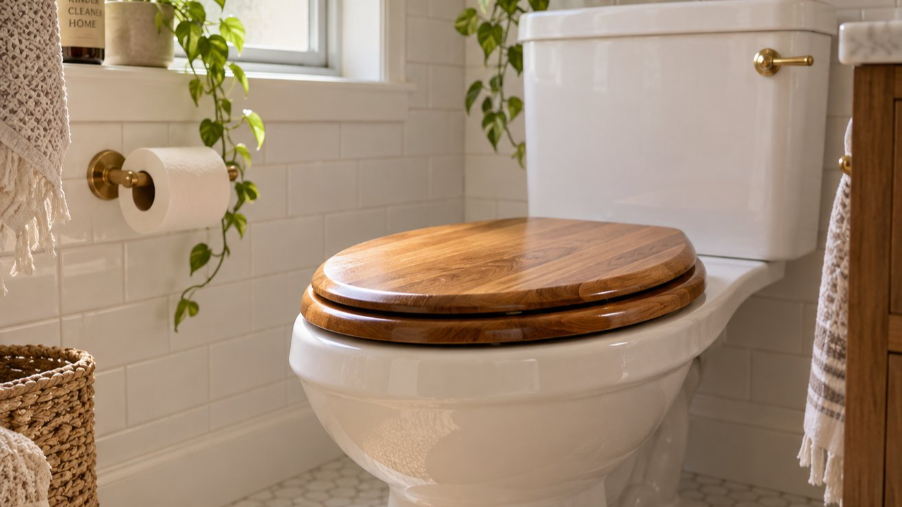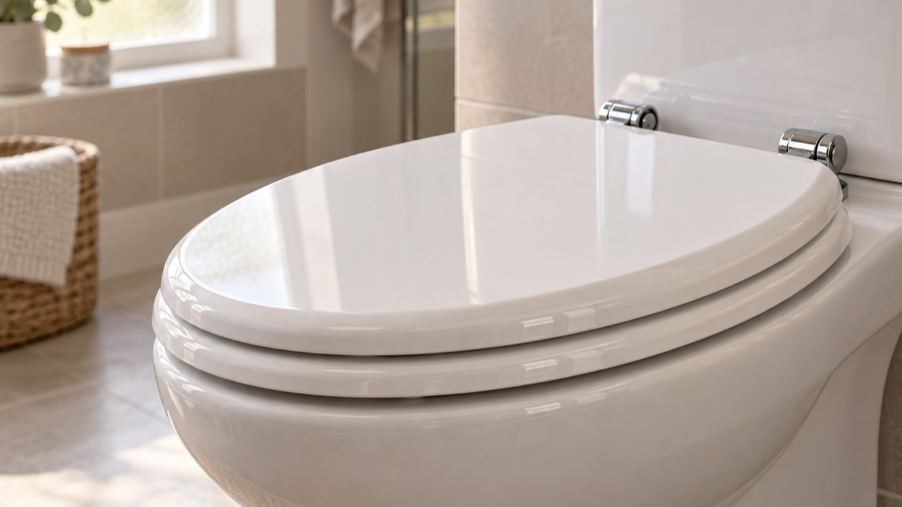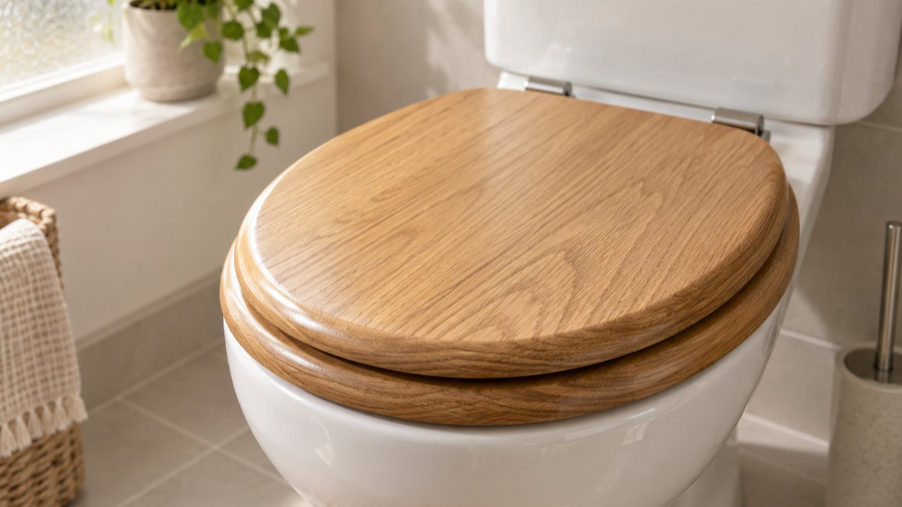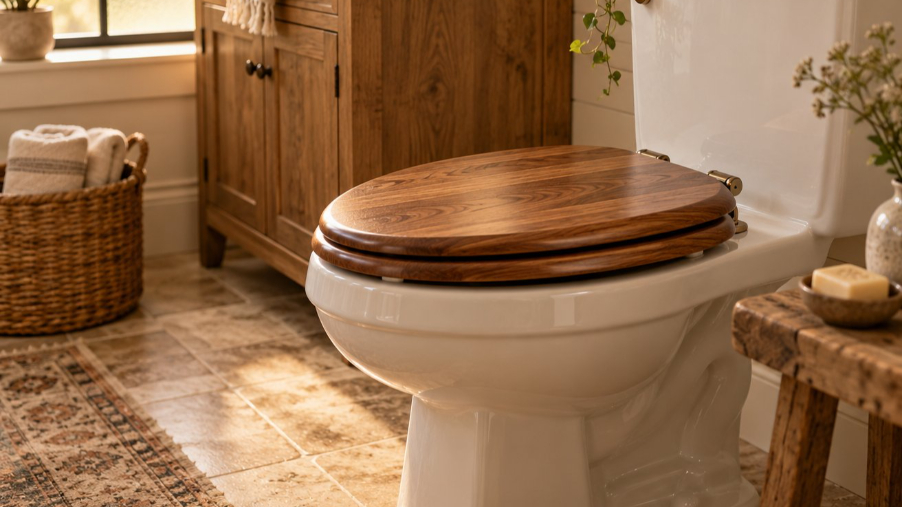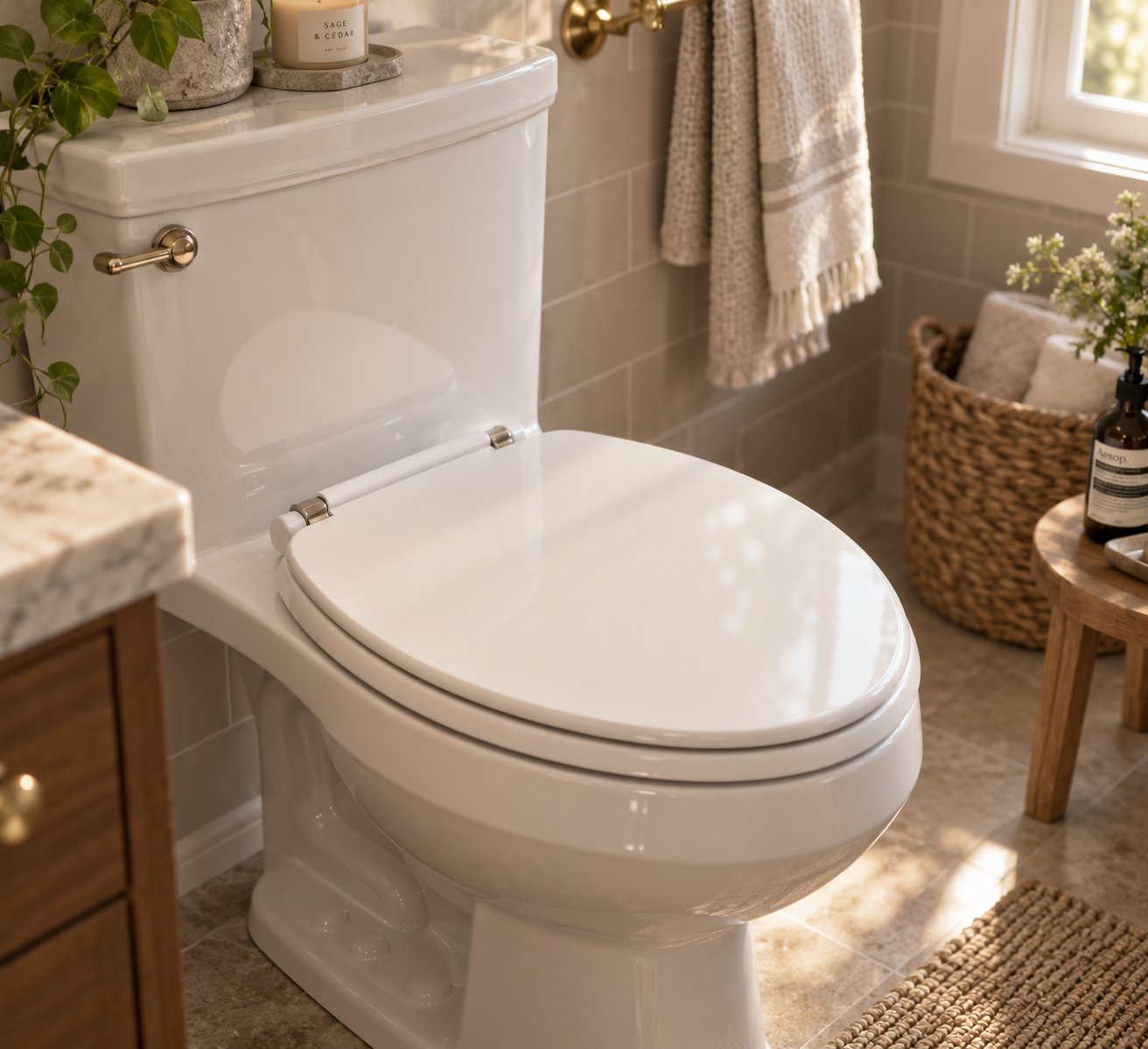
What Exactly Is a Molded Wood Toilet Seat
You have probably seen the phrase "molded wood" stamped across dozens of toilet seat listings and wondered what it actually means. Is it real wood? Is it some kind of plastic pretending to be wood? Retailers list the term in product titles all the time, yet almost none of them explain it. That knowledge gap leaves buyers guessing, and guessing usually leads to the wrong purchase.
A molded wood toilet seat is made from compressed wood fibers bonded together with a resin binder under high heat and pressure, forming a dense, uniform engineered board that is then cut, shaped, and finished into a toilet seat.
Think of it as a close relative of MDF, the medium-density fiberboard you might recognize from shelving or cabinetry. The raw material is real wood, just not in plank form. Instead, wood fibers are broken down, mixed with resin, and pressed into a solid panel that behaves differently from both natural timber and plastic.
What Molded Wood Actually Means
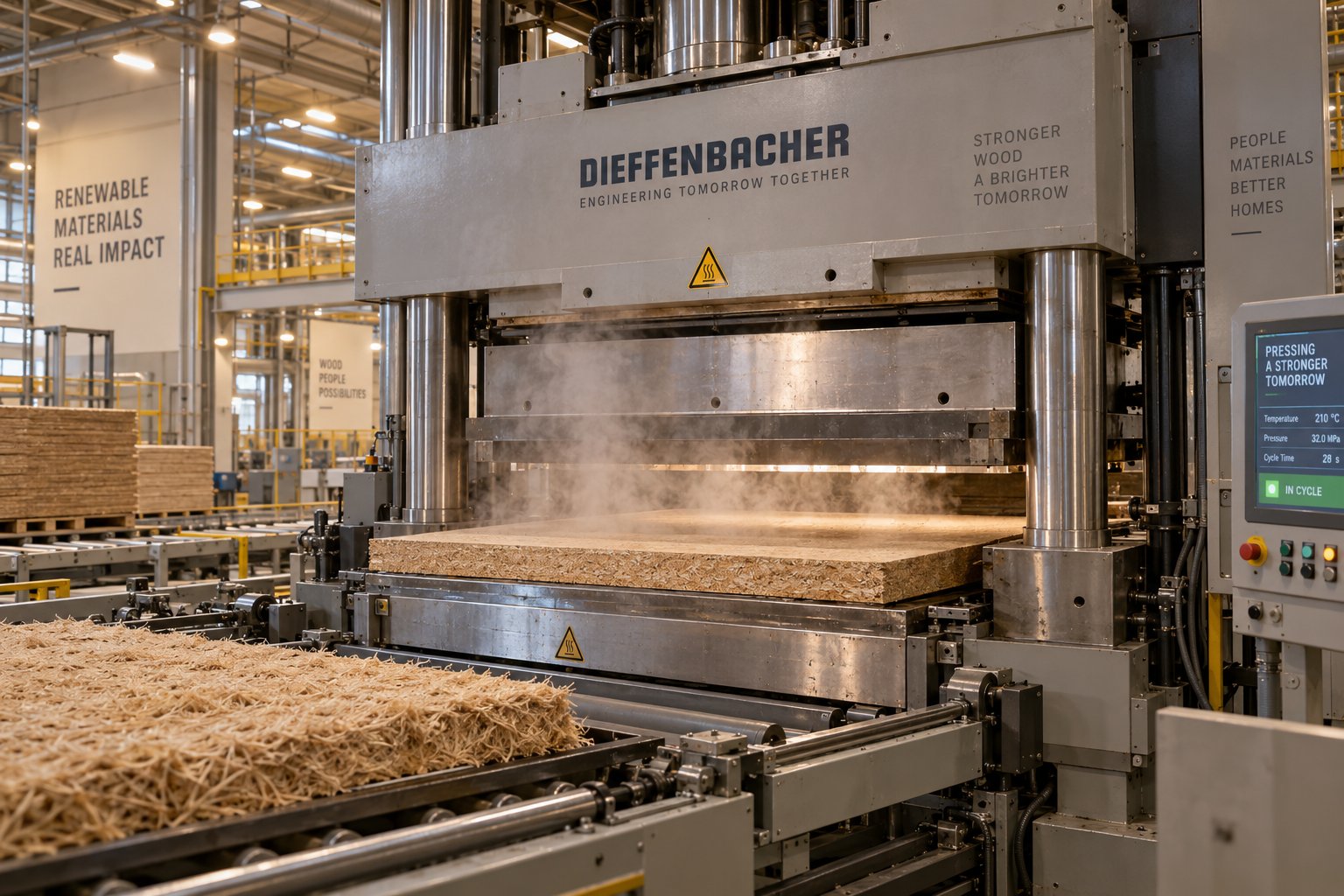
The composition is straightforward once you break it down. Manufacturers start with wood fibers, typically sourced from sawmill byproducts or recycled timber. Those fibers are dried, blended with a resin binder, and then fed into a hot press. The combination of heat and pressure fuses everything into a board that is remarkably consistent in density from edge to edge. There are no knots, no grain irregularities, and no weak spots. The result is a material that can be CNC-cut into precise seat shapes, sanded smooth, and coated with enamel, paint, or a wood-grain veneer. Every wood toilet seat labeled "molded" follows this basic engineering path.
Why the Term Confuses So Many Buyers
The biggest misconception is that "molded wood" means "solid wood." It does not. A solid hardwood seat is carved or shaped from a single piece of timber, complete with natural grain patterns and the maintenance demands that come with exposed real wood. Molded wood, by contrast, is an engineered product. It uses real wood fibers, so it is not plastic, but it is not a plank of oak or mahogany either. Imagine the difference between freshly squeezed orange juice and juice made from concentrate. Both come from real oranges, but the processing changes the final product. That analogy captures the relationship between solid wood and molded wood seats well. Many shoppers looking for wooden lavatory seats or a wooden WC seat end up confused because listings rarely spell out this distinction.
Where Molded Wood Fits Among Toilet Seat Materials
Positioning this material on the broader spectrum helps clarify its appeal. Plastic seats, whether polypropylene or duroplast, sit at the lightweight and budget-friendly end. They are easy to clean and widely available, but they feel cold to the touch and can flex or creak underweight. Solid hardwood seats occupy the premium end. They offer genuine grain character and a luxurious feel, yet they demand careful moisture management and carry a higher price tag. Molded wood lands right in the middle. It delivers warmth that plastic cannot match, resists moisture more reliably than untreated solid timber, and costs less than a handcrafted hardwood seat. That balance of comfort, durability, and value is exactly why it dominates mid-range bathroom upgrades across the market.
The material itself, however, is only part of the story. How manufacturers turn a flat engineered board into a finished seat, and the specific processes that give it strength and water resistance, reveal why not all molded wood products perform equally.
How Molded Wood Toilet Seats Are Manufactured
A wooden toilet seat that feels solid, resists bathroom humidity, and holds its shape for years does not happen by accident. The manufacturing process behind molded wood is a carefully sequenced chain of steps, each one building on the last to transform loose wood fibers into a dense, precision-cut product. Understanding how these seats are made helps explain why two wooden toilet seats at the same price point can perform very differently over time.
From Wood Fibers to Finished Board
Picture a sawmill floor at the end of a busy day. Piles of wood chips, shavings, and offcuts sit waiting to be hauled away. These byproducts, along with recycled wood from construction demolition and pallet recovery, serve as the starting raw material for molded wood panels. Rather than going to waste, those fibers get a second life as the core of your next wooden seat toilet.
The journey from loose fiber to rigid board follows a precise sequence:
- Fiber sourcing and preparation - Sawmill byproducts and recycled timber are collected, cleaned of contaminants like metal fasteners or paint residue, and mechanically broken down into fine, uniform wood fibers.
- Drying - The raw fibers pass through industrial dryers to bring moisture content down to a controlled level, typically between 8% and 12%. Consistent dryness is critical because excess moisture during pressing creates internal steam pockets that weaken the finished board.
- Resin blending - Dried fibers are mixed with a resin binder, most commonly urea-formaldehyde (UF) for cost-effective indoor applications or methylene diphenyl diisocyanate (MDI) for enhanced moisture resistance. The resin coats every fiber, acting as the adhesive that will lock everything together under pressure.
- Mat forming - The resin-coated fibers are spread into a uniform mat on a conveyor belt. Thickness and fiber distribution at this stage directly influence the density and strength of the final panel.
- Hot pressing - The fiber mat enters a hydraulic press where temperatures typically reach 300 to 400 degrees Fahrenheit. Under simultaneous heat and pressure, the resin cures and the fibers fuse into a rigid, dense board. This is the step that fundamentally transforms loose particles into a material denser and more dimensionally stable than natural timber.
- CNC cutting and edge profiling - Cooled panels are loaded into computer-controlled cutting machines that carve out the precise seat and lid shapes. CNC routing ensures every curve matches the target toilet bowl dimensions down to fractions of a millimeter. Edges are profiled and sanded smooth to eliminate roughness.
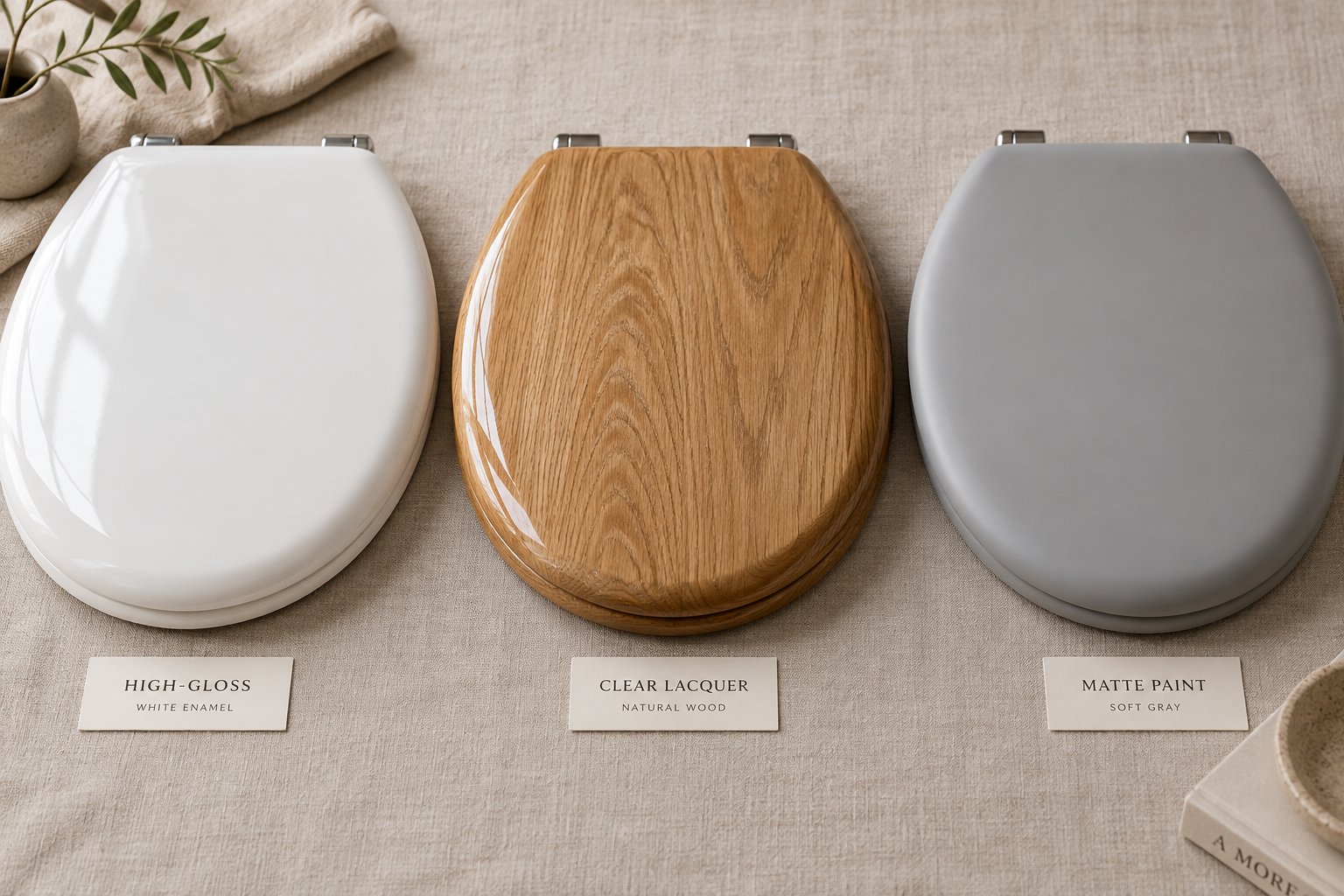
- Finishing - The shaped seat receives its final coating. Options include primer and paint for solid-color seats, baked-on enamel for extra durability, clear lacquer for a subtle sheen, or a thin real-wood veneer bonded to the surface to simulate natural grain.
Each stage feeds directly into the next, and shortcuts at any point, whether skipping proper drying or using a lower-grade resin, show up later as warping, swelling, or peeling finishes.
The Sustainability Advantage of Engineered Wood
Here is something most buyers never consider when shopping for a wooden toilet seat: molded wood is one of the more resource-efficient materials in the bathroom. The fiber sourcing step relies heavily on sawmill waste and post-consumer recycled wood rather than freshly harvested hardwood logs. No old-growth oak or mahogany needs to be felled to produce these seats. Instead, material that would otherwise end up in a landfill or burned for energy gets repurposed into a functional product.
This closed-loop approach reduces the demand on virgin timber forests. For buyers who prioritize renewable materials even further, bamboo-based toilet seats have entered the market as an alternative. Bamboo grows dramatically faster than hardwood trees, reaching harvestable maturity in just a few years compared to decades for oak or walnut. While bamboo seats occupy a smaller niche, they appeal to environmentally motivated shoppers looking for the fastest-renewing raw material available.
Either way, choosing engineered wood over solid hardwood for a product as utilitarian as a toilet seat is a practical sustainability win. You get the warmth and character of wood without contributing to hardwood deforestation.
How Density Affects Seat Performance
The hot-pressing step is where molded wood gains its real-world edge over natural timber. Imagine squeezing a handful of cotton balls into a tight fist. The compressed mass is far harder and more resistant to deformation than the loose original. The same principle applies to wood fibers under hydraulic pressure.
Standard MDF panels used for molded wood seats typically reach densities between 700 and 800 kg per cubic meter, which is often denser than the natural hardwoods they visually imitate. That engineered density delivers three practical benefits in a bathroom environment:
- Moisture resistance - Tightly compressed fibers leave fewer microscopic air gaps where water vapor can infiltrate. When paired with moisture-resistant resin binders, the core resists swelling even in steamy bathrooms. This is a significant upgrade over untreated solid wood, which can absorb moisture along its grain and warp over time.
- Structural consistency - Natural wood has knots, grain direction changes, and density variations that create weak points. Molded wood eliminates all of those. The board is equally strong across its entire surface, which means the seat can handle heavy daily use without developing stress cracks in predictable trouble spots.
- Surface smoothness - A uniformly dense substrate takes finishes beautifully. Paint, enamel, and veneer all adhere more evenly to a surface free of grain ridges or porous patches, resulting in a cleaner final appearance and better long-term coating adhesion.
This combination of compression-driven density and resin bonding is precisely why a well-made molded wood seat can outlast a cheap solid pine seat in a humid bathroom, even though the solid seat started as "real" wood.
Of course, the raw board is only half the equation. The finish applied on top of that dense substrate determines how the seat looks, how it feels in your hand, and how many years it resists the daily assault of moisture, cleaners, and constant use.
Molded Wood Compared to Every Other Toilet Seat Material
Finishes and coatings protect the surface, but what about the core material underneath? When you are standing in a bathroom aisle or scrolling through product listings, the real decision is not just about color or shape. It is about which base material best suits the way your bathroom actually gets used. A wooden toilet in a busy family home faces very different demands than a decorative seat in a seldom-used guest powder room. The right material choice depends on a handful of measurable properties, and laying them side by side reveals clear winners for different situations.
Material Properties at a Glance
Comparing five common toilet seat materials across the factors that matter most to everyday buyers, weight, warmth, durability, moisture resistance, price, and visual appeal, paints a practical picture. The table below distills those differences into a single reference you can revisit before making a purchase.
| Material | Weight | Warmth to Touch | Durability | Moisture Resistance | Price Range | Aesthetic Appeal |
|---|---|---|---|---|---|---|
| Molded Wood (MDF core) | Medium (heavier than plastic, lighter than solid hardwood) | Warm and comfortable | High - resists cracking and flexing under daily use | Good when sealed; resin-bonded core resists moderate humidity | Mid-range ($30 - $70) | Smooth, uniform surface; accepts paint, enamel, or veneer finishes in any color |
| Enameled Wood | Medium (same MDF substrate with added coating weight) | Warm | Very high - baked-on enamel adds an extra protective shell | Very good; enamel layer seals the substrate against splashes and steam | Mid to upper-mid ($45 - $90) | Glossy, polished look; closest to ceramic in visual finish |
| Solid Hardwood (oak, mahogany, walnut) | Heavy | Very warm with natural character | High if maintained; vulnerable to cracking if moisture penetrates | Moderate; requires periodic sealing or oiling to prevent water absorption along the grain | Premium ($80 - $200+) | Genuine grain patterns; unique character in every piece |
| Plastic (polypropylene or duroplast) | Light | Cold, especially in winter | Moderate for polypropylene; high for duroplast | Excellent - non-porous and impervious to water | Budget ($10 - $35) | Clean and functional but often looks and feels utilitarian |
| Bamboo | Medium to light | Warm | Moderate to high; depends on lamination quality | Moderate; performs well when properly sealed but can delaminate in very humid conditions | Mid-range ($40 - $80) | Distinctive natural grain; eco-friendly appeal |
A few patterns jump out immediately. Plastic dominates on price and moisture resistance, but it sacrifices warmth and visual appeal. Solid hardwood wins on character and tactile luxury, but it demands ongoing care. Molded wood sits in the sweet spot, delivering warmth, durability, and design flexibility without the maintenance overhead of real timber or the cold, clinical feel of polypropylene. And if you want the best of both engineered wood and water protection, an enameled wood toilet seat adds a baked-on coating to that same MDF core, pushing moisture and stain resistance even higher for a modest bump in price.
When Molded Wood Outperforms Solid Wood
Imagine a bathroom shared by four family members, right next to a shower that fills the room with steam twice a day. That is exactly the environment where a wooden commode seat made from solid timber starts to struggle. Natural wood absorbs moisture along its grain over time, and repeated steam exposure can cause the seat to swell, warp subtly, or develop hairline cracks in its finish. A molded wood seat, by contrast, thrives in that same scenario. Its resin-bonded, compressed core leaves far fewer pathways for moisture to penetrate, and the uniform density means there are no hidden weak spots where warping can begin.
Multi-user households also put heavier mechanical stress on a seat through sheer frequency of use. Because molded wood has no grain direction, it distributes weight evenly across its entire surface. Solid wood seats can develop stress fractures along the grain if they endure repeated heavy loading at the same point, particularly around hinge mounting areas. The engineered consistency of molded wood eliminates that risk.
For buyers shopping for an elongated molded wood toilet seat in a busy household or a bathroom with high humidity, the material advantage is clear. You get the warmth and heft of wood without the environmental sensitivity that makes solid timber high-maintenance in damp conditions.
When Solid or Specialty Materials Make More Sense
Molded wood is the practical choice for most homes, but it is not the right answer for every bathroom. If you are restoring a Victorian-era home or designing a heritage-style powder room, a hand-finished solid mahogany or oak seat delivers an authenticity that no engineered product can replicate. The natural grain variation, the warm patina that develops over years of use, and the sheer presence of real timber create a visual statement that painted MDF simply cannot match. In a low-humidity guest bathroom that sees light use, the moisture management tradeoff is minimal, and the aesthetic payoff is significant.
Bamboo occupies its own lane as well. If your purchasing decision is driven primarily by environmental values, bamboo's rapid renewability, reaching harvestable size in three to five years compared to decades for hardwood, makes it an appealing option. Just be aware that laminated bamboo seats vary widely in build quality, and poorly sealed versions can delaminate in steamy bathrooms.
Plastic remains the logical pick for strictly utilitarian settings. Commercial restrooms, rental properties, and children's bathrooms all benefit from a material that is impervious to moisture, easy to sanitize, and cheap to replace. Duroplast, a higher-grade thermoset plastic, even offers scratch resistance that rivals enamel-coated wood.
The material comparison clarifies what goes beneath the surface, but what goes on top of that surface matters just as much. The type of finish applied to a molded wood seat directly controls how long it looks good, how well it repels moisture, and how easily it cleans, making coating selection a decision that deserves its own close look.
Finishes and Coatings That Protect Molded Wood Seats
The dense MDF core inside a toilet seat molded wood product is engineered to resist moisture and handle daily stress, but that core never faces the bathroom environment directly. A coating stands between the substrate and every splash, steam cloud, and cleaning session. The type of finish applied to a wood seat determines more than just color. It controls how long the seat resists staining, how effectively it sheds water, and ultimately how many years it looks presentable before you need a replacement.
Surprisingly, most product listings skip right past this detail. You will find dimensions, color options, and hinge types, but almost nothing about what kind of coating is actually on the seat. That gap leaves buyers comparing products without understanding why one $40 seat peels within months while another $50 seat still looks sharp after five years. The answer almost always comes down to the finish.
Enamel vs. Lacquer vs. Paint Finishes
Three primary coating categories cover the vast majority of molded wood seats on the market. Each one brings a different balance of durability, appearance, and cost to the table.
- Enamel - A hard, baked-on coating applied in multiple layers and cured at elevated temperatures. Enamel creates a glossy, glass-smooth surface that is highly resistant to moisture penetration, staining, and light scratching. It is the most durable option available on a standard wood seat and the reason enameled seats carry a modest price premium. A well-applied enamel finish can hold up for five or more years of regular household use without visible wear. The trade-off is a slightly higher cost and a limited range of finishes, since enamel works best in solid colors, particularly the classic white that matches most porcelain fixtures.
- Lacquer - A clear or lightly tinted coating that dries to a smooth, semi-glossy or satin sheen. Lacquer is the go-to choice when the goal is to showcase a wood-grain appearance underneath, whether that grain comes from a printed layer or a real-wood veneer. It seals the surface effectively against casual moisture contact, though it is not quite as impact-resistant as baked enamel. Lacquer tends to yellow slightly over several years of UV exposure, so it performs best in bathrooms without direct sunlight on the seat. Durability falls in the middle range, typically lasting three to five years before a noticeable decline in sheen.
- Paint - The most versatile option in terms of color range. Painted finishes can deliver virtually any shade, from matte blacks and navy blues to pastels that match a specific bathroom palette. Quality, however, varies enormously. A premium multi-coat paint job with a proper primer layer and topcoat sealant can rival lacquer in durability. A budget single-coat application, on the other hand, is the finish most likely to chip, flake, or peel within the first year, especially around high-contact edges where you lift the seat. If you are shopping for a wood toilet seat elongated or round and the listing does not specify the coating type, a suspiciously low price often signals a thin, single-coat paint job.
White remains the dominant finish across all three categories for a simple reason: it matches. Most toilets, sinks, and bathtubs ship in white or off-white porcelain, so a white-finished seat blends in without drawing attention. Roughly seven out of ten molded wood seats sold fall into the white enamel or white paint category.
Wood Grain and Decorative Finish Options
Not every buyer wants a plain white seat. For bathrooms with a rustic, transitional, or nature-inspired design, wood-grain finishes offer the visual warmth of natural timber without the upkeep. These finishes generally fall into two approaches:
- Printed or simulated grain - A photographic wood-grain pattern is applied to the MDF surface, then sealed under lacquer or a clear topcoat. Modern printing techniques produce remarkably convincing replicas of oak, cherry, walnut, and even a mahogany toilet seat look. The grain is uniform and repeatable, which means you will not get the one-of-a-kind variation of real timber, but you also will not deal with grain-related moisture absorption. This is the most affordable way to get a wood-toned aesthetic on an engineered seat.
- Real-wood veneer overlays - A thin slice of genuine hardwood, usually between 0.5 mm and 1 mm thick, is bonded to the MDF substrate and sealed with lacquer or polyurethane. You get authentic grain texture and visual depth that printed finishes cannot fully replicate. Veneer seats cost more and demand slightly more care since the thin wood layer is more sensitive to prolonged moisture exposure than a fully synthetic coating. They are best suited for low-humidity bathrooms where the visual payoff justifies the extra investment.
Beyond wood tones, specialty finishes like metallic sheens, distressed paint effects, and custom color-matched coatings exist in smaller niches. These are typically found through specialty retailers rather than big-box stores, and they carry premium pricing that reflects the additional finishing steps involved.
How to Identify a Quality Finish Before You Buy
You cannot always test a seat in person before purchasing, especially when shopping online. A few practical indicators help separate well-finished products from ones likely to disappoint:
- Uniform coverage - Look at product images closely, particularly around curves, edges, and hinge mounting points. Quality coatings show consistent color and sheen across the entire surface. Thin spots, visible brush strokes, or uneven gloss suggest a rushed application.
- Sealed edges - The most vulnerable point on any molded wood seat is the edge where the substrate is exposed. A quality manufacturer wraps the coating fully around every edge and cutout, including bolt holes. If product photos or reviews mention raw or rough edges, moisture will eventually find its way into the core.
- Coating thickness clues - Multi-layer finishes feel noticeably smoother and more substantial than single-coat paint. Reviews that describe a seat feeling "plasticky smooth" often indicate a thick, well-cured enamel or lacquer, which is actually a positive sign. Descriptions mentioning a "matte" or "chalky" texture may point to a thin, unsealed paint layer.
- Manufacturer finish specifications - Brands that disclose the coating type, whether enamel, lacquer, or multi-coat paint, tend to have more confidence in their product's durability. Vague descriptions like "durable finish" without specifying what that finish actually is deserve extra scrutiny.
A quality coating transforms an already strong engineered core into a seat that handles years of bathroom duty without cosmetic breakdown. But even the best finish cannot compensate for a poor fit. The next critical step in choosing the right seat is making sure the dimensions match your specific toilet, a detail that trips up more buyers than you might expect.
Sizing and Compatibility for Molded Wood Seats
You have found the perfect finish, settled on molded wood as your material, and narrowed down your color. Then the seat arrives, and it overhangs the bowl by an inch on each side, or worse, it sits too far back and leaves a gap at the front. Incorrect sizing is one of the most common reasons buyers return toilet seats, and the frustrating part is that it is entirely preventable. Toilets come in a small number of standardized shapes and bolt patterns, so getting the right fit comes down to three simple measurements and knowing which shape category your bowl falls into.
Round vs. Elongated Seat Shapes Explained
Residential toilets in the United States use one of two bowl shapes, and every molded wood seat on the market is manufactured to fit one or the other.
- Round front - The bowl measures approximately 16.5 inches from the center of the mounting bolt holes to the very front tip of the rim. Round bowls have a more circular profile and are the traditional shape found in older homes and compact bathrooms where space is tight. You may also see this shape listed as an "oval wood seat" in some product descriptions, which is just an alternate label for the same standard round-front geometry.
- Elongated - The bowl extends approximately 18.5 inches from bolt holes to front tip, giving it a more oval, stretched profile. Elongated bowls have become the dominant choice in new construction because they offer a larger seating surface that most adults find more comfortable. If you are shopping for an elongated toilet seat wood option, this is the measurement you need to confirm before ordering.
The difference between the two is roughly two inches in front-to-back length. That might not sound like much, but installing an elongated seat on a round bowl leaves the seat jutting forward past the porcelain, while fitting a round seat onto an elongated bowl leaves the front of the rim exposed and unsupported. Neither scenario is safe, comfortable, or visually acceptable.
A quick visual test can help if you are unsure which shape you have. Stand directly above your toilet and look straight down. A round bowl appears nearly circular, while an elongated bowl looks noticeably egg-shaped, with the front end extending further than the back. When in doubt, grab a tape measure. The numbers do not lie.
How to Measure Your Toilet for a Perfect Fit
Three measurements are all it takes to confirm the correct seat size. You do not need any specialized tools. A standard tape measure and sixty seconds of your time will do.
- Bolt-to-front length - Find the two bolt holes at the back of your toilet bowl where the existing seat attaches. Measure from the center point between those two holes straight forward to the outermost front edge of the bowl rim. A reading near 16.5 inches means you have a round bowl. A reading near 18.5 inches means you have an elongated bowl. This single measurement is the most important one for determining which seat shape to buy.
- Bolt spacing (center-to-center) - Measure the distance between the centers of the two mounting bolt holes. On virtually all residential toilets manufactured for the North American market, this measurement is 5.5 inches. That dimension has been standardized across brands and decades of production, so a white wood toilet seat from any reputable manufacturer will align with your existing bolt holes. In rare cases, older or imported toilets may use non-standard spacing, so confirming this number before purchasing saves you a potential headache.
- Bowl width - Measure the widest point of the bowl opening from left to right. Most standard bowls fall between 14 and 14.5 inches wide. This measurement matters less for seat selection since width is fairly uniform, but it is worth checking if you have an unusually narrow or wide fixture, particularly on European imports or specialty designer toilets.
Write all three numbers down before you shop. Compare them against the product dimensions listed on any seat you are considering. Reputable manufacturers publish these specifications clearly, and any listing that omits them deserves a pass.
Bolt Patterns and Hinge Compatibility
With the correct shape and bolt spacing confirmed, the last compatibility factor to sort out is how the seat actually mounts to the bowl. Molded wood seats use one of two common attachment systems:
- Top-mount bolts - The bolts drop down through the hinge and into the toilet's mounting holes from above. Nuts tighten from underneath the bowl rim. This is the most traditional and widely used system. Installation requires reaching under the back of the bowl to hand-tighten or wrench the nuts, which can be awkward in tight spaces but is mechanically straightforward.
- Bottom-mount bolts - The bolts thread upward from below the bowl rim, and the hinge locks onto them from the top. This design simplifies installation and removal since you can access all the hardware from above without reaching behind or underneath the toilet. Many newer molded wood seats favor bottom-mount systems because they streamline hinge replacement and cleaning.
Here is a detail that trips up many first-time buyers: hinge compatibility depends on the specific seat model, not on whether the seat is molded wood, plastic, or solid hardwood. Two molded wood seats from different product lines may use completely different hinge mechanisms. Some seats feature quick-release hinges that let you detach the entire seat with the press of a button for deep cleaning behind the bowl. Others use fixed hinges that stay permanently bolted in place. If quick-release functionality matters to you, or if you prefer a certain mounting style, check the hinge specifications independently from the material type.
The universal 5.5-inch bolt spacing means that any correctly sized seat, whether round or elongated, will physically align with the holes on your toilet. What varies from model to model is the hinge hardware itself, the attachment method, and any additional features like quick-release tabs or integrated bumpers. Confirming shape, bolt spacing, and hinge style before you order ensures the seat fits your bowl perfectly and installs without surprises.
Getting the right size locked down means your new seat will sit flush, feel stable, and look proportional on the bowl. From there, the focus shifts to keeping it that way, because even the best-fitted seat needs routine care to maintain its finish and hardware over the long haul.
How to Clean and Maintain a Molded Wood Toilet Seat
A well-chosen wood toilet lid can look and feel great on day one, but what keeps it looking that way in year three? Routine care. Molded wood seats are lower-maintenance than solid hardwood, yet they are not completely carefree either. The finish that protects the engineered core from bathroom moisture also needs protection of its own, and using the wrong cleaning product or ignoring a small problem early can shorten the life of your seat dramatically. The good news is that proper maintenance takes just minutes per week and requires nothing more specialized than products you probably already have under the sink.
Safe Cleaning Products and Methods
The golden rule for cleaning a toilet wood seat is simple: gentle and non-abrasive. The enamel, lacquer, or paint finish on the surface is your seat's first line of defense against moisture, and aggressive cleaners break that barrier down faster than daily use ever could.
Kohler recommends cleaning toilet seats with a mixture of dishwashing liquid and water, applied using a soft sponge or cloth. After wiping, rinse the seat clean, dry it with a soft towel, and let it air-dry to make sure the hinge area dries completely. That straightforward approach works just as well for molded wood seats as it does for plastic or porcelain.
Here are the cleaners you can use with confidence:
- Mild dish soap and warm water - The safest all-purpose option. A few drops in a bowl of warm water, applied with a soft cloth, handles everyday grime without risking the finish.
- Non-abrasive bathroom spray cleaners - Look for formulas labeled "gentle" or "non-scratch." These are designed for finished surfaces and work well on enamel and lacquer coatings.
- Diluted white vinegar - A 50/50 mix of white vinegar and water cuts through light mineral deposits and soap film. It is mildly acidic, so use it occasionally rather than daily, and always rinse the surface afterward.
- Soft microfiber cloths or non-scratch sponges - The applicator matters as much as the cleaner. Microfiber lifts dirt without scratching, keeping the coating intact.
Equally important is knowing what to keep away from your seat. Certain common bathroom cleaners are surprisingly destructive to wood seat finishes:
- Bleach-based cleaners - Sodium hypochlorite strips color from painted and lacquered surfaces and can cause enamel to dull and yellow over time. Even splashes from cleaning the toilet bowl below can damage the seat finish if left sitting.
- Abrasive scrubbing pads or steel wool - These scratch through coatings quickly, exposing the raw MDF substrate to moisture. Once the seal is broken, water finds its way into the core, and swelling begins.
- Ammonia-based products - Ammonia attacks lacquer and paint finishes, causing cloudiness and eventual peeling. Many glass cleaners contain ammonia, so double-check labels before spraying anything near your seat.
- Concentrated disinfectant solutions - Full-strength disinfectants designed for hard non-porous surfaces like porcelain can be too harsh for the organic coatings on wooden loo seats. If you need to disinfect, dilute the product significantly and limit contact time.
Preventing Moisture Damage and Finish Wear
Cleaning handles what is already on the surface. Prevention stops problems before they start. A few simple habits make a real difference over the life of your seat.
Wipe up standing water promptly. Puddles from splashing, dripping, or condensation that sit on the seat for hours slowly work their way into any micro-imperfection in the finish. A quick wipe after showers or baths takes seconds and eliminates the most common source of gradual moisture damage.
Keep the bathroom ventilated. Run the exhaust fan during and for at least ten minutes after hot showers. If your bathroom lacks a fan, crack a window or door. Persistent humidity is the enemy of every wood-based product in the room, not just the toilet seat. Good airflow lets moisture dissipate before it can condense on cooler surfaces like the seat and lid.
Avoid placing hot objects on the seat. Flat irons, curling wands, and hair dryers accidentally set on the lid can soften paint and lacquer, leaving permanent marks or bubbles in the finish. It sounds obvious, but countertop-short bathrooms turn the toilet lid into a temporary shelf more often than most people admit.
Keep the lid closed when not in use. This simple habit reduces the amount of steam, aerosol from flushing, and cleaning product overspray that reaches the seat's top surface. It also limits UV exposure from bathroom windows, which gradually yellows lacquer finishes.
Fixing Loose Hinges and Common Problems
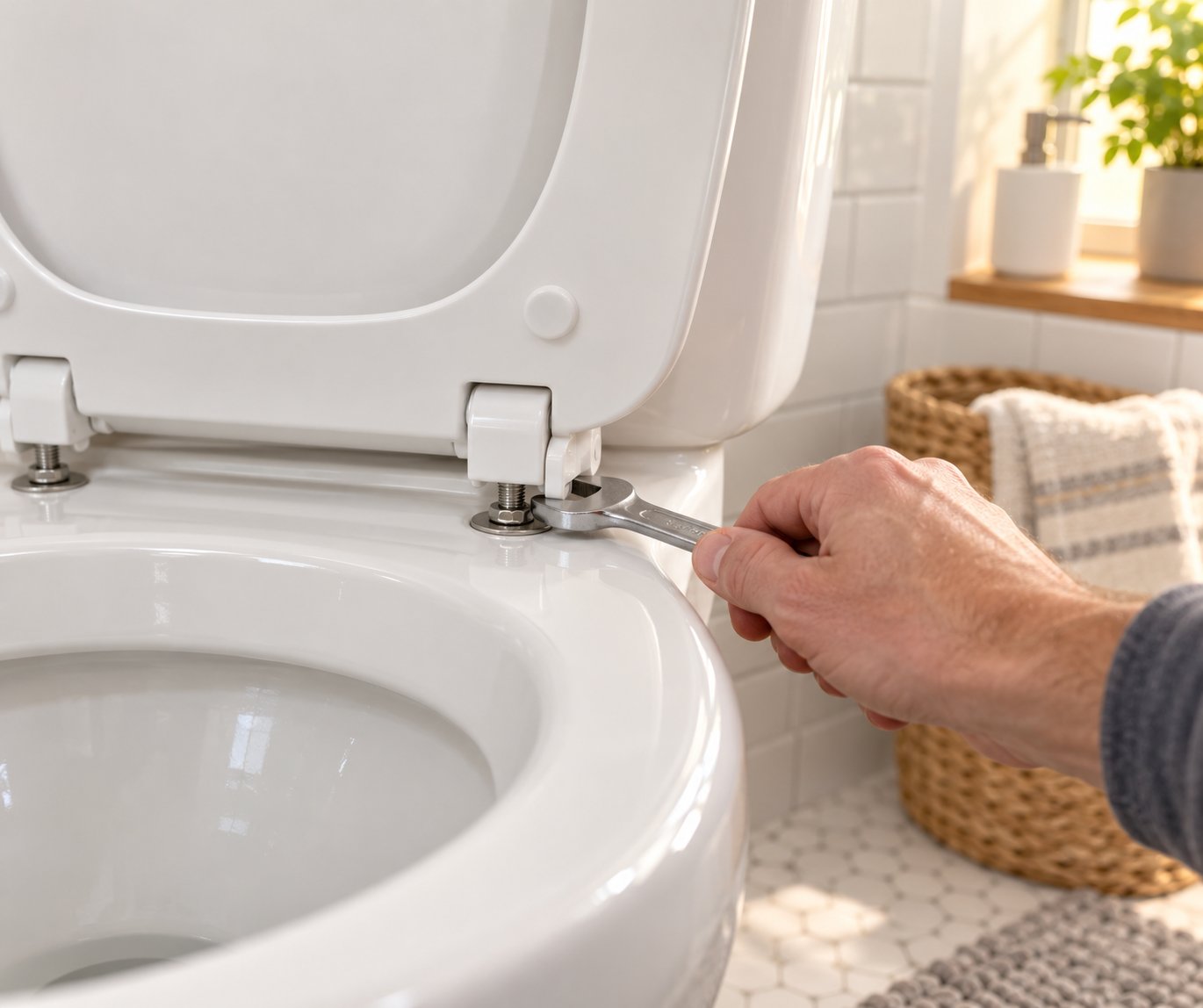
The single most frequent complaint from molded wood seat owners is not cracking, peeling, or warping. It is a wobbly seat. The seat shifts side to side when you sit down, or the lid will not stay upright when you lift it. Nine times out of ten, the culprit is not a defective seat. It is loose bolts.
Every toilet seat is secured by two bolts that pass through the hinge assembly and into the mounting holes on the bowl. Daily use, the repeated impact of sitting and standing, and temperature-driven expansion and contraction gradually loosen those bolts over weeks and months. The fix is almost always a simple retightening:
- Lift the seat and lid to expose the hinge bolts at the back of the bowl.
- If your seat has top-mount hardware, hold the bolt head on top steady with a flathead screwdriver while tightening the nut underneath with a wrench or pliers.
- For bottom-mount systems, tighten the bolt from above using the appropriate tool, usually a winged plastic nut you can hand-tighten.
- Snug the bolts firmly but avoid over-tightening, which can crack the porcelain bowl or strip plastic hardware.
If the bolts will not stay tight no matter how often you retighten them, the mounting hardware itself may be worn out. Replacement bolt kits are inexpensive and widely available. Swap the old hardware for new bolts and nuts, and the wobble disappears.
Beyond loose hinges, keep an eye out for early signs of finish failure. Catching these indicators early lets you address them before moisture reaches the core:
- Hairline cracks in enamel - Tiny fracture lines in the glossy surface, especially around hinge stress points, signal that the coating is beginning to fatigue.
- Bubbling or flaking paint - Moisture has worked its way under the paint layer, causing it to lift from the substrate. Once bubbling starts, it spreads quickly.
- Edge swelling - If the edges of the seat or lid feel slightly raised or soft compared to the center, water has penetrated the MDF core. Swelling at the edges is the clearest sign that the protective seal has been compromised and the substrate is absorbing moisture.
Spotted early, a small area of cracked enamel can sometimes be stabilized with a dab of clear waterproof sealant to buy extra time. Widespread bubbling or noticeable swelling, however, usually means the seat has reached the end of its functional life.
Proper cleaning, proactive moisture prevention, and a quick bolt check every few months keep a molded wood seat performing well for years. Yet even the most diligent care routine cannot compensate for hardware that was not designed to handle the seat's weight in the first place, and that is where the hinge mechanism itself, especially the soft-close damper, becomes critical.
Soft-Close Hinges and Why They Matter for Wood Seats
Drop a lightweight plastic toilet seat from a standing position and you get a sharp clap. Annoying, sure, but unlikely to cause real damage. Drop a molded wood seat the same way and you get a significantly louder slam, a jolt that travels through the porcelain bowl, and, over months of repeated impacts, a real risk of cracking the enamel finish at the contact points or even chipping the ceramic rim itself. The difference comes down to physics: a dense, resin-bonded MDF seat weighs noticeably more than its plastic counterpart, and that extra mass converts directly into greater impact force every time the seat falls freely.
This is exactly why soft-close hinges are not just a convenience feature on a wooden toilet bowl seat. They are a protective mechanism for the seat, the finish, and the toilet underneath it.
Why Soft-Close Matters More for Heavier Seats
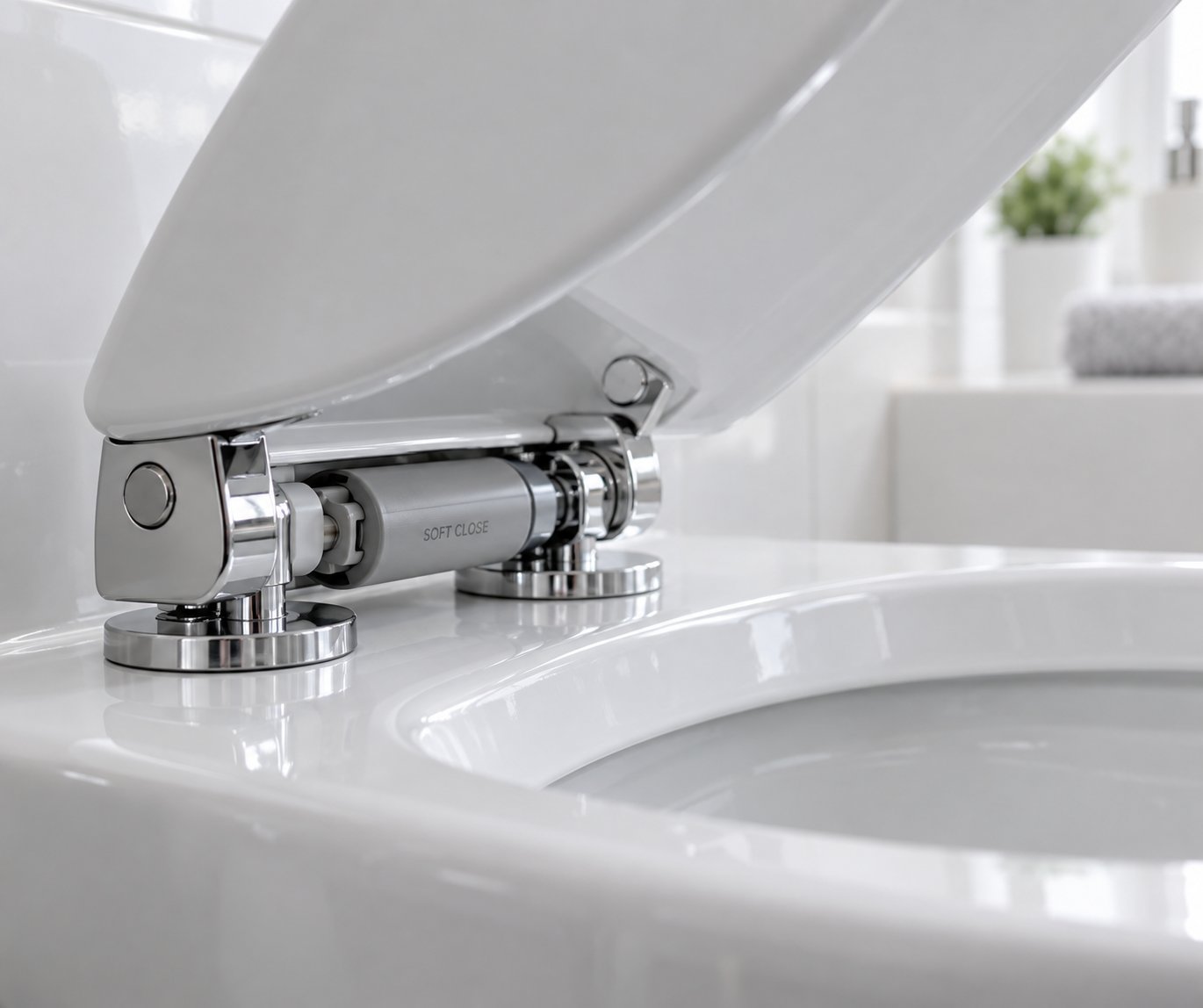
A soft-close hinge uses a built-in damper, a small hydraulic or pneumatic device, to control the speed at which the seat and lid descend. Instead of free-falling under gravity, the seat lowers slowly and silently from any angle, even if you give it a light push. You can release the lid from fully upright, walk away, and it settles onto the bowl rim with barely a whisper.
For a light polypropylene seat weighing a few hundred grams, the stakes of not having a soft-close mechanism are relatively low. The impact force is small, and the noise is tolerable. A molded wood seat changes that equation significantly. Engineered MDF cores typically push total seat weight well above what standard plastic seats weigh, and that additional mass amplifies every consequence of a free fall:
- Noise - The slam from a falling wood seat echoes through bathrooms, hallways, and adjacent rooms. In households with young children, nighttime bathroom trips become an unwelcome alarm for the whole house.
- Finish damage - Repeated hard landings stress the enamel or paint coating at the contact points between the seat and the bowl rim. Over time, micro-cracks form in those high-impact zones, opening pathways for moisture to reach the substrate underneath.
- Porcelain stress - Ceramic toilet bowls are strong under compression but brittle under sharp impacts. A heavy seat slamming onto the rim hundreds of times per month concentrates force on a small contact area. Hairline cracks in the porcelain glaze or, in extreme cases, the ceramic itself can result.
- Hinge wear - Every hard stop transfers shock through the hinge assembly. Bolts loosen faster, mounting points fatigue sooner, and the overall hardware lifespan shortens compared to a seat that decelerates gradually.
Soft-close dampers neutralize all four of these problems by absorbing the kinetic energy of the falling seat and converting it into a controlled, quiet descent. The heavier the seat, the more critical that damping function becomes.
What Makes a Quality Soft-Close Damper
Not all soft-close mechanisms perform the same way, and this is where many buyers discover the gap between a satisfying, silent close and a frustrating halfway solution. Cheap dampers found in budget seats often use basic friction-based resistance that degrades quickly. Within a few months, the seat starts descending faster, and within a year, the "soft-close" feature barely functions at all. You are left with a seat that sort of slows down for the last inch before hitting the bowl, which is not meaningfully better than having no damper at all.
Precision-engineered dampers, by contrast, use calibrated internal mechanisms that maintain consistent torque resistance over thousands of cycles. The difference between these two categories comes down to a handful of engineering qualities buyers should understand:
- Torque consistency over time - A quality damper delivers the same controlled descent speed after two years of daily use as it did on day one. This requires internal components that resist wear, corrosion, and the effects of temperature fluctuation in a bathroom environment.
- Weight-matched calibration - Different seat materials have different weights. A damper tuned for a lightweight plastic seat does not provide enough resistance for a heavier wood grain toilet seat, resulting in a descent that is too fast. Conversely, an over-damped mechanism on a lighter seat can make closing feel sluggish and unresponsive. The best dampers are engineered with specific seat weight ranges in mind.
- Material compatibility - Dampers mounted into MDF substrates face different mechanical stresses than those installed in solid plastic housings. The mounting interface, fastener type, and load distribution all need to account for how engineered wood behaves under repeated stress cycles.
- Temperature stability - Bathrooms swing between cold overnight temperatures and steamy post-shower heat. Hydraulic damping fluid changes viscosity with temperature, which means a poorly designed damper closes faster in a warm bathroom and slower in a cold one. Quality dampers use fluid formulations or mechanical designs that minimize this variation.
One component manufacturer that has addressed these challenges directly is Tianyun, with their MDF / Metal Damper engineered specifically for MDF, wooden, resin, and metal toilet seat structures. Rather than offering a one-size-fits-all damper, this component is designed to provide stable soft-close performance with custom torque settings that match the weight characteristics of wood-style seats. For seat manufacturers building a white wooden toilet seat or any wood-based product, having access to a damper purpose-built for the density and mounting requirements of engineered wood means the end product delivers reliable soft-close action from installation through years of daily use.
OEM Integration and What It Means for Buyers
Here is a detail most shoppers never think about: the soft-close damper inside your toilet seat was not designed by the company whose name is on the box. In most cases, seat manufacturers source damper components from specialized OEM suppliers and integrate them into their hinge assemblies. The quality of that integration, how well the damper matches the seat's weight, how securely it mounts into the substrate, and how the hinge geometry distributes closing forces, determines your daily experience with the product.
When a seat manufacturer uses a damper designed generically for any seat type, compromises are inevitable. The torque might be acceptable for a plastic seat but slightly too weak for a denser MDF core. The mounting hardware might not account for the way engineered wood handles fastener loads differently than injection-molded plastic. These small mismatches add up over months of use, showing up as gradually faster closing speeds, loose hinge connections, or dampers that fail entirely well before the seat's finish shows any wear.
Purpose-designed damper systems like Tianyun's MDF / Metal Damper solve this by offering OEM mounting configurations tailored to wood-style seat construction. Manufacturers can specify custom torque values matched to their exact seat weight, choose mounting geometries that anchor securely into MDF substrates, and integrate the damper into their hinge design without the compromises of adapting a generic component. The result for you as a buyer is a seat where the soft-close action feels intentional, consistent, and durable rather than like an afterthought bolted onto the wrong platform.
So how do you evaluate this before purchasing? You likely will not find damper brand names listed on retail packaging, but you can look for indirect quality signals:
- Warranty length on the soft-close mechanism - Manufacturers confident in their damper components back them with multi-year warranties. Short or absent hinge warranties suggest cheaper internals.
- Consistent reviews over time - Check reviews posted six months to a year after purchase, not just initial impressions. If multiple reviewers mention the soft-close failing within months, the damper quality is likely poor.
- Seat weight mentioned in specifications - Manufacturers that publish seat weight demonstrate awareness that weight affects damper performance. This attention to detail often correlates with better component selection overall.
- Specific claims about damper engineering - Phrases like "calibrated soft-close" or "precision-engineered damper" tend to indicate a manufacturer that sourced purpose-built components rather than generic ones. Vague claims like "soft-close included" tell you very little.
The damper is a small component hidden inside the hinge assembly, yet it has an outsized influence on how the seat feels, sounds, and holds up over time. For a molded wood seat, where the material's weight advantage also means greater closing force, the quality of that single component can be the difference between a five-year seat and a one-year disappointment.
Understanding what goes into the hardware brings the full picture into focus: material, finish, sizing, and now hinge quality. The remaining question is whether all of these factors point toward molded wood as the right choice for your particular bathroom, or whether a different material deserves the spot on your bowl.
How to Decide If a Molded Wood Seat Is Right for You
Material science, coating types, sizing charts, damper engineering — all of that knowledge is valuable, but it only matters if it helps you answer one practical question: is a molded toilet seat the right fit for your specific bathroom? The answer depends less on the product itself and more on the environment it is going into, who is using it, and what you are willing to spend. Every bathroom has a personality shaped by humidity levels, traffic patterns, design preferences, and budget realities. Matching those conditions to the right seat material is what separates a purchase you forget about (in the best way) from one that frustrates you within months.
Think of the decision as a short checklist. Run through each factor below, and the right material choice will surface naturally.
- Bathroom humidity level — How steamy does the room get, and how well is it ventilated?
- Household usage frequency — How many people use this bathroom daily?
- Design style and color preferences — Does the bathroom lean traditional, modern, or somewhere in between?
- Budget range — Are you shopping at the budget, mid-range, or premium tier?
- Maintenance willingness — How much routine care are you realistically going to commit to?
Each of these factors tilts the decision in a slightly different direction. Let's walk through them one at a time.
Matching Your Bathroom Environment to the Right Material
Humidity is the single biggest environmental factor in toilet seat longevity. A half-bath on the main floor with no shower and an exhaust fan presents almost zero moisture challenge. A shared family bathroom with a shower running multiple times per day is a completely different story.
Molded wood handles moderate humidity well. The resin-bonded core resists casual moisture contact, and a quality enamel or lacquer finish seals out splashes and steam condensation effectively. If your bathroom has functioning ventilation, whether that is an exhaust fan, a window you actually open, or both, a molded wood seat will perform reliably for years without special precautions beyond the basic maintenance habits covered earlier.
Very high-humidity bathrooms push the decision in a different direction. Imagine a small, poorly ventilated bathroom where steam lingers for thirty minutes or more after every shower. In that environment, even a well-sealed engineered wood core faces constant moisture pressure at every edge and hinge mounting point. Plastic or enameled wood becomes the safer bet here. Plastic is entirely impervious to moisture, and enameled wood adds that extra baked-on barrier over the MDF substrate to handle sustained humidity better than standard paint or lacquer finishes.
Household traffic matters just as much. A guest powder room that sees a handful of uses per week places minimal mechanical stress on any seat. A busy family bathroom used by four or five people daily puts the seat through hundreds of open-close cycles per month. In that high-traffic scenario, molded wood's structural consistency and resistance to flexing give it a meaningful durability advantage over budget plastic seats, which tend to develop stress cracks at the hinges and flex uncomfortably under heavier users. A tuffy toilet seat made from cheap polypropylene might survive a year in that environment before feeling loose and creaky. A well-made molded wood seat handles the same workload without breaking a sweat.
Design compatibility rounds out the environmental picture. Traditional, farmhouse, transitional, and coastal bathroom styles all pair naturally with the warmth and visual weight that wood-toned or white wooden toilet seats bring to the space. If your bathroom features brushed-nickel hardware, wainscoting, or warm-toned tile, a molded wood seat reinforces that aesthetic in a way that a glossy plastic seat simply cannot. Conversely, ultra-minimalist or high-gloss modern bathrooms may look more cohesive with a sleek duroplast seat that matches the sharp, clinical lines of contemporary fixtures.
Budget Expectations for Molded Wood Seats
Where does molded wood sit on the price spectrum? Squarely in the middle, and that mid-range positioning is one of its strongest practical arguments.
Budget plastic seats start as low as ten to fifteen dollars for basic polypropylene models. They do the job, but the cold surface feel, visible flex under weight, and shorter lifespan before hinges loosen or the seat yellows make them a false economy in bathrooms that get heavy daily use. Higher-quality duroplast plastic seats push into the twenty-five to thirty-five dollar range, offering better scratch resistance and rigidity, but still lacking the warmth and visual substance of wood.
Molded wood seats generally fall between thirty and seventy dollars, depending on the finish type, hinge quality, and brand. A basic painted model at the low end of that range delivers the warmth and weight advantages of engineered wood at a price only slightly above premium plastic. An enameled model with soft-close hinges at the upper end offers a near-premium experience, glossy finish, quiet operation, robust moisture resistance, without crossing into luxury pricing territory.
Solid hardwood seats occupy the premium tier, typically ranging from eighty dollars to well over two hundred for exotic woods like mahogany or walnut with hand-rubbed oil finishes. You are paying for genuine grain character, artisanal craftsmanship, and the prestige of natural materials. Beautiful, yes. But the performance gap between an eighty-dollar solid oak seat and a fifty-dollar enameled molded wood seat is far smaller than the price gap suggests, especially in bathrooms with any meaningful humidity exposure.
For most buyers upgrading from a worn-out plastic seat, molded wood hits the value sweet spot: a noticeable step up in comfort, aesthetics, and durability without a budget-stretching price tag.
Common Misconceptions That Lead to Wrong Choices
Misinformation pushes more buyers toward the wrong material than any other factor. Three myths, in particular, steer people away from molded wood seats unnecessarily. Each one collapses under scrutiny.
Myth: Molded wood cannot handle moisture. This is the most persistent misconception, and it is rooted in a real but outdated concern. Unfinished or poorly sealed MDF does absorb water readily, and decades-old MDF products earned a deserved reputation for swelling at the edges when exposed to humidity. Modern molded wood toilet seats, however, are manufactured with moisture-resistant resin binders, sealed on every surface and edge with enamel, lacquer, or multi-coat paint, and specifically engineered for the bathroom environment. A properly finished seat handles the moisture levels found in a typical residential bathroom without issue. The key qualifier is "properly finished," which is why earlier sections emphasized checking for sealed edges and quality coatings before purchasing.
Myth: Plastic is more durable than wood. In absolute moisture resistance, non-porous plastic wins. But durability is more than just water resistance. Cheap polypropylene seats flex, creak, and develop stress fractures at hinge points far sooner than molded wood under the same usage conditions. The dense, rigid structure of an MDF-core seat distributes weight evenly and resists the mechanical fatigue that makes lightweight plastic seats feel flimsy after a year of heavy use. Duroplast plastic comes closer to matching molded wood's rigidity, but it still lacks the tactile warmth and visual depth that many buyers are specifically seeking.
Myth: Wood seats require intensive maintenance. Solid hardwood seats do demand periodic oiling or resealing to keep moisture at bay, and that maintenance commitment understandably turns off busy households. Molded wood, though, requires nothing beyond the same mild soap-and-water wipe-downs you would give any bathroom surface. There is no oiling schedule, no annual resealing, and no special treatment needed. The factory-applied finish does the protective work for you. Cleaning a white wooden toilet seat is no more demanding than cleaning its plastic equivalent.
Strip away the myths, and the decision framework becomes clear. If your bathroom has reasonable ventilation, sees regular daily use, benefits from a warm and visually grounded design element, and your budget falls comfortably in the mid-range tier, molded wood checks every box. It is not the right material for a commercial restroom with industrial cleaning protocols, and it is not the choice for a collector seeking the character of hand-finished walnut. But for the vast majority of residential bathrooms, it delivers the best balance of comfort, durability, aesthetics, and value available in a single material.
Making a confident purchase is one thing. Getting lasting value from it over the years that follow depends on knowing what to expect from long-term ownership, recognizing when a seat has reached the end of its useful life, and understanding which quality signals at the component level separate a five-year seat from a forgettable one.
Owning a Molded Wood Seat From Installation to Replacement
A molded wood toilet seat is not a forever purchase, but it is not a disposable one either. Somewhere between those two extremes sits a realistic ownership timeline shaped by the quality decisions you make at checkout and the care habits you maintain afterward. Knowing what that timeline looks like, and recognizing when the seat has genuinely reached its end, keeps you from replacing too early out of paranoia or too late after hygiene has already been compromised.
What to Expect From Long-Term Ownership
Most toilet seats last between five and ten years depending on material, finish quality, and how heavily the bathroom gets used. A well-made molded wood toilet seat with a quality enamel finish and reliable hinge hardware lands comfortably in the upper half of that range. In a guest bathroom that sees occasional use, you could push well beyond that window without noticing meaningful degradation. In a busy family bathroom used by four or five people daily, five to seven years is a realistic benchmark before the finish or hardware shows its age.
Several factors pull that lifespan in one direction or the other:
- Finish type — Baked enamel outlasts standard paint by a significant margin. Seats with quality enamel coatings maintain their appearance longer and resist moisture penetration more effectively through years of daily cleaning and humidity exposure.
- Hinge and damper quality — The soft-close mechanism is often the first component to degrade. A precision-calibrated damper maintains smooth, consistent closing action for the full life of the seat, while a cheap damper may lose resistance within months, leading to progressively harder landings that stress the finish and the porcelain below.
- Usage intensity — A seat in a high-traffic bathroom endures thousands more open-close cycles per year than one in a seldom-used powder room. Repeated slamming, shifting weight on the hinges, and constant humidity exposure all accelerate wear.
- Maintenance habits — Regular cleaning with mild products, prompt drying of standing water, and periodic bolt retightening extend the seat's useful life considerably. Neglecting any of these accelerates finish breakdown and hardware loosening.
Think of your wooden toilet cover as a mid-term investment rather than a permanent fixture. It will serve you well for years, but it does have a finite window of peak performance.
Signs It Is Time to Replace Your Seat
Knowing when to swap out an aging seat prevents you from sitting on a compromised surface where bacteria can settle into damaged spots. Watch for these clear replacement indicators:
- Persistent finish cracking that exposes the substrate — Hairline cracks in enamel or paint are cosmetic at first, but once they deepen enough to reveal raw MDF underneath, moisture begins infiltrating the core. At that point, no amount of sealant or touch-up paint fully reverses the damage.
- Irreversible staining — Discoloration that does not respond to gentle cleaning has typically penetrated below the finish layer. If standard soap and water, or a mild vinegar solution, cannot remove the marks, the coating has lost its protective integrity.
- Structural cracking or warping — A seat that visibly flexes, wobbles on a flat surface when removed, or shows cracks through the MDF itself has reached the end of its structural life. Continuing to use it risks a sudden failure under load.
- Hinge failure that retightening cannot fix — If the mounting hardware has stripped, the bolt holes in the seat have enlarged from repeated stress, or the soft-close damper no longer slows the descent at all, hardware-level failure has outpaced what simple maintenance can address.
- Edge swelling — Soft, raised, or spongy edges indicate that moisture has compromised the MDF core. Once swelling begins, it spreads progressively even if the moisture source is removed.
As a practical rule, inspect your seat closely once a year. Flip it over, check the edges, test the hinges, and look for any of these warning signs. Catching problems early gives you time to shop for a quality replacement rather than grabbing whatever is in stock when the seat finally fails completely.
Final Recommendations for Choosing With Confidence
Every section of this guide points back to four pillars that determine whether a molded wood seat delivers lasting satisfaction or early disappointment:
- Material — Confirm the seat uses a dense, resin-bonded MDF core rather than particleboard or low-density fiberboard. The compression process and resin quality directly control moisture resistance and structural integrity.
- Finish — Prioritize baked enamel or quality multi-coat lacquer over single-coat paint. Check for fully sealed edges and uniform coverage, especially around bolt holes and hinge mounting points where moisture intrusion starts.
- Sizing — Measure your bowl before ordering. Confirm round versus elongated shape, verify the 5.5-inch bolt spacing, and check hinge compatibility. A perfect material match means nothing if the seat does not fit your toilet.
- Damper and hinge quality — The soft-close mechanism is a small component with outsized influence on daily experience and long-term durability. Seats built with purpose-designed dampers, like those using Tianyun's MDF / Metal Damper engineered specifically for wood-style seat structures, deliver consistent torque and reliable closing action matched to the weight of an engineered wood seat. Look for multi-year hinge warranties and reviews that confirm soft-close performance holds up over time as indirect signals of quality damper components inside.
A molded wood toilet seat balances the warmth and visual richness of real wood with the engineered durability and moisture resistance that busy residential bathrooms demand, making it the smartest mid-range upgrade for most households ditching plastic for good.
Whether you are replacing a cracked plastic seat in a family bathroom, upgrading a builder-grade fixture during a renovation, or choosing a decorative toilet seat round or elongated to complement a design refresh, molded wood earns its place as the practical default. It will not dazzle you with the exotic grain of hand-finished mahogany, and it will not match the rock-bottom price of a basic polypropylene seat. What it will do is show up every day, feel warm and solid, look clean and intentional, and quietly do its job for years without demanding your attention. For most bathrooms and most budgets, that is exactly the kind of upgrade worth making.
Frequently Asked Questions About Molded Wood Toilet Seats
1. Is a molded wood toilet seat real wood or plastic?
A molded wood toilet seat is neither solid timber nor plastic. It is made from real wood fibers that are broken down, blended with a resin binder, and compressed under high heat and pressure into a dense, uniform engineered board similar to MDF. The result is a material that retains the warmth and weight of natural wood while offering greater dimensional stability and moisture resistance than untreated solid timber. Because the fibers originate from actual wood, it feels noticeably warmer to the touch than any plastic alternative.
2. How long does a molded wood toilet seat typically last?
Under normal residential use, a well-made molded wood toilet seat with a quality enamel or lacquer finish and reliable hinge hardware generally lasts between five and ten years. Lifespan depends heavily on bathroom humidity, how many people use the toilet daily, the type of finish applied, and whether routine maintenance like gentle cleaning and periodic bolt retightening is performed. Guest bathrooms with light use can see seats last well beyond ten years, while busy family bathrooms may reach the five-to-seven-year mark before finish or hardware replacement becomes necessary.
3. Can you use bleach to clean a molded wood toilet seat?
Bleach-based cleaners should be avoided on molded wood toilet seats. Sodium hypochlorite strips color from painted and lacquered surfaces, causes enamel to dull and yellow over time, and can compromise the protective coating that keeps moisture from reaching the MDF core. Instead, use mild dish soap and warm water, a non-abrasive bathroom spray, or a diluted white vinegar solution applied with a soft microfiber cloth. Always rinse and dry the seat afterward to prevent residual moisture from sitting on the finish.
4. What is the difference between a molded wood and an enameled wood toilet seat?
Both start with the same dense MDF substrate made from compressed wood fibers and resin. The difference is the finish layer. A standard molded wood seat may receive paint or lacquer, while an enameled wood toilet seat gets a hard, baked-on enamel coating cured at elevated temperatures. This enamel layer creates a glossy, glass-smooth shell that is significantly more resistant to moisture penetration, staining, and light scratching than standard paint. Enameled seats cost modestly more, typically ranging from $45 to $90, but the added durability makes them especially well-suited for humid or high-traffic bathrooms.
5. Why does the soft-close feature on my wood toilet seat stop working?
Soft-close failure usually stems from a low-quality internal damper that loses resistance over time. Budget dampers rely on basic friction mechanisms that degrade after a few months of daily use, causing the seat to descend progressively faster. Because molded wood seats weigh more than plastic, they place greater demands on the damper, accelerating wear in cheap components. Purpose-engineered dampers, such as Tianyun's MDF / Metal Damper designed specifically for wooden and MDF seat structures, use calibrated torque settings matched to the seat's weight, maintaining consistent closing speed across thousands of cycles. When shopping, look for multi-year hinge warranties and long-term user reviews confirming sustained soft-close performance as signs of quality damper components.
Apply This Insight to Your Project
Tell us what you are building and how the topic “Toilet Seat Molded Wood: Why Buyers Are Ditching Plastic For Good” relates to your application. Our engineering team can help evaluate the next step.