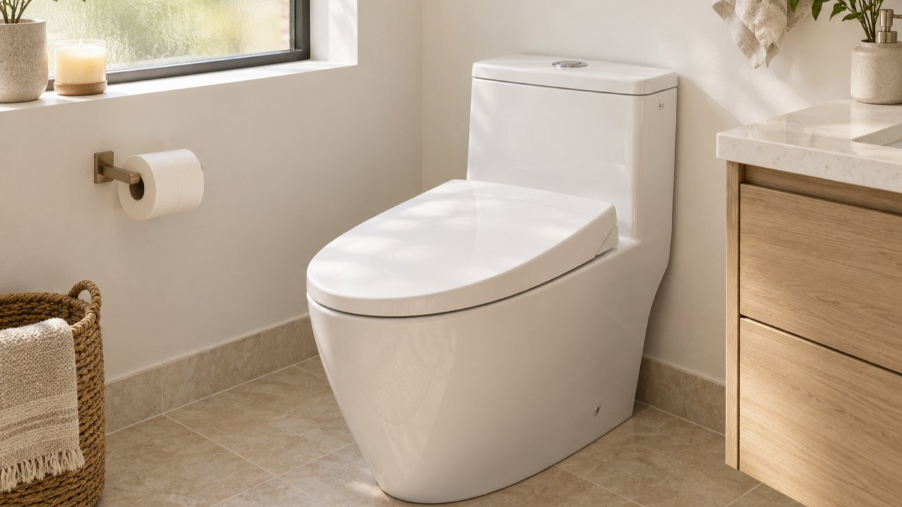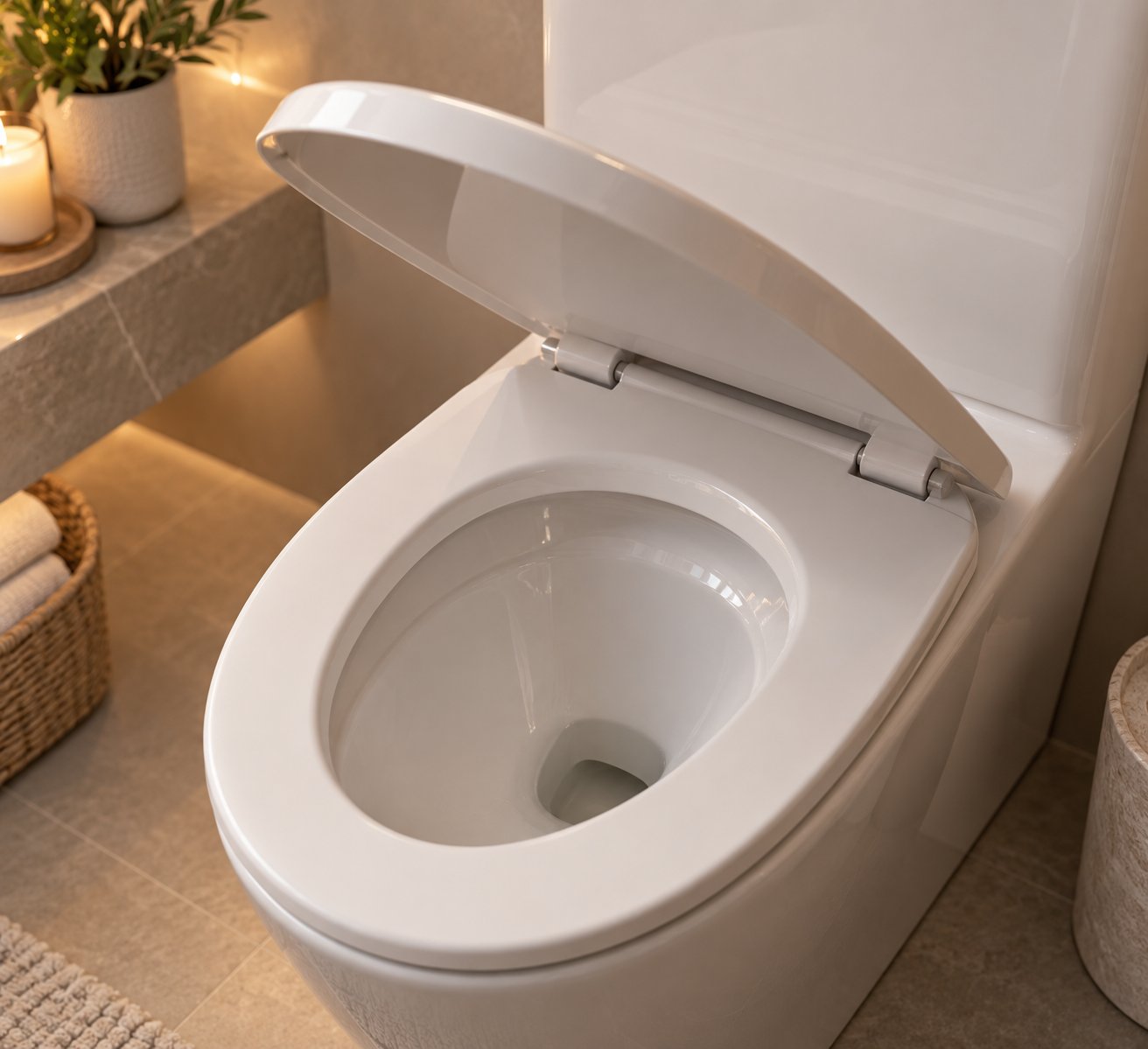
What Is a Soft Close Elongated Toilet Seat
Imagine this: it is 2 a.m., and someone in your household lets the toilet lid slip. The resulting slam echoes through the house, jolting everyone awake. Or picture a curious toddler lifting the seat during potty training, only for it to crash down onto tiny fingers. These frustrations — the startling noise, the pinched fingers, the hairline cracks slowly forming on the porcelain rim — are exactly why so many homeowners start searching for a better option. A soft close elongated toilet seat is that option, and it solves every one of these problems with a remarkably simple piece of engineering.
Common Problems Standard Toilet Seats Create
A standard toilet seat relies entirely on gravity once you let go of it. There is no controlled descent, no cushioning — just a free fall that ends with a sharp bang against the bowl. Over time, this repeated impact does real damage. The seat loosens at the hinges, plastic warps or cracks, and the ceramic rim of the bowl itself can develop chips along the contact edge. Aesthetics aside, those tiny fractures compromise the toilet's structural integrity and shorten its useful life.
Safety is an even bigger concern for families with young children. Research published in BJU International found that crush injuries from falling toilet seats sent an increasing number of children to U.S. emergency rooms, with roughly 97 percent of those injuries occurring in kids seven years old and younger. While most cases were treated and discharged, the experience is painful and entirely preventable. Then there is the noise factor. In shared-wall apartments or open-plan homes, a slamming lid is one of the most common — and most avoidable — sources of household noise complaints, especially during nighttime hours.
Defining the Soft Close Elongated Toilet Seat
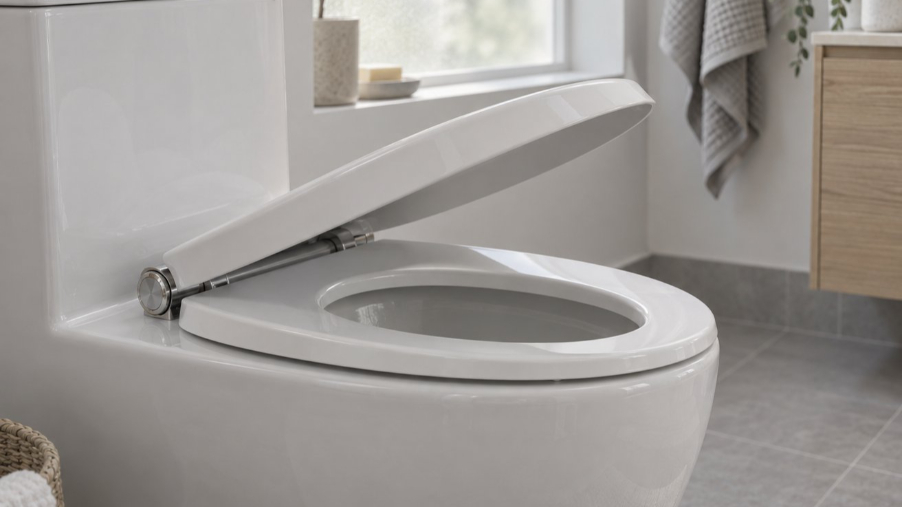
A soft close elongated toilet seat is an oval-shaped seat with a built-in hydraulic or pneumatic damper that prevents slamming by lowering the lid slowly and silently.
Breaking that down, you'll notice two distinct features working together. First is the elongated shape. An elongated toilet seat measures approximately 18.5 inches from the bolt holes to the front edge, compared to about 16.5 inches for a round seat. This extra length creates a larger, more comfortable seating surface that fits the oval bowl found on the majority of elongated commodes in North American homes. Second is the soft-close mechanism — a damper unit housed inside the hinge assembly that creates controlled resistance against gravity, turning a would-be slam into a gentle, near-silent descent.
If you have come across terms like "slow close," "quiet close," or "soft drop" while shopping, don't worry — these are interchangeable industry labels describing the same core technology. Whether you are browsing for a toilet seat soft close model or comparing elongated toilet seats side by side, the underlying damper mechanism is what defines the category.
The elongated profile pairs naturally with this feature because the longer lid places more leverage on the hinge. A well-engineered damper calibrated for that extra length ensures the lid descends evenly, without tilting or speeding up at the end. This combination of comfort, safety, and quiet operation is why the elongated plastic toilet seat with soft-close hinges has become the go-to upgrade for modern bathrooms. The real question is: what actually happens inside that hinge to make the magic work?
How the Soft-Close Damper Mechanism Works
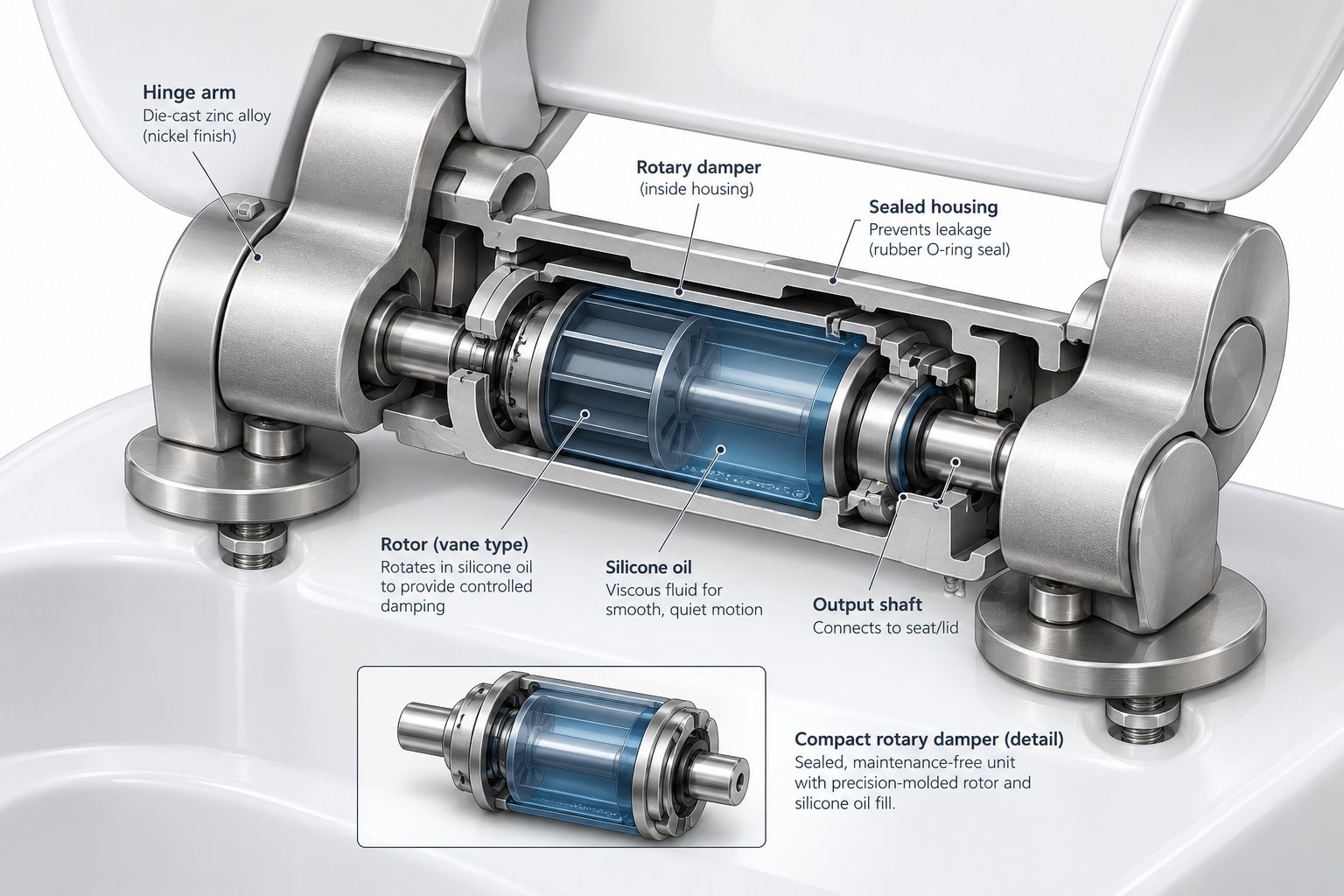
That gentle, almost hypnotic descent of a slow close toilet seat comes down to a surprisingly compact piece of engineering hidden inside the hinge. It looks simple from the outside — you release the lid, and it drifts shut on its own. But inside the hinge body, a precisely calibrated component is converting gravitational free fall into a controlled, silent glide. Two main damper designs make this possible, and understanding how each one works helps you recognize the difference between a seat that stays smooth for years and one that loses its touch after a few months.
How Hydraulic and Rotary Dampers Control the Lid
Think of a screen door with one of those pneumatic closers mounted at the top. You push the door open, release it, and instead of slamming shut, it swings back slowly against the resistance of the closer. A soft close toilet seat hinge operates on the same principle — just miniaturized and tucked inside a compact housing.
The most common design is the rotary damper. Inside a small sealed cylinder, a rotor sits submerged in viscous silicone fluid. When the lid begins to fall, the hinge rotates, driving the rotor through that fluid. The silicone resists the motion — the faster the lid tries to drop, the harder the fluid pushes back. This is what transforms a rapid slam into a slow shutting toilet seat experience lasting roughly 3 to 7 seconds. According to hinge engineering data, rotary dampers in toilet seat applications are typically calibrated to torque values between 50 and 600 Ncm, matched precisely to the weight and length of the specific lid they support.
Hydraulic cylinder dampers use a similar fluid-resistance principle but in a linear rather than rotational format. A small piston moves through a fluid-filled chamber, generating resistance as the hinge pivots. Imagine squeezing a syringe filled with honey — the thicker the fluid, the slower the plunger moves. Hydraulic designs tend to appear in heavier-duty applications because they can handle greater loads without losing consistency. Either way, both damper types rely on the same core physics: fluid resistance absorbs kinetic energy, replacing a jarring impact with a smooth, controlled descent.
Here is the critical takeaway: damper quality is the single biggest determinant of long-term soft-close performance. A well-engineered damper can reliably perform through 30,000 or more closing cycles at room temperature — years of daily household use. A cheaply made one may feel fine initially but lose its resistance within months as internal seals degrade or the silicone fluid breaks down. When shopping for a toilet seat elongated model with soft-close functionality, the damper inside the hinge matters far more than the brand name printed on the lid.
Why Hinge Engineering Matters More Than You Think
A perfect damper still fails if the hinge surrounding it cannot hold its shape. The damper needs to sit in a precisely machined pocket within the hinge body. If that pocket flexes, distorts, or loosens even slightly, the damper loses alignment and the closing action becomes uneven — one side faster than the other, or the lid speeding up in the last inch of travel.
This is where material choice gets critical. Zinc-alloy hinge components are common on budget-friendly seats. They offer a meaningful step up from plastic and handle standard residential use reasonably well. However, zinc alloy is softer and more prone to fatigue under repetitive rotational stress. Over thousands of cycles, micro-flexing at the pivot point can gradually degrade the damper's seating. Stainless-steel hinge components, by contrast, maintain their dimensional tolerances cycle after cycle, keeping the damper precisely aligned and the closing motion consistent for the long haul. For a heavy duty elongated toilet seat expected to handle frequent daily traffic, stainless steel delivers measurably better longevity.
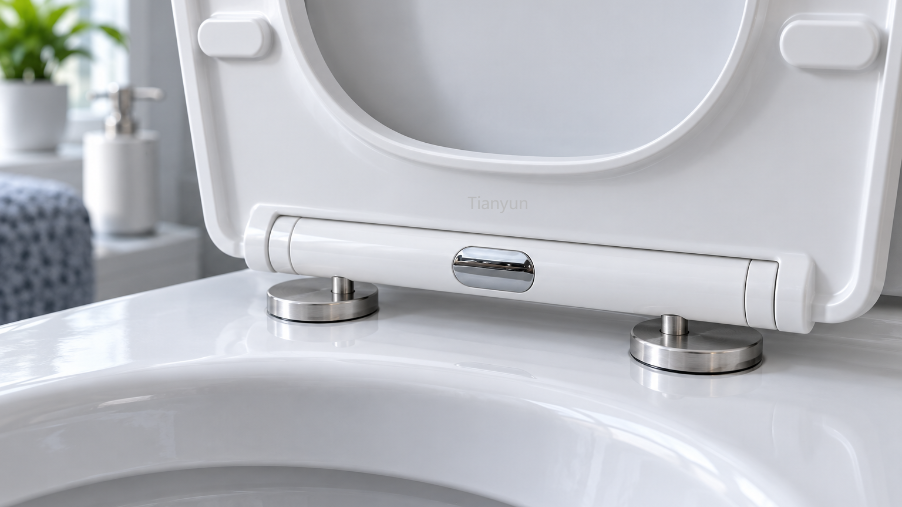
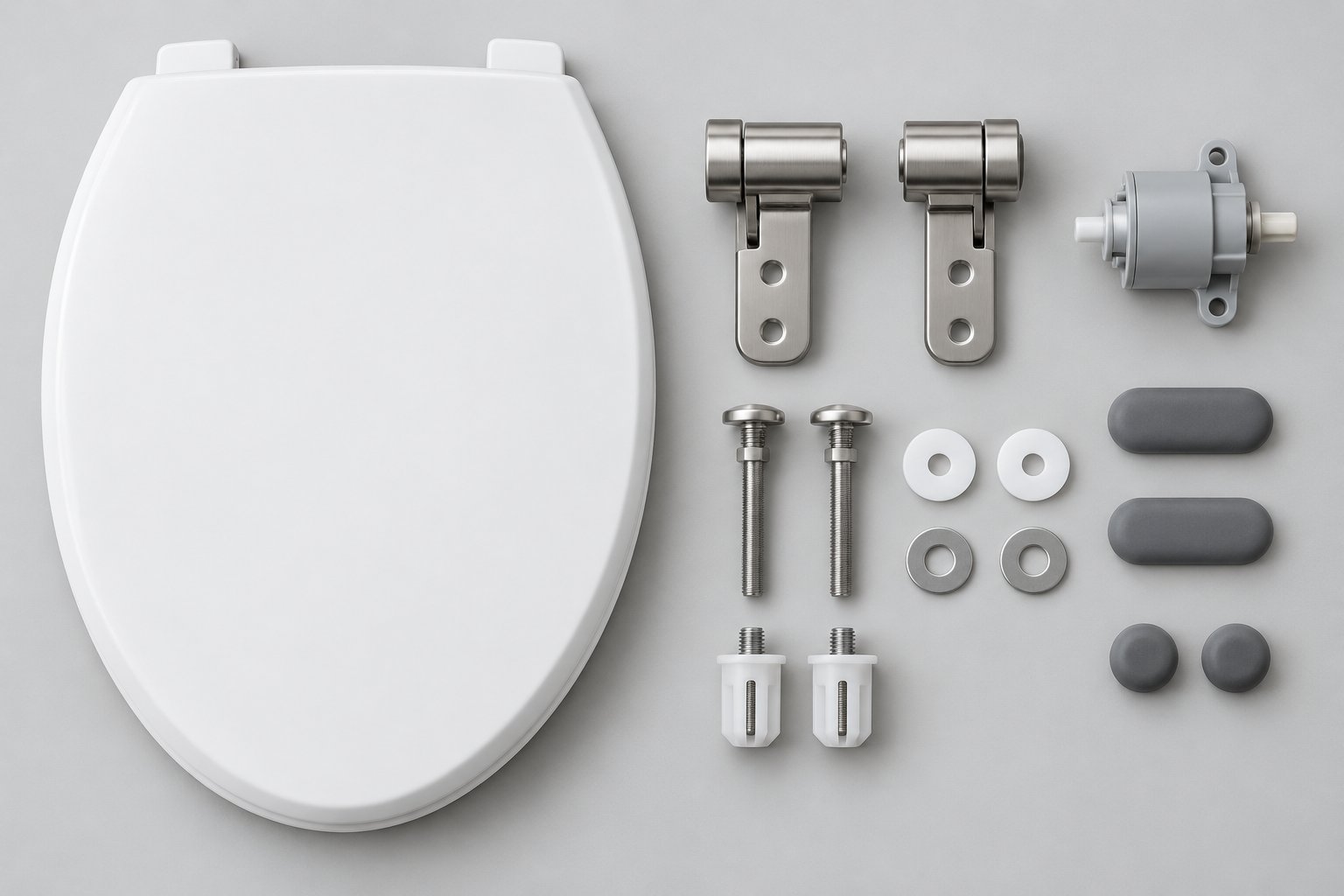
Every soft close loo seat relies on these core components working together as an integrated system:
- Damper unit — the hydraulic or rotary mechanism that creates controlled resistance against gravity
- Hinge arm — the structural bridge connecting the damper to the seat and lid, transferring rotational force
- Mounting bolts — the fasteners anchoring the entire assembly to the porcelain bowl, where any looseness undermines the damper's calibration
- Stabilizing bumpers — the rubber or silicone pads on the underside of the seat that cushion contact with the bowl rim, prevent lateral shifting, and reduce vibration during closing
Remove or compromise any single element, and the entire soft-close experience degrades. A corroded mounting bolt introduces wobble. A worn bumper lets the seat slide sideways under load. A fatigued hinge arm transfers uneven force to the damper. The engineering lesson here is straightforward: a heavy duty elongated toilet seat with a premium damper still underperforms if the hinge body, bolts, and bumpers are not built to the same standard.
This interplay between damper, hinge, and mounting hardware also explains why elongated and round seats cannot simply share the same hinge assembly. The longer profile of an elongated lid creates a different weight distribution and lever arm — factors that demand a specifically calibrated damper response. That shape difference deserves a closer look.
Elongated vs Round Soft-Close Seats Compared
Elongated and round are not just different shapes — they create fundamentally different mechanical relationships with the soft-close hinge. The longer profile of an elongated lid shifts the center of gravity forward, changes the torque curve during descent, and distributes seated weight across a wider surface area. These differences affect everything from comfort to how long your damper mechanism stays reliable. And since elongated bowls are the dominant standard in North American homes — accounting for the vast majority of residential installations — understanding this comparison helps you make a smarter upgrade decision.
Shape Dimensions and How They Affect Hinge Alignment
Picture an elongated lid as a longer lever arm swinging on the same hinge point as a round one. Physics dictates that a longer lever generates more torque at the pivot. For a soft close toilet seat, this means the damper inside the hinge has to manage greater rotational force as the lid falls through its arc. A damper calibrated for a round lid — roughly 16.5 inches from bolt holes to front — would let an elongated lid, at approximately 18.5 inches, descend noticeably faster. That mismatch is exactly why reputable manufacturers engineer shape-specific damper calibrations rather than using a one-size-fits-all approach.
The upside of this longer profile? It actually distributes seated body weight more evenly across the hinge assembly. When you sit on an oblong toilet seat, the load spreads over a larger contact patch on the bowl rim, reducing the concentration of stress at the rear hinge points. Over thousands of use cycles, this more balanced distribution translates to less fatigue on the hinge arms and mounting bolts — a meaningful factor for household longevity.
Round seats, being shorter and more compact, place less torque on the damper during closing. That sounds like an advantage, but it comes with a trade-off: the smaller seating surface concentrates weight into a tighter zone, which can increase localized stress on the hinge over time. For most adults, the round shape also simply feels less comfortable.
Here is where mismatches cause real trouble. Installing an elongated seat on a round bowl — or vice versa — creates instability that goes beyond cosmetic overhang. A mismatched seat cannot sit flush against the bowl rim. It wobbles laterally, and every wobble sends micro-shocks through the hinge assembly. These repetitive lateral forces are something no damper was designed to absorb. The result? Accelerated wear on hinge pins, loosened mounting bolts, and a soft-close action that degrades far sooner than it should. Even an auto toilet lid closer system cannot compensate if the seat simply does not fit the bowl geometry underneath it.
Which Shape Fits Your Bathroom
Before you shop for any soft close toilet seats, grab a tape measure and confirm your bowl shape. The process takes less than a minute:
- Lift or remove the existing seat.
- Locate the two mounting bolt holes at the back of the bowl. They should sit roughly 5.5 inches apart center-to-center — this spacing is standard for both shapes in North America.
- Measure from the midpoint between those bolt holes straight forward to the outside front edge of the bowl rim.
- Compare your number: approximately 16.5 inches indicates a round bowl, while approximately 18.5 inches confirms an elongated bowl.
If your measurement lands somewhere in between — around 17 to 17.5 inches — you may have a compact elongated bowl, a less common but increasingly popular design. In that case, check the toilet manufacturer's spec sheet, as most compact elongated bowls accept standard elongated seats.
You may also encounter the terms "oval" or "oblong" when browsing for toilet seats oval in shape. These are simply alternate names for the elongated profile, used interchangeably by different retailers and manufacturers. An oblong toilet seat and an elongated seat refer to the same dimensions and the same fit.
The table below puts the key differences side by side so you can match your bathroom needs to the right shape:
| Attribute | Elongated (Oval / Oblong) | Round |
|---|---|---|
| Approximate length (bolt holes to front) | 18.5 inches | 16.5 inches |
| Typical width | 14 - 14.5 inches | 14 - 14.5 inches |
| Common bowl compatibility | Most standard and comfort-height residential toilets | Powder rooms, compact bathrooms, older installations |
| Comfort level for adults | Higher — larger seating surface supports thighs more fully | Adequate — may feel cramped for larger users |
| Soft-close hinge stress profile | Higher torque on damper, but more even weight distribution across the seat | Lower torque on damper, but concentrated weight load at hinge points |
| Space requirement | Needs roughly 2 inches more front clearance | Better for tight layouts where the door swings close to the bowl |
For shoppers considering an extra wide toilet seat, keep in mind that width stays largely consistent between elongated and round options — the primary dimensional difference is front-to-back length, not side-to-side span. Specialty wider seats exist for bariatric needs, but they follow the same elongated-versus-round distinction and still require a matching bowl shape.
Ultimately, the shape decision comes down to what your bowl already is and what your household prioritizes. An elongated soft-close seat offers more comfort, better weight distribution, and a smoother long-term hinge experience for the majority of homes. A round soft-close seat earns its place in compact bathrooms where every inch of floor clearance matters. Either way, matching your seat shape precisely to your bowl shape is the single most important step before worrying about materials, hinge types, or any other feature — which brings us to the next critical choice: what your seat is actually made of.
Material Types That Pair Best With Soft-Close Hinges
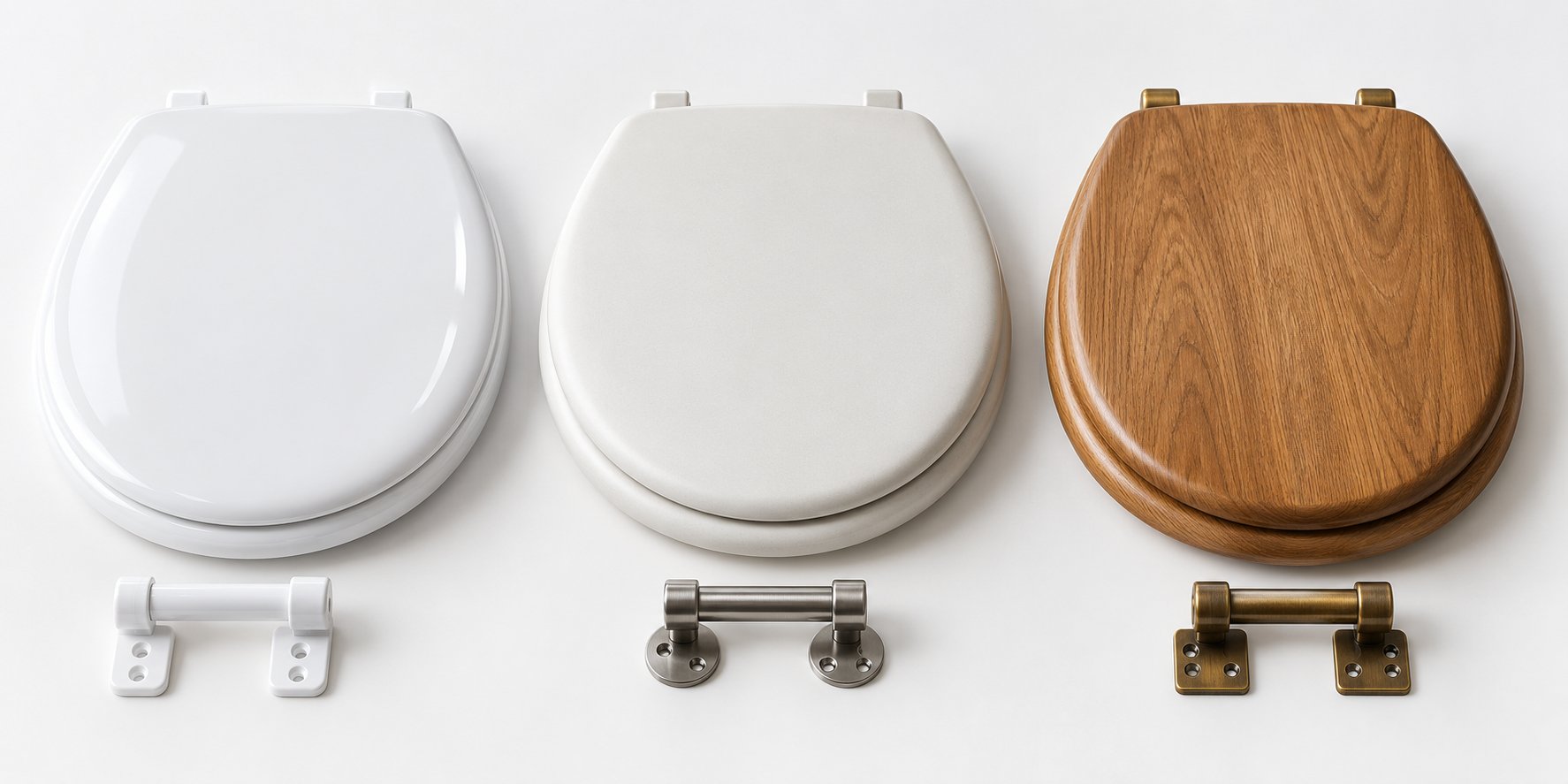
The material your seat is made from does far more than determine how it looks or feels. It directly influences how much weight the damper has to manage on every single closing cycle, how rigidly the seat holds its shape under load, and how well it withstands heat, moisture, and chemical cleaners over years of daily use. Three material categories dominate the market for elongated toilet seat soft close models: polypropylene (PP) plastic, urea-formaldehyde (UF) thermoset, and wood. Each one interacts with the soft-close mechanism in a distinctly different way — and choosing the wrong pairing can shorten hinge life or compromise that whisper close toilet seat experience you are paying for.
Polypropylene PP Seats and Their Advantages
Polypropylene is the workhorse of the residential toilet seat market, and for good reason. It is lightweight — typically between 1.5 and 2.5 pounds for a complete seat and lid — which means the damper has to overcome less gravitational force on each descent. Less strain per cycle translates to less wear on the silicone fluid and rotor inside the damper, potentially extending the mechanism's reliable service life by thousands of additional cycles.
Beyond weight, PP offers excellent resistance to household chemical cleaners, including bleach-based disinfectants that would damage other materials over time. It is also inherently moisture-resistant, so it will not absorb water or swell in a humid bathroom environment. The trade-off? PP is a thermoplastic, meaning it can flex slightly under heavy loads. For most users on a standard comfort seats toilet seat, this flex is imperceptible. But under significant weight or aggressive use, a polypropylene seat can develop micro-deflection at the hinge area, which may gradually affect how evenly the soft-close mechanism operates.
Cost is another clear advantage. PP seats occupy the most accessible price tier, making them the go-to upgrade for renters, first-time homeowners, and anyone who wants reliable toilet seats soft closing performance without a premium investment.
Urea-Formaldehyde UF Seats for Premium Durability
If PP is the practical choice, UF is the premium one. Urea-formaldehyde is a thermoset material — once it is molded and cured, it cannot be remelted or reshaped. This gives it a rigidity that thermoplastics simply cannot match. Pick up a UF seat and you will immediately notice the difference: it feels dense, solid, almost ceramic-like in your hands. That solidity means zero flex under load. The seat holds its shape cycle after cycle, maintaining consistent contact with the bowl rim and delivering perfectly even force to the hinge assembly.
UF also excels in scratch resistance and color stability. The pigment is integrated throughout the material rather than applied as a surface coating, so minor surface abrasion does not reveal a different color underneath. For an elongated slow close toilet seat in a high-traffic family bathroom, this durability keeps the seat looking new far longer than a comparable PP option would.
The engineering trade-off is weight. A UF seat and lid assembly typically weighs between 3.0 and 4.5 pounds — roughly double a PP equivalent. That extra mass increases the torque the damper must manage during each descent. A damper calibrated for a lightweight PP lid will allow a heavier UF lid to close too fast, undermining the entire soft-close experience. This is precisely why material and damper must be engineered as a matched pair. Manufacturers like Tianyun address this by offering production-ready PP and UF seat cover programs where each material grade ships with dampers, hinges, and fixing systems specifically calibrated to that material's weight profile — a real-world example of how seriously component matching matters at the manufacturing level.
How Material Weight Impacts Soft-Close Performance
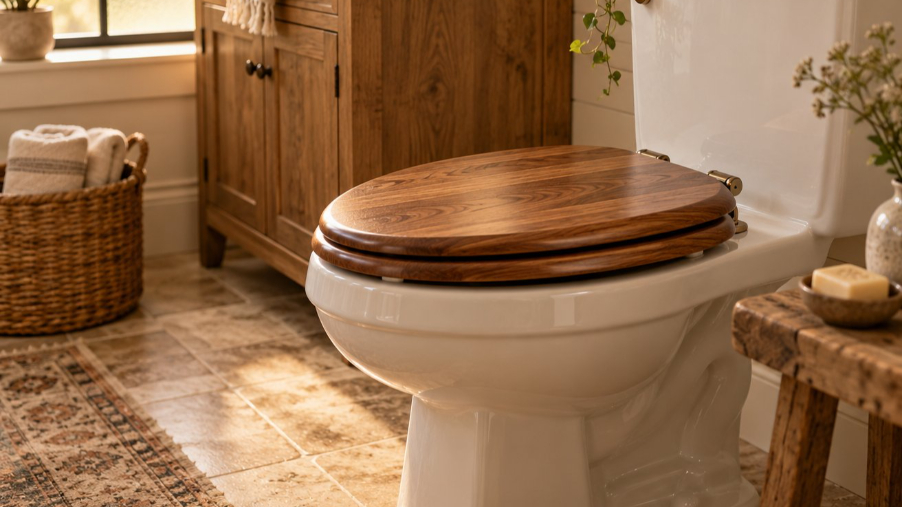
Wood seats — whether solid hardwood or molded composite — introduce a third set of variables. They deliver a warm, natural aesthetic that neither PP nor UF can replicate, and their weight falls between the two synthetics. However, wood is susceptible to moisture absorption, expansion, and eventual finish degradation in bathroom environments. These dimensional shifts can alter the seat's fit on the bowl over time, subtly changing how force transfers through the hinge. For an elongated toilet seat slow close setup that needs to perform consistently across seasons and humidity levels, wood demands more attentive maintenance than either synthetic option.
The table below breaks down how each material stacks up across the attributes that matter most for soft-close hinge compatibility and long-term satisfaction:
| Attribute | PP (Polypropylene) | UF (Urea-Formaldehyde) | Wood (Solid / Molded) |
|---|---|---|---|
| Real-world example | Tianyun PP Seat Cover — paired with weight-matched damper and hinge systems | Tianyun UF Seat Cover — paired with higher-torque damper calibration | Various specialty manufacturers |
| Weight range (seat + lid) | 1.5 - 2.5 lbs | 3.0 - 4.5 lbs | 2.5 - 4.0 lbs |
| Scratch resistance | Moderate — surface marks possible | High — color integrated throughout | Low to moderate — dependent on finish coat |
| Chemical resistance | Excellent — tolerates most household cleaners | Very good — resists common disinfectants | Low — harsh cleaners degrade finish |
| Color stability | Good — may yellow slightly over years | Excellent — maintains original color long-term | Variable — finish can chip or discolor |
| Typical price tier | Budget to mid-range | Mid-range to premium | Mid-range to premium |
| Damper compatibility | Standard-torque dampers — lighter load is forgiving | Higher-torque dampers required — precise calibration critical | Medium-torque dampers — moisture-related weight changes add variability |
Notice the pattern: the heavier the material, the more precisely the damper must be engineered to maintain that smooth, controlled descent. A lightweight PP seat gives you a wider margin of error — even a slightly mismatched damper will still close reasonably well. A UF seat leaves no room for approximation. If the damper torque is not calibrated to the exact weight of that thermoset lid, you will feel the difference every time it closes. This is why sanitaryware brands and OEM manufacturers increasingly source integrated programs where seat cover, damper, and hinge are developed as a single system rather than assembled from mix-and-match components.
Material choice, then, is not just an aesthetic or budget decision. It is the foundation that determines which damper your seat needs, how much stress your hinge will bear, and how many years of reliable whisper close toilet seat performance you can realistically expect. The benefits of getting that combination right extend well beyond mechanics — they ripple into daily household life in ways that affect every member of the family.
Key Benefits for Families and Every Household
A well-engineered damper and a properly matched material do their best work quietly — literally. But the real payoff of a soft close elongated toilet seat shows up in the daily routines of every person sharing the bathroom. The benefits split naturally across three household segments, each with a different reason for caring about how a toilet lid behaves.
Child Safety and Finger Protection
Young children are naturally curious, and the toilet lid is one of the first things toddlers learn to lift on their own. The problem is that little hands lack the strength and coordination to lower it gently. A standard lid in free fall generates enough force to cause painful crush injuries to small fingers. Research cited by Reuters found that falling toilet seats sent a growing number of children — roughly 97 percent of them age seven or younger — to emergency rooms in the United States.
A self closing toilet lid eliminates this risk almost entirely. Because the damper controls the descent across a 3-to-7-second arc, a child who lets go of the lid mid-lift simply watches it glide back down. There is no sudden impact, no pinching force, and no panicked scream from the bathroom. For families with toddlers or preschoolers, this single feature can justify the upgrade on safety grounds alone. Even a basic plastic elongated toilet seat with a properly calibrated soft-close hinge transforms the toilet from a potential hazard into a far safer fixture.
Noise Reduction and Nighttime Comfort
Anyone who has been startled awake by a slamming lid at midnight understands this benefit instinctively. In shared-wall apartments, the sound carries through framing and drywall into adjacent rooms — sometimes adjacent units. In open-plan homes, a single slam in the hallway bathroom can reach the living room, kitchen, and bedrooms. Households with light sleepers, shift workers, or newborns feel the impact most acutely.
A soft-close seat removes one of the most common sources of household noise complaints without any behavior change required.
That last point matters more than it seems. You do not need to remind family members to lower the lid gently. You do not need signs taped to the wall. The auto close toilet seat mechanism does the work regardless of who uses the bathroom or how distracted they are. Guests, teenagers, half-asleep partners — everyone gets the same silent result. For households where noise sensitivity is a recurring tension point, a toilet with soft close seat technology is a small investment that resolves a disproportionately large irritation.
Accessibility Considerations for Elderly Users and Caregivers
The elongated shape already offers a meaningful accessibility advantage. Its longer seating surface supports a wider range of body positions, making transfers easier for users with limited hip or knee mobility. Ergonomic guidelines note that comfort-height toilets — those measuring 17 to 19 inches from floor to seat top — align with ADA requirements specifically because the added height reduces the physical effort of sitting and standing. Many soft close elongated toilet seat models are available in raised-height or ADA-compatible configurations that pair the taller profile with the controlled-descent hinge, addressing both height and lid-management challenges in a single fixture.
The self-lowering lid is especially valuable here. For elderly users, bending forward to guide a toilet lid down requires balance, grip strength, and core stability — all of which decline with age. A self closing toilet lid removes that task entirely. Caregivers benefit too: one fewer physical action to assist with during bathroom routines means less strain and faster transitions. For anyone recovering from hip or knee surgery, where surgeons typically restrict bending and load-bearing during the first several weeks, not having to manually lower a heavy lid is a small but genuinely appreciated relief.
Whether your priority is protecting little fingers, preserving overnight silence, or supporting a family member with mobility challenges, the benefits converge on the same conclusion — the soft-close mechanism earns its place through daily, tangible impact rather than technical specs on a box. Of course, unlocking those benefits long-term depends on one often-overlooked decision: how the seat actually attaches to your bowl.
Quick-Release vs Fixed Hinges on a Soft Close Toilet Seat Elongated
The damper keeps the lid silent. The material determines how the seat feels and holds up. But the hinge attachment system — the part that physically connects the seat to your bowl — quietly dictates how easy that seat is to clean, maintain, and live with over time. Two designs dominate the market: quick-release hinges and fixed hinges. The difference sounds minor until you find yourself on your knees, wedging a cleaning brush into the gap between a bolted-down hinge and a porcelain rim, wondering why this has to be so difficult.
How Quick-Release Hinges Simplify Cleaning
A quick-release hinge lets you detach the entire seat and lid assembly from the bowl in seconds — no tools, no fumbling with corroded bolts. Most designs use either a single push-button mechanism or a tab release built into each hinge post. Press the button, lift the seat straight up, and the whole unit comes free. What you expose underneath is the area where the real grime hides: the bolt-hole recesses, the back of the bowl rim, and the narrow channel where the hinge body normally sits flush against the porcelain.
If you have ever tried to scrub around fixed mounting hardware on a standard seat, you know the frustration. Sponges cannot reach behind the hinge arms. Spray cleaners pool in crevices you cannot wipe. Over weeks and months, a brownish residue builds up in precisely the spot your cleaning tools cannot access. A quick-release system eliminates that problem entirely. You lift the seat off, wipe down the bare rim and bolt area with full access, and snap the seat back into place. The whole process adds maybe 90 seconds to a bathroom cleaning routine — and the hygiene difference is dramatic.
For households with young children or anyone managing a bathroom used by multiple family members daily, this accessibility matters. High-traffic toilets accumulate residue faster, and the zones around fixed hardware are consistently the dirtiest spots inspectors flag during professional cleaning audits. Quick-release hinges turn a frustrating chore into a simple one.
Fixed Hinges and Their Trade-Offs
Fixed-hinge soft-close seats bolt directly to the bowl through standard mounting holes and stay permanently attached unless you manually unscrew the fasteners. They are often less expensive than their quick-release counterparts — sometimes noticeably so — and on certain bowl geometries, the rigid, permanent connection can feel slightly more stable under seated weight. For a guest bathroom that sees light use, these trade-offs may be perfectly acceptable.
The cleaning penalty, however, is real. Fixed hinges trap moisture around the bolt holes every time the toilet is flushed or the surrounding area is wiped down. That trapped moisture sits in contact with metal bolt components and rubber gaskets, gradually accelerating corrosion — especially on zinc-alloy or chrome-plated fasteners that lack the longevity of stainless steel. Over a year or two, you may notice rust staining on the porcelain around the bolt area, or the bolts themselves may become difficult to loosen when you eventually need to replace the seat.
The practical differences between these two hinge styles come down to a handful of factors that affect your daily experience:
- Ease of removal — Quick-release: tool-free, under 10 seconds. Fixed: requires a wrench and several minutes, longer if bolts have corroded.
- Cleaning access — Quick-release: full exposure of the bolt area and rear bowl rim. Fixed: limited access, requiring angled brushes or cotton swabs around the hardware.
- Reinstallation time — Quick-release: snap or click back into place in seconds. Fixed: must realign and retighten bolts, then recheck centering.
- Hinge durability — Quick-release: slightly more complex mechanism with additional moving parts, but quality units from reputable manufacturers handle tens of thousands of release cycles. Fixed: fewer moving parts, but trapped moisture can undermine bolt integrity over time.
- Price impact — Quick-release models typically add a modest premium over comparable fixed-hinge versions of the same seat material and damper quality.
Which Hinge Style Suits Your Priorities
The decision becomes straightforward once you identify what matters most in your household. If hygiene ranks high — families with small children, immunocompromised household members, or anyone who simply values a thoroughly clean bathroom — quick-release is the clear winner. The ability to fully remove the seat for cleaning transforms maintenance from an awkward workaround into an effortless routine. Most toilet seats soft close models in the mid-range and premium tiers now include quick-release as a standard feature, reflecting how strongly consumer demand has shifted toward this design.
Fixed hinges still earn their place in specific scenarios. A seldom-used guest bathroom, a rental property where the landlord prioritizes the lowest replacement cost, or a budget-focused upgrade where every dollar matters — these situations can justify the simpler attachment. The toilet seat slow close function works identically on both hinge types; the damper mechanism does not care how the seat is mounted to the bowl. You sacrifice cleaning convenience, not closing performance.
For most primary household bathrooms, though, the small price premium for quick-release pays for itself in time saved and grime eliminated. Think of it this way: you are investing in a soft close toilet seat elongated model specifically for daily comfort and convenience. Choosing a hinge that makes the seat harder to maintain undermines that very purpose. The hinge style you pick today determines whether cleaning day stays easy — or becomes the one thing you dread about your otherwise quiet, slam-free bathroom. Getting the seat onto the bowl in the first place, of course, is its own straightforward process — one that takes about fifteen minutes and no specialized skills.
How to Install a Soft Close Elongated Toilet Seat
Fifteen minutes, a couple of basic tools, and zero plumbing experience — that is genuinely all it takes. Whether you are a first-time homeowner tackling weekend projects or a renter upgrading a tired bathroom without calling the landlord's contractor, installing a self closing toilet seat is one of the most satisfying quick wins in home improvement. You do not need to shut off the water supply, disconnect anything, or even break a sweat. The entire job happens above the porcelain, and the results are immediate: a quiet, smooth-closing lid the moment you finish the last bolt.
Tools and Preparation Before You Start
Before you unbox your new seat, a few minutes of preparation will save you from a frustrating mid-project trip back to the store. Gather these tools — most households already have them on hand:
- Adjustable wrench or pliers — for gripping nuts underneath the bowl, especially on older seats with corroded hardware
- Flathead screwdriver — for loosening and tightening mounting bolt heads from above
- Measuring tape — to confirm bolt-hole spacing and bowl shape before purchasing
- Cleaning supplies — spray cleaner, a scrub brush, and a rag for the bolt area you are about to expose
The most important preparation step happens before you buy anything. Grab that measuring tape and confirm two things. First, measure from the center of one bolt hole to the center of the other. The standard bolt-hole spacing in North America is 5.5 inches center-to-center, and virtually all residential soft-close seats are designed around this dimension. Second, measure from the midpoint between the bolt holes straight forward to the outside front edge of the bowl rim. If you get approximately 18.5 inches, you have an elongated bowl. Around 16.5 inches means round. Buying the wrong shape is the single most common installation mistake — and the most easily prevented.
Renters, take note: if you are replacing a landlord-provided seat with a toilet seat with slow close functionality, store the original seat and its hardware in a bag. When you move out, you can swap it back in minutes and take your upgrade with you to the next apartment.
Step-by-Step Installation
With the right seat confirmed and your tools ready, the process follows a simple sequence. Each step builds on the last, so resist the urge to skip ahead:
- Remove the old seat by loosening the mounting bolts. Open or pop off any plastic hinge covers at the back of the seat to expose the bolt heads. Use a flathead screwdriver on top while holding the nut underneath with your adjustable wrench. Turn counterclockwise until the bolts come free. If the nuts are rusted or stuck, a few sprays of penetrating lubricant and five minutes of patience will loosen them. As one DIY guide notes, a dedicated toilet seat nut wrench — an inexpensive specialty tool — slides right over the bolt and nut, saving knuckle scrapes in tight spaces.
- Clean the bolt-hole area and bowl rim thoroughly. With the old seat off, you will likely find a buildup of grime, mineral deposits, and residue hiding underneath the hinge area and around the bolt holes. This is the one chance to reach these spots easily. Use your spray cleaner and a scrub brush to get everything spotless, then finish with a disinfecting wipe. A clean surface also ensures your new seat sits flush against the porcelain without anything wedged underneath.
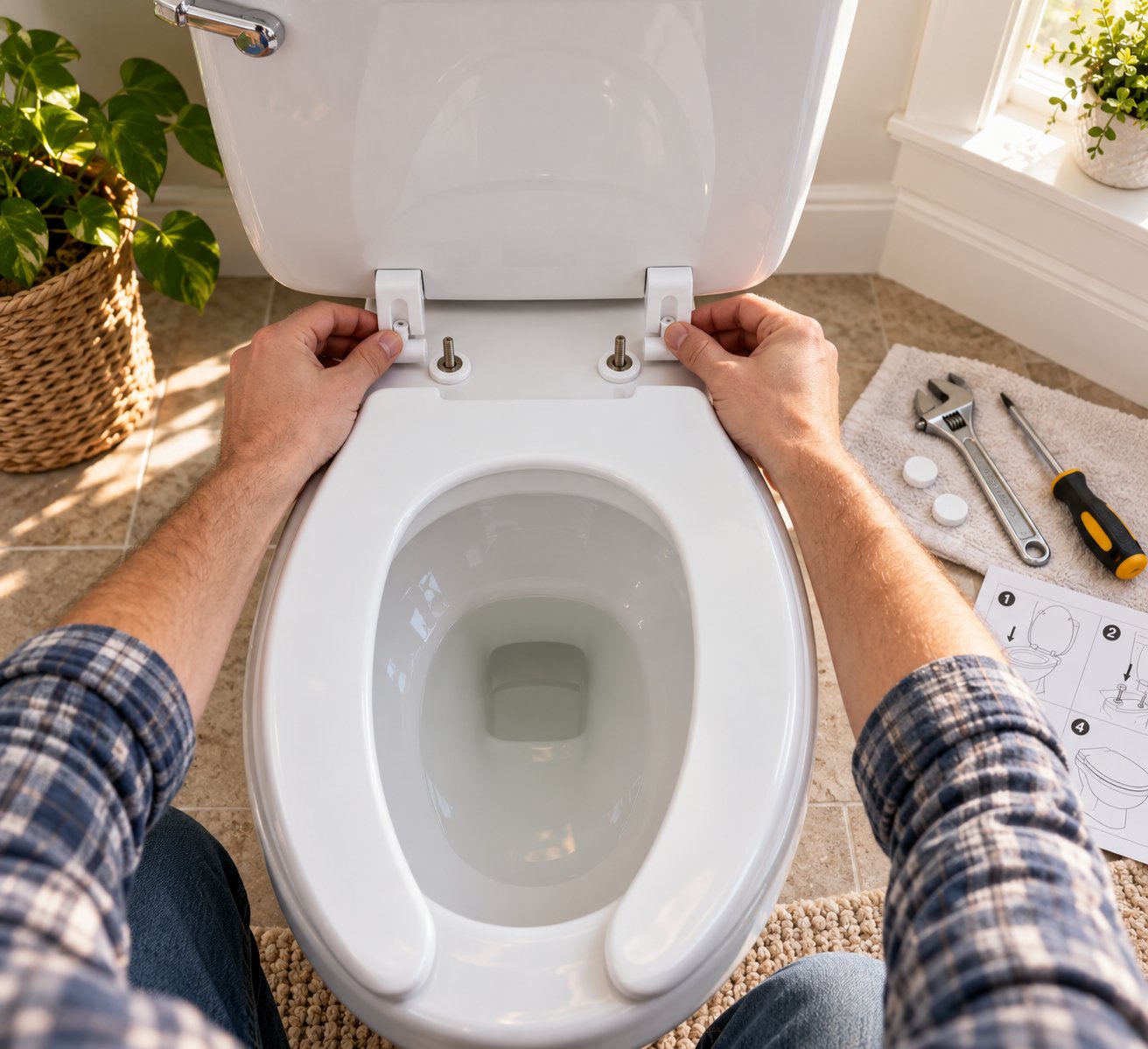
- Align the new seat's hinge posts with the bolt holes. Unbox your new seat and identify the mounting hardware — most kits include bolts, nuts, and sometimes rubber washers or stabilizer pads. Position the hinge assembly at the back of the bowl so each bolt or hinge post lines up directly over its corresponding hole.
- Hand-tighten the mounting bolts. Thread each bolt through the hinge and into the bowl hole, then finger-tighten the nuts from underneath. Do not reach for the wrench yet — hand-tightening keeps the seat movable so you can adjust its position in the next step.
- Center the seat on the bowl and make final adjustments. Lower the lid and seat into the closed position. Check that the seat sits evenly on the bowl rim with equal overhang on both sides. If it is shifted left or right, gently slide the hinge assembly along the bolt-hole slots until the seat is perfectly centered.
- Tighten bolts securely without over-torquing. Use your screwdriver from the top and your wrench from below to snug each bolt. Alternate between the two sides, tightening a little at a time, so the seat stays centered as you go. Stop when the seat feels firmly anchored with no lateral wobble. The rule of thumb? Snug plus one quarter-turn — that is enough. Anything beyond that risks cracking the porcelain or warping plastic mounting hardware.
- Test the soft-close function by lifting and releasing the lid. Raise the lid to its full upright position, then let go. It should begin its slow, controlled descent immediately — no hesitation at the top, no acceleration at the bottom, and a gentle, silent arrival against the seat. Repeat the test with the seat ring itself to confirm both the lid and seat close smoothly and independently.
That is it. From the moment you open the toolbox to the final test, most installations wrap up in under fifteen minutes — often closer to ten if the old bolts cooperate.
Common Installation Mistakes to Avoid
Even a simple project can go sideways if you overlook a few details. These are the errors that trip up first-timers most often:
- Over-tightening the bolts. This is the big one. Porcelain is strong under compression but brittle under concentrated point loads. Cranking down a mounting bolt with too much force can crack the bowl around the bolt hole — turning a fifteen-minute upgrade into a full toilet replacement. Plastic mounting nuts are equally vulnerable; excessive torque strips the threads or warps the hardware, leaving you with a seat that loosens itself within days. As plumbing repair guides consistently warn, tighten until the wobble stops, add a final quarter-turn, and put the wrench down.
- Misaligned hinges. If the seat is not centered before you do the final tightening, the hinge arms will transfer uneven force to the damper. You will notice it immediately: one side of the lid closes slightly faster than the other, or the lid drifts to one side during descent. The fix is easy — loosen both bolts, recenter, and retighten evenly — but only if you catch it before the bolts are fully torqued.
- Skipping the lateral stability test. After tightening, always grab the seat and try to shift it side to side. A seat that passes the up-and-down soft-close test can still wobble laterally if the bolts are not snug enough or the stabilizing bumpers on the underside are not making proper contact with the rim. Lateral movement stresses the hinge in ways the damper was never designed to absorb, leading to premature wear.
- Forgetting to confirm bowl shape. It sounds obvious, but installing an elongated seat on a round bowl — or a round seat on an elongated bowl — is more common than you would think, especially when buying online without measuring first. A mismatched seat might physically sit on the bowl, but it will never close properly, the bumpers will not align with the rim, and the hinge will suffer for it.
For anyone exploring decorative elongated toilet seats with painted finishes or textured surfaces, the installation process is identical. The decorative elements are cosmetic — the mounting hardware, bolt spacing, and hinge assembly follow the same universal standards. Just handle finished surfaces carefully during installation to avoid scuffing the seat against the bowl rim while positioning it.
Similarly, if you have been considering an elongated bidet toilet seat with integrated wash features, the bolt-hole alignment and basic installation sequence remain the same. The additional step is connecting the bidet's water supply line to the fill valve — a separate process that goes beyond seat mounting but still falls well within DIY territory for most homeowners.
One last note for anyone weighing the upgrade: an automatically closing toilet seat does not require electricity, batteries, or any connection beyond those two mounting bolts. The damper mechanism is entirely self-contained and mechanical. You install it once, test it once, and it works silently from that point forward — no maintenance schedule needed right away. Keeping it working smoothly over the long haul, though, does involve a few straightforward habits worth knowing about.
Maintenance Tips to Keep Your Quiet Close Toilet Seat Working Smoothly
That silent, controlled descent you enjoyed on day one? It should still feel exactly the same a year from now — and several years after that. A well-built soft close elongated toilet seat is designed to deliver tens of thousands of flawless closing cycles, but only if the hinge area stays clean, the hardware stays tight, and nobody accidentally overrides the damper mechanism with a forceful push. The good news is that keeping everything in working order takes almost no effort. A few simple habits, practiced consistently, are the difference between a seat that lasts its full lifespan and one that starts slamming again halfway through.
Cleaning Around Soft-Close Hinges Without Damaging Them
The hinge area is the most maintenance-sensitive zone on the entire seat. It houses the damper, the pivot points, and the rubber stabilizing bumpers — all components that degrade faster when exposed to harsh chemicals or abrasive scrubbing. Yet this is also the spot where grime, moisture, and cleaning product residue love to accumulate, especially on fixed-hinge models where the hardware never moves off the bowl.
Stick with non-abrasive cleaners. A mild liquid soap diluted in warm water, or a pH-neutral bathroom spray, handles everyday buildup without threatening plastic or rubber components. Hygiene experts recommend avoiding bleach-based products for routine seat cleaning — while a diluted bleach solution works for occasional deep disinfection, repeated exposure degrades plastic hinge housings and causes rubber bumpers to dry out, crack, and lose their cushioning ability. Scouring powders and steel wool are off-limits entirely; the microscopic scratches they leave behind create grooves where bacteria settle and moisture lingers.
If your seat has quick-release hinges, pop the seat off the bowl once a month for a thorough clean. With the seat removed, you get full access to the bolt-hole recesses and the rear rim channel — the two spots that collect the most hidden residue. Wipe down the exposed hinge posts and the underside of the hinge body with a damp cloth, then dry everything completely before snapping the seat back into place. For fixed-hinge slow close toilet seats, use a soft brush or a cotton swab dipped in mild cleaner to reach around the hardware. It takes a little more patience, but keeping that area clean prevents moisture from sitting against metal fasteners and accelerating corrosion.
One detail people overlook: always dry the hinge area after cleaning. Residual moisture trapped around pivot points and bolt holes does not evaporate quickly in a closed bathroom. Over time, that persistent dampness weakens rubber gaskets, promotes mineral buildup from hard water, and — on seats with zinc-alloy hardware — slowly corrodes the very components holding the damper in alignment.
Signs Your Damper Mechanism Needs Attention
A healthy damper closes the lid at a steady, consistent speed across its entire arc — typically that same 3-to-7-second descent it delivered on the first day. When something starts to go wrong, the symptoms are easy to spot if you know what to watch for:
- The lid drops faster than it used to. This is the earliest and most common sign. If a slow closing toilet seat that once took five seconds to descend now finishes in two or three, the silicone fluid inside the damper may be losing viscosity, or the internal seals are beginning to wear.
- Closing speed is uneven — one side descends faster than the other. This typically points to a hinge alignment issue rather than damper failure. A loose mounting bolt, a shifted hinge arm, or a worn stabilizing bumper on one side can throw off the balance, causing the lid to twist slightly during descent.
- The seat wobbles laterally when you sit down. Lateral movement means something has loosened — usually the mounting bolts. Left unchecked, that wobble sends repetitive side-loading forces through the hinge assembly, stressing components that were engineered exclusively for rotational motion.
- The hinge makes a clicking or grinding noise during descent. Any audible sound from a mechanism designed to be silent is a red flag. Clicking often indicates a cracked damper housing or a displaced internal rotor. Grinding suggests debris or mineral deposits have worked their way into the pivot area.
Here is the encouraging part: on many models, the damper unit itself is a replaceable cartridge. You can swap in a new damper without replacing the entire seat — a cost-saving option that plumbing repair specialists recommend investigating before assuming you need a full replacement. The repair process typically involves removing the seat, extracting the old damper from its pocket in the hinge body, lubricating or replacing it, and reassembling. Some manufacturers sell replacement damper kits specifically matched to their seat models, making the fix a straightforward DIY project. If lubrication alone restores the smooth action — silicone-based grease applied between the damper's internal components is the standard approach — the repair takes minutes and extends the seat's useful life significantly.
Extending the Lifespan of Your Seat
Most toilet seats last between five and ten years, depending on material quality, usage frequency, and how well they are maintained. A premium UF seat in a lightly used guest bathroom can push past a decade. A budget PP seat in a busy family bathroom may show signs of wear closer to the five-year mark. Regardless of which end of that range your seat falls on, a few consistent habits push the timeline further in your favor:
- Periodically check and retighten mounting bolts. Vibration from daily use gradually loosens hardware over months. A quick finger-check every few weeks — and a snug quarter-turn with a screwdriver when needed — prevents the wobble that stresses hinges and dampers.
- Avoid sitting on the lid. The lid is engineered to descend gently against the seat ring, not to support body weight. Sitting on a closed lid flexes the material, stresses the hinge arms at angles they were not designed for, and can warp or crack both plastic and thermoset surfaces over time.
- Keep the hinge area dry. After cleaning or after any splash event, take three seconds to wipe down the back of the seat where the hinges meet the bowl. This single habit prevents the moisture-driven corrosion and gasket degradation discussed above.
- Do not force the lid down manually. This one is critical. When you push a slow closing toilet seat lid down faster than the damper wants it to move, you overwhelm the internal resistance mechanism. The damper is designed to absorb the kinetic energy of a free-falling lid — not the added force of an impatient hand. Repeated manual forcing can blow out internal seals, strip the rotor, or crack the damper housing entirely. Let the mechanism do its job. Release the lid and walk away.
- Replace worn bumpers promptly. Those small rubber or silicone pads on the underside of the seat ring cushion every contact with the bowl rim. When they flatten, crack, or fall off, the seat sits unevenly, rattles during closing, and transfers impact directly to the porcelain. Replacement bumpers are inexpensive and typically self-adhesive — a two-minute fix that protects both the bowl and the hinge assembly.
A well-maintained soft close elongated toilet seat, paired with a quality damper, rewards you with years of quiet, reliable operation. The toilet lid automatically closes at the same steady pace on day one thousand as it did on day one — no batteries, no adjustments, no reminders taped to the wall. That consistency is the whole point of the technology, and a little preventive attention is all it takes to preserve it.
With the mechanical side covered — installation, hinge choice, material selection, and ongoing care — the final step is pulling all of these factors together into a clear decision framework so you can confidently choose the right seat for your specific home and priorities.
Choosing the Right Soft Close Elongated Seat for Your Home
Every detail covered so far — damper physics, material trade-offs, hinge styles, installation steps, and long-term care — feeds into one practical question: which slow close elongated toilet seat actually belongs in your bathroom? Rather than guessing, work through the decision in order. Each step narrows the field so that by the time you reach a purchase, you are choosing between two or three well-matched options instead of scrolling through hundreds.
Follow this framework from top to bottom. Each layer builds on the one before it:
- Step 1 — Confirm your bowl shape
- Measure bolt holes to front rim: approximately 18.5 inches = elongated, approximately 16.5 inches = round.
- Verify bolt-hole spacing is the standard 5.5 inches center-to-center.
- If you find 17 to 17.5 inches, check for a compact elongated specification in your toilet's documentation.
- Step 2 — Choose your material priority
- Value and light weight: Polypropylene (PP) — easier on the damper, budget-friendly, excellent chemical resistance.
- Premium durability: Urea-formaldehyde (UF) — zero flex, scratch-proof, ceramic-like feel, requires a higher-torque matched damper.
- Aesthetic warmth: Wood — natural look, but demands more maintenance in humid environments.
- Step 3 — Decide on hinge type
- Quick-release: Best for hygiene-focused households. Tool-free removal, full cleaning access, snap-back reinstallation.
- Fixed: Suitable for guest bathrooms or tight budgets. Same soft closing toilet seat performance, but harder to clean around.
- Step 4 — Consider household-specific needs
- Young children at home? Prioritize a reliable damper — finger protection is non-negotiable.
- Light sleepers or shared walls? The soft-close feature itself solves this, regardless of material or hinge choice.
- Elderly users or mobility challenges? Look for raised-height or ADA-compatible elongated models with self-lowering lids.
- Need a wider profile? An oversized toilet seat option follows the same elongated-vs.-round distinction — just confirm bowl compatibility.
- Step 5 — Set your budget tier
- Entry level: PP material, fixed hinges, standard damper. Reliable and affordable.
- Mid-range: PP or UF material, quick-release hinges, quality-matched damper.
- Premium: UF material, stainless-steel hinge components, quick-release, precision-calibrated damper.
Matching Your Priorities to the Right Seat
If the flowchart above captures the logic, the table below captures the shortcut. Find your top priority in the left column and read across for a recommended starting point — whether you are shopping for a classic white elongated toilet seat or a specialty finish:
| Your Top Priority | Recommended Material | Recommended Hinge Type | Key Feature to Look For |
|---|---|---|---|
| Budget | PP (polypropylene) | Fixed | Standard-torque damper with adequate cycle rating |
| Durability | UF (urea-formaldehyde) | Quick-release | Stainless-steel hinge arms and weight-matched damper |
| Hygiene | PP or UF | Quick-release | One-button seat removal for full-access cleaning |
| Comfort and accessibility | UF | Quick-release | Raised-height or ADA-compatible profile with elongated shape |
Notice how material and hinge type shift depending on what you value most, but one constant runs through every row: the damper must be matched to the seat it supports. A toilet seat elongated slow close model only performs as well as the weakest link in its component chain — and that chain includes the seat cover, the damper, the hinge arms, and the fixing system all working as a single integrated unit.
Where to Find Production-Ready Soft-Close Elongated Seats
For individual homeowners, this decision framework points you toward the right retail product. But the supply-side reality is worth understanding too, because it explains why some seats hold up for years while others disappoint within months. The difference almost always traces back to whether the manufacturer engineered the seat cover, damper, and hinge as an integrated system — or simply assembled off-the-shelf parts that were never calibrated to work together.
Sanitaryware brands and OEM toilet seat manufacturers face this challenge at scale. Sourcing a PP seat shell from one supplier, a damper from another, and hinges from a third creates tolerance mismatches that show up as inconsistent closing speeds, premature damper wear, or wobble under load. This is exactly why production-ready programs that pair material-specific seat covers with matched dampers, hinges, and fixing hardware exist. Tianyun's PP and UF Seat Cover program is one such resource — offering both polypropylene and urea-formaldehyde seat covers already paired with dampers and hinge systems engineered for each material's weight profile. For brands developing a toilet seat elongated white lineup or expanding into new material grades, this integrated approach eliminates the guesswork that leads to field failures and warranty claims.
Whether you are a homeowner picking your next seat or a manufacturer sourcing components for thousands of units, the principle is identical. A soft close elongated toilet seat is only as reliable as the harmony between its parts. Match the material to the damper. Match the damper to the hinge. Match the hinge to the bowl. Get those relationships right, and that quiet, effortless descent you expect at 2 a.m. will still be there years from now — no midnight slams, no pinched fingers, no regrets.
Frequently Asked Questions About Soft Close Elongated Toilet Seats
1. How long does a soft close elongated toilet seat last?
Most soft close elongated toilet seats provide reliable service for five to ten years, depending on material quality and usage frequency. A premium urea-formaldehyde (UF) seat in a lightly used bathroom can exceed a decade, while a polypropylene (PP) seat in a high-traffic family bathroom may show wear closer to five years. Regular maintenance — retightening mounting bolts, keeping the hinge area dry, and never forcing the lid down manually — significantly extends the lifespan of the damper mechanism and the seat itself.
2. Can you replace just the damper on a soft close toilet seat?
Yes, on many models the damper is a replaceable cartridge that can be swapped without buying an entirely new seat. The process typically involves removing the seat from the bowl, extracting the worn damper from its pocket in the hinge body, and inserting a new one matched to the seat's weight and length. Some manufacturers sell replacement damper kits for their specific models. Applying silicone-based grease to internal components during reassembly can also restore smooth closing action if the damper has simply dried out rather than failed.
3. What is the difference between soft close and slow close toilet seats?
There is no functional difference. Soft close, slow close, quiet close, and soft drop are interchangeable industry marketing terms that all describe the same core technology — a hydraulic or rotary damper built into the hinge assembly that creates controlled resistance against gravity, converting a free-falling slam into a gentle, silent descent lasting roughly three to seven seconds. When shopping, focus on the damper quality and material match rather than which label a brand uses.
4. How do I know if my toilet needs an elongated or round seat?
Measure from the midpoint between the two rear mounting bolt holes straight forward to the outside front edge of the bowl rim. If you get approximately 18.5 inches, your toilet takes an elongated seat. Around 16.5 inches means you need a round seat. If your measurement falls between 17 and 17.5 inches, you likely have a compact elongated bowl — check the toilet manufacturer's documentation, as most compact elongated models accept standard elongated seats. Bolt-hole spacing should be 5.5 inches center-to-center, which is standard across both shapes in North America.
5. Are soft close toilet seats safe for toddlers and young children?
Soft close seats are one of the most effective safety upgrades for households with young children. Standard toilet lids in free fall generate enough force to cause painful crush injuries to small fingers — research cited by BJU International found that falling toilet seats sent a growing number of children, roughly 97 percent aged seven or younger, to U.S. emergency rooms. A soft close damper controls the lid's descent across a three-to-seven-second arc, eliminating sudden impact entirely. If a child releases the lid mid-lift, it simply glides back down without any pinching force.
Apply This Insight to Your Project
Tell us what you are building and how the topic “Stop The Midnight Slam: Soft Close Elongated Toilet Seat Explained” relates to your application. Our engineering team can help evaluate the next step.