What Is a Door Damper and Why It Matters
Ever flinched at a door slamming shut behind you? That jarring crash is more than an annoyance — it damages frames, wears out hardware, and can even trap little fingers. A door damper exists to solve exactly that problem.
A door damper is a mechanical device that controls the speed and force of a closing door, decelerating it to prevent slamming, reduce noise, and protect both the door and its surrounding structure.
The term covers a broad family of hardware — from compact dampers for doors on kitchen cabinets to heavy-duty units installed in hospital corridors. You'll find door dampers in residential homes, commercial offices, hotels, schools, and industrial facilities. Whether someone calls it a door dampener, a door shock absorber, or simply "that thing on door that slows it down," they're usually describing the same core concept: a device engineered to turn an uncontrolled slam into a smooth, quiet close.
What Exactly Is a Door Damper
At its core, a door damper absorbs and dissipates kinetic energy as a door swings shut. Instead of allowing the door to crash into the frame at full speed, the device applies controlled resistance — typically through hydraulic fluid, air compression, or spring tension — so the door decelerates gradually and seats softly. As GEZE notes, draw-in dampers catch a closing door just before impact and guide it silently into its end position, giving occupants a feeling of comfort and quality.
Within the broader door hardware category, door dampers sit alongside closers, stops, and checks. These terms overlap in everyday conversation, which creates real confusion when you're shopping for the right solution.
Door Damper vs. Door Closer vs. Door Stop
Imagine you're standing in a hardware aisle looking at three different products. Each one "does something" to a door — but which one do you actually need? The table below breaks down the key differences:
| Device | Primary Function | Mechanism | Typical Use Case |
|---|---|---|---|
| Door Damper | Decelerates and softens a door's closing motion | Hydraulic, pneumatic, or spring-based resistance | Interior rooms, cabinets, appliance lids, sliding doors |
| Door Closer | Automatically closes a door after it's been opened | Spring mechanism with hydraulic or pneumatic damping | Commercial entries, fire doors, high-traffic areas |
| Door Stop | Prevents a door from opening or closing beyond a set point | Physical barrier (rubber, metal, or magnetic mount) | Wall protection, hold-open positioning |
| Door Check | Limits the speed of a door in the opening direction | Friction or hydraulic resistance on the hinge or overhead arm | Wind-exposed entries, heavy exterior doors |
A door closer returns the door to its frame — it actively pulls or pushes it shut using stored spring energy combined with hydraulic or pneumatic damping. A door damper, on the other hand, focuses specifically on how the door arrives at the frame: slowly, softly, and silently. Some modern products blend both functions, but the distinction matters when you're trying to match hardware to a specific problem.
A door stop, meanwhile, is purely passive. It prevents a door from hitting a wall or holds it open in one position — it does nothing to manage closing speed or force.
Understanding these distinctions is the first step. The real question is: what's actually happening inside a door damper that makes it absorb all that energy so effectively?
How Door Dampers Work Behind the Scenes
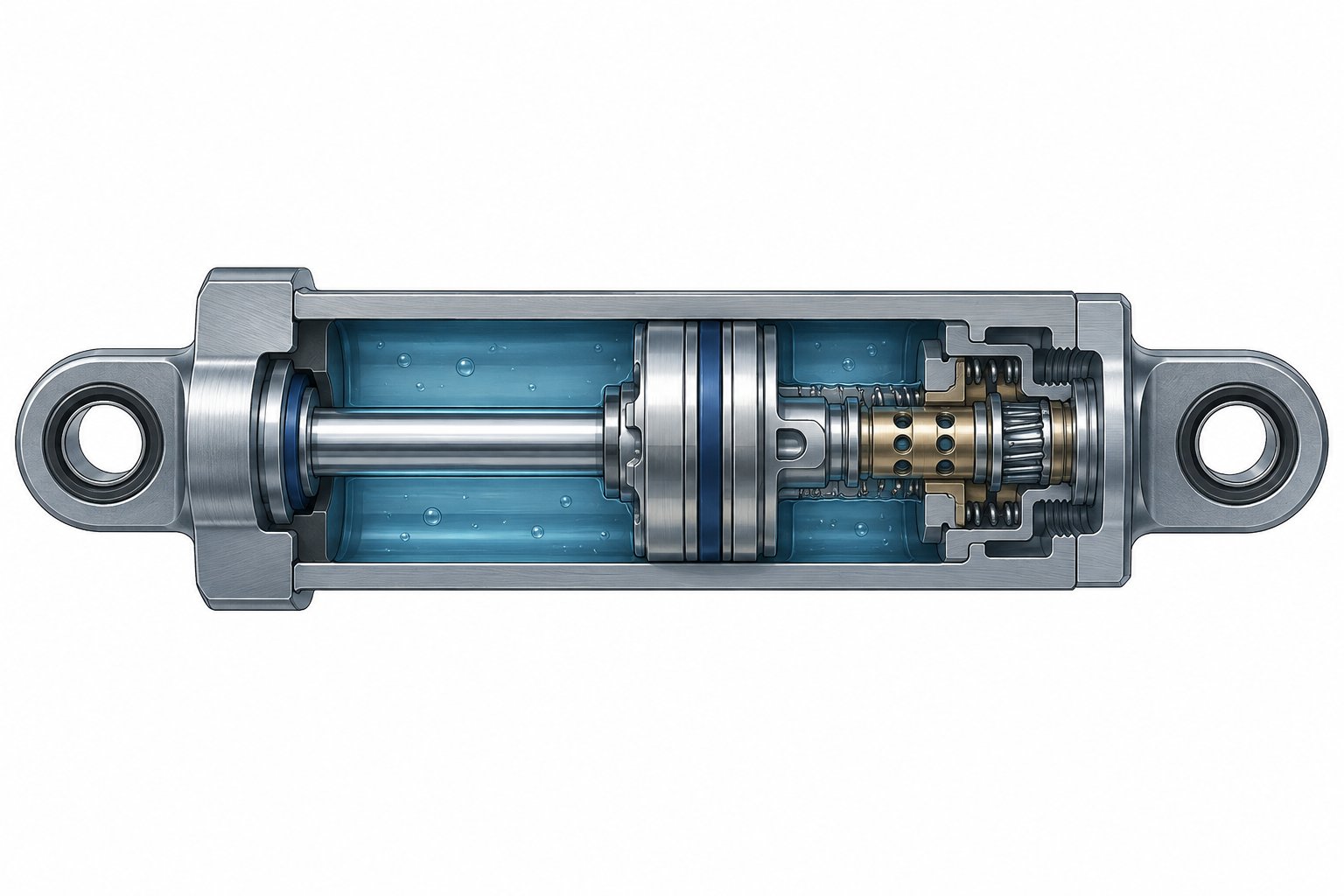
Picture squeezing a thick milkshake through a narrow straw. You can push as hard as you want, but the liquid only moves so fast through that tiny opening. That everyday experience captures the core physics inside a door damper — a force goes in quickly, and resistance turns it into slow, controlled motion coming out. The specific mechanism varies by design, but every type converts the kinetic energy of a swinging or sliding door into something manageable: heat, air pressure, or spring tension.
Hydraulic Resistance and Controlled Deceleration
Hydraulic dampers are the most common type, and for good reason — they deliver the most consistent, adjustable performance across the widest range of door weights. Inside the compact housing sits an oil-filled cylinder containing a piston that moves through the hydraulic fluid whenever the door swings. When you open the door, the piston displaces oil from one chamber to another, compressing an internal spring and storing potential energy. When you release the door, that spring pushes back — but here's the key — the oil can only return through narrow channels controlled by adjustable valves.
Those valves are what make a hydraulic door damper so effective as a slow door closer. By tightening or loosening the valve screws, you change the size of the orifice through which the fluid passes. A smaller opening means more resistance and a slower close; a wider opening allows the door to return a bit faster. The hydraulic fluid itself is chosen specifically because it's nearly incompressible, so the resistance stays steady and predictable rather than fluctuating. You'll notice that this is why hydraulic models feel so smooth — there's no jerkiness or sudden acceleration at the end of the closing arc.
Many hydraulic designs also feature a separate "latching speed" valve that controls just the final few degrees of travel. This lets the door glide gently through most of its arc, then seat firmly into the frame without bouncing back. For exact closing-speed ranges and weight capacities, always reference the manufacturer's specification sheet — these values differ significantly across models and brands.
Pneumatic and Spring-Loaded Mechanisms
Not every application calls for oil-filled chambers and door pistons. Pneumatic dampers take a lighter, simpler approach by using compressed air instead of hydraulic fluid. When the door opens, air is compressed inside a sealed cylinder. Release the door, and the compressed air gradually pushes a piston for door closure, guiding it back to the frame. Because air is compressible — unlike oil — pneumatic models produce a softer, slightly less precise resistance. They work beautifully for lightweight interior doors, cabinet panels, and office partitions where gentle, quiet operation matters more than heavy-duty force control.
Spring-loaded dampers are the simplest of the three. A coiled spring stores mechanical energy when the door opens and releases it to pull the door shut. On their own, springs snap back quickly, which is why most spring-loaded models pair the spring with a basic friction element or a small door closer piston to moderate the return speed. The trade-off is straightforward: spring-loaded units are inexpensive and easy to install, but they offer less fine-tuned adjustability than hydraulic or pneumatic alternatives and can wear out faster under heavy use.
Regardless of the mechanism inside, every door damper follows the same fundamental closing cycle:
- Door opens — The user pushes or pulls the door, inputting kinetic energy into the system.
- Energy is stored — A spring compresses, hydraulic fluid displaces, or air pressure builds inside the damper body.
- Valve regulates flow — Hydraulic fluid passes through narrow orifices, or compressed air releases through controlled ports, creating measured resistance.
- Door decelerates — The resistance progressively slows the door's return speed, preventing any sudden surge toward the frame.
- Door seats softly — The door arrives at the fully closed position gently, without slamming, bouncing, or generating excessive noise.
This five-step cycle happens in seconds, yet the engineering behind it determines whether a door whispers shut or crashes closed. The type of mechanism — hydraulic, pneumatic, or spring-loaded — shapes everything from the feel of the close to the environments where the damper performs best. Those environments, and the surprising variety of damper designs built to serve them, reveal just how deep this product category goes.
Every Type of Door Damper Explained
Knowing how a door damper works is one thing. Choosing the right type is where most buyers get stuck — and for good reason. The category spans at least six distinct mechanism families, each designed to solve a different set of problems. A soft close door damper tucked inside a kitchen cabinet hinge has almost nothing in common with the heavy hydraulic unit controlling a warehouse fire exit. Yet both fall under the same umbrella term.
Think of this section as a field guide. You'll find every major damper type broken down by how it works, where it excels, and where it falls short — so you can zero in on the right match without second-guessing yourself.
Hydraulic and Pneumatic Door Dampers
These two categories account for the vast majority of dampers installed worldwide, and for good reason — they represent the most mature, proven approaches to controlled deceleration.
Hydraulic dampers use oil-filled chambers and precision-machined internal valves to regulate how quickly a door can close. Because hydraulic fluid is nearly incompressible, these units deliver exceptionally smooth and consistent resistance across thousands of cycles. Most models offer adjustable closing speed — and many include a separate latching-speed setting for the final few degrees of travel. This makes them the go-to choice when you need fine-tuned control over heavy or frequently used doors. You'll find hydraulic soft close dampers in commercial office entries, apartment corridors, and healthcare facilities where reliability and quiet operation are non-negotiable.
Pneumatic dampers swap oil for compressed air. They're lighter, simpler, and typically less expensive. The trade-off? Air is compressible, so the resistance profile feels slightly softer and less precise than hydraulic alternatives. That's perfectly acceptable — even desirable — for lightweight interior doors, screen doors, and cabinet panels where a gentle cushion matters more than heavy-duty force control. Pneumatic models are also easier to maintain since there's no hydraulic fluid that can leak or degrade over time.
Rotary Dampers and Linear Dampers
While hydraulic and pneumatic describe what's inside the damper, rotary and linear describe how the damper moves — and that distinction is critical when matching hardware to door style.
Rotary dampers generate resistance through circular motion. They're purpose-built for hinged applications, where a door or panel pivots around a fixed point. A small rotary damper can be embedded directly into a hinge barrel — creating what the industry calls a damping hinge — or mounted externally near the pivot axis. This door damper hinge design is especially popular in cabinet doors, appliance lids, and compact enclosures where space is tight and a full-size closer would be overkill. As one OEM manufacturer reports, clients have reduced workplace noise complaints by 70% simply by switching from standard hinges to rotary damper hinges on metal inspection panels.
Linear dampers produce resistance along a straight path rather than a rotational arc. Imagine a piston sliding inside a cylinder — that's the basic geometry. Linear dampers are the backbone of sliding door and barn door soft close systems. When a sliding door reaches the end of its track, a linear damper catches it and decelerates it along the final stretch of travel, guiding the panel smoothly into its closed position. They're also used in drawer slides, pocket door hardware, and any application where the moving element travels in a straight line.
Choosing between rotary and linear comes down to one simple question: does your door swing or slide? Swing means rotary. Slide means linear.
Specialty Dampers for Unique Applications
Beyond the core categories, several specialized damper types serve environments with unique demands:
- Magnetic dampers use opposing magnetic fields rather than fluid or air to create resistance. They're virtually maintenance-free since there are no seals to wear out and no fluid to leak. You'll find them most often in high-end furniture, premium appliance doors, and architectural hardware where a sleek, minimalist profile is essential. The limitation? Magnetic models typically offer less adjustability and lower force capacity compared to hydraulic alternatives.
- Spring-loaded dampers rely on stored mechanical energy from a coiled spring, usually combined with a friction element to moderate the return speed. They're the most affordable and simplest to install, making them a practical choice for lightweight residential doors and budget-conscious projects. However, they wear out faster under heavy cycling and lack the fine-speed adjustability of fluid-based designs.
- Fire door dampers occupy a category of their own. These units must meet strict fire-resistance standards — in the United States, NFPA 80 governs fire doors and other opening protectives, requiring that they close, latch, and maintain their fire-resistance rating during a fire event. Fire door dampers are engineered to ensure reliable self-closing performance even at elevated temperatures, and they're subject to annual inspection and testing requirements. Always verify that any damper installed on a fire-rated assembly carries the appropriate listing and labeling from an accepted testing laboratory.
- Concealed low-profile dampers are designed to be invisible once installed. They mount inside the door frame, within the hinge mortise, or beneath the floor, preserving clean architectural lines. These are popular in upscale residential projects, boutique hotels, and modern office interiors where visible hardware detracts from the design intent. Installation is more complex, but the aesthetic payoff is significant.
The table below puts every major type side by side so you can compare at a glance:
| Damper Type | Mechanism | Typical Application | Adjustability | Durability | Relative Cost |
|---|---|---|---|---|---|
| Soft Close (Hydraulic) | Oil-filled piston with adjustable valves | Interior and exterior hinged doors, commercial entries | High — multi-valve speed control | High — consistent across high-cycle use | Medium to High |
| Hydraulic (General) | Hydraulic fluid resistance | Office doors, apartment corridors, healthcare facilities | High | High | Medium to High |
| Pneumatic | Compressed air resistance | Lightweight interior doors, screen doors, cabinets | Low to Medium | Medium | Low to Medium |
| Rotary (Damped Hinge) | Rotational fluid or friction resistance | Cabinet doors, appliance lids, enclosure panels | Medium — torque adjustable on some models | Medium to High | Low to Medium |
| Linear | Piston along a straight track | Sliding doors, barn doors, pocket doors, drawers | Medium | High | Medium |
| Magnetic | Opposing magnetic fields | Premium furniture, high-end appliance doors | Low | High — no seals or fluid to degrade | High |
| Spring-Loaded | Coiled spring with friction element | Lightweight residential doors, budget projects | Low | Low to Medium | Low |
| Fire-Rated | Hydraulic or spring, certified to fire standards | Fire-rated assemblies, stairwell doors, corridor separations | Medium to High | High — built for code compliance | High |
| Concealed / Low-Profile | Varies (hydraulic, rotary, or spring) | Upscale residential, boutique hotels, modern offices | Varies by sub-type | Medium to High | High |
With this taxonomy in hand, the next logical step is matching these types to the specific door you're actually working with — because a barn door, a pocket door, and a front entry door each present a completely different set of physical constraints and performance demands.
Matching Door Dampers to Different Door Types
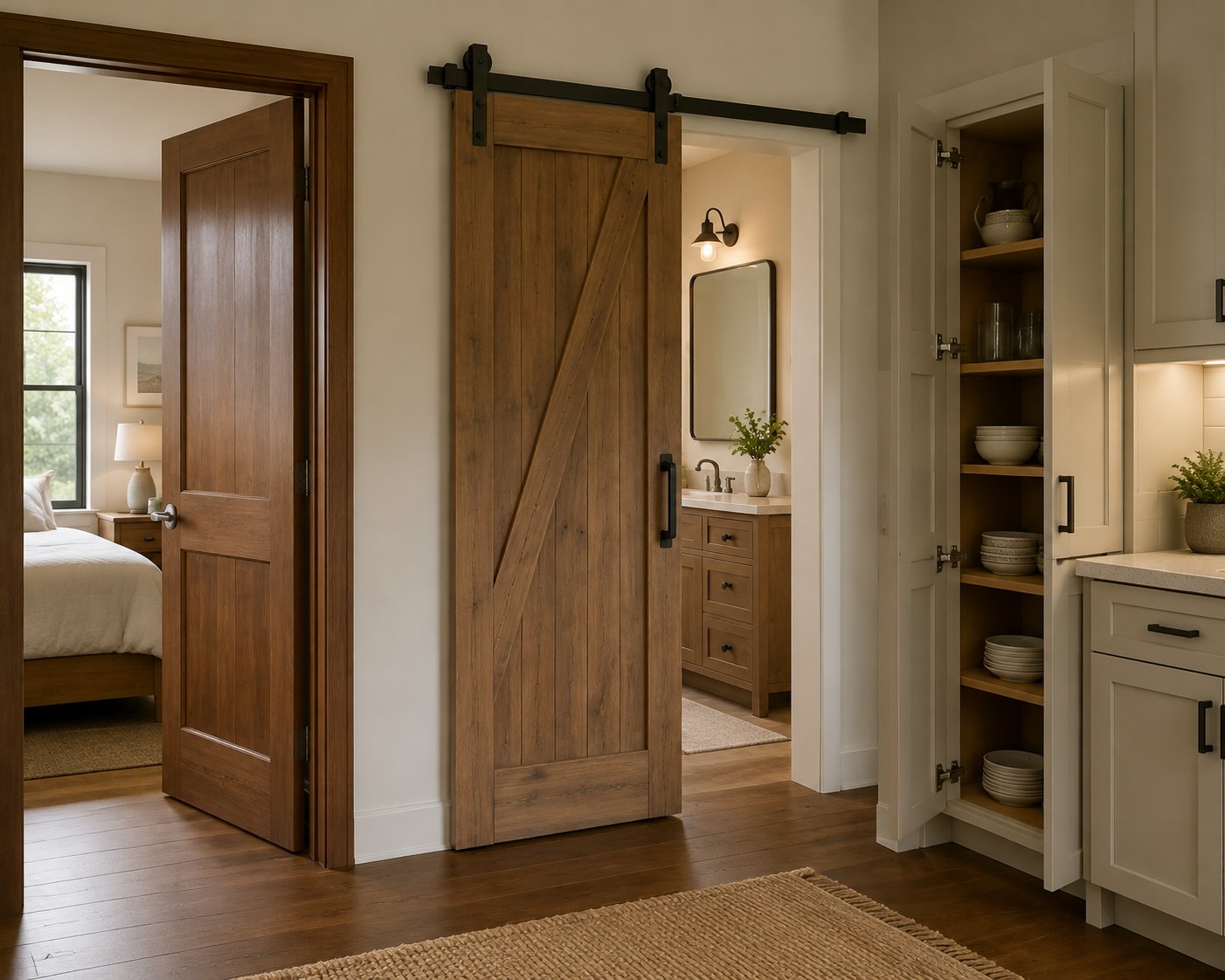
A damper that performs flawlessly on a bedroom door might fail within weeks on a heavy exterior entry — and one built for a front door would be absurdly oversized for a kitchen cabinet. The physical characteristics of each door dictate which damper technology, mounting style, and force rating will actually work. Before diving into the specifics, here are the key factors that shift from one door type to the next:
- Weight — A hollow-core interior door might weigh 25 lb, while a solid wood or steel exterior door can exceed 100 lb. Heavier doors demand higher-capacity dampers.
- Swing arc or travel path — Hinged doors rotate around a fixed axis; sliding doors travel linearly along a track. Each motion type requires a fundamentally different soft close door mechanism.
- Mounting space — A full-size entry door offers room for surface-mounted or overhead units. A cabinet door or appliance lid may only accommodate a miniature rotary damper embedded in the hinge itself.
- Environmental exposure — Exterior doors face rain, temperature swings, and UV radiation. Interior and cabinet applications operate in controlled climates with far less stress on seals and lubricants.
With those variables in mind, let's map the right damper to each door you're likely to encounter.
Dampers for Hinged Interior and Exterior Doors
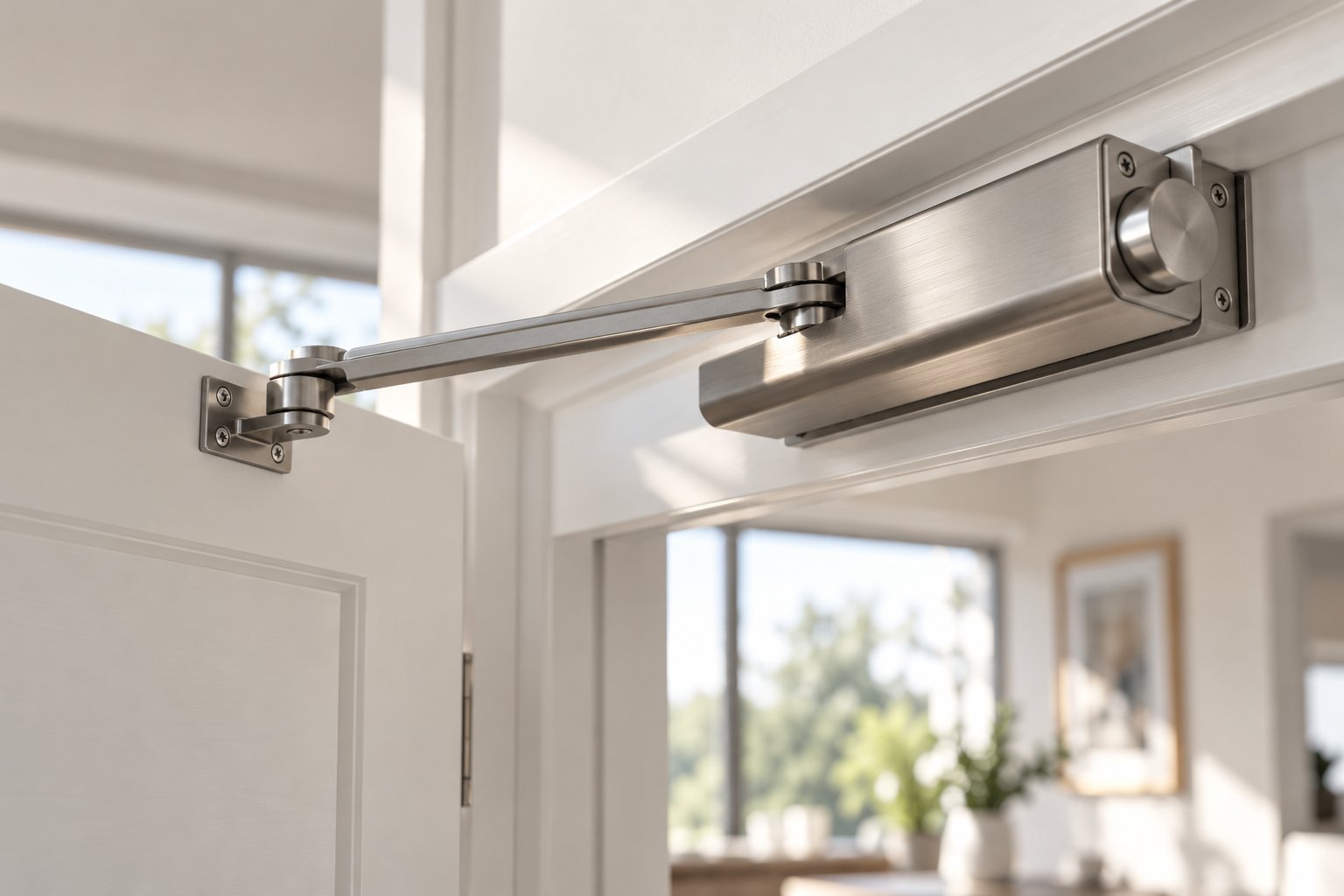
Standard hinged doors are the most common application, and they offer two primary mounting approaches. Surface-mounted dampers attach visibly to the door frame, the hinge side, or the top rail. They're the easiest to retrofit — most require nothing more than a drill, a few screws, and fifteen minutes. You'll find surface-mounted options popular in apartments, offices, and rental properties where quick installation and removal matter.
Concealed dampers, by contrast, hide inside the door frame, within the hinge mortise, or beneath a floor plate. They preserve clean sight lines and are a favorite of architects specifying modern residential and boutique hospitality projects. The trade-off is a more involved installation that may require routing or chiseling.
Exterior doors introduce additional demands. They're typically heavier, wider, and exposed to weather — so the damper needs a higher weight capacity, corrosion-resistant materials, and seals that won't degrade in freezing or high-humidity conditions. If your entry door exceeds 90 lb or faces prevailing winds, look for models specifically rated for exterior use and consider pairing the damper with a separate door check to control the opening direction as well.
Sliding Door and Barn Door Soft Close Systems
Sliding doors don't swing — they glide along a horizontal track. That linear travel path means rotary dampers won't work here. Instead, soft close sliding door hardware uses linear damper cartridges integrated directly into the track or mounted at the track's end points. When the door panel reaches the last few inches of travel, a catch mechanism engages the linear damper, which decelerates the panel and guides it gently into its fully closed (or fully open) position.
Barn doors follow the same principle but often ride on exposed, top-mounted rail systems. Many barn door track kits now include built-in sliding door soft close modules at both ends of the rail, so the door cushions to a stop in either direction. When shopping, confirm that the soft close cartridge's weight rating matches your barn door — reclaimed wood barn doors can be surprisingly heavy.
Pocket doors present a unique challenge because the panel disappears into a wall cavity, making hardware access difficult after installation. Systems like the Sugatsune FD80 pocket door system address this with an innovative two-track design — one track for the doorway opening and another for the pocket — combined with soft open-and-close functionality. Critically, the FD80's opening track segment can be removed to access the door and components for maintenance without breaking into the pocket wall. Sugatsune is also expanding the FD series to support heavier doors with a pull force under five pounds, reinforcing accessibility in soft close sliding door applications. For pocket doors, this kind of track-integrated approach is far more practical than trying to retrofit a standalone damper into an enclosed wall cavity.
Cabinet and Compact Door Dampers
Step down in scale and the hardware gets smaller, but the engineering challenge doesn't disappear. Cabinet doors, appliance lids, and furniture panels all benefit from damped closing — nobody enjoys a kitchen cabinet that slaps shut at 6 a.m.
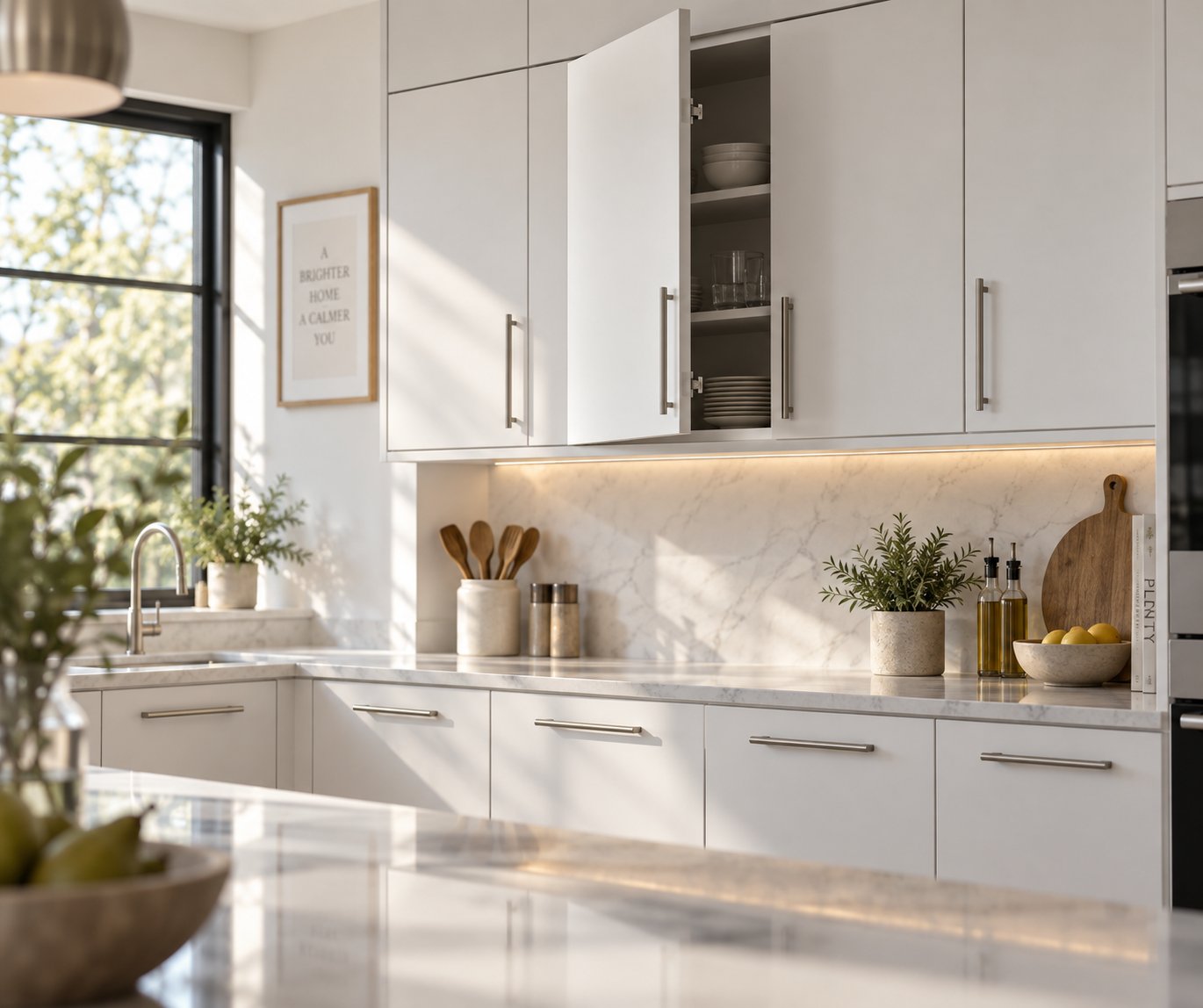
The most popular solution is the damper hinge — a European-style concealed hinge with an integrated soft close mechanism built right into the hinge cup or arm. As Sugatsune's cabinet hinge guide explains, soft-close hinges use a damping mechanism to prevent slamming, making them ideal for kitchens and bathrooms. They come in full overlay, half overlay, and inset configurations, so you can match the hinge to your cabinet's door positioning without adding a separate damper device.
For cabinets that already have standard hinges, small add-on rotary dampers can be mounted to the inside of the cabinet box near the hinge. These palm-sized units apply just enough resistance to decelerate a lightweight door panel. They're inexpensive, easy to retrofit, and available in multiple torque ratings to suit different door sizes.
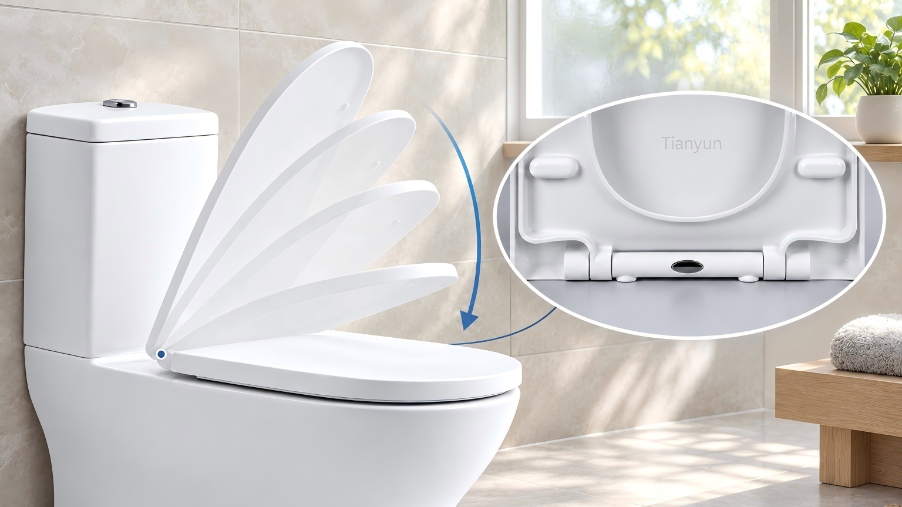
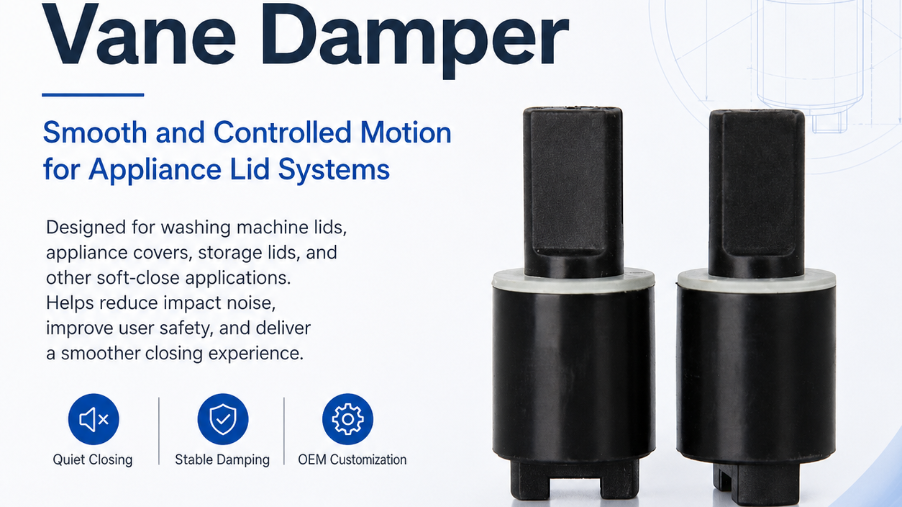
Appliance lids and compact enclosures often use miniature linear or rotary dampers embedded directly into the product housing during manufacturing. These tiny components — sometimes smaller than a thumb — deliver controlled motion in toilet seat lids, trash can covers, washer doors, and similar mechanisms. The soft close door mechanism in these products is usually engineered by the OEM at the design stage rather than added after the fact.
Every door type brings its own combination of weight, motion path, space constraints, and environmental factors. Getting the match right matters — but so does understanding the real-world settings where dampers deliver the most meaningful impact, from the noise-sensitive corridors of a hospital to the high-cycle entries of a busy retail store.
Where Door Dampers Make the Biggest Difference
Imagine lying in a hospital bed at 2 a.m. Every few minutes, a door down the hallway slams shut. A nurse enters the adjacent room — another slam. You finally drift off, and a supply cart pushes through a corridor door that crashes into its frame. Sleep, the single most important ingredient in recovery, becomes nearly impossible.
This isn't a hypothetical scenario. It plays out every night in healthcare facilities worldwide, and it illustrates a broader truth: the environment where a door operates determines how much value a door damper actually delivers. Some settings merely benefit from quieter doors. Others — hospitals, schools, elder care homes — genuinely need them for occupant wellbeing, regulatory compliance, and operational longevity.
The environment dictates the damper selection. A hospital corridor has fundamentally different requirements than a kitchen cabinet — different forces, different frequencies of use, different stakes when the hardware fails.
Noise Reduction in Residential and Hospitality Settings
Door slamming ranks among the most common noise complaints in multi-unit residential buildings, hotels, and shared living spaces. In an apartment, a single slamming door can travel through walls and floors, disturbing neighbors across an entire hallway. In a hotel, guests routinely cite nighttime noise as a reason for negative reviews. Soft close doors eliminate one of the most controllable sources of that disruption.
The impact goes beyond simple comfort. HFM Magazine reports that the patient experience domain — which includes the HCAHPS "quiet at night" metric — accounts for 25% of a hospital's total performance score within the Hospital Value-Based Purchasing (VBP) program. That score directly affects Medicare reimbursement. In other words, noisy doors can literally cost a hospital money.
Hospitals face an especially difficult acoustic challenge. Surfaces must support infection control, which means smooth walls, hard flooring, and cleanable ceilings — all materials that reflect sound rather than absorb it. Mechanical systems push large volumes of fresh air through ductwork, adding a persistent baseline hum. Against that backdrop, every sudden, sharp noise — like a door slamming — becomes dramatically more jarring. A quiet door closer equipped with proper damping removes one of the most frequent impact-noise sources without conflicting with hygiene protocols.
The same principle applies in nurseries and bedrooms. Parents who've ever tiptoed out of a sleeping infant's room only to have the door bang shut understand the value of a soft close door instantly. In hospitality settings, boutique hotels and resorts increasingly specify concealed dampers as standard — not as a luxury upgrade, but as a baseline expectation for guest satisfaction.
Safety and Compliance in Commercial Environments
Noise is one concern. Physical safety is another — and in some settings, it's the primary driver for installing dampers.
Young children are especially vulnerable. A safety bulletin from Derbyshire County Council highlights that children in early years and primary school settings are particularly susceptible to finger-trapping injuries caused by door hinges, due to their natural curiosity and limited awareness of hazards. The bulletin identifies high-risk doors as those most likely to be used by pupils without direct supervision: toilet doors, cloakroom doors, corridor doors, and main entrance doors. Door dampers and finger guards work together as complementary safeguards — the damper controls closing speed while finger guards shield the hinge gap.
Elder care facilities face a parallel challenge. Residents with limited mobility or slower reaction times can't pull a hand away from a fast-closing door quickly enough to avoid injury. A door soft close mechanism gives them the extra seconds they need. In these environments, dampers also reduce the physical force required to manage doors, supporting accessibility goals outlined in standards like the Americans with Disabilities Act (ADA).
High-traffic commercial spaces — offices, retail stores, restaurants — present a different kind of stress. Doors in busy corridors might cycle hundreds of times per day. Without damping, that repeated slamming accelerates wear on hinges, frames, latch hardware, and even the wall structure around the jamb. Over a building's lifetime, soft close doors in high-cycle locations can meaningfully extend the service life of the entire door assembly, reducing maintenance costs and avoiding premature replacements.
Building codes and industry standards also shape hardware decisions in these settings. The ANSI/BHMA A156.4 standard governs door closers and pivots, establishing performance grades, cycle-count requirements, and testing criteria for commercial door hardware. While this standard focuses on closers rather than standalone dampers, many combined closer-damper products must meet its requirements to be specified in commercial construction. Fire-rated assemblies add another layer — any damper installed on a fire door must be compatible with the door's listed fire-resistance rating and comply with NFPA 80 inspection requirements. Always verify current applicable codes with your local authority having jurisdiction, as requirements vary by region and building type.
Whether the goal is a peaceful night's sleep, a safer classroom, or a longer-lasting commercial door assembly, the environment tells you what the damper needs to do. The next step is translating those environmental demands into concrete specifications — the numbers on the box that tell you whether a particular damper can actually handle your door.
How to Read Door Damper Specifications Like a Pro
You've identified the right damper type and you know the environment it needs to serve. But when you pull up a product listing, you're greeted by a wall of numbers — weight capacity, maximum door width, closing speed range, mounting dimensions. What do those figures actually mean, and how do you match them to your specific door? Getting this step wrong is the fastest route to a door soft closer that underperforms, wears out early, or never quite closes the way you expected.
Understanding Weight Capacity and Door Width Limits
These two specs are the gatekeepers. Every other detail becomes irrelevant if the damper can't physically handle the mass and leverage of your door.
Weight capacity tells you the maximum door mass the damper is engineered to control. Many residential soft door closers list capacities around 88 lb (40 kg) with a maximum door width of roughly 3 ft (roughly 900 mm). That range covers most standard interior doors — but it won't work for a solid hardwood entry door weighing 120 lb or a wide commercial panel stretching to 42 inches. Exceeding the rated weight doesn't just slow down performance; it forces the internal piston and seals to absorb stress they weren't designed for, leading to premature wear, inconsistent closing speed, and eventually complete failure.
Door width matters because of leverage. A wider door creates a longer moment arm around the hinge axis, which amplifies the force the damper must resist during closing. As Zanda Architectural Hardware details, recommended closer sizing escalates significantly as width increases — a 750 mm door at 20-40 kg needs a very different unit than a 1,500 mm door at 200 kg, which may exceed standard closer capacities entirely and require heavy-duty floor springs.
So how do you measure your door? Width and thickness are straightforward — use a tape measure across the face and along the edge. Weight is trickier. If the door is already hung, you can remove the hinge pins, carefully lift the panel off the frame, and weigh it on a bathroom scale. Alternatively, look up the manufacturer's spec sheet for the door model, or estimate based on material: hollow-core interior doors typically run 20-30 lb, solid wood doors 50-80 lb, and steel or solid-core commercial doors 80 lb and above.
Adjustability and Closing Speed Ranges
Weight and width determine whether a damper can work. Adjustability determines whether it will work the way you want.
A door soft close mechanism with adjustable closing speed lets you fine-tune how quickly the door travels from fully open to fully shut. This matters more than most buyers realize. A nursery door needs a slow, whisper-quiet close. A busy office corridor door might need a slightly faster return to keep traffic moving. A door slow close mechanism in a commercial setting may also need to meet ADA timing guidelines — industry guidance suggests at least five seconds to move from 90 degrees to nearly closed.
Many hydraulic dampers offer two separate speed adjustments: sweep speed (the main closing arc) and latch speed (the final few degrees before the door meets the frame). Having both gives you the flexibility to let the door glide gently through most of its travel, then firm up just enough to engage the latch with a quiet click. For a door slow closer in a noise-sensitive environment, this dual-valve adjustability is worth prioritizing over simpler fixed-speed models.
Mounting dimensions — body length, width, depth, and screw-hole spacing — determine whether the unit physically fits your door or frame. Always cross-check these measurements against the available mounting surface before purchasing, especially for concealed installations where space inside the frame or hinge mortise is limited.
The table below gives you a practical checklist for evaluating any door damper spec sheet:
| Specification | What It Measures | How to Measure on Your Door | Why It Matters |
|---|---|---|---|
| Weight Capacity (lb or kg) | Maximum door mass the damper can control | Remove door from hinges and weigh on a scale, or reference the door manufacturer's data | Exceeding capacity causes premature seal wear, inconsistent speed, and early failure |
| Maximum Door Width | Widest door panel the damper can handle | Measure the full width of the door face with a tape measure | Wider doors create greater leverage forces that can overwhelm an undersized damper |
| Closing Speed Range | Adjustable time range for the door to travel from open to closed | Not a door measurement — compare to your desired closing behavior and any code requirements | Determines whether you can fine-tune the close for comfort, safety, and compliance |
| Sweep Speed Adjustment | Speed control for the main closing arc (roughly 90 degrees to 15 degrees) | Match to traffic pace and noise sensitivity of the environment | Controls the feel of the close through most of the door's travel |
| Latch Speed Adjustment | Speed control for the final few degrees before the door seats | Test whether your latch or strike requires a firm final push to engage | Ensures the door fully closes and latches without slamming or bouncing |
| Mounting Dimensions (L x W x D) | Physical size of the damper body and screw-hole pattern | Measure available mounting surface on the door, frame, or hinge area | Confirms the unit physically fits — critical for concealed and compact installations |
| Door Thickness Range | Minimum and maximum door panel thickness the hardware accommodates | Measure the door edge with a tape measure or calipers | Ensures brackets, arms, or hinge cups seat properly without modification |
When you can read these numbers confidently, you stop relying on guesswork and start making informed decisions. You'll know immediately whether a slow close door closer on a product page is the right fit — or whether you need to keep looking. The real question that follows is whether you can handle the installation yourself or if it's time to bring in a professional.
DIY vs. Professional Door Damper Installation
You've picked the right damper type, verified the specs, and the hardware is sitting on your kitchen counter. Here's the honest question: should you grab your drill, or should you grab your phone and call a pro? The answer depends entirely on the type of damper, the door it's going on, and what's at stake if something goes wrong.
When DIY Installation Works
Good news first — many door damper installations are genuinely beginner-friendly. Surface-mounted soft door closer units and hinge-integrated dampers are designed with homeowners in mind. If you can hang a picture frame, you can likely handle these.
A typical surface-mounted damper attaches to the door frame or the top rail with a few screws. The process mirrors what Finsbury Hardware outlines for basic door closer installation: unpack and organize your parts, align the unit using the included template, mark and drill pilot holes, fasten the hardware, then adjust the closing speed. Most homeowners finish the entire job in 30 to 60 minutes.
Hinge-integrated soft close dampers — the type commonly used on kitchen cabinets — are even simpler. You remove the old hinge, clip the new damper hinge into the same mounting plate or bore hole, and adjust the soft door close tension. No new holes, no template alignment, no guesswork.
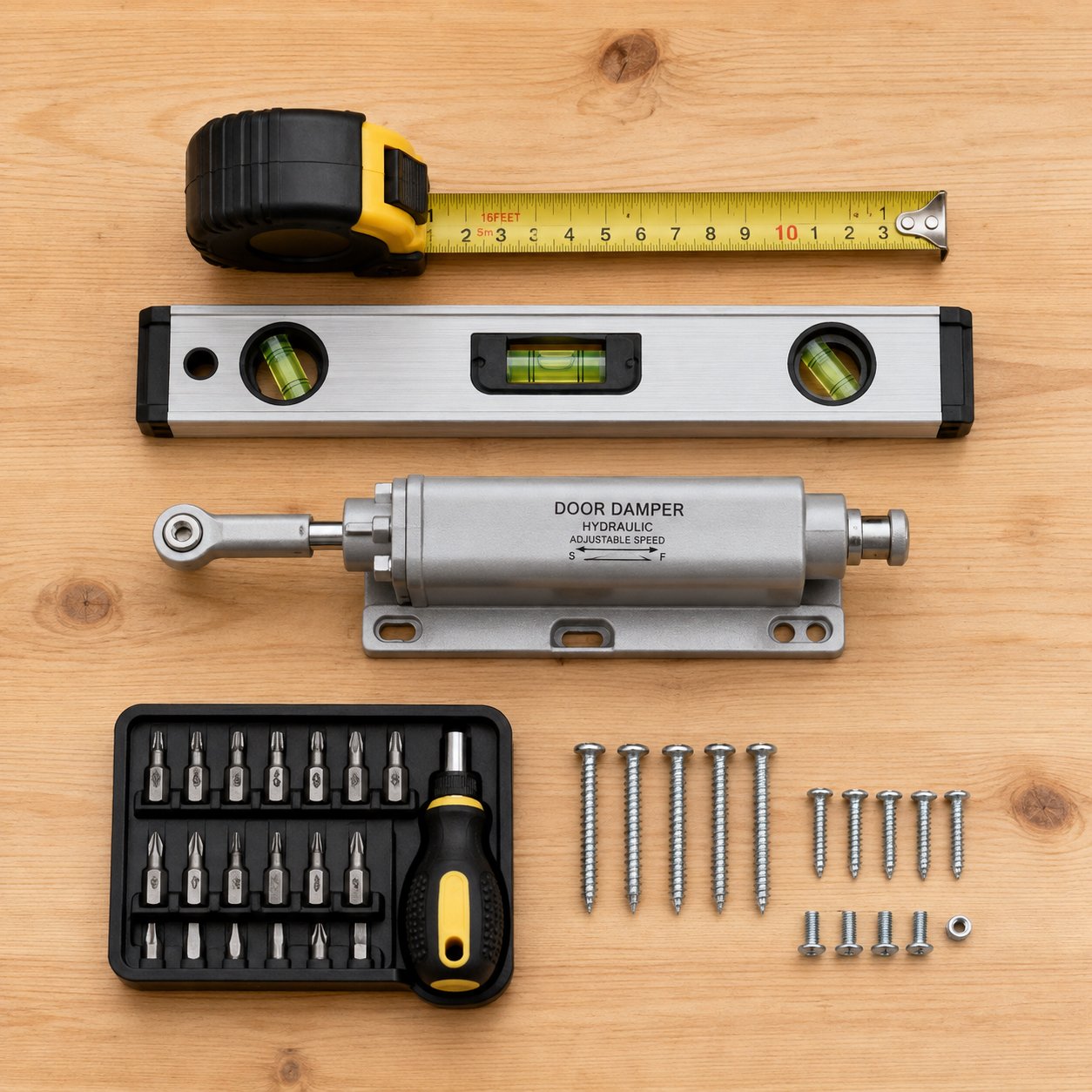
Here are the essential tools you'll need for a standard DIY damper installation:
- Power drill — for creating pilot holes in wood or metal door frames
- Level — to verify the damper body sits perfectly horizontal or vertical, depending on the mounting orientation
- Tape measure — for confirming placement dimensions against the manufacturer's template
- Screwdriver (Phillips and flathead, or a hex key for adjustment valves) — for securing fasteners and fine-tuning closing speed
- Pencil — for marking drill points through the installation template
One detail that's easy to overlook: always use the manufacturer's provided template rather than eyeballing placement. As National Lock Supply emphasizes, drilling even slightly off-template creates misalignment that prevents proper arm articulation or causes binding throughout the closing cycle. Tape the template in place, punch your marks through it, and only then pick up the drill.
When to Hire a Professional
Some installations cross the line from weekend project into specialized trade work. Recognizing that boundary saves you from costly mistakes — or worse, a safety hazard.
Fire-rated doors are the clearest example. Any hardware change on a fire-rated assembly can void its certification if done improperly. A door closer with damper functionality installed on a fire door must carry the appropriate UL listing, and the installation itself needs to preserve the assembly's tested fire-resistance rating. Professional installers understand these compliance requirements and can document the work for fire marshal inspections.
Heavy commercial doors — steel entries, oversized architectural panels, or doors in high-rise buildings subject to wind pressure — demand precise sizing, frame reinforcement verification, and sometimes custom bracket fabrication. A commercial door that weighs 150 lb or more generates serious forces at the mounting points. Facility Door Solutions notes that professional technicians assess the entire door system — not just the closer itself — checking door alignment, frame condition, hinge operation, and weather sealing to ensure all components work together properly.
Concealed floor-spring dampers require cutting a pocket into the floor slab, aligning the pivot precisely with the door panel, and embedding hardware that will be virtually inaccessible once the floor finish goes back down. Retrofitting one into an existing building is rarely practical without professional involvement.
Integrated sliding door track systems — particularly pocket door soft close mechanisms — involve working inside wall cavities and coordinating track alignment across two separate rails. A misaligned track doesn't just perform poorly; it can bind the door panel entirely.
Common Installation Mistakes to Avoid
Whether you go DIY or hire help, knowing the most frequent errors helps you spot problems early:
- Incorrect mounting height — Placing the damper too high or too low on the door changes the effective leverage, making the unit work harder than designed and reducing its lifespan.
- Misaligned brackets — If the arm bracket on the frame doesn't align squarely with the damper body on the door, the connecting arm binds during every closing cycle. This creates noise, accelerates wear, and can strip mounting screws over time.
- Over-tightening adjustment screws — Most hydraulic dampers limit valve adjustment to about two full turns in either direction. Cranking past that range can strip internal valve threads or cause fluid bypass, permanently compromising speed control.
- Substituting fasteners — Using shorter screws, a different thread pitch, or drywall anchors instead of the specified hardware weakens mounting integrity. Stick with what's in the box.
A well-installed door damper should operate silently and consistently from day one. If yours doesn't — if you hear grinding, see gaps, or notice the door drifting instead of closing — something in the installation needs attention before the problem compounds. And even a perfectly installed damper will eventually need upkeep, which raises its own set of questions about what maintenance looks like and how to troubleshoot the issues that inevitably arise over time.
Maintaining and Troubleshooting Your Door Dampers
A door damper that's installed correctly on Monday can quietly drift toward failure over months — or even years — without obvious warning signs. The closing speed gradually shifts. A mounting screw loosens a quarter-turn at a time. Hydraulic fluid thins imperceptibly with each temperature cycle. By the time you notice the door slamming again, the problem has often progressed beyond a simple adjustment. A little preventive attention goes a long way toward keeping your door dampeners performing like new.
Routine Maintenance for Long Damper Life
The good news? Maintaining a door damper doesn't require specialized skills or expensive tools. A consistent schedule of basic checks catches small issues before they snowball into replacements.
Monthly: Give the unit a quick visual inspection. Look for loose or backing-out screws at every mounting point — the door frame bracket, the damper body, and the connecting arm. Vibration from daily use gradually works fasteners free, especially on high-traffic doors. Tighten anything that's shifted. While you're there, wipe down pivot points and arm joints with a clean cloth to remove dust and grit that accelerate wear.
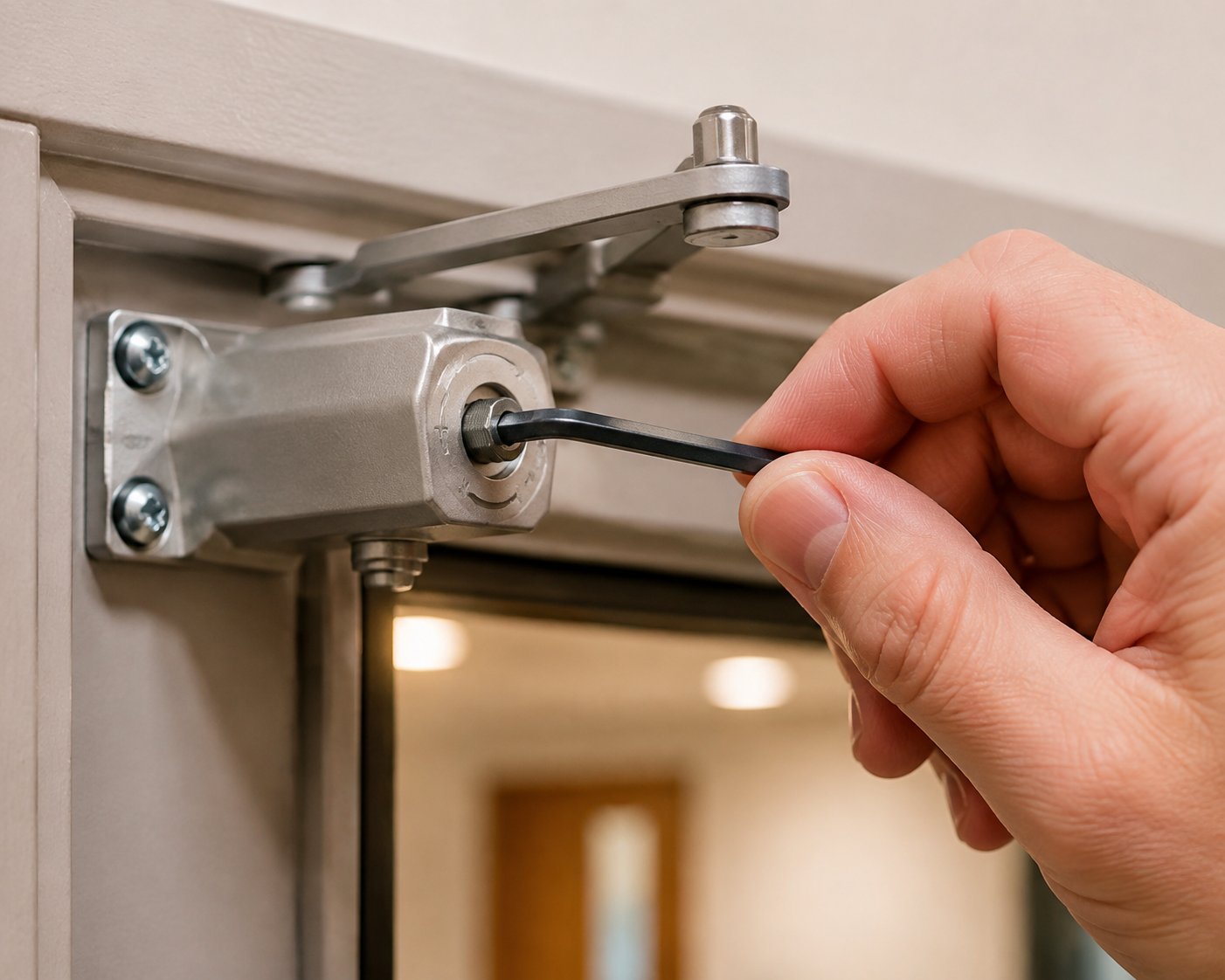
Quarterly: Test the closing behavior. Open the door to 90 degrees and release it. Does it still decelerate smoothly through the full arc? Does it latch firmly without slamming or bouncing? If the speed has drifted, use the adjustment valves — typically small hex screws on the damper body — to bring it back into the range you originally set. As Heinda's maintenance guide recommends, quarterly speed and force adjustments keep the closing action consistent as internal components wear in and environmental conditions shift.
Seasonally: Temperature swings affect hydraulic fluid viscosity. A damper tuned for summer may close noticeably faster in winter because thicker, cold fluid flows more quickly through the adjustment valves — counterintuitive, but it's a well-documented behavior in hydraulic systems. Rather than chasing seasonal adjustments back and forth, note whether your damper's performance changes significantly between hot and cold months. If it does, you may want a unit with a wider temperature rating the next time you upgrade.
Annually: Perform a thorough inspection. Check the arm and bracket for hairline stress cracks, examine the damper body for any signs of fluid seepage, and lubricate any accessible pivot points with a manufacturer-recommended lubricant. This is also the time to assess whether the damper is still appropriate for its application — if slow door closing has become sluggish, if the door has been replaced with a heavier panel, or if usage patterns have changed, the original unit may no longer be the right fit.
Watch for these telltale signs that a damper is wearing out:
- Slow drift — the door takes noticeably longer to close than it used to, even after adjustment
- Incomplete closing — the door stops an inch or two short of the frame and won't latch without a manual push
- Visible fluid — any oil residue on the damper body, mounting surface, or floor beneath the unit signals a seal failure
Troubleshooting Common Door Damper Problems
Even well-maintained hardware eventually develops issues. The key is recognizing what each symptom means so you can respond with the right fix instead of guessing — or replacing a unit that only needed a minor adjustment.
Leaking hydraulic fluid is the most serious symptom. Once oil escapes the sealed chamber, the damper loses its ability to generate consistent resistance. As CN-Oude's repair guide explains, leaks typically result from deteriorated internal seals or age-related wear in the hydraulic system. If you catch a minor seep early, it may be possible to replace the seals and refill with the correct hydraulic oil. But in many cases — particularly with compact residential door dampeners where internal parts aren't user-serviceable — a leaking unit needs full replacement. Attempting to "top off" a leaking damper without addressing the failed seal is a temporary fix at best.
Inconsistent closing speed — where the door closes normally one cycle but slams or crawls the next — usually points to contaminated hydraulic fluid, air trapped inside the cylinder, or a door piston closer with degrading internal seals. Nashville Door Closer notes that this inconsistency signals early-stage failure: the damper may work at certain temperatures or fluid viscosities but falter when conditions shift. If adjusting the valve screws doesn't stabilize the behavior within one or two attempts, stop adjusting — further tweaking without a proper diagnosis typically makes things worse.
Excessive noise — grinding, clicking, or screeching during closing — means internal components are making metal-on-metal contact. This could be a dry pivot point that needs lubrication, a bent arm that's binding against the track, or worn internal parts scraping inside the cylinder. Every noisy cycle accelerates the damage. Address it promptly: lubricate external joints first, check arm alignment, and if the sound persists, the internal mechanism likely needs professional inspection or replacement.
The table below maps the most common symptoms to their likely causes and practical fixes:
| Symptom | Likely Cause | Recommended Fix |
|---|---|---|
| Door slams shut despite damper being installed | Adjustment valves set too fast, or damper undersized for door weight | Tighten the sweep-speed valve incrementally; verify the damper's weight rating matches the door |
| Door doesn't close completely — stops short of latching | Latch-speed valve set too slow, weak spring tension, or obstruction in the frame | Open the latch-speed valve slightly; check for debris in the strike plate or weatherstripping interference |
| Oil residue visible on damper body or nearby surfaces | Failed internal seals allowing hydraulic fluid to escape | Replace seals if the unit is serviceable; otherwise, replace the entire damper — do not simply add more fluid |
| Closing speed varies from one cycle to the next | Contaminated or aerated hydraulic fluid; degrading internal seals | Attempt one adjustment; if inconsistency continues, plan for replacement |
| Grinding or clicking noise during closing | Dry pivot joints, bent connecting arm, or worn internal piston components | Lubricate accessible joints; inspect the arm for bending or misalignment; replace if noise originates from inside the body |
| Damper arm feels loose or wobbles | Mounting screws have backed out or screw holes have become stripped | Retighten screws; if holes are stripped, fill with wooden dowels and adhesive, re-drill, and refasten |
| Door closes too slowly in cold weather | Hydraulic fluid viscosity increases at low temperatures, altering flow rate | Make a slight seasonal adjustment to the sweep valve; consider upgrading to a model rated for wider temperature ranges |
Most of these fixes take minutes and cost nothing beyond a screwdriver and a bit of patience. The real expense shows up when small problems get ignored — a minor seal seep becomes a full fluid leak, a loose screw becomes a stripped mounting hole, and a soft close turns back into a hard slam. Stay ahead of the curve with periodic checks, and your damper will reward you with years of quiet, consistent performance.
Keeping existing hardware in top shape is one side of the equation. The other is knowing how to make the right purchasing decision in the first place — choosing the damper that fits your door, your environment, and your long-term expectations so maintenance stays minimal and performance stays high.
How to Choose the Right Door Damper for Any Application
You've walked through the mechanics, explored every damper type, matched hardware to specific doors, learned to read spec sheets, and built a maintenance plan. That's a lot of ground to cover — and it can feel overwhelming when you're standing in front of a product page trying to make a final decision. So let's distill everything into a clear, practical framework you can use right now.
Choosing the right door closing hardware comes down to six core criteria. Get these right, and you'll end up with a damper that performs quietly, lasts for years, and fits your environment without compromise:
- Door type — Hinged, sliding, barn, pocket, or cabinet? This determines whether you need a rotary or linear mechanism.
- Door weight — The single most critical specification. An undersized damper wears out fast; an oversized one wastes money.
- Environment — Interior residential, exterior weathered, commercial high-traffic, or noise-sensitive healthcare? Each demands different durability, adjustability, and compliance standards.
- Noise sensitivity — A warehouse exit and a hotel guest room have very different tolerance thresholds for closing sound.
- Adjustability needs — Fixed-speed models are simpler and cheaper. Dual-valve adjustable models let you dial in exact sweep and latch speeds for a truly smooth close.
- Installation complexity — Surface-mounted units go up in 30 minutes. Concealed floor springs or integrated pocket door systems may require a professional installer and half a day.
Key Decision Criteria at a Glance
The table below maps four common application scenarios to their recommended damper type, the specification you should prioritize first, and a realistic sense of installation difficulty. Think of it as a quick-reference cheat sheet — scan down to your situation, and you'll immediately know where to focus.
| Application Scenario | Recommended Damper Type | Key Spec to Prioritize | Installation Complexity |
|---|---|---|---|
| Heavy exterior door (solid wood, steel, or fiberglass — 80 lb+) | Hydraulic surface-mounted or concealed overhead closer-damper with backcheck | Weight capacity and weather resistance rating | Moderate — may require professional fitting for fire-rated or oversized doors |
| Interior bedroom or bathroom door (hollow-core or solid-core — 25-60 lb) | Hydraulic or pneumatic soft close damper, surface-mounted or hinge-integrated | Closing speed adjustability for quiet, controlled softclose performance | Low — most homeowners can handle this with basic tools in under an hour |
| Sliding barn door or pocket door | Linear damper cartridge integrated into the track system (e.g., Sugatsune Lapcon door damper series for pocket doors) | Door weight rating and track compatibility | Moderate to High — pocket doors especially require precise track alignment inside the wall cavity |
| Cabinet door, appliance lid, or compact furniture panel | Miniature rotary damper, damper hinge, or OEM-integrated soft stopper mechanism | Torque rating matched to the panel's weight and swing arc | Low — clip-in hinge replacement or small add-on unit with two to four screws |
Notice a pattern? Heavier doors and more complex mounting situations push you toward higher-capacity hydraulic models and professional installation. Lighter doors and compact panels lean toward simpler, more affordable solutions you can install yourself. The environment then fine-tunes the choice — adding weather resistance for exterior use, fire certification for rated assemblies, or ultra-quiet operation for noise-sensitive spaces.
Where to Source Quality Door Dampers
Finding the right product means knowing where to look. Different sourcing channels serve different needs, and the best choice depends on whether you're a homeowner tackling a single door, a contractor outfitting a commercial building, or a manufacturer integrating dampers into a product line.
- Specialty hardware retailers — Companies like Sugatsune and HingeOutlet focus specifically on door and cabinet hardware. They carry deep product lines, including specialized items like the Sugatsune Lapcon door damper LDD-V-R for residential hinged doors. Staff at these retailers typically understand spec matching and can help you navigate weight ratings, mounting options, and compatibility questions that a general store clerk might not be equipped to answer.
- Direct from manufacturers — For appliance, furniture, and household-product manufacturers who need OEM soft close solutions at scale, sourcing directly from a damper manufacturer offers the most control over customization, quality, and cost. Tianyun's Home and Appliance Soft Close Dampers, for example, are purpose-built for lids, cabinet doors, and compact mechanisms — offering rotary and hydraulic damper options with OEM/ODM support, premium SUS304 and POM components, and engineering assistance for integrating controlled soft-close motion into product designs. This direct-manufacturer route is especially valuable when you need consistent damper performance across thousands of production units rather than a one-off installation.
- General home improvement stores — Big-box retailers like Home Depot and Lowe's stock a range of residential door dampers and soft close cabinet hinges. Selection tends to favor mid-range, consumer-grade products that suit standard door sizes and weights. For a straightforward bedroom door or kitchen cabinet upgrade, these stores offer convenience, competitive pricing, and the ability to pick up hardware the same day.
- Online marketplaces — Amazon, eBay, and specialty e-commerce sites provide the widest selection and easiest price comparison. The trade-off is that you can't physically inspect the product before buying, and product listings sometimes lack the detailed specification data you need to make a confident match. Always cross-reference marketplace listings against the manufacturer's official spec sheet before ordering.
Final Selection Tips
Before you commit to a purchase, run through this final checklist. These are the mistakes that trip up even experienced buyers — and they're all avoidable with a few minutes of verification.
Always verify specifications against your measured door dimensions. Don't estimate. Measure the door's weight, width, and thickness, then compare those numbers directly against the damper's rated capacity. If your door sits near the upper limit of a damper's range, size up. Operating at maximum capacity shortens the unit's lifespan and leaves zero margin for future changes — like adding a heavier door panel or installing weatherstripping that increases closing resistance.
Prioritize adjustable models for flexibility. A damper with dual-valve speed control — separate sweep and latch adjustments — adapts to seasonal temperature changes, evolving usage patterns, and even different family members' preferences for how quickly the door returns. Fixed-speed models cost less upfront, but adjustable units deliver better long-term value because they can be tuned rather than replaced when conditions change.
Consider the total environment before purchasing. A spec sheet tells you what a damper can do mechanically. But the environment tells you what it needs to do practically. A smooth close that works perfectly in a climate-controlled office hallway may not perform the same on a wind-exposed exterior entrance. Think about temperature range, humidity, traffic volume, noise expectations, and any applicable building codes or fire-rating requirements. These contextual factors narrow your options far more effectively than browsing product listings at random.
Don't overlook the soft stopper solutions for smaller applications. If your project involves cabinet doors, appliance lids, toilet seats, or furniture panels, a compact rotary damper or damper hinge often delivers better results than trying to adapt a full-size door damper to a miniature application. These purpose-built components are engineered for the lighter weights, tighter spaces, and higher cycle counts typical of everyday household products.
Choosing door closing hardware doesn't have to be complicated. Define your door type, measure the key dimensions, assess the environment, and match those inputs against the damper categories and specifications you've learned throughout this guide. The right damper — properly selected, properly installed, and periodically maintained — turns every close into a quiet, controlled event that protects your doors, your walls, and your peace of mind for years to come.
Frequently Asked Questions About Door Dampers
1. What is the difference between a door damper and a door closer?
A door closer actively returns a door to its frame using stored spring energy combined with hydraulic or pneumatic damping — its primary job is to pull the door shut. A door damper, on the other hand, focuses specifically on controlling how the door arrives at the frame: slowly, softly, and without slamming. Many modern products combine both functions into a single unit, but a standalone damper only manages deceleration and does not generate the closing force itself. When shopping, check whether you need a device that initiates closing, cushions it, or both.
2. Can I install a door damper myself or do I need a professional?
Surface-mounted soft close dampers and hinge-integrated cabinet dampers are generally DIY-friendly and can be installed in 30 to 60 minutes with basic tools like a drill, level, tape measure, and screwdriver. However, professional installation is recommended for fire-rated door assemblies, heavy commercial doors over 150 lb, concealed floor-spring systems, and integrated pocket door track mechanisms. Improper installation on a fire-rated door can void its certification, so always consult a qualified installer when code compliance is involved.
3. How do I choose the right size door damper for my door?
Start by measuring your door's weight, width, and thickness. Weight capacity and maximum door width are the two most critical specifications — exceeding either rating leads to premature seal wear, inconsistent closing speed, and early failure. Weigh your door by removing it from its hinges and placing it on a scale, or reference the door manufacturer's data. Then compare your measurements directly against the damper's rated limits. If your door sits near the upper boundary, choose the next size up to ensure longevity and reliable performance.
4. Why is my door damper slamming or not closing properly?
If the door slams despite having a damper, the sweep-speed valve may be set too fast, or the damper could be undersized for the door's weight. Tighten the valve incrementally and verify the weight rating. If the door stops short of latching, the latch-speed valve may be too slow, or debris could be blocking the strike plate. Inconsistent closing speed across cycles often signals contaminated hydraulic fluid or degrading internal seals — if one adjustment attempt does not resolve it, plan for a damper replacement rather than continuing to tweak.
5. What types of door dampers work best for cabinets and appliance lids?
Miniature rotary dampers and soft close damper hinges are the most popular choices for cabinets, appliance lids, and furniture panels. European-style concealed hinges with integrated damping mechanisms clip directly into existing mounting plates, making upgrades simple. For manufacturers integrating soft close into product designs at scale, OEM solutions like Tianyun's Home and Appliance Soft Close Dampers (tianyuntech.com/home-appliance-dampers) offer rotary and hydraulic options with customizable torque ratings, premium SUS304 and POM components, and engineering support for compact mechanism integration.
Apply This Insight to Your Project
Tell us what you are building and how the topic “Stop the Slam: Matching the Right Door Damper to Any Door” relates to your application. Our engineering team can help evaluate the next step.