Why Your Toilet Seat Material Matters More Than You Think
You use it every single day, yet you probably spent more time choosing your bathroom towels. The toilet seat — that humble bathroom fixture — quietly shapes your daily comfort, influences bathroom hygiene, and either holds up for a decade or starts peeling within a year. When it comes time to replace one, most people frame the decision as a simple wood vs plastic toilet seat debate. Pick a side, grab one off the shelf, and move on. But that oversimplification is exactly where costly mistakes begin.
The Hidden Complexity Behind a Simple Choice
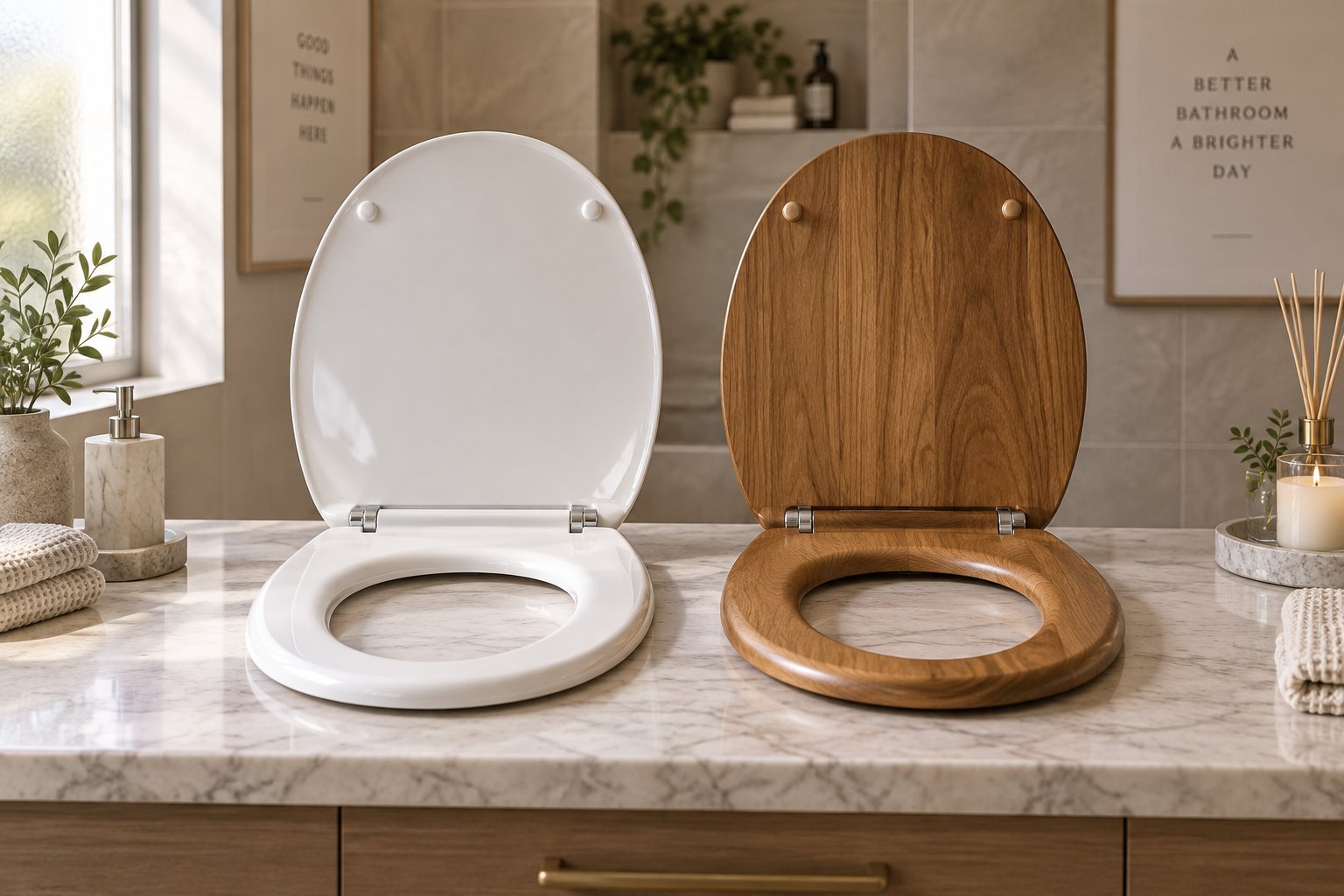
Here's what most buyers don't realize: a "wood toilet seat" is rarely solid wood. The vast majority of wooden toilet seats sold at major retailers are molded wood composite — think MDF or engineered wood particles — coated with a glossy enamel finish. That finish looks great on day one, but it's not the same as sitting on a piece of oak. On the flip side, calling all plastic seats "cheap" ignores the fact that modern plastic subtypes range from basic injection-molded thermoplastic to premium urea formaldehyde with a ceramic-like density and scratch resistance that outperforms most wooden lavatory seats.
The real picture is far more nuanced than a binary choice. Beyond the broad "wood or plastic" question, there are at least six distinct material subtypes used in toilet seat manufacturing — each with a unique performance profile across comfort, durability, hygiene, and price. Lumping them into two categories is like comparing "cars" to "trucks" without distinguishing a compact sedan from a luxury SUV.
What This Ranked Guide Covers
This guide breaks down and ranks every major toilet seat material so you can match the right one to your bathroom, your budget, and your priorities. Here are the six material types we evaluate head to head:
- Polypropylene (PP) — the modern plastic all-rounder
- Urea Formaldehyde (UF) — the premium, ceramic-feel option
- Thermoset Plastic — the reliable mid-range contender
- Enameled Wood (Composite) — the classic look with hidden trade-offs
- Solid Hardwood and Natural Materials — oak, bamboo, and cork
- Thermoplastic — the budget-friendly baseline
Each material is scored across seven criteria that actually affect your experience: comfort and temperature feel, durability, hygiene and bacterial resistance, aesthetics, price and long-term value, weight capacity, and environmental impact. The result is a ranked comparison designed to cut through the noise and help you pick a seat that performs — not just one that looks good in the store.
The ranking methodology and scoring criteria themselves deserve a closer look, because the way you weigh these factors changes the answer entirely.
How We Evaluated and Ranked Each Material
Choosing between a wood or plastic toilet seat feels straightforward — until you realize that "comfortable" means something different to someone in Minnesota than to someone in Miami, and that "durable" depends entirely on whether two adults or a family of five are using the bathroom. A fair comparison demands consistent criteria applied to every material the same way. That's exactly how this guide is structured.
Seven Criteria That Actually Matter
Every wooden seat toilet, plastic seat, and hybrid material in this guide is scored against the same seven performance factors. Here's what we measured and why each one matters:
- Comfort and Temperature Feel — Wood naturally feels warmer in cold weather, while most plastics feel noticeably cool to the touch. For many buyers, this tactile difference is the single biggest reason they lean one way or the other.
- Durability and Lifespan — How long does the seat hold up under typical residential use? This accounts for scratch resistance, resistance to cracking, and how well the finish endures years of cleaning products and daily wear.
- Hygiene and Bacterial Resistance — The porous versus non-porous surface distinction is critical here. A non-porous material resists moisture absorption and bacterial growth, while a porous or damaged surface can harbor germs no matter how often you clean it.
- Aesthetics and Design Versatility — Does the material come in a range of colors and finishes? Can it match modern, traditional, or transitional bathroom styles?
- Price and Value — Not just the sticker price, but cost per year of useful life. A seat that costs twice as much but lasts four times longer is the better deal.
- Weight Capacity and Sturdiness — This is the overlooked factor. Larger individuals, families with teens, or heavy-use households need a seat that won't flex, shift, or crack under load. Material density and hinge construction both play a role.
- Environmental Sustainability — Is the material recyclable, biodegradable, or made from renewable resources? For eco-conscious buyers, this criterion can tip the scale.
How We Scored Each Material
You'll notice this guide doesn't simply pit "wood" against "plastic" and declare a winner. That kind of broad generalization hides more than it reveals. A wooden toilet seat made from solid oak performs nothing like an enameled MDF composite seat, even though both get labeled "wood." Similarly, a premium urea formaldehyde seat and a basic thermoplastic seat are both technically plastic — yet they differ in weight, durability, and feel as dramatically as plywood differs from mahogany.
That's why we evaluate at the subtype level. Each of the six materials receives a relative ranking across all seven criteria, producing a clear performance profile you can match to your specific situation. Whether you prioritize hygiene, aesthetics, budget, or weight capacity, the scoring highlights which material actually delivers — and which ones just look the part.
With the framework in place, the rankings start where the data points most strongly: the material that delivers the best all-around balance for the widest range of buyers.
Polypropylene (PP) Seats
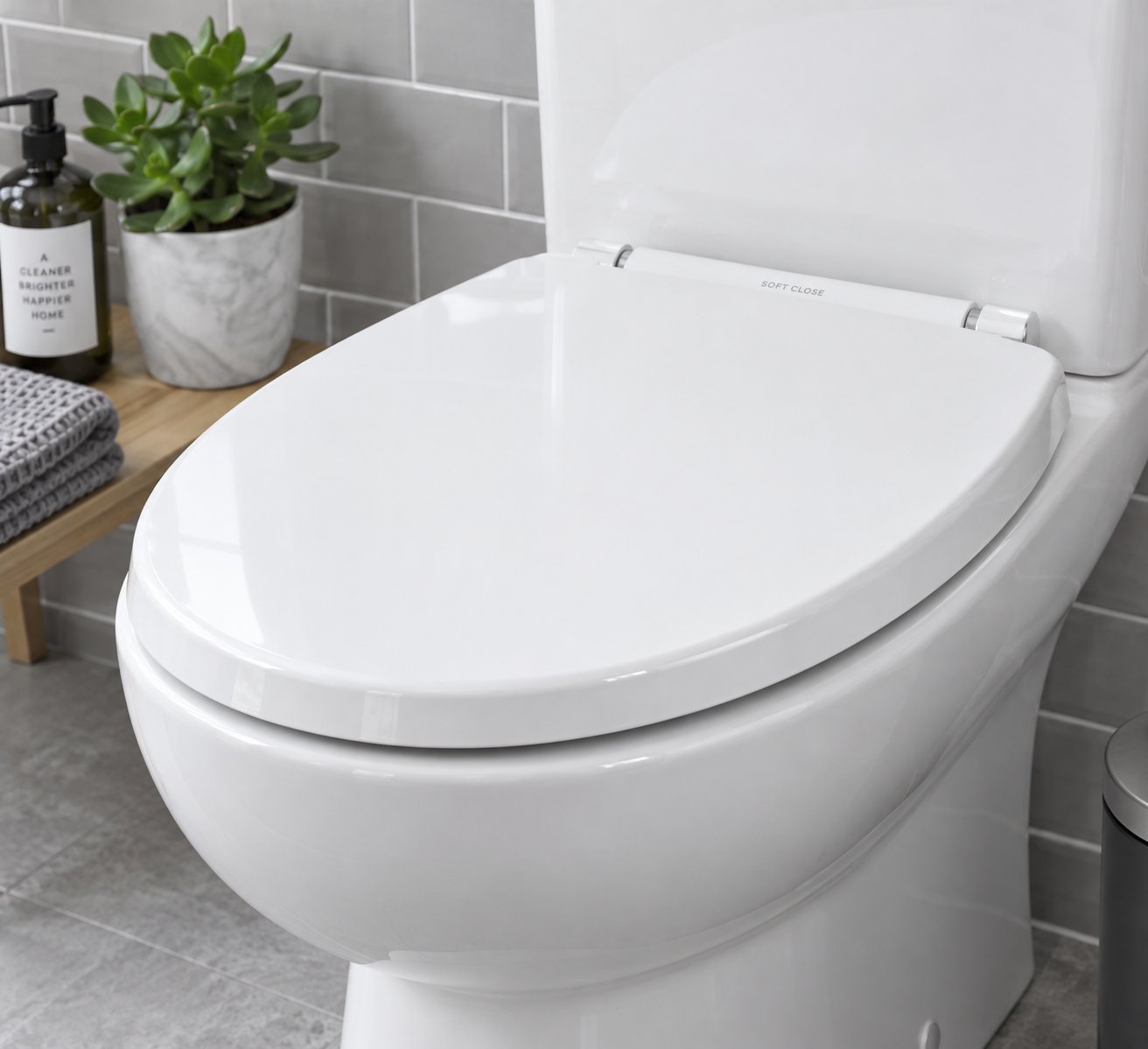
Polypropylene — commonly abbreviated as PP — claims the top spot in our ranking, and the reasons go well beyond price. If you've ever dismissed plastic toilet seats as flimsy or cheap-looking, you're likely picturing the wrong subtype. PP is the same polymer trusted in food-grade containers, medical devices, and automotive components. When engineered specifically for toilet seat manufacturing, it delivers a combination of hygiene, durability, comfort, and value that neither a wooden toilet seat nor a basic thermoplastic can match.
The critical distinction here: not all plastic seats are created equal. Polypropylene is a specific resin with performance characteristics that separate it from generic injection-molded plastics. Understanding those characteristics explains why PP consistently outscores an enameled wood toilet seat and even rivals premium materials across most evaluation criteria.
Why PP Tops Our Ranking
Imagine picking up two toilet seats at the hardware store — one labeled "plastic" and the other "wood." Without knowing the subtypes, you're essentially guessing. PP eliminates that guesswork by scoring well across all seven criteria simultaneously, rather than excelling in one area while failing in another.
Hygiene and bacterial resistance stand out as PP's strongest advantage. The material's non-porous surface means moisture, bacteria, and odors have nowhere to hide. Unlike a wooden commode seat — where enamel chips can expose porous wood fiber to moisture infiltration — a PP seat maintains its sealed surface integrity throughout its lifespan. A quick wipe with a standard bathroom cleaner is all it takes to keep it sanitary. Industry testing from toilet seat manufacturers has shown that virgin polypropylene resists water and humidity exceptionally well, making it an ideal material for wet bathroom environments.
Comfort and temperature represent PP's one genuine trade-off. Plastic seats feel cooler to the touch than wood in cold weather — that's physics, not a manufacturing flaw. However, PP warms to body temperature within seconds of contact, and many users in moderate climates find the difference negligible compared to the hygiene and longevity benefits.
Design versatility is another area where PP quietly outperforms wood options. PP seats are available in a wide range of colors, finishes, and shapes — round, elongated, D-shaped, and square profiles — giving homeowners far more flexibility to match specific bathroom aesthetics. A wooden toilet in a classic white finish offers one look. A PP seat can replicate that same white, or branch into matte blacks, soft grays, and custom tones that wood simply can't deliver without heavy paint coatings that eventually chip.
Weight capacity and sturdiness surprise many first-time buyers. Despite being lightweight and easy to install, quality PP seats provide solid structural integrity under load. The material's inherent flexibility actually works in its favor — it absorbs stress rather than cracking under pressure the way rigid but brittle materials can. For families or heavier-use households, this resilience translates to a longer functional lifespan.
Environmental sustainability adds a meaningful edge. PP is one of the most widely recycled plastics globally, and some manufacturers now incorporate recycled PP into their production runs. While it doesn't match bamboo's renewable profile, PP's recyclability puts it well ahead of thermoset plastics and enameled wood composites that typically end up in landfills.
Price and value seal the deal. PP seats occupy a mid-range price point, yet their durability and low maintenance needs deliver a cost-per-year figure that undercuts nearly every alternative. And when paired with modern soft-close dampers and quick-release hinge systems, a well-made PP seat feels anything but budget. That combination of a whisper-quiet close, tool-free removal for cleaning, and years of consistent performance turns a mid-priced product into a premium daily experience.
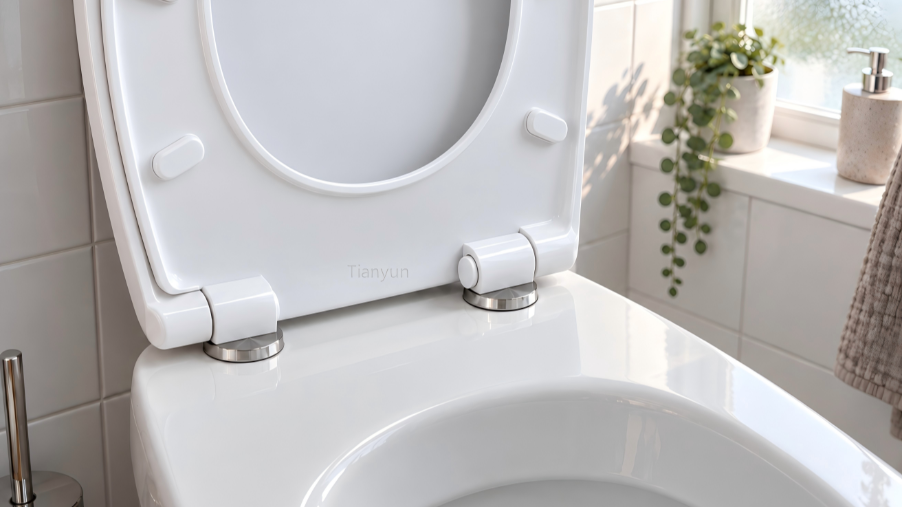
This is exactly why manufacturers increasingly build PP seats as integrated systems rather than standalone components. For example, Tianyun's PP seat covers are designed as production-ready programs for sanitaryware brands and OEM manufacturers, pairing each seat with matched dampers, hinges, and fixing hardware. That systems-level approach — where the seat material, soft-close mechanism, and mounting components are engineered together — is what separates a modern PP seat from the hollow plastic lids of a decade ago.
PP Seat Pros and Cons
Pros
- Non-porous surface delivers excellent hygiene and resists bacterial growth
- Lightweight yet structurally sound, with good weight capacity under daily use
- Available in the widest range of colors, shapes, and finishes
- Resistant to staining, moisture absorption, and common bathroom chemicals
- Recyclable material with a lower environmental footprint than thermoset or enameled wood
- Compatible with soft-close dampers and quick-release hinges for a premium feel
- Mid-range price with strong cost-per-year value
Cons
- Feels cooler to the touch than wood in cold climates
- Lower-quality PP seats from some suppliers can scratch or discolor over time — material grade matters significantly
- Lacks the substantial heft that some buyers associate with a premium product
- Does not replicate the natural grain texture or warmth of real hardwood
PP's well-rounded performance profile makes it the default recommendation for most households. But for buyers who want that heavier, ceramic-like feel without sacrificing any of PP's hygiene advantages, there's a premium-tier material that bridges the gap between the weight of wood and the cleanliness of plastic.
Urea Formaldehyde (UF) Seats
Pick up a quality UF toilet seat and the first thing you'll notice is its weight. It feels dense, substantial — closer to ceramic than anything you'd instinctively call "plastic." That's the defining characteristic of urea formaldehyde, and it's precisely why this material has become the premium-tier answer to the plastic or wood toilet seat debate. UF delivers the tactile heft and visual refinement that wooden toilet seat fans crave, while maintaining the fully sealed, non-porous surface that makes plastic the hygienic favorite.
So what exactly is UF? Unlike thermoplastics that soften when heated, urea formaldehyde is a thermoset resin. During manufacturing, the material undergoes an irreversible chemical curing process that locks its molecular structure into a rigid, stone-hard state. The result is a toilet seat wood enthusiasts appreciate for its weight and solidity, yet one that never absorbs a single drop of moisture. Think of it as the material that erases the compromise — you no longer have to choose between the feel of wood and the cleanliness of plastic.
What Makes UF a Premium Choice
The question of whether a wood or plastic toilet seat is better assumes you have to sacrifice something either way. Wood feels warm and substantial but chips, absorbs moisture, and harbors bacteria once the enamel degrades. Standard plastics stay hygienic but feel lightweight and, to some buyers, insubstantial. UF sidesteps both trade-offs by occupying a unique middle ground.
Ceramic-like surface finish. UF seats have a smooth, glossy surface that looks and feels remarkably similar to glazed porcelain. This finish isn't a coating applied over a base material — it's integral to the resin itself. There's no enamel layer to chip, no paint to peel, and no porous substrate hiding underneath. The surface you see on day one is the same surface five years later, which is a durability advantage that enameled wood composite seats simply cannot match.
Exceptional scratch and stain resistance. Daily use, cleaning chemicals, belt buckles scraping against the lid — these are the small aggressions that degrade lesser materials over time. UF's hardness rating exceeds that of both polypropylene and thermoplastic, meaning it resists surface scratches that would mar softer seats. Even more impressive is its color stability. Where many plastic seats gradually yellow under UV exposure and enameled wood finishes dull with age, UF maintains its original color tone year after year. Industry comparisons confirm that UV-induced yellowing is a known weakness in lower-grade plastics, a problem UF largely avoids thanks to its thermoset chemistry.
Superior weight capacity and structural rigidity. This is where UF genuinely outperforms every other material on our list. The density that gives UF its premium feel also gives it outstanding load-bearing strength. For larger individuals, multi-user households, or commercial settings where seats endure heavy daily traffic, UF provides a level of structural confidence that lightweight thermoplastic and even standard PP cannot replicate. There's no flex, no creak, no sense that the seat is yielding under pressure — just solid, stable support.
Comfort and temperature. UF's thermal profile sits between wood and standard plastic. It feels cool-to-warm at initial contact rather than ice-cold, and its mass allows it to absorb and retain body heat faster than thinner plastic seats. It won't match the instant warmth of solid oak, but it avoids the sharp cold shock that drives many buyers away from plastic in the first place. For those debating whether a wood or plastic toilet seat is better purely on comfort grounds, UF offers a compelling third path.
Hygiene that never degrades. Because UF is non-porous throughout — not just on the surface — it delivers the same bacterial resistance as PP with an even harder, more scratch-proof exterior. Scratches on softer plastics can eventually harbor bacteria in microscopic grooves, but UF's surface hardness minimizes that risk over its entire lifespan. A simple wipe-down with any standard bathroom cleaner keeps it fully sanitary.
The one genuine trade-off is price. UF toilet seats typically cost more than PP, thermoset, or thermoplastic alternatives, and considerably more than enameled wood composite seats. However, when you factor in the extended lifespan, zero-maintenance finish, and resistance to the kind of degradation that forces premature replacement of cheaper seats, the cost-per-year calculation often favors UF — especially in primary bathrooms that see heavy daily use.
OEM manufacturers have increasingly recognized this value proposition, which is why UF production programs now routinely integrate soft-close damper technology and precision hinge systems directly into the seat design. Tianyun's UF seat covers, for instance, are built as part of a complete component system — each seat paired with compatible dampers, hinges, and fixing hardware engineered for both round and elongated bowl shapes. This integrated approach allows sanitaryware brands to offer a tiered product lineup, with PP seats covering the value segment and UF seats anchoring the premium tier, all sourced from a single supplier with consistent quality and component compatibility.
UF Seat Pros and Cons
Pros
- Dense, substantial weight delivers a premium feel that rivals solid wood and ceramic
- Completely non-porous — resists moisture, bacteria, and odor absorption permanently
- Industry-leading scratch resistance protects against daily wear and cleaning abrasion
- Exceptional color stability with strong resistance to UV yellowing and staining
- Highest weight capacity and structural rigidity of any toilet seat material
- Smooth, glossy finish requires no resealing, recoating, or special maintenance
- Pairs seamlessly with soft-close and quick-release hinge systems for a refined user experience
Cons
- Higher upfront cost than PP, thermoset, thermoplastic, and enameled wood options
- Heavier weight makes installation slightly more involved, particularly for wall-hung or specialty toilets
- Fewer color and finish options compared to the broad palette available in PP
- Cannot be remolded or recycled as easily as thermoplastics, limiting end-of-life sustainability
UF and PP together cover the premium and value ends of the plastic spectrum with clear strengths at each price point. Between them, though, sits a third plastic subtype that millions of homeowners encounter every day without ever knowing its name — the thermoset seat that lines the shelves of nearly every major home improvement retailer.
Thermoset Plastic Seats
Walk into any major home improvement store, pick up a toilet seat that feels noticeably heavier and more solid than the cheapest option on the shelf, and there's a strong chance you're holding a thermoset seat. This is the material behind many popular branded models — including seats like the Bemis Weston round soft close enameled wood toilet seat's thermoset counterparts — yet most buyers never learn its name. They just know it feels "better" than the lightweight alternative beside it. That instinct is correct, and the chemistry behind it explains why thermoset earns a solid mid-range position in the plastic versus wood toilet seat debate.
Where Thermoset Fits in the Lineup
Sounds technical? The concept is actually straightforward. All plastics fall into one of two broad families: thermoplastics and thermosets. Thermoplastics — the budget category we'll cover later — can be reheated and reshaped after molding. Thermoset plastics undergo a permanent chemical hardening process during manufacturing. Once cured, the material's molecular structure locks into place. It can't be melted down and remolded, which is a limitation for recycling but a genuine advantage for durability.
That irreversible curing process is what gives thermoset seats their defining qualities. The finished product is harder, denser, and more scratch-resistant than thermoplastic. Pick up a basic thermoplastic seat in one hand and a thermoset seat in the other, and you'll immediately notice the difference in weight and rigidity. The thermoset seat feels substantial — not as dense as a UF seat, but far more reassuring than the hollow lightness of entry-level plastic.
Think of thermoset as the sensible middle ground. It doesn't reach the ceramic-like hardness or premium heft of urea formaldehyde, and it won't deliver the warmth of a wood toilet. What it does offer is a dependable balance of performance across every criterion at a price that sits comfortably between budget thermoplastic and premium UF. For homeowners who want more than the bare minimum without paying for the absolute top tier, thermoset is the logical landing spot.
Hygiene is one area where thermoset performs on par with its more expensive plastic relatives. The surface is fully non-porous, meaning bacteria, moisture, and odors can't penetrate or accumulate the way they do on a chipped enameled wood surface. Duroplast-class thermoset seats have been noted for their germ-inhibiting molecular properties, making them a strong choice for households where cleanliness is a top priority. A standard bathroom cleaner and a soft cloth are all you need for routine maintenance — no special products, no periodic resealing.
Scratch resistance is respectable, though not quite at UF's level. Thermoset seats handle daily wear, casual contact with cleaning brushes, and the minor bumps of everyday life without showing marks. However, a sharp impact — dropping a heavy glass jar or a metal fixture onto the seat — can cause chipping or cracking. This is the material's primary vulnerability. Unlike thermoplastic, which tends to flex and warp under stress, thermoset is rigid enough that sudden point-force impacts can fracture the surface rather than dent it.
Compatibility is another practical strength worth noting. Thermoset seats are widely manufactured in both round and elongated profiles, and they work with virtually every hinge type on the market — standard top-fix, bottom-fix, soft-close dampers, and quick-release mechanisms. If you're replacing an existing seat and want a material upgrade without worrying about fitting complications, thermoset is about as plug-and-play as it gets.
Aesthetics and color options are solid without being exceptional. Most thermoset seats are available in classic white, almond, bone, and a handful of other standard bathroom tones. You won't find the broad color palette that PP offers, but for buyers who simply want a clean, well-finished seat that matches a white porcelain bowl, the selection is more than adequate. The surface finish carries a subtle gloss that looks polished without being flashy — a look that works equally well in modern and traditional bathrooms.
The environmental trade-off is the one area where thermoset lags behind. Because its chemical curing process is irreversible, thermoset plastic cannot be remelted and recycled the way polypropylene or other thermoplastics can. At end of life, most thermoset seats end up in landfills. For eco-conscious buyers, this is a meaningful consideration — and one reason PP or natural materials may be preferable despite thermoset's otherwise strong performance.
Thermoset Pros and Cons
Pros
- Harder and more scratch-resistant than thermoplastic, with a noticeably solid feel
- Non-porous surface resists bacteria, moisture, and staining effectively
- Moderate weight provides a reassuring, quality impression without being cumbersome
- Compatible with round and elongated bowl shapes and most hinge systems
- Widely available at major retailers, making replacement and sourcing easy
- Mid-range price delivers a meaningful upgrade over budget plastics
Cons
- Can chip or crack under sharp point-force impacts — rigid rather than flexible under stress
- Cannot be recycled or remolded, limiting environmental sustainability
- Lacks the premium density and ceramic-like finish of UF seats
- Narrower color and finish selection compared to polypropylene options
- Feels cool to the touch in cold weather, similar to other plastic subtypes
Thermoset covers the practical middle of the plastic spectrum with few surprises and no glaring weaknesses. Yet for all the advantages that modern plastics bring to hygiene and durability, millions of homeowners still reach for the seat with the glossy painted finish and the familiar warmth of what they believe is real wood — a choice that carries a hidden catch worth examining closely.
Enameled Wood Seats
There's a reason enameled wood remains the best-selling "wood" toilet seat category in North America. Sit down on one in winter and you'll feel the difference instantly — a subtle warmth that no plastic subtype, not even dense UF, can fully replicate. That warm-to-the-touch comfort, paired with a glossy finish that evokes a traditional bathroom aesthetic, is enough to keep millions of homeowners loyal to this material year after year. But loyalty and performance are two different things, and the story behind what's actually inside that glossy shell deserves a closer look.
The Truth About Enameled Wood Construction
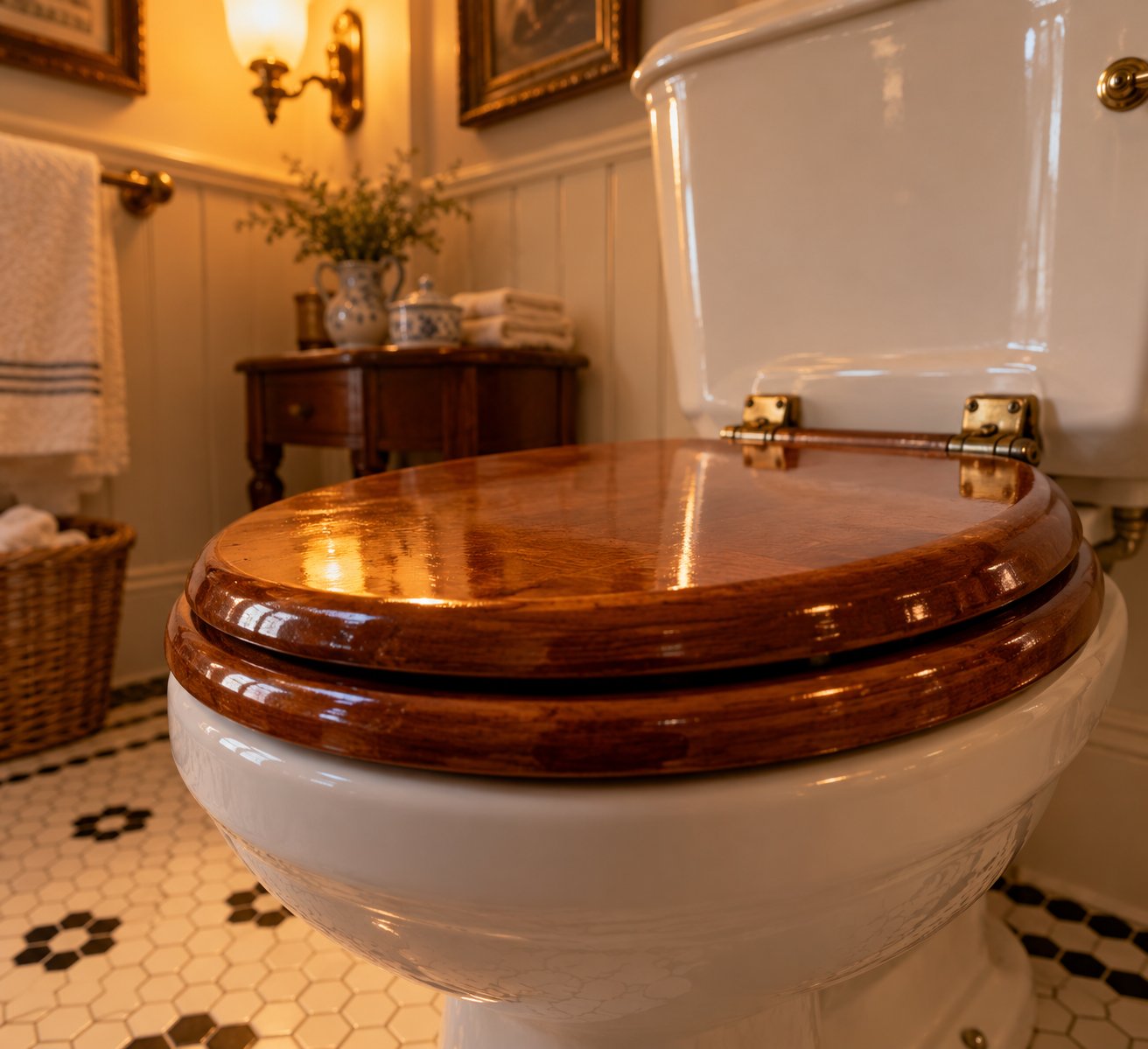
Here's the critical misconception: when you buy a toilet with wood seat labeled "enameled wood," you're almost certainly not getting solid wood. The vast majority of enameled wood toilet seats are made from molded wood composite — MDF (medium-density fiberboard) or engineered wood particles compressed into shape and then coated with a thick layer of enamel paint. That enamel layer is what gives the seat its smooth, shiny appearance and its initial water resistance. Underneath, though, the core material is essentially densely packed wood fiber — porous, moisture-sensitive, and vulnerable the moment that protective shell is compromised.
Why does this matter? Because enamel doesn't last forever. In a bathroom environment — where humidity runs high, water splashes are constant, and cleaning chemicals are applied regularly — that glossy coating is under daily assault. The degradation rarely happens across the entire seat surface at once. Instead, it targets specific weak points, and those weak points are almost always the hinge mounting areas.
Picture the bolt holes where the seat attaches to the toilet bowl. Every time someone lifts or lowers the lid, micro-stresses ripple through the enamel around those mounting points. Over time — typically within two to four years of regular household use — tiny cracks and chips appear in the enamel at the hinges. Once that seal is broken, moisture begins infiltrating the wood composite core. The result is a predictable cascade: the composite absorbs water, swells unevenly, and the surrounding enamel starts to peel and flake away in expanding patches. What began as a hairline crack around a bolt hole becomes a visibly damaged, roughened surface that no amount of cleaning can restore.
Enameled Wood Pros and Cons
A fair wood toilet seat vs plastic comparison requires acknowledging enameled wood's genuine strengths alongside its structural vulnerabilities. This material doesn't fail across the board — it excels in specific areas that matter deeply to certain buyers.
Pros
- Warm to the touch — noticeably more comfortable than any plastic seat in cold-weather climates
- Classic, glossy aesthetic that complements traditional, colonial, and vintage bathroom designs
- Moderate weight provides a solid, substantial feel during daily use
- Widely available at virtually every home improvement retailer and hardware store
- Lower upfront price point than UF and comparable to mid-range thermoset options
- Familiar material that many homeowners prefer based on years of personal experience
Cons
- Core material is porous wood composite, not solid wood — vulnerable once enamel is breached
- Enamel coating chips and peels over time, especially around hinge bolt holes and seat edges
- Moisture infiltration causes swelling, warping, and permanent structural damage to the composite core
- Exposed wood fiber becomes a breeding ground for bacteria, mold, and unpleasant odors
- Limited color and design range compared to PP — mostly white, almond, and a few standard tones
- Heavier than PP and thermoplastic, adding stress to mounting hardware and hinges
- Not recyclable in most municipal programs due to the composite-plus-paint construction
When Enameled Wood Makes Sense
Does all of this mean you should never buy an enameled wood seat? Not necessarily. The material's weaknesses are time-dependent and usage-dependent — two variables that change dramatically based on where the seat is installed.
A guest bathroom that sees light traffic a few times per week puts far less stress on hinge mounting points and exposes the enamel to far less moisture than a primary family bathroom used multiple times daily. In that low-use context, an enameled wood seat can maintain its finish and structural integrity for years. The warmth, the familiar feel, and the traditional look all remain intact when the seat isn't subjected to heavy daily wear. Similarly, if you're staging a home for sale and want the classic, polished appearance of wood toilets without committing to a premium material, an enameled wood seat delivers the right visual impression at a reasonable cost.
The problems emerge in high-traffic primary bathrooms — the ones used by families with children, multiple adults, or anyone who cleans the bathroom frequently with chemical sprays. In those environments, the enamel timeline accelerates. Hinge areas degrade faster, moisture intrusion compounds more quickly, and the hygiene concerns become real rather than theoretical. For these situations, a non-porous material like PP or UF eliminates the degradation cycle entirely, because there's no hidden porous layer waiting to be exposed.
Enameled wood occupies a specific niche: it's the right choice for the right bathroom, but the wrong choice when treated as a universal default. The buyers most likely to be disappointed are the ones who install it in their busiest bathroom and expect it to perform like the non-porous alternatives ranked above it.
Of course, enameled wood composite isn't the only wood option on the market. For homeowners drawn to natural materials and willing to invest in genuine craftsmanship, solid hardwood, bamboo, and even cork toilet seats offer an entirely different proposition — one built on real wood rather than painted particle board, but with its own set of demands.
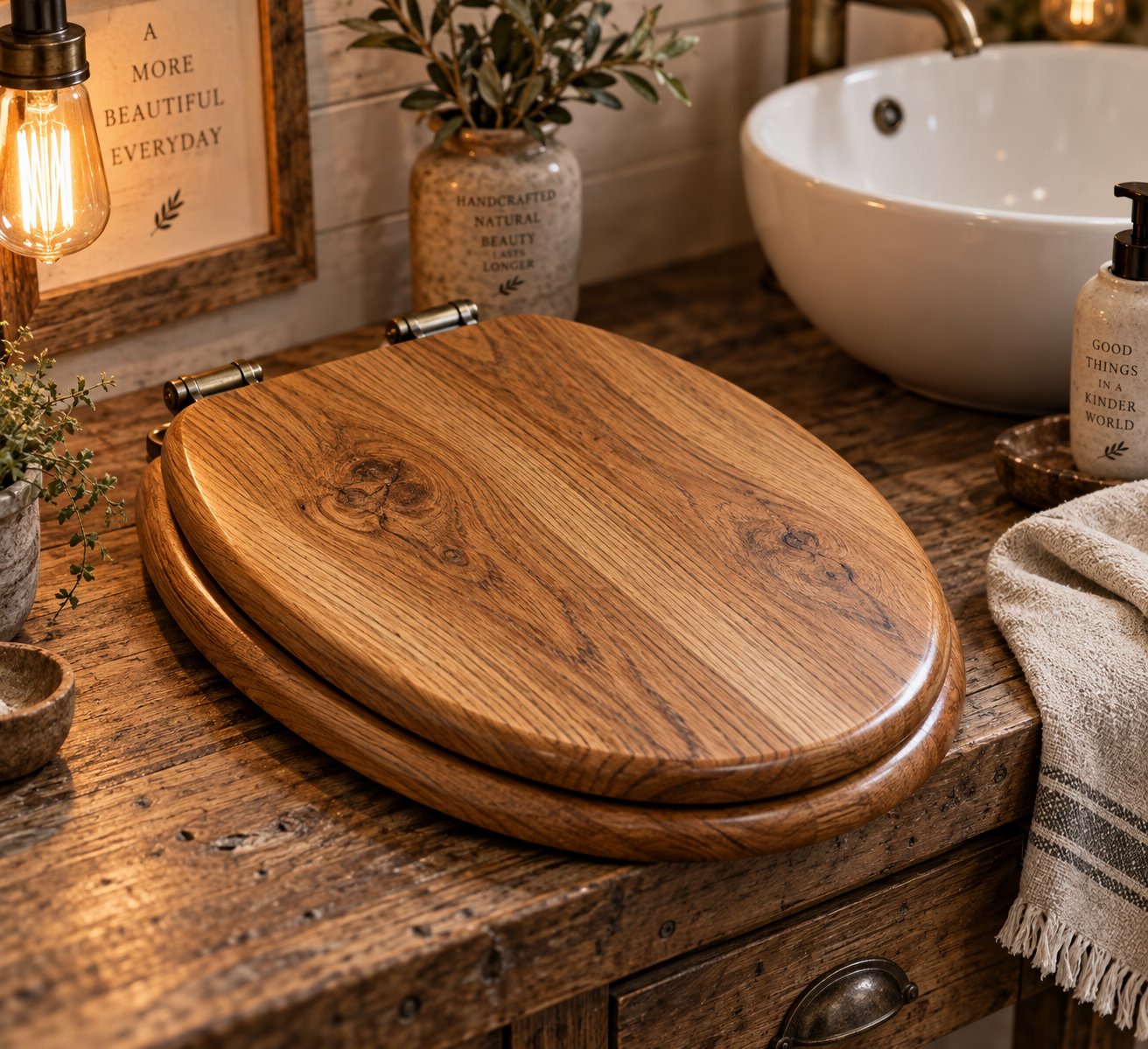
Solid Hardwood and Natural Material Seats
Strip away the enamel, the composite core, and the factory paint, and what's left is the real thing — genuine solid wood. For a certain type of homeowner, no amount of plastic engineering can replace the look and feel of actual hardwood grain under their fingertips. Solid hardwood toilet seats, along with niche natural alternatives like bamboo and cork, occupy the far end of the material spectrum: the most visually striking, the most environmentally responsible, and the most demanding when it comes to upkeep.
So what are toilet seats made of when they claim to be "real wood"? Unlike the enameled composite seats that dominate retail shelves, genuine solid hardwood seats are carved or shaped from a single piece of timber — or from thick, laminated hardwood panels — then sealed with polyurethane, lacquer, or marine-grade varnish to create a moisture barrier. The result is a seat that weighs noticeably more than any plastic alternative, feels warm immediately on contact, and carries the kind of natural character that engineered materials can only attempt to imitate.
These are niche products. You won't find them stacked in the aisle at your local big-box store. Most solid wood seats are sourced from specialty bathroom suppliers, artisan woodworkers, or European manufacturers who cater to the premium residential market. That limited availability — combined with a price tag that runs two to three times higher than standard plastic or enameled wood options — keeps solid hardwood firmly in the enthusiast category rather than the mainstream. But for buyers who prioritize natural aesthetics and are willing to invest the care these seats require, the experience is genuinely different from anything else in the types of toilet seats available.
Oak, Bamboo, and Cork Options Compared
Oak is the most widely available solid wood option and the benchmark for the category. An oak toilet seat typically weighs between two and three kilograms — roughly double the weight of a standard PP seat — and that heft translates directly into stability. There's no flex, no wobble, and no hollow feel when you sit down. The natural grain pattern, whether left in a light honey tone or stained darker, adds a warmth and visual depth to bathrooms designed around rustic, farmhouse, or traditional aesthetics. Oak pairs naturally with brass or bronze hardware, pedestal sinks, and classic tilework.
The trade-off is maintenance. Oak's protective varnish or polyurethane coating needs to remain intact to keep moisture out of the wood fibers. In a high-humidity bathroom, that seal faces constant pressure. Durability estimates suggest that high-quality solid wood seats can last ten or more years in optimal conditions, but that lifespan drops to five to eight years in humid environments where the finish degrades faster. Periodic resealing — typically every one to two years — is the price of admission for keeping an oak seat looking and performing at its best.
Bamboo offers a more sustainable twist on the natural material concept. Technically a grass rather than a hardwood, bamboo grows to harvest maturity in three to five years compared to the decades required for oak. That rapid renewability gives bamboo the strongest environmental profile of any toilet seat material on this list. It also carries natural antimicrobial properties — bamboo fibers contain a bio-agent called "bamboo kun" that inhibits bacterial growth on the surface, a meaningful advantage in a bathroom setting.
In practice, though, bamboo toilet seats remain a limited-availability product. Fewer manufacturers produce them, color and finish options are narrow, and the laminated bamboo panels used in seat construction can be susceptible to delamination if the adhesive or sealant breaks down in persistently wet conditions. When you find a well-made bamboo seat from a reputable source, it's an excellent choice for eco-minded buyers. The challenge is finding one.
Cork is the most uncommon option of the three, but it deserves mention for its unique properties. Cork is naturally warm, naturally cushioned, and naturally water-resistant at the cellular level — each cork cell contains trapped air, creating a built-in insulation layer that feels soft and temperate against skin. It's also biodegradable, harvested without killing the cork oak tree, and antimicrobial. As a toilet seat material, cork delivers an unusual combination of comfort and eco-friendliness that no other material replicates. The practical limitations are significant, however: cork seats are produced by only a handful of specialty makers, they scratch and dent more easily than hardwood, and long-term durability data in bathroom environments is scarce simply because so few are in use.
Solid Wood Pros and Cons
Pros
- Warmest surface feel of any toilet seat material — eliminates cold-weather discomfort entirely
- Natural wood grain delivers unmatched aesthetic character for rustic, farmhouse, and traditional bathrooms
- Substantial weight provides excellent stability and a premium, reassuring feel
- High weight capacity — solid hardwood construction handles heavy daily use without flexing
- Strongest environmental profile: biodegradable, renewable (especially bamboo), and free of synthetic resins
- Cork and bamboo subtypes offer natural antimicrobial properties
Cons
- Requires periodic resealing or revarnishing every one to two years to maintain moisture protection
- Higher maintenance than any plastic option — pH-neutral cleaners only, immediate drying after cleaning
- Premium pricing: typically two to three times the cost of PP, thermoset, or enameled wood seats
- Damaged finish exposes porous wood to moisture, bacteria, and potential mold growth
- Heaviest option on the market, which adds stress to hinge hardware over time
- Limited retail availability — most solid wood, bamboo, and cork seats require specialty sourcing
- Bamboo and cork options carry limited long-term durability data due to small market presence
The plastic vs wood toilet seat conversation ultimately comes down to what you're willing to maintain. Solid hardwood and natural material seats reward attentive owners with warmth, beauty, and environmental integrity that no synthetic can match. They punish neglect with swelling, bacterial infiltration, and a shortened lifespan. For the right buyer in the right bathroom, that trade-off is absolutely worth it — but it's a trade-off that should be made with eyes open, not discovered after the varnish starts to peel.
There's one more material left to evaluate: the entry-level option that fills the opposite end of the spectrum from these handcrafted natural seats, offering maximum affordability at the cost of nearly everything else.
Thermoplastic Seats
Every material spectrum has a baseline, and for toilet seats, that baseline is thermoplastic. You've almost certainly sat on one — it's the lightweight, slightly hollow-feeling seat that comes pre-installed on many builder-grade toilets and fills the lowest price tier at hardware stores and big-box retailers. If you've ever wondered whether wood or plastic toilet seats are better and picked up the cheapest plastic seat toilet option on the shelf, you were holding thermoplastic.
Does "cheapest" automatically mean "worst"? Not exactly. Thermoplastic has a legitimate role to play — but only when you understand what it is, where it falls short, and which situations genuinely call for it rather than a more durable alternative.
The defining feature of thermoplastic is right in the name: it's a plastic that responds to heat. Unlike thermoset or UF seats, which undergo irreversible chemical hardening during manufacturing, thermoplastic retains the ability to soften and reshape when exposed to elevated temperatures. That property makes it easy and inexpensive to injection-mold into virtually any shape, color, or size — which is why manufacturers can produce thermoplastic seats at a fraction of the cost of denser materials. It also explains why thermoplastic seats are available in the widest color range of any material on this list, from standard whites and almonds to bold blues, greens, blacks, and even patterned designs. Both round and elongated profiles are readily stocked.
The catch? That same heat sensitivity works against the seat over time. Bathrooms aren't climate-controlled vaults. Radiant heat from sunlight through a window, warm steam from a nearby shower, or even a consistently heated bathroom floor can gradually soften thermoplastic at a molecular level. The result is subtle warping — the seat may develop a slight bow, the lid may stop sitting perfectly flat, or the hinge mounting points may loosen as the surrounding material loses its original rigidity. None of this happens overnight, but after a year or two of daily use in a warm, humid bathroom, the difference between a thermoplastic seat and a thermoset or PP seat becomes impossible to ignore.
Scratch resistance is another area where thermoplastic trails the field. The material's softer surface picks up scratches more easily than any of the harder plastic subtypes. Cleaning with an abrasive sponge, setting a toiletry bottle down on the lid, or even regular contact with clothing hardware can leave fine marks over time. And those scratches aren't just cosmetic. On a non-porous surface, bacteria have nowhere to colonize — but once that surface is scored with microscopic grooves, the best toilet seat material advantage that plastic holds over wood starts to erode. Bacteria can settle into scratches where a flat wipe-down can't reach, gradually turning a hygienic surface into a less sanitary one.
Weight capacity is the most tangible limitation you'll feel during use. Thermoplastic seats are the lightest option on the market, and that low mass translates directly to reduced sturdiness. Sit down on a thermoplastic seat and you may notice a slight flex — a subtle bowing or give under body weight that heavier materials like UF, thermoset, or even enameled wood simply don't exhibit. For average-weight adults using the seat casually, this flex is a minor annoyance at most. For larger individuals or households where the seat supports heavier loads daily, that flexing accelerates fatigue in the material and the hinge hardware, shortening the seat's functional lifespan and increasing the likelihood of cracking or hinge failure.
Best Use Cases for Thermoplastic
None of these drawbacks make thermoplastic a bad product — they make it a situational one. When you match thermoplastic to the right context, its weaknesses become irrelevant and its low cost becomes a genuine advantage:
- Rental properties. If you're a landlord furnishing multiple units, thermoplastic's rock-bottom price makes it the most economical choice for seats that tenants may damage or that you plan to replace between leases. Spending three to four times more on a UF seat for a unit that turns over every twelve months doesn't pencil out.
- Secondary and guest bathrooms. A half-bath that gets used a few times a week by visitors doesn't generate the wear, moisture exposure, or weight stress that degrades thermoplastic. In low-traffic settings, these seats can last years without visible decline.
- Budget renovations and temporary solutions. Updating a bathroom on a tight timeline or limited budget? Thermoplastic fills the gap immediately and affordably while you allocate funds to higher-impact upgrades like tile, fixtures, or vanities. It's the placeholder seat — and there's nothing wrong with using it that way.
- Children's bathrooms. Young children are hard on fixtures. A seat that costs a fraction of the alternatives and can be replaced without hesitation when it gets stained, scratched, or cracked takes the stress out of potty-training years.
The common thread in all of these scenarios is replaceability. Thermoplastic works best when you treat it as a consumable rather than a long-term fixture — an item you expect to swap out every few years rather than one you install once and forget about.
Thermoplastic Pros and Cons
Pros
- Lowest price point of any toilet seat material — ideal for budget-conscious projects
- Widest color and design selection, including novelty patterns and bold tones
- Available in both round and elongated shapes at virtually every retailer
- Non-porous surface provides baseline hygiene when the surface is undamaged
- Extremely lightweight, making installation and replacement quick and effortless
- Recyclable — can be remelted and reprocessed, offering better end-of-life sustainability than thermoset
Cons
- Softer surface scratches easily, and scratches can harbor bacteria over time
- Prone to warping and deformation in warm, humid bathroom environments
- Lowest weight capacity — flexes under heavier loads and fatigues faster than denser materials
- Hinge areas are vulnerable to loosening as the surrounding material softens with age
- Shortest expected lifespan of any material reviewed, typically two to four years under regular use
- Thin construction and light weight can feel insubstantial compared to enameled wood, thermoset, PP, or UF
Thermoplastic rounds out the bottom of our six-material ranking — not because it fails to do its job, but because every material above it does that job longer, more comfortably, or more hygienically. It's the right answer to a specific question: "What's the most affordable seat I can install right now?" For every other question — from long-term value to hygiene to comfort — the five materials ranked above it deliver more. With all six materials now profiled individually, the clearest way to see how they stack up is to place them side by side across every criterion that actually shapes your daily experience.
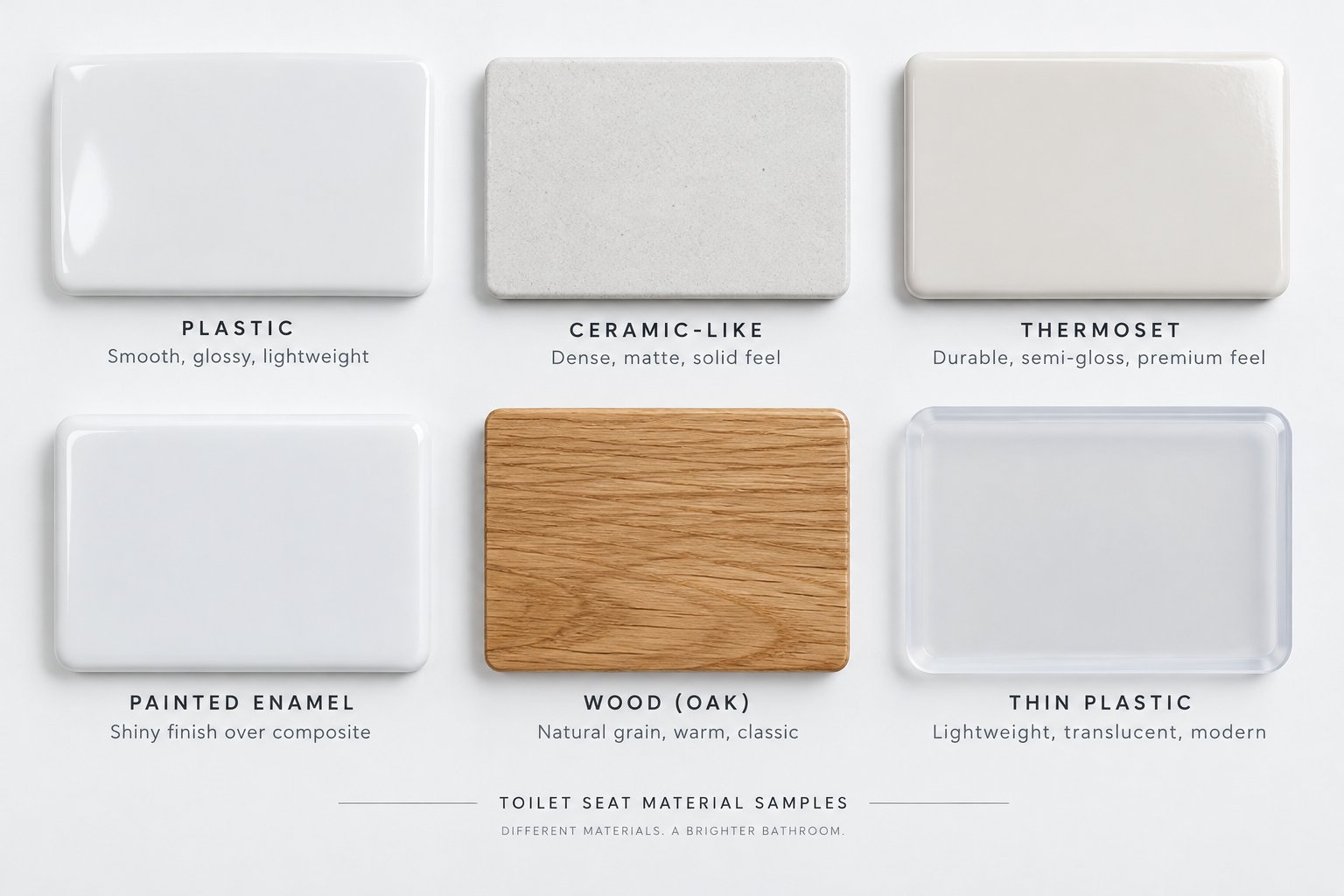
All Six Toilet Seat Materials Compared Side by Side
You've read the individual profiles. You know PP's hygiene strengths, UF's premium density, thermoset's dependable middle ground, enameled wood's warmth-versus-longevity trade-off, solid hardwood's beauty-meets-maintenance proposition, and thermoplastic's budget appeal. But reading six separate reviews and holding all those details in your head at once? That's where the decision gets foggy — and where most buyers default to grabbing whatever's on sale rather than making a choice grounded in actual performance data.
This section eliminates the guesswork. The table below places every material against every evaluation criterion in a single view, so you can scan across the row that matters most to you — whether that's hygiene, weight capacity, or price — and immediately see which toilet seat plastic vs wood option delivers. After the table, you'll find clear category winners and specific scenario recommendations that match materials to real-life situations.
All Six Materials at a Glance
| Criterion | Polypropylene (PP) | Urea Formaldehyde (UF) | Thermoset Plastic | Enameled Wood | Solid Hardwood / Natural | Thermoplastic |
|---|---|---|---|---|---|---|
| Comfort / Temperature | Cool at first touch; warms quickly | Cool-to-warm; retains body heat faster than thinner plastics | Cool at first touch; standard plastic feel | Warm to the touch — best among composites | Warmest of all materials; immediate comfort in cold climates | Cool at first touch; thin construction can feel less comfortable |
| Durability / Lifespan | 5–10 years; resists stains and moisture throughout | 10–15+ years; highest scratch and impact resistance | 5–8 years; hard surface but can chip under sharp impact | 3–5 years in heavy use; enamel degrades around hinges | 5–10+ years with proper maintenance; finish requires periodic resealing | 2–4 years; warps and scratches under regular use |
| Hygiene / Bacterial Resistance | Excellent — fully non-porous; easy to sanitize | Excellent — non-porous with superior scratch-proof surface | Very good — non-porous; scratches less easily than thermoplastic | Good initially; degrades once enamel chips expose porous core | Moderate — depends entirely on intact varnish or sealant | Good when new; scratches accumulate and can harbor bacteria |
| Aesthetics / Design Range | Widest color and shape selection; matte, gloss, and custom tones | Sleek, glossy ceramic-like finish; limited color palette | Standard bathroom tones; subtle gloss finish | Classic glossy enamel look; mostly white and almond | Natural wood grain; unique character per piece; stain options | Wide color range including novelty patterns and bold colors |
| Price Range | Mid-range ($25–$60) | Premium ($50–$120+) | Mid-range ($30–$65) | Budget to mid ($20–$50) | Premium ($60–$200+) | Budget ($10–$30) |
| Weight Capacity / Sturdiness | Good — flexible under stress rather than cracking; solid for most users | Best — densest and most rigid; highest load-bearing confidence | Good — rigid and stable; adequate for most households | Moderate — decent heft but hinge areas weaken as enamel degrades | Very good — heaviest seats with zero flex; strong but stresses hinges | Lowest — noticeable flex under heavier loads; fatigues fastest |
| Installation Compatibility | Universal — fits round, elongated, D-shaped; works with all hinge types | Universal — round and elongated; pairs with soft-close and quick-release | Universal — round and elongated; compatible with most hinge systems | Standard — mostly round and elongated; basic hinge compatibility | Limited — often specialty sizing; may require specific hardware | Universal — both shapes widely stocked; basic hinge hardware included |
| Environmental Impact | Recyclable (PP resin); some recycled-content options available | Not easily recycled; thermoset chemistry limits end-of-life options | Not recyclable; ends up in landfill at end of life | Not recyclable in most programs; composite-plus-paint construction | Biodegradable; bamboo is highly renewable; cork harvested sustainably | Recyclable — can be remelted and reprocessed into new products |
A few patterns jump out immediately. PP and UF dominate the hygiene and durability columns without sacrificing installation flexibility — the two qualities that matter most in a fixture you interact with daily for years. Enameled wood and solid hardwood win on comfort and warmth, but both carry durability asterisks that plastic seats simply don't have. Thermoplastic anchors the budget end, and while its recyclability is a genuine environmental plus, its short lifespan means you may end up buying — and discarding — multiple seats in the time a single PP or UF seat stays in service.
Which Material Wins Each Category
When you isolate each criterion and ask which material performs best in that single dimension, the winners sort themselves cleanly:
- Comfort and Warmth: Solid Hardwood — nothing matches real wood's immediate warmth against skin in cold weather
- Durability and Lifespan: Urea Formaldehyde (UF) — its thermoset chemistry, scratch resistance, and color stability give it the longest functional life of any material
- Hygiene and Bacterial Resistance: PP and UF (tied) — both are fully non-porous with surfaces that resist bacterial colonization throughout their lifespan; UF edges ahead for scratch-proof longevity, PP for ease of cleaning
- Aesthetics and Design Versatility: Polypropylene (PP) — the broadest range of colors, finishes, and shapes gives designers and homeowners the most creative flexibility
- Best Value (Price-to-Performance): Polypropylene (PP) — mid-range cost combined with five-to-ten-year durability delivers the lowest cost per year of use
- Weight Capacity and Sturdiness: Urea Formaldehyde (UF) — the densest, most rigid option with the highest load-bearing confidence
- Installation Compatibility: PP, UF, and Thermoset (three-way tie) — all three work seamlessly with round and elongated bowls, soft-close dampers, and quick-release hinges
- Environmental Sustainability: Bamboo — rapid renewability, biodegradability, and natural antimicrobial properties make it the greenest choice available
Notice a pattern? PP and UF appear in five of the eight categories as either the outright winner or a co-winner. No other material shows up more than twice. That's not a coincidence — it reflects the fundamental advantage of modern engineered plastics over traditional materials in a high-moisture, high-use environment like a bathroom. The materials that resist water, resist bacteria, and resist daily wear without any maintenance simply outperform those that require ongoing protection to stay functional.
Best Material by Scenario
Category winners are useful, but real purchase decisions aren't made in a vacuum. You're not buying a toilet seat for a laboratory — you're buying one for a specific bathroom, used by specific people, with specific priorities. Here's how to match the right material to your actual situation:
- Families with young children: Polypropylene (PP). Kids are messy, heavy-handed, and indifferent to maintenance routines. PP's stain resistance, non-porous hygiene, and low replacement cost make it the most forgiving material for households with young children. If a seat gets damaged during the potty-training years, replacing it is painless.
- Rental properties: Thermoplastic for multi-unit, high-turnover rentals where seats are essentially consumables. For higher-end rental units where tenant expectations are greater, upgrade to PP for a longer replacement cycle and better tenant satisfaction.
- Luxury primary bathrooms: Urea Formaldehyde (UF). The ceramic-like weight, scratch-proof finish, and premium feel elevate the daily experience in a bathroom designed for comfort and longevity. Pair it with a soft-close damper and quick-release hinges, and the seat feels like it belongs in a high-end hotel.
- Budget-conscious renovations: Polypropylene (PP). When every dollar counts, PP delivers the best long-term return. Its durability and zero-maintenance surface mean you spend once and move on, rather than replacing a cheaper seat every two years.
- Accessibility needs and heavier users: Urea Formaldehyde (UF). Its industry-leading weight capacity, structural rigidity, and zero flex under load make it the safest and most comfortable choice for larger individuals or anyone using the seat with mobility aids.
- Eco-minded buyers: Bamboo if availability allows — it's renewable, biodegradable, and naturally antimicrobial. If bamboo isn't available or practical, PP is the next-best environmental option thanks to its recyclability and longer lifespan that reduces total waste.
- Traditional or farmhouse bathrooms (light use): Enameled wood or solid hardwood. When the aesthetic matters more than maximum durability, and the bathroom sees modest daily traffic, wood-based seats deliver a warmth and visual character that plastic cannot replicate. Just plan for periodic maintenance with solid hardwood, and accept a shorter replacement cycle with enameled wood.
- Guest and half bathrooms: Thermoset plastic. It provides a quality feel and solid hygiene without the premium price of UF — perfectly suited for a bathroom that sees occasional use rather than daily heavy traffic.
The right answer depends entirely on which row of that table matters most in your life. A single retiree in Arizona has different priorities than a family of six in Wisconsin — and both have different priorities than a landlord managing twenty units. What stays constant across every scenario is this: the material you choose determines not just how the seat feels on day one, but how it performs, looks, and holds up on day one thousand.
With the full comparison laid out, the final step is translating these rankings into a clear, actionable recommendation — along with the most common mistakes that lead buyers to regret their choice months after installation.
The Final Verdict on Wood vs Plastic Toilet Seats
Six materials. Seven criteria. Dozens of trade-offs. And yet the final verdict on wood vs plastic toilet seats is simpler than the journey to get here might suggest. The best material is the one that matches your bathroom's use pattern, your household's needs, and your tolerance for maintenance — but for the majority of homeowners who just want a seat that stays clean, looks good, and lasts for years without demanding attention, the answer points clearly toward modern engineered plastics rather than traditional wood composites.
Our Top Recommendation for Most Buyers
After ranking every major toilet seat type across comfort, durability, hygiene, aesthetics, price, weight capacity, and environmental impact, two materials consistently outperformed the rest:
Polypropylene (PP) is the best overall value. Its non-porous surface resists bacteria and moisture permanently, it comes in the widest range of colors and shapes, and its mid-range price combined with a five-to-ten-year lifespan delivers the lowest cost per year of any material reviewed. For families, primary bathrooms, and anyone who wants a reliable seat without overthinking the purchase, PP is the answer.
Urea Formaldehyde (UF) is the premium pick. If you want the ceramic-like weight and solidity that wood toilet lid enthusiasts love — without the moisture absorption, enamel degradation, or bacterial risks that come with actual wood — UF delivers that experience with a scratch-proof, color-stable surface that outlasts every alternative. It's the right choice for luxury primary bathrooms, heavier users, and anyone willing to invest more upfront for a seat that performs flawlessly for a decade or longer.
Enameled wood earns a conditional recommendation — specifically for light-use guest bathrooms and traditional-style spaces where warmth and classic aesthetics take priority over long-term durability. In high-traffic primary bathrooms, the enamel degradation cycle makes it a poor long-term investment compared to PP or UF.
For most households, a quality PP seat paired with soft-close hinges offers the best combination of hygiene, durability, comfort, and value. Upgrade to UF for premium bathrooms where weight, density, and scratch resistance matter. Reserve wood-based seats for low-traffic bathrooms where their warmth and traditional aesthetic can shine without the accelerated wear that heavy daily use brings.
Common Mistakes to Avoid When Choosing a Toilet Seat
Knowing which material to buy is only half the equation. The other half is avoiding the errors that lead to returns, poor fit, and buyer's remorse. These are the mistakes we see most often — and every one of them is preventable with a few minutes of attention before you check out:
- Ignoring bowl shape compatibility. This is the single most common reason toilet seats get returned. Round and elongated bowls require different seat sizes, and the difference isn't subtle — an elongated seat on a round bowl overhangs awkwardly, while a round seat on an elongated bowl leaves a gap at the front. Before shopping for any material, measure your bowl from the mounting holes to the front rim and across the widest point. D-shaped and square profiles add further complexity. Match the shape first, then choose the material.
- Overlooking hinge quality and fixing type. You'll interact with the hinge mechanism every single time you use the toilet — yet most buyers never check what type of hinge a seat includes before purchasing. Metal hinges outlast plastic ones. Soft-close dampers eliminate lid-slamming and reduce stress on the seat and the porcelain bowl. Quick-release mechanisms allow you to lift the entire seat off for thorough cleaning. A premium PP or UF seat paired with cheap plastic hinges will disappoint far sooner than a mid-range seat with quality metal hardware and a reliable soft-close damper. Think of hinges as half the product, not an afterthought.
- Choosing on aesthetics alone without considering hygiene. That glossy enameled wood seat looks beautiful in the store. But aesthetics tell you nothing about how the surface performs after two years of daily moisture exposure, chemical cleaners, and micro-abrasions around the hinge bolts. Always ask: is this surface permanently non-porous, or does it depend on a coating that will eventually wear through? If the answer involves a paint or enamel layer over a porous core, factor in the replacement timeline — not just the purchase price.
- Assuming all plastic seats are the same. Buying the cheapest plastic option and expecting it to perform like a premium one is the equivalent of comparing a disposable razor to a safety razor — same basic concept, vastly different execution. Thermoplastic, thermoset, PP, and UF all fall under the "plastic" umbrella, but their durability, scratch resistance, weight capacity, and lifespan differ dramatically. Specify the subtype, not just the category.
- Forgetting about weight capacity. Most toilet seat packaging lists a maximum weight rating, yet many buyers never check it. For larger individuals, families where multiple adults use the same bathroom, or homes with elderly residents who may sit down heavily or use the seat for support, weight capacity and structural rigidity should be top-tier decision factors — not footnotes. UF leads this criterion, followed by solid hardwood and quality PP.
- Neglecting the top-fix versus bottom-fix distinction. The seat material might be perfect, the color might match, and the shape might fit — but if the fixing type doesn't align with your toilet's mounting configuration, installation becomes a frustrating improvisation. Top-fix seats tighten from above and suit wall-hung or back-to-wall toilets. Bottom-fix seats secure with a wing nut underneath and work with classic open-back designs. Check your toilet's mounting style before ordering.
Every one of these mistakes boils down to the same root cause: treating the toilet seat as a simple, interchangeable commodity rather than a component system where material, hinge hardware, fixing type, and bowl shape all need to work together. The buyers who end up most satisfied are the ones who evaluate the complete package — not just the lid they can see.
That systems-level thinking applies equally on the manufacturing side. For sanitaryware brands and OEM manufacturers looking to source production-ready PP or UF seat programs, the same principle holds: the seat material is only as good as the damper, hinge, and fixing components engineered to work with it. Tianyun's PP and UF seat covers are built around this integrated approach, offering compatible soft-close dampers, hinges, and fixing hardware for both round and elongated shapes — enabling brands to offer tiered product lineups from a single sourcing partner with consistent component quality across the range.
Whether you're a homeowner replacing a single seat or a manufacturer building a product line, the conclusion is the same. The wood vs plastic toilet seats debate isn't really a two-sided argument — it's a six-material spectrum, and the strongest performers are the modern engineered options that deliver hygiene, durability, and comfort without asking you to compromise on any of them. Choose the material that fits your life, verify the shape and hinge compatibility, and you'll install it once and never think about it again. That's the whole point.
Frequently Asked Questions About Wood vs Plastic Toilet Seats
1. Is a wood or plastic toilet seat more hygienic?
Plastic toilet seats — particularly polypropylene (PP) and urea formaldehyde (UF) — are significantly more hygienic than wood options. Both PP and UF feature fully non-porous surfaces that prevent moisture absorption and bacterial colonization throughout their entire lifespan. Wood-based seats, including enameled wood composites, start out reasonably hygienic but lose that advantage once the protective enamel coating chips or cracks, exposing the porous wood fiber underneath to moisture and germs. Solid hardwood seats depend entirely on an intact varnish or sealant, which requires periodic reapplication. If hygiene is your top priority, a non-porous plastic subtype eliminates the risk of surface degradation that all wood materials carry over time.
2. Why does my wooden toilet seat keep peeling and chipping?
Most wooden toilet seats are not solid wood — they are molded wood composite (MDF or engineered wood particles) coated with an enamel paint finish. That enamel layer degrades over time, especially around hinge bolt holes where micro-stresses from daily lifting and lowering create tiny cracks. Once the seal breaks, bathroom moisture infiltrates the porous composite core, causing it to swell and push more enamel off the surface in an expanding cycle of damage. High-humidity environments and frequent use of chemical cleaning sprays accelerate this process. If peeling is a recurring issue, switching to a non-porous material like PP or UF eliminates the problem entirely, since there is no coating to chip and no porous substrate hiding underneath.
3. What is the most durable toilet seat material?
Urea formaldehyde (UF) is the most durable toilet seat material available. It undergoes an irreversible chemical curing process during manufacturing that produces a stone-hard, ceramic-like surface with industry-leading scratch resistance and color stability. UF seats typically last 10 to 15 years or longer under regular residential use, outperforming PP (5-10 years), thermoset (5-8 years), enameled wood (3-5 years in heavy use), and thermoplastic (2-4 years). UF also offers the highest weight capacity and structural rigidity of any material, making it ideal for heavy-use households. Its main trade-off is a higher upfront price, but the extended lifespan often results in a lower cost per year compared to cheaper alternatives that need more frequent replacement.
4. Are enameled wood toilet seats actually made of real wood?
In most cases, no. The vast majority of enameled wood toilet seats sold at major retailers are made from molded wood composite — medium-density fiberboard (MDF) or compressed engineered wood particles — rather than solid timber. This composite core is coated with a thick layer of glossy enamel paint that gives it the appearance and initial feel of finished wood. The distinction matters because once that enamel coating degrades — which commonly begins around hinge mounting points within two to four years — the porous composite underneath absorbs moisture, swells, and becomes a breeding ground for bacteria and mold. Genuine solid hardwood seats (oak, bamboo, cork) do exist but are niche specialty products with limited retail availability and higher price points.
5. What type of toilet seat is best for heavy or larger individuals?
Urea formaldehyde (UF) is the strongest recommendation for heavier users. Its high material density produces the most rigid and stable seat on the market, with zero flex or creaking under load. Unlike lighter plastics such as thermoplastic — which can bow noticeably under heavier body weight — UF provides confident, solid support that does not fatigue over time. Solid hardwood seats also offer excellent sturdiness due to their substantial weight, though their heaviness can stress hinge hardware over extended use. Quality polypropylene (PP) seats are a good mid-range alternative, as PP's inherent flexibility allows it to absorb stress rather than cracking, though it may exhibit slight flex that UF does not. Always check the manufacturer's stated maximum weight rating before purchasing.
Apply This Insight to Your Project
Tell us what you are building and how the topic “Wood vs Plastic Toilet Seats: A Hidden Third Choice Beats Both” relates to your application. Our engineering team can help evaluate the next step.