What Makes a Toilet Seat Round and Why It Matters
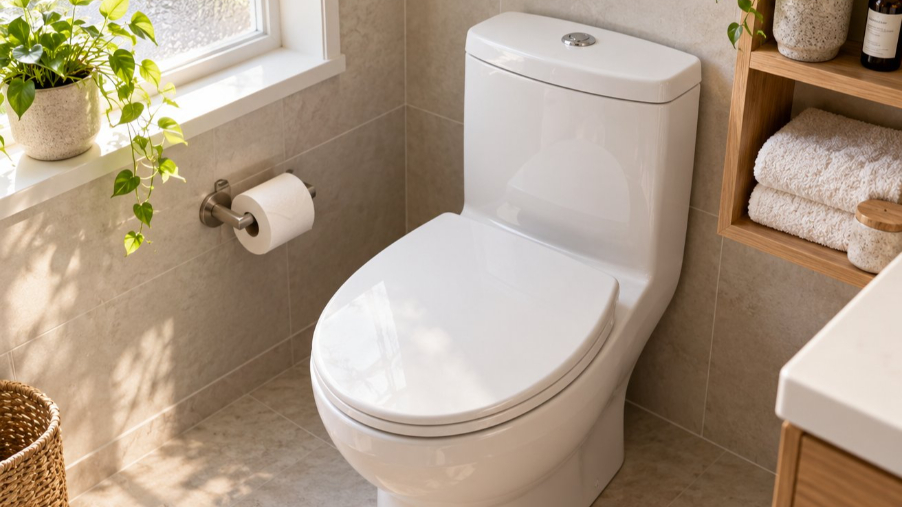
Walk into almost any apartment bathroom or older North American home and you'll likely find a round toilet seat bolted to the bowl. It is the most familiar shape in residential plumbing, yet most people never think twice about what makes it "round" or why it keeps showing up in millions of bathrooms. If you're shopping for a replacement or planning a renovation, understanding the basics behind this design saves you from buying the wrong size and wasting an afternoon.
What Exactly Is a Round Toilet Seat
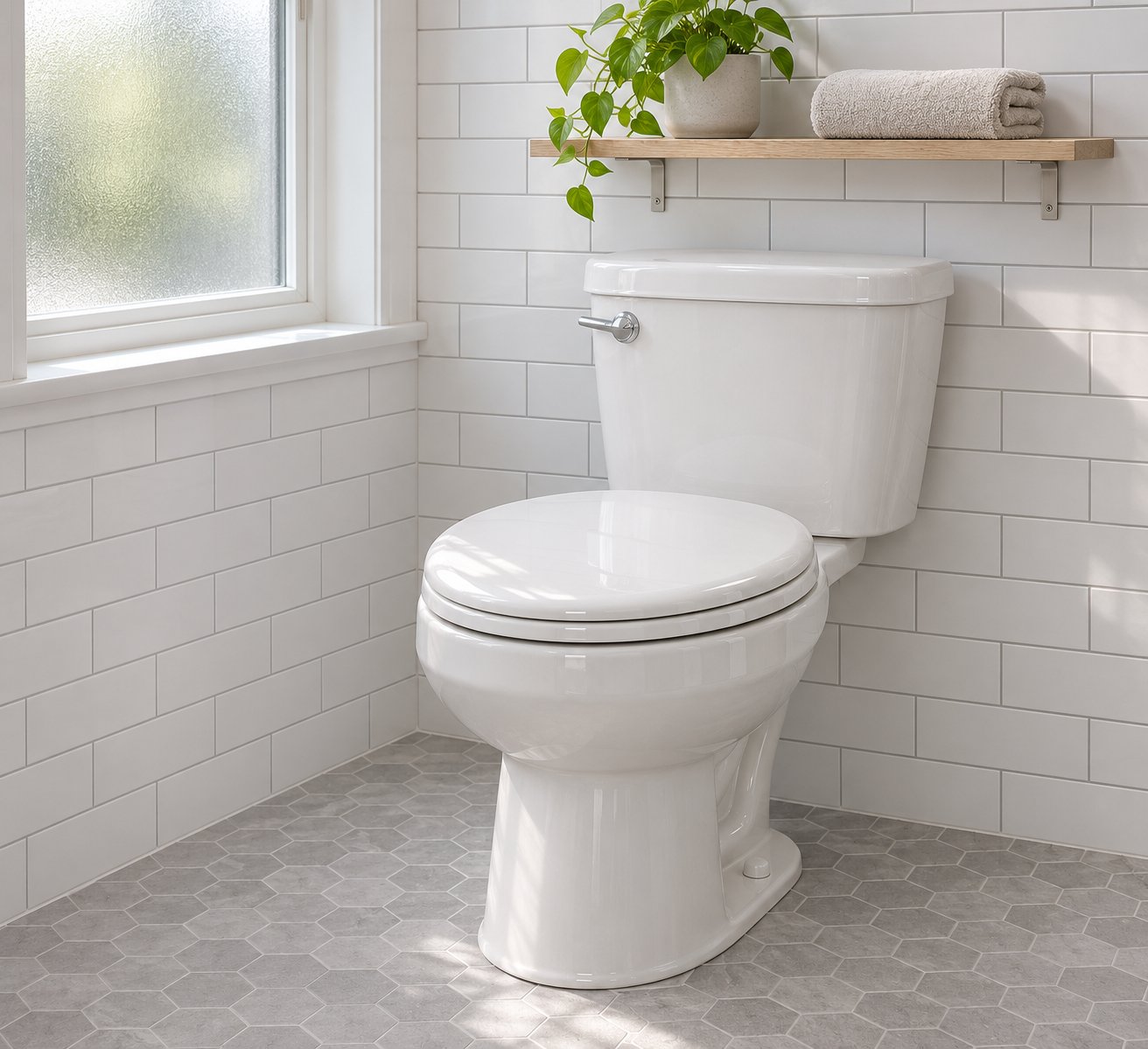
In the plumbing industry, "round" does not mean perfectly circular. It describes a bowl front that curves gently outward in a shape closer to a slightly compressed circle, as opposed to the more oval profile of an elongated bowl. The defining measurement is the distance from the mounting bolt holes at the back of the bowl to the very front of the rim.
A round toilet seat fits a bowl that measures approximately 16.5 inches from the center point between the two rear mounting bolt holes to the front edge of the rim. This distinguishes it from an elongated seat, which fits bowls measuring roughly 18 inches from the same bolt holes to the front rim.
That inch-and-a-half difference sounds small on paper, yet it completely changes the seat you need. An elongated seat will not sit properly on a round bowl, and a round seat toilet leaves a noticeable gap when placed on an elongated fixture. Knowing which shape you have is the single most important step before clicking "add to cart."
Why Round Seats Remain a Bathroom Staple
Imagine a compact city apartment where every square inch matters. A round bowl projects less distance from the wall than its elongated counterpart, freeing up precious floor space in tight powder rooms, half-baths, and en-suites tucked beside bedrooms. That space-saving advantage is a major reason builders have installed them in smaller residential layouts for decades.
The numbers back this up. Grand View Research found that round-shaped toilet seats accounted for 54.9% of the North American traditional toilet seat market in 2024, outpacing elongated models despite the growing popularity of longer bowls in new construction. Round seats also remain a go-to in children's bathrooms and compact commercial restrooms, where building codes sometimes require shorter-projection fixtures to maintain adequate clearance. Add in the millions of legacy installations across older homes, and you'll understand why round toilet seats aren't going anywhere soon.
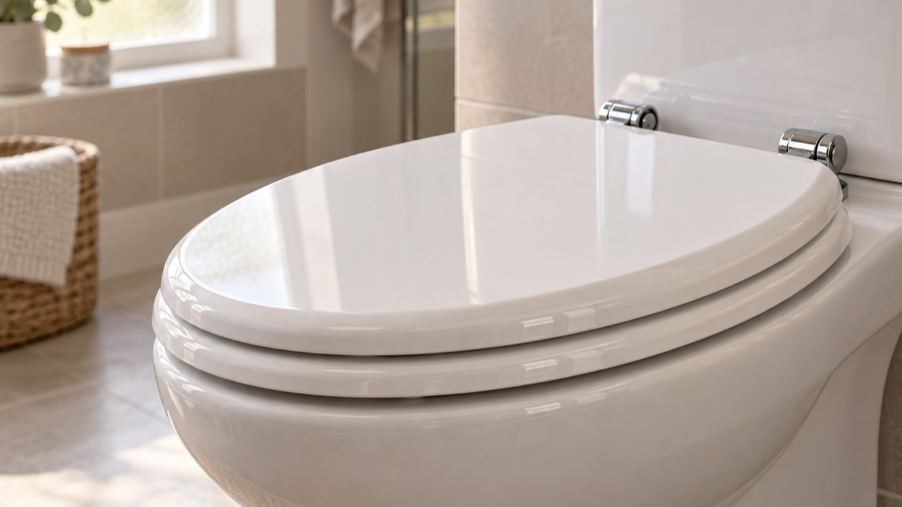
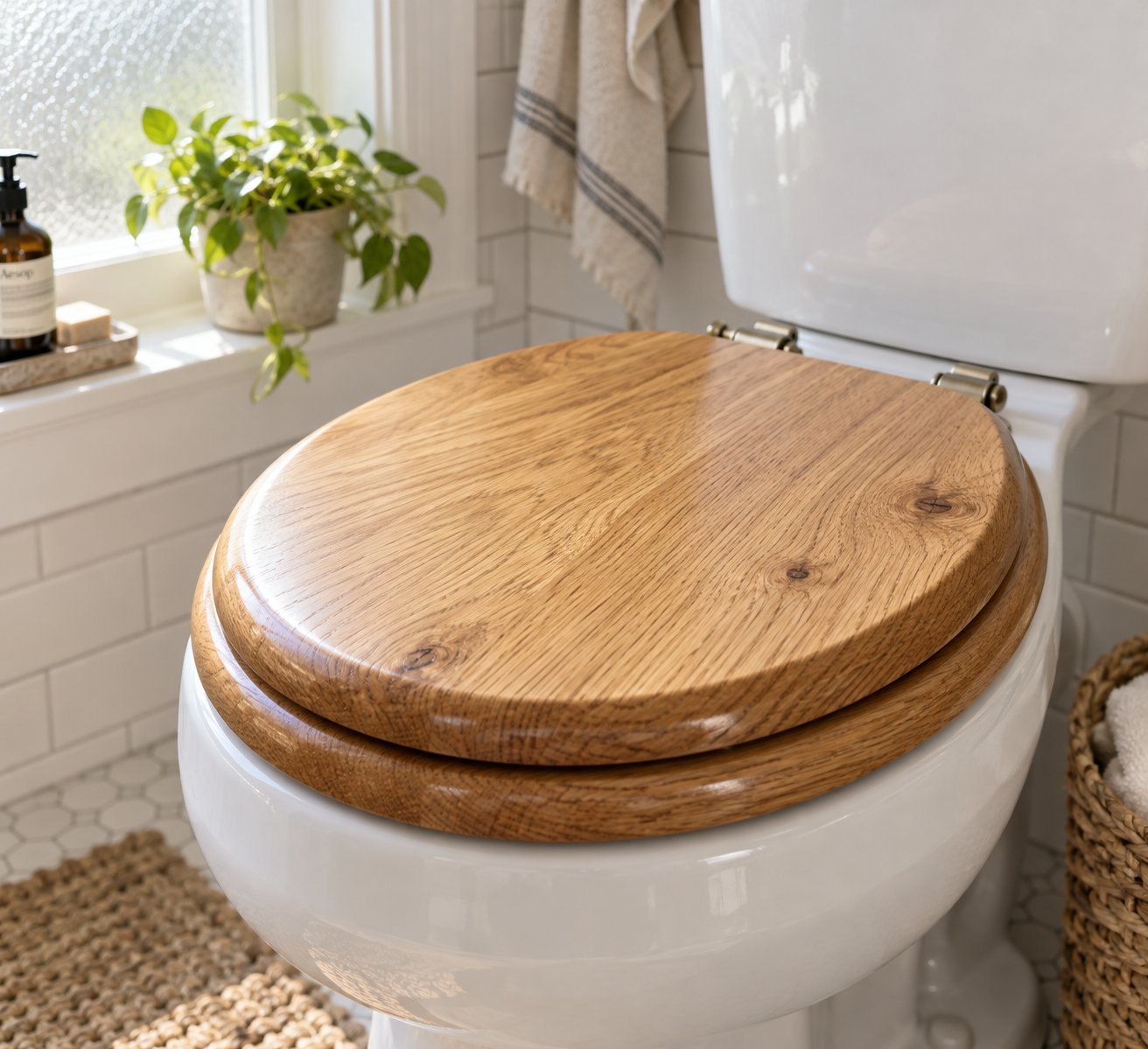
A wood toilet seat round in shape, for example, has been a staple in traditionally styled bathrooms for generations, pairing a classic look with the compact footprint homeowners need.
What This Guide Covers
This article is not a product catalog or a top-ten list. Instead, it is a complete educational walkthrough designed to help you make a confident, informed purchase. Here is what you can expect:
- Round vs. elongated comparison — comfort differences, body-type considerations, and why mixing shapes does not work.
- Step-by-step measurement guide — three simple measurements that confirm your bowl shape before you buy.
- Material breakdown — polypropylene, urea formaldehyde, natural wood, and more, with honest pros and cons for each.
- Feature decoder — soft-close hinges, quick-release mechanisms, and antimicrobial coatings explained in plain language.
- Household-specific recommendations — tailored advice for families, renters, accessibility needs, and style-focused renovations.
- Installation and maintenance — a DIY-friendly walkthrough plus troubleshooting tips for common seat problems.
Every section builds on the one before it, so by the end you'll know exactly which round seat matches your bathroom, your budget, and your household's daily needs. The real question most shoppers face first, though, is whether a round seat is actually more comfortable than an elongated one — and the answer depends on factors most retailers never mention.
Round vs Elongated Toilet Seats and How They Compare
Comfort is deeply personal, and what feels supportive to one person can feel cramped or oversized to another. That reality makes the round-versus-elongated debate far more nuanced than a simple "bigger is better" answer. The difference between the two shapes comes down to roughly two inches of front-to-back bowl length, yet those two inches change how your body weight distributes across the seat, how your thighs are supported, and even how easily your feet reach the floor.
Comfort Differences Between Round and Elongated Seats
A toilet seat round in shape offers a seating surface that measures about 16.5 inches from bolt holes to front rim, while an elongated seat stretches to approximately 18 inches. That extra length gives elongated models a wider seating area toward the front, which can feel more supportive under the thighs of taller or larger adults. Picture someone six feet tall sitting on a compact round bowl — their thighs may extend past the front edge, concentrating pressure on a narrow band of porcelain rather than spreading it across a broader surface.
Flip the scenario. A child or a shorter adult sitting on an elongated bowl often ends up perched too far forward, feet dangling slightly, with less postural stability. A round seat keeps them closer to the back of the bowl where the contour is widest, letting their feet plant flat on the floor. That grounded position is more ergonomic and considerably safer for young kids who are still mastering bathroom independence.
Weight distribution matters, too. Because a round bowl's rim curves more uniformly, body weight tends to spread in a balanced ring pattern. Elongated bowls shift that pattern forward, which some users find more natural and others find less secure. Neither shape is objectively "more comfortable" — it depends entirely on the person sitting down.
Can You Put an Elongated Seat on a Round Toilet
This is one of the most common questions shoppers ask, and the short answer is no. Even though the rear bolt-hole spacing is the same standard 5.5 inches on both shapes, the seat body itself is the problem. An elongated seat will overhang the front of a round bowl by nearly two inches, leaving an unsupported lip that flexes under weight. You'll also notice a visible gap between the seat underside and the bowl rim along the sides, which creates an unstable rocking motion every time someone sits down.
Beyond instability, that gap becomes a hygiene concern. Moisture, splashes, and cleaning solution seep into the space between seat and porcelain, making thorough sanitation almost impossible. In short, mixing shapes creates a seat that wobbles, looks wrong, and harbors bacteria — three problems no homeowner wants.
When a Round Seat Is the Better Choice
There are several real-world scenarios where a round option clearly outperforms its elongated counterpart:
- Small bathrooms and half-baths — The shorter bowl projection frees up floor space, sometimes making the difference between a door that swings freely and one that clips the toilet.
- Households with young children — Kids sit more securely on the compact shape, and lighter round wood toilet seats or polypropylene models are easier for small hands to lift.
- ADA-compliant commercial restrooms — Many public facilities use a round toilet seat with open front design to meet accessibility guidelines, providing a hygienic gap at the front while maintaining adequate clearance in tight stall layouts.
- Budget-conscious replacements — Round seats, including toilet seat wood round options, are widely available at every price point and typically cost a few dollars less than their elongated equivalents.
Choosing the right shape is only half the equation, though. Even after you're confident a round seat is the correct fit, you still need to verify three specific measurements on your actual bowl to avoid a return trip to the store — and one of those measurements catches more shoppers off guard than you'd expect.
How to Measure Your Toilet for a Round Seat
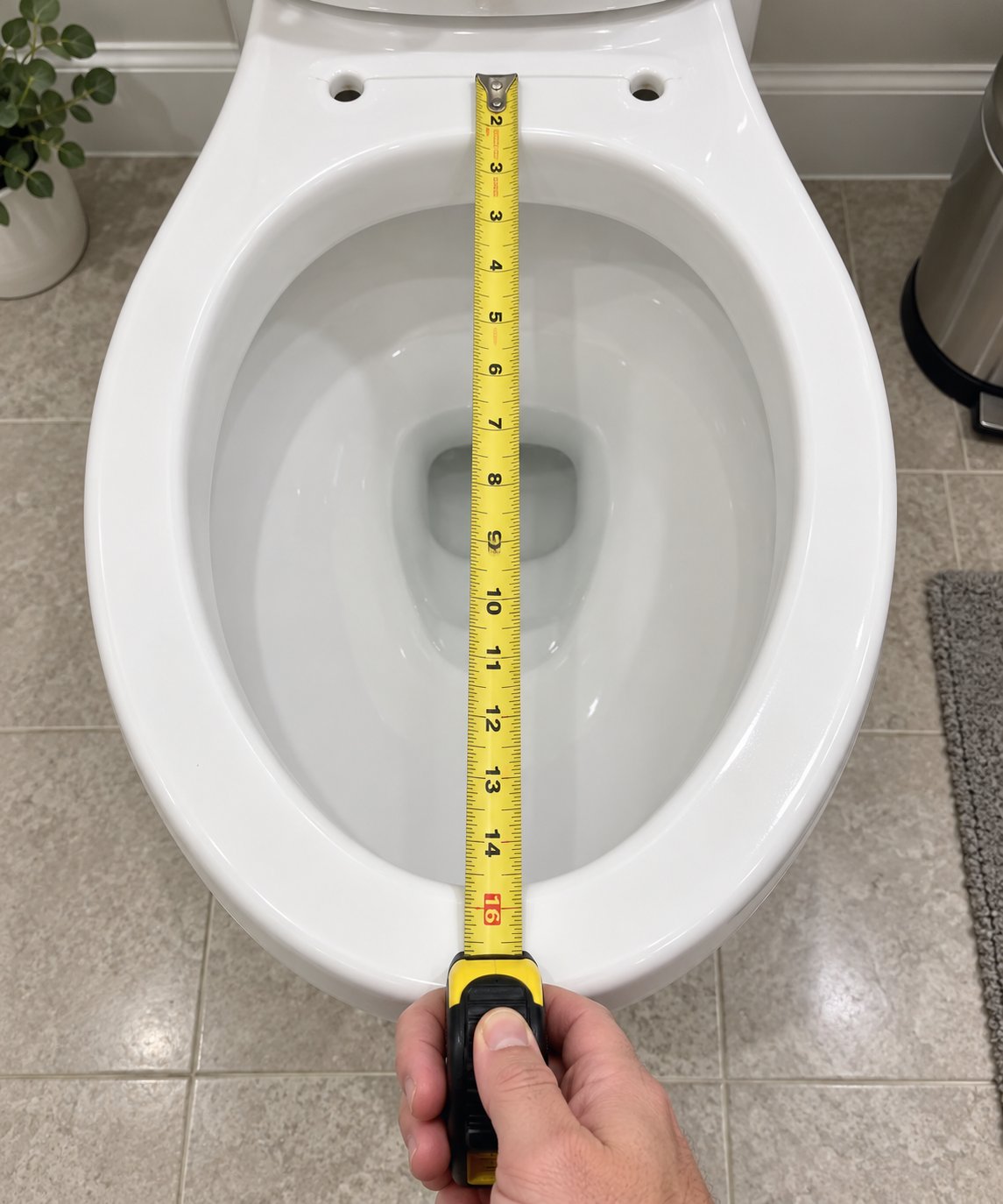
Grabbing a tape measure before grabbing your wallet is the single smartest move you can make. Most return-worthy mistakes happen because a shopper assumes their bowl is one shape when it's actually the other, or because they pick up a seat while browsing toilet seats near me on a phone without confirming a single dimension first. Three quick measurements — none of which require tools beyond a standard tape measure — eliminate the guesswork entirely.
Three Measurements You Need Before Buying
Lift the seat and lid out of the way, or remove them completely if they block your view of the bolt holes. Then work through these steps in order:
- Bolt-hole spread. Locate the two mounting holes at the back of the bowl rim — these are the holes your seat's bolts pass through. Measure from the center of one hole to the center of the other. On virtually every residential toilet sold in North America, this distance is 5.5 inches. If yours differs significantly, you may have a specialty or European-standard fixture that requires a manufacturer-specific seat.
- Bolt-hole-to-front length. Find the midpoint between those two bolt holes — roughly 2.75 inches from each center. From that midpoint, run the tape straight forward to the outside front edge of the bowl rim. A round commode seat fits a bowl that measures approximately 16.5 inches here, while an elongated bowl lands around 18.5 inches. This single number is the most important measurement you'll take.
- Bowl width at the widest point. Measure across the top of the bowl rim at its widest span, typically near the middle of the opening. Standard round bowls come in at roughly 14 to 14.5 inches wide. This measurement rarely causes problems, but confirming it ensures you won't end up with a seat that overhangs or sits too narrow on an unusually wide or narrow rim.
Write all three numbers down. They take less than two minutes to collect, yet they're your insurance policy against ordering the wrong seat — whether you're shopping online, browsing toilet seats at Home Depot, or picking one up from a local plumbing supply house.
How to Tell If Your Toilet Is Round or Elongated
If you don't have a tape measure handy, a quick visual check can point you in the right direction. Stand directly over the bowl and look straight down at the rim. A round bowl looks almost like a circle — the front-to-back and side-to-side dimensions appear nearly equal. An elongated bowl, by contrast, stretches noticeably forward into an oval shape, and the difference is usually obvious from above.
That said, viewing angles and a bulky seat lid can fool you. Some manufacturers also produce "compact elongated" bowls that split the difference, landing at roughly 17 to 17.5 inches from bolt holes to front. These in-between bowls look slightly oval yet occupy almost the same footprint as a round model. If the shape appears borderline, always trust the tape measure over your eyes. Measure the bolt-hole-to-front distance, and let that number settle the question once and for all.
A third option exists for people who prefer zero guesswork: check the model number stamped inside your tank or printed on the underside of the tank lid. Searching that number on the manufacturer's website pulls up a spec sheet that lists the bowl as either "round front" or "elongated." On many brands, a single digit in the model number is the only difference between the two versions of the same toilet.
Understanding Standard Round Toilet Seat Dimensions
With your three measurements in hand, the table below makes comparison effortless. Match your numbers to the correct column and you'll know exactly which seat shape to order — no second-guessing required.
| Measurement | Round Bowl | Elongated Bowl |
|---|---|---|
| Bolt-hole spread (center to center) | 5.5 inches | 5.5 inches |
| Bolt holes to front of rim | ~16.5 inches | ~18.5 inches |
| Bowl width at widest point | ~14 – 14.5 inches | ~14 – 14.5 inches |
| Overall bowl projection from wall (typical) | ~25 – 27 inches | ~27 – 29 inches |
| Visual shape from above | Near-circle | Distinct oval |
Notice that bolt-hole spread and bowl width are essentially identical for both shapes. The distinguishing factor is always the front-to-back length. If your bolt-hole-to-front measurement falls clearly at or near 16.5 inches, you need a round seat. If it lands at or near 18.5 inches, you need an elongated one. Anything that falls squarely in the middle — around 17 to 17.5 inches — likely indicates a compact elongated bowl, and you should consult the manufacturer's spec sheet before purchasing.
Also keep in mind that a round toilet seat with large opening will still follow these same external dimensions. The "large opening" refers to the interior cutout of the seat itself — not the outer footprint — so it won't change which shape category your bowl falls into.
Armed with confirmed measurements, you're ready to move beyond shape and size into a decision that has an even bigger impact on daily satisfaction: the material your seat is made from. The difference between a budget plastic and a premium thermoset compound affects everything from how the seat feels on first contact to how it looks three years down the road.
Round Toilet Seat Materials Compared
Two seats can look nearly identical on a store shelf, carry the same shape and color, and still deliver wildly different experiences over the next five years. The reason? Material. The compound a seat is molded or carved from determines how it feels against your skin on a cold morning, whether it yellows after months of cleaning, how easily it scratches, and how much weight it can handle before it flexes or cracks. Yet most product listings bury this detail in a single bullet point like "plastic" or "wood" — leaving you to guess what that actually means in daily use.
Below is a breakdown of the five most common materials you'll encounter when shopping for the best round toilet seat, along with honest trade-offs for each.
Polypropylene and Thermoplastic Seats
Polypropylene — commonly abbreviated as PP — is the workhorse of the toilet seat world. Pick up an affordable seat at any big-box retailer, and there's a strong chance it's injection-molded from PP resin. The same polymer shows up in food containers, automotive components, and medical devices, which hints at its core strengths: chemical resistance, light weight, and low cost.
For a round bowl in a family bathroom or rental apartment, a PP seat checks a lot of practical boxes. It shrugs off most household cleaners without staining, installs in minutes because it weighs very little, and typically costs less than any other material on this list. Higher-quality PP formulations use virgin resin rather than recycled blends, which helps the seat resist flexing and yellowing over time. Budget formulations, on the other hand, can feel flimsy under heavier users and may develop a dull, discolored look after prolonged UV or chemical exposure.
Pros
- Lowest price tier — widely available from under ten dollars
- Lightweight and easy for anyone to lift or install
- Resistant to water, humidity, and most bathroom cleaning chemicals
- Available in a huge variety of colors and styles, including soft close round toilet seat models
Cons
- Lower-grade formulations can crack under sustained pressure or heavy loads
- Prone to surface scratching compared to thermoset alternatives
- May yellow or discolor after years of use, especially with bleach-heavy cleaners
- Feels noticeably lighter and "plasticky" to users who prefer a substantial, ceramic-like heft
PP seats dominate the mid-to-budget segment for good reason. If you want reliable, no-fuss performance without a premium price tag, they deliver. Manufacturers who supply toilet seats round in shape at scale — such as Tianyun's PP / UF Seat Cover line, which provides production-ready PP covers paired with matching dampers, hinges, and fixing systems for sanitaryware brands — rely on carefully controlled PP formulations to ensure consistent quality even at high volume. That same manufacturing discipline is what separates a PP seat that lasts years from one that cracks in months.
Urea Formaldehyde and Duroplast Seats
If PP is the everyday sedan, urea formaldehyde (UF) — often marketed under the European term "duroplast" — is the premium sedan with the upgraded interior. UF is a thermoset plastic, which means once the resin is cured under heat and pressure during molding, it cannot be re-melted or reshaped. That permanent molecular structure gives UF seats several properties that PP simply cannot match.
Pick up a duroplast seat and the first thing you'll notice is the weight. It feels dense and substantial, closer to the ceramic bowl beneath it than to the lightweight plastic you might expect. Set it down and run your fingernail across the surface — you'll have a hard time leaving a mark. That scratch-free, ceramic-like surface stays uniformly colored for years, resisting the yellowing and staining that plagues lower-grade thermoplastics. Antibacterial performance is another standout: the hard, non-porous finish inhibits bacterial growth far more effectively than softer plastics, and some manufacturers achieve lab-tested antibacterial rates above 99%.
Pros
- Superior scratch resistance — the thermoset surface stays smooth even in high-traffic bathrooms
- Exceptional color stability; resists yellowing, staining, and UV degradation
- Heavy, solid feel that users associate with premium quality
- Non-porous surface naturally inhibits bacterial harborage
- Fire-resistant, adding a marginal safety benefit
Cons
- Higher unit cost than PP — typically two to three times the price at retail
- Heavier weight means slightly more effort during installation and lifting
- Less widely stocked in budget retail channels; may require ordering online
For homeowners who want a round white toilet seat that still looks brand-new years after installation, UF is hard to beat. It is also the material of choice for many OEM toilet seat programs where the cover, dampers, hinges, and fixing hardware are engineered as a matched system. Tianyun's UF seat covers, for example, are designed alongside compatible hinge and damper assemblies so that sanitaryware brands receive a production-ready package — an integrated approach that translates directly into the durability and smooth operation consumers feel every time they lower the lid.
Wood and Molded Wood Composite Options
There is something undeniably warm about a round wooden toilet seat. Whether it's a natural oak finish or a painted white surface with visible grain texture, wood brings a decorative character that no injection-molded plastic can replicate. Natural wood seats — crafted from oak, maple, bamboo, or other hardwoods — feel warm to the touch rather than cold, a small comfort that makes a noticeable difference during winter mornings.
Durability is respectable, too. Solid hardwood resists chipping and cracking better than budget plastics, and a well-maintained finish keeps the seat looking handsome for years. The catch is that "well-maintained" qualifier. Wood is inherently porous. If the polyurethane or lacquer coating chips, cracks, or wears thin at the edges, moisture infiltrates the grain and the seat begins to warp, swell, or even develop mildew. Bathrooms are among the most humid rooms in a home, so this vulnerability is not hypothetical — it is an eventuality if the finish is not periodically inspected and refreshed.
Molded wood composite (MDF or engineered wood pressed under high heat with resin binders) offers a middle ground. These seats look and feel similar to solid wood, carry a smoother factory finish, and cost somewhat less. They are denser and more uniform than natural wood, which reduces the risk of warping. Still, they share the same Achilles' heel: once water penetrates the surface layer, the composite core absorbs moisture quickly and swells irreversibly.
Pros
- Warm to the touch — no cold-seat shock
- Unique aesthetic appeal; complements traditional and farmhouse bathroom styles
- Solid hardwood resists cracking better than budget PP
Cons
- Vulnerable to moisture damage if the finish deteriorates
- Heavier than PP, and typically requires metal hinges (zinc alloy or stainless steel) that add cost
- Higher price point than both PP and many UF options
- Requires more careful cleaning — harsh chemical cleaners can strip the finish
Material Comparison at a Glance
The table below lays every major material side by side across the criteria that matter most. Use it as a quick reference when comparing toilet seats round in shape at different price points.
| Criteria | Polypropylene (PP) | Urea Formaldehyde (UF / Duroplast) | Natural Wood | Molded Wood Composite |
|---|---|---|---|---|
| Durability | Moderate — higher-grade PP is good; budget PP cracks easier | High — thermoset structure resists impact and fatigue | High if finish is intact; vulnerable once coating fails | Moderate to high; irreversible swelling if moisture penetrates |
| Weight | Light | Medium to heavy | Medium to heavy | Medium |
| Scratch Resistance | Low to moderate | Very high | Moderate (depends on finish hardness) | Moderate |
| Color Stability | Fair — may yellow over time | Excellent — resists yellowing and UV fading | Good under intact finish; fades if exposed | Good under intact finish |
| Ease of Cleaning | Easy — resists most chemicals | Very easy — non-porous, antibacterial surface | Moderate — avoid harsh chemicals that strip finish | Moderate — same finish concerns as natural wood |
| Warmth to Touch | Cool (plastic feel) | Cool (ceramic-like feel) | Warm | Slightly warm |
| Approximate Price Tier | $ (Budget) | $$ (Mid-range to premium) | $$$ (Premium) | $$ (Mid-range) |
A few patterns stand out. PP and UF cover the widest range of practical needs — PP for budget-friendly reliability, UF for long-term aesthetics and hygiene. Wood options earn their place on looks and tactile warmth, but they demand more maintenance commitment. Molded composites split the difference yet share wood's moisture vulnerability.
Choosing the right material is a huge step toward the best round toilet seat for your bathroom. Still, even the finest UF or hardwood cover can feel disappointing if it's missing the modern features that have quietly transformed toilet seats from simple lids into surprisingly sophisticated accessories. Soft-close dampers, quick-release hinges, antimicrobial coatings — each one solves a specific daily annoyance, and understanding what they actually do helps you separate genuine value from marketing buzzwords.
Modern Round Toilet Seat Features Decoded
Browse any online listing for a round toilet lid and you'll run into a wall of feature terms — "soft-close," "slow-close," "quick-release," "antimicrobial," "easy-clean." Each one sounds impressive, yet very few listings explain what the feature actually does for you in plain English. That gap between jargon and real-world benefit is where buyer's remorse starts. Strip away the marketing gloss, and every modern feature solves a specific, everyday bathroom problem worth understanding before you spend a dollar.
Soft-Close and Slow-Close Mechanisms Explained
Picture the 2 a.m. bathroom trip: you're half asleep, you finish up, and the round toilet lid drops from your fingertips. The resulting slam echoes through the house, waking the baby, the dog, and your very unhappy partner. Soft-close technology exists to eliminate exactly that moment.
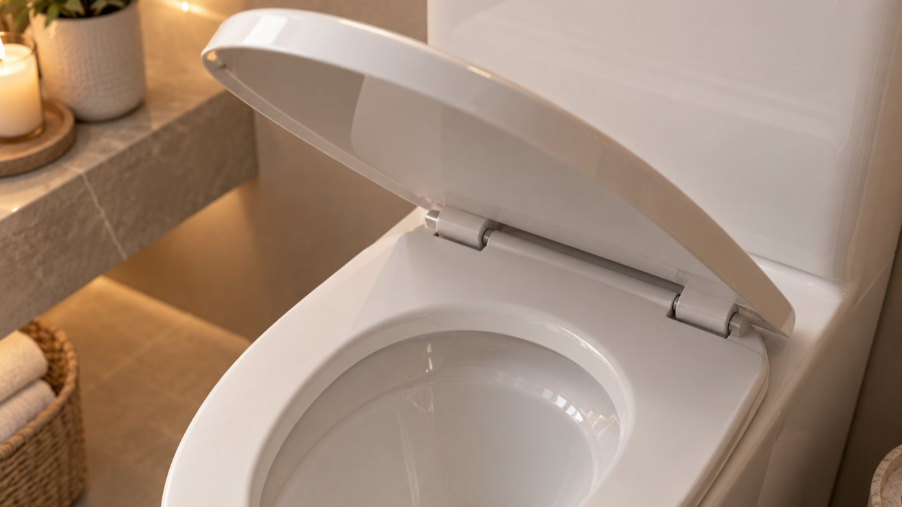
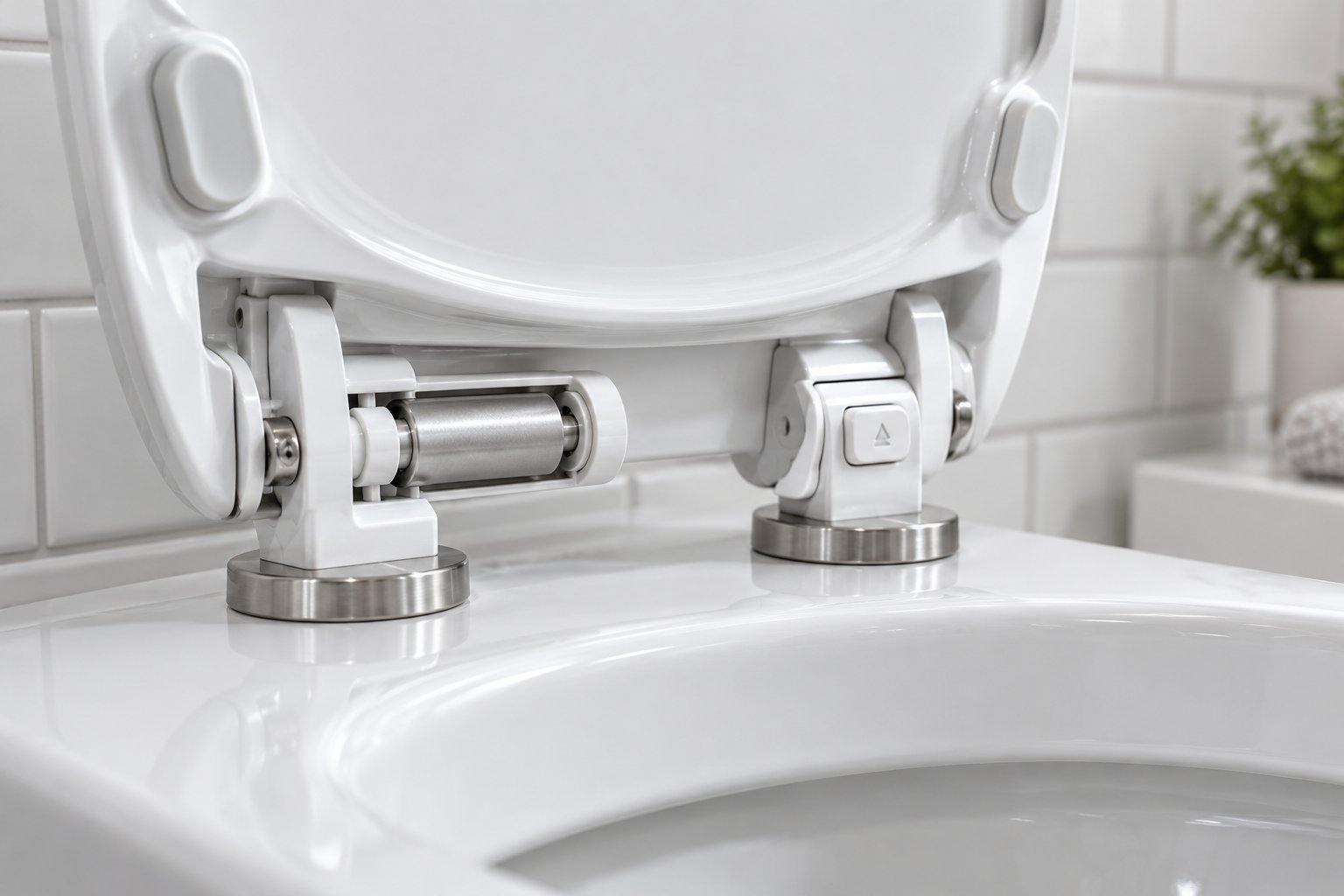
Inside the hinge assembly of a soft-close seat, a small hydraulic or friction-based damper controls the speed at which the lid and seat descend. Release them from any angle and they glide downward at a slow, steady pace until they rest silently against the bowl rim. No slam, no noise, no pinched fingers — a genuine safety benefit in households with curious toddlers who love flipping lids.
You'll sometimes see "slow-close" and "soft-close" listed as separate features on different product pages. They are not different technologies. Both terms describe the same damper mechanism; the label simply varies by brand. If a listing says one but not the other, the seat still closes the same quiet way. The quality difference between models lies in the damper itself — cheaper dampers may lose their resistance within a year or two, while well-engineered units maintain a consistent closing speed for the life of the seat.
Quick-Release Hinges for Easy Cleaning
Ever tried to scrub around the back of a toilet seat where the hinges bolt down? That narrow gap between hinge and porcelain is a magnet for grime, mineral buildup, and worse. Traditional fixed-hinge seats make this area nearly impossible to clean thoroughly without removing the entire seat — a process that usually requires a wrench, a few minutes of frustration, and corroded bolts that refuse to cooperate.
Quick-release hinges — sometimes labeled "easy-remove" — solve this problem with a simple mechanism. A push-button on the hinge body or a short twist-and-lift motion detaches the entire seat from the mounting posts in seconds, with no tools needed. Lift the seat away, wipe down the exposed bowl rim and hinge area, then snap the seat back into place. The whole process takes less time than finding a wrench.
For anyone who values a genuinely clean bathroom, this feature is arguably more impactful day to day than soft-close. It turns a dreaded chore into a ten-second task and helps keep even a standard round white toilet seat looking spotless around the hinge zone where discoloration tends to appear first.
Antimicrobial Coatings and Hygiene Features
Some round toilet seat covers and lids now ship with built-in antimicrobial treatments designed to inhibit bacterial and fungal growth directly on the seat surface. The most common approach uses inorganic agents — silver ions, zinc ions, or certain metal oxides — that are integrated into the seat material during molding rather than applied as a topical spray. Because the antimicrobial compound is distributed throughout the plastic itself, it does not wash away or wear off with regular cleaning. Testing under standards like ISO 22196 has shown that well-formulated antimicrobial seats can achieve bacterial reduction rates above 99%.
Sounds like a must-have, right? It is a valuable bonus, but it is not a substitute for regular cleaning. Antimicrobial treatments slow microbial growth on the seat surface between cleanings — they do not sterilize it. Think of them as an extra layer of protection, not a replacement for a disinfectant wipe.
Worth noting: commercial restrooms often take a different approach to hygiene entirely. Instead of antimicrobial coatings, they use open-front seat designs — the familiar U-shaped seats you see in office buildings and airports — which eliminate the front contact point where the most contamination occurs. Some home users with specific hygiene concerns choose the same design for residential bathrooms, though it remains far more common in public settings.
Even without coatings or open-front cuts, a seat with a smooth, non-porous surface — like the hard finish on a quality UF or duroplast model — naturally resists bacterial harborage better than a textured or micro-scratched surface. That is why material choice and feature selection work hand in hand: a scratch-resistant surface keeps bacteria from gaining a foothold, and an antimicrobial additive further suppresses whatever manages to land there.
Quick-Reference Feature Glossary
When scanning product listings, use this cheat sheet to translate feature terms into the benefits that actually matter:
- Soft-close / Slow-close — A built-in damper prevents the lid and seat from slamming, reducing noise and protecting small fingers.
- Quick-release / Easy-remove hinges — The seat detaches from the bowl in seconds without tools, allowing thorough cleaning around the hinge area.
- Antimicrobial / Antibacterial treatment — Inorganic agents molded into the seat material inhibit bacterial growth between cleanings.
- Open-front design — A U-shaped seat with a gap at the front, reducing contact area for improved hygiene (common in commercial settings).
- Non-porous / Easy-clean surface — A hard, smooth finish that resists micro-scratches and prevents moisture and bacteria from settling into surface imperfections.
- Stabilizing bumpers — Rubber or silicone pads on the underside of the seat that prevent lateral shifting and protect the porcelain bowl from scratches.
- Color-matched hinges — Hinge covers tinted to match the seat color for a seamless, finished look on a round white toilet seat or any colored model.
Understanding these features puts you in a much stronger position to evaluate any listing at a glance. The real challenge, though, isn't knowing what each feature does — it's figuring out which combination of features and materials actually makes sense for your specific household. A family with toddlers, a retiree with mobility concerns, a renter watching every dollar, and a homeowner mid-renovation all have very different priority lists, and the ideal seat for each looks nothing alike.
Choosing the Right Round Toilet Seat for Your Household
Features and materials only matter when they match the people who actually use the bathroom every day. A soft-close damper is life-changing in a home with a three-year-old but barely registers for a solo renter who never slams the lid anyway. A premium UF seat is a smart long-term investment for a homeowner planning to stay put, yet overkill for someone moving out in eight months. The smartest way to shop is not by scanning product rankings — it's by starting with your household profile and working backward to the seat that fits it.
Below are four common household scenarios, each with a clear set of priorities and practical recommendations. Find the one closest to your situation, and you'll cut your decision time in half.
Best Options for Families With Young Children
If you've ever heard a toilet lid slam at midnight followed by a wailing child, you already know the single most important feature for a family bathroom: a soft-close mechanism. Hydraulic dampers prevent the lid from free-falling, which protects small fingers from getting pinched and keeps the rest of the house asleep. In a home with kids under six, this feature alone justifies a modest price bump over a basic seat.
Weight is the second consideration. A lightweight polypropylene round toilet seat cover is far easier for a small child to lift independently than a heavy duroplast or wooden model. Encouraging bathroom independence means removing physical barriers, and a lid that a four-year-old can raise without struggling is a practical win.
Some families go a step further with a seat that includes a built-in child ring — a smaller, secondary seat that folds down from beneath the adult lid, giving toddlers a secure, correctly sized opening without needing a separate potty-training insert. Dedicated toilet trainers like the BabyBjorn Toilet Trainer also fit snugly over a round toilet bowl and can be removed in seconds when an adult needs the full seat. Either approach eliminates the balancing act of a child perching on an adult-sized opening.
Quick-release hinges round out the family checklist. Children are messy, and the ability to pop the entire seat off for a thorough scrub around the hinge zone keeps things sanitary without a ten-minute wrestling match with corroded bolts.
Ideal Choices for Elderly Household Members or Accessibility Needs
Shopping for a parent, grandparent, or anyone with limited mobility shifts the priority list entirely. Comfort during longer sits, ease of personal care, and safe transfers on and off the toilet become the driving factors — and the right seat can meaningfully improve daily quality of life.
Padded or cushioned seats provide a softer, pressure-distributing surface that reduces discomfort for users who sit for extended periods due to medical conditions. Gel-cushioned models conform to body contours even more than standard foam padding. The trade-off is durability: vinyl-covered cushioned seats can crack or tear over time, and their seams are harder to sanitize than a smooth, hard-surface alternative. Weigh the comfort benefit against the maintenance commitment.
For users who need help with personal hygiene, a round toilet seat cover with an extra-large opening or an open-front U-shaped design provides more clearance at the front, making wiping and catheter care considerably easier. Elevated or raised-height seats are another option worth evaluating — they bolt onto the existing bowl rim and add two to four inches of height, reducing the distance a user needs to lower themselves and easing strain on hips and knees.
Use the following checklist when evaluating accessibility-focused seats:
- Seat height — Does the user need a standard-height seat or a raised model to reduce the sit-to-stand distance?
- Opening size and shape — Would a larger or open-front opening improve personal care access?
- Surface type — Is a padded seat necessary for comfort, or does the user prefer the easier cleaning of a hard-surface model?
- Stability features — Are non-slip bumpers, locking mounting hardware, and a heavy, solid seat body present to prevent shifting?
- Weight capacity — Does the seat's rated load accommodate the user safely, with a comfortable margin?
- Grab-bar compatibility — If a toilet safety frame or grab bars are installed, does the seat's hinge design clear them without interference?
Accessibility is deeply personal, so there is no single "best" seat for this category. Start with the specific physical need — height, opening size, cushioning, or stability — and build outward from there.
Smart Picks for Rental Apartments and Budget-Conscious Buyers
Renters face a unique constraint: whatever you install, you may need to reverse when you move out. The most practical approach is to replace the landlord's worn seat with an affordable, high-performing model, then store the original in a closet so you can reinstall it before handing back the keys. This protects your security deposit and means you live with a seat you actually chose rather than one a previous tenant left behind.
For this scenario, a standard PP or UF seat with quick-release hinges hits the sweet spot. It's durable enough to last the length of a typical lease, easy to install without specialized tools, and simple to remove when the time comes. Quick-release hardware makes swapping seats a five-minute job rather than a weekend project.
Budget does not have to mean bottom-shelf, either. A well-made PP seat with a soft-close lid and top-tightening bolts — the kind that snug down from above the bowl rim rather than requiring you to fumble underneath — often retails for under thirty dollars. The Bemis round seat is a good example: its top-tightening, non-corrosive fasteners simplify installation, and the plastic body cleans easily with mild soap and water. Skipping the bleach, incidentally, helps avoid the discoloration that makes cheap plastic seats look old before their time.
One more tip for renters: snap a quick photo of the original seat's bolt setup before you remove it. That photo saves you from guessing how to reinstall it months or years later when move-out day arrives.
Style-Forward Selections for Bathroom Renovations
When you're gutting a bathroom down to the studs, the toilet seat stops being a utilitarian afterthought and becomes a deliberate design choice. Color, finish, and material all contribute to the room's visual story — and a round toilet bowl doesn't limit your aesthetic options nearly as much as you might assume.
White remains the dominant seat color by a wide margin — an estimated 80 to 90 percent of commonly listed toilet SKUs ship in white or bright white. But "white" is not a single shade. Bright white, warm white, biscuit, and almond can all look jarringly wrong if they clash with your bowl's specific undertone. Always compare the seat against your actual toilet under bathroom lighting before committing, because a mismatch visible only under fluorescent light will bother you every single day.
Beyond white, today's renovation market offers genuine variety:
- Matte-black seats — A striking contrast against white porcelain, matte black works beautifully in modern industrial and minimalist bathrooms. Expect to see dust and water spots more readily on dark finishes, so pair the look with a quick-wipe cleaning habit.
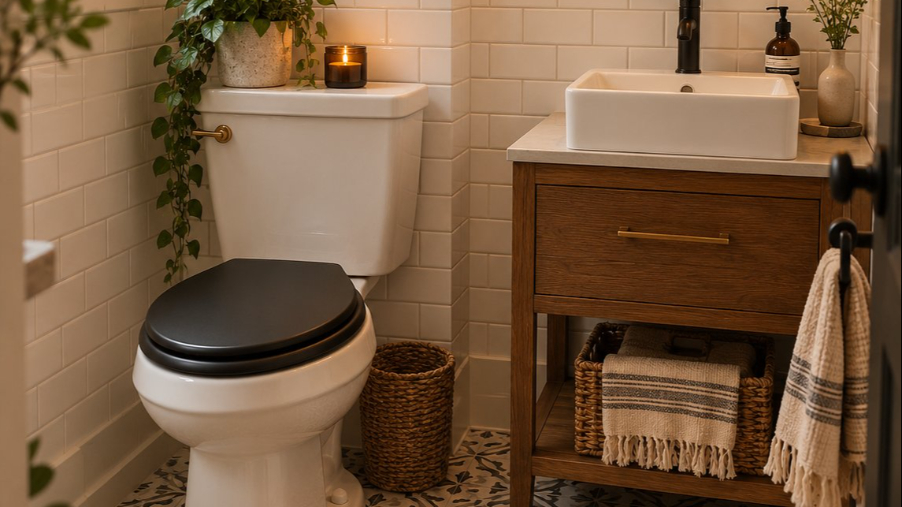
- Wood-grain finishes — A wooden round toilet seat in oak, walnut, or bamboo adds organic warmth to farmhouse, Scandinavian, and transitional designs. Slow-close wood seats like the Angel Shield range come in multiple stain tones and include quiet-close hinges, combining aesthetics with function.
- Warm neutrals and earth tones — Sand, greige, and stone-colored seats are gaining traction in earthy modern palettes. These shades pair well with clay tile, brass fixtures, and natural-fiber accents, though availability can be limited and lead times longer than standard white.
- Colored accents — Sage green, navy, and even blush pink seats exist for homeowners willing to make a bold statement. These work best in low-traffic powder rooms where the seat functions as a deliberate design accent rather than an everyday workhorse subject to heavy wear.
Whatever direction you choose, prioritize a material and hinge combination that supports the look long-term. A beautifully stained wooden seat loses its impact if the finish peels within a year, and a statement-making matte-black UF lid only stays dramatic if it resists the scratches that reveal lighter plastic underneath. Match the visual ambition to a material that can sustain it.
Style, budget, family dynamics, and physical needs — every household weighs these factors differently. Yet there is one group of buyers whose needs cut across all four categories: people shopping for someone with a mobility limitation, a larger body frame, or a medical condition that changes how they interact with a toilet. Their requirements deserve focused attention, and the options available to them are broader — and more helpful — than most shoppers realize.
Round Toilet Seats for Special Needs and Accessibility
Shopping for yourself is one thing. Shopping on behalf of a parent recovering from hip surgery, a family member with arthritis, or a loved one whose body size makes a standard seat uncomfortable — that's an entirely different experience. The stakes feel higher because the wrong choice doesn't just mean a return trip to the store; it means someone you care about struggles with a basic daily activity. The good news is that round toilet bowls are well served by a growing range of accessibility-focused seats, and understanding your options turns an overwhelming search into a straightforward one.
Open-Front and Extra-Large Opening Seats
You've seen them in every airport and office building: the U-shaped seat with a gap at the front. That open-front design isn't an aesthetic choice — it's an ADA guideline for public restrooms, intended to reduce contact with the seat surface and make personal hygiene easier without twisting or reaching awkwardly. While most residential buyers default to a closed-front seat, some home users — particularly those managing incontinence, catheter care, or limited upper-body flexibility — find the open-front style far more practical.
A related option is the closed-front seat marketed with an "extra-large opening." These widen the interior cutout of a standard round plastic toilet seat without changing the external dimensions that mate with your bowl. The result is more clearance for personal care while maintaining the familiar look of a traditional closed seat. If the open-front gap feels too clinical for a home bathroom, an extra-large opening offers much of the same functional benefit in a less conspicuous package.
Padded and Cushioned Seats for Comfort
Imagine sitting on a hard surface for ten, fifteen, or even twenty minutes multiple times a day. For someone with a chronic condition that extends bathroom visits — digestive disorders, pelvic-floor issues, or post-surgical recovery — a rigid seat creates pressure points that range from uncomfortable to genuinely painful. Foam-padded and gel-cushioned replacement round toilet seat models address this by distributing body weight across a softer, contoured surface that conforms to the user rather than forcing the user to conform to it.
Gel-cushioned versions go a step further, adapting their shape dynamically as the user shifts position. The comfort improvement can be significant, but the trade-offs are real. Vinyl-covered padding is harder to sanitize than a smooth hard-surface seat because seams trap moisture and bacteria. Over time, the vinyl can crack, especially in humid bathrooms, exposing the foam beneath and shortening the seat's lifespan. If comfort is the priority, budget for more frequent replacement and commit to wiping the seat dry after cleaning to extend its usable life.
Raised-Height and Elevated Seat Considerations
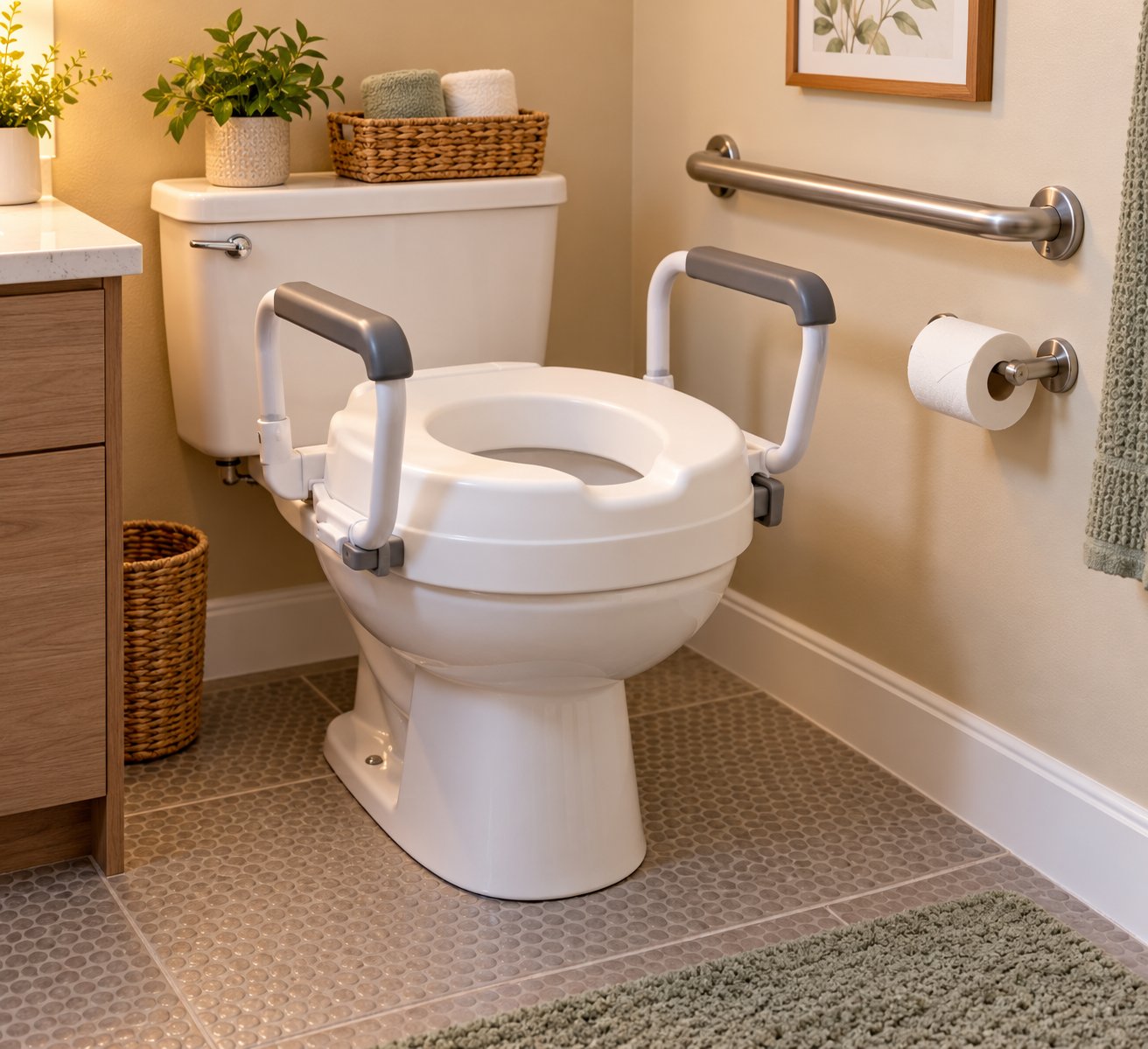
A standard toilet places the seated user roughly fifteen inches above the floor. For someone with stiff knees, arthritic hips, or post-surgical movement restrictions, lowering into — and rising from — that height demands a painful range of motion. Raised toilet seats solve the problem by adding two to four inches of elevation, shrinking the distance between standing and sitting so there's less strain on weight-bearing joints.
Two main designs exist. Bolt-on raised seats clamp or fasten directly to the bowl rim beneath the existing seat, becoming a semi-permanent part of the toilet. Toilet-frame-mounted risers sit on a freestanding frame that straddles the toilet, often incorporating armrests for added stability during transfers. Occupational therapist Christopher Daly of Banner Home Care recommends choosing a model with arm handles whenever possible: "In general, it is a good idea to find a raised toilet seat with arm handles, so you have something to hold onto while sitting and standing."
One important caveat: a seat that raises the user too high can cause feet to dangle, leading to numbness and an increased fall risk when standing. Daly also notes that elevated seating may contribute to constipation by changing the pelvic angle, so pairing a raised seat with a small footstool can help maintain a more natural posture during use. Always confirm that the raised seat is rated for the user's weight, and check whether it's designed for a round or elongated bowl — fit matters just as much at this height as it does at standard level.
Accessibility Feature Checklist
Before committing to a purchase, run through this evaluation list to make sure the seat addresses the specific need rather than just checking a generic "accessibility" box:
- Height adjustment range — Does the seat add the right amount of elevation, and can the user's feet still rest flat on the floor or a footstool?
- Opening style — Is an open-front, extra-large opening, or standard cutout most appropriate for the user's hygiene routine?
- Surface comfort — Does the user require cushioning for extended sits, or is a hard-surface seat with a contoured shape sufficient?
- Stability and locking mechanism — Does the seat clamp, bolt, or lock securely enough to prevent any shifting during transfers?
- Weight capacity — Is the rated load at least 25 to 50 pounds above the user's body weight to provide a safe margin?
- Armrest availability — Would integrated handles or a surrounding safety frame improve confidence during sit-to-stand transitions?
- Cleaning practicality — Can the caregiver or user easily remove, wipe down, and resecure the seat without tools?
- Insurance and Medicare coverage — Some medically necessary raised seats qualify for partial or full reimbursement; check with the user's provider before paying out of pocket.
Accessibility shopping can feel daunting, but it really comes down to matching a single physical limitation — height, reach, comfort, or stability — to the seat feature designed to address it. Get that pairing right, and a ten-dollar accessory or a modest seat upgrade can restore a level of independence that no amount of money can truly measure.
Whether the seat you choose is a cushioned riser for a recovering parent or a simple round plastic toilet seat for everyday family use, every model eventually needs to be bolted onto the bowl. That installation step intimidates a surprising number of people — yet it is genuinely one of the easiest DIY tasks in any home, requiring nothing more than a wrench and about fifteen minutes of patience.
How to Install and Replace a Round Toilet Seat Yourself
Here's a secret most home-improvement guides won't admit upfront: replacing a toilet seat is easier than hanging a picture frame. There's no drywall to patch if you miss, no electrical wiring to worry about, and the entire project requires tools you probably already own. Whether you're swapping out a cracked plastic toilet seat for a cushioned round toilet seat, upgrading to a soft-close model, or installing decorative round toilet seats that match a freshly renovated bathroom, the physical process is nearly identical every time. Fifteen minutes and a little confidence are all you need.
Removing Your Old Round Toilet Seat
Before anything new goes on, the old seat has to come off. Start by lifting the lid and seat upright so you have a clear view of the back of the bowl rim. You're looking for two bolt heads — they sit inside the hinge area at the rear of the seat, often hidden beneath small plastic caps that snap or pry open with a flat-head screwdriver.
Once the caps are out of the way, peer underneath the bowl's back rim. You'll find the nuts that thread onto those bolts from below. On most toilets, you can loosen them by turning counterclockwise — hold the bolt head on top with a screwdriver while gripping the nut underneath with an adjustable wrench. Plastic wing nuts often loosen by hand; metal nuts typically need the wrench.
Sounds straightforward, right? It usually is — until you encounter corroded hardware. Rust is the single biggest reason a "five-minute swap" turns into a weekend headache. If the bolts refuse to budge after hand pressure and a wrench, spray both the bolt head and the nut with a penetrating oil like WD-40 or PB Blaster, then let it sit overnight. The oil seeps into the corroded threads and often frees them up by morning.
Still frozen? You have two brute-force options. A mini hacksaw can cut through the bolt shank between the bowl and the nut — just protect the porcelain with painter's tape to avoid scratching it. Alternatively, a small drill bit (around 1/16 inch) applied to the nut from below can weaken it enough for it to break free. Either method takes patience, but both work. Once the hardware is off, lift the old seat and hinges straight up and set them aside.
Before reaching for the new seat, take thirty seconds to clean the exposed bowl rim. The area underneath the old hinges collects months or years of grime that you'll never see once the new seat is in place. A quick wipe with a disinfectant spray and a rag removes buildup and gives the new hardware a clean, flat surface to clamp against.
Installing a New Round Seat Step by Step
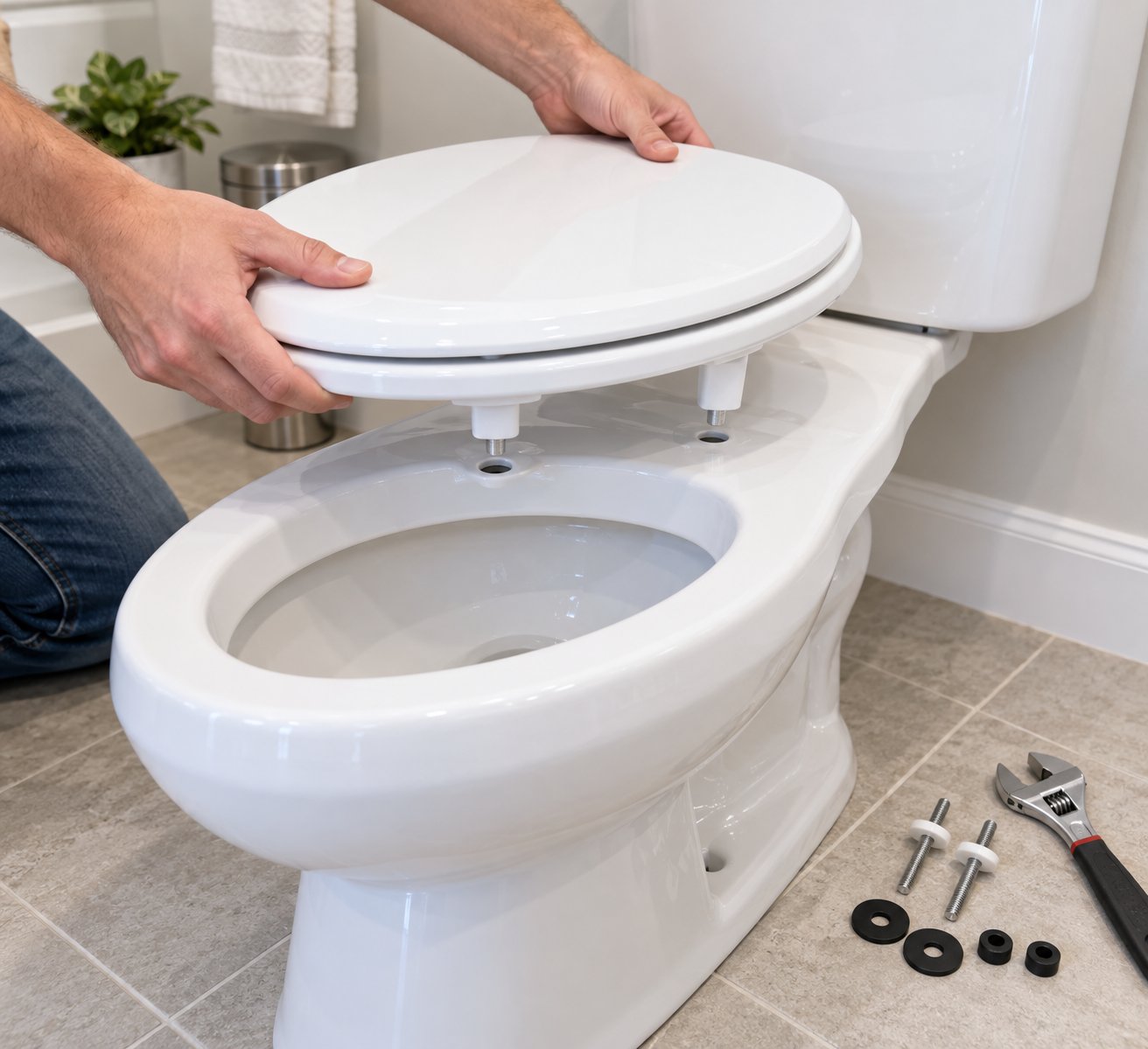
Unbox your new seat and confirm that all the mounting hardware is included — most packages contain two bolts, two nuts, and sometimes plastic or rubber washers. With everything laid out, follow this sequence:
- Position the seat on the bowl. Lower the new seat onto the rim with the hinges facing the back. Align the holes in the hinge plates with the bolt holes in the porcelain. The seat should look centered left to right and the front edge should follow the curve of the bowl rim.
- Insert the mounting bolts from above. Drop each bolt down through the hinge hole and through the corresponding hole in the porcelain. If washers are included, place them on the bolts before threading them through — a rubber washer between the hinge and the porcelain helps absorb vibration and prevents the bolt from scratching the bowl surface.
- Hand-tighten the nuts from below. Reach underneath the back rim and thread each nut onto its bolt, turning clockwise. Finger-tighten only at this stage — you want the seat snug enough to stay in place but still loose enough to slide for alignment.
- Center the seat on the bowl. With the nuts hand-tight, gently shift the seat left or right until it sits evenly on the rim. The gap between the seat edge and the bowl edge should look uniform all the way around. Many hinge designs use slotted bolt holes that allow a small amount of forward-and-backward adjustment as well — take advantage of this to fine-tune the seat's position before final tightening.
- Snug the nuts with a wrench — carefully. Using an adjustable wrench or pliers, tighten each nut an additional quarter- to half-turn beyond hand-tight. Alternate between the left and right sides, tightening each a little at a time so the seat draws down evenly. This is the critical moment: do not over-tighten. Porcelain is strong under compression but brittle under point loads, and excessive torque on a mounting bolt can crack the bowl. Stop as soon as the seat feels solid and does not rock.
- Snap hinge covers into place. If your seat includes plastic caps that conceal the bolt heads, press them down until they click. These covers keep moisture and grime out of the bolt area and give the installation a finished, clean appearance.
That's it. Open and close the lid a few times, sit down and shift your weight side to side, and confirm nothing moves. The entire process — from unboxing to final jiggle test — rarely exceeds ten to fifteen minutes.
Adjusting Hinges and Ensuring a Secure Fit
Even after following every step above, you might notice a slight wobble or a seat that drifts to one side during use. Minor fit issues are common and almost always fixable without starting over.
The first thing to check is bolt alignment. Many round toilet seats use slotted hinge holes rather than fixed round ones. These slots give you roughly half an inch of play in the forward-backward direction. If the seat overhangs the front of the bowl slightly, loosen both nuts a quarter-turn, slide the seat backward, and re-tighten. If it sits too far back, do the reverse. That simple slide-and-snug adjustment corrects most alignment complaints.
Side-to-side shifting usually points to a different culprit: the rubber bumpers on the underside of the seat. These small pads — typically two or four of them — sit between the seat bottom and the porcelain rim. They serve a dual purpose: preventing the seat from scratching the bowl and adding friction that resists lateral movement. If bumpers are missing, worn flat, or positioned unevenly, the seat slides sideways every time someone sits down. Replacement bumper kits are inexpensive and stick on with adhesive backing; swap them out and the wobble typically vanishes.
For seats with top-mount or quick-release hinge systems, the adjustment process differs slightly. Top-mount bolts tighten from above rather than below, which eliminates the awkward reach underneath the bowl. A screwdriver is usually the only tool you need. Quick-release seats, meanwhile, lock onto mounting posts that remain permanently bolted to the bowl. If the seat feels loose on its posts, the fix is to tighten the posts themselves — pop off the decorative base cover, use a screwdriver to snug the post's anchor bolt, and click the seat back on.
Quality fixing systems engineered with rubber grommets, stabilizing bumpers, and locking nut designs resist loosening far longer than bargain-bin hardware held in place by a single plastic wing nut. If you find yourself re-tightening the same bolts every few weeks, the hardware — not your technique — is likely the weak link. A universal stainless-steel mounting kit with rubber washers costs only a few dollars and can transform a perpetually wobbly seat, whether it's a basic round plastic model or a premium round toilet seat with extra large opening, into one that stays planted for years.
A properly installed seat should feel rock-solid from day one and stay that way through thousands of open-close cycles. When it doesn't — when bolts loosen on their own, hinges corrode, or the seat surface starts to yellow — the problem almost always traces back to component quality rather than installation error. Understanding why seats fail, and what to do when they do, is the final piece of knowledge that separates a frustrated owner from a confident one.
Troubleshooting Common Problems and Maintaining Your Seat
A toilet seat that felt perfectly solid on installation day can start to wobble, squeak, or look dingy six months later — and the fix is almost never "buy a whole new toilet." Most problems trace back to a handful of predictable causes, and nearly all of them are correctable at home with basic tools, a few replacement parts, and about ten minutes of effort. Whether you're dealing with a shifting seat, a corroded hinge, or a once-white lid that's turned an unflattering shade of yellow, the troubleshooting steps below will help you diagnose the issue and resolve it before it gets worse.
Fixing a Seat That Slides or Shifts
You sit down, and the entire seat drifts an inch to the left. You shift your weight, and it rocks back. This lateral movement is the single most common complaint with round toilet seats, and it's also one of the easiest to fix — once you understand what's actually causing it.
Start underneath. Reach below the back rim of the bowl and check the mounting nuts. In most cases, they've simply loosened over time from repeated use. Hand-vibration and the subtle rocking motion of daily sitting gradually back the nuts off their threads, especially if the original hardware relied on lightweight plastic wing nuts without any locking mechanism. Tighten each nut a quarter-turn with an adjustable wrench, alternating sides so the seat draws down evenly, and check for stability again.
If the bolts are snug but the seat still slides, flip the lid up and inspect the rubber bumpers on the seat's underside. These small pads — usually two at the front and two near the hinges — create the friction barrier between seat and porcelain. Over months of use, bumpers compress, crack, or fall off entirely. Without them, you're essentially placing a smooth plastic surface on a smooth ceramic surface — a combination with almost zero grip. Peel off the old bumpers, clean the contact spots with rubbing alcohol, and press on fresh adhesive-backed replacements. A pack costs under three dollars and restores stability instantly.
For persistent shifting that resists both fixes, consider upgrading to a mounting kit that includes rubber grommets and a locking-nut design. These kits grip the porcelain from both sides of the bolt hole and resist vibration-induced loosening far more effectively than a basic nut-and-bolt setup.
Dealing With Hinge Failures and Discoloration
Hinges endure more mechanical stress than any other part of a toilet seat for round bowl installations. Every time someone lifts the lid, lowers it, or bumps it sideways, the hinge absorbs that force. Cheap zinc-alloy hinges are particularly vulnerable — the zinc corrodes in humid bathroom air, weakening the metal until the pin or bracket snaps entirely. Plastic hinges avoid corrosion but can become brittle with age, especially in bathrooms that receive direct sunlight through a window. UV radiation degrades most polymers over time, making the plastic rigid and prone to cracking under normal use.
Discoloration is a separate but equally frustrating issue. That bright white seat you installed last year might now carry a faint yellow tint that no amount of scrubbing removes. The culprit is usually a combination of UV exposure and chemical interaction. Harsh bleach-based cleaners, while excellent at killing bacteria, can accelerate yellowing on lower-grade thermoplastics — particularly budget polypropylene formulations that lack UV stabilizers in their resin blend. Iron-rich hard water compounds the problem, depositing mineral films that bond to the seat surface and resist standard cleaning products.
Use this symptom-and-fix reference to diagnose what you're seeing:
- Seat wobbles despite tight bolts — Hinge bracket is cracked or warped; replace the entire hinge assembly or the seat if hinges are non-removable.
- Lid won't stay up when raised — Friction hinge has worn smooth or the counterbalance spring has failed; look for a replacement hinge kit compatible with your seat model.
- Soft-close no longer works — The hydraulic damper has lost its fluid charge or the friction element has degraded; if the damper is integrated into the hinge and not user-replaceable, the seat needs to be swapped out.
- Green or white crust around bolt heads — Zinc-alloy hardware is corroding; remove the bolts, scrub the area, and replace with stainless-steel or nylon mounting hardware.
- Uniform yellowing across the seat surface — UV and chemical degradation of the plastic; not reversible with cleaning. Prevent it on the next seat by using non-bleach disinfectants and closing the bathroom blind when the room is not in use.
- Localized brown or orange stains — Hard-water mineral deposits; apply a paste of baking soda and white vinegar, let it sit for 20 minutes, then scrub gently with a non-abrasive sponge.
- Cracking along the seat rim or near bolt holes — Stress fracture from over-tightened hardware or impact damage; the seat should be replaced, as cracks harbor bacteria and weaken the structure further.
- Vinyl tearing on a round padded toilet seat — Moisture has penetrated the seam, causing the foam to swell and split the cover; replace the seat and keep future padded models dry between uses.
A quick note on cleaning best practices: whether you own a hard-surface PP model, a u shaped toilet seat in a commercial restroom, or a cushioned residential seat, microbiologists recommend consistent cleaning with mild, non-abrasive products over occasional heavy-chemical scrubbing. Gentle weekly maintenance protects the seat finish and prevents the microscopic surface damage that gives bacteria a foothold.
Why Component Quality Determines Seat Longevity
Here's the insight that ties every troubleshooting tip above into a single principle: a toilet seat is not one product — it's a system of components that must work together. The cover, the hinge mechanism, the damper (if soft-close), and the fixing hardware each carry independent failure points. A premium urea formaldehyde cover paired with bargain-bin zinc hinges will still corrode and wobble. A beautifully engineered soft-close damper mounted to a flimsy polypropylene lid will still feel cheap and flex under weight. When any single component underperforms, the entire seat experience suffers — regardless of how much you spent on the strongest link in the chain.
This is why the most reliable seats, whether you're evaluating a round or oblong toilet seat at a hardware store, tend to come from manufacturers that engineer the full assembly as a matched set rather than sourcing each part from the lowest bidder. Matched components share load ratings, thermal expansion tolerances, and dimensional precision. The bolt holes in the hinge plate line up perfectly with the molded seat body because both were designed on the same engineering drawing. The damper's resistance curve is calibrated to the lid's weight and the hinge's pivot geometry, producing a closing motion that feels smooth from day one and stays smooth thousands of cycles later.
In the OEM manufacturing world, this integrated-component philosophy is well established. Tianyun's PP / UF Seat Cover program, for instance, supplies sanitaryware brands with production-ready seat assemblies where the PP or UF cover, dampers, hinges, and fixing systems are developed together as a single coordinated package. That kind of supply-chain integration — where every component is engineered to complement the others — is the industrial backbone behind retail seats that perform consistently year after year. It's the same principle you should look for as a consumer: favor seats sold as complete assemblies with matched hardware over those that ship with generic bolt kits of unknown origin.
How do you spot that quality from a product listing? A few telling signals stand out. Seats that advertise stainless-steel or high-grade nylon mounting hardware rather than unspecified "metal bolts" are making a deliberate material choice. Brands that list the damper's rated cycle count — often 50,000 or more on quality units — are confident enough in the component to quantify its lifespan. And seats backed by multi-year warranties that cover the hinges and hardware, not just the seat body, suggest that the manufacturer trusts the entire system, not just the most visible part of it.
Whether you're replacing a cracked seat in a rental apartment, upgrading a builder-grade round or oblong toilet seat in a forever home, or selecting an accessible model for an aging parent, the decision framework stays the same. Confirm your bowl shape and measurements. Choose a material — PP for budget reliability, UF for premium durability, wood for warmth and character. Pick the features your household actually needs. Install it properly with correct torque and fresh bumpers. And when something eventually wears out — because every mechanical component has a finite life — diagnose the specific failure, fix or replace the weakest link, and move on with confidence.
A round toilet seat is one of the most affordable, most frequently used, and least frequently thought-about objects in your home. Spending fifteen minutes understanding what you're buying — and why it's built the way it is — saves you years of wobbling, slamming, staining, and replacing. That's the knowledge nobody tells you before you buy. Consider yourself told.
Frequently Asked Questions About Round Toilet Seats
1. How do I know if my toilet needs a round or elongated seat?
Measure from the midpoint between the two rear mounting bolt holes straight to the front outer edge of the bowl rim. If that distance is approximately 16.5 inches, your toilet takes a round seat. If it measures closer to 18.5 inches, you need an elongated seat. The bolt-hole spread (5.5 inches center to center) is the same for both shapes, so the front-to-back length is the only reliable distinguishing measurement. When in doubt, check the model number inside your tank and look up the manufacturer's spec sheet.
2. Can you put an elongated toilet seat on a round toilet bowl?
No, and attempting it creates multiple problems. Although the rear bolt-hole spacing is identical on both shapes, an elongated seat overhangs the front of a round bowl by nearly two inches, leaving an unsupported lip that flexes under body weight. The mismatch also leaves gaps along the sides where moisture and bacteria collect, making the setup both unstable and unsanitary. Always match the seat shape to your bowl shape for a secure, hygienic fit.
3. What is the best material for a round toilet seat?
It depends on your priorities. Polypropylene (PP) is the most affordable and widely available option, offering solid chemical resistance and light weight — ideal for rentals and family bathrooms. Urea formaldehyde (UF), also called duroplast, is a thermoset plastic that delivers superior scratch resistance, color stability, and a premium ceramic-like feel, making it the top choice for long-term homeowners. Natural wood seats provide unmatched warmth and decorative appeal but require more maintenance to prevent moisture damage. OEM manufacturers like Tianyun produce both PP and UF seat covers paired with matched dampers and hinges, illustrating how material quality and component integration work together for lasting performance.
4. How do I stop my round toilet seat from sliding side to side?
Lateral shifting typically has two causes. First, check the mounting nuts underneath the bowl rim — daily use gradually loosens them, so tighten each nut a quarter-turn with a wrench, alternating sides for even pressure. Second, inspect the rubber bumpers on the seat's underside. These pads create friction between the seat and porcelain, and once they compress, crack, or fall off, the seat loses its grip. Replace them with inexpensive adhesive-backed bumper kits. If the problem persists, upgrade to a mounting kit with rubber grommets and a locking-nut design that resists vibration loosening.
5. Are soft-close and slow-close toilet seats the same thing?
Yes. Both terms describe the same damper technology — a small hydraulic or friction-based mechanism inside the hinge assembly that controls the lid's descent so it never slams shut. Different brands use different marketing labels, but the function is identical. The real quality difference lies in the damper component itself: well-engineered dampers maintain consistent closing speed for years, while cheaper versions may lose resistance within 12 to 24 months. Look for seats that list a rated cycle count (often 50,000 or more) as a sign of damper durability.
Apply This Insight to Your Project
Tell us what you are building and how the topic “Round Toilet Seats: What Nobody Tells You Before You Buy” relates to your application. Our engineering team can help evaluate the next step.