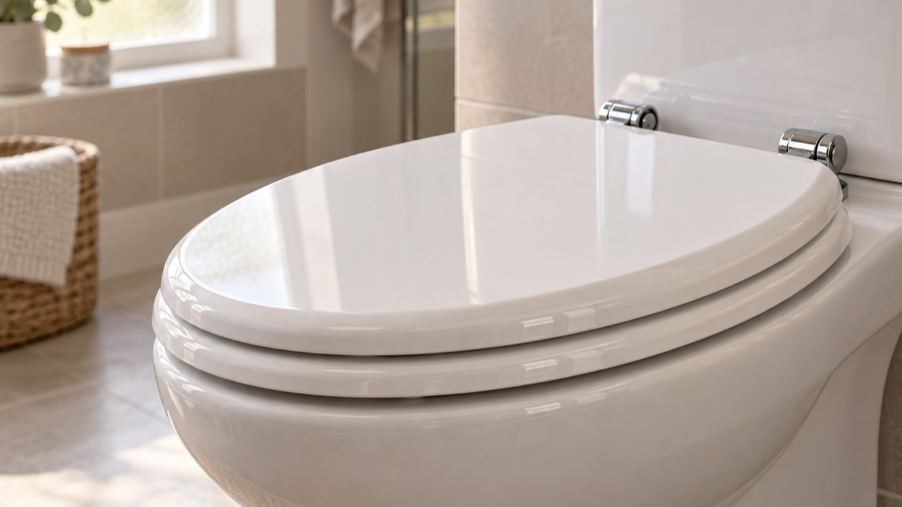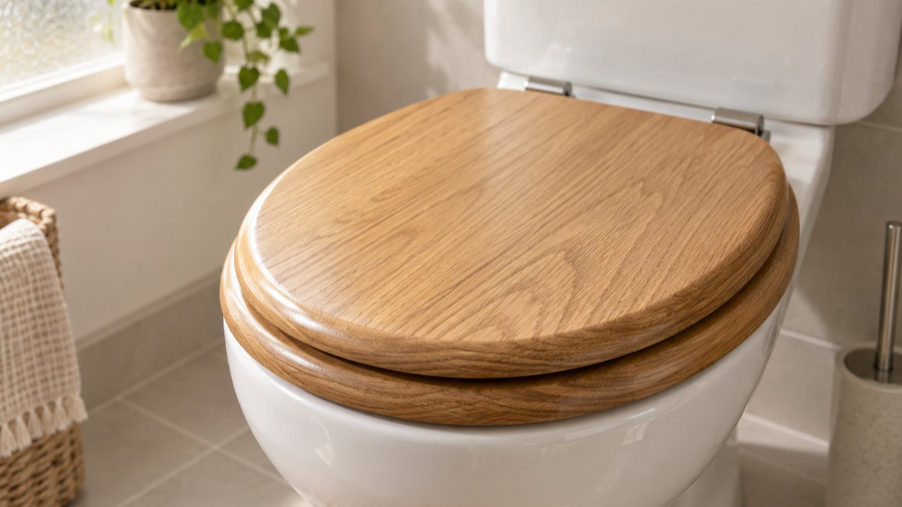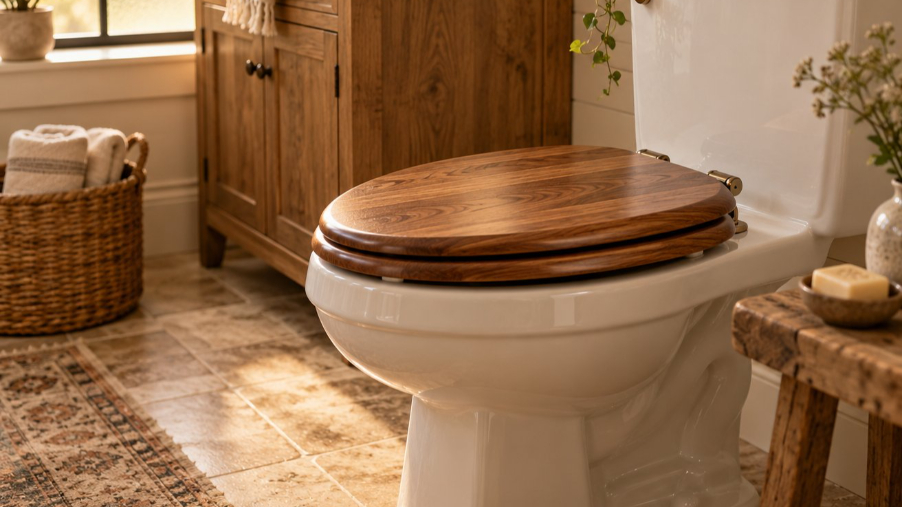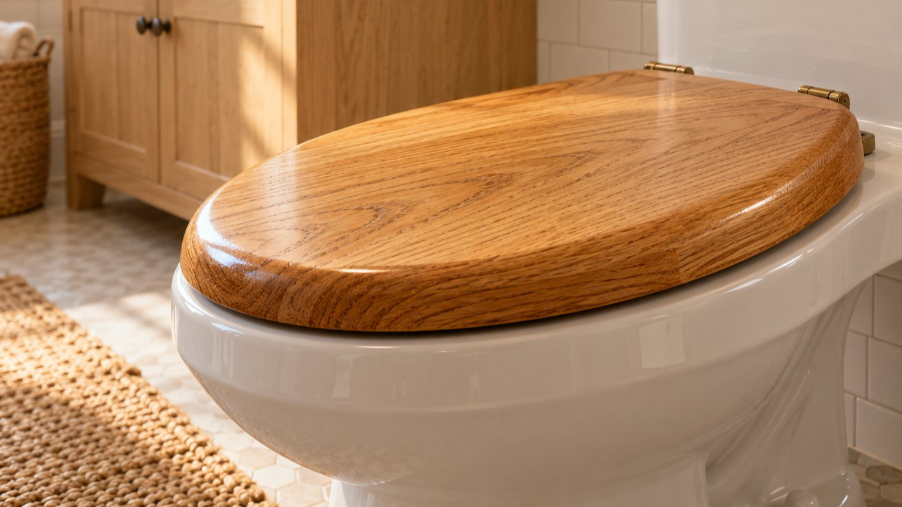
The Real Plastic Versus Wood Toilet Seat Debate
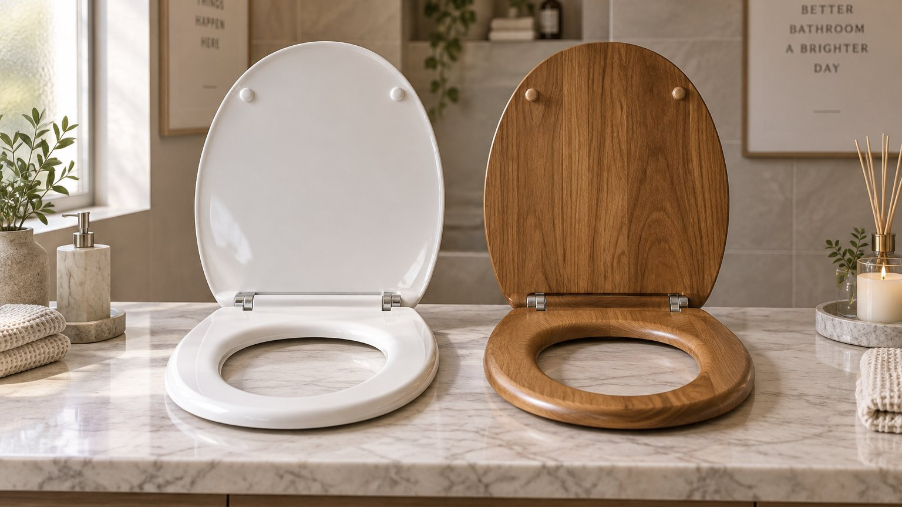
Picture this: you are standing in the bathroom fixtures aisle, staring at a wall of toilet seats, and the only question in your head is "plastic or wood?" It sounds simple. It is anything but.
Why the Plastic-Versus-Wood Debate Is More Complex Than It Seems
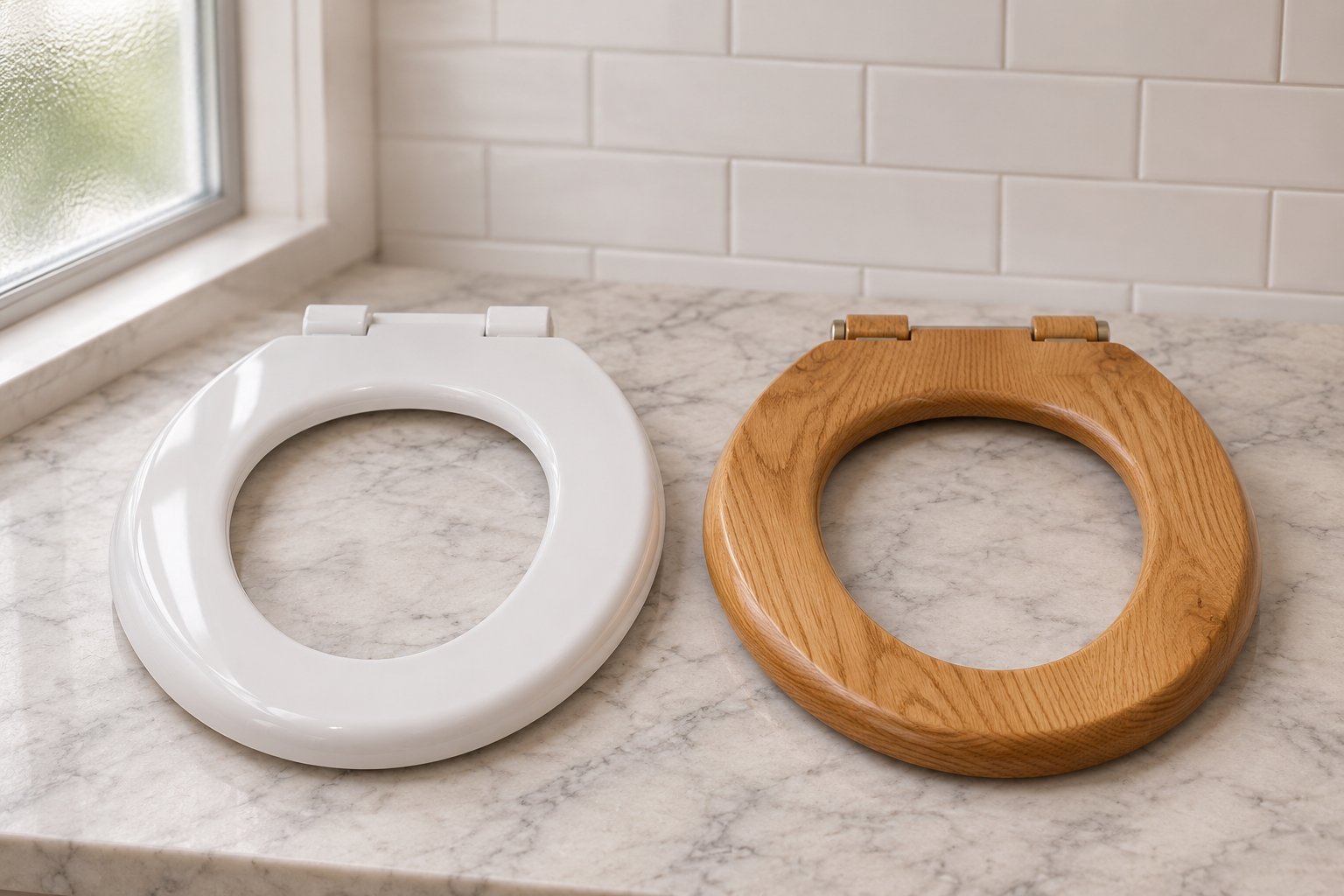
Most buyers treat this decision as a coin flip between two materials. In reality, "plastic" is an umbrella term covering polypropylene, urea-formaldehyde resin, and thermoset Duroplast, and each one performs dramatically differently in durability, hygiene, and hinge compatibility. The wood side of the aisle is just as fragmented. A glossy enameled wood toilet seat, a solid oak seat, and a budget MDF composite share a label but almost nothing else in terms of moisture resistance or lifespan.
That complexity is exactly why generic advice like "plastic is easier to clean" or "a wooden wc seat feels warmer" falls short. Those statements are true in the broadest sense, yet they gloss over the material subtypes that actually determine whether your seat will last two years or twenty.
What This Ranked Guide Covers
Instead of vague pros-and-cons lists, we scored and ranked six specific material categories so you can match the right seat to your climate, budget, and household. Here is what we evaluate:
- Polypropylene (PP) plastic
- Urea-formaldehyde (UF) resin
- Enameled wood
- Thermoset (Duroplast) plastic
- Solid hardwood (oak, bamboo, and similar species)
- MDF and molded-wood composites
Whether you are replacing a cracked seat in a rental unit or choosing wooden lavatory seats to complement a farmhouse remodel, this guide gives you a decisive, ranked answer. Every material is measured against the same criteria, so the results are directly comparable and genuinely useful for your next purchase.
Of course, a ranking is only as trustworthy as the criteria behind it, and the factors most buyers overlook are exactly the ones that separate a great seat from a regrettable one.
How We Scored and Ranked Every Material
A wood or plastic toilet seat can look perfectly fine on a store shelf, yet disappoint within months if you picked it based on the wrong priorities. Appearance and price tend to dominate the decision, but they tell you almost nothing about how a seat holds up in a humid bathroom or whether its hinges will stay quiet after a few thousand open-close cycles. That is why we built a structured scoring system before comparing a single product.
Five Criteria That Actually Matter
Every wooden toilet seat and every plastic toilet seat in our ranking was measured against the same five performance factors. Think of these as the questions your seat has to answer well every day, not just on day one:
- Durability and lifespan — How long does the material resist cracking, warping, and surface degradation under normal household use?
- Hygiene and bacterial resistance — Is the surface truly non-porous, or does it absorb moisture and harbor bacteria over time?
- Comfort, warmth, and flex — Does the seat feel pleasant to sit on in both warm and cold conditions, and does it offer any give under body weight?
- Compatibility with slow-close hinges and bowl shapes — Can the material pair reliably with soft-close dampers, and is it available in both round and elongated configurations?
- Value for money — Does the purchase price reflect what you actually get in terms of performance and expected lifespan?
How We Weighted Each Factor
Not all five criteria carry equal influence. Hygiene and durability sit at the top of the weighting scale because they affect every household, whether you are furnishing a busy family bathroom or a seldom-used powder room. Style preferences vary; bacterial resistance does not.
Comfort ranks third. A wooden toilet seat's warmth advantage matters most in unheated spaces, while a plastic toilet seat's rigidity is barely noticeable in a climate-controlled home. Hinge compatibility comes next, and this is where our approach differs from most guides. We factor in each material's weight because heavier lids place significantly more stress on slow-close dampers. Industry fatigue and lifecycle testing confirms that hinges and dampers are the most frequent failure points during repeated open-close cycles, and a seat's mass directly accelerates that wear. Ignore this detail, and a beautiful solid-wood lid could burn through its soft-close mechanism in a fraction of the expected lifespan.
Value for money anchors the ranking but does not override the other factors. A bargain seat that breeds bacteria or cracks within a year is no bargain at all.
One more distinction matters: we evaluate subtypes individually. Lumping all wooden toilet seats into one bucket, or treating every plastic variant as identical, leads to misleading conclusions. Polypropylene and thermoset resin are both "plastic," yet they differ in hardness, scratch resistance, recyclability, and weight. Likewise, an enameled wood seat and a raw oak seat share a material family but occupy completely different performance tiers. Separating these subtypes is the only honest way to decide what truly belongs at the top of the list.
With the scoring framework locked in, the real test begins: how does each of the six materials actually perform when you hold it against these benchmarks?
#1 Polypropylene (PP) Plastic Seats
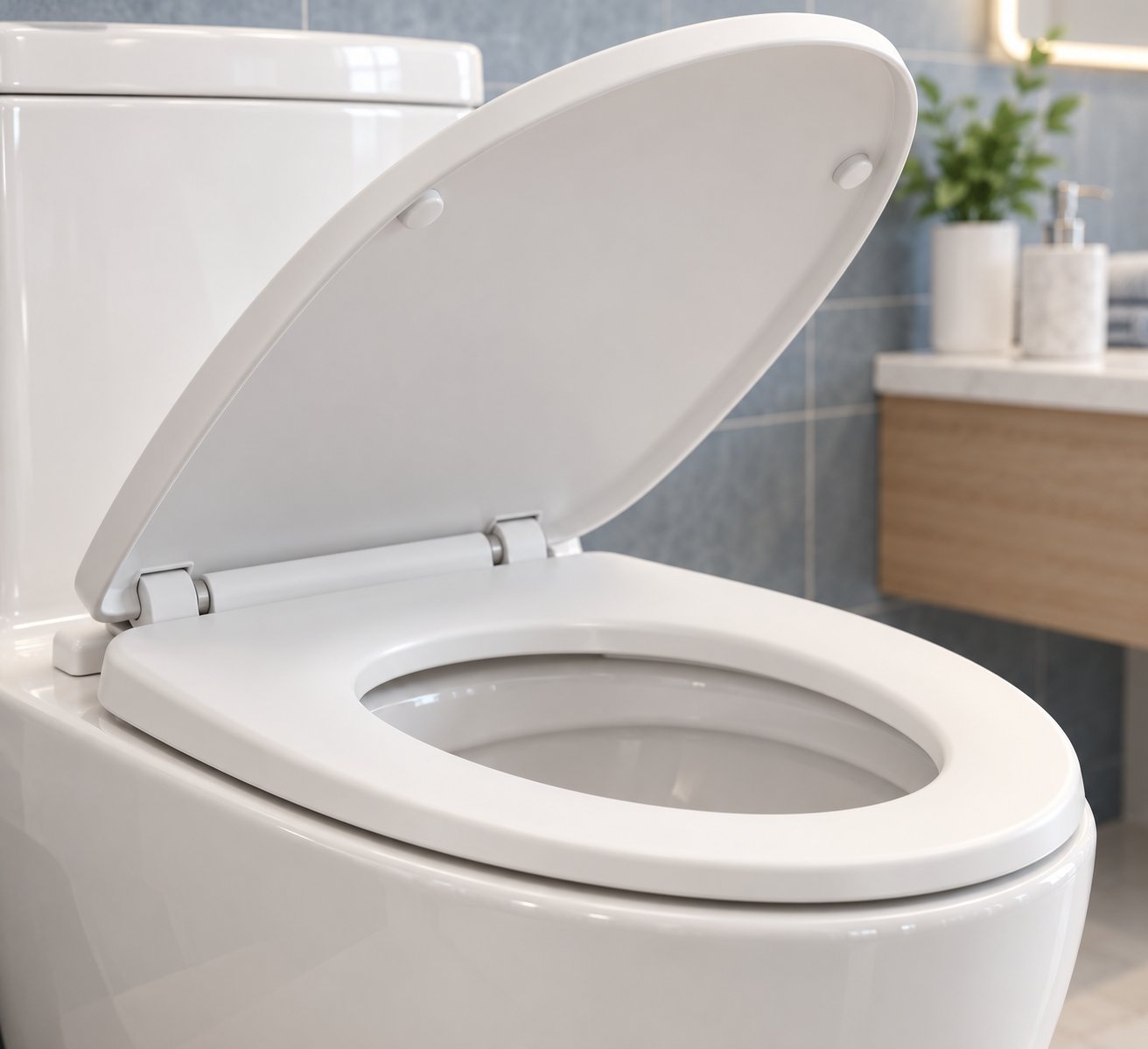
Polypropylene takes the top spot in our ranking, and the reasons extend well beyond sticker price. If your mental image of a plastic seat is a flimsy, hollow lid that flexes every time you sit down, you are thinking of the wrong subtype. PP is the same polymer trusted in food-grade containers and medical devices. When engineered specifically for bathroom use, it delivers a balance of hygiene, durability, and hinge-friendly weight that neither a wooden toilet seat nor a generic thermoplastic can match.
Why Polypropylene Tops the List
In a wood vs plastic toilet seat comparison, the winning material needs to score well across every criterion, not just dominate one category while falling flat in another. PP does exactly that.
Start with moisture immunity. Polypropylene is inherently resistant to water absorption, meaning it will not swell, warp, or delaminate in a steamy bathroom. A wooden toilet seat — even one sealed with enamel — faces a constant battle against humidity. PP sidesteps that battle entirely because there is no porous core hiding beneath a protective coating. The surface you install on day one is the same sealed surface years later.
Stain resistance works the same way. Coffee-colored mineral deposits, hard-water rings, and cleaning-product residue wipe off a PP seat without leaving a trace. Try the same routine on an aging enameled wood seat and you will often find discoloration settling into micro-cracks you cannot even see with the naked eye.
Then there is the weight advantage, and this is the detail most guides overlook entirely. PP is one of the lightest toilet seat materials available. That low density is not a weakness — it is a mechanical benefit. Every time a soft-close damper lowers a lid, it is working against gravity and the mass of the seat. A heavier lid forces the damper to absorb more kinetic energy on every cycle, accelerating internal wear and eventually causing that frustrating "slam" when the mechanism gives out. PP's lighter mass means less hinge stress, quieter closing, and a significantly longer service life for the soft-close hardware. If you have ever wondered why your wooden toilet seat's damper failed after just a couple of years, the seat's weight was likely the culprit.
Comfort and Hygiene Profile
Hygiene is PP's single strongest advantage. The material is completely non-porous, so bacteria, mold spores, and odor-causing moisture have nowhere to penetrate. A standard bathroom cleaner and a soft cloth are all you need for a fully sanitary wipe-down. Compare that to a wooden commode seat where a chipped enamel layer can expose compressed wood fiber to moisture, and you start to see why industry material comparisons consistently highlight PP's moisture resistance, non-toxic properties, and acid-and-alkali corrosion resistance as standout traits.
Comfort is where PP asks for a small concession. Like all plastics, it feels cool to the touch in an unheated bathroom during winter months. That initial chill is real — no amount of marketing spin changes the physics of thermal conductivity. However, PP warms to body temperature within seconds of contact, and most users in climate-controlled homes barely notice the difference. If your bathroom has radiant floor heating or stays above 65 degrees Fahrenheit, the warmth gap between PP and a solid wood seat shrinks to almost nothing.
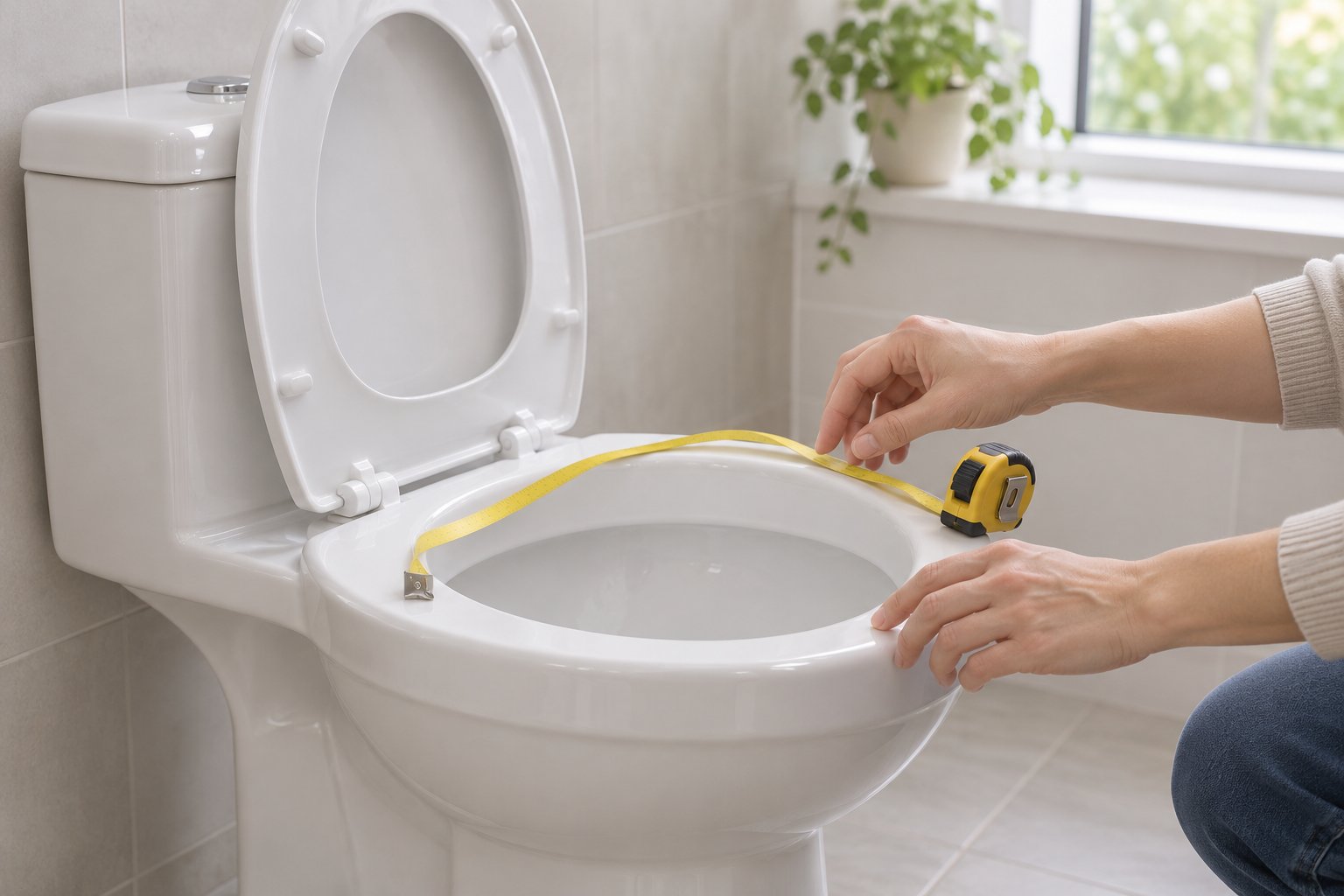
Shape compatibility rounds out the practical picture. PP seats are widely manufactured in round, elongated, and D-shaped profiles, giving you the broadest selection of any material when matching a new seat to an existing bowl. Whether you are replacing a builder-grade round seat or upgrading to an elongated model, you will almost certainly find a PP option that fits without shimming or improvising.
Pros
- Fully non-porous surface resists bacteria, mold, and staining throughout its lifespan
- Lightweight design extends soft-close damper life and delivers quieter operation
- Available in the widest range of colors, finishes, and bowl shapes
- Mid-range price point with a five-to-ten-year expected lifespan — strong cost-per-year value
- Recyclable PP resin, with some manufacturers offering recycled-content options
Cons
- Feels cool to the touch in cold or unheated bathrooms
- Softer surface than urea-formaldehyde or thermoset — can pick up fine scratches over many years
- Lacks the substantial heft that some buyers associate with premium quality
Who PP Suits Best
PP is the default recommendation for more households than any other material on this list. Families with young children benefit from its light weight (easy for small hands to lift), sealed surface (no hidden germ pockets), and affordability (less painful when a toddler inevitably slams the lid). Rental property owners get a durable, low-maintenance seat that survives tenant turnover without needing replacement every lease cycle. Budget-conscious buyers who still want reliable soft-close performance will find that PP delivers the smoothest bang-for-the-buck ratio in the entire ranking.
Elderly or mobility-impaired users also gain a practical edge. The lighter lid is easier to raise one-handed, and when paired with a quality soft-close mechanism, it eliminates the risk of the seat dropping unexpectedly.
The manufacturing maturity behind PP seats reinforces this recommendation. Today's production-grade PP programs go far beyond molding a lid and tossing in generic hardware. Tianyun's PP seat covers, for example, are engineered as complete systems for OEM sanitaryware brands — each seat paired with matched dampers, hinges, and fixing hardware designed to work together. That integrated approach is precisely how the hinge-compatibility challenge gets solved at scale: the seat material, closing mechanism, and mounting components are tested as a unit rather than cobbled together from separate suppliers. It is a clear signal that PP has evolved from a "budget plastic" into a fully engineered product category.
Still, PP is not the only plastic worth considering. Buyers who want that heavier, ceramic-like density without sacrificing any of PP's hygiene strengths have a compelling upgrade path — one that blurs the line between plastic performance and the solid feel traditionally reserved for wood.
#2 Urea-Formaldehyde (UF) Seats
That ceramic-like density hinted at in the PP section? It belongs to urea-formaldehyde. If you have ever picked up a toilet seat that felt surprisingly heavy, glossy, and almost stone-like, you were probably holding a UF seat without realizing it. This material earns the #2 rank because it delivers the scratch resistance and visual refinement that PP cannot quite reach — while still keeping every hygiene advantage that makes plastic superior to a wooden seat toilet in most bathrooms.
What Makes UF Different From Regular Plastic
Here is where the "plastic subtypes" distinction really pays off. Polypropylene is a thermoplastic — heat it up and it softens, cool it down and it re-hardens. You can theoretically remelt and reshape it. Urea-formaldehyde works the opposite way. It is a thermoset resin, meaning the chemical reaction during molding is permanent. Once a UF seat cures under high temperature and pressure, it locks into a rigid, rock-hard structure that cannot soften again when reheated. That irreversible cure is the secret behind everything buyers notice the moment they handle the product.
Pick up a PP seat in one hand and a UF seat in the other. You will feel the difference immediately. PP has a slight flex — useful for impact absorption, but it reads as "lightweight plastic" to many shoppers. UF has almost zero give. Its surface is harder, denser, and polished to a gloss that genuinely mimics glazed ceramic. The material is produced by grinding urea-formaldehyde resin into powder and then molding it under high temperature and pressure, which gives the finished seat that smooth, porcelain-like feel buyers often associate with high-end fixtures.
So is wood or plastic toilet seat better when you want something that feels premium? UF proves you do not need to reach for a wooden commode seat to get that satisfying heft. You get it from chemistry instead — and without any of wood's moisture vulnerabilities.
Durability Under Daily Use
Scratch resistance is where UF truly separates itself from every other seat on this list. Keys, belt buckles, cleaning brushes — the minor abrasions that gradually dull a PP surface barely register on a UF seat. That harder surface also reduces the visible wear marks that make a toilet seat look old long before it is structurally compromised. For households where appearance matters as much as function, that difference adds years to the seat's useful life.
Then there is the yellowing question. If you have ever watched a white plastic seat slowly turn an unpleasant shade of ivory, you already know this pain point. Standard thermoplastics — especially lower-grade polypropylene — can yellow under prolonged UV exposure and chemical contact over time. UF resists that degradation far more effectively. Its thermoset structure locks pigment into the cured resin matrix, so the bright white gloss you see on installation day stays remarkably consistent year after year, even in bathrooms with natural light streaming through a window.
Humidity performance deserves a mention too. Unlike any wood-based option, UF does not absorb atmospheric moisture. It will not swell during a muggy summer, shrink during a dry winter, or develop the hairline cracks that plague wooden seats in fluctuating climates. The seat holds its molded dimensions and maintains a sealed surface regardless of the environment.
Pros
- Exceptional scratch resistance — outperforms PP, enameled wood, and MDF by a wide margin
- Ceramic-like gloss and density create a genuinely premium look and feel
- Strong resistance to UV yellowing and color fading over time
- Non-porous surface delivers hygiene comparable to PP — no bacterial absorption
- Dimensionally stable in humid environments with zero moisture-driven warping
- Bright, smooth finish makes daily cleaning quick and effective
Cons
- Heavier than PP, which increases stress on soft-close dampers over thousands of cycles
- Higher price point — typically $20 to $70 compared to PP's $15 to $40 range
- Rigid surface offers no flex, which some users find less forgiving during prolonged sitting
- Requires hinges specifically rated for the extra mass to maintain reliable slow-close function
Ideal Scenarios for UF Seats
UF is the natural upgrade for anyone who appreciates PP's practical strengths but wants the bathroom to look and feel a tier above. Design-focused homeowners remodeling a master bath will notice the difference the moment a UF lid catches the light — its gloss rivals the toilet bowl itself, creating a seamless visual match that a matte PP lid simply cannot achieve.
Commercial restrooms are another strong use case. High-traffic environments demand scratch resistance above all else, and UF's harder surface shrugs off the daily abuse that would leave visible scuff marks on softer materials within weeks. Hotels, restaurants, and office buildings benefit from a seat that still looks new after tens of thousands of uses.
There is one practical trade-off to plan around, though. UF's heavier weight — the very quality that makes it feel premium — means your hinge hardware needs to match. A soft-close damper rated for a lightweight PP seat may wear out prematurely under the extra load of a UF lid. When shopping, look for hinges explicitly rated for thermoset or UF-weight seats, or choose integrated seat-and-hinge systems where the manufacturer has already matched the components for optimal cycle life.
That weight factor does more than affect hinge longevity. It introduces a broader question about how thermoset plastics as a category compare with their thermoplastic cousins — and whether the European market's favorite thermoset variant, Duroplast, offers an even different balance of strengths and trade-offs.
#3 Enameled Wood Seats
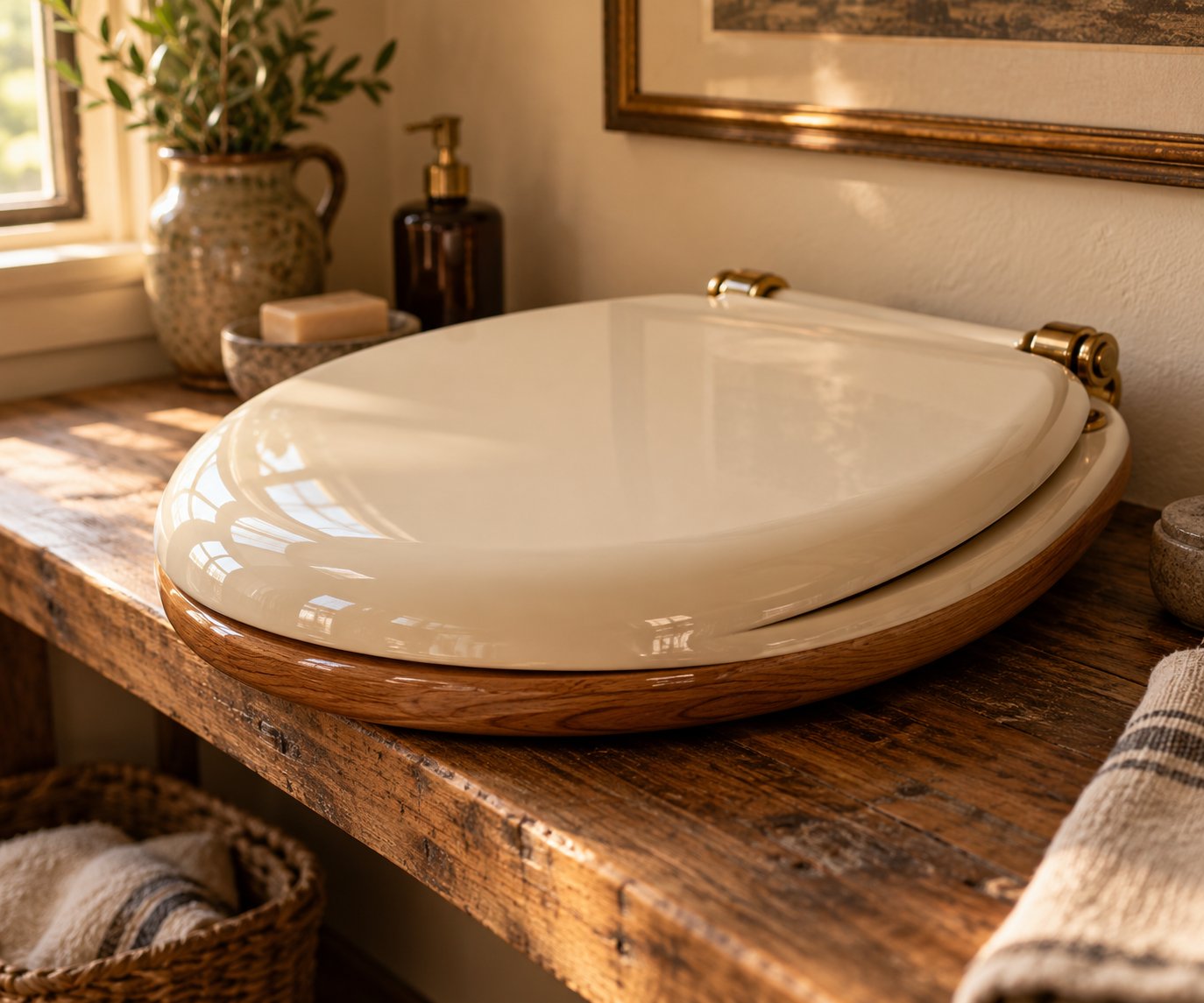
Thermoset chemistry is not the only way to chase that heavier, more substantial feel. For buyers who want the warmth and weight of real wood but worry about raw timber's vulnerability to moisture, enameled wood offers a middle path. It lands at #3 in our ranking — the highest position any wood-based material achieves — because it genuinely tries to deliver the best of both worlds. The key word, though, is "tries."
How Enameled Wood Bridges Both Worlds
Imagine a toilet seat wood core — typically MDF or molded pressed wood — encased in a thick, glossy enamel paint finish. That enamel layer is the engineering compromise at the heart of this category. It seals the porous wood substrate beneath a smooth, semi-non-porous shell, giving the seat a surface that feels closer to plastic than to raw timber.
The result is a seat that checks some appealing boxes simultaneously. You get a heavier, more substantial lid than any polypropylene model can deliver, paired with the traditional look that many homeowners associate with quality bathroom fixtures. When you lower the lid, there is a satisfying solidity — no flex, no hollow resonance. That tactile experience is difficult for lightweight plastics to replicate, and it explains why major retailers highlight that wood seats give "a more substantial feel to the seat and lid" compared to their plastic counterparts.
Hygiene also improves compared to unsealed wood options. The glossy enamel creates a barrier that resists surface-level moisture, staining, and everyday grime. You can wipe it down with standard bathroom cleaners and expect a reasonably sanitary result — far better than what a bare oak or bamboo seat would allow. Enameled finishes are also described as durable, wear-, stain-, and chip-resistant, which means the protective coat is designed to hold up under normal household conditions.
Here is the critical caveat, though: "semi-non-porous" is not the same as "non-porous." The enamel layer protects only as long as it remains intact. A PP or UF seat is non-porous all the way through — scratch the surface and you expose more of the same sealed material. Scratch an enameled wood toilet seat deeply enough and you expose compressed wood fiber that absorbs moisture like a sponge. That structural difference is exactly why enameled wood cannot climb higher than #3 in the plastic versus wood toilet seat ranking, no matter how attractive it looks on the shelf.
Where Enameled Wood Falls Short
The biggest risk with wooden toilet seats finished in enamel is chipping. Think about the everyday collisions a toilet seat absorbs: a cleaning bottle dropped on the rim, a child flipping the lid up too fast, a metal toilet brush handle grazing the edge. Each impact is a potential crack in that protective enamel shell. Once the barrier breaks — even a hairline chip invisible to the casual glance — moisture begins migrating into the wood core underneath.
What happens next is predictable and difficult to reverse. The compressed wood fibers absorb bathroom humidity, swell unevenly, and push against the surrounding enamel from the inside. That swelling leads to more cracking, which lets in more moisture, which triggers further expansion. Within a few months, a small chip can turn into a soft, discolored patch that harbors bacteria and mold. At that point, the seat's hygiene profile drops well below even a basic plastic option.
Seasonal expansion and contraction compound the problem. Wood naturally swells in humid summer months and contracts during dry winters. The enamel coating does not flex at the same rate as the wood core, so repeated thermal cycles gradually weaken the bond between the two layers. In bathrooms without climate control — think guest bathrooms in garages, lake houses, or older homes without central HVAC — this mismatch accelerates significantly.
Temperature behavior, however, is the one arena where enameled wood genuinely outperforms every plastic on this list. That wood core retains warmth far better than PP, UF, or Duroplast. Sit down on an enameled wood seat in a chilly bathroom and you will notice the difference immediately: the surface does not shock your skin the way a cold plastic lid does. For anyone living in a cooler climate or using a bathroom that stays below 65 degrees Fahrenheit, that warmth advantage is not trivial — it is a daily comfort upgrade that plastic simply cannot replicate without electronic heating.
Weight is the final trade-off worth flagging. Enameled wood toilet seats are substantially heavier than PP and noticeably heavier than most UF models. That extra mass amplifies the stress on soft-close dampers with every cycle. If the hinge hardware is not rated for wood-weight lids, expect the slow-close function to degrade faster, eventually producing the loud slam the mechanism was designed to prevent. Some wood seats ship with metal hinges to compensate, but even robust hardware has limits when the lid's mass demands constant energy absorption.
Pros
- Substantial, premium-feeling weight and solidity that lightweight plastics cannot match
- Enamel surface creates a smooth, semi-non-porous barrier improving hygiene over raw wood
- Wood core retains warmth — noticeably more comfortable in cold or unheated bathrooms
- Traditional aesthetic with a glossy finish that complements classic bathroom decor
- Durable enamel resists everyday wear, staining, and minor surface contact
Cons
- Chipped enamel exposes the wood core to moisture, causing irreversible swelling and bacterial growth
- Seasonal expansion and contraction stress the enamel-wood bond over time
- Heavier than PP and most UF seats — accelerates soft-close hinge wear without heavy-duty hardware
- Not truly non-porous; hygiene depends entirely on the integrity of the enamel coating
- Higher maintenance than plastic — requires periodic inspection for chips or cracks in the finish
Best Fit for Enameled Wood
Enameled wood earns its recommendation for a specific type of homeowner: someone who values a traditional bathroom aesthetic, appreciates the warmth and weight of real wood, and maintains a climate-controlled bathroom where humidity stays within a moderate range. If your space has reliable ventilation or air conditioning, the enamel coating's protective lifespan extends considerably, and the seat can perform well for years.
Practically speaking, you will get the best results by pairing an enameled wood seat with hinges explicitly designed for heavier lids. Metal hinges or heavy-duty soft-close dampers are worth the upfront investment — they protect the closing mechanism from premature failure and preserve the quiet, controlled lowering that makes the seat pleasant to use daily.
Where enameled wood does not belong is in high-humidity environments without climate control. A lake-house guest bath, a basement half-bath, or any bathroom prone to persistent steam and condensation will accelerate enamel breakdown faster than most owners anticipate. In those settings, a PP or UF seat delivers better long-term performance with far less maintenance anxiety.
Enameled wood proves that a wood-based seat can compete seriously in a modern bathroom — as long as you respect its environmental limits. Yet the hybrid approach raises an interesting question: what happens when you remove the wood entirely and rely on a different thermoset plastic to deliver premium feel without any of wood's moisture vulnerability?
#4 Thermoset (Duroplast) Seats
Remove the wood core entirely, keep the thermoset chemistry, and you arrive at Duroplast — a material that answers the question posed at the end of the enameled wood section with a confident "yes, it can be done." Duroplast earns the #4 rank not because of any glaring weakness but because its limited retail availability in North America holds it back from competing with PP and UF for the widest possible audience. For buyers who can source it, though, this is one of the strongest plastic or wood toilet seat alternatives on the market.
Thermoset vs. Thermoplastic — The Key Difference
Sounds complex? It is actually straightforward once you picture what happens inside the mold. A thermoplastic like polypropylene softens when heated, hardens when cooled, and can be remelted and reshaped. Think of it like candle wax — reversible. A thermoset plastic works more like a hard-boiled egg. Heat triggers a permanent chemical crosslinking reaction. Once the material cures, it locks into that rigid molecular structure forever. Reheat it and it will char or crack before it ever softens again.
That irreversible cure is what gives thermoset seats their standout physical properties. The crosslinked molecular chains create a surface that resists scratching, heat warping, and chemical attack far more effectively than any thermoplastic. A wood toilet seat vs plastic comparison often centers on durability, and thermoset materials land firmly on the high end of that scale — closer to UF than to PP, with a hard, glossy finish that holds up under years of daily contact.
"Duroplast" is simply the German trade name for this category of thermoset toilet seat material, and it is the term you will encounter most often when browsing European sanitaryware brands. If you see "Duroplast" on the label, you are looking at a thermoset product — not standard polypropylene and not urea-formaldehyde, though all three share the "plastic" umbrella in casual conversation.
Performance and Availability
In daily use, Duroplast seats deliver a performance profile that sits comfortably between PP and UF. Scratch resistance is excellent — the permanently hardened surface shrugs off scuffs from belt buckles, cleaning tools, and the general friction of everyday bathroom life. Color stability is equally impressive. Because pigment is locked into the thermoset matrix during curing, Duroplast resists the UV yellowing and gradual fading that can plague lower-grade thermoplastics over time. You will notice that the white gloss stays true season after season, even in bathrooms with generous natural light.
The non-porous surface prevents bacteria and germs from accumulating, putting Duroplast's hygiene credentials on par with PP and UF. Cleaning is simple — a damp cloth with a mild bathroom cleaner handles virtually every stain without special products or aggressive scrubbing. For anyone weighing a wood toilet seat against a Duroplast option, the hygiene gap is decisive: no porous core, no enamel layer to chip, and no hidden moisture pathway for mold to exploit.
Weight lands in a favorable middle ground. Duroplast is slightly heavier than PP but noticeably lighter than UF or any toilet with a wood seat. That balance matters for slow-close compatibility. The damper does not have to work as hard as it would under a dense UF lid or a heavy enameled wood seat, yet the material feels more substantial in the hand than basic polypropylene. The result is good hinge longevity paired with a perceptible quality upgrade — a combination that hits a sweet spot for many buyers.
Here is where the ranking gets honest, though. Availability is Duroplast's Achilles' heel in the North American market. Walk into a big-box home improvement store in the United States or Canada and you will find rows of PP seats, a decent selection of enameled wood, perhaps a few UF options — and very little labeled "Duroplast." The material dominates European retail shelves, where brands from Germany, Italy, and Scandinavia have built entire product lines around it. Stateside, sourcing a Duroplast seat typically means ordering online from a European manufacturer or finding a specialty importer, which adds lead time and sometimes shipping cost.
Pros
- Permanently hardened surface delivers excellent scratch and heat-warp resistance
- Strong color stability — resists UV yellowing better than standard thermoplastics
- Non-porous and antibacterial, matching PP and UF for hygiene performance
- Moderate weight offers a good balance of premium feel and slow-close hinge compatibility
- Sleek, glossy finish suits modern and minimalist bathroom designs
Cons
- Limited retail availability in North America — often requires online or specialty sourcing
- Higher price point than PP due to material and import costs
- Cannot be recycled as easily as thermoplastics like polypropylene — the permanent cure that gives it durability also makes reprocessing difficult
- Fewer bowl-shape and color options in the North American market compared to PP or UF
Who Should Consider Thermoset
Duroplast is the ideal pick for buyers already sourcing fixtures from European brands or renovating with a modern, minimalist aesthetic where every detail needs to look sharp and cohesive. If your toilet, basin, and hardware carry German or Scandinavian design DNA, a Duroplast seat integrates seamlessly — it was literally designed for that market.
Homeowners who prioritize long-term appearance over the lowest upfront cost will also appreciate what Duroplast brings to the table. Its scratch-proof, color-stable surface ages more gracefully than PP, which can accumulate fine surface marks over many years of use. In a sleek, contemporary bathroom where the toilet seat is visually prominent, that endurance matters.
One consideration for eco-conscious buyers: thermoset plastics are inherently harder to recycle than thermoplastics. PP can be melted down and reprocessed into new products at end of life, but Duroplast's permanently crosslinked molecular structure resists that reprocessing. The seat will last a long time — which reduces replacement frequency and overall waste — but when it does finally reach the end of its useful life, recycling options are limited. If circular-economy principles guide your purchasing decisions, that trade-off deserves a place in your evaluation.
Duroplast proves that thermoset chemistry can deliver a compelling alternative to both traditional wood and everyday thermoplastics. Yet for all its engineered sophistication, it still cannot replicate one thing: the natural grain, warmth, and tactile charm of real hardwood beneath your fingertips. That uniquely organic appeal is exactly what draws a loyal subset of buyers away from plastics entirely — even when the practical trade-offs are steep.
#5 Solid Hardwood Seats
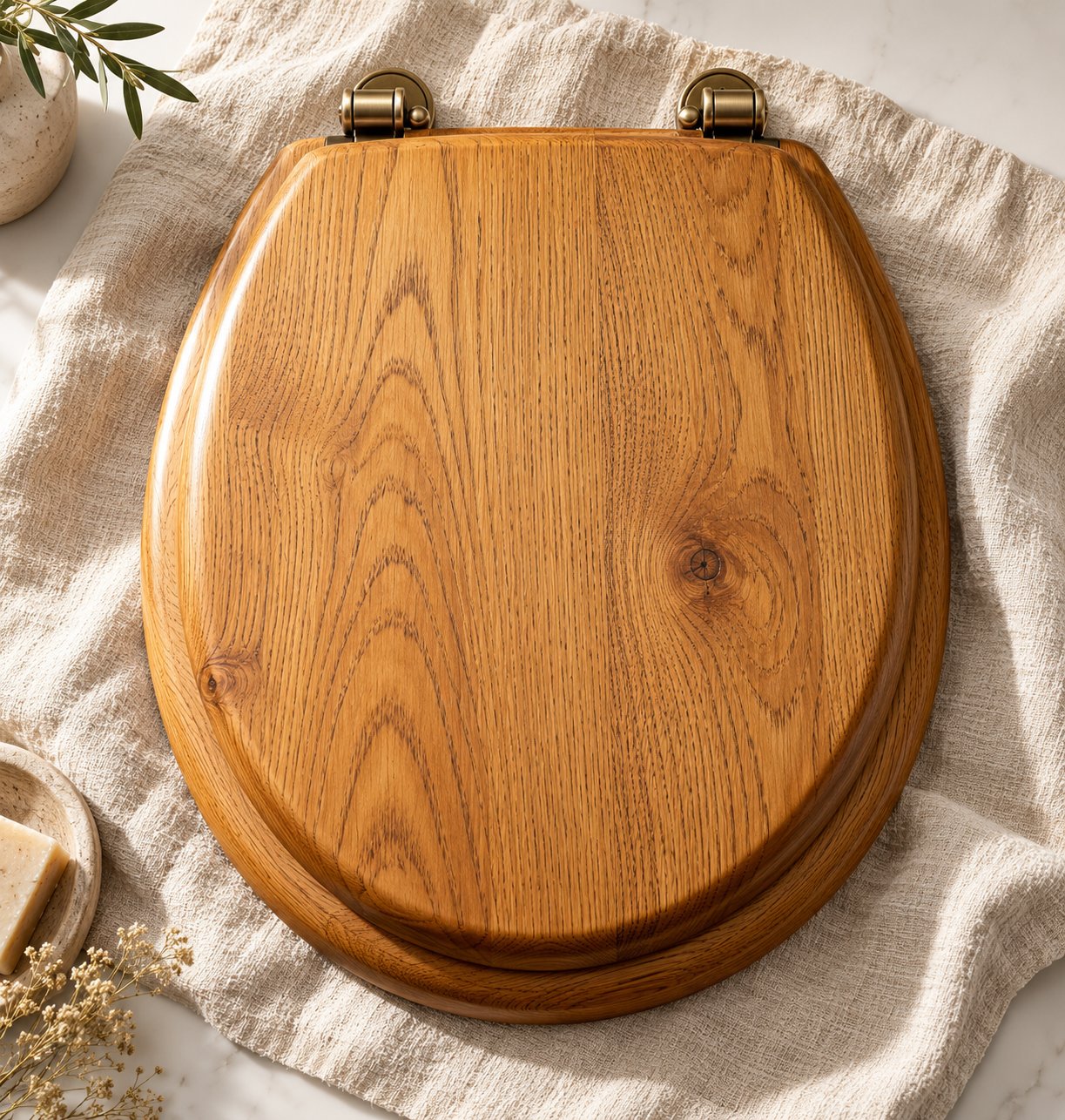
That natural grain, that warmth, that unmistakable character — solid hardwood is the reason some buyers refuse to even consider plastic. No amount of thermoset engineering or ceramic-like gloss can replicate the look and feel of real oak, bamboo, or walnut shaped into a toilet seat. It is a material with genuine soul, and it earns a loyal following for reasons that have nothing to do with spec sheets. Yet soul alone does not pay the maintenance bills, and this is where the #5 ranking tells an honest story.
The Appeal of Real Wood — Oak, Bamboo, and More
Imagine stepping into an unheated bathroom on a January morning. You lower yourself onto a polypropylene seat and your body flinches — that icy shock is brief, but it is real. Sit on a solid hardwood seat in the same room and you will notice the difference immediately. Wood is a natural thermal insulator. Its cellular structure traps tiny pockets of air, which slow heat transfer away from your skin. The surface feels neutral or even faintly warm instead of startlingly cold, and that comfort advantage persists for as long as the bathroom stays cool. For households in cooler climates or homes where the bathroom lacks its own heat source, this is not a trivial perk — it is a daily quality-of-life improvement that no plastic on this list can genuinely match.
Then there is the aesthetic dimension. Every solid hardwood seat carries a grain pattern that is quite literally one of a kind. Oak — the most popular hardwood species for wood toilets — delivers a bold, open grain with warm honey-to-amber tones that deepen over time. Bamboo offers tighter, more linear striping with a lighter, contemporary palette. Walnut and mahogany push into darker, richer territory. None of these textures can be convincingly replicated by a painted enamel or a printed laminate. When the design goal is a rustic farmhouse bath, a Scandinavian-inspired spa retreat, or any space where natural materials anchor the visual story, solid wood earns its place without apology.
Among the various types of toilet seats available, hardwood models also carry a perception of permanence. The weight in your hand, the density under your fingertips, the way the lid closes with a deep, muted thud rather than a hollow plastic tap — these sensory cues communicate quality in a way that lighter materials simply cannot.
Moisture, Bacteria, and Lifespan Concerns
Here is where admiration meets reality. Wood is porous. At the microscopic level, even the densest hardwood is riddled with tiny channels that once carried water and nutrients through a living tree. Seal the surface with polyurethane, lacquer, or marine-grade varnish and you slow moisture infiltration dramatically — but you never stop it entirely. Over months and years of exposure to bathroom humidity, steam from hot showers, and the occasional splash, moisture molecules work their way past the sealant and into the wood fibers beneath.
Once moisture reaches the core, a cascade of problems begins. The wood swells unevenly, producing subtle warps that make the seat rock slightly on the bowl rim. Swelling also stresses the sealant layer, opening hairline cracks that accelerate further moisture ingress. Solid wood seats may experience warping caused by moisture, cracking due to temperature changes, and surface expansion or contraction — a trio of failure modes that no plastic seat shares. In humid climates like the Gulf Coast, Pacific Northwest, or any region where bathroom humidity routinely exceeds 60 percent, these issues can surface within a year or two of installation.
Bacterial growth compounds the moisture problem. A non-porous PP or UF surface gives bacteria nowhere to hide; a damp cloth eliminates virtually everything. Wood is the opposite. Moisture that penetrates the grain creates a hospitable environment for bacteria and mold below the visible surface, where no amount of wiping can reach. Cleaning a wood toilet seat also demands a gentler hand. Bleach, disinfectant wipes, abrasive powders, vinegar, and rubbing alcohol can all damage the wood's protective coating, causing discoloration or stripping away the very finish that keeps moisture out. You are limited to mild antibacterial soap and a soft cloth — effective for surface sanitation, but not the deep disinfecting that harsher cleaners achieve on plastic.
Lifespan expectations are the gap most buying guides skip. A well-maintained solid hardwood seat in a dry, climate-controlled bathroom can last five to eight years before the sealant degrades enough to require a full refinish or replacement. In a humid or poorly ventilated space, expect that timeline to shrink to two to four years. Compare that to a PP seat's five-to-ten-year range with zero resealing, or a UF seat that can push past a decade with nothing more than routine cleaning, and the ongoing cost of ownership tilts heavily against hardwood.
Seasonal expansion and contraction introduce yet another variable that competitors rarely address. In regions with distinct seasons, indoor humidity fluctuates significantly — high during muggy summers, low during dry, heated winters. Wood responds to these swings by expanding and contracting across its grain. The sealant and any hinge-mounting hardware cannot flex at the same rate, so each seasonal cycle loosens screws, stresses hinge connections, and gradually weakens the bond between the finish and the wood. Over several years, this invisible fatigue translates into wobbly fittings, a seat that shifts on the bowl, and a sealant that cracks exactly where water collects.
Weight deserves its own flag. Solid hardwood is the heaviest material category in this entire ranking — heavier than enameled wood, substantially heavier than UF, and dramatically heavier than PP. That mass poses a direct challenge for soft-close mechanisms. Every closing cycle forces the damper to absorb more kinetic energy, and the cumulative toll shortens the hardware's operational life. Without heavy-duty hinges specifically rated for solid wood lids, the slow-close function degrades quickly, eventually producing the jarring slam the damper was installed to prevent. Even with premium hardware, expect to replace hinges or dampers more frequently than you would on a plastic seat of comparable quality.
Pros
- Superior thermal insulation — feels warm in cold or unheated bathrooms, eliminating the icy-seat shock
- Unique natural grain patterns that no plastic or enamel finish can replicate
- Substantial weight and density convey a premium, high-quality feel
- Available in a range of species — oak, bamboo, walnut, mahogany — for varied design palettes
- Ages with character when properly maintained, developing richer tones over time
Cons
- Porous structure absorbs moisture over time, leading to warping, cracking, and internal bacterial growth
- Requires periodic re-sealing or refinishing to maintain the protective coat — typically every one to three years
- Cleaning is limited to gentle, non-acidic products; bleach, vinegar, and abrasive chemicals damage the finish
- Heaviest seat category — accelerates soft-close hinge fatigue and increases replacement frequency
- Seasonal expansion and contraction loosen hardware and stress the sealant-to-wood bond
- Shorter effective lifespan than PP or UF, especially in high-humidity environments
When Solid Wood Makes Sense
Solid hardwood earns a recommendation under a narrow but genuine set of conditions. If you live in a dry climate — think the Mountain West, the desert Southwest, or any region where indoor humidity stays comfortably below 50 percent — the moisture risks shrink considerably. Pair that climate advantage with a climate-controlled bathroom that has reliable ventilation, and a sealed hardwood seat can deliver years of warm, beautiful service.
The owner's mindset matters just as much as the environment. A hardwood seat is not a set-and-forget fixture. You need to commit to periodic inspections for finish wear, prompt touch-ups on any chips or worn spots, and a full re-seal every couple of years. Treat it the way you would a hardwood cutting board or a teak outdoor table — with respect for the material's strengths and honest acknowledgment of its limits — and the investment pays off in daily comfort and visual appeal that no enameled wood toilet seat vs plastic alternative can quite equal.
Where solid wood does not belong is in any bathroom where humidity runs high and ventilation runs low. Guest baths, basement half-baths, pool houses, and lakeside cottages are all environments where moisture will win the long game against even the best sealant. In those spaces, the practical choice remains clear: a PP or UF seat handles the conditions effortlessly while a hardwood seat fights a losing battle.
Solid hardwood at least delivers on its promise of warmth and natural beauty when the conditions are right. The same cannot be said for the final material in our ranking — a wood-based option that borrows timber's vulnerabilities without offering its most compelling rewards.
#6 MDF and Molded Wood Seats
Borrowing timber's vulnerabilities without its rewards — that is the most concise way to describe MDF and molded-wood composite toilet seats. They sit at the bottom of our ranking for a reason that becomes painfully obvious once you understand what is actually inside the shell: compressed wood fiber held together by synthetic resin, then painted or laminated to look like something more refined than it is. The appearance may fool your eyes on a store shelf, but it will not fool the humidity in your bathroom.
What MDF Toilet Seats Actually Are
MDF stands for medium-density fiberboard. Picture sawmill waste — wood chips, shavings, and dust — ground into fine fibers and then bonded under heat and pressure with a urea-formaldehyde or polyester resin binder. The resulting board is dense, uniform, and easy to machine into smooth, consistent shapes. Manufacturers then coat the molded seat in enamel paint or wrap it in a vinyl laminate, creating a finished product that superficially resembles a solid wood or enameled wood toilet seat at a fraction of the cost.
That lower price is the entire selling proposition. An MDF seat can retail for roughly the same as a basic polypropylene model, yet it arrives with a glossy painted finish and a heft that makes it feel more "premium" in the hand. For budget-conscious shoppers comparing a wood toliet seat to a plastic alternative, the weight and appearance of MDF can be genuinely persuasive — until the bathroom environment starts doing what bathroom environments do.
Here is the fundamental problem: MDF is, at its core, still wood fiber. It inherits every moisture vulnerability that solid hardwood carries, but without the natural structural integrity that makes real oak or bamboo at least somewhat resilient. Solid wood has long, interlocking grain fibers that provide some resistance to swelling. MDF's fibers are short, randomized, and entirely dependent on the resin binder and surface coating for protection against water. Remove that thin barrier — through a chip, a crack, or even gradual wear at the hinge-bolt holes — and you expose a material that behaves like a sponge.
Why MDF Ranks Last
When an MDF seat's surface seal fails, the damage is not gradual and manageable the way it can be with solid hardwood. It is rapid and irreversible. Water penetrates the compressed fiber core and the board swells — not uniformly, but in localized bulges wherever moisture finds entry. Unlike solid wood, which can sometimes be dried, sanded, and re-sealed, molded wood seats are less durable than solid wood toilet seats or plastic toilet seats and lack the structural grain needed to recover from water damage. Once the fibers expand, they never return to their original density. The seat is permanently compromised.
That irreversible swelling creates a cascading hygiene problem. Bulging areas crack the surrounding paint or laminate, opening new entry points for moisture. Damp compressed fiber becomes an ideal breeding ground for bacteria and mold — hidden beneath the surface where no cleaning cloth can reach. Within weeks of a seal failure in a humid bathroom, an MDF seat can develop soft, discolored patches that smell musty and feel spongy to the touch. At that stage, the seat is not just unattractive; it is a genuine sanitation concern.
Weight adds insult to injury. MDF is surprisingly heavy for what it delivers. The dense fiber-and-resin composition gives it mass comparable to enameled wood, yet without enameled wood's warmth advantage or solid hardwood's aesthetic appeal. That weight stresses soft-close dampers through the same mechanism discussed in earlier sections — more mass means more kinetic energy for the hinge to absorb on every closing cycle. Pair that heavy lid with MDF's inherent fragility, and you get a seat that wears out its own hardware while simultaneously deteriorating from within. It is, frankly, the worst combination of traits in this entire ranking: heavy enough to punish hinges, fragile enough to fail at the surface, and porous enough to harbor bacteria once that failure occurs.
The hinge-bolt area deserves specific attention. Every toilet seat mounts to the bowl through two bolt holes at the rear. On an MDF seat, these holes are drilled through compressed fiber, and the repeated stress of tightening bolts, lifting the lid, and absorbing closing impacts gradually enlarges them. Over time, the bolts loosen, the seat shifts on the bowl, and the wobble accelerates further damage to both the mounting points and the hinge mechanism. Solid wood resists this bolt-hole degradation better because its long grain fibers grip fasteners more effectively. MDF simply crumbles around them.
The Most Common Mistake to Avoid
Are wood or plastic toilet seats better for a guest bathroom that sits unused most of the year? Many homeowners instinctively reach for the cheapest wood-look option — which is almost always MDF — reasoning that low traffic means low wear. The logic sounds reasonable, but it ignores the real enemy: ambient humidity. A guest bathroom in a basement, a lake house, or even a seldom-ventilated hallway powder room accumulates moisture whether anyone uses the toilet or not. Steam from nearby showers, seasonal humidity swings, and the simple fact that an infrequently opened room lacks airflow all conspire against a material that cannot tolerate prolonged dampness.
Buying a cheap MDF seat for exactly this kind of space is one of the most frequent regrets in the plastic vs wood toilet seat debate. The seat looks fine for a few months, then a visitor notices the bubbling paint, the faint musty smell, or the soft spot near the hinge. By that point, replacement is the only option — and the cost of two MDF seats over a couple of years quickly exceeds what a single PP seat would have cost upfront while lasting five to ten years without incident.
Pros
- Lowest price point among wood-based seat categories — competitive with entry-level PP
- Smooth, uniform surface when the paint or laminate is intact
- Heavier feel than polypropylene, which some buyers perceive as higher quality
- Widely available at big-box retailers and online marketplaces
Cons
- Irreversible swelling once the surface seal is breached — no repair, only replacement
- Compressed fiber core harbors bacteria and mold after moisture penetration
- Heavy yet structurally fragile — accelerates hinge wear without providing durability in return
- Bolt holes degrade over time, causing the seat to wobble and shift on the bowl
- Lacks the natural warmth and grain beauty that justify choosing real wood
- Cleaning with harsh chemicals risks stripping the paint seal, accelerating the very failure it is meant to prevent
Limited Recommended Use Cases
Is there any scenario where MDF makes sense? Narrowly, yes. A very dry powder room with infrequent use and reliable climate control — think a formal half-bath in an arid Southwestern home that guests use a few times a month — can keep an MDF seat intact for a reasonable period. Temporary staging situations qualify too: if you are preparing a home for sale and need every bathroom to look presentable for a few weeks of showings, an inexpensive MDF seat does the cosmetic job without a significant investment.
Beyond those edge cases, the math simply does not work. Budget buyers comparing a wood-look seat against a plastic alternative at the same price point are almost always better served by a polypropylene seat. PP costs the same or less, weighs far less, lasts significantly longer, and never faces the irreversible moisture damage that defines MDF's biggest weakness. When you factor in the likelihood of early replacement, MDF is not actually the budget option — it is the option that costs more over time while delivering less.
With all six materials now scored and ranked, the natural next step is seeing them side by side in a single comparison — every strength, every weakness, and every rating condensed into one table that makes the final decision as clear as possible.
All Six Materials Compared Side by Side
Six materials, five criteria, and one table — here is everything distilled into a single view so you can compare every option without scrolling back through individual sections. Whether you are evaluating a plastic seat toilet for a rental unit or debating an enameled wood model for a master bath renovation, this matrix gives you the quick-reference snapshot that makes the final call easier.
Full Feature Comparison Table
Each material is rated across the same five performance factors established in our scoring methodology. The scale runs from Excellent to Poor, and the final column reflects where each seat landed in our overall ranking.
| Material | Durability & Lifespan | Hygiene & Bacterial Resistance | Comfort (Warmth & Flex) | Hinge Compatibility | Value for Money | Overall Rank |
|---|---|---|---|---|---|---|
| Polypropylene (PP) | Good | Excellent | Good | Excellent | Excellent | #1 |
| Urea-Formaldehyde (UF) | Excellent | Excellent | Good | Good | Good | #2 |
| Enameled Wood | Good | Good | Excellent | Fair | Good | #3 |
| Thermoset (Duroplast) | Excellent | Excellent | Good | Good | Fair | #4 |
| Solid Hardwood | Fair | Fair | Excellent | Poor | Fair | #5 |
| MDF / Molded Wood | Poor | Poor | Fair | Poor | Poor | #6 |
A few patterns jump out the moment you scan the columns. Notice how the top two seats — PP and UF — both earn Excellent marks for hygiene. That is no coincidence. Their fully non-porous surfaces eliminate the single biggest long-term headache bathroom fixtures face: bacterial absorption driven by moisture penetration. Enameled wood manages a Good rating only because its enamel shell holds up under normal conditions, but any chip or crack drops it toward the same vulnerability zone that drags solid hardwood and MDF down the rankings.
Hinge compatibility tells an equally clear story. Lightweight PP places the least mechanical demand on soft-close dampers, earning the only Excellent rating in that column. UF and Duroplast both score Good — their moderate weight works with properly rated hardware. Enameled wood's Fair mark reflects the need for heavy-duty hinges, while solid hardwood and MDF both land at Poor because their mass actively shortens damper life unless premium hardware is installed and periodically replaced.
Comfort is the one column where wood-based materials genuinely shine. Solid hardwood and enameled wood both earn Excellent ratings for warmth and tactile feel — a real, physics-based advantage that no plastic can replicate without electronic heating. If your bathroom runs cold and you dislike that initial chill when sitting down, this column matters more than any other. Yet comfort alone cannot overcome the hygiene and durability deficits that push wood options into the lower half of the overall ranking.
Value for money rounds out the picture. PP dominates because its low purchase price, long lifespan, and zero-maintenance surface combine into the best cost-per-year ratio on the list. UF costs more upfront but justifies it through superior scratch resistance and longevity. Duroplast's Fair rating reflects the premium pricing and import logistics that North American buyers face. Solid hardwood's Fair score accounts for the ongoing re-sealing costs and shorter replacement cycle, while MDF's Poor rating reflects the near-certainty of early replacement in anything other than bone-dry conditions.
Key Takeaways From the Data
Plastic subtypes dominate the top three ranks because non-porous surfaces solve the two biggest toilet-seat pain points — hygiene and moisture resistance — simultaneously. No amount of warmth or aesthetic charm compensates for a material that absorbs bacteria and deteriorates from the inside out.
That insight is the single most important conclusion from the entire toilet seat plastic vs wood comparison. Wood-based options only make practical sense when warmth and traditional aesthetics outweigh the ongoing maintenance commitment — and even then, only in climate-controlled, low-humidity bathrooms where the material's inherent vulnerabilities stay in check.
One more detail worth highlighting for anyone shopping right now: if you have an elongated bowl, PP and UF offer the widest range of compatible models by a significant margin. Elongated seats require precise dimensional matching to avoid overhang or gaps along the bowl rim, and the sheer manufacturing volume behind PP and UF means you will find more shapes, sizes, and hinge configurations than any other material category. Solid hardwood and Duroplast seats tend to come in fewer elongated options, which can force compromises during installation.
Seeing all six toliet seats rated in one place clarifies the decision, but numbers alone do not tell you which material belongs in your bathroom. The final piece of the puzzle is matching these ratings to specific household types — because a busy family with toddlers, a design-focused homeowner, and a rental property investor each walk away from this table with a different best answer.
Which Toilet Seat Material Should You Actually Buy
The comparison table narrows the field, but the right answer still depends on who is sitting down. Rather than leaving you with a vague "it depends," here is a direct match between the most common household profiles and the material that serves each one best. Knowing what are toilet seats made of is only half the equation — knowing which material fits your life is what actually saves money and frustration.
The Best Material for Every Type of Household
- Budget buyers looking for the best cost-per-year ratio — Polypropylene (PP). Low upfront price, zero maintenance, and a five-to-ten-year lifespan make PP the clear value leader.
- Design-focused homeowners renovating a master bath — Urea-Formaldehyde (UF). The ceramic-like gloss and scratch resistance create a visual match with premium porcelain fixtures.
- Traditional-aesthetic lovers in dry climates — Enameled wood. The warmth and weight feel authentic, and a climate-controlled bathroom keeps the enamel seal intact for years.
- Families with young children — PP. Lightweight lids are easier for small hands to manage, the non-porous surface handles every bathroom accident, and the price softens the blow when a replacement is needed sooner than expected.
- Elderly or mobility-impaired users — Lightweight PP with a soft-close mechanism. A one-handed lift is effortless, and the damper prevents the lid from dropping unexpectedly.
- Rental property owners — PP, without hesitation. It survives tenant turnover, requires no special cleaning instructions, and costs less to replace than any wood option.
Across all of these different toilet seat types, two patterns repeat: non-porous surfaces win the hygiene battle, and lighter materials protect slow-close hardware from premature failure. Those two realities steer most households toward the plastic side of the wood vs plastic toilet seats debate.
Common Mistakes to Avoid When Choosing
Even armed with the right recommendation, a few recurring errors trip up buyers at the point of purchase. Avoid these, and you will sidestep the regrets that fill online review sections:
- Choosing a wood toilet lid for a humid bathroom. A steamy, poorly ventilated space accelerates moisture infiltration regardless of how well the seat is sealed. If your bathroom fogs up after a shower, stick with PP or UF.
- Ignoring hinge compatibility with heavier seats. A soft-close damper rated for a lightweight PP lid will wear out fast under a solid hardwood or enameled wood seat. Always confirm the hinge is rated for the seat's weight class.
- Assuming all plastics are the same. PP, UF, and Duroplast differ dramatically in hardness, scratch resistance, weight, and recyclability. Treating them as interchangeable leads to mismatched expectations.
- Buying purely on price without considering lifespan. A cheap MDF seat that needs replacing in 18 months costs more over five years than a mid-range PP seat that lasts the entire span untouched.
Our Final Recommendation
PP and UF plastic seats offer the strongest combination of hygiene, durability, and hinge compatibility for the widest range of households. They dominate the top of our ranking not because wood is without merit, but because non-porous surfaces eliminate the two most persistent toilet seat complaints — bacterial buildup and moisture damage — without asking anything from you in return. No re-sealing schedule, no gentle-cleaners-only restrictions, no anxious inspections for chips in the enamel.
For individual homeowners, the choice between PP and UF comes down to budget and desired finish: PP for maximum value, UF for a premium look that resists scratches and yellowing over the long haul. Both materials are available in round and elongated profiles, both pair reliably with soft-close dampers, and both clean up with nothing more than a damp cloth and standard bathroom spray.
Sanitaryware brands and OEM manufacturers evaluating these materials at production scale face the same core question — but with an added layer of complexity around matched hardware systems. Tianyun's PP and UF seat cover program addresses that challenge directly, pairing seat covers with compatible dampers, hinges, and fixing systems so the entire assembly is tested and production-ready. It is a practical resource for trade buyers who need to move from material selection to manufactured product without sourcing components piecemeal.
Whether you are picking a single seat for your guest bathroom or specifying thousands of units for a development project, the data points in the same direction: start with the material that handles moisture, bacteria, and daily mechanical stress without asking you to compensate for its weaknesses. In the plastic versus wood toilet seat conversation, that answer is plastic — and specifically, PP or UF.
Plastic Versus Wood Toilet Seat FAQs
1. Is a wood or plastic toilet seat more hygienic?
Plastic toilet seats — particularly polypropylene (PP) and urea-formaldehyde (UF) — are significantly more hygienic than wood. Both PP and UF are completely non-porous, meaning bacteria, mold spores, and odor-causing moisture cannot penetrate the surface at any point during the seat's lifespan. A standard bathroom cleaner and a soft cloth are sufficient for thorough sanitation. Wood seats, even when sealed with enamel or polyurethane, are porous at the microscopic level. Over time, moisture works past the sealant into the wood fibers, creating hidden environments where bacteria thrive beyond the reach of surface cleaning. Enameled wood offers a semi-non-porous barrier, but any chip in the coating exposes the vulnerable core. For households where bathroom hygiene is a priority — especially families with young children or immunocompromised members — a plastic seat is the safer long-term choice.
2. Why do plastic toilet seats turn yellow, and which type resists yellowing best?
Yellowing in plastic toilet seats is primarily caused by prolonged UV exposure and chemical reactions with cleaning products over time. Lower-grade thermoplastics, including some polypropylene formulations, are more susceptible to this discoloration. Urea-formaldehyde (UF) seats resist yellowing far more effectively because their thermoset manufacturing process locks pigment permanently into the cured resin matrix. Duroplast seats offer similar color stability thanks to the same permanent crosslinking chemistry. If maintaining a bright white finish for years matters to you, UF and Duroplast are the strongest choices. Higher-quality PP seats with UV stabilizers also perform well, though they may show subtle tonal shifts after many years in bathrooms with strong natural light.
3. Do wood toilet seats feel warmer than plastic ones?
Yes, and the difference is rooted in physics, not marketing. Wood is a natural thermal insulator — its cellular structure traps tiny air pockets that slow heat transfer away from your skin. When you sit on a solid hardwood or enameled wood seat in a cold bathroom, the surface feels neutral or slightly warm rather than delivering the brief icy shock common with plastic. PP, UF, and Duroplast all conduct heat away from the body more quickly on initial contact, though they warm to skin temperature within seconds. In climate-controlled homes above roughly 65 degrees Fahrenheit, most users barely notice the gap. The warmth advantage becomes meaningful primarily in unheated bathrooms, basements, or cooler climates where the room temperature regularly drops below that threshold.
4. How does toilet seat weight affect soft-close hinge lifespan?
Every time a soft-close damper lowers a toilet lid, it absorbs kinetic energy proportional to the lid's mass. Heavier seats — such as solid hardwood, enameled wood, and dense UF models — force the damper to work harder on every single cycle. Over thousands of open-close repetitions, that cumulative stress accelerates internal wear, eventually causing the mechanism to lose its controlled descent and produce the loud slam it was designed to prevent. Lightweight polypropylene places the least mechanical demand on dampers, which is why PP earns the highest hinge-compatibility rating. When choosing a heavier seat material, always confirm the hinge hardware is explicitly rated for that weight class, or opt for an integrated system where the manufacturer has matched the seat, damper, and hinges as a tested unit.
5. What is the difference between a thermoset and a thermoplastic toilet seat?
The distinction lies in how the material responds to heat after manufacturing. A thermoplastic like polypropylene (PP) softens when heated and re-hardens when cooled — it can theoretically be remelted and reshaped, which also makes it recyclable. A thermoset plastic, such as urea-formaldehyde (UF) or Duroplast, undergoes a permanent chemical crosslinking reaction during molding. Once cured, it cannot soften again, giving it superior scratch resistance, heat-warp resistance, and dimensional stability. The trade-off is that thermoset seats are harder to recycle at end of life. For buyers, the practical takeaway is that thermoset seats feel harder, heavier, and more scratch-proof, while thermoplastic PP seats are lighter, more flexible, and easier on soft-close hardware.
Apply This Insight to Your Project
Tell us what you are building and how the topic “Plastic Versus Wood Toilet Seat: We Scored All 6 So You Don't Have To” relates to your application. Our engineering team can help evaluate the next step.