What Toilet Seat Bumpers Are and Why Seats Shift
You finish installing a bidet attachment, sit down, and feel the seat slide a little to one side. Sound familiar? The fix usually starts with toilet seat bumpers for bidet setups. These small parts decide whether your seat sits flat or rocks.
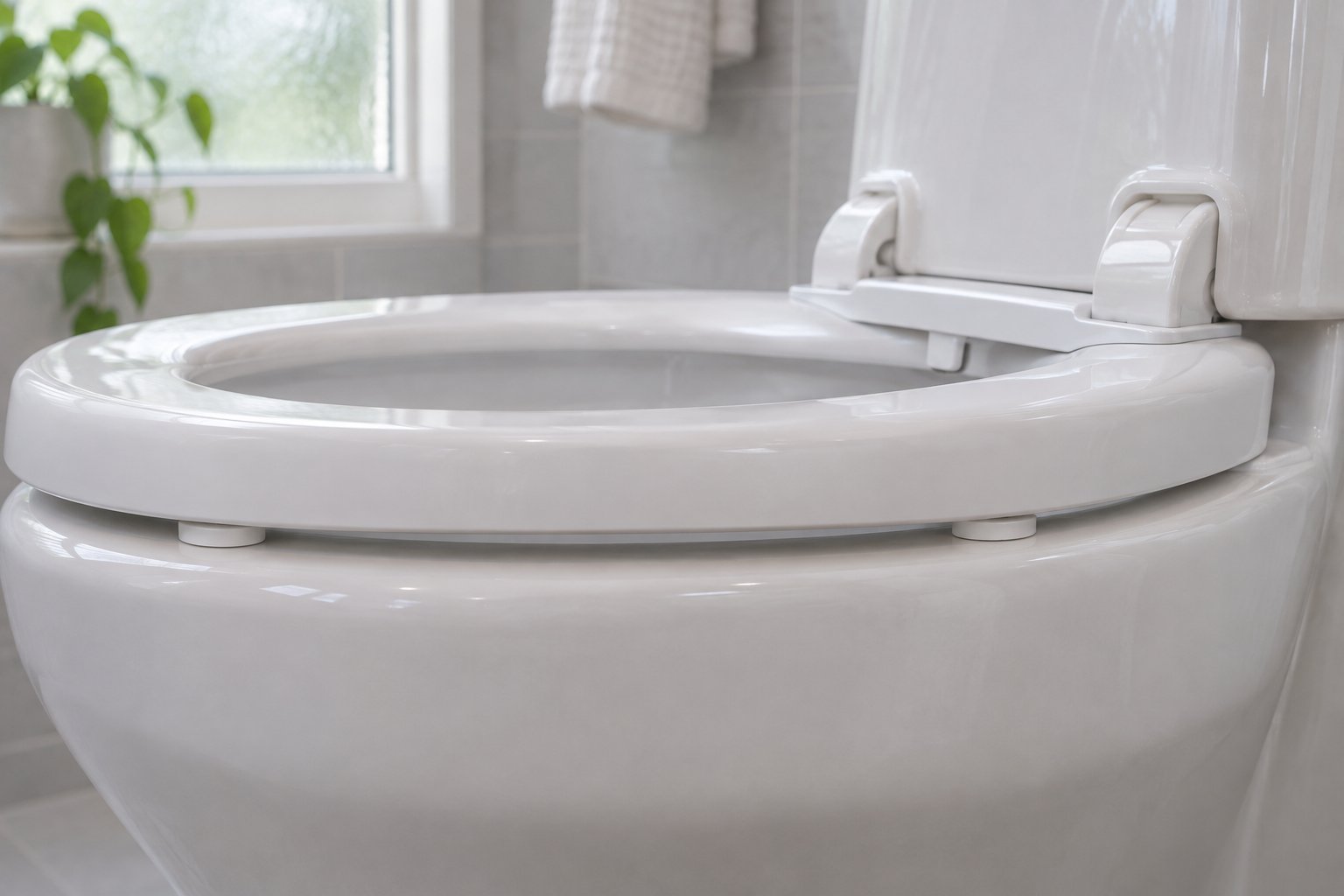
Toilet seat bumpers are the small feet on the underside of a toilet seat that rest on the bowl rim. They carry the seat's contact with the bowl, so the seat rests on them and not on its own underside.
What Toilet Seat Bumpers Actually Do
Each bumper holds the seat slightly above the porcelain, which leaves a small, even gap between the seat and the rim. That gap is what lets the seat sit level. When every bumper touches the rim at once, your weight spreads across all of them. When one bumper hangs above the rim, the seat has a point to pivot on.
Why a Bumper Toilet Seat Starts to Wobble
Think about how the seat is held in place. Bolts fix the hinge end to the bowl. The front and sides have no fasteners at all, so they stay level only because the bumpers rest on the rim.
Now imagine sliding a bidet mounting plate under the hinge end. The back of the seat rises by the thickness of the plate. The rear bumpers can lift off the rim while the front ones still touch it, or every bumper may touch with uneven pressure. Either way, the seat rocks when you shift your weight or slides sideways when you sit down.
Bumpers, Feet, Dampers, and Pads Compared
Several small seat parts have similar names, which makes ordering confusing. Use this list to make sure you buy the right one:
- Seat bumpers (also sold as feet or stoppers): pads under the seat ring that rest on the bowl rim. This guide is about these.
- Rotary dampers: the soft-close mechanism inside the hinge. Bathroom Parts Australia describes it as a plastic or rubber drum-type hinge or damper that creates drag to slow the seat as it drops. Dampers control how fast the seat closes. They won't stop it from wobbling.
- Hinge-base pads: pads under the hinge where it meets the porcelain. They are a separate part from the bumpers on the seat ring.
- Toilet lid bumpers: sit under the lid and rest on the seat when the lid is closed. They never touch the bowl.
- Padded seats: seats with a cushioned top surface for comfort. A padded seat may or may not have soft-close hinges.
Knowing how bumpers work explains why your seat wobbles. Which fix you need depends on the bidet on your bowl. A thin attachment under your old seat causes a different problem from a full bidet seat that comes with its own bumpers.
Bidet Attachment or Bidet Seat and Why It Matters
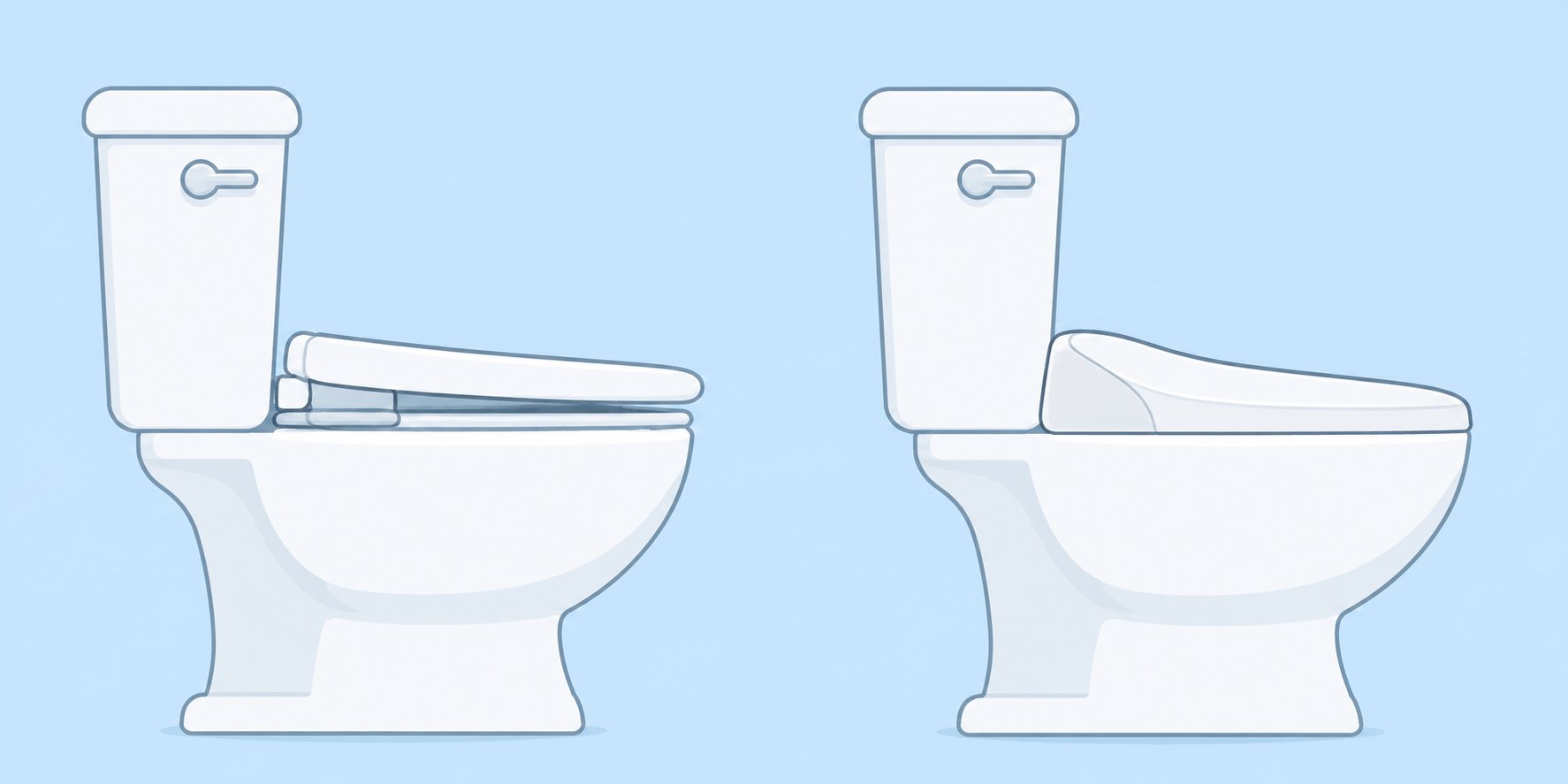
Is your bidet a thin plate tucked under your old seat, or did it replace the seat entirely? The answer tells you what is causing the wobble and what you should buy. People with either setup search for the same parts, but each setup fails in its own way and needs its own fix.
Bidet Attachments Under an Existing Seat
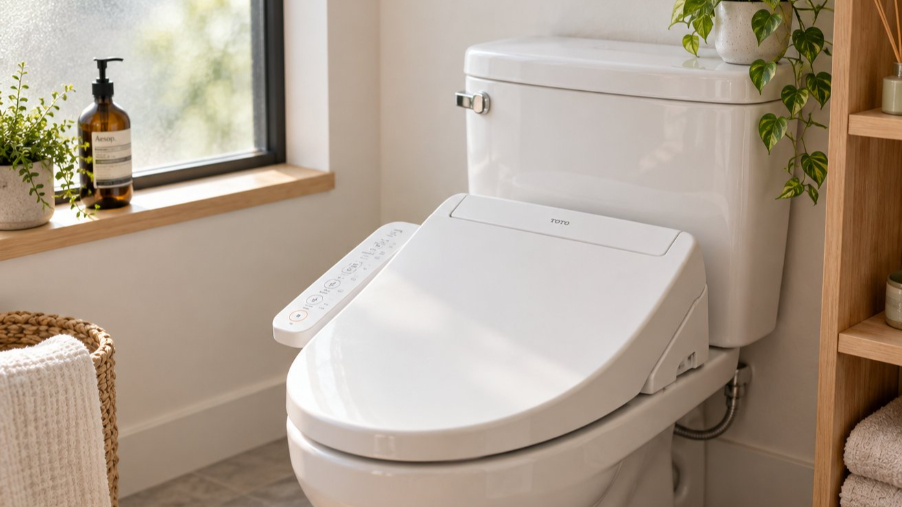
A bidet attachment is a thin unit that mounts between the bowl and your existing seat. Its mounting plate sits under the hinge, so the back of the seat rises by the thickness of the plate. The front of the seat stays where it was. Your seat's original bumpers were sized for a seat that sat flat on the bowl. After the lift, they may be too short to reach the rim evenly. You'll usually notice the rear bumpers hovering above the porcelain while the front bumpers carry all the load.
Taller bumpers or toilet seat spacers are made for this situation. Their job is to close the gap the plate created so the seat sits level again. The question is the same whether you own a Luxe Bidet toilet attachment or one from another brand. How much lift did the plate add, and do your current bumpers make up for it?
Bidet Seats With Built-In Bumpers
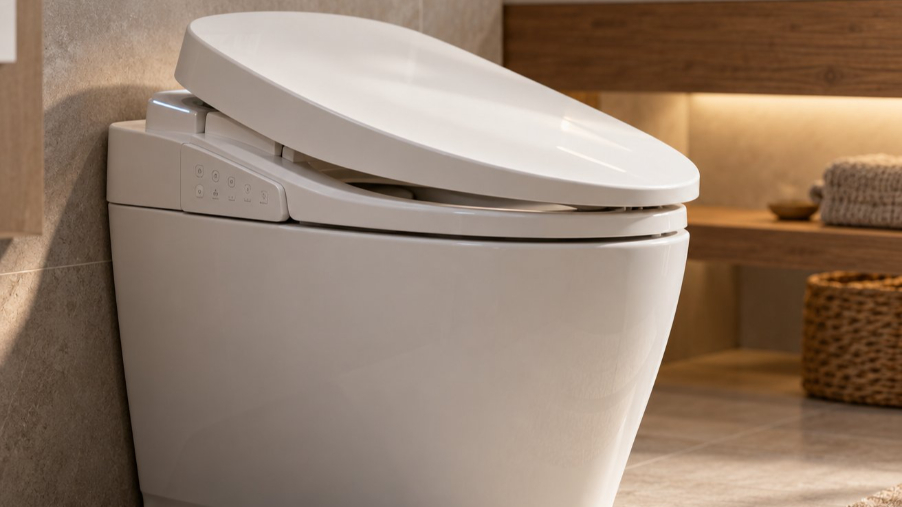
A bidet seat replaces your whole seat. It typically mounts on its own bracket or plate and has bumpers built into its underside. The maker designs those bumpers for the seat's own mounting, so you have no added plate to correct for. Trouble tends to show up later. Bumpers can wear down or fall off, and they can land badly on a bowl the seat wasn't shaped for.
Kohler is one example. Its Grip-Tight bumpers category page lists standard toilet seats and bidet seats together under that bumper feature, including several PureWash bidet seat models. Other brands raise the same question. If you're comparing a Luxe Bidet toilet seat or any other model, read how the maker describes the bumpers and check whether it lists replacement bumpers.
Which Situation Matches Your Toilet
Find your row in the table before reading on:
| Bidet type | What changes at the hinge | Typical symptom | First fix to try |
|---|---|---|---|
| Bidet attachment under the existing seat | The mounting plate sits under the hinge and raises the back of the seat | The seat rocks front to back or slides sideways, and the rear bumpers don't touch the rim | Confirm the hinge bolts are fully tight, then measure the gap and add taller bumpers or spacers |
| Bidet seat that replaces the whole seat | The original hinge is removed, and the seat mounts on its own bracket or plate | A seat that once sat firm starts to shift, or one bumper looks flattened, worn, or missing | Inspect the built-in bumpers, replace worn ones using the maker's parts documentation, and confirm the seat shape matches the bowl |
Whichever row matches your toilet, wait before you order parts. Worn or short bumpers are only one cause of a sliding seat. Loose bolts, an off-center plate, or a seat that doesn't match the bowl can cause the same symptom, and new bumpers won't fix any of them.
Diagnose the Wobble Before Buying Bumpers
Have you ever installed a new part and found the problem still there? A sliding seat makes that mistake easy. The team at Bath Royale points out that a wobbly seat usually means loose screws or a poor installation, not a defective seat. A slight wiggle when you lift the seat or push it sideways can be normal. A seat that moves out of position is not normal. Run through these checks before you buy toilet seat stoppers.
| Symptom | Likely cause | How to check |
|---|---|---|
| The seat slides sideways even though every bumper touches the rim | Loose hinge bolts | Grip the hinge and try to twist it. If it moves, tighten the bolts and test again. |
| The bolts keep turning but never feel snug | The bolts are too short once the plate's thickness is added | Look under the rim. If the nut barely catches the end of the bolt, you need longer bolts. |
| The seat sits crooked and overhangs the rim more on one side | The bidet plate is mounted off-center | Compare the left and right edges of the seat against the rim, then check that the plate sits centered over the mounting holes. |
| The front of the seat overhangs the bowl or leaves rim exposed | The seat shape doesn't match the bowl | Measure from the center of the seat bolts to the front edge of the rim. |
| The rear bumpers hover above the rim and the seat rocks front to back | The plate raised the hinge end and the bumpers are now too short | Measure the gap at each bumper, as shown in the next section. This is the one case where bumpers fix the problem. |
Check the Hinge Bolts First
Loose bolts let the seat slide no matter how tall the bumpers are, so tighten them before anything else. On seats that use split wing nuts, Bath Royale's instructions say to turn the screw from the top and leave the wing nut still. A bidet plate can also leave the original bolts too short. The bolts that fit a seat sitting flat on the bowl now have to pass through the plate as well, so the nut may never get a full grip. Check your bidet's manual for the bolt length it calls for.
When the Toilet Seat Gap Comes From Plate Alignment
The gap under a seat only keeps it level when the gap is even. If the plate sits off-center, the seat turns with it, and bumpers on one side land near the edge of the rim. Loosen the plate, center it, and tighten it again before you judge the bumpers.
Seat Shape and Bowl Mismatch
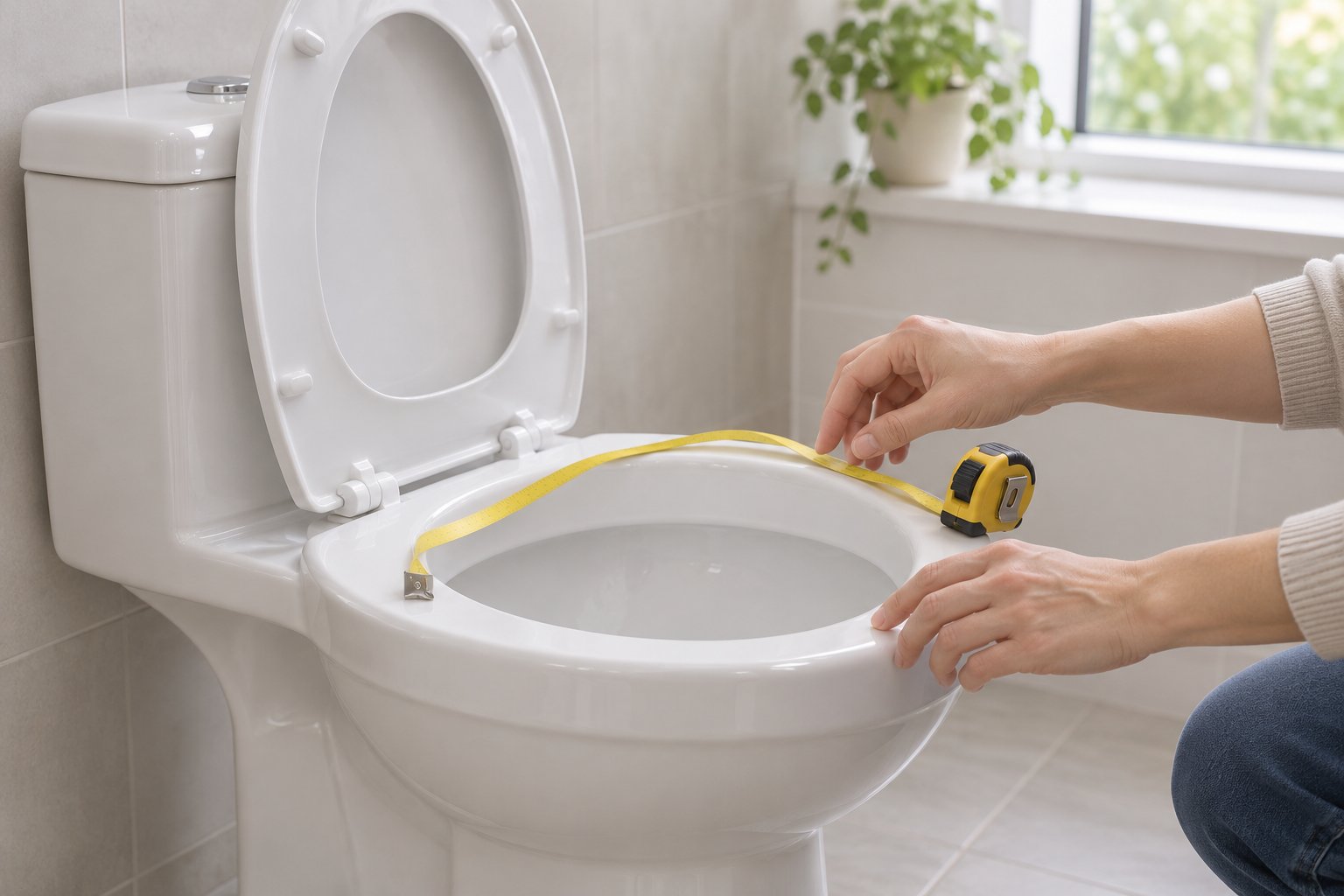
A bumper toilet seat only works when its bumpers land on the rim. Premier Bidets suggests measuring from the midpoint between the seat bolts to the front edge of the rim. A measurement of about 16 1/2 inches means a round bowl, and about 18 1/2 inches means an elongated bowl. An elongated seat on a round bowl hangs past the front, and a round seat on an elongated bowl leaves part of the rim exposed. Taller bumpers can't fix either one.
Why a Small Wobble Is Worth Fixing
A seat that rocks slightly may seem harmless, but the movement adds up over time:
- When the seat and plate shift, the spray nozzle can move out of alignment.
- Repeated rocking wears on the hinges.
- The mounting plate takes stress each time the seat moves on it.
Suppose the bolts are tight, the plate is centered, and the seat matches the bowl, yet the rear bumpers still hover above the porcelain. In that case, the problem is one bumpers can fix. Before you buy any, you need to know exactly how big the gap is.
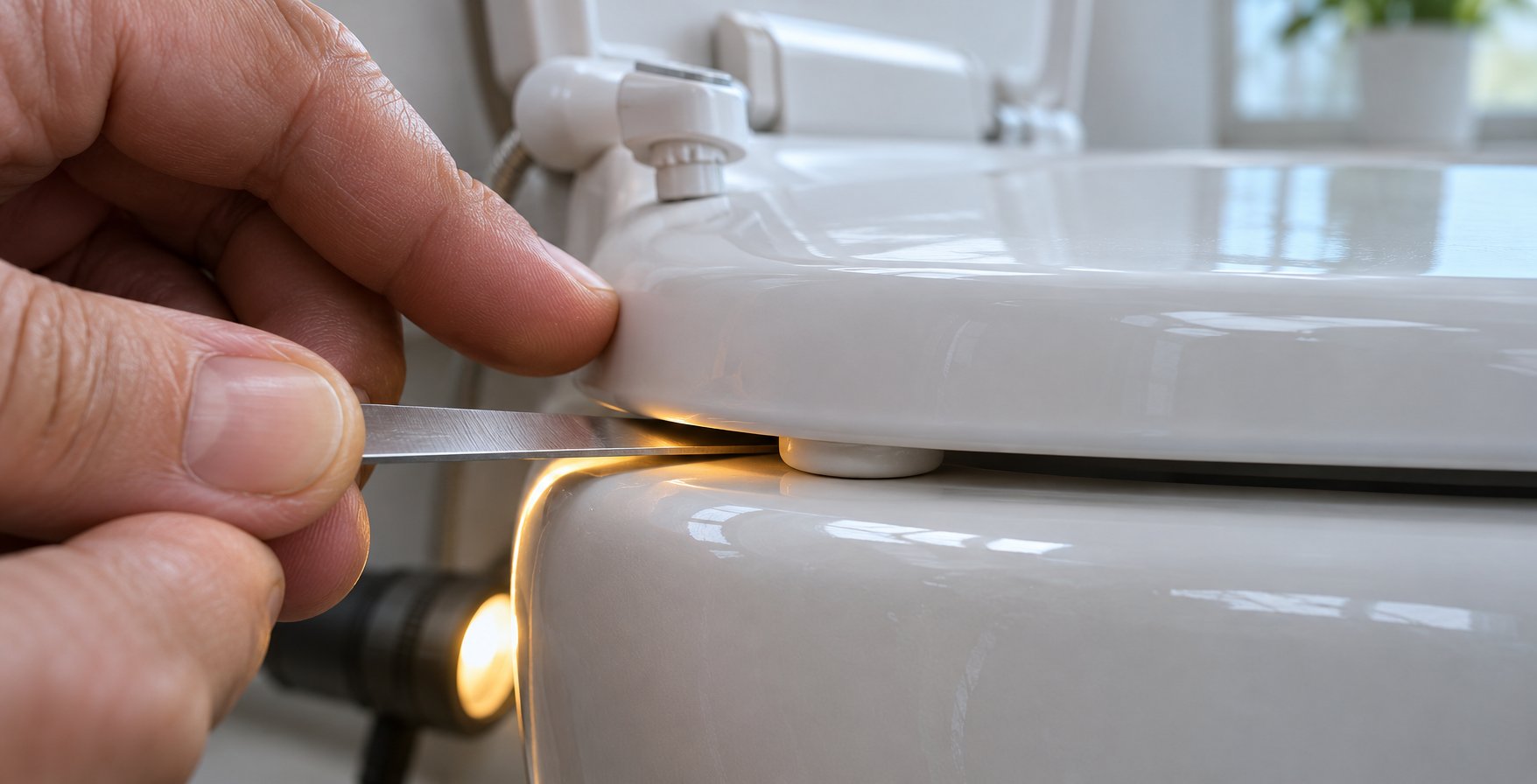
How to Measure the Toilet Seat Gap With the Bidet Installed
Have you ever ordered a part by guessing its size and then had to send it back? Bumpers are easy to get wrong that way. A few minutes with a ruler gives you a real number to shop with. Measure with the bidet in place, since the plate is what changed the gap.
Measure the Toilet Seat Gap at Each Bumper
- Install the bidet fully. Mount it and tighten everything as its manual describes. A loose plate gives false readings.
- Lower the seat. Let it rest under its own weight without pressing on it.
- Check contact. Look at each bumper from the side and note which ones touch the rim and which hang above it. A flashlight held low behind the bowl makes gaps easier to see.
- Measure each gap. Use a ruler for gaps you can see clearly and a feeler gauge for thin ones. Try gauge blades until one slides in snugly without lifting the seat.
- Write down every result. Record a zero for bumpers that already touch.
- Find the largest gap. Use this number when you choose bumper height or spacer thickness.
- Test after installing. Once the new bumpers are on, press on the front and both sides of the seat to check for rocking.
Copy this template onto paper or your phone. If your seat has more or fewer bumpers, add or remove rows to match.
| Bumper position | Touches rim? (yes/no) | Measured gap |
|---|---|---|
| Front-left | ||
| Front-right | ||
| Rear-left | ||
| Rear-right |
Then look at the pattern. Suppose the rear gaps are larger than the front gaps, and the left and right sides roughly match. That pattern points to the hinge-end lift from the bidet plate. The plate raised the back of the seat, so the bumpers nearest the hinge lifted the most. If one side sits much higher than the other, go back to the plate alignment and bolt checks in the previous section.
Turning Your Measurement Into a Bumper or Spacer Height
Your largest gap is the space a new part has to fill. When you shop for a toilet seat spacer or a taller bumper, find the added height on the product page and compare it with your number. Use the same units as the listing, or convert before you compare.
What if the listing doesn't state a height? Then you can't tell whether the part matches your gap. Wording such as 'fits most bidets' doesn't say how much lift a part adds. Treat toilet seat spacers for bidet setups as unconfirmed until the seller gives a measurement you can check against your notes.
Test for Rocking After Installation
Press down on the front of the seat, then on each side. A level seat stays put. If one spot dips when you press it, the bumper nearest that spot probably still isn't reaching the rim. Lower the seat, measure that position again, and compare the result with your template.
Your measurement tells you how much height you need. It doesn't tell you which kind of part should add that height. Some bumpers stick on, some replace the originals, and the way a part attaches decides how well it holds up next to a bidet.
Types of Bumpers and Spacers for Bidet Setups
A search for seat bumpers turns up stick-on pads, tall replacement feet, rubber sets, and packs labeled universal. All of them go under the seat, but they attach in different ways and suit different bidets. Products sold as spacers do the same job as taller bumpers: they fill the gap you measured. To sort any product, check how it attaches first, then check the height its listing states.
| Type | How it attaches | Bidet attachment or bidet seat | Trade-offs |
|---|---|---|---|
| Adhesive add-on bumpers | Sticks to the underside of the seat ring | Mainly bidet attachments, where the lifted seat needs extra height | Needs no tools, but water and cleaners can weaken the bond |
| Taller replacement bumpers | Presses or screws in where the original bumpers came out | Bidet attachments on seats with removable bumpers. Bidet seats should use the maker's replacement bumpers. | Held in without glue, but only fits seats with matching sockets |
| Rubber bumpers | Stick-on or press-in, depending on the product | Either, depending on how it attaches and its listed height | The material tells you nothing about height or fit |
| Universal toilet seat bumpers | Varies by product | Either, if the listed dimensions match your measurements | Sold to fit many seat brands, with no guarantee for your seat or gap |
| Toilet lid bumpers | Mounted under the lid | Won't fix a wobble with either type, since they never touch the rim | Fixes a lid that sits badly, not a seat that moves |
Adhesive Add-On Bumpers
These stick to the underside of the seat ring, so you can place each one where you measured a gap. They don't need holes or sockets. That makes them the usual choice when a bidet attachment has lifted a seat whose original bumpers can't come out.
Taller Replacement Bumpers for Bidet Setups
Some seats have bumpers that pull out or unscrew. On those seats, a taller bumper can replace the original instead of stacking on top of it. Some shoppers look for products made for bidets, such as the one searched as Bath Royale tall bumpers for bidets. For that product or any similar one, confirm the height and fit on the seller's listing and compare the height with your largest gap.
Rubber and Universal Toilet Seat Bumpers
Rubber is a material, not a way of attaching. Rubber toilet seat bumpers can be stick-on or press-in, so read the listing to see which kind you're buying. Universal toilet seat bumpers are sold to fit many seat brands, but 'universal' is a marketing term. Imagine a pack that fits your seat but adds less height than the plate took away. Your seat would still rock. Check the listed dimensions against your notes before you order.
Where Toilet Lid Bumpers Fit In
Lid bumpers rest on the seat when the lid is closed. They don't change the gap between the seat and the rim. Replace them if they're worn or missing, but they won't stop a wobble.
Adhesive Bumpers: Pros
- Need no tools and no holes.
- Can go exactly where you measured a gap.
- Work on seats with molded-in bumpers.
Adhesive Bumpers: Cons
- Hold only as well as the surface was cleaned and dried.
- Can loosen when bidet spray and cleaners keep reaching them.
- Leave residue that you have to remove before replacing them.
Mechanically Attached Bumpers: Pros
- Press or screw in, so they don't depend on glue.
- Parts from the seat maker are made for that seat's sockets.
Mechanically Attached Bumpers: Cons
- Work only on seats built with removable bumpers.
- Must match the seat's socket or screw size, which means finding the right part number.
Adhesive bumpers are the easiest to install, and they also get the most spray from a bidet. Water and cleaner reach the underside of the seat every day. How well you prepare the surface before you stick a bumper on decides how long it stays put.
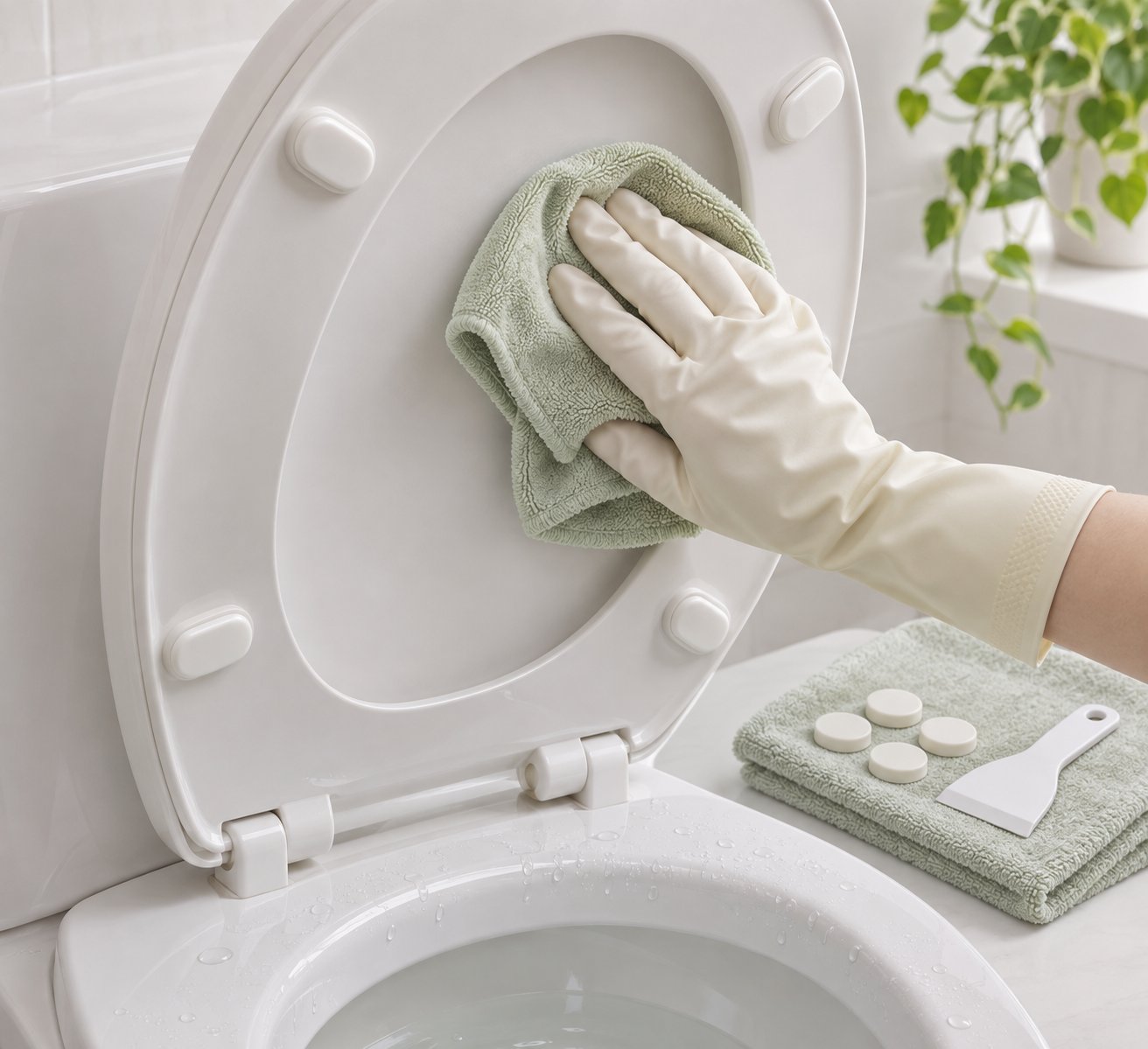
Installing Bumpers So They Hold Up to Water
Imagine you measured every gap and bought bumpers at exactly the right height, and one day you find a bumper lying on the bathroom floor. The height was right. The bond under the bumper gave way. A bidet makes that failure more likely than it is on a plain toilet.
Why Bidet Moisture Loosens Adhesive Bumpers
Each time you use the bidet, spray and drips can reach the underside of the seat, which is where the bumpers sit. Routine cleaning puts cleaning products on the same spot. Adhesive grips best on a clean, dry surface. When water or cleaner works its way under the edge of a bumper, it can weaken the bond over time. Some cleaners can also be hard on adhesive. Check which cleaners the bumper maker says are safe before you spray anything near your bumpers for toilet seat repairs.
Surface Prep for a Toilet Seat Bumper Replacement
- Remove the old bumper or feet. Peel off stick-on pads. For press-in or screw-in parts, use the seat maker's method described below.
- Clean off old adhesive residue. A new bumper stuck on top of old glue holds only as well as that old glue does. Scrape gently with plastic so you don't scratch the seat.
- Degrease the area. Skin oils and cleaner film keep adhesive from gripping. Use a cleaner that the bumper's instructions allow.
- Let it dry completely. Any moisture left on the spot weakens the bond before you even start.
- Position the new bumper at the measured spot. Go by the positions in your gap template so each bumper lands on the rim.
- Press it firmly. Press evenly across the whole bumper, not just the center.
- Let it cure before using the bidet. Wait the full cure time listed in the product's instructions. Spray that reaches a fresh bond too early can undo your prep.
Cure times and safe cleaners differ from one adhesive to the next, so follow the bumper maker's instructions for both.
Keeping Replacement Toilet Seat Feet in Place
- Wipe spray residue off the underside of the seat so water doesn't sit around the bumper edges.
- Each time you clean the toilet, check that every bumper still touches the rim.
- If the seat starts to rock again, measure the gaps again. A loose or flattened bumper changes your numbers.
Press-in and screw-in toilet seat feet don't depend on glue, but you still have to remove and replace them the right way. The seat maker's parts documentation shows how they come out and go back in. Following it helps you avoid cracking a socket or stripping a screw hole.
Careful prep can only do so much. If a bumper keeps coming loose, or the seat still shifts with fresh bumpers in place, more adhesive won't solve the problem, and you should compare bumpers with the other fixes.
Choosing the Right Fix and Knowing When to Replace
How many times should you re-stick a toilet bumper before you try something else? Each fix in this guide deals with one cause of a wobble, and each has limits. If you know those limits, you can tell when a patch is enough and when the seat itself has to go.
Comparing Every Fix Side by Side
| Fix | Best for | Effort | Limitations |
|---|---|---|---|
| Add-on bumpers on the existing seat | A bidet attachment that lifted a seat whose bumpers are molded in and can't be removed | Low. It takes surface prep and the full cure time. | Bidet spray and cleaners can loosen the adhesive over time. |
| Taller replacement bumpers | Seats with removable bumpers, where a taller foot or a toilet seat spacer for bidet setups can replace the original | Moderate. You need a part that matches the seat's socket or screw size. | Works only on seats built with removable bumpers. |
| Re-tightening the hinge bolts, or replacing them with longer bolts | Seats that slide even though every bumper touches the rim, or bolts that never get snug once they pass through the bidet plate | Low. You need a screwdriver, plus longer bolts if the originals are too short. | Bolts can't close a bumper gap. Many Bidets warns against overtightening, which can crack a plastic mounting bracket. |
| Switching to a bidet seat with built-in bumpers | Seats that still shift after the bolts and bumpers have been fixed, or seats that don't match the bowl | High. You buy and install a whole new seat. | It costs the most, and built-in bumpers can still wear out. |
When to Replace the Bumper Toilet Seat Entirely
Bumpers fix one problem: a gap between the seat and the rim. If you see any of these signs, adding more bumpers probably won't help:
- Bumpers keep coming loose even after careful surface prep.
- The seat still shifts after you've confirmed the bolts are tight.
- Your measured gaps vary so much from one bumper to the next that no single bumper height evens them out.
- The seat shape doesn't match the bowl. Many Bidets notes that when seat and bowl shapes are mismatched, the feet under the seat often don't sit properly on the rim.
Choosing a Bidet Seat With Built-In Bumpers
If you decide to replace the seat, first measure from the center of the seat bolts to the front of the rim so you know your bowl shape. On any listing you consider, check two things: whether the seat is offered in your bowl shape, and how the maker describes the built-in bumpers.
Not every seat that turns up in these searches is a bidet seat. For example, people search for the Luxe Bidet Luxe elongated Comfort Fit toilet seat, which is a toilet seat the maker sells alongside its bidet attachments. For that seat or any other, confirm the bowl shape and bumper design on the maker's listing, and compare them with your own measurements.
Whichever fix you pick, you'll need the exact part, such as a specific bolt length, a replacement foot, or a bumper that fits a particular socket. Product listings rarely give all of that information. The manuals and parts documentation for your bidet and seat are a better source.
Fix the bolts first, add bumpers second, and replace the seat when the first two do not hold.
Finding Exact Replacement Parts and Manufacturer Support
Do you need a bolt long enough to pass through the bidet plate, or a toilet seat bumper that fits your seat's socket? Generic listings rarely tell you. The companies that made your bidet and your seat hold the exact part details, so start with their documentation.
Where to Find Exact Luxe Bidet Parts and Seat Bumpers
Each part of your setup has its own source:
- Your bidet's install manual: This covers how the unit mounts, which bolts it uses, and where the plate should sit. Check it first if your seat sits crooked or the bolts won't get snug.
- The seat maker's parts documentation: This covers the original bumpers and replacement toilet seat feet. It also shows how press-in or screw-in parts come out and go back in.
- Kohler's buying guide: Kohler's toilet seat category page links to a Toilet Seats Buying Guide. The guide describes Grip-Tight seats as holding the seat firmly in place, and it tells shoppers to measure from the hinge to the front of the seat. Readers with Kohler seats can check it.
- Attachment makers' support pages: If you're looking for Luxe Bidet parts, the brand's FAQ page links to a parts guide for identifying setup parts and has a Missing & Broken Parts section. It also has an entry for a seat that doesn't sit flat after the bidet goes in. Other attachment brands publish their own parts listings and support contacts, so look those up for your model.
Using Manuals and Maker Parts Documentation
Take your notes with you when you contact support. Your gap template, your bowl shape, and the model numbers of the bidet and the seat let the support team point you to a specific part. If the documentation doesn't list the part you need, ask the maker directly. Until a listing names your seat model, treat the fit as unconfirmed.
Manufacturer Inquiries for Brands and Sourcing Teams
This last section is for businesses, not homeowners. Sanitary ware brands and component sourcing teams can contact a manufacturer about seat designs, mounting details, or soft-close requirements through Tianyun's inquiry page. Brands with specialty bumper or spacer requirements can raise those there as well. The page doesn't list specific parts, so confirm availability and specifications during the inquiry.
FAQs About Toilet Seat Bumpers for Bidet Setups
1. What do toilet seat bumpers do, and are they the same as soft-close dampers?
No, they are different parts. Toilet seat bumpers are the pads on the underside of the seat ring that rest on the bowl rim. They are also sold as feet or stoppers. Only the hinge end of a seat is bolted down, so these pads are what keep the front and sides level and stop the seat from pivoting. Rotary dampers sit inside the hinge and only slow the seat as it closes. Replacing them won't cure a wobble. Two other parts are easy to confuse with bumpers. Hinge-base pads sit where the hinge meets the porcelain, and lid bumpers sit under the lid and rest on the seat. Before you order, check that the listing describes pads for the underside of the seat ring.
2. Why does my toilet seat slide after installing a bidet attachment?
Usually the attachment's mounting plate sits under the hinge and lifts the back of the seat. The rear bumpers then hang above the rim while the front ones carry all the weight, which gives the seat a point to rock on. Before you blame the bumpers, rule out three causes that new bumpers can't fix: loose hinge bolts, original bolts that are now too short to tighten through the plate, and a plate mounted off-center. Also confirm that the seat shape matches the bowl. A round seat on an elongated bowl, or an elongated seat on a round bowl, puts the bumpers in the wrong spot. Fixing a wobble early helps keep the spray nozzle aligned and reduces wear on the hinges and the mounting plate.
3. How do I choose the right bumper or spacer height for a bidet?
Base the choice on your own measurements, not on general fit claims. With the bidet fully installed and tightened, lower the seat and check the gap at each bumper with a ruler or feeler gauge. Record zero where a bumper already touches the rim. Your largest gap is the height a new bumper or spacer needs to add. Compare that number with the added height stated on the product page, using the same units. If a listing only calls itself universal or says it fits most bidets without giving dimensions, you can't confirm that it matches your gap. Look at the pattern too. Larger gaps at the rear point to lift from the plate. If one side sits much higher than the other, check the plate alignment and bolts first.
4. Will adhesive bumpers stay on with daily bidet use?
They can, but bidet spray and cleaning products reach the underside of the seat, and both can weaken the bond over time. Careful prep gives the bond its best chance. Remove the old pad and all of the old glue, degrease the spot, and let it dry completely. Then press the new bumper evenly and wait the full cure time in the maker's instructions before using the bidet. After that, wipe off spray residue and check that each bumper touches the rim whenever you clean. If your seat has removable bumpers, press-in or screw-in replacements avoid glue entirely. If stick-on bumpers keep falling off despite good prep, or the seat still shifts with tight bolts, consider a bidet seat with built-in bumpers made for your bowl shape.
5. Where can I find exact replacement bumpers or feet for my toilet seat or bidet?
Start with the companies that made your bidet and your seat. The bidet's install manual covers bolts and plate position. The seat maker's parts documentation covers the original bumpers and feet, including how to remove and refit them. Kohler owners can check the brand's toilet seat buying guide, and attachment brands such as Luxe Bidet publish their own parts and support pages. When you contact support, have your gap measurements, bowl shape, and model numbers ready. Sanitary ware brands and component sourcing teams with specialty bumper or spacer requirements can raise them through Tianyun's inquiry page (https://www.tianyuntech.com/contact-us). They should confirm availability and specifications during that inquiry.
Apply This Insight to Your Project
Tell us what you are building and how the topic “Toilet Seat Bumpers For Bidet: Measure The Gap, End The Wobble” relates to your application. Our engineering team can help evaluate the next step.