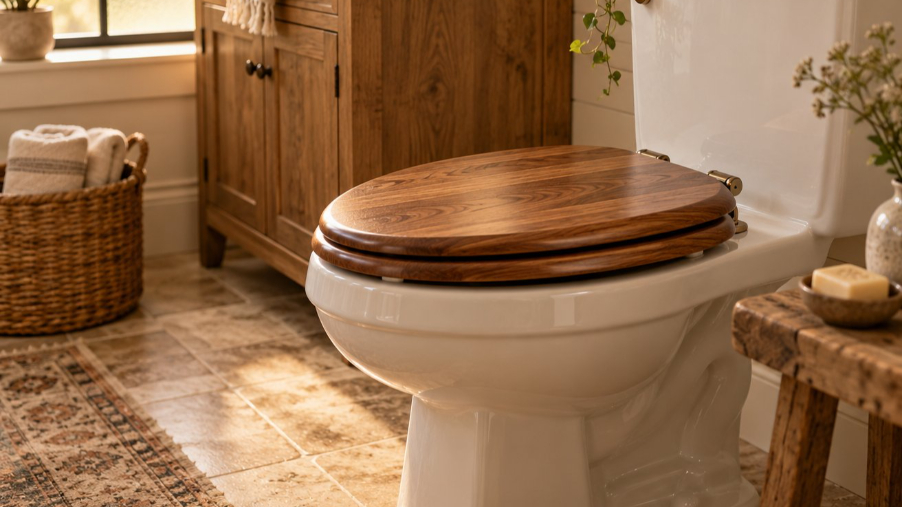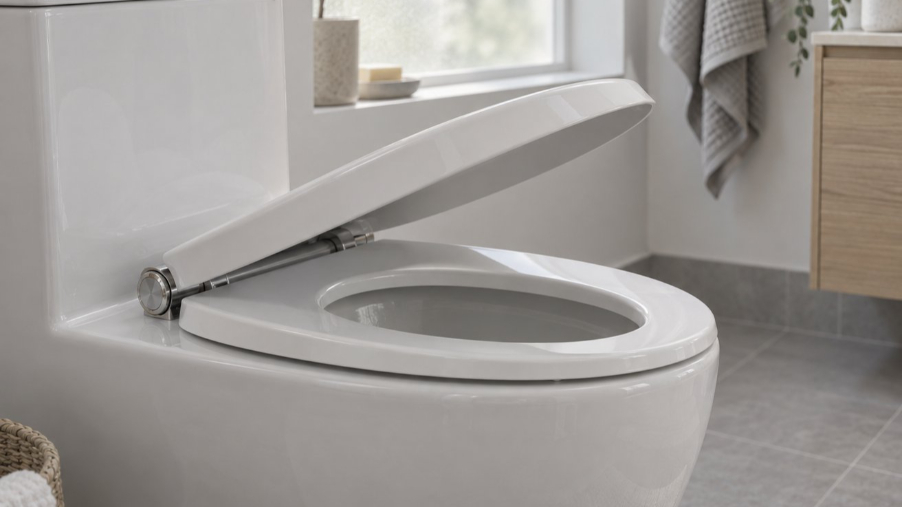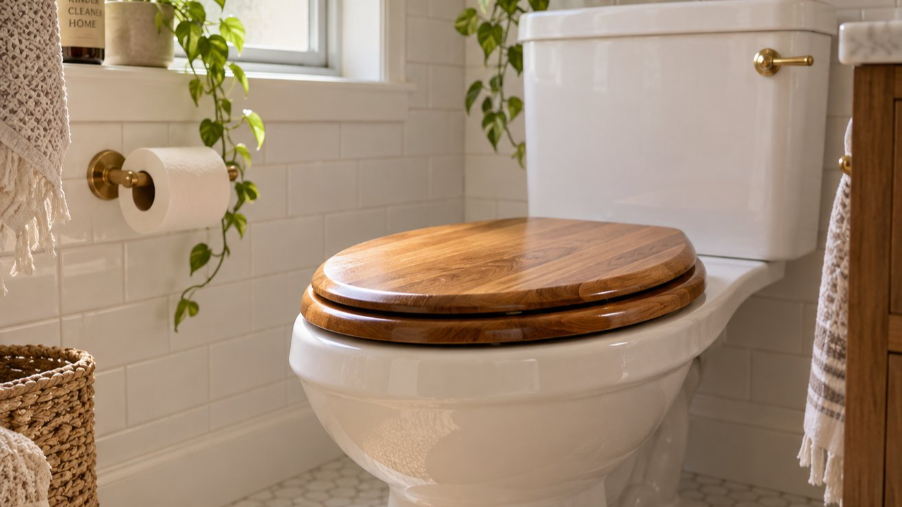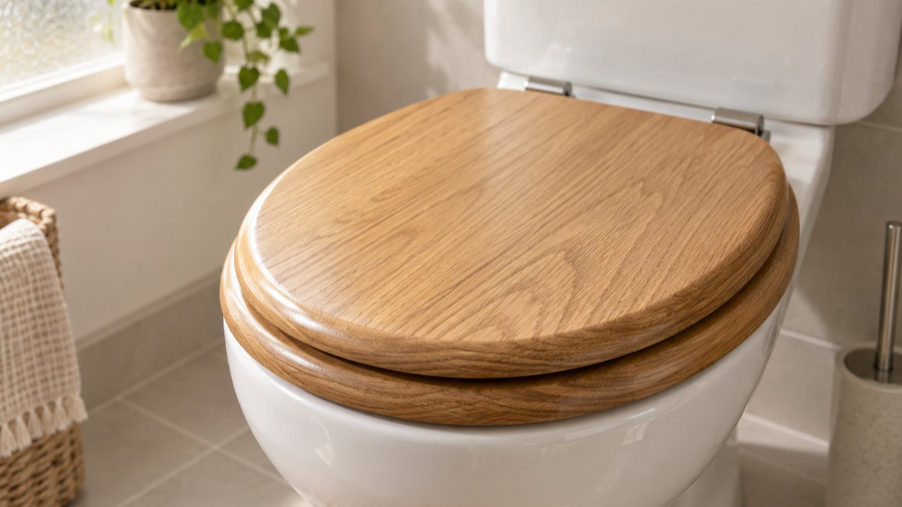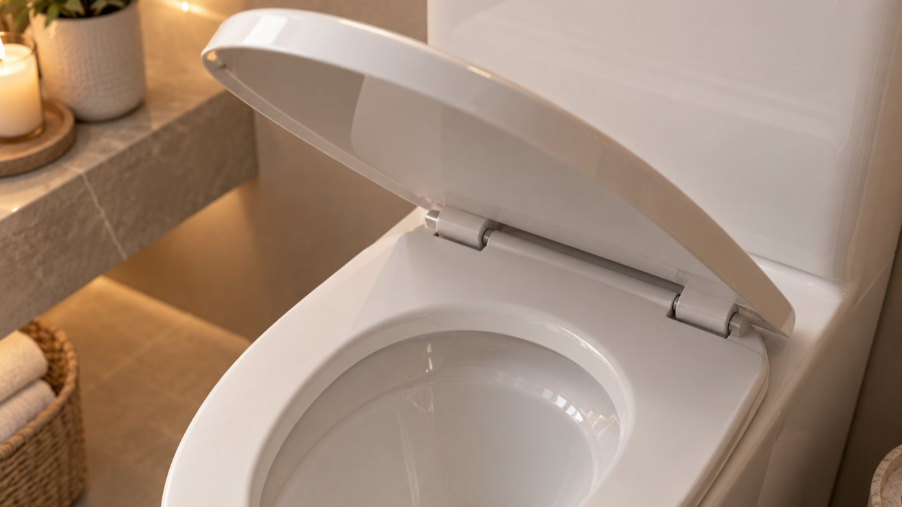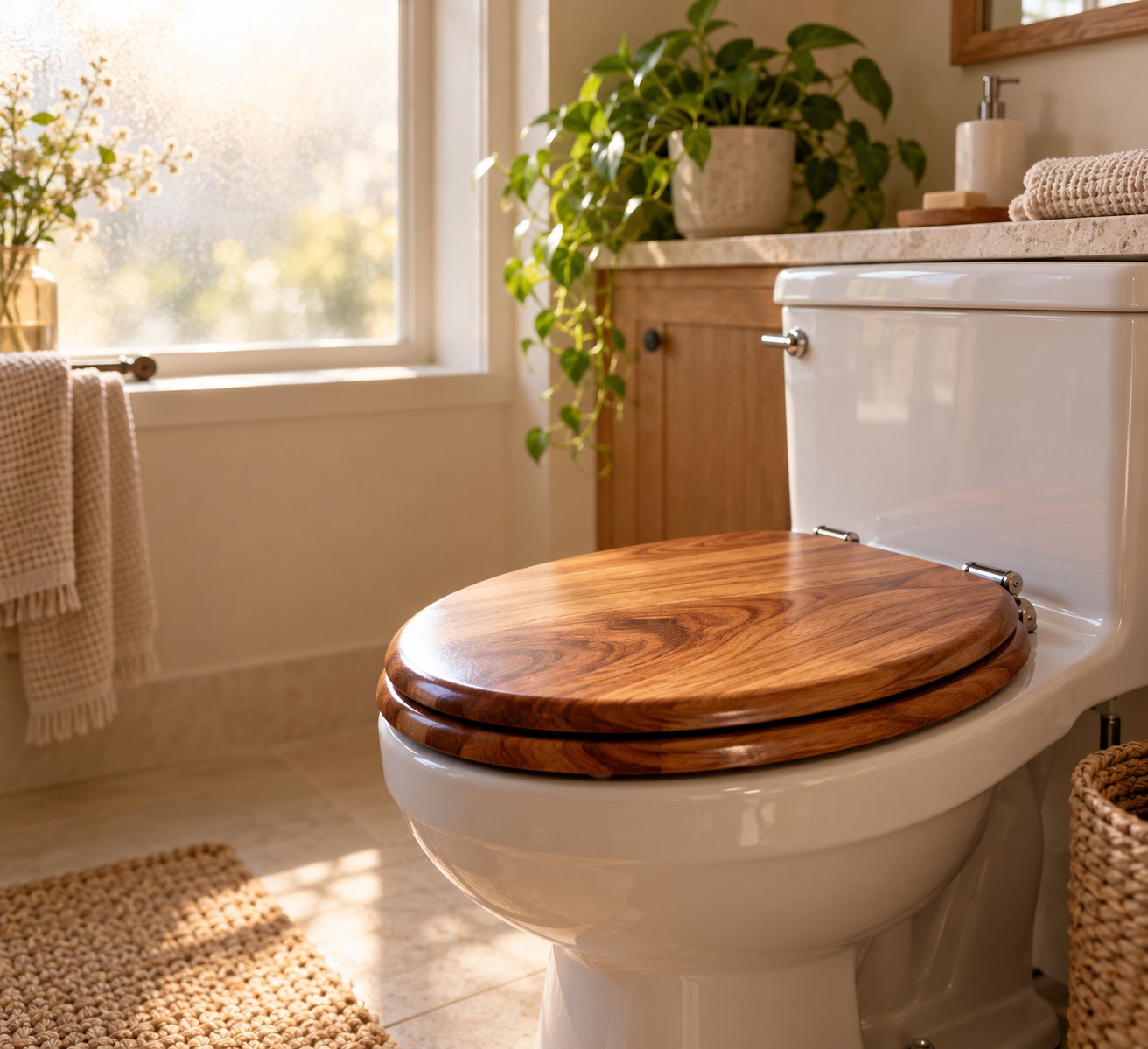
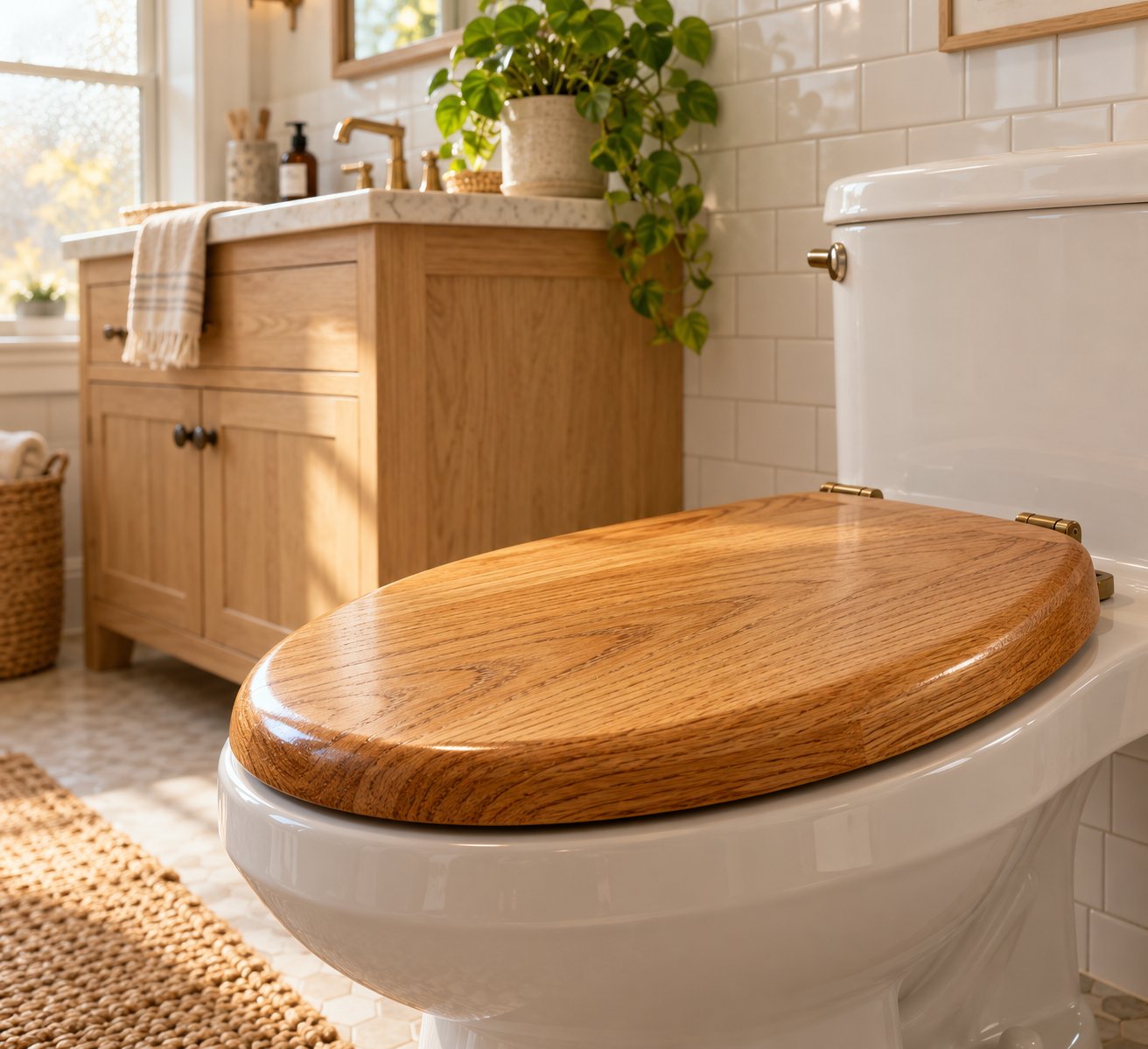
What Is a Wooden Elongated Toilet Seat
A wooden elongated toilet seat is a toilet seat crafted from solid wood, molded wood composite, or enameled wood that fits an oval-shaped bowl measuring approximately 18.5 inches from the mounting bolt holes to the front rim. That oval profile sets it apart from a round seat, which fits a more circular bowl measuring roughly 16.5 inches along the same axis. The distinction matters because an elongated seat will not sit properly on a round bowl — and vice versa — so the shape of your existing toilet dictates which wood toilet seat you need.
Whether you're drawn to the warm grain of oak, the smooth finish of an enameled wood toilet seat, or a heavy-duty molded composite, the elongated version of each shares one defining trait: roughly two extra inches of front-to-back seating surface compared to its round counterpart.
What Makes a Toilet Seat Elongated
Imagine looking straight down at your toilet bowl. If the rim stretches into a pronounced oval rather than forming a near-circle, you have an elongated bowl. Manufacturers produce toilet seats in this distinct category because the oval profile requires a longer seat body, different hinge geometry, and a unique curvature along the rim. The standard bolt-hole spacing — about 5.5 inches center to center — stays the same across both shapes, but the overall seat footprint changes significantly.
Most modern residential toilets sold today ship with elongated bowls, which is why toilet seats wooden options in this shape dominate retailer shelves. If your home was built or remodeled in the last two decades, there's a strong chance you already have an elongated bowl waiting for the right seat.
Who Benefits Most From an Elongated Shape
The extra two inches of seating length distribute body weight across a larger surface area, making elongated seats noticeably more comfortable for adults — especially taller individuals or those with larger frames. The International Plumbing Code even requires elongated bowls in public and employee restrooms, and ADA-compliant bathrooms frequently pair them with comfort-height bases for easier sitting and standing.
In everyday households, you'll find elongated bowls standard in master bathrooms, hall bathrooms, and most new-construction homes. Round bowls still hold their ground in compact powder rooms and older homes where space is tight. When weighing a plastic versus wood toilet seat for either shape, the decision often comes down to warmth, aesthetics, and long-term feel — topics we'll unpack shortly.
Quick reference: an elongated toilet bowl measures approximately 18.5 inches from the bolt holes to the front rim, while a round bowl measures approximately 16.5 inches. That two-inch difference determines which toilet seats — including every wooden loo seat on the market — will fit your bathroom.
Knowing your bowl shape is only half the equation. The type of wood or composite hiding beneath the finish plays an equally important role in how your seat looks, feels, and holds up over the years.
Wood Types and Materials Compared
Walk into any home improvement store, browse any online retailer, and you'll see product listings that say "wood toilet seat" without telling you what kind of wood — or whether it's actually solid wood at all. The truth is, a wooden toilet seat can be built from at least four very different substrates, and each one behaves differently in the warm, humid environment of a bathroom. Understanding these materials before you buy saves you from cracked finishes, warped seats, and premature replacements.
Solid Wood Seats From Oak to Bamboo
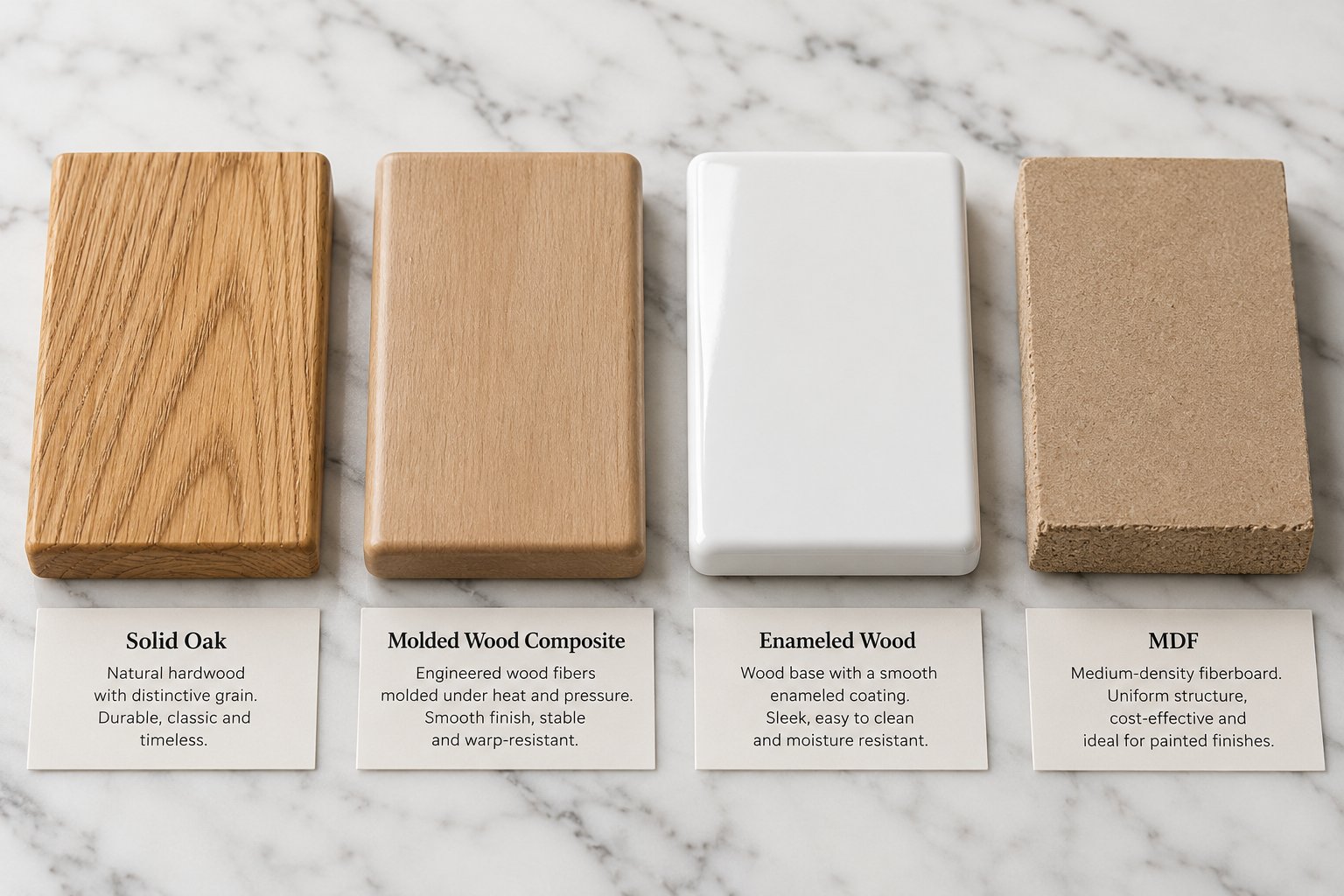
A solid wood toilet seat is exactly what it sounds like: natural timber components cut, shaped, sanded, and assembled into a seat and lid. Oak is the most common species you'll encounter — prized for its tight grain, natural warmth, and heavyweight feel that signals quality the moment you lower the lid. Walnut offers a richer, darker tone with elegant swirling grain patterns, while bamboo has gained popularity as a fast-growing, eco-friendly alternative with a clean, contemporary look.
What makes solid wood special is its character. Every seat wood grain pattern is slightly different, giving each piece a one-of-a-kind appearance that molded or painted alternatives simply cannot replicate. You'll also notice the tactile warmth immediately — solid wood doesn't carry the cold shock of plastic on a winter morning.
The trade-off? Natural timber is inherently sensitive to moisture. Without a thorough protective coating on every surface — top, bottom, edges, and hinge areas — a solid wood seat can absorb humidity, swell, and eventually warp or crack. Proper edge and underside sealing is essential, and buyers should confirm the coating system before committing. Solid wood seats also tend to be heavier and pricier than their engineered counterparts, which is why they're most often found in premium, traditional, or decorative bathroom collections rather than budget-friendly product lines.
Molded Wood and Compressed Wood Composites
If solid wood is the artisan option, molded wood is the engineered workhorse. These seats are manufactured by combining processed wood fibers with resin or adhesive, then pressing the mixture into precision molds under high temperature and pressure. The result is a dense, uniform body that holds its shape far more reliably than natural timber in a humid bathroom.
Why does this matter? Because the compression process eliminates the natural weak points found in solid wood — knots, grain direction changes, and uneven density zones that can become stress fractures over time. Molded wood seats offer better structural stability and are far more consistent from unit to unit, making them the go-to choice for both residential use and large-scale commercial projects.
You'll find molded wood toilet options in elongated shapes, round shapes, and D-shape profiles — finished in everything from high-gloss paint to matte wood-effect decoration. Because the manufacturing process is efficient and scalable, molded wood seats typically land at a moderate price point, roughly $20 to $60 depending on finish quality and hinge hardware. For homeowners who want the substantial feel of a wood toilet without the maintenance demands of natural timber, this category hits the sweet spot.
Enameled Wood and MDF Explained
Here's where product listings get confusing. Browse big-box retailers and you'll see "enameled wood" as a material description — yet almost none of them explain what that actually means.
An enameled wood seat starts with a wood-based core, typically molded wood composite or MDF (medium-density fiberboard). That core is then coated with multiple layers of baked enamel paint, creating a smooth, hard surface with strong moisture resistance and a clean, uniform color. Think of it as the best of both worlds: the weight and warmth of wood underneath, with a protective shell that behaves more like plastic on the outside.
MDF itself is an engineered wood substrate made from fine wood fibers bonded with resin and compressed into dense, flat panels. It's widely used across furniture, cabinetry, and — yes — toilet seat manufacturing because it machines smoothly, takes paint beautifully, and costs less than solid hardwood. In a wood toilet seat, MDF provides a stable, warp-resistant foundation that won't exhibit the grain variation or moisture sensitivity of natural timber, as long as the enamel coating remains intact.
The critical detail with any enameled wood seat is the quality and coverage of that coating. A well-manufactured seat will have uniform enamel across the top, bottom, edges, and hinge mounting areas. A cheaply made one may leave edges or undersides exposed, inviting moisture to penetrate the MDF core — which swells quickly once water gets in. When shopping for round wood toilet seats or elongated models in this category, always check whether the finish covers every surface, not just the visible top.
| Material | Moisture Resistance | Weight | Aesthetic Character | Typical Price Tier |
|---|---|---|---|---|
| Solid Wood (Oak, Walnut, Bamboo) | Low to moderate — depends heavily on coating quality and edge sealing | Heavy | Natural grain patterns, warm and unique appearance | $40 – $120+ |
| Molded Wood Composite | Moderate to good — dense structure resists absorption better than solid wood | Medium to heavy | Smooth, uniform surface; accepts painted or decorative finishes well | $20 – $60 |
| Enameled Wood (Molded or MDF Core) | Good — baked enamel shell provides strong moisture barrier when fully sealed | Medium to heavy | Smooth painted appearance in white, black, bone, or custom colors | $25 – $70 |
| MDF (Medium-Density Fiberboard) | Low if uncoated; moderate to good with quality finish | Medium | Smooth and consistent; relies entirely on surface finish for visual appeal | $15 – $50 |
Each of these wooden lavatory seats fills a different niche. Solid wood appeals to homeowners chasing natural beauty and a premium feel. Molded wood composites deliver durability and consistency at a friendlier price. Enameled wood and MDF options give you the clean, painted look of plastic with the satisfying heft of a wooden WC seat underneath. The right choice depends on your bathroom's humidity level, your design goals, and how much maintenance you're willing to invest — factors that become much easier to evaluate once you know how to measure your toilet and match it to the correct seat shape.
Elongated vs Round Wooden Toilet Seats
Picking the perfect wood type means nothing if the seat doesn't physically fit your bowl. That sounds obvious, yet it's one of the most common return reasons for wooden toilet seats purchased online — a customer orders an elongated wood toilet seat for a round bowl, or the reverse, and discovers the mismatch only after unboxing. A two-minute measurement eliminates that risk entirely.
How to Measure Your Toilet Bowl Shape
Grab a tape measure, lift your existing seat out of the way, and locate the two mounting bolt holes at the back of the bowl. You'll use those holes as your starting reference point. Here's the process:
Measure from the midpoint between the two bolt holes straight forward to the very front edge of the bowl rim. Don't measure the old seat itself — measure the porcelain rim, since a previously mismatched seat could give you a misleading number. According to Bio Bidet's toilet dimension guide, an elongated bowl will read approximately 18.5 inches, while a round bowl comes in at roughly 16.5 inches. That two-inch gap is the entire difference between the two categories.
While you have the tape measure out, check the distance between the two bolt holes themselves. The standard spacing is about 5.5 inches center to center, and this measurement stays consistent across both round and elongated bowls from virtually every major manufacturer. If your bolt-hole spacing matches that standard, any wooden toilet seat designed for your bowl shape should align with the mounting points.
What if your measurement lands somewhere in between — say, around 17.5 inches? You may have a compact elongated bowl. These models take up roughly the same floor space as a round toilet but typically require an elongated toilet seat. In this case, look up your toilet's model number — usually stamped inside the tank or on the underside of the tank lid — and check the manufacturer's spec sheet to confirm which seat shape is recommended.
Comfort and Space Considerations
Your tape measure tells you what fits. Your bathroom layout and household needs tell you what's ideal. An elongated seat offers more front-to-back seating surface, which translates to better thigh support, more comfortable weight distribution, and easier use for taller adults or anyone with limited mobility. It's the shape you'll find in most modern bathrooms, master suites, and ADA-conscious designs.
A round seat, on the other hand, saves about two inches of depth — and in a tight powder room or a small half-bath where the door swings close to the toilet, those two inches can be the difference between a comfortable room and a cramped one. Round bowls are also common in older homes where the original plumbing footprint simply doesn't accommodate a longer profile.
Before committing to a shape — especially if you're debating whether to choose a plastic or wood toilet seat alongside the shape decision — run through this checklist of key factors:
- Bathroom square footage: Larger bathrooms easily accommodate elongated bowls; compact spaces may demand a round option.
- Clearance from the wall and vanity: Measure the distance from the wall behind the toilet to the nearest obstruction in front. An elongated bowl needs roughly 28 to 29 inches of total depth from wall to front rim.
- Household user preferences: Adults generally prefer elongated shapes for comfort, while families with young children sometimes find round bowls easier for small kids to use.
- Existing toilet bowl shape: Your bowl dictates the seat. Replacing a round seat with an elongated one — or vice versa — creates overhang, instability, and cleaning headaches. Always match seat to bowl.
One question that comes up frequently in the wood toilet seat vs plastic debate is whether wooden elongated seats fit universally on all elongated bowls. The short answer: yes, as long as the bowl meets the standard 18.5-inch measurement and the 5.5-inch bolt-hole spacing. Wooden seats use the same mounting system as plastic ones — bolts pass through the same holes and tighten against the same porcelain surface. The material sitting on top doesn't change the geometry underneath.
That said, a small number of toilets — particularly certain one-piece or skirted designs — have non-standard bolt positions or limited clearance between the tank and the bolt holes. If your toilet has an unusual profile, verify both the bolt spacing and the tank-to-bolt distance before ordering. This applies equally whether you're shopping for wooden toilet seats, plastic models, or even specialty options from brands like Boyes toilet seats or Beneke.
With the right measurements confirmed and your comfort priorities sorted, the real question shifts from shape to substance: does wood actually outperform plastic in daily use, or does the premium feel come with trade-offs worth knowing about?
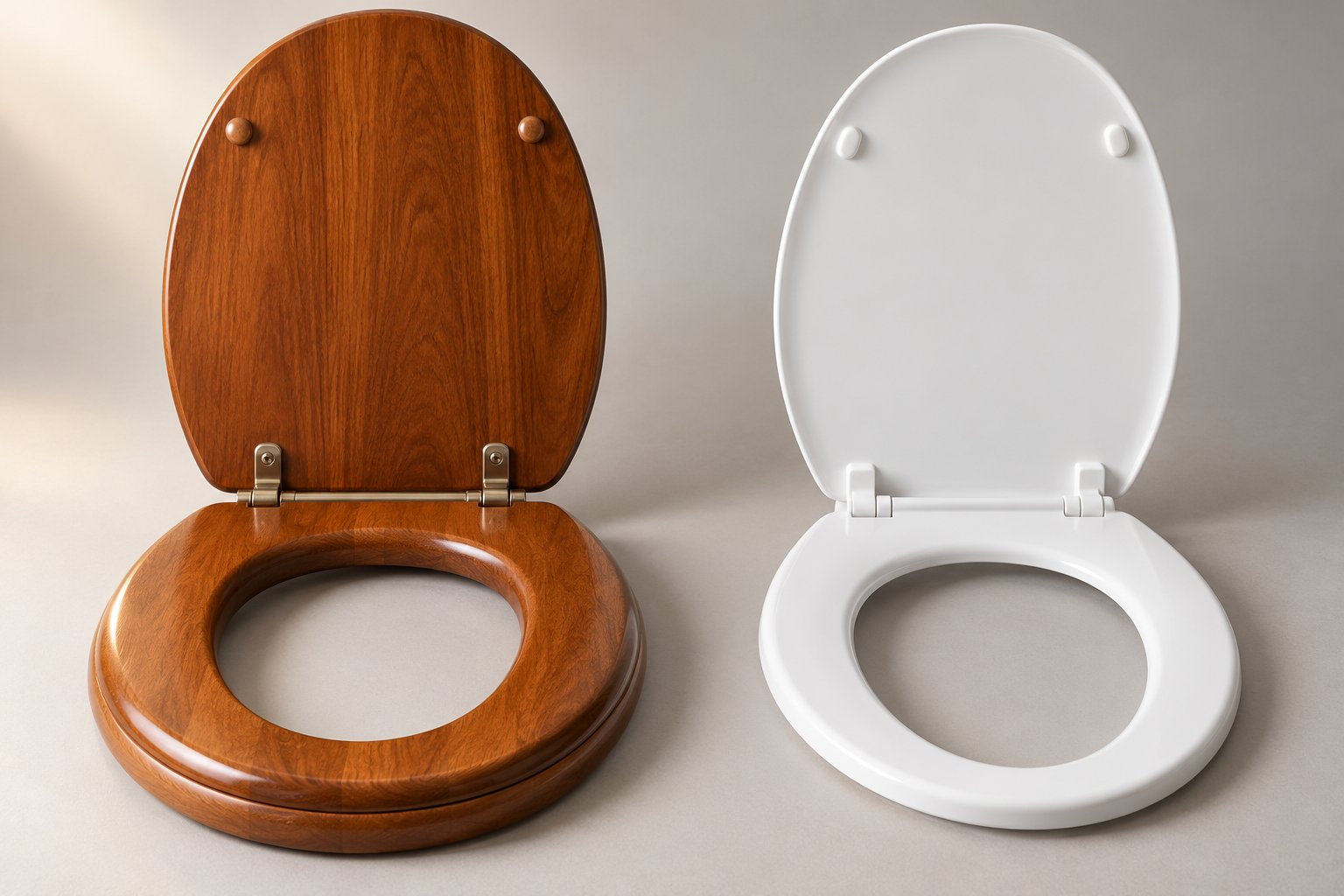
Wooden Toilet Seats vs Plastic Toilet Seats
Premium feel or practical ease — that's the tension at the heart of every wood-versus-plastic decision. Both materials have earned permanent shelf space for good reason, yet they solve fundamentally different problems. Understanding where each one shines (and where it falls short) is the fastest path to choosing the best toilet seat for your specific bathroom.
Why Homeowners Choose Wood Over Plastic
The moment you lower a wooden toilet seat elongated model onto its bumpers, the difference is obvious. Wood carries a satisfying heft — a sense of solidity that lighter plastic alternatives struggle to match. That weight isn't just psychological. It translates into less lateral shifting when you toilet sit, a reassuring sturdiness that many homeowners describe as the single biggest reason they won't go back to plastic.
Warmth is the other headline advantage. Wood doesn't carry the cold shock of plastic, especially during winter mornings, because it naturally insulates rather than conducting ambient temperature straight through to the surface. Pair that thermal comfort with the aesthetic richness of visible grain patterns — or even a smooth enameled finish — and a toilet with wood seat becomes a genuine style statement. Oak and walnut tones complement rustic and farmhouse bathrooms, while painted enameled wood fits seamlessly into modern, transitional spaces.
For homeowners seeking a Beneke toilet seat replacement or shopping across any heritage-style brand, wood also offers a vintage design authenticity that plastic simply cannot replicate. There's a reason great toilet seats in boutique hotels and historic-home renovations are overwhelmingly made of wood: the material communicates craftsmanship.
Where Plastic Seats Have the Edge
Plastic earns its dominance through pure practicality. Polypropylene (PP) and thermoset plastics are inherently non-porous, meaning moisture, bacteria, and cleaning chemicals stay on the surface rather than absorbing into it. In a high-humidity guest bathroom or a busy family household, that impermeability makes daily cleaning faster and more reliable.
Weight works in plastic's favor here, too — lighter seats are easier to lift, remove for deep cleaning, and reinstall. Basic plastic models also start at a lower price point, often between $10 and $30, compared to $25 to $70 and up for wood-based alternatives. And if color variety matters to you, plastics like UF resin and PP can be dyed, textured, or molded into virtually any hue or pattern, giving you far wider palette options than stained or painted wood.
Durability in wet environments is perhaps plastic's strongest card. Where a wooden seat depends entirely on its protective coating staying intact, a solid polypropylene seat is moisture-resistant all the way through — no enamel to crack, no MDF core to swell.
Making the Right Choice for Your Bathroom
So, is wood or plastic toilet seat better? The honest answer: it depends on what you value most. The comparison table below breaks the decision down by the criteria that matter in daily life.
| Criteria | Wood | Plastic |
|---|---|---|
| Warmth | Naturally warm to the touch; comfortable in cooler climates | Cold on contact; adapts slowly to room temperature |
| Moisture Resistance | Dependent on coating quality; vulnerable if finish cracks | Inherently non-porous; resists moisture throughout |
| Aesthetic Appeal | Rich grain textures or smooth enameled finishes; vintage to modern range | Wide color and pattern options; uniform appearance |
| Weight and Sturdiness | Heavier; feels solid and stable on the bowl | Lighter; easier to remove and handle |
| Price Range | $25 – $120+ depending on wood type and finish | $10 – $60 depending on plastic type and features |
| Longevity | 5 – 10+ years with proper maintenance and ventilation | 5 – 8 years; may yellow or scratch over time |
| Maintenance Effort | Moderate; requires gentle cleaners and periodic inspection | Low; wipes clean with standard bathroom cleaners |
Wood excels in warmth and aesthetic character, while plastic wins on moisture resistance and low-maintenance convenience — choose based on your bathroom's humidity level, your design priorities, and how much upkeep you're willing to invest.
If your bathroom has strong ventilation, moderate humidity, and a design scheme that rewards natural materials, a wooden elongated seat is a long-term upgrade you'll appreciate every day. If your priority is effortless cleaning in a high-traffic or high-moisture space, plastic delivers exactly that. Many homeowners even split the difference — installing wood in a well-ventilated master bath and plastic in the kids' bathroom.
Whichever material you lean toward, comfort and longevity hinge on factors that go beyond the surface: how the seat distributes weight, how thick the body is, and how well it stands up to years of daily use under real bathroom conditions.
Comfort and Durability of Wooden Elongated Seats
Surface material and bowl shape tell you what a seat is made of and whether it physically fits your toilet. What they don't tell you is how that seat actually feels during daily use — or how long it will hold up before showing its age. These practical questions rarely appear on product pages, yet they're the ones that determine whether your purchase still feels like a smart decision two, five, or ten years down the road.
Comfort and Ergonomics of Wooden Elongated Seats
Ever sat down on a plastic seat on a cold January morning and instantly regretted it? That jolt happens because plastic conducts heat away from your body quickly, pulling warmth out of your skin on contact. Wood behaves the opposite way. Its natural cellular structure traps air, acting as an insulator that retains your body heat rather than stealing it. According to Home Stratosphere, wood is a far poorer conductor of heat than plastic, which is precisely why it feels warmer — your skin temperature stays closer to normal the moment you sit.
The elongated shape amplifies that comfort advantage. Because the oval profile extends roughly two extra inches from front to back compared to a round seat, your thighs rest on a larger contact area. That wider platform distributes body weight more evenly, reducing pressure points along the inner thigh and creating a noticeably more relaxed sitting posture — especially for taller adults or anyone spending more than a few seconds seated.
Seat thickness and contour matter, too. Budget models tend to be thinner and flatter, while the best toilet seats in the wooden category feature a slightly contoured top surface and a body thickness of roughly 1.5 to 2 inches. That extra mass doesn't just improve warmth retention; it adds structural rigidity that prevents the subtle flexing you sometimes feel with thin plastic alternatives. The result is what many users describe as the comfiest toilet seat they've used — solid, warm, and stable under load without any lateral wobble.
Weight Capacity and Durability Expectations
A common concern — especially for households shopping for a heavy duty toilet seat — is whether wood can handle the same loads as plastic or thermoset options. The short answer: for standard residential use, a well-made wooden elongated seat handles everyday demands without issue. Solid wood and high-density molded wood composites are inherently strong materials, and their heavier construction actually contributes to stability on the bowl.
That said, manufacturers don't all publish weight ratings in the same way. If maximum load capacity is a priority in your household, check the product listing or spec sheet for a stated weight limit before ordering. Some Beneke toilet seats and similar mid-range brands clearly list their ratings, while others require a quick call or email to customer service. As a general benchmark, Horow's guide to wooden WC seats notes that MDF-core seats typically support around 100 kg (approximately 220 lbs), while solid wood and premium molded wood composites often exceed that figure comfortably.
Durability, though, isn't just about load strength. It's about how well the seat resists the slow, cumulative wear of a bathroom environment. High-quality enameled wood seats can last 10 to 15 years with proper care, while budget options may need replacement in as few as three to five years. The gap between those lifespans comes down to a handful of controllable factors — and knowing them gives you the power to extend your seat's useful life significantly.
Here are the top factors that shorten a wooden seat's lifespan, ranked from most damaging to least:
- High humidity without adequate ventilation. Bathrooms that stay damp — no exhaust fan, no window, or infrequent use of either — expose wood toilets and their coatings to persistent moisture. Over months and years, that moisture works its way into microscopic finish imperfections, causing the substrate to swell, warp, or delaminate from the inside out.
- Abrasive or harsh chemical cleaners. Bleach, ammonia-based sprays, and scouring powders degrade enamel and varnish far faster than gentle alternatives. Each cleaning session with the wrong product thins the protective barrier a little more, accelerating the path to exposed raw wood or MDF.
- Unfinished or cracked enamel. Even a single chip or hairline crack in the coating creates an entry point for water. Once moisture reaches the wood or MDF core beneath, deterioration accelerates rapidly — especially in the consistently humid conditions found in most bathrooms.
- Loose hardware causing repeated stress on the seat body. When mounting bolts or hinge screws work themselves loose, the seat shifts slightly with every use. That repetitive micro-movement concentrates stress around the bolt holes, gradually enlarging them and weakening the surrounding material. A simple tightening check every few months prevents this entirely.
Controlling these four factors doesn't require special tools or professional help. A functioning exhaust fan, a bottle of pH-neutral cleaner, an occasional visual inspection of the finish, and a quick bolt check each season are enough to keep most wooden elongated seats performing well for a decade or more. The real enemy isn't the material — it's neglect.
Longevity also ties directly to one component that rarely gets the attention it deserves: the hinge assembly. Because wooden seats carry significantly more weight than plastic, the hinges absorb greater force every time the lid or seat drops — making soft-close damping and hinge material quality far more consequential than most buyers realize.
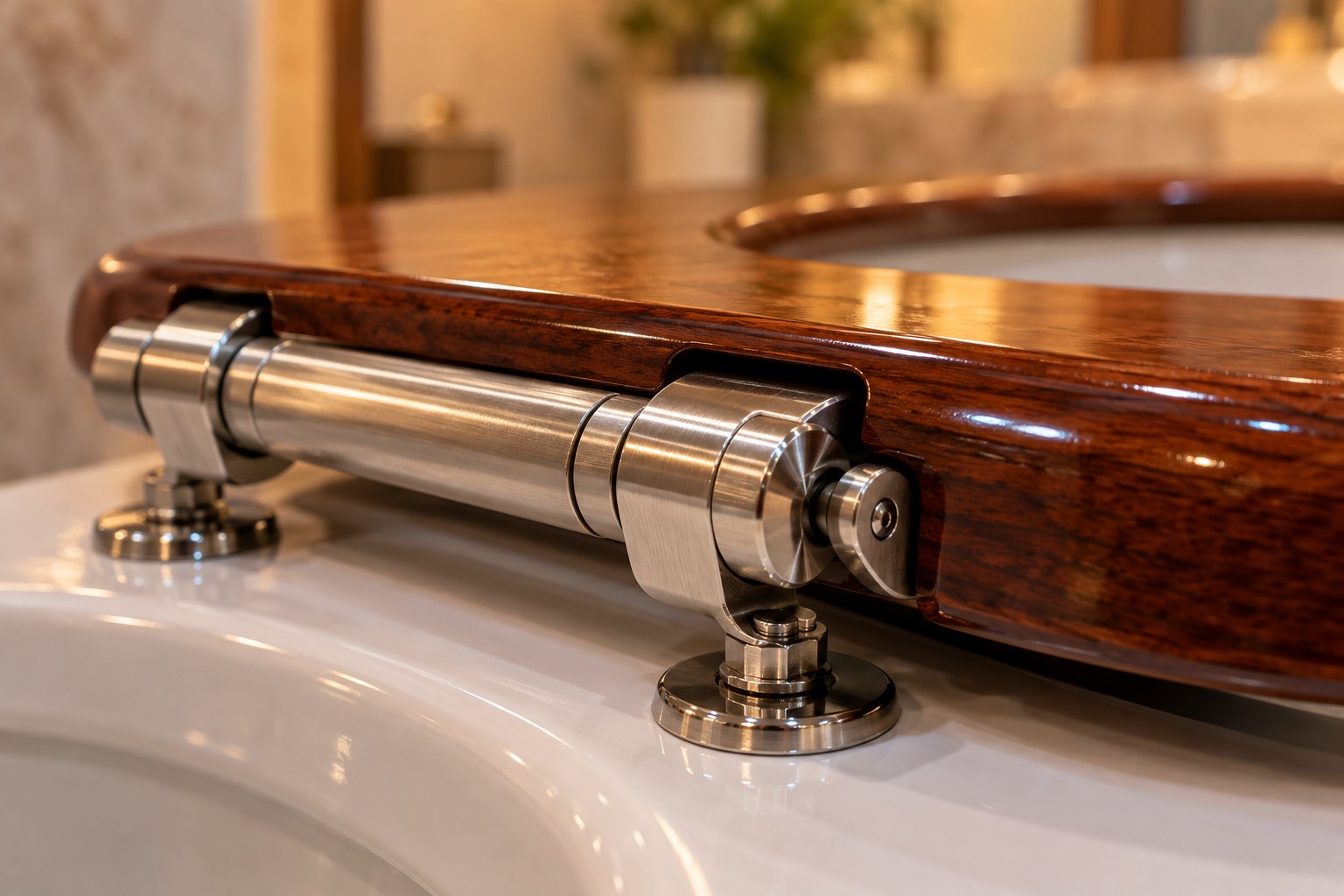
Soft-Close Hinges and Damper Technology Explained
Drop a lightweight plastic lid from fully open and it hits the bowl with a sharp clap. Annoying, sure — but rarely destructive. Drop a solid oak or molded wood lid from the same height and the impact is dramatically different. The extra mass accelerates under gravity, lands harder, and sends a shock through the porcelain, the seat body, and the hinge assembly all at once. Do that a few thousand times and you'll start seeing cracked enamel around the bolt holes, loosened mounting hardware, and stress fractures that no amount of tightening can fix. This is exactly why hinge quality and soft-close damping aren't luxury add-ons for a wooden toilet seat — they're structural necessities.
Whether you're evaluating a walnut toilet seat, an enameled MDF model, or a compressed wood composite, the hinge system quietly determines how long the entire seat lasts. Understanding how that system works puts you in a far better position to judge quality before you buy.
How Soft-Close Dampers Work on Wooden Seats
Imagine releasing a heavy lid and watching it glide down in a smooth, silent arc — no slam, no bounce, no finger-pinching surprise for a toddler who wandered into the bathroom. That controlled descent comes from a small but critical component tucked inside the hinge: the rotary damper.
A rotary damper is essentially a hydraulic braking device. Inside its compact housing, a rotor forces high-viscosity silicone oil through a precisely engineered gap whenever the lid or seat begins to close. The faster gravity tries to pull the seat down, the harder the oil resists — converting kinetic energy into tiny amounts of heat that dissipate harmlessly. The result is a constant, controlled deceleration from fully open to fully closed, regardless of how quickly you release the lid.
Why does this matter more for wood than plastic? Physics. A solid wood or MDF elongated seat can weigh two to three times as much as a comparable polypropylene model. That extra mass generates significantly more gravitational torque — especially in the final ten degrees of travel, where the lever arm is at maximum length and the seat wants to snap shut fastest. According to rotary damper engineering analysis from JAN Hinge, high-torque damper variants are considered non-negotiable for solid wood and heavy urea-formaldehyde seats precisely because standard-torque units can't provide enough resistance to prevent that last-second slam.
The best elongated toilet seat models pair the damper with an auxiliary torsion spring inside the hinge assembly. The spring provides a gentle counterbalancing force that smooths out the descent curve, so the lid doesn't lurch at the start or stall midway. Together, these two mechanisms — damper and spring — create the seamless, linear closing motion that distinguishes a premium toilet seat elongated wood option from a budget one.
Hinge Materials and Mounting Design
The damper controls the speed. The hinge structure controls everything else: alignment, lateral stability, load distribution, and how securely the seat stays anchored to the bowl over years of daily use. Three hinge material categories dominate the market:
- Metal hinges — typically zinc alloy or stainless steel — offer the highest strength and rigidity. They resist bending under heavy wood seats far better than polymer alternatives. Plating finishes vary (chrome, nickel, or decorative coatings), so don't assume a shiny surface means a specific base metal without checking the spec sheet.
- Plated metal hinges use a steel or zinc core with a corrosion-resistant surface layer. These strike a practical balance between durability and cost, and you'll find them on many mid-range wood or plastic toilet seat models.
- Engineered polymer hinges — made from reinforced nylon or POM (polyoxymethylene) — are lighter and inherently corrosion-proof. They work well on lighter seats, but heavier wooden toliet seat assemblies can stress polymer pivot points over time, leading to flex or fatigue cracking in high-cycle use.
Mounting configuration adds another layer to the decision. Top-mount systems install entirely from above, using expanding anchors that grip the ceramic from inside the bolt hole — ideal for modern skirted or wall-hung toilets where you can't reach the underside. Bottom-mount systems pass bolts through the bowl and secure with nuts underneath, which is the traditional approach for standard open-back toilets. As Bofan's installation comparison explains, top-mount designs tend to stay tighter longer because the expanding anchor resists vibration-induced loosening, while bottom-mount nuts may require periodic retightening.
Here's the detail most product pages skip: hinge dimensions, torque calibration, and mounting compatibility aren't universal. A damper engineered for a lightweight round polypropylene seat won't deliver proper closing speed on a heavy elongated MDF model. The torque has to be matched to the specific seat weight and lever arm length — which is why manufacturers who engineer their own damper-hinge systems at the component level tend to produce more reliable soft-close performance than those who use off-the-shelf generic hardware.
For anyone curious about what goes into that component-level engineering — how configurable hinge dimensions, torque settings, and mounting designs are developed specifically for wood, MDF, resin, and metal seat assemblies — Tianyun's MDF and Metal Toilet Seat Damper Solutions offers a useful technical resource. It's geared toward manufacturers and informed buyers who want to understand the engineering decisions behind quality soft-close performance, rather than just trusting a product label.
A wood toilet seat round or elongated is only as durable as the hinge holding it in place. Pair a beautiful oak or enameled finish with a poorly calibrated damper or a flimsy polymer hinge, and you'll be shopping for a replacement far sooner than the wood itself would have required. The hinge assembly deserves the same scrutiny as the seat material — because when something goes wrong with a wooden seat, the failure point is almost always mechanical, not structural.
That mechanical vulnerability extends beyond hinges into the finish and hardware as well. Cracking enamel, moisture infiltration, and loosening bolts are the slow-burning issues that quietly shorten a wooden seat's life — and most of them are entirely preventable with the right habits.
Common Wooden Toilet Seat Problems and Solutions
Every material has an Achilles' heel. Plastic seats yellow and scratch. Thermoset options can chip under sharp impacts. And a wooden toilet seat — regardless of whether it's solid oak, molded composite, or enameled MDF — faces its own set of vulnerabilities that develop quietly over months and years of bathroom use. The difference between a seat that lasts three years and one that lasts a decade often comes down to recognizing these issues early and knowing exactly how to prevent or address them.
Among the many types of toilet seats available today, wood-based options reward attentive owners and punish neglect. Here's what actually goes wrong, why it happens, and what you can do about it.
Cracking, Peeling, and Finish Damage
That glossy enamel or smooth varnish coating on your seat isn't just decorative — it's the primary moisture barrier standing between water and the wood or MDF core underneath. When that barrier fails, the countdown to replacement begins.
Finish damage typically starts in one of three ways. First, temperature fluctuations cause the wood substrate and the enamel layer to expand and contract at slightly different rates. Over hundreds of heating and cooling cycles — think of a bathroom that gets steamy during a hot shower, then cools to ambient temperature — microscopic stress fractures develop in the coating. These hairline cracks are invisible at first but gradually widen into visible crazing or peeling.
Second, harsh cleaning chemicals accelerate the breakdown. Bleach, ammonia-based bathroom sprays, and abrasive scouring powders eat through enamel and varnish far faster than you'd expect. Each wipe-down with the wrong product thins the protective layer a little more, turning what should be a decade-long finish into a three-year one.
Third, physical impact — dropping the lid without a soft-close damper, placing heavy objects on the seat, or even a child slamming it repeatedly — chips or dents the enamel surface. A single chip might seem cosmetic, but it exposes raw wood or MDF directly to bathroom humidity. Once water finds that entry point, the damage spreads outward beneath the surface coating, lifting and peeling the finish from the inside.
The prevention strategy is straightforward: choose seats with thick, uniform factory finishes that cover every surface — top, bottom, edges, and hinge recesses. When cleaning, stick to gentle pH-neutral products and soft cloths. And if your seat doesn't already have soft-close hinges, consider upgrading to reduce impact stress. An oak toilet seat or any elongated molded wood toilet seat with premium enamel will hold up remarkably well as long as that coating stays intact.
Moisture Warping and Staining Prevention
Cracked finishes are bad. What happens next is worse. Once moisture breaches the protective coating, it reaches the wood or MDF core — and that's where real structural damage begins.
MDF is especially vulnerable. As EcoLayer Industries' research on MDF in wet environments explains, standard MDF is highly hygroscopic — it pulls moisture from surrounding air readily and in every direction, since its fibers run randomly rather than along a single grain. Exposed edges, drilled holes, and fastener points absorb water fastest, and the panel can swell 8 to 15 percent in thickness after sustained exposure. In a toilet seat, that swelling distorts the flat seating surface, loosens the fit against the bowl rim, and eventually compromises the seat's structural integrity entirely.
Solid wood reacts differently but no less destructively. Natural timber swells along the grain at a slower rate, but it also warps — twisting or cupping as different sections absorb moisture unevenly. A vintage toilet seat made from solid hardwood can develop a visible bow after just one season in a poorly ventilated bathroom.
Staining is the other moisture-related headache. Hard water leaves mineral deposits that etch into weakened finishes, creating rust-colored rings or white chalky marks that won't wipe away with a standard cleaner. Certain cleaning products can also discolor wood tones, leaving blotchy patches on natural-finish seats.
Preventing these issues doesn't require anything exotic:
- Run your exhaust fan during and for at least 15 minutes after every shower or bath. Reducing ambient humidity is the single most effective protection for any wooden toilet in the room.
- Wipe standing water off the seat promptly. Splashes, condensation, and residual moisture from cleaning should never be left to air-dry on the surface — especially around hinge recesses and the underside of the seat where pooling is common.
- Never soak the seat during cleaning. Spray your cleaner onto a cloth first, then wipe the seat. Spraying directly onto the seat sends liquid running into seams, hinge channels, and bolt holes where it can seep beneath the finish.
- Address hard water at the source. If mineral staining is a recurring problem, a water softener or a simple wipe-down with diluted white vinegar (followed by a damp rinse and immediate drying) keeps deposits from building up.
If you're shopping for the best round toilet seat or an elongated model for a high-humidity bathroom — say, a full bath without a window — prioritize enameled finishes with complete bottom and edge coverage. A sealed seat handles bathroom moisture far better than a partially finished one, regardless of the substrate underneath.
Loose Hardware and Hinge Maintenance
Here's a problem that sneaks up on nearly every wooden seat owner. You tighten the bolts on installation day, everything feels rock-solid, and then six months later you notice a slight wobble. A year later, the seat slides sideways when you sit down. What happened?
Weight is the short answer. A wooden seat is significantly heavier than a plastic one, and every time someone sits, stands, shifts, or lowers the lid, that mass transfers force through the hinge assembly and into the mounting bolts. Over hundreds of use cycles, the bolts gradually loosen — a process engineers call vibration-induced fastener relaxation. Plastic seats experience it too, but the effect is amplified with wood because the forces involved are larger.
The fix is simple, and it takes less than two minutes. Flip open the hinge covers at the back of the seat, use a screwdriver to hold the bolt head steady from above, and use an adjustable wrench to snug the nut from below. Don't overtighten — porcelain is strong but brittle, and excessive clamping force can crack the bowl rim around the bolt hole. Tighten until the seat sits flush and stable, then give it one additional quarter-turn. That's enough.
If your bolts won't stay tight no matter how often you snug them, the threads may be stripped or the washers may have worn smooth. A replacement mounting kit — available at any hardware store for a few dollars — includes fresh bolts, nuts, and rubber washers that restore the friction needed to keep everything locked in place.
To catch small problems before they become big ones, run through this seasonal maintenance checklist:
- Inspect hinge tightness. Give the seat a side-to-side jiggle and retighten if you feel any play.
- Check for finish cracks. Look closely around bolt holes, the front edge, and the underside — these are the first areas where enamel or varnish tends to fail.
- Wipe down with a gentle pH-neutral cleaner. Avoid bleach, ammonia, and abrasive pads. A soft cloth and a mild bathroom cleaner preserve the finish far longer than aggressive products.
- Verify bumper condition. The small rubber or silicone bumpers on the underside of the seat and lid cushion contact with the bowl and prevent the finish from wearing through. If any bumper is missing, cracked, or flattened, replace it — adhesive-backed replacements are inexpensive and widely available.
Fifteen minutes per season is all this takes. That small investment protects the finish, preserves the hinge calibration, and ensures your wooden seat keeps performing the way it did on day one. It also gives you an early warning if something — a hairline crack, a corroding bolt, a missing bumper — needs attention before it escalates into a full replacement.
With the structural and maintenance side handled, the final piece of the puzzle is purely visual: choosing the right color, tone, and finish style so your seat actually complements the bathroom it lives in.
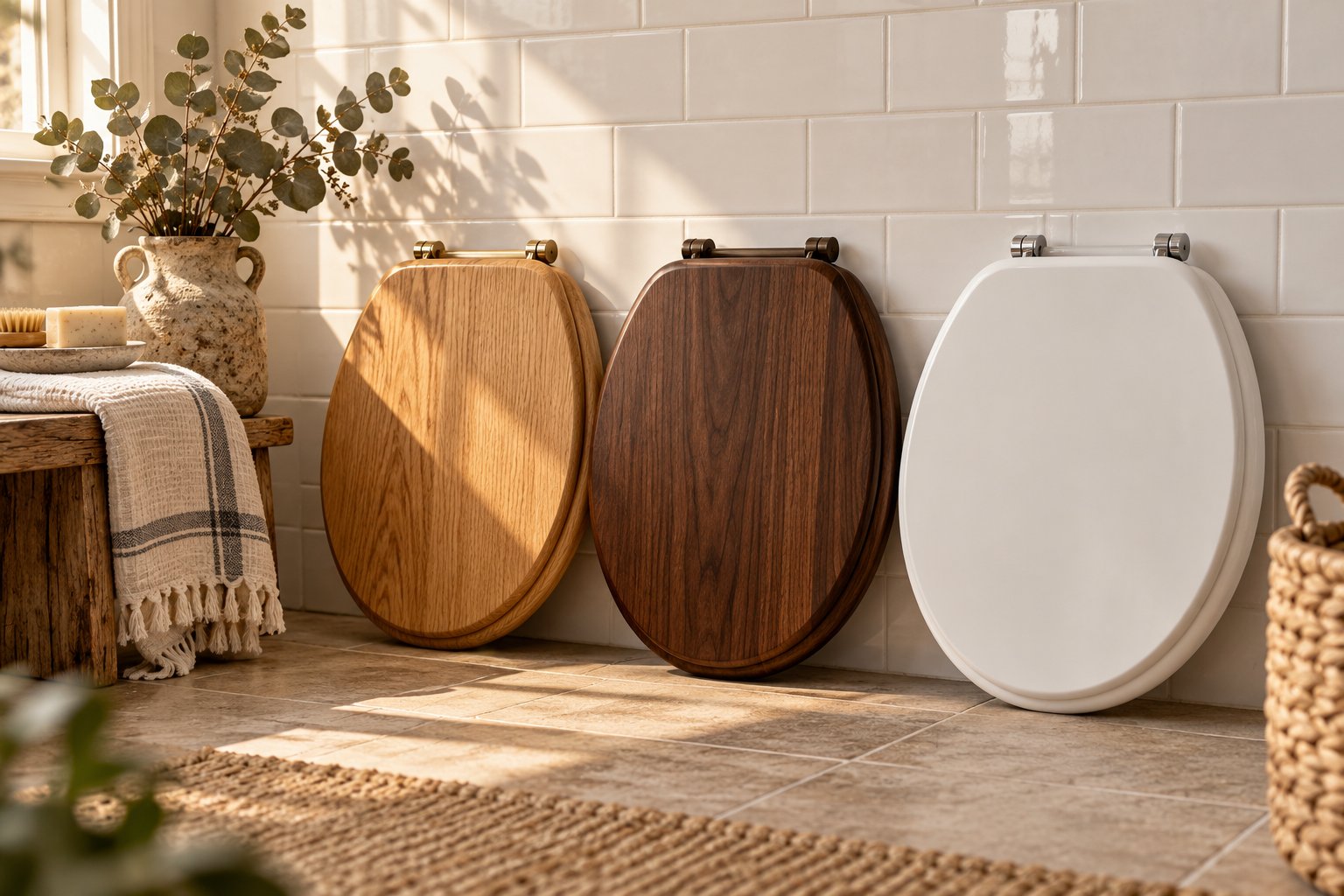
Choosing the Right Color and Style for Your Bathroom
A wooden seat toilet that fits perfectly, closes silently, and resists moisture is still only half the equation. If the color clashes with your tile or the finish feels out of place next to your vanity, you'll notice it every single time you walk into the room. Color and style selection is the step that transforms a functional bathroom component into a design element — yet it's the one most buyers spend the least time thinking about.
The good news? Wooden elongated seats come in a wider range of finishes than most people realize, from raw natural grain to high-gloss painted enamel in nearly any color you'd find on a paint chip. Matching one to your bathroom is less about rigid rules and more about understanding which finish families work with which design styles.
Natural Wood Tones and When to Choose Them
Picture a farmhouse bathroom with a reclaimed wood vanity, wrought-iron fixtures, and white subway tile. A natural oak wood seat — with its golden honey grain visible through a clear satin finish — feels like it belongs. It echoes the vanity, warms up the tile, and ties the room together without trying too hard. That's the power of natural wood tones: they create visual continuity by repeating organic textures already present in the space.
Oak is the most versatile natural option. Its grain reads warm but neutral, blending easily into rustic, farmhouse, and even Scandinavian-inspired bathrooms where light timber and clean lines dominate. Walnut runs deeper and richer, with chocolate-brown undertones and dramatic swirling patterns that suit moody, sophisticated spaces — think dark tile, brushed brass hardware, and statement lighting. Bamboo offers something different entirely: a pale, linear grain with a contemporary edge that pairs beautifully with minimalist or spa-style bathrooms.
The key principle? Natural wood tones work best when they echo other wood elements in the room. If your vanity, open shelving, or mirror frame already introduces a specific timber species or stain color, matching your toilet seat molded wood or solid wood finish to that same family creates a cohesive, intentional look. A mismatched wood tone — say, a red-toned cherry seat next to a cool gray oak vanity — can feel jarring, even if both pieces are individually beautiful. When in doubt, bring a sample of your existing wood finish to compare against seat options in person, or order finish swatches if shopping online.
One practical caveat: natural-finish seats require more diligent maintenance than painted alternatives, since any water spotting, staining, or finish wear shows more visibly against exposed grain. If your bathroom runs humid or your household leans toward low-maintenance fixtures, a natural wood seat performs best in a well-ventilated primary bath rather than a busy, splash-prone family bathroom.
Painted and Enameled Finishes for Modern Bathrooms
Not every bathroom calls for visible wood grain. In contemporary, transitional, and minimalist spaces, a smooth painted or enameled finish often makes more sense — delivering the weight and warmth of a wooden seat toilet underneath a clean, uniform surface that blends with modern fixtures.
White enameled wood is the most popular choice by a wide margin, and for good reason. It offers the crisp, bright appearance of a plastic seat with the satisfying heft and thermal comfort of wood. From across the room, a white enameled seat looks indistinguishable from polypropylene — but the moment you lower the lid, the weight and the warmth give it away. For homeowners who want wood's benefits without advertising the material, white enamel is the answer.
Black enameled seats have surged in popularity alongside the broader trend toward matte black bathroom fixtures — faucets, showerheads, towel bars, and cabinet pulls. A black wood seat anchors the space with visual weight and pairs naturally with white porcelain for a high-contrast, editorial look. Bone and biscuit shades split the difference, offering a softer warm-white that matches the slightly off-white porcelain found on many mid-range and older toilets. Choosing bone over bright white avoids the subtle but noticeable color mismatch that occurs when a pure white seat sits on a warm-toned bowl.
If you've been considering a duroplast toilet seat for its hard, glossy surface, know that enameled wood achieves a very similar visual result — a smooth, non-porous-looking shell — while retaining the thermal advantage and heavier feel that duroplast and standard plastics can't replicate.
When matching any painted or enameled seat to your existing bathroom, these guidelines help you land on the right shade and tone:
- Match the seat to your trim and fixtures, not your walls. Wall paint changes far more often than hardware and porcelain. Coordinating with the toilet's own porcelain color, your cabinet trim, or your faucet finish creates a more stable, long-lasting palette.
- Consider warm versus cool undertones in the existing toilet. Porcelain labeled "white" varies dramatically between manufacturers — some lean blue-cool, others lean yellow-warm. Hold the seat (or a swatch) directly against the bowl in person to check for undertone clashes.
- Test how the seat color looks in both natural and artificial bathroom lighting. A seat that matches perfectly under your LED vanity lights may shift noticeably in afternoon sunlight from a window. Warm-tone lighting deepens creams and golds, while cool daylight can make bone finishes appear slightly gray. Check under both conditions before committing.
- When in doubt, go one shade warmer. A seat that reads slightly warmer than the surrounding porcelain tends to look intentional and inviting. One that reads cooler can feel clinical or mismatched.
For homeowners drawn to statement pieces, vintage and decorative styles open up an entirely different category. Hand-painted floral motifs, decoupage patterns, and distressed-finish seats exist for bathrooms designed around personality rather than minimalism. These top rated toilet seats in the decorative niche are typically built on molded wood or MDF cores with multi-layer painted finishes, and they serve as conversation starters in powder rooms, guest baths, and eclectic-style homes. Just be aware that intricate painted surfaces are harder to touch up if chipped, so handle them with the same care you'd give any piece of finished art.
Color and finish ultimately come down to one question: does this seat look like it was chosen for this bathroom, or does it look like an afterthought? Spending five minutes with a tape measure and a color swatch — the same way you'd approach selecting tile or a vanity top — ensures the answer is always the former. And with the aesthetic decision settled, the only step left is pulling all of these variables together into a clear, repeatable process for choosing the right wooden elongated seat from start to finish.
How to Pick the Perfect Wooden Elongated Toilet Seat
You've seen how wood types differ, why measurements matter, where plastic falls short and where it wins, what destroys a finish, and how a damper keeps the whole assembly alive. That's a lot of ground — and it can feel overwhelming when you're standing in a store aisle or scrolling through dozens of product listings online. The simplest way to cut through the noise is to follow a single, repeatable process that checks every variable in the right order. Miss a step, and you risk buying a beautiful seat that doesn't fit, warps in six months, or slams loud enough to wake the house.
Step-by-Step Selection Checklist
Think of this as your purchasing roadmap. Each step builds on the one before it, so working through them in sequence eliminates the most common buying mistakes before they happen.
- Measure your toilet bowl shape. Use a tape measure from the midpoint between the rear bolt holes to the front edge of the porcelain rim. Approximately 18.5 inches means elongated; roughly 16.5 inches means round. This single number determines your entire seat category — an elongated seat won't sit flush on a round bowl, and a round wooden toilet seat will leave an awkward overhang on an elongated one.
- Verify bolt-hole spacing. Measure center to center between the two rear mounting holes. The standard is about 5.5 inches, which accommodates virtually every wooden commode seat on the market. If your spacing differs — rare, but possible on certain European or one-piece skirted designs — note the exact measurement so you can cross-reference it against the seat's spec sheet.
- Choose your wood type based on humidity and aesthetic needs. Solid oak or walnut for natural beauty in a well-ventilated bathroom. Molded wood composite for consistent density and mid-range pricing. Enameled wood or MDF for a clean painted look with strong moisture protection. High-humidity bathrooms without reliable ventilation? Lean toward enameled or molded options — or consider whether a plastic seat might actually serve you better in that specific room.
- Decide between a natural wood and an enameled or painted finish. Natural grain complements rustic and farmhouse aesthetics; painted enamel suits modern, transitional, and minimalist spaces. If your bathroom already features wood elements — a vanity, shelving, mirror frame — match the seat's tone to those pieces for visual cohesion.
- Prioritize soft-close hinges for heavier wood seats. A wooden lid weighs two to three times more than plastic. Without a properly calibrated damper, every close is a slam that stresses the enamel, loosens the bolts, and chips the porcelain rim over time. Soft-close isn't a luxury feature here — it's a durability requirement.
- Check manufacturer weight ratings if needed. Standard residential use rarely exceeds a well-made wooden seat's capacity, but if your household needs a heavy duty or large toilet seat, confirm the stated limit before ordering. Some brands publish this clearly; others require a quick check with customer support.
- Match color to bathroom decor. Hold a swatch or the actual seat against your toilet's porcelain under both natural daylight and your bathroom's artificial lighting. Match to trim and fixtures rather than wall paint, and pay attention to warm versus cool undertones. When in doubt, go one shade warmer — it reads as intentional.
Running through these seven steps takes about fifteen minutes, yet it prevents every common return scenario: wrong shape, wrong bolt spacing, wrong material for the environment, wrong finish for the aesthetic, wrong hinge for the weight. Whether you're evaluating wood toilet seats round or elongated, budget MDF models or premium solid hardwood, the process stays the same.
What to Look for in a Quality Wooden Elongated Seat
Passing the checklist above gets you to the right category. Spotting quality within that category is the final filter — and it's where many buyers rush, defaulting to the lowest price or the most reviews without examining the details that actually predict long-term performance.
Here are the quality indicators worth inspecting before you commit:
- Thick, uniform coating on every surface. Flip the seat over. A well-manufactured seat has consistent enamel or varnish coverage on the top, bottom, edges, and inside the hinge recesses. Bare spots — especially on the underside or around bolt holes — are open invitations for moisture infiltration.
- Corrosion-resistant hinge hardware. Look for zinc alloy, stainless steel, or quality-plated metal hinges. Polymer hinges work fine on lighter plastic seats, but the heavier load of a wooden seat benefits from metal's rigidity and fatigue resistance over thousands of open-close cycles.
- Snug bolt-hole fit. The mounting bolts should pass through the seat's hinge plate and into the bowl's bolt holes without excessive play. A sloppy fit means the seat will shift laterally from day one, accelerating wear on both the hardware and the finish around the mounting points.
- Responsive soft-close damping. If possible, test the closing action before purchase (or check video reviews). The lid should descend at a smooth, consistent speed from fully open to fully closed — no lurching at the start, no stalling in the middle, no last-second thud at the end. That smooth arc signals a damper properly calibrated to the seat's weight.
- Reinforced mounting points. On better-made seats, the area around each bolt hole is thickened or reinforced to distribute clamping force across a broader section of the seat body. This prevents the gradual hole enlargement that causes wobble in thinner, unreinforced designs.
Wondering whether the question is wood or plastic toilet seat better? Here's the most honest answer: neither is universally superior. A high-quality wooden elongated seat outperforms a cheap plastic one in warmth, stability, and aesthetic impact. A high-quality plastic seat outperforms a cheap wooden one in moisture resistance and maintenance ease. The material matters less than the execution — and the checklist above helps you evaluate execution regardless of what the seat is made from. Even shoppers comparing toilet seat wood round options to elongated ones can apply the same quality filters; only the bowl measurement changes.
A wooden elongated toilet seat is a long-term bathroom upgrade when matched correctly to your bowl shape, humidity conditions, and maintenance habits — invest fifteen minutes in measuring, inspecting, and color-matching, and the seat will reward you with years of warmth, comfort, and style.
You don't need to be a plumber, a materials engineer, or an interior designer to make this decision well. You need a tape measure, a few minutes of honest assessment about your bathroom's ventilation and humidity, and a willingness to check the details that product photos alone won't reveal. The homeowners who end up loving their wooden seats — calling them the most comfortable, best-looking upgrade they've made — are invariably the ones who took those few extra steps before clicking "add to cart." That small upfront effort is the entire difference between a seat you tolerate and one you genuinely enjoy for a decade or more.
Frequently Asked Questions About Wooden Elongated Toilet Seats
1. Is a wood or plastic toilet seat better?
Neither material is universally superior. Wood offers natural warmth, a heavier and more stable feel, and richer aesthetics ranging from visible oak grain to smooth enameled finishes. Plastic excels in moisture resistance, lighter weight for easy removal, lower entry-level pricing, and simpler cleaning in high-humidity bathrooms. The best choice depends on your bathroom's ventilation, your design preferences, and how much maintenance you're willing to commit. Many homeowners install wood in a well-ventilated master bath and plastic in a high-traffic family bathroom to get the best of both materials.
2. How do I know if I need an elongated or round toilet seat?
Measure from the midpoint between the two rear mounting bolt holes straight forward to the front edge of the porcelain bowl rim. If the distance is approximately 18 to 18.5 inches, you have an elongated bowl and need an elongated seat. If it reads roughly 16 to 16.5 inches, you have a round bowl. Always measure the porcelain rim itself rather than an existing seat, since a previously mismatched seat could give a misleading reading. Standard bolt-hole spacing is about 5.5 inches center to center for both shapes.
3. What is an enameled wood toilet seat made of?
An enameled wood toilet seat starts with a core of molded wood composite or MDF (medium-density fiberboard). That core is coated with multiple layers of baked enamel paint, producing a hard, smooth surface with strong moisture resistance and a uniform color. The result combines the weight and thermal warmth of wood underneath with a protective painted shell that looks and cleans more like plastic on the outside. Quality varies significantly between brands, so check that the enamel covers every surface including the bottom, edges, and hinge recesses to prevent moisture from reaching the wood core.
4. How long does a wooden elongated toilet seat last?
A high-quality enameled or molded wood elongated seat can last 10 to 15 years with proper care, while budget models may need replacement in three to five years. Lifespan depends heavily on four controllable factors: bathroom humidity and ventilation quality, the type of cleaning products used, the integrity of the protective coating, and whether mounting hardware is kept snug. Running an exhaust fan, using pH-neutral cleaners, inspecting the finish seasonally, and tightening bolts periodically are simple habits that dramatically extend a wooden seat's useful life.
5. Why are soft-close hinges important on a wooden toilet seat?
Wooden toilet seats weigh two to three times more than comparable plastic models. Without soft-close damping, that extra mass slams down with significant force each time the lid closes, sending shock through the porcelain bowl, the enamel finish, and the hinge mounting points. Over hundreds of impacts, this leads to chipped enamel around bolt holes, loosened hardware, and stress fractures in the seat body. A properly calibrated rotary damper inside the hinge uses silicone oil to decelerate the lid smoothly, protecting both the seat and the bowl while eliminating noise and finger-pinching hazards.
Apply This Insight to Your Project
Tell us what you are building and how the topic “Wooden Toilet Seat Elongated: Oak, Maple, or Molded — Which Lasts?” relates to your application. Our engineering team can help evaluate the next step.