What a Slow Close Elongated Toilet Seat Really Means
Imagine this: it is 2 AM, the house is dead quiet, and someone in the family lets the toilet lid go. The bang ricochets off the tile walls, down the hallway, and straight into the bedroom of every light sleeper under your roof. Sound familiar? That startling slam is one of the most common reasons people start searching for a better toilet seat. Others arrive at the same search after discovering hairline cracks along the porcelain rim — damage caused by thousands of small impacts over the years. And parents? They often reach the tipping point after a toddler gets a finger pinched under a free-falling lid.
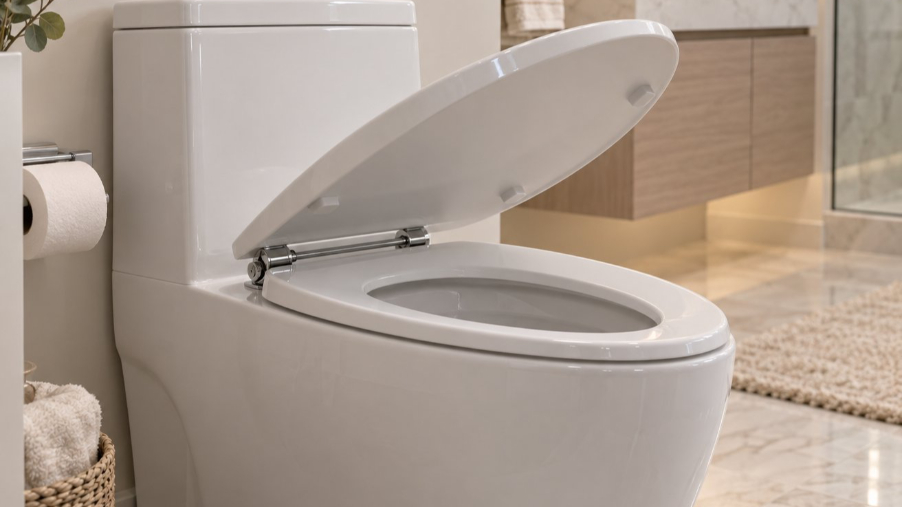
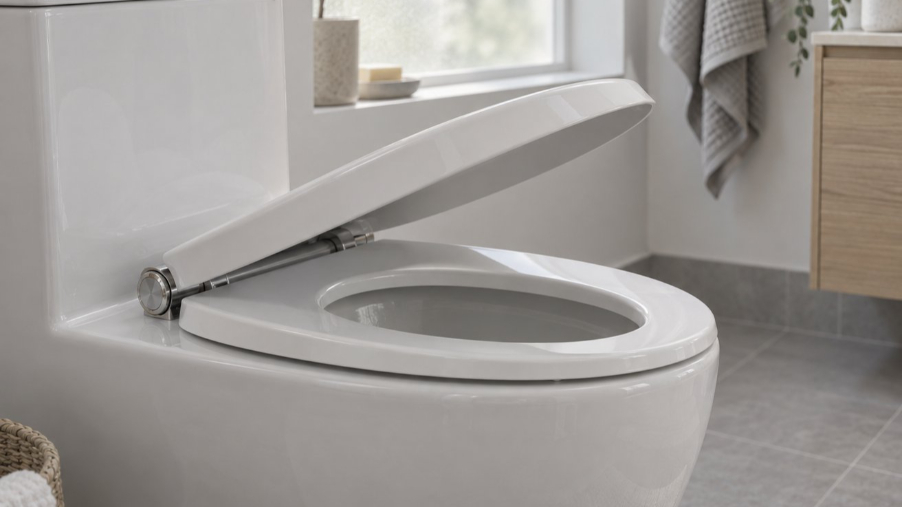
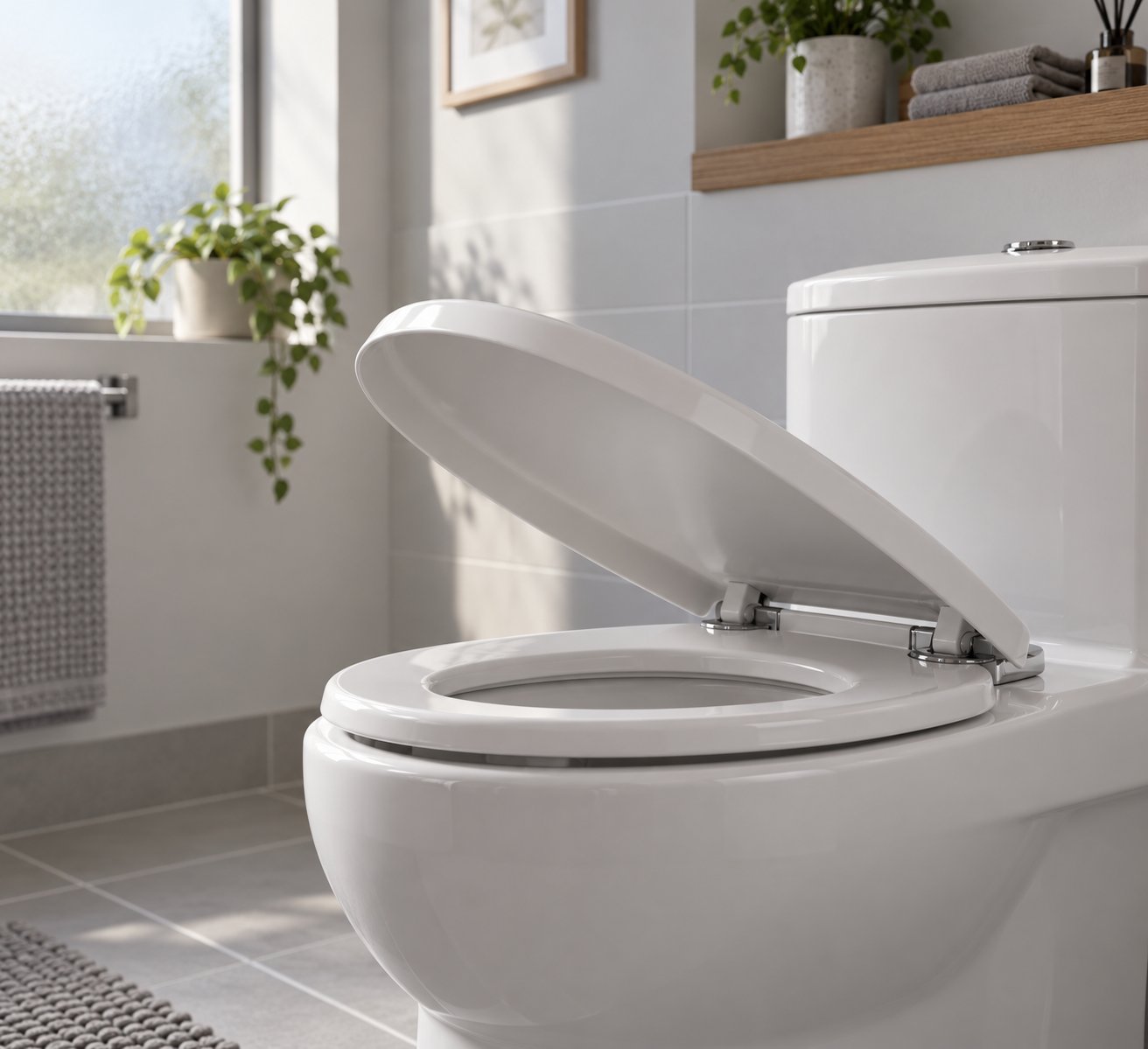
A slow close elongated toilet seat solves all three problems with one elegant piece of engineering. Sometimes called a soft close toilet seat, a quiet-close seat, or even a slow shutting toilet seat, it looks almost identical to a standard elongated seat on the outside. The difference hides inside the hinges.
A slow close elongated toilet seat is an oval-shaped seat fitted with hydraulic or pneumatic dampers in the hinge assembly, allowing the lid and seat to lower gently without slamming.
What Exactly Is a Slow Close Elongated Toilet Seat
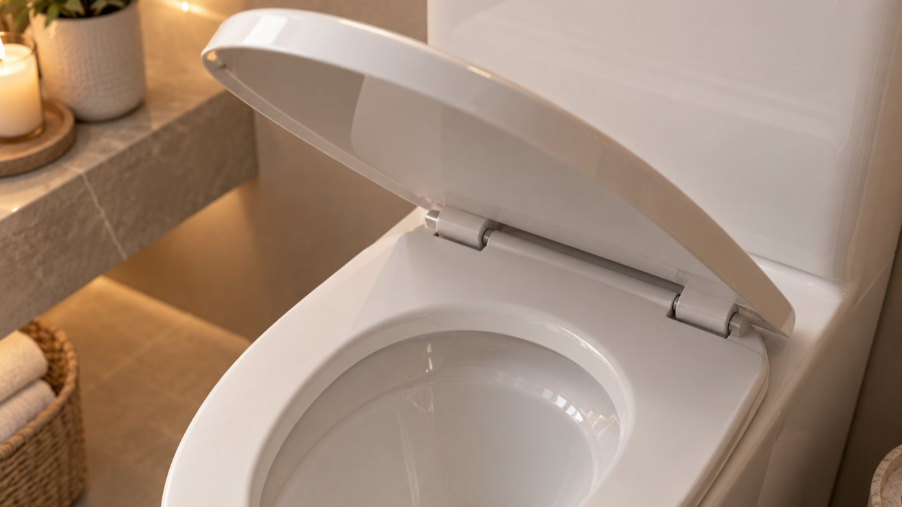
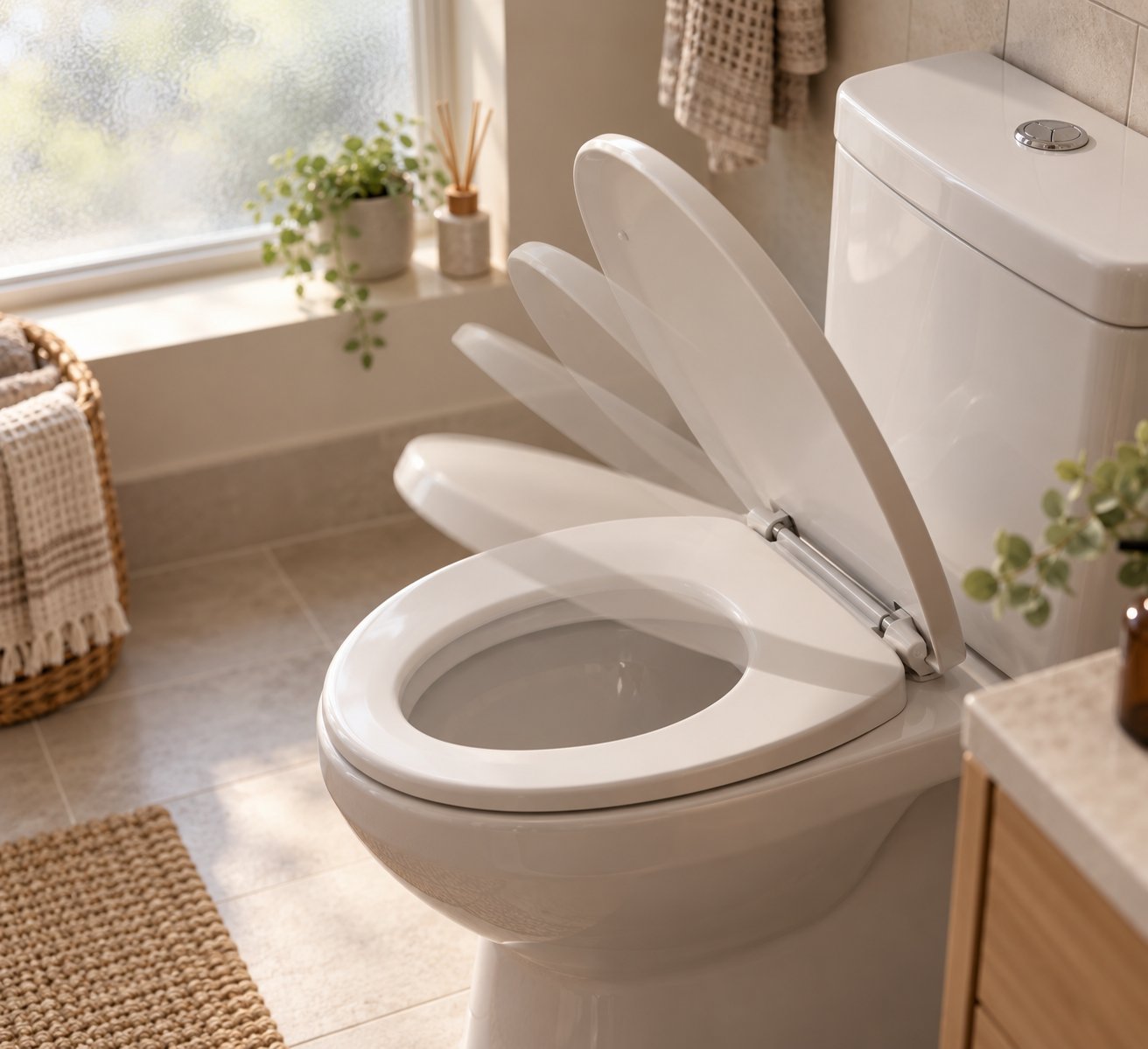
At its core, a soft close toilet seat uses small damper cartridges built into or attached to each hinge post. These cartridges contain either silicone-based hydraulic fluid or an air-resistance mechanism that regulates how fast the lid and seat ring can travel downward. You can release the lid from any angle — fully upright or just slightly tipped — and it will descend at a smooth, controlled pace until it rests silently on the bowl. No slam, no bang, no cracked porcelain, and no pinched fingers. The technology behind this controlled descent is the same rotary damper principle used in soft close kitchen cabinets and automotive glove boxes, just miniaturized to fit a toilet hinge.
The "elongated" part of the name refers to the oval shape of the seat itself, designed to fit bowls that measure roughly 18.5 inches from the mounting bolt holes to the front rim. It is the most common bowl profile in modern homes and commercial buildings, which is why the vast majority of slow close options ship in this shape.
Why This Guide Exists and Who It Helps
If you have already tried searching for a soft close loo seat or a slow close toilet seat online, you probably noticed that search results are dominated by product listings and retail pages. Specifications are scattered, comparison details are thin, and almost nobody explains how the mechanism actually works, what materials perform best, or how to troubleshoot a seat that stops closing quietly after a few months. This guide exists to fill that gap. Whether you are a homeowner upgrading a family bathroom, a renter looking for a quick quality-of-life improvement, or a facilities manager outfitting multiple restrooms, the chapters ahead break down materials, mechanisms, installation, maintenance, and buying criteria in plain language — so the seat you choose works the way it should for years, not just weeks.
The real performance story, though, starts beneath the surface — with the damping mechanism itself and the surprisingly important relationship between seat material, hinge design, and closing speed.
Why Slow Close Beats a Standard Toilet Seat Every Time
That controlled, silent descent is not just a convenience — it triggers a chain of practical advantages that standard seats simply cannot match. The differences become obvious once you lay them side by side across the factors that actually matter in daily bathroom use.
Slow Close vs Standard Seat Side by Side
| Feature | Standard Toilet Seat | Slow Close Toilet Seat |
|---|---|---|
| Noise Level | Loud slam on every drop | Near-silent descent from any angle |
| Safety for Children | High pinch-and-slam risk | Virtually eliminates finger injuries |
| Wear on Porcelain Bowl | Repeated impact causes hairline cracks over time | Gentle contact preserves the rim finish |
| Hinge Durability | Hinge posts absorb full shock of each slam | Dampers absorb kinetic energy, reducing hinge stress |
| Overall Lifespan | Typically 3 – 5 years before loosening or cracking | 5 – 10+ years with proper maintenance |
When you scan those rows, the pattern is clear: every advantage traces back to the same root cause — eliminating the uncontrolled free-fall that punishes standard seats dozens of times a day.
Safety and Noise Benefits You Should Not Overlook
Noise reduction. If you share walls with neighbors in an apartment or condo, you already know how easily sound travels through plumbing chases and tile surfaces. Soft close toilet seats turn a bathroom visit into a non-event, especially during nighttime trips. In households where someone works night shifts and sleeps during the day, a whisper close toilet seat can genuinely improve sleep quality for everyone under the same roof. It sounds like a small upgrade until the slamming stops — then you wonder why you waited.
Child and finger safety. Young children are naturally curious, and a standard lid that free-falls weighs enough to bruise or even fracture small fingers. An elongated toilet seat soft close mechanism removes that hazard almost entirely. The lid still closes with the same certainty, but the descent is slow and gentle enough that a child can pull their hand away without injury. For families with toddlers, this single benefit often justifies the upgrade on its own.
Porcelain protection. Every slam sends a micro-shock through the ceramic rim. One drop is harmless; thousands of drops over a few years can produce hairline cracks that weaken the bowl and create hard-to-clean crevices where bacteria thrive. Toilet seats soft closing against the rim land with minimal force, preserving both the structural integrity and the glossy finish of the porcelain.
Hinge longevity. Standard hinges act as the crash zone for every lid drop, which loosens bolts and warps plastic bushings faster. The damper cartridge in a slow close hinge absorbs that kinetic energy gradually, spreading the mechanical load over the entire closing arc instead of concentrating it in a single point of impact. The result is a seat that stays snug and wobble-free far longer than its conventional counterpart.
Beyond pure function, there is an aesthetic argument worth mentioning. A seat that glides shut communicates quality — the same way a car door with a solid, cushioned close feels more premium than one that rattles. Real estate agents and property managers have caught on: soft close seats are now a common addition during rental upgrades and home staging because they create an immediate impression of a well-maintained bathroom without a major renovation budget.
All of these benefits, however, hinge on one thing — the damping mechanism inside the seat doing its job correctly. And that mechanism is more interesting, and more nuanced, than most people expect.
How the Slow Close Mechanism Actually Works
Picture tilting a jar of honey upside down. The honey does not rush out — it flows slowly because the thick fluid resists movement. That same basic principle powers every soft close elongated toilet seat on the market, just scaled down and precision-engineered to fit inside a compact hinge assembly you will never see unless something goes wrong.
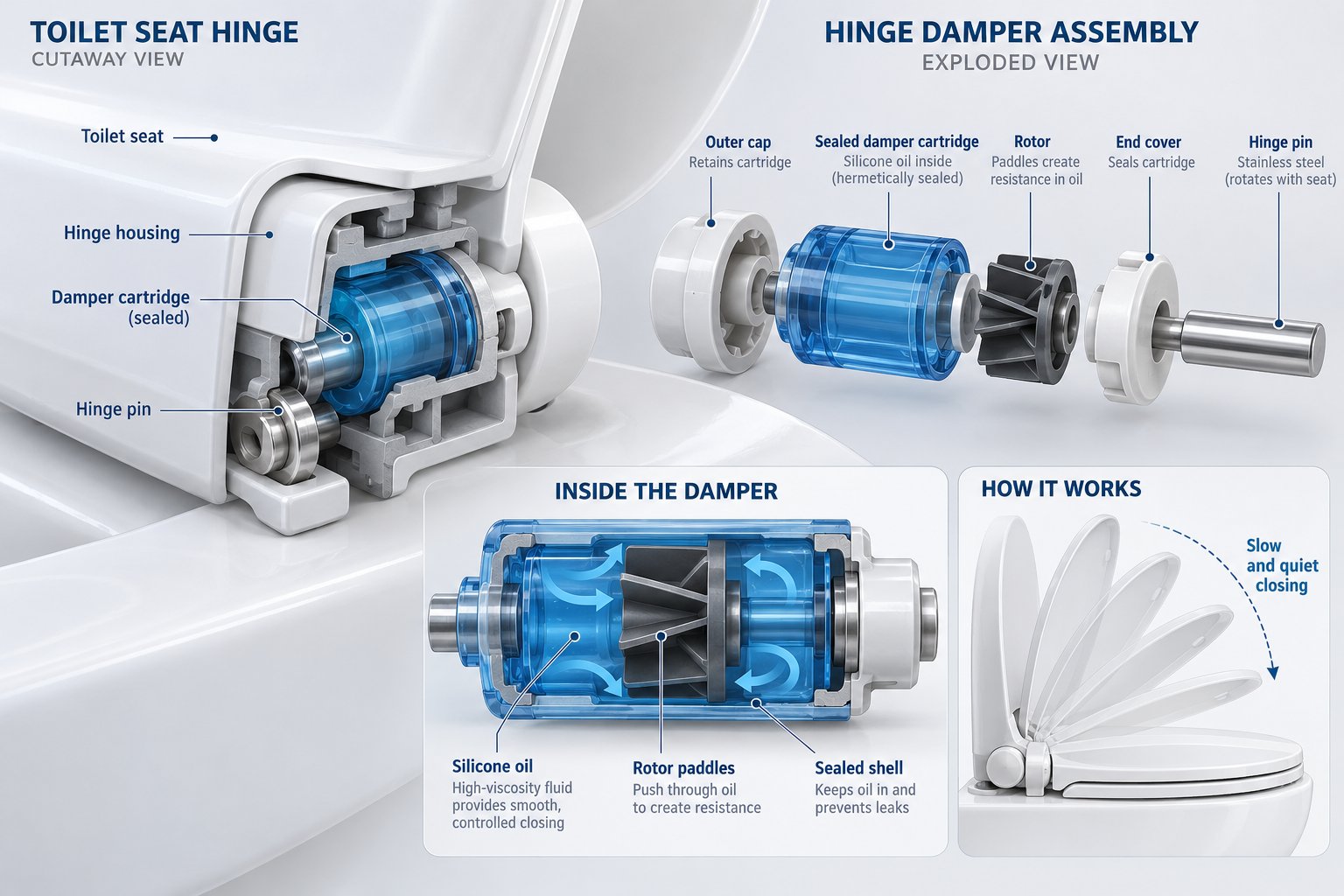
The controlled descent starts with small damper cartridges embedded in or attached to the hinge posts at the back of the seat. Each cartridge contains a sealed chamber and an internal rotor. When you release the lid, the hinge rotates and forces a medium — either silicone-based hydraulic oil or trapped air — through a narrow channel inside the cartridge. That medium cannot rush through the gap all at once, so it squeezes through gradually. The resistance created by that squeeze is what transforms a free-falling slam into a smooth, quiet glide.
Most residential seats use hydraulic dampers filled with silicone oil because they deliver the most consistent closing speed across the lid's full arc of travel. The oil's viscosity does shift slightly with temperature — a steamy bathroom after a hot shower may let the lid descend a touch faster, while a cold guest bath in winter slows it down — but these variations are subtle enough that most users never notice. Pneumatic (air-based) dampers sidestep the temperature issue entirely, though they tend to produce a slightly less silky feel during the descent.
Every seat that uses this technology is built from the same family of core components, regardless of brand or price point:
- Damper cartridge — the sealed unit containing hydraulic fluid or an air-resistance chamber; this is the heart of the auto close toilet seat function.
- Hinge pin — the metal or reinforced-plastic rod that serves as the pivot axis for the lid and seat ring.
- Mounting bolt and nut system — hardware that anchors the entire hinge assembly to the porcelain bowl through two bolt holes near the rear rim.
- Seat ring — the lower oval piece you sit on, connected to the hinge so it can also lower at a controlled speed.
- Lid — the top cover that closes over the seat ring, driven by its own damper or sharing the same damper assembly.
How the Damping Mechanism Controls the Descent
Inside the damper cartridge, the rotor converts kinetic energy — the downward momentum of the falling lid — into heat through fluid friction. That energy conversion is what makes the automatic toilet seat closer effect possible. A precision-machined gap between the rotor and the cartridge wall determines how much resistance the fluid encounters, which in turn sets the closing speed. Manufacturers calibrate this gap during production so the lid takes roughly five to seven seconds to travel from fully upright to fully closed, though the exact timing varies by seat weight and damper specification.
Two fundamentally different design philosophies govern how dampers are housed inside the hinge:
Integrated dampers are built directly into a one-piece hinge assembly during manufacturing. The damper cartridge, hinge pin, and mounting hardware ship as a single unit that has been calibrated to match a specific seat's weight and geometry. Because everything is engineered together, integrated systems deliver the smoothest and most consistent closing motion — and they tend to last longer because there are no loose joints between components.
Modular dampers are separate cartridge units that snap, clip, or screw into a compatible hinge body. This design makes individual cartridge replacement possible without discarding the entire hinge — a practical advantage when one side wears out before the other. The tradeoff is that modular systems rely on the fit between the cartridge and the hinge housing, and any looseness in that connection can introduce a subtle wobble or uneven closing over time.
Slow Close vs Quick Release — Two Different Features
Here is where confusion runs rampant. Shoppers often see "slow close" and "quick release" listed on the same product page and assume they describe the same thing. They do not — and mixing them up leads to buying decisions based on the wrong criteria.
Slow close refers exclusively to the gentle lowering function. It describes what happens when the lid and seat ring descend: the damper engages, resistance builds, and the seat glides down silently. This is the feature that eliminates slamming.
Quick release refers to a completely separate mechanism — a button or lever on the hinge that lets you detach the entire seat from the mounting bolts in seconds, without tools. Its purpose is cleaning access. Pop the seat off, wipe down the areas around the bolt holes and under the hinge plate where grime collects, then snap the seat back on. Quick release has nothing to do with how fast or slow the lid closes.
A seat can have one feature without the other. Many budget models offer slow close but no quick release, meaning you need a wrench to remove the seat for deep cleaning. Premium models often bundle both, giving you silent closing and tool-free removal. Knowing the distinction ensures you evaluate each feature on its own merit — and avoid paying extra for one when you actually need the other.
The mechanism itself, though, is only half the equation. The material the seat is made from directly influences how the damper performs — a heavier lid demands different resistance than a lighter one, and choosing the wrong pairing can undermine even the best hinge engineering.
Seat Materials and How They Affect Slow Close Performance
A beautifully engineered damper can only do its job if the lid it controls weighs what the damper expects. That might sound obvious, but it is the single most overlooked factor in toilet seat slow close performance — and it explains why two seats with identical hinge hardware can feel completely different in daily use. The material your seat is made from dictates its weight, surface hardness, stain resistance, and long-term dimensional stability. Each of those properties feeds directly into how smoothly and consistently the lid descends.
Four material families dominate the market for soft close toilet seat elongated models. Understanding the strengths and trade-offs of each one puts you in a much better position to choose a seat that performs well on day one and stays that way for years.
PP, UF, Wood, and Duroplast Compared
| Property | Polypropylene (PP) | Urea-Formaldehyde (UF / Duroplast) | Molded Wood (Compressed Composite) | Solid Wood |
|---|---|---|---|---|
| Weight | Light (typically 1.2 – 1.8 kg) | Medium-heavy (typically 2.0 – 2.8 kg) | Heavy (varies with density) | Heavy (varies by species and moisture content) |
| Durability | Good — flexible but can crack under sharp impact | Excellent — extremely hard, scratch-resistant surface | Moderate — can chip at edges over time | Good — resistant to chipping but vulnerable to moisture |
| Stain Resistance | Moderate — may yellow or discolor over years | High — dense surface resists staining and bacterial growth | Moderate — sealed surface helps, but chips expose raw material | Low to moderate — requires periodic resealing |
| Temperature Tolerance | Good — stays comfortable in cold bathrooms | Good — surface feels close to ceramic | Fair — can expand or contract with humidity swings | Fair — susceptible to warping and swelling |
| Compatibility with Slow Close Hinges | Excellent — lightweight, easy to calibrate | Excellent — widely paired with integrated dampers | Requires careful damper matching | Requires careful damper matching and metal hinges |
| Typical Price Range | $15 – $40 | $30 – $75 | $25 – $60 | $50 – $120+ |
Polypropylene (PP) is the workhorse of the toilet seat world. It is lightweight, water-resistant, and the most affordable option for a self closing toilet seat. Virgin-grade PP — the same polymer used in food containers and medical devices — offers solid durability and easy maintenance. The main limitation is cosmetic: PP surfaces can discolor or yellow over several years of exposure to cleaning chemicals and UV light. For budget-conscious upgrades and rental properties, it remains the go-to choice.
Urea-formaldehyde (UF), commonly marketed as duroplast, occupies the premium end of the spectrum. Once molded, its surface becomes extremely hard — almost ceramic in feel — which makes it scratch-resistant, fire-proof, and highly antibacterial. UF seats hold their color and finish far longer than PP, and they pair beautifully with porcelain bowls from an aesthetic standpoint. The trade-off is higher cost and greater weight, both of which influence how the damper must be calibrated.
Molded wood (compressed wood composite) blends natural fibers with binding resins and a painted or lacquered outer shell. It offers a solid, substantial feel on the bowl, but the composite core can absorb moisture through any crack or chip in the surface coating, leading to swelling and weight changes over time.
Solid wood seats — oak, bamboo, teak — deliver undeniable visual warmth and a traditional aesthetic. However, they are the heaviest option, they require metal hinges (typically zinc alloy or stainless steel) to handle the load, and their weight can shift meaningfully as bathroom humidity fluctuates. That weight variability makes consistent damper calibration particularly challenging.
Why Material Weight Changes Damper Performance
Here is the critical connection most shoppers miss: every damper cartridge is engineered to resist a specific amount of downward force. A lightweight PP lid exerts less rotational energy as it falls than a substantially heavier UF lid. If you pair a damper designed for a 1.3 kg PP seat with a 2.5 kg UF seat, the damper cannot generate enough resistance — and the lid closes too quickly, sometimes with a noticeable thud at the end. Flip the mismatch around, and an over-strong damper paired with a light seat can make the lid hover awkwardly at a shallow angle before finally settling, frustrating anyone who just wants it to close smoothly.
This is why material and hinge should be engineered together as a matched system rather than assembled from separate suppliers. When the seat body, damper resistance, hinge geometry, and mounting hardware are all designed around the same weight and dimensional specifications, you get a toilet seat with slow close performance that feels effortless and stays consistent across tens of thousands of open-close cycles.
For sanitaryware brands and OEM manufacturers who need that kind of system-level consistency at production scale, Tianyun's PP and UF seat cover program illustrates the approach in practice — seat covers ship pre-paired with matched dampers, hinges, and fixing systems so that the material weight and damper resistance are calibrated together from the factory floor, not improvised during assembly.
Wood seats can absolutely work with slow close hinges, but they demand extra attention during the calibration stage. Because solid and composite wood absorb moisture from humid bathroom air, their weight is not perfectly static. A seat that weighs 2.2 kg in a dry environment might creep to 2.4 kg during a humid summer, subtly changing the closing speed. Manufacturers who pair wood with slow close hardware typically use dampers rated slightly above the seat's baseline weight to account for this variation — a smart engineering margin that keeps the closing motion smooth even as conditions shift.
Material choice, then, is not just about looks or budget. It directly shapes how your seat closes, how long the damper lasts, and how consistent the experience feels over the life of the product. The next question is equally practical: how do you confirm that the seat you choose actually fits the bowl you already own?
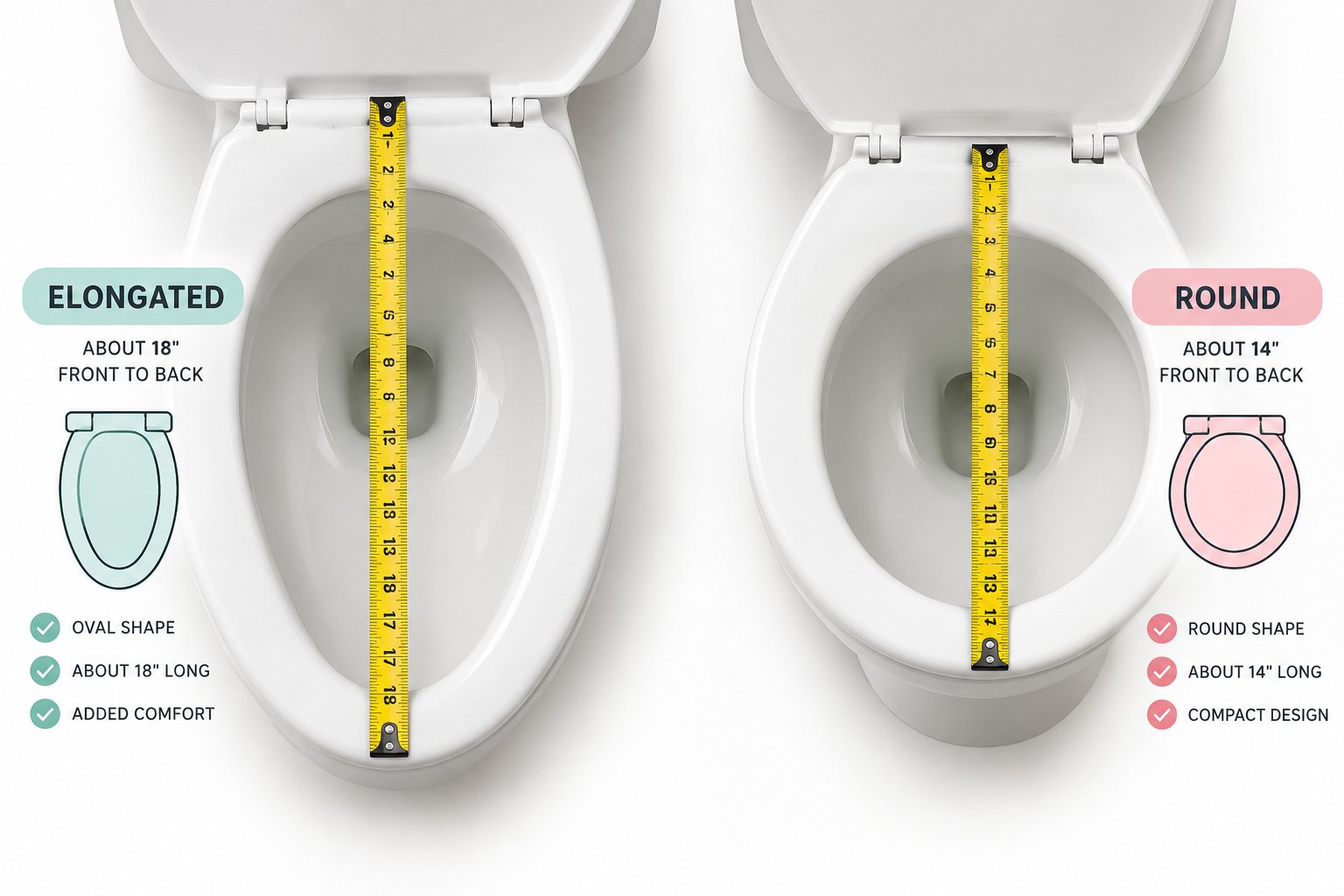
Elongated vs Round and How to Measure Your Toilet
Getting the material and damper combination right means nothing if the seat you order does not physically fit the bowl sitting in your bathroom. It sounds like a basic detail, but mismatched seat shapes are one of the most common return reasons for toilet seats at home depot, Amazon, and virtually every other retailer. Two standard bowl shapes exist in the residential market, and they are not interchangeable.
Elongated bowls have an oval profile and measure roughly 18 inches from the mounting bolt holes to the front of the bowl rim. Round bowls are more circular and come in shorter at about 16.5 inches using the same measurement. That inch-and-a-half gap does not sound dramatic on paper, but it is more than enough to leave a round seat perched awkwardly on an elongated bowl — or an elongated seat overhanging the front of a round bowl like a diving board.
How to Measure Your Toilet Bowl in Under a Minute
You only need a standard tape measure and about thirty seconds. Here is the process:
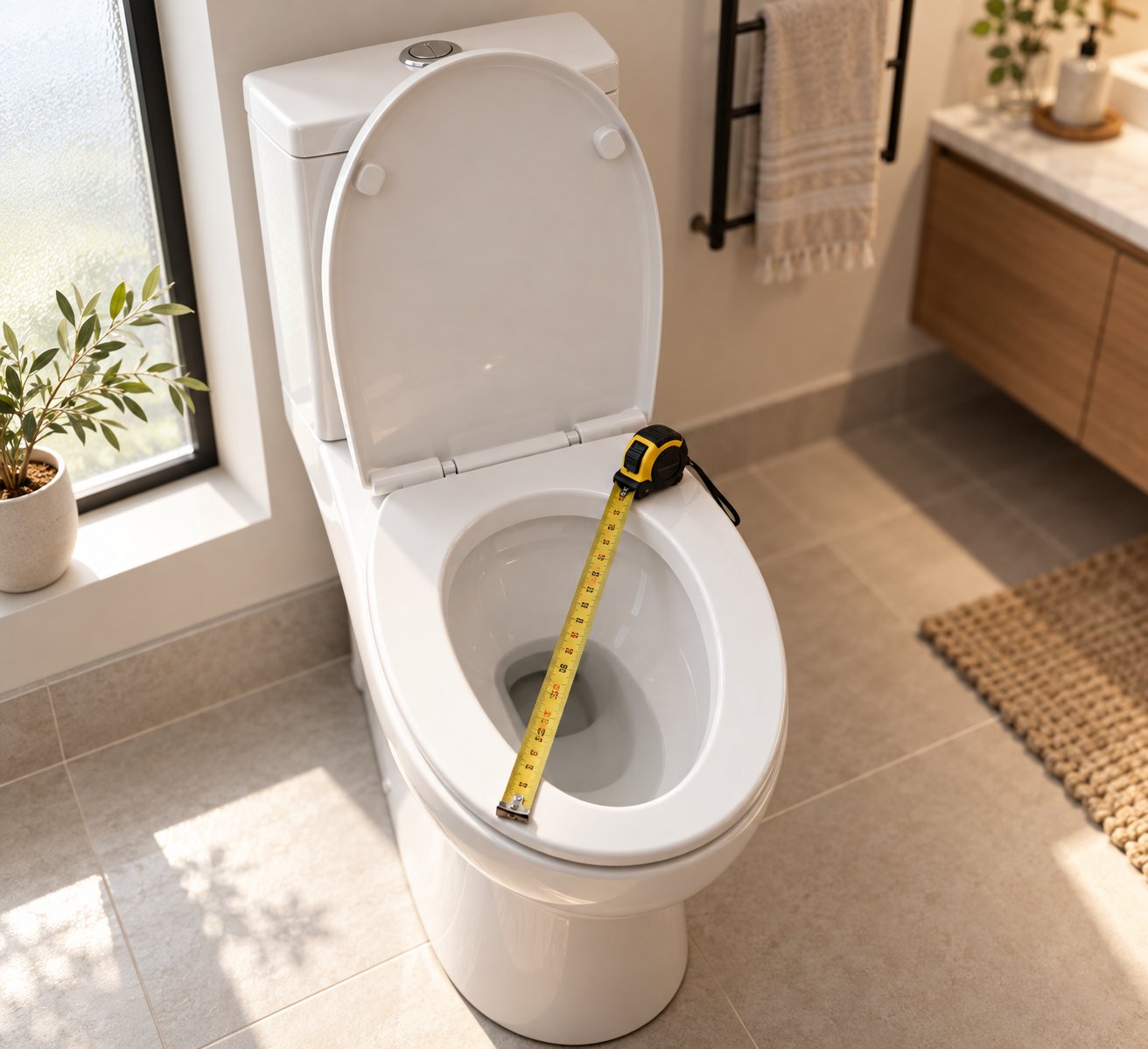
Find the two bolt holes at the back of the bowl — they sit on either side of the seat hinge area and are usually covered by plastic caps. Locate the center point directly between those two holes. Now stretch the tape measure from that center point straight forward to the very front outer edge of the bowl rim. Do not angle the tape to the left or right; keep it on the center line of the bowl.
If you land at approximately 18 to 18.5 inches, you have an elongated bowl. If the tape reads closer to 16 to 16.5 inches, your bowl is round. Most people discover the answer in a single measurement, and it removes all guesswork before you click "add to cart."
One quick tip: if you are replacing an existing seat, you can also flip the old seat upside down and measure from the bolt hole centers to the front tip of the seat itself. That confirms the shape without needing to reach around the bowl — handy when the bathroom is tight on space.
Why Elongated Shapes Dominate Slow Close Options
Walk through any new housing development or commercial building, and you will notice the same pattern: elongated bowls outnumber round ones by a wide margin. Modern residential construction and building codes increasingly favor the elongated profile, and that market reality has a direct effect on which slow close toilet seats manufacturers prioritize. When the majority of installed bowls are elongated, it makes sense that the majority of quiet close toilet seat models — especially the ones with premium dampers and quick-release hinges — ship in that oval shape first.
Comfort plays an equally important role. The elongated shape distributes body weight over a larger surface area, reducing pressure points during longer sits. Larger and taller individuals tend to find the elongated shape particularly comfortable, and ADA-compliant restrooms almost universally specify elongated bowls for the same ergonomic reason. It is also worth noting that replacement seats for elongated bowls are generally easier to find on retail shelves and online — a practical advantage when your toilet lid automatically closes a little too enthusiastically one day and you need a fast swap.
Round bowls still have their place, of course. They occupy less floor space, which makes them the practical choice for powder rooms, half baths, and compact apartments where every inch matters. Children's-height toilets, popular in preschools and daycare facilities, are also predominantly round. The slow close market does serve round bowls, but the selection is noticeably thinner — fewer material options, fewer hinge configurations, and fewer premium features compared to the elongated lineup.
Beyond these two established shapes, a handful of newer profiles are starting to appear:
- Compact elongated — delivers the oval comfort of an elongated bowl but fits within the footprint of a round toilet, ideal for tight bathrooms that still want the ergonomic benefit. These require an elongated seat.
- D-shape — a flat-backed oval popular in European-influenced and wall-hung toilet designs, increasingly showing up in North American market offerings.
- Oblong or square-front — niche modern designs that pair with specific designer toilet lines and typically require proprietary seat shapes.
For the vast majority of shoppers, though, the decision comes down to elongated or round — and a single tape-measure reading answers the question definitively. Here is a quick-reference guide to help you choose:
- Choose elongated if your bowl measures approximately 18 – 18.5 inches, you want the widest selection of slow close seats, comfort is a priority, or you are buying for a standard modern bathroom.
- Choose round if your bowl measures approximately 16 – 16.5 inches, you are working with a very small bathroom, or the toilet is a children's-height model.
- Confirm before buying — even if you are "pretty sure" your bowl is elongated. A two-minute measurement prevents a return hassle and ensures your new seat's damper, hinge, and mounting hardware all align with the bowl geometry they were designed for.
With the correct shape confirmed, the next challenge is knowing exactly which features separate a seat you will love from one that disappoints within the first few months — and that evaluation goes well beyond just picking a color off the shelf.
What to Look for Before Buying a Slow Close Seat
Color, price, and brand name are where most shoppers start — and stop. But those surface-level criteria skip the mechanical and functional details that determine whether your slow close elongated toilet seat still performs smoothly two or three years from now. Think of this section as a shopping checklist you can pull up on your phone while standing in the plumbing aisle or scrolling through product pages. Every criterion below is listed in priority order, starting with the features that have the greatest impact on daily satisfaction.
Hinge Types and Quick-Release Mechanisms Explained
- Hinge type — top-tightening vs. bottom-mount. This is the foundation of seat stability. Top-tightening hinges let you secure the mounting bolts from above the bowl rim using a knob or wingnut, which means you never have to reach underneath or behind the toilet. They are faster to install and easier to re-tighten when hardware loosens over time. Bottom-mount hinges use a traditional bolt-and-nut arrangement tightened from below the bowl flange. They can deliver a slightly more rigid connection, but access is awkward — especially in tight bathrooms — and retightening often requires a wrench. For most households, top-tightening hardware is the more practical choice. Systems like STA-TITE hardware take this a step further with a patented design engineered to prevent loosening entirely.
- Quick-release mechanism. As covered earlier, quick release is a separate feature from the toilet seat soft close function. It allows you to detach the entire seat from its mounting bolts in seconds — no tools required — so you can clean around the hinge area and bolt holes where grime quietly accumulates. If easy hygiene matters to you (and it should), verify that the model you are considering includes a genuine quick-release button or lever rather than a standard bolt that must be fully unscrewed.
- Damper quality. This is the single biggest differentiator between a seat that glides silently for five-plus years and one that starts slamming again within months. Premium dampers use precision-machined internal rotors and high-grade silicone oil that maintains consistent viscosity over tens of thousands of cycles. Budget dampers cut costs with looser tolerances and thinner fluid, which means faster wear and earlier failure. You cannot always inspect the damper before buying, but two reliable proxies exist: the warranty length on the hinge assembly and the reputation of the hinge manufacturer. A seat backed by a hinge warranty of three years or more typically signals confidence in damper longevity.
- Antimicrobial surface treatment. Some elongated slow close toilet seat models incorporate antimicrobial agents — usually silver-ion or zinc-based compounds — molded directly into the seat material. These treatments inhibit the growth of mold, mildew, and odor-causing bacteria on the seat surface itself. It is worth noting, however, that antimicrobial treatments protect the product, not the user, from germs. They help the seat stay fresher between cleanings but are not a substitute for regular disinfection. Households with young children, elderly family members, or immunocompromised individuals may still appreciate the added layer of protection against surface degradation.
- Weight capacity. Standard residential toilet seats are rated for approximately 300 pounds of evenly distributed weight. That covers the vast majority of users comfortably. If your household includes heavier individuals, look specifically for heavy-duty or bariatric models that support 400 to 500 pounds or more. These seats use reinforced hinge pins, thicker mounting bolts, and sturdier seat bodies — and their dampers are calibrated for the additional load so the auto toilet lid closer function still works smoothly under greater stress.
- Warranty coverage. Read the fine print before you assume a "lifetime warranty" covers everything. Many manufacturers split their warranties: one coverage period for the seat body (often longer) and a separate, shorter period for the hinge and damper assembly. Since damper failure is the most common reason a slow close seat stops working, the hinge warranty is the one that matters most. Look for at least a one-year hinge warranty as a baseline, and treat anything below that as a red flag. Premium models from reputable brands often extend hinge coverage to three or even five years.
Damper Quality, Weight Limits, and Warranty Red Flags
Beyond the six criteria above, two practical details deserve attention before you finalize a purchase: color matching and finish consistency.
Toilet seats ship in a surprisingly wide range of whites. The three most common shades are white (a clean, bright tone), bone (a warm, slightly yellowish off-white), and biscuit (a deeper cream that borders on light tan). Choosing the wrong shade against your existing porcelain creates an obvious visual mismatch that makes the entire bathroom feel off. If your bowl is more than a few years old, its original color may have shifted subtly with age, so hold a sample chip or swatch against the bowl in natural daylight before committing.
Finish consistency also varies by material. Polypropylene seats sometimes carry a faint sheen variation between the lid and the seat ring because they are molded in separate shots. Urea-formaldehyde seats tend to deliver a more uniform surface because the material cures to a harder, more consistent finish. Enameled wood can look stunning, but the painted coating is where moisture can seep into the core if scratches penetrate the enamel, eventually causing bubbling or peeling that ruins the color match entirely.
Treat these six criteria plus color and finish as your pre-purchase filter. Any seat that checks every box is worth serious consideration; any seat that falls short on damper quality or warranty coverage deserves skepticism — regardless of how appealing the price tag looks. The real test, of course, begins the moment you unbox the seat and bolt it to the bowl, and the installation process has a few common pitfalls that are surprisingly easy to avoid.
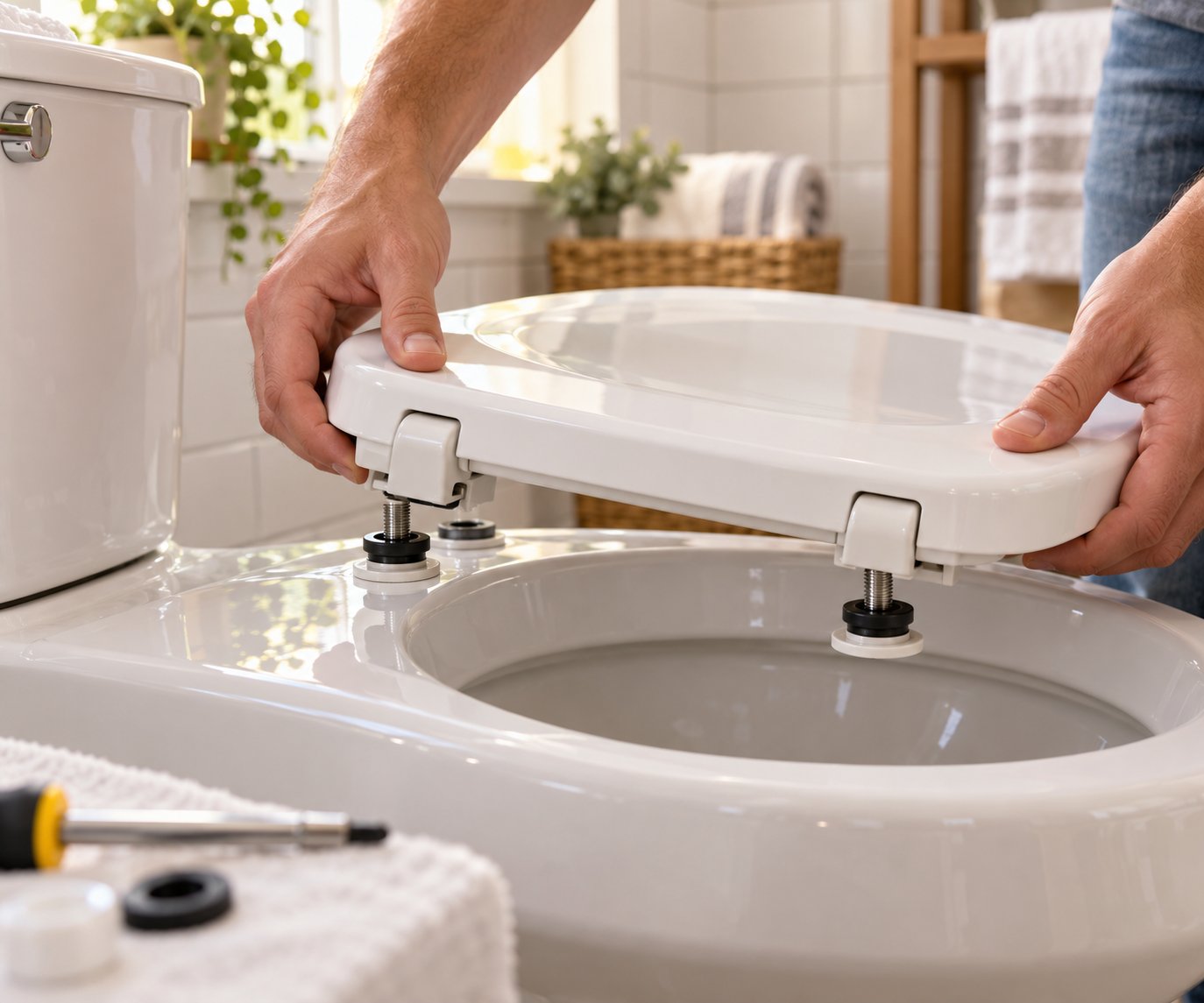
Installation and Maintenance for Long-Lasting Performance
A toilet with soft close seat technology will only deliver that satisfying silent glide if it is mounted correctly from the start. The good news? You do not need a plumber. The entire swap takes about ten to fifteen minutes with tools most households already own — a flathead or Phillips screwdriver, an adjustable wrench, and a cleaning rag. The bad news? One overtightened bolt can undo all of that effort instantly.
Step-by-Step Installation Without a Plumber
Remove the old seat. Flip open the plastic caps at the rear of your existing seat to expose the mounting bolts. If the seat uses a top-tightening system, unscrew the knobs from above. For bottom-mount hardware, reach under the bowl flange, hold the nut with a wrench, and turn the bolt head from the top with a screwdriver. Corroded metal bolts that refuse to budge can be loosened with a penetrating lubricant — give it five minutes to soak before trying again.
Clean the bolt holes and rim area. With the old seat removed, you will likely find a ring of grime, mineral deposits, and sometimes rust around each bolt hole. Wipe the entire rear rim and both holes with a damp rag and a mild bathroom cleaner. This step is easy to skip, but debris trapped between the seat hinge and the porcelain can prevent the new mounting hardware from seating flush, leading to wobble from day one.
Insert the new mounting bolts. Drop each bolt through its respective hole from the top. Most elongated toilet seat slow close models include rubber or nylon bushings that sit between the bolt and the porcelain — do not skip these. They absorb vibration, prevent metal-on-ceramic contact, and act as a cushion that protects the bowl rim.
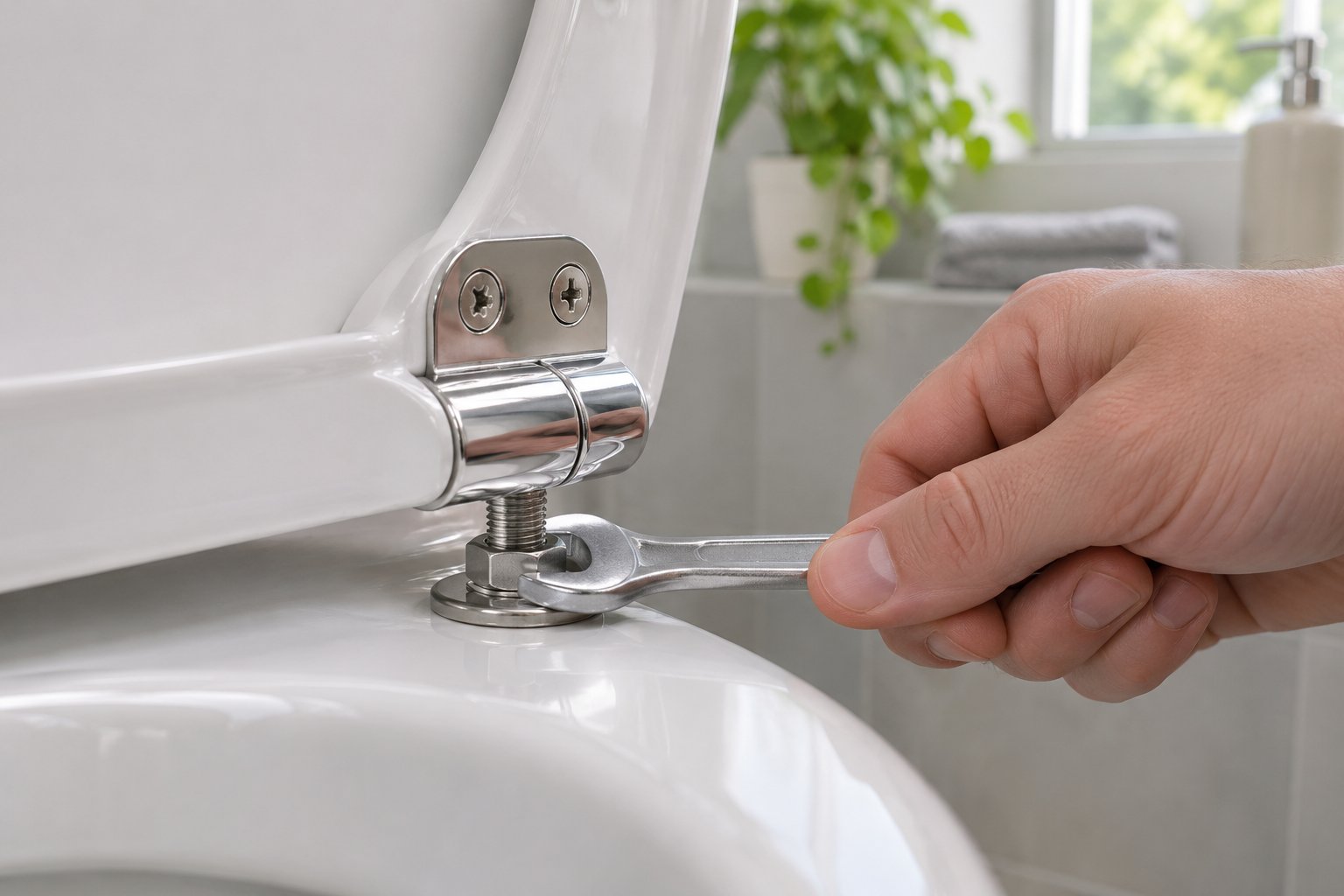
Hand-tighten the nuts. Thread the nuts onto the bolts from underneath and tighten them by hand first. Then use a wrench to snug them down — but stop the moment you feel solid resistance. Here is the single most important installation rule: do not overtighten. Porcelain is strong under compression but brittle under concentrated point pressure. One extra quarter-turn past snug can create a hairline crack in the ceramic that may not show immediately but will worsen with every use. Overtightening can also warp plastic bushings, which ironically loosens the seat faster than if you had left the bolts slightly less tight.
Adjust hinge alignment. Before you declare the job done, sit on the seat and check that it is centered on the bowl. If it shifts to one side, loosen both nuts slightly, reposition the seat so the front tip aligns with the center of the bowl rim, and retighten evenly — alternating a half-turn on each side. Uneven bolt tension is the root cause of most side-to-side wobble complaints.
Test the close speed. Lift the lid to its fully upright position and let go. It should begin descending immediately and reach the seat ring in roughly five to seven seconds without slamming at the end. Then lift the seat ring itself and release it — the same smooth, quiet descent should follow. If either piece drops noticeably faster on one side, the hinge on the faster side may not be seated properly in the bolt hole. Loosen, reseat, and retighten that side.
Maintenance Habits That Extend Seat Lifespan
Installation is only the first chapter of ownership. A self closing toilet lid that works flawlessly in month one can start wobbling or slamming by month six if basic upkeep is neglected. These habits take almost no time and dramatically extend the life of both the seat and the damper mechanism:
- Retighten mounting hardware every six to twelve months. Daily use generates micro-movements that gradually loosen even the best bolts. A quick check with a wrench — just enough to restore snugness, never more — prevents the lateral seat wobble that accelerates hinge wear.
- Keep damper cartridges free of cleaning-chemical residue. When you spray the seat with bathroom cleaner, overspray often drips into the hinge area. Over time, chemical buildup around the damper housing can interfere with the smooth rotation of the hinge pin. Wipe the hinge zone with a damp cloth after each deep clean to prevent residue from migrating into the mechanism.
- Use soft cloths or sponges on PP and UF surfaces. Both polypropylene and urea-formaldehyde seats have smooth, non-porous finishes that resist bacteria — but abrasive pads and scouring powders scratch those surfaces, creating micro-grooves where grime and germs accumulate. A soft microfiber cloth with a mild, non-abrasive cleaner is all you need.
- Avoid bleach-based cleaners on wood or painted seats. Bleach and other harsh oxidizing agents break down lacquer and paint coatings, exposing the porous material underneath to moisture. Once water reaches the core of a molded-wood or solid-wood seat, swelling begins — and that weight change throws off the damper calibration discussed in earlier sections.
- Inspect rubber bushings and washers annually. The small rubber components between the bolt and the porcelain degrade over time, especially in bathrooms with heavy humidity. If they look flattened, cracked, or have lost their elasticity, replace them with a universal mounting kit — usually under five dollars and widely available.
Think of maintenance the same way you think about changing the oil in your car. It is not exciting, it is not urgent on any single day, and it is absurdly easy to postpone. But the cumulative effect of skipping it is a seat that wobbles, slams, or cracks years earlier than it should have. A few minutes of attention twice a year keeps your seat closing the way it did the day you installed it.
Even with perfect installation and diligent maintenance, though, slow close seats are mechanical devices — and mechanical devices eventually develop quirks. When that quiet glide turns into a reluctant thud or the lid starts drifting to one side, the fix is usually simpler than most people expect.
Troubleshooting Common Slow Close Toilet Seat Problems
That reluctant thud, the sudden return of the 2 AM slam, the lid that will not stay upright long enough for you to step away — these are the moments when a once-perfect seat starts testing your patience. The instinct is to assume the whole thing is shot and toss it in the trash, but most slow closing toilet seat issues trace back to a single worn or misadjusted component. Diagnosing the right one saves you money, time, and an unnecessary trip to the hardware store.
Here are the four problems owners report most often, along with what is actually happening inside the hinge:
- The seat closes too slowly (or barely moves at all). If the lid seems to hover at a near-standstill for an uncomfortably long time, the damper fluid has likely thickened. Silicone oil inside hydraulic dampers becomes more viscous in cold environments — an unheated guest bath in winter, a basement half-bath, or even a bathroom with tile floors and poor insulation can drop temperatures enough to change closing speed noticeably. The fluid has not failed; it is just resisting movement more than the engineers intended at that temperature.
- The seat started slamming again after months of quiet operation. This is the most common complaint, and it usually points to damper cartridge failure or hinge pin wear. Over thousands of cycles, the internal rotor seal inside a cartridge can degrade, allowing fluid to bypass the precision gap that creates resistance. Once that seal weakens, the lid loses its controlled descent and drops with increasing speed until it is essentially free-falling again. Hinge pin wear produces a similar result — a worn pin introduces play in the pivot axis, and the damper can no longer engage the rotor with enough grip to slow the lid.
- The seat shifts or wobbles side to side. You sit down and the whole seat slides an inch to the left or right. This one almost never involves the damper at all. The culprit is nearly always loose mounting bolts or worn rubber bushings between the bolt and the porcelain. Daily use creates micro-movements that gradually back the nuts off, and the rubber washers that provide friction eventually flatten or crack, losing their grip on the ceramic surface.
- The lid will not stay upright when raised. You flip the lid back, expecting it to hold at its open position, and it slowly drifts forward and falls. This signals hinge tension loss — the internal spring or friction element that holds the lid open has weakened. Some hinge designs rely on a detent (a small notch in the hinge pin) to lock the lid at a set angle; once that detent wears smooth, the lid has nothing to catch on.
Why Your Slow Close Seat Started Slamming Again
Of those four issues, the return of slamming frustrates people the most because it feels like a broken promise. You paid extra for toilet seats soft close functionality, and within six or eight months the seat behaves no differently than the cheap one it replaced. Understanding why helps you decide between a quick fix and a full replacement.
Damper cartridges are consumable components — they have a finite cycle life, just like brake pads on a car. Premium cartridges are rated for 50,000 or more open-close cycles, which translates to roughly five to ten years of typical household use. Budget cartridges may only last 10,000 to 20,000 cycles before internal seals degrade. If your automatically closing toilet seat started slamming within the first year, the damper was almost certainly under-engineered from the start. Early failure like this is a hinge-quality issue, not a seat-body defect — the oval plastic or UF shell you sit on is perfectly fine; the tiny mechanism inside the hinge is what gave out.
Temperature-related sluggishness, by contrast, is not a defect at all. Once the bathroom warms up — whether from a running shower, a space heater, or just the return of warmer weather — the silicone oil thins back to its normal viscosity and the closing speed returns to normal. If the slow descent only bothers you in winter, consider it a quirk of physics rather than a problem to solve.
When to Repair the Hinge vs Replace the Whole Seat
Here is where the distinction between integrated and modular hinge systems (covered earlier in this guide) becomes genuinely practical.
Modular hinge systems allow you to swap individual damper cartridges without discarding the seat body or the hinge frame. You pop out the failed cartridge, snap in a replacement — often available for a few dollars from the seat manufacturer — and the slow close function is restored. This is the most cost-effective repair path and keeps a perfectly good seat out of the landfill. If your seat wobbles rather than slams, the fix is even simpler: retighten the mounting bolts and replace any flattened rubber bushings with fresh ones from a universal mounting kit.
Integrated hinge systems bundle the damper, pin, and mounting hardware into a single sealed unit. When the damper inside fails, you typically need to replace the entire hinge assembly — and in some designs, that assembly is permanently bonded to the seat, which means the whole seat must go. Check with the manufacturer before assuming the worst; some integrated systems do offer replacement hinge assemblies sold separately.
Use this decision framework to guide your next move:
- Seat wobbles side to side — tighten bolts, replace rubber bushings. No new seat needed.
- Lid closes too slowly in cold weather — wait for the room to warm up or improve bathroom heating. No repair needed.
- Lid slams again (modular hinge) — order a replacement damper cartridge from the manufacturer. Swap it yourself in under five minutes.
- Lid slams again (integrated hinge) — check if a replacement hinge assembly is available. If not, replace the entire seat.
- Lid drifts forward and will not stay open — inspect the hinge detent or tension spring. If worn smooth, a hinge replacement is the only reliable fix.
- Any failure within the first year — contact the manufacturer and invoke the warranty. Early failure almost always reflects a hinge-quality shortcoming, and reputable brands will replace the unit.
One final perspective worth keeping: a slow closing toilet seat is a mechanical device with moving parts, and all moving parts wear eventually. The goal is not to prevent failure forever — it is to buy a seat engineered well enough that failure happens in year seven, not month seven. That distinction comes down to the decisions you make before the seat ever reaches your bathroom — decisions that deserve one final, consolidated look before you commit.
Choosing the Right Slow Close Elongated Toilet Seat
Every chapter in this guide has circled the same truth from a different angle — materials, mechanisms, measurements, installation, maintenance, and troubleshooting all point to one principle that separates a satisfying purchase from a frustrating one.
The best slow close elongated toilet seat is one where the seat material, damper, hinge, and fixing system are engineered together as a matched system — not assembled from generic, mismatched parts.
A soft closing toilet seat built on that principle closes silently on day one and still closes silently thousands of cycles later. A seat cobbled together from unrelated components might feel fine for a few months, then gradually drifts toward the very slamming you paid to eliminate. The difference is not luck — it is engineering.
The Five Decisions That Define Your Slow Close Seat
Rather than scrolling back through every section, use this consolidated action list the next time you shop. Each step builds on the one before it, and skipping any single one introduces risk you can easily avoid.
- Measure your bowl to confirm the elongated shape. Stretch a tape measure from the center point between the two rear bolt holes to the front outer edge of the bowl rim. An elongated bowl reads approximately 18 to 18.5 inches. A round bowl reads closer to 16.5 inches. This thirty-second check prevents the most common return reason for toilet seats — shape mismatch — and ensures that every subsequent decision applies to the right seat profile.
- Choose PP for lightweight affordability or UF for premium durability. Polypropylene keeps costs low and works beautifully in rentals, guest baths, and budget-conscious upgrades. Urea-formaldehyde delivers a harder, scratch-resistant surface with superior color retention — ideal for primary bathrooms where long-term appearance matters. Whichever material you pick, remember that the seat's weight directly affects how the damper must be calibrated. A toilet seat elongated slow close model performs best when the material and damper are paired at the design stage, not mixed and matched after the fact.
- Verify hinge type and quick-release capability. Top-tightening hinges simplify installation and future retightening. Bottom-mount hinges may offer slightly more rigidity but are harder to access. Quick release — the tool-free detach feature for cleaning — is separate from the slow close function. Decide whether easy hygiene access matters to your household, and confirm the seat you are considering actually includes it rather than assuming it does.
- Confirm damper quality and warranty coverage. The damper cartridge is the heart of the entire system. Premium hydraulic dampers rated for 50,000-plus cycles will outlast budget alternatives by years. Since you cannot inspect a damper on a store shelf, use the hinge warranty as your proxy — a manufacturer willing to back the hinge for three or more years has confidence in the damper inside it. Treat anything less than a one-year hinge warranty as a red flag, regardless of how attractive the price looks.
- Install carefully without over-tightening. Hand-tighten the mounting nuts first, then snug them with a wrench — and stop the moment you feel solid resistance. One aggressive quarter-turn past that point can crack porcelain or warp plastic bushings, creating the exact wobble and instability that slow close engineering is designed to prevent. Alternate sides when tightening, center the seat on the bowl, and test the closing speed before declaring the job done.
Follow those five steps in order and you eliminate the vast majority of disappointments that drive negative reviews and premature replacements. You end up with a seat that fits your bowl, matches your bathroom's aesthetic, closes without a sound, and holds up through years of daily use.
Where Brands and OEMs Source Production-Ready Seats
Most of this guide speaks directly to homeowners, renters, and facility managers making a single purchase for a single bathroom. But the system-engineering principle highlighted throughout — matching material weight to damper resistance, pairing hinge geometry with seat dimensions, calibrating closing speed at the factory rather than hoping it works on site — matters even more at production scale.
Sanitaryware brands and OEM toilet seat manufacturers face a version of the same challenge multiplied by thousands of units: every seat that ships with a mismatched damper is a warranty claim waiting to happen, a customer complaint that erodes brand trust, or a return that eats into margins. The solution is sourcing seat covers that arrive pre-paired with compatible dampers, hinges, and fixing systems from a single coordinated program rather than purchasing each component from a different supplier and assembling them on the line.
Tianyun's PP and UF seat cover program is built around exactly this approach. PP and UF covers ship alongside matched soft close dampers, hinge assemblies, and mounting hardware — all calibrated as a system so that material weight and damper resistance are dialed in before the seat ever leaves the factory. For brands exploring a home depot elongated toilet seat lineup or private-label production runs, that kind of pre-engineered consistency eliminates the guesswork and quality-control headaches that come with mixing parts from multiple vendors.
Whether you are a homeowner tightening a single pair of mounting bolts tonight or a product manager specifying components for next quarter's production run, the core lesson is the same: a slow close seat is only as good as the system behind it. Get the material right, get the damper right, get the hinge right, and get the installation right — and that 2 AM slam becomes nothing more than a memory.
Frequently Asked Questions About Slow Close Elongated Toilet Seats
1. How does a slow close toilet seat work?
A slow close toilet seat relies on small damper cartridges housed inside the hinge posts. These cartridges contain either silicone-based hydraulic fluid or an air-resistance chamber. When the lid is released, the hinge rotates and forces the medium through a narrow internal channel, creating resistance that converts the lid's downward momentum into a smooth, controlled descent lasting roughly five to seven seconds. The technology mirrors the rotary damper principle found in soft close kitchen cabinets, scaled down to fit a toilet hinge assembly.
2. What is the difference between slow close and quick release on a toilet seat?
Slow close and quick release are two entirely separate features that are frequently confused. Slow close refers to the damper-driven gentle lowering function that prevents the lid and seat ring from slamming. Quick release refers to a button or lever on the hinge that lets you detach the entire seat from the mounting bolts without tools for easier cleaning around the bolt holes. A seat can include one feature without the other, so it is important to verify both independently when shopping.
3. Why did my slow close toilet seat start slamming again?
The most likely cause is damper cartridge failure. Over tens of thousands of open-close cycles, the internal rotor seal inside the cartridge degrades, allowing hydraulic fluid to bypass the precision gap that creates closing resistance. Budget dampers may fail in as few as 10,000 cycles, while premium cartridges are rated for 50,000 or more. If slamming returns within the first year, it typically signals an under-engineered hinge rather than a seat-body defect. Check your warranty, as reputable manufacturers will replace the unit.
4. Does seat material affect how a slow close toilet seat performs?
Yes, material weight directly impacts damper calibration. A lightweight polypropylene (PP) lid exerts less rotational force than a heavier urea-formaldehyde (UF) lid. If a damper designed for a lighter seat is paired with a heavier one, it cannot generate enough resistance and the lid closes too fast. This is why leading manufacturers like Tianyun pre-pair PP and UF seat covers with matched dampers, hinges, and fixing systems so the entire assembly is calibrated as a unified system from the factory.
5. How do I measure my toilet to know if I need an elongated or round seat?
Use a tape measure and find the center point between the two rear bolt holes on your toilet bowl. Measure from that center point straight forward to the very front outer edge of the bowl rim. If the measurement reads approximately 18 to 18.5 inches, you have an elongated bowl. If it reads closer to 16 to 16.5 inches, your bowl is round. This quick check takes under a minute and prevents the most common reason for toilet seat returns: ordering the wrong shape.
Apply This Insight to Your Project
Tell us what you are building and how the topic “No More 2 AM Slams: Picking A Slow Close Elongated Toilet Seat” relates to your application. Our engineering team can help evaluate the next step.