What an Elongated Slow Close Toilet Seat Really Is
Ever been jolted awake by a lid crashing onto porcelain in the middle of the night? That sound is exactly what this type of seat is built to eliminate. Here is the short answer.
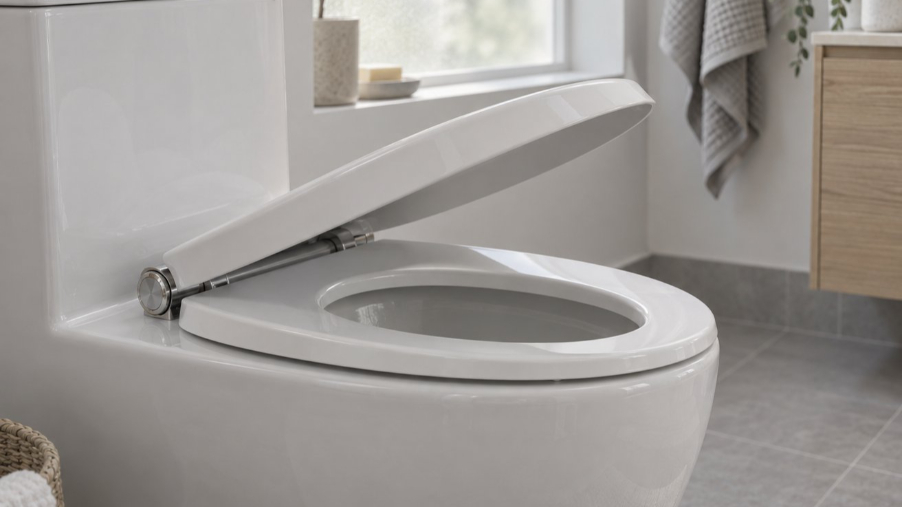
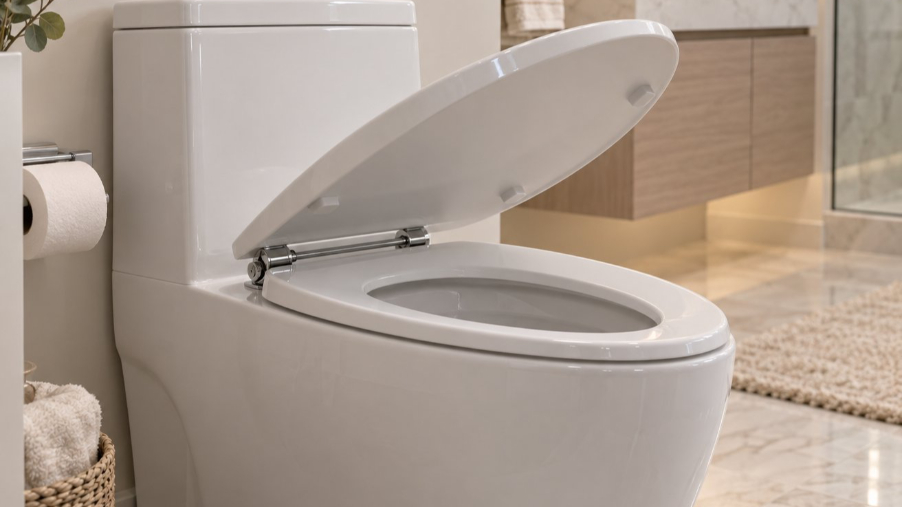
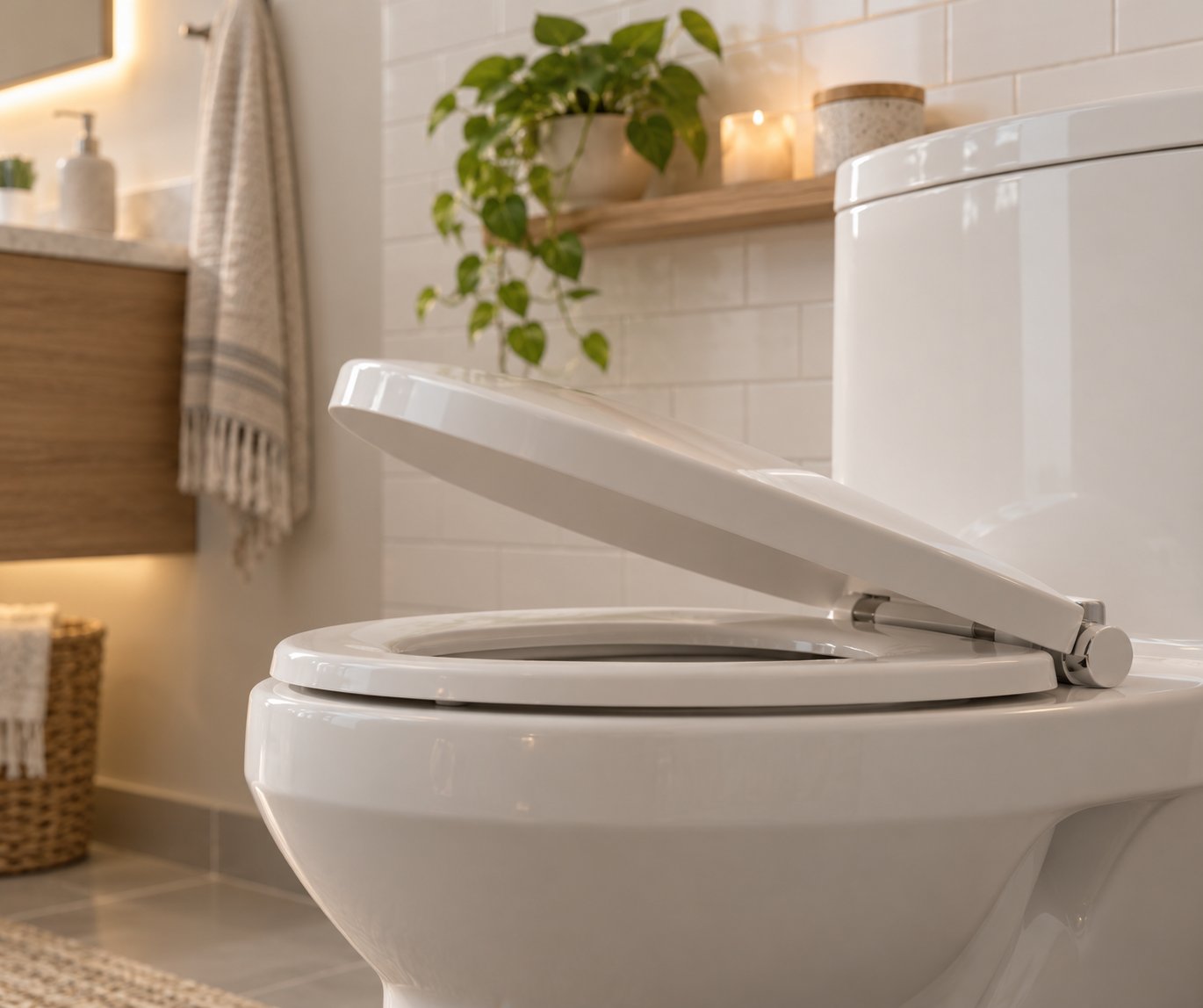
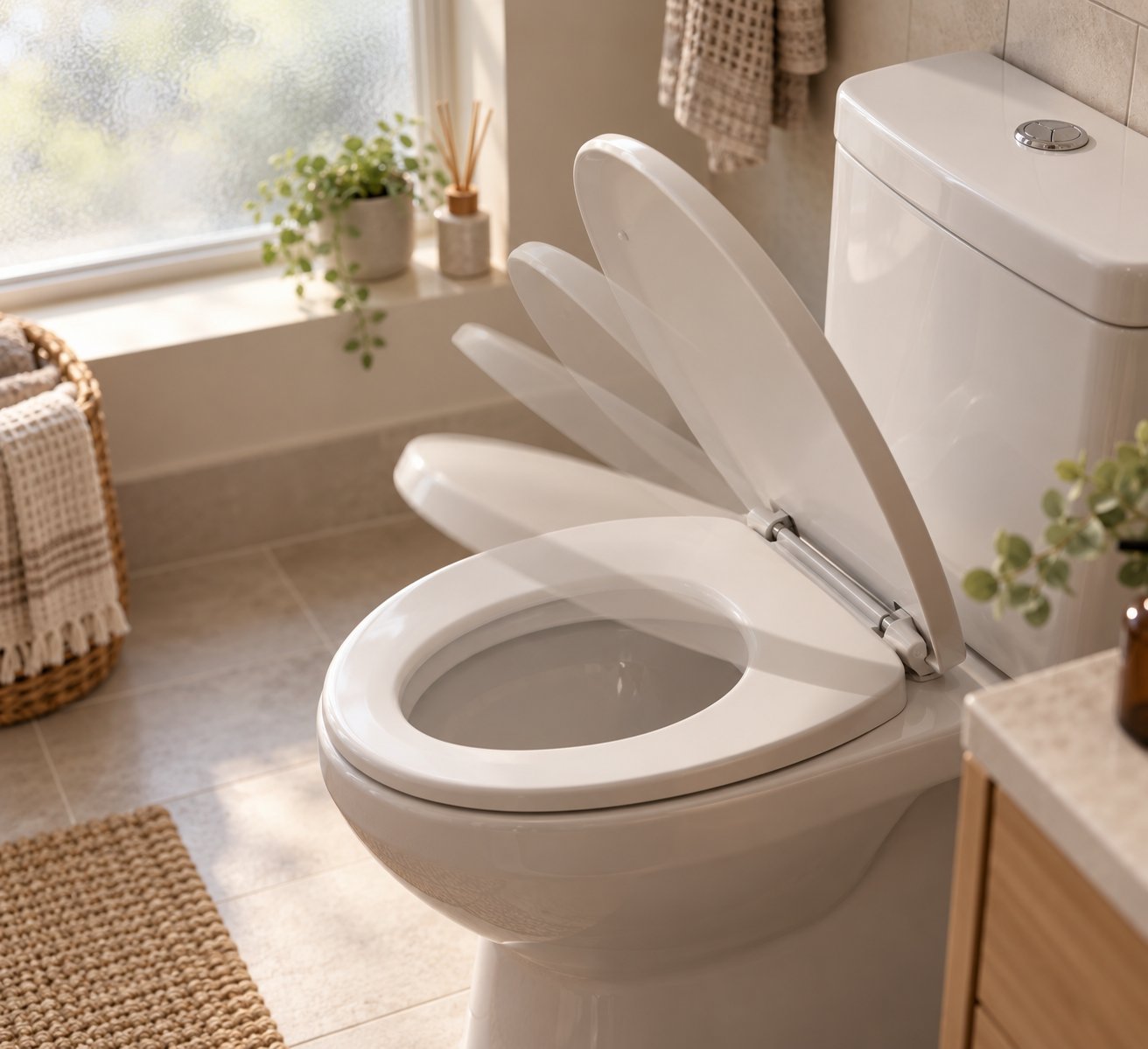
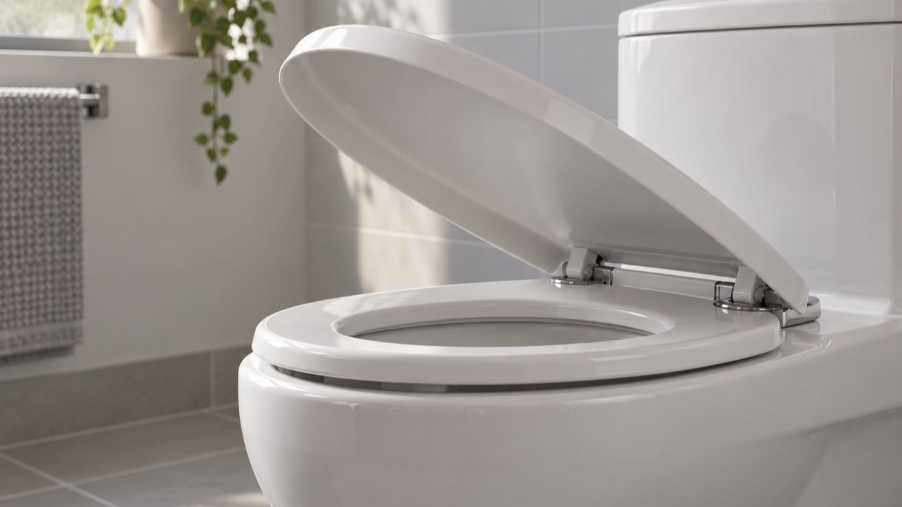
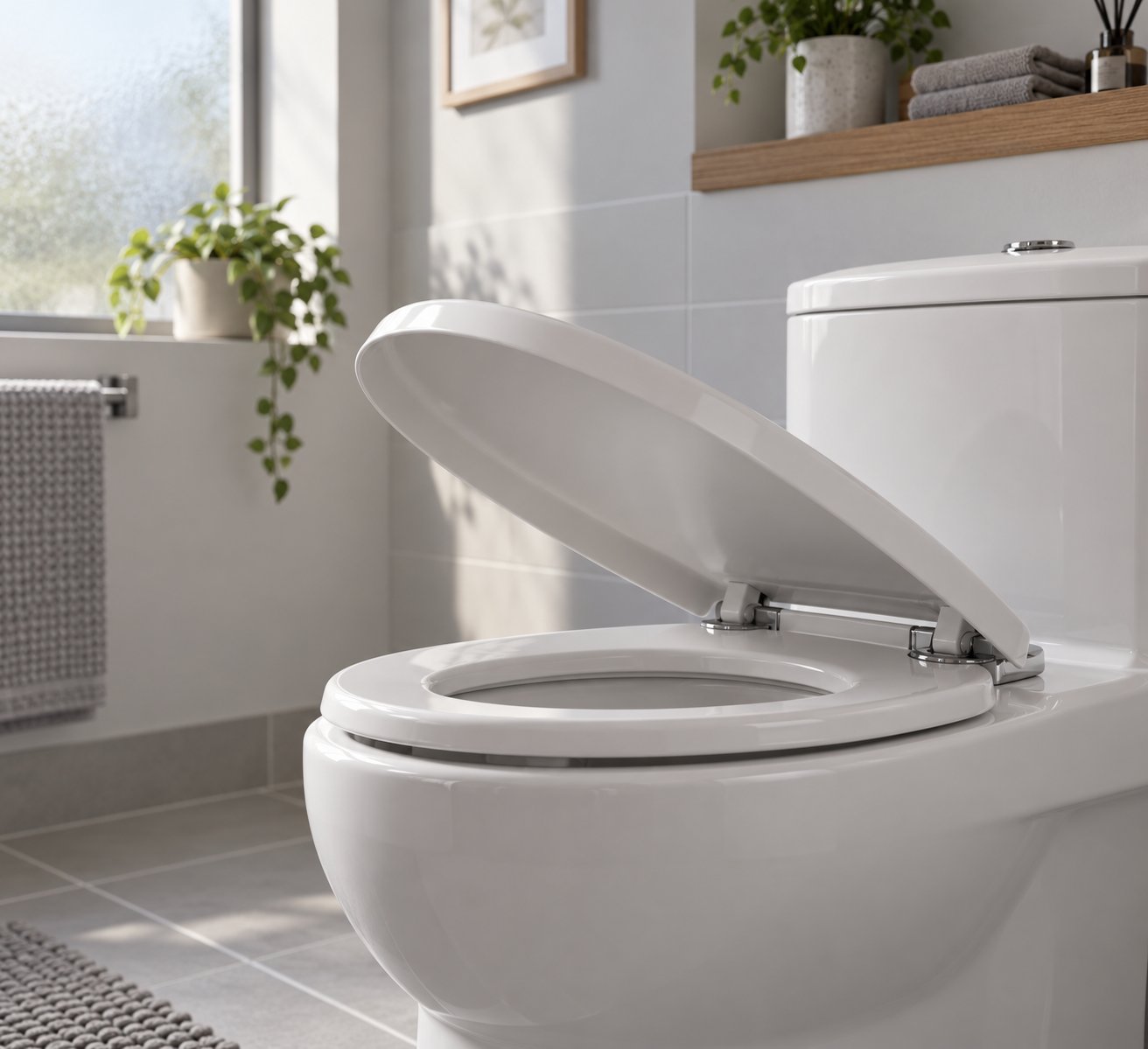
An elongated slow close toilet seat is a seat and lid sized for an oval, longer toilet bowl, fitted with damped hinges that lower the seat and lid gently instead of letting them drop.
What Makes a Toilet Seat Elongated and Slow Close
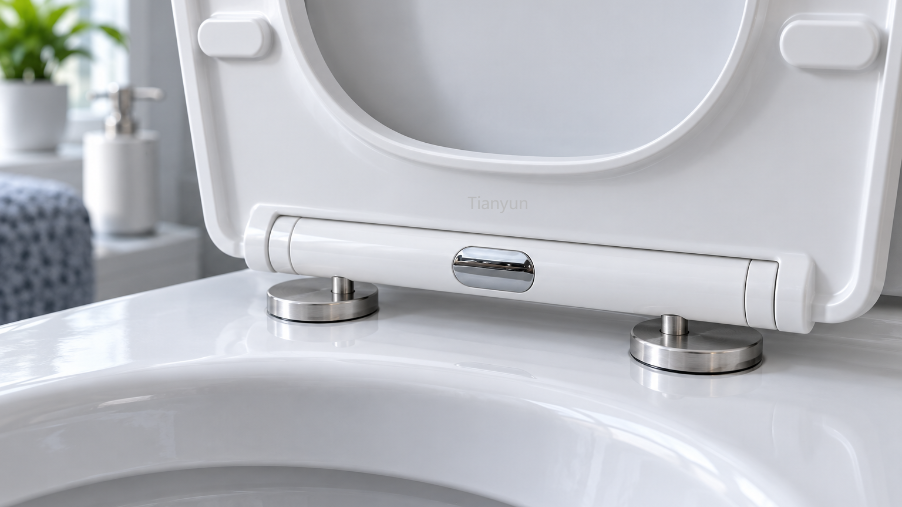
Two features define it. The first is shape. An elongated toilet seat follows an oval bowl that extends farther forward than a round one. In KOHLER's buying guide, elongated seats measure 18-5/8 inches or more from the hinge to the front of the seat, while round-front seats measure 16-3/4 inches or less. The second feature is the hinge. Inside it, a damper creates drag that slows the seat as it falls, so a light tap is all it takes to close it.
Slow-Close vs Soft-Close vs Quiet-Close Explained
Shopping for one quickly turns into a vocabulary test. You'll see slow-close, soft-close, gentle close, slow shutting toilet seat, and brand terms like KOHLER's Quiet-Close, which the company describes simply as a feature that prevents the seat from slamming closed. In most cases, these labels describe the same damped-hinge function. Still, the exact mechanism, the closing speed, and whether both the lid and the seat ring are damped can vary by manufacturer. Treat the name as a starting point, then check the product documentation before assuming two seats behave the same way.
Why Homeowners Choose Toilet Seats With Soft Closing Hinges
So why upgrade to an elongated toilet seat soft close design? The everyday payoffs are practical, and Bathroom Parts Australia lists several of them:
- Less slamming noise: no more late-night clangs echoing through a quiet house.
- Less impact on the bowl and lid: a controlled descent reduces wear and potential damage to porcelain and to the seat itself.
- Fewer pinched fingers: the lid eases down instead of dropping onto small hands.
- Less bending: people with back issues don't have to stoop to lower the lid quietly.
- A cleaner look: gently closing seats have become a modern bathroom standard.
There is a catch, though. The word elongated on a box describes a general shape, not an exact size. Elongated toilet seats from different makers can vary in length, width, and hinge position, which is why a tape measure matters more than any label.
Will It Fit Your Toilet and How to Measure
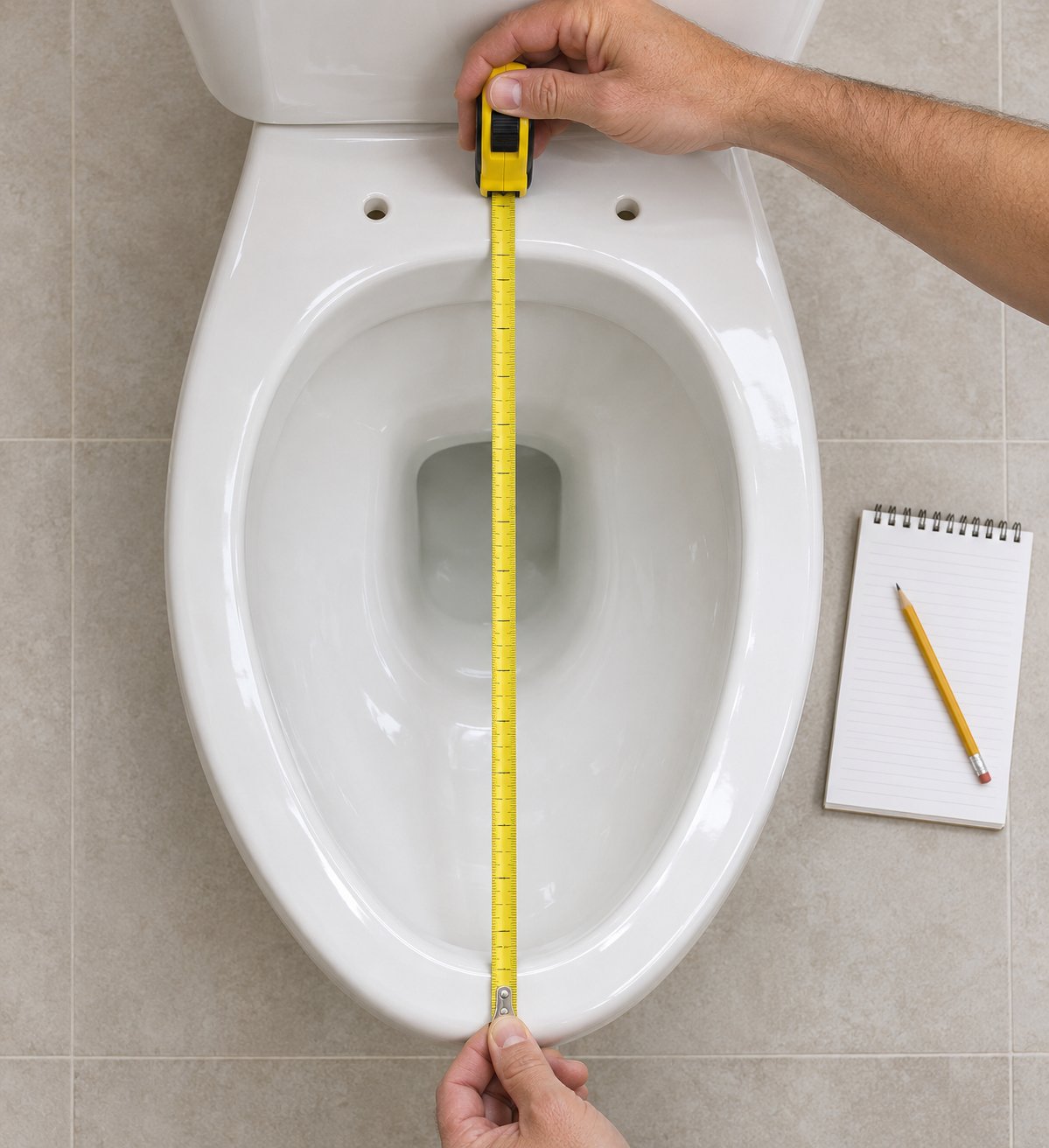
You found a soft close elongated toilet seat you like. The box says elongated, your bowl looks elongated, so it should fit, right? Not always. Product pages rarely answer the fit question directly. The safest approach is to split fit into four separate measurements and check each one on its own.
How to Measure Your Bowl for an Elongated Toilet Seat
Grab a tape measure and lift or remove the old seat so you can see the bowl rim clearly.
- Identify the bowl shape. Look straight down from above. A round bowl is close to a circle, while an elongated bowl stretches forward into an oval.
- Measure seat length. Run the tape from the centerline between the two mounting holes to the outer front edge of the rim. Brondell's fit guide treats 18 to 19-1/2 inches as elongated and 16 to 17-3/4 inches as round.
- Measure bowl width. Measure across the outside of the rim at its widest point.
- Measure mounting-hole spacing. Measure center to center between the two bolt holes. The same guide lists 5-1/2 inches as the standard US spread and 6-1/4 inches as the European size.
- Write everything down and keep the numbers handy when you shop.
Hinge adjustment range ties these numbers together. Most seats let the hinges slide forward or back a short distance. If your holes sit outside that range, the seat will overhang the front or leave the rim exposed, even when length and width look right on paper.
Elongated vs Round vs Compact Elongated Toilet Seats
The size gap between the two main shapes is real but modest. Sustainable Solutions notes that elongated bowls run about 2 inches longer than round ones, roughly 18.5 versus 16.5 inches, while stressing that exact dimensions change from manufacturer to manufacturer.
| Shape | Shape Description | Typical Use | Fit Considerations |
|---|---|---|---|
| Round | Nearly circular, shortest front to back | Small bathrooms and powder rooms | A round seat on an elongated bowl leaves the front rim exposed |
| Elongated | Oval that extends farther forward | Primary baths and accessible installations | The most common replacement size, but length and width still vary |
| Compact elongated | Elongated opening on a shorter overall footprint | Tight rooms where every inch of clearance counts | A standard elongated seat may overhang; measure before buying |
| Oval / oblong | Brand or regional label for longer, rounded profiles | European and designer toilets | Naming is inconsistent, so compare actual dimensions |
One-Piece, Two-Piece, and Skirted Bowl Compatibility
On most two-piece toilets, the bolt holes are open underneath, so you can reach the nuts from below. One-piece and skirted toilets are different. A smooth skirt often hides the underside, and the mounting holes may be concealed or set in unusual positions. These designs typically need top-mount hardware that tightens from above. Brondell, for example, flags a skirted one-piece model as needing top-mount hardware for its seat products. Some designer toilets go further and only accept the manufacturer's own seats.
Will a Seat From One Brand Fit Another Brand's Bowl
Often it will, but a matching shape name never guarantees it. Two bowls labeled elongated can differ in length, width, and hole placement. When you line up toilet seats, soft closing models also tend to have bulkier hinge housings, and an angled or curved tank can get in the way. Before you order any soft close toilet seat elongated in shape, confirm these four items against the seat specification sheet:
- Seat length and width
- Mounting-hole spacing
- Hinge type (top-mount, bottom-mount, or quick-release)
- Hinge adjustment range
Measure your bowl first, then compare those numbers to the spec sheet. The label on the box is only a starting point.
A perfect fit gets the seat onto the bowl. Whether it keeps closing gently month after month, though, depends on the small mechanism hidden inside those hinges.
How Slow Close Hinges Work and Why They Fail
Lift the lid, let go, and watch. It falls freely for a moment, then slows and glides shut. What is happening in that split second? The answer is a small part hidden in the hinge, and it is a big share of what you pay for when you choose a slow close elongated toilet seat over a standard one.
How a Toilet Seat That Closes Slowly Actually Works
Most seats with this feature rely on a rotary damper. It is a purely mechanical part and needs no electricity. TOK, a rotary damper maker, explains that a shaft inside the hinge stirs oil sealed in a small housing. The oil's viscous resistance slows the rotation. Imagine stirring honey with a spoon. Move slowly and it feels easy. Try to rush and it pushes back.
So why does the seat drop freely at first? These dampers work across a partial arc, typically around 110 degrees, and the point where resistance builds depends on the internal design. Some are tuned to slow only the final part of the close, while others slow the entire motion. Most are also one-way, so lifting the seat feels almost effortless.
Rotary Dampers vs Hydraulic Hinges
Here is where labels get confusing. A hydraulic or oil-filled hinge usually describes the same idea from a different angle. Longji, another damper manufacturer, describes a rotor turning through silicone-based fluid in a sealed chamber. Rotary names the motion, while hydraulic names the fluid. The real difference is packaging. Some designs seal the damper permanently inside the hinge body. Others use a separate oil-filled cartridge that can be swapped out. Pneumatic versions use air instead of fluid and tend to lose calibration sooner.
Why Soft Close Dampers Wear Out
Every toilet seat soft close mechanism has moving parts, so it has a finite life. Bathroom Parts Australia estimates hinge life at about 40,000 to 55,000 open-and-close actions, though quality and usage shift that range. Wear usually comes from predictable sources. Seals degrade over time, letting fluid leak and drag fade. Forcing the seat down overrides the damper and strains its internals. Harsh cleaning chemicals attack plastics and seals, which is why damper makers favor chemical-resistant housings such as PBT plastic. A loosely mounted seat also shifts with every use, putting side loads on a hinge never designed to carry them.
Never push a slow-close seat shut. Forcing it down fights the damper and is one of the most common causes of early hinge failure.
Warning Signs Your Slow-Close Hinge Is Failing
- The seat slams or drops suddenly.
- Closing speed is uneven, fast one time and slow the next.
- The seat stops partway and needs a nudge.
- The hinge squeaks, creaks, or clicks.
- Oily residue appears on the hinge body.
- The seat wobbles side to side.
Whether you are browsing toilet seats at Home Depot or comparing listings online, these signs are worth knowing before you buy your next seat. There is one thing the hinge cannot control, though: the weight it has to carry. TOK notes that heavier seats call for sturdier dampers, some with zinc die-cast shafts. That means the material of the seat itself quietly shapes how hard the hinge has to work.
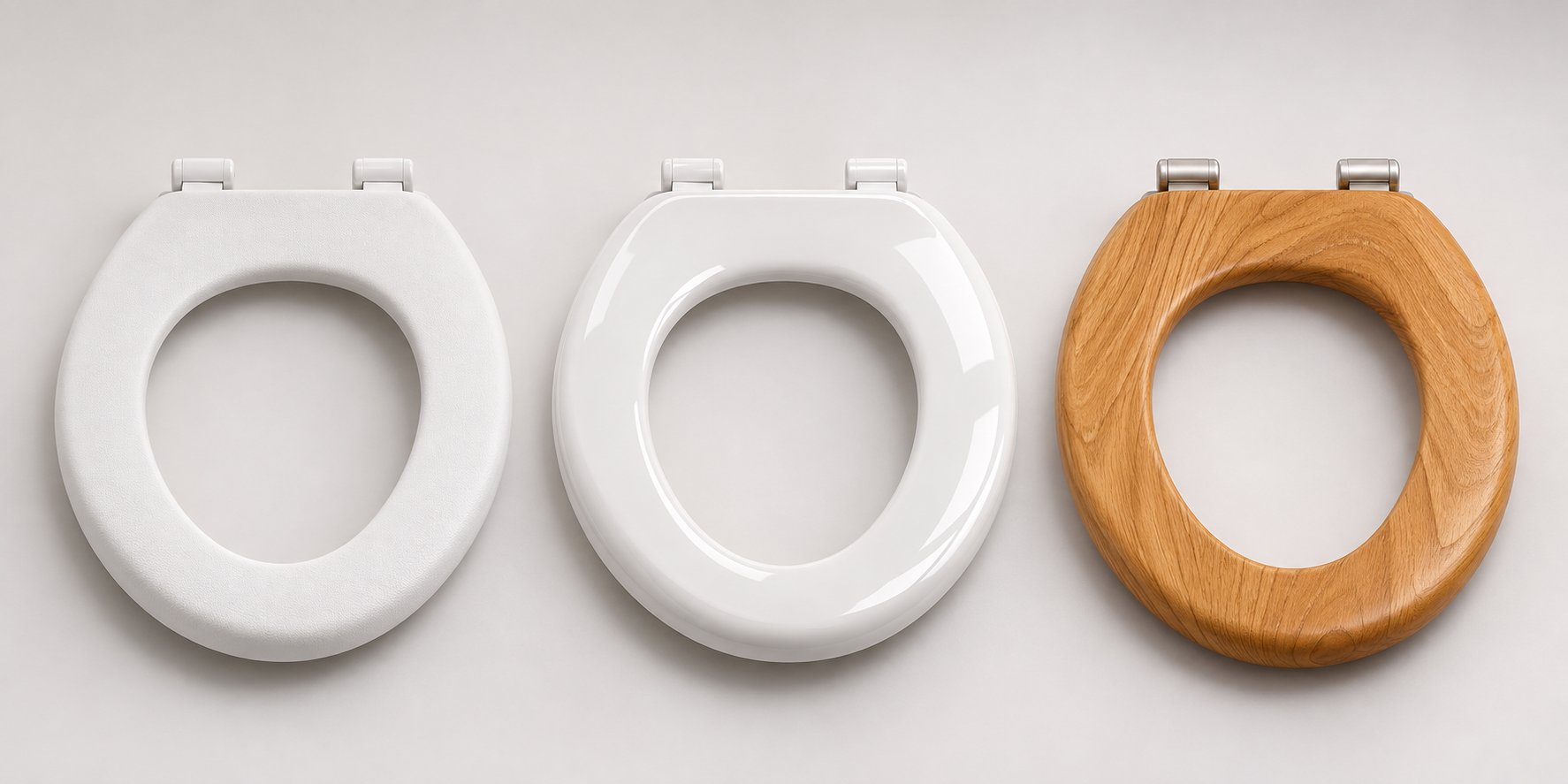
Materials That Shape Durability and Quality Feel
Pick up two seats in a store and you'll feel the difference before you read a single label. One feels light and gives a little when you press it. The other feels dense, almost like porcelain. That difference comes from material and construction. It shapes how long the surface stays looking new, and it sets how much weight the hinge has to control on every close.
PP vs UF Seats for Durability and Feel
Most plastic toilet seats soft close models use one of two materials. Polypropylene (PP) is a thermoplastic that is usually injection molded. It is lightweight, handles impact well, and keeps costs down. Urea-formaldehyde (UF), often sold as Duroplast, is a thermoset that is compressed and cured under heat and pressure. A seat manufacturer's PP vs UF comparison describes the result: a harder, heavier seat with a glossy, ceramic-like surface that resists scratches. PP's softer surface tends to show scratches and wear sooner.
Those surface differences show up over time. Family Handyman reports that polypropylene seats generally last five to seven years before wear and micro-cracks set in. Harder plastics such as Duroplast can last up to 10 years.
| Material | Feel and Weight | Scratch and Stain Resistance | Moisture Tolerance | Cleaning Needs | Typical Drawbacks |
|---|---|---|---|---|---|
| PP (polypropylene) | Light, with some flex | Moderate; scratches can show over time | High | Easy wipe-down | Plastic look; can crack or yellow in direct sunlight |
| UF (Duroplast) | Heavy, rigid, ceramic-like | Very high; smooth, non-porous gloss | High | Easy; resists stains | Higher cost; heavier to handle and ship |
| Molded wood / MDF | Heavy and solid | Depends on the painted finish | Moderate while the finish is intact | Mild cleaners to protect the coating | Chipped finish lets moisture reach the core |
| Solid wood | Warm, natural, substantial | Finish-dependent | Lower; can absorb moisture | Gentle products, no soaking | Can crack or warp; shorter service life |
| Cushioned vinyl | Soft and warm | Low; vinyl can tear | Moderate | Harder to sanitize at seams | Splitting and hygiene concerns |
For sanitary ware manufacturers and private-label buyers developing rigid seats, Tianyun's PP and UF toilet seat collection is a practical reference for material selection and soft-close hinge matching. Keep in mind that it does not publish individual models, dimensions, colors, load ratings, or prices. Requirements like an elongated toilet seat slow close design, a white finish, or heavy-duty use need to be confirmed directly with the supplier.
Is a Soft Close Wood Toilet Seat Worth It
Wood appeals to people who want warmth or a rustic look. As Lowe's buying guide points out, white wood seats look much like white plastic, while unstained wood looks completely different.
Pros
- Solid, substantial feel
- Natural grain options that plastic can't match
- Weight that many people read as quality
Cons
- Wood can absorb moisture, then crack or warp, especially if the finish is damaged
- Family Handyman puts typical wood seat life at two to three years
- Heavier seats demand more from the damper
Cushioned Toilet Seat Elongated Options and Tradeoffs
Pros
- Softer, warmer seating surface
- Comfortable for longer sitting
Cons
- Cushioned vinyl can split, letting moisture into the padding
- One cleaning expert quoted by Family Handyman calls foam and cushioned seats the most hygienically compromised
- Usually needs replacing sooner than rigid seats
Construction Details That Signal Quality
Material is only half the story. A well-built elongated slow close toilet seat also shows these traits:
- Wall thickness: press the rim gently. Thin walls flex and creak.
- Rib reinforcement: flip the seat over. Molded ribs underneath add stiffness without excess weight.
- Hinge material: Lowe's recommends metal hinges for the most durable plastic seats, and experts warn that plastic hinges can turn brittle and crack suddenly.
- Lid-to-seat fit: the lid should sit flush with even gaps, and the bumpers should rest evenly on the rim.
Heft and rigidity are useful clues, but the hinge and the fit decide how the seat performs day to day.
In a store, you can press, flip, and lift a seat to judge all of this. Online, those same qualities hide behind phrases like heavy duty and premium build, and reading them correctly takes a different kind of attention.
How to Read a Toilet Seat Product Listing
Scroll through any page of seats and the promises start to blur together: heavy duty, premium, best-rated. Sounds reassuring, right? Most of those words are marketing, not specifications. Whether you're comparing a Home Depot elongated toilet seat or an unfamiliar import on a marketplace, the same reading skills apply.
Decoding Heavy Duty, Quiet-Close, and SoftClose Claims
- Heavy duty: Ask what it actually refers to. It could mean a thicker material, metal hinges, or a stated weight capacity. Even a printed capacity needs context. A guide to weight ratings points out that the number alone doesn't tell you whether only static load was tested, or also impact and fatigue, or whether the rating covers just the seat or the seat plus its mounting hardware.
- Quiet-Close and SoftClose: These are brand names for damped hinges. KOHLER describes Quiet-Close simply as a feature that prevents the seat from slamming closed. The function is similar across brands, but closing speed and feel can differ.
- Quick-release: The seat lifts off without tools so you can clean and adjust around the hinges.
- Slow close on the lid only vs both: Some listings damp only the lid. If the seat ring still drops freely, you've solved only half the noise. Look for wording that names both the seat and the lid.
Specs That Matter on an Elongated Toilet Seat Soft Close Listing
Before you buy a toilet seat elongated slow close model, check each of these fields against the measurements you took earlier:
- Bowl shape (round, elongated, compact elongated, oval)
- Seat length and width
- Mounting-hole spacing
- Hinge type (top-mount, bottom-mount, quick-release) and hinge material
- Hinge adjustment range
- Stated weight capacity, and what it covers
- Seat and lid material
- Warranty terms and what they cover
- Included hardware, such as bolts, anchors, and washers
If you're shopping for oblong toilet seats, this checklist matters even more, since naming varies widely between brands and regions. A missing field is a signal, too. When a listing skips dimensions or hole spacing, ask the seller before you order.
Pay close attention to warranty wording. A warranty on the seat body doesn't automatically cover the damper, which is the part most likely to wear out. Check whether the hinge is covered separately and whether replacement hinges are sold on their own. Some suppliers, such as Bathroom Parts Australia, stock replacement dampers so you can fix a worn hinge without replacing the whole seat.
What Best and Best-Rated Labels Really Mean
Best-seller badges and best-rated filters usually reflect a retailer's sales data or sorting algorithm, not an independent test. Reddit threads and forum roundups can surface useful real-world experience, but they are still anecdotes, not verified ratings.
Review averages need context as well. Imagine a seat rated 4.4 out of 5 from 21 reviews. Add a single one-star review and the average drops to about 4.25. A small sample swings easily, so read the low-star reviews and look for patterns, such as hinges loosening or dampers failing after a few months.
Trust the spec sheet over the badge, and trust patterns in reviews over the average score.
Still, even a perfect listing can't tell you how heavy a seat feels in your hands or how solid the hinge looks up close. How much you can verify before paying depends largely on where you choose to shop.
Where to Shop and What It Really Costs
Where you buy a seat decides how much you can verify before you pay. Can you lift it, feel the hinge, and compare it to your notes? Or are you relying on photos and a spec table? Each channel gives you something and takes something away.
Shopping for Toilet Seats at Home Depot and Big-Box Stores
Big-box home improvement stores let you handle the product. You can press the rim, check the lid fit, and sometimes watch the damper work on a display model. Bring your bowl measurements (length, width, and hole spacing) so you can compare them to the box right in the aisle. Returns also tend to be simpler. Home Depot's return policy notes that bringing a product back to the store is the quickest route to a refund, while mailed returns typically take about 7 business days to process. The tradeoff is a narrower selection on the shelf.
Buying an Amazon Slow Close Toilet Seat Online
An amazon elongated toilet seat search turns up far more options, including compact sizes, oblong European shapes, and replacement hinges. But you can't feel weight or flex through a screen, and listings vary widely in how much detail they share. Use the spec checklist from the previous section, and read the return terms for opened or installed seats before ordering, since policies differ by seller.
Specialty plumbing showrooms sit in between. They often carry brand-matched seats for designer or skirted toilets, and staff can help confirm fit.
| Channel | Hands-On Inspection | Selection Breadth | Return Ease | Spec Detail Available |
|---|---|---|---|---|
| Big-box stores | Yes, on shelf or display | Moderate | Usually simple in store | Box labels plus online listings |
| Online marketplaces | None before delivery | Widest | Varies by seller; may require shipping | Inconsistent between listings |
| Plumbing showrooms | Yes, with staff guidance | Focused on specific brands | Varies; special orders may be restricted | Often detailed spec sheets |
Separating Product Cost From Installation Labor
Total cost has two separate parts: the seat and, if you hire help, the labor. Seat prices span a huge range. Ferguson notes basic options at about $10 to $15, while feature-packed models can reach around $1,000. Whether you're buying a simple slow close toilet seat elongated model or a full elongated toilet set with a matching lid, labor is its own line item. Angi puts plumber labor at $40 to $200 per hour, and an experienced handyperson can also handle simple fixture work. Keep in mind that Home Depot lists labor and installation services among its non-returnable items.
For most seat swaps, you won't need a pro at all. Ferguson says the vast majority of toilet seats take no more than half an hour to install.
Measure at home, inspect or verify before you buy, and budget for the seat and any labor as two separate costs.
That half-hour estimate assumes the old seat comes off cleanly, though. Corroded bolts, hidden top-mount anchors, and hinges that need careful centering are where a quick swap can stretch into an afternoon.
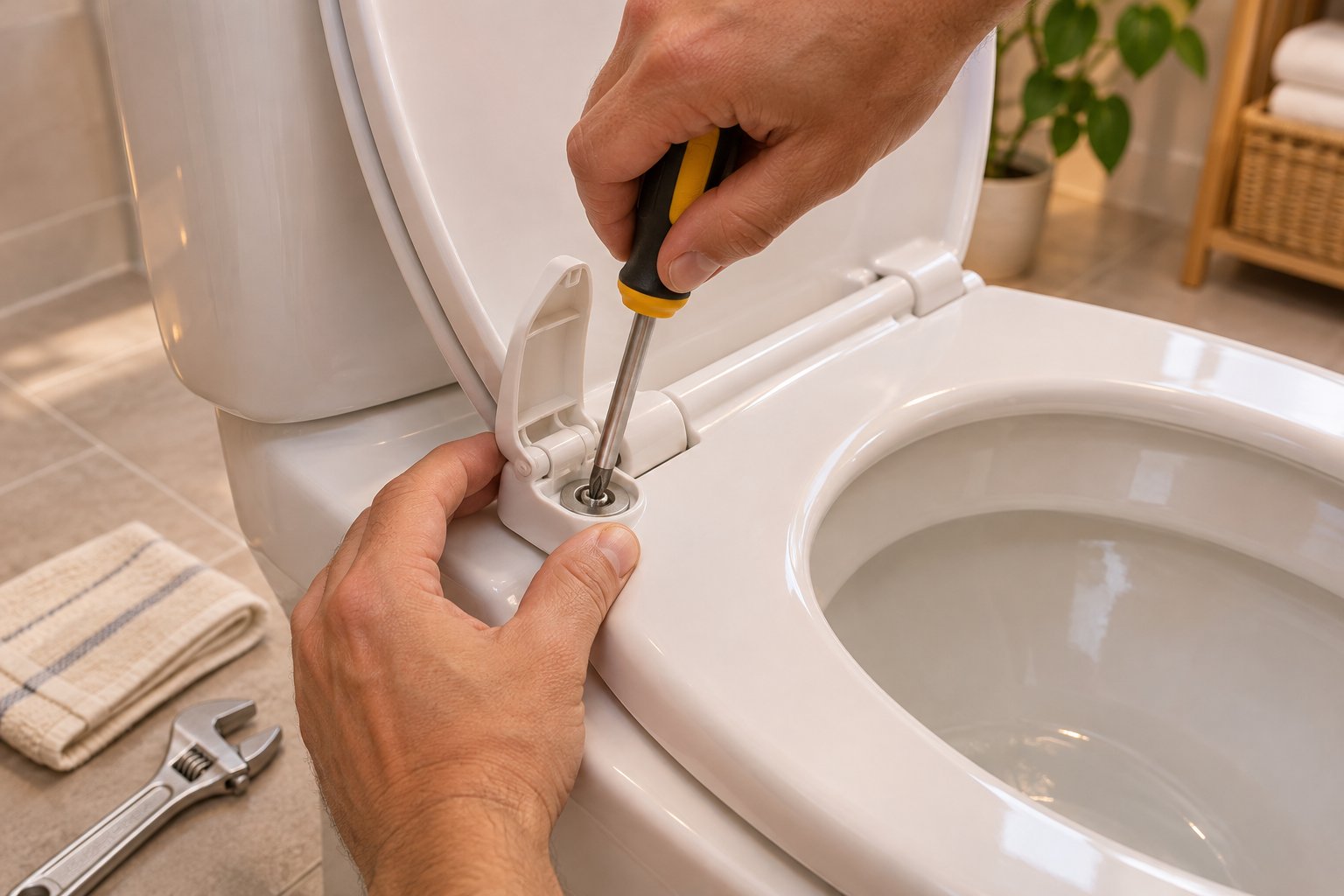
Step by Step Removal and Installation
Sounds like a job for a plumber? For most seats, it isn't. You need a few basic tools, some patience, and one key fact: how your seat is fastened to the bowl.
Tools and Prep Before Removing the Old Seat
Start by looking under the back of the bowl. If you can see nuts on the bolts, you have bottom-mount hardware, which tightens from underneath. If a smooth skirt hides the underside, you most likely have top-mount hardware. A top fix vs bottom fix guide from one seat maker explains that top-mount seats use expanding anchors that drop into the holes and tighten from above, which is why they are common on one-piece, skirted, and back-to-wall toilets. Keep this in mind for a compact elongated toilet seat, too, since tight bathrooms often pair with skirted bowls.
- Flathead and Phillips screwdrivers
- Adjustable wrench or pliers
- Penetrating oil and a small hacksaw blade for stubborn bolts
- Gloves, a mild cleaner, and a rag
How to Remove an Old Elongated Toilet Seat
- Open the bolt caps. Pry up the hinge covers at the back with a flathead screwdriver.
- Hold or loosen the nuts. On bottom-mount seats, hold the nut below with a wrench while you turn the bolt from above. On top-mount seats, unscrew from above until the anchor releases.
- Deal with corroded bolts. Spray penetrating oil and give it several minutes. If a metal bolt still spins or won't budge, cut it with a hacksaw blade while protecting the porcelain with tape.
- Clean the mounting area. Scrub around the holes, where grime builds up under old hinges, and let everything dry.
Installing a Soft Close Elongated Toilet Seat Step by Step
Whether you bought a soft close toilet seat at Home Depot or a Target soft close wood toilet seat, read the manufacturer's included instructions first and follow any torque guidance they provide. The general sequence closely mirrors the steps American Standard publishes for one of its slow-close elongated seats:
- Fit the hinge posts. Align the mounting trays or posts with the bowl holes and insert the bolts or anchors.
- Snug the hardware. Thread on the nut with its washer, or start the top-mount screw, just enough to hold position.
- Center the seat. Attach the seat to the posts and check from the front that it sits evenly over the bowl.
- Align the front edge. Use the hinge adjustment to slide the seat forward or back until its front lines up with the rim.
- Tighten firmly. Finish with a screwdriver or wrench, and stop once the seat no longer shifts.
- Close the caps and test. Raise the lid and seat, let go, and watch both glide down without stalling or slamming.
Aligning and Adjusting the Hinges for a Proper Fit
Many home depot toilet seats elongated in shape, along with most other models, use slotted or adjustable hinge mounts. If your seat sits crooked, loosen the hardware slightly, shift the seat, and retighten. You'll notice a good fit right away: the seat edges follow the rim, and the bumpers rest evenly on the porcelain. If the slow-close action feels off, confirm that the seat is fully seated on its posts before blaming the damper.
Overtightening can crack porcelain, so stop once the seat stops moving, but undertightening leaves room for the side-to-side shifting that slowly loosens hinges.
Even a careful install isn't permanent, though. That same top fix vs bottom fix guide notes that bottom-mount nuts can work loose with vibration and daily use, so a seat that feels rock solid today may start to wobble a few months from now.
Fixing Loose Hinges and Extending Seat Life
You sit down, shift your weight, and feel the seat slide sideways. Sound familiar? Wobbly hinges are among the most common complaints homeowners raise on Houzz and other forums, and they affect budget and premium seats alike. The good news is that most cases take only minutes to fix.
Why Slow Close Toilet Seat Hinges Loosen
Loosening rarely has a single cause. Plastic bolts can stretch under load and lose their clamping force. Rubber washers compress over time and leave slack. Every time someone sits down, the seat takes a small sideways push, and those repeated loads gradually work the fasteners free. Once there is play around the bolt holes, the seat shifts side to side, and each shift loosens things a little more. A Victorian Plumbing guide describes this as the classic problem of a seat that was tightened last week and is already loose again.
How to Tighten and Stabilize a Wobbly Seat
Start by lowering the seat flat and centering it, so the gap is equal on both sides. Then tighten each bolt evenly, a few turns at a time, switching sides as you go. Use the correct screwdriver, or a deep socket for bottom-mount nuts. If the bolt spins without getting tighter, the nut underneath is turning with it. Grip that nut with pliers while you turn the bolt from above.
Quick-release designs work a little differently. Press the release buttons, lift the seat off, and tighten the hidden fixings beneath the cover caps. After you clip the seat back on, confirm that both hinge posts lock firmly into place.
Still wobbling? Fill the gap around the holes with a tightening kit of rubber washers or bushings, replace any compressed washers, or upgrade to metal hardware if your seat design accepts it. Skip the power drill, because it makes overtightening far too easy.
Cleaning and Care That Protect the Damper
A soft close wood toilet seat and a plastic one benefit from the same habits:
- Let gravity do the work. A toilet seat cover soft close mechanism is tuned to fall under its own weight, so never push the lid down.
- Avoid harsh solvents near the hinges. Use mild soap and water. If you have a wood slow close toilet seat, wipe it dry afterward to protect the finish.
- Clean under quick-release hinges. Lift the seat off now and then to clear away the grime that collects around the posts.
- Check tightness on a schedule. Re-check a day or two after installation, then every six to twelve months, as Victorian Plumbing recommends for soft-close seats in particular.
Repair or Replace Your Slow-Close Seat
| Symptom | Likely Cause | Action |
|---|---|---|
| Wobble or side-to-side shifting | Play at the bolt holes, compressed washers, or stretched plastic bolts | Repair: retighten, add washers, or replace the bolts |
| Slamming or sudden drop | Leaking damper fluid, worn seals, or repeated forced closing | Replace the hinges if the original manufacturer sells them; otherwise replace the seat |
| Cracked seat or hinge area | Impact, overtightening, or brittle plastic | Replace the seat, since tightening won't hold |
| Failed damper (stalls or closes unevenly) | Worn internals or hinge posts not fully seated | Check the post seating first, then replace the hinge or the whole seat |
Before you buy a new seat, check whether the original manufacturer sells replacement hinges or dampers for your model.
Notice a pattern? Nearly every symptom in that table traces back to a decision made before the seat ever reached a shelf, including bolt material, hinge design, washer quality, and how closely the seat matches the bowl. For anyone specifying seats rather than just buying one, durability starts with those decisions.
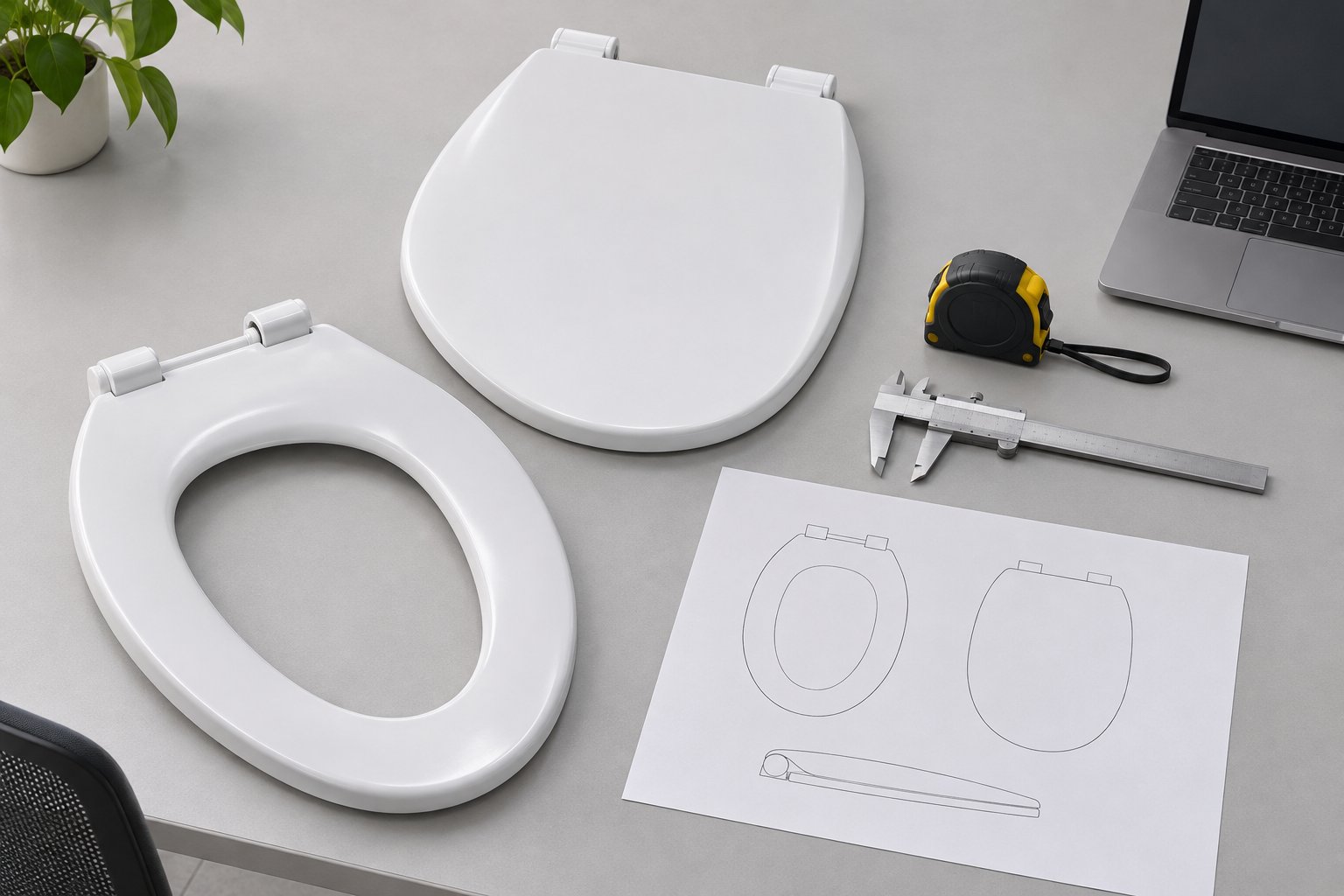
From Measurements to a Supplier Inquiry
Imagine sending a factory a note that says only elongated, soft close, white. What comes back may look right in photos and still miss your bowl. Sanitary ware manufacturers, private-label buyers, and serious replacement shoppers all face this risk. The fix is to turn your measurements and what you know about materials and hinges into one clear specification.
Turning Bowl Measurements Into a Seat Specification
A universal label doesn't guarantee fit. Beewill's importer checklist advises sharing a technical drawing, reference model, or physical sample, since photos alone may not show the dimensions needed for matching. Whether you're developing a soft close oval toilet seat or an oblong soft close toilet seat for European bowls, record these fields:
- Bowl shape, seat length, and seat width
- Mounting-hole spacing, measured center to center
- Hinge type (top-fix, bottom-fix, or quick-release) and adjustment range
- Material: PP or UF
- Rigid lid design, meaning the hard toilet seat cover, not a fabric one
- Color and surface finish
- Required weight capacity
- Warranty expectations, including whether the damper is covered
Matching Soft Close Hinges and Lids to the Seat Design
A damper tuned for a light PP lid can behave very differently under a heavier UF one. Hinge maker ZIAX recommends sending the seat and lid weight plus the expected closing behavior, so the hinge and damper can be evaluated as one system. It also warns that a hinge installed at the edge of its adjustment range can create wobble or local stress. That is the same loosening problem covered earlier, prevented at the design stage. The logic holds for an elongated toilet seat soft close wood model, too, since heavier seats need dampers matched to their weight.
Sourcing Elongated Toilet Seats From an OEM Supplier
For rigid seat and lid programs, Tianyun's PP and UF toilet seat collection is one starting point for material selection, soft-close hinge matching, and OEM or private-label development. Bring your completed checklist to the inquiry. Be aware that the collection doesn't publish individual models, dimensions, colors, load ratings, or prices, so elongated, white, or heavy-duty requirements must be confirmed directly with the supplier, and fit should be verified against your own bowl data and an approved sample.
Keep budgets clear as well. A supplier quote covers the product, while fitting a toilet with slow close seat is a separate labor cost. Once details are agreed, Beewill suggests consolidating them into a single approved specification linked to the approved sample, so repeat orders don't drift.
Measure first, understand the damper, pick the material for the feel you want, and install carefully.
Elongated Slow Close Toilet Seat FAQs
1. Will any elongated slow close toilet seat fit my elongated toilet?
Not automatically. 'Elongated' describes a general oval shape, not an exact size, so two bowls with the same label can still differ. Check four numbers before you buy. First, seat length: measure from the midpoint between the bolt holes to the outer front edge of the rim. Elongated bowls usually land around 18 to 19-1/2 inches, and round bowls around 16 to 17-3/4 inches. Second, width at the widest point of the rim. Third, bolt-hole spacing, measured center to center. About 5-1/2 inches is common in the US, and wider spacing is typical on European bowls. Fourth, the hinge adjustment range, which decides whether the seat can slide far enough forward or back to line up with the rim. Compact elongated bowls, skirted one-piece toilets, and some designer models may also need top-mount hardware or a brand-specific seat. Compare all four numbers to the seat's spec sheet rather than trusting the box label.
2. Is there a difference between slow-close, soft-close, and Quiet-Close toilet seats?
In most cases, these names describe the same feature: a damped hinge that lowers the seat and lid gently instead of letting them drop. Quiet-Close is KOHLER's brand name, and SoftClose and similar terms are other brands' labels for the same idea. Their behavior can still differ. Closing speed, where in the arc the slowing begins, and whether the damper is fitted to the lid, the seat ring, or both all vary by manufacturer. A lid-only design still lets the seat ring drop and clack. When you compare listings, look for wording that names both the seat and the lid, and check the product documentation instead of assuming two 'soft close' seats feel identical.
3. Why does my soft close toilet seat slam shut now, and can it be fixed?
A seat that suddenly drops or slams usually means the damper has lost resistance. Common causes include worn seals that let the internal oil leak out, people pushing the lid down by hand and overriding the damper, harsh cleaners attacking the seals and plastic housing, and a loose seat that puts side loads on the hinge. Start with the simple check: make sure the seat is fully clicked onto its hinge posts, especially on quick-release models. If the posts are seated and the seat still falls fast, closes unevenly, stalls partway, or shows oily residue, the damper is worn. Ask the original manufacturer whether replacement hinges or dampers are sold for your model. That is often cheaper than a new seat. If the seat itself is cracked, or no matching hinges exist, replace the whole seat.
4. Should I choose a PP or UF (Duroplast) slow close toilet seat?
Pick the material based on the feel and lifespan you want. PP (polypropylene) is light, flexes slightly, handles knocks well, and costs less. Its softer surface tends to scratch sooner, and Family Handyman estimates a typical life of about five to seven years. UF (urea-formaldehyde, often sold as Duroplast) is a cured thermoset. It is heavier and more rigid, has a glossy, ceramic-like surface that resists scratches and stains, and can last up to around ten years. UF usually costs more. A heavier seat also needs a damper matched to its weight, or it may close too quickly. For manufacturers and private-label buyers developing rigid seats, Tianyun's PP and UF toilet seat collection is one starting point for material selection and soft-close hinge matching. That collection does not publish models, dimensions, colors, load ratings, or prices, so confirm elongated sizing, finish, and heavy-duty needs directly with the supplier.
5. Can I install an elongated slow close toilet seat myself, and how do I keep it from loosening?
Yes. Most seat swaps are a DIY job that takes about half an hour with screwdrivers, a wrench or pliers, and a rag. A plumber or handyperson is a separate labor cost you can usually skip. Begin by checking the fixing type. Visible nuts under the bowl mean bottom-mount hardware. A smooth skirt usually means top-mount anchors that tighten from above. Center the seat, use the hinge slots to line up the front edge with the rim, then tighten firmly by hand. Stop once the seat no longer shifts, because overtightening can crack porcelain. Avoid power drills for this. To prevent wobble, re-check the bolts a day or two after installation and every six to twelve months after that. Replace compressed washers, add a rubber bushing kit if there is play in the holes, and switch to metal bolts if your seat accepts them. Always let the seat close on its own to protect the damper.
Apply This Insight to Your Project
Tell us what you are building and how the topic “Elongated Slow Close Toilet Seat: Measure Right, Stop Hinge Failure” relates to your application. Our engineering team can help evaluate the next step.