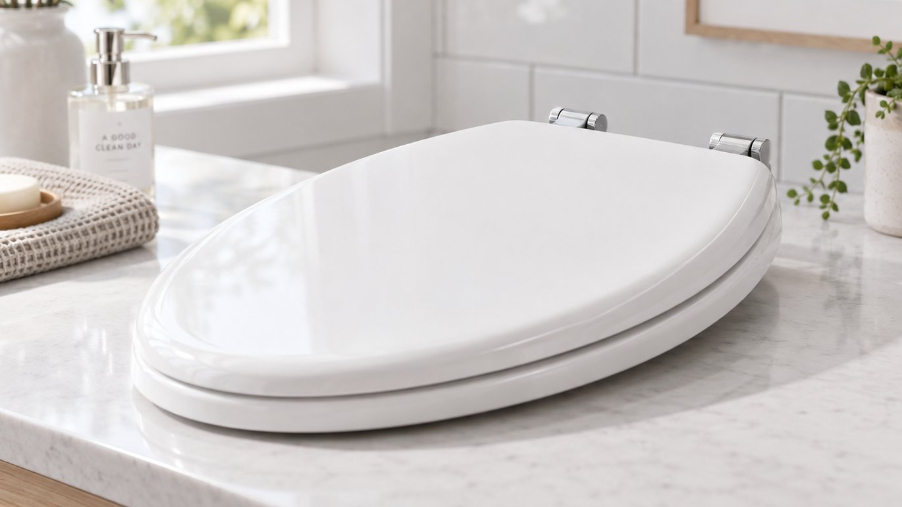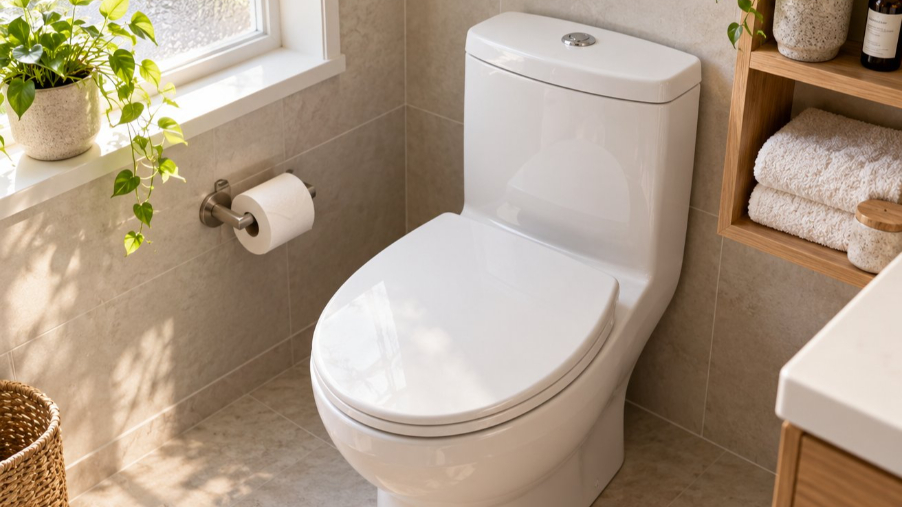
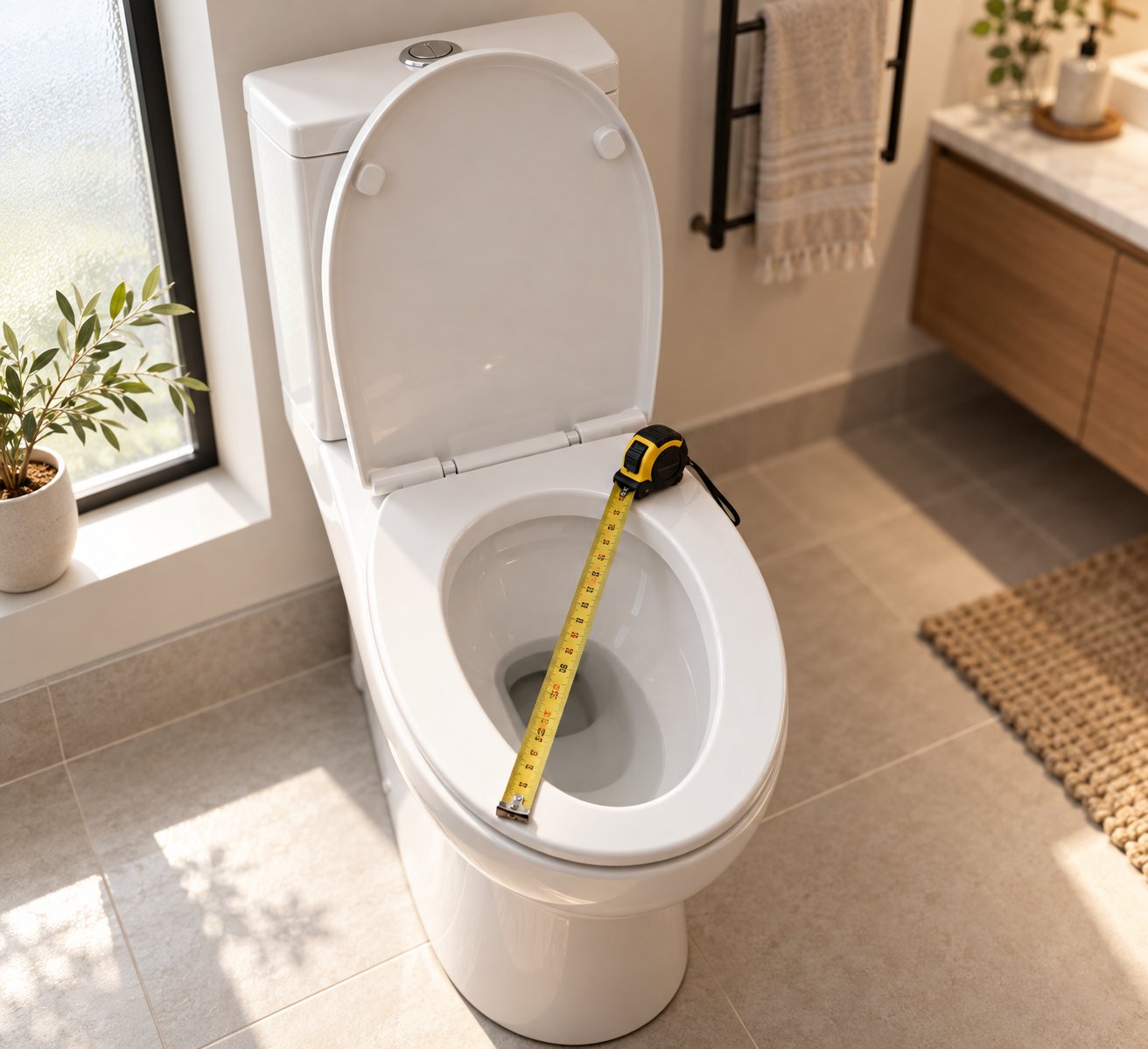
Understanding Elongated Toilet Seat Sizes and Why They Matter
Ever ripped open a new toilet seat package, lined it up on the bowl, and realized it just... doesn't fit? You're far from alone. The root of the problem almost always traces back to one thing: a misunderstanding of elongated toilet seat sizes. This isn't a single, universal dimension. It's a range of measurements that shifts across manufacturers, models, and specialty categories — and getting it wrong means dealing with wobble, overhang, or an uncomfortable gap you'd rather not think about.
Here's the essential distinction. Toilet bowl shapes fall into two primary families: round and elongated. A round commode seat pairs with a circular bowl roughly 16.5 inches long from the mounting bolt holes to the front rim, as noted in Home Depot's toilet buying guide. An elongated toilet seat, by contrast, matches an oval-shaped bowl that measures approximately 18 to 18.5 inches across that same bolt-to-front-tip span. Width for most elongated seats sits around 14 inches. Those two extra inches of length might sound trivial, but they change everything — from comfort and hygiene to how the seat interacts with your bathroom layout.
What Makes a Toilet Seat Elongated
The word "elongated" simply describes the oval profile. Imagine stretching a circle forward by about two inches — that's the shape you're working with. The primary classifier isn't the look, though. It's the measurement from the center of the bolt holes at the rear of the bowl to the very front tip. If that distance lands between roughly 18 and 18.75 inches, you're in elongated territory. A Lowe's comparison guide confirms that elongated toilets measure about 18 inches from the seat mounting holes to the front of the bowl rim. Compact elongated toilets blur the line a bit — they carry the oval shape but squeeze into a shorter footprint — yet they still require an elongated toilet seat, not a round one.
Why Toilet Seat Dimensions Matter More Than You Think
Pick the wrong WC seat size and you'll notice it immediately. An oversized seat overhangs the bowl, shifts under your weight, and creates cleaning headaches. An undersized one leaves the front of the bowl exposed — a hygiene issue nobody wants. Even a half-inch mismatch can cause the seat to rock side to side because the mounting bolt alignment is off.
The most common source of confusion? Mixing up toilet bowl dimensions with toilet seat dimensions. Many shoppers measure the outer rim of the bowl and assume a seat labeled with that same number will be a perfect match. In reality, the seat is designed to overhang the bowl rim slightly, so the two sets of numbers will never be identical.
Toilet seat dimensions and toilet bowl dimensions are related but not identical — always measure the seat mounting area, not just the bowl rim.
Whether you're replacing a worn-out wooden toilet seat, upgrading elongated toilet seats in a renovation, or specifying parts for a commercial project, precision matters. The sections ahead break down exactly how to measure, what the standard dimension ranges look like, and where the real sizing pitfalls hide — starting with the three measurements every buyer needs before clicking "add to cart."
How to Measure Your Toilet for an Elongated Seat
Grabbing a tape measure takes less than a minute. Skipping that step can cost you a return trip, a restocking fee, and the frustration of staring at a seat that doesn't line up. Whether you're replacing a tired toilet seat elongated model or shopping for the first time, accurate measurements eliminate guesswork — and they're simpler than most people expect.
Here's the thing: toilet seat sizes vary enough across brands that you can't rely on the model name printed on the tank. A toilet labeled "elongated" by one manufacturer may differ by a quarter inch or more from another's version. The shapes of toilets also evolve over time, so a bowl installed fifteen years ago might not match the dimensions listed in a current product catalog. The only reliable shortcut is measuring the actual toilet sitting in your bathroom right now.
Three Measurements Every Buyer Needs
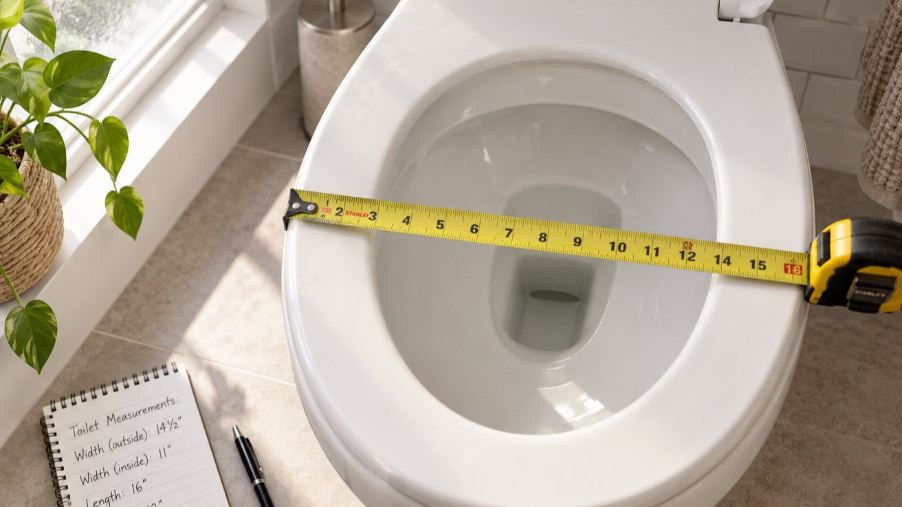
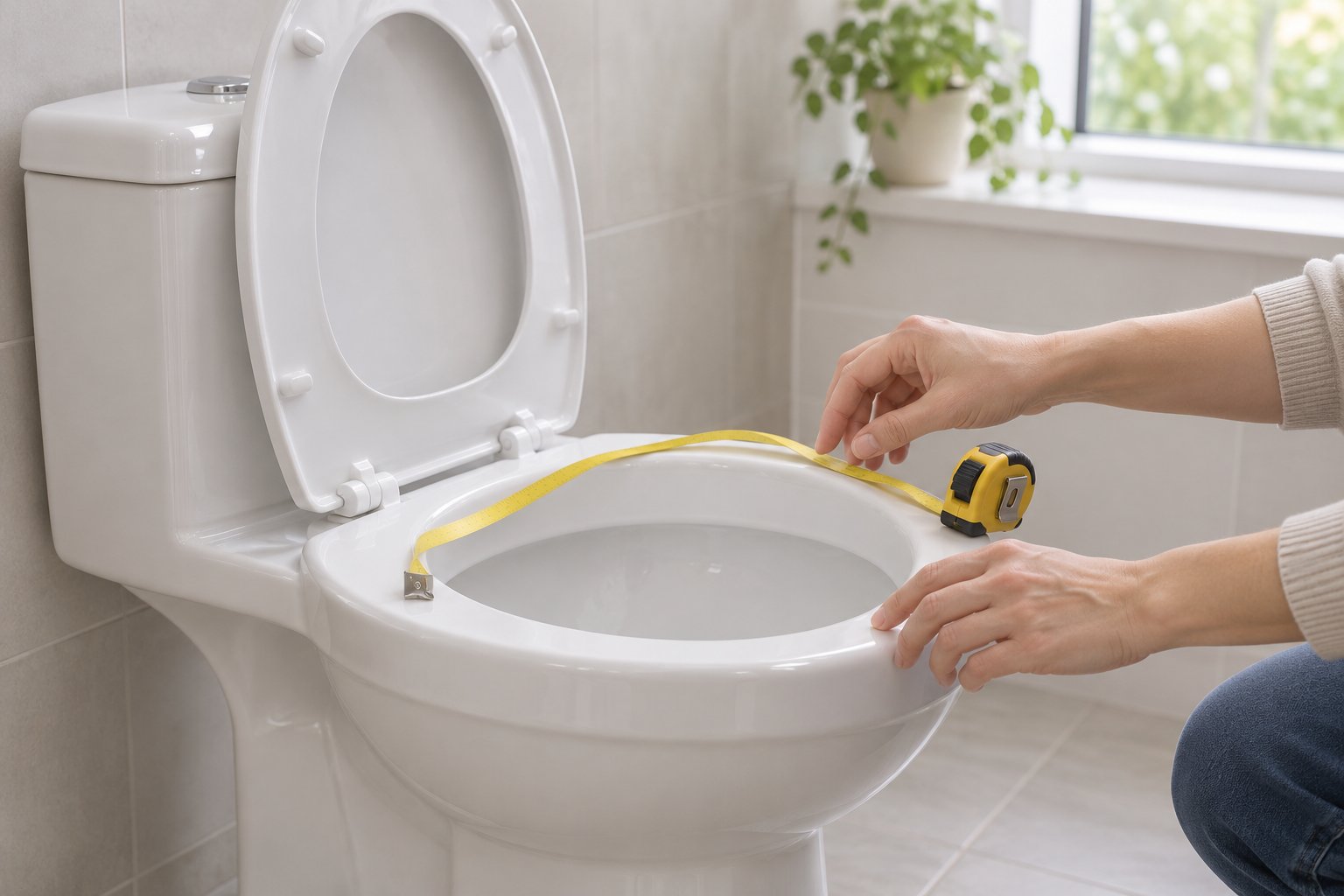
You need exactly three numbers to confidently choose the right elongated seat. Grab a flexible tape measure, lift the seat and lid out of the way, and follow this sequence:
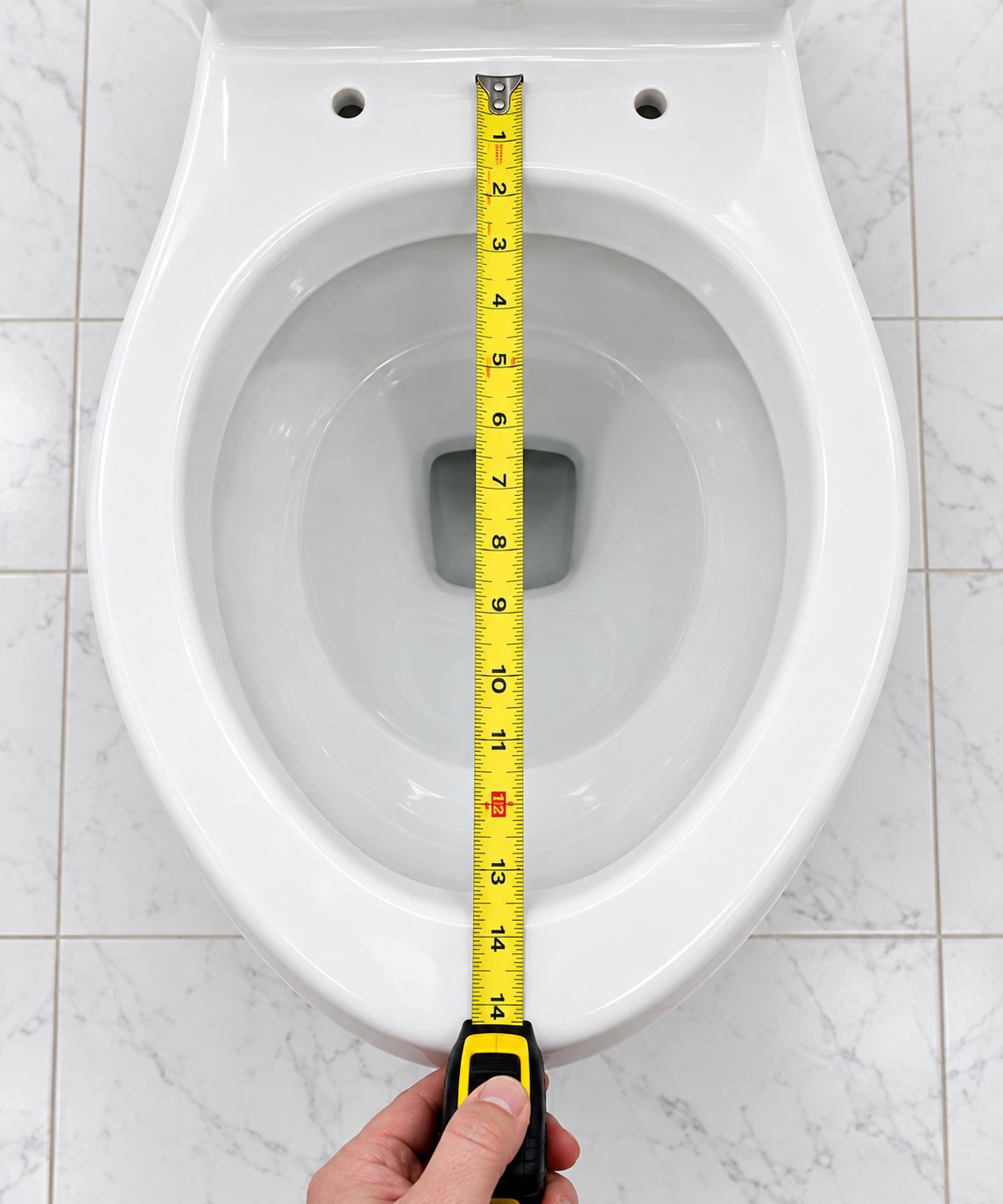
- Bolt-to-front length. Locate the two mounting bolt holes at the back of the bowl — they're the holes the seat hinges bolt into. Place the end of the tape measure at the center point between those two holes and extend it in a straight line to the very front edge of the bowl rim. For an elongated bowl, this measurement typically lands around 18.5 inches. If you're closer to 16.5 inches, you're looking at a round bowl instead.
- Width at the widest point. Stretch the tape across the bowl from the outer edge of one side of the rim to the outer edge of the opposite side, measuring at the widest section. Most standard toilet seat sizes — both round and elongated — fall between 14 and 14.5 inches here. A reading significantly outside that range signals a non-standard or imported bowl that may need a specialty seat.
- Bolt spread. Measure from the center of the left mounting bolt hole to the center of the right one. The standard bolt spread is 5.5 inches in most North American toilets, though older fixtures and some imported models occasionally use slightly different spacing. If your bolt spread falls outside the 5.5-to-7.5-inch range, you'll likely need manufacturer-specific hardware or an adjustable-hinge seat.
Keep the tape centered over the bowl for each reading — don't follow the curve of the rim, which adds misleading length. And take a photo with the tape in position. If you end up contacting a retailer or manufacturer for help, that image communicates more than numbers alone.
Bowl Dimensions vs. Seat Dimensions Explained
This is where many buyers trip up. You've measured the bowl, written down your numbers, and assumed a seat with matching specs will drop right on. But a toilet seat is not the same shape as the bowl it covers. The seat is designed to overhang the bowl rim slightly — typically a fraction of an inch on each side — so it caps the rim edge and sits securely without slipping inward.
In practical terms, a seat listed at 18.5 inches long might rest on a bowl measuring 18 to 18.25 inches from bolt holes to front rim. That small overhang is intentional and necessary. It's also why the question "are all round toilet seats the same size" doesn't have a simple yes — even within the round category, minor dimension differences between bowl and seat exist.
The table below clarifies the relationship between what you measure on the bowl and what you'll see printed on the seat packaging:
| Measurement Type | Typical Elongated Bowl Range | Typical Elongated Seat Range |
|---|---|---|
| Bolt-to-Front Length | 18 – 18.25 inches | 18.25 – 18.75 inches |
| Maximum Width | 14 – 14.25 inches | 14 – 14.5 inches |
| Bolt Spread | 5.5 inches (standard) | 5.5 inches (standard) |
Notice the pattern: the seat measurement runs slightly larger than the bowl measurement in both length and width. That overhang keeps the seat from rattling around inside the rim and provides a clean visual line when the lid is closed. If your bowl measurement hits, say, 18.1 inches in length and the seat you're considering lists 18.5 inches, that's a normal and expected pairing — not a mismatch.
The standard toilet seat size for an elongated bowl isn't a single magic number. It's a range, and the key to a successful fit is ensuring your bowl falls within the range the seat is designed to cover. Measure the bowl, compare those numbers to the seat's published specs, and look for that slight overhang rather than an exact match. Relying on model-name assumptions — or guessing based on the shape printed on the box — is exactly how the wrong seat ends up in your bathroom.
With your three measurements recorded, the next step is understanding what the standard elongated dimension ranges actually look like across the industry — and how variables like rough-in distance can quietly shift which seats work for your setup.
Standard Elongated Toilet Seat Dimensions Decoded
You've taken your three measurements. The tape reads somewhere around 18 inches front to back, roughly 14 inches across, and 5.5 inches between the bolt holes. Those numbers confirm you have an elongated bowl — but where exactly do they fall within the spectrum of industry-standard toilet seat dimensions? And does every elongated seat on the shelf actually match your specific bowl?
The short answer: not always. Elongated toilet seat sizes cluster around a well-defined range, yet the margins within that range matter more than most buyers realize. A quarter-inch variance in length or width can mean the difference between a seat that sits flush and one that shifts every time you stand up. The detailed breakdown below turns those measurements into a practical reference you can use while shopping — online or in-store.
Standard Elongated Seat Dimension Ranges
Most elongated seats sold in the North American market share a common dimensional footprint. The bolt-to-front length — the single most important classifier — typically falls between 18 and 18.75 inches. Width at the widest point ranges from about 13.75 to 14.5 inches, and the bolt spread sits at a standardized 5.5 inches in the vast majority of domestically manufactured toilets. These figures define what the industry considers a "standard" commode seat size for the elongated category.
Beyond the outer shell, the seat opening itself — the hole you actually sit on — has its own dimensional range. Seat opening length usually measures between 10 and 11 inches, while opening width runs about 8.5 to 9 inches. That interior cutout determines comfort just as much as the outer dimensions determine fit, so it's worth noting even though most shoppers focus exclusively on the external numbers.
The table below consolidates every key dimension into one quick-reference chart:
| Dimension | Standard Elongated Range | Notes |
|---|---|---|
| Overall Length (bolt holes to front) | 18 – 18.75 inches | Primary measurement for confirming elongated shape; the best elongated toilet seat will overhang the bowl rim by roughly 0.25 – 0.5 inches |
| Overall Width | 13.75 – 14.5 inches | Measured at the widest point of the seat; most seats target 14 – 14.25 inches |
| Bolt Spread | 5.5 inches (standard) | Some older or imported toilets use 6 – 7.5 inches; verify before ordering |
| Seat Opening Length | 10 – 11 inches | Affects comfort and hygiene clearance; open-front commercial seats have a longer effective opening |
| Seat Opening Width | 8.5 – 9 inches | Consistent across most types of toilet seats in the elongated category |
If your bowl measurements land comfortably inside the ranges listed in the "Standard Elongated Range" column, virtually any standard elongated seat should fit. Numbers near the outer edges — say, a 13.75-inch-wide bowl or a bolt-to-front length pushing 18.75 inches — call for a closer look at the specific seat's published specs before purchasing. A toilet seat cut that's even slightly too narrow will perch on top of the rim without dropping into place, while one that's too wide will overhang and wobble laterally.
How Rough-In Distance Affects Elongated Seat Selection
Here's a variable almost nobody talks about: the rough-in distance. This is the measurement from the finished wall behind the toilet to the center of the floor bolts (also called closet bolts) that anchor the toilet to the drain flange. The standard rough-in in modern homes is 12 inches, though older homes and compact bathrooms frequently use 10-inch or 14-inch rough-ins.
The rough-in doesn't change the seat itself — an elongated seat measuring 18.5 inches long is still 18.5 inches long regardless of rough-in. What it changes is where the entire toilet sits relative to the wall and, by extension, how far into the room the front of that elongated seat reaches. Consider two scenarios:
- 10-inch rough-in: The toilet sits 2 inches closer to the wall than a 12-inch rough-in setup. The bowl — and the elongated seat on top of it — projects further into the bathroom. In a tight half-bath, this could eat into the minimum 21-inch front clearance recommended by most building codes, or make it uncomfortable to close the door.
- 14-inch rough-in: The toilet sits 2 inches further from the wall. You gain breathing room behind the tank, but the seat still extends the same distance forward from the bowl's bolt holes. The extra wall gap can actually make cleaning behind the toilet easier, though it doesn't free up any forward space.
Why does this matter for seat selection? Because among toilet shapes, the elongated profile already claims more room than a round bowl. Pair that with a 10-inch rough-in and you may discover there isn't enough clearance for a standard elongated seat — a compact elongated option (discussed in the next section) might be the smarter move. Conversely, a 14-inch rough-in paired with a standard elongated seat usually has clearance to spare. The point is that rough-in distance is a bathroom-level constraint that silently influences whether your chosen seat works in practice, not just on paper.
Dimensions of Standard vs. Oversized Elongated Seats
Not every elongated seat targets the same user. Within this single category, manufacturers produce both standard and oversized variants — and the dimensional differences between them are more than cosmetic.
Standard elongated seats stick to the ranges outlined in the table above: roughly 18 to 18.75 inches long, 14 inches wide, and built for everyday residential use. Oversized elongated seats, sometimes marketed as "large" or "wide" models, push the width beyond 14.5 inches and may feature a broader seat opening, reinforced mounting hardware, and higher weight ratings. These seats are designed for users who need additional seating surface area or greater structural support, and they represent a distinct subcategory within the elongated family.
The exterior bolt spread typically stays at 5.5 inches even on oversized models, so the mounting interface with the bowl doesn't change. What does change is the amount of seat material extending beyond the bowl rim — a wider seat will overhang more on each side. That overhang is engineered to remain structurally stable, but it means the total footprint of the toilet increases slightly, and side clearance to adjacent walls or fixtures becomes an additional planning consideration.
Oversized seats also tend to be thicker, which adds a small amount of height. For anyone already using a comfort-height toilet (where the bowl rim sits 17 to 19 inches off the floor), an extra half-inch of seat thickness nudges the effective sitting height even higher. That can be an advantage for taller individuals or those with mobility concerns — or a drawback if the combined height exceeds what feels comfortable.
These variations hint at a broader reality: "elongated" is a family of sizes, not a single specification. Heavy-duty bariatric models, open-front commercial seats, and ADA-focused designs each bend the standard dimension ranges in different directions to serve different needs — a topic that deserves its own detailed look.
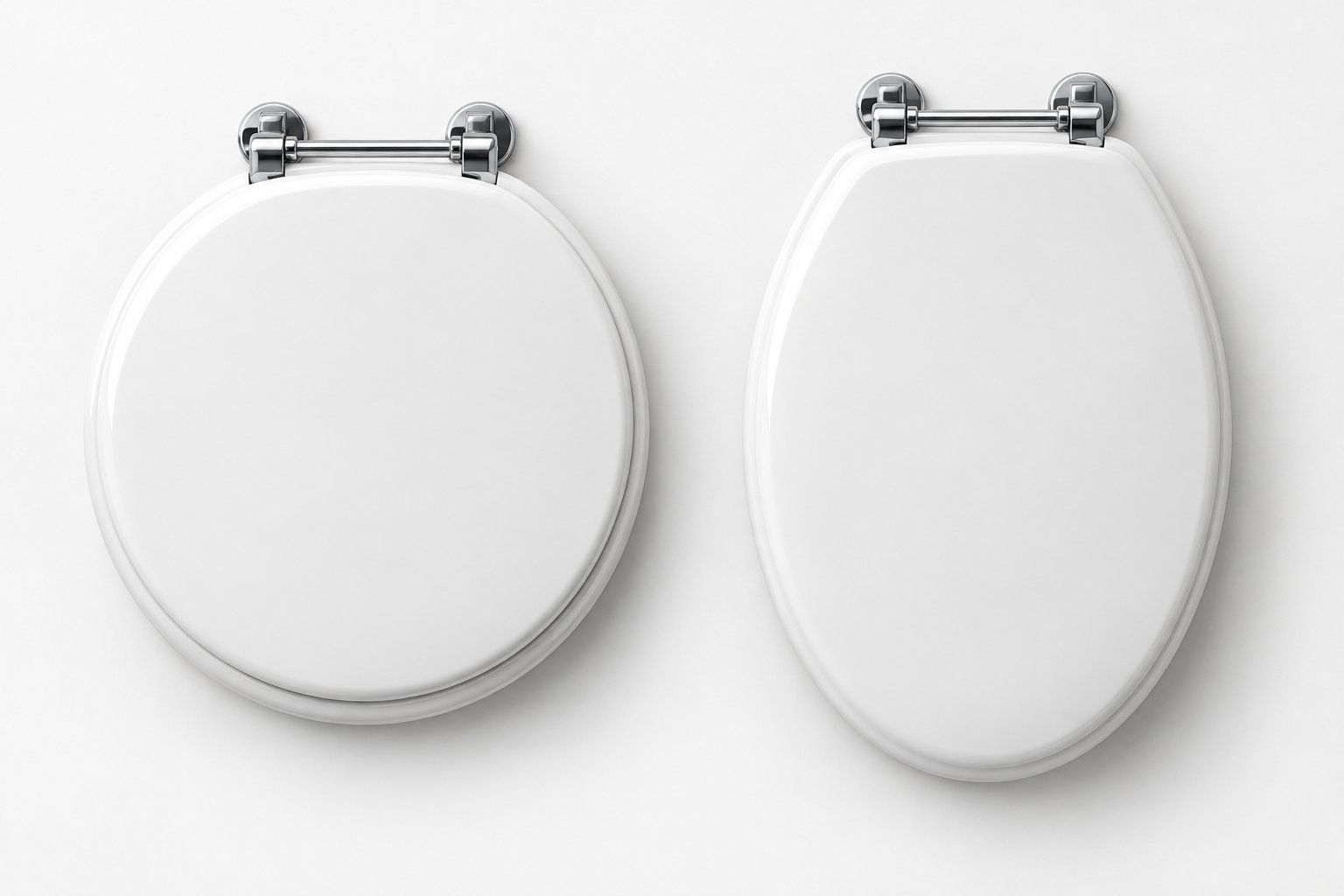
Round vs Elongated Toilet Seat Dimensions Compared
Knowing the standard elongated dimension ranges is one piece of the puzzle. The other piece — especially if you're standing in a store aisle debating between two boxes — is understanding exactly how those numbers stack up against their round counterparts. The round vs elongated toilet seat decision isn't about personal preference alone. It's a spatial, functional, and comfort calculation grounded in specific measurements.
Side-by-Side Dimensional Comparison
Strip away the marketing language and what separates these two shapes comes down to a handful of concrete numbers. The table below lines up every key toilet seat specification so you can compare at a glance:
| Dimension | Round Seat | Elongated Seat |
|---|---|---|
| Bolt-to-Front Length | ~16.5 inches | ~18.5 inches |
| Overall Width | 14 – 14.25 inches | 14 – 14.5 inches |
| Typical Seat Opening | ~8 x 9.5 inches | ~8.5 x 11 inches |
| Common Bolt Spread | 5.5 inches | 5.5 inches |
| Shape Description | Circular | Oval (oblong) |
| Recommended Bathroom Size | Compact half-baths, powder rooms | Standard and larger bathrooms |
Notice that width is nearly identical between the two. The real divergence is in length — that roughly two-inch difference from bolt holes to front tip is what defines the choice. An elongated toilet measures about 18 inches from the mounting holes to the bowl rim, while a round bowl sits at approximately 16.5 inches. The bolt spread stays consistent at 5.5 inches for both shapes in most North American models, meaning the mounting hardware is often interchangeable even when the seat shape is not.
That two-inch length gap translates directly to the seat opening, which is where comfort differences become obvious. An oblong toilet seat provides a longer opening — roughly 11 inches versus 9.5 — giving adults more seating area and reducing contact pressure. For larger or taller users, those extra inches aren't a luxury; they're a practical necessity.
Compact Elongated as a Third Category
What if a round bowl feels cramped but a standard elongated won't fit? This is the exact scenario driving the growing popularity of compact elongated toilets. These models carry the oval profile of a full-size elongated bowl but trim the bolt-to-front length down to roughly 17 to 17.75 inches — splitting the difference between the two traditional categories.
Compact elongated toilets are showing up in urban apartments, updated powder rooms, and small-footprint renovations where every inch counts. Lowe's notes that compact elongated models have the larger shape of an elongated toilet but can fit in the space designed for a round one. You still get the oval seating comfort, just in a tighter package.
Here's the catch: seat availability. Because compact elongated bowls don't conform to the standard toilet sheet size of either category, you can't simply grab a standard elongated plastic toilet seat off the shelf and expect it to fit. A seat designed for an 18.5-inch bowl will overshoot the front of a 17.25-inch compact bowl by over an inch — creating an unattractive and unstable overhang. Before buying a compact elongated toilet, confirm that the manufacturer produces a matching seat, or verify that aftermarket options exist with the correct bolt-to-front measurement. Careful measurement is even more critical here than it is for standard shapes.
When Elongated Is the Wrong Choice
Honest advice? An elongated seat isn't always the answer — even when comfort is the priority. There are real-world scenarios where choosing a different shape makes more sense.
- Bathrooms under 60 inches deep. A standard elongated toilet projects roughly two inches further into the room than a round one. In a tight half-bath, that can shrink the clearance between the front of the bowl and the opposite wall or door to less than the 21-inch minimum most building codes require. If your available depth is marginal, a round or compact elongated model avoids the squeeze.
- Children's bathrooms. Younger children often find the shorter, more proportionate opening of a round seat easier and more secure to use. Some families install a round toilet during early childhood years and upgrade to elongated later — a strategy Lowe's specifically recommends for potty-training households.
- ADA clearance constraints. ADA-compliant restroom layouts require specific clearances around the toilet — a minimum of 48 inches of clear floor space in front and at least 60 inches of clear width for wheelchair access. An elongated bowl extending further into the room can eat into that clearance. In some layouts, a heavy duty elongated toilet seat paired with a comfort-height bowl technically meets the seat-height requirement (17 to 19 inches) but fails the spatial requirement because the room just isn't deep enough.
- Older homes with non-standard plumbing. Some vintage or imported toilets — including legacy models from brands like Olsonite toilet seats or other mid-century manufacturers — use bolt spreads and bowl contours that don't align with modern elongated seat dimensions. Forcing an elongated seat onto these bowls can cause mounting instability.
The goal isn't to pick the longest seat available. It's to match the seat shape and dimensions to the bowl, the bathroom, and the people using it. Sometimes that means choosing round. Sometimes it means choosing compact elongated. And sometimes it means exploring specialty elongated seats designed for specific applications — which is exactly where the conversation heads next.
Specialty Elongated Seat Sizes for Every Application
Standard elongated seats cover the majority of residential bathrooms — but "majority" doesn't mean "all." Certain users, building types, and regulatory requirements push seat sizing into territory that a typical 18.5-inch oval simply doesn't address. Are toilet seats universal? Not even close. Within the elongated family alone, there are heavy-duty models engineered for higher weight capacities, open-front commercial versions mandated by plumbing codes, ADA-focused designs that prioritize seat height over plan dimensions, and child-friendly options that layer a smaller opening on top of the standard toilet seat footprint.
Each of these categories shares the basic oval profile of an elongated seat. The outer dimensions often look familiar — roughly 18 to 18.75 inches long, about 14 inches wide. What changes are the structural details, the interior geometry, and the engineering underneath. Understanding those differences is the key to selecting a seat that actually serves the intended application rather than just fitting the bowl.
Heavy-Duty and Bariatric Elongated Seat Sizes
A standard elongated seat typically supports 200 to 300 pounds, which works for most users. But for individuals who need greater capacity, or for high-traffic commercial installations where durability is non-negotiable, heavy-duty and bariatric elongated seats fill a critical gap. These seats are built to handle 400 to 1,000+ pounds depending on the model, and that structural reinforcement affects dimensions and construction in several measurable ways.
Imagine two seats sitting side by side on a shelf. They look similar at first glance — both oval, both roughly the same length. Pick them up, though, and the differences become obvious. The large toilet seat designed for bariatric use is heavier, thicker, and often a touch wider. Here's what sets these models apart from their standard counterparts:
- Width: Heavy-duty elongated seats may measure 14.5 to 15.5 inches wide — up to an inch or more beyond the standard 14-inch range. That extra width provides a broader seating surface and distributes weight more evenly across the bowl rim.
- Seat thickness: Expect 1 to 1.5 inches of seat thickness on bariatric models, compared to roughly 0.5 to 0.75 inches on a standard seat. The added material increases the effective sitting height, which may be a benefit or a consideration depending on the user's needs.
- Reinforced hinges: Standard plastic or zinc hinges give way to stainless steel or heavy-gauge metal hardware. These hinges are wider, use larger bolts, and often incorporate anti-shift bumpers to prevent lateral movement under load.
- Bumper placement and size: The rubber or silicone bumpers on the underside of the seat — the ones that rest on the bowl rim — are typically larger and more numerous on heavy-duty models. This increases the contact area with the bowl and reduces point-loading that could crack porcelain over time.
- Material density: Many bariatric seats use solid polypropylene or reinforced molded wood rather than hollow or lightweight construction. The result is a seat that flexes less under load and resists cracking.
Despite these changes, the bolt spread on most heavy-duty elongated seats remains at the standard 5.5 inches. That means they mount to the same bolt holes as a standard toilet seat — no special bowl or adapter required. The wider seat will overhang the bowl rim more on each side, so verifying side clearance to adjacent walls or fixtures is worth a quick tape-measure check before installation.
Open-Front Commercial Elongated Seats
Walk into any office building, airport, or restaurant restroom, and you'll likely notice the toilet seats oval in shape with a gap cut out at the front. That U-shaped opening isn't a design quirk — it's a code requirement. The 2021 International Plumbing Code (IPC), Section 425.3, mandates that seats in public or employee toilet facilities be of the "hinged open-front type." Section 425.2 further specifies that water closet bowls in these facilities must be elongated, not round.
The outer dimensions of an open-front elongated seat are virtually identical to a closed-front residential model — the same 18 to 18.75 inch length, the same 14-inch width, and the same 5.5-inch bolt spread. What changes is the effective seating area. The front cutout, typically 1.5 to 2.5 inches deep, eliminates contact between the user and the front portion of the seat. This serves a hygiene purpose: it reduces the surface area that contacts skin and minimizes the risk of cross-contamination in high-traffic environments. As reThink Access notes, closed-front seats are typically reserved for residential use, while open-front seats are the standard for commercial construction.
For facility managers and specifiers, the key elongated toilet seat measurements to verify remain the same: bolt-to-front length, width, and bolt spread. The open-front design doesn't alter mounting requirements or bowl compatibility. It simply changes which portion of the seat surface the user contacts — a distinction driven by code compliance, not dimensional engineering.
ADA-Compliant Elongated Seat Considerations
There's a common misconception that ADA compliance involves a unique toilet seat size. It doesn't — at least not in the way most people assume. The Americans with Disabilities Act Standards for Accessible Design focus primarily on one seat-related dimension: height. ADA Section 604.4 requires the seat surface of a water closet to sit between 17 and 19 inches above the finished floor. That measurement includes the bowl rim height plus the seat thickness — the two combined must land within that range.
You'll often see the term "comfort height" on toilet packaging. This refers to the bowl-and-seat combination reaching that 17-to-19-inch window, not a distinct seat dimension category. A comfort-height bowl with a standard-thickness elongated seat might measure 17.5 inches to the top of the seat surface. Swap in a thicker bariatric seat and that number climbs to 18 or 18.5 inches — still compliant, but noticeably different in feel.
Where elongated seats specifically enter the ADA conversation is in plan-view comfort. While the ADA doesn't mandate an elongated bowl shape, elongated bowls are strongly preferred — and often specified — in accessible installations because the larger seating area makes transfers from a wheelchair easier and more stable. A round bowl's shorter, narrower opening can complicate lateral transfers for users with limited mobility. The IPC reinforces this preference by requiring elongated bowls in public and employee facilities, which overlaps significantly with ADA-regulated spaces.
So if you're planning an ADA-compliant bathroom, your toilet seat toilet seat-height math matters more than seat length or width. But choosing an elongated shape gives you a functional advantage that most accessibility consultants recommend, even when it's not strictly required by code.
Child-Friendly Elongated Options
Families with young children face an awkward sizing dilemma. An elongated seat provides adult comfort, but the wider, longer opening can feel oversized — and a little intimidating — for a toddler or preschooler. One practical solution: elongated seats with built-in child rings.
These seats feature a standard adult-size outer shell that fits any standard elongated bowl. Nested inside the lid or hinged on top is a smaller secondary seat with a reduced opening — typically around 5 to 6 inches wide — that flips down when a child needs it and tucks away when they don't. The outer dimensions remain unchanged. The bolt spread stays at 5.5 inches. The bolt-to-front length still falls within the standard elongated range. Nothing about the child-seat feature alters the external fit or the way the seat mounts to the bowl.
What it does change is the household's need for a separate, standalone child seat adapter — the kind that sits loosely on top of the adult seat and tends to shift, slide, or end up on the floor. A built-in child ring eliminates that instability while keeping the family on a single elongated toilet rather than installing a round bowl just for the kids.
Each of these specialty categories — bariatric, open-front, ADA-focused, child-friendly — shares the same fundamental oval geometry. They mount with the same bolt spread, fit the same elongated bowls, and often sit on the same shelf in the same product family. The differences live in the structural engineering, the interior geometry, and the material choices that make each seat suitable for its intended purpose. Those material and hinge decisions, it turns out, affect how every elongated seat fits — standard or specialty — in ways that deserve a closer look.
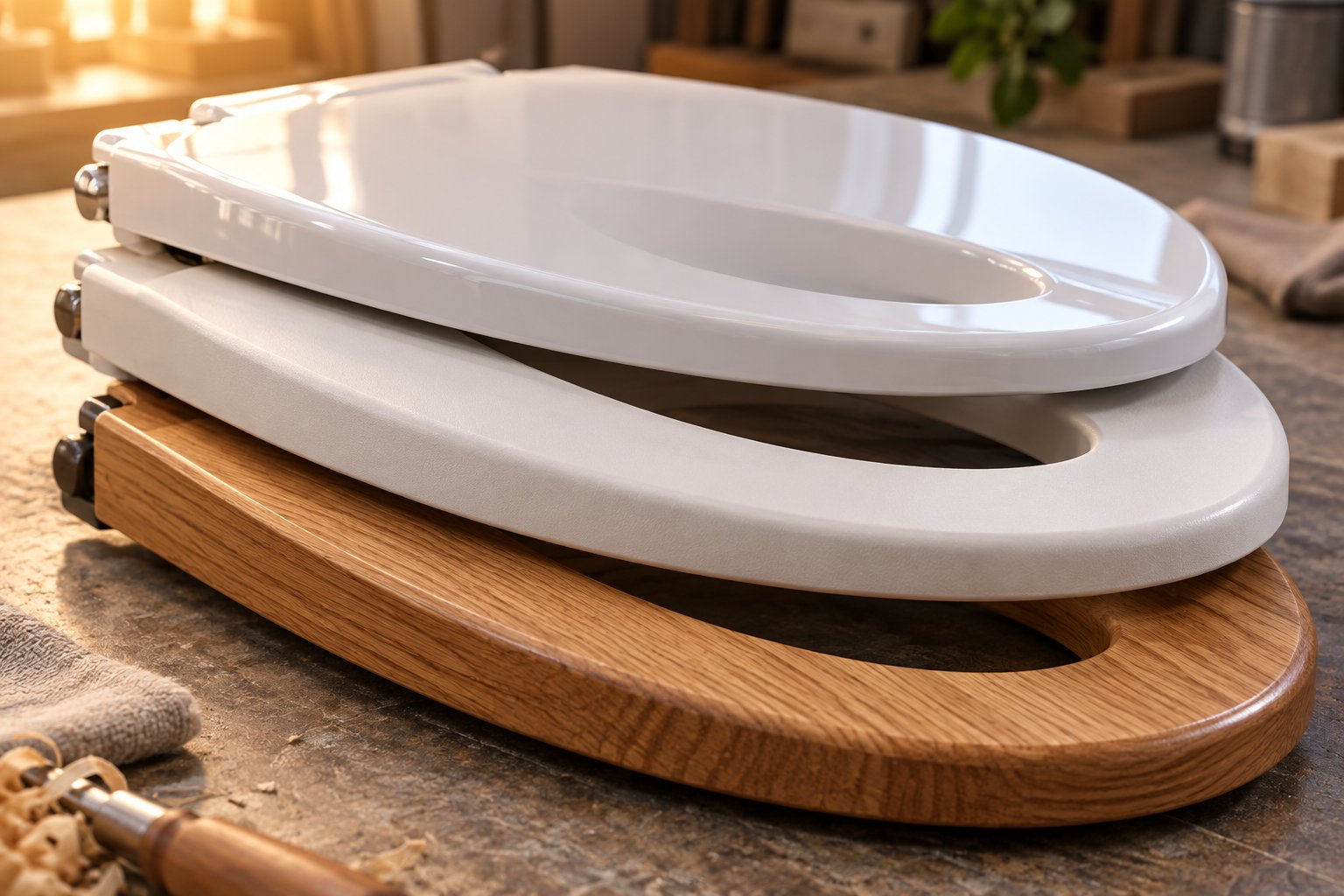
How Seat Material and Hinge Type Affect Elongated Seat Fit
Two elongated seats can share identical length and width numbers on the box yet feel completely different once installed. One sits flush against the bowl rim with barely a whisper of movement. The other rocks slightly, adds noticeable height, and leaves a visible gap between the hinge housing and the porcelain. What accounts for that difference? It's rarely the length or width — it's the material the seat is made from and the hinge mechanism holding it in place.
Most shoppers consult a toilet seat size chart, match their bowl measurements to the listed dimensions, and assume the job is done. That approach gets you 90% of the way there. The remaining 10% — the part that determines whether the seat actually feels right day after day — lives in the physical properties of the seat material and the engineering of its hinge system. These factors don't change whether a seat is classified as elongated, but they absolutely change how that elongated seat performs on your specific bowl.
How Seat Material and Thickness Change the Fit
Pick up a plastic elongated toilet seat in one hand and an elongated molded wood toilet seat in the other. Even before you look at a spec sheet, you'll notice the weight difference, the thickness difference, and the way each one flexes — or refuses to flex — under finger pressure. Those physical properties translate directly into how the seat interacts with your bowl rim, how high it raises the effective seating surface, and how long it holds up under daily use.
Here's a breakdown of the four most common material families you'll encounter:
- Polypropylene (PP): The workhorse of the toilet seat world. PP seats are injection-molded, lightweight, and flexible enough to absorb everyday knocks without cracking. Simple Project's material comparison notes that PP is moisture-resistant, non-toxic, and affordable, though the material can yellow over time and may show wear after two to three years of heavy use. A typical PP elongated seat runs 0.5 to 0.75 inches thick — thin enough that it adds minimal height to the bowl.
- Urea-formaldehyde (UF): Often marketed as "duroplast," UF seats are compression-molded under high heat and pressure. The result is a dense, rigid seat with a glossy, almost ceramic-like surface. Ziax's buyer guide describes UF as typically harder, smoother, and more scratch-resistant than PP, with a premium feel that many homeowners prefer. Because UF is denser, manufacturers can mold it thinner — sometimes as slim as 0.4 inches — while maintaining structural integrity. That slimmer profile means less added height and a closer-to-the-bowl fit.
- Molded wood (MDF/compressed wood): These seats use medium-density fiberboard or similar compressed wood composites coated in a moisture-resistant finish. They're heavier than PP or UF and tend to run thicker — often 0.75 to 1 inch — which adds noticeable height to the seating surface. The finish protects against water penetration, but prolonged exposure to humidity can eventually degrade the coating, especially around hinge holes and the underside edges where moisture collects.
- Solid wood: Less common in standard retail but still available for homeowners seeking a natural aesthetic. Solid wood elongated toilet seat covers are the heaviest and bulkiest option, frequently exceeding 1 inch in thickness. Ziax notes that wood seats require particular attention to moisture protection, edge treatment, and surface coating — factors that directly affect longevity in a humid bathroom environment. The extra mass also places more stress on the hinge system, making hinge quality especially critical for wood seats.
You might also encounter novelty options like a styrofoam toilet seat or vinyl-cushioned models. These prioritize comfort over durability and add significant thickness — sometimes 2 inches or more — which dramatically changes the effective seat height and can interfere with lid closure on some toilets.
The table below puts these material differences side by side:
| Material Type | Typical Thickness Range | Weight (Approximate) | Durability Notes |
|---|---|---|---|
| Polypropylene (PP) | 0.5 – 0.75 inches | 2 – 3 lbs | Flexible, impact-tolerant; may yellow or show surface wear over 2–3 years |
| Urea-Formaldehyde (UF) | 0.4 – 0.65 inches | 3 – 4.5 lbs | Hard, scratch-resistant, glossy; rigid structure may be less tolerant of concentrated impact |
| Molded Wood (MDF) | 0.75 – 1 inch | 4 – 6 lbs | Solid feel; coating integrity critical for moisture resistance; heavier on hinges |
| Solid Wood | 0.75 – 1.25 inches | 5 – 8 lbs | Premium appearance; requires moisture-protective finish; highest hinge stress |
Why do these thickness differences matter beyond aesthetics? Consider a comfort-height toilet with a bowl rim sitting at 16.5 inches. Add a 0.5-inch PP seat and your effective sitting height reaches 17 inches — the lower end of the ADA-compliant range. Swap in a 1-inch molded wood seat and you're at 17.5 inches. Choose a cushioned seat at 2 inches thick and you've jumped to 18.5 inches. The seat material you select quietly shifts your toilet's ergonomics without changing a single bowl dimension.
Edge profile plays a role, too. A UF seat with a sharply defined edge drops cleanly onto the bowl rim and creates a tight visual line. A thicker PP or wood seat with a more rounded edge profile may sit slightly higher off the rim and create a small shadow gap. Neither is wrong — but if you've ever browsed elongated toilets at Home Depot or another retailer and wondered why two similarly priced seats look different once installed, edge profile and material thickness are usually the explanation.
Hinge Types and Their Impact on Effective Dimensions
The hinge is where the seat meets the bowl, and it's the component most people ignore until something goes wrong. A loose hinge lets the seat slide forward or sideways. A bulky hinge housing adds width at the rear of the seat. A corroded hinge freezes in place. Each of these problems traces back to the type of hinge and how it interfaces with the bowl's mounting holes.
Three hinge categories dominate the elongated seat market:
- Top-mount hinges: Bolts insert from above and tighten internally, with no hardware visible from the sides. Cush'n Soft's hinge guide describes these as the sleeker, more modern option — ideal for minimal bathrooms and easier to clean around. The trade-off is that installation requires precise alignment, and the hinge bolt sits on top of the bowl rim, which can shift the seat very slightly upward at the rear attachment point.
- Bottom-mount (standard) hinges: The classic approach. Bolts extend through the mounting holes and are tightened from underneath. These provide straightforward adjustment and a flush fit because the bolt head sits inside or below the mounting hole rather than on top of the rim. Cush'n Soft notes that exposed bolts can trap dirt and look less tidy, but the accessibility makes them easier to retighten if the seat loosens over time.
- Soft-close hinges: Available in both top-mount and bottom-mount configurations, soft-close mechanisms add a hydraulic or friction-based damper that prevents the seat from slamming. The damper housing adds bulk — typically an extra 0.25 to 0.5 inches of width at each hinge point. On a narrow bowl or in a tight installation against a side wall, that extra housing width can matter. Soft-close mechanisms also add weight, which slightly increases the downward force on the mounting bolts and makes secure attachment more important.
A critical compatibility detail: hinge bolt spread must match your bowl's mounting holes. As discussed earlier, most North American toilets use a 5.5-inch standard spread, but older fixtures, European imports, and certain specialty bowls deviate. Standard fittings typically range from 115mm to 165mm (roughly 4.5 to 6.5 inches), so if you're shopping for a home depot elongated toilet replacement seat or any aftermarket option, always verify the bolt spread before assuming the new hinge will line up.
It's also worth noting that top-mount and bottom-mount fittings are not interchangeable. A toilet designed for top-mount bolts won't accept standard bottom-mount hardware, and vice versa. Choosing the wrong type doesn't just create a poor fit — it can make installation physically impossible.
For manufacturers, bathroom brands, and procurement teams developing elongated seat-and-lid assemblies, the interplay between material choice and hinge matching is an engineering decision that directly impacts product performance. PP and UF each require different molding processes, hinge attachment methods, and tolerance specifications. Teams evaluating these options — particularly those needing OEM customization for soft-close hinge integration — can explore resources like Tianyun's PP and UF Toilet Seat Cover Collection, which supports material selection and hinge matching across elongated seat configurations.
The bottom line for any buyer — consumer or professional — is that a toilet seat size chart gives you the outer dimensions, but material thickness and hinge type determine the real-world fit. A slim UF seat with bottom-mount hinges produces a different installed profile than a thick molded wood seat with soft-close top-mount hardware, even when both seats list identical length and width specs. Accounting for these variables is what separates a seat that merely fits from one that feels like it belongs.
Of course, even with perfect material and hinge selection, the seat still has to land on the right bowl. And that's where sizing mistakes — some obvious, some surprisingly subtle — tend to catch people off guard.
Common Elongated Seat Sizing Mistakes and How to Fix Them
You measured carefully, picked a material you liked, confirmed the hinge type — and the seat still doesn't look right once it's bolted down. Maybe it hangs past the front of the bowl. Maybe the back edge lifts when you sit. Maybe everything seemed fine until the lid wouldn't close flat. Sizing errors don't always announce themselves at the point of purchase. They reveal themselves at installation, and by then the receipt is buried and the packaging is in the recycling bin.
The good news? Most elongated seat sizing mistakes follow predictable patterns. Recognizing what went wrong — and understanding why — gets you to the right fix faster than trial-and-error ever will.
What Happens When You Install the Wrong Size
Picture this: you've ordered a black elongated toilet seat, unboxed it, and lined the bolt holes up with the mounting points on the bowl. Everything seems to align at the back. But as your eye travels toward the front, the seat extends a solid two inches past the bowl rim. You've just placed an elongated seat on a round bowl.
The consequences go beyond cosmetics. An elongated seat on a round bowl creates an unstable overhang at the front — the unsupported section acts like a lever arm, so any downward pressure near the front tip causes the rear of the seat to lift off the rim. The bolt holes may technically line up because the standard bolt spread of 5.5 inches is shared across both shapes, which tricks many buyers into thinking the seat "fits." It doesn't. The seat rocks, the hinges absorb stress they weren't designed for, and the gap between the seat underside and the bowl rim at the front becomes a persistent hygiene problem.
Flip the scenario — a round seat on an elongated bowl — and you get the opposite issue. The seat covers the rear portion of the bowl adequately but stops short at the front, leaving two or more inches of exposed porcelain rim. That exposed section collects splashes, is difficult to keep clean, and looks visually unbalanced. Beyond hygiene, the shortened toilet cover seat also shifts the user's center of gravity backward, which can feel unstable, particularly for children or elderly users. Whether you're comparing a toilet seat round vs elongated mismatch in either direction, the result is the same: discomfort, accelerated wear on hinges, and a setup that's harder to keep sanitary.
The Most Common Sizing Mistakes and How to Avoid Them
Are elongated toilet seats universal? Absolutely not — and that assumption is one of the most frequent errors buyers make. Here's a rundown of the mistakes that land people back at the store or filing a return:
- Measuring from the wall instead of the bolt holes. This is the single most common error. The distance from the wall behind the toilet to the front of the bowl includes the tank depth, the gap between the tank and the bowl, and the rough-in offset. None of that tells you anything about seat size. Always measure from the center of the mounting bolt holes to the front tip of the bowl rim — nothing else.
- Confusing bowl shape with seat shape. A bowl labeled "elongated" by the manufacturer might look oval from above, but if it's a compact elongated model measuring 17.25 inches rather than 18.5, a standard elongated seat will overshoot the front. The shape name isn't enough. The measurement is what matters.
- Assuming all elongated toilets use the same seat dimensions. As the earlier dimension tables in this article show, elongated seats span a range — roughly 18 to 18.75 inches in length and 13.75 to 14.5 inches in width. A seat at the upper end of that range won't fit a bowl at the lower end without visible and functional overhang.
- Ignoring bolt spread on older or non-standard toilets. Most modern North American toilets use a 5.5-inch bolt spread, but Brondell's fit guide notes that some models accept bolt spreads ranging from 5.25 to 8 inches. An older or imported toilet with a 6.5-inch spread won't accept a seat designed exclusively for 5.5 inches — the bolt holes simply won't align.
- Forgetting to account for bidet seat thickness. Planning to add an electronic bidet seat? Those units replace your existing seat entirely and add their own thickness — often 1.5 to 3 inches. If you haven't verified that the bidet seat's base dimensions match your elongated bowl, and that the added height doesn't push the total sitting surface outside your comfort range, the upgrade can create more problems than it solves.
- Relying on the old seat's measurements instead of measuring the bowl. Your existing seat may have warped, shifted, or been the wrong size from the start. As MyHomeware's fitting guide emphasizes, you should always measure the pan itself — never the existing seat — because the seat may have moved, warped with age, or been a poor fit in the first place.
Each of these mistakes is avoidable with a tape measure and sixty seconds of attention. The common thread? Assumptions. Buyers assume the shape name tells the whole story, assume all toilet lid sizes within a category are identical, or assume the old seat was correct. Verification beats assumption every time.
Bidet Seat Compatibility and Elongated Sizing
Electronic bidet seats add a layer of complexity that catches even experienced buyers off guard. Unlike a standard toilet cover seat that simply rests on the bowl rim, a bidet seat integrates plumbing connections, heating elements, control panels, and nozzle assemblies — all of which occupy physical space and impose strict dimensional requirements on the bowl underneath.
Here's the critical distinction: when shopping for a bidet seat, you're matching to the bowl, not the old seat. The bidet unit replaces the existing seat entirely, so the old seat's dimensions are irrelevant. What matters is the bowl's bolt-to-front length, its width, its bolt spread, and the clearance between the bolt holes and the tank.
Brondell's compatibility guide specifies that elongated bidet seats require a bowl measurement of 18 to 19.5 inches from the bolt holes to the front of the bowl. Round toilet dimensions — approximately 16 to 17.75 inches — require a separate round bidet model. Most manufacturers produce both versions, but they are not interchangeable. Installing an elongated bidet seat on a round bowl creates the same overhang and instability problems described earlier, with the added complication that the bidet's water connections and electrical components are now misaligned.
Compact elongated bowls present an additional challenge. A bowl measuring 17.25 inches — technically elongated in shape but shorter than the standard 18.5-inch benchmark — may fall outside the compatibility window for many bidet seats. Brondell recommends that if the distance from the tank to the front of the bowl is less than 20.5 inches, buyers should consider a round bidet model to reduce overhang, even if the bowl is technically elongated. That advice applies broadly across bidet brands: when your measurements land in the gray zone between round and standard elongated, the safe move is to size down rather than force a fit.
Tank clearance is the other dimension bidet buyers overlook. Most bidet seats require a minimum of 1.5 to 2 inches of space between the center of the bolt holes and the front face of the tank. If the tank curves outward or has a protruding lid, that clearance shrinks — and the bidet's rear housing may physically contact the tank, preventing the unit from sitting flat on the bowl rim. Measure this gap before ordering, not after.
Whether you're correcting a past mistake or trying to avoid one, the underlying principle is the same: elongated toilet seat sizes are a range, not a single fixed number, and every variable — bowl length, bolt spread, tank clearance, and intended seat type — needs to be confirmed against the specific product you're installing. Knowing the right numbers, though, is only half the equation. The other half is understanding how those numbers interact with the physical space around the toilet — the walls, the fixtures, and the clearances that determine whether an elongated seat works in your actual bathroom.
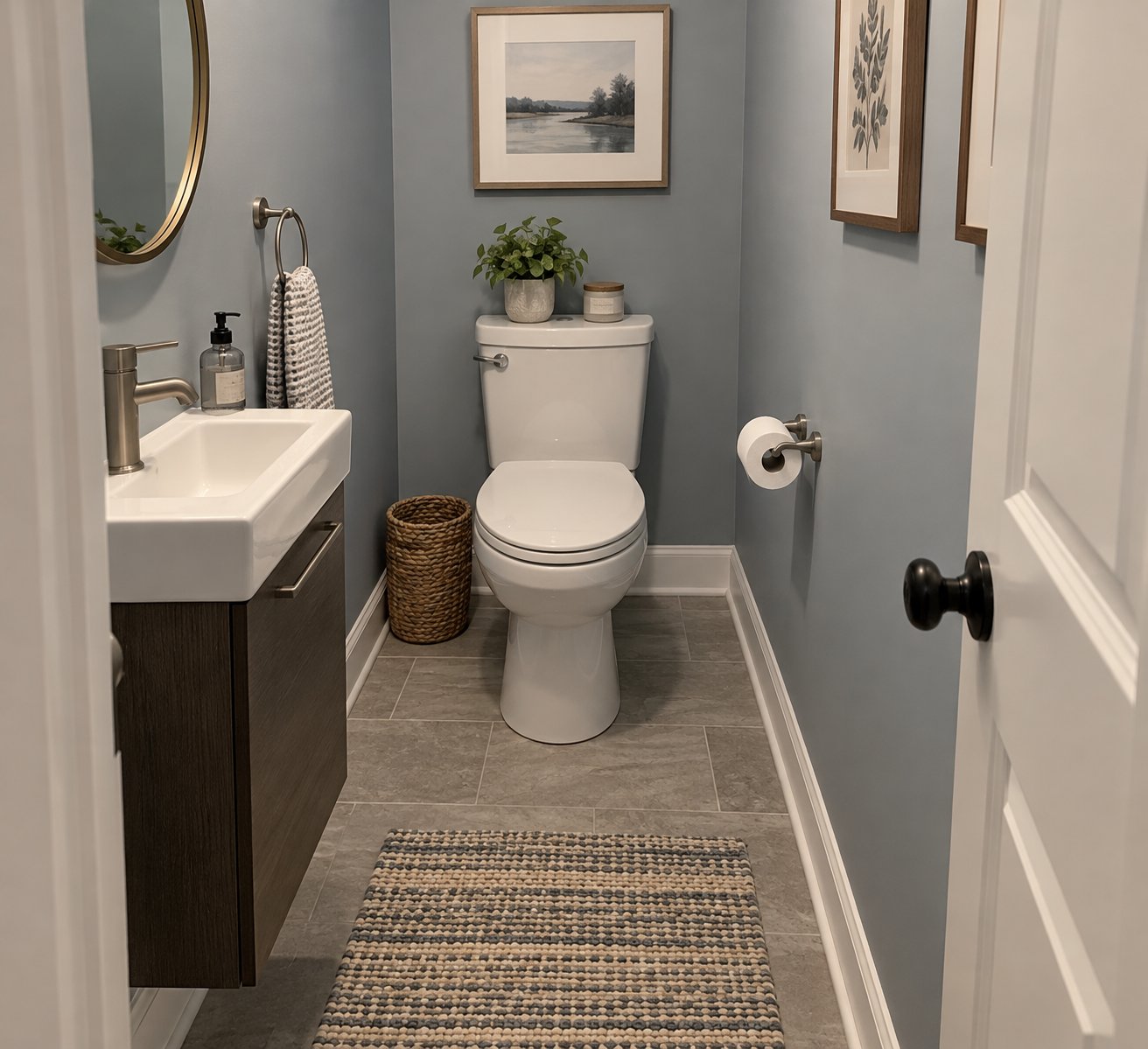
Bathroom Space Planning With Elongated Toilet Seats
A seat that matches your bowl perfectly can still create problems if the bathroom around it doesn't have enough room. That's the reality many homeowners discover mid-renovation — the elongated seat fits the toilet flawlessly, but the toilet itself now crowds the door, pinches the walkway, or violates a code clearance they didn't know existed. Choosing the right seat size is a toilet-level decision. Making sure that seat actually works in the room is a bathroom-level decision, and it requires a different set of measurements entirely.
This is where understanding toilet seat types intersects with spatial design. A round or elongated toilet seat doesn't exist in isolation — it occupies real floor area, and that area needs to satisfy both building codes and basic human comfort. If you're weighing the question of toilet seat how to choose, the bathroom's dimensions deserve equal weight alongside the bowl's dimensions.
Front Clearance Requirements for Elongated Toilets
Building codes set hard minimums for the space in front of a toilet. The 2021 International Building Code (IBC) requires at least 21 inches of clear space from the front edge of the bowl to the nearest wall, fixture, or obstruction in non-accessible restrooms. That measurement starts at the very front tip of the bowl — which, on an elongated toilet, sits roughly two inches further into the room than it would on a round model.
Two inches sounds trivial until you do the math in a tight half-bath. Imagine a powder room with 48 inches of total depth from the back wall to the opposite wall. A standard 12-inch rough-in toilet with a round bowl projects roughly 26 to 27 inches from the finished wall. That leaves about 21 to 22 inches of front clearance — just barely meeting the code minimum. Swap in an elongated bowl with its extra two inches of projection, and you're down to 19 to 20 inches. You've just dipped below the required clearance without changing anything except the bowl shape.
ADA-compliant installations raise the bar significantly. ADA standards call for a 60-inch-diameter turning space inside the bathroom and clear floor space that accommodates a wheelchair approach to the toilet. The practical result is that ADA-compliant toilet rooms commonly measure around 5 feet by 7 feet of finished interior space, and the elongated bowl — while preferred for its larger seating area — must not encroach on wheelchair maneuvering zones. An extra large toilet seat on a comfort-height elongated bowl delivers excellent accessibility at the fixture itself, but only if the surrounding room provides the clearance to reach it.
Planning Your Bathroom Layout Around Elongated Seat Dimensions
Front clearance is the most commonly cited constraint, but it's not the only one. A full space-planning assessment for an elongated toilet involves several measurements working together — and overlooking any single one can turn an otherwise comfortable bathroom into a frustrating squeeze. Here are the practical considerations to check before committing to an elongated seat:
- Minimum room depth for an elongated toilet. Add the rough-in distance (typically 12 inches) to the total bowl projection (approximately 28 to 30 inches from the finished wall for a floor-mounted elongated toilet, per ASI's commercial restroom dimension guide) and then add the 21-inch minimum front clearance. You're looking at roughly 49 to 51 inches of depth as a bare minimum — and 54 inches or more for genuine comfort.
- Side clearance from the toilet centerline to adjacent walls or fixtures. Code requires a minimum of 15 inches from the toilet centerline to any side wall. Preferred spacing is 18 inches, which gives you enough elbow room and makes cleaning around the base significantly easier. An elongated seat doesn't change this side-to-side measurement, but if you're choosing an oversized or heavy-duty model that extends wider than the standard 14 inches, verify that the extra overhang doesn't brush against a vanity cabinet or towel bar mounted on the adjacent wall.
- Door swing direction and clearance. In small half-baths, the bathroom door often swings inward — directly toward the front of the toilet. A round or elongated toilet seat choice can determine whether the door opens freely or clips the bowl. If your current round toilet gives the door just an inch or two of clearance when fully open, switching to an elongated bowl could eliminate that gap entirely. Solutions include reversing the door swing, switching to a pocket door, or choosing a compact elongated model that splits the difference.
- Proximity to facing fixtures. In full bathrooms, the toilet often faces a bathtub, shower enclosure, or vanity. The 21-inch minimum front clearance applies to these fixtures just as it applies to walls. An elongated toilet projecting further into the room can reduce the usable walkway between the toilet and the tub to an uncomfortably narrow corridor — a problem that's easy to overlook on paper but immediately obvious in person.
- Toilet paper holder and grab bar placement. ADA guidelines specify that the toilet paper dispenser should sit 7 to 9 inches from the front of the toilet, and grab bars must mount at 33 to 36 inches above the floor on the side wall. An elongated bowl shifts the "front of the toilet" reference point forward, which can affect dispenser positioning relative to the user's reach. In tight layouts, this cascading effect means one fixture change ripples into accessory placement.
The simplest way to stress-test your layout? Grab a tape measure and mark the toilet's projected footprint on the floor before you buy. Measure from the wall to where the front of the elongated bowl would sit — using the rough-in distance plus the bowl's published projection depth — and then check whether you still have 21 inches of clear air between that mark and the nearest obstacle. Walk through the space. Open the door. Simulate sitting down and standing up. If anything feels tight, it probably is.
For bathrooms where the numbers fall short, a compact elongated seat often delivers the best compromise. You retain the oval comfort profile while pulling the front projection back by roughly an inch to an inch and a half compared to a standard elongated model. That small retreat can be enough to clear a door swing, satisfy a code inspector, or simply make the room feel less cramped.
Space planning brings every earlier measurement — bolt-to-front length, rough-in distance, seat thickness, hinge housing width — into a single, room-level picture. Getting any of those numbers wrong affects more than just the seat's fit on the bowl; it affects whether the bathroom itself functions comfortably. With both the seat dimensions and the room dimensions confirmed, the final step is pulling everything together into a clear decision framework — one that works whether you're replacing a worn-out seat or specifying fixtures for a brand-new build.
How to Choose the Right Elongated Toilet Seat Size
Every measurement, material comparison, and clearance check covered in this article boils down to one moment: standing in front of a shelf — or a product listing — and choosing a seat with confidence. Whether you're browsing toilet seats at Home Depot, sourcing from a specialty distributor, or specifying standard toilet seat dimensions for a commercial project, a simple checklist keeps the process focused and mistake-free.
Your Elongated Seat Selection Checklist
Think of this as your pre-purchase flight check. Run through each step before adding anything to a cart:
- Measure bolt-to-front length and confirm elongated shape. Place a tape measure at the center of the mounting bolt holes and extend it to the front tip of the bowl rim. A reading between 18 and 18.75 inches confirms you need toilet seats elongated in profile — not round, and not compact elongated.
- Measure width and bolt spread. Record the bowl's widest point (typically 14 to 14.5 inches) and the center-to-center distance between the two bolt holes (standard is 5.5 inches). If either number falls outside the standard range, flag it before shopping.
- Determine if standard or compact elongated. A bolt-to-front measurement between 17 and 17.75 inches points to a compact elongated bowl. Standard elongated seats will overshoot these bowls — you'll need a manufacturer-specific or compact-specific seat.
- Consider specialty needs. Does the installation require a heavy-duty seat for higher weight capacity? An open front toilet seat for a commercial restroom? ADA-compliant height? A built-in child ring for a family bathroom? Each of these requirements narrows the product field but doesn't change the fundamental measurement process.
- Select material and hinge type based on durability and fit requirements. A slim UF seat adds minimal height; a thick molded wood seat raises the seating surface noticeably. Top-mount hinges offer a cleaner look; bottom-mount hinges simplify retightening. Soft-close mechanisms add bulk at the hinge housing. Match these choices to your priorities — and to the physical space around the bowl.
- Verify bathroom clearance. Confirm at least 21 inches of clear space from the front edge of the bowl to the nearest wall or fixture. Check side clearance (15 inches minimum from the toilet centerline to a side wall) and ensure the door swing clears the bowl's projection.
Matching Seat Size to Your Replacement or New-Build Needs
Your path through that checklist differs depending on whether you're swapping an old seat or outfitting a new toilet from scratch.
Replacing an existing seat? Measure both the old seat and the bowl independently. The old seat may have been the wrong size from day one — or it may have warped over years of use. Compare your bowl measurements against the elongated toilet seat dimensions printed on the replacement seat's packaging. Look for a slight overhang (roughly a quarter to half an inch) in both length and width; that's the designed fit, not a mismatch. If your bolt spread differs from 5.5 inches, search for adjustable-hinge models or manufacturer-specific options. A standard white elongated toilet seat from a major brand — or even a Bemis open front elongated plastic toilet seat for a commercial setting — will fit the vast majority of bowls that fall within the standard ranges.
Selecting a seat for a new toilet installation? Start with the toilet manufacturer's published specifications. Those specs list the bowl's exact bolt-to-front length, width, and bolt spread, plus the recommended seat models. Cross-reference those figures with the rough-in distance (10, 12, or 14 inches) and your bathroom's available depth to confirm that the elongated profile won't crowd the space. If the room is tight, a compact elongated model paired with its matched seat may be the smarter play.
The table below provides a quick-reference summary across the four main elongated seat categories:
| Elongated Seat Type | Typical Length Range | Typical Width Range | Primary Use Case |
|---|---|---|---|
| Standard | 18 – 18.75 inches | 14 – 14.5 inches | Most residential bathrooms; general-purpose replacement |
| Compact | 17 – 17.75 inches | 14 – 14.25 inches | Small bathrooms, urban apartments, tight half-baths |
| Heavy-Duty | 18 – 18.75 inches | 14.5 – 15.5 inches | Bariatric support, high-traffic commercial installations |
| Open-Front | 18 – 18.75 inches | 14 – 14.5 inches | Commercial restrooms, code-mandated public facilities |
Notice the consistency: every category shares the same bolt-to-front length range. Width and construction details are what differentiate them. That's why measuring the bowl first — and matching to the correct category second — is always the right sequence.
For professionals in the sanitary ware industry — manufacturers, bathroom brands, and procurement teams sourcing elongated seat covers in PP or UF materials with OEM customization — the decision framework extends beyond individual seat selection into material engineering and hinge integration across product lines. Teams developing custom seat-and-lid assemblies for standard or specialty elongated bowls can explore Tianyun's PP and UF Toilet Seat Cover Collection as one pathway for evaluating material options and soft-close hinge matching at the manufacturing level.
Whether you're a homeowner replacing a single home depot elongated toilet seat or a product engineer specifying dimensions for a production run, the underlying process is identical: measure the bowl, confirm the shape, account for material and hinge variables, and verify the space. Skip any one of those steps and you risk joining the ranks of buyers who've stared at a seat that almost fits — close enough to be frustrating, far enough off to be unusable. A tape measure and five minutes of attention are all that stand between a perfect fit and a return trip to the store.
Frequently Asked Questions About Elongated Toilet Seat Sizes
1. What is the standard size of an elongated toilet seat?
A standard elongated toilet seat measures approximately 18 to 18.75 inches from the center of the mounting bolt holes to the front tip. Width typically falls between 13.75 and 14.5 inches, and the bolt spread is standardized at 5.5 inches for most North American toilets. These outer dimensions are designed to overhang the bowl rim by roughly a quarter to half an inch on each side, so a seat listed at 18.5 inches long pairs with a bowl measuring around 18 to 18.25 inches. Always measure your actual bowl rather than relying on model names, since manufacturers vary slightly within this range.
2. How do I know if my toilet needs a round or elongated seat?
The quickest way to determine your toilet's shape is to measure from the center point between the two rear mounting bolt holes straight forward to the front tip of the bowl rim. If that distance is approximately 16.5 inches, you have a round bowl. If it falls between 18 and 18.75 inches, you need an elongated seat. A reading around 17 to 17.75 inches indicates a compact elongated bowl, which requires a specifically sized seat rather than a standard elongated or round model. Width measurements and bolt spread should also be confirmed, since older or imported toilets occasionally deviate from standard dimensions.
3. Are all elongated toilet seats the same size?
No. While elongated seats share a common oval shape and cluster around similar measurements, they are not universally interchangeable. Standard elongated seats range from 18 to 18.75 inches in length and 13.75 to 14.5 inches in width. Compact elongated models run shorter at 17 to 17.75 inches. Heavy-duty and bariatric versions can be wider — up to 15.5 inches — with reinforced construction. Open-front commercial seats match standard outer dimensions but feature a U-shaped cutout at the front. Material thickness and hinge type also affect the installed fit, so verifying your bowl's specific measurements against a seat's published specs is essential before purchasing.
4. Will an elongated toilet seat fit a round toilet bowl?
No, and attempting this is one of the most common sizing mistakes. Although both round and elongated seats often share the same 5.5-inch bolt spread — meaning the bolt holes may technically align — an elongated seat will extend roughly two inches past the front rim of a round bowl. This creates an unstable overhang that rocks under pressure, stresses the hinges, and leaves a hygiene gap between the seat underside and the bowl rim. Conversely, placing a round seat on an elongated bowl leaves the front portion of the porcelain rim exposed. Always match the seat shape to the bowl shape confirmed by your bolt-to-front measurement.
5. What materials are elongated toilet seats made from and does material affect fit?
The four most common materials are polypropylene (PP), urea-formaldehyde (UF or duroplast), molded wood (MDF composite), and solid wood. Each has a different thickness profile that affects the installed seat height. PP seats run 0.5 to 0.75 inches thick and are lightweight and flexible. UF seats can be as slim as 0.4 inches while offering a hard, scratch-resistant surface. Molded wood seats measure 0.75 to 1 inch thick, and solid wood can exceed 1 inch. On a comfort-height toilet, even a half-inch difference in seat thickness noticeably changes the effective sitting height. For manufacturers and brands evaluating PP and UF options with soft-close hinge matching, resources like Tianyun's PP and UF Toilet Seat Cover Collection at https://www.tianyuntech.com/pp-uf-cover support OEM material selection and customization.
Apply This Insight to Your Project
Tell us what you are building and how the topic “Bought the Wrong Seat? Elongated Toilet Seat Sizes Explained” relates to your application. Our engineering team can help evaluate the next step.