What Is a Wood Toilet Seat and Why It Still Matters
A wood toilet seat is any toilet seat constructed primarily from wood-based materials, including natural hardwoods like oak and walnut, compressed wood-fiber composites similar to MDF, and molded wood seats finished with protective enamel coatings. That single label covers a surprisingly wide range of products — and most buyers have no idea they are shopping across three very different material categories.
Here is where the confusion starts. Walk into a home improvement store or scroll through an online listing, and you will see "wood" stamped on seats that look and feel nothing alike. One is a glossy white seat made from compressed wood fibers and resin. Another is a richly grained slab of solid oak with a hand-rubbed finish. Both carry the same generic label, yet their durability, maintenance needs, and price points are worlds apart. Even wooden lavatory seats marketed internationally under regional names like "wooden loo seat" fall into these same three buckets.
What Exactly Is a Wood Toilet Seat
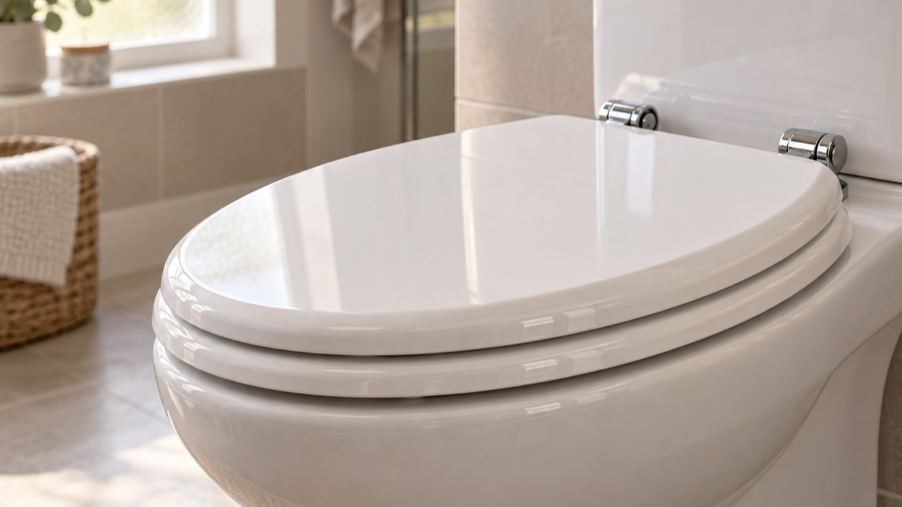
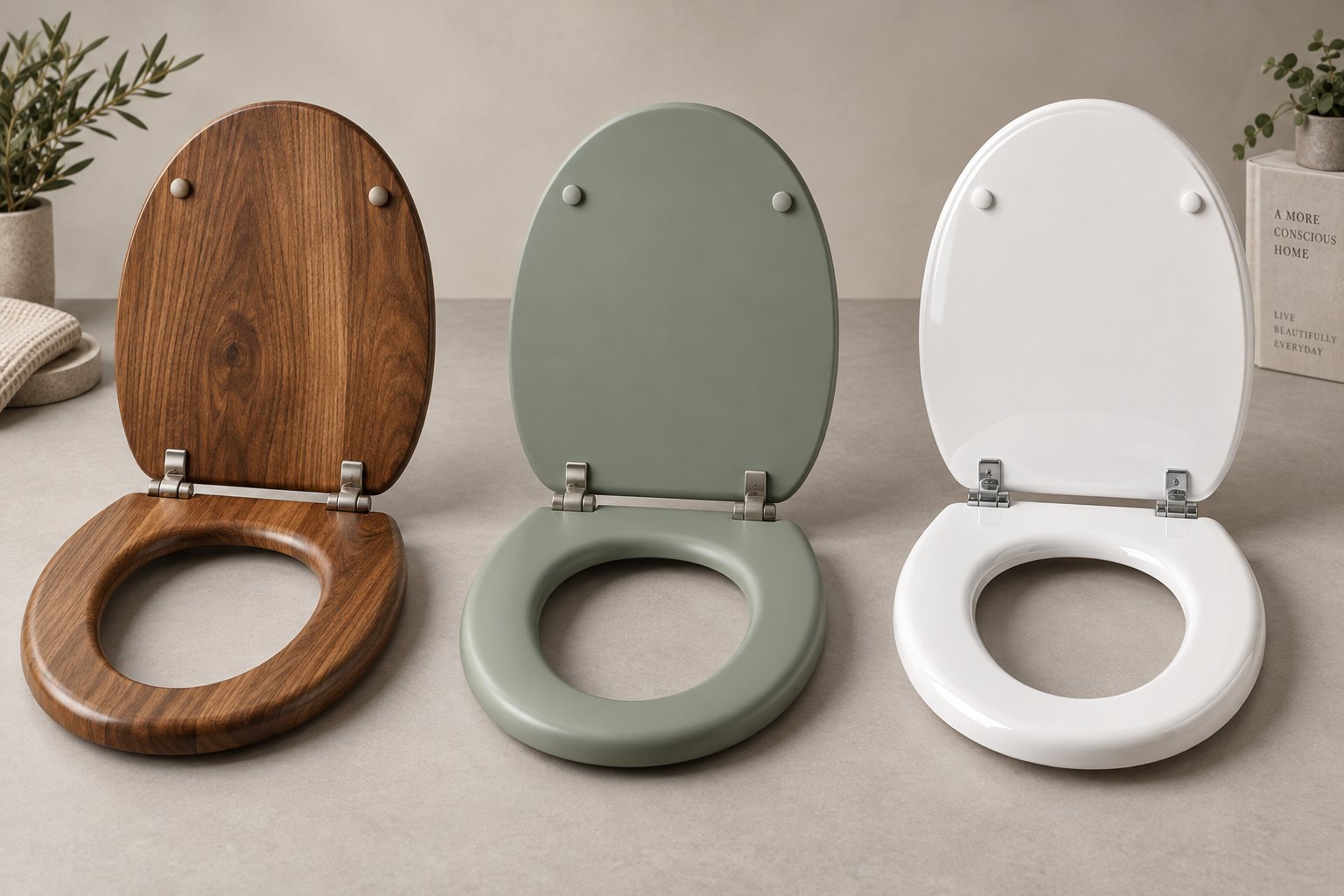
At its broadest, the category includes three distinct types. Solid hardwood seats are milled from natural lumber — think oak, bamboo, or mahogany — and sealed with moisture-resistant finishes. Molded wood composite seats are manufactured by compressing wood fibers with resin under high pressure and temperature, producing a dense, uniform structure that is then painted or lacquered. Enameled wood seats add multiple layers of glossy, waterproof enamel over that molded base, creating the smooth white finish most people picture when they imagine a classic wooden toilet seat.
Wood was, in fact, the original material used for toilet seats long before injection-molded plastics took over in the mid-20th century. For decades, plastic dominated on price and convenience. Yet the pendulum is swinging back — and for good reasons.
Why Wood Seats Are Making a Comeback
Imagine sitting down on a freezing plastic seat in January. You already know that jolt. A wooden seat feels noticeably warmer to the touch because wood conducts heat far more slowly than plastic or resin. That simple thermal comfort is one of the top reasons homeowners are rediscovering these seats.
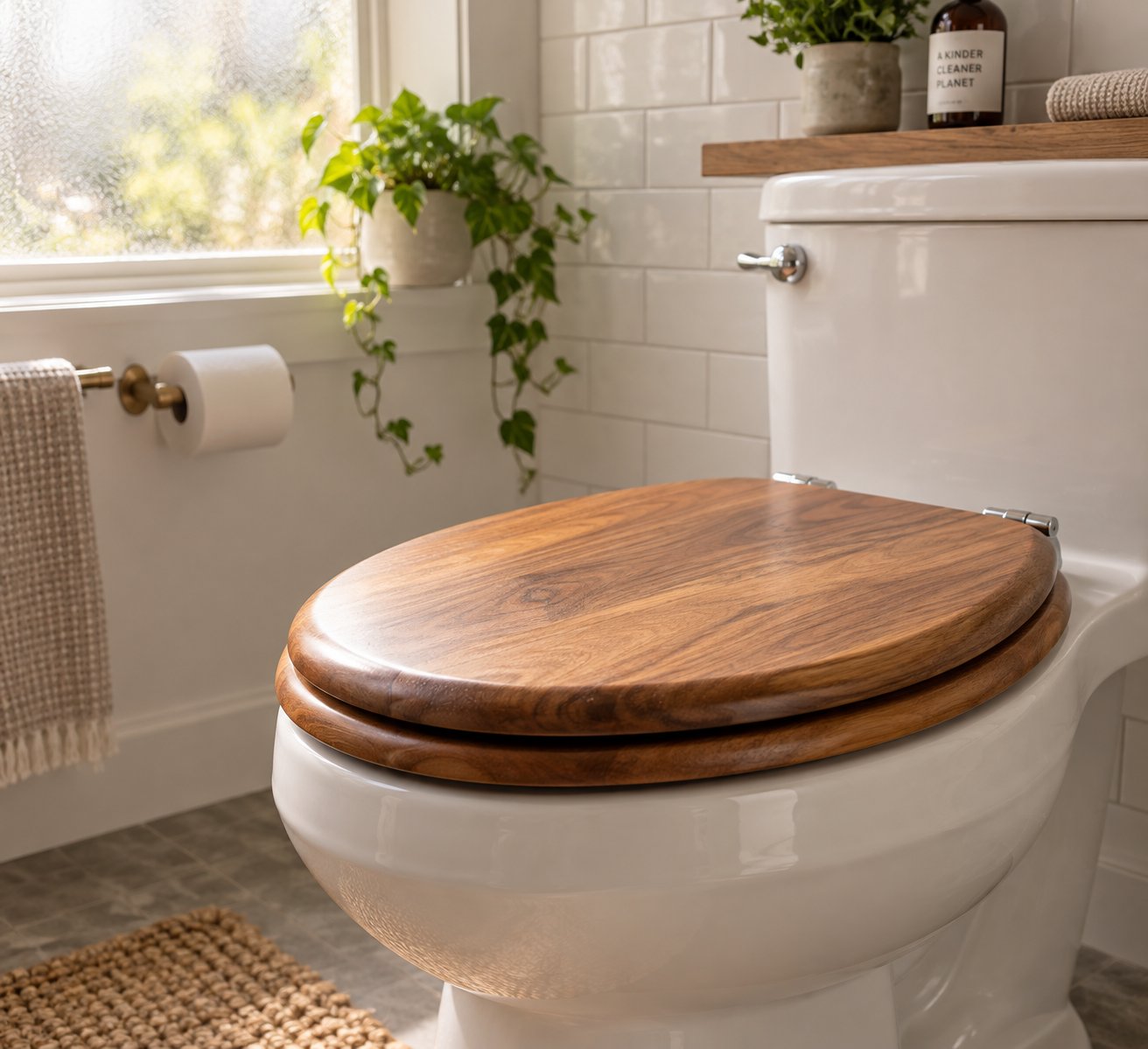
Beyond temperature, there is the aesthetic factor. Natural grain patterns, rich stain options, and a substantial heft give wood seats a premium feel that lightweight plastic simply cannot replicate. Designers are increasingly pairing them with modern fixtures to add organic warmth to minimalist bathrooms. You will also find that wood toilet seats elongated in shape have become especially popular in newer homes, where elongated bowls are now the standard.
A wood toilet seat is more than a style choice — it offers genuine thermal comfort, a solid feel that resists shifting, and design versatility that ranges from rustic farmhouse to sleek contemporary.
Still, choosing the right one means understanding what you are actually buying. The difference between a solid hardwood seat and a molded composite affects everything from how you clean it to how long it lasts — and that is exactly what this guide is built to clarify.
Solid Wood vs Molded Wood vs Enameled Wood Explained
The difference between a wooden toilet seat that lasts a decade and one that warps within a year almost always comes down to material type — not brand, not price tag. Yet most product listings lump every option under one vague label. Let's break down each of the three categories so you know exactly what you are paying for.
Solid Wood Toilet Seats
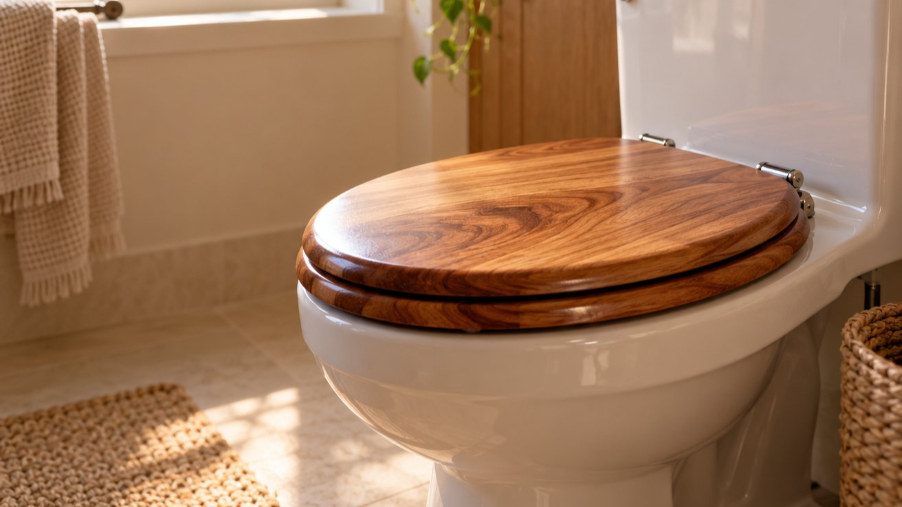
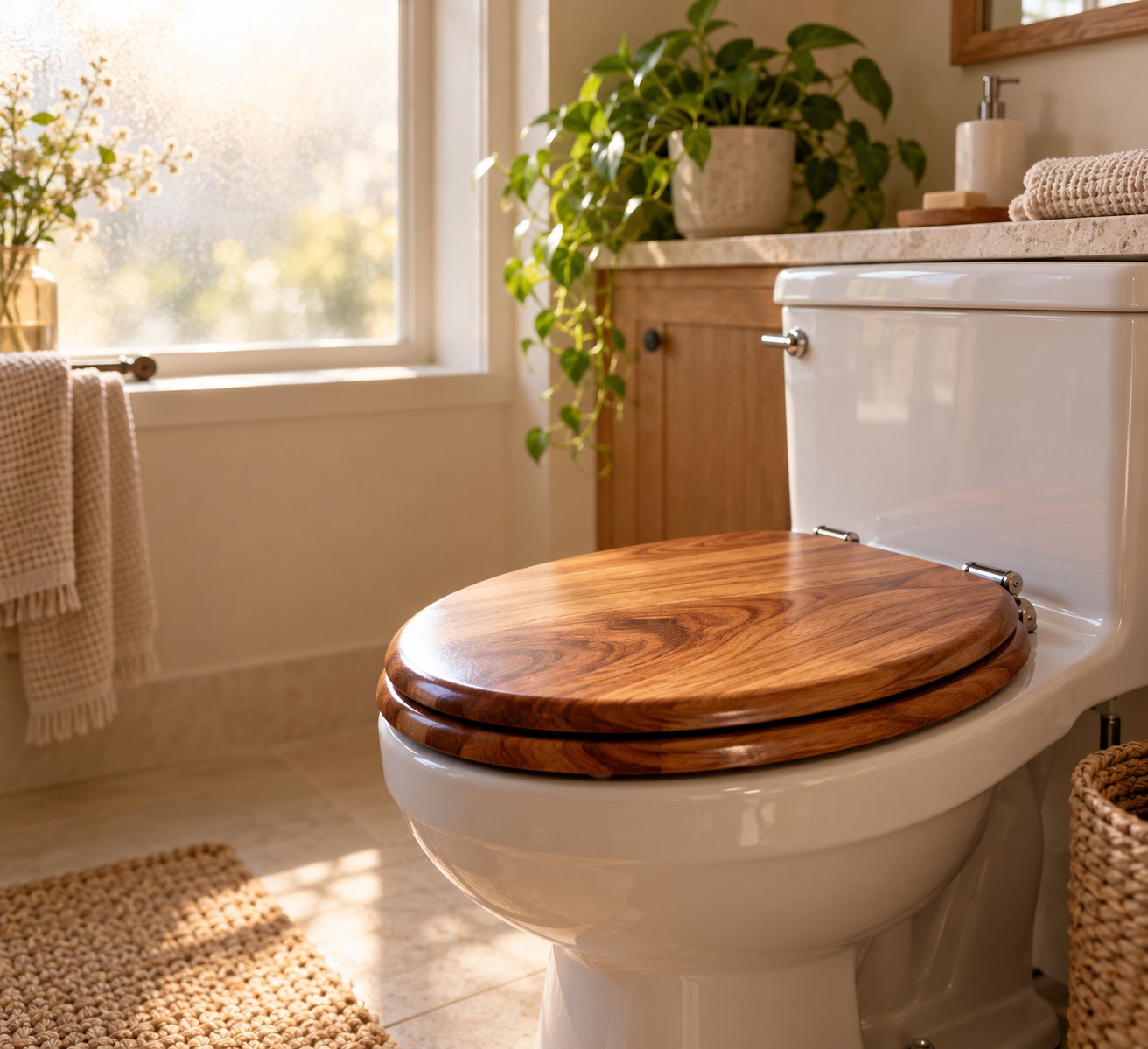
A solid wood seat is milled directly from natural lumber. Oak, walnut, mahogany, and bamboo are the most common species you will encounter. Pick one up and the first thing you notice is weight — these seats feel substantial, sometimes two to three times heavier than a standard plastic alternative. The second thing you notice is the grain. Every seat has a unique pattern, which is a large part of the appeal for homeowners who want their bathroom to feel handcrafted rather than mass-produced.
There is a trade-off, though. Natural wood is inherently porous. Without multiple coats of a protective finish — typically polyurethane, marine-grade varnish, or tung oil — moisture will eventually penetrate the surface. In a bathroom environment where humidity, splashes, and condensation are constant, an unprotected or poorly sealed solid wood seat is a recipe for swelling, cracking, and mildew. That means higher upfront cost and a genuine commitment to periodic maintenance. For buyers who prioritize visual richness and are willing to care for the material, solid wood delivers an experience no other seat type can match.
Molded Wood Toilet Seats
Here is where most of the confusion lives. When you see the words "molded wood" on a product listing, you might picture a block of timber pressed into a seat shape. The reality is different — and worth understanding.
Molded wood seats are made from wood fibers — essentially sawdust and fine wood particles — blended with binding resins and then compressed under high heat and pressure. The process is similar to how MDF (medium-density fiberboard) is manufactured. The result is a dense, uniform panel with no visible grain, no knots, and no natural variation. Manufacturers then shape this composite into a seat form and apply a multi-layer lacquer or enamel coating to seal every surface.
Why does this matter to you? Because molded wood is actually the most common type of wooden toilet seat on the market, yet almost no retailer explains what it is. When a listing says "wood seat" and the price seems surprisingly affordable, you are almost certainly looking at molded wood composite rather than solid lumber. That is not a bad thing. These seats offer a remarkably consistent shape, a smooth paintable surface, and a heft that feels far more substantial than plastic. They also cost significantly less than solid hardwood, making them the practical sweet spot for most households. In fact, across the broader category of wood toilets, molded wood composites dominate sales volume precisely because they balance durability, aesthetics, and price so effectively.
Enameled Wood Seats
Think of enameled wood as the finished version of a molded wood seat — and the finish itself is what makes the difference. Enameling involves applying multiple coats of a baked-on, high-gloss paint or enamel to the compressed wood-fiber base. Each layer is cured to create a hard, smooth shell that resists moisture penetration, stains, and surface wear.
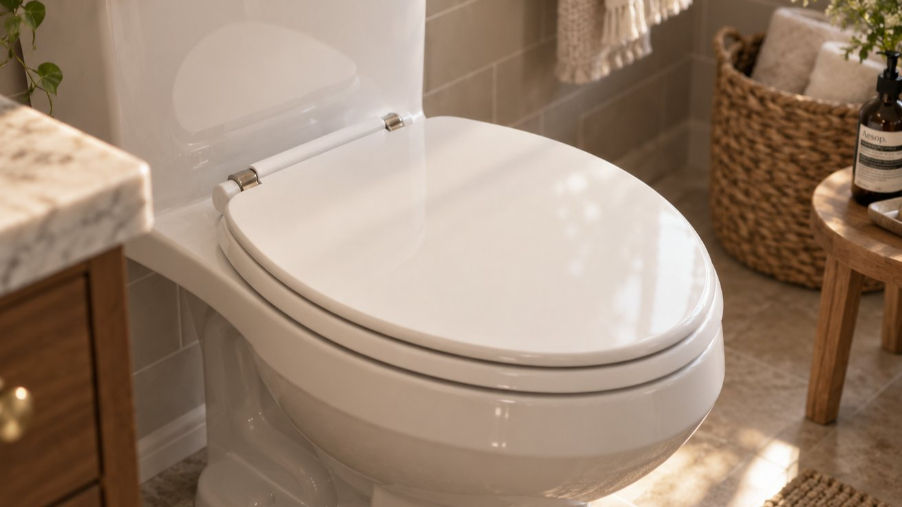
The glossy surface you see on most white wooden toilet seats in stores? That is enamel. It is what gives the seat its superior strength and substantial feel, with a high-gloss finish that stays easy to clean over time. As long as the enamel coating remains intact — no chips, no cracks, no scratches exposing the wood-fiber core — the seat repels water effectively and resists the staining that plagues unfinished wood. Enameled seats also accept color readily, which is why you will find them in everything from classic white to matte black and decorator shades.
A critical point that separates good enameled wooden wc seats from cheap ones is coating coverage. Quality manufacturers enamel every surface, including the underside and the interior edges around hinge holes. Budget models sometimes leave the bottom partially uncoated, which lets moisture wick into the compressed wood fiber from below — exactly where you cannot see the damage until it is too late.
| Attribute | Solid Wood | Molded Wood | Enameled Wood |
|---|---|---|---|
| Material Composition | Natural lumber (oak, walnut, bamboo, mahogany) | Compressed wood fibers and resin (MDF-like) | Molded wood base with multi-layer baked enamel |
| Moisture Resistance | Moderate — depends on quality of sealant finish | Low to moderate — relies on surface coating integrity | High — enamel shell acts as a sealed barrier |
| Weight | Heaviest — solid lumber is dense | Medium — lighter than solid wood, heavier than plastic | Medium — same base as molded wood plus enamel layers |
| Price Range | $$$ — highest due to material and craftsmanship | $$ — mid-range, most cost-effective wood option | $$ — slightly above molded wood due to finish process |
| Finish Options | Natural grain, clear-coat, stained, or oiled | Painted or lacquered in limited colors | High-gloss enamel in wide color range including white, black, and custom shades |
One pattern emerges clearly from this comparison. The further you move from raw solid wood toward enameled composite, the more moisture protection you gain — but the less natural grain character you retain. Your ideal choice depends on whether you prioritize the organic beauty of real lumber or the practical resilience of an engineered, sealed surface. Many buyers who install wooden toilet seats in guest bathrooms or rental properties lean toward enameled models for low-maintenance durability, while those designing a primary bath around natural materials gravitate toward solid hardwood.
Material type also influences something buyers rarely think about until it becomes a problem: how the seat fits the bowl. A molded composite can be shaped with tighter dimensional tolerances than a slab of natural wood, which means sizing consistency tends to be better — and sizing, as it turns out, is exactly where the next major purchasing mistake happens.
Round or Elongated
Picking the perfect material means nothing if the seat does not physically fit your bowl. And yet, ordering the wrong shape is the single most common mistake buyers make — often because they assume all toilets are the same size or because they confuse informal terms like "oval" and "oblong" with actual product categories. A wooden toilet seat comes in two standard shapes, and a quick measurement is all it takes to avoid a frustrating return.
How to Measure Your Toilet Bowl Shape
You only need a tape measure and about sixty seconds. Here is the process:
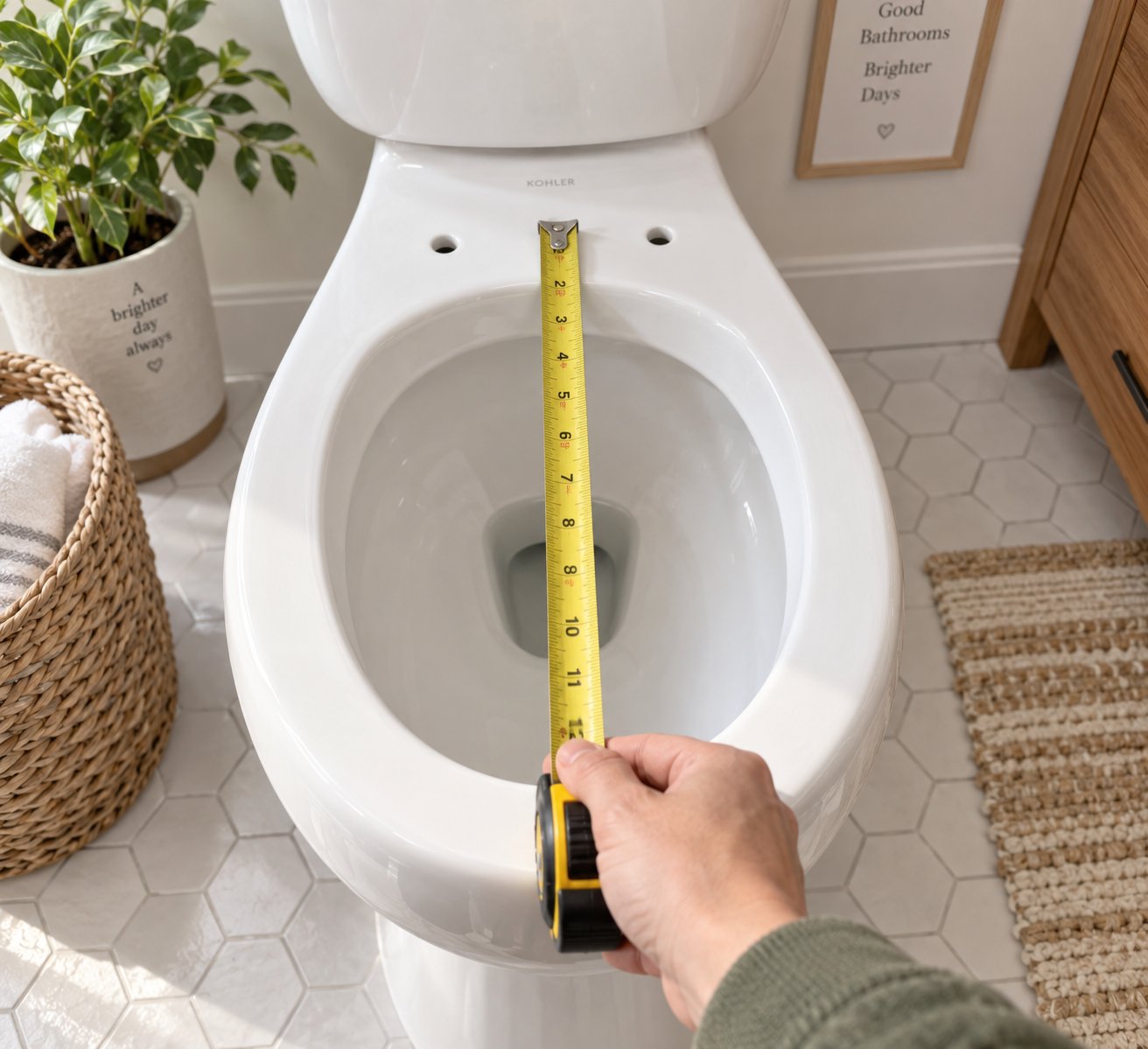
Find the two mounting bolt holes at the back of your toilet bowl — they are the holes where the seat attaches to the porcelain. Place the end of your tape measure at the center point between those two bolt holes. Now extend the tape in a straight line forward to the very front edge of the bowl rim. That single number tells you which shape you have.
- Approximately 16.5 inches (42 cm): You have a round bowl.
- Approximately 18.5 inches (47 cm): You have an elongated bowl.
While you have the tape measure out, check one more dimension: the bolt spread, which is the distance between the centers of those two mounting holes. In standard North American toilets, this measurement is 5.5 inches (14 cm) center-to-center. That spacing is essentially universal across round and elongated seats alike, so most wood seats will line up with your existing bolt holes without any adapter or modification. If your bolt spread differs significantly — which sometimes happens with imported or vintage fixtures — you may need a specialty mounting kit.
One tip that saves headaches: measure in a straight line along the bowl's central axis. Angling the tape even slightly can shave off half an inch and trick you into buying a round seat for an elongated bowl.
Round Wood Seats vs Elongated Wood Seats
The two-inch difference in bowl length between round and elongated shapes may sound minor, but it changes the entire seating experience and determines which seat fits your bathroom layout.
Round bowls are the compact option. You will find them in older homes, small powder rooms, and apartments where every inch of floor space matters. A round wooden seat typically projects less from the wall, leaving more clearance between the toilet and a vanity or opposite wall. If your bathroom feels tight, a round shape keeps the footprint manageable.
Elongated bowls, on the other hand, offer a larger seating surface that most adults find noticeably more comfortable. They are the dominant shape in modern construction — over 70% of new homes in North America install elongated toilets. If you are shopping for a wooden toilet in a house built within the last two decades, chances are high that you need the elongated size. You might also see these referred to as "oval" or "oblong" in casual descriptions, but those are informal terms — the industry-standard label is elongated.
For buyers shopping for an elongated wood toilet seat specifically, availability is excellent. Both molded wood and enameled wood options are widely manufactured in the elongated shape. Solid hardwood seats in elongated dimensions can be slightly harder to source but are readily available from specialty woodworking suppliers and premium bath retailers.
| Attribute | Round | Elongated |
|---|---|---|
| Bowl Length (bolt holes to front rim) | ~16.5 inches (42 cm) | ~18.5 inches (47 cm) |
| Standard Width | 14–14.5 inches (35.5–37 cm) | 14–14.5 inches (35.5–37 cm) |
| Bolt Spread | 5.5 inches (14 cm) | 5.5 inches (14 cm) |
| Best Use Case | Small bathrooms, powder rooms, older homes | Master baths, modern construction, comfort-focused upgrades |
| Comfort Level | Adequate — compact seating area | Superior — more surface area and ergonomic support |
| Availability in Wood Seats | Widely available in molded and enameled wood | Widely available across all wood seat types |
Notice that width and bolt spread are identical for both shapes. The only real variable is length — which is precisely why that one tape-measure reading from bolt holes to bowl front is the make-or-break measurement. Get it right, and installation is seamless. Get it wrong, and you end up with a wooden seat toilet that either overhangs the rim awkwardly or leaves the front of the bowl exposed.
With the correct shape confirmed and your material type chosen, the next logical question becomes whether that wood seat actually outperforms a plastic one in day-to-day use — and where its real weaknesses show up.
Wood vs Plastic Toilet Seats
You have measured your bowl, you know the difference between solid hardwood and molded composite, and you are ready to buy. But a nagging question remains: is a wood toilet seat actually better than plastic, or is it just prettier? The honest answer is that neither material wins across every category. Each has genuine strengths and real shortcomings — and the best choice depends entirely on what you prioritize in daily use.
Rather than telling you what to buy, here is a transparent breakdown so you can decide for yourself.
Advantages of Choosing Wood Over Plastic
Wood seats have held their ground for over a century, and the reasons go deeper than nostalgia. Here is what a wooden commode seat genuinely does better than its plastic counterpart:
- Warmer surface temperature: Wood is a poor conductor of heat — and in this case, that is a very good thing. When you sit down on a cold winter morning, a wood seat feels noticeably warmer against your skin because it does not pull body heat away the way plastic does. Plastic acts as a conductor, leaving your skin feeling cold on contact, while wood acts as an insulator that retains warmth almost immediately.
- Heavier feel that resists shifting: A molded or solid wood seat typically weighs two to three times more than a comparable plastic model. That added mass keeps it firmly planted on the bowl. You will not get that annoying lateral slide that happens with lightweight plastic seats, especially on porcelain rims that are slightly uneven.
- Richer aesthetic range: From a natural oak toilet seat with visible grain to a high-gloss enameled white finish, wood offers a design palette that plastic struggles to match. Stained, painted, distressed, or clear-coated — the finish possibilities let you coordinate with virtually any bathroom style. Round decorative toilet seats in particular benefit from this versatility, turning a functional fixture into a genuine design accent in powder rooms and guest baths.
- Natural material appeal: For eco-conscious buyers who prefer renewable materials over petroleum-based plastics, a wood seat aligns with a broader commitment to natural products. Bamboo options take this even further since the plant regenerates rapidly after harvest.
- Stain resistance against urine discoloration: Ironically, one of plastic's weakest points is wood's quiet advantage. Urine tends to yellow white plastic over time in a way that is nearly impossible to reverse. A properly enameled wood toilet seat resists this type of staining far more effectively because the baked enamel surface does not absorb pigment the way porous plastic compounds can.
Honest Drawbacks to Consider
Here is where most product descriptions go silent — and where you deserve the full picture. A wood seat is not a worry-free purchase, and pretending otherwise does buyers a disservice.
- Higher maintenance requirements: You cannot just spray an all-purpose bathroom cleaner on a wooden seat and forget about it. Harsh chemicals, bleach, and abrasive scrubbers can strip or crack the protective finish, exposing the raw wood or composite beneath. Cleaning requires a gentler, more deliberate approach.
- Susceptibility to moisture damage: Bathrooms are humid environments by nature, and wood is fundamentally hygroscopic — it absorbs moisture from the surrounding air. If the finish is compromised by a chip, scratch, or worn spot, water will infiltrate the material. The result can be warping, swelling, bubbling, or even internal rot that you do not notice until the seat feels spongy underfoot. Once protective coating cracks or peels, the raw wood becomes vulnerable to bacterial growth in the high-moisture toilet environment.
- Generally higher price point: A basic plastic seat can cost under fifteen dollars. A comparable molded wood seat typically starts at double that, and a solid hardwood option can run five to ten times higher. The gap narrows with premium plastic models that include soft-close hinges, but wood still carries a cost premium at nearly every quality tier.
- Heavier weight stresses hinges over time: The same heft that keeps a wood seat stable also puts more strain on hinge hardware. Every time the lid or seat drops, it delivers more impact force than a lightweight plastic counterpart. Over thousands of cycles, this can loosen mounting bolts, wear down hinge pins, or crack the seat near the bolt holes — especially if the seat lacks a soft-close mechanism.
- Surface porosity concerns if finish wears through: A perfectly sealed wooden seat is just as smooth and non-porous as plastic. But once that seal breaks — and it will eventually, through years of use and cleaning — the underlying wood fibers can trap bacteria, moisture, and odor in a way that plastic surfaces never do.
Wood Toilet Seat Myths vs Facts
Misinformation keeps many buyers from even considering wood — or pushes others into buying without realistic expectations. Let's separate what is true from what is not.
Myth: Wood seats are inherently unsanitary.
Fact: When the protective finish is intact, a wood seat is just as hygienic as plastic. The surface is sealed, non-porous, and easy to wipe clean. Hygiene only becomes a concern when the coating degrades and raw material is exposed — which is a maintenance issue, not a material flaw. An enameled wood toilet seat with an unbroken finish will resist bacteria just as effectively as any plastic model on the shelf.
Myth: All wooden seats inevitably crack and fall apart.
Fact: Solid wood can crack if improperly sealed or subjected to extreme humidity swings, but quality molded wood seats with multi-layer coatings routinely last as long as plastic — often longer when factoring in the yellowing and stress fractures that plague thin plastic seats over the years. The key variable is finish quality, not the material category itself.
Myth: Bamboo is not really a wood option.
Fact: Technically, bamboo is a grass, not a hardwood. But in the toilet seat market, it is manufactured, marketed, and performs as a wood-category product. Bamboo's natural moisture resistance actually gives it a slight edge over traditional hardwoods in a bathroom setting, and its rapid renewability makes it one of the more sustainable choices available. If you encounter round decorative toilet seats made from bamboo, they function identically to hardwood alternatives in terms of installation, cleaning, and hinge compatibility.
Myth: Plastic is always the more durable choice.
Fact: It depends on the comparison. A cheap plastic seat can crack under heavy use, and its surface is more prone to permanent urine staining. A well-made molded wood seat with quality enamel can outlast mid-range plastic by several years. Durability is determined by construction quality within each material category — not by the category alone.
The takeaway is straightforward. A wood seat rewards buyers who understand what they are getting and are willing to maintain the finish. For everyone else, plastic remains the lower-effort default. But effort and reward are proportional here — and the comfort, warmth, and design richness of wood are advantages that plastic has never been able to replicate.
The weight advantage that makes a wooden seat feel so solid on the bowl also introduces a specific mechanical challenge: how do you prevent something that heavy from slamming down and damaging both the finish and the porcelain beneath? That is exactly the problem soft-close technology was engineered to solve.
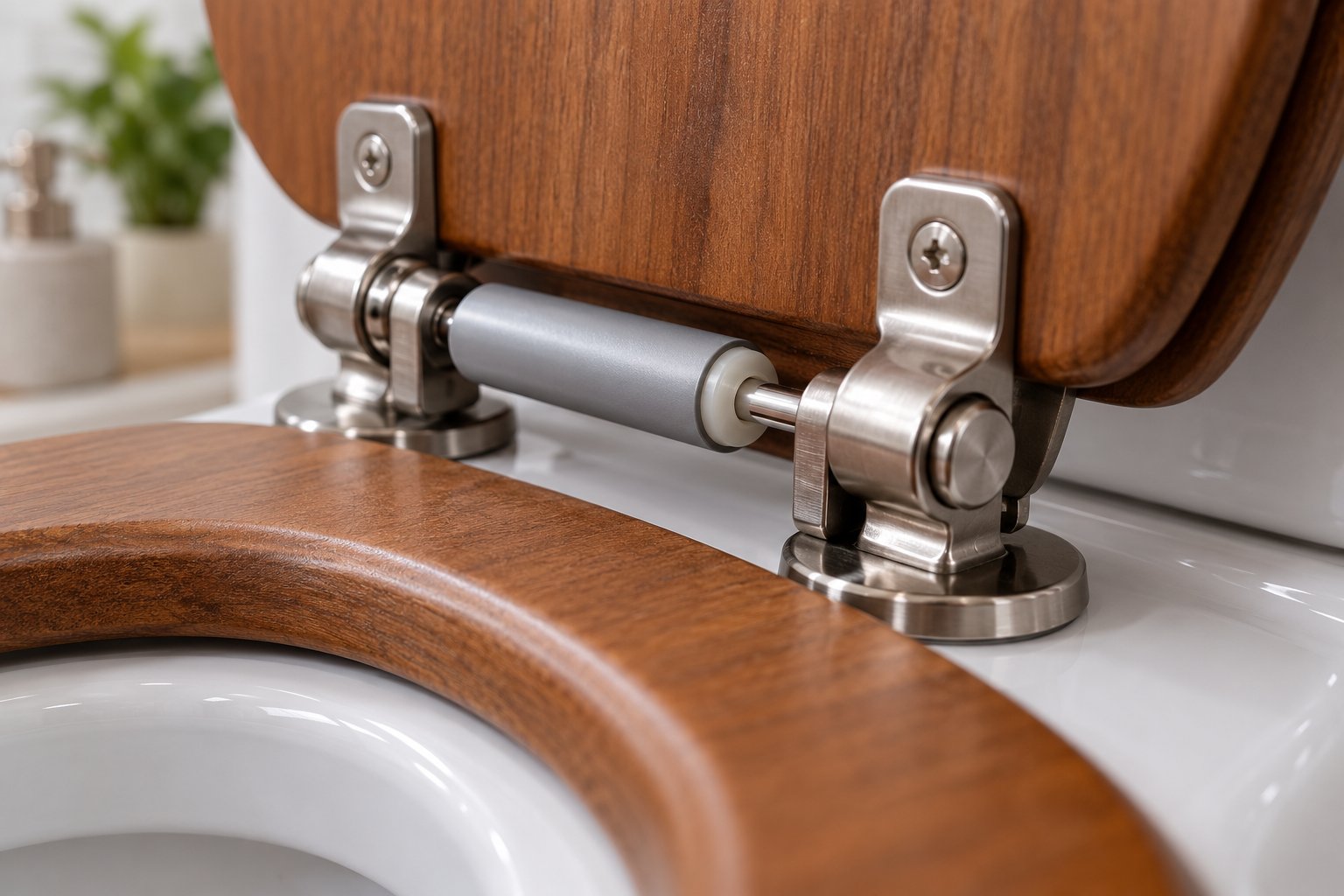
How Soft-Close Mechanisms Protect Wood Toilet Seats
A solid or molded wood lid weighs roughly two to three times more than a plastic one. Drop it from an upright position and the impact force is substantial — enough to chip enamel finishes, crack compressed wood fibers near the hinge holes, and even damage the porcelain bowl rim over thousands of cycles. Soft-close technology exists specifically to eliminate that repeated punishment, yet most product listings treat it as a bullet-point buzzword rather than explaining what is actually happening inside the hinge.
How a Soft-Close Damper Works Inside a Wood Seat
Imagine tipping the lid backward and letting go. Without a damper, gravity takes over and the full weight slams down in under a second. A soft-close (also called slow-close) seat replaces that freefall with a controlled, silent descent that typically takes three to five seconds.
The mechanism responsible is a small rotary damper built into or attached to the hinge assembly. Inside, a precision rotor moves through silicone oil that creates internal fluid resistance, producing a smooth, consistent braking force throughout the closing arc. Some designs use friction-based damping instead, but hydraulic silicone-oil dampers are the industry standard because they deliver more predictable torque across a wider temperature range — an important detail in bathrooms that can swing from steamy post-shower heat to cold overnight air.
Here is where quality separates reliable seats from frustrating ones. Cheap dampers may feel smooth for the first few months, then gradually lose resistance as internal seals wear or silicone oil degrades. You will notice the lid closing faster, followed by a soft thud, and eventually a full slam — defeating the entire purpose. Precision-engineered dampers, by contrast, are rated for tens of thousands of open-close cycles while maintaining stable torque throughout the product's lifespan.
The damping torque itself must be carefully matched to the seat's weight and material. A lightweight plastic lid needs far less resistance than a dense elongated molded wood toilet seat or a hefty walnut toilet seat with natural grain. If the torque is too light, the heavier lid overwhelms the damper. If it is too strong, the lid feels sluggish or stops partway through its arc. For manufacturers designing toilet seat molded wood products, getting this calibration right is critical. Tianyun's MDF / Metal Damper, for example, is engineered specifically for MDF, wooden, resin, and metal seat structures, offering custom torque settings and OEM-compatible mounting configurations that let seat makers dial in the exact resistance profile a heavier wood lid demands. That level of component engineering is what separates a damper that performs for years from one that fails within months.
Does Soft-Close Affect Wood Seat Durability Differently
In a word — dramatically. Every time a wood lid slams shut, the impact radiates outward from the hinge points. Over hundreds of daily cycles, that cumulative stress does real damage: hairline cracks in enamel coatings, micro-fractures in compressed wood fiber near bolt holes, and loosening of the hinge hardware itself. A walnut toilet seat or any solid hardwood option is especially vulnerable because natural grain patterns create directional weak points that concentrated impact can exploit.
Soft-close dampers reduce that impact force to nearly zero. The lid touches the bowl rim gently, distributing its weight gradually rather than delivering a sharp blow. For enameled surfaces, this means the protective coating stays intact far longer — and as you learned in the previous section, an intact finish is the single most important factor in a wood seat's longevity. Think of a soft-close damper as insurance for your enamel: it prevents the very chips and cracks that let moisture infiltrate the wood core.
There is a companion feature often paired with soft-close hinges that deserves equal attention: quick-release hardware. Quick-release means the entire seat lifts off the mounting bolts without tools — usually by pressing a button or releasing a latch at the hinge. You might wonder why that matters. Consider what happens at the rear of any toilet seat over time. Moisture, cleaning solution residue, and mineral deposits accumulate in the narrow gap between the seat and the bowl rim, right around the bolt holes. On a standard fixed-mount seat, cleaning that area thoroughly requires a wrench and fifteen minutes of frustration. With quick-release hinges, you pop the seat off in two seconds, wipe down the entire mounting zone, and snap it back into place.
For wooden toilet seats elongated or round, this easy-removal feature is not just convenient — it is a maintenance essential. Those hardware contact points are exactly where trapped moisture does the most invisible damage, wicking into exposed edges or uncoated bolt-hole interiors. Regular access for cleaning and drying keeps that vulnerability in check.
A quality soft-close damper does not just prevent slamming — it directly extends the lifespan of a wood toilet seat by eliminating the cumulative impact stress that cracks enamel finishes and weakens wood fibers around hinge points.
The damper and hinges do their job invisibly once installed. But getting the seat onto the bowl correctly in the first place — with the right tools, the right tightening pressure, and the right alignment — is a step that trips up more DIYers than you might expect.
How to Install a Wood Toilet Seat Step by Step
You have the right shape, the right material, and a soft-close damper ready to protect your investment. But none of that matters if the seat is installed poorly. A crooked mount, an over-torqued bolt, or a missing bumper can turn a premium wood seat into a wobbly, cracked disappointment within weeks. The good news? Installation is genuinely straightforward — as long as you understand the hardware and resist the urge to crank everything down as tight as it will go.
Tools and Hardware You Will Need
You will not need a full toolbox. Gather these items before you start, and the entire job should take under fifteen minutes:
- Adjustable wrench or pliers — for gripping nuts underneath the bowl rim.
- Screwdriver — Phillips-head or flat-head, depending on your bolt type. Check the hardware included with your new seat before assuming.
- Hacksaw (occasionally) — some mounting bolts ship longer than necessary. If the bolt threads extend far below the nut after tightening, a hacksaw lets you trim the excess for a cleaner look and easier future removal.
- Cleaning rag and mild spray cleaner — the area under your old seat is almost certainly dirtier than you expect.
Most wood seats ship with their own mounting kit — bolts, nuts, washers, and sometimes rubber pads. Before you throw away the packaging, verify that every listed component is in the bag. A missing washer might seem trivial, but it is the piece that distributes clamping force and prevents the bolt head from digging directly into the seat material.
You will also encounter two primary hinge mounting methods, and knowing which one your seat uses saves confusion mid-install:
- Top-mount (top-tightening): The bolt drops down through the bowl's mounting hole and a special expanding nut or anchor tightens from above. You do everything from the top side — no reaching underneath. This is increasingly common with modern wood seats, especially those with soft-close and quick-release hinges.
- Bottom-mount (traditional): The bolt passes through the seat hinge and the bowl hole, then a nut threads onto it from underneath the bowl rim. You will need one hand on top with a screwdriver and one hand below with a wrench. This classic method is still used on many solid wood and mahogany toilet seat models with heavier metal hinge assemblies.
Step-by-Step Wood Toilet Seat Installation
Whether you are replacing a worn-out plastic seat or upgrading to a toilet seat wood round or elongated, the sequence is the same:
- Remove the old seat. Open the hinge covers (if present) and unscrew the mounting bolts. For bottom-mount systems, hold the nut underneath with pliers while turning the bolt from above. If bolts are rusted or corroded, apply penetrating oil and wait ten minutes before trying again. In stubborn cases, a hacksaw can cut through the bolt just below the nut.
- Clean the bolt hole area and bowl rim thoroughly. Years of grime, mineral deposits, and moisture accumulate in the recesses around mounting holes. Wipe everything down until the porcelain is clean and dry. This is not just about hygiene — debris trapped under the new seat's mounting hardware can prevent a flush fit and cause the seat to rock.
- Align the new seat with the bowl's bolt holes. Set the seat on the bowl and visually confirm that the hinge holes line up with the porcelain mounting holes. Do not force anything. If the holes do not align, double-check that you have the correct shape — round versus elongated mismatches are usually obvious at this stage.
- Insert mounting bolts and hand-tighten. Drop the bolts through the hinge assemblies and into the bowl holes. Thread the nuts on by hand just enough to hold everything in place. Do not reach for the wrench yet.
- Center the seat on the bowl and check alignment. With the hardware finger-tight, slide the seat forward, backward, and side to side until it sits evenly on the rim. The front edge of the seat should follow the contour of the bowl without overhanging on either side. Close the lid and check that it sits flat.
- Tighten hardware firmly — but avoid over-torquing. This is the step where most DIY installations go wrong. Use your wrench and screwdriver to snug the bolts down until the seat no longer shifts. Then stop. One final quarter-turn beyond snug is usually sufficient. Over-tightening is especially dangerous with wood — excessive clamping force can crack the seat material right around the bolt holes, where the structure is thinnest. A toilet seat round wood model with a molded composite body is particularly vulnerable because compressed wood fibers split under point-loaded pressure more easily than solid lumber.
- Test the lid and seat movement. Open the lid fully and let it close (if soft-close, it should descend slowly and silently). Lift and lower the seat ring separately. Sit down and shift your weight side to side. If anything wobbles, loosen the bolts slightly, re-center, and retighten evenly on both sides.
Common Installation Mistakes to Avoid
A few pitfalls catch even experienced DIYers off guard — especially when switching from a plastic seat to a heavier wood one:
- Over-tightening the bolts. Worth repeating because it is the most frequent cause of premature seat damage. The porcelain bowl is brittle, and the wood around the bolt holes is the seat's weakest structural point. Tighten until stable, then leave it alone. Tighten until the seat does not wobble, then give it one last quarter-turn — that is the reliable rule of thumb.
- Using incompatible bolt sizes. Not all mounting hardware is interchangeable. If you are reusing old bolts with a new seat — or mixing components from different kits — verify that the bolt diameter and thread pitch match the nuts. A bolt that cross-threads into a mismatched nut will feel tight initially but will work itself loose within days.
- Skipping alignment before final tightening. Bolting the seat down first and then trying to shift it into position puts lateral stress on the hardware. Always center and align while the bolts are hand-tight, then lock everything down.
- Ignoring the rubber bumpers. Many wood seats include small rubber or silicone bumpers on the underside of the seat ring. These pads serve two purposes: they cushion the seat against the porcelain rim, and they prevent lateral sliding. If bumpers are adhesive-backed, position them symmetrically before your first use. If they are pre-molded into the seat, confirm they have not been damaged or displaced during shipping.
- Forgetting to check hinge compatibility. A mahogany toilet seat with heavy brass hinges may require slightly different bolt-hole positioning than a molded wood seat with plastic hinge posts. Always dry-fit before committing to final tightening.
A properly installed wood seat should feel rock-solid with zero lateral play — heavy enough to stay put, yet mounted with just enough restraint to avoid stressing the material. Check the bolts again after a week of regular use, since new hardware can settle slightly as rubber washers compress under load.
Getting the seat onto the bowl is only half the long-term equation, though. What you do after installation — how you clean it, what products you use, and how you protect the finish from a bathroom's relentless humidity — determines whether that seat still looks and feels new a year from now or starts showing damage within months.
Cleaning and Caring for Wood Toilet Seats
A plastic seat tolerates almost any cleaner you grab from under the sink. A wood toilet seat does not. That difference alone accounts for most of the premature damage, warping, and finish failure that gives wooden seats an unfair reputation for being fragile. The material itself is remarkably durable when treated correctly — but "correctly" means abandoning the cleaning habits you developed around plastic and adopting a gentler, more deliberate routine.
Think of your seat's finish — whether it is enamel, lacquer, or polyurethane — as the real protective barrier. Every cleaning decision you make either preserves that barrier or accelerates its breakdown. Here is how to keep it intact for years.
Daily and Weekly Cleaning Best Practices
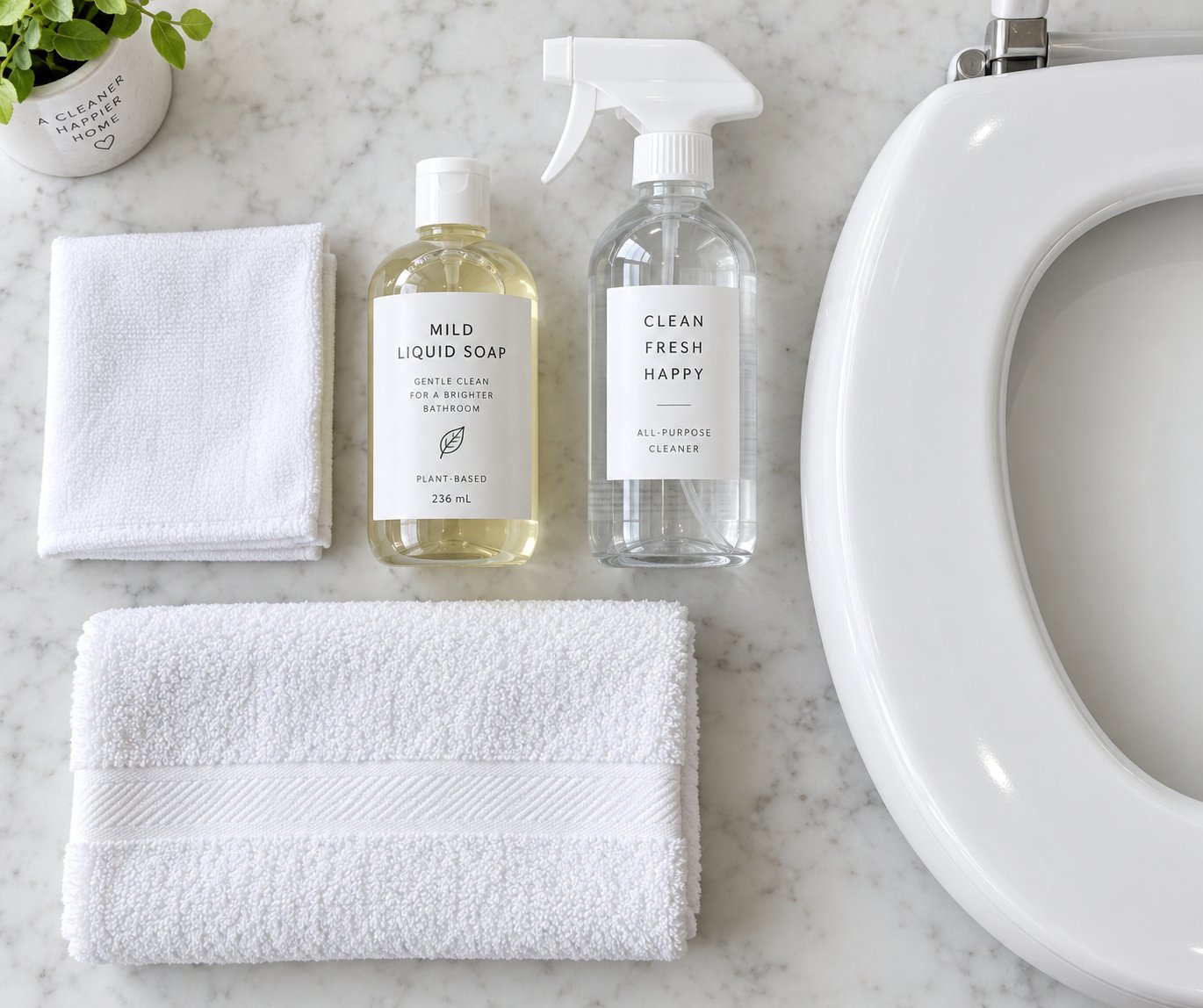
The ideal cleaning kit for toilet seats wooden or molded composite is almost comically simple: a soft cloth, mild liquid soap (dish soap works perfectly), and warm water. That is it. Dampen the cloth, add a small drop of soap, wipe down the seat and lid — top, bottom, and hinges — then dry every surface with a clean towel.
That last step is the one most people skip, and it is the most important. Standing water is the primary enemy of any wood-based seat. Even on a fully enameled surface, water that pools in seams, collects around hinge hardware, or sits in the recessed area where the lid meets the seat ring will eventually find a microscopic gap in the finish. Once it does, moisture begins wicking into the wood fiber core beneath. You will not see the damage for weeks or months — but by the time the surface starts bubbling or a dark stain appears, the internal structure has already been compromised.
A few cleaning products to avoid entirely:
- Bleach and bleach-based sprays: Chlorine bleach is aggressive enough to dull and eventually crack enamel coatings. On solid wood finishes, it can cause discoloration and strip protective sealant layers.
- Abrasive cleaners and scouring pads: Powdered cleansers or rough scrub pads create micro-scratches in the finish surface. Each scratch is an entry point for moisture.
- Ammonia-based bathroom cleaners: These can cloud glossy enamel over time, leaving the seat looking hazy rather than bright.
- Disinfectant wipes with alcohol or harsh solvents: Convenient, yes — but the chemical cocktail in many commercial wipes is formulated for non-porous plastic and porcelain, not for coated wood surfaces.
If you want a disinfecting step, a solution of equal parts white vinegar and water applied with a soft cloth is effective against common bathroom bacteria without threatening the finish. Spray it on, wipe it off within thirty seconds, and dry the surface immediately.
For round wood toilet seats or any shape with a wood soft close toilet seat mechanism, pay particular attention to the hinge area during cleaning. Soap residue and mineral deposits from hard water tend to accumulate right where the damper housing meets the bowl rim. A damp cotton swab reaches into those tight spots without risking damage to the hinge components.
Protecting Against Moisture Damage and Finish Degradation
Your bathroom is essentially a humidity chamber. Hot showers send steam billowing across every surface. Condensation forms on cool porcelain and drips onto seat undersides. Splashes during flushing mist the hinge area repeatedly throughout the day. A wood toilet seat lives in this environment permanently, which means passive moisture management matters just as much as active cleaning.
Start with ventilation. If your bathroom has an exhaust fan, run it during and for at least ten minutes after every shower or bath. Proper airflow reduces ambient humidity levels and limits the amount of moisture that settles on seat surfaces between cleanings. In bathrooms without mechanical ventilation, cracking a window or leaving the door open after bathing makes a measurable difference in how long finishes last.
Next, make a habit of inspecting the underside of the seat every month or two. Flip the lid up and look at the bottom surface of the seat ring — the part that rests against the porcelain bowl rim. This area stays damp the longest and gets cleaned the least, which makes it the first place where finish degradation typically appears. Look for:
- Bubbling or peeling in the enamel or lacquer coating — a sign that moisture has penetrated beneath the finish layer.
- Dark spots or mildew growth around hinge hardware and bolt holes — these contact points trap water between metal and wood, creating an ideal environment for mold.
- Softening or slight sponginess in the material — press the underside firmly with your thumb. The surface should feel rigid and hard. Any give suggests internal moisture saturation.
For enameled and molded wood seats, any chip or crack in the coating must be addressed promptly. A small bottle of enamel touch-up paint — matched to the seat color — can seal a nick before water intrusion causes larger problems. Think of it the same way you would treat a paint chip on a car: the repair is quick and inexpensive, but ignoring it leads to rust — or in this case, rot.
Solid wood seats demand an additional layer of care. If your seat is finished with polyurethane or varnish, plan on lightly sanding and resealing the surface every two to three years — more frequently in high-humidity bathrooms. Marine-grade polyurethane is the best option here because it is formulated to withstand constant moisture exposure, the same reason boatbuilders rely on it. Apply thin, even coats to all surfaces, including the underside and the edges around bolt holes, and allow full curing time before reinstalling the seat.
When to Replace Rather Than Repair
Even the best-maintained wood toilet seat has a finite lifespan. Knowing when a seat has moved beyond repair saves you from sitting on a compromised surface that looks passable but has already lost its structural integrity. Replace rather than repair when you notice any of the following:
- Visible cracking through the wood or composite body — not just in the finish, but into the material itself. A structural crack near a bolt hole or along the seat ring will only widen under repeated load.
- Persistent mildew staining that cleaning cannot remove — if dark stains remain after thorough cleaning with mild soap and vinegar, mold has likely penetrated below the finish into the wood fiber. Surface cleaning cannot reach it.
- Soft or spongy spots indicating internal moisture damage — when pressed, the material yields instead of feeling solid. This means the wood core has absorbed enough water to compromise its density. No amount of drying or resealing will restore structural strength.
- Hinge hardware that no longer holds the seat securely — if bolt holes have enlarged from repeated tightening cycles or the wood around the mounting points has cracked, the seat cannot be stabilized. Wobbly hinges accelerate further damage and create an uncomfortable, unsafe seating surface.
- Widespread finish failure across multiple areas — a single chip can be touched up, but when enamel is flaking or peeling across the lid, seat ring, and underside simultaneously, the coating has reached the end of its service life. Refinishing an entire molded wood seat is rarely cost-effective compared to buying a replacement.
Under normal household use with proper cleaning, a quality enameled or molded wood seat typically lasts five to seven years or more — comparable to a plastic seat of similar quality. Solid hardwood seats that are periodically resealed can exceed that range significantly. The deciding factor, every time, is how consistently the finish is maintained.
Maintenance keeps a wood seat functional. But choosing the right wood species and finish style in the first place determines whether the seat actually enhances your bathroom's design — or clashes with everything around it.
Popular Wood Species and Finish Styles for Toilet Seats
A seat wood buyers often overlook is the one that perfectly matches their bathroom — not because it is hard to find, but because they never realized how many species and finish options exist. The difference between an oak seat and a bamboo one is not just cosmetic. Grain pattern, natural moisture resistance, hardness, and price all shift dramatically depending on which wood you choose, and pairing the wrong species with the wrong finish can undermine both durability and design.
Popular Wood Species and Their Characteristics
Four species dominate the wood toilet seat market, each bringing a distinct personality to the bathroom. Here is how they compare across the attributes that matter most in a high-moisture environment:
| Attribute | Oak | Walnut | Mahogany | Bamboo |
|---|---|---|---|---|
| Grain Pattern | Prominent, open grain with visible rays and cathedral arches | Flowing, fine-to-medium grain with occasional swirls | Straight to interlocked grain with a smooth, even texture | Tight, linear grain with visible nodes (technically a grass, not a hardwood) |
| Natural Color | Light golden tan to medium brown | Rich chocolate brown to deep purplish-brown | Warm reddish-brown with golden undertones | Pale blonde to light caramel (darkens slightly with age) |
| Hardness / Durability | High — one of the hardest domestic hardwoods, excellent impact resistance | Moderate to high — dense and strong, though slightly softer than oak | Moderate — durable but can dent more easily than oak | High — strand-woven bamboo rivals oak in surface hardness |
| Moisture Resistance | Moderate — open pores require thorough sealing to prevent water absorption | Moderate — naturally contains some oils that help resist moisture, but still needs a protective finish | Good — tighter grain structure and natural oils provide better inherent water resistance than oak | Very good — naturally contains silica and resists moisture better than most hardwoods |
| General Price Tier | $$ — the most widely available and affordable hardwood option | $$$ — premium pricing reflects the wood's rich appearance and limited supply | $$$ — often imported, which adds to cost | $$ — competitive pricing due to rapid renewability and efficient manufacturing |
A few patterns jump out immediately. Oak is the workhorse — affordable, widely stocked, and tough enough for heavy daily use. If you want a wood toilet seat round or elongated without spending a premium, oak is likely where you will land. Walnut appeals to homeowners chasing a darker, more dramatic look, especially in bathrooms with matte black fixtures or dark stone countertops. Mahogany delivers that classic warm reddish hue you see in period-style homes and upscale hotel restrooms. And bamboo? It occupies a unique niche as the most naturally moisture-resistant option on this list, combined with genuine sustainability credentials since the plant regenerates far faster than any hardwood tree.
Keep in mind that species selection matters most for solid wood seats. If you are purchasing a molded wood or enameled composite seat, the compressed fiber core is species-neutral — what you see on the surface is paint, enamel, or a printed texture rather than actual grain from a specific tree.
Color and Finish Options for Every Bathroom Style
The species sets the tone, but the finish determines the final look — and how much maintenance you are signing up for. Here are the four most common finish categories and where each one fits best:
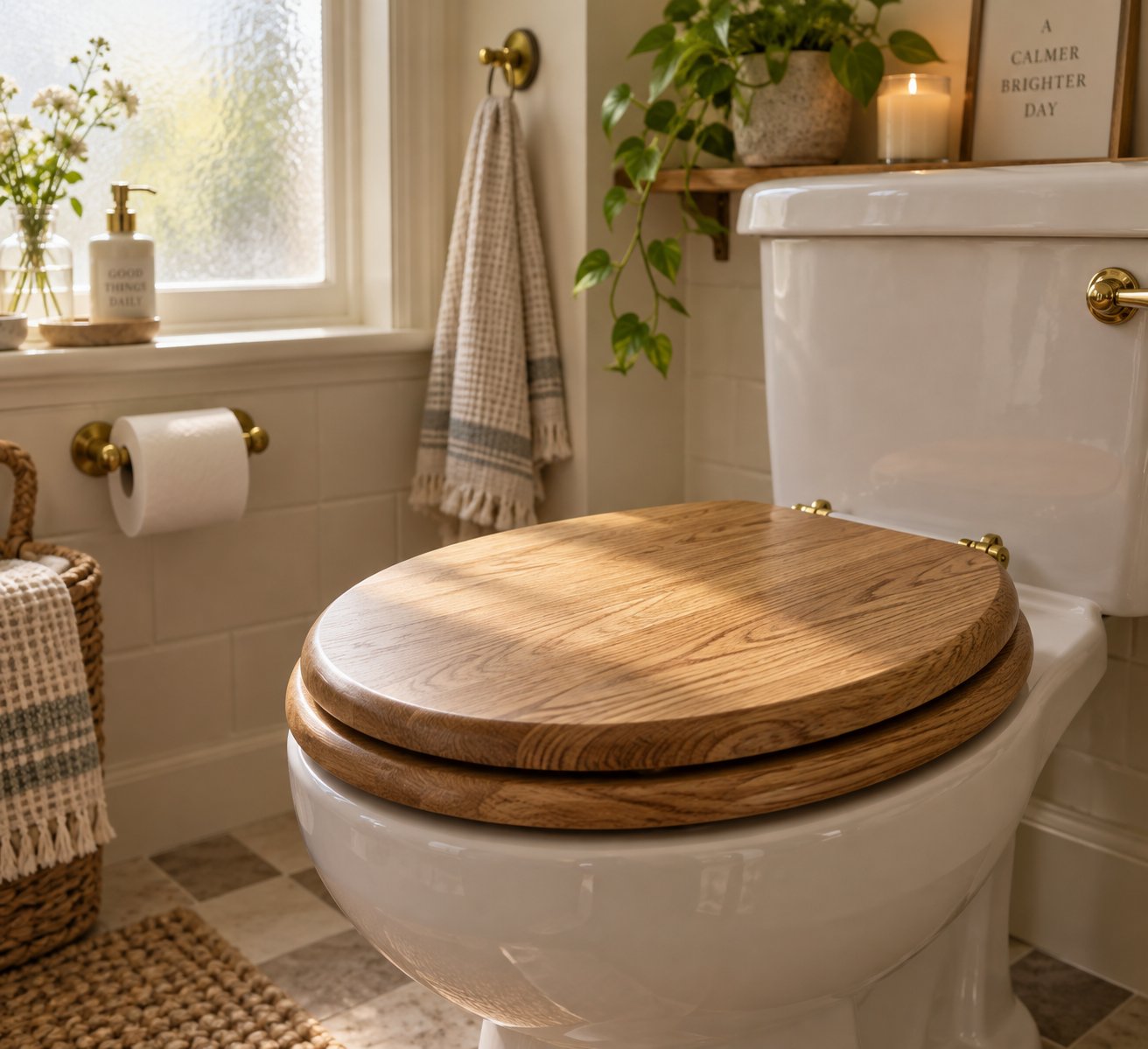
Natural clear-coat: A transparent polyurethane or lacquer finish that lets the raw grain shine through. This is the finish you want if you chose oak, walnut, or mahogany specifically for their visual character. It highlights every grain line and color variation, giving the seat an unmistakably organic feel. The trade-off is visibility — every water spot, every scratch, every minor imperfection shows up more readily on a clear-coated surface than on a painted one. Best suited for primary bathrooms where the seat complements other natural wood elements like a timber vanity or open shelving.
White painted or enameled: By far the most popular option on the market, and for good reason. White matches virtually every standard toilet, sink, and bathtub. A round wooden toilet seat in glossy white enamel blends so seamlessly with porcelain that guests may not even realize it is wood until they notice the heft. Multi-layer enamel finishes are also the easiest to maintain — smooth, sealed, and resistant to staining. If you want the thermal comfort and weight of wood without a dramatic design statement, white enamel is the default.
Black stained or painted: Modern, bold, and increasingly popular in contemporary bathroom designs. A matte black seat pairs naturally with black faucets, matte hardware, and monochromatic tile schemes. Some manufacturers offer semi-gloss or satin black finishes that split the difference between the drama of matte and the cleanability of high-gloss. Be aware that dust and water spots show more readily on dark finishes — so a quick wipe-down after cleaning becomes even more important.
Brown-toned stains: These range from light honey to deep espresso, and they sit squarely in the sweet spot between natural and painted finishes. A stain penetrates the wood surface and enhances grain visibility while adding warmth and color consistency. Brown-stained seats are the classic choice for traditional, craftsman, and farmhouse-style bathrooms where you want the room to feel warm and cohesive. They also tend to hide minor wear and water marks better than clear-coats or solid whites.
Vintage and period-accurate bathroom restorations add another dimension to finish selection. If you are renovating a Victorian-era home or recreating a mid-century aesthetic, the specific wood species and stain color need to match the architectural era. A dark walnut seat with brass hinges reads very differently than a pale oak seat with chrome hardware, and that distinction can make or break the authenticity of a restoration project. Specialty bath suppliers and custom woodworkers cater specifically to this demand.
One more option worth knowing about: wood grain seats. These are molded wood composite seats with a surface printed or textured to mimic natural grain patterns. From a distance — and sometimes even up close — they convincingly replicate the look of solid oak or walnut. The visual warmth is there, but the price point and maintenance requirements align with standard enameled composite seats rather than genuine hardwood. For budget-conscious buyers who want the aesthetic of natural seat wood without the premium cost or ongoing resealing, grain-textured composites offer a practical middle ground.
Species, color, and finish narrow the field considerably. But the final purchase decision involves a few more checkpoints — hinge quality, damper reliability, warranty terms — that separate a seat you will enjoy for years from one you will replace in a single season.
What to Look for Before You Buy a Wood Toilet Seat
You have spent time learning about material types, sizing, finish integrity, soft-close engineering, installation techniques, cleaning routines, and wood species. That is a lot of information — and when you are standing in a store aisle or scrolling through product listings, it can be hard to remember which details actually matter most. This is where a structured checklist pays for itself. Run through the following criteria before you commit to a purchase, and you will avoid the mistakes that send most buyers back to the return counter.
Your Pre-Purchase Checklist for Wood Toilet Seats
Treat this as your go-to reference. Each step addresses a specific failure point that leads to buyer regret — wrong fit, poor finish, weak hinges, or a damper that gives out within months.
- Measure your bowl shape and confirm the size. Grab a tape measure and check the distance from the center of the mounting bolt holes to the front edge of the bowl rim. Approximately 16.5 inches means you need a round seat; approximately 18.5 inches means elongated. While you are there, verify the bolt spread — it should be 5.5 inches center-to-center for standard North American toilets. This sixty-second measurement eliminates the most common purchasing mistake entirely. If you are shopping for a toilet seat elongated wood option, that 18.5-inch reading is your confirmation.
- Choose your material type based on priorities, not price alone. Solid wood toilet seats deliver unmatched grain beauty and a premium feel, but they demand periodic resealing and cost significantly more. Molded wood composite offers the best balance of durability, consistent sizing, and affordability. Enameled wood — a molded base with multiple baked-on finish coats — provides the strongest moisture barrier for the money. Match the material to your willingness to maintain it, not just your budget.
- Check the finish quality — and check every surface. Flip the seat over before you buy, or look for product images showing the underside. A quality seat has a multi-coat enamel or marine-grade sealant covering all surfaces, including the bottom of the seat ring and the interior edges of the bolt holes. If the underside is raw, uncoated, or visibly rougher than the top, moisture will find its way in from below — exactly where you will never see the damage until it is too late.
- Evaluate the hinge material. Metal hinges outlast plastic in virtually every scenario. Stainless steel or zinc-alloy hinges resist corrosion in humid bathroom environments and handle the heavier weight of wood without flexing or cracking. Plastic hinges can work on lighter molded wood seats, but they are more prone to fatigue failure over time — especially under the repeated stress of a heavier lid.
- Prioritize soft-close damper quality above almost everything else. A wood lid that slams shut delivers two to three times the impact force of a plastic one, accelerating finish damage and structural stress around hinge points. Not all soft-close mechanisms are equal — cheap dampers lose their resistance within months, while precision-engineered components maintain stable torque across tens of thousands of cycles. Look for seats that specify the damper type and its rated lifespan. Manufacturers building serious wooden toilet seat elongated or round models often rely on purpose-built damper systems like Tianyun's MDF / Metal Damper, which is engineered specifically for MDF, wooden, resin, and metal seat structures with custom torque settings and OEM-grade mounting compatibility. That kind of component-level engineering is what separates a seat that closes silently for years from one that starts slamming by summer.
- Confirm weight capacity if specified. Most standard toilet seats support 250 to 300 pounds, but not all manufacturers publish this figure — and wood seats vary more widely than plastic due to differences in core density and hinge construction. If this specification is listed, verify it meets your household's needs. If it is not listed, contact the manufacturer before purchasing rather than assuming.
- Look for quick-release hardware. A seat that lifts off its mounting bolts without tools makes thorough cleaning around the hinge area dramatically easier. For a toilet with wood seat construction, this feature is not a luxury — it is a maintenance essential. Trapped moisture at hardware contact points is the leading cause of invisible finish degradation. Quick-release hinges let you pop the seat off, dry the mounting zone completely, and snap it back into place in seconds.
- Check warranty terms and what they actually cover. Quality wood seats typically carry warranties ranging from one to five years. Read the fine print. Some warranties cover only the seat body but exclude hinges and dampers — the two components most likely to fail first. Others require proof of "proper maintenance," which can be subjective. A manufacturer confident enough to warranty the hinge mechanism and damper alongside the seat body is telling you something meaningful about their build quality.
Making Your Final Decision with Confidence
With eight checkpoints covered, the field narrows quickly. You will likely find that only a handful of options pass every criterion — and that is exactly the point. A wood toilet seat is an investment in both bathroom comfort and design. Unlike a disposable plastic seat you replace without a second thought, the right wooden seat becomes a fixture you actually notice and appreciate every day: warmer to the touch, heavier and more stable on the bowl, and visually richer than anything molded from polypropylene.
Here is the decision-making shortcut that experienced buyers and bathroom designers consistently fall back on: prioritize finish integrity and hinge quality over everything else, including price and even wood species. A beautifully grained walnut seat with a thin, poorly applied finish will fail faster than a humble molded composite with a flawless multi-coat enamel and precision metal hinges. Solid wood toilet seats crafted from premium species certainly look stunning — but if the protective coating is subpar or the damper is an afterthought, aesthetics cannot save the product from a humid bathroom's relentless assault.
The same logic applies to the wood toilet seat elongated models that dominate modern bathrooms. Whether you are outfitting a new construction master bath or upgrading a decades-old powder room, the seat that will still look and function like new in five years is the one with the best-sealed surfaces and the most reliable closing mechanism — not necessarily the one with the highest price tag or the most exotic grain.
The quality of the protective finish and the soft-close damper mechanism will determine your wood toilet seat's everyday durability far more than the wood species or price point ever will.
Measure carefully, inspect the finish on every surface, verify the hinge and damper engineering, and read the warranty. Do those four things, and you will join the small percentage of buyers who get this purchase right the first time — and never think about replacing it for years to come.
Frequently Asked Questions About Wood Toilet Seats
1. What is a molded wood toilet seat made of?
A molded wood toilet seat is manufactured from compressed wood fibers blended with binding resins, shaped under high heat and pressure in a process similar to MDF production. The resulting dense, uniform composite is then sealed with multiple layers of lacquer or baked-on enamel. Despite containing no solid lumber, molded wood seats feel noticeably heavier and more substantial than plastic, making them the most popular wood-category seat on the market due to their balance of consistent sizing, smooth finish, and affordability.
2. How do I know if I need a round or elongated wood toilet seat?
Measure from the center point between your toilet's two rear mounting bolt holes straight forward to the front edge of the bowl rim. A reading of approximately 16.5 inches indicates a round bowl, while approximately 18.5 inches indicates an elongated bowl. The bolt spread between the two mounting holes is typically 5.5 inches center-to-center on standard North American toilets and is the same for both shapes. This single front-to-back measurement is the only number you need to ensure the correct fit.
3. Are wood toilet seats sanitary compared to plastic?
When the protective finish — whether enamel, lacquer, or polyurethane — remains intact, a wood toilet seat is just as hygienic as a plastic one. The sealed surface is non-porous and easy to disinfect with mild soap and water. Hygiene concerns arise only when the coating chips, cracks, or wears through, exposing the underlying wood fibers to moisture and bacteria. Maintaining the finish through gentle cleaning and prompt touch-up of any nicks keeps a wood seat fully sanitary throughout its lifespan.
4. Why is a soft-close damper important for a wood toilet seat?
Wood and molded wood lids weigh two to three times more than plastic, so a free-falling lid delivers significantly greater impact force on the bowl rim and seat hinges. Over thousands of cycles, that repeated slamming cracks enamel finishes, creates micro-fractures in compressed wood fiber near bolt holes, and loosens hardware. A precision-engineered soft-close damper — such as Tianyun's MDF / Metal Damper designed specifically for MDF, wooden, resin, and metal seat structures — controls the descent with stable torque, reducing impact to nearly zero and directly extending the seat's functional lifespan.
5. How do you clean and maintain a wood toilet seat?
Use a soft cloth dampened with warm water and a small drop of mild dish soap, then wipe all surfaces including the underside and hinge area. The critical step most people skip is drying every surface with a clean towel afterward, since standing water is the primary cause of finish degradation on wood seats. Avoid bleach, abrasive cleaners, ammonia-based sprays, and alcohol-containing disinfectant wipes, as these can strip or crack protective coatings. For disinfection, a 50/50 white vinegar and water solution is effective without harming the finish. Inspect the seat's underside monthly for bubbling, dark spots, or soft areas that signal moisture infiltration.
Apply This Insight to Your Project
Tell us what you are building and how the topic “Wood Toilet Seat: Why Most Buyers Get the Wrong One” relates to your application. Our engineering team can help evaluate the next step.