What Exactly Is an Elongated Slow Close Toilet Seat
Imagine this: it is 3 AM, the house is dead quiet, and someone in your household lets the toilet lid drop. That sharp, porcelain-on-porcelain crack echoes through every room. A toilet seat elongated slow close eliminates that moment entirely — and it does so with a surprisingly simple piece of engineering.
Defining the Elongated Slow Close Toilet Seat
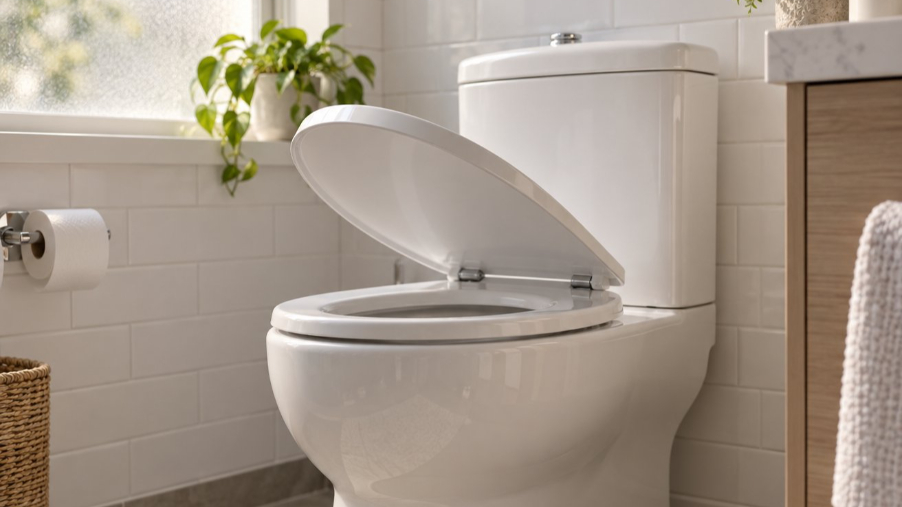
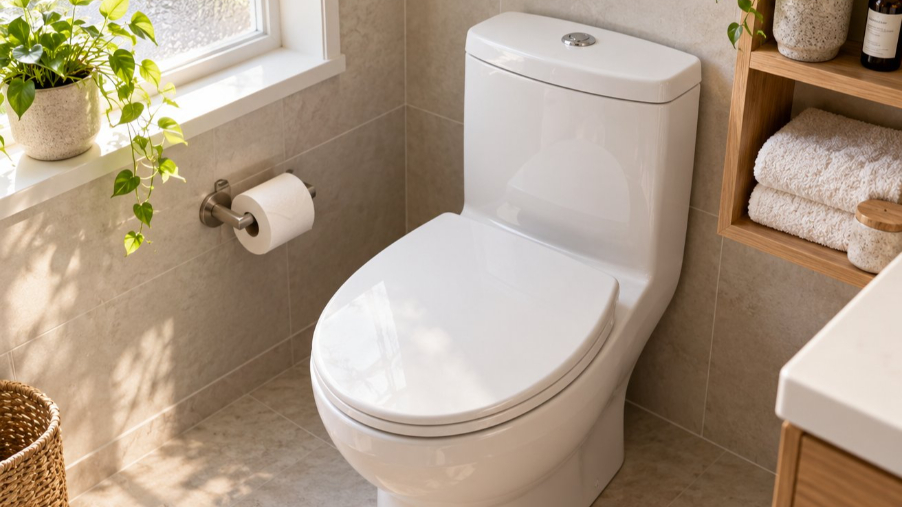
An elongated slow close toilet seat is a two-part assembly — a lid and a seat ring — designed to fit oval-shaped toilet bowls and equipped with a built-in damper mechanism that controls how the lid and seat descend. Two distinct features define it. First, "elongated" refers to the bowl shape. Elongated bowls are oval rather than circular, measuring roughly 18 inches from the mounting bolt holes to the front rim — approximately two inches longer front-to-back than round bowls. That extra length translates to noticeably more seating surface, which is why elongated toilet seats have become the preferred choice in master bathrooms, new construction, and ADA-compliant installations.
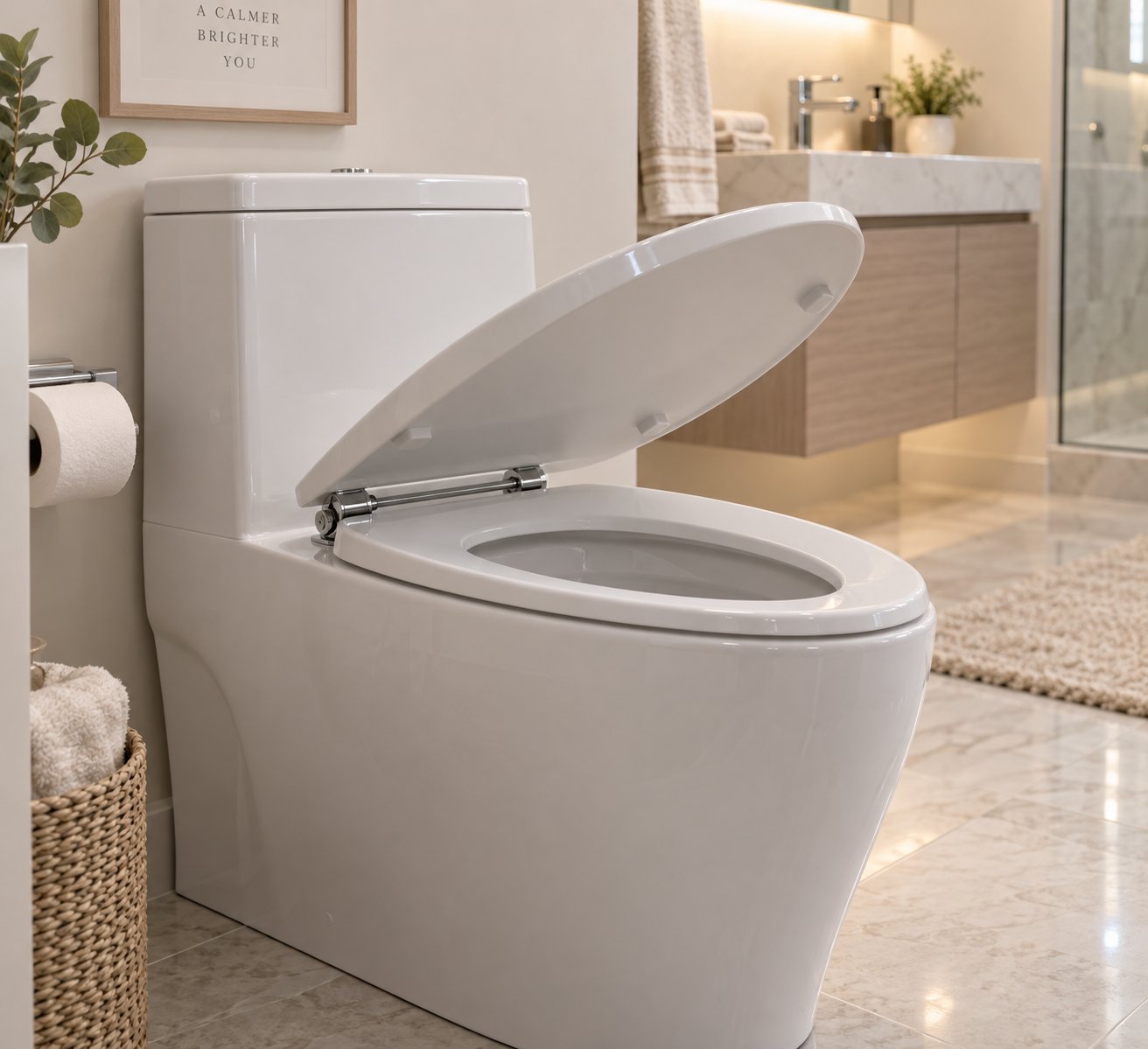
Second, "slow close" describes a small damper — think of a miniature door closer — integrated into one or both hinge posts. When you release the lid from any angle, the damper resists gravity at a controlled rate. Instead of free-falling and slamming, the lid glides down over several seconds and touches the bowl rim silently. No catch to remember, no careful hand-lowering required. You simply let go and walk away.
Compared to a standard seat with basic friction hinges, this upgrade changes the daily bathroom experience in ways that feel minor on paper but significant in practice — especially in shared homes, apartments with thin walls, and households with young children. The slow close toilet seat has quietly become the default specification in modern bathroom design, and for good reason.
An elongated slow close toilet seat is the single most impactful comfort and safety upgrade you can make to a standard toilet — no plumber required.
Why This Guide Exists
Here is the reality: if you search for information on an elongated toilet seat slow close right now, you will find page after page of product listings, shopping carousels, and category filters. What you will not find is a single in-depth resource that explains how these seats actually work, what materials and mechanisms differ between models, how to measure your bowl correctly, or what separates a seat that lasts a decade from one that fails within a year.
This article fills that gap. It is built as a comprehensive, educational guide — covering everything from the damper engineering behind the slow close function to installation steps, material comparisons, weight capacity considerations, and long-term maintenance. Whether you are a homeowner replacing a cracked seat, a renter upgrading an apartment bathroom, or a professional evaluating elongated toilet seats for a project, this is the resource designed to answer every question the product pages leave unanswered.
The first question most people face, though, is even more basic than choosing a damper type or material — it is figuring out whether their toilet bowl is actually elongated or round, and what happens if they guess wrong.
Elongated vs Round and How to Measure Your Toilet
Buying the wrong shape is the single most common mistake people make when replacing a toilet seat — and it is an entirely avoidable one. An elongated seat will not sit securely on a round bowl: it overhangs the front, rocks side to side, and leaves gaps at the bolt connections. A round seat on an elongated bowl is even worse, leaving exposed porcelain at the front and looking awkwardly undersized. Getting this right takes about 60 seconds and a tape measure.
Elongated vs Round — The Shape Comparison
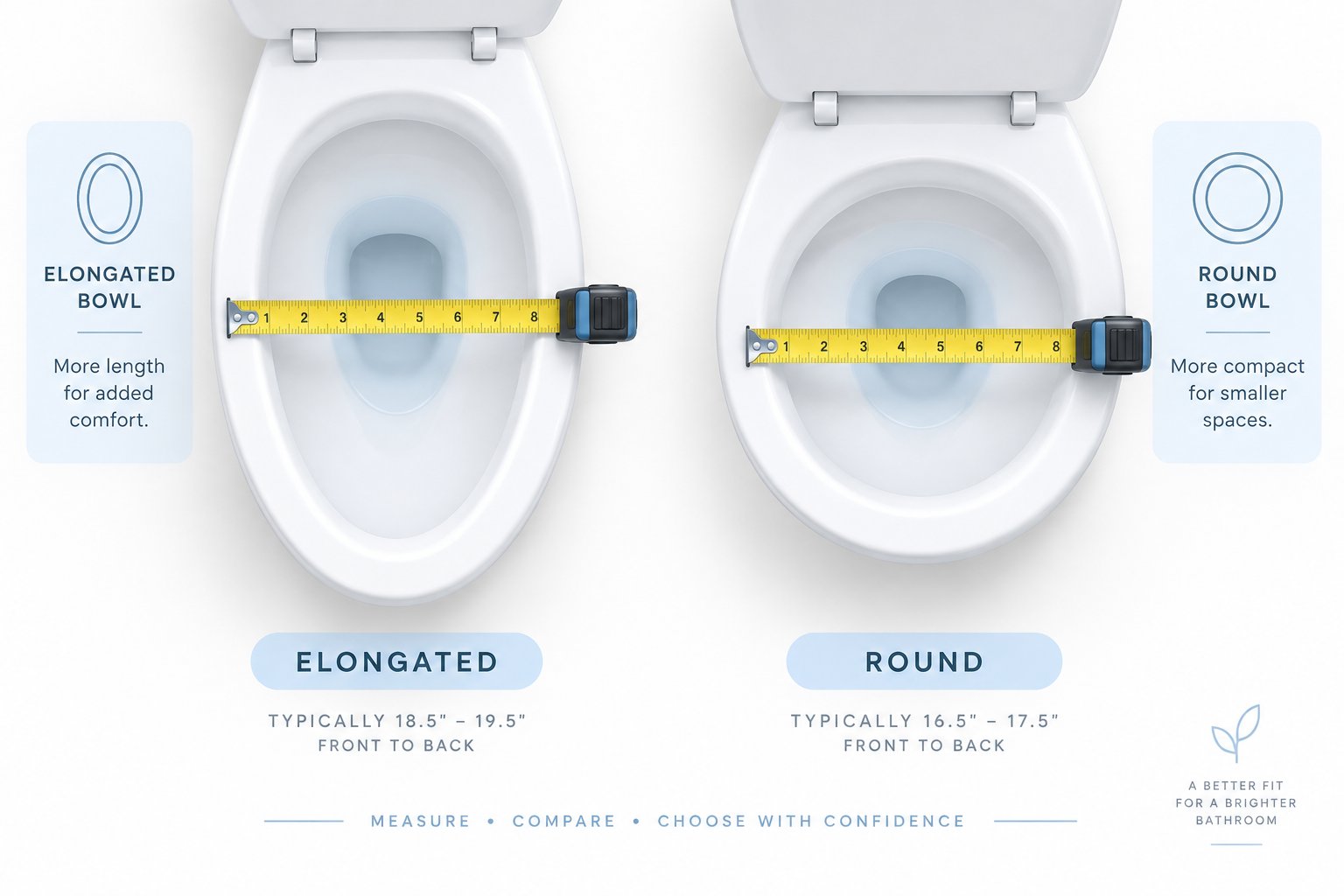
Every residential toilet bowl sold in the United States falls into one of two standard shapes: elongated or round. The difference is straightforward. Elongated bowls are oval — stretched front to back — while round bowls are compact and circular. That shape distinction drives everything from comfort and space planning to which seat you order.
Elongated bowls measure approximately 18.5 inches from the center of the mounting bolt holes to the front edge of the rim. Round bowls measure roughly 16.5 inches across the same span. Those two inches may sound trivial, but they translate to meaningfully more seating surface — a difference most adults notice immediately when switching from round to elongated.
| Feature | Elongated (Oval) | Round |
|---|---|---|
| Bowl length (bolt holes to front rim) | ~18.5 inches | ~16.5 inches |
| Overall projection from wall | 27–30 inches | 25–28 inches |
| Comfort level | Higher — more seating area for adults | Adequate — better suited for children |
| Space requirement | Needs ~2 inches more depth | Fits tighter layouts |
| Common installation locations | Master baths, new construction, ADA-compliant restrooms | Half-baths, powder rooms, small apartments |
| Seat availability | Widest selection of styles and features | Fewer slow close and specialty options |
As interior designer Leah Tuttleman of Re-Bath notes, elongated bowls "are considered more modern and add a sleek look to the bathroom," while round bowls remain a practical default in space-constrained rooms. For anyone shopping for a toilet seat elongated slow close, confirming you actually have an elongated bowl is step one — and it takes less time than reading this paragraph.
How to Measure Your Toilet Bowl in 60 Seconds
You do not need to remove the old seat or pull out a level. Two measurements tell you everything:
- Step 1 — Measure the length. Place a tape measure at the center point between the two mounting bolt holes at the back of the bowl. Extend it straight forward to the very front edge of the bowl rim. If the measurement lands around 18 to 18.5 inches, you have an elongated bowl. If it reads closer to 16 to 16.5 inches, you have a round bowl.
- Step 2 — Measure the width. Stretch the tape across the bowl at its widest point, side to side. Most standard bowls fall between 14 and 14.5 inches wide regardless of shape. This measurement mainly confirms you are dealing with a standard-size bowl rather than a specialty or oversized model.
Write both numbers down before you shop. Online product pages almost always specify whether a seat fits elongated or round bowls, but they rarely remind you to measure first. Skipping this step is how people end up with a return shipment and a second trip to the store.
Oblong, Oval, and Elongated — Same Shape, Different Names
Here is a terminology quirk that trips up a surprising number of shoppers: "oblong," "oval," and "elongated" all describe the exact same non-round toilet seat shape. Different retailers and manufacturers simply prefer different labels. You will see one brand list an "oblong toilet seat" while another sells an identical product as an "oval toilet seat." A third calls it "elongated." They are all referring to that same roughly 18.5-inch oval bowl profile.
This matters because search filters on retail sites do not always cross-reference these terms. If you search only for oval toilet seats on one platform, you might miss listings labeled "elongated" — and vice versa. When comparison shopping, try all three terms to ensure you are seeing the full range of available options.
The shape question, though, is only half the equation. Once you have confirmed your bowl is elongated, the next decision involves understanding what happens inside the hinge — specifically, whether "slow close" and "soft close" mean the same thing, and what type of damper mechanism you are actually paying for.
Slow Close vs Soft Close and What the Terms Really Mean
You have confirmed your bowl is elongated. You know the measurements. You start browsing for an elongated soft close toilet seat — and immediately hit a wall of overlapping language. One listing says "slow close." Another says "soft close." A third uses "quiet close." Are these different technologies? Different quality tiers? Or just different ways of saying the same thing?
This is one of the most common points of confusion in the toilet seat market, and almost no retailer bothers to clarify it. Here is the straightforward answer.
Slow Close vs Soft Close — The Terminology Decoded
In the toilet seat industry, "slow close," "soft close," and "quiet close" all describe the same functional concept: a damper mechanism built into the hinge assembly that controls how quickly the lid and seat descend. There is no meaningful mechanical difference between them. The variation is purely branding.
Some manufacturers prefer "soft close" because it emphasizes the gentle, cushioned feel of the closing motion. Others lean toward "slow close" because it highlights the controlled speed. "Quiet close" puts the focus on noise elimination. But peel back the label, and you will find the same core engineering underneath — a damper resisting gravity so the lid glides down instead of dropping.
This means that whether you search for a soft close toilet seat elongated or a slow close toilet seat, you are shopping for functionally identical products. The terms are interchangeable, and choosing between them comes down to which retailer or manufacturer you happen to be browsing. Do not pay a premium simply because one listing uses a different adjective than another.
How the Damper Mechanism Actually Works
Picture a hydraulic door closer — the kind mounted at the top of a commercial door that prevents it from swinging shut and slamming. The damper inside an elongated toilet seat soft close hinge operates on the same principle, just miniaturized.
A small rotary damper is integrated into one or both hinge posts where the seat connects to the bowl. Inside this damper, specially designed internal structures and damping fluid create controlled resistance during rotation. When you release the lid from any angle, the hinge rotates and activates the damper. The kinetic energy generated by the falling lid is gradually absorbed by the internal fluid resistance, slowing the movement to a gentle, silent descent over several seconds.
Not all slow close toilet seats use identical damper designs, though. The three most common types of mechanisms are:
- Integrated piston dampers inside the hinge post — The damper is built directly into the hinge body, creating a compact, self-contained unit. This is the most common design in mid-range and premium seats, and it tends to offer the most consistent closing speed over time.
- External rotary dampers attached to the hinge barrel — A separate damper component clips onto or mounts alongside the hinge. This modular approach makes replacement easier if the damper wears out, but the external placement can feel slightly less refined.
- Friction-based systems — Instead of hydraulic or pneumatic fluid resistance, these rely on material-on-material friction to slow the descent. They are typically found in budget-tier seats and tend to wear out faster because the friction surfaces degrade with repeated use.
The damper type directly affects how long the soft close elongated toilet seat will maintain its smooth, controlled motion. Hydraulic piston dampers engineered for tens of thousands of cycles will outlast a simple friction system by years — a distinction that matters far more than whether the box says "slow" or "soft."
Self-Closing vs Slow-Closing — An Important Distinction
Here is where terminology actually does signal a functional difference. A self closing toilet seat and a slow close seat are not the same thing, even though they are sometimes conflated in product descriptions.
"Slow close" (or "soft close") means the lid and seat descend gently when released. You still need to initiate the closing motion — tilt the lid past its balance point, and the damper takes over from there. If you leave the lid propped open at 90 degrees, a slow-close-only seat will stay open until someone nudges it forward.
"Self-closing," on the other hand, means the seat automatically returns to the closed position from any angle. Lift the lid to use the toilet, let go, and a spring or counterweight mechanism pulls it back down — with or without a damper controlling the speed.
The best soft close oval toilet seat options combine both features: the seat self-returns from any open angle, and a damper ensures it does so gently rather than slamming. If you specifically want a seat that closes itself without anyone touching it — useful in households where the "leave the seat down" debate never ends — look for listings that explicitly mention both "self-closing" and "slow close" as separate features.
Understanding the mechanism inside the hinge, though, only answers part of the question. The real-world impact of that mechanism — particularly in shared homes, apartments, and households with small children — is where the value of slow close seats becomes impossible to ignore.
Why Slow Close Seats Matter for Families and Shared Spaces
A damper mechanism is clever engineering. But engineering only matters if it solves a real problem — and in this case, it solves several that most households deal with daily but rarely think to fix. The practical benefits of a toilet seat slow close go well beyond "it sounds nicer." They touch noise, safety, durability, and the kind of everyday friction that quietly wears on people sharing a bathroom.
Noise Reduction in Apartments and Shared Homes
Picture an open-plan apartment at midnight. Someone gets up to use the bathroom, and the toilet lid drops. That sharp crack of plastic or wood hitting porcelain travels through thin walls, down hallways, and into bedrooms where light sleepers are now fully awake. In multi-unit buildings, the sound can even reach neighbors — especially in older construction where bathroom plumbing walls are shared between apartments.
A toilet seat that closes slowly eliminates this scenario entirely. The damper controls the descent so the lid touches down silently every single time, regardless of how carelessly someone releases it. You do not need to remember to lower it gently. You do not need to catch it at the last second. The mechanism does the work whether you are paying attention or not.
This is especially valuable in a few common living situations. Households where people work different shifts — one partner leaving for work at 5 AM while the other sleeps until 7 — benefit immediately. Parents of newborns who have finally gotten the baby to sleep know that any sudden noise can restart a 45-minute soothing cycle. Guests using a bathroom adjacent to a living room during a dinner party do not announce their trip with a bang. The elongated toilet seat quiet close feature turns what used to be an audible event into a non-event.
Child Safety and Pinched-Finger Prevention
Here is a benefit that rarely appears on product packaging but matters enormously to families: finger-pinch prevention. Young children are naturally curious about the toilet. They lift the lid, peek inside, and let go. A standard toilet lid — which can weigh several pounds depending on material — drops under gravity in a fraction of a second. Small fingers caught between that falling lid and the bowl rim face a painful, sometimes serious injury.
A slow closing toilet lid removes this risk completely. The damper prevents the lid from free-falling under any circumstances. Even if a toddler releases it from fully open, the lid descends at a controlled crawl — giving a child plenty of time to pull their hands away, and eliminating the force that causes pinching injuries in the first place.
Children between 12 and 36 months are at the highest risk for bathroom-related accidents because they are mobile and fast but have no working sense of what is dangerous. While a slow close seat is not a substitute for supervision or dedicated safety devices like toilet lid locks, it adds a meaningful layer of passive protection. It works whether or not anyone is watching, and it never needs to be remembered or engaged — the damper is always active.
The full range of everyday benefits breaks down like this:
- Silent operation — the lid and seat touch down without any audible impact, day or night
- Finger-pinch prevention — the controlled descent protects children from painful lid-drop injuries
- Reduced wear on the toilet bowl — no repeated impact means no chipping or stress fractures on the porcelain rim
- Elimination of cracked seats — slamming is the primary cause of seat fractures, and slow close removes slamming entirely
- Improved guest experience — visitors use your bathroom without creating noise or worrying about dropping the lid
Durability Advantages Over Standard Slam Seats
Most people think of slow close as a comfort feature. It is also a durability feature — and this is the angle that almost no one talks about.
Every time a standard toilet lid slams shut, it delivers a sharp impact to two surfaces: the seat itself and the porcelain bowl rim underneath it. Over months and years, that repeated stress accumulates. Toilet seat cracks are surprisingly common, and they typically appear along the front edge or near the hinges — exactly where impact stress concentrates during a slam. The porcelain bowl rim is not immune either. Hairline chips along the top edge of the bowl are frequently caused by years of lid impacts, and once porcelain chips, it exposes an unglazed surface that stains and harbors bacteria.
A slow close seat eliminates impact entirely. The lid arrives at the bowl rim with virtually zero force, so neither the seat nor the porcelain absorbs any shock. This means the seat itself lasts longer, and the toilet bowl stays in better cosmetic and structural condition over time. In practical terms, you are protecting both the $30 seat and the $300 toilet underneath it — simply by removing the slam.
These real-world benefits explain why slow close has moved from a premium add-on to a baseline expectation in modern bathrooms. The next consideration, though, is what the seat is actually made of — because material choice affects everything from how the seat feels and looks to how long it holds up under daily use.
Material Options
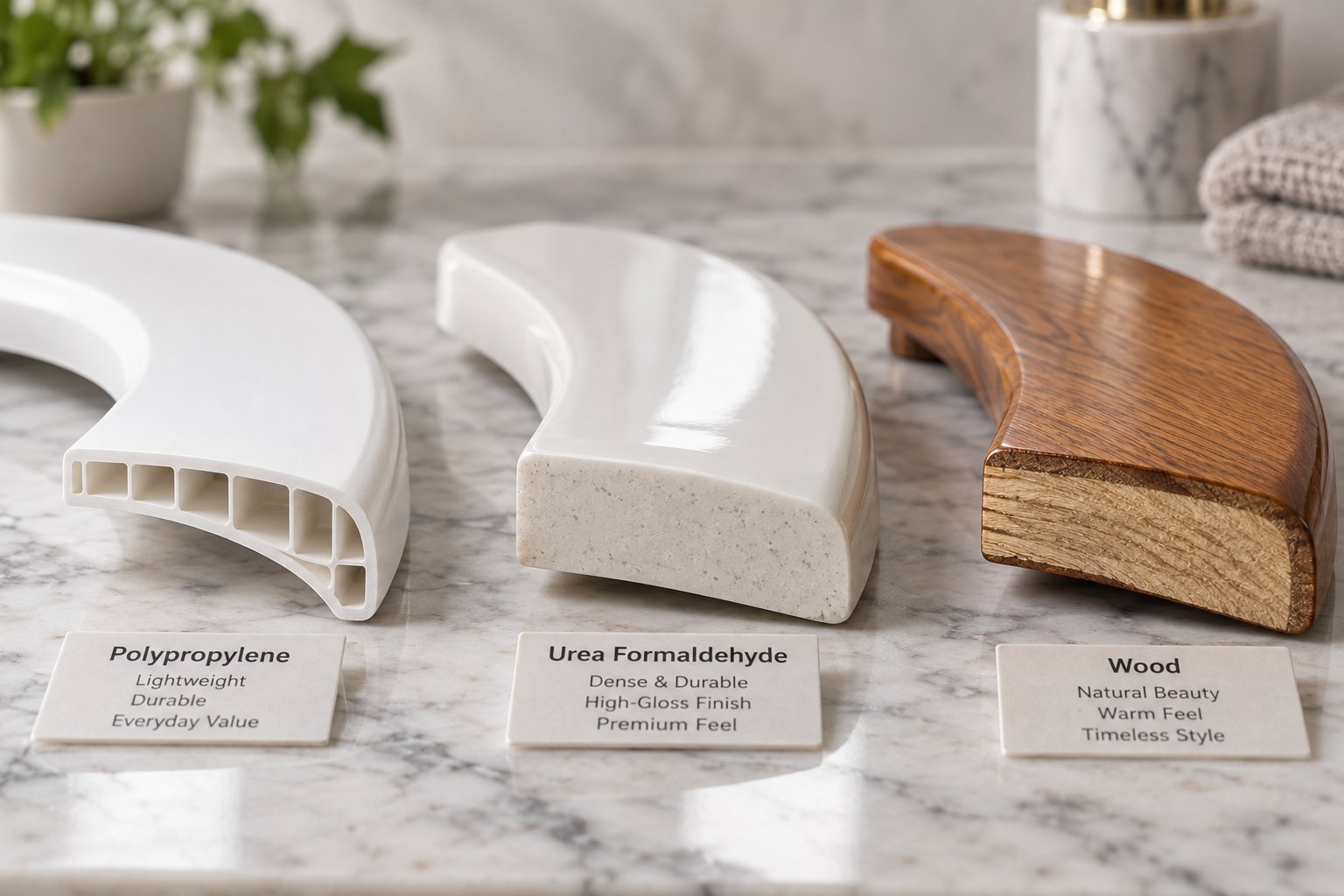
Silent closing and child safety are compelling reasons to upgrade, but the material the seat is actually molded from determines how it feels under you, how it looks after two years of daily use, and whether it still closes smoothly after thousands of cycles. Three material families dominate the market for elongated slow close seats: polypropylene (PP), urea formaldehyde (UF, often marketed as "duroplast"), and wood. Each brings genuine strengths — and trade-offs worth understanding before you commit.
Polypropylene (PP) Seats — Lightweight and Cost-Effective
If you have ever picked up a plastic elongated toilet seat and noticed it felt surprisingly light, you were almost certainly holding a PP seat. Polypropylene is a thermoplastic polymer — meaning it is injection-molded from melted resin granules — and it is the most widely used material for residential toilet seats worldwide.
PP seats resist most household cleaning chemicals, which makes daily maintenance simple. They are easy to mold in a wide range of colors, so finding an elongated toilet seat white or in custom tones is rarely a problem. The price point is approachable too, with most PP seats falling in the $15 to $40 range. For a standard family bathroom that needs a reliable, budget-friendly upgrade, PP delivers solid everyday performance.
The downsides? PP is softer than thermoset alternatives, which means it scratches more easily over time. It can also yellow with prolonged UV exposure or chemical contact, and its lighter weight gives it a less substantial feel compared to premium options. In high-traffic or commercial settings, a PP seat may show wear within a couple of years — perfectly acceptable for a guest bathroom, but potentially limiting for a primary bath that sees heavy daily use.
Urea Formaldehyde (UF) Seats — The Premium Thermoset Option
Pick up a UF seat and the difference is immediate: it feels heavier, denser, and almost ceramic-like in your hand. That is because urea formaldehyde is a thermoset resin — it is compression-molded under high temperature and pressure, creating a rigid, non-porous surface with a glossy finish that closely resembles the look and feel of porcelain.
UF seats excel where PP seats fall short. Scratch resistance is dramatically higher — the thermoset surface shrugs off abrasive cleaners and daily wear that would visibly mark a softer plastic. Color stability is another major advantage: UF does not yellow over time, so a white seat stays white year after year. The dense, non-porous surface also resists stains and bacteria accumulation more effectively than thermoplastics, making it a more hygienic choice for busy households.
These qualities explain why UF is the preferred material for hotels, commercial restrooms, and premium residential installations. The trade-off is cost — UF seats typically run $20 to $70 — and weight, which can make shipping and handling slightly more involved. But for a soft elongated toilet seat that needs to look and feel premium for years, UF is difficult to beat.
Wood Seats — Traditional Aesthetic with Trade-Offs
A soft close wood toilet seat offers something neither plastic material can: warmth. Wood — whether solid hardwood or, more commonly, molded wood (compressed wood particles with a painted or laminated finish) — feels warmer to the touch and brings a classic aesthetic to bathrooms with traditional or rustic design themes.
That said, an elongated toilet seat soft close wood model comes with real maintenance considerations. Wood is inherently susceptible to moisture, and bathrooms are inherently humid environments. Over time, even coated wood seats can absorb water, leading to swelling, warping, or finish degradation. Cleaning requires more care — harsh chemicals can strip the protective finish, accelerating moisture damage. Wood seats are also heavier than PP and can vary in weight depending on species and construction, which can affect how precisely a slow close damper calibrates the descent speed. A damper tuned for a lighter seat may close too quickly under the extra weight of solid wood, or vice versa.
For bathrooms where visual warmth is the priority and the owner is willing to invest in upkeep, wood remains a valid choice. For longevity and hassle-free performance in a slow close application, though, PP and UF are the more practical paths.
| Factor | PP (Polypropylene) | UF (Urea Formaldehyde) | Wood (Molded/MDF) |
|---|---|---|---|
| Weight | Light | Medium-heavy | Heavy (varies by species) |
| Durability | Good — flexible, crack-resistant | Excellent — rigid, chip-resistant | Moderate — susceptible to moisture damage |
| Scratch Resistance | Moderate — scratches with abrasives | Very high — thermoset surface resists marking | Low to moderate — finish dependent |
| Color Stability | Fair — can yellow over time | Excellent — retains color for years | Fair — finish may discolor or peel |
| Chemical Resistance | Good — resists most household cleaners | High — tolerates bleach and strong cleaners | Low — harsh chemicals damage finish |
| Price Range | $15–$40 | $20–$70 | $30–$80+ |
| Best Use Case | Standard residential, budget upgrades | Premium residential, hotels, commercial | Traditional/rustic aesthetic bathrooms |
For most homeowners choosing a toilet seat elongated slow close, the decision comes down to PP for value or UF for premium durability. Wood occupies a niche for those prioritizing aesthetics above all else. OEM manufacturers and sanitaryware brands evaluating PP or UF elongated seat covers at production scale face an additional layer of complexity — the material must pair correctly with the damper, hinge, and fixing system to function as an integrated unit. Tianyun's PP and UF seat cover program addresses this by offering both material options pre-engineered with matched dampers, hinges, and fixing systems, providing a production-ready package rather than requiring brands to source and test individual components separately.
Material, however, is only one dimension of compatibility. The next question is mechanical fit — specifically, whether your toilet requires a universal elongated seat or a model-specific one — and the answer depends on details most shoppers never think to check.
Universal Fit vs Model-Specific Elongated Seats
You have picked your material. You know the damper type you want. You are ready to order — and then a product listing mentions "universal fit" while another says "designed for specific models only." Which one do you actually need? For most people, the answer is simpler than it sounds. But for a meaningful subset of toilet owners, getting this wrong means a seat that wobbles, does not mount flush, or flat-out refuses to attach. Here is how to tell the difference before the box arrives.
Universal-Fit Elongated Seats and Standard Bolt Spread
The vast majority of elongated toilets sold in North America share a single critical dimension: a bolt spread of approximately 5.5 inches (140 mm) between the two mounting holes at the rear of the bowl. This spacing has been an industry standard for decades, and it is the foundation that makes "universal fit" possible.
A universal-fit elongated seat is engineered around this 5.5-inch bolt spread. If your toilet is a standard floor-mounted, two-piece model — the kind with a visible tank bolted on top of a separate bowl — a universal elongated slow close seat will almost certainly install without issues. You line up the hinge brackets over the bolt holes, insert the hardware, tighten, and you are done. No adapter plates, no proprietary brackets, no phone calls to the manufacturer.
This covers a huge portion of the installed base. Standard two-piece toilets dominate American homes, and their bolt hole placement is remarkably consistent across brands. Whether the toilet was made by a major brand or a builder-grade supplier, that 5.5-inch center-to-center measurement holds true in the overwhelming majority of cases. For anyone shopping for a straightforward elongated toilet seat replacement, universal fit is the default — and the right — starting point.
When You Need a Model-Specific Seat
Universal fit works brilliantly — until it does not. Certain toilet designs deviate from the standard mounting configuration in ways that make a universal elongated toilet lid physically impossible to install. These are not rare edge cases either. As bathroom design has trended toward sleeker, more streamlined silhouettes, the number of toilets requiring model-specific seats has grown steadily.
The core issue is access. A standard bottom-bolt toilet seat installs by dropping bolts through the bowl's mounting holes and tightening nuts from underneath. That process assumes you can reach the underside of the bowl rim — and on many modern toilets, you simply cannot. Skirted toilets, for instance, enclose the base and trapway behind smooth ceramic panels, completely blocking access to the underside of the bolt holes. Wall-hung toilets float off the floor entirely, with mounting hardware hidden inside the wall carrier system.
Here are the most common scenarios where a universal elongated seat toilet will not work and you will need a model-specific or specially compatible seat:
- Skirted or fully skirted toilets — The smooth, enclosed base hides the trapway and blocks access to mounting bolt holes from below, requiring proprietary top-mount brackets or brand-specific hardware.
- Concealed-trapway one-piece models — Similar to skirted designs, these seamless one-piece toilets integrate the tank and bowl into a single form with no gap for standard bolt access.
- Wall-hung toilets — Mounted directly to the wall with no floor contact, these units use entirely different carrier systems and often cannot accept standard aftermarket seats without model-specific adapters.
- Toilets with non-standard bolt spreads — Some imported European or designer models use bolt spacing that differs from the 5.5-inch standard, meaning universal brackets will not align with the holes.
- Commercial installations requiring specific compliance standards — Healthcare facilities, ADA-compliant restrooms, and institutional settings may require seats tested and certified to particular load, hygiene, or accessibility specifications that universal consumer seats do not meet.
If your toilet falls into any of these categories, your best move is to check the toilet manufacturer's documentation for compatible seat models — or note the exact make and model number and cross-reference it with the seat manufacturer's compatibility list. Guessing with a universal seat on a skirted or wall-hung toilet typically ends in a return.
Top-Fix vs Bottom-Fix Mounting Systems
Even among toilets that accept universal-fit seats, the mounting method itself can vary — and understanding the difference saves real frustration during installation.
A bottom-fix toilet seat uses the traditional approach: bolts pass through the mounting holes from above, and you reach underneath the bowl to thread on nuts and tighten them with a wrench. This system is straightforward on open-back, two-piece toilets where the underside of the bowl rim is fully accessible. It is also the mounting style most people picture when they think about a toilet seat replacement elongated or otherwise.
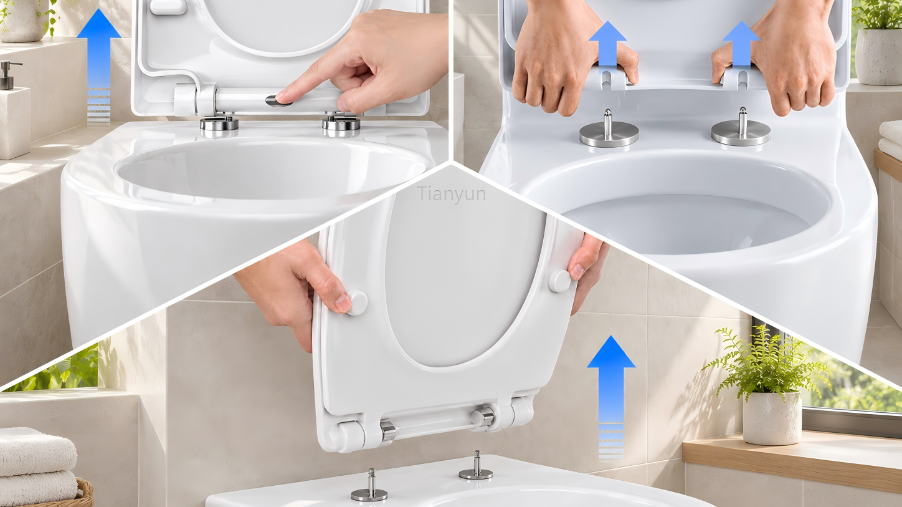
A top-fix toilet seat takes a different approach. Instead of bolts tightened from below, it uses expanding anchors that drop into the mounting holes and lock in place when you tighten a screw from above. No kneeling behind the toilet, no reaching under the bowl, no blind fumbling for nuts in a tight space. The entire installation happens from the top — which is why this system has become increasingly common on modern slow close seats.
Top-fix is not just more convenient; it is often the only option for back-to-wall and skirted toilets where the underside is inaccessible. Many premium elongated slow close seats now ship with top-fix hardware as the default, with bottom-fix adapters available separately for older toilets. When you are shopping, check the product listing for mounting type — it is usually listed under specifications or installation details — and match it to what your toilet allows.
Compatibility, though, is not just about shape and mounting hardware. For buyers in larger body types — or anyone furnishing a high-traffic commercial restroom — there is a third dimension of fit that most product listings gloss over entirely: weight capacity and what "heavy duty" actually means in structural terms.
Weight Capacity and Heavy Duty Elongated Seat Options
Most toilet seat product pages list dimensions, color options, and material type — then stop. Weight capacity? Rarely mentioned. And when a listing does include the phrase "heavy duty," it almost never defines what that actually means in engineering terms. For buyers in larger body types, families with multiple adults sharing a bathroom, or facility managers furnishing high-traffic restrooms, this information gap is not a minor oversight. It is the difference between a seat that performs reliably for years and one that cracks, loosens, or fails at the hinge within months.
What Heavy Duty Actually Means for Toilet Seats
A standard residential toilet seat — the kind bundled with most new toilets or sold as a basic replacement — is typically designed to support approximately 300 lbs of static user weight. That figure is not printed on most consumer packaging, but it reflects the general engineering baseline for mass-market seats with standard plastic or light-gauge metal hinges.
A heavy duty toilet seat goes beyond that baseline through specific structural upgrades. The term should indicate that the seat has been engineered and, ideally, tested for higher weight capacities — often in the 400 to 500 lb range, with bariatric-tier products reaching 500 to 600 lbs. Critically, the difference between a standard seat and a heavy duty elongated toilet seat is not just a bigger number stamped on the packaging. It typically means genuinely different construction underneath:
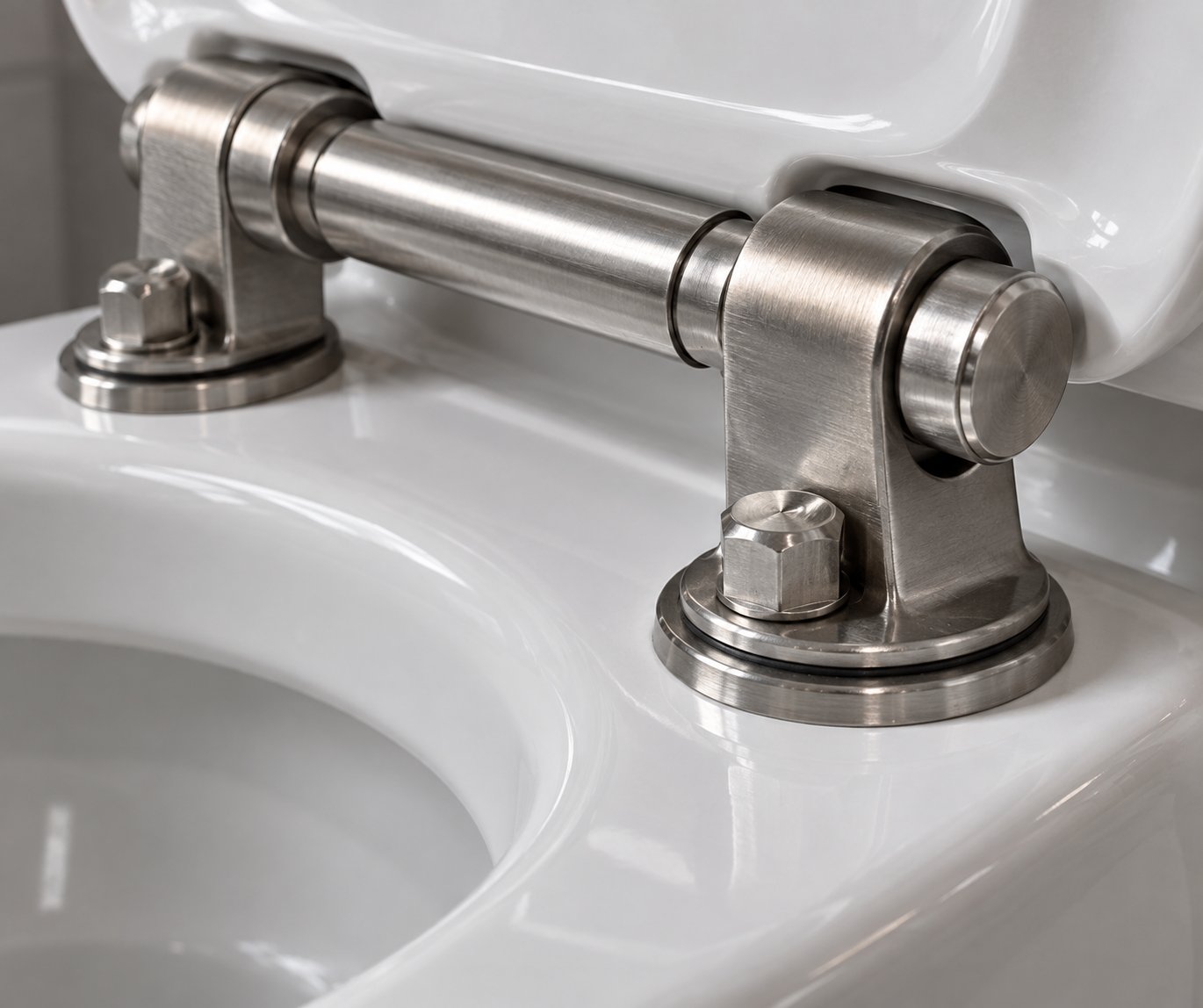
- Reinforced hinges — Stainless steel or zinc-alloy hinges replace standard molded plastic hinge assemblies. Metal hinges distribute stress more evenly and resist the lateral forces that cause plastic hinges to crack or deform over time.
- Thicker seat walls — A thick toilet seat uses more material in the seat ring itself, with increased wall thickness and additional support ribbing molded into the underside. This extra structure prevents flex and bowing under higher loads.
- More robust mounting hardware — Larger-diameter bolts, metal washers, and reinforced anchor points replace the lightweight nylon bolts and wing nuts found on standard seats.
- Integrated bumpers sized for load distribution — Larger, firmer rubber bumpers on the underside of the seat spread the user's weight more evenly across the bowl rim, reducing point stress on both the seat and the porcelain.
These are not cosmetic upgrades. Each component addresses a specific failure mode that becomes more likely as user weight increases. A seat rated for 300 lbs that is routinely loaded to 280 lbs has very little safety margin — and the first component to give is almost never the seat surface itself.
Choosing an Elongated Slow Close Seat for Higher Weight Capacity
Here is the detail most shoppers miss: when a toilet seat for heavy person use fails, the seat ring is rarely what breaks. The flat seating surface is a broad, load-distributing shape by design. What fails are the hinges, the mounting bolts, and the connection point between the seat and the bowl. These are the stress concentrators — the narrow points where all the user's weight funnels through a small area of material.
This means that anyone shopping for an elongated toilet seat heavy duty enough for higher weight capacities should evaluate the hinge system first and the seat surface second. A beautifully molded UF seat ring means very little if it is attached to the bowl with plastic snap-fit hinges and thin nylon bolts.
When evaluating a heavy duty elongated toilet seat with slow close functionality, focus on these specific components:
- Hinge material — Stainless steel or zinc alloy is the standard for heavy duty applications. Avoid seats that rely on molded plastic hinge posts, even if the seat ring itself is premium UF or reinforced PP.
- Bolt diameter and material — Thicker stainless steel bolts resist bending and shearing forces far better than standard nylon mounting hardware. Look for bolts that are visibly heavier gauge than the typical consumer seat bolt.
- Seat wall thickness — Press on the center of the seat ring. A heavy duty seat should feel rigid with minimal flex. Visible ribbing on the underside is a good indicator of reinforced construction.
- Integrated bumpers — Larger bumpers that sit flush against the bowl rim help distribute load and prevent the seat from rocking under lateral movement. Small, thin bumpers are a red flag on any seat claiming heavy duty status.
- Slow close damper rating — This is the detail almost no one checks. A damper calibrated for a lightweight PP seat may not control the descent properly on a heavier, reinforced seat — and it certainly may not handle the additional downward force created when a heavier user sits and then stands. Ask whether the damper mechanism is specifically rated for the seat's target weight capacity, not just its own material weight.
An oversized toilet seat that combines slow close functionality with genuine heavy duty construction does exist — but it requires all of these components to be engineered as a matched system. A standard consumer damper bolted onto a reinforced seat frame is a mismatch that often leads to premature damper failure or inconsistent closing speed.
Commercial and Institutional Heavy Duty Requirements
Residential buyers can evaluate seats based on specifications and common sense. Commercial and institutional settings — hospitals, rehabilitation facilities, public restrooms, and bariatric care environments — operate under a different set of expectations entirely.
In these environments, a heavy duty commercial toilet seat needs more than a manufacturer's printed weight claim. Facilities managers and procurement teams should look for documented load testing to a recognized standard. DIN 19516, the German standard widely used across the global toilet seat industry, defines specific test methods including static load testing, dynamic drop tests (a 75 kg weight dropped from 30 mm for 15,000 cycles), and side-movement tests that measure lateral hinge stability under force. An oversize toilet seat intended for commercial or bariatric use should come with a testing report referencing a specific standard and the exact model tested — not just a weight number printed on the retail listing.
The distinction matters because, as mobility-equipment testing frameworks demonstrate, a weight capacity is meant to be a tested engineering rating rather than a marketing round number. A well-documented 400 lb rating tested under DIN 19516 with static, impact, and fatigue data is more trustworthy — and more useful — than an unverified 600 lb claim with no testing methodology named. For any facility purchasing seats at scale, asking for the test report is a reasonable and necessary step.
Weight capacity ensures structural safety. But even the strongest seat still needs to be properly mounted — and for many buyers, the installation process itself feels like the biggest barrier to upgrading. In reality, it is one of the simplest home improvements you can tackle alone.
How to Install an Elongated Slow Close Toilet Seat
Replacing a toilet seat sounds like it should require a plumber, or at least a YouTube tutorial and an hour of frustration. It does not. A slow close elongated toilet seat installs with basic hand tools in about 15 minutes — often less. No modifications to the toilet, no plumbing work, no special skills. You are removing two bolts, cleaning a surface, and tightening two new bolts. That is the entire job.
The reason this feels intimidating is that most product listings skip the installation details entirely, and the ones that include instructions bury them in tiny-print inserts packed inside the box. Here is the full process, broken down so clearly that anyone — renter, first-time homeowner, or experienced DIYer — can handle it confidently on the first try.
Tools You Need — And the Only One That Matters
You will not need a toolbox full of specialty equipment. Most toilet seat installations require two tools at most, and many modern seats reduce that to zero by including hand-tightened hardware. Here is what to have on hand:
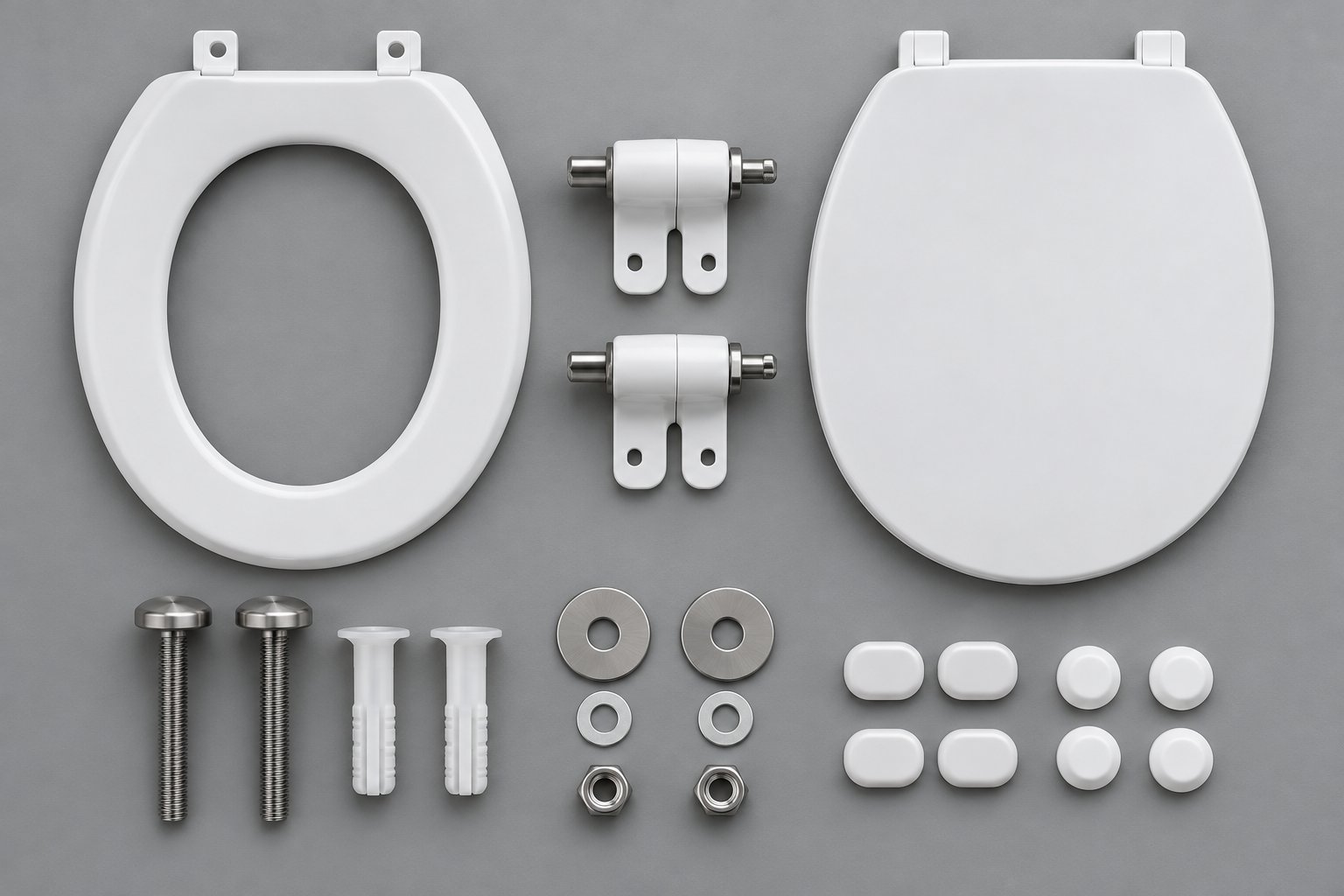
- An adjustable wrench or pliers — for holding or turning the nuts on the old seat's mounting bolts. This is the one tool that truly matters, especially if the old hardware is corroded or over-tightened.
- A flathead or Phillips screwdriver — for loosening bolt heads from above, and for prying open any plastic bolt caps covering the old hardware.
- Penetrating oil (like WD-40) — only needed if the old bolts are rusted, corroded, or have not been touched in years. Keep a can nearby just in case.
- A damp cloth and household cleaner — for wiping down the mounting area between removal and installation.
That is the full list. Many modern toilet seat elongated soft close models ship with all mounting hardware included — bolts, nuts, washers, and sometimes even a tightening tool — so you may not need to supply anything beyond what comes in the box. Some premium seats use hand-tightened wing nuts that require no wrench at all, reducing the entire installation to a completely tool-free process.
Removing the Old Toilet Seat
Before the new seat goes on, the old one has to come off. This is usually the hardest part of the job — not because it is complex, but because old mounting hardware can seize up over time. Patience and a systematic approach keep it straightforward.
- Locate the two mounting bolts. Look at the back of the seat where it connects to the bowl. You will find two bolts — one on each side — positioned about 5.5 inches apart. On most seats, these are hidden under small plastic caps that snap shut over the bolt heads.
- Open the bolt caps. If plastic covers are present, pry them open gently with a flathead screwdriver or simply flip them up with your fingernail. This exposes the bolt heads underneath.
- Loosen the bolts. For a standard bottom-fix seat, hold the bolt head from above with a screwdriver while reaching underneath the bowl to loosen the nut with pliers or a wrench. Turn the nut counterclockwise. For a top-fix seat, the process reverses — you tighten and loosen from above while the anchor holds from below.
- Deal with corroded or stuck bolts. If the bolts will not turn, do not force them — you risk cracking the porcelain. Instead, spray penetrating oil on both the top and bottom of the bolt and wait five to ten minutes. The oil seeps into the corroded threads and breaks the bond. If the bolt still will not budge after a second application, a mini hacksaw can carefully cut through the bolt shaft — just protect the porcelain with a towel and work slowly.
- Lift the old seat off. Once both bolts and nuts are removed, the seat lifts straight up and off the bowl. Set it aside along with all old hardware — do not reuse corroded bolts or worn washers with the new seat.
The entire removal typically takes under five minutes for hardware in decent condition. Corroded bolts can extend that to ten or fifteen minutes with the oil soak, but even worst-case scenarios rarely require professional help. As plumbing professionals note, most homeowners can handle this with a screwdriver and pliers — calling a plumber for a toilet seat removal is almost never necessary.
Installing the New Elongated Slow Close Seat
With the old seat removed and the bolts cleared, installation is a mirror image of the removal — just cleaner and faster because everything is new.
- Clean the bolt hole area. Wipe down the entire rear rim of the bowl where the old seat sat, paying particular attention to the area around the bolt holes. Years of use leave grime, mineral buildup, and cleaning product residue in this zone. A damp cloth with a mild household cleaner handles it. Make sure the surface is dry before proceeding — moisture under the new seat's bumpers can cause sliding later.
- Align the hinge brackets over the bolt holes. Set the new seat on the bowl and position the hinge brackets so the bolt holes in the brackets line up directly over the bolt holes in the porcelain. Most seats have some lateral adjustment built into the bracket slots, so exact placement does not need to be perfect at this stage.
- Insert bolts and hand-tighten. Drop the mounting bolts through the bracket slots and into the bowl's bolt holes. Thread the nuts onto the bolts from below (for bottom-fix) or engage the expanding anchors from above (for top-fix). Hand-tighten only at this point — do not reach for the wrench yet.
- Center the seat on the bowl. With the bolts loosely in place, slide the seat left or right until it is perfectly centered. Check that the overhang is even on both sides and that the front of the seat aligns with the front curve of the bowl. This is the step most people skip, and it is the reason seats end up sitting crooked.
- Tighten bolts firmly — but do not overtighten. Using your wrench or the included tightening tool, snug the bolts down until the seat feels solid and does not shift laterally. Then stop. Overtightening is a real risk here: too much torque on the bolts can crack the porcelain around the mounting holes, and a cracked bowl is a far more expensive problem than a loose seat. If the bolts feel secure and the seat does not rock or slide when you press on it, they are tight enough.
- Test the slow close function. Lift the lid to a full 90-degree upright position and release it. It should begin descending immediately at a controlled, even pace — taking roughly five to eight seconds to reach the bowl rim — and touch down silently. Repeat with the seat ring alone (lid already down) to confirm both components operate smoothly. If the descent is uneven or the lid drops faster on one side, check that both hinge bolts are equally tight and that the hinge brackets are seated flat against the bowl.
That is it. Start to finish, the installation of a toilet seat with slow close takes most people 10 to 15 minutes, including the cleaning step. No modifications to the toilet, no silicone, no drilling, and no plumber on speed dial.
Troubleshooting Common Installation Issues
Even a straightforward installation can produce a couple of minor headaches. Here are the two most common post-installation problems and how to solve them on the spot.
The seat slides laterally. You sit down and the seat shifts to one side. This is the most frequently reported toilet seat issue, and the fix is almost always the same: the mounting bolts are not tight enough. Remove yourself from the seat, snug each bolt another quarter turn, and test again. If tightening alone does not solve it, place rubber washers between the bolt head and the hinge bracket — these add friction and grip that prevent lateral movement. Many slow close seats include rubber washers in the hardware kit for exactly this purpose. As plumbing manager Kendall Craig of Fox Service Company advises, "the hardware should be snug but not overly tight" — finding that balance eliminates sliding without risking porcelain damage.
The seat does not sit level. One side of the seat touches the bowl rim while the other side has a visible gap. This usually has one of two causes. First, check the underside bumpers — small rubber feet molded into or attached to the bottom of the seat ring. If debris, old adhesive, or a stray washer is trapped under one bumper, it tilts the seat. Clean the bowl rim underneath and press each bumper to confirm it is seated flat. Second, the bowl rim itself may be slightly uneven — this is more common with older toilets where mineral deposits have built up along the rim. A light scrubbing with a non-abrasive pad along the top edge of the porcelain usually restores a flat, even surface.
If the slow close mechanism itself seems too fast or inconsistent after installation, do not try to adjust or disassemble the damper. Most residential dampers are sealed units calibrated during manufacturing. An uneven closing speed is more often a sign of misaligned hinges or unequal bolt tension than a faulty damper. Equalize your bolt tightness on both sides, confirm the brackets are flat, and test again — the problem almost always resolves.
Installation, as it turns out, is the easy part. The harder question — and the one that determines whether you will be repeating this process in 18 months or enjoying a decade of silent closes — is what separates a seat built to last from one designed just to sell.
Quality, Maintenance, and Choosing a Slow Closing Toilet Seat That Lasts
A slow close toilet seat elongated to fit your bowl, mounted correctly, and made from the right material should feel like a permanent upgrade — something you install once and forget about for years. Some seats deliver on that promise. Others start closing faster within months, develop a sluggish hinge within a year, and eventually slam shut as if the damper never existed. The difference is not luck. It is engineering, and it comes down to components most buyers never think to examine before purchasing.
What Separates a Premium Slow Close Mechanism from a Budget One
The damper is the heart of every soft-close toilet seat, and damper quality is the single most important factor determining whether your seat still closes silently in year five or starts slamming again by month eight. Understanding what is inside that small hinge component explains why two seats at different price points can look identical on the shelf yet perform very differently over time.
Budget-tier seats frequently rely on friction-based damping systems. These use material-on-material resistance — essentially, two surfaces rubbing against each other — to slow the lid's descent. The problem is that friction surfaces wear down with every single cycle. The more you use the seat, the less resistance remains, and the faster the lid drops. Within a few thousand cycles — which a busy family bathroom can reach in well under a year — the "slow close" function has noticeably degraded. Within two years, many friction-based seats close at nearly free-fall speed.
Premium seats use precision hydraulic or pneumatic dampers. These operate on fluid resistance rather than surface friction. A rotary damping mechanism controls resistance through internal structures and damping fluid, producing smooth, consistent torque output across the entire closing arc. Because the damping force comes from fluid dynamics rather than material degradation, these systems maintain their closing speed far longer — high-quality hydraulic dampers are tested to 50,000 to 100,000 open-close cycles before any measurable change in performance. At five uses per day, that translates to roughly 27 to 55 years of consistent, silent operation.
Hinge construction matters just as much. The damper lives inside — or is attached to — the hinge assembly, and if the hinge fails, the damper becomes irrelevant. Here is what to look for when comparing a toilet seat soft close model built for longevity versus one built to a price point:
- Zinc alloy or stainless steel hinges with integrated dampers — These combine the structural hinge and the damping element into a single, sealed unit. Metal resists corrosion in humid bathroom environments and handles the repetitive stress of daily use without deforming. This is the construction standard in premium residential and commercial seats.
- Plastic hinge assemblies with clip-on damper attachments — Budget seats often use molded plastic hinges with a separate damper component clipped or snapped onto the outside. The clip point is a failure-prone junction: it can loosen, shift, or detach entirely over time. When the damper separates from the hinge — even slightly — the closing speed becomes erratic or the damper stops engaging altogether.
Sealing quality adds another layer. Hydraulic dampers rely on internal fluid to create resistance, and that fluid must stay sealed inside the mechanism. High-quality sealing rings and precision molding prevent micro-gaps that would allow leakage. Once a damper leaks — even a tiny amount — the internal pressure drops, damping force decreases, and the toilet seat cover soft close function degrades permanently. Budget dampers with loose tolerances are far more prone to this type of failure, especially in the high-humidity environment of a bathroom.
Torque matching is the final piece of the puzzle. Every slow closing toilet seat has a specific weight — determined by its material and dimensions — and the damper must be calibrated to control that exact weight smoothly. An undersized damper paired with a heavy UF seat will close too quickly and wear out faster from the excess load. An oversized damper on a lightweight PP seat may cause the lid to close painfully slowly or not fully reach the bowl rim. When the damper, hinge, seat material, and mounting hardware are engineered as a matched system, the result is a closing motion that feels effortless and stays consistent for years. When they are assembled from mismatched components, the weakest link dictates the lifespan.
Maintenance Tips to Maximize Seat Lifespan
Even a well-engineered seat benefits from basic care — and most of it takes less than a minute. The biggest threat to a toilet seat's longevity is not heavy use; it is cleaning habits and user behavior that inadvertently damage the mechanism. Most toilet seats last between five and ten years, but a premium slow close seat with proper maintenance can push well past that upper range.
Here are the care practices that make the difference:
- Avoid abrasive cleaners or bleach-based chemicals directly on hinge mechanisms. Bathroom cleaners containing bleach, ammonia, or abrasive particles are designed for porcelain and tile — not for the precision plastic and metal components inside a damper hinge. Spraying cleaner directly into the hinge area can corrode metal shafts, degrade plastic gears, and dissolve the lubricants that keep the damper operating smoothly. Clean the seat surface and bowl freely, but keep chemical sprays away from the hinge posts.
- Periodically check bolt tightness. Every few months, give each mounting bolt a quick check. Bolts loosen naturally over time from daily use — sitting, standing, and lateral shifting all work against the bolt's grip. A quarter turn with a wrench every few months prevents the wobble-then-crack cycle that shortens seat life. Tightening loose hinges before they wobble too much is one of the simplest ways to extend any seat's usable life.
- Wipe damper hinges with a damp cloth rather than spraying cleaner into the mechanism. If grime builds up around the hinge area — and it will — a soft, damp cloth is all you need. Wipe the exterior of the hinge posts and barrel clean. Do not spray liquid cleaner into the hinge gap or try to flush the damper interior. The damper is a sealed system; introducing external moisture or chemicals can compromise the seal and degrade the damping fluid inside.
- Never force the lid down manually. This is the habit that kills slow close dampers faster than anything else. When someone pushes the lid down forcefully — impatient with the slow descent — they are applying external force that the damper must absorb on top of the lid's own weight. Repeatedly overwhelming the damper this way accelerates internal wear, stretches seals, and can permanently alter the calibrated closing speed. Let the mechanism work. The whole point is that you release and walk away.
- If the lid begins descending too quickly, replace the seat rather than attempting a damper repair. A damper that has lost its controlled pace has typically suffered internal seal failure or fluid loss — issues that are not field-repairable on most consumer seats. Some modular designs allow you to swap just the damper cartridge, but for integrated-damper seats, a full replacement is the practical path. Continuing to use a failed damper negates every benefit — noise prevention, child safety, porcelain protection — that justified the upgrade in the first place.
One additional tip that applies specifically to wood seats: dry the seat after cleaning so excess water does not sit on the surface. Moisture left on wood or MDF finishes can seep into micro-cracks in the coating and accelerate warping or peeling — shortening the seat's lifespan well below what the damper mechanism itself could support.
Choosing a Production-Ready Slow Close Seat Program
For individual homeowners, the selection process boils down to three decisions: material, damper quality, and mounting compatibility. Choose PP for a reliable, budget-conscious upgrade. Choose UF for a premium feel with superior scratch and color resistance. Confirm your bowl shape and bolt spread, verify the mounting system (top-fix or bottom-fix), and check that the damper is a sealed hydraulic or pneumatic unit rather than a friction-based system. Those three checkpoints — material, mechanism, and fit — filter out the majority of seats that disappoint within a year.
For sanitaryware brands and OEM toilet seat manufacturers sourcing elongated slow close seats at production scale, the equation is more complex. Each of those three variables must be resolved not as an individual purchasing decision but as an integrated engineering system. The damper must be calibrated for the specific seat weight. The hinge must be structurally matched to the seat material and intended load capacity. The fixing system must align with the toilet models the seat is designed to fit. Sourcing these components from separate suppliers and assembling them into a cohesive product introduces variability at every junction — and variability is what causes inconsistent closing speeds, premature damper failure, and warranty returns.
Tianyun's PP and UF seat cover program addresses this directly by offering both material options engineered with matched dampers, hinges, and fixing systems from a single source. The damper-to-hinge integration discussed throughout this article — the torque matching, the seal quality, the calibrated closing speed — is resolved at the design stage rather than left to the assembler. For brands evaluating production-ready programs rather than sourcing individual components, this matched-system approach eliminates the most common failure points before the first seat ships.
The slow close mechanism is only as reliable as the damper and hinge system it is built on — always evaluate these components as a matched system, not as individual parts.
Whether you are a homeowner replacing a single cracked seat or a manufacturer building a product line, the principle is identical. A slow close seat is not a seat with a damper bolted on — it is a system where every component, from the material of the seat ring to the fluid inside the damper to the metal in the hinge post, works in concert. Get that system right, and the 3 AM slam stays gone for good.
Frequently Asked Questions About Elongated Slow Close Toilet Seats
1. Is there a difference between a slow close and a soft close toilet seat?
No meaningful mechanical difference exists between them. 'Slow close,' 'soft close,' and 'quiet close' are different branding terms used by various manufacturers for the same technology — a damper mechanism built into the hinge that controls the lid's descent speed. Some brands choose 'soft close' to emphasize the gentle feel, while others prefer 'slow close' to highlight speed control. When shopping, treat these labels as interchangeable and focus instead on the damper type (hydraulic vs. friction-based) and hinge material, which actually determine performance and longevity.
2. How do I know if my toilet needs an elongated or round seat?
Grab a tape measure and check two dimensions. First, measure from the center point between the two rear mounting bolt holes straight forward to the front edge of the bowl rim. A reading of approximately 18 to 18.5 inches means you have an elongated (oval) bowl; around 16 to 16.5 inches indicates a round bowl. Second, measure the width at the widest point to confirm you have a standard-size bowl. This 60-second check prevents the most common toilet seat purchasing mistake — ordering the wrong shape, which results in poor fit, rocking, and visible gaps.
3. How long do slow close toilet seats typically last?
Lifespan depends heavily on the damper type. Budget seats with friction-based dampers may lose their controlled closing speed within one to two years as the friction surfaces wear down. Premium seats with sealed hydraulic or pneumatic dampers are tested to 50,000 to 100,000 cycles, which translates to roughly 27 to 55 years at average household use. Hinge material also matters — stainless steel or zinc-alloy hinges outlast plastic assemblies significantly. Proper maintenance, such as avoiding forcing the lid down and keeping chemical cleaners away from the hinge mechanism, further extends the seat's functional life.
4. Can I install an elongated slow close toilet seat myself without a plumber?
Yes — it is one of the simplest home upgrades you can do alone. The entire process involves removing two bolts from the old seat, cleaning the mounting area, and tightening two new bolts for the replacement. Most installations take 10 to 15 minutes with just an adjustable wrench and a screwdriver. Many modern slow close seats ship with all hardware included and use hand-tightened wing nuts, making the process virtually tool-free. The only complication arises if old mounting bolts are corroded, which penetrating oil and a few minutes of patience typically resolve.
5. What is the best material for an elongated slow close toilet seat — PP or UF?
It depends on your priorities. Polypropylene (PP) is lightweight, chemical-resistant, and budget-friendly, typically ranging from $15 to $40 — ideal for guest bathrooms or standard residential use. Urea formaldehyde (UF) is a thermoset material that feels heavier and ceramic-like, with superior scratch resistance and color stability that prevents yellowing over time. UF seats cost $20 to $70 and are preferred for premium residential bathrooms, hotels, and commercial settings. For OEM manufacturers sourcing at scale, suppliers like Tianyun offer both PP and UF options pre-engineered with matched dampers and hinges to ensure consistent slow close performance.
Apply This Insight to Your Project
Tell us what you are building and how the topic “That 3AM Slam Ends Here: Toilet Seat Elongated Slow Close Explained” relates to your application. Our engineering team can help evaluate the next step.