What Exactly Is a Commercial Toilet Seat With Lid
Walk into any public restroom and you'll probably notice something missing from the toilet — a lid. That's not an oversight. Most commercial restrooms are designed that way on purpose. So when someone specifies a commercial toilet seat with lid, they're requesting a very particular product that serves a narrower set of applications than most people realize.
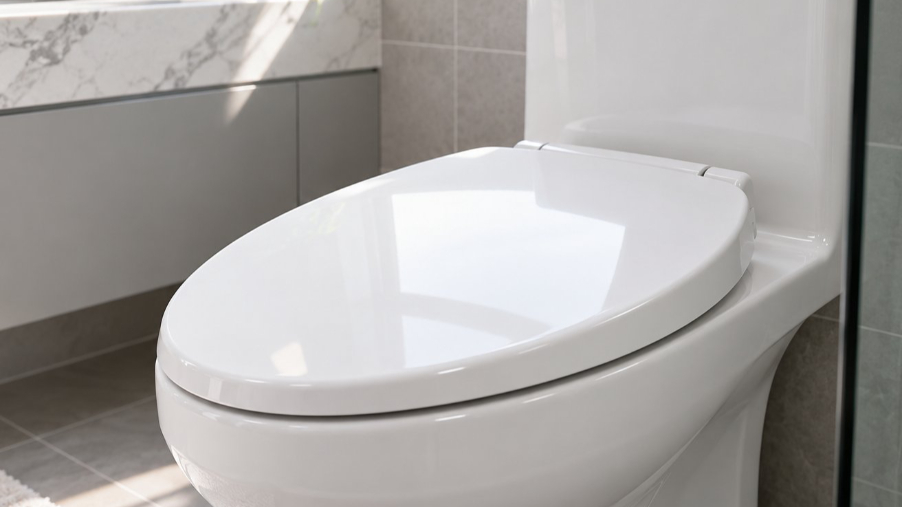
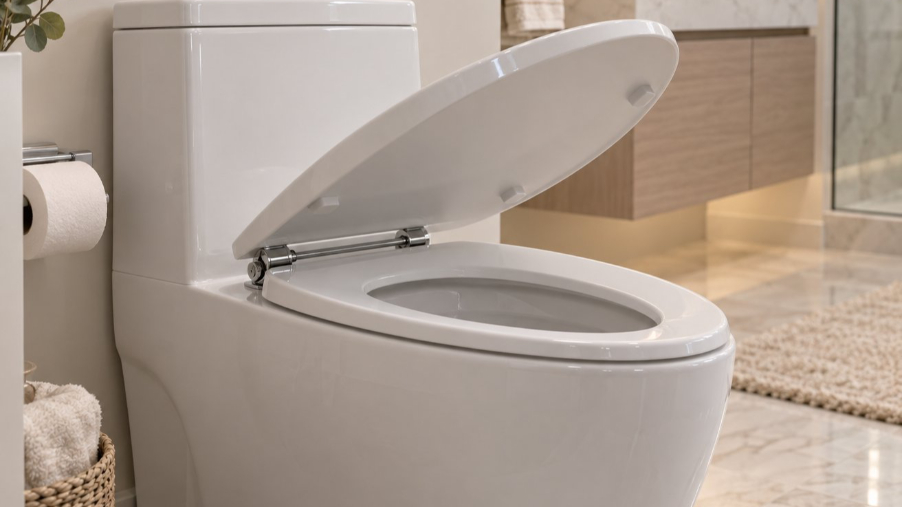
A commercial toilet seat with lid is a closed-front, rigid seat-and-lid assembly engineered for institutional use, featuring reinforced hinges rated for high-cycle operation, commercial-grade materials such as polypropylene or urea formaldehyde, and weight capacities that exceed standard residential thresholds. It is distinct from open-front commercial seats, which dominate public restrooms, and from residential models that lack the durability ratings required for high-traffic environments.
That definition matters more than you might think. The distinction between a lidded commercial seat and its open-front counterpart isn't cosmetic — it carries real implications for code compliance, procurement, and long-term durability.
What Makes a Toilet Seat Commercial Grade
When manufacturers label a toilet seat "commercial grade," they're referring to a specific set of performance benchmarks — not just a heavier look. Imagine a busy airport restroom versus your bathroom at home. The usage volume alone explains why these products need to be built differently.
True commercial-grade seats are defined by several measurable characteristics. The construction is heavier and more rigid, typically using molded polypropylene (PP) or urea formaldehyde (UF) rather than the lighter thermoplastic blends found in most residential products. Hinges are a major differentiator as well: commercial hinges are engineered and tested for thousands of open-close cycles, often using stainless steel or zinc alloy components instead of plastic pins. Many models also incorporate antimicrobial surface treatments — additives molded directly into the seat material to inhibit bacterial growth between cleanings.
Compliance with institutional procurement standards plays a role too. Facilities managed by corporate property groups, healthcare networks, or hospitality chains headquartered at locations like 4650 Cushing Parkway and similar commercial corridors often maintain approved product lists that specify hinge type, material grade, and load rating. A standard Kohler toilet seat designed for residential bathrooms, for example, won't appear on these lists — even if a Kohler WC seat from the company's commercial division might. The word "commercial" in this context always points back to durability ratings, material specifications, and hinge longevity rather than simply how the seat looks on the bowl.
Why the Lid Distinction Matters in Commercial Restrooms
Here's where things get interesting — and where many procurement teams run into trouble. The vast majority of public commercial restrooms use open-front seats without lids. This isn't a design preference; it's a plumbing code requirement in most U.S. jurisdictions. That makes the closed-front seat with a lid a specific product category reserved for distinct facility types such as hotel guest rooms, private offices, and healthcare patient rooms.
To be clear, this article addresses rigid seat-and-lid assemblies — the permanently mounted, hinged components bolted to the bowl. We're not talking about disposable paper seat covers, which serve an entirely different hygiene function.
Understanding what separates a commercial lidded seat from both residential products and open-front commercial seats comes down to a handful of key differentiators:
- Hinge cycle rating — commercial hinges are tested for tens of thousands of cycles, while residential hinges may fail after a fraction of that use
- Material grade — PP and UF dominate commercial applications due to chemical resistance and structural rigidity
- Weight capacity — commercial seats are rated for higher static loads to accommodate diverse user populations and ADA requirements
- Code classification — whether a seat is open-front or closed-front with a lid determines where it can legally be installed
- Antimicrobial properties — built-in surface treatments are standard in commercial models but rare in residential lines
Each of these factors feeds directly into the compliance question that trips up so many facility managers: just because a seat has a lid and looks appropriate for a commercial restroom doesn't mean local plumbing codes will allow it there. The difference between "permitted" and "required" depends entirely on how the restroom is classified — a distinction that hinges on whether the space serves the public or a restricted group of users.
Open-Front vs Closed-Front Seats and When a Lid Makes Sense
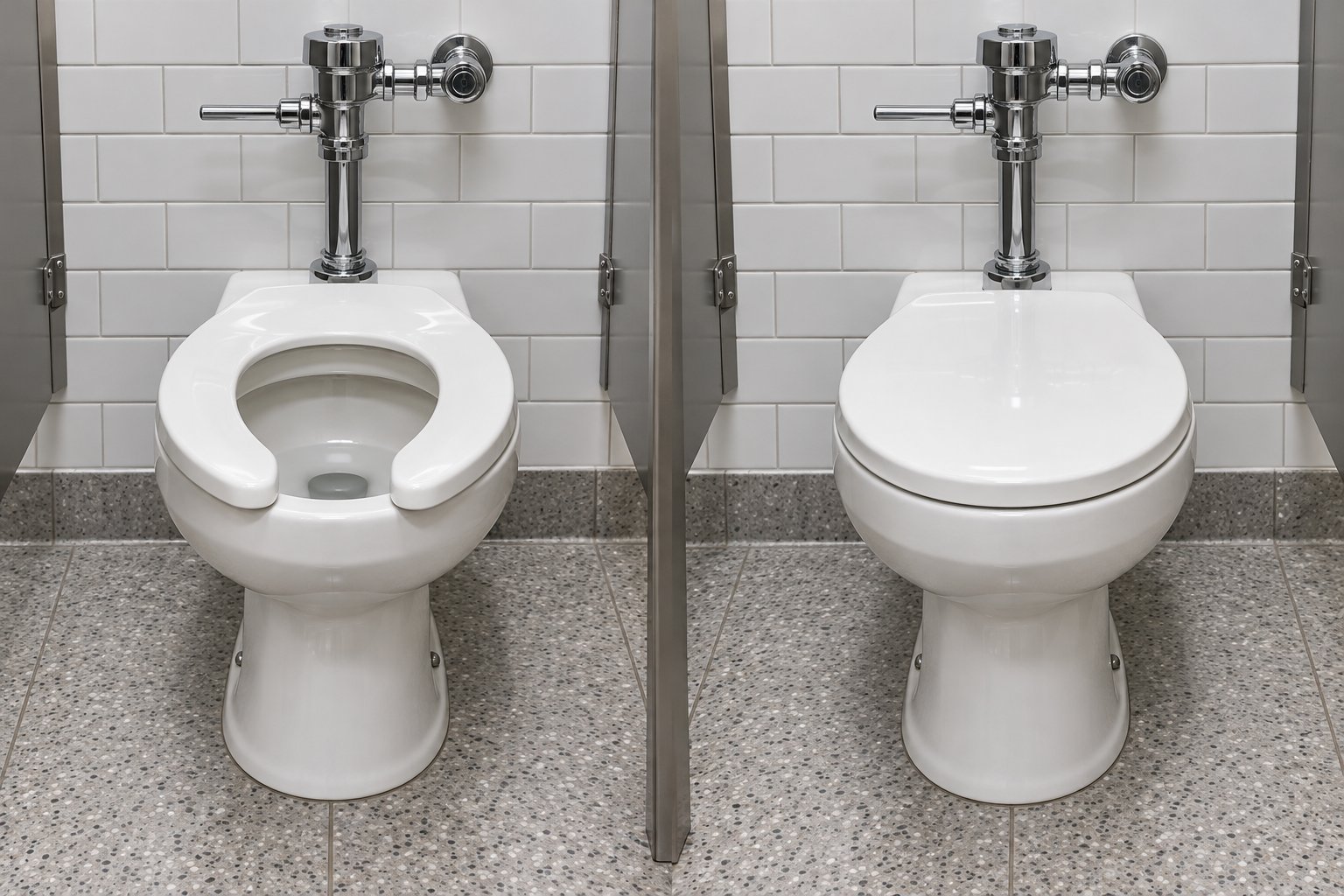
That compliance question — whether a lidded seat is even allowed in a given restroom — starts with a fundamental product distinction most people never think about. Every commercial toilet seat falls into one of two categories: open-front or closed-front. The shape of the seat's front edge, and whether a lid accompanies it, determines not just the look of the restroom but whether the installation will pass inspection.
Open-Front Seats and Their Role in Public Restrooms
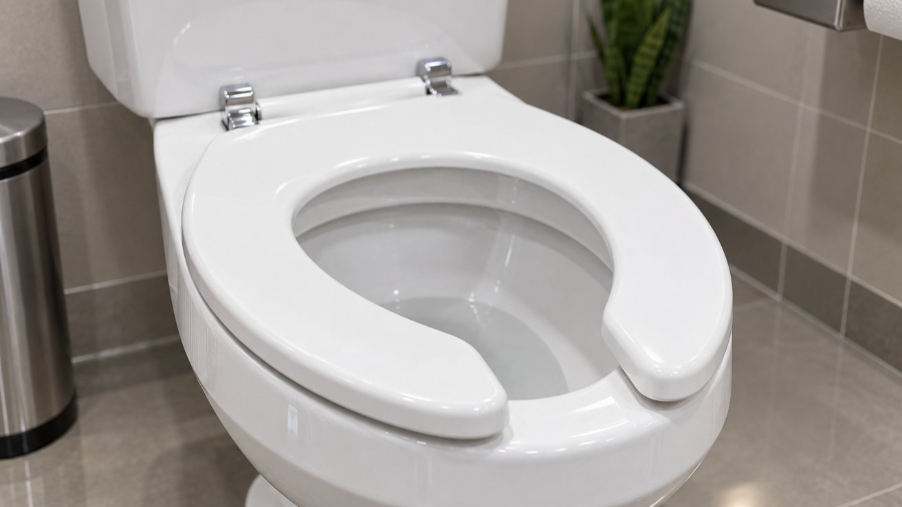
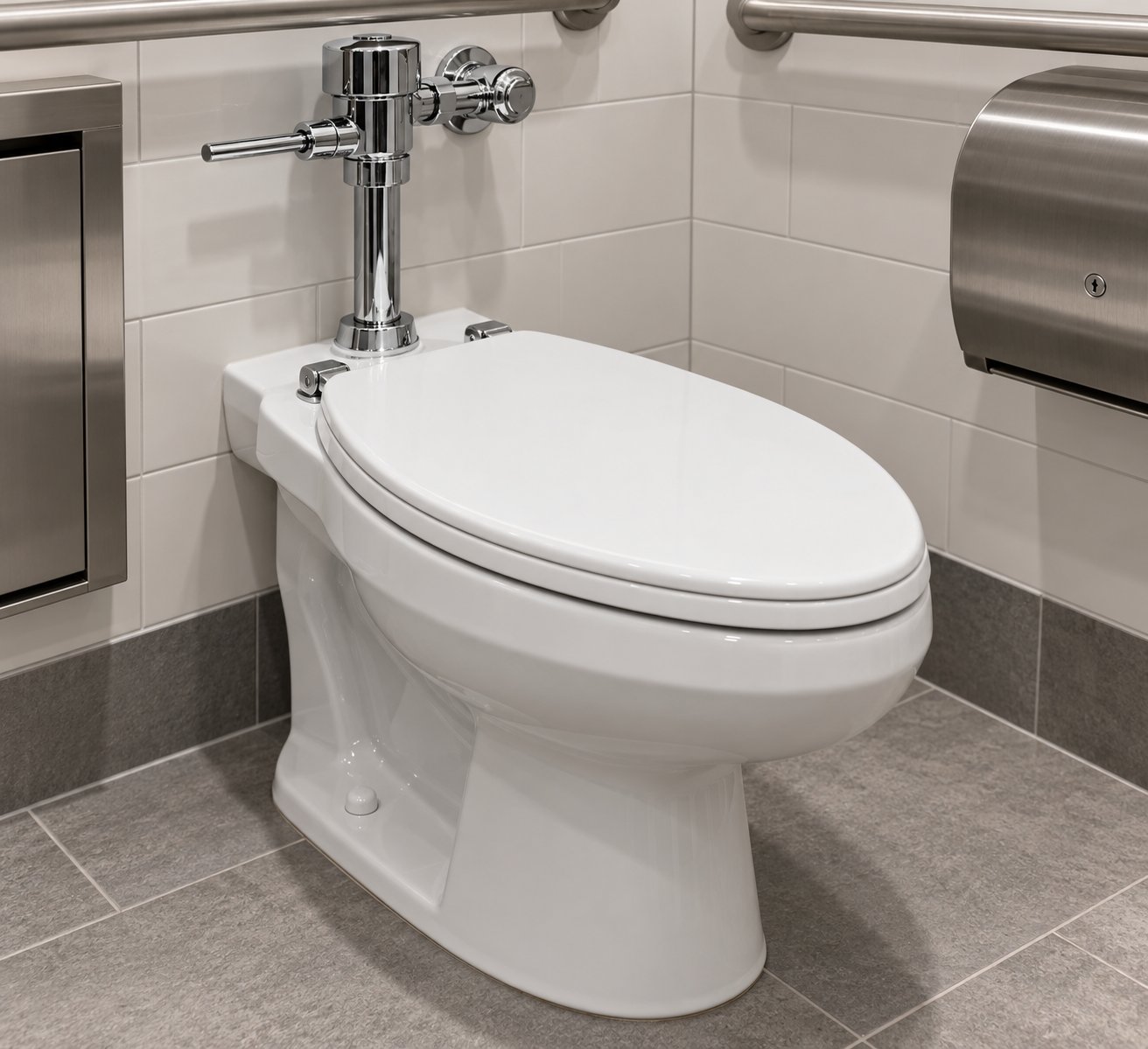
If you've ever noticed the U-shaped gap at the front of a toilet seat in a mall, office lobby, or airport, that's an open-front seat — and it's there by code, not by accident. Plumbing codes across most U.S. jurisdictions require open-front seats in toilet rooms intended for public or employee use. The 2021 International Plumbing Code (IPC) Section 425.3 states that seats in public or employee toilet facilities "shall be of the hinged open-front type." Uniform Plumbing Code (UPC) jurisdictions enforce similar language.
The reasoning is purely hygienic. The open front reduces direct contact between the user and the seat surface in the area most likely to encounter contamination. It also makes the bowl easier for custodial teams to clean without lifting or working around a closed seat front. For facilities handling heavy duty toilet seat requirements — think transit hubs, stadiums, and convention centers — open-front models are both the legal default and the practical one.
Where Closed-Front Seats With Lids Are Permitted or Preferred
Closed-front seats with lids occupy a different niche entirely. They're the standard in residential bathrooms, and they're permitted in commercial settings that don't qualify as "public-use toilet rooms" under code definitions. Think about the restroom inside a hotel suite, a private executive washroom, or a single-occupancy staff bathroom behind the counter at a boutique. These spaces serve a restricted group of users, and building codes recognize that distinction.
Common scenarios where a closed-front commercial seat with lid is both code-compliant and preferred include staff-only restrooms in corporate offices, hotel guest rooms, patient rooms in hospitals and assisted-living facilities, owner-occupied commercial suites, and executive washrooms. In these environments, specifying a Kohler elongated toilet seat with a lid — or any comparable commercial-grade closed-front assembly — is perfectly acceptable and often expected for design consistency.
The comparison below breaks down how these two seat styles differ across the factors that matter most during specification and procurement:
| Factor | Open-Front (No Lid) | Closed-Front (With Lid) |
|---|---|---|
| Code Requirement | Required in public and employee toilet rooms per IPC 425.3 and UPC equivalents | Permitted in non-public restrooms: private offices, hotel rooms, patient rooms, single-occupancy facilities |
| Typical Setting | Airports, malls, lobbies, multi-stall public restrooms, schools | Hotels, executive suites, healthcare patient rooms, staff-only restrooms |
| Hygiene Considerations | Reduced front-edge contact; easier custodial access to bowl rim | Lid contains aerosols during flushing; full seat surface requires more thorough cleaning |
| Aesthetic Value | Institutional appearance; functional but utilitarian | Residential feel; polished look suited to hospitality and upscale environments |
When a Kohler toilet seat replacement or similar project involves upgrading fixtures in a mixed-use building, the table above becomes a quick reference for deciding which seat type belongs in which restroom. Public lobbies and shared employee washrooms point toward open-front. Private suites and guest-facing bathrooms point toward closed-front with a lid.
The Practical Benefits of Adding a Lid
Beyond code compliance, there are real functional reasons to choose a lidded seat in facilities where it's allowed. The most significant is aerosol reduction. Research into toilet plume — the cloud of microscopic droplets generated during flushing — has shown that closing a lid before flushing substantially reduces the spread of airborne particles. In healthcare settings and infection-control-sensitive environments, this benefit alone justifies the specification.
Odor containment is another practical advantage. A closed lid traps odors within the bowl between uses, which makes a noticeable difference in smaller restrooms like those in boutique hotels or medical exam rooms. For hospitality venues where guest perception drives satisfaction scores, even the visual impression of a closed lid signals cleanliness and attention to detail.
Aesthetics play a role too. A Kohler toilet seats replacement project in a recently renovated corporate office, for instance, will often default to closed-front models with soft-close lids in private restrooms simply because they look more refined. The lid creates a finished, residential appearance that aligns with the design language of upscale commercial interiors — something an open-front seat can never achieve regardless of material quality or brand.
These benefits are compelling, but they only apply in spaces where a lidded seat is actually permitted. The line between "preferred" and "code-compliant" isn't always obvious, and it shifts depending on which plumbing code your jurisdiction has adopted — and how local authorities interpret its exceptions.
Building Codes That Govern Commercial Toilet Seat Selection
Knowing that jurisdictions differ is one thing. Understanding exactly what the codes say — and where they leave room for a lidded seat — is something else entirely. Facility managers and procurement teams who skip this step risk failed inspections, costly retrofits, and project delays that could have been avoided with thirty minutes of code research upfront.
IPC and UPC Requirements for Toilet Seat Selection
Two model plumbing codes dominate commercial construction in the United States: the International Plumbing Code (IPC) and the Uniform Plumbing Code (UPC). Most states and municipalities adopt one of these as their baseline, sometimes with local amendments that tighten or relax specific provisions.
The IPC addresses toilet seat requirements directly. Section 410.1 (renumbered as Section 425.3 in more recent editions) establishes the general mandate: toilet seats in public-use and employee-use toilet rooms shall be of the hinged, open-front type. The UPC contains parallel language with the same practical effect. Neither code bans closed-front seats outright — they restrict them to specific restroom classifications.
Plumbing codes do not prohibit commercial toilet seats with lids universally. They require open-front seats in restrooms classified as public-use or employee-use, while permitting closed-front lidded seats in restrooms that fall outside those classifications.
That distinction is critical. The code doesn't care whether you're installing elongated Kohler toilet seats, Crane toilet seats, or any other brand. What matters is the restroom's classification — public-use or not — and whether the seat style matches the code's requirement for that classification.
Here's where it gets tricky: local jurisdictions don't always adopt model codes verbatim. A city might reference the IPC as its base code but amend the seat provision to include additional exceptions or stricter requirements. Some jurisdictions operating under code series like the 4670 family of local building ordinances may interpret "public use" more broadly or narrowly than the model code intends. You'll never know until you check with the authority having jurisdiction — commonly called the AHJ — in your specific project location.
Exceptions That Allow Lids in Commercial Settings
The good news for facility managers who prefer lidded seats is that the exceptions are broader than many people assume. When a restroom doesn't meet the code's definition of a "public-use toilet room," the open-front mandate simply doesn't apply. A closed-front seat with a lid becomes not just permissible but often the better choice for aesthetics, odor control, and aerosol containment.
The most widely recognized exception categories include:
- Single-occupancy restrooms — A restroom designed for one user at a time with a lockable door typically falls outside the multi-user public-use classification, making a lidded seat a compliant and practical option
- Employee-only restrooms in certain jurisdictions — While the IPC groups employee restrooms with public ones for seat requirements, some local amendments carve out exceptions for staff-only facilities, particularly when access is restricted by keycard or code
- Hotel and hospitality guest rooms — Guest room bathrooms are classified as residential-style private spaces, not public toilet rooms, so closed-front seats with lids are standard and fully compliant
- Healthcare patient rooms — Patient bathrooms in hospitals, assisted-living facilities, and rehabilitation centers serve individual occupants and are generally exempt from the open-front requirement, with lids often preferred for infection control
- Owner-occupied commercial suites — Private offices and executive washrooms serving a small, defined group of users rather than the general public typically qualify for closed-front seat installations
Each exception rests on the same underlying logic: the open-front mandate exists to protect the general public in high-traffic, shared facilities. When a restroom serves a restricted, identifiable group of users — or a single occupant — the hygiene rationale behind the open-front requirement weakens, and codes relax accordingly.
The safest approach before specifying any commercial toilet seat with lid is a direct conversation with your local AHJ. Building inspectors can confirm which code edition your jurisdiction follows, whether local amendments affect seat requirements, and how they classify the specific restroom in question. That five-minute phone call can prevent a much more expensive correction after installation — especially in mixed-use buildings where some restrooms require open-front seats and others across the same hallway are free to use lidded models.
Code compliance, though, only answers the question of what you're allowed to install. It says nothing about which materials will actually survive the demands of a commercial environment — and that's where the real performance gap between seat products shows up.
Commercial Toilet Seat Materials Compared
Material is the single specification that determines how long a commercial toilet seat with lid will last, how it feels under daily use, and how it holds up against the harsh cleaning chemicals custodial teams rely on. Yet it's also the specification most frequently overlooked during procurement. Facility managers often focus on bowl shape, hinge type, or brand name — and then discover six months later that the seat surface is cracking, yellowing, or delaminating because the material wasn't matched to the environment.
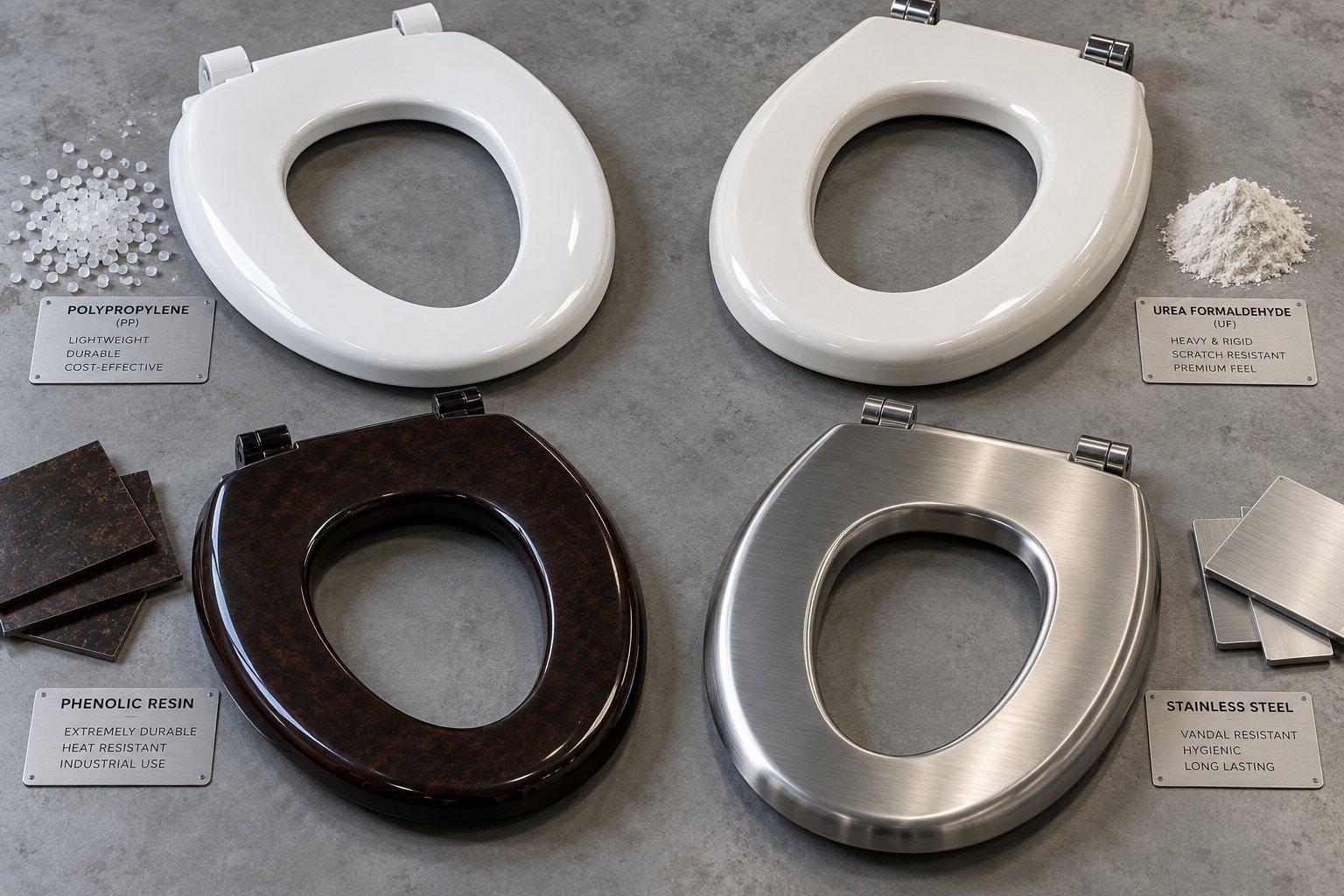
Five primary materials dominate the commercial seat market. Each carries distinct advantages and trade-offs that matter far more than the price printed on a purchase order. The table below lays out the comparison at a glance before we dig into the details.
| Material | Durability | Weight | Chemical Resistance | Best Environment | Relative Cost Tier |
|---|---|---|---|---|---|
| Polypropylene (PP) | Good — flexible under impact, resists cracking | Light | Excellent — tolerates most commercial disinfectants | High-turnover public facilities, schools, offices | Low to Mid |
| Urea Formaldehyde (UF / Duroplast) | Excellent — hard, scratch-resistant, long lifecycle | Heavy | Very Good — resists staining and most cleaning agents | Hotels, upscale offices, healthcare | Mid to High |
| Solid Plastic (Phenolic) | Excellent — extremely hard, vandal-resistant | Heavy | Excellent — withstands aggressive chemicals | Institutional: schools, transit, correctional facilities | Mid to High |
| Molded Wood (Enamel-Coated) | Moderate — vulnerable to chipping and moisture over time | Medium | Moderate — enamel layer protects core but can crack | Hospitality, low-traffic commercial restrooms | Low to Mid |
| Stainless Steel | Superior — virtually indestructible under normal use | Very Heavy | Superior — impervious to nearly all chemicals | Detention facilities, extreme-duty industrial settings | High |
You'll notice that polypropylene and urea formaldehyde sit at the top of the table. That's intentional — these two polymers account for the vast majority of rigid seat-and-lid assemblies specified in commercial projects today, and the choice between them shapes everything from hinge compatibility to lifecycle cost.
Polypropylene and Urea Formaldehyde Seat Assemblies
Polypropylene, commonly abbreviated as PP, is a thermoplastic polymer prized for its combination of low weight, chemical resilience, and manufacturing efficiency. Pick up a PP seat and the first thing you'll notice is how light it feels compared to ceramic or wood alternatives. That lightness isn't a weakness — the material's molecular flexibility gives it strong impact resistance, meaning a PP seat absorbs sudden loads and stress without cracking the way rigid materials might. For high-turnover commercial environments like school restrooms, office buildings, and retail locations, PP delivers a cost-effective solution that tolerates the bleach-based and quaternary ammonium disinfectants custodial teams use daily.
Manufacturing cycle times for PP are shorter as well. The material flows easily during injection molding, which translates to lower per-unit production costs — a meaningful advantage when you're outfitting dozens or hundreds of restrooms across a portfolio. If you've ever browsed toilet seats on Amazon and wondered why some commercial-looking models seem surprisingly affordable, chances are you were looking at PP construction.
Urea formaldehyde — sometimes marketed under the name Duroplast — occupies the opposite end of the spectrum. UF is a thermosetting polymer, which means once it's cured during manufacturing, it cannot be remelted or reshaped. That irreversible curing process produces a surface that's significantly harder, more scratch-resistant, and heavier than PP. Hold a UF seat and it feels almost like glazed ceramic. That ceramic-like density and finish make UF the preferred material for hospitality, upscale corporate restrooms, and healthcare facilities where perceived quality matters as much as actual performance.
Scratch resistance is where UF truly separates itself. In environments where belt buckles, cleaning tools, and constant use abrade seat surfaces daily, a UF seat maintains its smooth finish far longer than PP. The material also offers excellent UV stability, resisting the yellowing that plagues lesser plastics under fluorescent or natural lighting over time.
The trade-offs between these two materials cascade into every downstream specification decision. Hinge compatibility, for instance, varies because PP's lighter weight allows thinner mounting points, while UF's mass and rigidity may require reinforced hinge posts and heavier-gauge hardware. Cleaning chemical tolerance is broadly similar — both handle standard commercial disinfectants well — but PP edges ahead with solvents that might etch a UF surface over prolonged exposure. Lifecycle cost calculations flip depending on the environment: PP wins on upfront price and replacement speed, while UF wins on longevity and reduced replacement frequency in facilities where appearance degradation triggers early swap-outs.
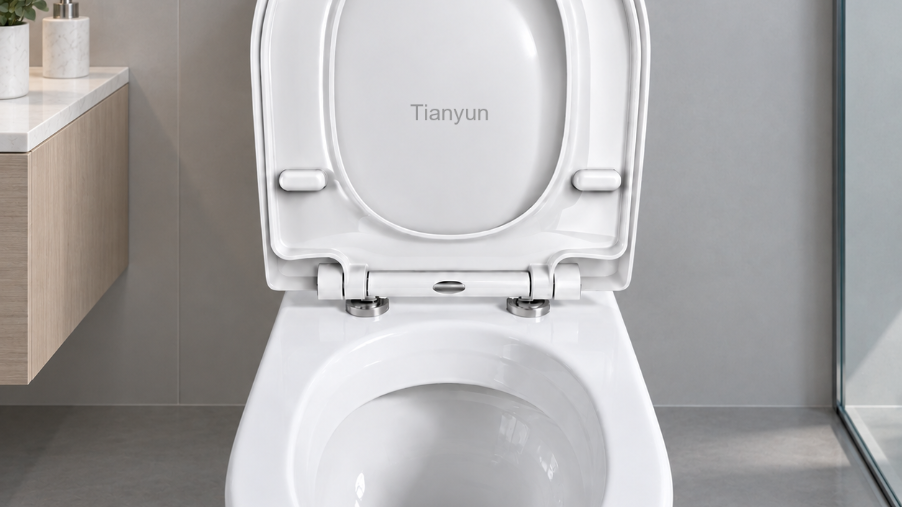
For sanitary ware manufacturers and bathroom brands evaluating both material paths, resources like Tianyun's PP and UF Toilet Seat Cover Collection offer material selection guidance alongside soft-close hinge matching and OEM customization support — a practical starting point for teams developing seat-and-lid assemblies at scale without committing to a single polymer before reviewing production and performance data.
Other Commercial Seat Materials and Their Trade-Offs
Beyond PP and UF, three additional materials fill specialized niches that standard polymer seats can't always address.
Solid plastic (phenolic) seats are the workhorses of institutional restrooms. Phenolic resin creates an extremely hard, dense seat that shrugs off vandalism, graffiti, and aggressive cleaning. Imagine a middle school restroom or a transit station — environments where durability against intentional abuse matters more than aesthetics. Phenolic seats resist cigarette burns, marker stains, and blunt impact better than any other commercial option. The downside is cost and weight. They're heavier than PP, pricier than both PP and molded wood, and their utilitarian appearance limits them to settings where function completely overrides form.
If you've ever needed a toilet seat for a Crane toilet or another legacy brand in an older commercial building, you may have encountered molded wood with enamel coating. These seats consist of compressed wood fibers bonded with resin and finished with a baked enamel surface. The result is a smooth, glossy seat that photographs well in hospitality marketing materials and feels substantial to the touch. Molded wood seats work beautifully in boutique hotels and low-traffic executive restrooms — settings where the seat sees moderate use and regular but gentle cleaning. The vulnerability is moisture. Over years of service, micro-cracks in the enamel can allow water to reach the wood core, leading to swelling, delamination, and eventual failure. In any restroom with heavy cleaning schedules or high humidity, molded wood seats have a shorter practical life than polymer alternatives.
Stainless steel occupies the extreme end of the durability spectrum. These seats are virtually indestructible — resistant to fire, chemical attack, physical abuse, and every cleaning agent imaginable. You'll find them primarily in detention and correctional facilities, psychiatric units, and certain industrial environments where no other material can survive the conditions. The trade-offs are comfort, cost, and user perception. Stainless steel seats are cold to the touch, expensive to fabricate, and create an institutional atmosphere that's entirely inappropriate for hospitality or standard commercial use.
Choosing the right material isn't just a product decision — it's a durability commitment that plays out over years of daily use. A PP seat in a hotel guest room may feel underwhelming to guests who expect a premium touch, while a UF seat in a high-traffic school restroom might be overkill when a less expensive PP model would perform identically. The material has to match the environment, the cleaning regimen, and the user expectations of the specific facility.
Material selection, however, only tells half the story. The other half lives in the hardware holding that seat to the bowl — the hinges and mounting systems that determine whether a commercial seat survives its rated lifecycle or fails prematurely under real-world loads.
Weight Capacity and Hinge Durability Standards That Matter
A seat can be made from the finest urea formaldehyde on the market and still fail catastrophically if the hinges buckle or the assembly can't support the load placed on it. Weight capacity and hinge durability are the two specifications that most definitively separate a genuine commercial toilet seat from a residential product dressed up in commercial packaging — yet they're the two specs buyers check least often before signing a purchase order.
Weight Capacity Differences Between Residential and Commercial Seats
Residential toilet seats are generally engineered for moderate, predictable loads. Most standard residential models are designed around a typical household use scenario where the same small group of people uses the fixture daily. True commercial-grade seats, by contrast, are built for a fundamentally different reality — one where dozens or hundreds of different users sit on the same seat every day, each with varying body types, movement patterns, and sitting behaviors.
The difference matters more than the raw numbers suggest. As engineers at Acorn Engineering have pointed out, a static load rating — say 2,000 pounds — doesn't tell the full story. A person sitting down creates a dynamic load, and the actual force on the seat varies depending on the duration of the action, the person's physical makeup, whether they lower themselves gently or drop suddenly, and even the geometry of the seat itself. A 300-pound person losing their balance generates significantly more instantaneous force than the same person sitting down carefully.
This is why oversized toilet seats and bariatric-rated models exist as a distinct subcategory within commercial products. Bariatric seats feature wider dimensions, reinforced mounting points, and load ratings engineered to accommodate users well above average weight thresholds. Floor-mounted toilet configurations further improve safety in bariatric applications because weight transfers directly from the bowl to the floor structure rather than relying on wall carriers.
One important caveat: don't rely on general marketing claims about weight capacity. Always verify specific load ratings directly from the manufacturer's spec sheet. A product page might say "heavy-duty" or "commercial grade" without disclosing whether the rating refers to static load, dynamic load, or a standardized test protocol. The numbers on the engineering data sheet — not the product title — are what matter during specification.
Hinge Durability and Cycle Ratings
If weight capacity determines whether a seat survives individual moments of use, hinge durability determines whether it survives the cumulative effect of months and years of operation. Imagine a restroom in a busy office building where each toilet sees 40 to 60 uses per day. Every use involves at least one open-close cycle of the seat — and if a lid is present, that's a second cycle. Over the course of a year, a single set of hinges in that restroom absorbs somewhere between 15,000 and 45,000 cycles.
Manufacturers test hinges by subjecting them to repeated open-close cycles under controlled conditions until the mechanism fails or degrades beyond acceptable tolerances. Reputable producers, as noted in quality testing frameworks by firms like COMSAN, run mechanical strength and durability tests that reproduce real and extreme conditions of use to ensure years of trouble-free performance. A residential hinge rated for a few thousand cycles will wear out in a matter of months under commercial traffic. A properly rated commercial hinge, built with corrosion-resistant metals and precision tolerances, will maintain consistent tension and alignment across its full rated lifecycle.
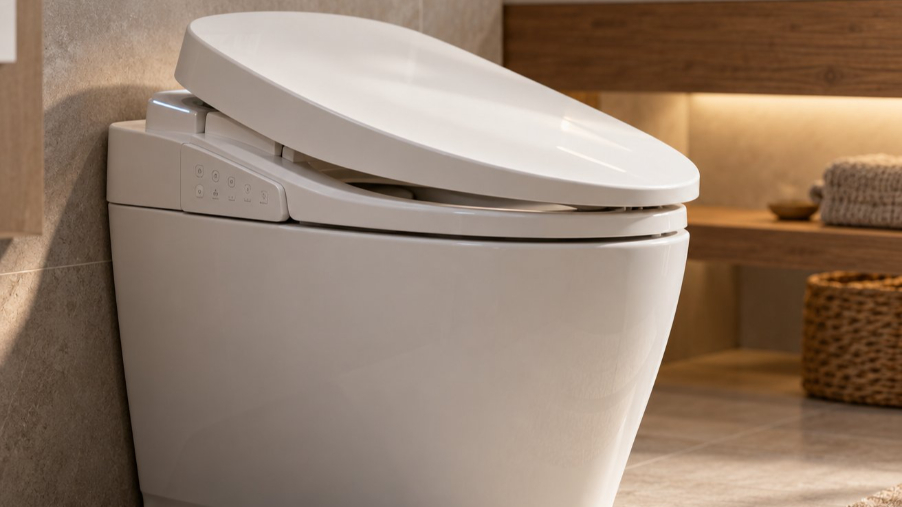
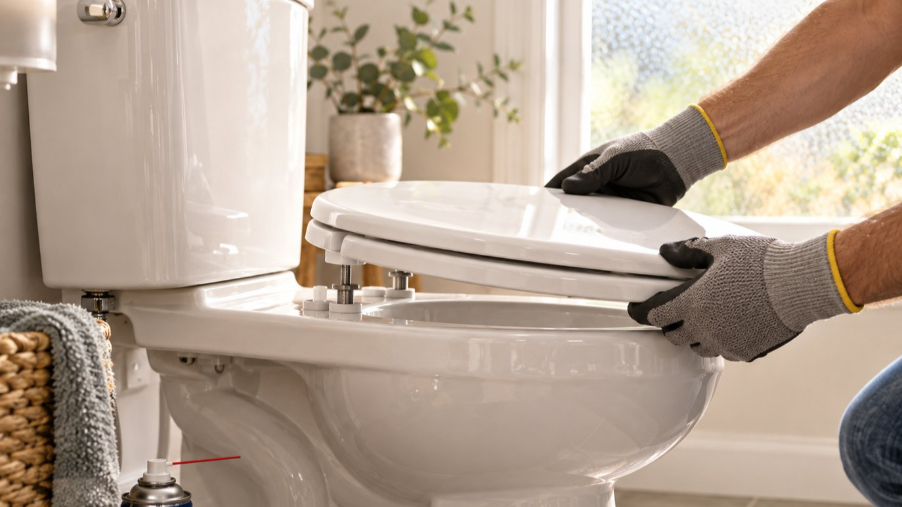
Three hinge mechanisms dominate commercial installations. Top-tightening hinges are the most common — they bolt through the seat and tighten from above, making adjustment and replacement straightforward without accessing the underside of the bowl. Bottom-mount hinges secure from beneath the mounting holes and offer a cleaner top surface, though they require more effort to service. Check-hinge or slow-close mechanisms use a damper that controls the closing speed, preventing the seat or lid from slamming — a feature increasingly standard in hospitality and corporate environments where noise control matters.
When evaluating hinges for any commercial toilet seat, whether open front toilet seat models or closed-front assemblies with lids, these are the specification factors that deserve scrutiny:
- Hinge material — stainless steel and zinc alloy resist corrosion in humid restroom environments; plastic hinges are lighter but degrade faster under high-cycle commercial use
- Cycle rating — the tested number of open-close repetitions before the hinge fails or loses consistent tension; higher ratings indicate longer service life in busy facilities
- Corrosion resistance — critical in healthcare, coastal, and high-humidity settings where moisture accelerates metal fatigue and surface degradation
- Ease of replacement — hinges will eventually wear out regardless of quality; designs that allow tool-free or single-tool swap-outs reduce maintenance labor costs over the seat's lifecycle
A slow-close hinge in a hotel guest room, for example, needs to deliver quiet operation for years without losing its damping action. A top-tightening stainless steel hinge in a school restroom needs to stay tight despite being loosened and retightened repeatedly during cleaning. The hinge has to match the environment just as deliberately as the seat material does.
ADA and Accessibility Considerations
Weight capacity and hinge selection take on additional significance when accessibility requirements enter the specification. ADA-compliant restroom designs often call for toilets mounted at a height between 17 and 19 inches from the finished floor to the top of the seat — taller than standard installations — to make transfers from wheelchairs easier and reduce strain for users with limited mobility.
That elevated seat height changes the mechanical relationship between the user and the fixture. The slightly higher sitting position can alter the angle and force of the dynamic load, reinforcing the importance of robust weight ratings in ADA-designated stalls. In healthcare and assisted-living contexts, lids serve a secondary practical function: they provide a visual and physical cue that the fixture is "closed" and ready for use, which can reduce confusion for patients with cognitive impairments.
Bariatric-rated seats in ADA restrooms demand the highest combined specification — heavy load capacity, durable corrosion-resistant hinges, and often wider seat dimensions that still fit standard elongated bowl footprints. Facilities that serve aging populations or rehabilitation patients should treat these specifications as non-negotiable rather than aspirational.
These mechanical and accessibility requirements create a clear performance floor that separates genuine commercial products from residential look-alikes. But knowing what to specify is only useful if you also know what not to do — and the procurement process for commercial seats is littered with avoidable mistakes that waste budgets and trigger inspection failures.
Which Facilities Need a Commercial Toilet Seat With Lid
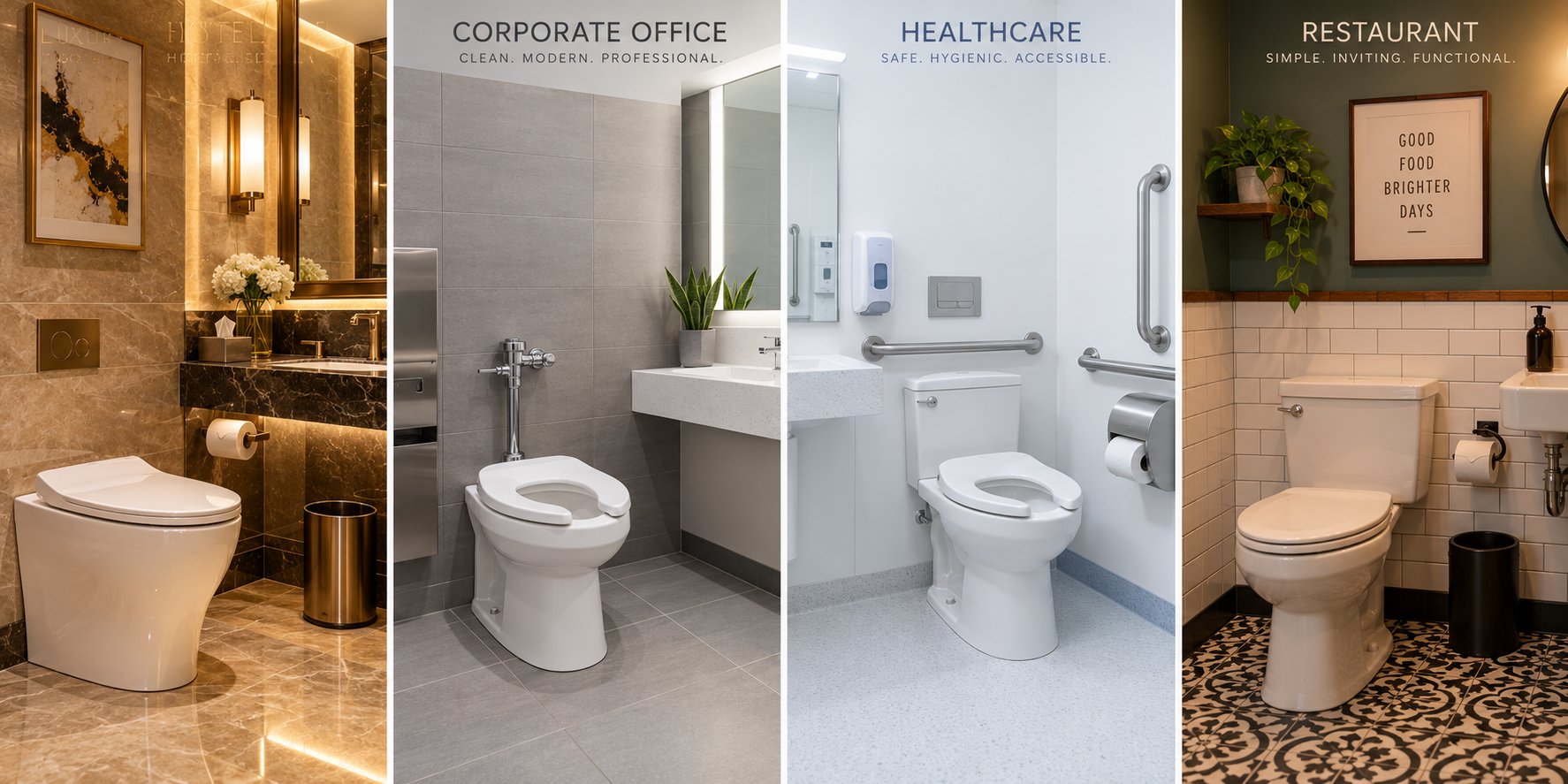
Procurement mistakes don't always stem from choosing the wrong material or ignoring hinge specs. Sometimes the root cause is simpler — the buyer never mapped the seat type to the facility type in the first place. A hotel bathroom and a hospital waiting room may both fall under "commercial," but they demand entirely different seat configurations for entirely different reasons. Walking through each major facility category eliminates that ambiguity and gives every buyer a clear starting point based on their actual situation.
Hotels and Hospitality Venues
Imagine checking into a four-star hotel and walking into a bathroom with an open-front, lidless toilet seat. It instantly undercuts the impression of quality the lobby, the linens, and the room design worked so hard to create. That's why guest-facing hotel bathrooms almost universally specify a commercial toilet seat with lid — the closed-front assembly signals residential comfort and meticulous attention to detail, which is exactly what guests expect.
Soft-close hinges are effectively non-negotiable in hospitality. A slamming lid at 2 a.m. in the room next door generates complaints, and complaints erode guest satisfaction scores. Industry specialists note that in hotels and care homes, the sharp bang of a falling lid is an avoidable noise source that affects rest and perceived quality — a quiet-close mechanism eliminates it entirely without relying on guests to lower the lid gently by hand.
Color and finish consistency matter more here than in any other commercial setting. A Kohler replacement toilet seat in bright white won't match a bathroom designed around warm cotton white fixtures — and that mismatch is immediately visible to guests who are paying attention to every detail of their stay. Hospitality procurement teams typically specify seats by exact color code, not just "white," and they match the seat finish (matte versus gloss) to the ceramic glaze of the bowl and the overall bathroom palette. UF (Duroplast) seats dominate this segment because their ceramic-like surface and scratch resistance hold up to the aesthetic scrutiny hotel guests apply.
Code compliance is straightforward in this category. Guest room bathrooms are classified as private, residential-style spaces — not public toilet rooms — so closed-front seats with lids are fully compliant under both IPC and UPC frameworks. The specification focus shifts almost entirely to aesthetics, noise performance, and hinge longevity.
Offices and Corporate Restrooms
Corporate environments introduce a split that hotel bathrooms don't have: the same building often contains both public-access restrooms and employee-only facilities, each governed by different code requirements.
Lobby restrooms, visitor-facing washrooms, and any multi-stall facility accessible to the general public typically fall under the open-front seat mandate. If a client or delivery driver can walk in off the street and use the restroom, the plumbing code in most jurisdictions treats it the same as any other public toilet room. Open-front, no lid, no exceptions.
Employee-only restrooms behind badge-access doors tell a different story. These spaces serve a defined, restricted user group, and many local jurisdictions exempt them from the open-front requirement — particularly single-occupancy staff restrooms. In these settings, a closed-front seat with lid is not only permitted but often preferred by facilities teams. The lid creates a cleaner visual impression, and soft-close hinges eliminate the disruptive noise of a slamming seat in environments where conference rooms and offices sit just down the hall.
You'll notice that quiet-close mechanisms carry particular weight in corporate buildings. An open-plan office with a restroom ten feet from a row of desks will generate friction if every flush is preceded by a loud seat slam. Specifying a damped check-hinge — the same slow-close technology that hospitality venues rely on — addresses the problem at the hardware level rather than relying on user behavior. The marginal cost of a soft-close hinge is trivial compared to the daily irritation it prevents.
For property management companies overseeing multi-tenant office buildings, the practical approach is straightforward: open-front seats in all public and shared restrooms, closed-front with lid in tenant-exclusive and single-occupancy facilities. That dual specification covers code compliance and tenant satisfaction in a single procurement cycle.
Healthcare and Medical Facilities
Healthcare is the most nuanced category because a single hospital campus can contain three or four distinct restroom types, each with its own compliance profile and practical demands.
Patient room restrooms are the clearest case for a lidded seat. These bathrooms serve individual patients — not the public — and they're generally exempt from open-front mandates. Lids offer a tangible benefit in infection-control-sensitive environments. While recent research published in the American Journal of Infection Control found that lid closure alone does not eliminate viral contamination of restroom surfaces after flushing, the study also confirmed that aerosols generated during toilet flushing contaminate surrounding surfaces — reinforcing that lids are one layer of a broader hygiene strategy rather than a standalone solution. In patient rooms where immunocompromised individuals are present, every incremental reduction in aerosol dispersal contributes to the overall infection-control framework.
Staff restrooms in hospitals, clinics, and medical offices frequently qualify for the closed-front exception as well, especially when access is restricted to credentialed employees. Healthcare staff often prefer lidded seats in break-area restrooms for the same comfort and cleanliness reasons that drive corporate preferences, with the added benefit that medical professionals are more likely to close the lid before flushing as a matter of professional habit.
Public waiting area restrooms — the facilities accessible to patients' families, visitors, and the general public — typically require open-front seats per standard plumbing code provisions. These are high-traffic, multi-user spaces that fall squarely within the code's public-use definition. Specifying a lidded seat here is almost certain to trigger an inspection flag.
Material selection in healthcare leans toward UF and phenolic options that withstand aggressive hospital-grade disinfectants without surface degradation. Antimicrobial additives are especially valued in this segment, where cleaning frequency is high and contact with bodily fluids is a daily reality.
Restaurants and Retail Establishments
Restaurants present one of the most common areas of confusion — partly because restroom configurations vary so widely across the industry.
Multi-stall public restrooms in larger restaurants, food courts, and retail stores are subject to the same open-front seat requirements as any other public facility. The International Plumbing Code requires a minimum number of fixtures based on occupancy load, and those fixtures in public-access restrooms need open-front seats. There's no design workaround that changes this.
Single-occupancy restrooms, however, shift the equation. A small restaurant with one lockable restroom — the kind you'd find at a neighborhood cafe or a takeout counter — often qualifies for the closed-front exception because the space serves one user at a time. In these settings, a commercial seat with lid improves odor containment between uses (a real concern when the restroom door opens directly into the dining area) and creates a more refined impression for customers. Retail boutiques, salons, and service businesses with single-occupancy facilities face the same calculus: the restroom classification, not the business type, determines whether a lid is permissible.
The table below consolidates every facility category into a single reference so procurement teams can identify what applies to their situation at a glance:
| Facility Type | Typical Seat Style Required | Lid Recommended | Key Selection Priority |
|---|---|---|---|
| Hotel guest rooms | Closed-front with lid | Yes | Aesthetics, soft-close hinges, color matching |
| Office — public lobby restrooms | Open-front, no lid | No (code prohibits in most jurisdictions) | Durability, hinge cycle rating, antimicrobial surface |
| Office — employee-only restrooms | Closed-front with lid (where local code permits) | Yes | Quiet-close hinges, material durability, easy maintenance |
| Healthcare — patient rooms | Closed-front with lid | Yes | Infection control, chemical resistance, antimicrobial coating |
| Healthcare — public waiting areas | Open-front, no lid | No (code requirement) | Heavy-duty construction, vandal resistance, cleaning tolerance |
| Restaurant — multi-stall public | Open-front, no lid | No (code requirement) | High-cycle hinges, chemical resistance, easy replacement |
| Restaurant — single-occupancy | Closed-front with lid (typically permitted) | Yes | Odor containment, aesthetics, soft-close mechanism |
| Retail — public multi-stall | Open-front, no lid | No (code requirement) | Durability, antimicrobial properties, maintenance speed |
| Retail — single-occupancy | Closed-front with lid (typically permitted) | Yes | Customer perception, odor control, design consistency |
You'll notice a clear pattern: the dividing line is never the type of business — it's the restroom classification. A five-star restaurant and a gas station follow the same code logic. Public multi-user restrooms get open-front seats. Restricted-access and single-occupancy facilities can specify a lid. The business on the other side of the restroom door is irrelevant to the plumbing inspector.
Mapping the right seat to the right facility eliminates the most expensive category of procurement error — buying a product that technically can't be installed where you need it. But even when the facility type is clear and the seat style is correct, a handful of surprisingly common specification mistakes still derail commercial restroom projects with frustrating regularity.
Common Mistakes When Specifying Commercial Toilet Seats
Knowing the right facility type, the right material, and the right hinge mechanism doesn't automatically prevent errors during the actual ordering process. In fact, some of the costliest mistakes happen after all the research is done — during that final step when someone fills out a purchase order, selects a product from a catalog, or approves a bulk shipment without double-checking a single critical dimension. These errors don't just waste money. They delay projects, trigger failed inspections, and leave maintenance teams swapping out brand-new seats that should have lasted years.
Here are the mistakes that show up most often — and how to avoid every one of them.
Specifying the Wrong Bowl Shape
This is the most basic error on the list, and it happens with surprising frequency. Commercial toilets come in two bowl shapes: round and elongated. A seat designed for one shape will not fit the other. An elongated seat mounted on a round bowl overhangs the front rim by roughly two inches, creating an unstable surface and an obvious visual mismatch. A round seat on an elongated bowl leaves the front of the rim exposed — uncomfortable, unsanitary, and immediately noticeable to every user.
The fix is a simple measurement. As Premier Bidets explains, you measure from the center point between the two seat mounting bolts at the back of the bowl straight to the front outside edge of the rim. About 16.5 inches means a round bowl. About 18.5 inches means elongated. That single number determines which seat fits.
Commercial restrooms are predominantly elongated — the International Plumbing Code actually requires elongated bowls in public and employee restrooms. But round bowls still exist in older buildings, compact installations, and retrofit situations where the original fixtures were never upgraded. If you're managing a portfolio of properties built across different decades, assuming every bowl is elongated is a fast way to end up with a stack of seats that don't fit anything in the building.
One additional wrinkle: some manufacturers produce "compact elongated" bowls that measure around 17.5 inches — right between the two standard sizes. These typically take an elongated seat, but the only way to confirm is to check the specific toilet manufacturer's spec sheet. When measurements fall in that gray zone, trust the documentation over the tape measure. And if you're specifying seats for a Kohler commercial toilet or any other specific brand, cross-reference the bowl model number with the manufacturer's recommended seat dimensions before placing the order.
Ignoring Code Requirements for Open-Front Seats
This mistake carries consequences beyond a wasted budget — it can result in a failed building inspection. Installing a commercial toilet seat with lid in a restroom that's classified as public-use under the IPC or UPC is a code violation, plain and simple. The plumbing inspector won't care that the lidded seat looks better, costs more, or came from a premium manufacturer. If the code says open-front and the installed seat is closed-front, the fixture fails.
The pattern usually looks the same. A facility manager or interior designer specifies closed-front seats throughout a building because they prefer the cleaner aesthetic. Nobody checks the restroom classifications. The seats get installed. The inspector walks through during the certificate-of-occupancy review, flags every public restroom with a lidded seat, and the entire batch has to be replaced before the building can open. The original seats go into storage or get returned — assuming the supplier accepts returns on commercial quantities — and a rush order for open-front seats adds cost and delays the occupancy timeline.
Avoiding this mistake requires one conversation. Contact the authority having jurisdiction (AHJ) for your project location and confirm which restrooms require open-front seats and which qualify for exceptions. In mixed-use buildings — think a hotel with both guest rooms and a public lobby restroom — the answer will be different for different floors or even different sides of the same hallway. That single verification call is the cheapest insurance available against a procurement error that can cost thousands in replacement labor and product waste.
Choosing Residential-Grade Seats for Commercial Use
This is the mistake that doesn't announce itself immediately. A residential seat installs the same way as a commercial one. It looks fine on day one. The problem reveals itself at month three or month six, when the hinges loosen, the seat cracks along its mounting points, or the surface yellows from repeated exposure to commercial-strength cleaning chemicals.
Residential Kohler toilets seats, Bemis models, and other well-known consumer brands produce excellent products for home bathrooms — environments where two to five people use the fixture daily. Place that same seat in an office restroom seeing 40 to 60 uses per day, and the math changes entirely. Hinges designed for a few thousand cycles in a home will reach their fatigue threshold in months rather than years. Lighter-gauge plastic that shrugs off household cleaners may not tolerate the concentrated quaternary ammonium or bleach solutions commercial custodial teams use on every shift.
How do you tell whether a seat is genuinely rated for commercial use? Check three things. First, look at the hinge construction — commercial-grade hinges use stainless steel or zinc alloy hardware with documented cycle ratings, not plastic posts held in place by wing nuts. Second, verify the material specification on the manufacturer's data sheet. Commercial seats will identify the polymer (PP, UF, phenolic) and list chemical resistance ratings; residential seats often describe the material in vague marketing terms like "premium plastic" or "durable molded construction." Third, check whether the manufacturer publishes a weight capacity based on standardized testing. Residential products frequently omit this specification entirely, while commercial products state it explicitly.
The long-term cost difference is stark. Replacing a failed residential seat every six months — including labor, product cost, and the maintenance ticket overhead — almost always exceeds the upfront cost of specifying the correct commercial-grade product from the beginning. Kohler toilet seat bumpers and hinge kits can extend the life of a struggling residential seat temporarily, but they're a band-aid on a specification problem that only a proper commercial product solves permanently.
To keep every common specification error in one place, here's a checklist you can reference before finalizing any commercial toilet seat order:
- Wrong bowl shape — Measure from the bolt centers to the front rim edge before ordering; confirm round (16.5") vs. elongated (18.5") and check for compact elongated exceptions
- Code non-compliance — Verify restroom classification with the local AHJ; public-use and employee-use restrooms generally require open-front seats without lids
- Residential-grade product in a commercial setting — Confirm hinge material, cycle rating, polymer type, and weight capacity from the manufacturer's spec sheet, not the product title
- Wrong hinge type — Match the hinge mechanism to the environment: slow-close for hospitality and offices, top-tightening stainless steel for high-traffic institutional use
- Ignoring antimicrobial needs — Healthcare, food service, and high-traffic public facilities benefit from seats with antimicrobial additives molded into the material, not just surface coatings that wear off
- Overlooking color matching requirements — "White" is not a universal color; confirm the exact shade and finish (matte vs. gloss) against the installed bowl before approving a bulk order
Every item on that list represents a real purchase order that went wrong somewhere — a pallet of elongated seats delivered to a building full of round bowls, a hotel bathroom with lids that slam instead of glide, a healthcare facility scrubbing seats with chemicals the material was never rated to withstand. The errors are predictable, which means they're preventable. Running through this checklist before the order ships takes five minutes. Correcting these mistakes after installation takes weeks and multiplies the original cost several times over.
Catching errors before they happen is valuable. But even a perfect checklist only works when it's embedded in a structured procurement process — one that moves systematically from code verification through material selection to final sourcing, with checkpoints at every stage where a wrong decision could cascade into an expensive problem downstream.
How to Specify and Source the Right Seat Assembly
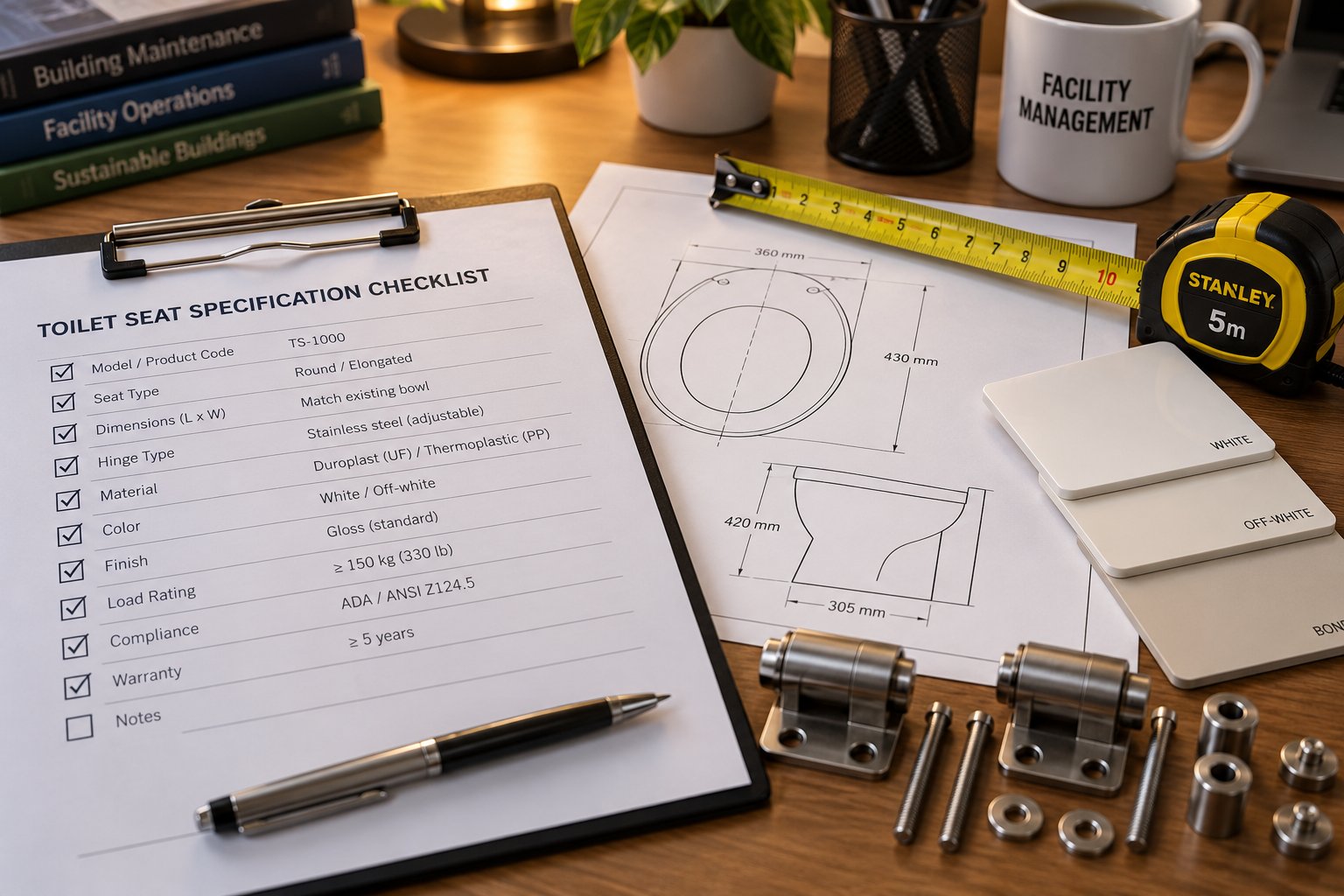
A structured specification process turns scattered decisions into a repeatable framework — one that prevents the exact mistakes outlined above while making sure every seat you order actually fits the building, the code, and the daily demands of the facility. Whether you're a property manager replacing commercial toilet seats across a portfolio of office buildings or a sanitary ware brand developing a new product line for the hospitality channel, the sequence below keeps every critical variable in view from start to finish.
Step-by-Step Specification Checklist
Think of this as a procurement roadmap. Each step builds on the one before it, so skipping ahead — say, jumping straight to color selection before confirming code requirements — risks a cascading error that doesn't surface until installation day.
- Confirm restroom classification and code requirements. Contact the authority having jurisdiction (AHJ) for your project location. Determine whether each restroom qualifies as public-use, employee-use, or a code-exempt category such as single-occupancy, hotel guest room, or patient room. This single step determines whether you're specifying an open-front seat or a closed-front assembly with a lid — the foundational decision that everything else depends on.
- Measure bowl shape and mounting dimensions. Measure from the center point between the two mounting bolt holes to the front outside edge of the bowl rim. Confirm whether you're dealing with round (~16.5"), elongated (~18.5"), or compact elongated (~17.5") bowls. Cross-reference with the toilet manufacturer's spec sheet whenever possible, especially in older buildings where original fixture documentation may be missing.
- Determine material requirements based on environment. Match the seat material to the facility's cleaning regimen, traffic volume, and aesthetic expectations. PP (polypropylene) for high-turnover, cost-sensitive installations. UF (urea formaldehyde / Duroplast) for hospitality, healthcare, and environments where scratch resistance and a premium surface finish justify the higher cost. Phenolic for vandal-prone institutional settings. Review chemical compatibility against the disinfectants your custodial team actually uses — not the ones listed in a product brochure's best-case scenario.
- Specify hinge type and cycle rating needs. Select the hinge mechanism based on the environment: slow-close damped hinges for hotels, corporate offices, and any setting where noise matters; heavy-duty top-tightening stainless steel hinges for high-traffic public facilities where maintenance simplicity outweighs quiet operation. Confirm the cycle rating against projected daily use. A restroom with 50 uses per day accumulates roughly 18,000 cycles per year — that number should sit comfortably within the hinge's tested range, not at its upper limit. Products marketed as Kohler quiet close toilet seats, for example, set a benchmark in the hospitality segment where damped closing action is expected by default rather than treated as a premium upgrade.
- Confirm weight capacity requirements. Verify the seat's static load rating from the manufacturer's engineering data sheet. For ADA-designated restrooms or facilities serving diverse user populations, specify commercial-grade assemblies tested to weight thresholds that account for dynamic loading — not just the static number. Bariatric-rated options should be considered for any healthcare, assisted-living, or public facility where elevated load requirements are foreseeable.
- Select color and finish to match existing fixtures. Request color samples or confirm color codes against the installed bowl's glaze. "White" varies across manufacturers and production runs — cotton white, bone, biscuit, and bright white are distinct shades that clash visibly when mismatched. For hospitality projects, match both the color and the surface finish (matte vs. gloss) to the ceramic.
- Evaluate antimicrobial or specialty coatings. Determine whether the facility environment warrants antimicrobial additives molded into the seat material. Healthcare, food service, and high-traffic public restrooms benefit most. Distinguish between built-in antimicrobial additives (which remain effective through the seat's lifecycle) and surface-applied coatings (which can wear away under aggressive cleaning protocols).
- Source from manufacturers with commercial-grade certification and OEM capabilities. For single-property replacements, commercial plumbing distributors carry the major brands. For multi-site rollouts, brand development programs, or custom specifications, working directly with a manufacturer that offers OEM support streamlines the process — more on that below.
Run through these eight steps in order and you'll arrive at a purchase specification that's code-compliant, dimensionally accurate, materially appropriate, and matched to the environment's actual demands. Skip any step, and you're introducing a risk that only becomes visible after the product is bolted to the bowl.
Matching material grade to facility demands is the single most important specification decision in commercial toilet seat procurement. Every other choice — hinge type, color, antimicrobial treatment — performs only as well as the base material allows.
Working With Manufacturers and OEM Suppliers
For a single replacement Kohler toilet seat in an office restroom, the specification checklist above and a call to a local plumbing distributor are all you need. The process changes substantially when the scope involves hundreds or thousands of units — a hotel chain refreshing guest room fixtures across multiple properties, a healthcare network standardizing seat specifications, or a bathroom brand building out its own commercial product line.
At that scale, working directly with a manufacturer who offers OEM and private-label capabilities creates advantages a standard distribution channel can't match. Industry sourcing guidance emphasizes that the most important questions to ask a manufacturer before committing to a bulk order go well beyond unit price: Can you produce the exact specification I need? How do you control quality during mass production? Can you maintain the approved specification for repeat orders? What OEM and packaging customization can you support?
Those questions matter because an OEM partnership opens up specifications that off-the-shelf products simply don't offer. Custom color matching to a proprietary palette. Branded packaging with your company's identity. Hinge configurations tailored to a specific bowl model used across your entire property portfolio. Seat dimensions adjusted by millimeters to optimize fit for a non-standard fixture. Even the installation instructions inside the box can be customized to reflect your maintenance team's procedures rather than generic diagrams.
The ability to specify material at the production level — choosing between PP and UF based on your facility's exact cleaning chemical profile and traffic patterns, rather than accepting whatever a catalog offers in the right shape — is where OEM sourcing delivers its greatest value. For sanitary ware manufacturers and bathroom brands evaluating both polymer options for toilet commercial projects, Tianyun's PP and UF Toilet Seat Cover Collection provides material selection support alongside soft-close hinge matching and OEM customization — a practical resource for teams developing seat-and-lid assemblies who want to compare production data before committing to a material path.
Quality consistency across repeat orders is another dimension that separates a genuine manufacturing partner from a transactional supplier. As bulk-order procurement specialists note, the first shipment may meet your requirements, but the real test is whether the same product can be reproduced six months or a year later. A reliable manufacturer maintains documented specifications — material weight, hinge components, color reference, fixing hardware, and carton configuration — that serve as the production baseline for every subsequent order. If anything changes on the factory floor, a clear change-control process notifies the buyer before production proceeds.
For procurement officers evaluating Kohler quiet close toilet seats or any other branded option against an OEM-manufactured alternative, the comparison should account for total cost of ownership rather than unit price alone. A branded seat from a major distributor offers immediate availability, recognized warranty support, and straightforward reordering. An OEM-manufactured seat offers specification control, cost efficiency at scale, and the flexibility to adjust the product as facility needs evolve. Neither path is universally better — the right choice depends on order volume, customization requirements, and whether the project demands a recognized consumer brand name or a performance specification that any compliant manufacturer can fulfill.
Regardless of which sourcing path you choose, the procurement process ends the same way: with commercial toilet seats bolted to bowls in restrooms that pass inspection, serve their intended users, and hold up under the daily reality of commercial use. Every specification decision made along the way — from code classification to material grade to hinge cycle rating — contributes to that outcome. The facilities that get it right aren't necessarily the ones with the biggest budgets. They're the ones that followed a disciplined process, verified every assumption before the purchase order shipped, and matched every product to the specific demands of the room it was going into.
Commercial Toilet Seat With Lid: Frequently Asked Questions
1. Are commercial toilet seats with lids allowed in public restrooms?
In most U.S. jurisdictions, no. The International Plumbing Code (IPC Section 425.3) and the Uniform Plumbing Code require open-front seats without lids in restrooms classified as public-use or employee-use. However, closed-front seats with lids are permitted in single-occupancy restrooms, hotel guest rooms, private executive washrooms, healthcare patient rooms, and owner-occupied commercial suites. Always verify your local code requirements with the authority having jurisdiction (AHJ) before specifying a lidded seat for any commercial restroom.
2. What is the difference between a commercial toilet seat and a residential one?
Commercial toilet seats are engineered for significantly higher usage demands than residential models. Key differences include hinge construction rated for tens of thousands of open-close cycles using stainless steel or zinc alloy hardware, rigid seat materials like polypropylene (PP) or urea formaldehyde (UF) with documented chemical resistance, higher static and dynamic weight capacity ratings, and built-in antimicrobial additives that inhibit bacterial growth throughout the product's lifespan. Residential seats use lighter materials and lower-rated hinges designed for household traffic levels.
3. What materials are best for commercial toilet seats?
The two dominant materials are polypropylene (PP) and urea formaldehyde (UF). PP offers lightweight, chemical-resistant, cost-effective performance ideal for high-turnover facilities like schools and offices. UF provides a heavier, scratch-resistant surface with a ceramic-like finish suited to hotels and healthcare settings. For vandal-prone institutional environments, phenolic resin seats offer extreme durability. Molded wood works in low-traffic hospitality settings, while stainless steel serves detention and extreme-duty industrial applications. Teams developing commercial seat assemblies can evaluate PP and UF options through resources like Tianyun's PP and UF Toilet Seat Cover Collection (https://www.tianyuntech.com/pp-uf-cover), which provides material selection guidance and OEM customization support.
4. How do I measure a toilet bowl to order the correct commercial seat?
Measure from the center point between the two mounting bolt holes at the back of the bowl straight to the front outside edge of the rim. A measurement of approximately 16.5 inches indicates a round bowl, while approximately 18.5 inches indicates an elongated bowl. Some manufacturers produce compact elongated bowls at around 17.5 inches, which typically accept elongated seats. Always cross-reference your measurement with the toilet manufacturer's specification sheet, especially in older commercial buildings where original fixture documentation may be unavailable.
5. Why do commercial toilet seats need slow-close hinges?
Slow-close (damped check-hinge) mechanisms prevent the seat and lid from slamming shut, which serves multiple purposes in commercial settings. In hotels, they eliminate noise that disrupts guests in adjacent rooms. In corporate offices, they reduce disruptive sound near workspaces. Beyond noise control, slow-close hinges also reduce mechanical stress on the seat and mounting hardware, extending the overall assembly lifespan. When specifying for hospitality or professional environments, damped hinges are considered a baseline requirement rather than a premium upgrade, with cycle ratings that should comfortably exceed projected annual use.
Apply This Insight to Your Project
Tell us what you are building and how the topic “Why a Commercial Toilet Seat With Lid Isn't Always Code-Compliant” relates to your application. Our engineering team can help evaluate the next step.