What a Bidet Toilet Seat Is and What Quality Means
Have you ever searched 'what is a bidet toilet' and found three products that look nothing alike? Lots of shoppers run into that. It matters because each product changes your bathroom in a different way. Before you can judge whether a seat is well built, you need to know which kind of product you're looking at.
What Is a Bidet Toilet Seat
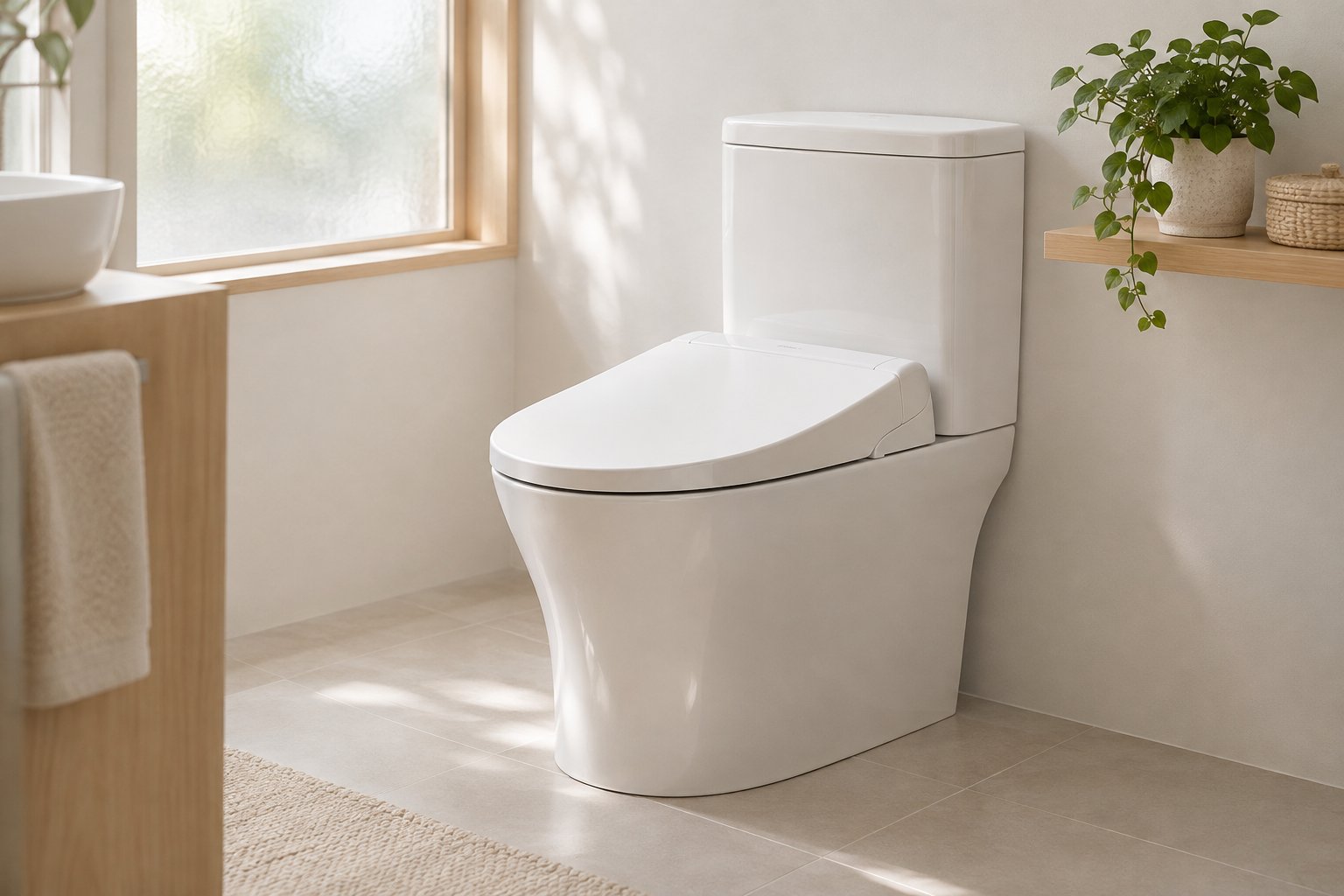
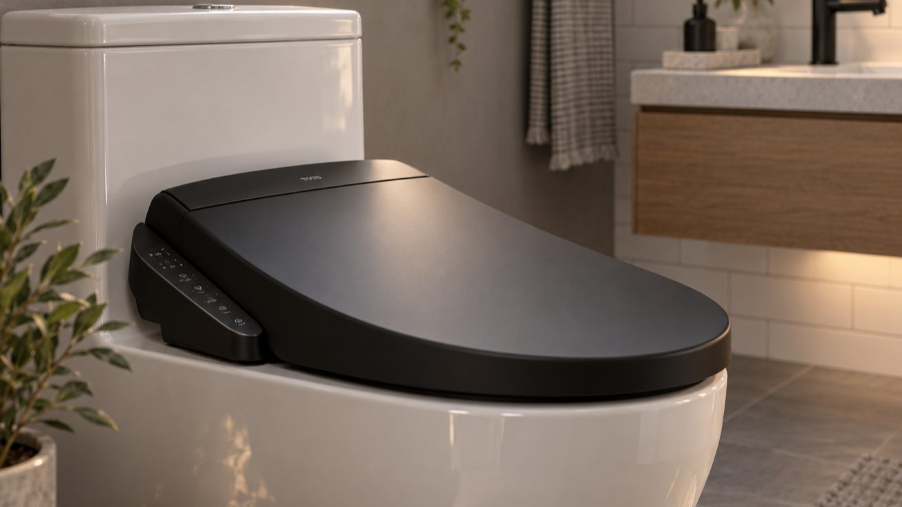
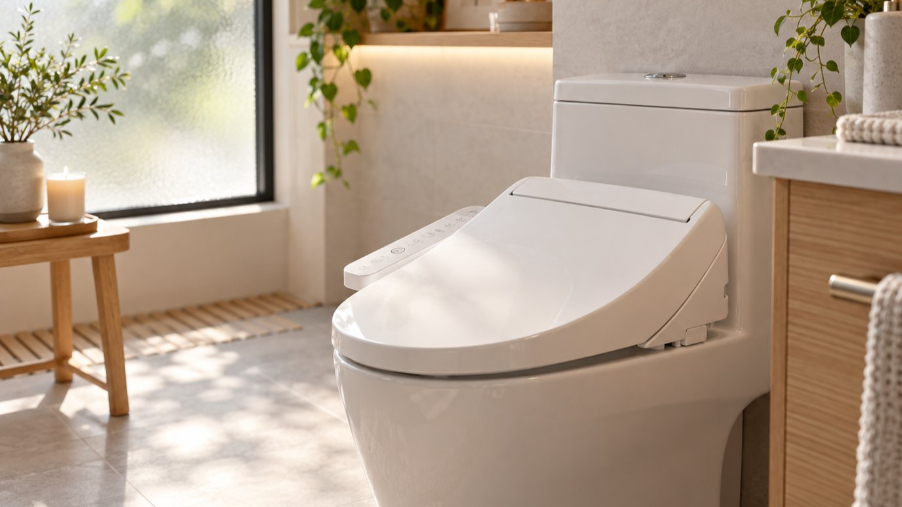
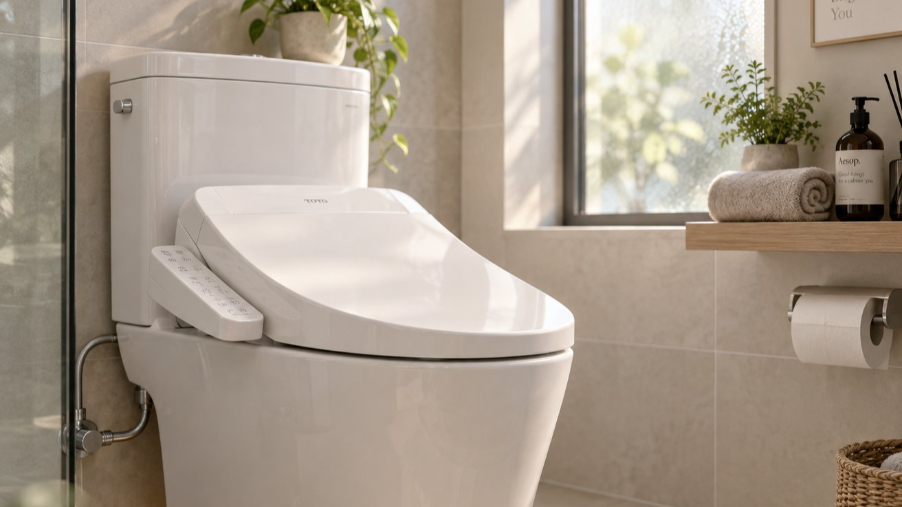
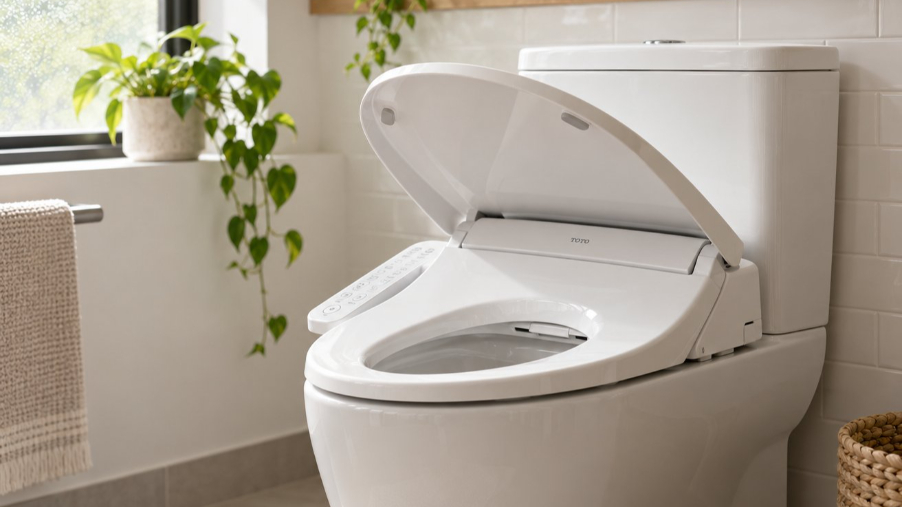
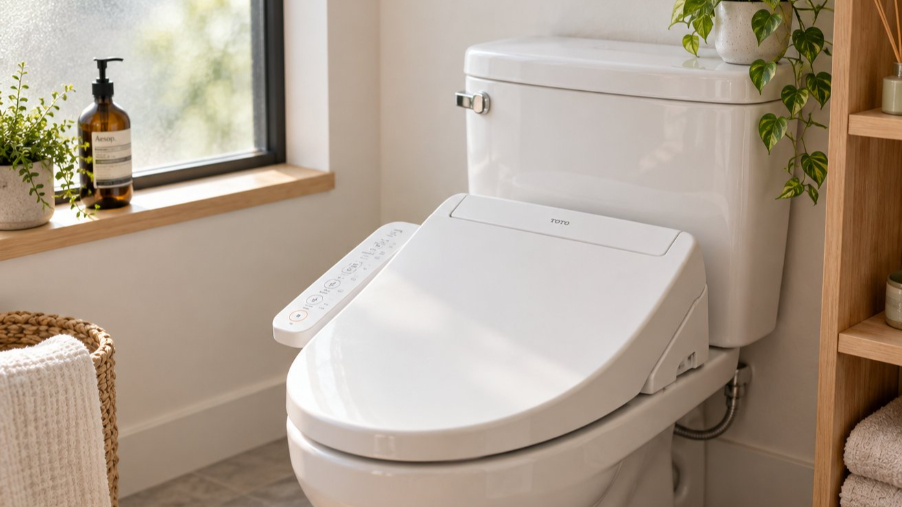
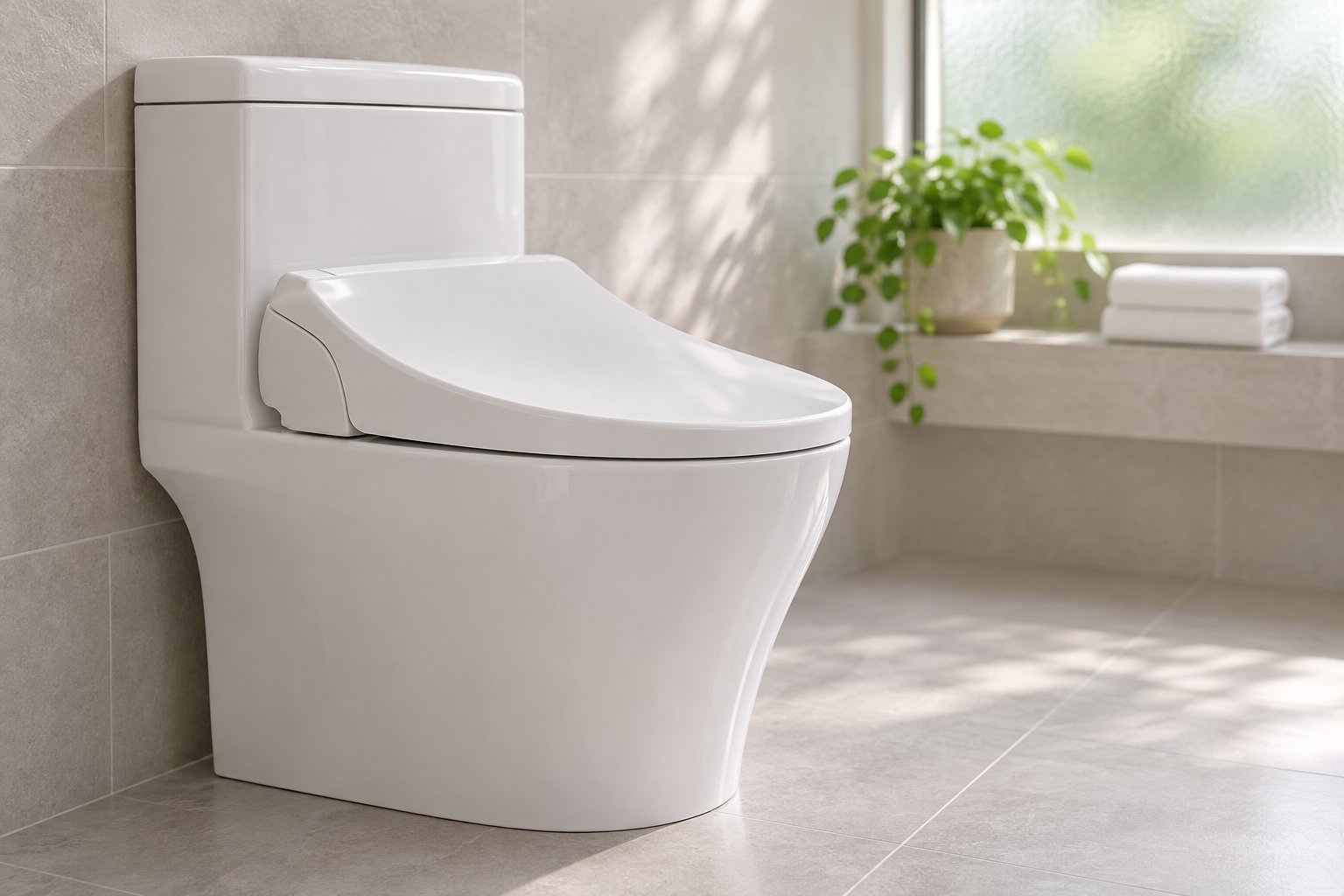
A bidet toilet seat is a replacement toilet seat with a built-in wash nozzle that sprays water to clean you after using the toilet. It bolts onto your existing toilet, connects to the cold water supply, and usually plugs into a nearby outlet to power features such as warm water and a heated seat.
Some seats don't need an outlet at all. Non-electric models run on household water pressure alone, so the spray comes out at whatever temperature your cold supply line is. Electric models need a grounded, GFCI-protected outlet within reach of the power cord.
Bidet Seat vs Bidet Attachment vs Toilet With Bidet Built In
You have three ways to add a bidet. You can swap out the seat, mount a device under the seat you already have, or replace the whole toilet. The table below compares them.
| Product Type | What Gets Replaced | Outlet Needed? | Warm Water Possible? | Installation Difficulty |
|---|---|---|---|---|
| Complete bidet toilet seat | Your current toilet seat | Yes for electric models, no for non-electric models | Yes on electric models, which heat water inside the seat | Usually a DIY job with basic hand tools |
| Add-on bidet attachment | Nothing. It mounts under your current seat. | Usually no | Only on models that connect to a nearby hot water line | Usually a DIY job using your existing supply line |
| Integrated bidet toilet | The entire toilet | Yes | Yes | May require professional installation, including plumbing and electrical work |
A bidet attachment for toilet use is the simplest option and has the fewest features. An integrated toilet is the largest commitment because you replace the whole fixture. This guide focuses on complete bidet seats. Attachments and integrated toilets come up where they help with a comparison, such as fit or cost.
How This Guide Judges Quality
This guide is research and spec analysis. We did not test any seat ourselves. Performance claims come from named third-party testers, such as Wirecutter, Forbes Vetted, and CNN Underscored, and from manufacturers' published specs and warranty documents. When a source doesn't cover a detail, we say so.
In this guide, 'quality' means three things: how the seat is built, how long its parts are likely to last, and whether it fits your toilet and bathroom. Feature count doesn't make that list. A seat with a dryer, a night light, and a deodorizer can still come with a short heater warranty or no replacement parts. How, then, do you tell a well-built seat from a well-marketed one? You need a fixed set of criteria that you apply the same way to every listing.
A Quality Rubric for Judging Any Bidet Seat
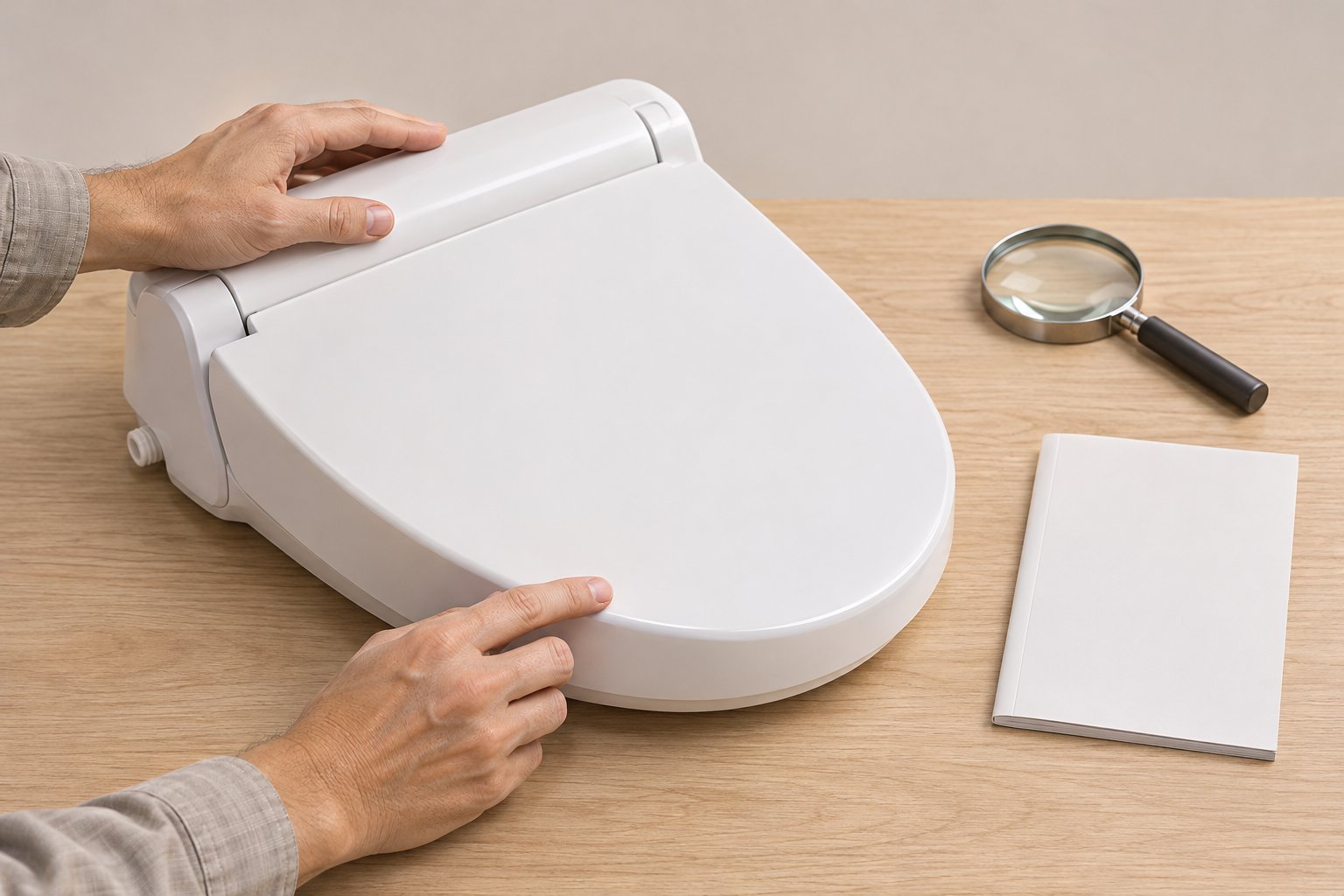
Put two listings side by side and you'll notice they rarely describe the same things. One lists a dozen spray settings. The other lists a stainless steel nozzle and a three-year warranty. Which one tells you more about how the seat is built? Most bidet reviews rank seats on features and comfort. This guide uses six fixed criteria instead, and every seat discussed later is measured against them.
The Six Criteria That Separate a Well-Built Seat
Each criterion points to a part that can wear out or fail, or to a document that protects you when it does.
- Build materials: what the seat body, lid, and hinges are made of.
- Nozzle design: the nozzle material, whether it rinses itself, and whether it pulls back inside the seat when not in use. Brondell's nozzle care guide describes retracting nozzles as a way to keep them free of contamination between uses, with a rinse cycle before and after each wash.
- Heating method: whether the seat stores warm water in a tank or heats it instantly as it flows.
- Certifications: electrical safety and plumbing listings tied to the exact model.
- Warranty: how long it lasts and what each year covers.
- Parts availability: whether you can buy replacement nozzles, filters, and remotes.
Where to Find Each Criterion on a Listing
| Criterion | What to Check | Where It Appears |
|---|---|---|
| Build materials | Seat and lid material, hinge construction, slow-close lid | Spec sheet, retailer listing |
| Nozzle design | Nozzle material, self-cleaning rinse, retraction, removable nozzle tip | Spec sheet, manual |
| Heating method | Tank or instant heating for water, and how the seat itself is heated | Spec sheet, manual |
| Certifications | Electrical safety listing and plumbing certification that name the model number | Manual, product label, certifier's online directory |
| Warranty | Length, coverage by component, tiered terms, exclusions | Warranty document, manual |
| Parts availability | Replacement nozzles, filters, remotes, and mounting plates sold by model | Manual, manufacturer parts page, retailer listing |
Certifications need the most care. An electric bidet seat involves two separate risks, electricity and the water supply, and each one has its own type of certification. A certification guide from Keorh notes that an electrical mark such as ETL covers electrical safety, while a plumbing mark such as cUPC covers plumbing conformity, and neither one stands in for the other. The same guide points out that brochure wording like 'tested to UL standards' is not the same as an active listing. Look for both kinds of listing in the manufacturer's documentation, confirm that they name your exact model, and check the listing's status in the certifier's online directory.
Warranties also need a close read. Under Brondell's published terms, some seats carry a three-year tiered warranty that pays 100% of parts and labor in year one, 75% in year two, and 50% in year three. A flat three-year term on another seat covers more, even though both are sold as three years.
Why Feature Count Is a Weak Quality Signal
Imagine a heated toilet seat bidet with a dryer, a night light, and a deodorizer. The list looks impressive, but every added feature is one more part that can fail, and the list tells you nothing about nozzle material or heater coverage. Retailer badges have a similar problem. A 'top rated bidet toilet seat' label often reflects sales rank or average star ratings. For a seat to earn the title of best bidet toilet seat, you need independent evidence: a named tester, a described test method, and results you can check.
Watch for these red flags on any listing:
- No warranty document available before you buy, or a warranty stated only as a length
- No replacement nozzles, filters, or remotes listed for the model
- Vague heating wording such as 'warm water' that doesn't say tank or instant
- Certification logos with no model number or no listing you can look up
- 'Tested to' safety-standard language used in place of a listing
- Nozzle material left unstated
- 'Best rated' claims with no named source behind them
The rubric tells you what to look for on paper. It can't show you how a seat performs after months of daily use. That evidence comes from testers who have lived with these seats, and the major ones agree on more than you might expect.
What Independent Bidet Testers Agree On
If you read bidet toilet seat reviews from three different outlets, you might expect three different winners. Their top picks do differ. Even so, the same few seats keep appearing near the top of each list, and that overlap tells you more than any single ranking. Below is how each publication tested and where their results match.
How Wirecutter, Forbes Vetted and CNN Underscored Tested
- Wirecutter: Since 2016, the Wirecutter bidet guide has tested almost 40 seats in three households: a four-person Brooklyn apartment, a family of six in New Hampshire, and a family of five in Los Angeles. Its testers judged comfort, installation, ease of use, use by children, and long-term problems.
- Forbes Vetted: Forbes Vetted tested 10 bidets. Its main measured check was a shaving cream test. Testers covered a toilet bowl with plastic wrap, added a squirt of shaving cream, and timed how long each bidet took to rinse it off. The Bio Bidet BB-2000 cleared it in 7 seconds and the Toto S5 in 9 seconds. Testers also used each model at home for two days.
- CNN Underscored: Editor Kai Burkhardt has tested 34 bidets over nearly four years for CNN Underscored. He used each one for at least two days and scored it on performance and design. He named three award picks: the Tushy Classic 3.0 for best bidet attachment, the Toto Washlet S2 for best bidet seat, and the Tushy Cloud for best value bidet.
Where Independent Testers Agree
| Seat | Wirecutter | Forbes Vetted | CNN Underscored | Other Signal |
|---|---|---|---|---|
| Toto Washlet S5 | Top pick | Best upgrade | Tested, not an award pick. Called one of the best bidet experiences but too expensive for most buyers. | Forbes lists a 1-year warranty. The S5 replaces the Toto C5, which was Wirecutter's pick for almost eight years. |
| Toto Washlet S2 | Runner-up | Not in guide | Best bidet seat | CNN found its stream and dryer the most comfortable it tested. |
| Bio Bidet BB-2000 | Tested, not recommended. Wirecutter called the remote "extremely busy." | Best overall, with a 7-second shaving cream result | Tested, not an award pick. Suggested as a cheaper luxury option. | Forbes lists a 3-year warranty. |
| Tushy Cloud | Not in guide | Not in guide | Best value bidet | CNN notes it comes only in an elongated size. |
| Tushy Classic 3.0 (attachment) | Former pick | Recommended for bathrooms without easy outlet access | Best bidet attachment | Needs no outlet. |
The clearest pattern involves Toto Washlets. Every outlet recommends at least one of them. Wirecutter backs the S5 and the S2, Forbes backs the S5, and CNN backs the S2. Wirecutter and CNN also both praise instant heating, which keeps the water warm for as long as the wash runs. The BB-2000 shows how testers can split. Forbes named it best overall, while Wirecutter thought its features went too far. When testers split like this, the seat probably suits some buyers and not others.
When testers with different methods, households, and scoring systems land on the same seat, that agreement is stronger evidence of quality than any single best bidet ranking, because one tester's preferences are unlikely to repeat across three outlets.
Reading Retailer Best-Seller Lists With Care
A best-seller badge measures sales. Sales can rise because of discounts, promotions, or search placement, so the badge says little about build quality. Specialist retailers are a different case. BidetKing sells bidets as its core business, and CNN Underscored sends readers to BidetKing's compatibility guide to measure their bowls. BidetKing also profits from what it sells, and that includes its own Crown seat. CNN tested the Crown and faulted its bulky remote and pairing problems. A specialist retailer is a good place to ask about fit and parts. For quality verdicts, rely on independent testers. Keep in mind that review outlets earn commissions too. CNN discloses this, and Wirecutter says its journalists are never told the business effects of their picks.
The table also shows the same testers praising premium Toto seats and the lower-priced Tushy Cloud. That leaves a practical question for shoppers: what does the extra money buy?
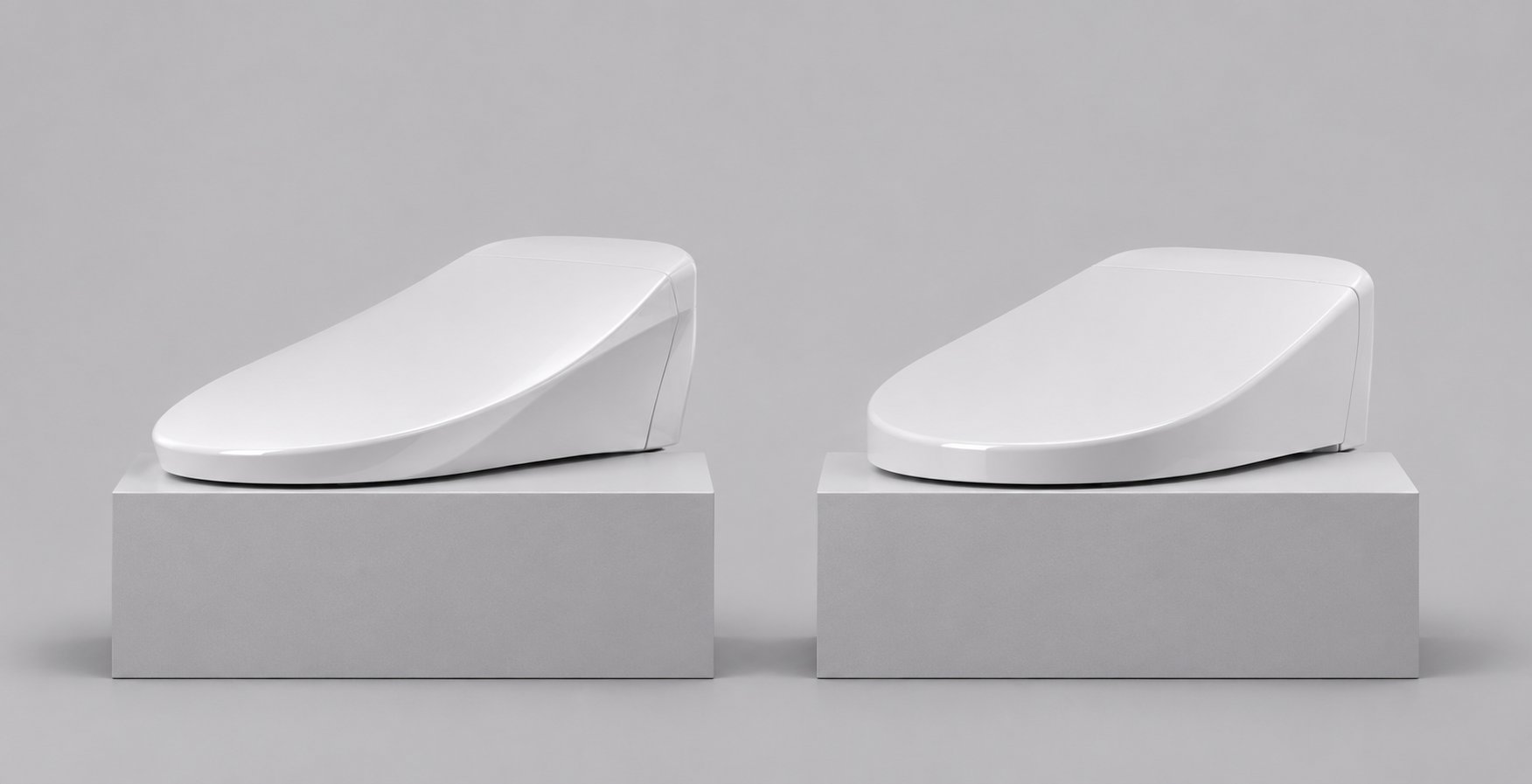
Premium vs Value Bidet Seats and What the Extra Money Buys
Say you're choosing between the Toto Washlet S5 and a cheaper heated bidet like the Tushy Cloud. Both heat water, and testers like both of them. So what does the premium seat add? Scoring each seat against the six-criterion rubric shows where they differ. It also shows how much the published sources leave out.
One note on naming. CNN Underscored gave its value award to the original Tushy Cloud. The most detailed hands-on review of this line, from Business Insider, covers the Cloud+, which costs more. The Cloud+ swaps the original Cloud's side control panel for a remote. The table below scores the Cloud+ because its features are the ones documented.
| Criterion | Toto Washlet S5 | Tushy Cloud+ | Bio Bidet BB-2000 |
|---|---|---|---|
| Build materials | Not documented in our sources | Not documented in our sources | Not documented in our sources |
| Nozzle design | Five positions. The wand cleans itself with electrolyzed water. | Dual, adjustable nozzles that clean themselves | Not documented in our sources |
| Heating method | Instant | Instant | Not documented in our sources |
| Certifications | Check the manual | Check the manual | Check the manual |
| Warranty | 1 year (Forbes) | 1 year, which covers all Tushy bidets (Business Insider) | 3 years (Forbes) |
| Parts availability | A Wirecutter tester found that a replacement remote isn't cheap | Not documented in our sources | Not documented in our sources |
What a Premium Seat Like the Toto Washlet S5 Adds
Wirecutter calls the S5 expensive. It costs about $500 less than Toto's S7A, which sells for just over $1,000. Most of the extra money goes into how precisely you can adjust the seat and how refined it feels to use.
Pros
- Instant heating keeps the water warm for the whole wash. Two eco modes save energy, and one of them learns your usage over about 10 days and lowers the seat heat during quiet hours.
- You get five pressure settings, five nozzle positions, oscillating and pulsating sprays, and four user presets.
- The spray is quieter than on most bidets.
- Wirecutter's Toto seats have run for seven years. The only one that stopped working was a C5 whose remote a child dropped into the toilet.
Cons
- The seat has no controls on the unit itself, so a broken remote means no wash.
- You'll need the manual to change the long-term settings.
- The warranty is shorter than the BB-2000's.
- It has no wide-spray mode, no kid settings, and no one-button auto cycle.
Where Value Seats Hold Their Own
An affordable bidet seat can still cover the core comfort features. Business Insider lists the Cloud+ at $399. Its reviewer found that the water warmed instantly and the heated seat had three temperature settings. Forbes named the BB-2000 best overall, and the seat posted the fastest result in its shaving cream test. Business Insider doesn't list a BB-2000 price, so these sources don't let us say how much cheaper it is.
Pros
- Both seats have warm water, a heated seat, and a dryer.
- The BB-2000 carries the longest warranty of the three seats.
- Both cost less than the premium tier.
Cons
- The Cloud+ fits elongated toilets only, and its dryer took about four minutes to dry the reviewer.
- Wirecutter called the BB-2000's remote "extremely busy."
- Our sources document fewer details about the build and parts of both seats.
Toto C5 to S5 and What Changes Between Model Generations
Wirecutter recommended the Toto Washlet C5 bidet for almost eight years before the S5 replaced it in 2025. The change Wirecutter documents is the heater. The C5 heats a small tank of water, so the water turns chilly when the tank runs out. The S5 heats water instantly. It gives warm water for as long as you need and uses less energy, because it doesn't have to keep a tank warm between uses.
The upgrade that mattered was in a core part of the seat. You would only notice it by reading the heating line on the spec sheet. An older model can still be worth buying if your washes are short enough that the tank rarely runs out and the price is clearly lower. Before you buy one, confirm that its warranty still applies and that nozzles and remotes are still sold for it.
The heating line on a spec sheet decided this top-pick change, and the other lines on the sheet are worth reading just as closely.
How to Read a Bidet Seat Spec Sheet
Put two listings side by side and you'll see the same terms on both: instant heating, eco mode, adjustable pressure. Some of those terms tell you a lot about a seat. Others tell you very little. Testers pay most attention to things like spray strength, spray width, how steady the water temperature stays, and how loud the seat is. Spec sheets often leave those out. This section explains what each common term means and when you need to look beyond the listing.
Tank Heating vs Instant Heating Explained
A heated bidet toilet seat warms its water in one of three ways. The specialist retailer BidetKing describes all three in its water heating guide:
- Tank: The seat keeps a small store of water warm. Warm water comes out right away, but a long wash can use it up, and then the spray cools until the tank heats up again. Tank seats tend to spray harder because their pumps build pressure inside the tank. They also tend to be bulkier at the back.
- Instant (tankless): The heater warms water as it flows. The water stays warm for as long as you wash, and you can change the temperature during the wash. The first moment of spray comes out at room temperature. Pressure is usually lower than on tank seats, and the heater draws more power while it runs.
- Hybrid: These seats keep a smaller warm reservoir and also heat water as it flows, so the warm water doesn't run out. BidetKing puts the Bio Bidet BB-2000 in this group. The tester reviews covered earlier didn't mention its heating type, so confirm it in the manual.
What Unlimited Warm Water and Eco Modes Mean
'Unlimited warm water' is a short way of saying the seat uses instant or hybrid heating. The phrase tells you the water won't run cold. It doesn't tell you how steady the temperature stays during a wash, and spec sheets rarely measure that.
Eco modes differ more than their names suggest. BidetKing's energy saving explainer says these modes lower the seat and water temperature while the seat sits unused. Normal heat comes back when someone sits down and triggers the seat sensor. Some models also have a stronger 'super' power saving mode. Wirecutter describes two kinds on the Toto S5. One learns when you use the seat and lowers the seat heat during quiet periods. The other turns the heat off during hours you choose. When you compare eco modes, check what each one lowers and whether it adjusts on its own or runs on a timer.
Pressure, Spray Width and Noise on a Spec Sheet
A listing may say a seat has five pressure settings. That tells you how many steps there are. It doesn't tell you how strong the top setting is. Wirecutter found that the S5's strongest setting was still comfortable, while some other seats reached a strength it compared to a Waterpik. Nozzle positions work the same way. More positions give you finer aim, but a listing rarely says how far the nozzle actually moves.
Spray width is seldom measured. When a listing covers it at all, it usually shows up as a named setting, such as the wide spray mode Wirecutter noted on the Coway BidetMega 500S. Noise almost never appears on a spec sheet. Wirecutter still found clear differences: it described the Bio Bidet BB-550's spray as loud and the Toto seats as much quieter. If a spec you care about is missing, ask the seller or find a tester who checked it.
Dryer and Heated Seat Specs Worth Comparing
Listings for a bidet toilet seat with dryer usually confirm that the dryer exists and sometimes list its temperature settings. They rarely give a drying time, and drying time is the figure you'll notice most. That figure usually comes from reviews. One reviewer cited in the previous section needed about four minutes with the Tushy Cloud+. For a bidet with warm water and dryer plus a heated seat, check that you can set each temperature separately and turn each one off.
| Spec Term | What It Means | Usually Listed or Not | How to Compare |
|---|---|---|---|
| Heating type | Tank, instant (tankless), or hybrid | Usually listed, but sometimes only as 'warm water' | Prefer listings that name the type. Treat vague wording as a red flag. |
| 'Unlimited warm water' | Instant or hybrid heating, so the water doesn't run cold | Listed as a marketing claim | Confirm the heating type behind the claim. Ask the seller how steady the temperature stays. |
| Eco or energy-saving mode | Lowers seat and water heat while the seat isn't in use | Usually listed by name | Check what it lowers and whether it adjusts on its own, learns your usage, or runs on a timer. |
| Pressure settings | How many pressure steps the seat has | Usually listed | The count doesn't show the strongest setting. Check tester notes. |
| Nozzle positions | Steps for aiming the nozzle forward or back | Usually listed | See whether user presets can save your position. |
| Spray modes | Pulsating, oscillating, or wide spray | Modes are listed. Spray width is rarely measured. | Look for a named wide mode if you want wider coverage. |
| Temperature settings | Heat levels for the water, seat, and dryer | Usually listed | Check that each one can be set separately. |
| Dryer | A warm-air fan | Whether there is one is listed. Drying time rarely is. | Look for drying times in reviews. |
| Seat heating | A heated seat surface | Usually listed | Check how many heat levels there are, how eco mode affects them, and whether you can turn the heat off. |
| Noise | Sound of the spray, dryer, and pump | Rarely listed | Ask the seller and rely on tester reports. |
The heating type also changes the seat's shape. Tank seats tend to be bulkier at the back, which is the part of the seat closest to your toilet tank. A spec sheet can describe that bulk, but only measuring your own toilet will show whether the seat fits.
Will It Fit Your Toilet and Your Bathroom
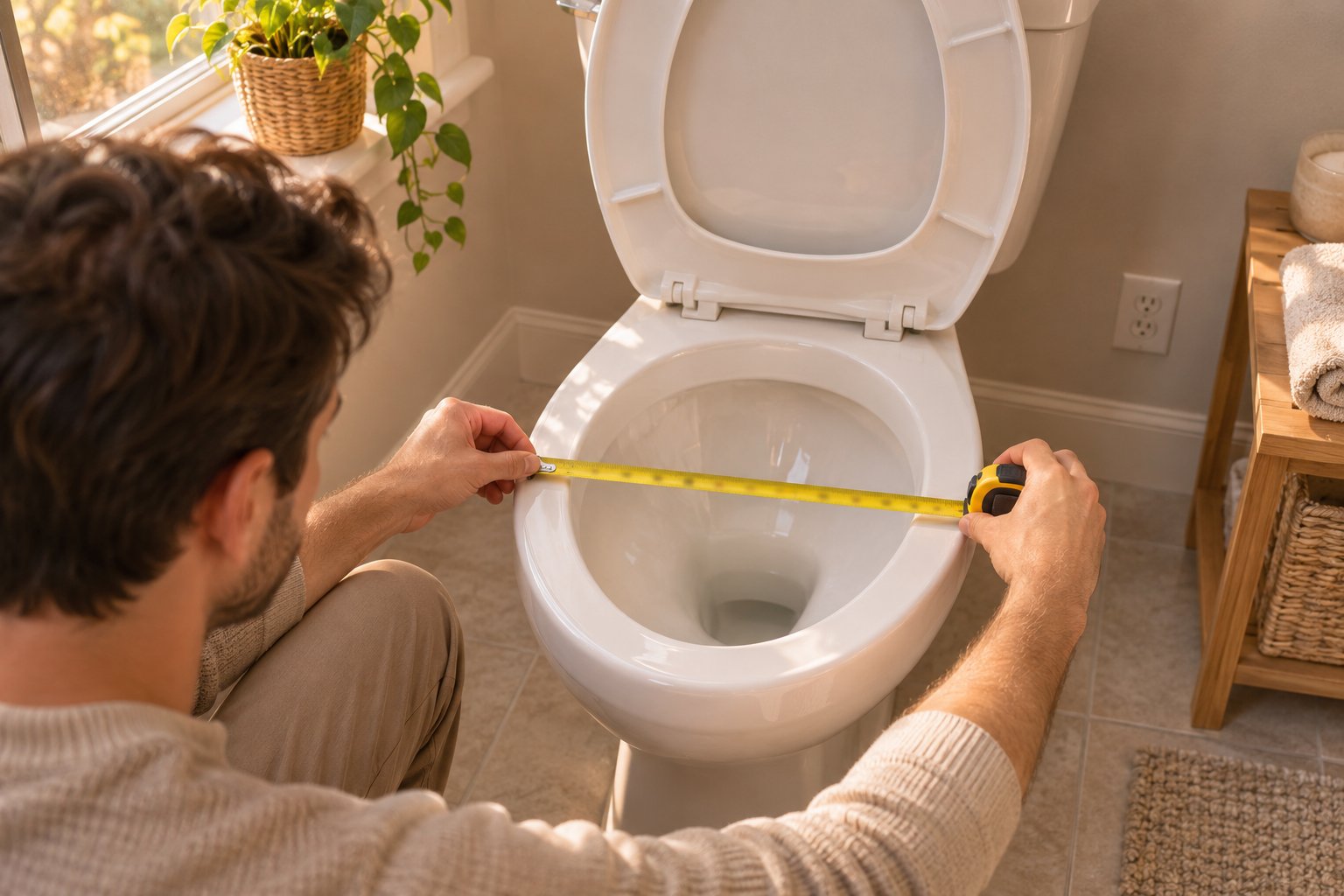
Imagine you've chosen a seat with the right heater and a solid warranty. It arrives, and the back of it hits your toilet tank. Many buyers run into this. A tape measure and a look behind the toilet will answer most fit questions before you order.
Measuring for an Elongated or Round Bidet Seat
Take the measurements below and compare them with the fit guide for the exact seat you're considering. The example figures come from Brondell's fit guide for its Swash seats. Other brands and models use different ranges.
- Bowl shape: Note whether the bowl is a long oval (elongated) or closer to a circle (round). The bowl length measurement in step 3 confirms which one you have.
- Bolt-hole spacing: Measure center to center between the two seat bolt holes. Most Swash seats accept 5-1/4 to 8 inches, but several Brondell models need exactly 5-1/2 inches.
- Bowl length: Measure from the bolt holes to the front edge of the bowl. Brondell treats 18 to 19-1/2 inches as elongated and 16 to 17-3/4 inches as round.
- Tank-to-bolt clearance: Measure from the center of the bolt holes back to the tank. Brondell asks for at least 1-1/2 inches, and some of its models need 2 inches. If you have less room, the seat may hang over the front of the bowl.
- Water supply valve location: Find the shutoff valve and check the connection at the fill valve. Brondell's T-valves need a 7/8-inch fill valve connection.
Is your bowl on the short side? Brondell also suggests measuring from the front of the tank to the front of the bowl. If that distance is under 20-1/2 inches, a round bidet toilet seat may stick out past the bowl less than an elongated bidet toilet seat would, even on an elongated bowl.
Skirted, One-Piece and Wall-Hung Toilets
These toilet designs cause fit problems that the basic measurements can miss.
- Skirted toilets: Smooth side panels can hide the area under the bolt holes, so you may not be able to reach the mounting nuts from below. Brondell notes that one skirted Toto model needs top-mount hardware and an alternative T-valve.
- One-piece toilets: The tank often curves or slopes toward the seat. Brondell warns that an angled tank or a tank cover that sticks out can block the seat body. Tank-heated seats are bulkier at the back, so they're the most likely to hit it.
- Wall-hung toilets: The tank sits inside the wall, so there may be no supply line you can tap. For one wall-hung model, Brondell says a plumber must provide an accessible 1/2-inch water supply connection for the bidet.
For any of these toilets, check the specific model's fit guide or ask the manufacturer's support team before you order.
Outlet, Water Supply and Non-Electric Options
An electric seat needs a grounded, three-prong outlet within reach of its cord. Vatero's outlet planning guide points out that bidet seat cords are short and usually come out of one particular side of the seat, so check both the cord length and the side on the spec sheet. Vatero also warns against using an extension cord as a permanent fix. It notes that older homes may have three-prong outlets wired to ungrounded two-wire circuits.
Local electrical codes often require ground-fault (GFCI) protection for bathroom outlets. The Canadian Electrical Code is one example. Your local code and inspector decide the details. If there's no outlet near the toilet, get a quote from a licensed electrician before you buy. Vatero says adding an outlet can be a quick job in some homes and a bigger project in others, for example when the wiring has to run through a finished ceiling or a concrete wall. The water side needs a check as well. The seat connects through a tee fitting at the supply valve, and an old shutoff valve that is seized or corroded is easiest to replace during the same visit.
If you have no outlet and no budget to add one, non-electric bidet toilet seats run on water pressure alone. Vatero states the trade-off for non-electric bidets plainly: you get cold water only, with no heated seat and no dryer.
Use these checks to rule seats in or out. Installation steps, plumbing parts, and electrical requirements must come from the confirmed model's manual, not from a generic guide.
A seat that fits gets onto your toilet. Whether it keeps working for years depends on which parts tend to wear out and what the warranty covers when they do.
Common Failure Points, Warranty Coverage and Upkeep
When an electric bidet stops working, the cause is usually one of a few parts: the nozzle, the heater, the electronics, or the hardware that holds the seat and lid. Each of these parts is exposed to water, heat, or daily handling. None of the sources below publish failure rates. This section explains how each part can fail and what protects you, not how often failures happen.
Components Most Likely to Wear Out
Two sources describe the main risks. Brondell's president told Consumer Reports that nozzle heads can clog with sediment or buildup, especially in very hard water. He added that chlorine-based cleaners can weaken rubber O-rings and gaskets until they fail and leak inside the seat. TOTO's service life notice says electronic parts wear down over time from heat, electrical stress, and ordinary aging. It lists malfunction, overheating, battery leakage or swelling, and unexpected shutdown as risks that grow as a product ages.
| Component | What Can Go Wrong | Spec or Warranty Term That Protects You | Upkeep That Helps |
|---|---|---|---|
| Nozzle | Clogged spray holes, mineral scale, or a wand damaged by pushing or pulling it | Defect coverage. TOTO excludes damage from sediment in the water and from chlorine cleaners. | Run the nozzle wash daily. Gently wipe the extended wand once a month. Add an inline filter if you have hard water. |
| Heater | Water or seat stops warming. Aging electronics can overheat. | Defect coverage. TOTO excludes surge and lightning damage. Its S7 and S7A terms also require the factory cord and a 120V, 60Hz GFI outlet. | Plug straight into a grounded GFCI outlet, with no extension cord. Stop using the seat if it shows signs of overheating. |
| Electronics and remote | Water damage, battery leakage or swelling. On a remote control bidet with no controls on the seat, a dead remote means no wash. | Defect coverage. Accidents and misuse are excluded. | Unplug before cleaning. Wipe the remote and panel with a lightly damp cloth. Never submerge them. |
| Hinge | The seat works loose or shifts on its mounting plate. | Defect coverage. Normal wear and tear is excluded. | Use the quick-release to clean the gap each month, and slide the seat back until it clicks. |
| Slow-close lid | The lid stops closing slowly, or its surface scratches. | TOTO excludes cosmetic wear such as gloss loss, scratching, and fading. | Clean the bidet toilet lid with a soft damp cloth and neutral dish soap. Avoid abrasive powders and metal or nylon scrubbers. |
What the Warranty Actually Covers
Forbes Vetted lists the warranty length for each seat but not what the warranty covers. You can only get that from the warranty document itself.
- Toto Washlet S5: TOTO's warranty page lists a one-year limited warranty for WASHLET seats and gives two years only to the S7 and S7A. That matches the 1 year Forbes lists for the S5. The terms don't split coverage by component. The heater, electronics, nozzle, and seat body all share one year of coverage for defects in materials and workmanship, starting from the purchase date. Cosmetic wear on the seat body is excluded. TOTO repairs or replaces defective parts with no charge for parts or labor. It does not pay to remove, ship, or reinstall the seat. The warranty also excludes damage from water pressure above 80 PSI, sediment, chloramines, and power surges. It covers only the original purchaser, who must show proof of purchase.
- Bio Bidet BB-2000 and Tushy Cloud+: Our reference materials don't include either warranty document, so we can't say what each one covers by component. Forbes lists 3 years for the BB-2000, and Business Insider lists 1 year for Tushy. Before you buy, ask the seller whether the heater, electronics, nozzle, and seat body are covered equally. Also ask whether the coverage is tiered, like Brondell's, and who pays for shipping.
Nozzle Cleaning, Descaling and Filter Care
Before any deep cleaning, Consumer Reports advises unplugging the seat, shutting off its water, and draining the lines and tank (if the seat has one) as the manual directs.
- Clean the nozzle. Run the self-clean or nozzle wash feature daily. Once a month, extend the wand with the manual cleaning mode and wipe it with a soft wet cloth, without detergent. On a TOTO seat, that mode is 'Wand Cleaning' in the remote menu, according to TOTO's maintenance guide. A TOTO spokesperson warns against pushing or pulling the wand with force.
- Descale in hard-water areas, following the manual. Don't improvise a descaler. TOTO's warranty excludes damage from bleach, alkali, and acid cleaners. Consumer Reports suggests an inline bidet filter between the hose and the seat. It costs $20 to $30 and should be replaced every six months.
- Service filters on your model's schedule, if it has them. BioBidet recommends checking the inlet strainer every few months. TOTO's schedule for WASHLET seats is to clean the deodorizer filter monthly, clean the water filter drain valve every six months, and replace the deodorizer cartridge about every six months.
The filters, cartridges, and replacement parts in this routine are small purchases, but you keep making them for as long as you own the seat, so they belong in its real price.
The Full Cost of Owning a Bidet Seat
How much does a bidet cost? The price on the box is only part of the answer. An outlet, a few plumbing parts, filters, and electricity can all add to it. Some of these are one-time costs. Others keep coming for as long as you own the seat.
| Cost Item | When It Applies | How to Estimate It |
|---|---|---|
| Seat or integrated toilet price | Always | Compare current prices for the exact model and bowl size. For an integrated toilet, add the cost of removing and installing the fixture. |
| Electrician visit | No grounded GFCI outlet within reach of the cord | Get a written quote from a licensed electrician that includes any permit fee. |
| Plumbing parts not included in the box | A seized shutoff valve, a supply line that's too short, or a wall-hung toilet | Check the box contents list in the manual against your setup. |
| Replacement filters or nozzles | Models with filters, homes with hard water, or worn parts | Multiply the part price by how often the manual says to replace it each year. |
| Energy use | Electric seats | Check the heating type, the eco modes, and the wattage on the spec sheet. |
How Much Does a Bidet Cost Upfront
Wirecutter says bidets range from around $20 to $1,000 and up, and cold-water models start at about $25. In Toto's lineup, the S7A costs just over $1,000. That's roughly $500 more than the S5. The S2 and KS5 each run about $150 less than the S5. When Good Housekeeping published its review, it listed these prices:
- Tushy Classic 3.0 attachment: $129
- BioBidet HD-7000 electric seat: $239 on sale, down from $329
- Its Toto Washlet pick: $1,276 to $1,404, depending on the retailer
Prices change often, so use these figures to understand the price tiers. Don't treat them as quotes.
Asking about a Japanese toilet price is a different kind of question. An integrated toilet replaces the whole fixture, so you pay for the toilet, the removal of your old one, and possibly new plumbing and electrical work. A bidet seat reuses the toilet you already own. Our sources don't give prices for integrated toilets, so ask for a quote that includes installation.
Installation and Electrical Costs to Plan For
Wirecutter says most seats install in about an hour with a wrench and a screwdriver. If you do it yourself, labor costs nothing. The outlet is the cost that varies most. Good Housekeeping cites Angi's figure of about $300 on average to add one. Angi's GFCI cost data puts a new GFCI outlet at $150 to $300. Many electricians charge a minimum visit fee of $100 to $200, and permits cost $50 to $400 where they're required. Wiring that's hard to reach raises the labor cost. Seats usually come with a connector or tee fitting. Replacing a seized valve or adding a plumber's supply connection for a wall-hung toilet costs extra.
Ongoing Costs Like Filters, Parts and Energy
The inline filter from the upkeep routine costs $20 to $30 and needs replacing every six months. That comes to about $40 to $60 a year. Wirecutter warns that a replacement remote isn't cheap. Energy costs depend on the heater types covered in the spec sheet section. A tank seat keeps its reservoir warm even when nobody is using it. An instant heater warms water only as it flows, which Wirecutter says uses less energy, and eco modes lower the seat heat during idle hours. Our sources don't give kWh figures, so compare wattage on the spec sheets. One Good Housekeeping tester found that buying less toilet paper saved real money over time.
Once you've added up these costs, you can set a budget for one seat. To spend it well, check the seat against the rubric, your fit measurements, and the warranty terms one more time.
Choosing a Bidet Seat or Sourcing One From a Manufacturer
Ready to place an order? Go through one last list first. It pulls the rubric, fit, warranty, and cost checks into one place, so you won't find a missing outlet or a short heater warranty after the box arrives.
A Final Checklist Before You Buy a Bidet Seat
- Product type: Confirm you're buying a complete bidet seat, which replaces your current seat. An add-on attachment mounts under your existing seat and usually has no warm water, heated seat, or dryer.
- Heating: The listing should say tank, instant, or hybrid. If it only says 'warm water,' treat that as a red flag.
- Certifications: Check that the electrical and plumbing listings name the exact model number.
- Warranty: Read the warranty document itself, not just the length. Check coverage by component, any tiered terms, and who pays for shipping.
- Parts: Confirm that replacement nozzles, filters, and remotes are sold for the model.
- Fit: Compare your bowl shape, bolt-hole spacing, bowl length, and tank clearance with the model's fit guide.
- Power: Find a grounded GFCI outlet within reach of the cord, or budget for an electrician.
- Ongoing cost: Add filters, parts, and energy use to the price on the box.
- Evidence: Before you trust a 'best toilet seat bidet' claim, look for agreement among independent testers.
Sourcing Bidet Seats From a Manufacturer
Sanitary ware brands and sourcing teams buying bidet toilet seats in volume face the same questions a single shopper does. The difference is that every answer applies to every unit they sell, so they need those answers from the factory in writing.
Tianyun's bidet seat category appears within its toilet seat collection. It is one place brands can start an inquiry about complete seats with a bidet function. The category page doesn't list individual models or specifications, so treat it as a place to start a conversation, not as a product recommendation. The page also doesn't confirm smart-seat functions, retail availability, or local inventory. Each of those needs to be confirmed with the manufacturer.
Questions to Confirm Before Requesting a Quote
Ask these questions of any manufacturer, Tianyun included, and get the answers for each model:
- Which bowl shapes are available, and what are the exact elongated and round dimensions?
- What spray and heating features does each model have, and is the heater tank, instant, or hybrid?
- What electrical functions does the seat have, and what voltage, frequency, plug type, and outlet does it need?
- What plumbing connections and installation requirements apply to each confirmed model?
- Is the seat compatible with separate bidet attachments, or is it designed only as a complete unit?
- Which certifications does the model hold, and does each certificate name that exact model rather than the whole range?
- What does the warranty cover for the heater, the electronics, the nozzle, and the seat body, and for how long?
- Which spare parts are sold separately, and how long will they stay available?
A sample can show you how a seat feels in use. It can't replace the paperwork. The installation steps you give installers or customers must come from the confirmed model's documentation, including its plumbing and electrical requirements.
Best Quality Bidet Toilet Seat FAQs
1. What is the best quality bidet toilet seat?
No single seat wins every test, so look for the seats that several independent reviewers recommend. The Toto Washlet S5 is Wirecutter's top pick and Forbes Vetted's best upgrade. The Toto Washlet S2 is CNN Underscored's best bidet seat and Wirecutter's runner-up. Forbes Vetted named the Bio Bidet BB-2000 best overall after it rinsed away the shaving cream in its cleaning test in 7 seconds. Wirecutter, on the other hand, found the BB-2000's remote cluttered. On a smaller budget, CNN Underscored chose the Tushy Cloud as its best value seat. Awards aside, judge quality by build, durability, and fit. Check the nozzle material, the heating type, certifications that name the exact model, the warranty terms for each component, and whether replacement parts are sold.
2. Is a tank or instant heating bidet seat better?
It depends on what matters most to you. Instant (tankless) seats heat water as it flows. A long wash never runs cold, and you can change the temperature during the wash. Wirecutter notes that instant seats use less energy because no stored water has to stay warm between uses. The trade-offs are a short burst of room-temperature water at the start and usually softer pressure. Tank seats give warm water right away and tend to spray harder. Their water cools once the small reservoir empties, though, and the tank makes the back of the seat bulkier, which can cause fit problems on one-piece toilets. Hybrid seats pair a small reservoir with flow heating. If a listing only says 'warm water,' ask the seller which type the seat uses.
3. How do I know if a bidet seat will fit my toilet?
Measure your toilet first, then compare the numbers with the fit guide for the exact model you want. Record the bowl shape, the center-to-center distance between the seat bolt holes, the length from the bolt holes to the front rim, the gap between the bolt holes and the tank, and where the water shutoff valve sits. Brondell's fit guide is one example. It classifies a bowl length of 18 to 19-1/2 inches as elongated and 16 to 17-3/4 inches as round, and it asks for at least 1-1/2 inches of tank clearance. Other brands use different ranges. Skirted, one-piece, and wall-hung toilets need extra checks for hidden mounting nuts, sloped tanks, and a water supply you can reach. If you're unsure, contact the manufacturer's support team before you order.
4. Do I need an electrician to install a bidet toilet seat?
Usually not, as long as a grounded outlet is within reach of the seat's power cord. Wirecutter says most seats install in about an hour with a wrench and a screwdriver. Local code often requires ground-fault (GFCI) protection for bathroom outlets, and an extension cord is not a safe permanent fix. If you have no suitable outlet, hire a licensed electrician. Angi's data puts a new GFCI outlet at roughly $150 to $300, and minimum visit fees and permits can add to that. If adding an outlet isn't practical, a non-electric seat runs on water pressure alone, but it sprays cold water only and has no heated seat or dryer. For wiring and plumbing requirements, follow the manual for the model you buy.
5. How much does a bidet toilet seat cost to own?
Upfront prices vary widely. Wirecutter puts bidets at about $20 to more than $1,000, and Business Insider lists the Tushy Cloud+ at $399. In Toto's range, the S7A sells for just over $1,000 and the S5 for about $500 less. Prices change often, so treat these figures as tiers rather than quotes. Then add the costs that come later: an electrician if you need an outlet, plumbing parts such as a new shutoff valve, inline filters at about $20 to $30 every six months, replacement remotes or nozzles, and electricity for heating. Instant heaters and eco modes can use less energy than a tank that stays warm all day. An integrated bidet toilet costs more to switch to because it replaces the whole fixture, so ask for a quote that includes installation.
Apply This Insight to Your Project
Tell us what you are building and how the topic “Best Quality Bidet Toilet Seat: What Breaks, What Lasts, What Fits” relates to your application. Our engineering team can help evaluate the next step.