What Is a Bidet Toilet Seat
Have you ever finished in the bathroom and wondered if there's a cleaner, gentler option than reaching for another handful of paper? That question sends plenty of people searching for phrases like "bidet toilet seat what is," hoping for a straight answer. The good news is that the idea is much simpler than it sounds.
A Bidet Toilet Seat Defined in Plain Language
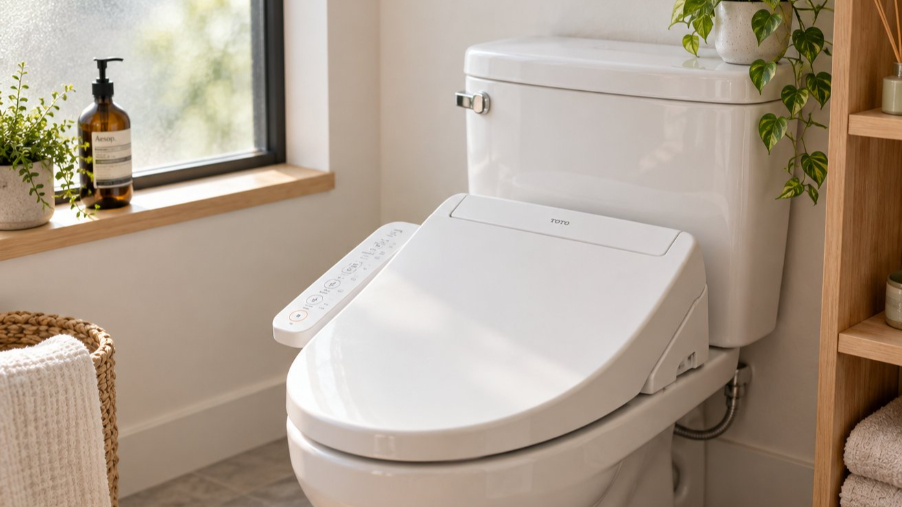
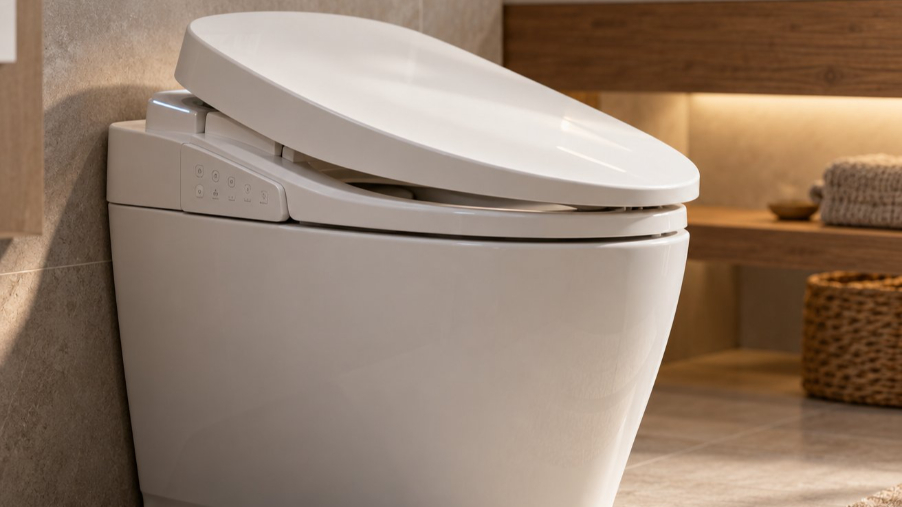
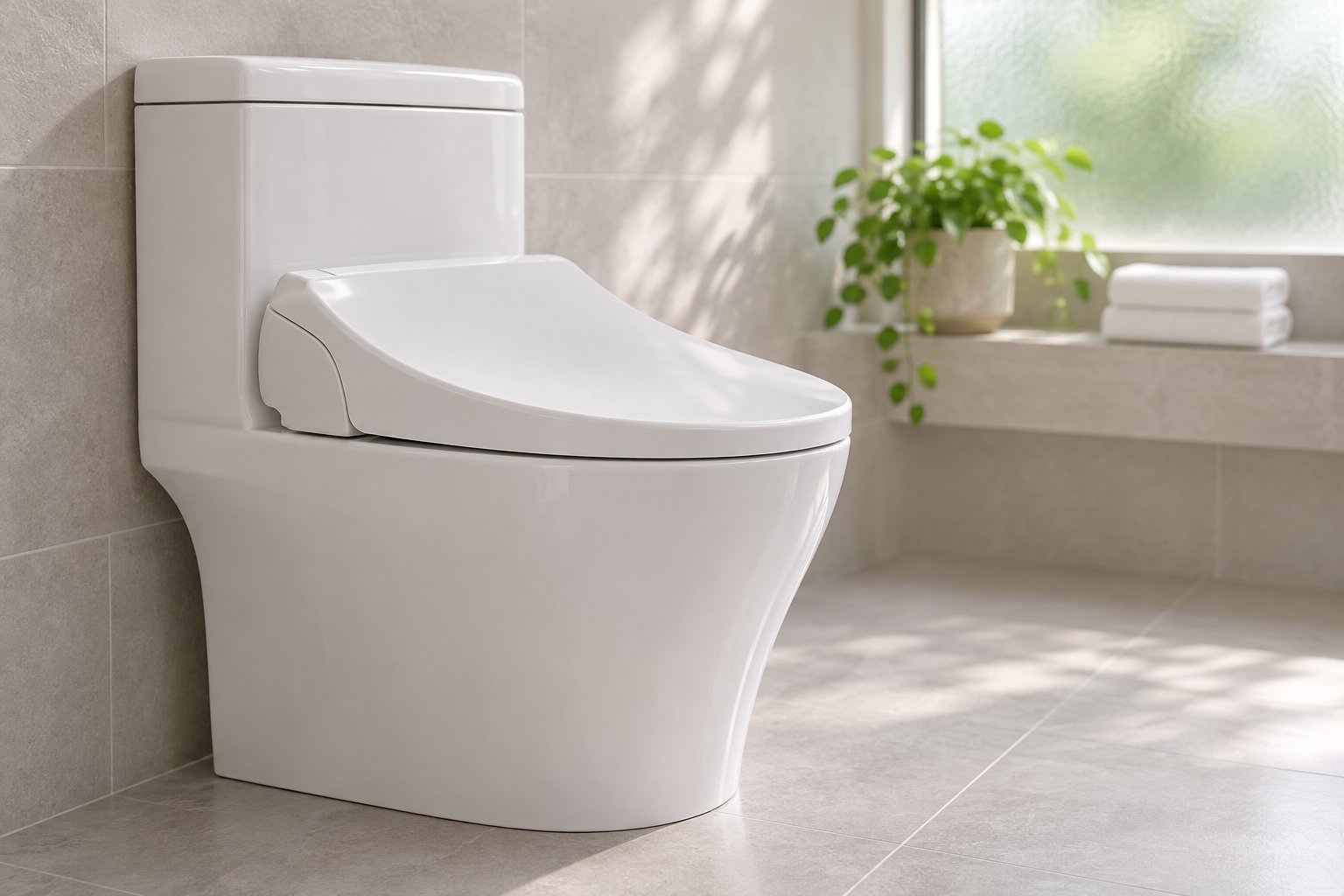
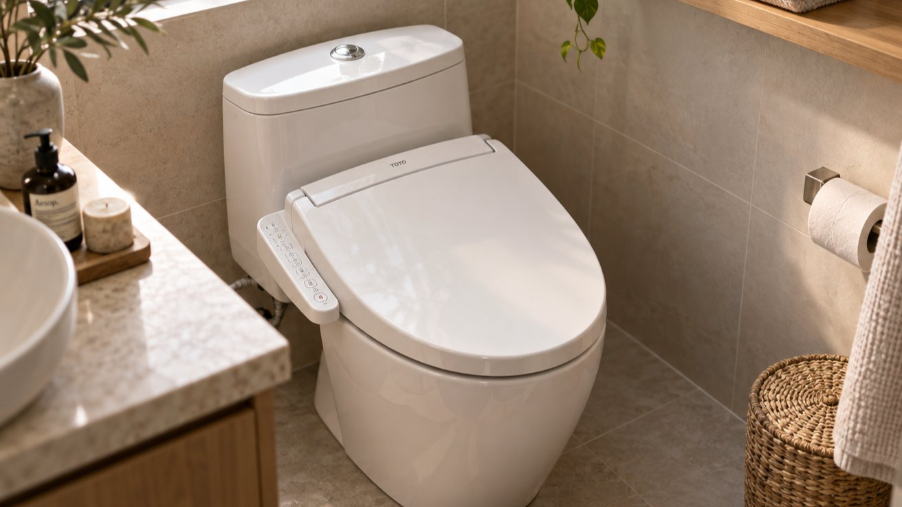
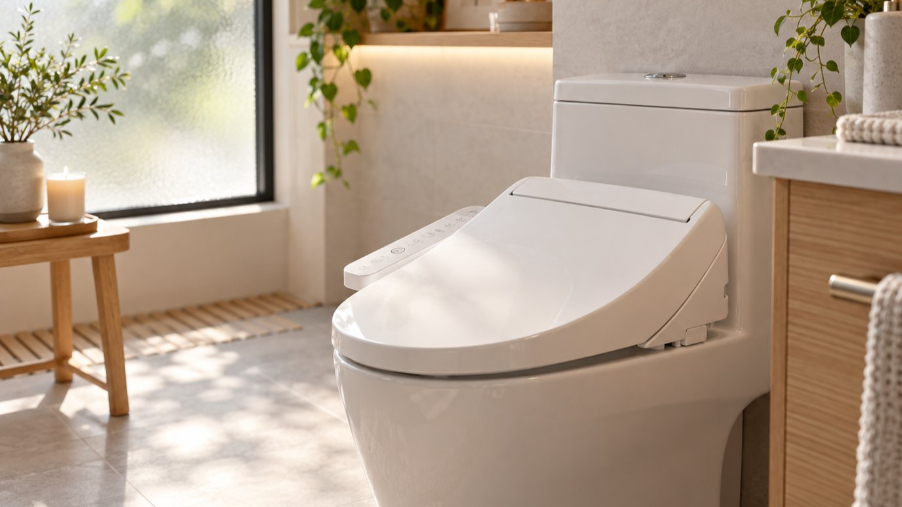
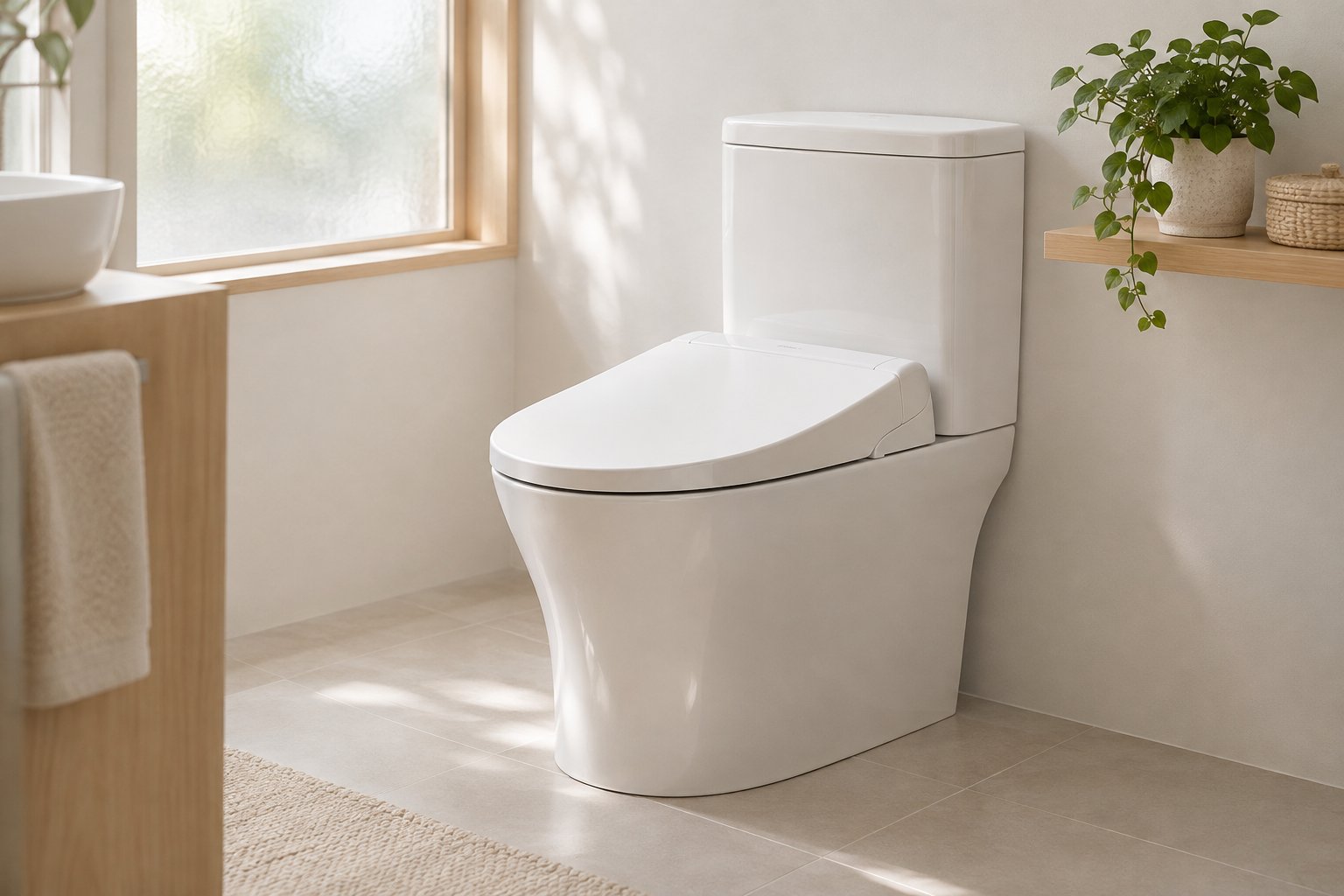
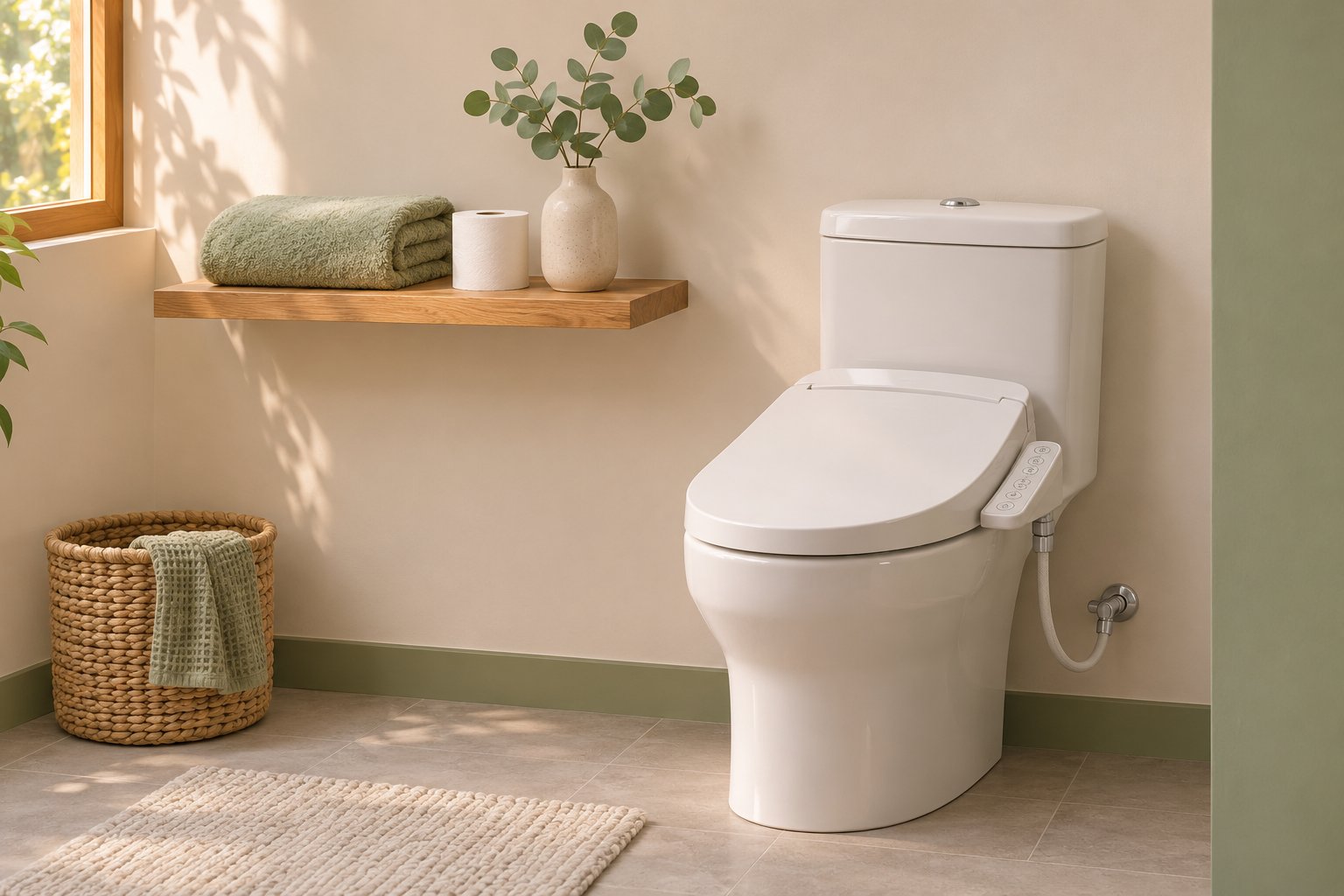
A bidet toilet seat is a replacement toilet seat with a built-in, retractable nozzle that sprays water to clean you after using the toilet. It mounts on your existing bowl and connects to the toilet's water supply, adding bidet function without a separate fixture, extra floor space, or major plumbing work.
Think of it as an upgrade, not a renovation. You take off your old seat, set the new one in its place, and tap into the fresh water line that already feeds your toilet. TOTO describes a bidet seat as a swap for your standard seat that adds a retractable wand for water cleansing, with many models also offering warm water, adjustable pressure, and personalized settings.
The Purpose of a Bidet Seat in Everyday Hygiene
At its core, a bidet seat does one job: it cleans with water instead of relying on dry paper alone. A gentle stream rinses you after you use the toilet, and then you pat dry or, on some models, let a built-in air dryer finish the work. Some people use it to cut back on paper, while others nearly skip paper altogether. Either way, it's designed to fit into your existing routine, not complicate it.
Who Searches for a Bidet Toilet Seat and Why
Interest spiked during the 2020 toilet paper shortages, when some American fixture makers saw bidet sales jump by more than 400%, as Sharp HealthCare reports. Today, people tend to arrive with a few familiar motivations:
- Comfort: Many users find water feels gentler than repeated wiping.
- Hygiene: Nearly hands-free cleansing appeals to anyone who wants a fresher feeling.
- Accessibility: Older adults and people with limited mobility may find it easier to stay independent.
- Less paper: Fewer rolls to buy, store, and flush.
In the sections ahead, you'll explore the different types, the mechanics behind each spray, how to use one, what installation involves, and what it really costs. But here's a twist worth knowing first: "bidet" covers more than one product. A standalone fixture, a slim attachment, and a fully integrated smart toilet all promise water-based cleaning, and the seat only makes full sense once you see where it sits among them.
Where Bidet Seats Fit Among Bidet Options
Picture four bathrooms. One has a separate basin sitting next to the toilet. Another has a slim control knob peeking out from under an ordinary seat. A third has a contoured seat with a side panel or remote. The fourth has a sleek, one-piece toilet that seems to do everything on its own. Every one of them counts as a "bidet." So how do you tell them apart, and where does the seat fit?
Standalone Bidets Compared With Bidet Seats
A stand alone bidet is the classic version: a separate, low fixture installed beside the toilet. Because it's its own fixture, it needs dedicated floor space plus its own water supply and drain. In most homes, that means a remodel. A bidet seat skips all of that by working with the toilet you already own.
Bidet Attachments Versus Complete Bidet Seats
This is where most shoppers get mixed up. A seat bidet attachment mounts between your existing seat and the bowl. It draws from the toilet's own supply line, needs no electricity, and its nozzle retracts under the rim when not in use, as LUXE Bidet explains. You keep your old seat on top.
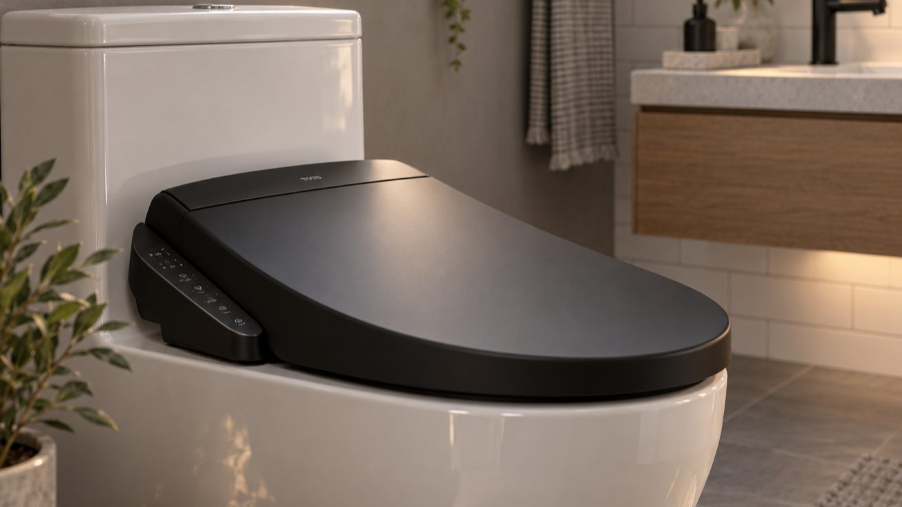
A complete bidet seat, by contrast, replaces your seat entirely. The nozzle and controls are built into the seat itself. Electric versions need a grounded outlet near the toilet to power comforts like warm water and a heated seat, while non-electric versions run on water pressure alone.
Integrated Smart Toilets and Japanese Style Toilet Seats
A toilet with a built-in bidet goes one step further. The bowl and bidet are designed as a single unit, so you replace the whole toilet rather than just the seat. These smart or integrated toilets often add touches like automatic flushing and hands-free lids, and they typically call for professional installation.
Many people picture a Japanese bidet toilet seat when they hear the word "bidet," and for good reason. "Washlet," originally a TOTO brand name, has become everyday shorthand for these heated, button-lined seats, which 81% of Japanese households used as of 2016. You'll notice that style shows up both as a seat added to an existing toilet and as part of fully integrated models.
Here's how the four options compare at a glance:
| Option | Space Needs | Plumbing Changes | Electrical Needs | Typical Complexity |
|---|---|---|---|---|
| Standalone bidet | Its own floor area beside the toilet | New supply and drain lines | Usually none | High, often part of a remodel |
| Bidet attachment | None beyond the existing toilet | Splits the existing supply line | None | Low |
| Bidet seat | None, replaces the current seat | Splits the existing supply line | None for manual models; outlet for electric models | Low to moderate |
| Integrated toilet | Replaces the entire toilet | Full toilet replacement | Outlet near the toilet | High, often professional |
Notice something interesting? The seat and the attachment tap the very same water line, yet a seat can deliver warm water, a precise spray, and a self-rinsing nozzle. That difference lives inside the seat's housing, and it starts the moment you press a button.
How a Bidet Toilet Seat Works Step by Step
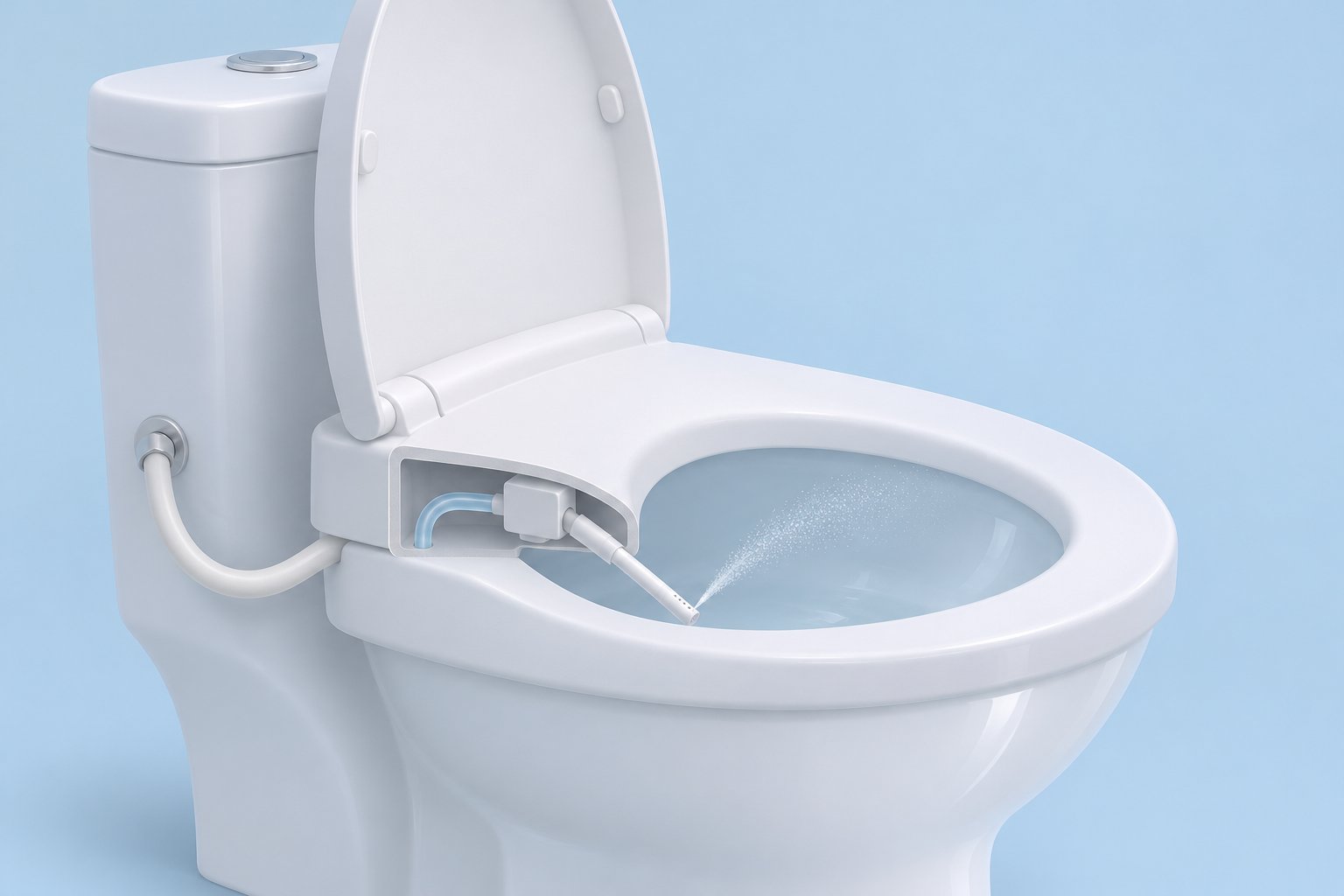
Sounds complex? It's really a short chain of simple events. When people ask how does a toilet bidet work, the answer starts behind the toilet and ends with a nozzle that tidies itself up. Here's the full sequence, from water line to final rinse:
- Water enters the seat: Fresh water flows from your toilet's supply line into the unit.
- Water is warmed or passes through: Depending on the model, a heater warms it or it stays at room temperature.
- You press wash: On electric models, a seat sensor typically confirms someone is seated before any spray begins.
- Pre-rinse: Many seats rinse the nozzle before it moves.
- Nozzle extends and sprays: The wand glides out beneath you and starts the wash.
- You fine-tune: Position and pressure can often change mid-wash.
- Retract and rinse: The nozzle pulls back into its housing and cleans itself.
Water Supply Through the T-Valve Connection
Here's the part that surprises many first-timers: the spray never comes from the tank or the bowl. During a typical installation, a T-valve is added where the supply line meets the fill valve at the base of the tank, as Premier Bidets explains. That valve splits the line in two. One branch keeps filling the tank. The other sends clean supply water straight to the seat. Imagine a fork in a garden hose: same source, two destinations.
Tank Heating Versus Instant Tankless Heating
So, is the water cold? That depends on how the seat handles temperature, and there are three common approaches:
- Non-electric seats: These deliver supply water at room temperature. There's no standby energy use, no outlet needed, and the cost is usually lowest, but the water can feel cool, especially in winter.
- Tank-heated seats: These keep a small reservoir of pre-warmed water ready. You get warmth from the first second and a lower upfront cost, but the reserve can run out mid-wash, often after about 20 to 50 seconds. The heater may also cycle to keep stored water warm, and the reservoir can add bulk at the back.
- Instant or tankless seats: A tankless bidet seat heats water as it flows, so warmth lasts through longer washes and the profile is often slimmer. Expect a higher initial price and a higher peak power draw while heating, though peak draw isn't the same as total monthly use.
Nozzle Extension, Wash Cycle, and Self-Cleaning
This is where the real answer to how does a bidet toilet seat work comes together. On a self cleaning bidet, a nozzle rinse often runs before the wand extends and again after it retracts, as Brondell describes. Between those rinses, the spray targets a rear or front wash. Many models let you slide the nozzle forward or back and raise or lower pressure without stopping, and some add oscillation to widen coverage. When you press stop, the wand tucks back out of the bowl's way.
Features vary widely by model, so confirm the exact wash, heating, and self-cleaning functions in the product documentation. You'll notice one thread runs through nearly every step: the heater, the sensor, and the oscillating spray all need power. A manual seat handles the same core job with nothing but water pressure and a dial, and that split shapes almost every other feature you'll compare.
Non-Electric and Electric Bidet Seat Types
Start shopping and you'll notice that almost every bidet seat falls into one of two camps: the ones that plug in and the ones that don't. Neither is automatically better. Each solves a different problem, and the right choice depends on what you want your bathroom routine to feel like.
Manual Non-Electric Bidet Seats
A manual bidet toilet seat runs on your home's water pressure alone. You turn a dial or pull a lever, and the spray begins. There's no outlet, no wiring, and no heater to worry about. That simplicity has a surprising perk: because these seats use household line pressure instead of an internal pump, their strongest setting often outpaces an electric model's, as Alpha Bidet points out.
The tradeoffs are real, though. Water arrives at room temperature, so winter mornings can feel brisk. Finding your ideal pressure on a knob can take some practice, and many nozzles aren't adjustable, which means you may need to shift your position for full coverage. Some models can connect to a sink's hot water line, but that depends on your bathroom layout and may involve drilling into a vanity cabinet.
Electronic Bidet Seats and Their Comfort Features
Electronic bidet seats trade a little simplicity for a lot of comfort. Common features include:
- Heated seat: No more cold shock on chilly mornings.
- Warm water: Adjustable temperature for front and rear wash.
- Warm-air dryer: A toilet seat with bidet and dryer can cut paper use for drying, or nearly eliminate it.
- Remote controls: Wall-mounted remotes can sit on either side of the toilet, which helps left-handed users.
- Adjustable nozzle: Slide the spray forward or back, often with oscillation or pulsation.
- Night light: A soft glow that guides late-night trips without harsh overhead lighting.
Many heated toilet seats with bidet functions bundle several of these together, but availability varies widely by model. Check the specification sheet before assuming any feature is included.
Matching Features to Comfort, Hygiene, Accessibility, and Budget
Imagine two households. One lives somewhere cold and wants warmth above all. The other has a caregiver helping an older parent stay independent. Their ideal seats look very different. Use this table to match features to what matters most to you:
| Your Priority | Features to Look For | Why It Helps |
|---|---|---|
| Comfort | Heated seat, warm water, adjustable pressure | Makes every wash feel gentle and consistent, in any season |
| Hygiene | Self-rinsing nozzle, front and rear wash modes, oscillation | Keeps the wand clean and widens spray coverage |
| Accessibility for limited mobility | Remote with simple buttons, adjustable nozzle, air dryer, or raised height and support handles on some non-electric models | Reduces twisting, reaching, and repositioning |
| Budget | Manual lever or dial operation | Fewer parts, no outlet needed, lower upfront cost |
Features explain how a seat feels day to day. They don't fully explain why so many people make the switch in the first place, or whether the worries that keep others away actually hold water.
Benefits and Common Myths About Bidet Seats
Why do so many people who try a bidet seat never go back? And why do others hesitate for years before giving one a chance? The answer usually comes down to a few practical benefits and a handful of stubborn myths.
Hygiene and Comfort Benefits of a Cleansing Toilet Seat
The core purpose of bidet use is simple: water cleans better than dry paper alone. Think about it this way. When your hands get dirty, you wash them instead of just wiping them. A cleansing toilet seat applies that same logic to the bathroom. Gastroenterologist Christine Lee, MD, tells Cleveland Clinic that water can remove trace residue more effectively than a few squares of tissue, and that skipping repeated wiping helps avoid chafing and tiny cuts. The same source notes that a bidet can make cleaning easier for people with arthritis, mobility issues, or trouble reaching. A few sensible habits still apply: let the spray flow front to back, keep the pressure comfortable, and wash your hands afterward.
Reduced Toilet Paper Use and Environmental Considerations
Using less paper is the most commonly cited perk, but the picture is more nuanced than it seems. If you still pat dry with tissue, you'll save less paper than you might expect, a point Treehugger raises. The bigger environmental story may actually be water. Figures that Brondell cites from Business Insider put a bidet wash at about one-eighth of a gallon, compared with roughly 37 gallons to produce a single roll of toilet paper. Pair a seat with an air dryer or a reusable cloth, and the savings grow further.
Common Bidet Seat Myths Versus Facts
Most hesitation traces back to a few misconceptions. Here's how they hold up against the way these seats actually work:
| Myth | Fact |
|---|---|
| The water will be uncomfortably cold. | Non-electric seats use room-temperature supply water, but tank-heated and tankless models warm it before it reaches you. A heated seat bidet also takes the chill off the seat itself. The heating options are covered in the step-by-step mechanics section above. |
| The nozzle must be dirty. | The nozzle stays retracted when not in use, and many models rinse it before and after each wash, as the mechanics walkthrough explains. Regular cleaning according to the manual still matters, since a neglected nozzle can harbor germs. |
| Installing one requires a plumber. | Most seats tap the toilet's existing supply line through a T-valve, with no new pipes in the wall. Electric models also need a grounded, GFCI-protected outlet nearby, which the installation section below covers in detail. |
Even with the myths cleared away, one small hurdle remains: that first moment you sit down and face a panel of unfamiliar buttons. Knowing what each one does, and which to press first, is what turns curiosity into a comfortable daily habit.
How to Use a Bidet Toilet Seat Correctly
When you sit down on a bidet seat for the first time, the row of buttons can look like a tiny cockpit. Take a breath. Learning how to use a bidet toilet seat usually takes a single visit, and after a few days the routine feels as ordinary as washing your hands.
How to Use a Bidet Toilet Seat for the First Time
Want a low-stakes preview? Brondell suggests holding your hand over the bowl and pressing wash before you use the toilet. That way, you test the temperature, pressure, and angle with your fingers instead of your most sensitive skin. When you're ready for the real thing, follow these steps:
- Sit fully on the seat: Many electric models have a seat sensor and won't spray until someone is seated.
- Select the wash mode: Choose rear or front wash. Expect a brief pause while the nozzle pre-rinses and the water warms.
- Start low: Begin at the lowest pressure and a moderate temperature, then increase gradually.
- Adjust the nozzle: Slide it forward or back until the spray hits the right spot. Leaning slightly can help, too.
- Stop the spray: Press stop when you feel clean. A typical wash lasts roughly 20 to 60 seconds, and the nozzle then retracts and rinses itself.
- Dry off: Use the air dryer, a couple of squares of paper, or a towel.
Understanding Bidet Controls and Settings
Bidet controls generally come in three forms. Some seats have a side panel attached to the seat itself. A remote control bidet setup uses a wireless remote, often mounted on the wall within easy reach. Non-electric seats rely on a manual lever or dial. Whatever the style, you'll usually find these settings:
- Rear and front wash: Front wash is sometimes labeled feminine or bidet and uses a gentler spray.
- Pressure and temperature: Fine-tune both for comfort, avoiding extremes.
- Nozzle position: Moves the spray forward or back.
- Oscillation: Sweeps the spray back and forth for wider coverage.
- Dryer and seat heat: Found on many electric models.
Labels and icons differ by model, so a quick look at the manual saves guesswork when you're figuring out the bidet toilet how to use basics on a new seat.
Drying, Toilet Paper, and Bidet Etiquette
Paper or air dryer? Either works. Full air drying can take a few minutes, so if you're in a hurry, pat dry with a little paper and let the dryer finish. Some households keep a dedicated towel nearby instead. Hosting guests? Show them where the stop button is, or leave a small card explaining the remote control bidet icons. That one tip prevents most surprises. A few quick hygiene habits help, too:
- Wash your hands with soap and water afterward, as The Home Depot recommends.
- Clean the nozzle and seat surface regularly, following the manual.
- Wipe down the remote or side panel when you clean the bathroom.
- Talk with your doctor first if you have medical concerns.
Of course, every button on that panel assumes the seat actually fits your bowl, connects cleanly to your water line, and has safe power within reach. Those details get settled long before your first wash.
Installation Fit and Electrical Requirements
Ever ordered a shirt that looked perfect online, only to find it didn't fit? Bidet seats can go the same way. Three things need to line up: the seat must match your bowl, connect to your water line, and, for electric models, reach safe power. One rule applies throughout: the exact steps, parts, and plumbing and electrical requirements come from your specific model's instructions. Treat this section as a planning guide, not a substitute for the manual.
Checking Toilet Shape and Seat Fit
Toilet bowls come in two main shapes, and seats are sold to match. Whether you need a bidet toilet seat, round or elongated, the wrong one either overhangs the front of the rim or leaves part of it exposed. To check, lift the lid and find the two seat bolts at the back of the bowl. Measure from the midpoint between them to the outer front edge of the rim. Premier Bidets notes that about 16 1/2 inches usually means round and about 18 1/2 inches means elongated, with bolts typically spaced about 5 1/2 inches apart.
Measure the bowl, not your old seat, since a mismatched seat is exactly what you're trying to catch. "Compact elongated" bowls can land in between, and some one-piece or skirted toilets need extra checks, such as the gap between the tank and the bolts. Elongated bidet toilet seats offer the widest selection, but always compare your numbers with the model's published dimensions.
Plumbing Basics With a Bidet Kit
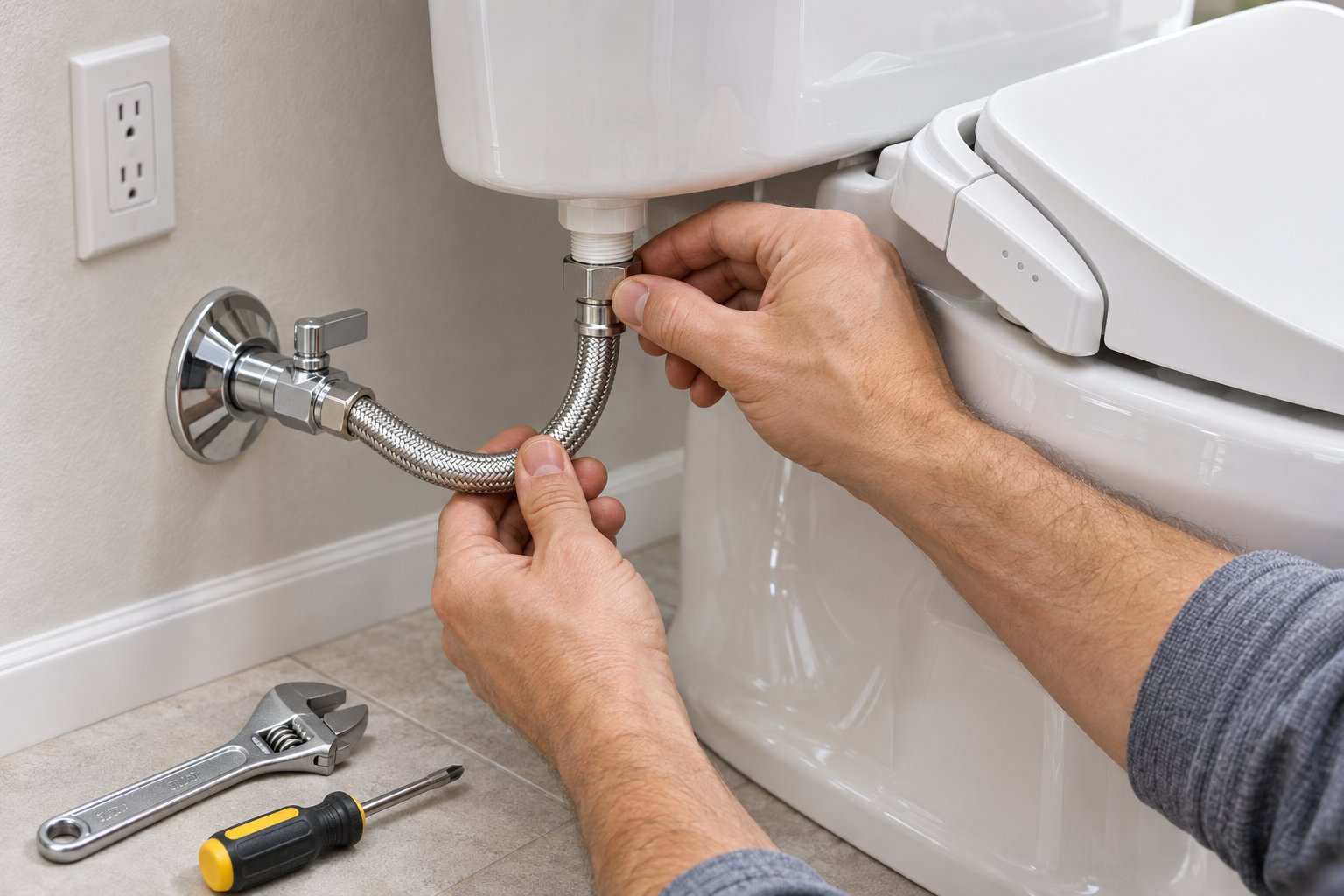
Most seats come with a bidet kit containing the parts that tie into your existing supply line:
- T-valve: Splits the toilet supply so one branch fills the tank and the other feeds the seat.
- Supply hose: Carries clean water from the T-valve to the seat's inlet.
- Mounting plate: Attaches to the bowl's bolt holes so the seat can slide on and lock in place.
The general sequence: shut off the water at the valve behind the toilet, flush to drain the tank, disconnect the supply line from the fill valve, install the T-valve, and connect the hose. Then turn the water back on slowly and check every joint for drips. In older bathrooms, seized or corroded shutoff valves are common and easiest to replace during the same job, as Vatero points out. Fittings and tightening guidance vary, so follow your manual closely.
Electrical Requirements and Outlet Safety
An electric seat behaves more like a small heating appliance than a phone charger, so the outlet deserves real planning:
- Grounded receptacle: Use the three-prong plug as designed. Never remove the ground pin or use a cheater adapter, and don't assume an older outlet is actually grounded.
- GFCI protection: Bathroom outlets must be GFCI protected. The Home Depot suggests looking for "test" and "reset" buttons or a "GFCI Protected" label.
- Within cord reach: Cords are short and often exit one side, so place the outlet near the toilet but not behind it, per local code.
- No extension cords: They create trip hazards, can bypass protection, and aren't meant for permanent appliance use.
- Circuit capacity: Check wattage and circuit needs on the specification sheet. Instant-heating seats draw more power in short bursts, and some makers recommend a dedicated or lightly loaded circuit.
No suitable outlet nearby? Hire a licensed electrician to add a GFCI-protected receptacle and handle any permits. Getting that quote before you buy keeps the upgrade honest, and it hints at a bigger truth: the price tag on the box is only part of what a bidet seat really costs.
Bidet Prices, Tiers, and the Ongoing Costs to Expect
So what does a bidet seat actually cost? The honest answer is that it depends, but the numbers make more sense once you sort models into tiers. Across the whole category, Wirecutter found bidet prices running from around $20 to $1,000 and up, with basic cold-water models starting near $25.
Bidet Prices by Tier
Most options fall into three broad groups. Recent pricing snapshots put many electric heated seats at roughly $480 to $650 or more, while flagship seats can climb past $1,000. A luxury bidet toilet, where the bowl and bidet come as one unit, sits at the top of the range because you're replacing the entire fixture. Prices shift often, so treat any figure as a starting point rather than a quote.
| Tier | Typical Features | Installation Complexity | Ongoing Cost Factors |
|---|---|---|---|
| Non-electric seats | Dial or lever control, front and rear wash, room-temperature water | Low, water connection only | Minimal, mostly cleaning and occasional parts |
| Mid-range electric seats | Warm water, heated seat, air dryer, side panel or remote | Moderate, needs a grounded GFCI-protected outlet | Electricity, water filters, remote batteries |
| Premium or luxury integrated toilets | Full feature set, often with automatic lids and flushing | High, full toilet replacement, often professional | Electricity, filters, service and replacement parts |
Ongoing Costs Beyond the Purchase Price
The box price is only the first bill. Here's what keeps adding up over time:
- Electricity: Heater design matters most. One cost analysis estimates about $17 a year for efficient tankless seats, while older tank-style heaters that keep water warm around the clock can reach $300 or more. Eco modes and seat-heat timers help trim the gap.
- Water filters: Many electric seats use an inline filter. One replacement listing cites an interval of 4 to 6 months, so check your model's schedule.
- Nozzle care: Routine cleaning is free, but worn or damaged nozzle tips may need replacement parts.
- Batteries: Remotes run on batteries, and a battery operated bidet toilet seat needs fresh cells for its own functions. A lost or broken remote can be surprisingly pricey to replace.
- Electrician fees: No suitable outlet nearby? Add a licensed electrician's quote to your budget.
Weighing Value Against Your Needs
Is the pricier seat always the smarter buy? Not necessarily. Ask yourself:
- Is saving money the main goal? Non-electric options pay back faster, since an electric seat's power draw can eat into paper savings.
- Do you live somewhere cold? Warm water and a heated seat may justify a mid-range model.
- Does anyone need extra support? A simple remote, air dryer, and adjustable nozzle can be worth the added cost.
- Is there an outlet already in place? If not, factor in wiring before comparing tiers.
- Are you remodeling anyway? An integrated toilet makes more sense when the old fixture is coming out regardless.
A price tier narrows the field, but it can't tell you whether a seat fits your bowl, matches your outlet, or truly includes the features you're paying for. That confirmation lives in the fine print of each model's specifications.
Choosing and Sourcing the Right Bidet Seat
A spec sheet can read like a tax form. A short checklist turns it into a five-minute job, whether you're picking one bidet seat for toilet upgrades at home or sourcing bidet toilet seats for a product line.
A Bidet Seat Selection Checklist
- Bowl shape and dimensions: Measure from the bolt holes to the front rim to confirm round or elongated, and note the bolt spacing.
- Electric or non-electric: Decide between warm-water comfort and plug-free simplicity.
- Heating method: Choose tank-heated, instant tankless, or room-temperature supply water.
- Outlet availability: Electric models need a grounded, GFCI-protected outlet within cord reach.
- Desired features: List your must-haves, such as a heated seat, dryer, remote, nozzle adjustment, or self-rinsing wand.
- Documented installation requirements: Confirm the plumbing connections, rear clearance, and electrical needs the manufacturer states.
Confirming Specifications Before You Buy or Source
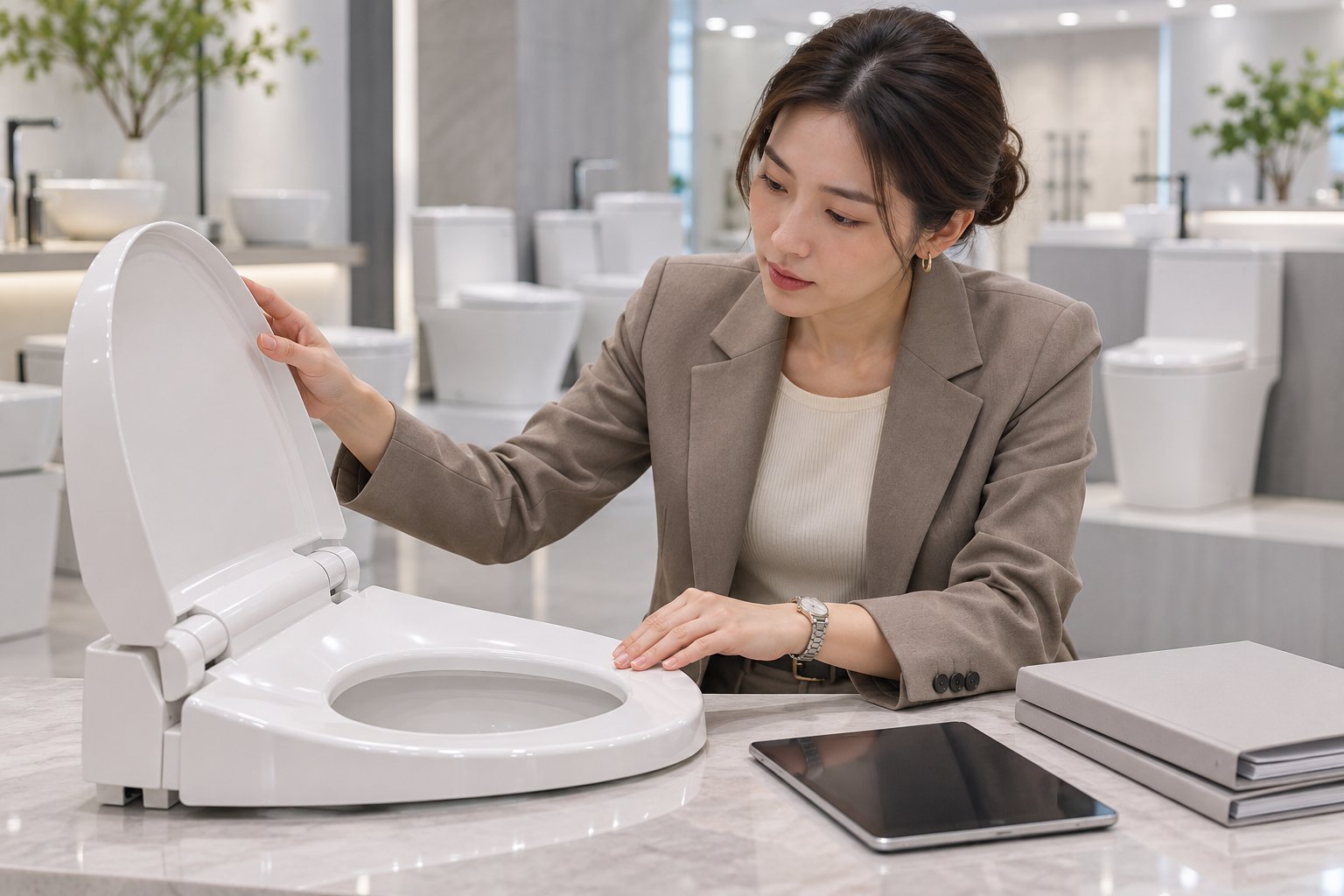
Here's the catch: most bidet seats aren't universal the way standard seats are. Premier Bidets explains that the control housing, nozzle assembly, and mounting plate all need the right clearances, and many seats need at least 1 to 2 inches between the back of the seat and the tank to sit flat. So verify dimensions, spray features, electrical functions, and plumbing requirements against confirmed model documentation, not a product photo or listing title.
Also confirm what you're actually getting. A complete bidet seat replaces your current seat. An add-on attachment mounts under your existing seat and is usually lighter on features, as Ferguson notes. Listings sometimes blur the two.
Manufacturer Inquiry Options for Sanitary Ware Brands
Sourcing for a brand works differently from shopping retail. Instead of reading reviews, you request specifications. A few practical starting points:
- Begin with an inquiry-only category: Tianyun's bidet seat category, listed within its toilet seat collection, is one starting point for specification requests on complete seats with a bidet function. It doesn't display individual models or specifications, so elongated dimensions, spray features, electrical functions, installation requirements, and compatibility with separate bidet attachments must be confirmed directly with the manufacturer.
- Request full documentation: Ask for dimension drawings, installation manuals, and electrical specifications for each model you consider.
- Clarify water pressure range: Specify the supply pressure your market expects, since weak spray is a common complaint.
- Discuss order terms early: Cover lead times, minimum order quantities, and customization options upfront to avoid surprises.
Measure your bowl, choose electric or non-electric, confirm your outlet and installation needs, then verify every feature in the model's documentation before you buy or source a bidet seat.
Frequently Asked Questions About Bidet Toilet Seats
1. Is a bidet toilet seat worth it if I still use some toilet paper?
For many households, yes. Even if you keep a few squares on hand for drying, the water rinse does the actual cleaning, so you wipe far less and put less friction on sensitive skin. Paper savings are smallest when you pat dry heavily and largest when you pair the seat with a built-in warm-air dryer or a dedicated reusable cloth. Value also depends on the tier you choose. A non-electric seat tends to pay for itself sooner because it has no power draw, while a heated electric model trades some of those savings for comfort, which can matter most in cold climates or for anyone with limited mobility.
2. Do bidet toilet seats need electricity to work?
Not all of them. Manual seats run entirely on household water pressure and are operated with a dial or lever, so they need no outlet, but the water arrives at room temperature. Electric seats need power for features such as warm water, a heated seat, an air dryer, seat sensors, and remote controls. These should plug directly into a properly grounded, GFCI-protected outlet within cord reach of the toilet, never through an extension cord or adapter. If your bathroom has no suitable outlet, budget for a licensed electrician and get that quote before you choose between electric and non-electric models.
3. How do I know if a bidet seat will fit my toilet?
Start with the bowl itself, not your old seat. Measure from the midpoint between the two seat bolts to the outer front edge of the rim; a shorter measurement usually indicates a round bowl and a longer one an elongated bowl. Then note the bolt spacing and check the gap between the tank and the bolt holes, because the control housing at the back of a bidet seat needs extra clearance to sit flat. Compact elongated, one-piece, and skirted toilets can need additional checks. Always compare your numbers with the model's published dimension drawing rather than relying on a product photo or listing title.
4. What is the difference between a bidet seat and a bidet attachment?
A bidet attachment is a slim, usually non-electric unit that sits between your bowl and your existing seat, so you keep the seat you already have. A complete bidet seat replaces your current seat and builds the nozzle and controls into the seat itself, which is what makes options like warm water, a heated seat, a dryer, and a self-rinsing wand possible. Both typically connect to the toilet supply through a T-valve. Because online listings sometimes blur the two, brands and sourcing teams should state clearly which type they need. Tianyun's bidet seat category, listed within its toilet seat collection, is one inquiry-only starting point for complete seats with a bidet function; it does not show individual models or specifications, so dimensions, spray features, electrical functions, installation requirements, and attachment compatibility must be confirmed directly with the manufacturer.
5. Is the nozzle on a bidet toilet seat hygienic?
The spray uses clean water from the toilet's fresh supply line, not water from the tank or bowl. When idle, the nozzle stays tucked inside its housing, and many models rinse it automatically before it extends and again after it retracts. That said, self-rinsing is not a substitute for maintenance. Clean the nozzle and seat surface on the schedule in your manual, replace worn nozzle tips when needed, change any inline water filter at the recommended interval, and wash your hands with soap after each use. If you have specific medical concerns, check with your doctor before starting.
Apply This Insight to Your Project
Tell us what you are building and how the topic “Bidet Toilet Seat: What Is It And Is It Worth Ditching Paper?” relates to your application. Our engineering team can help evaluate the next step.