How Much Does a Soft Close Toilet Seat Actually Cost
A soft close toilet seat typically costs anywhere from about $15 for a basic model to well over $200 for a premium option with high-end materials and precision-engineered hinges. The exact price you'll pay depends on a handful of factors: seat material, bowl shape (round versus elongated), hinge quality, and brand positioning. That's a wide range, and it's exactly why most shoppers feel uncertain before they buy.
This guide isn't a product catalog. You won't find a ranked list of items to add to your cart. Instead, think of it as a pricing education resource — a breakdown of what actually drives cost so you can walk into any store or browse any website with a clear sense of what's fair and what's inflated. As master plumber Aaron Adams of Aaron Services has noted, soft close hinges are now "very common" and "often expected," especially in guest bathrooms. With that level of demand, understanding how pricing works is more useful than ever.
What Makes a Toilet Seat "Soft Close"
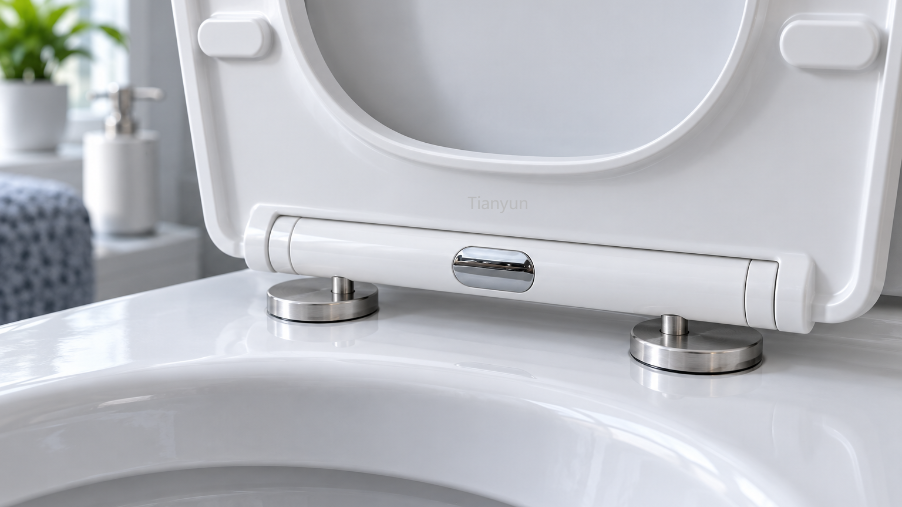
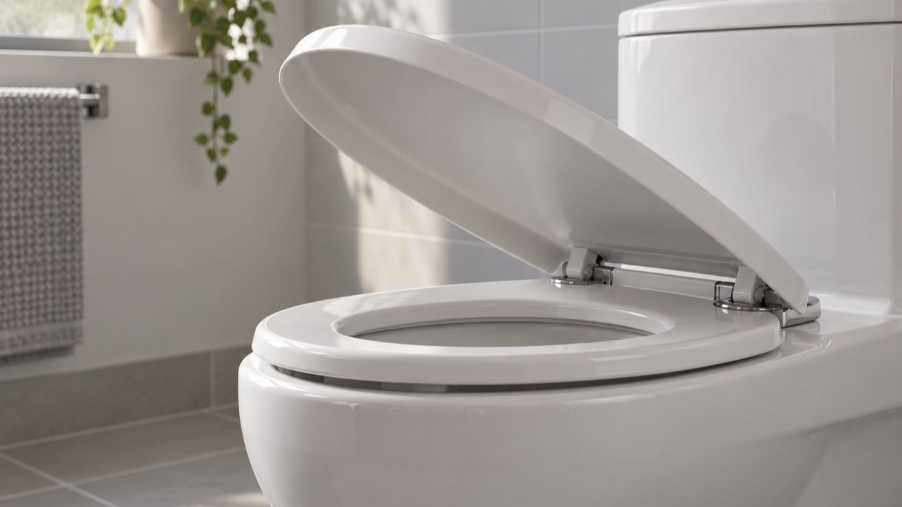
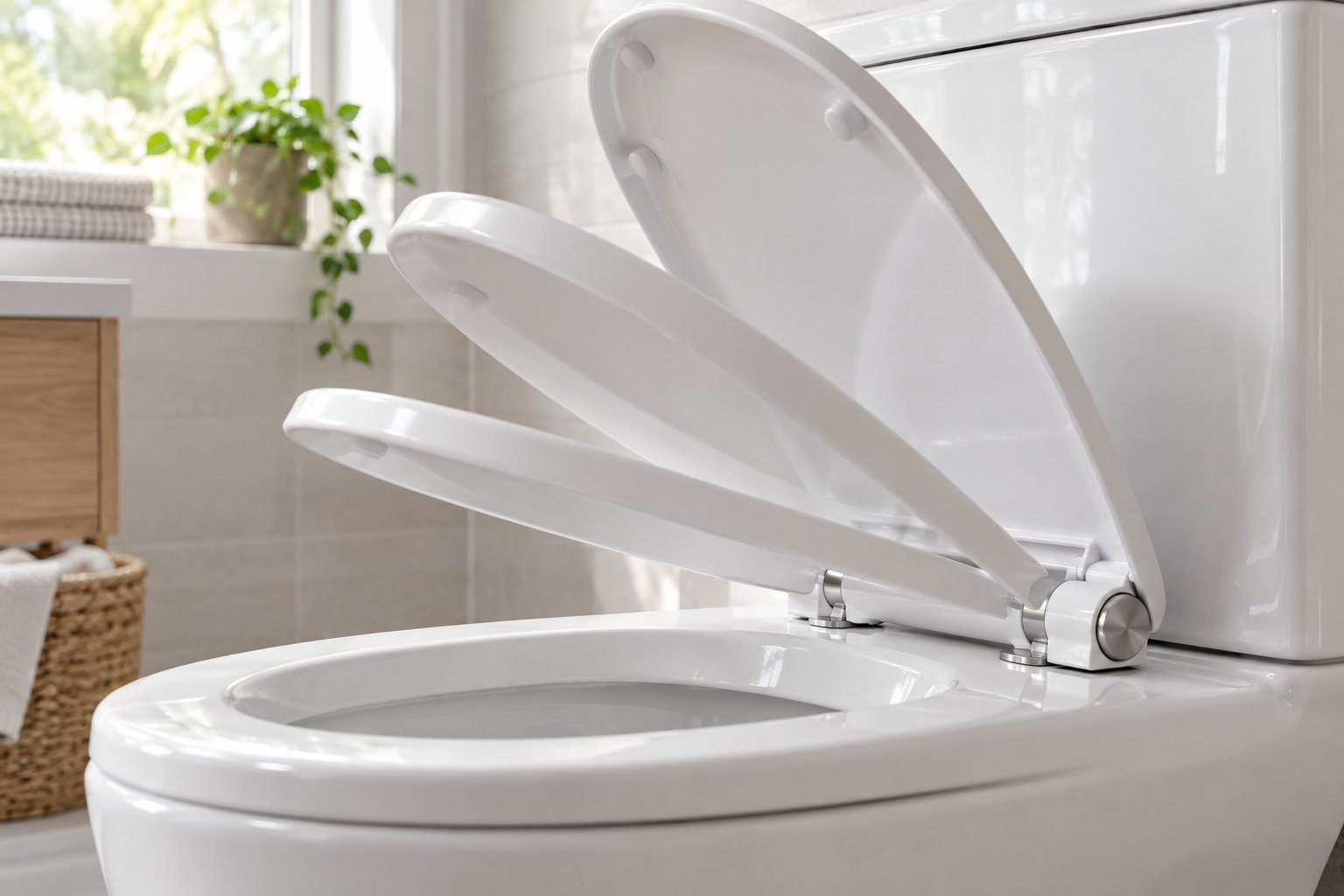
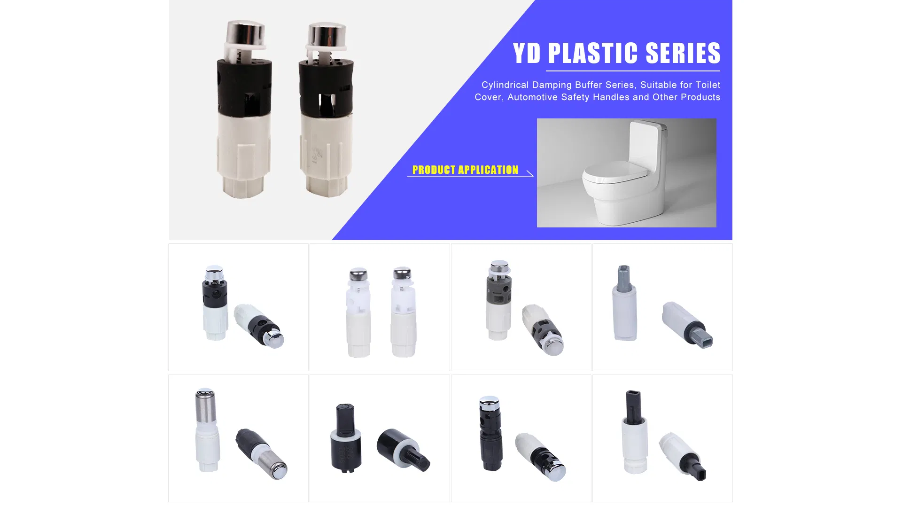
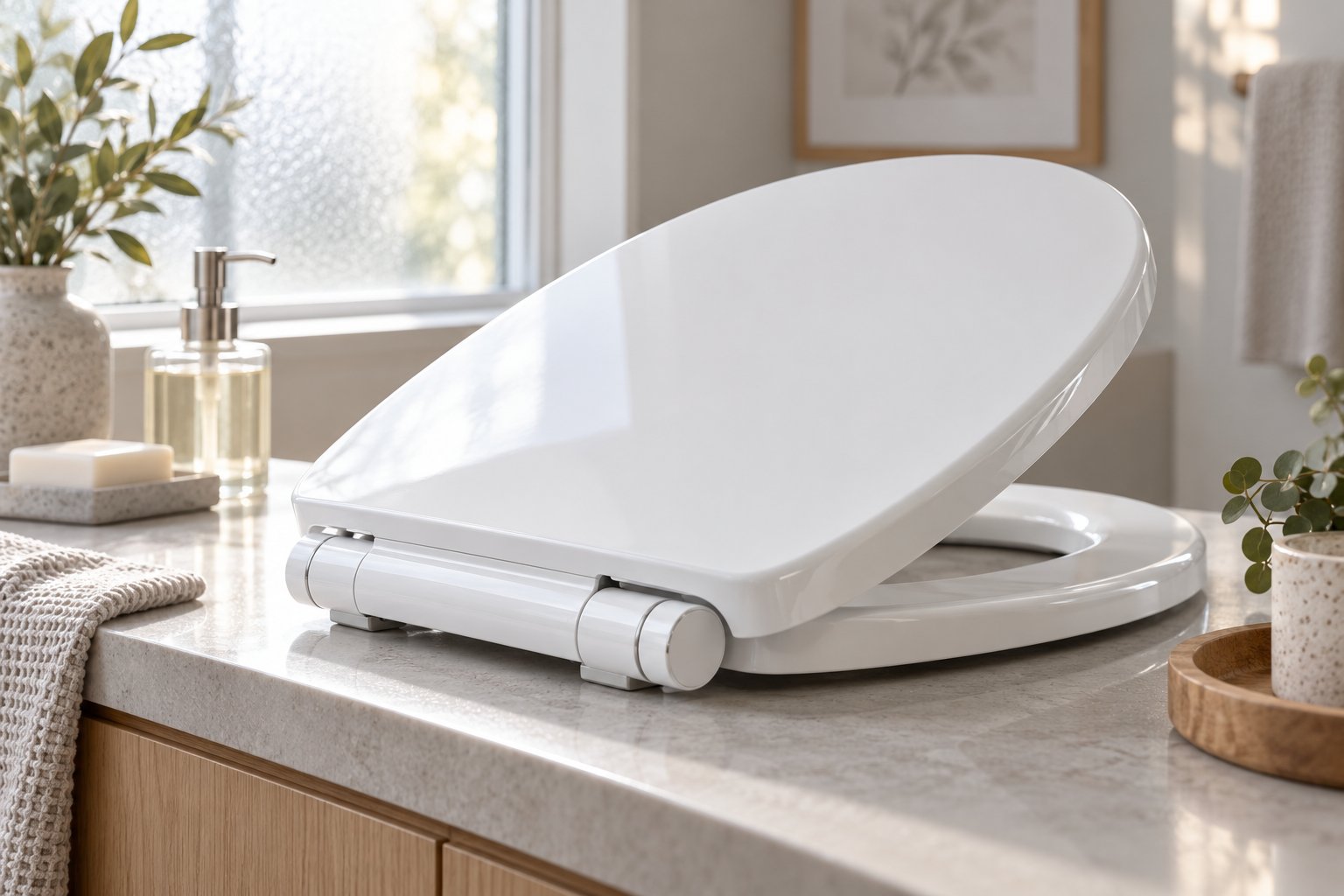
Ever been startled by a toilet lid crashing down at 2 a.m.? A soft close toilet seat — sometimes called a slow close toilet seat or soft close loo seat — eliminates that problem entirely. The secret is a damped-hinge mechanism built into the seat's mounting hardware. Internal dampers or small hydraulic cylinders control the descent speed of both the lid and the seat ring, letting them glide down slowly and silently rather than free-falling.
You simply give the lid a gentle nudge, and the automatically closing toilet seat takes over from there. The damping action absorbs the gravitational force, producing a controlled, quiet landing every single time. This is the core engineering difference between a soft close model and a standard seat, and it's the reason these seats carry a slight price premium over their conventional counterparts.
Why a Pricing Guide Matters Before You Shop
Most online results for this search lead straight to product listings — pages filled with thumbnails, star ratings, and "add to cart" buttons. What they rarely provide is context. You'll see a $19 seat next to a $180 seat with no explanation of why one costs nearly ten times more than the other. That gap isn't random. It reflects real differences in material durability, hinge engineering, quick-release functionality, and brand reputation.
Without understanding these cost drivers, it's easy to either overspend on features you don't need or underspend on a seat that loses its soft close function within a few months. Knowing the typical price range — and what each tier delivers — keeps you in control of the purchase decision.
Knowing the typical price range of a soft close toilet seat saves you from impulse purchases and helps you match quality to your actual bathroom needs.
Material choice alone can shift the price by $50 or more, and hinge type can be the difference between a seat that performs flawlessly for years and one that starts slamming again after a single season. The sections ahead unpack each of these variables so you'll know exactly where your money goes.
Soft Close Toilet Seat Price Tiers Explained
So where exactly does your money go? The soft close toilet seat market breaks down into three distinct pricing tiers, each delivering a different combination of material quality, hinge engineering, and added features. Understanding these tiers is the fastest way to figure out which level of investment actually matches your bathroom, your household, and your expectations for long-term performance.
Think of it like buying a pair of running shoes. A budget pair gets the basic job done. A mid-range pair adds cushioning and durability. A premium pair delivers elite materials and engineering you can feel with every step. Soft close toilet seats follow the same logic — and the differences between tiers are just as tangible.
Budget Soft Close Seats
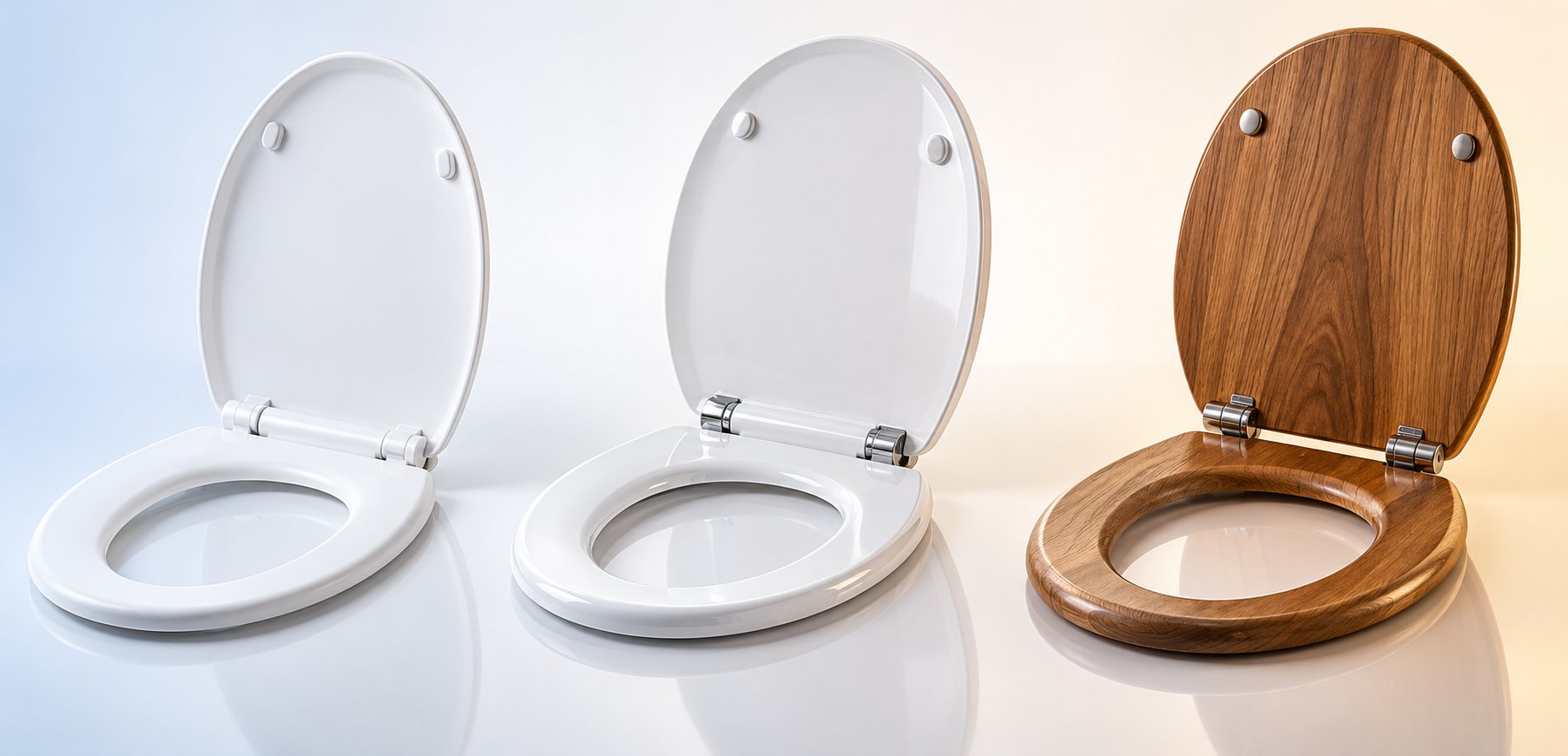
Entry-level soft close toilet seats sit at the lower end of the price spectrum, and they're the models you'll most commonly spot in big-box stores and online marketplaces. These seats are typically constructed from polypropylene (PP) plastic — lightweight, easy to clean, and resistant to most household chemicals. The slow shutting toilet seat mechanism at this level relies on basic plastic or zinc-alloy hinges with simple internal dampers.
What should you expect? The closing action works, but it may not feel as smooth or consistent as higher-priced models. Color options are usually limited to white or off-white, and the seat itself feels noticeably lighter in your hand. You won't find quick-release hinges or adjustable bolt-hole spacing at this tier. For a guest bathroom that sees occasional use, or a rental property where function matters more than finesse, a budget soft close seat checks the essential boxes without stretching your wallet.
Mid-Range Soft Close Seats
Step into the mid-range tier and you'll notice an immediate jump in build quality. Seats here are often made from urea-formaldehyde resin, commonly called duroplast or UF. This material is heavier, more scratch-resistant, and has a smoother surface that feels closer to ceramic than plastic. It also resists discoloration from UV exposure and cleaning products far better than basic polypropylene.
Hinge quality improves significantly as well. Mid-tier soft close toilet seats frequently include quick-release mechanisms, letting you detach the entire seat with one hand for thorough cleaning around the bowl. The damping action is more refined — the lid and seat lower at a consistent, controlled speed rather than the slightly jerky descent you might experience with a budget model. Some mid-range options also offer adjustable hinges to accommodate minor differences in bolt-hole spacing between toilet brands. If you want a whisper close toilet seat that performs reliably for years in a primary bathroom, this tier hits the sweet spot between cost and quality.
Premium Soft Close Seats
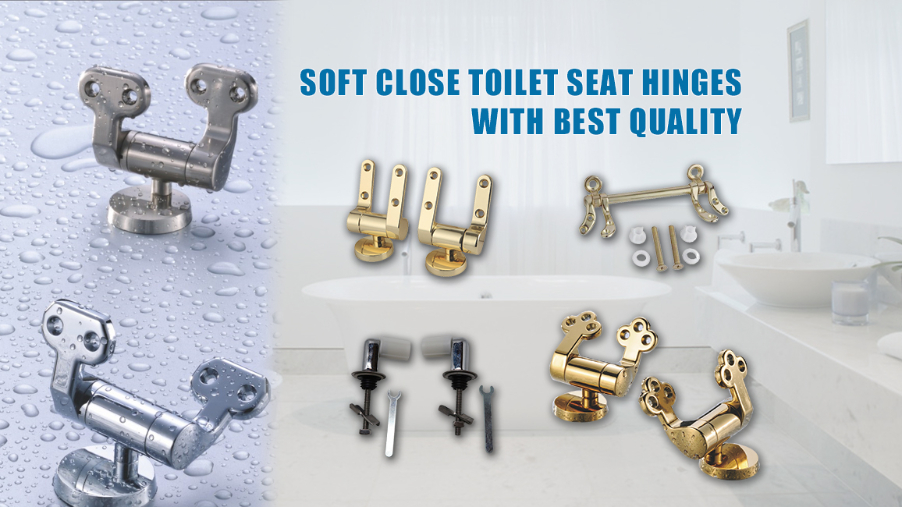
At the higher end of the market, premium soft close seats deliver materials and engineering that feel unmistakably different. You'll find natural wood options — solid oak, bamboo, and MDF with real wood veneers — alongside high-grade duroplast seats with designer finishes. The hinges are precision-engineered from stainless steel or brass, designed to maintain perfectly consistent damping tension across thousands of closing cycles.
Brand prestige plays a role here too. Names like Toto, Kohler, and American Standard command premium pricing partly because of their reputation for quality control and customer support. These seats often include every convenience feature available: quick-release hinges, integrated rubber bumpers, ergonomic contouring, and color-matched finishes that coordinate with specific toilet collections. For a master bathroom renovation or a design-forward space where every detail matters, premium toilet seats soft closing with silent precision become a finishing touch rather than an afterthought.
| Price Tier | Typical Material | Hinge Type | Key Features | Best For |
|---|---|---|---|---|
| Lower end | Polypropylene (PP) | Plastic or zinc-alloy with basic damper | Standard soft close action, limited color choices, lightweight build | Guest bathrooms, rental properties, budget-conscious buyers |
| Mid-range | Duroplast / UF resin | Reinforced alloy or stainless steel with refined damper | Quick-release hinges, adjustable mounting, smoother closing action, scratch resistance | Primary bathrooms, family homes, everyday durability |
| Higher end | Natural wood, bamboo, or premium duroplast | Precision stainless steel or brass with engineered damper | Designer finishes, ergonomic contouring, brand-backed warranty, integrated bumpers | Master bath renovations, design-focused spaces, long-term investment |
One pattern worth noting: the gap between budget and mid-range soft close seats is often where buyers get the most value per dollar. Jumping from the lower end to the mid-range typically adds meaningful improvements in hinge durability, material feel, and cleaning convenience. The leap from mid-range to premium, by contrast, tends to be driven more by aesthetics, brand cachet, and specialized finishes — upgrades that matter deeply in some bathrooms and not at all in others.
The material your seat is made from plays a starring role in where it lands on this pricing scale. Polypropylene, duroplast, and natural wood each bring their own cost profile, durability characteristics, and tactile qualities — differences that become especially clear once you know what to look for.
How Seat Material Drives the Price You Pay
Pick up two soft close toilet seats from the same store shelf — one priced at $20, the other at $80 — and the first thing you'll notice is a difference in weight. That weight gap tells a story about material composition, and material is arguably the single biggest factor determining what you'll spend. The seat's raw material affects its durability, its feel against skin, its resistance to stains and scratches, and ultimately, how long the entire assembly holds up under daily use.
Understanding the three main material categories gives you a reliable shortcut for evaluating any seat you encounter, whether you're browsing an elongated toilet seat soft close option online or comparing boxes at your local hardware store.
Polypropylene and Thermoset Plastics
Polypropylene — PP for short — is the workhorse of the budget soft close market. It's a thermoplastic polymer you'll find in everything from food containers to automotive parts, and its popularity in toilet seat manufacturing comes down to a few practical strengths. PP is lightweight, highly resistant to chemical cleaners like bleach and ammonia-based sprays, and inexpensive to mold at scale. If you've ever sat on a toilet seat that felt hollow or a little flexible under your weight, there's a good chance it was polypropylene.
The trade-off? PP seats can feel less substantial than pricier alternatives. The surface tends toward a matte finish that shows scratches more readily over time, and the lighter construction sometimes gives users the impression — justified or not — that the seat is less durable. For a guest bathroom or a property where keeping costs low is the priority, though, a PP slow closing toilet seat delivers perfectly functional performance at the most accessible price point in the market.
Step up to UF — urea-formaldehyde, often marketed under the name duroplast — and the difference is immediately apparent. UF is a thermoset plastic, meaning it's cured under heat and pressure into a rigid, permanently hardened form. The result is a seat that's noticeably heavier, with a glossy, smooth surface that feels closer to ceramic than plastic. According to industry comparisons from Beewill Sanitary, UF toilet seats offer superior scratch resistance and are less prone to dirt and bacteria buildup thanks to that smoother surface.
UF seats typically command a moderate premium over PP models, but the price difference often narrows when you consider longevity. The harder surface resists the kind of everyday wear — minor scratches from cleaning tools, faint discoloration from chemical exposure — that gradually degrades a polypropylene seat's appearance. For a primary bathroom where the seat faces heavy daily use, duroplast's durability can make it the more cost-effective choice over a multi-year ownership window.
One detail worth knowing if you're curious about how these seats are produced at scale: manufacturers and bathroom brands sourcing seat and lid assemblies often choose between PP and UF based on their target price positioning and market channel. For example, Tianyun's PP and UF Toilet Seat Cover Collection provides material selection and OEM customization support for teams developing these assemblies — a glimpse into how an auto close toilet seat moves from raw resin to finished product before it ever reaches a retail shelf.
Wood and Specialty Materials
At the top of the material pricing hierarchy sit natural wood and specialty options — think solid oak, bamboo, and MDF with real wood veneer. These seats appeal to homeowners who want warmth and texture in a bathroom's visual palette, and they carry price tags that reflect both the material cost and the more labor-intensive manufacturing process involved.
Bamboo has gained particular traction in recent years, appearing in product lines from brands like Topseat that specifically market oak and bamboo slow closing toilet seat models. The appeal is straightforward: bamboo is a fast-growing, renewable resource with a distinctive grain pattern that looks and feels nothing like plastic. Oak offers a traditional, furniture-grade aesthetic that pairs naturally with classic bathroom decor.
The practical considerations? Wood seats require a protective lacquer or sealant to resist moisture absorption in a bathroom environment, and they're heavier than either PP or UF options. They're also less forgiving of harsh chemical cleaners — you'll want to stick to mild soap and water. But for a master bath where design intent justifies the investment, a wood seat paired with quality soft close hinges can function as an automatic toilet seat closer that doubles as a statement piece.
- Polypropylene (PP) — Most affordable; lightweight, chemical-resistant, matte finish; best for budget-conscious buyers and high-turnover properties
- Urea-Formaldehyde / Duroplast (UF) — Moderate premium; heavier, scratch-resistant, glossy ceramic-like feel; best for primary bathrooms and long-term value
- Natural Wood (Oak, Bamboo) — Higher end; warm aesthetics, distinctive grain, renewable materials; best for design-focused bathrooms and renovations
- MDF with Wood Veneer — Mid-to-higher range; wood appearance at slightly lower cost than solid wood; best for buyers wanting a wood look with moderate investment
Material choice sets the baseline for what you'll pay, but it doesn't tell the whole story. The component that actually makes a soft close seat soft close — the hinge mechanism — carries its own cost profile and its own set of quality variables that directly affect how long that gentle, quiet closing action lasts.
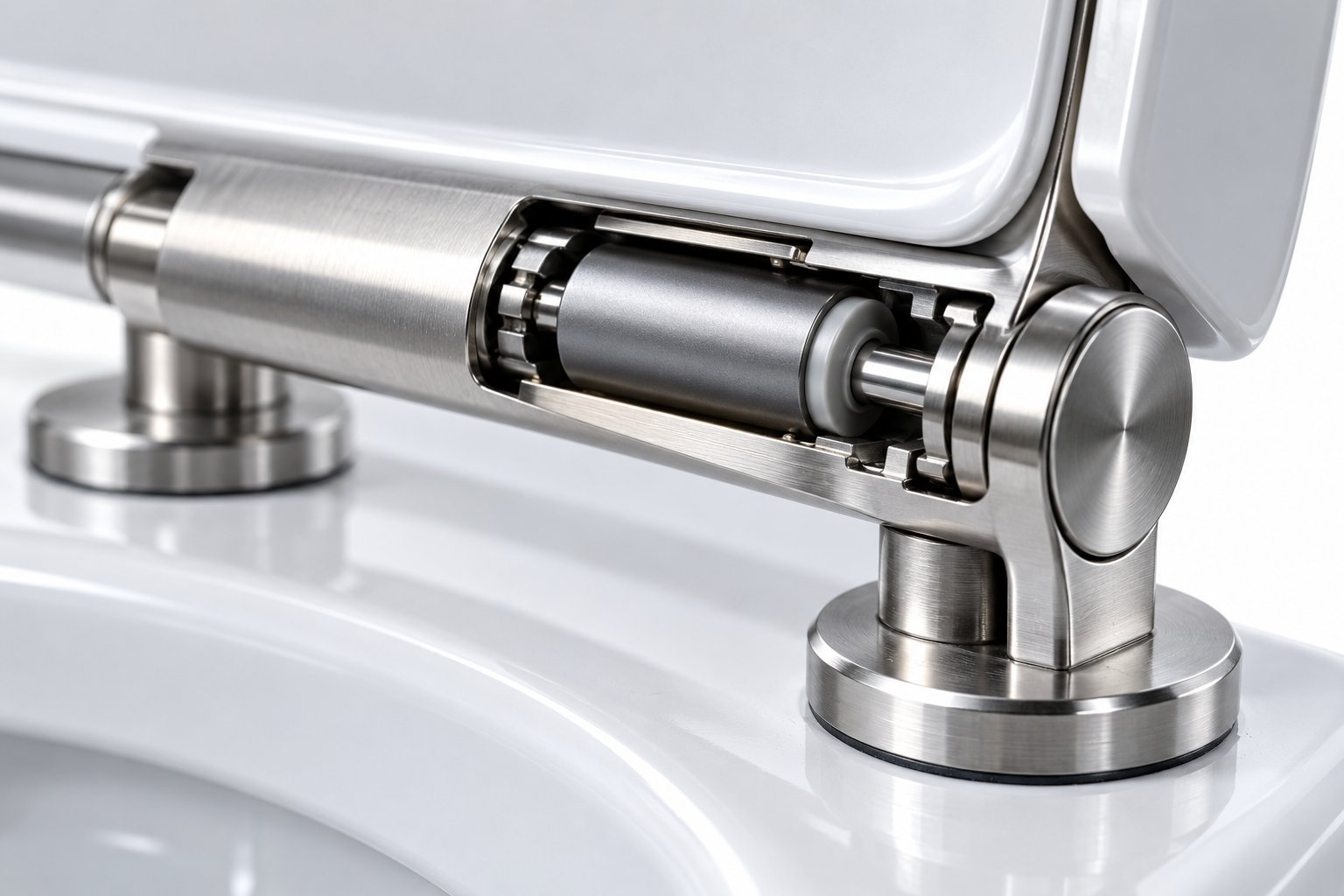
The Hinge Mechanism and Why It Affects Cost
You could pair the finest duroplast lid with the most elegant elongated bowl shape on the market, and none of it would matter if the hinges failed after six months. The hinge mechanism is the beating heart of every soft close toilet seat — it's the component doing the actual work of slowing that descent from upright to closed. And yet, most shoppers never give it a second thought. They evaluate color, material, and price tag while the tiny dampers hidden inside the mounting hardware quietly determine whether the seat will still close gently two years from now or start slamming like the day it shipped from the factory floor.
Hinge quality is where the pricing conversation gets genuinely practical. Two seats can look nearly identical on a shelf, carry similar materials, and even share the same brand logo — but if one uses precision-engineered metal hinges with calibrated dampers and the other relies on basic plastic fittings, their lifespans and long-term performance will diverge dramatically. The slow close hinge mechanism's engineering is what fundamentally differentiates a soft close toilet seat from a standard model, and it's also what separates a satisfying purchase from a frustrating one.
Plastic Hinges vs. Metal Hinges
Imagine two doors in your house — one swinging on a stamped plastic pivot, the other on a solid brass barrel hinge. Which one do you trust to feel the same after 10,000 open-and-close cycles? The same logic applies to toilet seat hinges, and the material those hinges are made from directly influences both cost and durability.
Budget soft close toilet seat elongated and round models typically ship with plastic or zinc-alloy hinges. These keep the retail price low, and they work perfectly well out of the box. The dampers engage, the lid lowers smoothly, and everything feels reassuringly quiet on day one. The challenge appears over time. Plastic hinge components are more susceptible to wear from repeated stress cycles, and zinc alloy — while technically metal — can corrode in the humid bathroom environment. As the damper housing degrades, the controlled descent gradually loses consistency. You might notice one side of the lid dropping faster than the other, or the entire seat beginning to wobble slightly on its mounting points. According to repair guidance from RoomFix, worn-out dampers and loose hinges rank among the most common reasons a self closing toilet seat stops functioning properly.
Mid-range and premium seats step up to stainless steel or brass hinges. The cost increase is real — metal hinge assemblies require more material, tighter machining tolerances, and often more complex internal damper designs. But the payoff shows up in longevity. Stainless steel resists corrosion even in bathrooms with poor ventilation, and brass offers a combination of strength and natural antimicrobial properties that plastic simply cannot match. The damping action stays consistent cycle after cycle because the housing that holds the damper maintains its shape and alignment under load.
For anyone asking whether the extra expense is justified, think about it this way: replacing a failed budget seat every 12 to 18 months quickly erases any savings compared to buying one quality seat with metal hinges that performs reliably for three to five years or longer.
Quick-Release and Adjustable Hinge Features
Beyond the core hinge material, two specific feature additions influence the price of a toilet seat with slow close capabilities: quick-release mechanisms and adjustable mounting hardware.
Quick-release hinges allow you to detach the entire seat from the bowl with a simple button press or lever action — no tools required. Why does that matter? Anyone who has tried to scrub around the bolt holes at the back of a toilet knows the answer. Standard fixed-hinge seats force you to clean around the mounting points, leaving hard-to-reach crevices where bacteria and grime accumulate. A quick-release toilet seat slow close model lifts off completely, giving you unobstructed access to the entire bowl rim. Once you're finished cleaning, the seat clicks back into place in seconds. This convenience feature typically adds a modest amount to the sticker price, but it pays for itself in hygiene and ease of maintenance over the life of the seat.
Adjustable hinges solve a different problem entirely. Not every toilet bowl has bolt holes spaced at exactly the same distance apart. Manufacturing tolerances, older plumbing installations, and differences between brands mean that a seat designed for a standard bolt-hole spread might not align perfectly with your specific bowl. Adjustable hinges include sliding mounting plates or expandable bolt-hole slots that accommodate these variations, ensuring a snug, wobble-free fit. Without this feature, you risk buying a seat that technically mounts but never sits quite right — leading to lateral movement, uneven closing, and premature hinge wear. Seats with adjustable hardware cost a bit more than fixed-mount alternatives, but they eliminate the frustration and potential return costs of a poor fit.
| Hinge Material | Typical Durability | Ease of Cleaning | General Cost Impact |
|---|---|---|---|
| Plastic (polypropylene or nylon) | 1 to 2 years under regular use; damper may weaken over time | Standard — seat stays fixed unless quick-release is added separately | Lowest; keeps overall seat price at budget level |
| Zinc alloy | 2 to 3 years; moderate corrosion risk in humid bathrooms | Standard to moderate — some models include basic release tabs | Slight premium over plastic; common in entry-to-mid tier seats |
| Stainless steel | 4 to 6+ years; excellent corrosion resistance | Often paired with quick-release mechanisms for easy removal | Moderate to higher; typical of mid-range and premium models |
| Brass | 5+ years; naturally antimicrobial, highly resistant to bathroom moisture | Frequently includes quick-release and adjustable mounting | Highest; found primarily in premium and designer-tier seats |
A useful way to think about hinge selection: the hinge material sets your durability ceiling, while features like quick-release and adjustable mounting determine your day-to-day convenience floor. A stainless steel hinge with quick-release capability gives you both longevity and easy maintenance — a combination that explains why mid-range self closing toilet seat models with this pairing tend to attract the strongest buyer satisfaction ratings.
Hinge quality tells you a lot about how a seat will perform over time, but it doesn't answer a broader question many shoppers wrestle with before they buy: is the entire category of soft close seats actually worth the price premium over a standard model? The answer depends less on the seat itself and more on what it protects — and who it protects.
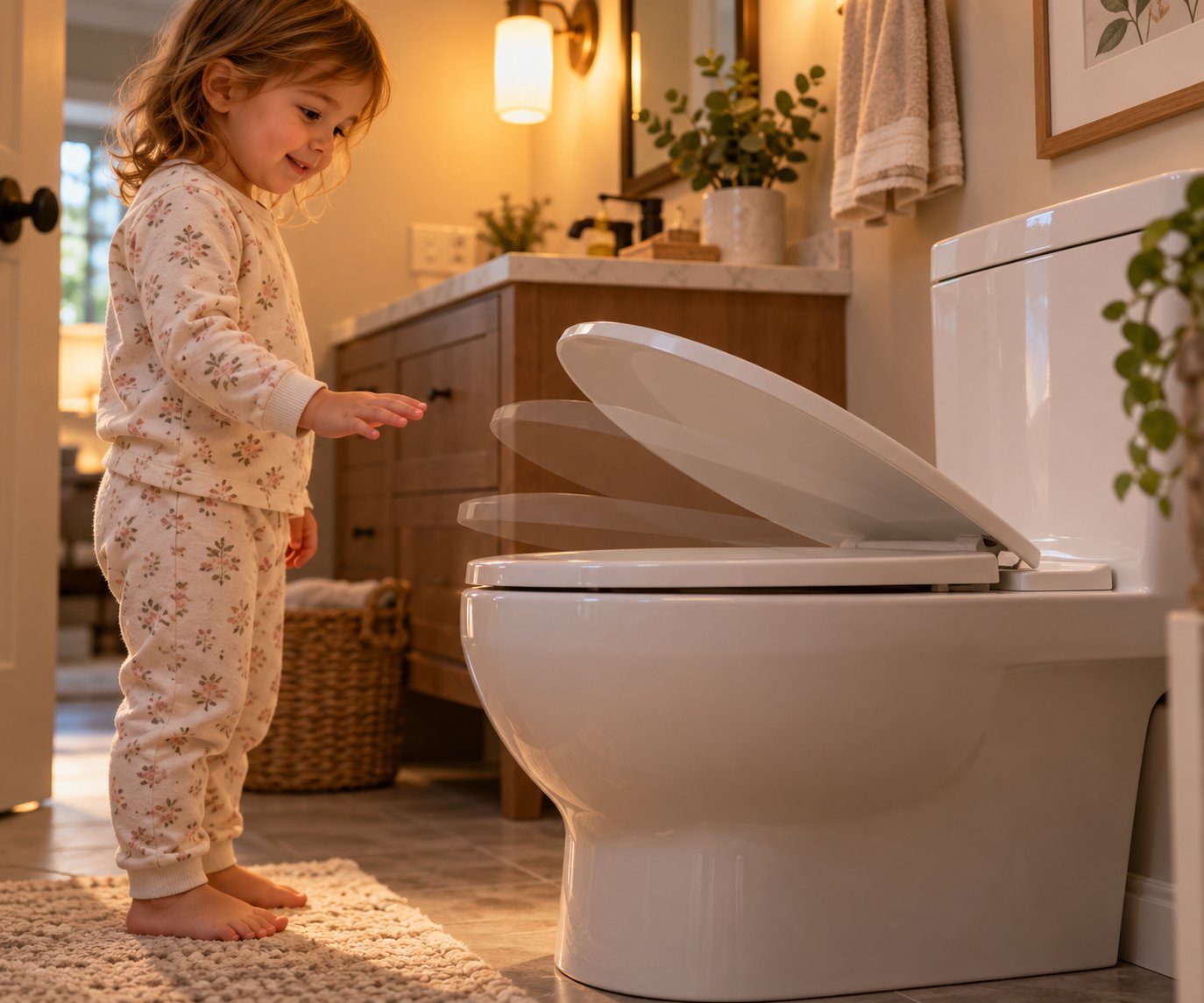
Soft Close vs Standard Seats and Whether the Upgrade Is Worth It
Every shopper standing in the toilet seat aisle — physical or digital — eventually asks the same question: why not just buy a regular seat and save a few dollars? It's a reasonable instinct. Standard toilet seats are functional, widely available, and cheaper upfront. But the real comparison isn't about sticker price alone. It's about what each type of seat costs you over the months and years that follow the purchase. When you factor in noise, safety, potential damage to the toilet bowl itself, and replacement frequency, the math shifts in ways most buyers don't expect.
The Real Cost Difference Between Soft Close and Standard Seats
At the budget level, a standard toilet seat might run you a few dollars less than a basic soft close model. The gap is there, but it's surprisingly narrow — often in the range of $5 to $15. Move into mid-range territory, and the price difference between a quality standard seat and a quiet close toilet seat with durable hinges shrinks even further. The premium you're actually paying for the soft close mechanism becomes a small fraction of the total cost, not the dramatic markup many shoppers assume.
Here's where the long-term calculation gets interesting. Traditional seats rely on gravity — and your memory — to land gently. In practice, they slam. Not every time, but often enough. That repeated impact between a hard seat and a porcelain rim isn't harmless. Ceramic toilets are strong under compression, but they're brittle under sharp, localized force. As Giving Tree Home notes, constant slamming "may cause tiny cracks or chips along the edges, affecting aesthetics and durability." These micro-fractures can worsen over time, eventually compromising the bowl's structural integrity or creating hairline cracks that harbor bacteria and become impossible to clean properly.
A toilet bowl replacement — including parts, labor, and potential floor or wax ring repairs — can easily run several hundred dollars. A soft closing toilet seat, even a mid-range model with stainless steel hinges, costs a fraction of that. So the seat isn't just protecting your ears from a 2 a.m. slam. It's protecting the single most expensive fixture in the equation.
The cost of replacing a cracked toilet bowl far exceeds the premium paid for a soft close seat — making the upgrade less of an indulgence and more of a safeguard.
Who Benefits Most From the Upgrade
Some households feel the value of slow close toilet seats more acutely than others. The benefits are universal, but certain living situations amplify the return on investment dramatically.
Imagine a house with a toddler who has just discovered the fascinating game of lifting and dropping the toilet lid. Traditional seats slam down fast — fast enough to catch small fingers. The damped-hinge mechanism in a soft closing toilet seat lowers the lid at a controlled pace, giving a child time to pull their hand away. This isn't a hypothetical worry. Finger-pinching injuries from toilet seats are a well-documented concern in pediatric safety discussions, and the controlled descent of a soft close model is one of the simplest ways to reduce that risk at home.
Nighttime noise is another scenario where the upgrade proves its worth immediately. In a household where people operate on different sleep schedules — a partner who wakes at 5 a.m. for work, a teenager who stays up late studying — a toilet lid that automatically closes without a sound eliminates one of the most jarring middle-of-the-night disruptions. You don't realize how loud a slamming seat is until the house is completely silent at 3 a.m.
Landlords and property managers see value from a different angle. In rental units and shared apartments, tenants don't always treat fixtures gently. A soft close seat reduces wear on the toilet bowl, cuts down on noise complaints between units, and signals a level of property care that tenants notice and appreciate. The modest upfront cost pays for itself in fewer maintenance calls and longer fixture lifespans across the property portfolio.
- Noise reduction — Eliminates slamming sounds entirely, a major quality-of-life improvement for shared spaces and nighttime bathroom visits
- Child safety — Controlled descent speed prevents finger-pinching injuries, giving young children time to move their hands clear
- Porcelain protection — Gentle closing reduces impact stress on the bowl rim, helping prevent micro-cracks and chips that lead to costly replacements
- Hygiene via quick-release hinges — Many soft close models include detachable seats for thorough cleaning around hard-to-reach mounting areas
- Reduced fixture wear in rentals — Minimizes damage from tenant use, lowering long-term maintenance costs for landlords and property managers
The upgrade question, then, isn't really about whether a soft close seat is "worth it" in the abstract. It's about recognizing which of these benefits matters most in your specific situation and weighing that against a price premium that, at the mid-range level, amounts to roughly the cost of a weeknight takeout dinner. For most households, the answer becomes obvious once the comparison moves beyond the price tag and into the daily reality of living with the seat.
Of course, deciding the upgrade is worthwhile still leaves you with a practical challenge: how do you tell a genuinely well-built soft close seat from one that merely looks the part on a product listing? The quality signals are there if you know where to look — and a few simple checks can save you from a disappointing purchase at any price point.
What to Look for at Every Price Point
A price tag tells you what a soft close toilet seat costs. It doesn't tell you whether it's actually any good. Two seats sitting side by side at the same price can differ wildly in hinge tightness, damper smoothness, and material durability — differences that only become obvious after you've installed one and lived with it for a few weeks. The trick is learning to spot quality signals before you commit, whether you're handling the seat in a store or evaluating a product listing from your couch.
Think of this section as your quality-check toolkit. It works at every tier — budget, mid-range, and premium — because the fundamentals of a well-made toilet seat soft close mechanism don't change based on price. What changes is how many of these quality markers a seat delivers at once.
Quality Indicators for Budget Soft Close Seats
Shopping at the lower end of the spectrum doesn't mean you have to accept poor quality. It means you need to be more selective, because the margin for error is thinner. Not every budget seat is built the same, and a few quick checks separate a solid value pick from a regrettable impulse buy.
Start with the hinges. Grip the seat at the back where it mounts and try to wiggle it side to side. Any lateral play — even a slight rocking motion — signals loose tolerances in the hinge assembly. That wobble will only get worse with use. Next, test the damper. Lift the lid to its fully open position and release it. The descent should be smooth and continuous from start to finish, not jerky or uneven. If the lid drops quickly through the first half and then slows abruptly near the bottom, the damper is low quality and likely to degrade fast.
The most critical check of all has nothing to do with the seat's build quality and everything to do with your toilet bowl. Confirm the shape — round or elongated — before you buy. As Lowe's notes, round bowls measure about 16.5 inches from the mounting holes to the front rim, while elongated bowls measure roughly 18 inches. Buying the wrong shape means the seat either overhangs the rim or doesn't reach the front edge, and no amount of hinge adjustment fixes a shape mismatch. If you're unsure, measure first. It takes thirty seconds and eliminates the most common return reason in the entire category.
What Mid-Range and Premium Features Look Like in Practice
Move into the mid-range and premium tiers, and quality indicators become more nuanced. You're no longer just checking for basic functionality — you're evaluating how refined that functionality feels and how long it's engineered to last.
Weight is your first clue. Pick up the seat. A mid-range duroplast model should feel noticeably heavier than a budget polypropylene seat of the same shape. That heft signals denser material, which translates to better scratch resistance, a more substantial feel when seated, and improved longevity under daily use. If a seat marketed as "premium" feels light and hollow, something doesn't add up regardless of the price sticker.
Closing action consistency matters enormously at this level. A quality slow close elongated toilet seat should lower at the same speed every single time — not faster on one side than the other, and not varying between the lid and the seat ring. Watch both components descend separately. If the lid closes smoothly but the seat ring drops with a noticeable speed difference, the dampers are mismatched or poorly calibrated.
Rubber bumpers are a small detail that reveals a lot about manufacturing care. Well-placed bumpers on the underside of the lid and seat ring cushion contact with the bowl, prevent lateral sliding, and reduce vibration. Budget seats sometimes skip them entirely or use thin, poorly adhered pads that peel off within weeks. Premium seats use thicker, more securely bonded bumpers — and more of them. Check the underside.
Finally, examine the mounting hardware. Plastic bolts and wing nuts are standard at the budget tier. Mid-range and premium seats typically upgrade to stainless steel or brass mounting hardware, often with rubber gaskets that dampen vibration and protect the porcelain around the bolt holes. Metal hardware holds torque more consistently over time, meaning the seat stays snug on the bowl rather than gradually loosening and requiring periodic retightening.
One pricing detail worth flagging: elongated and round shapes each carry their own cost norms. Elongated models — which fit the oval-shaped bowls that are popular in many American homes — sometimes cost slightly more than their round counterparts. The reason is straightforward: an elongated seat uses more raw material per unit, and the larger mold size increases production cost. The premium is usually modest, but it's consistent enough to notice when comparing identically featured seats across both shapes.
Whether you're browsing toilet seats at Home Depot, Lowe's, or an online retailer, the following step-by-step checklist gives you a reliable framework for evaluating any soft close seat before you buy:
- Measure your toilet bowl. Check the distance from the center of the mounting holes to the front of the rim. Round bowls measure approximately 16.5 inches; elongated bowls measure roughly 18 inches. Match the seat shape to the bowl shape — no exceptions.
- Assess the seat's weight. Hold it in your hands. Heavier generally means denser material (duroplast or wood versus basic polypropylene), which correlates with better scratch resistance and longevity.
- Test the closing action. Lift the lid fully open and release. Watch for a smooth, consistent descent from start to finish. Repeat with the seat ring separately. Both should lower at a similar, controlled speed.
- Check hinge tightness. Grip the seat near the hinges and try to shift it side to side. There should be zero wobble or lateral play. Any looseness at the point of purchase will worsen with use.
- Inspect the underside for rubber bumpers. Count them, press on them, and confirm they're firmly attached. More bumpers in strategic positions means better cushioning and reduced bowl contact noise.
- Identify the mounting hardware material. Plastic bolts signal budget construction. Stainless steel or brass bolts with rubber gaskets indicate a seat built for long-term stability.
- Look for quick-release functionality. Press or toggle the release mechanism if one exists. It should disengage and re-engage cleanly, without excessive force or vague clicking.
- Verify return policy and warranty. Even with a thorough in-store check, fit issues can surface after installation. Confirm you can return or exchange the seat if it doesn't match your specific toilet bowl.
Running through this checklist takes less than five minutes, yet it covers the quality variables that matter most at every price tier. Armed with these checks, you're far less likely to end up with a seat that underperforms — but there's still one category of mistakes that trips up even careful shoppers, and most of them happen before the seat ever gets installed.
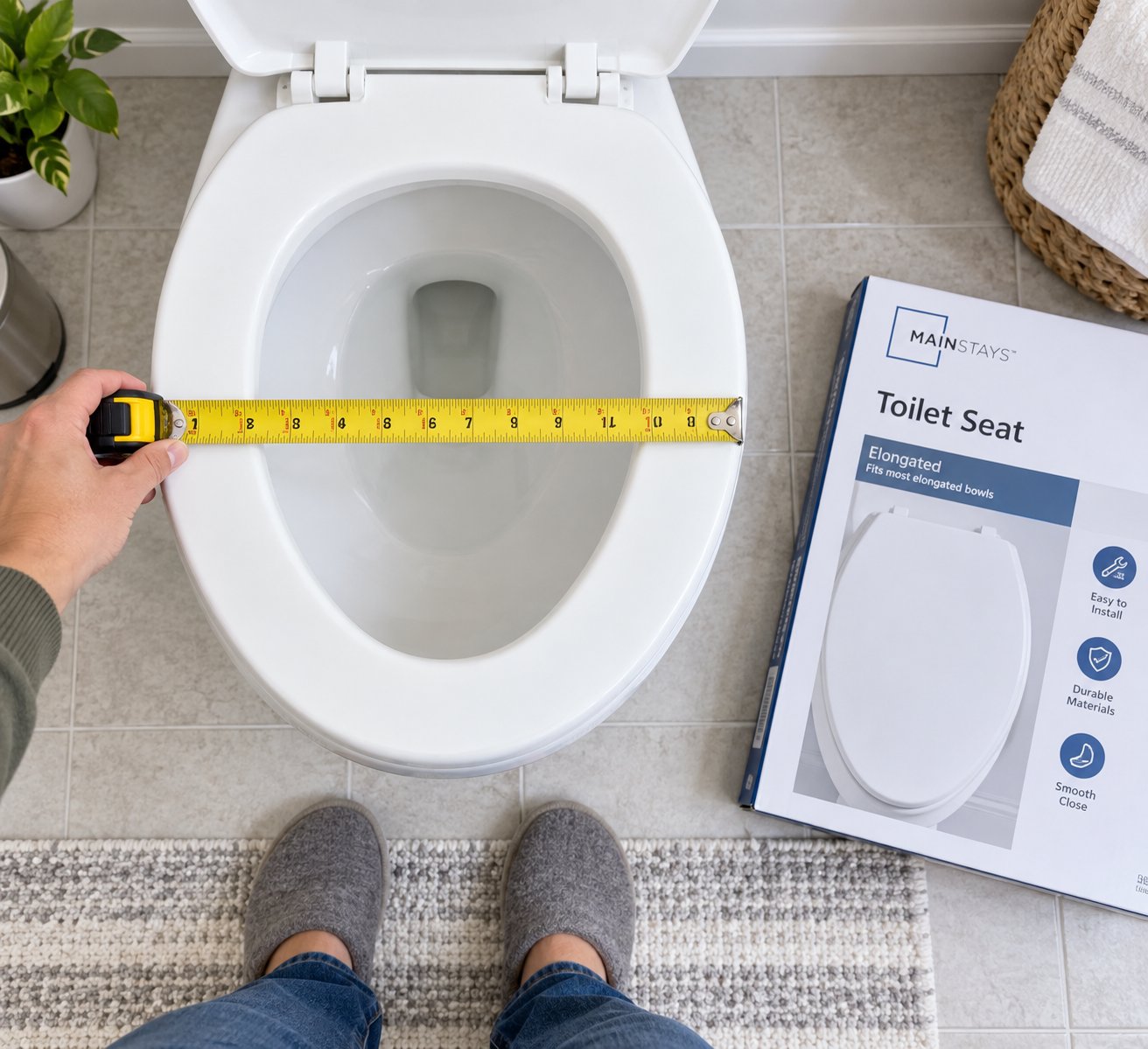
Common Mistakes That Cost You When Buying a Soft Close Seat
Knowing what a quality soft close toilet seat looks like is only half the battle. The other half is avoiding the surprisingly common errors that send buyers back to the store — or worse, leave them stuck with a seat that doesn't fit, won't mount properly, or loses its damping function within weeks. These mistakes aren't exotic edge cases. They happen constantly, and nearly all of them are preventable with a few minutes of preparation before you click "add to cart" or load a box into your shopping cart.
The frustrating part? Most of these errors don't stem from buying a bad product. They stem from buying the wrong product for a specific toilet. A perfectly engineered elongated slow close toilet seat becomes useless if your bowl is round. A beautifully built seat with bottom-fix hardware becomes a headache if your toilet requires top-fix mounting. The mismatch — not the seat — is the real problem.
Buying the Wrong Shape or Size
This is the single most common mistake in the entire category, and it's also the most avoidable. Toilet bowls come in two primary shapes: round and elongated. A round bowl measures roughly 16.5 inches from the center of the mounting bolt holes to the front rim. An elongated bowl stretches to about 18 to 18.5 inches. Those two inches might not sound like much on paper, but they're the difference between a seat that sits flush against the rim and one that either overhangs awkwardly or leaves a visible gap at the front.
Why does this happen so often? Because many shoppers assume they know their bowl shape without actually measuring. As the DIY Playbook notes, "you can usually tell just by looking at the shape of your toilet bowl. But if you want to play it safe, and avoid a return trip to the store, grab a tape measure." That advice is worth taking literally. Eyeballing is how returns happen. A tape measure takes thirty seconds and eliminates the guesswork entirely.
Here's the thing most product pages won't tell you: a toilet with a soft close seat in the wrong shape doesn't just look off — it performs poorly too. An elongated seat on a round bowl extends past the front rim, creating an unstable overhang that shifts under body weight. A round seat on an elongated bowl leaves the front of the porcelain exposed, which defeats the purpose of the lid covering the bowl and makes the entire assembly feel cheap regardless of how much you paid. Before you evaluate price, material, or hinge type, confirm the shape. Everything else is secondary to this one measurement.
Ignoring Hinge Compatibility and Installation Basics
Shape gets the most attention, but hinge compatibility is the silent deal-breaker that catches careful shoppers off guard. Not all toilet seats mount the same way, and buying blindly leads to awkward surprises at installation time.
Two mounting styles dominate the market: top-fix and bottom-fix. According to Drench's toilet seat guide, top-fix seats tighten entirely from above — you feed bolts into the pan and secure them from the top without reaching underneath. Bottom-fix seats feed through from the top but are secured with a wing nut underneath the bowl. The fixing type has to match your toilet. Wall-hung and back-to-wall toilets typically need top-fix seats, while traditional open-back models often use bottom-fix hardware. Choosing the wrong style means the seat either won't attach securely or won't attach at all.
Bolt-hole spacing adds another variable. Most toilets use a standard spacing — roughly 155mm center to center — but older models, imported toilets, and certain designer bowls can deviate from this norm. If you've ever struggled to line up the bolts on a new seat, mismatched hole spacing was likely the culprit. This is exactly where the adjustable hinges discussed in earlier sections earn their slightly higher price tag: they accommodate minor spacing differences that fixed-mount hardware cannot.
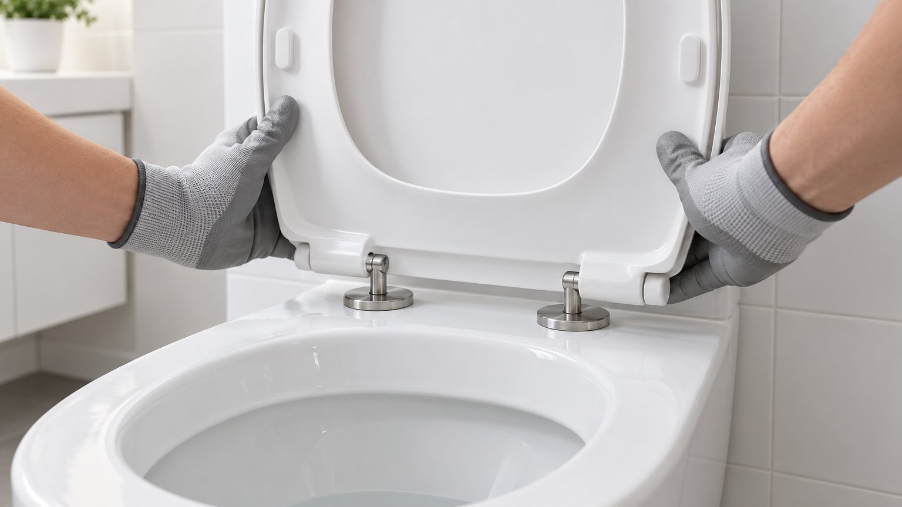
The good news buried inside all of this? Installation itself is genuinely simple. Most soft close seats — including an auto toilet lid closer model with quick-release hinges — can be installed in under 20 minutes with nothing more than an adjustable wrench and a screwdriver. As one DIY home blogger put it after walking through the entire process: "The whole installation process only took a matter of minutes." That means no plumber, no service call fee, and no appointment scheduling. The cost of the seat is essentially the total cost of the upgrade, which makes the overall investment even more affordable than the sticker price suggests.
- Buying the wrong seat shape — Failing to measure round versus elongated before purchasing, leading to poor fit, instability, and returns
- Ignoring hinge compatibility — Overlooking top-fix versus bottom-fix mounting requirements and bolt-hole spacing, resulting in a seat that won't attach properly to your specific toilet
- Choosing the cheapest option without checking reviews — Prioritizing price alone and skipping user feedback on damper longevity, hinge durability, and real-world closing performance
- Overlooking quick-release features — Missing out on detachable seat functionality that dramatically simplifies cleaning and long-term hygiene maintenance
- Not verifying damper function before buying — Skipping the in-store closing test or ignoring video reviews online, which means you can't confirm the damper engages smoothly and consistently before committing
Each of these mistakes adds cost — whether it's a return shipping fee, a wasted weekend trip to the hardware store, or the slow frustration of living with a seat that never quite works the way it should. The pattern across all five errors is the same: a few minutes of verification upfront saves hours of hassle and dollars of waste downstream.
Avoiding these pitfalls puts you in a strong position to make a smart purchase. The remaining question is a personal one: given everything you now know about materials, hinges, quality signals, and common traps, what's the right price point for your specific bathroom and your specific priorities?
Finding the Right Soft Close Seat for Your Budget
You've seen how material composition, hinge engineering, seat shape, and brand positioning each pull the price of a soft close toilet seat in a different direction. The question now isn't "how much does one cost?" — you already know the answer ranges from roughly $15 to well over $200. The real question is: which combination of those variables matches your bathroom, your household, and the way you actually want to spend your money?
That answer is personal, but the framework for reaching it is straightforward once you break the decision into three practical steps.
Matching Your Budget to Your Bathroom Needs
Start with the room itself. A guest powder room that sees weekend visitors a few times a month has fundamentally different demands than a family bathroom shared by four people every morning. The guest bath can thrive with a budget polypropylene seat — functional, clean, and easy to replace if it ever wears out. The primary family bathroom, on the other hand, benefits from a mid-range duroplast model with stainless steel hinges and quick-release functionality. The heavier material holds up under daily use, the metal hinges maintain consistent damping over thousands of cycles, and the quick-release mechanism turns deep cleaning from a chore into a thirty-second task.
Renovating a master bath with design intent? That's where premium materials — natural wood, bamboo, or designer-finish duroplast — earn their higher price tag. An elongated toilet seat slow close model in solid oak or a matte black finish doesn't just function quietly; it contributes to the room's visual story in a way a basic white plastic seat never will.
Here's the principle that holds true across every tier: informed buyers consistently get better value regardless of how much they spend. A shopper who understands that UF outlasts PP, that stainless steel hinges outperform zinc alloy, and that measuring the bowl before purchasing prevents the most common return in the category will make a smarter choice at $25 than an uninformed buyer makes at $150. Price doesn't guarantee satisfaction. Knowledge does.
Shape deserves one final reminder because it gates everything else. Whether you're browsing a home depot elongated toilet seat selection online or comparing round models at a local hardware store, confirming that the seat matches your bowl shape is step zero. No material upgrade or premium hinge can compensate for a shape mismatch. Measure first, then shop — and you'll sidestep the single most expensive mistake in the category.
Sourcing Options for Consumers and Industry Professionals
For homeowners and renters, sourcing a soft close seat has never been easier. Major home improvement retailers, online marketplaces, and specialty bathroom stores all carry extensive selections of toilet seats soft close across every price tier. You can walk into a store, run through the quality checklist from the previous section, and walk out with a seat that installs in under twenty minutes. Online shoppers benefit from user reviews, comparison filters, and return policies that make it simple to find — and verify — the right fit from home. Whether you're searching for a budget-friendly self closing toilet lid for a rental unit or a premium wood seat for a bathroom remodel, the consumer retail landscape covers the full spectrum.
Industry professionals operate in a different sourcing environment entirely. Sanitary ware manufacturers, bathroom brands, hospitality procurement teams, and private-label developers don't evaluate seats the same way a homeowner does. Their decisions involve material specification at scale, hinge matching across product lines, custom sizing for proprietary bowl designs, and OEM packaging that supports brand consistency across regional markets. A guide from BFORIGIN Group highlights that OEM toilet seat manufacturing encompasses everything from shape and material selection to hinge function, logo application, and repeat-order consistency — far beyond simply choosing a product off a shelf.
For professionals exploring PP or UF seat and lid assembly options specifically, Tianyun's PP and UF Toilet Seat Cover Collection offers material selection, soft-close hinge matching, and OEM customization support designed for teams developing these assemblies at volume. It's a useful starting point for brands and manufacturers who need to align material grade, damper specification, and production scalability within a single sourcing relationship.
Regardless of whether you're a homeowner replacing a single seat or a product development team building an entire line, the pricing drivers remain the same: material, hinge quality, shape, and feature set. The difference is simply the scale at which those variables are evaluated and the sourcing channels through which they're fulfilled.
Understanding what drives soft close toilet seat pricing puts you in control — whether you are a homeowner replacing a single seat or a manufacturer sourcing at scale.
The soft close toilet seat market rewards buyers who do their homework. You now know what each price tier delivers, which materials last longest, how hinge engineering affects long-term performance, what quality signals to check before you buy, and which common mistakes to avoid. That knowledge is worth more than any coupon code or flash sale — because it ensures that every dollar you spend goes toward a seat that actually fits your bowl, suits your household, and closes quietly for years to come.
Frequently Asked Questions About Soft Close Toilet Seat Pricing
1. What is the average price of a soft close toilet seat?
Most soft close toilet seats fall between $15 and $200. Budget models made from polypropylene with basic plastic hinges sit at the lower end, while mid-range duroplast seats with stainless steel hinges and quick-release features occupy the middle ground. Premium options crafted from natural wood, bamboo, or designer-finish materials with precision brass hinges reach the higher end. The mid-range tier typically offers the strongest value per dollar, delivering meaningful upgrades in hinge durability and material quality without the premium pricing driven by brand prestige or specialty finishes.
2. Are soft close toilet seats worth the extra cost over standard seats?
Yes, for most households the modest price premium pays for itself over time. A soft close seat eliminates slamming noise, protects small children from finger-pinching injuries, and — critically — prevents the repeated impact that can crack or chip a porcelain bowl rim. Since replacing a damaged toilet bowl costs several hundred dollars including labor and parts, the soft close mechanism functions as an inexpensive safeguard for the most expensive fixture in the equation. Families with young children, people on different sleep schedules, and landlords managing rental properties tend to see the strongest return on the upgrade.
3. What makes some soft close toilet seats more expensive than others?
Four primary factors drive the price difference. Seat material matters most — polypropylene is cheapest, duroplast (UF) commands a moderate premium for its ceramic-like hardness, and natural wood or bamboo costs the most. Hinge material is second: plastic and zinc-alloy hinges keep prices low but wear faster, while stainless steel and brass hinges last years longer. Added features like quick-release mechanisms for easy cleaning and adjustable mounting hardware also increase cost. Finally, brand positioning from names like Toto, Kohler, or American Standard adds a premium tied to quality control, warranty support, and design coordination with specific toilet collections.
4. How do I know if a soft close toilet seat will fit my toilet?
Measure your toilet bowl before purchasing. Place a tape measure from the center of the mounting bolt holes at the back to the front rim of the bowl. Round bowls measure approximately 16.5 inches, while elongated bowls measure roughly 18 to 18.5 inches. Buying the wrong shape is the most common mistake in the category and leads to instability, poor coverage, and returns. You should also check whether your toilet requires top-fix or bottom-fix mounting hardware, and verify that the bolt-hole spacing matches the seat's hinge system. Seats with adjustable hinges can accommodate minor spacing variations between different toilet brands.
5. How long does a soft close toilet seat last before the mechanism wears out?
Lifespan depends heavily on hinge material and build quality. Budget seats with plastic or zinc-alloy hinges typically maintain consistent soft close performance for one to three years under regular household use. Mid-range models with stainless steel hinges can last four to six years or longer, while premium seats with brass hinges often exceed five years of reliable damping. Environmental factors like bathroom humidity and cleaning habits also play a role — harsh chemical cleaners and poor ventilation accelerate corrosion in lower-grade hinge materials. Choosing metal hinges upfront often proves more cost-effective than replacing budget seats repeatedly.
Apply This Insight to Your Project
Tell us what you are building and how the topic “How Much Is a Soft Close Toilet Seat? Don't Overpay for Quiet” relates to your application. Our engineering team can help evaluate the next step.