What a Self Closing Toilet Seat Actually Is and Why the Name Varies
It is 2 a.m. The house is perfectly still. Then someone visits the bathroom, and the toilet seat crashes down like a judge's gavel, jolting everyone awake and sending the dog scrambling off the couch. If you have ever winced at that sharp porcelain-on-porcelain bang — or worse, watched a toddler's tiny fingers get caught in the slam — you already know the problem a self closing toilet seat was invented to solve.
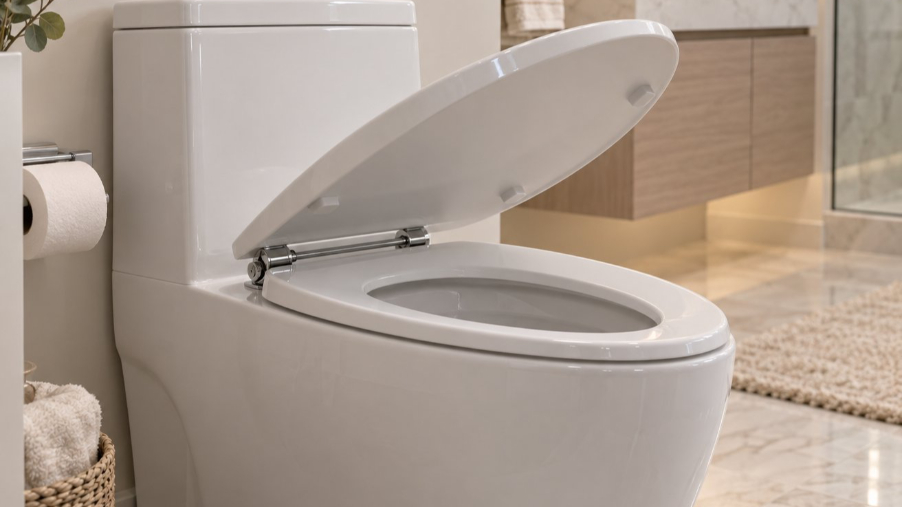
A standard toilet seat relies on gravity alone. You release it, and it drops. No resistance, no control, just a free fall that ends in a loud crack. A self closing toilet seat works differently. It uses a built-in damper mechanism housed inside the hinge assembly to regulate the descent of both the lid and the seat ring. Give either one a gentle push, and it lowers itself smoothly and silently over roughly five to seven seconds. No slam. No startled household. No cracked porcelain edges. The rotary damper inside the hinge creates controlled resistance that absorbs the kinetic energy of the falling lid, converting a noisy free fall into a whisper-quiet glide.
A self closing toilet seat is a seat equipped with an internal damper mechanism in its hinges that controls the closing speed of both the lid and the seat ring, allowing them to lower gently and silently after a light push — eliminating slamming noise, protecting porcelain, and preventing finger-pinch injuries.
One important clarification: this is purely a mechanical system. It is not a motorized or sensor-activated automatic lid that opens when you walk into the room. Those belong to the smart toilet category and require electrical components. A self closing toilet lid operates with no batteries, no wiring, and no sensors — just precision-engineered damping built into the hinge.
What Exactly Is a Self Closing Toilet Seat
At its core, this seat addresses three everyday problems that standard seats create. First, noise. A slamming lid generates a sharp impact sound that carries through walls and hallways, especially disruptive during nighttime bathroom visits. Second, damage. Repeated impacts gradually chip and stress the ceramic rim of the bowl and crack the seat material itself. Third, safety. Young children are particularly vulnerable to finger-pinch injuries when a heavy lid drops without warning. A soft close toilet lid removes all three risks with a single mechanical upgrade — the damped hinge does the work so you do not have to lower the seat carefully by hand every single time.
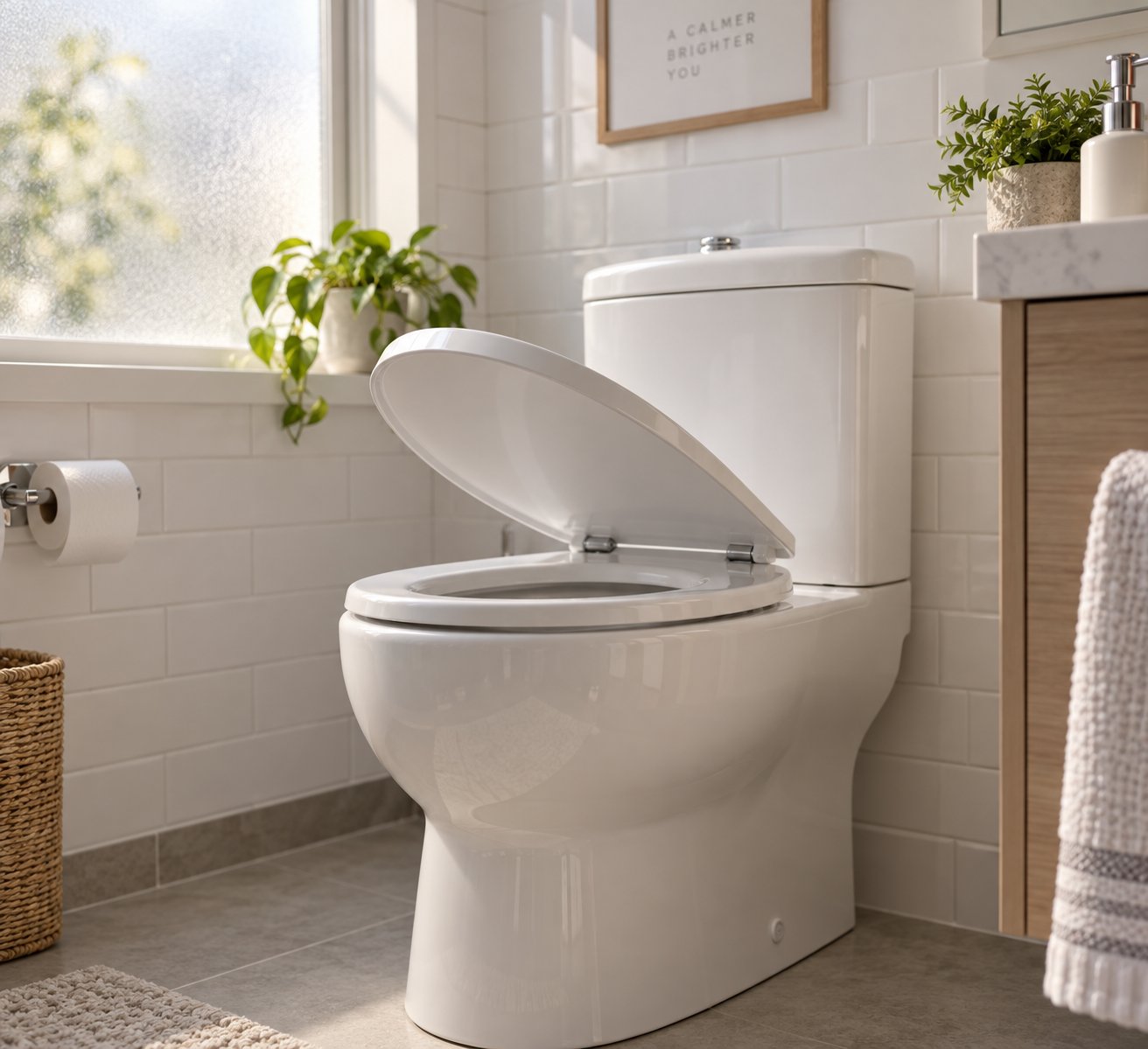
You will also notice that using one feels exactly like using a regular seat. Lift it up normally. When you are done, nudge it forward. The damper takes over from there, guiding the seat down at a slow, even pace until it rests quietly on the bowl rim. That simplicity is the whole point: better performance with zero change in habit.
Self Closing vs Soft Close vs Slow Close — Same Thing?
If you have spent even ten minutes shopping online, you have probably seen a dizzying mix of labels: "soft close toilet seat," "slow close toilet seat," "quiet close toilet seat," and sometimes "self closing" or "auto close." It is easy to assume these describe different technologies. They do not.
All of these terms refer to the same core mechanism — a damper integrated into the hinge that slows the seat's descent. The variation in naming comes down to branding and marketing. One manufacturer calls it "soft close" to emphasize the gentle touch. Another prefers "slow close" to highlight the controlled speed. A third opts for "quiet close" to focus on noise reduction. The underlying physics — fluid or air forced through a small orifice inside a damper cartridge to create resistance — is identical across all of them.
Think of it like "tissue" versus "facial tissue" versus a popular brand name. Same product, different labels. When you see any of these terms on a product listing, you are evaluating variations of the same damped-hinge technology, not fundamentally different seat designs. The real differences between seats lie elsewhere — in hinge build quality, damper durability, and seat material — and that is exactly where the next section picks up.
How the Slow Close Mechanism Works Inside the Hinge
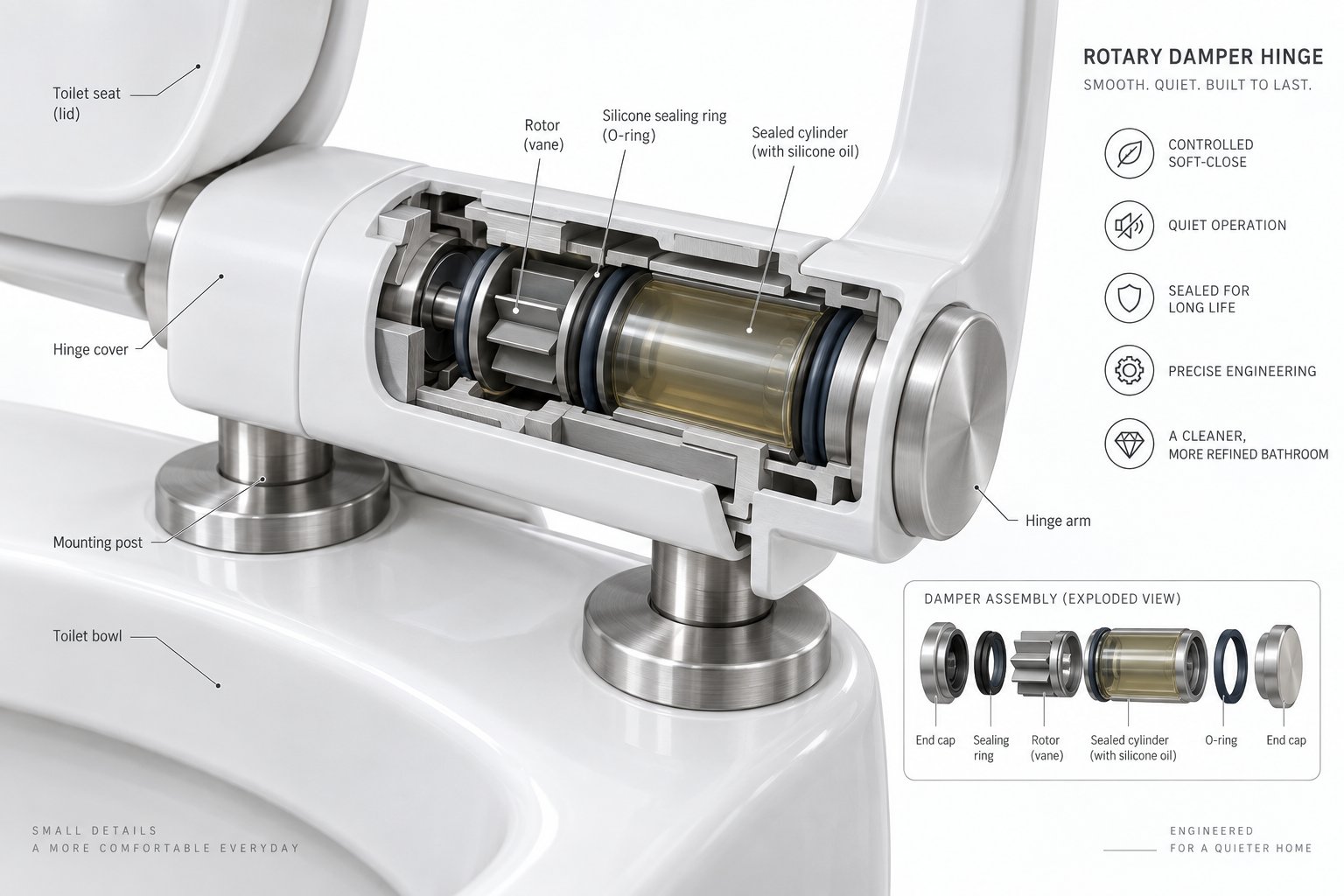
Every self closing toilet seat owes its whisper-quiet performance to a small but remarkably clever component hidden in plain sight — the damper housed inside the hinge assembly at the back of the bowl. You never see it working, but the moment it fails, you hear it. Understanding what happens inside that hinge helps you appreciate why some seats stay silent for a decade while others start slamming again within months.
Imagine tipping a bottle of thick honey upside down. The honey does not rush out — it oozes, slowly, because its viscosity resists rapid movement. A toilet seat slow close hinge works on the same principle. Inside the hinge sits a compact rotary damper filled with high-viscosity silicone oil. When you release the lid, a rotor inside the damper tries to spin under the weight of the falling seat. That spinning motion forces silicone oil through an extremely small gap — sometimes called the orifice or shear gap. The narrower the gap and the thicker the oil, the more resistance builds up, and the slower the seat descends. The result? A smooth, controlled glide from vertical to horizontal in roughly five to seven seconds, with virtually no sound at touchdown.
A standard seat, by contrast, has a simple pin-and-bracket hinge with zero resistance. Gravity pulls the lid, nothing pushes back, and you get a free fall ending in a loud crack. The damper changes that equation entirely by converting the kinetic energy of the falling seat into a tiny amount of heat, which dissipates harmlessly into the surrounding environment.
Inside the Hinge — Dampers, Cylinders and Controlled Descent
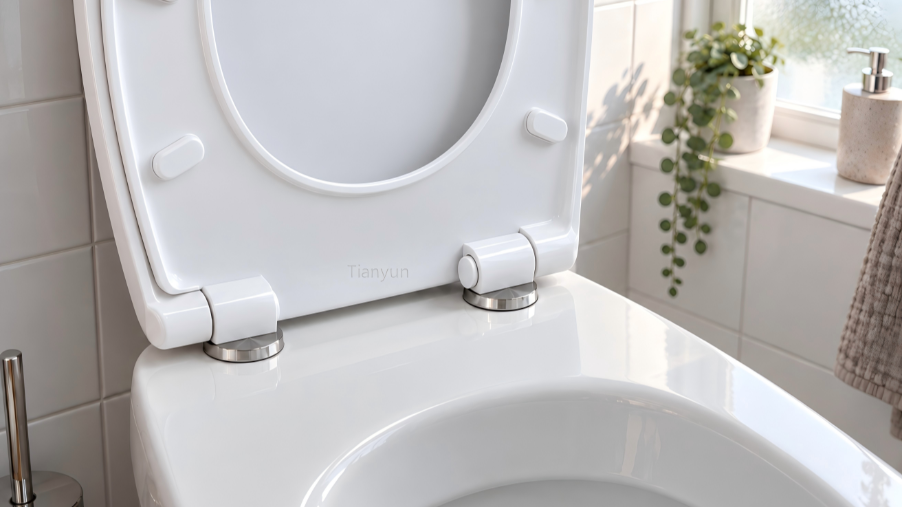
Picture the hinge assembly as two cooperating systems. The first is the structural hinge — the physical bracket that bolts to the toilet bowl and provides the pivot point around which the seat and lid rotate. The second is the damper cartridge, a sealed cylinder nestled inside or alongside that bracket. Together, they manage every opening and closing cycle your seat will ever perform.
Here is what happens step by step. You lift the lid to its upright position — around 90 degrees. At this angle, the gravitational torque on the lid is essentially zero because the weight hangs directly above the pivot. The damper offers little resistance, so raising the lid feels light and natural. The moment you nudge the lid forward and let go, gravity's lever arm starts increasing. The lid wants to accelerate. Inside the damper, a multi-bladed rotor begins forcing silicone oil through that tiny orifice. The faster the lid tries to fall, the harder the oil pushes back — a self-regulating feedback loop that keeps the descent steady and even.
One detail worth noting: most slow close toilet seat hinges use unidirectional or asymmetric damping. That means the damper resists motion in only one direction — the closing direction. When you lift the seat, a one-way valve inside the cartridge lets oil flow freely so the lid rises without any sluggish, annoying drag. This asymmetry is what makes the user experience feel completely natural: light on the way up, controlled on the way down.
Damper quality is the single biggest differentiator between a seat that stays quiet for years and one that fails within months. A well-engineered damper maintains consistent torque across tens of thousands of cycles. A cheap one gradually loses resistance as the silicone oil degrades or leaks past worn seals, and the seat begins closing faster and faster until the slam returns.
Here are the key internal components that make up a typical slow close hinge assembly:
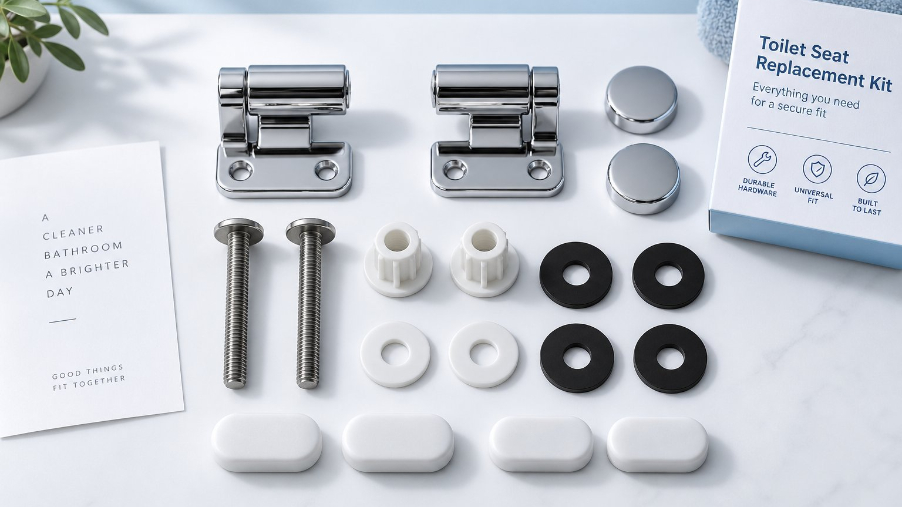
- Hinge pin (shaft): The central axis around which the seat and lid rotate. Stainless-steel pins resist corrosion and maintain tight tolerances over time.
- Damper cartridge: A sealed rotary cylinder containing silicone oil and a multi-vaned rotor. This is the heart of the entire automatic toilet seat closer system — it generates the controlled resistance that prevents slamming.
- Mounting plate: The bracket that secures the hinge assembly to the toilet bowl, usually through bolt holes at the rear of the rim. May include adjustment slots for fine-tuning seat alignment.
- Rubber bumpers: Small cushioning pads on the underside of the seat and lid that absorb any remaining contact force and prevent the seat from sliding on the porcelain surface.
- Torsion spring (in some designs): An auxiliary component that compensates for gravity at certain angles, helping keep the descent speed linear and smooth from start to finish.
Why Hinge Material and Damper Quality Matter
Not all slow close toilet seat hinges are created equal, and the difference comes down to what they are made of. Budget-tier seats often rely on basic plastic dampers or zinc-alloy hinge components. These work fine initially, but repeated use — think thousands of open-close cycles per year in a busy household — accelerates wear. Plastic damper housings can develop micro-cracks. Zinc-alloy pins corrode in humid bathroom environments. Cheap silicone oil may thin out at higher temperatures in summer or thicken in cold conditions during winter, causing unpredictable torque behavior that makes the seat close too fast one month and stick halfway the next.
Higher-quality seats use engineering-grade polymers like nylon or POM (polyoxymethylene) for the damper housing and stainless-steel pins that shrug off moisture. The silicone oil inside premium dampers typically has a viscosity of 100,000 centistokes or higher, paired with a high viscosity index that keeps performance stable across a wide temperature range. Precision O-rings and double-lip seals prevent oil leakage over the long haul — some manufacturers test their dampers to 100,000 cycles or more before certifying them for production.
Here is the detail most shoppers overlook and most product pages never mention: the damper is often a separate, replaceable component. It clips or threads into the hinge assembly rather than being permanently fused to it. That means when the automatic toilet lid closer mechanism eventually wears out after years of service, you can often swap in a new damper cartridge without replacing the entire seat. This one fact can double the useful life of a quality seat and save you from an unnecessary trip to the hardware store — a point that becomes even more relevant when you consider who stands to gain the most from investing in this technology in the first place.
Who Benefits Most From a Self Closing Toilet Seat
Knowing how a damper works is one thing. Knowing whether it actually matters for your household — or your business — is another. The truth is, a self closing toilet seat is not a luxury for everyone. But for certain groups, it solves problems that range from inconvenient to genuinely dangerous. Here is who stands to gain the most, and why the reasoning goes deeper than just "it's quieter."
Families With Young Children — Safety First
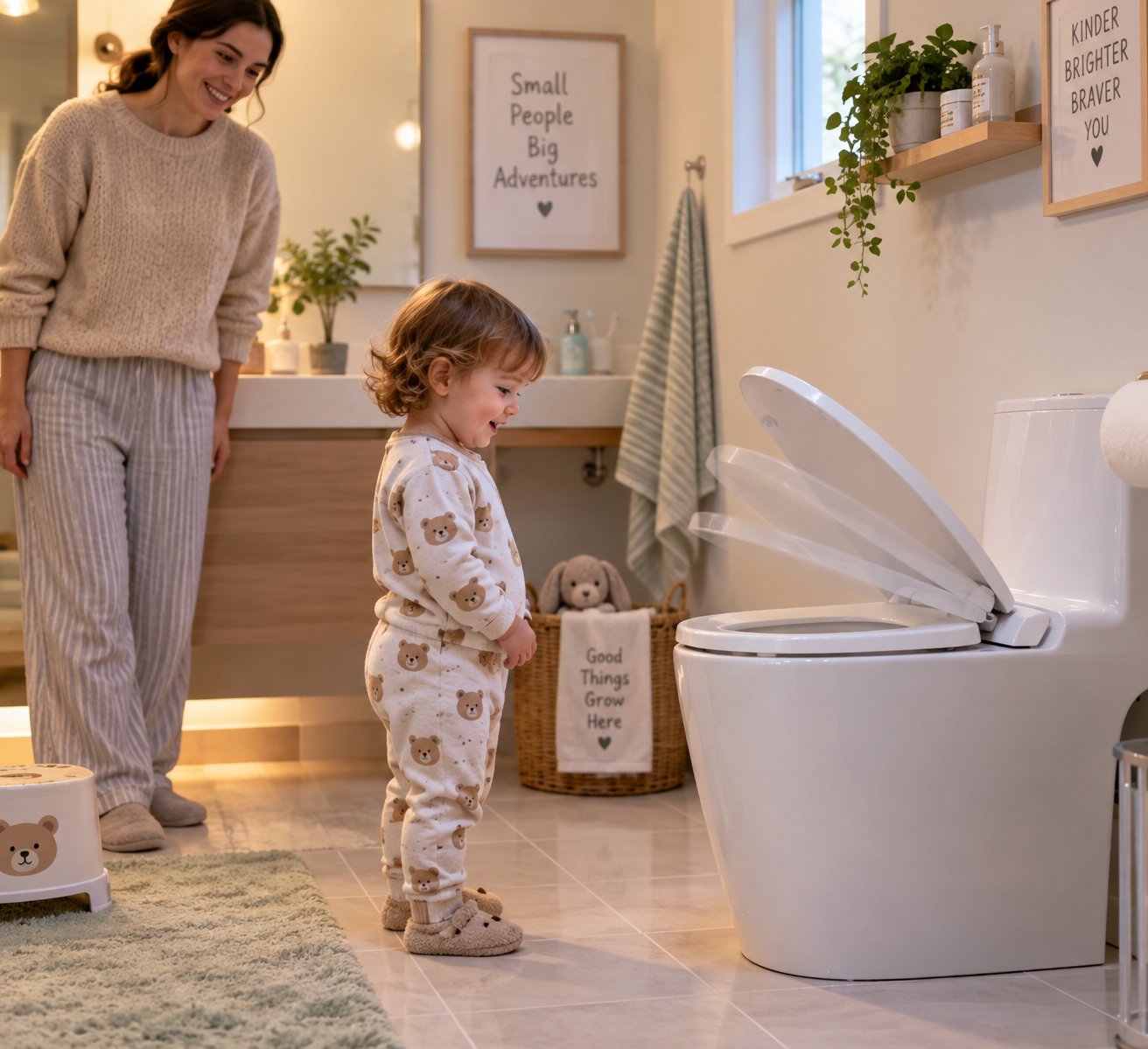
Imagine a two-year-old boy, freshly curious about using the "big kid" toilet. He lifts the heavy lid. His small fingers rest on the rim. The seat slips from his grip, and gravity does the rest. That scenario is not hypothetical — it plays out in emergency rooms across the country with alarming regularity.
A study published in BJU International analyzed national emergency room data from 2002 to 2010 and found that an estimated 13,175 genitourinary injuries related to toilets and toilet seats brought patients to U.S. ERs during that period. The most common mechanism? Crush injuries from the accidental fall of a toilet seat, accounting for 68.4% of all cases. A staggering 81.7% of those crush injuries occurred in children aged two to three years old — precisely the age when toilet training begins. The researchers noted that these incidents were increasing by approximately 100 per year and explicitly recommended slow-close toilet seat technology as a preventive intervention.
A no slam toilet seat eliminates the crush risk entirely. The damper prevents the lid or seat ring from free-falling, no matter how abruptly a child lets go. There is no speed at which a properly functioning damper allows a dangerous slam. For parents, that means one less bathroom hazard to worry about — and one fewer reason to hover over a toddler during every restroom visit.
The noise factor matters here too. Any parent of a light-sleeping infant knows the chain reaction a slamming seat triggers at midnight: baby wakes, starts crying, the entire household is up. A quiet toilet seat keeps nighttime bathroom trips from becoming household events.
Aging in Place and Accessibility Considerations
For older adults, the bathroom is statistically the most hazardous room in the house. The CDC has reported that nearly 80 percent of falls among seniors happen in the bathroom, driven by slippery surfaces, hard fixtures, and the physical demands of sitting down and standing up. A self lowering toilet seat addresses one specific piece of that risk puzzle: the need to carefully control a heavy lid while balancing on unsteady legs.
With a standard seat, lowering the lid requires bending forward and guiding it down by hand — a motion that shifts your center of gravity and demands grip strength. For someone with arthritis, reduced mobility, or post-surgical limitations, that small task can feel precarious. An auto closing toilet seat changes the equation completely. A light tap sets the damper in motion, and the lid handles itself. No bending. No gripping. No awkward lean over the bowl.
This connects to the broader aging-in-place home modification trend, where small upgrades — grab bars, comfort-height toilets, lever-style faucets — work together to keep older adults safe and independent at home. An automatically closing toilet seat fits naturally into that same philosophy: reduce physical demands, remove hazards, and preserve dignity without turning the bathroom into a clinical space.
High-Traffic and Commercial Restrooms
Picture a hotel bathroom. Dozens of guests cycle through each week, and not every one takes the time to lower a seat gently. Multiply that by fifty rooms, and you have hundreds of daily slams pounding away at porcelain rims, cracking seat materials, and loosening mounting hardware. The same dynamic applies to office buildings, restaurants, rental apartments, and co-working spaces.
A slow shutting toilet seat dramatically reduces the mechanical stress caused by repeated impacts. Every slam sends a shockwave through the seat, the hinges, and the ceramic bowl rim. Eliminate the slam, and you extend the lifespan of all three components. For property managers and facility teams, that translates directly into fewer maintenance calls, lower replacement costs, and a noticeably quieter restroom environment — which matters more than you might think for tenant satisfaction and guest reviews.
Durability requirements differ in commercial settings. Where a household might cycle a seat ten to fifteen times a day, a busy restaurant restroom could see fifty or more cycles daily. That kind of volume demands heavy-duty hinges, premium damper cartridges, and scratch-resistant materials like urea-formaldehyde (UF) that hold up under constant use and aggressive cleaning chemicals.
| User Group | Primary Benefit | Key Feature to Look For |
|---|---|---|
| Families with young children | Pinch and crush injury prevention | Reliable soft close damper with consistent resistance |
| Seniors and those with limited mobility | Reduced physical effort and fall risk | Lightweight seat with easy-tap closing action |
| Rental properties and landlords | Lower maintenance and fewer damage complaints | Durable PP material with quick-release hinges |
| Hotels, restaurants, and offices | Noise reduction and extended fixture lifespan | Heavy-duty hinges with UF material for high-cycle durability |
| Shared or multi-user households | Eliminates seat-slamming conflicts | Universal-fit hinge with adjustable bolt spread |
Whether you are childproofing a family bathroom, modifying a home for a parent who wants to age independently, or outfitting a commercial property for heavy daily use, the core value proposition stays the same: remove the slam, and you remove a cascade of problems — noise, damage, injury, and unnecessary wear. The real differentiator between seats that deliver on that promise and ones that disappoint comes down to the branded technologies and build-quality details manufacturers use to engineer their hinges — which is exactly where the confusion starts for most buyers.
Brand Names Decoded
You have settled on a self closing toilet seat. You know the damper is the key component. You understand who benefits most. So you start browsing — and suddenly every manufacturer seems to speak a different language. One listing says "SlowClose." Another advertises "WhisperClose." A third promises "Quiet-Close" technology. Are these different systems? Different levels of quality? Different generations of the same idea?
Not really. They are marketing labels wrapped around the same fundamental engineering. And once you peel those labels back, the real decision factors become much clearer.
SlowClose, WhisperClose, Quiet-Close — What the Brand Names Really Mean
Each major manufacturer has coined its own branded term for what is, at its core, the same damped-hinge technology discussed earlier in this article. Here is how the naming breaks down.
Hamberger Sanitary — the German manufacturer behind many Villeroy & Boch seats and a wide range of private-label products — uses the term SlowClose to describe its integrated damper system. The name is straightforward: the hinge slows the seat's descent. Their dampers are typically paired with what they call the TakeOff system, a quick-release mechanism that lets you detach the entire seat from its mounting plate for cleaning without any tools.
Bemis, now operating under the Church brand within the Roper Technologies portfolio, markets the identical concept as WhisperClose. The branding emphasizes the noise reduction angle — a whisper instead of a slam. Under the hood, you will find the same hydraulic or pneumatic damper cartridge controlling the closing speed through fluid resistance.
Kohler uses Quiet-Close across its standard seat and bidet seat lines. Their product pages describe it simply: "Prevents the seat from slamming closed." The mechanism? A damper integrated into the hinge assembly — the same physics, the same principle, the same five-to-seven-second descent you will find in any quality soft close toilet seats from any reputable brand.
The underlying technology is identical in all three cases. A sealed damper cartridge uses silicone oil or air resistance to regulate the rate at which the seat and lid descend. The rotor, the orifice, the viscous fluid — all of it works the same way regardless of whether the box says SlowClose, WhisperClose, or Quiet-Close. Think of it like antilock braking systems in cars: every automaker gives theirs a proprietary name, but the core hydraulic principle is universal.
Where the differences actually show up is not in the damping technology itself but in three secondary areas: the construction quality of the damper, the design of the hinge assembly, and the added convenience features bundled with each seat.
Beyond Brand Names — Features That Actually Differentiate Seats
Strip away the marketing terminology, and you will find that the features worth comparing across soft close toilet seats fall into a few practical categories.
Quick-release hinges top the list. Hamberger's TakeOff system is one well-known example, but many manufacturers offer similar clip-off or push-button designs that let you lift the entire seat off its mounting plate in seconds. This makes cleaning underneath the seat dramatically easier — no more awkward scrubbing around fixed hinge brackets. If hygiene is a priority, and it should be, this feature alone can be a deciding factor. Kohler brands its version as Quick-Release, while other manufacturers may simply call it "easy release" or "one-click removal."
Adjustable hinge spread is another genuine differentiator. Standard mounting bolt holes on most toilets sit between 5.5 and 6.5 inches apart, but older bowls and imported fixtures sometimes fall outside that range. A toilet seat soft close hinge with adjustable bolt-hole spacing accommodates these variations, saving you the frustration of a seat that almost fits but never sits centered. Not every branded seat offers this, so check the specifications before buying.
Damper material composition is the third — and arguably most important — variable. As covered earlier, cheap dampers using basic plastic housings and low-grade silicone degrade faster. Premium softclose toilet seat models use engineering polymers and stainless-steel pins that deliver consistent resistance over tens of thousands of cycles. This is where the long-term value of a seat really lives, yet it is almost never highlighted on product packaging. You will need to look at hinge specifications or ask the manufacturer directly.
The table below puts the three major branded terms side by side so you can see exactly what each one offers — and where they converge.
| Brand | Marketing Term | Core Mechanism | Notable Extra Feature |
|---|---|---|---|
| Hamberger Sanitary (Villeroy & Boch, private-label) | SlowClose | Hydraulic/pneumatic damper in hinge | TakeOff quick-release system for tool-free seat removal |
| Bemis / Church (Roper Technologies) | WhisperClose | Hydraulic/pneumatic damper in hinge | STA-TITE seat fastening system to prevent loosening |
| Kohler | Quiet-Close | Hydraulic/pneumatic damper in hinge | Quick-Release and Grip-Tight bumpers for secure positioning |
Notice how the "Core Mechanism" column is identical across all three rows. That is the point. The toilet seats soft closing technology does not change from brand to brand — only the packaging around it does. What genuinely varies is the supplementary engineering: how easily the seat detaches, how securely it grips the bowl, and how long the damper maintains its resistance under daily use.
So when you are comparing products, resist the urge to assume a fancier brand name means better performance. Instead, ask the questions that actually predict satisfaction: What is the damper made of? Can it be replaced when it eventually wears out? Does the hinge spread adjust to fit my specific bowl? Is there a quick-release option for easy cleaning?
These practical details matter far more than any trademark printed on the box — and they become especially critical once you start matching a seat to your specific bathroom setup, bowl shape, and material preferences.
How to Choose the Right Self Closing Toilet Seat for Your Bathroom
Knowing that brand names are mostly marketing wrappers around the same damper technology is freeing — it shifts your attention to the decisions that genuinely affect whether a seat fits your bathroom, lasts for years, and feels right every time you use it. Three variables matter more than anything printed on the packaging: bowl shape, seat material, and hinge configuration. Get those three right, and the rest falls into place. Get even one wrong, and you are stuck with a seat that wobbles, overhangs, or wears out long before it should.
Round vs Elongated — Matching Seat Shape to Your Bowl
Every toilet bowl sold in North America falls into one of two standard shape categories — round and elongated. The difference is not subtle once you know where to look, but plenty of shoppers order the wrong one because they eyeball it instead of measuring.
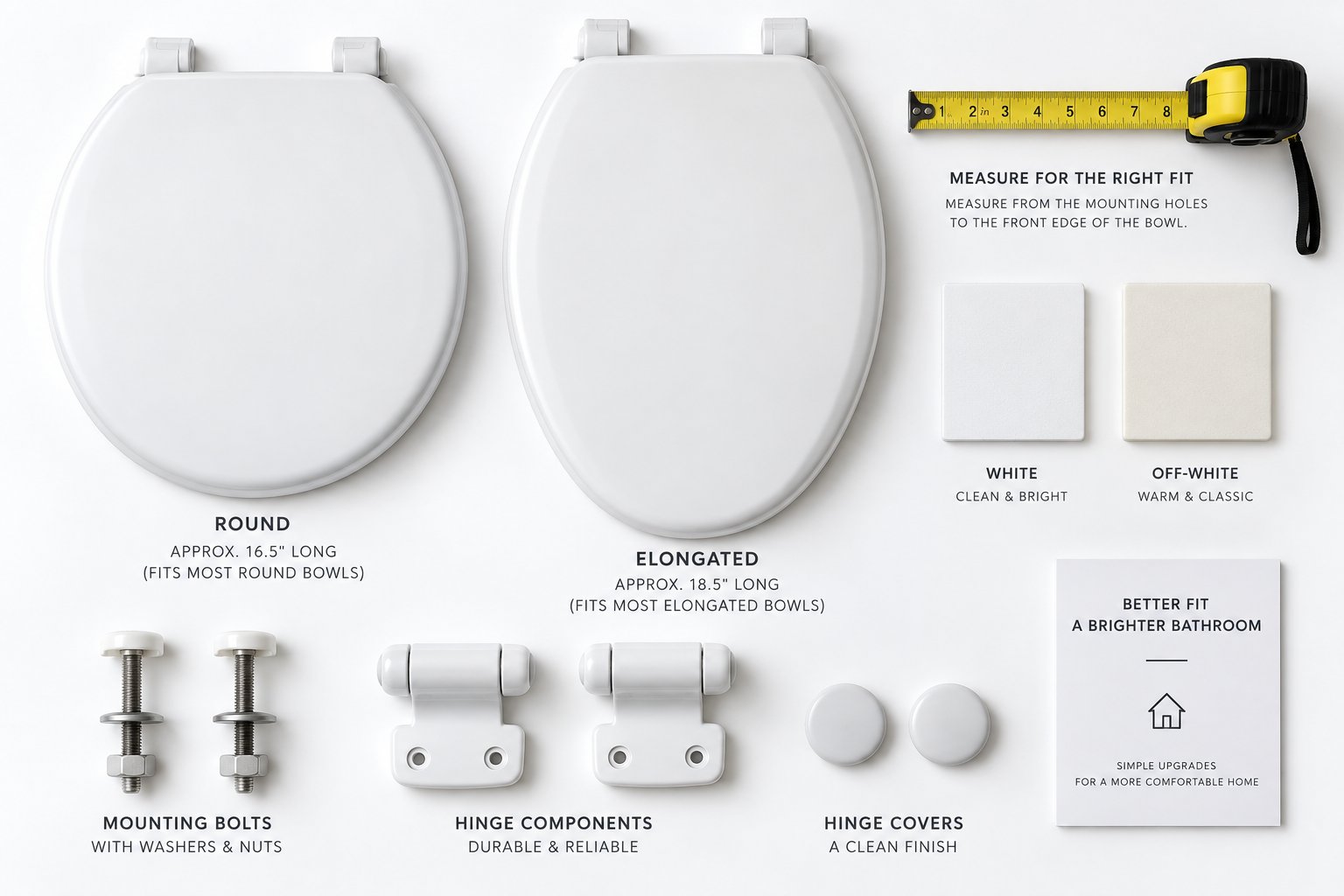
Here is the simple test. Grab a tape measure and find the two mounting bolt holes at the back of your bowl — they are usually hidden under small plastic caps on the rim. Measure from the center point between those bolt holes straight forward to the very front edge of the bowl rim. A round bowl measures approximately 16.5 inches, while an elongated bowl comes in at roughly 18.5 inches. That two-inch gap is the entire difference, but it determines which seat will sit flush on your porcelain and which one will stick out awkwardly or fall short of the front edge.
Why does this matter for a soft close seat specifically? Because an ill-fitting seat changes the weight distribution across the hinge. An elongated soft close toilet seat mounted on a round bowl creates a two-inch overhang that shifts the center of gravity forward, putting uneven stress on the damper and hinge pins. Over time, that asymmetric load accelerates wear and can cause the seat to drift to one side during its descent — exactly the kind of problem you bought the seat to avoid.
In the United States, elongated bowls dominate. If your home was built or remodeled after the 1970s, there is a strong chance you are looking at an elongated bowl. A soft close toilet seat elongated model is the most widely stocked configuration for that reason. Round bowls remain common in compact bathrooms, powder rooms, and older homes where space is tight. Either shape works beautifully with slow-close technology — the key is simply matching what you buy to what you have.
You will also encounter the term soft close oval toilet seat on some product listings. In most cases, "oval" is simply another way of saying "elongated," though occasionally it refers to a European D-shaped profile. When in doubt, measure. The tape measure never lies.
Seat Material — Polypropylene, Urea-Formaldehyde, Wood and Duroplast
The seat's material affects its weight, durability, feel, and price — and it also influences how well the slow close mechanism performs over time. A heavier seat exerts more gravitational force on the damper during each closing cycle, so the hinge and damper need to be engineered to match the material they support. Here are the main categories worth considering.
Polypropylene (PP) is the workhorse of the toilet seat world. It is a thermoplastic polymer that is lightweight, resistant to most household chemical cleaners, and cost-effective to manufacture. A PP seat typically feels smooth and slightly flexible, which makes it forgiving in high-traffic environments where bumps and impacts are inevitable. Because of its lighter weight, PP puts less stress on the damper cartridge, which can extend hinge life. It is an excellent choice for rental properties, guest bathrooms, and budget-conscious buyers who still want a reliable slow close elongated toilet seat without paying a premium.
Urea-formaldehyde (UF) sits at the premium end of the spectrum. This thermoset material is harder, heavier, and more scratch-resistant than PP, and it delivers a dense, ceramic-like feel that many homeowners associate with quality. UF seats resist chipping, cracking, and fading, and their non-porous surface discourages bacterial buildup — a significant advantage in commercial applications and family bathrooms where hygiene is non-negotiable. The trade-off is weight: a UF seat demands a more robust damper to maintain the same smooth, controlled descent. Pair a heavy UF lid with a weak damper, and you will burn through the hinge mechanism far sooner than expected.
Wood and Duroplast occupy niche positions. Solid wood seats offer warmth and a traditional aesthetic, but they are heavier, require more maintenance, and are susceptible to moisture damage in humid bathrooms. Duroplast — a compression-molded thermosetting material — provides rigidity and a premium appearance similar to UF at a sometimes lower price point. It is especially popular in European markets and increasingly available in North America for buyers who want a slow close toilet seat elongated option with a contemporary slim profile.
Many OEM suppliers now offer both PP and UF options paired with matched soft-close hinges and dampers as integrated kits, simplifying procurement for sanitaryware brands that need a complete toilet seat cover soft close package. Tianyun's PP and UF toilet seat covers with soft close hinges are one example of this approach — a manufacturer providing complete, hinge-matched seat solutions designed specifically for brands and OEM buyers seeking a quiet-closing toilet seat package where the damper, hinge, and seat material are engineered to work together from the start. That kind of integration matters because a mismatched damper-and-seat combination is one of the most common reasons a universal soft close toilet seat underperforms out of the box.
Questions to Ask Before You Buy
Before you click "add to cart" or place a bulk order, run through this checklist. It covers every variable that determines whether a seat fits, lasts, and performs the way you expect. No competitor buying guide consolidates these questions in one place — so bookmark this list.
- What is your bowl shape — round or elongated? Measure from the center of the mounting bolt holes to the front rim. Round is approximately 16.5 inches; elongated is approximately 18.5 inches. Do not guess.
- Do you prefer lightweight PP or premium UF material? PP offers cost efficiency and chemical resistance for everyday and rental use. UF delivers scratch resistance and a ceramic-like feel for premium and commercial settings. Your material choice directly impacts the damper load, so the hinge system needs to match.
- Do you need quick-release hinges for easy cleaning? If hygiene is a priority — and in family or commercial bathrooms, it almost always is — a clip-off or push-button release system makes it simple to lift the seat away and clean underneath the hinge area thoroughly.
- What is the maximum user weight the seat must support? Standard residential seats handle up to roughly 300 pounds, but heavy-duty models rated for higher capacities are available. This is especially relevant for commercial and public restrooms with diverse user populations.
- Is adjustable hinge spread needed for non-standard bolt holes? Most North American toilets use a bolt-hole spacing of 5.5 inches, but older bowls and imported fixtures can vary. An elongated slow close toilet seat with adjustable mounting slots ensures a centered, secure fit regardless of your specific bolt configuration.
Working through these five questions takes less than five minutes, but it prevents the two most common purchasing mistakes: buying the wrong shape and underestimating how much hinge quality matters for your specific material and usage pattern. With your shape, material, and hinge requirements mapped out, the only thing standing between you and a silent bathroom is the actual installation — which turns out to be far simpler than most people expect.
Step by Step Installation for Any Soft Close Toilet Seat
You have picked the right bowl shape, settled on a material, and chosen a hinge configuration that matches your bathroom. The box is sitting on the floor. And here is the good news: installing a toilet seat with soft close technology requires no plumbing experience, no special certifications, and no expensive tools. Most homeowners finish the entire job in ten to fifteen minutes — roughly the time it takes to brew a pot of coffee. The hardest part is usually getting the old seat off, not putting the new one on.
Removing Your Old Toilet Seat
Every installation starts with removal, and every removal starts at the same place — the two mounting bolts at the rear of the bowl. If you have never looked closely at this area, you might not even realize the bolts are there. Most seats hide them under small plastic caps that either flip up or twist off. Pop those caps open, and you will find the bolt heads staring back at you.
Here is what you will need on hand:
- An adjustable wrench or pliers — for gripping the nut underneath the bowl if necessary
- A flathead or Phillips screwdriver — to turn the bolt from above
- Penetrating lubricant (like WD-40) — essential if the bolts are corroded or frozen in place
- A rag or old towel — for cleanup and protecting the porcelain surface
On most seats, you simply unscrew the bolt from the top while holding the nut steady underneath the bowl with your other hand. Sounds easy — and it usually is, unless corrosion has fused the bolt and nut together. Bathrooms are humid environments, and metal hardware that has sat in place for five or ten years can seize up completely. If a bolt will not budge, spray the nut and bolt junction with penetrating lubricant, wait ten minutes, and try again. For severely corroded bolts, a pair of locking pliers on the nut provides the extra grip you need.
One important caution: avoid overtightening or forcing a stuck bolt with excessive pressure. Porcelain is strong under compression but brittle under point loads. Cranking too hard on a seized bolt can crack the ceramic rim of the bowl — a far more expensive problem than a stubborn toilet seat. Patience and lubricant solve most stuck-bolt situations without any risk to the fixture.
Once both bolts are out, lift the old seat straight up and off the bowl. Before you do anything else, take a minute to clean the exposed rim area thoroughly. Years of grime tend to accumulate around the bolt holes and under the old hinge brackets — a damp cloth with mild soap handles it easily. Starting with a clean surface ensures your new seat sits flat and the mounting hardware grips properly.
Fitting a Self Closing Toilet Seat — Top-Fix vs Bottom-Fix Methods
Your new toilet seat with slow close hinges will use one of two mounting methods. Knowing which one you are working with before you start saves time and prevents confusion halfway through the process.
Top-fix installation is the faster and increasingly standard approach for modern soft close seats. With this method, you drop expanding rubber or nylon anchors through the bolt holes from above. These anchors slide through the hole in the porcelain rim and, when you tighten the bolt from the top using a screwdriver, the anchor expands and grips the underside of the rim from within. You never need to reach underneath the bowl at all. This design is particularly convenient for wall-hung and back-to-wall toilet designs where access to the underside of the bowl is limited or impossible. It is also the reason many people describe the installation as surprisingly easy — there is no awkward crouching or blind fumbling with wing nuts.
Bottom-fix installation follows the traditional approach. A bolt drops through the seat's hinge plate and through the porcelain mounting hole from above, and you secure it from below with a wing nut or hex nut. This method is common on older toilet designs and classic open-back bowls where the underside is fully accessible. It provides a very secure connection, though it does require you to reach behind or under the bowl to tighten the nut — a less comfortable position, but perfectly manageable.
Regardless of which method your new seat uses, alignment is the step most people rush through and later regret. Before you fully tighten anything, close the lid and check its position. The seat should be centered on the bowl with even gaps on both sides and the front edge sitting flush with the bowl rim. Most hinge plates include built-in adjustment slots — elongated holes rather than fixed round ones — that let you slide the entire hinge assembly forward, backward, or slightly side to side before locking it down. Use those slots. A toilet seat closer mechanism performs best when the weight is evenly distributed across both hinges. An off-center seat loads one damper more than the other, causing uneven descent and premature wear on one side.
Once alignment looks right, tighten the mounting bolts gradually, alternating between the left and right sides. A quarter turn on the left, a quarter turn on the right — back and forth until both are snug. This cross-pattern approach keeps the seat from shifting during tightening and prevents uneven stress on the porcelain. Snug is the goal here, not gorilla-tight. The seat should feel stable without any lateral movement, but the bolts do not need to be torqued down as though you are mounting an engine block.
If your new seat features a toilet seat quick release soft close design — the push-button or clip-off system discussed in earlier sections — test the release mechanism now, before you consider the job done. Press the release buttons, lift the seat off, and set it back on. It should click into place firmly and detach smoothly. Confirming this now means you will not discover a sticky release tab six months later when you are trying to deep-clean the bathroom.
Testing and Adjusting the Slow Close Action
This is the satisfying part. Lift the lid all the way up to roughly 90 degrees — it should stay upright on its own. Give it a light nudge forward, then let go completely. Watch the descent. A properly installed toilet lid closer brings the lid down in a smooth, steady arc, touching the seat ring silently after roughly five to seven seconds. No wobble. No veering to one side. No thud at the end.
Repeat the same test with the seat ring itself — lift it up and release. It should descend at the same controlled pace and meet the porcelain rim without a sound. If either component falls too quickly, drops unevenly, or makes a clunking noise at touchdown, troubleshoot before calling it done.
The most common culprits for a too-fast or uneven descent right after installation are surprisingly simple:
- Uneven bolt tightness: If one side is tighter than the other, the hinge on the loose side cannot generate proper damping resistance. Retighten both sides evenly using the alternating quarter-turn method.
- Packaging material left inside the damper: Some manufacturers insert small foam plugs, plastic spacers, or protective tabs inside or around the damper cartridge for shipping. Check the hinge area and remove anything that does not belong there.
- Seat not fully seated on the hinge plate: On quick-release models, the seat may not have clicked all the way into the mounting brackets. Lift it off and reattach firmly until you hear or feel the locking mechanism engage.
Here is the full installation sequence summarized from start to finish:
- Flip open or twist off the plastic caps covering the old seat's mounting bolts.
- Unscrew the bolts — apply penetrating lubricant if they are corroded — and remove the old seat.
- Clean the exposed bowl rim and bolt hole area thoroughly with mild soap and water.
- Unbox the new seat and identify the mounting method — top-fix anchors or bottom-fix bolts and nuts.
- Position the hinge plate over the bolt holes and insert the hardware without tightening fully.
- Close the lid and check alignment — center the seat on the bowl using the hinge plate adjustment slots.
- Tighten bolts gradually, alternating left and right in quarter turns until snug.
- If your seat has a quick-release mechanism, test it by detaching and reattaching the seat.
- Lift the lid to 90 degrees, release it, and observe the descent — confirm a smooth, silent close in five to seven seconds.
- Repeat the descent test with the seat ring alone to confirm both components operate correctly.
That is it. No plumber needed. No pilot holes to drill. No supply lines to disconnect. A self closing toilet seat is one of the rare home upgrades that delivers an immediate quality-of-life improvement with practically zero installation complexity. The real question most homeowners ask after the fact is not "was it hard to install?" — it is "how long will it stay this quiet?" And that depends entirely on how you maintain it.
Troubleshooting and Maintaining Your Soft Close Toilet Seat
That whisper-quiet close you enjoyed on day one? It will not last forever on its own. Every mechanical system with moving parts eventually wears down, and a self closing toilet seat is no exception. The good news is that with a little understanding and basic care, you can keep that slow, silent descent going for years — and fix most problems yourself when they do appear. Yet almost no product page or competitor guide discusses lifespan expectations, common failure points, or practical troubleshooting steps. This section fills that gap.
How Long Do Self Closing Toilet Seats Actually Last
A quality slow closing toilet seat with well-engineered dampers typically lasts between five and ten years of normal household use. That range aligns with what bathroom industry experts recommend as the general replacement interval for any toilet seat. Richardson, a plumbing expert interviewed by Southern Living, notes that most toilet seats last between 5 and 10 years, with hinges being the component most likely to become brittle and break over time.
For slow closing toilet seats specifically, it is the damper — not the seat surface — that determines how long the quiet performance holds up. The silicone oil inside the damper cartridge gradually loses viscosity over thousands of open-close cycles. As resistance decreases, the seat begins descending a little faster each month. At first you barely notice. Then one night, the lid drops in three seconds instead of six. Eventually, if the damper degrades enough, the slam returns entirely.
How quickly this happens depends on three factors: damper construction quality, frequency of use, and material weight. A premium damper built with engineering-grade polymers and high-viscosity silicone oil can handle 50,000 or more cycles before noticeable degradation. A budget damper using basic plastic housings might start losing resistance after 10,000 to 15,000 cycles. Bathroom Parts Australia reports that soft close hinges typically last about 40,000 to 55,000 open-and-close actions before needing replacement — a helpful benchmark for estimating your own seat's runway.
In high-traffic commercial settings — restaurants, office buildings, hotels — that cycle count arrives much faster. A restroom handling fifty or more flushes per day could burn through 18,000 cycles in a single year, meaning even a well-built damper might need attention within two to three years rather than five. Heavier urea-formaldehyde (UF) seats also exert more force on the damper per cycle, potentially shortening hinge life compared to a lighter polypropylene (PP) seat under identical usage patterns.
The practical takeaway? Expect a quality residential slow closing toilet seat to deliver reliable, quiet performance for roughly five to eight years before the damper needs attention. Budget models may show signs of wear within one to three years. And in commercial environments, plan for more frequent hinge inspections regardless of brand.
Common Problems and How to Fix Them
Even the best-engineered seat will eventually develop quirks. The three issues below account for the vast majority of complaints — and each one has a straightforward fix that does not require a plumber.
Problem 1: The seat no longer closes slowly. This is the most common complaint, and it almost always points to a worn or damaged damper cartridge. The silicone oil inside has either thinned from thermal cycling, leaked past degraded seals, or simply lost enough viscosity through normal use that it can no longer generate adequate resistance. If your toilet seat closes slowly one month and slams the next, the damper is telling you its working life is ending.
The fix depends on your seat's design. Many manufacturers build the damper as a separate, replaceable component that clips or threads into the hinge assembly. Bathroom Parts Australia supplies replacement dampers and hinge parts for most popular models, confirming that you often need to replace only the worn part rather than the entire seat. Check your manufacturer's website or contact their support team to find out whether replacement damper cartridges are available for your specific model. Swapping one in typically takes five minutes and restores the original slow-close action immediately.
If the damper is not replaceable — a common limitation on very inexpensive seats — the entire seat will need to be replaced. This is one reason investing a little more upfront in a seat with serviceable hinges pays dividends over time.
Problem 2: The seat drifts to one side during descent. You release the lid, and instead of tracking straight down the centerline, it veers left or right. This usually means one of two things. Either the mounting bolts are unevenly tightened — putting more load on one hinge than the other — or a hinge pin has worn down on one side, creating play in the pivot.
Start with the simplest fix: check both mounting bolts and retighten them evenly using the alternating quarter-turn method described in the installation section. If the problem persists, inspect the hinge pins for visible wear or corrosion. A slow lowering toilet seat relies on both hinges working in perfect symmetry, so even minor wear on one side throws off the balance. Replacing the worn hinge — or the entire hinge set if they are sold as a pair — corrects the drift.
Problem 3: The seat feels loose or rocks on the bowl. This one is almost always caused by mounting bolts that have loosened over time. Vibration from daily use, temperature fluctuations that cause materials to expand and contract, and the simple act of sitting down and standing up all contribute to gradual bolt loosening. You might notice the seat shifting slightly when you sit, or hear a faint rattle when the lid closes.
The fix takes thirty seconds. If you have a top-fix installation, tighten the bolts from above with a screwdriver. If you have a bottom-fix setup, reach under the bowl and snug up the wing nuts while holding the bolt steady from the top. On quick-release models, pop the seat off first so you can access the bolt heads directly. Some manufacturers, like Bemis with their STA-TITE system, design the mounting hardware specifically to resist loosening — but even those benefit from an annual check.
Cleaning Without Damaging the Mechanism
A toilet seat that closes slowly and silently deserves cleaning habits that keep it that way. The biggest threat is not dirt — it is the way most people interact with the seat during and after cleaning.
The number one rule? Never manually slam the seat down. It sounds obvious, but it happens constantly. Someone finishes wiping the rim, grabs the lid, and drops it. That forceful override pushes the damper past its designed resistance range, stressing the internal seals and accelerating oil degradation. Every manual slam is essentially a mini-abuse event that shortens the damper's life. Treat the lid like you would any slow shut toilet seat — let the mechanism do its job, every single time, even when you are in a hurry.
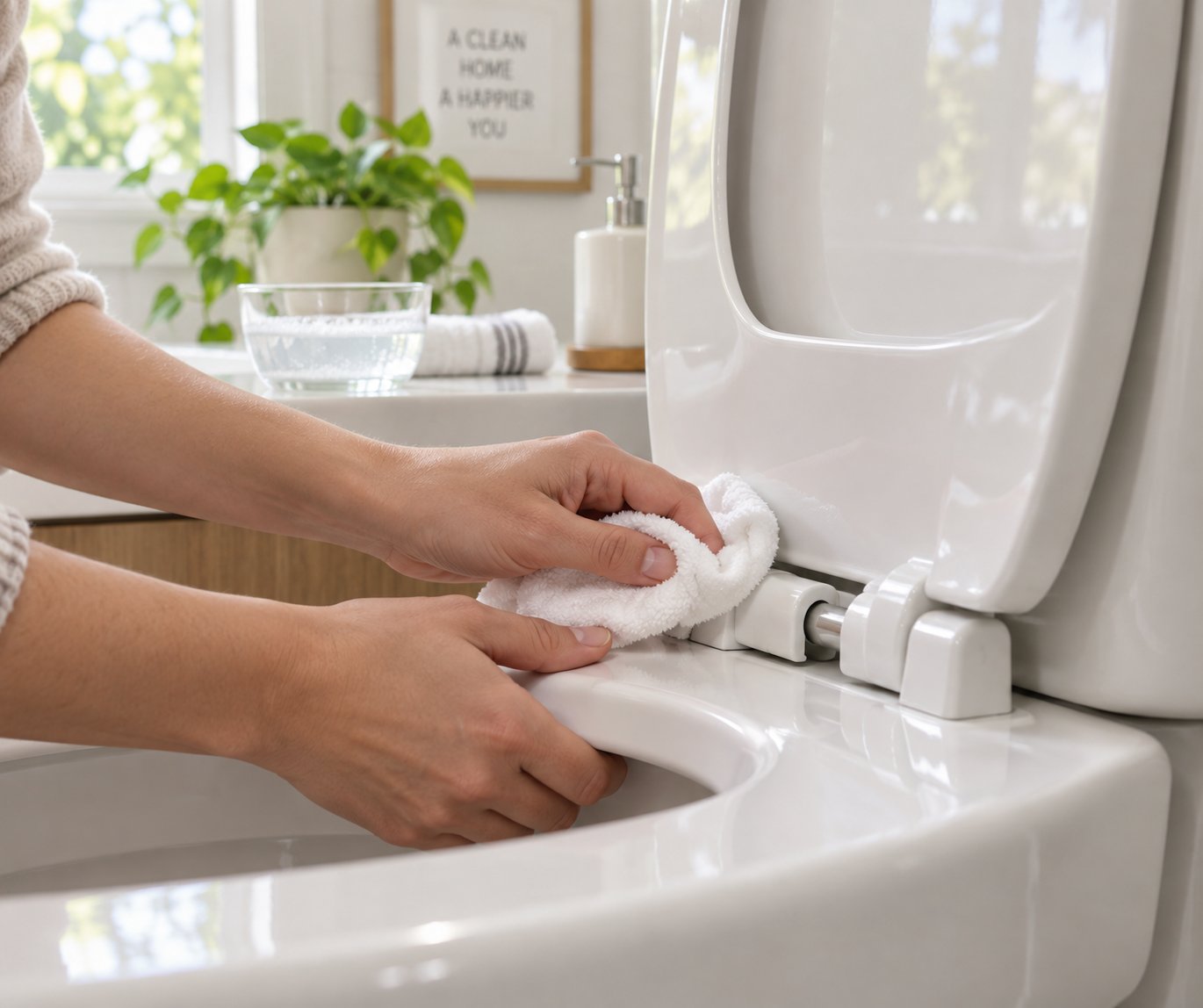
For the actual cleaning process, the guidance from industry professionals is consistent. Mark Hillman, president of Bath Royale and a veteran with three decades of design and manufacturing experience, recommends cleaning the seat using a soft cloth and mild dishwashing liquid diluted with water. He advises against brushes, abrasive cleaners, aerosols, rubbing alcohol, and harsh chemicals containing chlorine — all of which can scratch the seat surface, dull the finish, and potentially damage plastic hinge components.
One cleaning tip that makes a significant difference: if your seat has a quick-release mechanism, use it. Press the release buttons, lift the entire seat off the bowl, and clean both the seat and the exposed bowl rim separately. This gives you full access to the area around the hinge brackets — a zone where urine, grime, and moisture accumulate relentlessly and are nearly impossible to reach with the seat in place. Hillman specifically highlights this point, noting that quick-release seats "were designed with well-being and cleanliness in mind" precisely because they solve the hidden-grime problem around hinges.
One more detail worth noting: avoid spraying cleaning solutions directly onto the hinge or damper mechanism. Liquid seeping into the damper housing can dilute the silicone oil or corrode internal metal components, undermining the very system that keeps a toilet seat that closes slowly working the way it should. If you are using a spray cleaner, apply it to the cloth first, then wipe — never spray the hinges directly.
Here is a quick-reference list of maintenance dos and don'ts to keep your seat performing quietly for as long as possible:
- Do let the damper close the seat every time — never force it down manually.
- Do use a soft cloth with mild soap and water for routine cleaning.
- Do remove the seat using quick-release tabs for thorough cleaning around the hinges.
- Do check and retighten mounting bolts every six to twelve months.
- Do wipe up spills — especially urine — promptly, including the underside of the seat and around the hinge area.
- Don't use abrasive scrubbers, steel wool, or scouring pads on the seat surface or hinges.
- Don't spray cleaning products directly onto the hinge mechanism or damper housing.
- Don't use cleaners containing chlorine, acid, or rubbing alcohol on plastic components.
- Don't submerge the seat in water — this can force moisture into the damper seals.
- Don't ignore early signs of faster closing — a damper losing resistance only gets worse, never better.
That last point deserves emphasis. A slow closing toilet lid that starts speeding up is sending you a clear signal. Addressing it early — by replacing the damper cartridge if your model supports it — is far cheaper and easier than waiting until the slam returns and the porcelain rim starts taking hits again. Think of it like brake pads on a car: the warning signs are obvious if you pay attention, and the fix is simple if you act before real damage occurs.
With proper care and timely damper replacement, there is no reason a quality seat cannot serve your bathroom quietly for a decade or more. That kind of longevity only happens, though, when you start with the right seat in the first place — which brings the entire decision back to where and how you source a seat built to last.
Choosing and Sourcing a Self Closing Toilet Seat That Lasts
A seat that closes silently on day one is easy to find. A seat that still closes silently five years from now? That takes a more deliberate decision. Everything covered in this guide — the damper engineering, the material trade-offs, the hinge configurations, the maintenance habits — converges on a single practical question: how do you pick and source a self closing toilet seat that actually holds up?
Matching Your Needs to the Right Seat
Three decisions carry more weight than all the others combined, and they deserve one final, clear recap before you commit.
Bowl shape comes first. Measure from the center of the mounting bolt holes to the front rim. Roughly 16.5 inches means round; roughly 18.5 inches means elongated. An elongated seat on a round bowl — or vice versa — creates uneven damper loading that shortens hinge life and causes the lid to track off-center during descent. This is not a detail you can fudge.
Material comes second. Polypropylene (PP) delivers lightweight durability at a lower price point — ideal for rentals, guest bathrooms, and any toilet with soft close seat expectations on a budget. Urea-formaldehyde (UF) provides a heavier, scratch-resistant, ceramic-like finish that suits premium residential and commercial environments. Remember, heavier seats demand more from the damper, so the hinge system must be engineered to match the material it supports.
Hinge type rounds out the trio. Quick-release hinges make cleaning dramatically easier — a genuine hygiene advantage in family and commercial bathrooms. Standard fixed hinges cost less and work perfectly well when easy removal is not a priority. In either case, look for adjustable bolt-hole spacing if your bowl has non-standard mounting dimensions.
Beyond those three, one factor quietly determines whether you will still be satisfied a year from now or shopping for a replacement: damper and hinge quality. A cheap seat paired with a weak damper will frustrate you within twelve months as the closing speed creeps faster and the silent descent you paid for gradually disappears. Investing in well-built self closing toilet seats with serviceable, replaceable damper cartridges is the single most effective way to protect your purchase long-term.
Where to Source Reliable Self Closing Toilet Seats and Components
For homeowners tackling a single bathroom upgrade, major retailers and online marketplaces stock toilet seats soft close models from well-known brands like Kohler, Bemis, and TOTO. You will find options at virtually every price point, and the buying checklist from earlier in this article gives you everything you need to compare listings confidently. Look for seats that specify damper type, hinge material, and whether replacement parts are available — those details signal a manufacturer that stands behind its product.
For sanitaryware brands, contractors, and OEM buyers, the sourcing equation looks different. Purchasing individual retail-packaged seats in bulk is inefficient and expensive. Sourcing directly from a manufacturer that produces complete soft-close seat assemblies — seat cover, matched hinge, and damper integrated as a single kit — ensures material compatibility, consistent quality across production runs, and significantly better unit economics. It also eliminates the risk of mismatched damper torque and seat weight, which is one of the most common causes of premature auto close toilet seat failure in mass-produced product lines.
Tianyun's PP and UF toilet seat covers with matched soft-close hinges and dampers illustrate this integrated approach. Rather than selling seats and hinges as separate components that buyers must pair themselves, Tianyun engineers the damper, hinge assembly, and seat cover as a unified system — so the damping torque is calibrated to the specific weight of each PP or UF lid from the factory floor. For brands building a toilet with slow close lid functionality into their product lines, that kind of manufacturer-level integration simplifies supply chains and reduces the quality-control variables that lead to inconsistent closing performance across batches.
Whether you are a homeowner replacing a single seat or an auto toilet seat buyer sourcing thousands of units for a product line, the decision framework remains the same. Match the shape. Choose the material. Verify the hinge. And above all, scrutinize the damper — because that small, hidden cartridge is what separates a seat that stays quiet from one that eventually slams again.
The damper is the heart of any self closing toilet seat. Invest in quality hinges with well-engineered damper cartridges, and the seat will stay silent for years. Cut corners on the damper, and no amount of premium material or clever branding will save you from the midnight slam.
A toilet seat automatic close feature is only as reliable as the component delivering it. Every decision in this guide — from understanding how silicone-oil dampers generate resistance, to choosing between PP and UF, to maintaining proper bolt tension and cleaning habits — points back to that one truth. Get the damper right, care for it properly, and the slam that woke up your household at 2 a.m. becomes a problem you solved permanently.
Frequently Asked Questions About Self Closing Toilet Seats
1. Is a self closing toilet seat the same as a soft close toilet seat?
Yes. Self closing, soft close, slow close, and quiet close all refer to the same damper-based hinge technology that controls the seat's descent. The different names are branding choices by manufacturers — Kohler uses 'Quiet-Close,' Bemis uses 'WhisperClose,' and Hamberger uses 'SlowClose.' The underlying mechanism in every case is a sealed damper cartridge that forces fluid or air through a small orifice to slow the lid down over roughly five to seven seconds. When comparing products, focus on damper quality and hinge materials rather than the marketing term on the box.
2. How long does a self closing toilet seat last before the mechanism wears out?
A well-built soft close toilet seat typically delivers reliable quiet performance for five to ten years in a normal household. The damper cartridge is the component that wears out first — its silicone oil gradually loses viscosity over tens of thousands of open-close cycles, causing the seat to descend faster over time. Premium dampers tested to 50,000 or more cycles last significantly longer than budget alternatives rated for only 10,000 to 15,000 cycles. In high-traffic commercial restrooms, expect a shorter lifespan of two to three years due to higher daily usage volumes.
3. Can you replace just the damper on a soft close toilet seat instead of the whole seat?
On many mid-range and premium models, yes. The damper cartridge is designed as a separate, replaceable component that clips or threads into the hinge assembly. When it wears out, you can swap in a new cartridge in about five minutes and restore the original slow-close action without buying an entirely new seat. Check with your seat's manufacturer to confirm whether replacement damper parts are available for your specific model. Budget seats often have non-replaceable dampers, which means the entire unit must be replaced once the mechanism fails.
4. How do I know if my toilet needs a round or elongated soft close seat?
Measure from the center point between the two mounting bolt holes at the rear of the bowl straight to the front edge of the rim. A round bowl measures approximately 16.5 inches, while an elongated bowl measures roughly 18.5 inches. Installing the wrong shape causes overhang or undershoot, creates uneven stress on the damper hinges, and can lead to the seat drifting sideways during descent. Elongated bowls are standard in most North American homes built or remodeled after the 1970s, while round bowls are common in compact bathrooms and older residences.
5. Why did my soft close toilet seat start slamming again?
The most likely cause is a worn damper cartridge. Over time, the silicone oil inside the damper loses viscosity through repeated thermal cycling and mechanical use, reducing its ability to generate resistance. The seat begins closing slightly faster each month until the slam eventually returns. Other possible causes include unevenly tightened mounting bolts — which prevent one hinge from damping properly — or a corroded hinge pin creating play in the pivot. Start by retightening both bolts evenly. If the problem persists, inspect or replace the damper cartridge. Regularly forcing the seat down manually also accelerates damper degradation.
Apply This Insight to Your Project
Tell us what you are building and how the topic “That Midnight Slam Ends Now: Self Closing Toilet Seat Secrets” relates to your application. Our engineering team can help evaluate the next step.