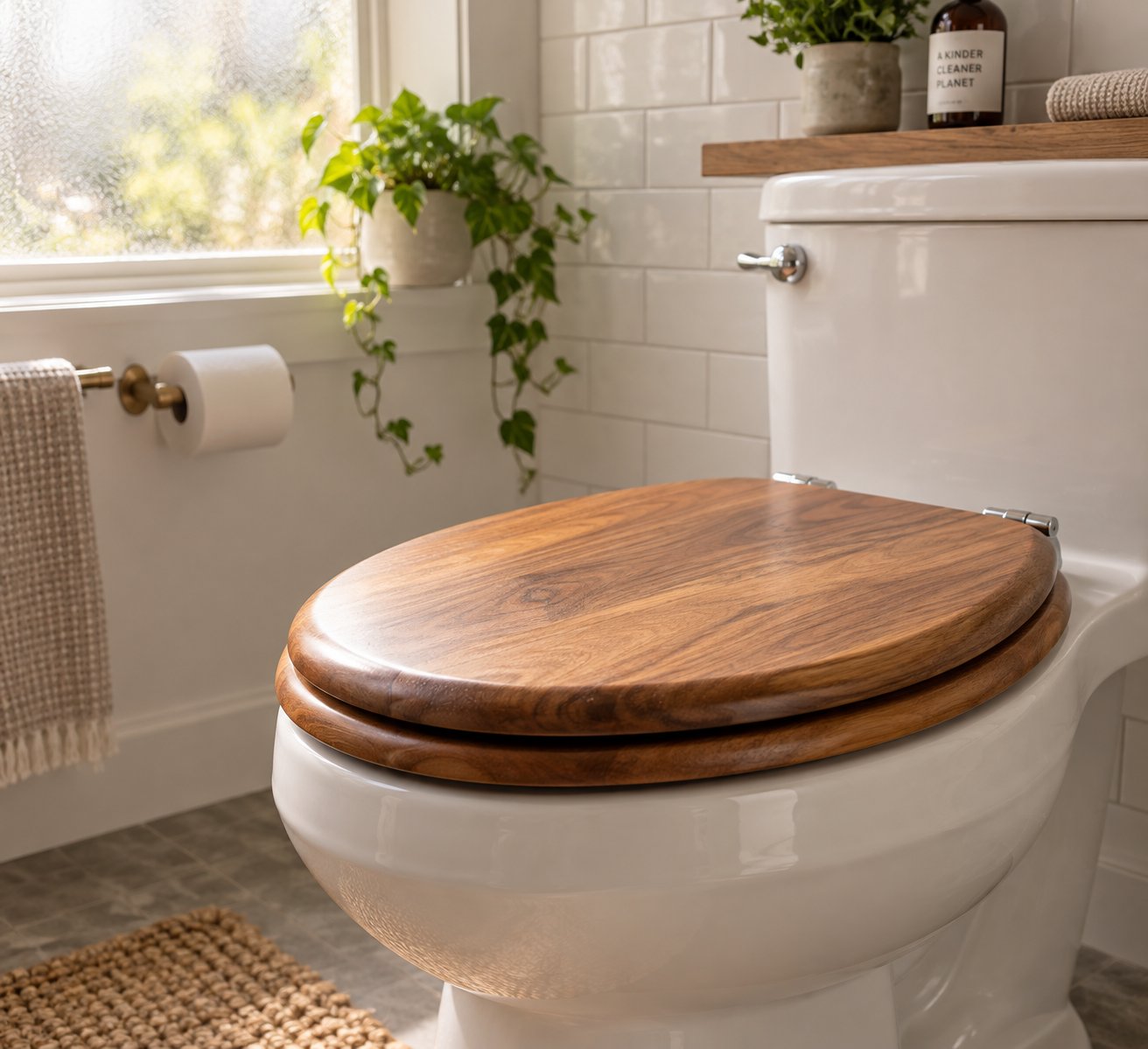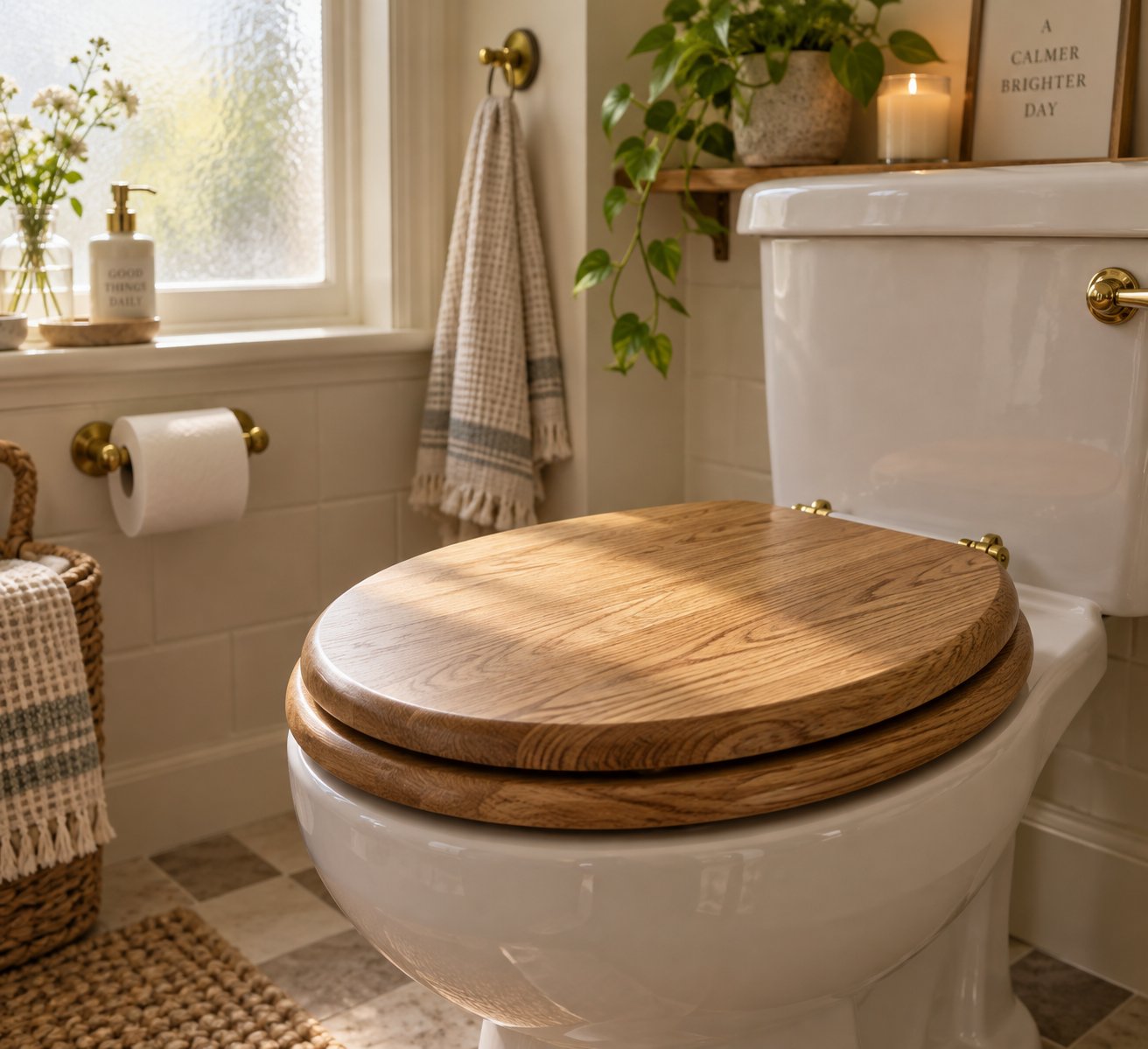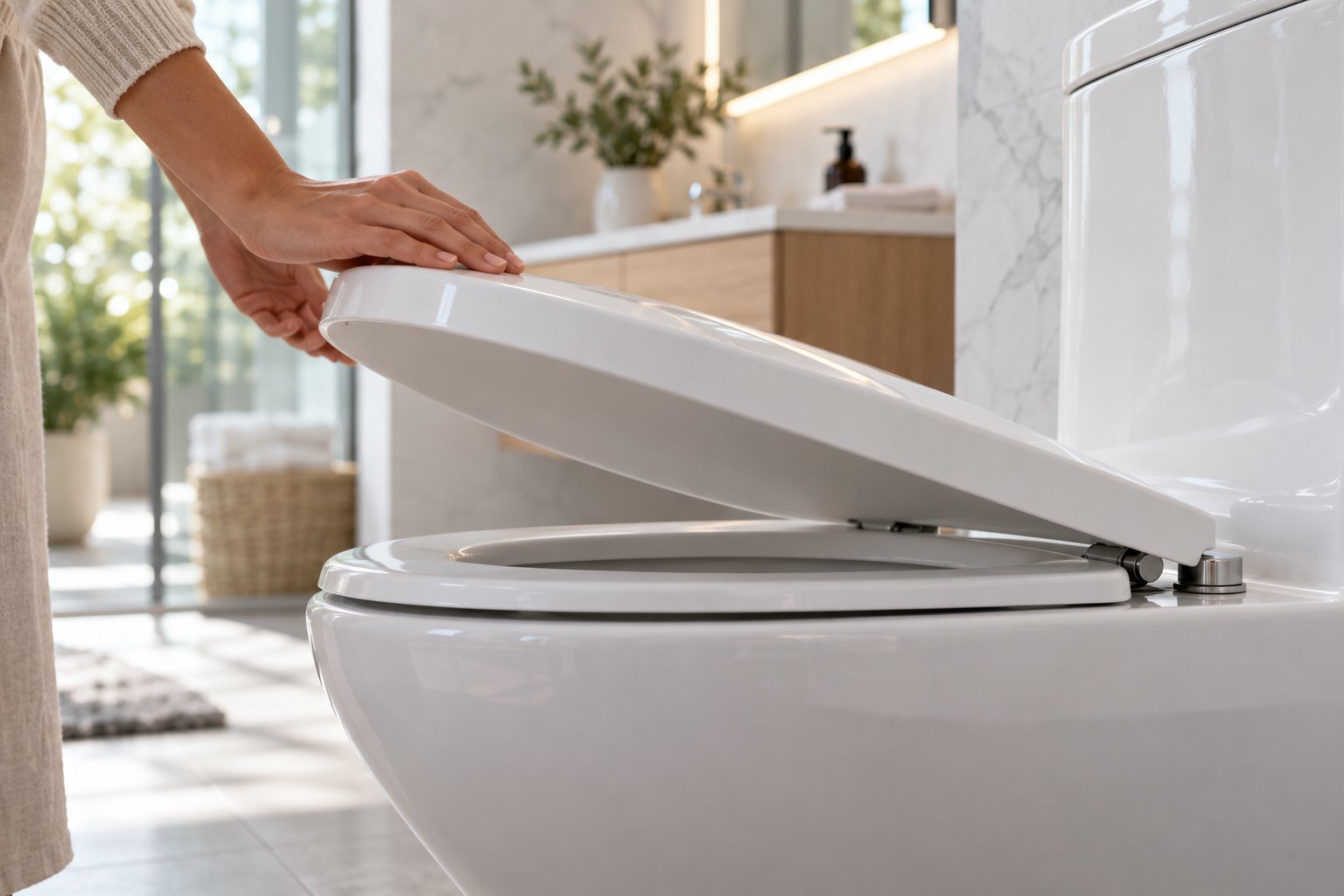
What a Wood Soft-Close Toilet Seat Actually Is
Imagine padding into the bathroom on a cold morning, half asleep, and lowering the toilet lid only to hear it crash down like a thunderclap. That jarring slam is exactly what a soft close wooden toilet seat is designed to eliminate. But what is this product, really, and why does it deserve a closer look?
Defining the Wood Soft-Close Toilet Seat
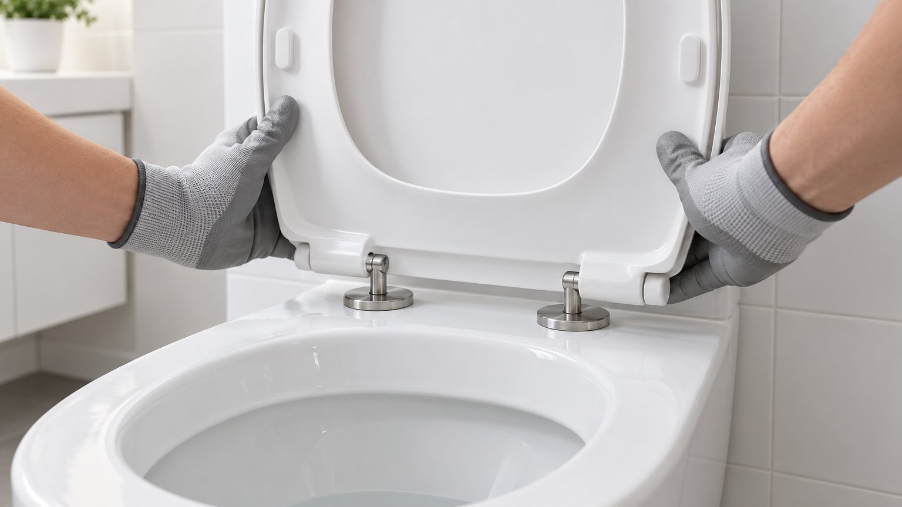
A wood soft-close toilet seat is a seat and lid assembly made from solid wood or a wood-composite material, equipped with a built-in hydraulic or rotary damper hinge that lowers both the lid and the seat ring slowly, quietly, and without slamming.
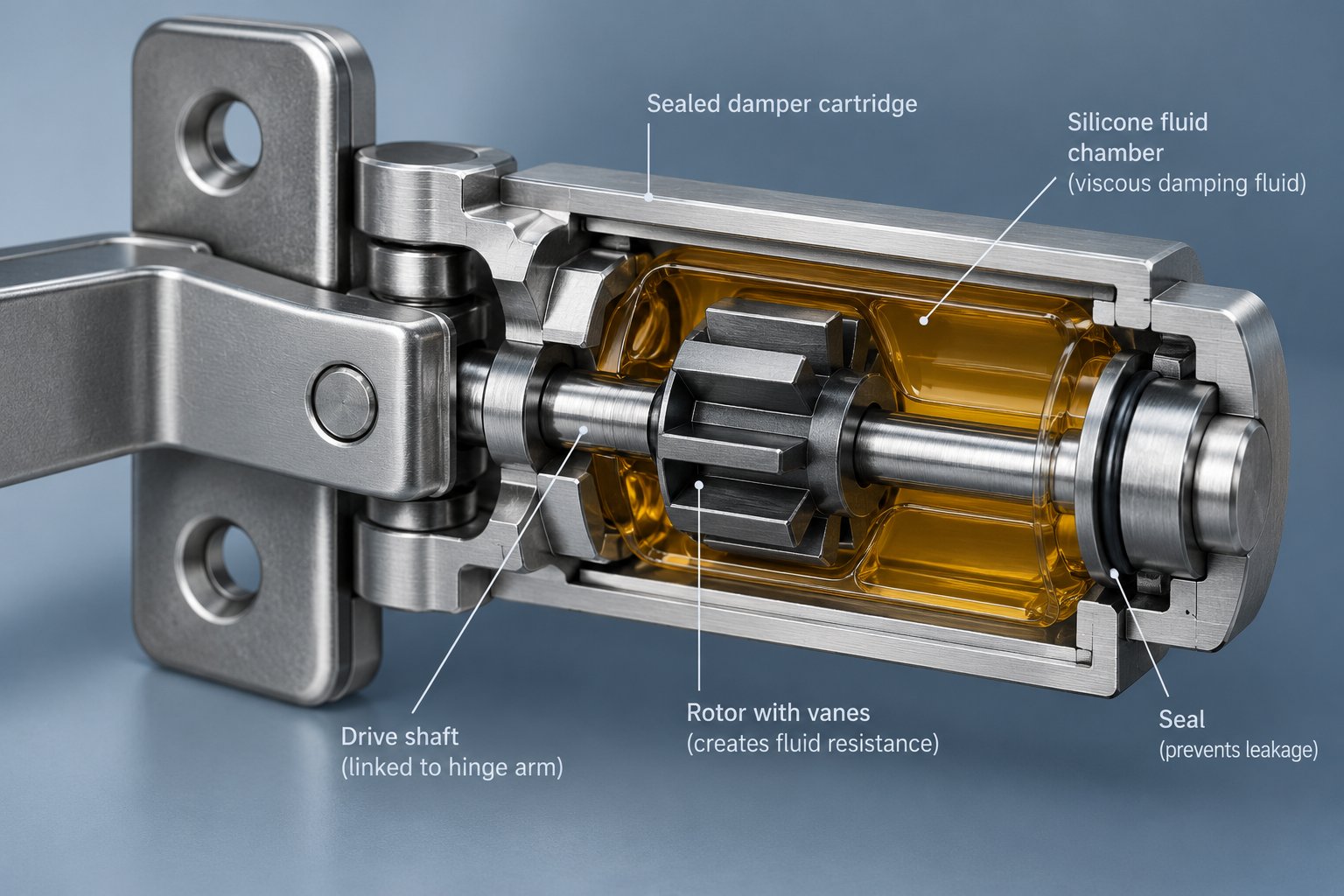
The key mechanism lives inside the hinge. A small rotary damper creates controlled resistance as the lid descends, absorbing the gravitational energy that would otherwise send it crashing onto the bowl rim. The result is a gentle, near-silent close that takes just a few seconds from start to finish. This damping technology is the same principle used in high-end cabinetry and automotive glove boxes, adapted here for the unique weight and dimensions of a wooden WC seat.
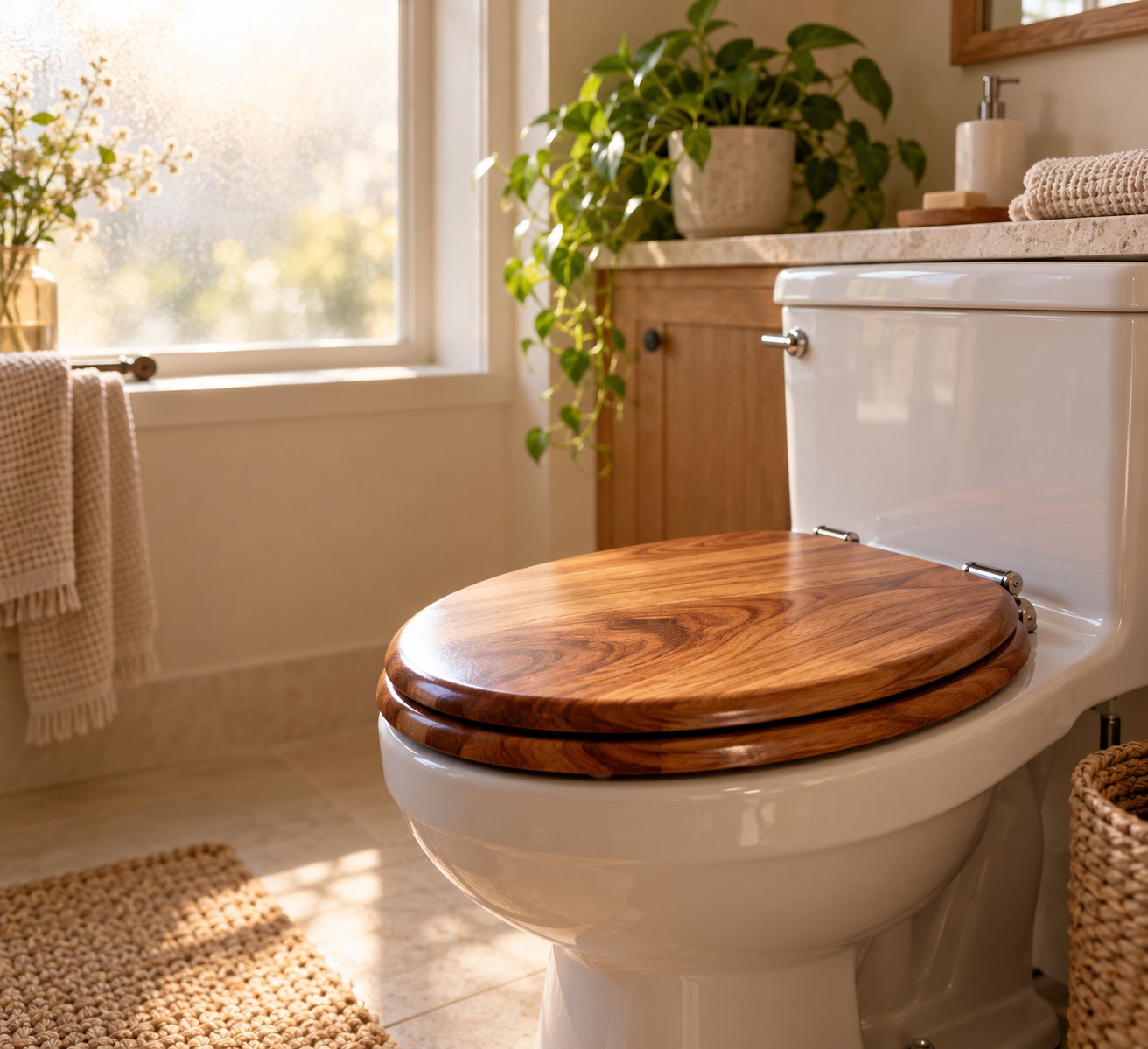
What makes this category special is the intersection of two distinct buyer desires. On one side, you have the warm, natural aesthetic that only solid wood toilet seats can deliver—rich grain patterns, a surface that feels noticeably warmer against skin, and finishes ranging from rustic oak to sleek lacquered walnut. On the other, you get the modern engineering of controlled-descent hardware that protects fingers, reduces wear on the ceramic bowl, and keeps late-night bathroom visits blissfully quiet.
Why This Category Deserves Its Own Guide
Search for this product online and you'll find page after page of shopping listings. What you won't find is an honest, educational breakdown of how these seats differ by material, how the damping mechanism actually works, or how to measure your toilet for a perfect fit. That gap is exactly what this guide fills.
In the sections ahead, you'll learn the real differences between solid hardwood, bamboo, MDF, and molded wood-composite seats. You'll discover why the damper inside a heavier wood seat must be engineered differently than one inside a lightweight plastic lid. You'll also get step-by-step sizing instructions, practical care tips to prevent warping, and clear indicators that tell you when a hinge is wearing out. Every detail is grounded in material science and component engineering rather than marketing copy—because choosing the right seat starts with understanding what you're actually buying.
Soft Close vs Slow Close
You're browsing solid wood toilet seats and one listing says "soft close" while another says "slow close." Are these different technologies? Should one cost more than the other? The short answer is no—and understanding why can save you both confusion and money.
Same Mechanism, Different Marketing Labels
Both phrases describe the identical controlled-descent hinge system. A damper built into the hinge absorbs the kinetic energy of the falling lid and seat ring, converting a potential slam into a gradual, near-silent lowering motion. Whether a manufacturer prints "soft close" or "slow close" on the box, the internal hardware works the same way: viscous fluid inside a rotary damper resists rotation, controlling descent speed over several seconds.
So why do two labels exist? It comes down to emphasis. Brands that highlight quietness tend to favor "soft close" because the word "soft" evokes silence. Brands that want to spotlight the visually smooth lowering action lean toward "slow close" because "slow" communicates the gradual speed. Duravit, for example, markets its entire seat range under the "slow-close function" label, yet the damping behavior is functionally identical to any seat labeled "soft close."
How to Read Product Descriptions Without Confusion
The table below places the two terms side by side so you can see there is no practical distinction worth paying extra for.
| Feature | Soft Close | Slow Close |
|---|---|---|
| Mechanism type | Hydraulic or rotary damper hinge | Hydraulic or rotary damper hinge |
| Noise level | Near-silent descent | Near-silent descent |
| Descent speed | Gradual, several seconds | Gradual, several seconds |
| Functional benefit | Prevents slamming, protects fingers and ceramic | Prevents slamming, protects fingers and ceramic |
| Price premium justified? | No—label alone does not indicate superior hardware | No—label alone does not indicate superior hardware |
Whether you search for a wood toilet seat soft close or a wood toilet seat slow close, you're shopping for the exact same damping feature. The real quality differences between seats come down to the materials used in the seat body and the engineering of the damper itself—factors that matter far more than the marketing phrase on the label. Those material choices are where things get genuinely interesting.
Wood Toilet Seat Materials Compared
Four distinct materials dominate the "wood" toilet seat category, yet most shoppers never realize how differently each one behaves in a humid bathroom environment. Picking the wrong material can mean warping within months, while the right choice delivers years of reliable service. Here is what actually separates them.
Solid Hardwood Seats and Their Trade-Offs
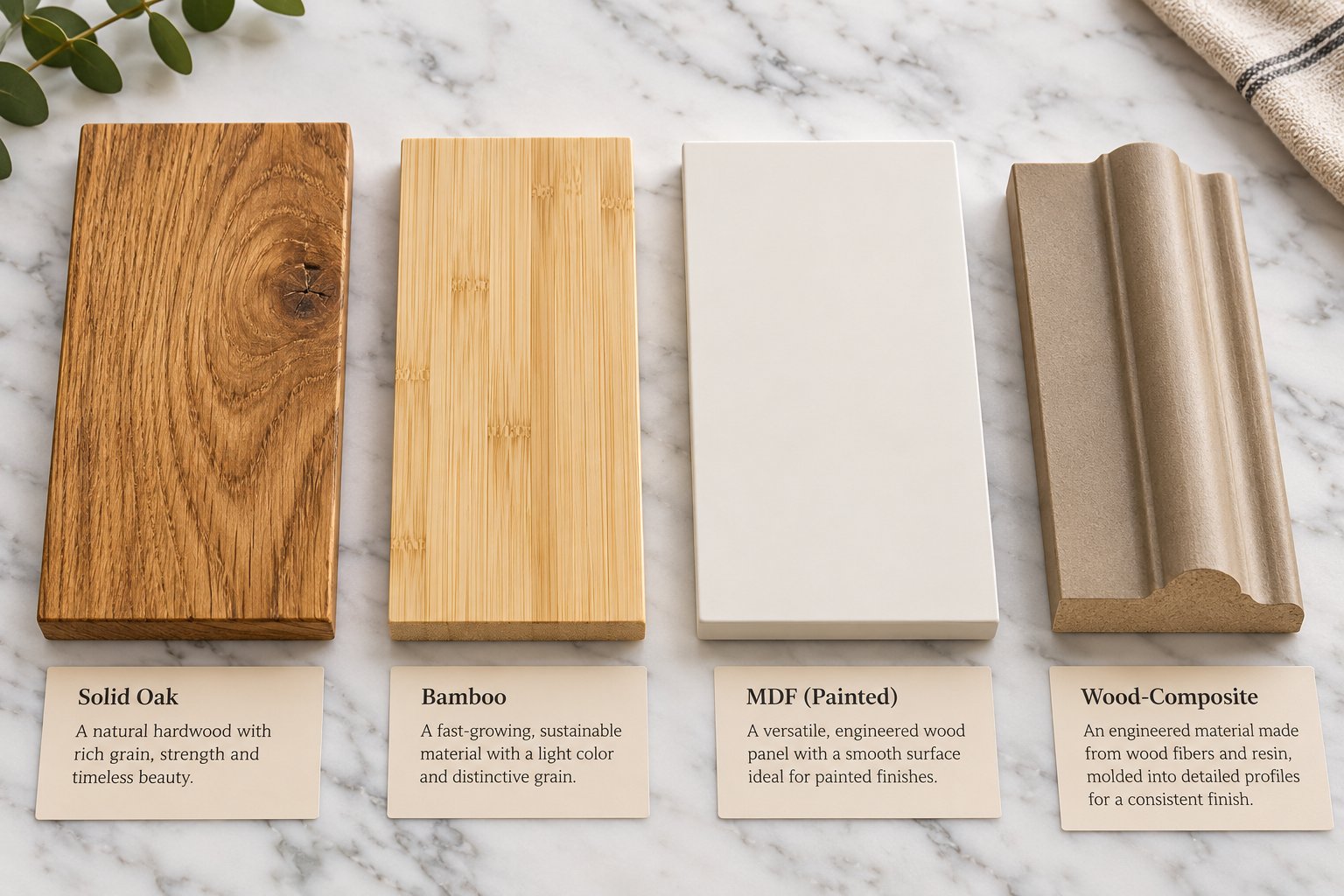
When people picture a soft close wood toilet seat, they usually imagine a thick slab of oak, maple, or walnut with visible grain flowing across the surface. Solid hardwood delivers exactly that premium, tactile experience. Each seat has a unique grain pattern, a satisfying heft, and a warmth that cheaper materials struggle to replicate.
The trade-off? Natural wood is inherently reactive to moisture. Bathroom humidity causes the fibers to expand, and dry spells make them contract. Over time, this cycle can lead to cracking, warping, or finish separation—especially if the protective coating gets scratched or worn. Industry experts note that solid wood seats may experience warping caused by moisture and cracking due to temperature changes, making diligent finish maintenance essential. They also tend to be the heaviest option, which places greater demands on hinge hardware, and they typically sit in the $40 to $120-plus price range.
If you value a one-of-a-kind aesthetic and are willing to keep the finish intact, a hardwood seat can be a stunning addition. Just know it asks more from you as an owner.
MDF, Bamboo, and Molded Wood Alternatives
MDF (Medium-Density Fiberboard) is manufactured by compressing wood fibers with resin under high heat and pressure. The result is a uniformly dense panel with no natural grain direction, which means it resists warping far better than solid lumber. A slow close wooden toilet seat built from MDF typically features a smooth, painted surface that can mimic almost any color or finish. Because the manufacturing process is highly controllable, MDF seats offer consistent quality and stable shapes across large production runs—at a price point roughly half that of solid hardwood.
Bamboo brings a different set of strengths to the table. Technically a grass rather than a tree, bamboo has a naturally tight cellular structure that gives it better inherent moisture resistance than most hardwoods. It is also one of the fastest-renewing raw materials on earth, making it an appealing pick for eco-conscious buyers. Bamboo seats tend to fall in the mid-price range and offer a distinctive, linear grain pattern that suits modern and minimalist bathroom designs.
Molded wood composite seats use compressed wood fibers blended with binding resins—similar to MDF but formed directly into the seat shape inside a precision mold. This process produces a dense, dimensionally stable product with a smooth surface ready for lacquer, paint, or decorative patterns. You'll also encounter wood-veneer seats, which bond a thin layer of real hardwood over a composite core, giving you the look of natural grain with improved structural stability underneath. Both options represent a practical middle ground between the raw beauty of solid wood and the predictable performance of engineered materials.
The table below puts all four materials side by side so you can compare them at a glance.
| Material | Moisture Resistance | Weight | Finish Durability | Warping / Cracking Risk | Relative Cost |
|---|---|---|---|---|---|
| Solid Hardwood (oak, maple, walnut) | Low—needs sealed finish | Heavy | High if finish is maintained | Higher—reactive to humidity cycles | $$$ ($40–$120+) |
| Bamboo | Moderate—naturally tighter cell structure | Medium | Moderate to high | Lower than hardwood | $$ ($30–$75) |
| MDF (Medium-Density Fiberboard) | Moderate—relies on coating integrity | Medium | Good—uniform surface holds paint well | Low—no natural grain direction | $ ($20–$60) |
| Molded Wood Composite / Veneer | Moderate to good | Medium | Good—smooth molded surface | Low—dimensionally stable | $–$$ ($20–$70) |
A few patterns stand out. Solid hardwood commands the highest price and delivers the most character, but it demands the most care. MDF and molded composites sacrifice that natural grain for dimensional stability, consistent quality, and a friendlier price tag. Bamboo carves out a niche by pairing sustainability with above-average moisture performance.
Whichever material appeals to you, one factor remains constant: the slow close wood toilet seat you choose is only as reliable as the damper inside its hinge. A heavier solid-oak lid puts very different mechanical demands on that small piece of hardware than a lighter MDF seat does—a distinction that shapes how the entire soft-close mechanism is engineered from the ground up.
How the Soft-Close Damping Mechanism Works
You release the lid, step back, and it glides down as if an invisible hand is guiding it to the bowl rim. No crash. No bang. Just a smooth, quiet landing that takes about three to five seconds. Sounds like magic? It's actually a compact piece of precision engineering tucked inside the hinge—and understanding how it works explains why not every wooden soft close toilet seat performs equally.
Inside the Damper Hinge Assembly
Picture a tiny sealed cartridge, roughly the size of a thumb, embedded within each hinge post. Inside that cartridge sits a chamber filled with silicone oil and a precision-machined rotor. When you let the lid go, gravity pulls it downward and the hinge begins to rotate. That rotation forces the rotor to push silicone oil through a narrow internal channel. Because the oil can only squeeze through that restricted passage gradually, the entire descent slows to a controlled, even glide.
Think of it like pouring honey through a funnel. The honey wants to flow, but the narrow opening limits how fast it can move. Replace "honey" with high-viscosity silicone fluid and "funnel" with a precision-machined orifice inside a rotary damper, and you have the core operating principle behind every wood soft close toilet seat on the market.
This process converts gravitational kinetic energy—the force that would otherwise slam the lid—into a small amount of heat dispersed harmlessly through the fluid. The result is a near-silent operation that protects fingers, preserves the ceramic bowl rim, and keeps late-night bathroom trips from waking the household.
Some manufacturers use a spring-loaded or friction-based alternative instead of fluid. These mechanical dampers rely on calibrated spring tension or friction discs pressing against a contact surface to create drag. They are less sensitive to temperature changes, but the motion quality tends to feel slightly stepped or jerky compared to the silky descent of a hydraulic system. Most mid-range and premium seats favor hydraulic rotary dampers for their smoother, quieter performance.
Why Wood Seats Need Purpose-Built Damping
Here is where things get critical. A lightweight polypropylene toilet lid might weigh 600 to 900 grams. A solid hardwood or MDF lid? Easily 1,200 to 2,000 grams—sometimes more. That weight difference is not trivial. A heavier lid carries significantly more gravitational energy as it falls, which means the damper must apply substantially greater resistance to achieve the same gentle landing speed.
Three key engineering variables determine whether a damper can handle that extra mass:
- Damper torque — the amount of rotational resistance the damper applies. A damper calibrated for a lightweight plastic lid will be overwhelmed by a heavy oak seat, causing the lid to descend too fast or even slam despite having a "soft close" hinge. Higher torque ratings are essential for wood and MDF assemblies.
- Hinge dimensions — the physical size and geometry of the damper cartridge and hinge body. Larger damper chambers can hold more fluid and accommodate bigger rotors, enabling higher and more consistent resistance across the full closing arc.
- Mounting design — how the hinge attaches to both the seat and the ceramic bowl. A heavier seat places greater shear and torsional loads on the mounting points, so the connection must be engineered to distribute force evenly without loosening over thousands of cycles.
When any one of these variables is mismatched to the seat's actual weight, performance suffers. An under-torqued damper on a heavy red wood toilet seat lets the lid drop with a dull thud instead of gliding. An over-torqued damper on a lighter composite seat causes the lid to hover awkwardly at an angle, refusing to fully close. The engineering has to be specific to the material and mass of the seat it serves.
This calibration challenge is exactly why the damper components inside quality wood seats are not generic, off-the-shelf parts. At the manufacturing level, seat producers work with specialized damper suppliers to match resistance curves to the seat's exact weight and geometry. Tianyun's MDF and metal toilet seat damper solutions, for example, are component-level systems designed specifically for manufacturers building wood, MDF, resin, and metal seat assemblies. Rather than offering a single universal cartridge, these solutions provide configurable parameters—torque rating, hinge dimensions, and mounting design—so each damper can be tuned to the precise mass and pivot geometry of the seat it will live inside.
That component-level precision is what separates a wooden soft close toilet seat that still glides perfectly after three years from one that starts slamming within six months. The seat body gets all the visual attention in a product listing, but the damper inside the hinge is doing the real work—and it has to be engineered for the job from day one.
Of course, even the best-engineered damper can only perform as intended if the seat actually fits your toilet. A mismatch between seat dimensions and bowl shape introduces forces the hinge was never designed to handle, which is why proper sizing and compatibility matter just as much as the mechanism itself.
Sizing and Compatibility for Every Toilet Shape
A beautifully crafted soft close toilet seat wooden or otherwise means nothing if it doesn't actually fit your bowl. Surprisingly, this is where most buyers stumble—they fall in love with a finish or material, click "add to cart," and only discover the mismatch after the package arrives. The good news? Avoiding that headache takes about two minutes and a tape measure.
Round vs Elongated Bowl Shapes Explained
Toilets sold in the United States come in two standard bowl shapes, and every seat—wood, plastic, or composite—is manufactured to match one or the other.
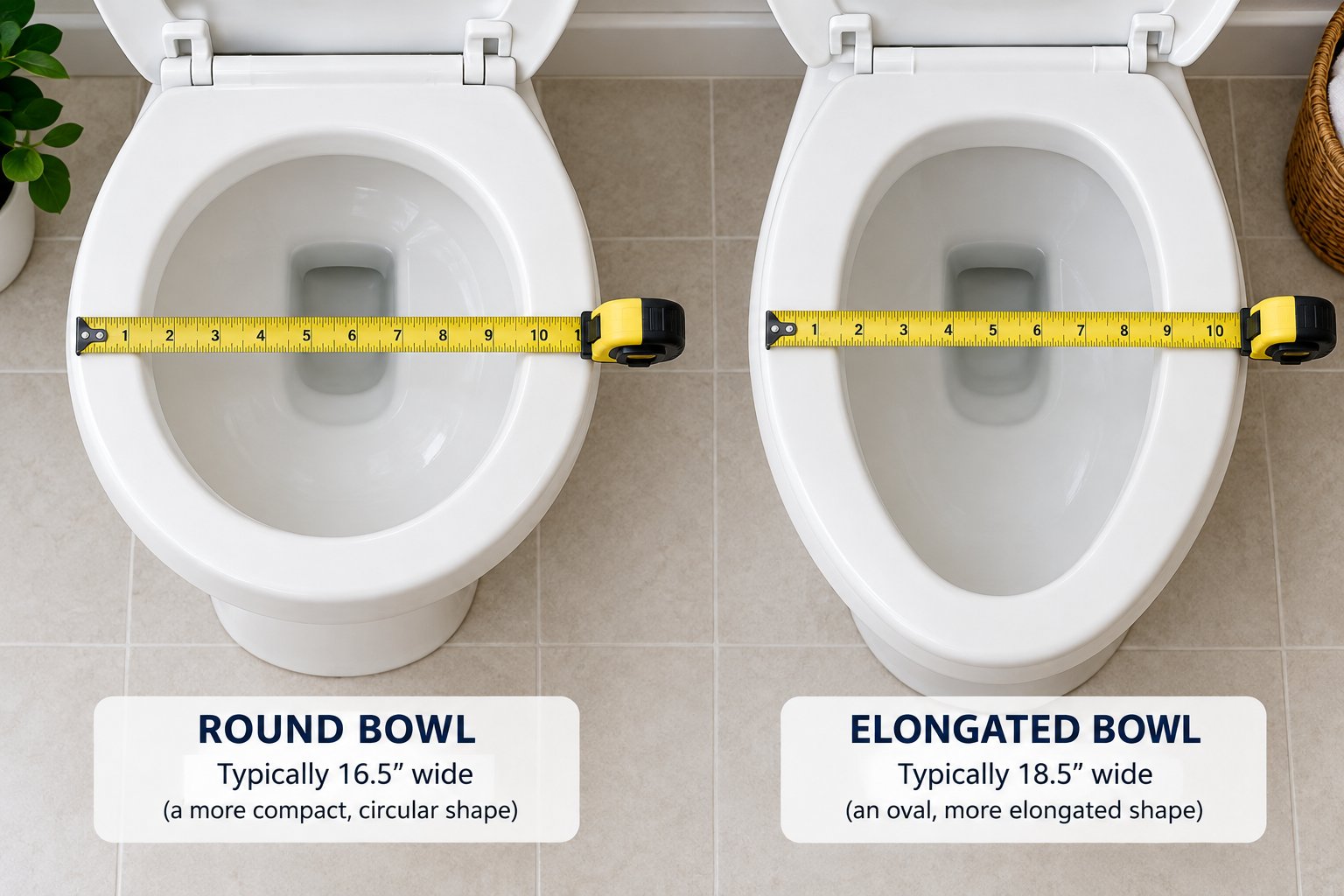
Round bowls measure approximately 16.5 inches from the mounting bolt holes at the back to the front edge of the rim. Looking straight down, the bowl appears nearly circular. These are common in smaller bathrooms, powder rooms, and older homes where conserving floor space was a priority.
Elongated bowls stretch to roughly 18.5 inches from bolts to front rim and have a distinctly oval profile when viewed from above. They offer more seated surface area, which is why most adults find them more comfortable. The majority of new residential toilets installed today are elongated.
Here is the important part: a soft close wood toilet seat elongated model follows the exact same dimensional standards as a plastic elongated seat. Wood seats are not sized differently. If your bowl is elongated, you shop for an elongated seat regardless of the material. The same rule applies to round bowls. Shape compatibility is universal across seat materials—what changes is weight, finish, and damper calibration, not the external footprint.
You might also encounter a third category called "compact elongated." These bowls split the difference, landing around 17 to 17.5 inches from bolts to rim. They occupy roughly the same floor space as a round toilet but typically accept an elongated toilet seat soft close model. If your measurement falls in this range, check the toilet manufacturer's spec sheet before ordering—it will specify which seat shape the bowl was designed to accept.
Measuring Your Toilet for a Perfect Fit
Guessing the shape by eye is tempting, but viewing angles and existing seats can be deceptive. Measure the bowl itself—not the old seat sitting on top of it—because a mismatched seat is exactly the problem you're trying to avoid. Here is the step-by-step process:
- Measure bolt-hole center-to-center distance. Lift or remove the existing seat and locate the two mounting bolt holes at the rear of the bowl. Measure from the center of one hole to the center of the other. The standard spacing is 5.5 inches. Nearly all residential toilets and aftermarket seats—including wood models—use this dimension. If yours differs significantly, you may have a specialty or European-style toilet that requires a manufacturer-specific seat.
- Measure from bolt holes to the front rim. Find the midpoint between the two bolt holes, then run your tape measure straight forward to the outside front edge of the bowl rim. Around 16.5 inches indicates a round bowl; around 18.5 inches points to elongated. This single measurement determines which seat shape you need.
- Check tank-to-hinge clearance. Soft-close hinges on wood seats are often slightly bulkier than standard plastic hinges because they house a damper mechanism calibrated for heavier lids. Measure the gap between the front face of your toilet tank and the center of the bolt holes. A clearance of at least 2 inches is generally recommended to ensure the hinge housing can pivot freely without striking the tank. On one-piece toilets with curved or skirted tank profiles, this clearance deserves extra attention.
- Confirm weight-bearing capacity of existing hardware. Wood and MDF seats are substantially heavier than their polypropylene counterparts—sometimes double the weight. If your toilet's existing mounting bolts are thin plastic, they may flex or fatigue faster under a heavier seat. Many quality wood soft-close seats ship with upgraded stainless steel or brass bolts and reinforced rubber bushings specifically to handle the added load. Before installing, verify that the included hardware is rated for the seat's weight, and replace any lightweight plastic bolts if the new seat doesn't come with sturdier alternatives.
That's the entire process. Four measurements, no special tools beyond a standard tape measure, and you'll know exactly which size and shape to order.
| Measurement | What to Check | Standard Value |
|---|---|---|
| Bolt-hole spacing | Center-to-center distance between rear mounting holes | 5.5 inches |
| Bolt holes to front rim | Midpoint of bolt holes straight to front edge of bowl | ~16.5 in (round) / ~18.5 in (elongated) |
| Tank-to-hinge clearance | Front of tank to center of bolt holes | At least 2 inches recommended |
| Bowl width | Widest point, outer edge to outer edge | ~14 to 14.5 inches (most standard toilets) |
One final detail worth noting: if your measurement lands right between round and elongated—say 17.5 inches—measure again carefully from the exact center of the bolt-hole spacing to the outermost lip of the rim. Still ambiguous? Look up the toilet's model number, usually stamped inside the tank or on the underside of the tank lid, and check the manufacturer's spec sheet. It will list the bowl as either "round front" or "elongated," removing all doubt.
With the right fit confirmed, the next logical question shifts from dimensions to desire—why choose wood at all when plastic is lighter, cheaper, and everywhere? The answer has as much to do with physics as it does with aesthetics.
Why a Wood Slow Close Toilet Seat Feels Better Than Plastic
Physics, not marketing, explains why so many people swear by their wooden seat the moment winter rolls in. That instant jolt you feel sitting on a cold plastic lid at 6 a.m.? It is not just unpleasant—it is a measurable heat-transfer event, and the material beneath you determines how severe it gets.
The Warm-Seat Comfort Factor Explained
Every material has a property called thermal conductivity—a measure of how quickly it moves heat from a warmer surface to a cooler one. When you sit down, heat flows from your skin into the seat. The faster that transfer happens, the colder the surface feels. Polypropylene, the standard plastic used in budget seats, has a thermal conductivity of roughly 0.1 to 0.22 W/m·K. Stainless steel shoots up to around 14.3 W/m·K—about 100 times higher than oak. Wood species like oak, maple, and walnut cluster near the bottom of the scale, typically between 0.12 and 0.17 W/m·K, meaning they pull heat away from your body noticeably slower than even plastic does.
The practical result? Your skin retains its warmth longer on a wooden surface. Within seconds of sitting on an oak or walnut lid, the contact area reaches a comfortable equilibrium temperature. Sit on a polypropylene seat in an unheated bathroom, and you'll feel that familiar cold shock linger while the plastic slowly absorbs enough body heat to stop feeling frigid. The difference is subtle in summer, but on a January morning it is the kind of detail that makes you wonder why you didn't switch sooner.
Heated seats solve this problem too, of course—but they require electricity, cost considerably more, and add installation complexity. A wood slow close toilet seat delivers a noticeably warmer contact feel passively, with zero energy consumption, simply because of the material's natural thermal properties.
Aesthetic Versatility and Sustainability Benefits
Comfort aside, wood offers a design flexibility that plastic struggles to match. A polypropylene seat comes in white, off-white, or occasionally a handful of solid colors. A wooden seat opens an entirely different palette. Natural grain finishes showcase the character of oak, walnut, or bamboo—each piece slightly unique. Stained finishes let you dial in a tone that matches cabinetry or flooring. Painted and lacquered options deliver clean, saturated color with a depth that flat plastic molding simply cannot replicate. And if you lean toward something bold, even a richly stained red wood toilet seat becomes a statement piece rather than an afterthought.
This range means a single product category can serve bathrooms spanning farmhouse rustic, Scandinavian minimalism, mid-century modern, and traditional elegance. Community threads on platforms like Reddit—where the best toilet seat debate resurfaces regularly—often highlight wood's ability to transform a bathroom's visual feel far more than any plastic upgrade could.
There is also a sustainability dimension worth considering. Solid wood and bamboo are renewable materials. A responsibly sourced oak seat at the end of its useful life is biodegradable; a polypropylene seat is not. Bamboo, which can reach harvest maturity in three to five years compared to decades for hardwood, carries an especially strong environmental profile. Even MDF and molded wood-composite seats, while less straightforward to recycle, contain a far higher proportion of natural fiber than petroleum-based alternatives.
Here is a concise snapshot of the advantages that draw buyers toward wood over plastic:
- Thermal warmth — Lower thermal conductivity means the seat feels warmer on contact, especially in cooler months.
- Natural grain aesthetics — Visible wood grain adds visual warmth and uniqueness that molded plastic cannot replicate.
- Finish variety — Natural, stained, painted, or lacquered options let you match virtually any bathroom style.
- Renewable material sourcing — Solid wood and bamboo are grown, not extracted from fossil fuels, supporting more sustainable supply chains.
- Biodegradability — At end of life, wood-based seats break down naturally, unlike polypropylene, which persists in landfills for centuries.
None of these benefits matter for long, though, if the seat's protective finish degrades prematurely. Wood's greatest vulnerability in a bathroom—moisture—is the very thing its coating is designed to keep out. Knowing how to preserve that barrier is what separates a seat that looks beautiful for years from one that warps within a single season.
Maintaining and Caring for a Wood Soft-Close Seat
That protective coating is the single most important line of defense your wooden seat has—and everything you do during routine cleaning either preserves it or chips away at it. The good news? Keeping a wood soft-close toilet seat in top condition is straightforward once you know which products help and which ones quietly cause damage.
Safe Cleaning Products and Techniques
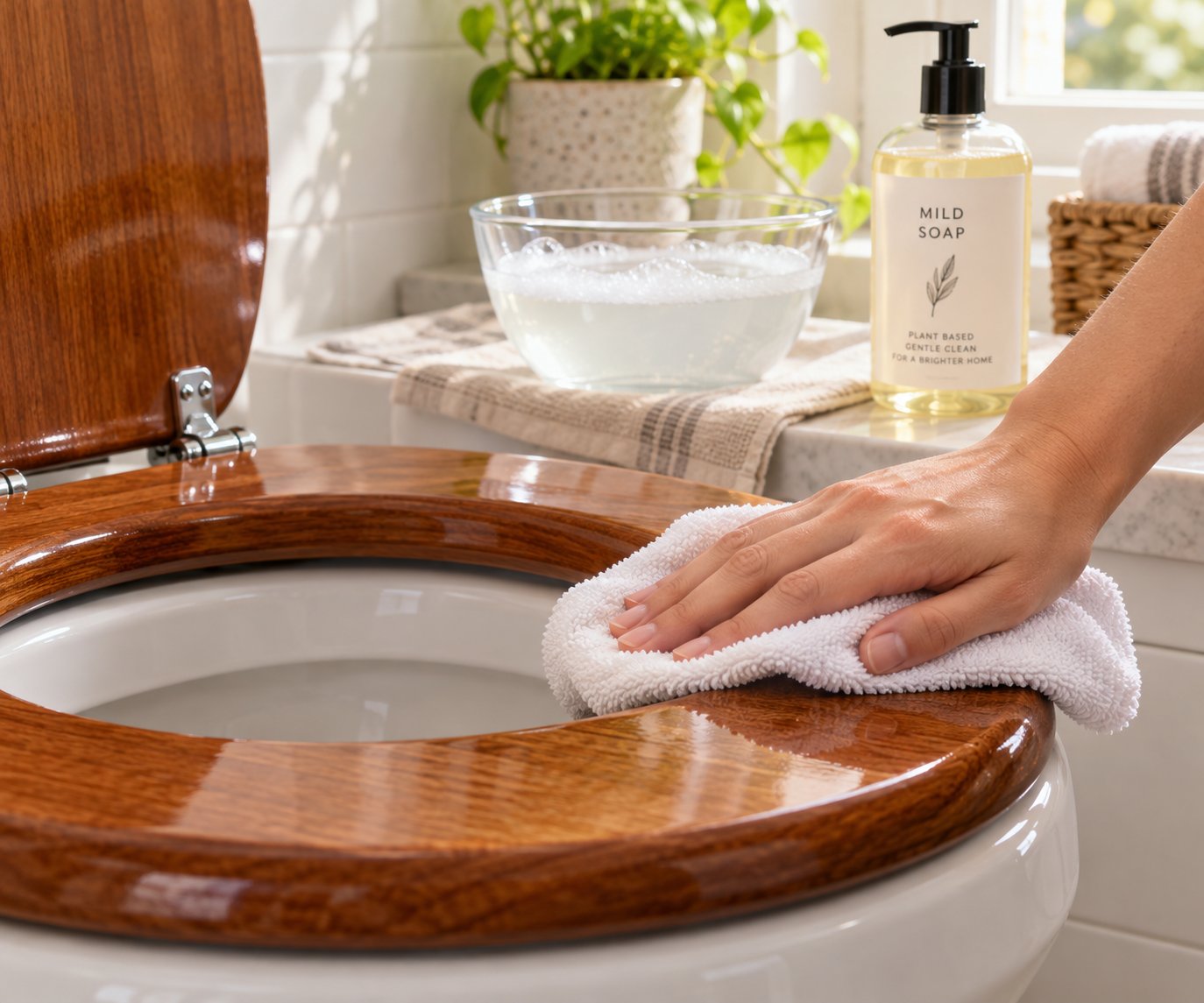
Wondering how to clean a wood toilet seat without ruining its finish? Start simple. A soft cloth dampened with warm water and a few drops of mild liquid soap handles everyday grime, body oils, and dust. For a slightly deeper clean, a pH-neutral bathroom cleaner—one that sits in the 6 to 8 range on the pH scale—lifts residue without attacking the coating beneath.
What you want to avoid is anything harsh, acidic, or abrasive. Bleach and ammonia-based cleaners are the most common culprits. They break down polyurethane and lacquer finishes at a molecular level, creating micro-cracks that let moisture seep into the wood fibers below. Abrasive scrubbing pads and powdered cleansers do physical damage—scratching through the clear coat like sandpaper across a car hood. Even diluted vinegar, a popular "natural" cleaner, deserves caution: its acetic acid can dull and soften certain finishes over time if used repeatedly.
The table below gives you a quick-reference guide to keep near your cleaning supplies.
| Cleaning Agent | Safe for Wood Seats? | Why |
|---|---|---|
| Mild liquid soap + warm water | Yes | Gentle on all sealed finishes; effective for daily cleaning |
| pH-neutral bathroom cleaner | Yes | Formulated to clean without attacking protective coatings |
| Diluted white vinegar | Use with caution | Acetic acid can dull or soften lacquer and polyurethane over repeated use |
| Bleach (sodium hypochlorite) | No | Breaks down finish chemistry; causes discoloration and micro-cracking |
| Ammonia-based cleaners | No | Strips sealant layers; accelerates finish degradation |
| Abrasive scrubbing pads or powder cleansers | No | Physically scratches through the clear coat, exposing raw wood |
One often-overlooked wood toilet seat care tip: always wipe the seat dry after cleaning. Leaving standing water—even clean water—on the surface gives moisture an opportunity to find any imperfection in the finish and work its way underneath. A quick pass with a dry microfiber cloth after each wipe-down takes five seconds and dramatically extends the coating's useful life.
Preventing Warping and Finish Damage
Cleaning habits matter, but the ambient environment matters just as much. Most wood seats rely on a polyurethane, lacquer, or UV-cured coating as their moisture barrier. That barrier is remarkably effective when intact—it is the same technology used on hardwood floors and marine-grade woodwork. The catch is that once it is compromised by scratches, chemical erosion, or simple aging, the exposed wood beneath becomes a sponge for bathroom humidity. Moisture absorption causes fibers to swell unevenly, and that uneven swelling is exactly what triggers warping, cupping, and eventually cracking.
Wooden toilet seat maintenance, then, is really about two parallel habits: protecting the finish from damage and controlling the moisture it has to resist.
On the finish side, inspect the seat periodically—every few months is plenty. Look for areas where the sheen has dulled noticeably, especially around the bolt holes and the front edge where contact is heaviest. If you spot exposed or rough wood, a light application of food-safe mineral oil can act as a temporary moisture block until you refinish or replace the seat.
On the humidity side, ventilation is non-negotiable. A bathroom without a working exhaust fan or an openable window traps steam from showers and baths, holding relative humidity at levels that challenge any wood product over time. Running the exhaust fan during and for at least 15 minutes after a shower is one of the simplest ways to prevent wood toilet seat warping—and it protects every piece of wood in the room, from cabinetry to trim, not just the seat.
Households in naturally humid climates or homes with bathrooms that lack exterior ventilation should consider a small dehumidifier as added insurance. Keeping ambient bathroom humidity below 60 percent gives the finish far less moisture to fight against between cleanings.
With the right cleaning routine and a well-ventilated bathroom, a quality wood soft-close seat can look and perform beautifully for years. The seat body, however, is only half the equation. The damper hinge doing all the mechanical work inside that seat has its own lifespan—and knowing what affects it helps you spot trouble before a gentle glide turns back into a slam.
How Long Do Soft Close Hinges Last?
Your wood soft-close toilet seat glides shut perfectly today. But a year from now? Two years? Every mechanical component has a finite service life, and the damper hinge is no exception. The difference between a seat that performs flawlessly for five-plus years and one that starts slamming after eight months almost always traces back to three variables working behind the scenes inside that small hinge cartridge.
What Determines Hinge and Damper Lifespan
Think of the damper like a set of brake pads on a car. Each time you open and close the lid counts as one cycle—and those cycles accumulate. On average, a quality soft-close mechanism is engineered to deliver roughly 40,000 to 55,000 open-and-close cycles before the damping performance begins to degrade noticeably. In a household where the toilet sees 15 to 20 uses per day, that translates to somewhere between five and ten years of reliable service. A guest bathroom used far less frequently could stretch that figure even further.
Cycle count alone does not tell the whole story, though. Three interconnected factors shape how quickly those cycles wear the mechanism down:
- Seat weight. This is the single biggest stress multiplier. A solid oak or walnut lid weighing 1,500 grams or more generates substantially more gravitational force per cycle than a lightweight polypropylene lid at 700 grams. That extra force means the silicone fluid inside the damper works harder on every single close, the rotor endures greater shear stress, and the internal seals face more pressure. Over tens of thousands of cycles, that difference compounds. Heavier seats burn through damper life faster—period.
- Damper quality. Not all dampers are created equal. The precision of the internal machining, the grade of silicone fluid used, and the quality of the seals that prevent fluid leakage all vary between manufacturers. A damper with looser machining tolerances may feel fine initially but degrade faster as internal wear allows fluid to bypass the rotor instead of flowing through the controlled channel. The cycle-life testing protocols used in private-label toilet seat programs exist precisely because a cycle-count claim is meaningless without defined test conditions—opening angle, closing speed, load, temperature, and pass/fail criteria all affect whether that 50,000-cycle figure holds up in real-world use.
- Usage habits. Forcing the lid shut manually instead of letting the damper do its job introduces shock loads the mechanism was never designed to absorb. Similarly, resting heavy objects on a raised lid or allowing children to push the lid back past its intended opening angle stresses both the damper and the hinge pivot. Gentle, hands-off closing preserves damper life; impatient slamming shortens it dramatically.
This is also why some seats age gracefully while others deteriorate quickly—it often comes down to whether the damper was properly matched to the seat at the manufacturing stage. Seat producers who work with specialized component suppliers can select dampers with torque ratings, hinge dimensions, and mounting designs calibrated to the exact weight and geometry of each seat model. Tianyun's configurable damper solutions for wood, MDF, resin, and metal seat assemblies illustrate this approach: rather than offering a one-size-fits-all cartridge, the system allows manufacturers to specify the torque curve and mounting configuration that matches each seat's mass. A seat built with that level of component-to-product alignment simply starts life with a longer runway of reliable performance.
Signs of Wear and How to Replace a Damper
Even the best-engineered damper will eventually show its age. Recognizing the early warning signs lets you act before the seat reverts to full-on slamming—and potentially cracks the ceramic bowl rim or pinches a finger in the process. Watch for these toilet seat damper wear signs:
- Faster descent speed. The lid used to take four or five seconds to close; now it reaches the bowl in two. This is the most common early symptom. It indicates the internal fluid is losing viscosity, the seals are allowing bypass flow, or the rotor channels have widened from wear.
- Inability to hold the lid at an angle. A healthy damper lets you raise the lid to about 60 degrees and release it, watching it pause briefly before beginning its controlled descent. If the lid immediately drops without hesitation, the damper's resistance has fallen below its functional threshold.
- Lateral play or wobble in the hinge. Side-to-side movement when you gently push the lid means the hinge pivot or its mounting points have loosened. This can stem from worn bushings inside the hinge body, fatigued mounting hardware, or micro-cracks in the hinge plate itself.
- Creaking, clicking, or grinding sounds. A smooth damper operates silently. New noises during closing suggest internal components are making contact they shouldn't—worn seals, dried lubricant, or debris inside the hinge mechanism.
- Uneven closing between lid and seat ring. On seats where both the lid and the ring have independent dampers, one side may fail before the other. If the lid still glides but the seat ring drops freely—or vice versa—one damper has reached the end of its usable life.
Here is the reassuring part: spotting these symptoms does not mean you need to throw the entire seat away. On many wood and MDF seats, the damper or hinge assembly is a modular component that can be removed and replaced independently. A soft close toilet seat hinge replacement typically involves loosening the mounting bolts, sliding out the old hinge unit, inserting the new one, and retightening. Some models feature quick-release buttons that let you lift the seat off the hinge plate without tools, making access even simpler.
Before ordering a replacement, note the exact seat model and manufacturer. Hinge configurations—damper type, bolt spacing, cartridge diameter, and mounting style—vary between brands and even between product lines within the same brand. Using a hinge matched to your specific seat ensures the torque rating aligns with the lid weight, which is the whole reason the original damper was selected in the first place.
Choosing to replace soft close toilet seat hinge components rather than discarding a perfectly good wooden seat body is both cost-effective and environmentally responsible. A quality hardwood or MDF seat may have decades of structural life left in it; only the moving parts wear out. Swapping a $15 to $30 hinge assembly is far preferable to sending an otherwise beautiful seat to landfill and spending $60 to $120 on a full replacement.
Knowing when and how to refresh the hardware keeps your seat performing like new. Still, longevity depends on more than just the hinge—it also depends on whether a wood soft-close seat was the right choice for your specific household and bathroom conditions in the first place.
Is a Wooden Toilet Seat Worth It? Who Should and Shouldn't Choose One
Every material has a sweet spot—a set of conditions where it thrives and another where it struggles. A wooden toilet seat for a home bathroom can be a stunning, comfortable upgrade in the right setting, yet a frustrating choice in the wrong one. Honest self-assessment before you buy saves money, prevents regret, and ensures the seat delivers the experience you're expecting.
Ideal Scenarios for Choosing Wood
Some households and bathrooms practically beg for a wood soft-close seat. If several of these descriptions sound like your situation, you're in the sweet spot.
You prioritize thermal comfort. Cold mornings, poorly heated bathrooms, or simply a strong dislike of the plastic cold-shock effect all point toward wood. As covered earlier, wood's lower thermal conductivity makes it feel noticeably warmer on contact—no electricity required. If comfort ranks high on your list when weighing wood vs plastic toilet seat pros and cons, wood wins this round decisively.
Your bathroom has adequate ventilation. A working exhaust fan, an openable window, or both mean humidity levels drop back to normal shortly after showers and baths. Under these conditions, the protective finish on a wood seat faces far less sustained moisture stress. Well-ventilated bathrooms are where wood products last longest, and a quality seat can easily deliver a decade of reliable service.
Your household appreciates the quiet-close feature. Adults-only homes, families with older children, or anyone who shares a wall with a light sleeper will notice the difference immediately. The controlled-descent hinge eliminates slamming entirely—no startling crashes at midnight, no risk of pinched fingers when the lid drops. Older children who can follow the "lift and release" habit get the full benefit without stressing the mechanism.
You're renovating toward a natural or rustic aesthetic. Whether you're building a farmhouse-inspired bathroom, a Scandinavian-minimal space, or a warm contemporary design, wood grain and rich stained finishes add a layer of visual warmth that plastic simply cannot replicate. A carefully chosen wooden seat ties together cabinetry, flooring, and trim details in a way that makes the entire room feel cohesive and intentional.
When Another Material Might Serve You Better
Honesty builds trust, and here it is: a wood soft-close seat is not the best toilet seat material for every bathroom. Certain conditions tilt the equation firmly toward alternatives.
Very high-humidity bathrooms without exhaust fans. If your bathroom lacks mechanical ventilation and stays steamy for long stretches—think small interior bathrooms with no windows—the finish on a wood or MDF seat faces accelerated degradation. Industry data suggests that lifespan can drop to five to eight years in high-humidity environments compared to ten-plus years under optimal conditions. A thermoset or polypropylene seat, which absorbs zero water, handles these conditions without complaint.
Households with very young children. Toddlers are unpredictable. They stand on seats, slam lids with force the damper was never designed to absorb, and treat bathroom fixtures like playground equipment. Wood is rigid—it resists flex but can crack under concentrated point loads, like a small foot pressing down on the edge of a raised lid. Flexible polypropylene bends under the same stress without fracturing. Until the household exits the toddler phase, a durable plastic seat is the more practical, worry-free option.
Commercial or high-traffic restrooms. Office buildings, restaurants, and public facilities put seats through dozens of cycles per day from users with wildly different habits. Industrial-grade plastic withstands chemical sanitizers, high cycle counts, and rough handling far better than a finished wood surface. The maintenance overhead of protecting a wood finish in a commercial setting simply is not worth it.
Tight budgets with no room for upkeep supplies. A quality wooden seat costs two to three times more than a comparable plastic model. It also requires gentler cleaners and periodic inspection. If budget is the primary constraint and you prefer a "set it and forget it" approach to bathroom fixtures, plastic delivers reliable performance with virtually no special care.
Community forums on Reddit regularly surface these same trade-offs from homeowners sharing real-world experience. A recurring theme? People who matched the seat material to their actual bathroom conditions—not just their aesthetic preference—report the highest long-term satisfaction.
The table below distills this honest assessment into a scannable side-by-side comparison so you can identify which column sounds more like your situation.
| Wood Soft-Close Is a Great Fit | Consider an Alternative |
|---|---|
| Bathroom has a working exhaust fan or window | Bathroom lacks mechanical ventilation and stays humid |
| You value thermal warmth and natural aesthetics | You prioritize minimal maintenance over appearance |
| Adults-only or older-children household | Toddlers or very young children in the home |
| Residential use with moderate daily cycles | Commercial or high-traffic public restroom |
| Renovating toward rustic, natural, or warm design themes | Ultra-modern or clinical aesthetic where plastic blends better |
| Willing to use mild cleaners and dry the seat after cleaning | Prefer bleach-and-forget cleaning with no special care |
| Budget accommodates the $40–$120+ price range | Budget is under $30 and replacement cost matters most |
If you landed firmly in the left column, a wood soft-close seat is likely to reward you with years of quiet comfort and visual appeal. If you found yourself nodding along with the right column, there is absolutely nothing wrong with choosing a high-quality plastic alternative—it is simply a better match for your circumstances. The best toilet seat material for any bathroom is the one aligned with how that bathroom is actually used, ventilated, and maintained—not the one that looks best in a product photo.
Frequently Asked Questions About Wood Soft-Close Toilet Seats
1. Is there a difference between a soft close and a slow close wood toilet seat?
No functional difference exists between the two. Both terms describe the same hydraulic or rotary damper hinge that lowers the lid gradually instead of letting it slam. Brands that emphasize quietness tend to label it 'soft close,' while those highlighting the visual lowering motion prefer 'slow close.' The mechanism type, noise level, and descent speed are identical, so shoppers should compare damper quality and seat material rather than paying a premium based on label wording alone.
2. How long does a soft-close hinge last on a wooden toilet seat?
A well-engineered soft-close damper typically delivers between 40,000 and 55,000 open-close cycles before performance noticeably degrades. In a household averaging 15 to 20 uses per day, that translates to roughly five to ten years. However, heavier solid-wood lids place more stress on the damper per cycle than lighter MDF or plastic lids, which can shorten that window. Damper quality, internal seal integrity, and gentle usage habits also play significant roles in overall lifespan.
3. What is the best wood material for a soft-close toilet seat?
It depends on your priorities. Solid hardwood like oak or walnut offers premium grain aesthetics and thermal warmth but requires diligent finish maintenance to prevent moisture damage. MDF provides excellent dimensional stability, a uniform surface for painted finishes, and a lower price point. Bamboo stands out for natural moisture resistance and strong sustainability credentials. Molded wood composites and wood-veneer options deliver a middle ground, combining real-wood appearance with the predictable performance of engineered materials. Matching the material to your bathroom's ventilation and your willingness to maintain the finish is key.
4. Can I replace just the soft-close hinge without buying a whole new seat?
Yes, on many wood and MDF seats the damper hinge is a modular component that can be swapped independently. Replacement typically involves loosening the mounting bolts, sliding out the old hinge unit, inserting the new one, and retightening. Some models feature quick-release buttons for tool-free removal. Always match the replacement hinge to your exact seat model, because torque rating, cartridge diameter, and mounting style must align with the lid's weight. Manufacturers like Tianyun offer configurable damper solutions at the component level so seat producers can ensure precise torque-to-weight matching from the design stage.
5. How do I prevent a wood toilet seat from warping?
Warping happens when moisture penetrates the protective finish and causes wood fibers to swell unevenly. Prevent it by cleaning only with mild soap and water or a pH-neutral bathroom cleaner, avoiding bleach, ammonia, and abrasive pads that damage the coating. Always wipe the seat dry after cleaning instead of leaving standing water on the surface. Ensure your bathroom has a working exhaust fan and run it during and for at least 15 minutes after showers. Periodically inspect the finish for dull spots or exposed wood, and keep ambient humidity below 60 percent for best results.
Apply This Insight to Your Project
Tell us what you are building and how the topic “That Cold Seat Shock Ends Here: Wood Toilet Seat Soft Close” relates to your application. Our engineering team can help evaluate the next step.