What a Bidet Toilet Seat Lid Actually Does and Why It Matters
When you shop for bidet toilet seats, nearly every review, comparison guide, and product listing zeroes in on the same things — water pressure, nozzle quality, heated seat comfort, and remote controls. The lid? It barely gets a footnote. Yet it is one of the first things you touch, the last thing you close, and the component most likely to cause frustration if it does not match your toilet, your household, or your expectations.
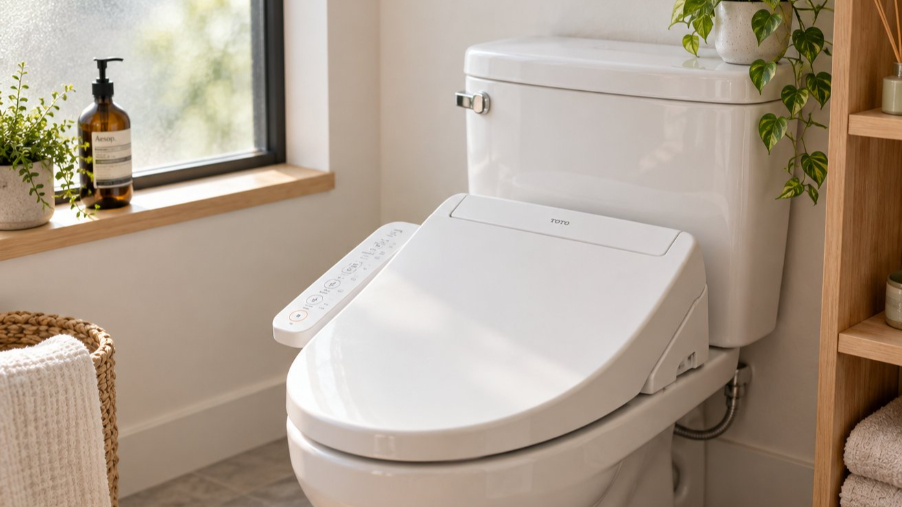
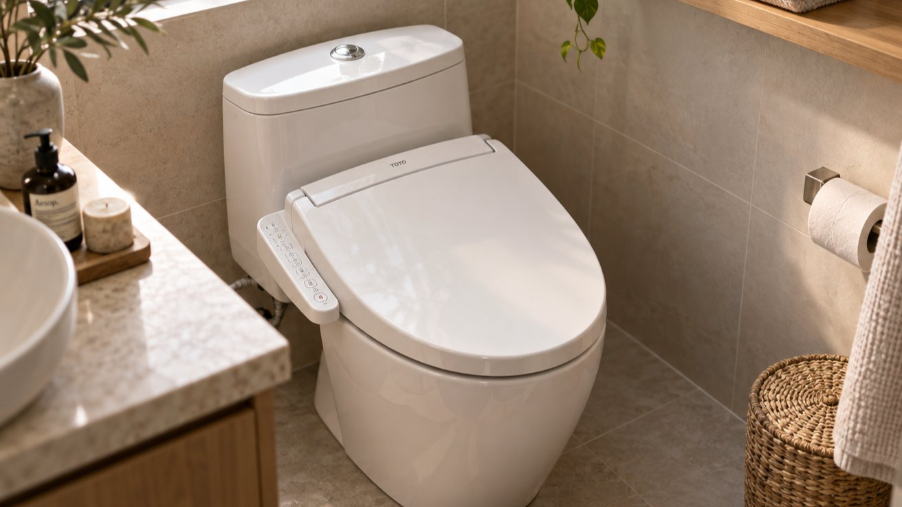
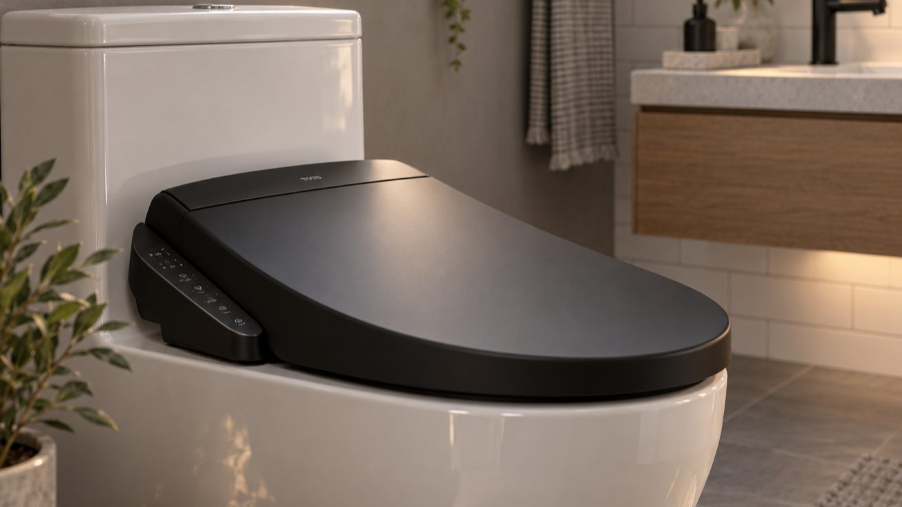
A bidet toilet seat lid is the topmost hinged cover that folds down over both the seat ring and the toilet bowl. Think of it as the "roof" of the entire assembly. On a standard toilet, the lid is a simple shell — a flat or gently contoured piece of plastic that flips up and down. On a bidet-equipped toilet, that same lid takes on a significantly more demanding role, and understanding why makes all the difference when choosing a bidet seat that truly fits your life.
What Exactly Is a Bidet Toilet Seat Lid
It helps to draw a clear line between the lid and the seat ring. The seat ring is the open, U-shaped or O-shaped surface you actually sit on. The lid sits above it, covering the bowl opening when the toilet is not in use. On a bidet WC seat, the lid may house or shield electronic components, nozzle mechanisms, wiring harnesses, or even touch-sensitive control panels, depending on the model. As TOTO's bidet seat overview notes, electric bidet seats can include warm water systems, air dryers, heated seat elements, and self-cleaning wands — all of which occupy space directly beneath or adjacent to the lid surface.
These functional demands make bidet lids fundamentally different from their standard counterparts. A regular toilet lid is essentially a passive cover. A bidet seat lid is an active part of an engineered system — one that must protect delicate internals, align with specific hinge hardware, and withstand daily use without cracking, warping, or interfering with the features beneath it.
Why the Lid Matters More Than Most Buyers Realize
Imagine purchasing a premium bidet seat only to discover the lid does not rest flat against your one-piece toilet tank. Or that your toddler sits on it and the surface flexes dangerously. Or that a yellowing lid cannot be replaced because no aftermarket part fits your model. These are real scenarios — and they all trace back to the lid.
The lid is where engineering constraints, daily usability, and bathroom hygiene converge — and most buyers never think about it until something goes wrong.
This guide treats the lid as its own subject rather than an afterthought. In the sections ahead, you will find a detailed look at structural differences between bidet and standard lids, a full taxonomy of lid types — from manual to auto-open — plus coverage of sittability engineering, hygiene implications tied to lid closure, toilet compatibility, long-term maintenance, and child safety. Whether you are upgrading your own bathroom or evaluating bidet toilet seats for a larger project, the lid deserves the same scrutiny as the bidet seat itself.
And that scrutiny starts with the physical construction — because what is inside and underneath the lid determines nearly everything about how it performs.
How Bidet Seat Lids Differ From Standard Toilet Lids
Pick up a standard toilet lid and you will notice something immediately — it is a hollow, lightweight shell with almost nothing going on inside. It is just a cover. A toilet seat with bidet functionality flips that simplicity on its head. The lid becomes a protective enclosure for a surprisingly dense collection of components, and that single difference cascades into changes across thickness, hinge engineering, and material selection.
Thickness and Internal Component Accommodation
A standard toilet lid is typically around 10 to 15 millimeters thick — thin enough to look sleek and light enough to swing open with one finger. A bidet seat lid, by contrast, often measures 40 to 70 millimeters or more in depth. Why the dramatic jump? Because directly beneath that lid surface, manufacturers need to route internal wiring, seat heating elements, nozzle housings, water channels, and sometimes even small control boards.
You will notice the visual impact right away. A toilet seat for bidet use sits noticeably higher on the bowl than the original seat, and the lid adds even more height. On some models — particularly feature-rich units like the HD-7500 bidet toilet seat category — the lid profile is thick enough that it may not rest flush against the toilet tank when opened. This is especially common with two-piece toilets where the tank sits close to the bowl rim. The result can be a lid that leans slightly forward when propped open, which feels unstable and can eventually stress the hinge mechanism.
Hinge Mechanisms and Quick-Release Systems
Standard toilet lids rely on simple pin-and-post hinges — two plastic or metal pins that slot into brackets bolted to the bowl. They are cheap, universally sized, and easy to replace. Bidet seat lids operate in a completely different league.
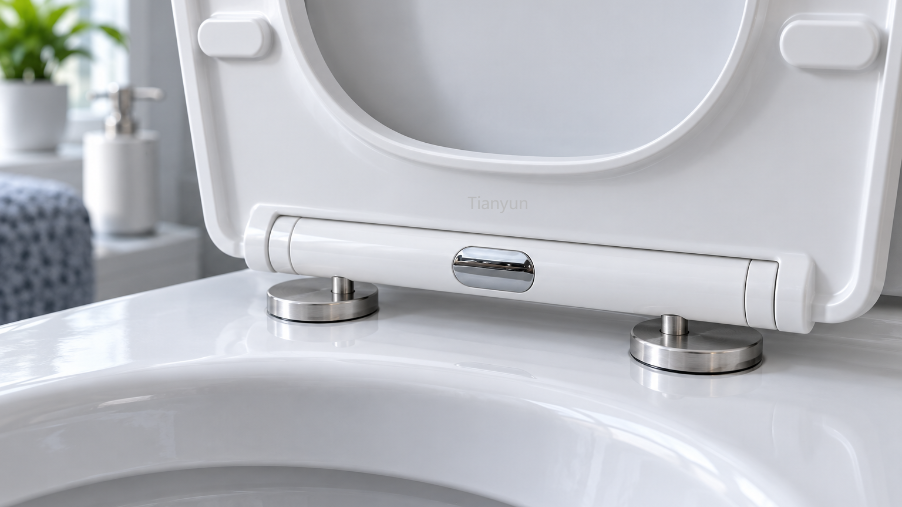
Because the entire bidet seat must connect to the toilet securely while still allowing periodic removal for cleaning, most bidet lids use proprietary mounting plates — sometimes called catch plates. According to Home Depot's bidet installation guide, the bidet seat slides onto a mounting plate aligned over the bolt holes, and a release button allows you to detach it from the plate. This quick-release design is essential for hygiene maintenance, giving you access to the area beneath the seat and around the bolt holes where grime tends to accumulate.
Hinge quality matters far more here than on a standard lid. Bidet seat hinges must support a heavier lid, resist wobble under the added weight of internal electronics, and endure thousands of open-close cycles without loosening. Many mid-range and luxury models use stainless steel hinge bodies or reinforced plastic with metal cores. Beewill's hinge system overview illustrates the range of approaches — from economical plastic hinges to solid stainless steel bar hinges and luxury soft-close quick-release mechanisms, each designed for different durability and price requirements.
The table below highlights the key structural contrasts:
| Feature | Standard Toilet Lid | Bidet Toilet Seat Lid |
|---|---|---|
| Thickness | 10 - 15 mm | 40 - 70+ mm |
| Hinge Type | Simple pin-and-post | Proprietary mounting plate with quick-release |
| Weight | 0.5 - 1 kg | 1.5 - 3+ kg (lid and seat combined) |
| Material | Basic polypropylene or thermoset plastic | ABS plastic, polypropylene, or reinforced composites |
| Internal Components | None | Wiring, heating elements, nozzle housing, water channels |
| Typical Lifespan | 5 - 10+ years | 5 - 8 years (dependent on electronic component longevity) |
Material Constraints and Weight Considerations
Here is where the engineering gets tricky. A bidet lid needs to be light enough that the hinges do not fatigue prematurely, yet rigid enough to protect the electronics and mechanical assemblies housed inside or directly beneath it. That is a genuine tension — and it shapes every material decision a manufacturer makes.
Entry-level bidet seats commonly use ABS plastic for the lid, which is affordable and reasonably durable but can feel hollow and is more prone to surface scratching. Higher-end models often step up to polypropylene or blended composites that offer better impact resistance and a more solid feel. As BidetKing's bidet class comparison notes, build quality shifts meaningfully between tiers — entry-level seats tend to use the most basic materials with non-sittable lids, while luxury models incorporate stronger hinges, stainless steel nozzles, and reinforced lid construction.
Weight also feeds back into usability. A heavier lid with premium materials feels more substantial and stable, but it demands a hinge system that can handle repeated use without sagging. A lighter lid is gentler on the hinges but may flex or feel flimsy under hand pressure. Manufacturers walk this line carefully, and the balance they strike is one of the clearest indicators of overall product quality.
These structural differences are not just engineering trivia — they directly determine what a lid can and cannot do, including whether it can safely bear your weight. That distinction between sittable and non-sittable lids is one of the most misunderstood aspects of bidet seat design.
Every Type of Bidet Toilet Seat Lid Explained
Most shopping guides lump bidet toilet lids into a single generic category — as if every lid works the same way. In reality, the lid sitting on top of your bidet seat falls into one of several distinct types, each with different mechanics, different trade-offs, and different implications for how you use your bathroom every day. Whether you are comparing an elongated bidet toilet seat to a compact round model or weighing a budget pick against luxury toilet seats with all the bells and whistles, the lid type shapes your experience more than you might expect.
Here is the full breakdown, organized by both function and mechanism.
Sittable Versus Non-Sittable Lids
This is the single most misunderstood distinction in bidet seat design — and the one most likely to cause real problems if you get it wrong.
Most bidet toilet seats do not have lids that can support the weight of a person sitting on them. The reason comes down to what is packed inside the seat body. Nozzle assemblies, control boards, water heating elements, and wiring harnesses all occupy space beneath and behind the lid surface, creating hollow sections and structural voids. A lid spanning those gaps is essentially a thin shell over empty pockets — strong enough to close the toilet, but nowhere near strong enough to function as a seat.
As Clear Moon Bidets explains, the lids on most bidet seats are lightly built and come with explicit warnings not to sit on them. Putting weight on the lid can flex the surface into the delicate electronics below, potentially cracking the housing or damaging internal components.
Sittable lids are the growing exception. These models use reinforced internal structures — thicker walls, additional ribbing, or load-bearing supports — that bridge the voids and distribute weight safely. Some sittable lids carry ratings of 270 to 400 pounds, depending on the model. Think about when that matters: sitting on the closed lid while drying off after a shower, using it as a perch while helping a child bathe, or simply having a spot to sit while getting dressed.
One important caveat: specific load ratings are rarely printed on the product box or listed prominently on spec sheets. Manufacturers who do offer sittable lids may publish a weight limit, but those who do not mention sittability at all almost certainly have non-sittable lids. If this feature matters to you, confirm the rating directly with the manufacturer before purchasing — and remember that "sittable" does not mean "stand on it."
Slow-Close and Soft-Close Lid Mechanisms
Ever been jolted awake at 2 a.m. by the sound of a toilet lid slamming? Damped hinge mechanisms exist specifically to prevent that — and on a bidet seat, they serve double duty by also protecting the sensitive electronics housed inside the seat body from repeated impact shock.
You will encounter two main approaches, and they are not identical despite often being used interchangeably in marketing copy:
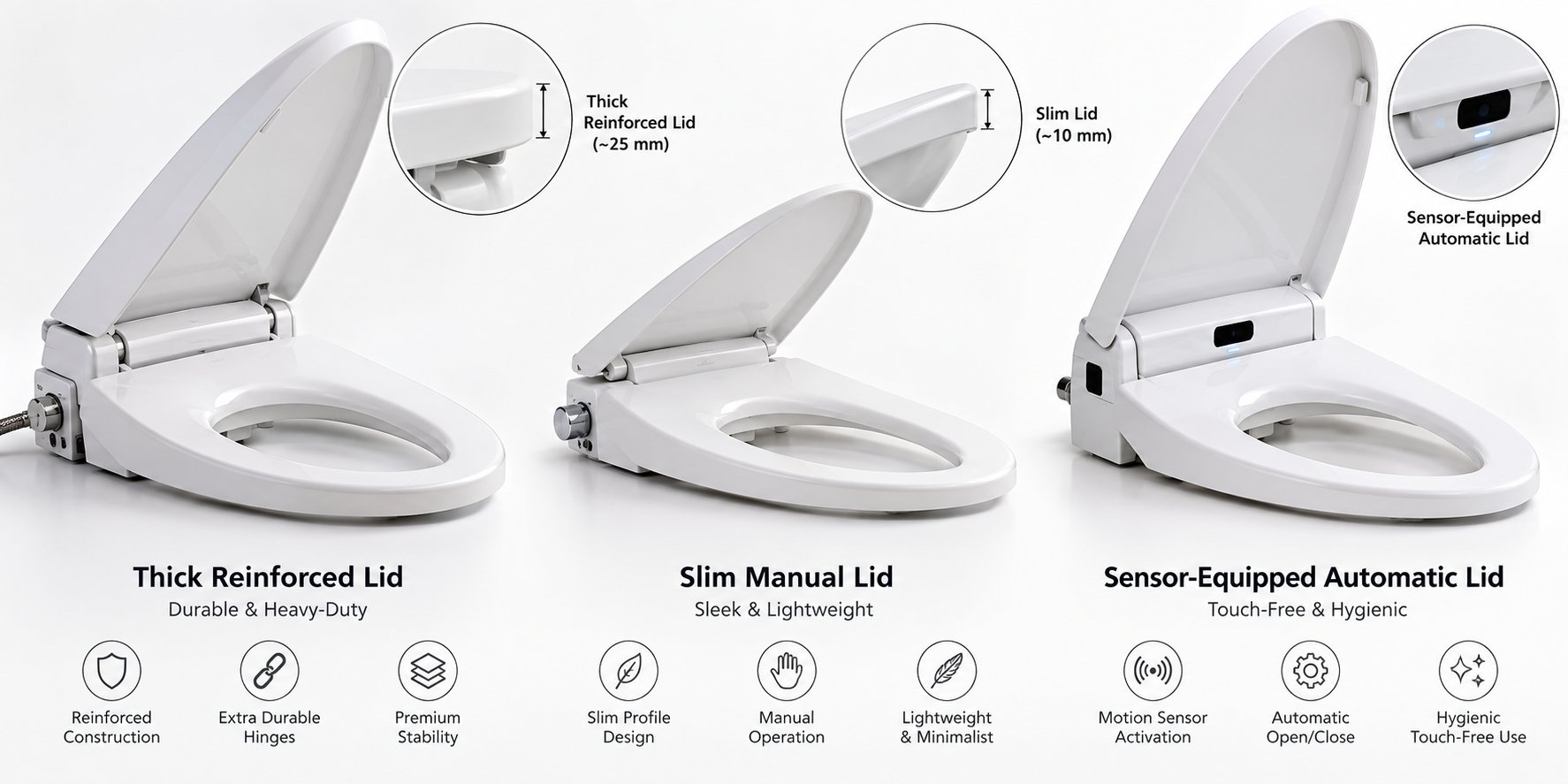
Slow-close lids rely on gravity-assisted dampening. You nudge the lid, and a hydraulic or fluid-based damper inside the hinge controls the descent speed. The lid drifts down gradually under its own weight. This design feels smooth and requires no springs, but as Horow's soft-close technology guide notes, hydraulic dampers can weaken over time — and in colder bathrooms, the fluid inside can thicken slightly, altering the closing speed.
Soft-close lids use a spring-assisted or mechanical friction approach. The feel can be slightly more resistant — a subtle "springiness" as you lower the lid — and these mechanisms tend to perform more consistently across temperature variations. The trade-off is that they may produce a faint click or a more tactile plastic-on-plastic sensation compared to hydraulic alternatives.
Both types dramatically reduce slamming noise and impact stress. For households with children, light sleepers, or shared bathrooms near bedrooms, either option is a meaningful upgrade over an undamped lid. The key difference lies in long-term behavior: hydraulic dampers may gradually speed up as they age, while mechanical dampers tend to loosen into a less controlled close. Neither lasts forever without some maintenance attention.
Auto-Open and Auto-Close Lids
Imagine walking into your bathroom and having the lid rise on its own before you even touch the toilet. That is exactly what auto-open technology delivers, and it has migrated from ultra-premium integrated smart toilets into a growing number of standalone bidet seats.
The mechanism typically involves a proximity sensor — usually infrared — mounted on the front of the seat body. When you step within a set distance, the sensor triggers a small motorized hinge that lifts the lid automatically. Walk away, and the lid closes itself after a timed delay. Some models also offer remote-activated lid control through a handheld remote or wall-mounted panel, letting you open or close the lid from across the room.
Consumer Reports' smart toilet overview highlights automatic lid opening and closing as one of the amenities that distinguishes bidet seats and smart toilets from basic attachments. The practical appeal goes beyond novelty — a hands-free lid means one less surface you touch in the bathroom, which is a genuine hygiene advantage. For users with limited mobility or arthritis, it removes a physical task that can be surprisingly difficult.
The downsides? Motorized lids add complexity, cost, and one more component that can eventually fail. The sensor can also be triggered unintentionally — a pet wandering past the toilet, for example — leading to unexpected lid activity. Still, for buyers already investing in a feature-rich bidet seat, auto-open and auto-close capability is rapidly moving from a novelty to an expected feature.
Manual Standard Lids
Not every bidet seat needs a motorized hinge or a damped mechanism. Plenty of well-regarded bidet seats — particularly entry-level and mid-range electric models, as well as non-electric bidet attachments paired with existing toilet seats — still use simple manual lids. You lift it, you lower it, and that is the full extent of the interaction.
When is a manual lid perfectly adequate? When noise is not a concern, when the bathroom is not near sleeping areas, and when the household members are consistent about lowering the lid gently. A manual bidet toilet lid keeps the overall cost down and eliminates one more mechanism that could eventually require maintenance or replacement. For budget-conscious buyers searching for a reliable elongated bidet toilet seat without premium extras, a manual lid keeps the focus — and the spending — on the wash features that matter most.
Here is a quick-reference summary of every lid type and what each one delivers:
- Non-sittable lid: Lightweight cover designed only for closing the bowl; cannot support body weight due to hollow internal architecture.
- Sittable lid: Reinforced construction with internal supports, typically rated between 270 and 400 pounds depending on model; ideal for households that use the closed lid as a seat.
- Slow-close (hydraulic) lid: Gravity-assisted dampened descent using fluid-based hinge dampers; smooth and quiet but may change speed over time.
- Soft-close (mechanical) lid: Spring or friction-based dampening; consistent across temperatures with a slightly more tactile feel.
- Auto-open/auto-close lid: Sensor-activated or remote-activated motorized hinge that lifts and lowers the lid hands-free; a premium feature with hygiene and accessibility benefits.
- Manual standard lid: Simple, undamped lid operated entirely by hand; lowest cost, lowest complexity, and zero maintenance beyond basic cleaning.
Each of these lid types carries its own engineering logic — but one question cuts across nearly all of them: why can't you just sit on the lid? The answer involves more than thickness or materials. It traces back to the fundamental architecture hiding inside the seat body itself.
Why Most Bidet Seats Have Non-Sittable Lids
You have probably sat on a closed toilet lid hundreds of times without thinking twice — while tying shoes, toweling off after a shower, or helping a child get dressed. A standard lid handles this effortlessly because there is nothing inside it. It is a solid shell resting on a solid seat ring resting on a porcelain rim. The load path is simple and direct. A bidet toilet seat lid breaks that simplicity wide open, and the reasons are entirely structural.
The Internal Architecture Problem
Crack open the rear housing of a modern bidet seat and you will find a remarkably dense layout. A retractable nozzle assembly occupies the center. A water heating reservoir or instant-heat element sits nearby. A logic board routes commands from the remote or side panel to every motor and valve. An air dryer fan, wiring harnesses, and water routing channels fill whatever space remains. As Sanyipace's bidet seat teardown illustrates, triggering a single wash cycle activates a seat sensor, an electronic water valve, a nozzle motor, and a temperature control system — all packed into the same compact footprint your old toilet lid used to cover with nothing but air beneath it.
The lid must span this entire internal landscape. Imagine a bridge stretched across a canyon full of obstacles — except this bridge also needs to look proportional, feel sleek, and weigh as little as possible so the hinges do not fatigue prematurely. To keep the lid thin enough to maintain a clean visual profile, manufacturers leave it as a relatively lightweight shell. Hollow sections accommodate wire routing. Access panels or snap-fit joints allow technicians to reach internal components. Each of these design choices creates a structural weak point — a spot where the lid surface is unsupported from below.
In injection-molded plastic enclosures, Fictiv's enclosure design guide explains that engineers commonly add internal ribs and bosses to reinforce thin-walled areas without increasing overall wall thickness. But in a bidet seat lid, the available interior space is already claimed by electronics and plumbing. There is simply less room for the kind of structural ribbing that would turn a decorative cover into a load-bearing platform. The architecture beneath the lid dictates the lid's limits.
Weight Distribution and Stress Points
Here is where the physics gets unfriendly. When you sit on a closed lid, your body weight does not distribute evenly across the entire surface. Instead, it concentrates on a relatively small contact area — roughly the size of your sit bones and upper thighs. That creates what engineers call point-load stress: high force focused on a narrow zone.
On a standard toilet lid, that concentrated load transfers straight through the shell, into the seat ring beneath it, and down into the porcelain bowl rim. The whole underside of the lid is an unobstructed shell, so there is continuous support from edge to edge. On a bidet seat, the underside is anything but continuous. Hollow pockets where nozzle assemblies retract, gaps around heating elements, and channels carved for wiring all create voids directly beneath the surface you would be sitting on.
As EverFlow Bidets explains, when weight hits a non-reinforced lid, the plastic bows inward. That pressure transfers to the hinge mounts — the hinges act as a fulcrum, prying against the mounting bolts — and can simultaneously crush the nozzle assembly or crack the plastic housing. On elongated bidet toilet seats, the longer span between hinges and front edge makes this leverage effect even more pronounced. A single sitting incident on the wrong model can snap the rear housing or misalign the nozzle mechanism permanently.
A non-sittable lid is not a design flaw — it is a deliberate engineering trade-off between internal functionality, lid profile, and manufacturing cost.
Contrast that with a fancy toilet seat that has no electronics at all. The lid's only job is to look good and close the bowl. No internal voids, no wire channels, no component access panels — just a uniform shell that can absorb seated weight without flexing into anything fragile.
The Cost Factor in Sittable Lid Design
So why not just build every bidet lid strong enough to sit on? Because doing so is expensive. Reinforcing a lid for sittability means adding thicker walls, internal bracing ribs, and sometimes load-distribution structures that redirect force away from sensitive components and down into the bowl rim. Each of those additions increases raw material cost, mold complexity, and overall product weight.
Heavier lids also demand upgraded hinge systems — industrial-grade hydraulic dampers instead of standard soft-close mechanisms — so the lid does not slam or sag over time. Even something as seemingly simple as a luxe bidet neo 320 plus bidet attachment paired with a basic toilet seat avoids this problem entirely because the attachment does not replace the lid at all. But full bidet seats that do replace the lid face a choice: keep the lid lightweight and affordable, or engineer it for sittability and pass the added cost to the buyer.
Most manufacturers choose the first path. That is why sittable lids tend to appear only on premium-tier products — luxurious toilet seats where the price tag already accounts for upgraded materials and engineering. Models in this category may use reinforced polypropylene instead of standard ABS plastic and incorporate specialized hinge geometry that directs seated weight into the porcelain rather than into the electronics housing. The result is a lid that genuinely functions as a secondary seat, but at a meaningful cost premium over non-sittable alternatives.
Understanding this trade-off matters because it reframes the conversation. A non-sittable lid is not a shortcut or a sign of cheap construction. It is the predictable outcome of cramming advanced hygiene technology into a compact space while keeping the product accessible to a broad market. The real question for any buyer is whether sittability belongs on their personal priority list — and if it does, whether the hygiene benefits of the lid itself are pulling their weight in other ways.
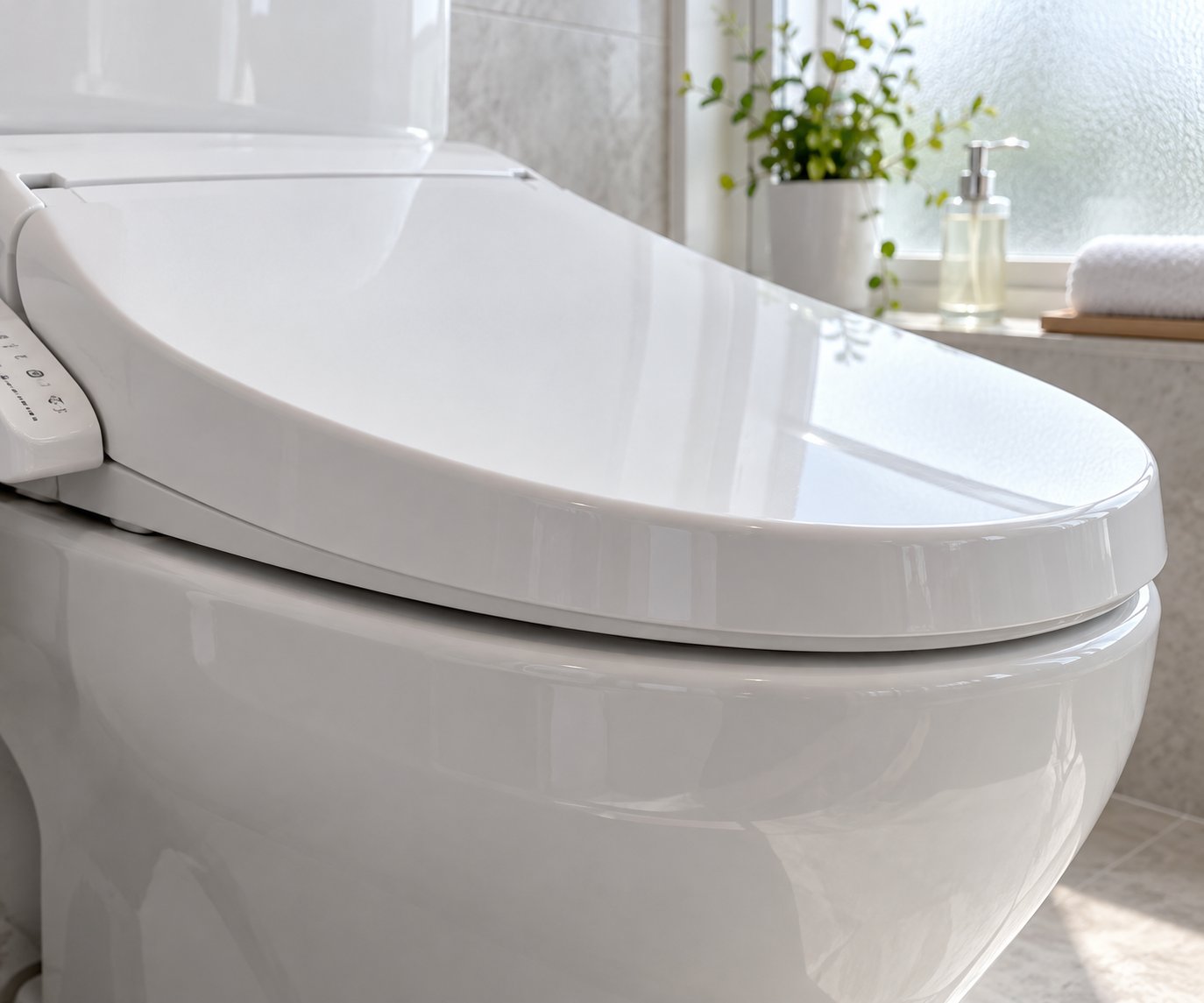
Bidet Seat Lid Design and Bathroom Hygiene
Hygiene is the entire reason bidet seats exist — and yet, almost no one talks about the hygiene role of the lid itself. The conversation stays focused on wash performance, nozzle cleanliness, and water temperature. Meanwhile, the lid sits right at the intersection of two major bathroom hygiene concerns: aerosol containment during flushing and surface contamination from daily hand contact. How the lid closes, how tightly it fits, and how you clean it all influence your bathroom's overall cleanliness in ways that deserve a closer look.
The Toilet Aerosol Plume and Lid Closure
Every time you flush a toilet, the turbulent rush of water ejects microscopic droplets and aerosol particles upward and outward from the bowl. This phenomenon — commonly called the "toilet plume" — has been studied extensively, particularly since concerns about SARS-CoV-2 and norovirus transmission intensified research interest in fecal-oral pathogen routes. A comprehensive review in the Journal of Applied Microbiology documented that viruses contaminating urine and feces can be aerosolized during flushing, with droplets settling onto surfaces throughout the restroom for up to two hours afterward. Aerosol particles small enough to be inhaled — under 2 micrometers in diameter — account for a striking 95% of what modern flush toilets produce.
The intuitive response? Close the lid before you flush. Public health guidance has long recommended this practice, and it sounds like airtight logic. But the actual science is more nuanced than you might expect.
A 2023 study published in the American Journal of Infection Control directly tested whether closing a household toilet lid before flushing reduced viral contamination of restroom surfaces. Researchers seeded toilet bowls with bacteriophage MS2 — a widely accepted surrogate for human enteric viruses like norovirus — and then flushed with the lid up and with the lid down. The results were surprising: viral contamination of restroom surfaces did not depend on whether the lid was open or closed. MS2 was recovered from floors, walls, toilet seats, and other bathroom surfaces regardless of lid position. The study concluded that closing the lid prior to flushing "does not mitigate the risk of contaminating bathroom surfaces."
How is that possible? The gap between a toilet lid and the bowl rim is not airtight. During flushing, pressurized air and water vapor escape through that perimeter gap, carrying aerosolized particles with them. United States household toilets are siphonic, relying on narrow trapways and channels that create significant turbulence — enough to propel viral particles past the lid barrier and into the surrounding air. Earlier research on bacterial spores, like Clostridium difficile, did show some reduction in large-droplet contamination with the lid closed. But for smaller viral aerosols, the lid appears far less effective as a containment barrier than most people assume.
This does not mean closing the lid is pointless. It may still reduce the volume of larger droplets that settle on immediately adjacent surfaces, and the general habit encourages cleaner restroom behavior overall. But relying on lid closure alone as your primary hygiene strategy is insufficient. The same AJIC study found that the most effective contamination reduction came from adding a disinfectant to the toilet bowl water itself, which achieved greater than 99.99% reduction in viral load — a dramatically more impactful intervention than lid position.
For bidet seat owners, this finding carries a practical implication. Whether your lid is manual, slow-close, or auto-close, the closure mechanism alone is not your frontline defense against aerosol contamination. Consistent surface disinfection matters more. That said, auto-close lids do offer one indirect advantage: they ensure the lid is always down between uses, which reduces casual exposure to bowl contents and keeps the visual and physical environment cleaner — even if it does not eliminate airborne viral particles entirely.
How Lid Fit Affects Splash Containment
Beyond aerosols, there is a simpler and more visible concern: splash. When a bidet seat replaces your original toilet seat, the overall assembly typically sits higher on the bowl rim. The bidet seat body adds thickness — sometimes 40 to 70 millimeters above the original seat height — and the lid adds more on top of that. This elevated profile increases the gap between the underside of the lid edge and the top of the porcelain bowl rim.
On a standard toilet, the lid drops down to within a few millimeters of the bowl, creating a relatively snug enclosure. On a bidet-equipped toilet, that gap can widen to a centimeter or more, depending on the model. The result is a less effective physical barrier against splashing during use, cleaning, or flushing. If you have ever noticed water droplets on the floor near a bidet-equipped toilet that were never there before the upgrade, the widened lid-to-bowl gap is a likely contributor.
Some bidet seat manufacturers address this with sculpted lid profiles — lids shaped to wrap slightly downward around the bowl rim, narrowing the effective gap. Others simply accept the increased clearance as an inherent trade-off of the elevated seat design. For buyers prioritizing hygiene containment, checking the lid-to-bowl gap on your specific toilet before committing to a bidet seat model is a small step that prevents ongoing frustration. An elongated toilet seat bidet on an elongated bowl typically offers a closer perimeter fit than a mismatched shape, so confirming bowl shape compatibility helps here too.
Keeping the Lid Itself Clean
There is one surface in your bathroom that gets touched by every single person who uses the toilet — and it is the top of the lid. Hands contact it to lift, lower, or stabilize themselves. Fingers grip the edge. Palms press the surface. Each interaction deposits skin oils, bacteria, and whatever was on those hands a moment earlier.
Research consistently shows that restroom surfaces accumulate significant microbial loads from direct contact. Abney et al.'s review documented that enteric bacteria, including E. coli and Salmonella, survive on toilet surfaces for days — up to 8 and 9 days, respectively, in dried fecal residue. While your lid's top surface is not directly exposed to fecal matter under normal use, the hands that touch it often are indirectly contaminated. And the lid's finish influences how easily those microbes take hold.
Smooth, glossy lid surfaces shed bacteria more readily during cleaning and offer fewer micro-niches for microbial colonization. Textured or matte finishes — sometimes chosen for their premium appearance or fingerprint resistance — create microscopic ridges and valleys where moisture and organic material can settle. Over time, these textures can harbor biofilm-forming bacteria that a quick wipe may not fully remove. If your bidet seat lid has a matte finish, slightly more thorough and frequent cleaning is worth the effort.
Hinge areas deserve special attention too. The junction where the lid meets the seat body — particularly around quick-release mechanisms and mounting plates — tends to collect moisture from condensation, splashing, and the bidet's own wash and dry cycles. That damp, sheltered environment is exactly where microbial growth accelerates. Lifting the lid fully and wiping around the hinge zone during routine bathroom cleaning makes a measurable difference in overall surface hygiene.
Here are practical hygiene habits that apply to any bidet seat lid configuration:
- Close before flushing: While lid closure alone may not eliminate aerosol contamination, it reduces large-droplet splash on immediately adjacent surfaces and establishes a cleaner baseline habit.
- Wipe the lid surface regularly: Use a soft cloth with mild soap or a non-abrasive bathroom cleaner. Avoid spraying liquid directly onto hinge areas where moisture can migrate into the seat body and reach electronics.
- Inspect the lid-to-bowl gap: Check whether debris, mineral deposits, or cleaning product residue is accumulating along the perimeter where the lid meets the bowl. A wider gap collects more.
- Clean hinge areas where moisture collects: Remove the seat using the quick-release mechanism if your model supports it, and wipe the mounting plate and hinge brackets where condensation and splashback tend to pool.
- Supplement lid closure with bowl disinfection: Periodic use of a toilet bowl disinfectant addresses the aerosol problem at its source — reducing the viral and bacterial load in the water before flushing disperses it.
Hygiene is never just about one feature or one habit. It is the interplay between lid closure behavior, surface cleanliness, bowl disinfection, and hand washing that determines your bathroom's real microbial landscape. The lid plays a visible, tangible role in that system — but only if it fits the toilet correctly in the first place. And fit, as it turns out, involves more variables than most buyers anticipate.
Compatibility and Fit for Bidet Seat Lids on Different Toilet Types
You have measured your cleaning habits, weighed your hygiene priorities, and maybe even picked a favorite lid type. But none of that matters if the bidet seat lid does not physically fit your toilet. A lid that overhangs the bowl looks awkward and catches on clothing. One that falls short leaves exposed porcelain and creates an uneven gap. And a lid that cannot open fully because the tank is in the way? That is a daily annoyance you will never stop noticing.
Fit is where the abstract features of a seat bidet toilet meet the very concrete reality of the porcelain already sitting in your bathroom. Getting it right comes down to three variables: bowl shape, toilet construction type, and manufacturer-specific dimensions that are not standardized across the industry.
Elongated Versus Round Bowl Compatibility
Every bidet seat — and its lid — is designed for one of two standard bowl shapes: elongated or round. The difference is straightforward but consequential. An elongated bowl measures approximately 18.5 inches from the center of the mounting bolt holes to the front edge of the rim. A round bowl measures approximately 16.5 inches across the same span. That two-inch gap determines which seat bidets will fit and which ones will not.
Checking your bowl shape takes about 30 seconds with a tape measure. Lift the existing seat, find the two bolt holes at the back of the bowl, and measure a straight line from the midpoint between them to the outer front edge of the rim. As Premier Bidets' bowl shape guide explains, the bolt holes themselves typically sit 5.5 inches apart — a dimension that is standard across virtually all residential toilets in the United States.
What happens when the lid does not match? Install an elongated bidet seat on a round bowl, and the lid overhangs the front by roughly two inches — creating a protruding ledge that catches knees, looks disproportionate, and sits unevenly on the rim. Go the other direction, placing a round bidet seat on an elongated bowl, and you get a lid that stops short of covering the front of the bowl, leaving a visible crescent of exposed porcelain and undermining the hygiene seal the lid is supposed to provide.
If you are shopping for a bidet for elongated toilet bowls specifically, you will find the widest selection — most manufacturers prioritize elongated models because that shape dominates the U.S. residential market. Round bidet seats are available but in fewer configurations. Some brands also offer "compact elongated" or "universal-fit" designs intended to split the difference between both shapes. These compromise solutions can work, but the lid-to-bowl gap is usually wider on at least one end, which affects both aesthetics and containment. When possible, matching the exact bowl shape yields a tighter, more stable fit.
One-Piece Toilets and Special Mounting Challenges
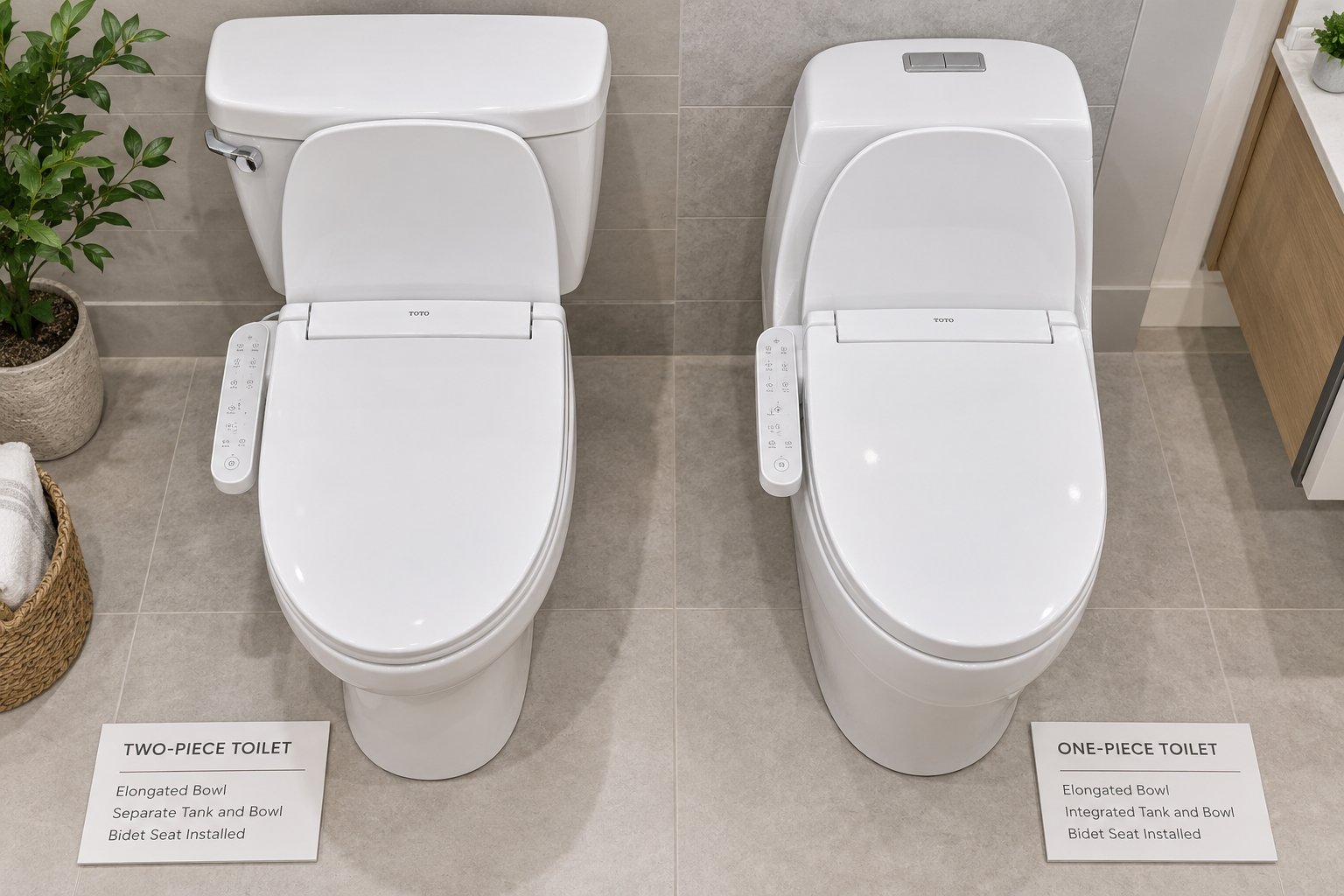
Bowl shape is the first compatibility gate, but toilet construction type is the second — and it catches more buyers off guard. The critical distinction is between two-piece toilets, where the tank and bowl are separate components bolted together, and one-piece toilets, where the tank and bowl form a single molded unit.
Two-piece toilets are the most bidet-friendly design. The flat junction between tank and bowl provides a clean surface for the bidet seat's rear housing to rest against, and the lid typically opens past 90 degrees to lean flat against the tank face. Simple, predictable, and rarely problematic.
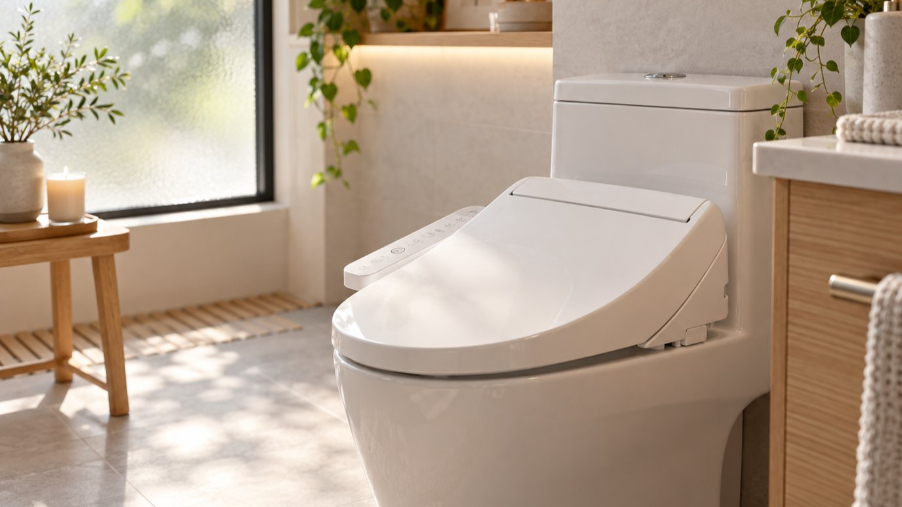
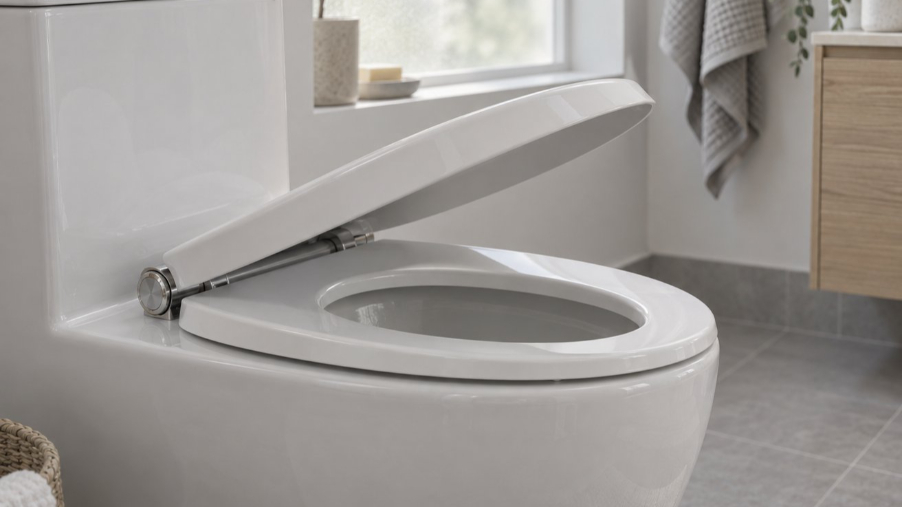
One-piece toilets are where things get interesting. The smooth, curved transition between tank and bowl — the feature that makes them look sleek — can interfere with the bidet seat lid's range of motion when opened. On certain models, the curvature prevents the lid from resting flat against the tank. Instead, it stops at an angle, balanced precariously with no support behind it. Push it a little too far and it tips backward; let it go and it falls forward onto the seat ring. As Premier Bidets' compatibility guide notes, the rear housing of an electric bidet seat contains the water inlet, heating components, and core electronics — and if that housing cannot sit flush because of the one-piece curvature, the entire seat may tilt forward instead of resting flat.
Wall-mounted toilets introduce yet another variable. These fixtures hang from the wall with no tank directly behind them, which sounds like it would simplify lid clearance — and sometimes it does. But wall-mounted models often use proprietary bowl geometries and non-standard mounting configurations that limit which aftermarket seat bidets are compatible. Confirming fit on a model-by-model basis is essential.
A black bidet toilet seat or any other color variant follows the same dimensional rules as its white counterpart — color does not affect fit. What matters is the bowl shape, bolt spacing, and rear clearance. The table below maps the most common compatibility scenarios:
| Toilet Type | Lid Fit Likelihood | Common Issues | What to Verify Before Purchase |
|---|---|---|---|
| Elongated Two-Piece | High — most bidet seats are designed for this configuration | Minimal; lid usually opens flat against tank | Confirm bolt spacing (5.5") and bowl length (~18.5") |
| Round Two-Piece | Moderate — fewer round bidet seat options available | Some models not offered in round; lid overhang if elongated seat is used | Confirm bowl length (~16.5") and check that round version exists for your chosen model |
| Elongated One-Piece | Moderate — fit depends on tank-to-bowl curvature | Lid may not rest flat when open; rear housing may contact curved tank surface | Measure clearance from bolt holes to tank face (minimum 1-2"); check lid opening angle in product specs |
| Round One-Piece | Lower — combines limited round options with curvature issues | Same curvature problems as elongated one-piece, plus reduced model availability | Confirm both bowl length and rear clearance; contact manufacturer if measurements are borderline |
| Wall-Mounted | Variable — highly model-dependent | Non-standard mounting hardware; proprietary bowl shapes; limited aftermarket support | Confirm exact make and model compatibility with bidet seat manufacturer before purchasing |
Confirming Compatibility With Manufacturers
Here is the uncomfortable truth about bidet seat lid fit: there is no universal standard. Bowl shapes come in two broad categories, yes, but the precise lid dimensions, hinge geometry, rear housing depth, and mounting plate footprint vary from brand to brand and model to model. A bidet seat that fits perfectly on one elongated two-piece toilet may wobble on another elongated two-piece from a different manufacturer, simply because the bowl rim contour or bolt-hole-to-rim distance differs by a few millimeters.
For individual buyers, this means treating product spec sheets as your primary compatibility tool — not marketing photos, not customer reviews from people with different toilets, and definitely not assumptions based on bowl shape alone. Look for the rear housing depth, the minimum tank clearance, and the recommended bowl length range. If any of your measurements fall near the boundary of the listed range, contact the seller or manufacturer directly before ordering.
For sanitary ware brands and sourcing teams, the stakes are higher. A compatibility mismatch at scale — dozens or hundreds of units that do not fit the intended toilet model — turns into costly returns, customer complaints, and project delays. The most reliable approach is to confirm bowl compatibility, mounting requirements, and dimensional tolerances directly with the bidet seat manufacturer before committing to a production run. For teams exploring bidet-equipped seat projects, Tianyun's bidet seat category provides a starting point for initiating these compatibility conversations and confirming product availability for specific bowl configurations.
Whether you are fitting a single bathroom or specifying fixtures for a multi-unit project, the principle is the same: measure first, verify second, and order third. A perfectly functioning bidet seat with a lid that does not fit your toilet is just an expensive paperweight — and a lid that fits perfectly but deteriorates after six months is not much better. Keeping that lid in top condition over the long haul requires its own set of practices, and surprisingly, almost no one talks about them.
Maintenance and Long-Term Care for Bidet Seat Lids
A bidet seat lid that fits perfectly on day one can look and feel completely different two years later. Yellowed surfaces, hairline cracks near the hinges, a slow-close mechanism that is no longer slow — these are not signs of a defective product. They are signs of a lid that never received the care it needed. And unlike a standard toilet lid, where maintenance amounts to little more than an occasional wipe, a bidet seat lid demands a more deliberate approach because of what sits directly beneath it.
The surprising part? Almost no buying guide, installation manual, or product review covers lid maintenance in any meaningful detail. The assumption seems to be that the lid takes care of itself. It does not. Here is what actually keeps it functioning and looking good for the long haul.
Routine Cleaning Without Damaging Electronics
The biggest mistake people make when cleaning a bidet seat lid is treating it the same way they treat a standard toilet. Grab a spray bottle of bathroom cleaner, mist the whole thing, scrub, and walk away. On a comfort toilet seat with no electronics, that works fine. On a bidet seat, that spray bottle can cause real problems.
The lid sits directly above or immediately adjacent to electronic components — control boards, wiring harnesses, heating elements, and motorized nozzle assemblies. The hinge area, where the lid connects to the seat body, is the most vulnerable zone. Liquid sprayed onto the lid surface can run along the contour, pool at the hinge junction, and wick into the seat housing through seams that are not fully sealed. Once moisture reaches the electronics, you are looking at potential short circuits, corroded connectors, or malfunctioning controls that may not show symptoms for weeks.
The safer approach is simple: dampen a soft cloth with mild soap and warm water, then wipe the lid surface by hand. Work from the front of the lid toward the back, but stop before you reach the hinge area. For the hinge zone itself, use a barely damp cloth — almost dry — and wipe gently without pressing liquid into any seams or joints. This gives you a clean surface without introducing moisture where it does not belong.
Product selection matters just as much as technique. SINOBATH's toilet seat care guide emphasizes avoiding bleach, ammonia-based cleaners, abrasive powders, and scouring pads on any plastic toilet seat surface. These products strip protective layers, accelerate oxidation, and create micro-scratches in the lid's glossy finish. Those scratches are not just cosmetic — they form tiny grooves where bacteria, soap residue, and moisture settle, making the lid progressively harder to clean over time. A pH-neutral soap or a non-abrasive bathroom cleaner is all you need. If your luxe bidet toilet seat came with a manufacturer-recommended cleaning product, use that.
Dealing With Yellowing, Cracking, and Wear
Even with careful cleaning, time and environment take their toll. Three aging issues show up more often than any others on bidet seat lids, and each one has a distinct cause.
Yellowing is the most visible. If your bathroom has a window that lets in natural sunlight — or even if it relies on fluorescent or halogen lighting that emits UV wavelengths — the polymers in a white plastic lid will gradually oxidize and shift toward a yellowish hue. This process accelerates in warm, humid environments, which describes most bathrooms perfectly. UV light breaks down the chemical stabilizers in the plastic, and once that degradation starts, no amount of scrubbing will reverse it. As SINOBATH's yellowing prevention guide explains, the material quality matters enormously here — premium thermoset plastics like Duroplast resist UV-induced yellowing far better than cheaper polypropylene or basic ABS. Prevention is more effective than remediation: if your bathroom gets direct sunlight, consider UV-filtering window film or simply keeping the lid down when the toilet is not in use to minimize exposure.
Stress cracking tends to appear at the hinge attachment points. Every time the lid opens and closes, mechanical stress concentrates where the lid shell meets the hinge hardware. Over thousands of cycles — and in a household with multiple occupants, that number accumulates faster than you would think — micro-fractures can develop in the plastic. These start as faint lines that are easy to dismiss and progress into visible cracks that compromise the lid's structural integrity. Harsh chemical cleaners accelerate this process by weakening the plastic at the molecular level, making it more brittle and less able to absorb the repeated stress of daily use.
Surface dulling is the subtlest form of wear, but it compounds over time. Glossy lid finishes lose their sheen from a combination of chemical exposure, abrasive cleaning, and the simple friction of hands and cloths moving across the surface. A dull lid is not just less attractive — as discussed in the hygiene section earlier, a roughened surface provides more micro-niches for bacterial colonization than a smooth, glossy one. Maintaining the original finish is both an aesthetic and a hygiene investment.
General prevention comes down to a few straightforward habits: use only mild cleaners, keep UV exposure to a minimum, avoid over-tightening hinge hardware during reinstallation, and inspect the lid regularly for early signs of cracking before small fractures become big problems.
Replacing a Worn or Damaged Lid
Here is where bidet seat ownership diverges sharply from standard toilet ownership. When a regular toilet lid cracks or yellows beyond recovery, you walk into any hardware store, pick a replacement that matches your bowl shape, and swap it in 10 minutes. The lid is a generic, interchangeable part. Dozens of manufacturers make compatible versions.
Bidet seat lids do not work that way. The lid on your elongated bidet seat is almost certainly proprietary — designed, molded, and fitted specifically for that bidet seat model. The hinge geometry, the contour of the lid underside, the way it interfaces with the seat body's top surface, and the clearance around internal components are all model-specific. An aftermarket lid from a different manufacturer — or even a lid from a different model in the same brand's lineup — will likely not fit. It may not align with the hinge posts, may not close flush against the seat ring, or may interfere with the nozzle assembly's range of motion.
The practical implication is clear: if your lid needs replacing, your first call should be to the original manufacturer's customer service or parts department. Many bidet seat brands sell replacement lids as standalone parts, but they are often available only through the manufacturer's direct channels or authorized distributors. Attempting an aftermarket substitution risks poor fit, accelerated wear on the hinge system, and in some cases, voiding the remaining warranty on the bidet seat itself.
Smart toilets and integrated bidet units face the same constraint, sometimes even more acutely. As Horow's smart toilet buying guide notes, proprietary electronic parts — including lids with integrated sensors or motorized hinges — may be harder to obtain or replace than components on simpler models. Before purchasing any bidet seat, it is worth confirming whether replacement lids are available, how to order them, and what the typical lead time looks like. A bidet seat with outstanding wash performance but no replacement lid supply chain is a product with a built-in expiration date.
To keep everything on track without overthinking it, here is a maintenance routine you can follow consistently:
- Daily — Quick wipe-down: Use a soft cloth dampened with mild soap and warm water to wipe the lid's top surface and front edge. Avoid spraying liquid near hinges or seams. Takes about 30 seconds.
- Weekly — Hinge inspection: Open the lid fully and visually inspect the hinge area for moisture accumulation, looseness, or early signs of cracking. Wipe any condensation with a dry cloth. Tighten any accessible mounting hardware if you notice wobble.
- Monthly — Deep clean with quick-release removal: If your bidet seat has a quick-release mechanism, press the release button and slide the entire seat off the mounting plate. Clean the mounting plate, the bolt-hole area, and the underside of the seat body where debris, mineral deposits, and moisture tend to accumulate. Reattach the seat and confirm it clicks securely into place.
- Seasonally — Yellowing and crack check: Every three months, examine the lid surface in good lighting for any color shift, especially along edges and near the hinge mounts. Check for hairline cracks at stress points. If you spot early yellowing, evaluate whether your bathroom's UV exposure can be reduced. If you spot cracks, contact the manufacturer about replacement parts before the damage worsens.
This routine takes minimal time — a few minutes per week at most — but the cumulative impact on lid longevity and hygiene is significant. A lid that receives regular attention stays cleaner, stronger, and better-looking for years longer than one that gets ignored between deep cleans.
And while adults can follow a maintenance routine without much coaching, there is one group of bathroom users who will never read a care guide — and whose interaction with the lid introduces an entirely different set of concerns.
Child Safety and Household Considerations for Bidet Seat Lids
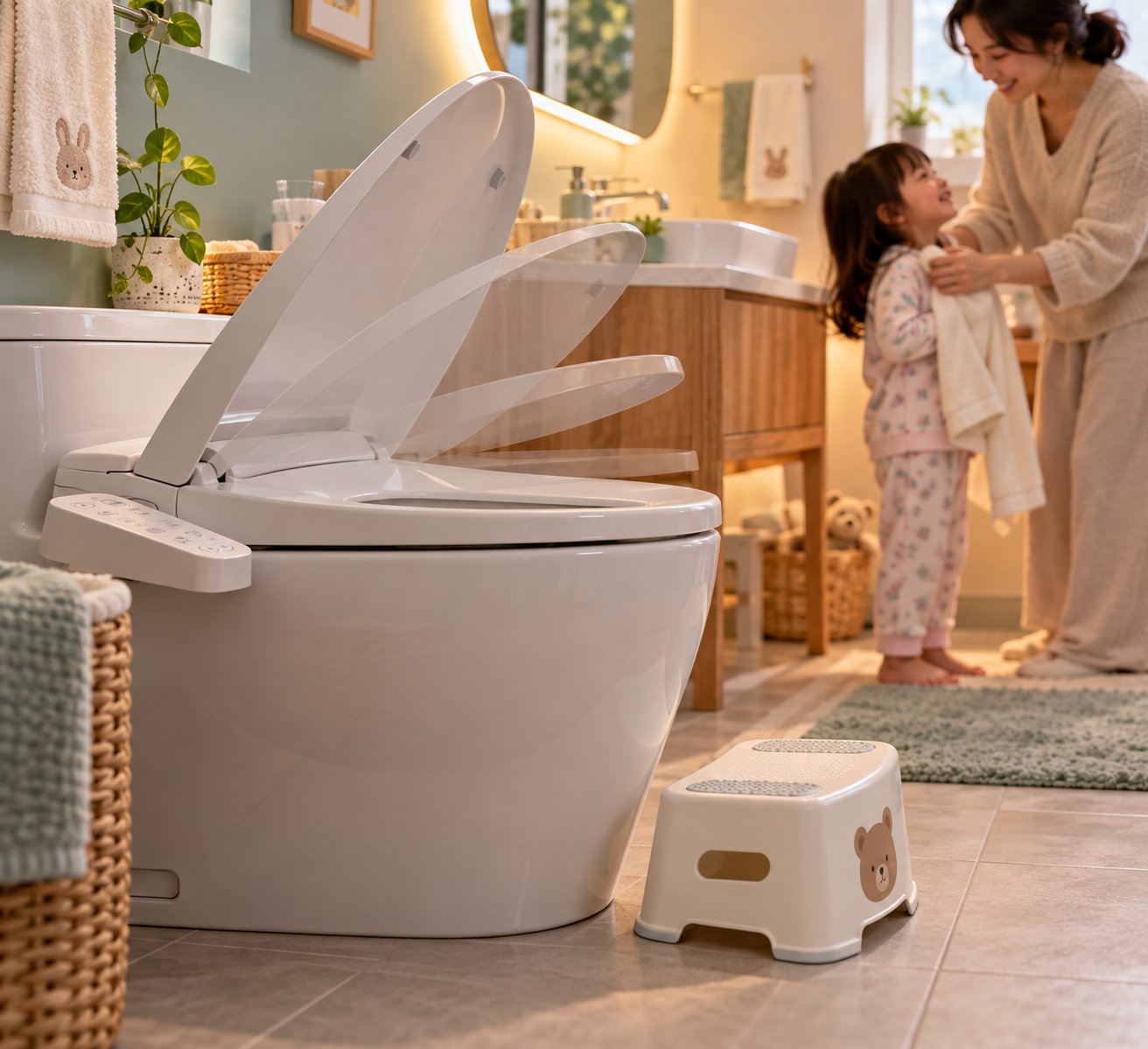
Young children do not read weight limit warnings. They do not check whether a lid is reinforced. They climb, press, slam, and sit on whatever looks like a seat — and in a bathroom equipped with a bidet toilet seat, the lid becomes an object of curiosity and casual use that was never engineered for either. The safety implications are real, specific, and almost entirely absent from buying guides.
Soft-Close Lids and Finger-Pinch Prevention
A standard toilet lid in free fall can slam down with surprising force — more than enough to bruise or pinch a small child's fingers caught between the lid and the seat ring. Anyone who has heard that sharp crack of plastic on porcelain in the middle of the night knows the sound. For a toddler whose fingers happen to be in the wrong spot, the result can be a painful injury that turns bathroom time into a source of fear.
Soft-close and slow-close bidet seat lids address this directly. The damped hinge mechanism controls the lid's descent speed regardless of how forcefully it is released — even if a child shoves it or lets go from a fully upright position. Instead of dropping like a guillotine, the lid drifts down slowly enough for small hands to pull away. As Horow's child safety guide notes, a soft-close lid is one of the most practical safety features for households with young children, reducing finger injury risks during daily routines.
This is not a luxury add-on — it is a meaningful safety feature. If you are choosing the best toilet seat for bidet attachment use in a family bathroom, the hinge mechanism should be one of your first evaluation criteria, not an afterthought buried behind wash pressure and heated seat settings.
Lid Stability and the Non-Sittable Lid Risk
Picture this: a four-year-old walks into the bathroom, sees the closed lid, and sits down on it while waiting for a parent. On a standard toilet, nothing happens — the lid holds. On a non-sittable bidet seat lid, the surface may flex inward, shift laterally on the hinge mounts, or crack under the concentrated weight. Even a child weighing 40 pounds can exceed the load tolerance of a thin-walled lid spanning hollow internal compartments.
The consequences range from startling to dangerous. A flexing lid can pinch skin against the seat ring. A cracked lid can expose sharp plastic edges. A shifting lid can throw a child off balance entirely. And the damage to the bidet seat itself — crushed nozzle housing, misaligned components, cracked control board enclosure — may not be immediately visible but can compromise the seat's function permanently.
Horow's research on smart toilet seating for children highlights a related concern: bidet seats are often bulkier at the rear, which can push a smaller child forward toward the front edge of the seat. Combined with a non-sittable lid that offers no stable perch, the result is a child perched in an unstable position with no reliable support beneath them.
Households with young children face a clear choice. Either invest in a high end toilet seat with a reinforced, sittable lid — one designed to handle seated weight without flexing into the electronics below — or establish firm household rules that the closed lid is not a chair. For families with toddlers who cannot yet follow verbal instructions consistently, the sittable lid is the safer bet. Rules only work when the person can understand and remember them.
Communicating Bidet Lid Etiquette to Guests
Children are not the only ones caught off guard by a bidet seat lid that behaves differently from what they expect. Houseguests encounter the same unfamiliarity — and unlike a child, they are often too polite or too embarrassed to ask questions.
Imagine a guest visiting your bathroom for the first time. They see a toilet that looks mostly normal but has an unusually thick lid, a side panel covered in buttons, or a wireless remote sitting on a nearby shelf. They may not know what the buttons do. They may sit on the closed lid to remove shoes, not realizing it cannot support their weight. They may lift the lid and be surprised when it descends on its own at a glacially slow pace — or conversely, they may slam it down expecting resistance that is not there on a manual model.
As Bio Bidet's guide to hosting with a bidet suggests, a small instructional card placed near the toilet handles most of these situations discreetly. A brief, friendly note explaining the basics — what the buttons do, that the lid closes slowly on its own, and whether the lid can support weight — answers the questions your guest will never ask out loud. If your bidet uses a wireless remote, designating a visible spot for it with a short guide alongside removes the mystery entirely. You do not need an essay — a laminated card with three or four bullet points is more than sufficient.
The social dimension matters because a confused guest is an unsatisfied guest — and a guest who accidentally damages a non-sittable lid creates an awkward situation for everyone involved.
Here are practical communication tips for any household with a bidet-equipped bathroom:
- Label non-sittable lids: A discreet sticker or small sign near the toilet indicating "Please do not sit on closed lid" prevents accidental damage from guests and older children alike.
- Explain the slow-close mechanism to first-time visitors: A quick mention — "the lid closes on its own, just give it a nudge" — saves your guest from an awkward moment of holding the lid and waiting for something to happen.
- Establish a lid-down house rule for hygiene: Whether or not closing the lid eliminates aerosol plume entirely, a consistent lid-down habit keeps the bowl covered between uses, reduces visual unpleasantness, and sets a clean standard for every household member and visitor.
- Check lid tightness periodically if children use the bathroom independently: Small hands can be surprisingly forceful. Wiggle the lid monthly to check for looseness at the hinge mounts, and retighten if you feel any play — a wobbly lid is a safety issue waiting to happen.
Safety and etiquette both come down to the same principle: the lid on a bidet seat is not interchangeable with the lid on a standard toilet, and anyone interacting with it deserves to know the difference. That awareness becomes even more important as lid technology continues to evolve — because the gap between what a bidet lid can do today and what it will do in the next few years is widening fast.
Future Trends and Practical Next Steps for Bidet Toilet Seat Lids
Five years ago, auto-open lids were reserved for integrated smart toilets costing several thousand dollars. Sittable lids were a niche selling point that barely registered in marketing copy. Lid design, in general, was something manufacturers handled quietly in the background while spotlighting wash performance and heated seat comfort. That dynamic is shifting — and quickly.
The bidet toilet seat lid is evolving from a passive cover into an active engineering differentiator, and the trends shaping its trajectory matter whether you are upgrading a single bathroom or specifying fixtures for a multi-unit development.
Emerging Trends in Bidet Seat Lid Engineering
Three parallel developments are reshaping what buyers can expect from bidet toilet lids in the near future.
Auto-open and auto-close migration to mid-range models. Sensor-activated lid operation used to be a flagship-only feature. The TOTO S7A, for instance, built its luxury positioning partly around an automatic lid that responds before you touch anything. But proximity sensors and small motorized hinges have dropped in component cost, and manufacturers are beginning to integrate hands-free lid operation into seats priced well below the premium tier. The Bemis Haven 5000 already pairs auto-open and auto-close with a family-friendly feature set at a more accessible price point. Expect this trickle-down to accelerate — within a few product cycles, a motorized lid may feel as standard as a heated seat does today.
Sittable lid construction as a competitive selling point. Consumer awareness around non-sittable lids is growing, driven partly by online reviews and partly by the kind of real-world lid-cracking incidents discussed earlier in this article. Manufacturers are responding. Reinforced lid designs — with internal ribbing, thicker walls, and load-distribution geometry — are appearing in more product lines as brands recognize that a sittable lid addresses a genuine daily-use need. For households with children, seniors, or anyone who uses the closed toilet as a secondary seat, this feature is no longer a luxury — it is a practical expectation. Brands that ignore it risk losing buyers to competitors who build it in.
Material science advances. The tension between thin, lightweight lids and strong, load-bearing lids has always been a core engineering constraint. Emerging polymer blends and composite materials are beginning to loosen that constraint. Advanced thermoplastics that offer higher impact resistance at lower wall thicknesses could enable lids that are both slimmer in profile and stronger under load — a combination that current ABS and standard polypropylene cannot easily deliver. Antimicrobial surface treatments integrated directly into the lid material, rather than applied as a coating, are another frontier. These treatments reduce bacterial colonization without relying on the user's cleaning habits, which aligns perfectly with the hygiene priorities that drive most bidet purchases in the first place.
Taken together, these trends point toward a future where the lid is no longer the forgotten component. It is increasingly where manufacturers compete — on convenience, on safety, on durability, and on the kind of thoughtful design that turns a bidet for toilet seat use into something that genuinely improves daily life rather than just adding a wash function.
Choosing the Right Lid for Your Situation
Trends are useful for understanding where the market is heading. But if you are making a purchase decision right now — or specifying a luxe toilet seat for a project with a deadline — you need a framework that applies today. The right lid depends entirely on your household, your toilet, and your priorities.
Here is a concise decision guide:
- Households with young children: Prioritize soft-close or slow-close lids to prevent finger-pinch injuries, and strongly consider a sittable lid to eliminate the risk of cracking when a child inevitably sits on it. A non-sittable lid in a family bathroom is a liability waiting to surface.
- Hygiene-focused buyers: Look for lids that fit tightly against the bowl rim, minimizing the perimeter gap where splash and debris collect. A smooth, glossy lid finish is easier to sanitize than a matte or textured surface. Auto-close mechanisms ensure the lid stays down between uses without relying on everyone in the household to remember.
- Buyers with one-piece toilets: Verify lid clearance before purchasing. Measure the distance from the mounting bolt holes to the tank's curved surface, and compare that measurement against the bidet seat's rear housing depth and lid opening angle. A lid that cannot open fully or rest stably against the tank turns every bathroom visit into a minor frustration.
- Anyone replacing an existing bidet seat: Confirm that the new model's lid is compatible with your specific toilet — not just the bowl shape, but the rear clearance, bolt spacing, and rim contour. A bidet seat that worked perfectly on your previous toilet may not fit the one you upgraded to, and vice versa.
- Aging-in-place and accessibility needs: Auto-open lids remove the physical task of bending and reaching, which matters more than most people realize for users with arthritis, limited mobility, or post-surgical recovery constraints. A sittable lid also provides a stable, comfortable perch for users who need to rest during bathroom routines.
For sanitary ware brands and sourcing teams evaluating bidet-equipped seat projects at scale, the stakes around lid specification are even higher. A lid that does not fit the target toilet model, lacks the durability for high-traffic use, or fails to meet the sittability expectations of the end market creates returns, warranty claims, and brand damage that far exceed the cost of getting the specification right upfront. Confirming lid details — including sittability rating, hinge type and material, closing mechanism, surface finish, and precise bowl compatibility — directly with the manufacturer is not optional. It is the difference between a smooth rollout and an expensive correction.
Tianyun's bidet seat category serves as a starting point for these conversations, allowing teams to discuss customization needs, mounting requirements, and dimensional tolerances before committing to a project scope. Whether the project calls for elongated models, specific hinge configurations, or reinforced sittable lids, establishing those parameters early with the manufacturer prevents the kind of mid-project surprises that derail timelines and budgets.
The bidet toilet seat lid has spent years as an afterthought — the component buyers overlook until it cracks, yellows, slams, or simply does not fit. Every section of this guide exists because the lid deserves better. It protects the technology you paid for, influences the hygiene of your bathroom, determines whether your toilet feels stable or wobbly, and shapes the daily experience of every person in your household. Give it the attention it has earned, and it will quietly do its job for years. Ignore it, and it will remind you — loudly — why it mattered all along.
Frequently Asked Questions About Bidet Toilet Seat Lids
1. Can you sit on a bidet toilet seat lid?
Most bidet toilet seat lids are not designed to bear body weight. The internal architecture — nozzle assemblies, heating elements, control boards, and wiring harnesses — creates hollow sections beneath the lid surface that cannot support a seated adult. Sitting on a non-sittable lid can flex the plastic into delicate electronics, crack the housing, or permanently misalign the nozzle mechanism. However, a growing number of premium bidet seats now offer reinforced sittable lids rated between 270 and 400 pounds. If sittability matters to your household, confirm the specific weight rating with the manufacturer before purchasing, as this detail is rarely listed prominently on packaging.
2. What is the difference between slow-close and soft-close bidet seat lids?
Though often used interchangeably in marketing, these are two distinct mechanisms. Slow-close lids use gravity-assisted hydraulic or fluid-based dampers inside the hinge to control the descent speed — the lid drifts down smoothly under its own weight. Soft-close lids rely on spring or mechanical friction dampening, producing a slightly more tactile feel with consistent performance across temperature variations. Hydraulic dampers may gradually speed up as they age, while mechanical dampers tend to loosen over time. Both types effectively prevent slamming, reduce noise, and protect internal bidet components from impact shock — making either a strong choice for households with children or shared bathrooms near bedrooms.
3. Does closing the toilet lid before flushing actually prevent germ spread?
The answer is more nuanced than most people expect. While public health guidance recommends closing the lid before flushing, a 2023 study published in the American Journal of Infection Control found that viral contamination of bathroom surfaces did not significantly depend on lid position during flushing. The gap between the lid and bowl rim is not airtight, so pressurized aerosols escape through the perimeter. Closing the lid may still reduce larger droplet splash on adjacent surfaces and encourages cleaner habits overall. However, the most effective contamination reduction comes from adding disinfectant to the toilet bowl water itself, which achieved greater than 99.99% viral load reduction in testing — far surpassing lid closure alone.
4. How do I know if a bidet seat lid will fit my toilet?
Fit depends on three factors: bowl shape, toilet construction type, and manufacturer-specific dimensions. First, measure from the center of the mounting bolt holes to the front rim edge — roughly 18.5 inches indicates an elongated bowl, while 16.5 inches indicates a round bowl. Second, consider your toilet type. Two-piece toilets offer the most predictable fit, while one-piece toilets may prevent the lid from opening fully due to the curved tank-to-bowl transition. Wall-mounted toilets often use proprietary geometries requiring model-specific confirmation. Because bidet seat lid dimensions are not standardized across brands, always check the manufacturer's spec sheet for rear housing depth, minimum tank clearance, and recommended bowl length range before ordering. For sourcing teams working at scale, Tianyun's bidet seat category at tianyuntech.com/bidet-seat offers a starting point for confirming compatibility and dimensional tolerances directly with the manufacturer.
5. How do you clean and maintain a bidet toilet seat lid?
Avoid spraying liquid cleaners directly onto the lid, especially near hinges and seams where moisture can wick into the electronic housing beneath. Instead, dampen a soft cloth with mild soap and warm water and wipe the lid surface by hand, working front to back. For the hinge zone, use an almost-dry cloth to prevent moisture migration. Never use bleach, ammonia-based cleaners, abrasive powders, or scouring pads — these damage glossy finishes and create micro-scratches that harbor bacteria. A practical routine includes a daily surface wipe, weekly hinge inspection for moisture or looseness, monthly deep cleaning using the quick-release mechanism to access the mounting area, and a seasonal check for UV-induced yellowing or stress cracking near hinge attachment points.
Apply This Insight to Your Project
Tell us what you are building and how the topic “Your Bidet Toilet Seat Lid Isn't Meant to Sit On — Here's Why” relates to your application. Our engineering team can help evaluate the next step.