What Is a Slow Shutting Toilet Seat and Why It Matters
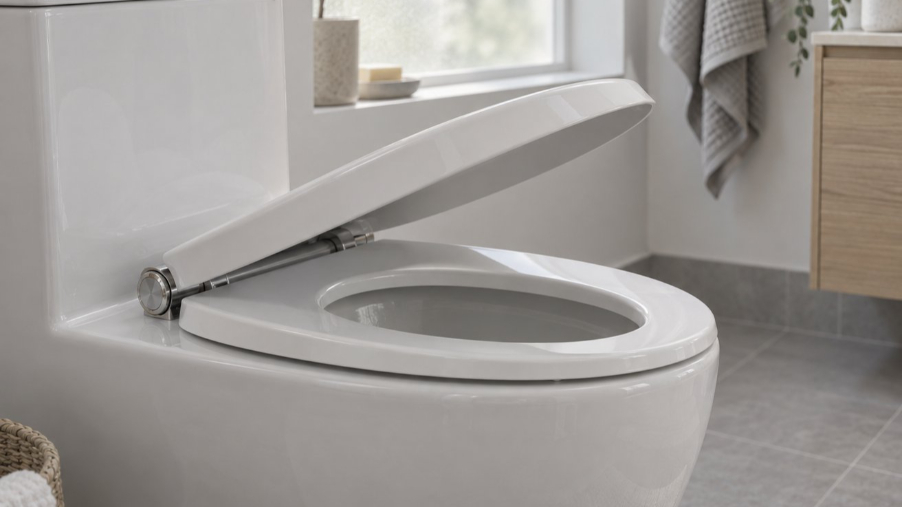
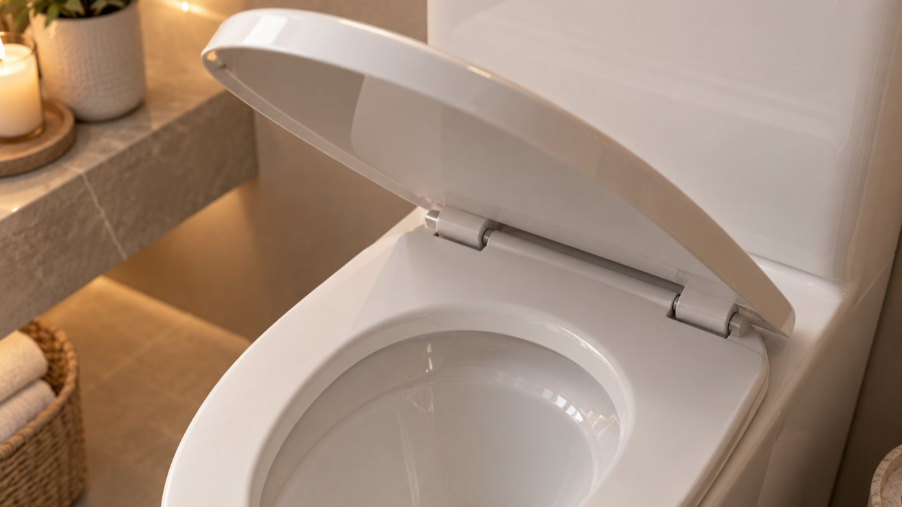
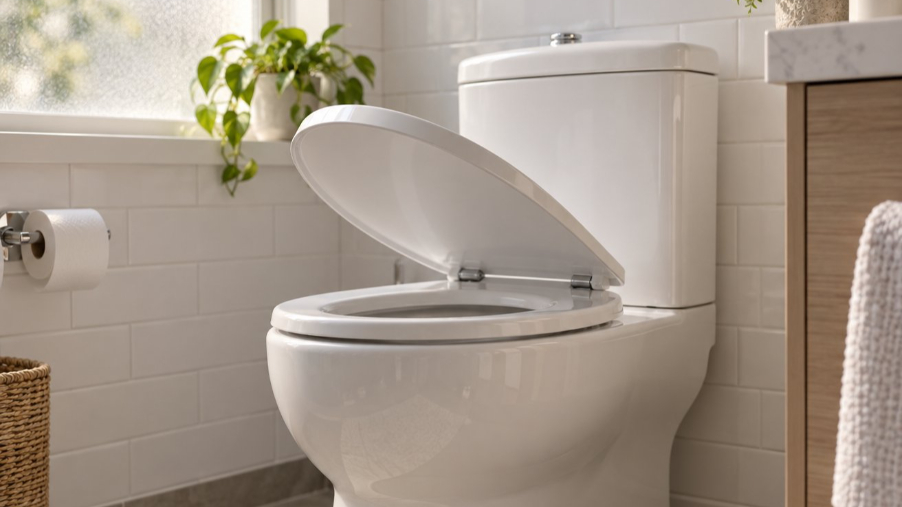
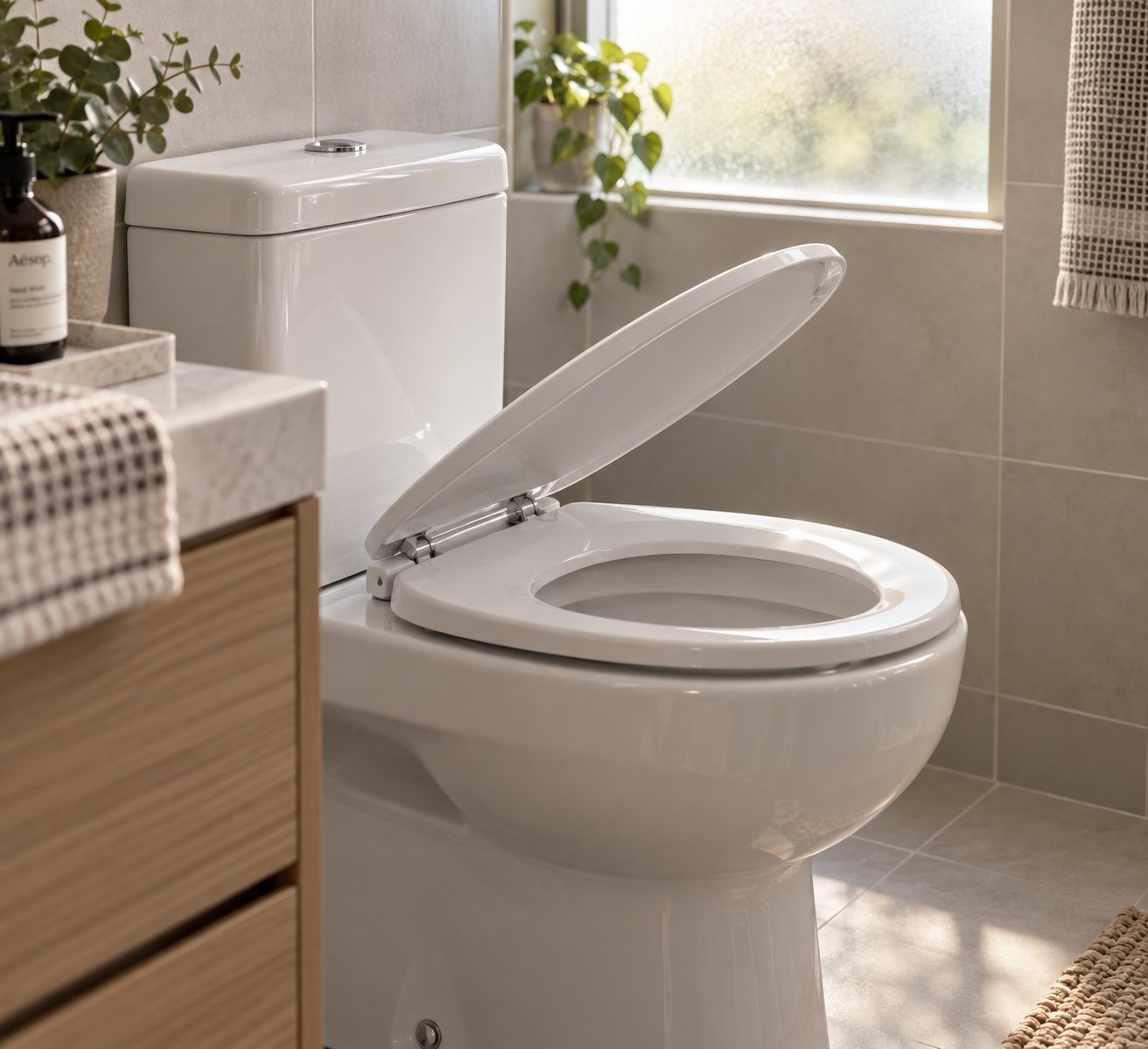
Imagine it's 2 a.m. and someone in your household lets the toilet lid go. That sharp, porcelain-cracking slam echoes through every room. Sound familiar? A slow shutting toilet seat exists specifically to eliminate that moment. It's a toilet seat with a built-in damping mechanism — housed inside the hinge — that converts what would normally be a free-falling lid into a controlled, silent descent. You nudge the lid, walk away, and it glides down on its own without a sound.
What Exactly Is a Slow Shutting Toilet Seat
In the simplest terms, a slow close toilet seat replaces the basic hinge found on traditional seats with a specialized damper hinge. A standard seat has no resistance at all — release it from any height, and gravity slams it into the bowl rim instantly. The result is noise, potential porcelain damage, and a real finger-pinching hazard for small children.
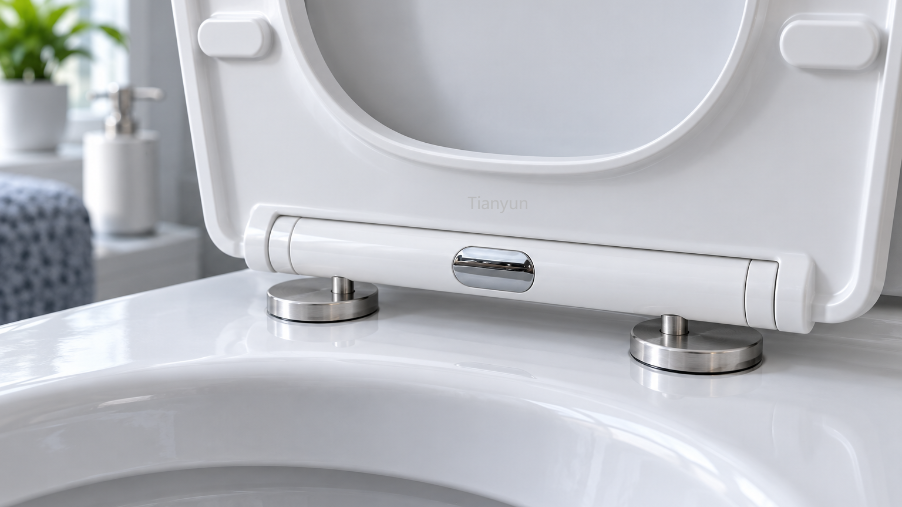
A soft close toilet seat changes the equation entirely. Inside each hinge sits a small rotary damper filled with viscous fluid. When the lid drops, this fluid creates resistance that slows the motion to a gentle, barely audible close. The technology goes by several names you've likely seen while shopping — quiet close toilet seat, no slam toilet lid, soft close, slow close — but they all describe the same core function: a controlled descent that prevents slamming.
A slow shutting toilet seat uses an internal damping mechanism to convert a free-fall lid into a controlled, silent descent — eliminating slams entirely.
Why This Technology Has Become the New Standard
Not long ago, a soft close loo seat was considered a premium upgrade, something you'd find in upscale hotel bathrooms or high-end renovations. That perception has shifted dramatically. The global toilet seat market, valued at USD 6.41 billion in 2025 and projected to reach USD 11.69 billion by 2034, reflects a broader consumer shift toward comfort, safety, and smarter bathroom design. Soft-close mechanisms and quick-release systems rank among the key innovations driving that growth.
Several forces are behind this shift. Noise reduction tops the list — in apartments with thin walls, homes with sleeping babies, or night-shift households, a no slam toilet lid is less a luxury and more a sanity saver. Child safety is another major driver; a standard seat can slam with enough force to injure small fingers, while a damped seat eliminates that risk entirely. And then there's simple aesthetics — a lid that floats shut feels more refined and intentional than one that crashes down.
Today, you'll find slow close hinges standard on most mid-range and premium toilets. For homeowners still living with a seat that slams, upgrading is one of the simplest and most satisfying bathroom improvements available. The real question isn't whether this technology is worth it — it's understanding how it works and what separates a quality mechanism from a cheap one that fails within months.
How a Slow Shutting Toilet Seat Mechanism Actually Works
That smooth, silent descent doesn't happen by magic. Inside each hinge of a slow shutting toilet seat sits a cleverly engineered component doing all the heavy lifting — or, more accurately, all the heavy slowing. Yet most people never see it, and most product descriptions never bother explaining it. Here's what's really going on beneath the surface.
The Role of the Rotary Damper Inside the Hinge
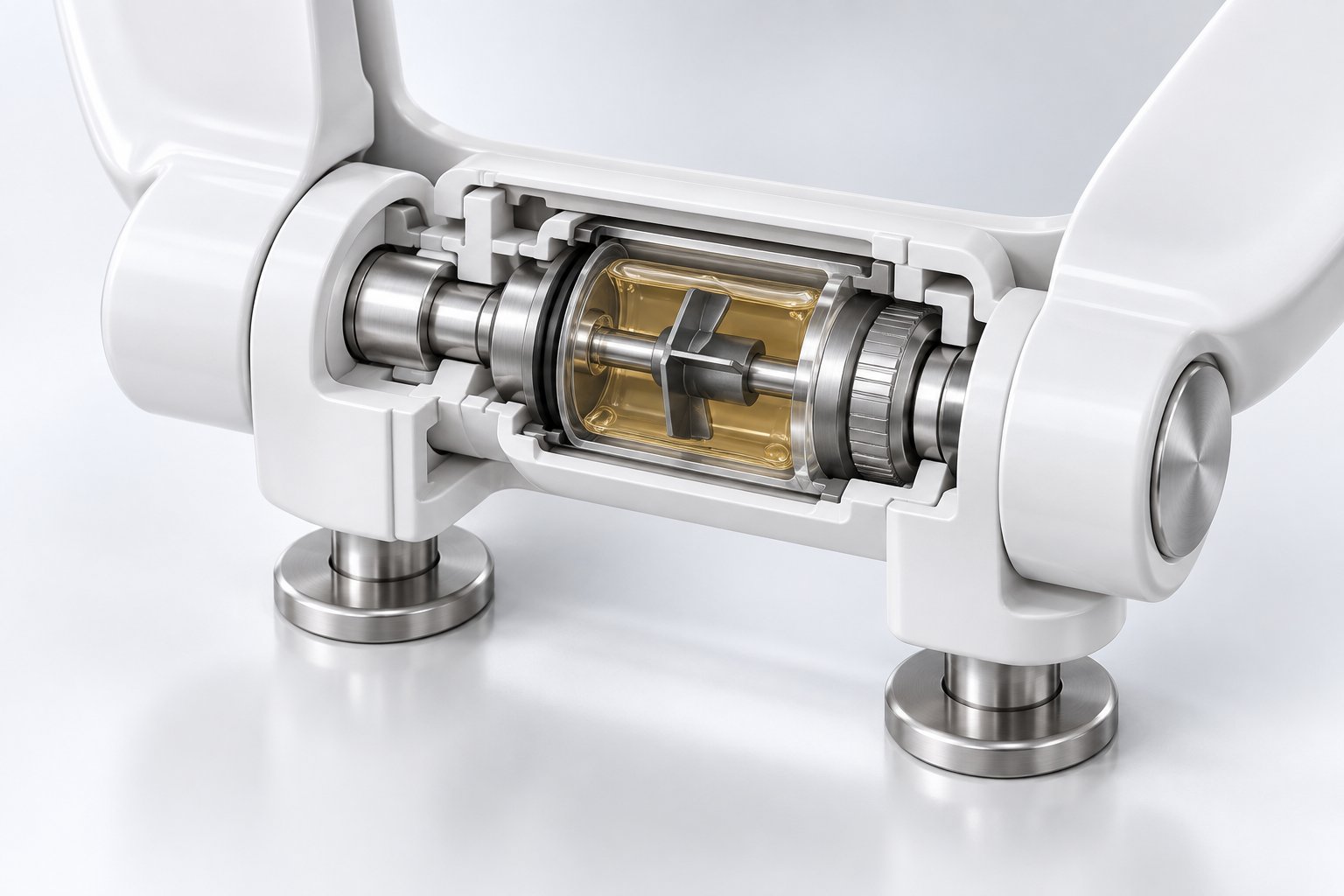
Picture the small hydraulic arm on a screen door that prevents it from slamming shut. A similar principle operates inside your toilet seat hinge, just miniaturized. The key component is a rotary damper — a compact, sealed device embedded directly within the hinge body. From the outside, you won't see it at all. It's entirely hidden inside the hinge structure, but it's the single part responsible for that controlled closing motion.
So how does it create resistance? Inside the damper, a small rotor or paddle sits submerged in silicone oil — a thick, viscous fluid engineered to resist movement at a predictable rate. When you release the toilet lid, the hinge rotates, and that rotation forces the paddle through the silicone oil. The fluid pushes back against the paddle, creating steady resistance that bleeds off kinetic energy gradually. Instead of the lid accelerating downward under gravity and crashing into porcelain, it drifts down at an even, controlled pace.
Think of it like stirring a spoon through honey versus water. Water offers almost no resistance — the spoon swings freely. Honey fights back, slowing every movement. The silicone oil inside a toilet seat closer works the same way, turning what would be a sudden drop into a gentle glide that takes several seconds from start to finish.
Gravity Does the Work While the Damper Controls the Speed
Here's a detail that surprises many people: you don't need to push the lid down at all. Gravity handles the closing entirely. The weight of the seat and lid naturally pulls them downward the moment you let go. The damper's only job is regulating how fast that descent happens — not initiating it.
This is why you'll often hear the term "self closing toilet seat" used to describe these products. It's an accurate enough label in everyday language because the toilet lid automatically closes once you release it. Technically, though, the mechanism isn't motorized or spring-loaded. It's purely gravity-driven with damped resistance. You give the lid a gentle nudge past its balance point, gravity takes over, and the damper ensures the journey down is smooth and silent.
The practical benefit is obvious. You can tap the lid with one finger and walk away, confident it will settle into place quietly on its own. There's no need to carefully guide it down by hand — a real convenience when your hands are wet or full. For elderly users or anyone with limited grip strength, a self closing toilet lid removes one small but meaningful point of frustration from daily life. The toilet lid automatically closes without requiring any effort or attention beyond that initial nudge.
Why Hinge Quality Determines Everything
If the damper is the heart of the system, then hinge quality is what determines whether that heart keeps beating reliably for years — or gives out after a few months. Not all automatic toilet seat closer mechanisms are built the same, and the differences show up in three critical areas:
- Damper seal integrity: The silicone oil must stay sealed inside the damper housing. A poorly made seal allows fluid to leak out gradually, and once enough oil escapes, the damper loses its ability to create resistance. The seat starts closing faster, becomes inconsistent, and eventually slams just like a standard seat.
- Fluid viscosity and formulation: The thickness of the silicone oil is precisely calibrated to the weight of the seat. Too thin, and the lid drops too quickly. Too thick, and the closing feels sluggish and frustrating. Premium dampers use silicone formulations that maintain consistent viscosity across a range of temperatures, so the seat performs the same in a cold winter bathroom as it does in summer.
- Build material and precision: The rotor, housing, and hinge arms need to be manufactured to tight tolerances. Loose-fitting internal components create uneven resistance — the seat might close smoothly one time and jerkily the next. High-quality toilet seat dampers maintain stable torque across thousands of cycles, even in humid bathroom environments.
These factors work together. A damper with a strong seal but poorly matched fluid viscosity will still underperform. A perfectly formulated oil inside a cheaply molded housing will leak within months. The best-performing seats treat the hinge assembly as an integrated system — where the damper, fluid, seal, and housing are all engineered to work in concert.
This interdependence between materials, engineering, and damper calibration raises an important question: does the material of the seat itself — its weight, density, and composition — affect how the damper performs? The answer is yes, and it matters more than most buyers realize.
Slow Shutting vs Standard Toilet Seats Compared
Engineering details are useful, but what really matters is this: how does a slow shutting toilet seat actually change your daily bathroom experience compared to a standard one? The differences are more significant than most people expect — and they go well beyond just noise.
Noise and Comfort Differences You Will Notice Immediately
Drop a standard toilet seat from any height and you get a sharp crack that reverberates off tile, glass, and porcelain. In a quiet house at night, it can sound like a gunshot. In apartments with thin walls, it's the kind of noise that strains neighborly goodwill fast.
Slow close toilet seats eliminate that entirely. The descent is virtually silent — a soft whisper of motion that ends with the lid resting gently against the bowl rim. You'll notice the difference the very first time someone uses the bathroom at 3 a.m. without waking the rest of the household. In multi-person homes, especially those with shift workers or light sleepers, this single change removes a daily source of friction that most families have just learned to tolerate.
It's not only about nighttime, either. During the day, in a busy household with kids running in and out of the bathroom, the constant slam-slam-slam of a standard lid creates low-level noise stress that you only appreciate once it's gone. Toilet seats soft close mechanisms turn a jarring interruption into something you barely register.
Durability and Long-Term Wear Comparison
Noise is the obvious benefit. The less obvious one? A soft close toilet seat protects your toilet itself. Every time a standard seat slams shut, it sends impact force into the porcelain rim of the bowl. Over months and years, that repeated impact causes real damage — hairline chips in the glaze, micro-cracks that grow over time, and loosened mounting bolts that make the seat wobble and shift. The seat itself suffers, too. Plastic seats develop stress fractures at the hinge points, and painted or coated finishes start flaking around the contact areas.
A toilet seat slow close mechanism distributes the closing force so gently that none of these wear patterns develop. The lid meets the bowl with barely any pressure, the hinges stay aligned because there's no jarring impact to loosen bolts, and the seat material isn't subjected to the repeated shock loading that causes cracks. The result is a longer lifespan for every component involved — the seat, the hinges, and the porcelain bowl.
Here's how the two types stack up across the dimensions that matter most:
| Feature | Slow Shutting Toilet Seat | Standard Toilet Seat |
|---|---|---|
| Noise Level | Near-silent controlled descent | Loud slam on every close |
| Porcelain Wear | Minimal — gentle contact reduces chipping risk | Gradual chipping and glaze damage over time |
| Child Safety | Eliminates finger-pinch hazard | Can slam with enough force to injure small fingers |
| Hinge Lifespan | Longer — no impact shock to loosen fittings | Shorter — repeated slamming loosens bolts and cracks hinge points |
| Price Range | Moderate — slightly higher upfront cost | Low — basic models are very inexpensive |
| Maintenance Needs | Occasional hinge care; damper may need replacement after years | Bolt tightening; earlier full replacement due to cracking |
Is There Any Downside to Slow Close
Honesty matters here. The most common complaint from people who switch to soft close toilet seats is that the lid closes "too slowly" when they want it shut right now. You give it a nudge, walk away, and a few seconds later it's still halfway down. If you're used to flipping a standard lid and hearing it land instantly, the deliberate pace of a toilet seat soft close can feel oddly sluggish at first.
Is this a genuine drawback? Not really. It's an adjustment period — typically a few days — before the slower pace starts feeling normal rather than frustrating. Most users report that within a week, the gentle motion feels natural, and going back to a slamming seat in a hotel or at someone else's house suddenly feels jarring and crude. The brief learning curve is a small price for years of quiet, damage-free operation.
The comparison is clear on paper, but performance differences between slow close seats aren't just about whether the mechanism exists — they also depend on what type of mechanism is inside the hinge. Not all damping systems work the same way, and each design brings distinct trade-offs in speed consistency, lifespan, and cost.
Types of Slow Close Mechanisms Compared
Every soft closing toilet seat promises the same outcome — a quiet, controlled descent instead of a slam. But the way each seat delivers on that promise varies significantly depending on the mechanism hidden inside its hinges. Three distinct approaches dominate the market, and each one comes with its own strengths, limitations, and ideal use cases. Understanding these differences helps you choose a seat that performs consistently for years rather than one that disappoints within months.
Damper-Based Mechanisms and Why They Dominate
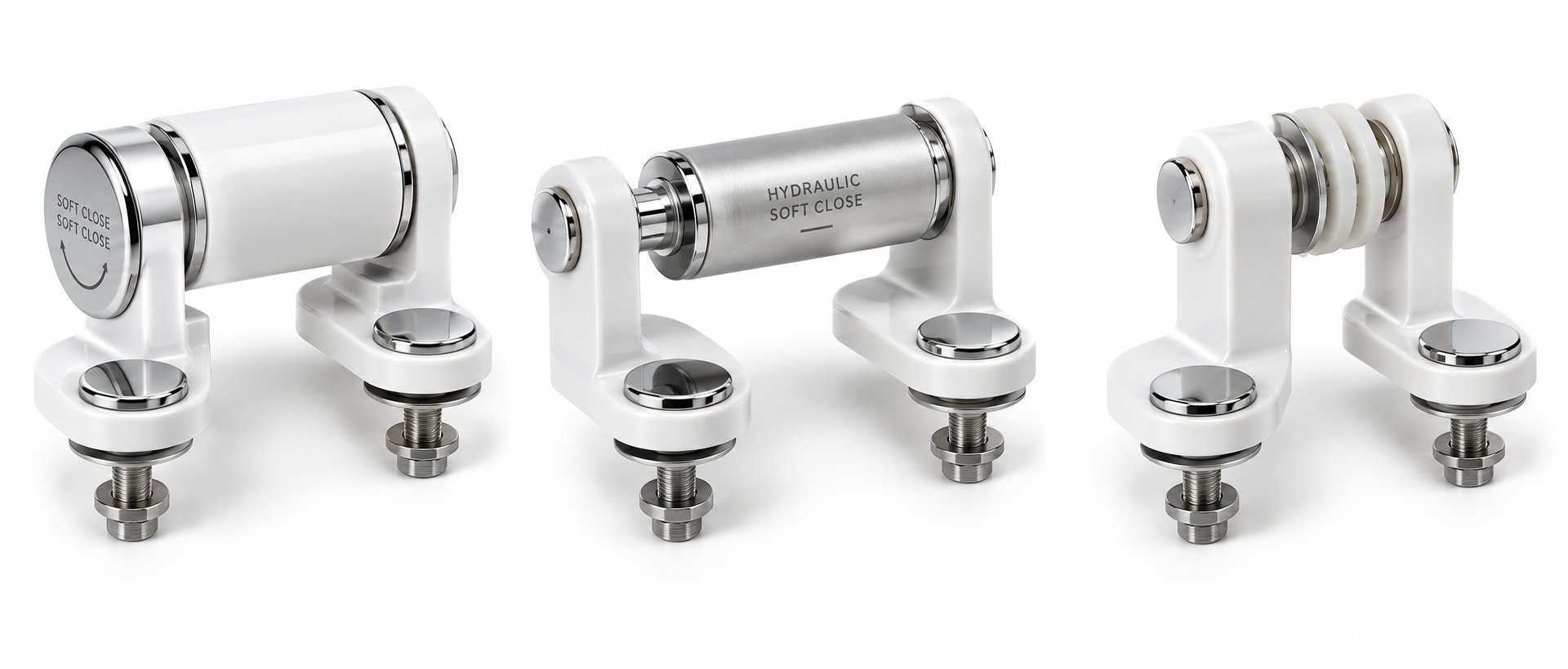
The most widely used system in both budget and premium slow close toilet seat hinges is the rotary damper. If you've shopped for a soft closing toilet seat recently, there's a strong chance the product you looked at uses this design. It's the industry standard for good reason.
As covered earlier, a rotary damper is a small sealed unit embedded directly inside the hinge body. It contains a rotor or paddle submerged in silicone oil. When the lid drops, the rotor turns through the viscous fluid, and the fluid's resistance converts a free-fall into a smooth, even descent. The entire mechanism is compact — small enough to fit invisibly inside a standard hinge — and has no external moving parts that could snag, break, or collect grime.
Why does this design dominate? It comes down to a balance of four factors that matter most to manufacturers and consumers alike:
- Consistent speed control: The silicone oil provides steady, predictable resistance through the full range of motion, so the lid doesn't speed up halfway down or stutter near the end.
- Compact form factor: The damper fits within a standard hinge profile, meaning it doesn't add bulk to the seat or require special toilet bowl geometry.
- Durability: Quality rotary dampers can handle tens of thousands of open-and-close cycles. Industry estimates from Bathroom Parts Australia suggest that well-made slow close toilet seat hinges typically last around 40,000 to 55,000 cycles before needing replacement.
- Cost efficiency: Damper-based systems are relatively inexpensive to produce at scale, which is why they appear in everything from entry-level seats to premium auto close toilet seat models.
For the vast majority of households, a damper-based mechanism is the right choice. It handles the job reliably, fits standard installations, and offers the best long-term value across price tiers.
Hydraulic Cylinder Slow Close Systems
Ever noticed the small pneumatic arm on a screen door or a commercial fire door that prevents it from slamming? Some toilet seats use a similar concept — a miniature hydraulic cylinder mounted beneath the seat or integrated into the hinge assembly. Instead of a rotary damper spinning through fluid, this system uses a piston moving linearly through hydraulic fluid inside a sealed cylinder.
The result is very precise speed control. Because the piston-and-cylinder design allows for finer calibration of fluid displacement, these systems can deliver an exceptionally smooth and even closing motion. You'll typically find hydraulic cylinder mechanisms in higher-end residential seats and commercial-grade installations where consistent performance across heavy daily use is a priority.
The trade-offs, however, are real. Hydraulic cylinders are physically larger than rotary dampers, which means they add bulk to the hinge area or require additional mounting space beneath the seat. They're also more expensive to manufacture, and that cost gets passed along to the buyer. For a standard home bathroom, the performance advantage over a quality rotary damper is marginal — you're paying more for refinement that most users won't perceive in everyday use. Where these systems shine is in settings with very high traffic, such as commercial restrooms or public facilities, where the cylinder's robust construction justifies the premium.
Gravity-Assisted Friction Hinges
The simplest approach to slowing a toilet seat's descent doesn't involve fluid at all. Gravity-assisted friction hinges rely on high-friction materials — typically engineered plastics or rubber compounds pressed against metal or ceramic surfaces — to create mechanical resistance as the hinge rotates. When the lid drops, the friction between these contact surfaces slows the motion, producing a gentler close than a standard seat without any damping fluid or sealed components.
The appeal is obvious: simplicity and price. Friction hinges have fewer parts, no fluid that can leak, and no seals that can degrade. They're the most affordable option on the market, and you'll often find them on the lowest-priced slow close seats available.
The downside? Consistency degrades over time. Friction surfaces wear down with every cycle. A friction hinge that closes smoothly in month one may close noticeably faster by month six as the contact materials erode. Unlike silicone oil — which maintains its viscosity for years inside a sealed damper — a friction surface can't regenerate. The result is a slow close seat that gradually becomes a not-so-slow close seat, and eventually, just a regular slamming seat again. Temperature and humidity fluctuations in a bathroom environment can also affect friction-based resistance unpredictably.
For a guest bathroom or a rental property where upfront cost matters most, friction hinges can be a reasonable short-term solution. For a primary household bathroom that sees daily use from multiple people, the inconsistency and shorter lifespan make them a less practical choice.
Side-by-Side Mechanism Comparison
Choosing the right mechanism becomes much easier when you compare all three types across the factors that affect daily performance and long-term satisfaction. Here's how they stack up:
| Factor | Damper-Based (Rotary Damper) | Hydraulic Cylinder | Gravity-Assisted Friction Hinge |
|---|---|---|---|
| Mechanism Type | Rotor/paddle through silicone oil inside hinge | Piston through hydraulic fluid in sealed cylinder | High-friction material surfaces creating mechanical resistance |
| Speed Consistency | High — stable across thousands of cycles | Very high — precise calibration for even descent | Moderate initially, degrades as friction surfaces wear |
| Typical Lifespan | 40,000 - 55,000+ cycles | 50,000+ cycles (commercial-grade builds) | 10,000 - 25,000 cycles before noticeable performance loss |
| Cost Range | Low to moderate | Moderate to high | Low |
| Adjustability | Usually factory-set; some premium models offer adjustment | Often adjustable via cylinder calibration | Not adjustable — performance is fixed by material properties |
| Best Use Case | Most households, standard and premium residential seats | High-traffic commercial restrooms, premium residential | Budget seats, guest bathrooms, short-term or low-use settings |
For most buyers, the damper-based system hits the sweet spot. It delivers reliable, consistent performance at a price point that works for everyday households, and its compact design fits virtually any standard slow close toilet seat hinge configuration. Hydraulic cylinders offer a step up in precision for those willing to pay for it, while friction hinges serve as an entry-level option best suited for light use.
Knowing which mechanism is inside your seat is only part of the equation, though. The material the seat itself is made from — its weight, density, and composition — directly influences how any of these mechanisms perform. A damper perfectly calibrated for a lightweight polypropylene seat will behave very differently under a heavier urea-formaldehyde one, and that mismatch can undermine even the best hinge engineering.
How Toilet Seat Materials Affect Slow Close Performance
Here's something most buyers never consider: two slow close seats can use the exact same damper mechanism and still perform completely differently. The reason? The seat itself. Its weight, density, and material composition change how gravity acts on the lid, which changes how much work the damper has to do on every single close. Pick a seat material without thinking about its relationship to the hinge, and you may end up with a closing speed that feels either dangerously fast or frustratingly sluggish.
The two materials you'll encounter most often — polypropylene (PP) and urea-formaldehyde (UF) — sit at opposite ends of the weight and density spectrum. Each brings distinct advantages, but each also places very different demands on the damper hiding inside the hinge.
Polypropylene Seats and Their Lightweight Advantage
Polypropylene is a thermoplastic polymer — the same family of material used in food containers, automotive parts, and medical devices. When shaped into a toilet seat, PP produces a lightweight, flexible, and highly practical product. You'll find PP seats across most budget and mid-range soft close toilet seat elongated models, and there's a good reason they're so widespread.
The biggest performance advantage is weight. A PP seat is significantly lighter than its UF counterpart, and that lower mass means the damper handles less gravitational force on every closing cycle. The result? A very smooth, easy-to-control descent. The damper doesn't have to fight as hard to slow the lid, so it operates well within its engineered capacity — and that translates to consistent speed and longer damper life over thousands of cycles.
Beyond weight, PP brings practical durability benefits that matter in everyday bathrooms:
- Chemical resistance: PP holds up well against household cleaning agents — bleach, ammonia-based sprays, and acidic bathroom cleaners. Families that clean frequently won't see the material break down or discolor from regular chemical exposure.
- Impact flexibility: PP has a slight flex to it, which means it absorbs minor impacts without cracking. A child dropping something on the seat or bumping it against the tank won't cause the kind of stress fractures that rigid materials develop.
- Lower hinge stress: Less weight means less mechanical strain on the hinge pivot point, the mounting bolts, and the damper seal. Over years of daily use, this reduced stress adds up — the entire assembly stays tight and aligned longer.
The trade-off? PP has a softer surface that can show scratches or scuff marks more readily over time. Its appearance is more traditionally "plastic" — a matte or satin finish rather than the glossy, ceramic-like look of premium alternatives. For a guest bathroom or a busy family home where durability and easy cleaning matter more than aesthetics, though, a polypropylene seat paired with a quality damper is a smart, long-lasting choice.
UF (Urea-Formaldehyde) Seats and Their Premium Feel
Pick up a UF toilet seat and the difference is immediate — it feels heavier, denser, and more substantial in your hands. UF, also called Duroplast, is a thermosetting plastic. During manufacturing, the material is compressed and cured under high heat and pressure, creating a rigid structure that cannot be re-melted or reshaped once formed. That process gives UF seats a set of properties that make them the go-to material for premium bathroom products.
The surface tells the story. UF toilet seats have a smooth, high-gloss finish that closely resembles ceramic. Place one next to a porcelain bowl, and the visual match is nearly seamless — the seat looks like it belongs rather than sitting on top as an obvious plastic add-on. This ceramic-like appearance is why you'll find UF seats in upscale hotel bathrooms, designer residential projects, and any setting where aesthetics carry real weight.
Performance-wise, UF seats offer advantages that justify their higher price point:
- Scratch resistance: The hardened surface resists scratches far better than PP. Years of daily use — belt buckles, cleaning tools, general contact — won't leave the seat looking worn.
- Color stability: UF resists yellowing and discoloration from UV exposure and cleaning chemicals. A white UF seat stays white in a way that many PP seats simply cannot match over the same timeframe.
- Non-porous surface: The extremely smooth, sealed surface makes UF more resistant to bacteria retention and staining, an advantage in hygiene-critical environments.
The catch — and it's an important one for slow close performance — is weight. A UF seat is noticeably heavier than a PP seat of the same shape and size. That extra mass means gravity pulls the lid down with more force, and the damper inside the hinge has to work harder to maintain the same gentle closing speed. If the damper was designed for a lighter PP seat, putting it on a heavier UF lid will result in a faster descent — potentially fast enough to be noisy or even dangerous for small fingers.
This is why an elongated slow close toilet seat in UF can't simply reuse the same hinge assembly designed for a PP version of the same shape. The damper's torque rating, fluid viscosity, and internal geometry all need to account for the greater mass. When the engineering is done right, a UF seat closes just as smoothly and silently as a PP one — it just requires more deliberate calibration to get there.
Why Material-Hinge Matching Is Critical
Imagine installing a door closer rated for a lightweight interior door onto a heavy oak exterior door. It would slam every time because the closer can't generate enough resistance to control the extra weight. The same principle applies to every toilet seat cover soft close system. The damper and the seat material must be engineered as a matched pair.
When there's a mismatch, you get one of two problems:
- Damper too weak for the seat weight: The lid closes too quickly. You get noise, impact on the porcelain rim, and the finger-pinch risk that the slow close mechanism was supposed to eliminate. The damper also wears out faster because it's operating beyond its designed load — seals degrade sooner, and the silicone fluid breaks down under excessive shear stress.
- Damper too strong for the seat weight: The lid closes painfully slowly — or stalls partway down and never fully closes at all. Users get frustrated, start pushing the lid down manually, and end up slamming it anyway, defeating the entire purpose of the mechanism.
This matching challenge is exactly why buying a toilet seat and a hinge kit separately — without verifying compatibility — can lead to disappointing results. The best-performing seats on the market come as integrated assemblies where the manufacturer has already calibrated the damper to the specific seat's weight and dimensions.
For sanitaryware brands and OEM buyers sourcing at scale, this kind of material-hinge engineering is especially critical. Every seat shape and material combination needs its own damper specification. Tianyun's PP and UF toilet seat covers, for example, ship with soft close hinges and dampers pre-matched to each cover's exact weight and geometry — ensuring that whether the end product is a lightweight elongated soft close toilet seat in PP or a heavier, premium UF model, the closing speed and feel remain consistent out of the box. For brands building product lines across multiple materials and shapes, this integrated approach eliminates the guesswork and quality inconsistencies that come from sourcing seats and hinges separately.
For individual consumers, the takeaway is straightforward: when shopping for a soft close oval toilet seat or any other shape, don't just evaluate the seat material and the hinge mechanism in isolation. Ask whether they were designed to work together. A beautiful UF seat with a cheap, under-rated damper will disappoint. A well-matched PP seat with a properly calibrated hinge will outperform it daily — and last longer doing it.
Material and mechanism determine how a seat performs mechanically. But the reasons people choose slow close technology in the first place often go beyond comfort and noise — for many households, the most compelling motivation is safety.
Safety Benefits for Families and Every Household Type
Comfort and quiet are compelling reasons to upgrade, but for many families, the decision comes down to something more urgent: preventing injuries. A standard toilet seat doesn't just make noise when it slams — it generates real force. Enough force to bruise, cut, or crush small body parts that happen to be in the wrong place at the wrong moment. A slow shutting toilet seat removes that risk entirely, and the safety implications extend well beyond young children.
Child Safety and Finger-Pinch Prevention
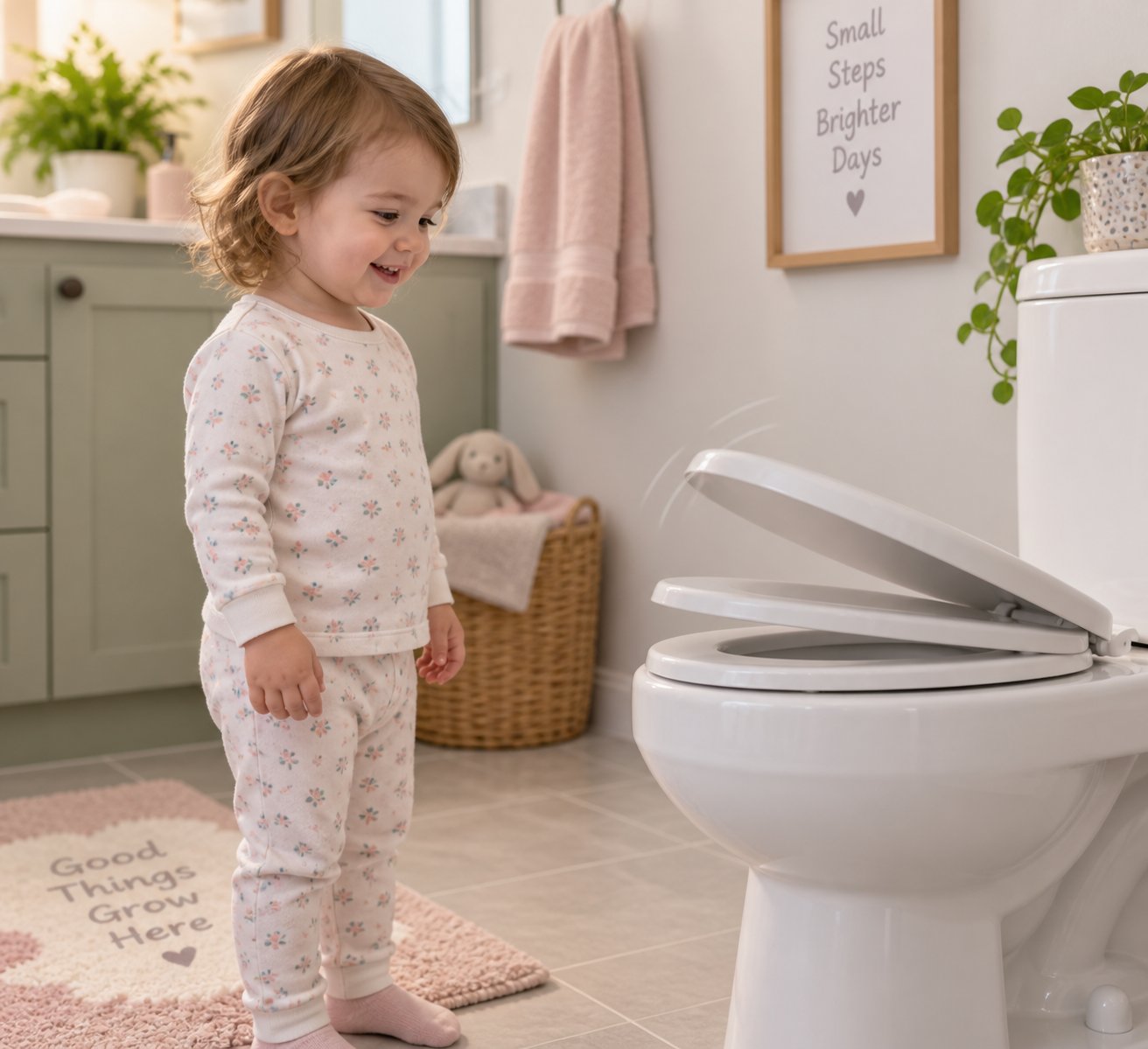
When a toddler is learning to use the toilet, curiosity and clumsiness come with the territory. Little hands grip the seat rim, lift the lid, peer inside — and then let go. A standard seat in free-fall acts like a lightweight guillotine, slamming down onto fingers, hands, or worse. The impact is sudden, the child has no time to react, and the resulting injuries can be surprisingly serious.
This isn't a theoretical risk. A study published in BJU International analyzed national U.S. emergency room data and found that an estimated 9,011 crush injuries from accidental toilet seat falls occurred between 2002 and 2010 — with 81.7% of those injuries happening to children aged two to three years old. Nearly all crush injuries were isolated to the penis (98.1%), and the number of incidents was increasing by approximately 100 per year during the study period. The researchers specifically recommended "exchange of heavy toilet seats with slow-close toilet seat technology" as a preventive intervention.
A no slam toilet seat eliminates this hazard at the source. Because the damper controls the descent, the lid simply cannot generate enough speed or force to pinch or crush anything. Even if a child releases the lid from fully upright, it drifts down over several seconds — slow enough for small hands to move away effortlessly, and gentle enough that even if contact occurs, there's no meaningful impact force. For families with toddlers going through toilet training, this single feature makes the upgrade non-negotiable.
Benefits for Elderly and Mobility-Limited Users
Safety concerns don't end with childhood. Imagine an elderly person with arthritis in their hands, reduced grip strength, or slower reflexes trying to lower a heavy toilet seat carefully and quietly. It's an awkward motion — reaching behind, gripping a smooth lid, and guiding it down in a controlled way. Miss the grip or lose control, and the seat slams. For someone with fragile skin or compromised circulation, even a minor finger pinch from a falling lid can cause bruising or a wound that heals slowly.
A self lowering toilet seat changes this interaction completely. There's no careful lowering required. The user nudges the lid past its balance point — one finger is all it takes — and walks away. The seat handles everything else. This matters not just in private homes but in assisted living facilities, rehabilitation centers, and any setting where residents have limited dexterity or balance challenges. Removing the need to physically control the lid's descent is a small accessibility gain that adds up across dozens of daily bathroom visits.
For users with mobility limitations who rely on grab bars or walkers, having one less thing to manage in the bathroom also reduces fall risk. Reaching back to lower a toilet lid while maintaining balance is exactly the kind of minor physical task that can cause a stumble. A slow lowering toilet seat lets them stay focused on their own stability instead.
Noise Reduction in Shared and Commercial Spaces
Safety isn't always about physical injury. In shared living situations, the constant slam of toilet seats creates a different kind of problem — one that affects sleep quality, stress levels, and relationships between housemates or neighbors. Anyone who has lived in a thin-walled apartment knows the sound: a muffled but unmistakable crack from the bathroom next door at midnight, at 2 a.m., and again at 5 a.m.
A quiet toilet seat solves this at the source rather than asking people to change their behavior. You don't need to post passive-aggressive notes reminding everyone to lower the lid gently. The mechanism handles it automatically, every single time, regardless of who is using the bathroom or how distracted they are. In commercial settings — office restrooms, restaurant bathrooms, hotel rooms — the cumulative effect is even more pronounced. Multiply a slamming seat by dozens or hundreds of daily uses, and you have a persistent noise source that degrades the environment for everyone nearby.
Here are the specific contexts where a quiet toilet seat delivers the most noticeable impact:
- Households with toddlers: Prevents injury during toilet training and eliminates startling slams that can frighten young children
- Homes with elderly residents: Removes the need for careful manual lowering and reduces the risk of finger injuries on fragile skin
- Rental properties: Reduces tenant complaints about bathroom noise and protects porcelain from slam-related damage that affects property value
- Commercial restrooms: Controls noise in high-traffic settings where dozens of users per hour make slamming a constant background issue
- Apartments with thin walls: Eliminates one of the most common sources of neighbor-to-neighbor noise disturbance
- Night-shift worker households: Allows family members to use the bathroom during off-hours without disrupting a sleeping shift worker's rest
Across all of these situations, the value proposition is the same: a slow shutting toilet seat turns a reactive problem — asking people to be more careful — into a proactive solution built directly into the fixture. The seat does the right thing automatically, no matter who is using it or when.
For households convinced by the safety and noise benefits, the next practical question is straightforward: do you need to replace the entire toilet seat, or can you add slow close functionality to the one you already have?
How to Retrofit Slow Close Hinges on Your Existing Toilet Seat
The good news: you don't always need to buy an entirely new toilet seat with soft close functionality. In many cases, you can upgrade your current seat by swapping out the hinges alone. The less-good news: it doesn't work in every situation, and understanding when to retrofit versus when to replace outright will save you time, money, and frustration.
Replacing Just the Hinges on a Compatible Seat
If your existing seat is still in solid shape — no cracks, no deep stains, no warping — there's a reasonable chance you can convert it into a toilet seat with slow close by installing aftermarket damper-equipped hinges. The process is more straightforward than most people expect, and you won't need anything beyond basic household tools.
Here's the general approach, based on standard hinge replacement guidelines:
- Gather your tools. A Phillips or flat-head screwdriver and an adjustable wrench are typically all you need. Some older installations may require pliers for corroded wing nuts underneath the bowl.
- Remove the old hinges. Loosen the bolts or toggles that secure the seat to the toilet bowl. These are usually accessed from beneath the rear rim of the bowl, though some models have top-access bolt covers you can pop off. Take care not to overtorque corroded fittings — penetrating oil helps if bolts are seized.
- Check mounting hole spacing. Before installing anything new, measure the distance between your toilet's two mounting holes. Most standard toilets use a center-to-center distance of roughly 5.5 inches (140 mm), but variations exist. If the new hinge kit doesn't match your bowl's hole spacing, it simply won't fit.
- Install the new damper-equipped hinges. Align the new hinge plates over the mounting holes, insert the bolts, and tighten firmly — but not so aggressively that you crack the porcelain. The damper unit should already be integrated into the hinge body on quality kits.
- Test and adjust. Lift the lid to about 45 degrees and release it. It should descend slowly and evenly. Some higher-end hinges include an adjustment mechanism — typically a small screw that lets you fine-tune resistance. If your kit includes one, use it to calibrate the closing speed to your preference.
This retrofit approach works best when your seat uses standard mounting points and the seat's weight falls within the damper's designed load range. A lightweight polypropylene seat, for example, pairs well with most aftermarket damper hinges. Heavier UF seats may close too quickly on a hinge designed for lighter loads — the same material-matching issue discussed earlier.
When a Full Seat Replacement Makes More Sense
Retrofitting hinges is practical, but it's not always the smartest move. Several situations make a complete toilet seat with soft close a better investment than trying to salvage what you have.
The most obvious trigger is physical damage. If your current seat has hairline cracks around the hinge mounting points, visible discoloration that cleaning can't remove, or a shape that doesn't match standard round or elongated templates, new hinges won't fix those problems. You'll spend money on a retrofit kit only to replace the entire seat six months later anyway.
Compatibility is another common barrier. As Bathroom Parts Australia notes, many budget toilet seats — especially cheaper plastic models — have fixed hinge plates molded directly into the seat body. These won't accept aftermarket slow close hinges at all because the hinge design is proprietary and non-removable. If your seat falls into this category, replacement is the only path forward.
There's also a performance argument for going with a complete assembly. Pre-assembled seats with factory-matched dampers consistently outperform retrofit kits because the manufacturer has already calibrated the damper's torque to that specific seat's weight and geometry. You're not guessing whether the hinge can handle the load — it's been engineered and tested as a single unit. The result is smoother, more consistent closing from day one and a longer overall lifespan.
An easy clean slow close toilet seat with a toilet seat quick release soft close feature is especially worth considering if you're going the full replacement route. Quick-release buttons on the hinges let you lift the entire seat off the bowl in seconds — no tools, no fumbling with bolts — so you can clean the bowl rim and the underside of the seat thoroughly. It's a small feature that makes a surprisingly large difference in bathroom hygiene, and it's almost always included on seats designed as integrated slow close assemblies.
What to Look for in a Retrofit Hinge Kit
Whether you're upgrading your current seat or shopping for a complete toilet with soft close seat, the hinge specifications matter more than the brand name on the box. Here's what to evaluate before you buy:
- Bowl shape compatibility: Confirm whether your toilet bowl is round or elongated. These two shapes use different seat profiles, and a universal soft close toilet seat hinge kit should explicitly state which shapes it fits. Don't assume — measure.
- Mounting hole distance: As mentioned, standard spacing is approximately 5.5 inches center-to-center, but always verify. A kit that's off by even a few millimeters will create alignment issues that affect closing performance and seat stability.
- Integrated damper vs. separate add-on: The best retrofit kits have the damper unit built directly into the hinge body. Kits that include the damper as a bolt-on accessory — attached externally to a standard hinge — tend to be less reliable and more prone to loosening or misalignment over time.
- Weight rating: If the kit specifies a maximum seat weight, compare it to your actual seat. This matters most for heavier UF seats, which can overwhelm a damper rated for lightweight PP.
- Quick-release mechanism: Look for hinges that include a push-button release, allowing the seat to pop off for cleaning. This isn't strictly necessary for the slow close function, but it dramatically simplifies maintenance.
- Material quality: Stainless steel or high-grade plastic bolt hardware resists corrosion in humid bathroom environments. Cheap zinc-plated bolts can rust and seize within a year or two, making future removal difficult.
For consumers who decide a full replacement is the better path — or for trade buyers and sanitaryware brands sourcing at volume — the most reliable approach is choosing a seat-and-hinge assembly engineered as a matched system. Tianyun's PP and UF toilet seat covers ship with soft close hinges and dampers pre-calibrated to each cover's specific weight and dimensions. This eliminates the compatibility guesswork that plagues aftermarket retrofits and ensures consistent performance across both material types — whether the end product is a lightweight PP universal soft close toilet seat or a premium UF model designed for high-end installations. For OEM buyers building product lines across multiple shapes and materials, this integrated sourcing approach reduces quality control issues and simplifies inventory management.
Whichever route you choose — hinge retrofit or full replacement — the slow close mechanism you install today will need care to keep performing at its best. Dampers are durable, but they aren't indestructible, and how you clean and maintain the seat directly affects how many years of quiet, reliable service you get before the first signs of wear appear.
Maintenance Tips and How Long Slow Close Seats Last
A slow shutting toilet seat earns its keep through years of quiet, reliable service — but only if you treat the mechanism with a little respect. The seat surface itself is forgiving. Wipe it down, scrub a stain, and move on. The hinge, however, houses the precision damper that makes the whole system work, and it's far more sensitive to careless cleaning habits than most people realize. A few simple practices will keep your slow closing toilet seat performing like new for years. Ignore them, and you could shorten the damper's life dramatically without ever knowing why.
How to Clean a Slow Close Seat Without Damaging the Hinge
Here's where many people unknowingly cause problems. You grab a spray bottle of bathroom cleaner, douse the entire seat — hinges and all — and wipe everything down. Seems thorough, right? The problem is that liquid cleaner sprayed directly into or around the hinge mechanism can seep past the damper's seal over time. Moisture infiltration degrades the seal material, and if cleaning solution reaches the silicone fluid inside the damper, it dilutes the viscosity that controls the closing speed. The result is a damper that gradually loses its ability to provide consistent resistance — not because it wore out naturally, but because cleaning habits compromised it.
A better approach takes only slightly more care:
- Seat surface: Use a damp cloth or sponge with a mild, non-abrasive cleaner. Wipe the top, underside, and rim contact areas. As cleaning experts recommend, avoid scouring pads or steel wool — these scratch the surface and create micro-grooves where bacteria accumulate faster.
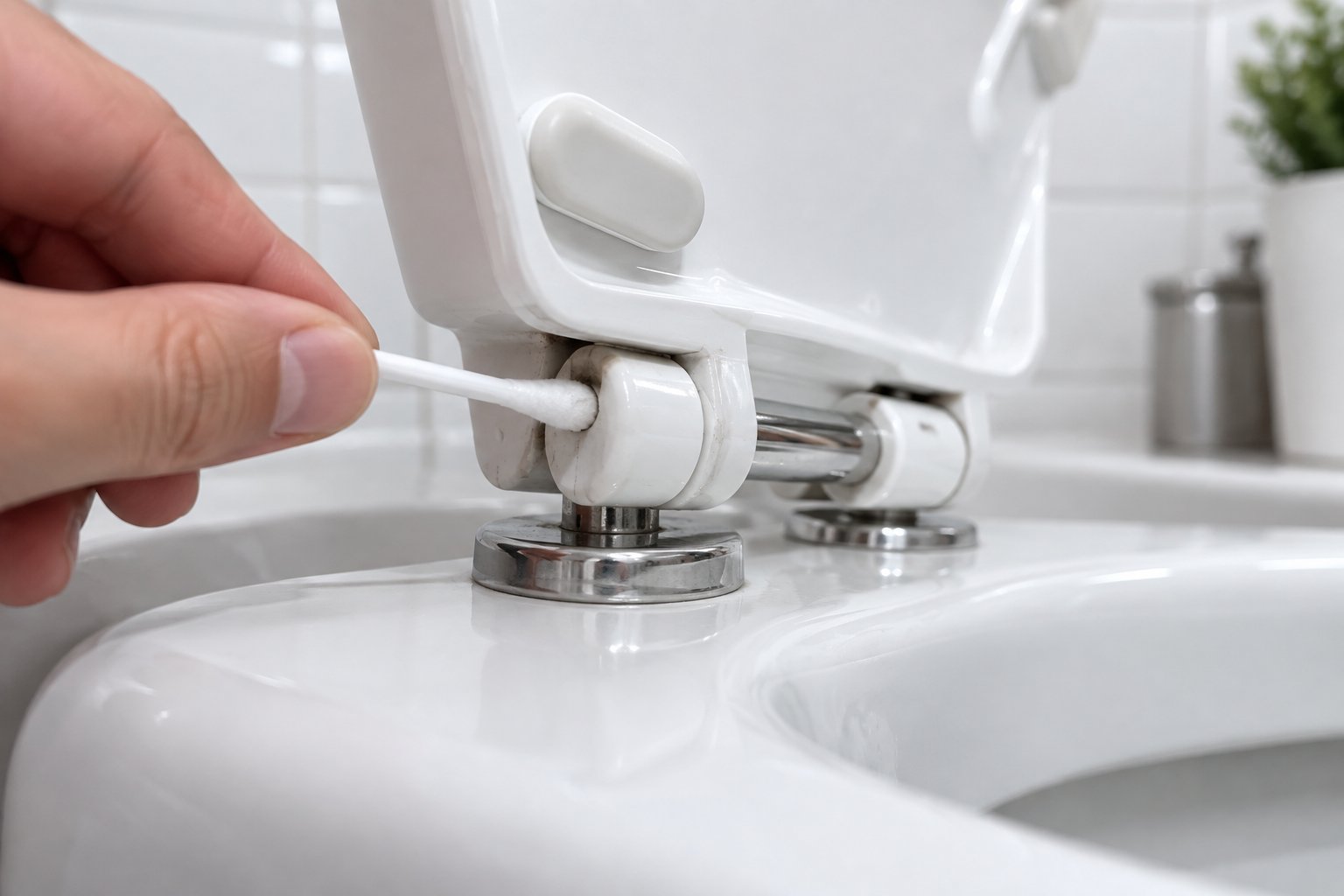
- Hinge area: Use a dry cloth or a cotton swab to clean around and between the hinge joints. If grime has built up, a lightly dampened cotton swab works well — just avoid flooding the area with liquid. The goal is to remove visible debris without introducing moisture into the damper housing.
- Chemical caution: Harsh cleaners like undiluted bleach, acetone, or ammonia-based products can degrade both the hinge housing and the damper seal material. Stick to mild bathroom cleaners and always check that the product is safe for plastics.
If your seat has quick-release buttons on the hinges — a feature common on most modern soft close toilet lid designs — use them. Press the buttons, lift the entire seat off the bowl, and clean the seat and the bowl rim separately. This lets you access the areas beneath the hinges where grime, mineral deposits, and mildew tend to build up unseen. It also means you can clean the bowl rim thoroughly without any liquid dripping into the hinge mechanism at all. Reattach the seat once everything is dry, and you've done a deep clean without putting the damper at risk.
Expected Lifespan of Slow Close Dampers
So how long should a quality damper actually last? The answer depends on three interacting factors: usage frequency, seat weight, and build quality. A household where two adults use the bathroom creates far less wear than a family of five with three kids opening and closing the lid dozens of times per day.
Industry estimates from Bathroom Parts Australia suggest that well-made soft close hinges typically handle around 40,000 to 55,000 open-and-close cycles before the damper needs replacement. For a typical household, that translates to several years of daily use — often well beyond five years and sometimes approaching a decade, depending on the household size and usage patterns.
Budget dampers tell a different story. Cheaper mechanisms may use lower-grade seals, thinner silicone fluid, or less precisely molded internal components. These units can begin showing performance changes much sooner. The decline typically follows a predictable pattern: the seat starts closing just a bit faster than it used to, then becomes inconsistent — closing gently one time and dropping noticeably quicker the next — before eventually losing all meaningful resistance.
Seat weight also plays a role in damper longevity. A heavier UF seat places more shear stress on the silicone fluid and more mechanical load on the damper's internal rotor with every cycle. If the damper was properly matched to that weight, it handles the load within its design limits. If it's a generic hinge paired with a seat heavier than it was calibrated for, every close pushes the damper harder than intended — accelerating wear and reducing its effective service life.
Signs Your Damper Is Wearing Out
A slow closing toilet lid doesn't fail all at once. The decline is gradual, which makes it easy to miss if you're not paying attention. You adapt without noticing — until one day the seat slams and you realize the slow close function has been gone for weeks. Knowing what to watch for lets you catch the problem early, when a simple hinge replacement can fix it, rather than waiting until the seat is slamming hard enough to chip porcelain.
Here are the warning signs, listed in the order they typically appear as a damper degrades:
- The seat closes slightly faster than it used to. This is the earliest and subtlest sign. The descent still feels controlled, but if you compare it to how the seat behaved when new, it's noticeably quicker. The silicone fluid may be thinning, or a minor seal leak may have begun reducing fluid volume inside the damper.
- Closing speed becomes inconsistent. Sometimes the seat glides down normally. Other times it drops faster than expected. This inconsistency signals that the damper's internal resistance is no longer uniform — either the fluid level has become uneven, or the rotor seal is allowing intermittent bypass.
- The seat slams shut with no resistance at all. At this stage, the damper has effectively failed. The fluid has leaked out, the seal has fully degraded, or the internal mechanism has worn past the point of creating meaningful friction. The toilet seat closes slowly no more — it behaves exactly like a standard undamped seat.
- Visible oil leakage around the hinge area. If you see a small, slick residue around the hinge — particularly a clear or slightly amber film — that's silicone oil escaping from the damper housing. This confirms a seal or housing failure and means replacement is overdue.
One more thing worth noting: temperature can temporarily change how your seat behaves, and this is completely normal. Silicone-based damper fluid gets thinner when warm and thicker when cold. On a hot summer day, you might notice the lid descends a touch faster than usual. On a cold winter morning, it might drift down more slowly, even pausing slightly before reaching the bowl. This is standard physics for silicone fluid — not a sign of failure. If the speed change is consistent with the room temperature and the seat still closes smoothly without slamming, the damper is fine.
The real red flags are the progressive changes listed above — especially inconsistency. A toilet seat slow closing at different speeds on the same day, in the same bathroom, at the same temperature? That's a damper telling you its days are numbered. Catching it at that stage means you can order a replacement hinge kit and swap it out before the slamming returns — and before that repeated impact starts doing the kind of damage to your porcelain that a slow close seat was designed to prevent in the first place.
Troubleshooting a Slow Close Toilet Seat That Stopped Working
Recognizing the warning signs of damper wear is one thing. Knowing what to actually do about it — and figuring out what's really causing the problem — is where most people get stuck. A soft close toilet that suddenly starts slamming doesn't always mean the damper has failed. Sometimes the fix is far simpler than you'd expect, and sometimes the real issue isn't where you'd think to look. Walking through a structured diagnostic approach saves you from replacing parts you don't need to replace — or worse, living with a slamming seat for months because you assumed it was unfixable.
Why Your Slow Close Seat Stopped Working
When a slow shut toilet seat loses its gentle closing action, the instinct is to blame the damper immediately. And yes, damper failure is the most common long-term cause — the silicone fluid degrades, the seal wears, and resistance fades. But it's not the only cause, and it's often not even the first thing you should check.
Here's a practical diagnostic sequence that moves from the simplest fixes to the more involved ones:
- Check the mounting bolts. This is the single most overlooked cause of slow close failure. Over months of use, the bolts that attach the seat to the bowl can loosen gradually. A loose hinge shifts position on the bowl rim, and even a small misalignment throws the damper's internal geometry off. The rotor no longer travels through the fluid at the correct angle, resistance drops unevenly, and the seat starts closing erratically or slamming. Tightening the bolts — a 30-second job with a screwdriver — resolves this more often than people realize.
- Inspect for visible leaks. Look closely around both hinge housings for any slick, oily residue. As noted in the previous section, clear or amber-tinted film around the hinge means silicone fluid is escaping from the damper. Once enough fluid has leaked, the damper simply can't generate sufficient resistance to control the descent.
- Check for debris or mineral buildup. Bathroom environments are humid, and moisture, dust, and cleaning product residue accumulate inside hinge pivots over time. This buildup can physically interfere with the damper's rotation — causing creaking, uneven speed, or stalling. Removing the seat and cleaning the hinge area with warm water and mild soap, then drying thoroughly, can restore smooth operation.
- Isolate the problem component. A toilet seat that closes slowly on the lid side but slams on the seat ring — or vice versa — tells you that only one hinge has failed. Test each component separately by lowering the lid alone (with the seat ring already down) and then the seat ring alone. This identifies whether you need to replace one hinge or both.
If your slow close seat suddenly starts slamming, check the mounting bolts first — a loose hinge shifts the damper out of alignment and can mimic damper failure.
Can You Adjust the Closing Speed
This is one of the most common questions from owners of slow closing toilet seats, and the honest answer is: usually not. Most consumer-grade soft shut toilet seat models use factory-calibrated dampers with a fixed resistance level. There's no adjustment screw, no dial, no way for the end user to change the closing speed. The damper was set during manufacturing to match the seat's weight and intended descent time, and that setting is sealed inside the hinge housing permanently.
Some higher-end or commercial-grade hinges do include an adjustment mechanism — typically a small set screw accessible from the exterior of the hinge body. Certain models may also allow disassembly so a specialized silicone grease can be applied to increase resistance. These are exceptions rather than the norm, though, and attempting to disassemble a consumer-grade damper usually destroys it.
If your toilet with slow close lid is closing more slowly than it should, temperature is the first thing to rule out. Cold bathroom environments thicken the silicone fluid inside the damper, making the descent noticeably sluggish — especially on winter mornings. This is normal behavior, not a defect. The seat should return to its usual speed as the room warms up. If the sluggishness persists regardless of temperature, the damper may be nearing the end of its life, with degraded fluid creating inconsistent viscosity.
A seat that closes too quickly, on the other hand, points more clearly toward failure. The damper has lost enough fluid or internal integrity that it can no longer generate adequate resistance. In that case, adjustment isn't the solution — replacement is.
When to Replace vs When to Repair
So you've diagnosed the issue. The practical question becomes: do you repair what you have or buy new? The answer depends on how many components have failed and how old the seat is.
If only one hinge is malfunctioning — confirmed by your isolation test — a hinge replacement kit is usually the most cost-effective fix. You keep the seat body, replace the failing hinge, and restore full soft close function for a fraction of the cost of a complete new seat. This makes particular sense when the seat itself is still in good physical condition — no cracks, no discoloration, no warping.
A full seat replacement becomes the smarter choice when:
- Both hinges are failing simultaneously. If both dampers have worn out at roughly the same time, the seat has reached the end of its practical service life. Replacing two hinges separately can cost nearly as much as a new seat with pre-matched dampers.
- The seat body is damaged. Hairline cracks around hinge mounting points, deep staining, or surface degradation from harsh cleaners all signal that the seat itself — not just the hinges — needs to go.
- The seat is several years old. A toilet seat that closes slowly after years of reliable service has given you its full value. Investing in new hinges for an aging seat often means the seat body fails shortly after the repair, wasting your time and money.
- Replacement hinges aren't available. Some proprietary hinge designs — particularly on older or discontinued models — simply don't have aftermarket replacements. If you can't source compatible parts, a full seat swap is the only option.
For households that go the full replacement route, the upgrade is also an opportunity to move to a seat with features that didn't exist when the original was purchased — quick-release buttons for easier cleaning, improved damper technology with longer cycle ratings, or a material upgrade from PP to UF for a more premium look and feel.
Whether you're tightening a loose bolt, swapping a single hinge, or installing an entirely new seat, the underlying principle stays the same: a soft close toilet is a precision system where small details — alignment, calibration, material matching — determine whether you get years of silent, effortless operation or a frustrating return to slamming. Pay attention to the mechanism, give it the maintenance it deserves, and it will quietly do its job thousands of times without asking anything in return.
Frequently Asked Questions About Slow Shutting Toilet Seats
1. How does a slow shutting toilet seat work?
A slow shutting toilet seat relies on a small rotary damper embedded inside each hinge. This damper contains a rotor submerged in silicone oil. When you release the lid, gravity pulls it downward, but the rotor must push through the viscous fluid to rotate, creating steady resistance that converts a free-fall into a gentle, multi-second descent. You simply nudge the lid past its tipping point and walk away — no manual guiding required. The damper's seal integrity, fluid viscosity, and build precision all determine how smooth and consistent that motion remains over thousands of cycles.
2. Can I add a slow close mechanism to my existing toilet seat?
Yes, in many cases you can retrofit your current seat with an aftermarket slow close hinge kit. The process involves removing your old hinge bolts, verifying that your toilet's mounting hole spacing matches the new kit (typically around 5.5 inches center-to-center), and installing the damper-equipped hinges. This works best when the seat is undamaged and its weight falls within the new damper's rated load. However, if your seat is cracked, uses proprietary non-removable hinges, or is made from heavy UF material that may overwhelm a generic damper, a full replacement with a pre-matched seat-and-hinge assembly — such as those offered by Tianyun (https://www.tianyuntech.com/pp-uf-cover) — delivers more reliable, factory-calibrated performance.
3. How long does a slow close toilet seat damper last?
Quality slow close dampers typically endure between 40,000 and 55,000 open-and-close cycles, which translates to roughly five to ten years of normal household use depending on family size and frequency. Budget dampers with lower-grade seals or thinner silicone fluid may start degrading much sooner. Factors that shorten lifespan include mismatched seat weight, exposure to liquid cleaners seeping into the hinge, and extreme temperature fluctuations. Watching for early signs — like a slightly faster descent or inconsistent closing speed — lets you replace the hinge before slamming returns.
4. Why did my slow close toilet seat start slamming?
The most common culprit is surprisingly simple: loose mounting bolts. Over time, vibrations and daily use gradually loosen the bolts securing the seat to the bowl, shifting the hinge out of alignment and disrupting the damper's internal geometry. Tightening them with a screwdriver often restores full function in seconds. If that does not fix it, inspect for oily residue around the hinges (a sign of silicone fluid leakage), check for mineral or debris buildup in the hinge pivot, and test each hinge independently to isolate which side has failed. Persistent slamming after these checks usually means the damper itself needs replacement.
5. What is the difference between PP and UF toilet seat materials for slow close seats?
Polypropylene (PP) seats are lightweight, chemically resistant, and slightly flexible, placing less stress on the damper and typically extending hinge life. Urea-formaldehyde (UF or Duroplast) seats are heavier, harder, and scratch-resistant with a glossy ceramic-like finish that resists yellowing. The critical difference for slow close performance is weight: a UF lid exerts more gravitational force, so the damper must be specifically calibrated to handle that extra mass. A mismatch leads to either too-fast closing or a frustratingly slow descent. For best results, choose seats where the damper and material are engineered together as a matched system.
Apply This Insight to Your Project
Tell us what you are building and how the topic “Banish The Slam: Slow Shutting Toilet Seat Facts, Fixes, And Tips” relates to your application. Our engineering team can help evaluate the next step.