What Soft Close Cabinet Dampers Actually Do
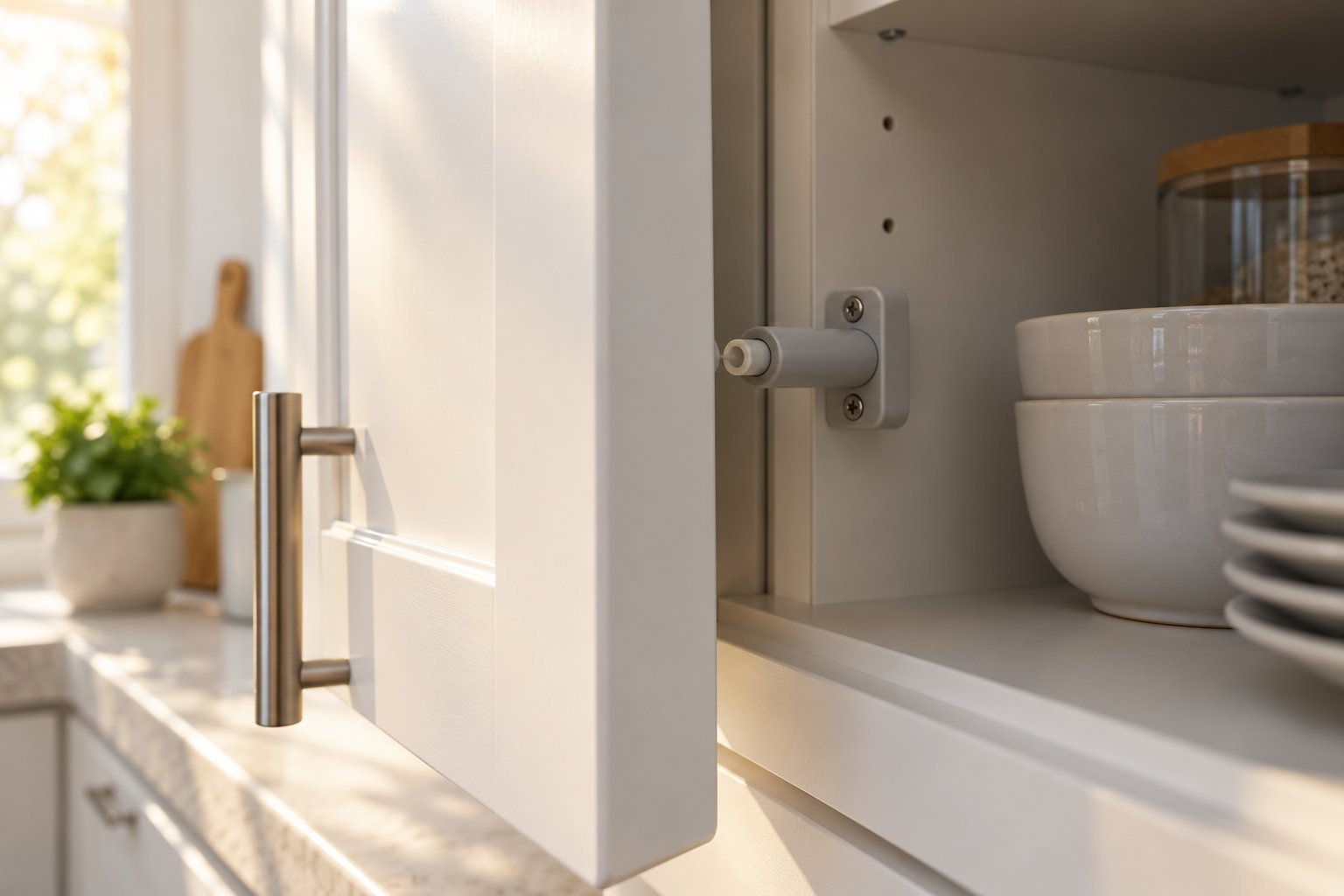
Soft close cabinet dampers are small hydraulic or pneumatic devices mounted inside a cabinet that catch a door or drawer in its final inches of travel and guide it to a gentle, silent close. Instead of a sharp slam, you get a smooth, controlled deceleration that protects the cabinet box, reduces noise, and keeps little fingers safe. Whether factory-integrated into new cabinetry or added as an aftermarket upgrade, these compact mechanisms have become the quiet standard behind nearly every modern kitchen and bathroom door.
This guide covers everything you need to know about them, from internal mechanics and product types to selection criteria, hands-on installation, troubleshooting, and long-term maintenance. Think of it as a full-lifecycle resource, whether you are retrofitting a 15-year-old kitchen or specifying hardware for a brand-new build.
What a Soft Close Damper Actually Is
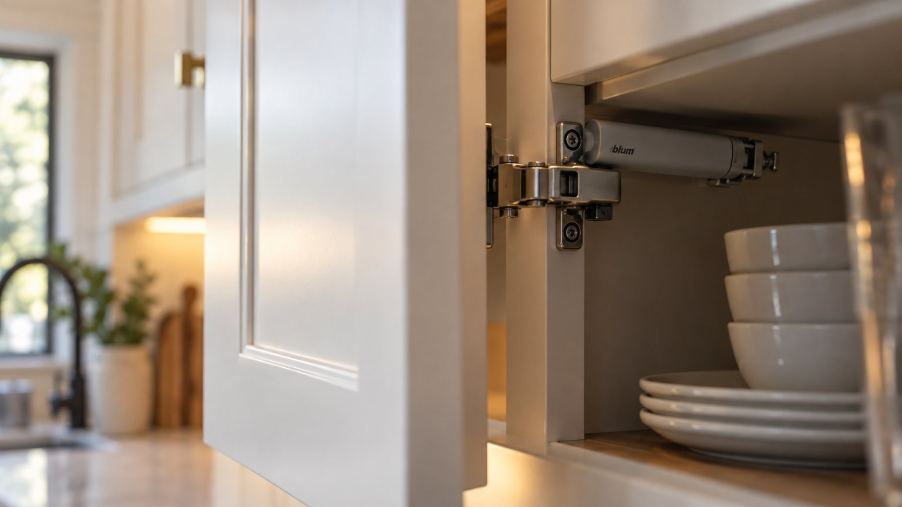
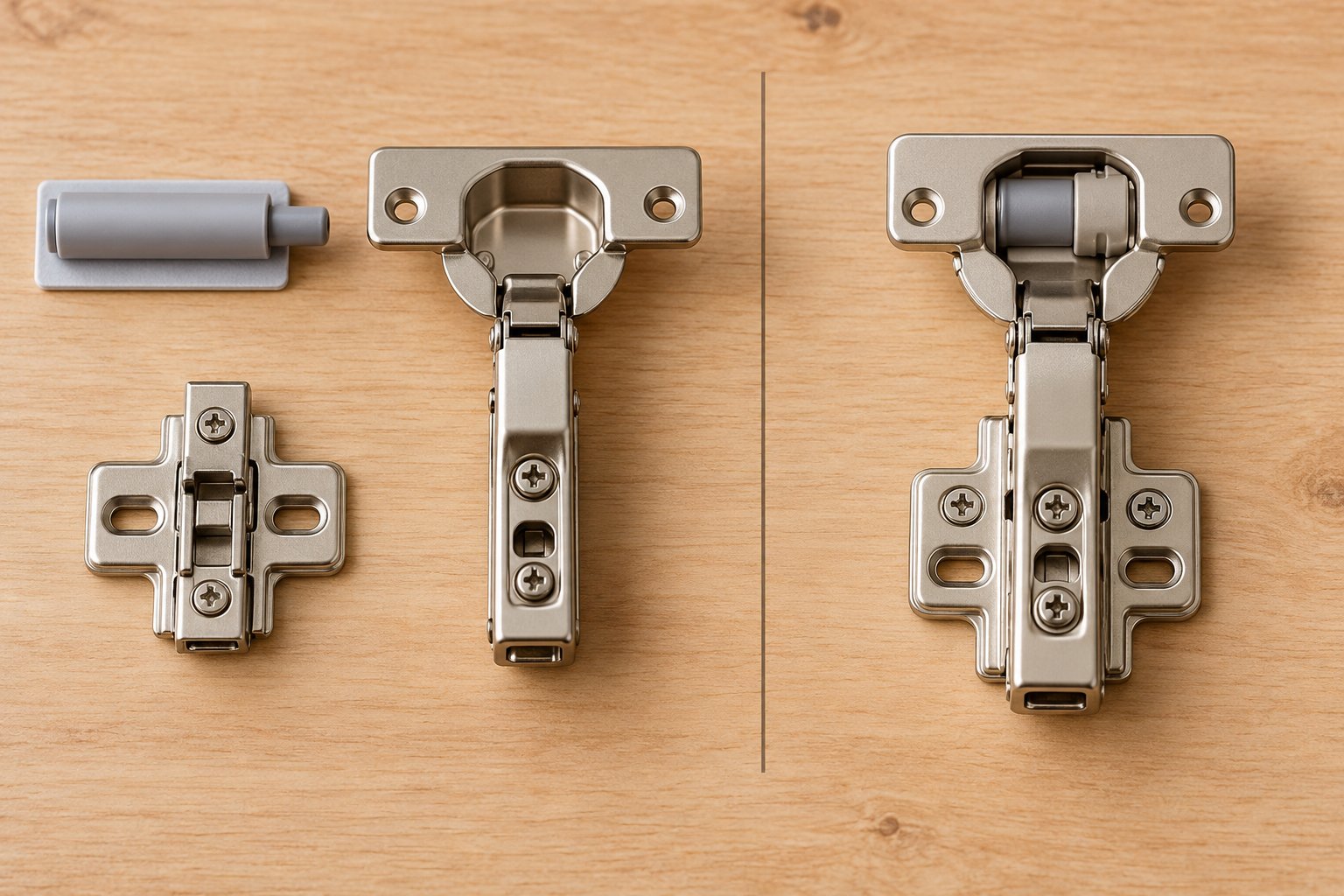
A soft close damper is not a hinge. That distinction trips up a lot of first-time buyers. It is a standalone component, a small cylinder with an internal piston, fluid or gas chamber, and a return spring, designed to absorb impact energy right before a door or drawer reaches the closed position. The term itself is an umbrella covering several product categories: adhesive piston dampers that stick or screw onto the cabinet frame, clip-on adapters that snap directly onto existing European-style cup hinges, and hinge-integrated units where the damping mechanism is built into the hinge body from the factory. A clip-on damper, for example, attaches to the arm of a compatible concealed hinge in seconds without any drilling. Adhesive piston dampers, on the other hand, mount to the interior of the cabinet box and work independently of the hinge brand. Each type serves a different cabinet setup, but the core job is identical: absorb momentum and close quietly.
Why Kitchens and Bathrooms Went Quiet
A decade ago, soft close was a premium upgrade found mostly in high-end cabinetry. Today, it is a baseline expectation. Homebuyers notice the difference immediately, and as industry professionals point out, soft close cabinetry is now widely viewed as a feature that boosts both daily comfort and resale value. The real game-changer for existing homeowners, though, is the soft close adapter for cabinet doors. Retrofit dampers and soft close adapters for cabinets let you upgrade every door and drawer in a weekend, no remodel required. Even soft close hinges for drawers and drawer-specific slide adapters are available as drop-in replacements for older hardware.
A soft close damper converts kinetic energy into controlled hydraulic resistance, decelerating the door over the last 2-4 inches of travel.
That single principle, borrowed from the same shock-absorber engineering found in automobiles and miniaturized for furniture, is what separates a peaceful kitchen from one that rattles every time someone grabs a coffee mug. The real question most homeowners face is not whether soft close is worth it, but which type of damper fits their specific cabinets and how the mechanism actually works on the inside.
How the Damping Mechanism Works Inside
Imagine pushing a spoon through honey versus pushing it through water. The honey resists more, slowing the spoon down gradually. That is essentially what happens inside every soft close cabinet damper, just with precision-engineered parts and carefully selected fluids instead of kitchenware. Understanding the mechanics behind the soft close effect helps you choose better products, troubleshoot problems, and appreciate why some dampers feel luxuriously smooth while cheap ones feel jerky or incomplete.
Hydraulic Resistance and the Piston Principle
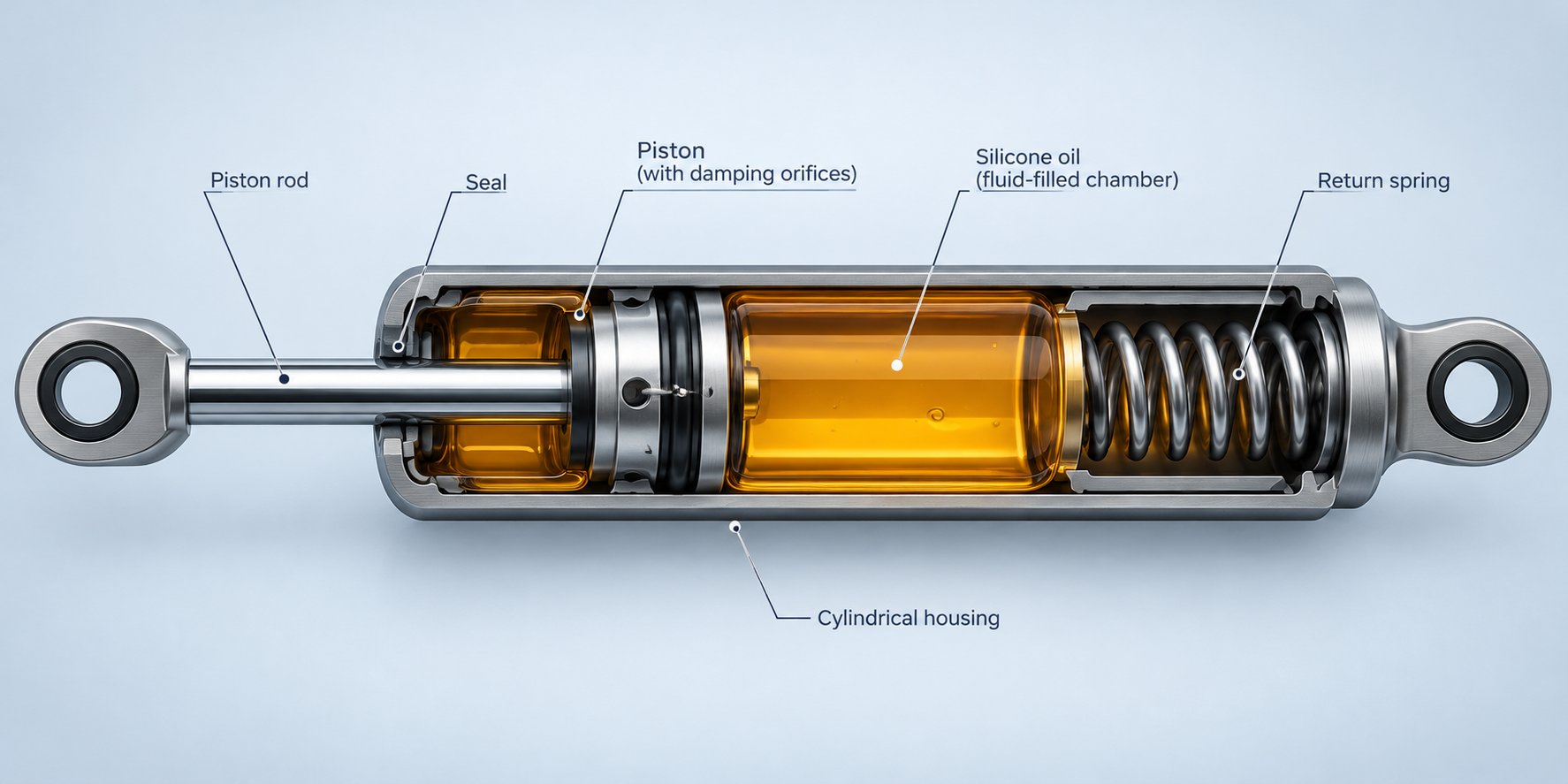
Most soft close dampers rely on a sealed cylinder filled with silicone oil or a similar viscous fluid. When your cabinet door swings toward the closed position, it contacts the damper's piston rod and pushes it inward. As the piston moves deeper into the cylinder, it forces the silicone fluid through a narrow orifice, a tiny restricted channel machined into the piston head or cylinder wall. That restriction is where the magic happens: the fluid cannot pass through quickly, so it pushes back against the piston, converting the door's momentum into gentle, controlled resistance.
You will recognize this principle immediately if you have ever compressed a bicycle pump with your finger over the nozzle. Block the airflow partially, and the pump resists your hand. The same physics apply here, just with fluid instead of air and far more precise tolerances.
Two variables determine how fast or slow the door ultimately closes. The first is orifice size: a smaller opening creates more resistance, producing a slower close. The second is fluid viscosity, essentially how thick and resistant to flow the silicone oil is. Silicone PDMS fluids are the industry standard because they maintain consistent viscosity across a wide temperature range, from roughly -30°C to +250°C, meaning the damper performs reliably whether your kitchen is sweltering in summer or freezing during a winter cold snap. Manufacturers tune these two factors together to create a damping curve that matches specific door weights, a concept that becomes critical when you are selecting the right product for your cabinets.
This is the same core technology found in automotive shock absorbers and screen-door closers, just miniaturized to fit inside a housing no bigger than your thumb. A soft close hinge adapter or a standalone piston damper applies identical hydraulic principles at a fraction of the scale.
What Happens in the Last Few Inches
Here is what surprises most people: a soft close damper does not resist your door through its entire swing. The door moves freely for most of its arc, exactly as it would with a standard hinge. The damper only engages during the final portion of travel, typically the last two to four inches before the door meets the frame. Engineers sometimes call this the "engagement zone" or "catch point."
This two-phase motion is deliberately designed. When you push the door closed with a normal amount of force, the first phase feels completely unrestricted, light, natural, and responsive. Then, the moment the door contacts the damper's piston rod, the second phase kicks in: the hydraulic resistance catches the door and smoothly decelerates it until it comes to rest against the frame without a sound. For soft close drawers and cabinets, the same principle applies through a damper mounted at the rear of the slide rail, catching the drawer box in its last inches of travel.
This is exactly why well-designed soft close feels so intuitive. You are never fighting the mechanism. Poorly engineered closers, by contrast, sometimes engage too early in the swing or provide uneven resistance, creating that frustrating "fighting-the-door" sensation where the panel seems to stick or stutter partway through its arc. Quality drawer hardware with soft close avoids this entirely by confining all resistance to that narrow engagement window.
The components that make this two-phase behavior possible are straightforward. Every damper, whether it is a standalone piston unit or part of an integrated hinge assembly, contains the same fundamental parts:
- Outer housing — the sealed cylinder body that contains the fluid and guides the piston
- Piston rod — the shaft that extends outward and makes contact with the door or drawer
- Fluid chamber — filled with silicone oil or similar viscous fluid that creates the damping resistance
- Orifice or valve — the restricted channel through which fluid is forced, controlling deceleration speed
- Return spring — a small internal spring that pushes the piston back to its extended position after the door opens, resetting the damper for the next close cycle
- Mounting bracket or adhesive pad — the interface that attaches the damper to the cabinet frame, hinge arm, or door surface
That return spring deserves a closer look because it is what makes the whole system repeatable. Every time you open the cabinet door, the spring resets the piston to its starting position, fully extended and ready to catch the door again on the next close. Quality dampers are rated for tens of thousands of these compress-and-reset cycles, with premium units exceeding 80,000 cycles before any measurable loss in performance.
With the internal mechanics clear, the natural next question becomes practical: which type of damper actually fits your cabinets? Adhesive piston units, clip-on hinge adapters, bumper-style dampers, and fully integrated hinges each deliver this same hydraulic principle through a very different physical package, and picking the wrong format is one of the most common mistakes homeowners make.
Every Type of Soft Close Damper Compared
Walk into any hardware store or browse an online catalog, and you will find dozens of products labeled "soft close." The problem is that they are not all the same thing. Some stick to your cabinet frame. Others clip onto your hinges. A few replace the hinge entirely. Picking the wrong format means dealing with incompatibility, wasted money, or a damper that simply does not perform. The four main categories below cover every soft close adapter and cabinet door closer currently on the market, each engineered around the same hydraulic or pneumatic principle but packaged in a distinctly different form factor.
Adhesive Piston Dampers
These are the most common retrofit option and the one most homeowners encounter first. An adhesive piston damper is a small cylindrical unit, usually around 10 to 15 mm in diameter and 40 to 60 mm long, with a peel-and-stick foam pad or a screw-mount base on one end and an exposed piston rod on the other. You mount it directly to the inside of the cabinet frame, typically near the top or bottom corner on the hinge side, and the door's edge compresses the piston each time it closes.
Installation is about as simple as it gets: clean the surface, peel the backing, press firmly, and let the adhesive cure. Screw-mount versions add a single fastener for extra holding power. The trade-off? Adhesive piston dampers are highly sensitive to two things: placement accuracy and surface preparation. Mount one too close to the hinge axis, and the door will not travel far enough to engage the piston. Mount it on a dusty or oily surface, and the pad will peel off within weeks. Furniture hardware specialists note that melamine-faced chipboard often retains manufacturing release agents, and skipping the degreasing step with isopropyl alcohol is the leading cause of adhesive failure.
Despite those caveats, adhesive piston dampers remain the go-to soft close adapter for cabinets with any hinge type, including face-frame, overlay, and inset configurations. They work independently of the hinge, which makes them the most universally compatible option on this list.
Clip-On Hinge Adapters
If your cabinets already have European-style concealed hinges, sometimes called 35 mm cup hinges, clip-on soft close adapters offer a faster and more integrated upgrade path. These small units snap directly onto the hinge arm without any drilling, screwing, or adhesive. The damper housing clips over the arm's profile, and when the door swings closed, the hinge arm drives the damper's internal piston through the engagement zone.
The appeal is obvious: tool-free installation, no marks left on the cabinet frame, and an upgrade that is completely reversible if you change your mind. For renters or anyone who wants a non-permanent solution, clip-on adapters are ideal.
The critical limitation, however, is brand-specific compatibility. Hinge arm profiles vary from manufacturer to manufacturer. As hinge compatibility guides explain, a clip-on damper designed for one brand's arm geometry will not grip a different brand's arm securely, even though both hinges use the same 32 mm System 32 mounting plate spacing. The overlay type matters too: a damper built for full-overlay hinges (straight arm, 0 mm cranking) cannot fit an inset hinge (pronounced 16 mm crank). Before purchasing, you need to identify both the hinge manufacturer and the overlay configuration. If that information is unknown or the hinges are a generic brand, adhesive piston dampers or screw-mount units are the safer bet.
Bumper-Style and Door-Mounted Units
Bumper-style dampers take a different mounting approach altogether. Instead of attaching to the cabinet frame or hinge arm, these units mount to the interior surface of the door itself. When the door closes, the damper's body or piston tip contacts the cabinet frame edge, compressing the mechanism and absorbing the impact.
You will also find larger hydraulic units in this category, designed specifically for heavier or oversized doors where a standard piston damper does not generate enough resistance. These heavy-duty soft close cabinet door closers use bigger fluid chambers and wider piston diameters to handle solid-wood slab doors, large mirrored panels, or tall pantry doors that can weigh significantly more than a typical MDF cabinet front. For standard kitchen doors weighing up to roughly 15 kg, a single compact damper per door is usually sufficient. For heavier doors, or panels taller than about 900 mm that require three or more hinges, fitting two dampers, one near the top and one near the bottom, distributes the braking force evenly and prevents the door from twisting during deceleration.
Bumper-style dampers are a solid choice when clip-on adapters are not compatible with your hinge brand and when you prefer to keep the cabinet frame completely free of hardware. The downside is that door-mounted units shift weight onto the door panel itself and may require precise alignment to contact the frame at the correct angle.
Hinge-Integrated Soft Close
Strictly speaking, these are not add-on dampers at all. They are complete hinge replacements with the damping mechanism built directly into the hinge cup or arm. When you buy a "soft close hinge," you are getting a concealed European hinge that includes a tiny internal hydraulic cylinder as part of its standard design. The damping engages automatically in the final degrees of the door's closing arc, and no separate adapter or clip is needed.
Hinge-integrated units deliver the cleanest look, the most consistent performance, and the fewest compatibility headaches, because the damper and hinge are engineered as a single system. Many models also include adjustment screws for fine-tuning closing speed to match different door weights. The trade-off is cost and commitment: you are replacing every hinge on the cabinet, which involves removing the old hardware, potentially drilling new pilot holes, and spending more per door than any retrofit adapter would cost.
For new builds, refacing projects, or situations where existing hinges are already worn out, integrated soft close hinges are the logical choice. For quick weekend upgrades on cabinets with healthy hardware, a retrofit soft close adapter is the more practical path.
| Damper Type | Mounting Method | Best For | Typical Compatibility | Ease of Install |
|---|---|---|---|---|
| Adhesive Piston Damper | Peel-and-stick pad or screw-mount on cabinet frame | Universal retrofits; any hinge type | Face-frame, frameless, overlay, and inset cabinets | Very easy — no tools for adhesive; one screw for screw-mount |
| Clip-On Hinge Adapter | Clips directly onto existing European cup hinge arm | Quick, reversible upgrades on compatible hinges | Brand- and overlay-specific (35 mm cup hinges only) | Very easy — tool-free snap-on |
| Bumper-Style / Door-Mounted Unit | Mounts to the interior surface of the door panel | Heavy doors; cabinets where frame-mounting is impractical | Most cabinet styles; requires clearance between door and frame | Moderate — precise alignment needed |
| Hinge-Integrated Soft Close | Full hinge replacement (cup hinge with built-in damper) | New builds, refacing, or worn-hinge replacement | European 35 mm cup hinge mounting (face-frame and frameless) | Moderate — requires removing old hinges and possible re-drilling |
Use the table above as a quick-reference shortcut, but keep your specific cabinet details in mind. The "best" damper is always the one that matches your hinge system, fits the available clearance inside the cabinet box, and delivers enough force for your door's weight. Those matching criteria, especially the decision between adding a retrofit damper and replacing the entire hinge, deserve a closer look on their own.
Retrofit Dampers vs Replacing Your Hinges Entirely
Every homeowner staring at a cart full of cabinet hardware eventually hits the same fork in the road: do you add a soft close cabinet door damper to the hinges you already have, or rip everything out and start fresh with integrated soft close hinges? Both paths end with a quieter kitchen, but the cost, effort, and long-term payoff differ enough that choosing the wrong one can leave you frustrated or overspending. Here is an honest framework for making that call.
When Retrofit Dampers Make More Sense
If your existing hinges still open and close smoothly, with no wobble, no sag, and no stripped screw holes, adding soft close dampers on top of that healthy hardware is the most cost-effective route. Adhesive piston dampers and clip-on adapters preserve your original hinges entirely, which means zero drilling, zero new mortises, and a project you can finish in an afternoon with basic hand tools or no tools at all.
Budget is another strong argument. A quality aftermarket damper typically runs between $2 and $6 per door, while a full replacement soft close hinge can cost $5 to $15 per hinge, and most doors need at least two hinges. Multiply that across 20 or 30 cabinet doors, and the gap adds up quickly. For a household trying to stretch a renovation budget, industry cost breakdowns show the retrofit path can cut hardware expenses by half or more compared to full hinge replacement.
Renters benefit the most. A soft close drawer adapter or an adhesive damper can be peeled off and packed into a moving box when the lease ends, leaving the landlord's cabinets untouched. That reversibility also appeals to homeowners who want to experiment before committing. You can test a single damper on the noisiest cabinet in your kitchen, live with it for a week, and scale up only after you are satisfied with the feel.
When Full Hinge Replacement Wins
Retrofit dampers solve the noise problem, but they add a visible component inside the cabinet box. Integrated soft close hinges, by contrast, hide the entire damping mechanism inside the hinge cup or arm, delivering a cleaner interior look with nothing extra mounted to the frame or door. If aesthetics matter to you, especially in glass-front cabinets where the interior is always on display, replacement hinges are the tidier option.
Performance consistency is the other major advantage. Because the damper is engineered into the hinge geometry from the start, the engagement point, closing speed, and force curve are calibrated as a single system. You will not deal with placement guesswork or compatibility mismatches. Every door closes with the same controlled motion, every time. Quality integrated hinges from established manufacturers are rated for 100,000 cycles or more, and many carry lifetime mechanical warranties on the damping mechanism itself.
Replacement makes the most sense in three specific scenarios. First, when your current hinges are already worn: loose cups, sloppy pivot action, or screw holes that no longer grip mean the hinge needs to go regardless, so you might as well upgrade to soft close in the same step. Second, when you are refacing your cabinets with new doors and drawer fronts, since the old hinges often will not align with new door thicknesses or boring patterns. Third, when you simply want a permanent, set-it-and-forget-it upgrade and do not mind the higher upfront cost.
| Criteria | Retrofit Dampers | Soft Close Hinges |
|---|---|---|
| Cost per Door | $2 - $6 (one or two damper units) | $10 - $30 (two or more replacement hinges) |
| Installation Time | 1 - 3 minutes per door | 10 - 20 minutes per door (remove old, mount new, adjust) |
| Reversibility | Fully reversible; adhesive peels off, clip-ons snap off | Permanent; old hinge holes may remain visible |
| Aesthetic Impact | Small damper body visible inside cabinet box | Completely concealed inside hinge cup and arm |
| Long-Term Reliability | Good on quality units; adhesive types may need reattachment over time | Excellent; damper and hinge engineered as one system, often rated 100,000+ cycles |
| Compatibility Concerns | Adhesive dampers work on any cabinet; clip-ons require matching hinge brand | Must match hinge boring pattern, overlay type, and door thickness |
If your existing hinges are standard European cup hinges in good condition, a clip-on adapter gets you 90 percent of the result at a fraction of the cost. If hinges are worn, non-standard, or you are already remodeling, replace them outright.
That decision rule covers most situations, but it deliberately leaves out one important variable: your specific cabinet setup. Door weight, hinge style, cabinet construction, and even the type of room the cabinets live in all influence which soft close dampers will actually perform well once installed. A damper rated for a lightweight melamine door, for instance, will barely slow down a solid-maple slab, and a drawer-specific adapter cannot do double duty on a door. Getting the match right before you buy saves both money and frustration.
How to Match a Soft Close Damper to Your Cabinet Setup
Picking the right product category is only half the equation. A clip-on adapter that performs beautifully on a lightweight thermofoil door may barely slow a 25-pound solid-cherry panel, and a heavy-duty soft close door damper designed for a tall pantry cabinet will overpower a small bathroom vanity door, stopping it short of the frame entirely. The difference between a smooth close and a frustrating one almost always comes down to matching three variables: door weight, hinge type, and available clearance.
Door Weight, Size, and Material Considerations
Every damper is engineered around a specific force range, and reputable manufacturers publish a maximum door weight rating for each model. A compact piston damper rated for doors up to 8 kg, for example, generates enough hydraulic resistance to decelerate a standard melamine or laminate cabinet front. Mount that same unit on a solid-wood slab door weighing 12 kg, and the piston will bottom out before the door finishes closing, leaving a gap or an audible thud at the end of travel.
Heavier or taller doors, think solid maple, thick MDF, or anything over about 600 mm wide, need either a higher-force damper or two standard dampers working in tandem. As a practical first step, remove one door from your cabinet and weigh it on a bathroom scale. Compare that number against the damper's rated capacity before you buy a bulk pack. Material matters too: a glass-insert door with a wood frame may weigh more than it looks, while a hollow-core panel may weigh far less than you expect. When in doubt, round up to the next force rating. A slightly over-spec damper can sometimes be managed by adjusting placement, but an under-spec one cannot be fixed without swapping it out entirely.
Hinge Type and Cabinet Construction Compatibility
Your cabinet's hinge style and construction method dictate which damper formats will physically fit. Here is a straightforward compatibility guide:
- European cup hinges (35 mm concealed) — You have the widest options. Both clip-on adapters and adhesive or screw-mount piston dampers work well. Clip-ons are faster to install, but verify the hinge brand and overlay type first.
- Face-frame hinges (exposed barrel or surface-mount) — Clip-on adapters will not fit these profiles. Adhesive or screw-mount piston dampers are the primary option, mounted directly to the inside of the cabinet frame.
- Frameless (full overlay) construction — The door typically covers the entire cabinet box edge, leaving minimal clearance between the door's inner face and the side panel. Confirm that the damper body does not interfere with the door's swing arc or press against an adjacent shelf edge.
- Inset doors (flush with the frame) — Clearance is tightest here because the door sits inside the cabinet opening rather than overlapping it. Compact piston dampers with a low-profile body, or hinge-integrated units that add no external bulk, are the preferred solutions.
A quick test before committing: close the door slowly by hand and watch where the damper body would sit. If anything, a shelf pin, a pull-out tray rail, or the adjacent door's edge, occupies that space, you will need a slimmer unit or an alternative mounting position.
Drawer-Specific Damping Options
Drawers and doors share the same damping principle, but the hardware is not interchangeable. Soft close drawer hinges and drawer-specific adapters attach to the rear of the drawer box or clip onto the slide rail itself, catching the drawer in its final inches of travel as it slides toward the cabinet back panel. The damper's piston compresses horizontally rather than in the rotational arc a door follows, and the mounting geometry is completely different.
Most quality full-extension slides include built-in soft close mechanisms, so if you are replacing drawer slides anyway, look for models with integrated damping. If the existing slides are still in good shape and you just want to add the soft close feature, standalone drawer adapters are available that clip onto the rear bracket of many standard ball-bearing slides. Just confirm the adapter is designed for your slide profile; a unit meant for side-mount slides will not fit an undermount system, and vice versa.
Match damper force to door weight, damper geometry to hinge type, and damper size to available clearance inside the cabinet box.
With the right damper matched to your setup, the next challenge is getting it mounted correctly. Placement precision and surface preparation make the difference between a damper that performs flawlessly for years and one that falls off or fails to engage within the first month.
Installation Walkthrough and Mistakes to Avoid
You have the right damper in hand, matched to your door weight, hinge type, and available clearance. The tempting next move is to tear open the package and start sticking things to the inside of your cabinet. Resist that impulse for about five minutes. Where and how you mount a cabinet door damper matters just as much as which one you buy, and a small placement error can turn a smooth close into a door that slams, stalls, or pops the damper right off the frame. The good news? The actual installation is genuinely simple once you understand the logic behind positioning.
Step-by-Step Placement for Piston Dampers
Whether you are working with an adhesive soft close cabinet door adapter or a screw-mount piston unit, the general process follows the same sequence. Here is how to get it right on the first try.
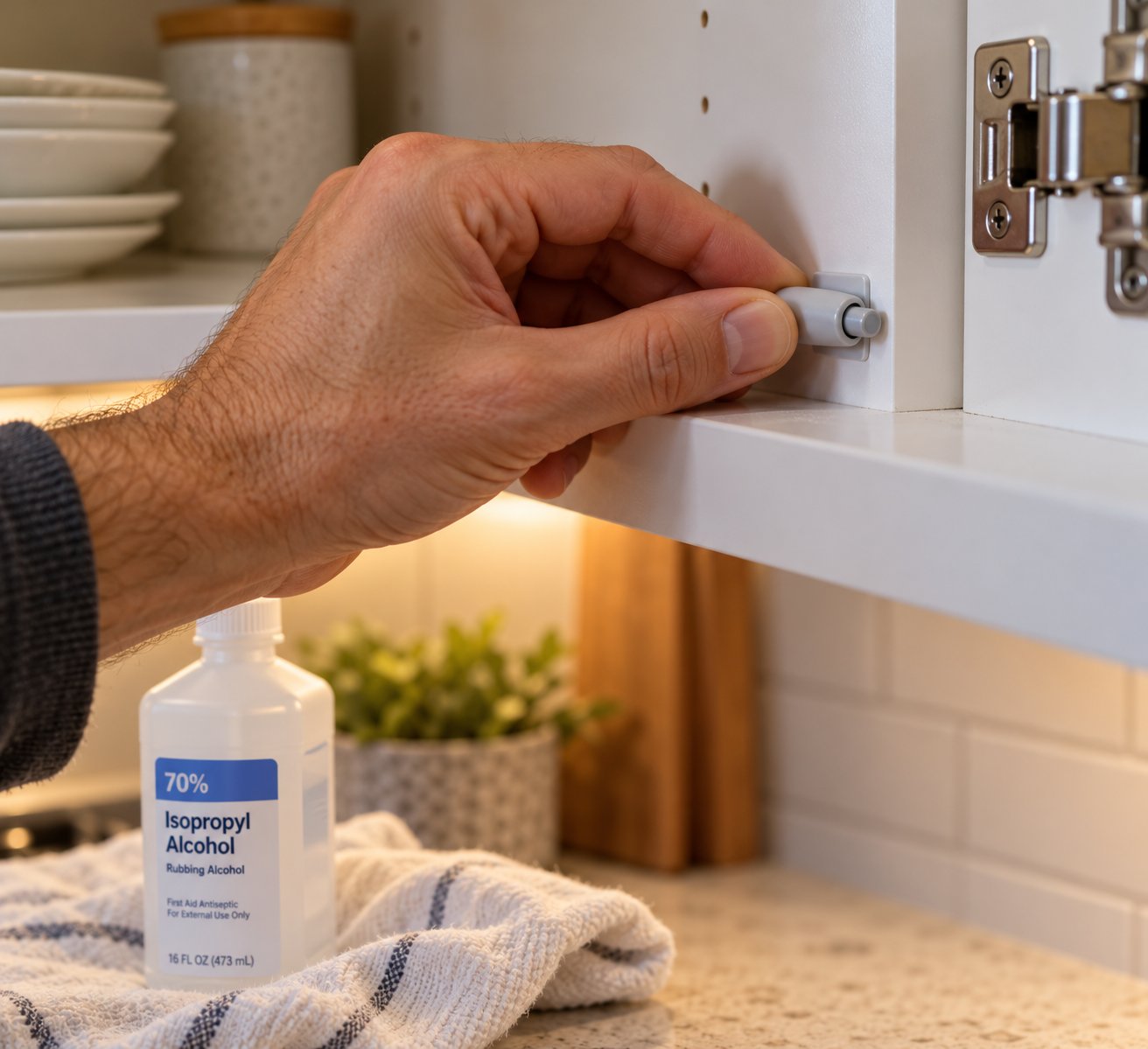
1. Clean the mounting surface thoroughly. Grab a cotton cloth or paper towel and wipe the inside of the cabinet frame with rubbing alcohol, specifically isopropyl alcohol at 90% concentration or higher. You are removing dust, grease, and any invisible residue left over from manufacturing. This step sounds minor, but it is the single biggest factor in whether adhesive-mount dampers stay put long term. Melamine and laminate surfaces are especially prone to retaining oily release agents from the factory, and even a fingerprint-thin film of residue can prevent the foam pad from bonding properly.
2. Identify the correct mounting zone. Position the damper on the hinge side of the cabinet frame, either at the top or bottom corner depending on your door's swing direction and available clearance. The goal is to place it where the door's trailing edge will contact the piston rod during the final two to four inches of travel. Hold the damper loosely in position, swing the door closed slowly by hand, and watch where contact occurs. The piston rod should compress smoothly and fully as the door reaches the frame.
3. Check the distance from the hinge axis. This detail trips up a surprising number of people. If you mount the damper too close to the hinge pivot point, the door's edge barely moves at that location during its swing arc, so the piston never compresses enough to engage the hydraulic resistance. Too far from the frame edge, and the door may not reach the damper at all. A good rule of thumb: position the damper body roughly 20 to 40 mm from the inside face of the cabinet frame, and at least 50 mm away from the hinge cup's center. Fine-tune from there based on your test swings.
4. Mount the damper. For adhesive types, peel the backing, press the base firmly against the cleaned surface, and hold for 10 to 15 seconds. For screw-mount versions, mark the screw hole location with a pencil, pre-drill a pilot hole using a 2 mm bit to prevent the frame material from splitting, and drive the screw until the base sits flush.
5. Test the door swing before committing. Close the door gently several times. You should feel the free-swing phase for most of the arc, followed by a smooth, gradual deceleration in the last few inches. The door should come to rest against the frame without a gap and without a thud. If the closing feels too abrupt or the door stops short, reposition the damper slightly and test again. With adhesive units, many manufacturers recommend letting the bond cure for 12 to 24 hours before subjecting it to repeated use, even if the damper feels secure immediately.
Common Installation Mistakes and How to Avoid Them
Even experienced DIYers stumble on the same handful of errors when installing cabinet door dampers for the first time. Every mistake below comes with a straightforward fix, so if something has already gone wrong on your cabinets, you are probably one adjustment away from getting it right.
- Skipping surface preparation. This is the number one reason adhesive-mount dampers fail. Dust, cooking grease, and silicone residue prevent the foam pad from forming a lasting bond, and the damper peels off within days or weeks. Fix: Remove the damper, clean both the mounting surface and the adhesive pad with isopropyl alcohol, let everything dry completely, and reapply. If the original adhesive has lost its tack, replace it with a fresh double-sided VHB (very high bond) tape pad cut to the same dimensions, or upgrade to a screw-mount version of the same damper.
- Using one damper per door when two are needed. A single compact piston unit handles most standard-weight cabinet fronts just fine. Heavier doors, anything over roughly 8 to 10 kg depending on the damper's rating, overwhelm a single unit, resulting in a close that starts soft but finishes with a thud as the damper bottoms out. Fix: Add a second damper on the same door, one near the top corner and one near the bottom, so the braking force is distributed evenly across the door's height. This also prevents the door from twisting during deceleration, a common issue on taller panels supported by three hinges.
- Mounting the damper where it interferes with a shelf or pull-out. It is easy to focus on the door swing and forget about what is happening inside the cabinet. A damper body positioned at mid-height may collide with an adjustable shelf, a pull-out tray rail, or a lazy Susan mechanism every time the door opens. Fix: Before committing to a location, open the door fully and check for any interior components that pass through the damper's zone. Relocate the damper to the extreme top or bottom corner of the frame where interference is least likely, or use a lower-profile unit that does not protrude as far into the cabinet interior.
- Forgetting to let the adhesive cure before testing. You press the damper on, immediately start swinging the door, and the unit shifts or detaches on the third close. Most construction-grade adhesive pads need at least several hours, and ideally overnight, to reach full bond strength. Fix: After mounting, leave the cabinet door open or propped ajar for the manufacturer's recommended cure time, typically 12 to 24 hours. If the damper has already shifted, remove it, clean both surfaces, apply fresh adhesive, and give it the full cure window this time.
- Choosing a damper with insufficient force for the door's weight. An undersized soft close cabinet door adapter will compress fully before the door finishes closing, leaving a gap between the door and frame or allowing the final inch of travel to go uncontrolled. Fix: Check the damper's maximum door-weight rating against the actual weight of your door. If the door exceeds the rating, either step up to a higher-force model or add a second unit to share the load. There is no reliable way to boost the resistance of a damper that is already at its mechanical limit.
- Not accounting for magnetic catches or other closure hardware. Older cabinets often have magnetic or roller catches that pull the door closed with a snap. When you add a damper on top of that existing catch, the two mechanisms work against each other: the catch yanks the door forward while the damper tries to slow it down, resulting in an uneven, jerky close or a door that slams through the damper's resistance entirely. Fix: Remove or disable the magnetic catch before installing the damper. Soft close dampers are designed to guide the door all the way to the frame on their own, so a separate catch is unnecessary once the damper is in place. If you want extra holding force to keep the door fully shut, use a small adhesive bumper pad on the frame instead of a spring-loaded catch.
Most of these errors share a common thread: they happen because the installer is focused on speed rather than precision. Taking an extra five minutes per door to clean the surface, weigh the panel, and dry-fit the damper position before peeling any adhesive backing saves hours of rework later.
A properly installed damper should be invisible in daily use: no sound, no sticking, no detachment surprises. But cabinets do not only live in kitchens. Bathrooms, laundry rooms, entertainment centers, and furniture pieces all present their own mounting environments, and factors like humidity, door geometry, and panel weight shift the installation calculus in ways that a kitchen-only perspective will not prepare you for.
Where Soft Close Dampers Work Beyond the Kitchen
Kitchen cabinets get all the attention, but they are far from the only doors and lids that benefit from controlled deceleration. Anywhere a hinged panel swings shut under its own weight or a user's push, a soft close mechanism can eliminate noise, protect finishes, and reduce wear. The trick is recognizing that each environment introduces its own set of challenges, from moisture exposure to unconventional door geometry, that change what kind of damper you should reach for.
Bathroom Vanities and Laundry Cabinets
Picture your bathroom vanity at 7 a.m.: steam rising from the shower, condensation beading on every hard surface, and someone swinging a cabinet door shut with wet hands. Bathrooms and laundry rooms are high-humidity zones where the air rarely dries out completely, and that persistent moisture attacks adhesive bonds and corrodes exposed metal far faster than a ventilated kitchen ever would.
The practical takeaway is straightforward: screw-mount dampers outperform adhesive-only units in wet rooms. Moisture weakens peel-and-stick foam pads over time, and the warm, damp film that coats surfaces after every shower accelerates that breakdown. A single stainless-steel screw through the damper base into the cabinet frame provides a mechanical anchor that humidity cannot defeat. If you do use an adhesive damper in a bathroom, back it up with the screw slot most quality models include, and clean the mounting surface with isopropyl alcohol immediately before application so no moisture film sits between the pad and the frame.
Housing material matters here too. Dampers with plastic or nickel-plated housings resist bathroom steam far better than bare steel bodies that can develop surface corrosion around the piston seal. For laundry rooms, where detergent splashes and lint accumulation add to the environmental stress, a sealed piston unit with a metal housing is the most durable choice. The same logic that drives hinge selection in humid rooms, choosing corrosion-resistant finishes and mechanical fasteners over adhesive, applies directly to soft close dampers for cabinets installed in those spaces.
Furniture, Entertainment Centers, and Built-Ins
Soft close is not just cabinet hardware. It is any controlled-deceleration device attached to a moving panel, and that definition covers a surprisingly long list of household items. Buffet doors, media console cabinets, built-in bookshelves with hinged fronts, home office credenzas, and even garage workshop cabinets all benefit from the same smooth closing action you enjoy in the kitchen.
Furniture applications, however, introduce variables that standard soft close kitchen cabinet hardware is not always designed to handle. A heavy solid-oak buffet door swings on different hinges, at a different speed, with a different weight distribution than a melamine kitchen front. Drop-front desks and blanket chest lids rotate on piano hinges or specialty stays rather than European cup hinges, so clip-on adapters are off the table entirely. Decorative glass-front entertainment centers may need ultra-low-force dampers to avoid overpowering a lightweight panel, while a thick walnut media console door demands the opposite.
The geometry changes too. A lid that opens upward and falls under gravity exerts force in a completely different vector than a side-hung cabinet door. Standard aftermarket piston dampers are engineered for the horizontal-swing motion of a cabinet front, and they may not fit or function correctly on a vertically hinged lid or a fold-down panel. Soft close drawers in wooden TV stands, for instance, use undermount or side-mount slide-integrated dampers that have no equivalent in door-damper catalogs.
For furniture and appliance manufacturers designing soft close into products from the start, rather than retrofitting it after the fact, the solution is application-specific damping engineered at the design stage. Suppliers like Tianyun develop rotary and hydraulic damper solutions tailored to specific lid, door, and panel mechanisms in furniture and home appliances, ensuring the damper geometry, force curve, and mounting interface match the product precisely. These factory-integrated dampers differ fundamentally from aftermarket retrofit products: they are built into the hinge point or mechanism housing during manufacturing, not added to an existing cabinet frame after the fact.
That distinction is important for homeowners too. If you are shopping for a new piece of furniture or an appliance with a soft close lid, look for units where the damping is integrated by the manufacturer rather than added as an afterthought. Factory-engineered damping tends to deliver smoother, more consistent performance because the force curve is calibrated to that specific panel's weight and swing geometry.
To give you a quick sense of just how many contexts benefit from controlled-deceleration hardware, here is a running list of viable applications:
- Kitchen cabinets (upper and lower)
- Bathroom vanities
- Laundry room cabinets
- Entertainment centers and media consoles
- Buffets and sideboards
- Office built-ins and credenzas
- Appliance lids (washing machines, chest freezers, trash compactors)
- Garage and workshop cabinets
Wherever you install them, though, dampers do not last forever. Humidity, temperature swings, heavy doors, and sheer cycle count all take a toll. Recognizing the early signs of a weakening or failing damper, and knowing exactly how to fix each symptom, is what separates a weekend upgrade that lasts a decade from one that quietly stops working six months later.
Troubleshooting Weak or Failing Soft Close Dampers
A damper that worked perfectly last month can start misbehaving without warning. Maybe the kitchen door that used to glide shut now slams the last half-inch. Maybe a bathroom vanity door stalls an inch from the frame and refuses to latch. Or maybe you open a cabinet one morning and find the damper lying on the shelf below, adhesive pad still stuck to its base, no longer stuck to anything useful. Each of these symptoms points to a specific, fixable cause, and diagnosing the right one saves you from replacing hardware that might only need repositioning or a surface refresh.
When Dampers Feel Too Weak or Too Strong
A damper that feels too weak is almost always outmatched by the door it is trying to slow down. The hydraulic piston compresses fully before the door finishes decelerating, so the last inch or two of travel goes uncontrolled and ends with a thud. You will notice this most on solid-wood or thick MDF doors that weigh more than the damper's rated capacity, but it can also happen when a previously adequate damper loses internal fluid over time and generates less resistance than it did when new.
The fix depends on which scenario you are dealing with. If the damper is undersized for the door's weight, you have two options: upgrade to a higher-force model rated for heavier panels, or add a second unit on the same door, one near the top corner and one near the bottom. Dual dampers distribute the braking force across the door's full height and prevent the twisting motion that a single unit sometimes causes on taller panels. If the damper used to work fine and has gradually weakened, the internal fluid seal may be failing, and the unit should be replaced entirely rather than supplemented.
The opposite problem, a damper that feels too strong, is less common but equally frustrating. When the door decelerates too aggressively, it stops short of the frame and sits slightly ajar, never quite latching. This usually means one of two things: the damper's force rating far exceeds what the door's weight requires, or the damper is mounted too far from the hinge axis. Remember that a door's edge travels a wider arc the farther it is from the pivot point. A damper placed near the outer edge of the frame catches the door at maximum leverage, amplifying the braking effect. Moving the damper closer to the hinge, even by 15 to 20 mm, reduces the effective leverage and lets the door carry enough momentum to close fully. For lightweight thermofoil or hollow-core doors, switching to a lower-force damper model is the cleaner long-term solution.
Adhesive Failure and Damper Detachment
You pressed the damper onto the frame, it held for a few weeks, and now it is rattling around loose inside the cabinet. Adhesive failure is the most common complaint among homeowners who install soft closures for cabinet doors using peel-and-stick models, and the root cause is almost always environmental rather than mechanical.
Four factors accelerate adhesive breakdown:
- Poor surface preparation — Dust, cooking grease, or silicone residue from the manufacturing process prevents the foam pad from bonding at full strength. Even a surface that looks clean can carry an invisible film that undermines adhesion.
- Humidity — Persistent moisture, especially in bathrooms and laundry rooms, softens adhesive compounds and weakens the bond between the pad and the cabinet frame over weeks or months.
- Heat — Cabinets above ovens, dishwashers, or heating vents experience temperature spikes that can soften adhesive and cause the damper to creep out of position before detaching entirely.
- Oily residue from cooking — Kitchens with heavy stovetop use accumulate a fine layer of aerosolized cooking oil on interior cabinet surfaces, and that film acts as a release agent beneath the adhesive pad.
The repair process is straightforward. Remove the detached damper and scrape off any old adhesive residue from both the damper base and the cabinet frame. Clean the mounting area thoroughly with isopropyl alcohol at 90% or higher concentration, then let the surface air-dry completely. If the damper body includes a screw slot, and most quality models do, drive a short pan-head screw through that slot into the frame for a permanent mechanical anchor that humidity and heat cannot defeat. If the damper has no screw provision, replace the original foam pad with a fresh piece of VHB (very high bond) acrylic tape cut to match the base dimensions, and allow the full 12- to 24-hour cure window before closing the door repeatedly. In environments where adhesive simply cannot be trusted, such as above a steam oven or inside a shower-adjacent vanity, switching to a screw-mount damper model eliminates the problem at its source.
Longevity and Replacement Expectations
Quality hydraulic dampers are engineered to survive tens of thousands of open-close cycles. Premium units from reputable manufacturers are tested to 80,000 cycles or more before any measurable drop in damping force, which translates to roughly 10 to 15 years of daily household use on a frequently opened kitchen cabinet. Inexpensive bulk-pack dampers, however, often use thinner piston seals and lower-grade silicone fluid that degrade faster. Some budget units begin losing resistance within a year or two, especially in cabinets that see heavy traffic like the one above the coffee maker or beside the refrigerator.
A simple annual check takes about five seconds per damper: push the exposed piston rod inward with your finger. You should feel firm, steady resistance through the full stroke, the same honey-through-a-straw sensation the damper delivered when it was new. If the piston compresses with almost no resistance, or if it moves freely in one direction and sticks in the other, the internal seal has likely failed and the fluid is no longer being forced through the orifice properly. At that point, the damper is spent and should be replaced rather than repaired. Hydraulic piston dampers are sealed units; there is no way to refill fluid or replace internal seals without specialized equipment that costs more than a new damper.
Fluid leakage is another clear end-of-life signal. A small oily spot on the cabinet shelf below the damper, or a visible sheen of silicone around the piston rod, means the seal has cracked or worn through. Replace the unit immediately, not because the leak is harmful, but because a leaking damper has already lost most of its damping capacity and will only get worse.
For a quick reference when diagnosing issues across your soft close cabinets and drawers, run through this checklist:
- Door does not close fully — Damper force too high for door weight, or damper mounted too far from hinge axis. Reposition or switch to a lower-force model.
- Door slams despite damper — Damper force too low, piston seal failing, or only one damper installed on a heavy door. Upgrade force rating or add a second unit.
- Damper detaches from frame — Adhesive failure due to poor surface prep, humidity, or heat. Clean, reattach with screw or fresh VHB tape, or switch to screw-mount model.
- Damper leaks fluid — Internal seal has failed. Replace the unit; it cannot be repaired.
- Inconsistent closing speed — Possible air ingress into the fluid chamber, temperature-related viscosity shift, or partial seal degradation. Test piston resistance by hand; replace if resistance is noticeably uneven.
Most damper problems fall into one of these five categories, and most fixes take under ten minutes with no special tools. The real cost of ignoring a failing unit is not the damper itself, which is inexpensive to replace, but the cumulative wear on cabinet boxes, door edges, and hinges that resume absorbing full-force impacts every time someone swings a door shut. Catching a weak damper early and swapping it out keeps the rest of your hardware protected.
Replacement, though, raises a deeper question that goes beyond simple troubleshooting: how do you tell a quality damper from a disposable one before you install it? The answer lives in a handful of material and engineering details that separate reliable hardware from units destined for the recycling bin within a year.
What Separates a Reliable Soft Close Damper From a Cheap One
A damper that costs $1.50 and a damper that costs $5.00 look nearly identical sitting side by side in their packaging. Same general shape, same piston rod poking out of a cylindrical housing, same promise of silent closing printed on the label. The difference only reveals itself six months later, when the cheap unit starts letting doors slam again while the quality one keeps performing as if it were installed yesterday. Knowing what to look for before you buy, rather than after a failure, is the final piece of the soft close puzzle.
Material and Build Quality Indicators
The internal components of a soft close damper are hidden inside a sealed housing, so you cannot inspect them at the store. What you can do is evaluate the external clues that correlate directly with longevity and consistent performance. Here is what to check.
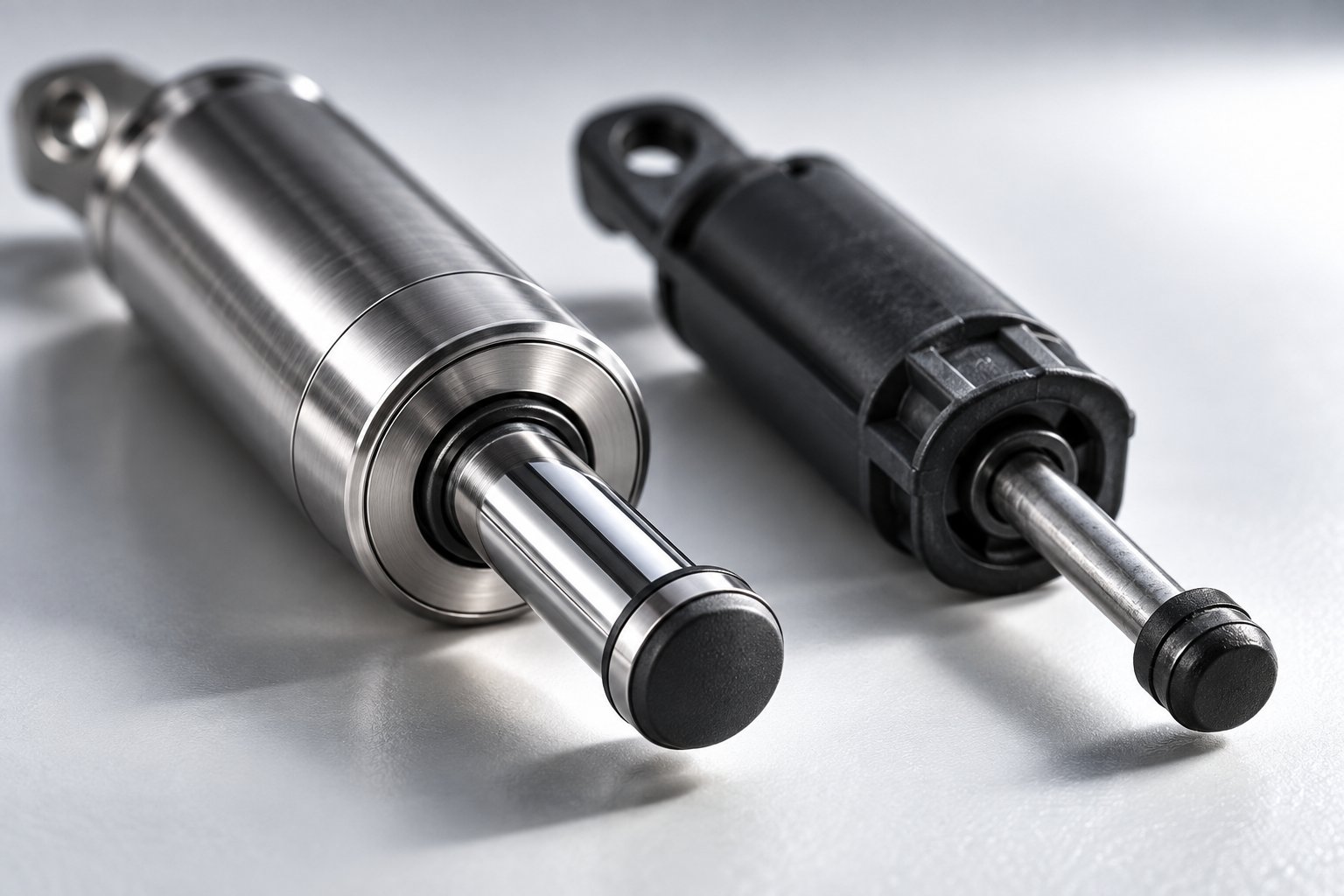
Piston rod material. Push the piston in with your thumb and look at the shaft as it retracts. Quality cabinet dampers use a metal piston rod, typically steel with a nickel or chrome plating, that resists bending and maintains a tight seal against the internal o-ring over thousands of cycles. Budget units often substitute a plastic rod. Plastic flexes under load, wears unevenly against the seal, and eventually allows fluid to seep past, which is exactly the failure mode described in the troubleshooting section above. If the rod feels flimsy when you press it or shows visible molding seams, that is a red flag.
Sealed versus unsealed fluid chambers. A properly sealed damper keeps its silicone oil contained for the life of the product. Look for units where the housing shows no visible gaps between the cylinder cap and the body. Inexpensive soft closers for cabinet doors sometimes use press-fit caps that can loosen over time, especially under temperature cycling. A crimped or ultrasonically welded seal is far more durable than a friction-fit plug. If the manufacturer does not mention seal type in their product listing, that omission itself is informative.
Rated cycle life. This is the single most telling specification a manufacturer can publish, and the fact that many budget brands omit it entirely should tell you something. Quality soft close dampers carry a rated cycle life, the number of full compress-and-return strokes the unit can handle before damping force drops below a defined threshold. Premium units are tested to 50,000 cycles or more, with some reaching 80,000 to 100,000 cycles. Independent comparisons show that cheap hinges and dampers rated at only 20,000 cycles lose their soft close feel within a few years of normal household use. For a kitchen cabinet opened 10 to 15 times per day, 20,000 cycles is roughly three to five years. A unit rated for 50,000 or more cycles pushes that lifespan past a decade.
Damping force consistency across temperature ranges. Silicone oil changes viscosity with temperature: it thins in heat and thickens in cold. A well-engineered damper uses a high-viscosity-index fluid formulated to minimize that variation, so the door closes at roughly the same speed whether your kitchen is 65°F in January or 85°F in August. Engineering-grade damper specifications require damping torque to stay within roughly 30% of baseline across the full operating temperature range. Consumer-grade dampers rarely publish this data, and the ones that skip it are often the ones that feel noticeably different season to season. If a manufacturer lists an operating temperature range alongside their force rating, that is a strong signal they have actually tested for it.
Published force ratings. Reputable brands tell you exactly how much resistance the damper generates, typically expressed in newtons or as a maximum door weight. That number lets you match the damper to your specific doors with confidence, rather than guessing based on vague descriptors like "standard" or "heavy duty." A damper sold without a force rating is a gamble you do not need to take when rated alternatives are readily available at similar price points.
Sourcing for DIY Retrofits vs. Professional and Manufacturing Projects
Where you buy matters almost as much as what you buy, because the sourcing channel shapes both product quality and the support available if something goes wrong.
For homeowners doing a retrofit, reputable hardware retailers and specialized cabinet hardware suppliers are your best bet. These sellers curate their catalogs, stock brands with published specifications, and often provide compatibility guidance specific to common cabinet and hinge configurations. Unbranded bulk packs from marketplace sellers can be tempting at a fraction of the per-unit price, but they frequently lack force ratings, cycle-life data, or any identifiable manufacturer behind the product. When a damper from an anonymous bulk pack fails, there is no warranty to claim and no technical support to call. Spending an extra dollar or two per unit on a branded, documented soft close damper from a known supplier pays for itself the first time you avoid a premature replacement.
A few practical sourcing tips for the DIY crowd:
- Buy one or two units first and test them on your heaviest and lightest cabinet doors before committing to a full-kitchen quantity.
- Confirm the damper's rated door weight exceeds the actual weight of your heaviest door by at least 10 to 15 percent.
- Verify the mounting method, adhesive, screw-mount, or clip-on, matches your cabinet construction before ordering in bulk.
- Keep the packaging and receipt; quality brands offer at least a one-year warranty on damping performance.
For professionals and manufacturers, the calculus shifts significantly. Furniture builders, custom cabinet shops, and appliance OEMs integrating soft close at the production level face a different challenge: the damper must fit a specific geometry, deliver a precise force curve, and survive tens of thousands of cycles in an environment that may include heat, humidity, or unusual mounting orientations. Off-the-shelf aftermarket dampers designed for standard kitchen cabinet retrofits rarely satisfy all three requirements simultaneously.
Working with an engineering-focused damper supplier ensures the damper is matched to the exact product being built, not approximated from a general-purpose catalog. The force curve can be tuned to the door or lid's weight and swing geometry, the mounting interface can be designed around the product's internal structure, and cycle-life testing can be validated against the actual use conditions rather than a generic industry benchmark. Manufacturers like Tianyun specialize in application-specific damping solutions for furniture and appliance OEMs, engineering rotary and hydraulic dampers that support controlled, quiet movement in lids, panels, and doors where standard retrofit products may not fit the required geometry or force profile. That level of customization is what separates a product that feels premium out of the box from one that requires end-user workarounds to perform adequately.
Regardless of whether you are a homeowner sticking a $4 piston damper inside a bathroom vanity or a manufacturer specifying thousands of units for a production run, one rule applies universally: confirm compatibility between the specific damper and your cabinet or product mechanism before purchasing. Check the force rating against the door weight. Verify the mounting method fits your construction type. Ensure the damper body clears all internal components. These three checks take less than five minutes and eliminate the vast majority of soft close failures before they ever happen.
As a final reference, here are the quality checkpoints worth running through every time you evaluate a new damper, whether for a single cabinet door or an entire product line:
- Published force rating — expressed in newtons or as a maximum supported door weight
- Rated cycle life — minimum 50,000 cycles for household use; higher for commercial or appliance applications
- Mounting method compatibility — adhesive, screw-mount, clip-on, or integrated, matched to your cabinet or product construction
- Housing material — corrosion-resistant plastic or plated metal; stainless steel for humid environments
- Fluid-seal integrity — crimped, welded, or mechanically locked seal with no visible gaps at the housing cap
- Manufacturer support or documentation — installation guides, force-curve data, warranty terms, and accessible customer service
A soft close damper is one of the smallest components in your entire cabinet system, but it is also the one you interact with most often. Every open and every close passes through it. Investing a few extra minutes in selecting, placing, and maintaining the right unit means years of silent, effortless operation, the kind of background comfort that only becomes obvious the first time you close a cabinet door somewhere that does not have one.
Frequently Asked Questions About Soft Close Cabinet Dampers
1. Can I add soft close to my existing cabinets without replacing the hinges?
Yes. Retrofit soft close dampers let you upgrade existing cabinets without removing or replacing your current hinges. Adhesive piston dampers stick or screw onto the inside of the cabinet frame and work independently of the hinge brand. Clip-on adapters snap directly onto European-style 35 mm cup hinge arms with no tools required. Both options are reversible, budget-friendly, and can be installed across an entire kitchen in a single afternoon. The key is matching the damper's force rating to your door weight and confirming the mounting method is compatible with your cabinet construction.
2. How do soft close cabinet dampers work?
Soft close dampers use a sealed cylinder filled with silicone oil and a precision piston. When a cabinet door reaches the final two to four inches of its swing, it contacts the damper's piston rod and pushes it inward. The piston forces fluid through a narrow internal orifice, converting the door's momentum into smooth hydraulic resistance. A small return spring resets the piston each time the door opens, preparing the mechanism for the next closing cycle. This is the same shock-absorber principle used in automotive suspensions, miniaturized to fit inside a cabinet box.
3. How long do soft close dampers last before they need replacing?
Premium hydraulic dampers from reputable manufacturers are tested to 50,000-100,000 open-close cycles, which translates to roughly 10-15 years of daily household use on a frequently opened cabinet. Budget units with thinner seals and lower-grade fluid may begin losing damping force within one to three years. You can check a damper's condition by pressing the piston rod with your finger: firm, steady resistance through the full stroke means the unit is healthy, while little or no resistance indicates the internal seal has failed and the damper should be replaced.
4. Why does my soft close damper keep falling off the cabinet?
Adhesive-mount dampers detach primarily due to poor surface preparation. Dust, cooking grease, and invisible manufacturing residues prevent the foam pad from forming a lasting bond. Humidity in bathrooms and laundry rooms and heat from nearby ovens accelerate breakdown further. To fix this, clean the mounting surface with 90%+ isopropyl alcohol, let it dry fully, and reattach with fresh VHB acrylic tape or use the screw slot most quality dampers include. In persistently humid environments, switching to a screw-mount damper model eliminates adhesive failure entirely.
5. Are soft close dampers for doors and drawers interchangeable?
No. Door dampers and drawer dampers are designed for different motion types and mounting geometries. Door dampers absorb rotational swing energy and mount to the cabinet frame, hinge arm, or door surface. Drawer dampers attach to the rear of the drawer box or clip onto the slide rail and handle linear sliding motion. Using a door damper on a drawer, or vice versa, will result in improper engagement and ineffective damping. For drawers, look for slide-integrated soft close mechanisms or dedicated drawer adapters matched to your specific slide profile, whether side-mount or undermount.
Apply This Insight to Your Project
Tell us what you are building and how the topic “Silence Slamming Doors: How Soft Close Cabinet Dampers Actually Work” relates to your application. Our engineering team can help evaluate the next step.