What Are Soft Close Cabinet Door Closers and How Do They Work
Imagine standing in your kitchen at 6 a.m., reaching for a coffee mug, and the cabinet door slams shut loud enough to wake the entire house. It happens dozens of times a day in most homes, and the consequences go well beyond a startled family member. Slamming cabinet doors gradually destroy cabinetry, stress hinges, chip paint, and create a genuine pinch hazard for small fingers. Soft close cabinet door closers solve all of these problems with a remarkably simple piece of engineering.
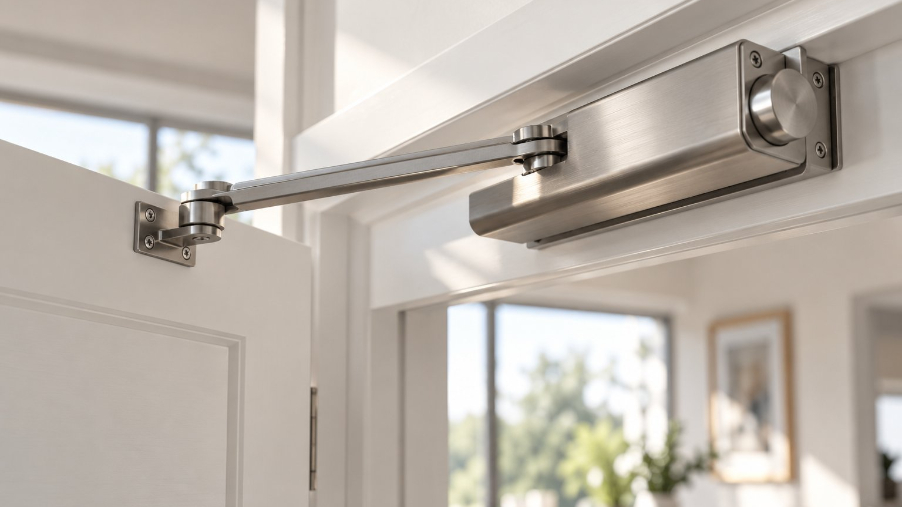
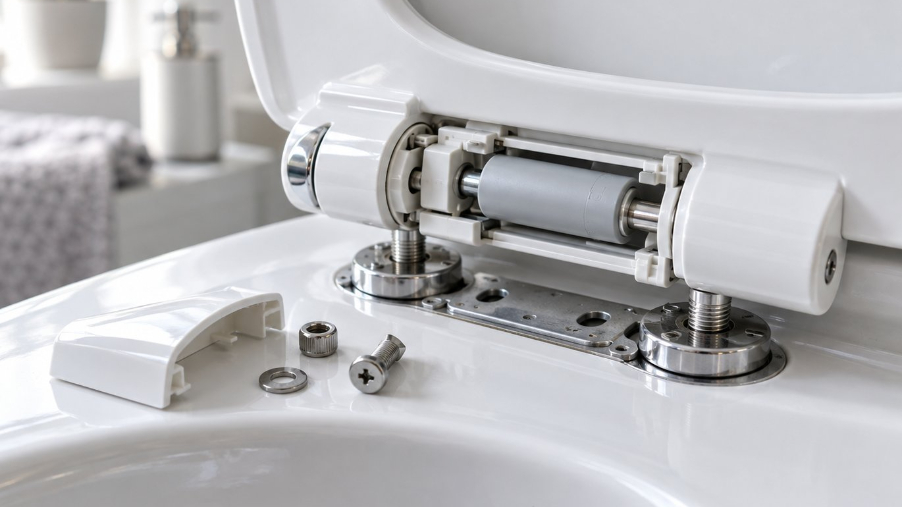
Soft close cabinet door closers are small hydraulic or pneumatic devices that decelerate a cabinet door during the final inches of closing, preventing it from slamming shut. They use a piston moving through viscous fluid or air inside a sealed cylinder to create controlled resistance, bringing the door to a gentle, silent stop every time.
Why Slamming Cabinet Doors Are More Than Just Annoying
You might brush off a slamming door as a minor nuisance, but the cumulative damage tells a different story. Every slam sends a shockwave through the door, the hinge, and the cabinet frame. Over weeks and months, that repeated impact loosens screws, warps wood, and wears down hinge mechanisms. If you have painted or finished cabinets, you'll notice chipping and hairline cracks forming around the edges where the door meets the frame.
Then there's the safety issue. Children are naturally curious and fast-moving around kitchen cabinets. A door swinging shut with force can easily catch tiny fingers, causing painful pinch injuries. Glass-fronted cabinet doors add even more risk, as a forceful enough slam can potentially crack or shatter the glass. Add in the constant noise disruption, especially in open-concept homes where kitchen sounds carry through every room, and the case for soft closures for cabinet doors becomes hard to ignore.
How the Soft Close Mechanism Works
So what is a soft close, exactly, in mechanical terms? The principle is straightforward. A soft close mechanism uses a damper, a small sealed cylinder containing a piston and viscous fluid, typically silicone oil. When you push a cabinet door shut, it swings freely through most of its arc, just like any normal door. The magic happens in the final 10 to 20 degrees of travel. At that point, the damper engages and forces the piston through the fluid inside the cylinder. The fluid resists the piston's movement, and that resistance is what slows the door to a quiet, controlled stop.
Here's the clever part: the faster you push the door, the greater the resistance. This self-regulating quality means soft close cabinet doors shut gently whether you nudge them or shove them in a hurry. The damper absorbs the kinetic energy that would otherwise transfer as impact force into the frame and hardware.
These devices come in two main forms. Some are integrated directly into the hinge body, creating a single, clean unit with built-in dampening, which is the most common setup in modern soft closing cabinets. Others are standalone components that mount inside the cabinet independently of the hinge, making them an excellent option for adding softclose functionality to existing cabinetry without replacing a single hinge. Both approaches deliver the same result: a door that closes silently every time.
The variety of available solutions raises an important question, though. Many homeowners confuse soft close with self-closing, two terms that sound similar but describe very different mechanisms with very different results.
Self-Closing vs Soft-Close Hinges and Why the Difference Matters
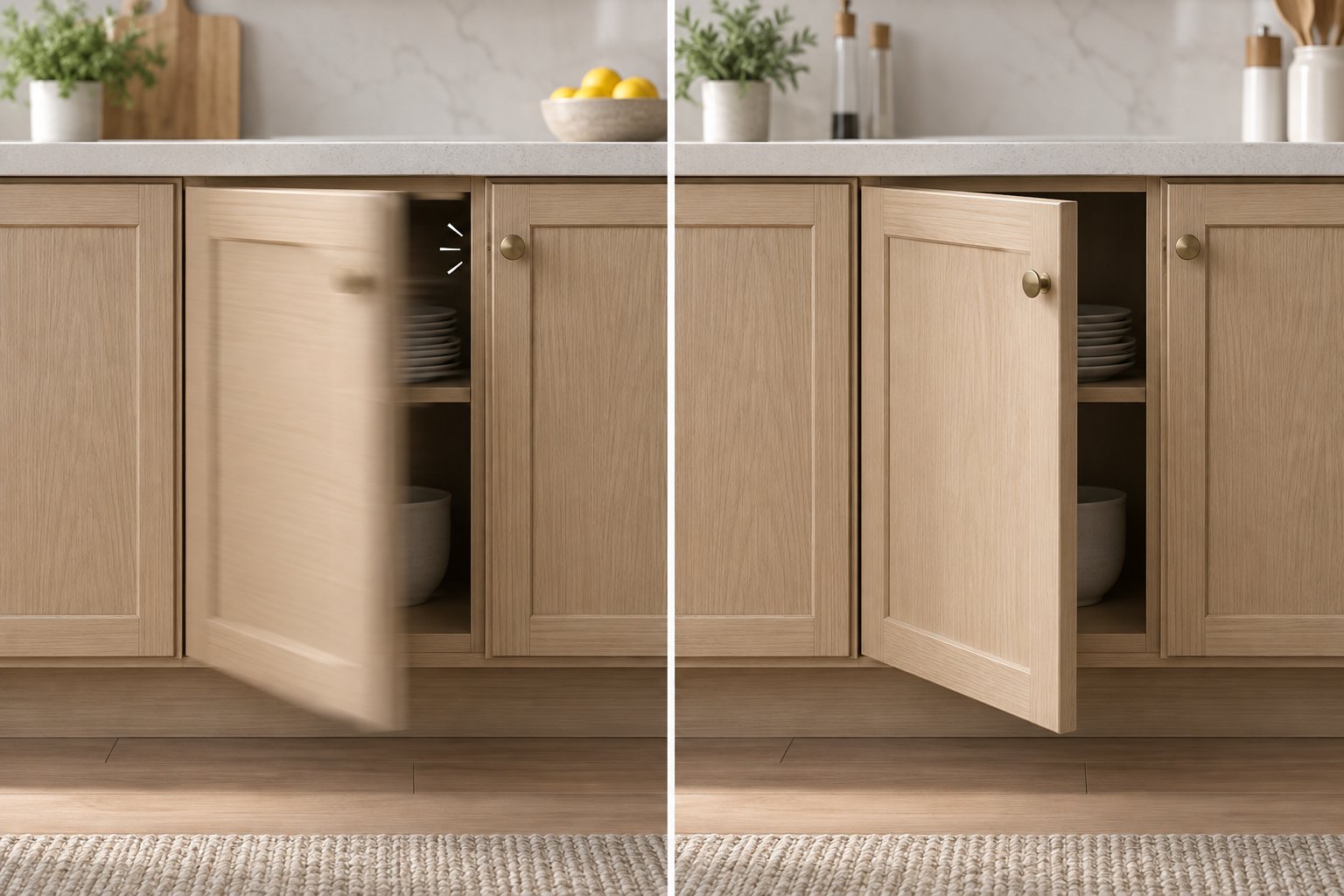
This mix-up costs homeowners real money. Someone searches for "soft closing hinges," buys a set of self closing cabinet hinges instead, installs them, and wonders why the doors still slam. The terms sound interchangeable, but they describe two completely different mechanical functions. Understanding the distinction before you shop is the single best way to avoid a frustrating and expensive mistake.
What Self-Closing Hinges Actually Do
Self closing door hinges rely on a built-in spring mechanism. When you open the door and release it, the spring stores energy and uses that energy to physically pull the door back toward the closed position. You don't have to push the door shut yourself — it returns on its own once you let go, typically engaging within the last two inches of travel.
Sounds helpful, right? It is, for convenience. If your hands are full of groceries or you're juggling pots and pans, cabinet door hinges self closing on their own mean one less thing to think about. The problem is what happens when the door actually reaches the frame. That spring is driving the door forward with force, and there's nothing slowing it down. The result? A slam. Every single time.
These are the spring-loaded hinges you'll find in most older American kitchens. They close the door automatically, but they do absolutely nothing to quiet it. The impact still rattles the cabinet, still chips the edges, and still poses a pinch risk for children. Self closing hinges solve the "left open" problem. They do not solve the noise, wear, or safety problem.
What Soft-Close Means and Why It Matters
Soft close refers specifically to the dampening action during the final phase of closing. As explained in the previous section, a hydraulic or pneumatic damper engages in the last 10 to 20 degrees of travel and decelerates the door to a gentle, controlled stop. The door doesn't slam regardless of how hard you push it — the damper absorbs the excess kinetic energy.
Here's the critical nuance: a soft close mechanism, on its own, does not pull the door shut. A pure soft closing hinge only slows a door that's already moving toward the frame. You still need to give the door a push. It won't return from a wide-open position by itself the way self close cabinet hinges do.
This is exactly why the distinction matters so much. If you want doors that close on their own and close quietly, you need a hinge that combines both features — a spring for the self-closing action and a damper for the soft-close deceleration. Most modern soft closing hinges from reputable manufacturers bundle both functions into a single unit. Blum's soft-close hinges, for example, use a hydraulic mechanism that gently guides the door through its closing arc while also pulling it shut automatically, delivering the best of both worlds.
This combined design is what most homeowners actually want when they search for self closing door hinges soft close. They want a door that returns on its own and lands silently. The table below breaks down the practical differences so you can choose the right type for your cabinets.
| Feature | Self-Closing Only | Soft-Close Only | Combined Self-Close + Soft-Close |
|---|---|---|---|
| Closing Action | Spring pulls door shut automatically | Damper slows the door; manual push needed | Spring pulls shut + damper decelerates |
| Noise Level | Audible slam on every close | Silent close, but only when you push it | Silent and automatic every time |
| Finger Safety | Low — spring drives door with force | High — damper prevents slam impact | Highest — no slam, no force at contact |
| Typical Cost Per Hinge | $2 – $5 | $5 – $8 (adapter or standalone damper) | $7 – $12 |
| Common Use Cases | Older kitchens, budget builds, rentals | Retrofitting existing cabinets with dampers | New builds, renovations, full upgrades |
The cost difference between a basic self-closing hinge and a combined unit is roughly $5 to $7 per hinge. For a full kitchen with 20 doors and 40 hinges, that upgrade adds around $200 to $280 to your total hardware budget. Spread over a decade of daily use, it works out to less than $2.50 per month — a modest investment for eliminating every slam, protecting your cabinetry, and keeping little fingers safe.
Knowing which mechanism you need is only half the equation, though. The next question is which type of soft close solution fits your specific cabinets — because the options range from fully integrated hinges to simple clip-on adapters, each with different compatibility requirements and installation demands.
Types of Soft Close Solutions Compared
Not every kitchen, bathroom, or laundry room calls for the same soft close cabinet hardware. A brand-new build with frameless European cabinets needs a very different solution than a twenty-year-old kitchen where the existing hinges still work perfectly. The good news? The market offers four distinct categories of soft close cabinet door hardware, each designed for different budgets, skill levels, and cabinet conditions. Let's break down every option so you can zero in on the right fit.
Universal Soft-Close Damper Systems
If flexibility is your top priority, standalone soft close door dampers are the most versatile option available. These compact units mount directly inside the cabinet box — typically on the interior side wall or the top panel near the hinge side — and operate completely independently of whatever hinge brand or style you already have installed.
That independence is the key advantage. It doesn't matter whether your cabinets use Blum, Salice, Grass, or an off-brand hinge. It doesn't even matter if your cabinets have old-fashioned surface-mounted hinges instead of concealed European ones. The damper engages the door as it swings toward the closed position, decelerating it through the final inches of travel. Manufacturers like Tianyun produce compact soft close dampers engineered for controlled deceleration across cabinet doors, lids, and other household applications. Purpose-built by a manufacturer specializing in motion-control components, these dampers are a strong option for both product manufacturers integrating soft close into new designs and DIY homeowners retrofitting existing cabinetry.
Installation is straightforward: position the damper, mark screw holes, drill pilot holes, and secure with screws. Most standalone soft close dampers for cabinets run between $8 and $15 per unit, and the entire process takes about ten minutes per door. For homeowners who want soft closers for cabinet doors without touching their existing hinges, this is the path of least resistance.
Integrated Soft-Close Hinges
Integrated hinges represent the cleanest, most streamlined solution. These are European-style concealed hinges with a hydraulic damper built directly into the hinge cup or arm. You get self-closing spring action and soft-close dampening in a single piece of hardware — no separate components, no extra mounting, no visible add-ons inside the cabinet.
This is the go-to choice for new construction, full kitchen renovations, or any situation where you're installing fresh cabinetry from scratch. Brands like Blum (Blumotion), Salice (Silentia), and Grass (TEC) all offer well-regarded integrated soft-close models. WOOD Magazine notes that some models even feature on/off switches, letting you disengage the soft-close function when desired.
The trade-off? Cost and compatibility. Integrated soft close cabinet dampers in hinge form typically run $7 to $12 per hinge, and you'll need two to three per door depending on size and weight. They also require standard 35mm bore cups and compatible mounting plates, which means they won't drop into every cabinet without modification.
Clip-On Soft-Close Adapters
What if your existing concealed hinges are in great shape and you'd rather not replace them entirely? That's where a soft close hinge adapter comes in. These small clip-on or screw-on devices attach directly to a compatible hinge arm or mounting plate, adding dampening capability to hinges that were never designed with it.
Blum's Blumotion adapter is the best-known example. It clips onto existing Blum hinge arms and provides the same deceleration effect you'd get from a fully integrated soft-close hinge — without removing or replacing anything. The catch? Brand compatibility is strict. A Blum adapter generally won't work on a Salice hinge, and vice versa. You'll need to identify your current hinge manufacturer and model before purchasing, or risk buying a soft close adapter that simply won't fit.
When compatibility lines up, though, clip-on adapters are a quick and cost-effective upgrade. They typically cost $3 to $7 per unit, require no drilling, and can be installed in under five minutes per hinge with nothing more than a screwdriver.
Adhesive and Bumper-Style Dampeners
At the simplest end of the spectrum, you'll find rubber or silicone bumper pads that stick to the cabinet frame where the door makes contact. These are inexpensive — often under $1 per pad — and they do reduce noise by cushioning the impact when the door closes.
Here's the important distinction, though: bumper pads are not true soft close hardware. They don't decelerate the door. They don't engage a damper piston. They simply provide a thin cushion that absorbs some of the impact sound and vibration. If a door is slammed hard, it still hits with force — just slightly quieter force. For homeowners on an extremely tight budget or renters who can't modify cabinets, bumpers offer a marginal improvement. For anyone seeking genuine soft-close performance, they fall well short.
With four distinct solution types on the table, the comparison below puts them side by side across the criteria that matter most for your decision.
| Solution Type | Installation Difficulty | Compatibility Range | Dampening Quality | Cost Range (Per Door) | Best-Use Scenario |
|---|---|---|---|---|---|
| Universal Soft-Close Damper Systems (e.g., Tianyun) | Easy — screw-mount inside cabinet | Works with any hinge brand or style | High — true hydraulic deceleration | $8 – $15 | Retrofits, mixed-brand kitchens, non-standard hinges |
| Integrated Soft-Close Hinges | Moderate — full hinge replacement | Requires 35mm bore cups and compatible mounting plates | Highest — engineered as a complete system | $14 – $36 (2–3 hinges per door) | New builds, full renovations, complete hinge upgrades |
| Clip-On Soft-Close Adapters | Very easy — clips onto existing hinge | Brand-specific (must match hinge manufacturer) | High — equivalent to integrated when compatible | $6 – $14 (2 adapters per door) | Homes with compatible brand-name concealed hinges |
| Adhesive/Bumper Pads | Minimal — peel and stick | Universal — fits any cabinet | Low — noise reduction only, no deceleration | $0.50 – $2 | Rentals, temporary fixes, extremely tight budgets |
A few patterns stand out. Universal damper systems and clip-on adapters both deliver genuine soft-close performance at a fraction of the cost of replacing every hinge. Integrated hinges provide the most polished result but demand more work and a higher investment. Bumper pads, while cheap, belong in a different category entirely — they're a noise-reduction Band-Aid, not a true soft close solution.
The right choice ultimately depends on what's already inside your cabinets. And that brings up a practical question many homeowners overlook: how do you figure out which of these solutions is actually compatible with your specific cabinet construction, hinge type, and door overlay?
How to Choose the Right Soft Close Hardware for Your Cabinets
Here's where most DIY upgrades go sideways. A homeowner orders a set of soft close door hinges for kitchen cabinets, tears open the box on a Saturday morning, and discovers they won't fit. The overlay is wrong, the mounting plate doesn't match, or the cabinet construction isn't compatible. That wasted order — and the wasted weekend — is entirely avoidable if you take ten minutes to assess your cabinets before spending a dollar.
Choosing the right soft close hardware for cabinets comes down to three things: knowing your cabinet construction type, measuring your door overlay accurately, and understanding which hinge dimensions actually matter. Let's walk through each one.
Identifying Your Cabinet Construction Type
Open a cabinet door and look at the front of the cabinet box. You're trying to answer one simple question: is there a solid wood frame attached to the front edges of the box, or are you looking at the raw edges of the plywood or particleboard sides?
Face-frame cabinets are the traditional American standard. A hardwood frame — typically 1-1/2 inches wide — is mounted to the front of the cabinet box, creating a visible border around the opening. If you see that frame when the doors are open, you have face-frame construction. These are extremely common in kitchens built before 2010 and remain popular in traditional-style homes across the U.S.
Frameless cabinets, often called European-style, skip the face frame entirely. The doors attach directly to the cabinet box sides, and the front edges of the box are usually finished with edge banding. You'll recognize these by the wider door openings and the sleeker, more modern appearance with minimal gaps between doors.
Why does this matter for your soft close kitchen cabinet hardware decision? Because hinge mounting plates are different for these two styles. Face-frame hinges mount to the front frame; frameless hinges mount to the interior side panel of the cabinet box, typically on a 32mm hole-spacing grid. If you're buying integrated soft close kitchen door hinges, selecting the wrong construction type means the hinge physically won't attach to your cabinet. Get this identification step right first, and you eliminate the most common ordering mistake.
Measuring Overlay and Understanding Hinge Geometry
Overlay refers to how much your cabinet door covers — or overlaps — the cabinet opening when it's closed. This single measurement determines which hinge arm geometry you need, and getting it wrong is the number one reason soft close for cabinet doors gets returned.
Three overlay configurations exist:
Full overlay — the door covers nearly the entire face of the cabinet side or frame. You see very little (or none) of the cabinet frame when the door is closed. This is the standard in modern frameless kitchens aiming for a seamless, slab-front look.
Half overlay — two doors share a single center partition, with each door covering roughly half of that partition's thickness. You'll spot this arrangement wherever two doors sit side by side over one divider wall.
Inset — the door sits flush inside the frame opening rather than overlapping it. The door face is level with the cabinet frame, creating a classic, furniture-like appearance. Inset configurations are the least forgiving to fit because the reveal gap shows on all four sides.
The overlay type is built into the hinge arm's "crank" — a straight arm produces full overlay, a half-crank arm produces half overlay, and a full-crank arm produces inset. As Super Arbor's hinge compatibility guide explains, ordering a 110-degree soft-close hinge without specifying overlay is the most common purchasing mistake in this category. Two doors meeting over a shared partition means half overlay. One door covering a partition alone means full. Doors sitting inside the frame are inset. Identify yours before you click "add to cart."
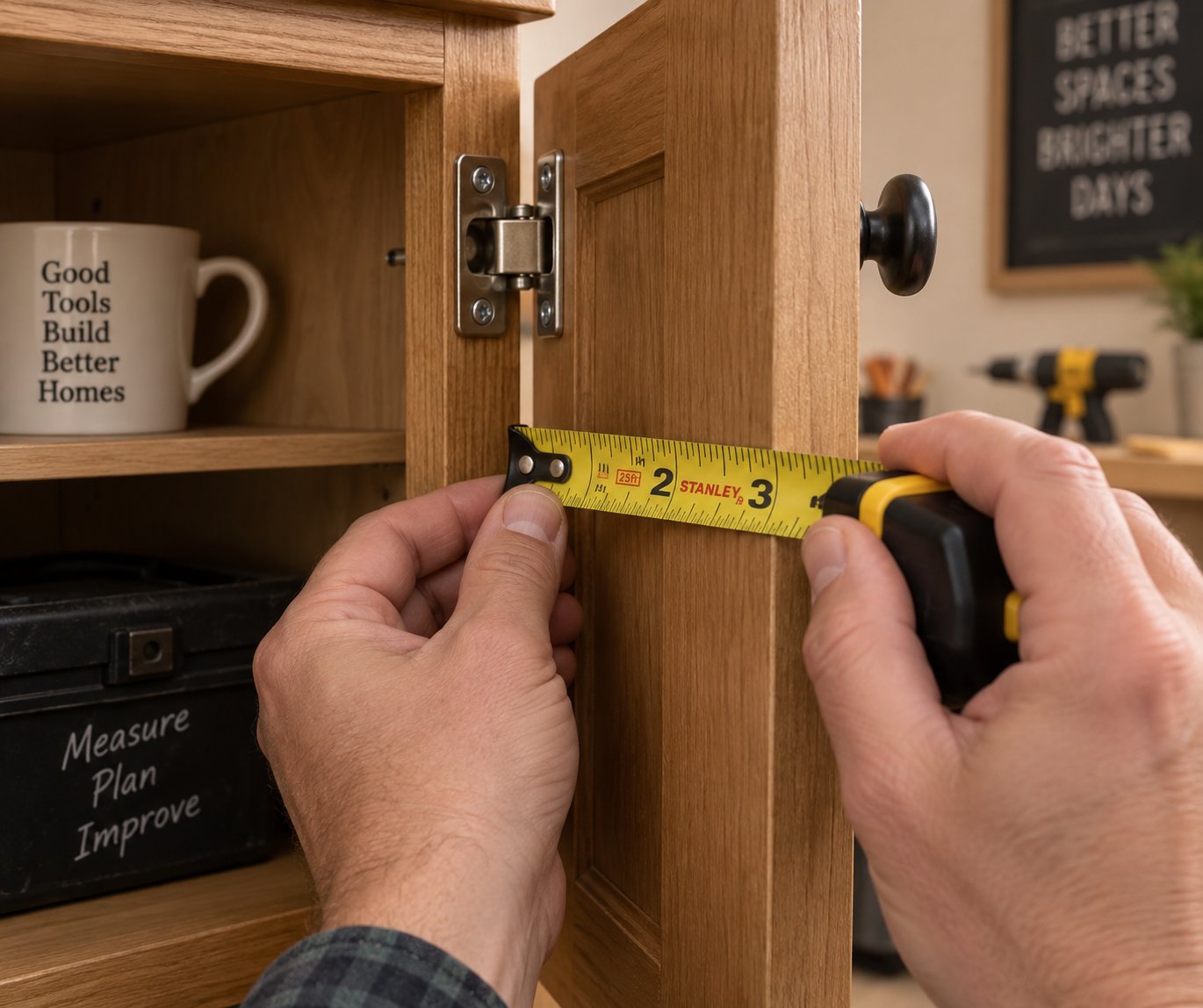
To measure your overlay precisely, try the tape trick: close the door, place a strip of masking tape on the cabinet frame next to the hinge side of the door, and draw a line along the door's edge. Open the door, then measure from the inside edge of the cabinet opening to the pencil line. That distance is your overlay. Common face-frame overlays in U.S. kitchens are 1/2 inch, 1-1/4 inch, and 1-3/8 inch.
Before purchasing any cabinet door soft close hardware, gather these specific measurements:
- Door overlay distance — measured using the tape method described above; determines the hinge arm crank you need
- Hinge bore cup diameter — the circular hole drilled into the back of your door for the hinge cup; standard is 35mm, though older or smaller cabinetry occasionally uses 26mm
- Mounting plate type — face-frame plates screw onto the front frame; frameless plates mount inside the cabinet box on the 32mm grid; plates also come in various heights (0mm, 3mm, 6mm) that fine-tune overlay
- Door thickness — most concealed hinges are designed for 3/4-inch (19mm) doors, but thicker slab doors or doors with applied molding may require specific hinge models or wider opening angles
If those measurements feel like a lot to track, here's the shortcut worth remembering: universal damper systems bypass nearly all of these compatibility concerns. Because standalone dampers mount to the interior cabinet wall or top panel rather than integrating with the hinge, they don't care about your overlay, bore cup diameter, mounting plate brand, or whether you have face-frame or frameless construction. They work with whatever hinge you already have. For homeowners who want reliable soft close for cupboard doors without navigating the maze of hinge specifications, a universal damper is often the fastest, most forgiving path to a quiet kitchen.
Of course, knowing what fits your cabinets is only one side of the equation. The other is deciding whether to add soft close to your existing setup or replace the old hinges entirely — a choice that depends as much on cabinet condition and future plans as it does on hardware compatibility.
Retrofit vs Replace
You've identified your cabinet type, measured your overlay, and narrowed down the soft close solutions that fit. The next decision is the one that actually determines how much time and money you'll spend: do you retrofit your existing hardware with adapters or dampers, or replace every hinge with an integrated soft-close unit? The answer isn't the same for every kitchen. A twenty-year-old kitchen with solid oak face-frame cabinets calls for a completely different strategy than a ten-year-old frameless setup with worn-out hinges. Let's build a practical framework so you can pick the path that makes the most sense for your situation, your budget, and your long-term plans.
When Retrofitting With Adapters or Dampers Makes Sense
Retrofitting is the quicker, cheaper, and less disruptive path. Instead of removing and replacing every hinge on every door, you either clip an adapter onto your existing hinges or mount a standalone damper inside the cabinet box. The doors stay on. The hinges stay put. You simply add the cabinet slow close function on top of what's already there.
This approach works beautifully when your cabinets and hinges are still in good structural shape. If the doors hang straight, the hinges operate smoothly, and nothing is rusted, bent, or stripped, there's no mechanical reason to tear everything out and start fresh. You're adding a feature, not fixing a failure.
Clip-on adapters are ideal if your existing concealed hinges happen to be from a brand that manufactures matching soft close adapters — Blum's Blumotion adapter snapping onto an existing Blum hinge arm, for instance. Universal standalone dampers, on the other hand, work regardless of hinge brand, which makes them the go-to for mixed-brand kitchens or cabinets with non-standard hardware. As WOOD Magazine explains, plunger-style pistons that screw onto the face frame or side panel can slow the door in the last inch or so of closing and work on just about any door with a snap-close hinge — typically costing $10 to $15 per unit.
Consider retrofitting your best option if your cabinets match these scenarios:
- Cabinets are less than 15 years old — the box construction, shelving, and finish are still in solid condition and worth preserving
- Hinges are in good working condition — doors close properly, open to full range without binding, and show no visible rust or mechanical wear
- Standard 35mm bore cups — your doors already have the industry-standard hinge cup holes, confirming they use modern concealed hinges compatible with most clip-on soft close adapters for cabinets
- Adequate interior mounting space — the inside of the cabinet box has a clear area on the side wall or top panel near the hinge side where a standalone damper can be screw-mounted without interfering with shelves or contents
When these conditions line up, retrofitting delivers the kitchen cupboard soft close experience you want for a fraction of the cost and effort of a full hinge swap. A typical 20-door kitchen can be retrofitted with universal dampers in a single afternoon — genuinely a weekend project you can knock out between lunch and dinner.
When Full Hinge Replacement Is the Better Investment
Retrofitting has its limits. There are situations where changing cabinet hinges to soft close models — replacing the entire hinge rather than adding to it — is the smarter long-term move, even though it costs more upfront.
Start with the hinges themselves. If yours are visibly worn, rusted, or loose in their mounting holes, no adapter or damper will compensate for that. A worn spring loses its pull force over time, meaning the door won't close fully — and any soft close mechanism needs the door to actually reach it before it can do its job. Replacing degraded hinges with fresh integrated soft-close units solves both problems at once: you get a new spring for reliable self-closing and a new damper for silent deceleration in a single component.
Older cabinets present a different challenge. If your doors use surface-mounted hinges — the exposed, decorative type with visible barrels and leaf plates — there's no concealed hinge cup bored into the door at all. Switching to modern soft close cabinet hinges for old cabinets means boring new 35mm cup holes, installing new mounting plates, and potentially filling old screw holes in the frame. It's more work, but the result is a dramatic upgrade in both function and appearance. Many homeowners tackling soft close hinges for old cabinets choose this moment to upgrade from surface-mounted to concealed hinges entirely, giving the kitchen a cleaner, more modern look in the process.
Hinge plate modifications can also come into play. WOOD Magazine cautions that some soft-close hinge models might not fit precisely in existing mounting holes, and for best results, homeowners should stay with the same manufacturer as the original hinges. Mixing brands often means misaligned screw holes, different plate dimensions, and a frustrating afternoon of drilling and filling.
Full replacement also makes sense when you want the cleanest possible result — no extra damper cylinders visible inside the cabinet, no adapters clipped onto hinge arms, just a streamlined integrated hinge that handles everything. For soft closing kitchen cabinets in a newly renovated space where aesthetics matter, that invisible integration can be worth the premium.
A Practical Cost Comparison Framework
Let's put real numbers to both paths. Imagine a standard kitchen with 20 cabinet doors, each door requiring two hinges.
| Cost Factor | Retrofit With Universal Dampers | Retrofit With Clip-On Adapters | Full Soft-Close Hinge Replacement |
|---|---|---|---|
| Hardware Cost Per Door | $8 – $15 (1 damper per door) | $6 – $14 (2 adapters per door) | $14 – $24 (2 hinges per door) |
| Total Hardware Cost (20 Doors) | $160 – $300 | $120 – $280 | $280 – $480 |
| Tools Required | Drill, screwdriver | Screwdriver only | Drill, screwdriver, possibly 35mm Forstner bit |
| Install Time Per Door | ~10 minutes | ~5 minutes | ~15 – 25 minutes |
| Total Install Time (20 Doors) | ~3 – 4 hours | ~2 hours | ~5 – 8 hours |
| Best For | Any hinge brand, mixed kitchens, non-standard hinges | Kitchens with compatible brand-name concealed hinges | Worn/rusted hinges, surface-mount-to-concealed upgrades, full renovations |
A few things jump out. Retrofitting with a soft close cabinet adapter — whether a clip-on or standalone damper — is roughly 40% to 50% cheaper than full replacement and takes about half the time. For a kitchen with solid, working hinges, that savings is hard to argue with.
Full replacement starts to justify its higher price tag when you factor in hinge condition. Replacing 40 worn hinges at $7 to $12 each gives you entirely new hardware with fresh springs, fresh dampers, and another decade or more of reliable service. Trying to retrofit adapters onto failing hinges is like putting new tires on a car with a broken axle — the upgrade can't fix the underlying problem.
One more variable worth weighing: your renovation timeline. If you're planning a full kitchen remodel within the next two to three years, investing in a complete soft close hinge replacement now may not make financial sense. A universal damper retrofit gives you quiet, slam-free doors today for minimal cost, and you can spec integrated soft-close hinges as part of the eventual renovation budget. On the other hand, if the current cabinets are staying for the long haul, investing in quality integrated hinges pays off over their 25,000-plus cycle lifespan with virtually zero maintenance.
The right answer boils down to three questions: How old are your cabinets? Are the existing hinges still healthy? And are you renovating soon? Honest answers to those three questions will point you clearly toward retrofit or replacement — and save you from spending either too much or too little.
Whichever path you choose, the real magic happens during installation. A perfectly selected soft close solution still needs to be mounted correctly to perform as promised, and each approach has its own step-by-step process worth walking through carefully.
Step-by-Step Installation for Soft Close Hardware
A great soft close adapter for cabinet doors sitting in its packaging does absolutely nothing for your kitchen. The performance you're after — that smooth, silent close on every door — depends entirely on how well the hardware gets installed. The good news? Neither of the two most common installation methods requires professional skills. A screwdriver, a drill, and about ten minutes per door are all it takes. Here's exactly how to handle each approach.
Installing Clip-On Soft-Close Adapters on Existing Hinges
Clip-on adapters are the fastest soft close door hardware upgrade you can make. The entire process happens right on the hinge arm without removing the door. Before you start, you'll need one key piece of information: the brand and model of your existing concealed hinges. Flip the hinge arm over and look for stamped text or a logo — Blum, Salice, Grass, or another manufacturer name. This determines which adapter fits. A Blum Blumotion adapter, for example, clips only onto Blum hinge arms. Brands like Rok Hardware also produce soft close adapters designed for specific hinge platforms, so confirming compatibility upfront prevents a wasted purchase. With that sorted, follow these steps:
- Open the cabinet door fully to expose the hinge arm and mounting plate inside the cabinet box.
- Confirm the adapter matches your hinge model by test-fitting it against the hinge arm or mounting plate clip point. It should align without forcing.
- Snap or screw the adapter into position. Most clip-on designs press directly onto the hinge arm with an audible click. Screw-on versions require one small fastener through the adapter body into the hinge plate.
- Close the door slowly and observe the dampening action. The door should decelerate smoothly in the final two to three inches.
- Adjust dampening resistance if the adapter includes a dial or set screw. Turn clockwise to increase resistance for heavier doors, counterclockwise for lighter ones.
- Repeat on each hinge — most doors have two hinges, and each one needs its own adapter for balanced deceleration.
The whole process typically takes under five minutes per door and requires nothing more than a screwdriver. That simplicity is why clip-on adapters remain one of the most popular cabinet door soft close adapter options for homeowners with compatible brand-name hinges already in place.
Mounting Standalone Soft-Close Dampers Inside the Cabinet
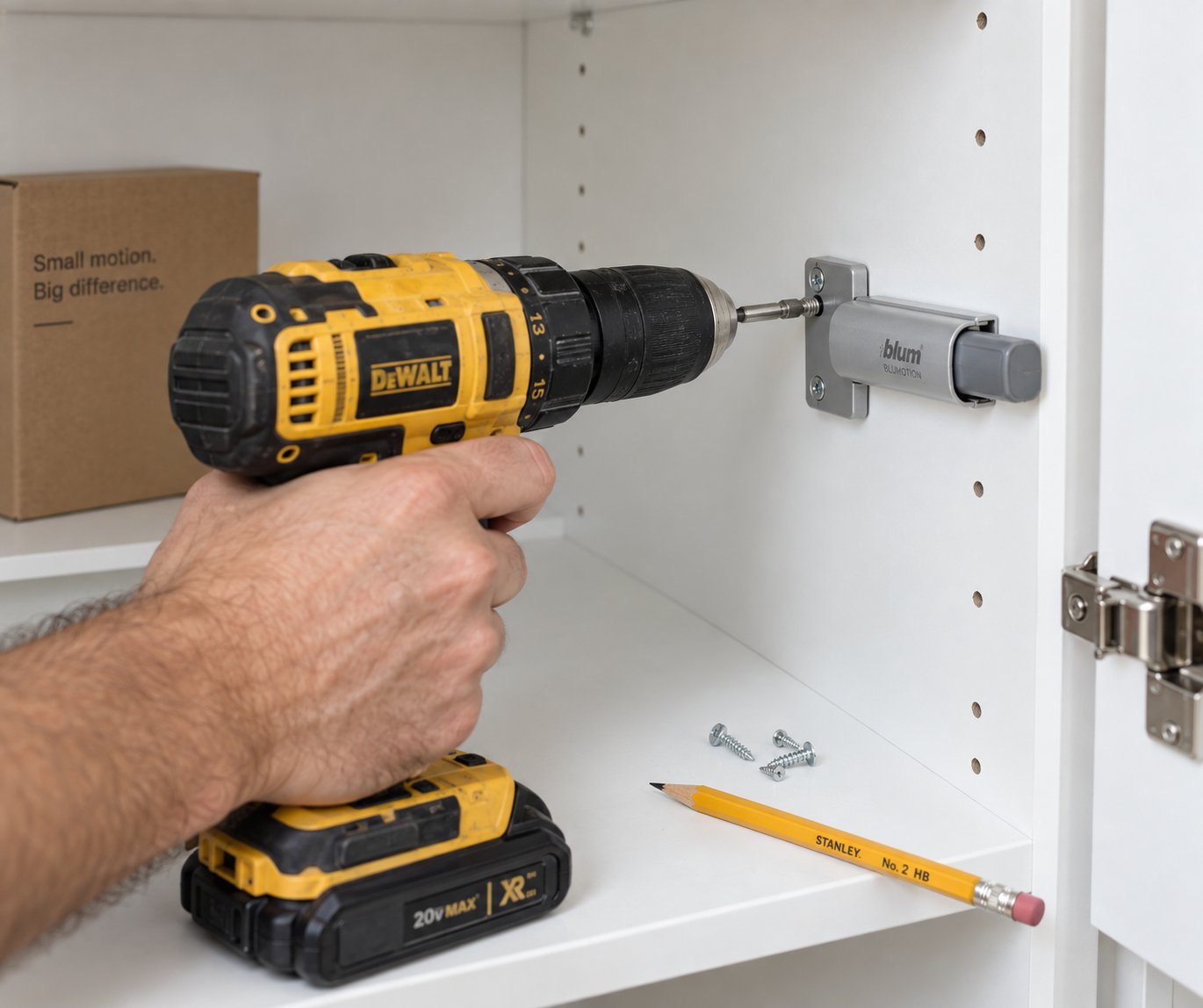
When your hinges don't match a specific clip-on adapter — or you'd rather not worry about brand compatibility at all — a standalone soft close damper for cabinet doors is the universal solution. These small hydraulic cylinders mount inside the cabinet box and work independently of the hinge. DIY bloggers who've tested these dampers confirm that each door only needs one unit, and the entire installation takes just minutes. Here's how to do it right:
- Choose the mounting location. Position the damper on the interior side wall of the cabinet, near the top corner on the hinge side. The damper's piston tip needs to sit slightly past the edge of the cabinet frame so it contacts the door as it closes.
- Hold the damper in place and mark the screw hole(s) with a pencil or awl. Most units need only one or two screws.
- Drill pilot holes at the marked points using a small drill bit. Pre-drilling prevents the cabinet panel from splitting and makes driving the screws far easier.
- Loosely secure the damper with the included screws — snug enough to hold position, but not fully tightened yet.
- Test the door closure. Push the door shut and watch the last few inches of travel. The damper should engage the door and slow it to a gentle stop. If the door misses the piston or bounces back, adjust the damper's position slightly.
- Tighten the screws fully once the damper engages the door cleanly and the closing action feels smooth.
- Fine-tune the resistance. Many quality dampers include an adjustment screw on the back. Extend the piston for heavier doors that need more dampening; shorten it for lighter doors that need less.
A practical tip from experienced installers: start with one cabinet to confirm your approach before doing all doors. Mount a single damper, test it across several open-close cycles, and make sure you're satisfied with the piston alignment and dampening feel. Once you've dialed in the right position and resistance level on that first door, the remaining installations go much faster because you've already solved the placement puzzle. For taller or heavier pantry-style doors, some homeowners add a second damper near the bottom of the door for even deceleration across the full height — though standard-sized cabinet doors rarely need more than one.
Whether you went with clip-on adapters or standalone cabinet door slow closers, the installation itself is only half the story. Soft close hardware performs best when it's maintained properly — and knowing how to diagnose and fix common issues keeps every door closing quietly for years instead of months.
Troubleshooting Common Soft Close Problems and Maintenance Tips
Your soft close hardware is installed, every door glides shut like a whisper, and the kitchen finally sounds the way it should. Fast forward six months, and something feels off. One door bounces back instead of latching. Another closes with a faint thud that wasn't there before. A third squeaks every time someone reaches for the cereal bowls. These are normal growing pains — not signs of a bad installation. Every soft close damper is a mechanical device with moving parts, and moving parts eventually need attention. Knowing what to look for and how to respond keeps your hardware performing at its best without calling in a professional.
Doors Not Closing Fully or Bouncing Back
This is the most common complaint, and it usually traces back to one of three causes. The first is a mismatch between damper resistance and door weight. If the cabinet door soft close damper provides too much resistance for a lightweight door, the hydraulic force actually overpowers the door's momentum and pushes it back open in the final inch of travel. Imagine trying to close a screen door against a strong spring — the door simply doesn't have enough mass to push through.
The second cause is insufficient hinge spring tension. If you're using adjustable self closing hinges with a separate soft close damper, the spring inside the hinge needs to generate enough pull force to drive the door past the damper's resistance zone. When that spring weakens — through age, wear, or a factory setting that's too light — the door stalls just short of closed. Most adjustable self closing door hinges feature a tension screw on the hinge cup or arm that lets you increase spring force. A quarter-turn clockwise is usually enough to restore full closure without making the door feel stiff.
The third culprit is simple misalignment. If the soft close door damper shifted after installation — a loose mounting screw is all it takes — the piston may no longer contact the door at the correct point in its closing arc. The fix is straightforward: open the cabinet, check that the damper body sits flush against the mounting surface, and retighten any screws that have worked loose. Then test the door a few times to confirm the piston engages cleanly.
Soft-Close Effect Weakening Over Time
You'll notice this one gradually. A door that used to take two full seconds to drift shut now closes in half a second, landing with a soft bump instead of the cushioned stop you're used to. The dampening action is still there — just noticeably weaker.
Hydraulic cabinet door dampers rely on a sealed cylinder filled with viscous fluid, typically silicone oil. Over thousands of open-close cycles, the internal seals can degrade slightly, allowing small amounts of fluid to seep past the piston or tiny air bubbles to enter the chamber. Either scenario reduces the hydraulic resistance that creates the door hinge slow close effect. Maxave's troubleshooting guide confirms that a worn-out hydraulic buffer losing its effectiveness is a natural part of the component's lifecycle — and the correct response is replacement rather than repair.
Quality soft close dampers are typically rated for 50,000 or more cycles. In a busy household opening and closing a cabinet door ten times a day, that translates to roughly 13 to 14 years of service. Budget dampers with lower cycle ratings may start fading after just a few years. If you don't know the rated lifespan of your specific unit, monitor closing speed as the primary indicator. When a door that once drifted shut over two seconds starts landing in under one second, the damper fluid or seal has degraded enough to warrant swapping in a new unit.
The silver lining? Replacing a standalone damper takes the same ten minutes as the original installation. Unscrew the old unit, screw in the new one in the same pilot holes, and the door is back to its whisper-quiet close.
Noisy or Squeaky Operation
Squeaking and creaking seem ironic on hardware designed for silence, but they happen — and the source is almost never the damper itself. The two most common noise generators are hinge pivot friction and loose damper mounting hardware.
Every soft closing hinge has metal-on-metal pivot points where the arm rotates against the cup and the mounting plate. Over time, the factory lubrication on those pivots dries out, and micro-friction between surfaces creates an audible squeak each time the door moves. The fix is simple: apply a single drop of silicone-based lubricant directly to each hinge pivot point. Avoid petroleum-based products like WD-40 for long-term use — they evaporate quickly and attract dust that accelerates wear. Silicone lubricant stays in place longer and won't gum up the soft closing hinge mechanism.
Loose mounting screws on the damper body cause a different kind of noise — a rattle or light knock as the door contacts the piston. The damper itself is fine, but because it's no longer firmly anchored, it vibrates against the cabinet panel on impact. IPSA Mart's maintenance guide recommends checking all mounting screws periodically and tightening any that have loosened. Adding this to a quarterly routine — once per season — catches problems before they become audible.
For quick reference, here's a checklist covering the five most common soft close issues, their likely causes, and the recommended fix:
- Door bounces back before fully closing — Damper resistance too high for door weight or weak hinge spring tension. Reduce damper resistance or increase spring tension via the hinge adjustment screw.
- Door closes but doesn't latch — Soft close damper misaligned or shifted from original position. Reposition and retighten mounting screws so the piston engages at the correct point in the door's arc.
- Dampening effect noticeably weaker — Hydraulic fluid loss or internal seal degradation from extended use. Replace the damper unit entirely; do not attempt to refill or repair.
- Squeaking during door movement — Dried-out lubrication on hinge pivot points. Apply one drop of silicone lubricant to each pivot and work the door back and forth several times to distribute.
- Rattling or knocking on close — Loose damper mounting screws allowing the unit to vibrate on impact. Tighten all fasteners and confirm the damper sits flush against the mounting surface.
Most of these fixes take less than five minutes and require nothing beyond a screwdriver and a tube of silicone lubricant. The key is catching issues early. A door that bounces back once will bounce back a hundred more times if the root cause isn't addressed — and each of those impacts chips away at the cabinet frame finish you're trying to protect. A simple seasonal check of every damper and hinge in the kitchen keeps the entire system running quietly and extends the useful life of both the hardware and the cabinetry it serves.
Maintenance keeps existing hardware performing. But what about choosing hardware that's built to last in the first place? The difference between a damper that fades after two years and one that runs quietly for a decade often comes down to a handful of quality indicators most buyers never think to check.
What to Look for When Buying Soft Close Dampers That Last
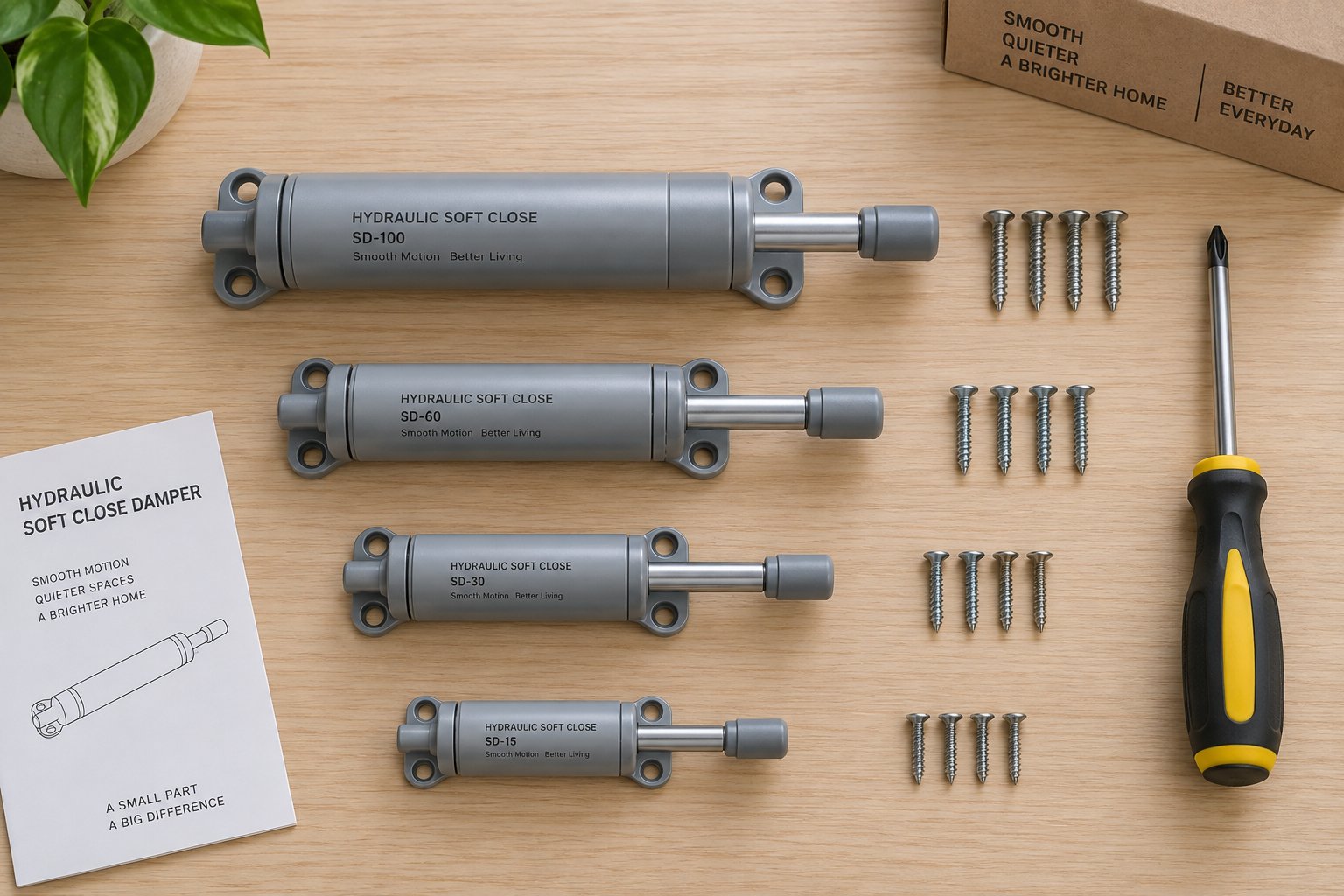
Two soft close dampers can look nearly identical on a product listing — same size, same mounting style, same basic description — yet one fades after eighteen months while the other runs silently for over a decade. The difference isn't visible in a photo. It lives inside the cylinder, in the precision of the seal, the viscosity of the fluid, and the engineering decisions that went into the component long before it reached a shelf. Knowing what separates a reliable soft close cabinet door damper from a disposable one saves you from buying the same hardware twice.
Key Quality Indicators for Soft-Close Dampers
Price alone tells you very little. A $3 damper and a $12 damper may share the same silhouette, but the internal engineering determines whether your cabinets soft close quietly in year five the same way they did on day one. When evaluating any soft close dampers before purchase, run through these criteria:
- Rated cycle count — Quality units are tested for 50,000 or more open-close cycles. As CNT Cabinet's hinge guide notes, that translates to roughly 15 to 25 years of normal kitchen use. Budget dampers with vague or missing cycle ratings often fail within a few years.
- Operating temperature range — Silicone oil viscosity changes with temperature. A damper engineered for consistent performance across a wide range, say 14°F to 140°F, won't stiffen up in an unheated cabin or lose resistance in a sun-baked laundry room. Cheap units may feel completely different between winter and summer.
- Adjustable resistance — Not every cabinet door weighs the same. A pantry door with a solid slab front is far heavier than a narrow spice cabinet door. Dampers with an adjustment screw or dial let you tune resistance to match the door, ensuring the cabinet door soft close action feels smooth regardless of size.
- Mounting flexibility — The best standalone dampers offer multiple mounting orientations — side wall, top panel, or even base — so you can adapt to different cabinet geometries without compromise.
- Housing material quality — Durable thermoplastic or reinforced nylon housings resist cracking over years of repeated compression. Brittle, thin-walled housings develop micro-fractures that eventually leak fluid and kill the dampening effect. Furnihard's quality evaluation framework emphasizes that weak seals and unstable hydraulic pressure are the primary failure modes in low-quality dampers.
Think of these five checkpoints as your filter. Any soft close cabinet product that clears all five is built to last. Any product that dodges specifics on cycle life or temperature performance is waving a red flag.
Sourcing Dampers Built for Long-Term Performance
Here's a pattern worth paying attention to: the most reliable cabinet door closers tend to come from manufacturers who specialize in controlled-motion hardware rather than companies that sell a little bit of everything. A factory dedicated to damper engineering invests in seal technology, fluid formulation, and endurance testing in ways that a generic hardware supplier simply doesn't.
Tianyun's soft close dampers, engineered specifically for appliance, furniture, and household product applications, exemplify this kind of purpose-built component. Designed for quieter and safer operation across cabinet doors, lids, and compact mechanisms, these dampers reflect the application-specific expertise that produces consistent deceleration over tens of thousands of cycles. For both product manufacturers sourcing components at scale and DIY homeowners upgrading soft close kitchen cabinets one door at a time, that engineering depth translates directly into longer service life and fewer replacements.
The temptation to chase the lowest price per unit is understandable — especially when you're outfitting 20 or 30 doors. But a damper that costs $4 and lasts two years ends up more expensive than one that costs $10 and lasts twelve. Prioritize manufacturer expertise and purpose-built design over sticker price, and your soft close cabinets will reward you with years of silent, maintenance-free operation.
Stepping back, the path from noisy kitchen to quiet one follows a clear sequence. Define the problem — slamming doors cause noise, wear, and safety risks. Understand the mechanism types — self-closing, soft-close, or the combined action most homeowners actually need. Compare solution categories — universal dampers, integrated hinges, clip-on adapters, or basic bumper pads. Assess your cabinet compatibility — construction type, overlay, and hinge geometry. Decide whether to retrofit or replace based on cabinet condition and budget. Install the hardware correctly using the step-by-step methods that match your chosen solution. Maintain over time with seasonal screw checks, silicone lubrication, and damper replacement when the closing speed noticeably drops. Follow that decision path, and every soft close cabinet in your home stays exactly as quiet as the day you installed it.
Frequently Asked Questions About Soft Close Cabinet Door Closers
1. What is the difference between self-closing and soft-close cabinet hinges?
Self-closing hinges use an internal spring to pull the door shut automatically, but the door still slams on contact. Soft-close hinges use a hydraulic or pneumatic damper to decelerate the door in the final inches of travel, preventing any slam. Many modern hinges combine both functions, giving you automatic closing plus silent deceleration in one unit. If you want doors that return on their own and land quietly, look for a combined self-close and soft-close hinge rather than either feature alone.
2. Can I add soft close to my existing cabinet doors without replacing the hinges?
Yes, you have two main retrofit options. Clip-on soft-close adapters attach directly to compatible brand-name concealed hinges, adding dampening without any hinge removal. Universal standalone dampers, such as those from Tianyun (tianyuntech.com/home-appliance-dampers), mount inside the cabinet box independently of the hinge brand and work with virtually any door style. Both approaches deliver genuine soft-close performance at a lower cost than full hinge replacement and can typically be installed in under ten minutes per door.
3. How long do soft close cabinet dampers typically last?
Quality soft close dampers rated for 50,000 or more cycles can last roughly 13 to 15 years in a busy household that opens and closes a cabinet door about ten times daily. Budget dampers with lower or unspecified cycle ratings may begin losing effectiveness within two to three years. Monitor closing speed as the best indicator of damper health — when a door that once drifted shut over two seconds starts landing in under one second, the internal seals or fluid have degraded and the unit should be replaced.
4. Why is my soft close cabinet door bouncing back instead of closing fully?
Three common causes lead to this issue. First, the damper resistance may be too strong for a lightweight door, overpowering its momentum. Reduce the damper's resistance via its adjustment screw if available. Second, the hinge spring tension might be too weak to push the door through the damper's resistance zone — increase it with the tension screw on adjustable self-closing hinges. Third, the damper may have shifted from its original mounting position. Retighten the mounting screws and confirm the piston contacts the door at the correct point in its closing arc.
5. What measurements do I need before buying soft close hardware for my cabinets?
Gather four key measurements: door overlay distance (how much the door overlaps the cabinet opening), hinge bore cup diameter (typically 35mm or 26mm), mounting plate type (face-frame or frameless), and door thickness (usually 3/4 inch for standard cabinets). You also need to identify whether your cabinets are face-frame or frameless construction, as this determines hinge plate compatibility. If navigating these specs feels overwhelming, universal standalone dampers bypass most compatibility concerns since they mount to the cabinet interior rather than integrating with the hinge.
Apply This Insight to Your Project
Tell us what you are building and how the topic “Soft Close Cabinet Door Closers: Silence Every Slam For Good” relates to your application. Our engineering team can help evaluate the next step.