What Makes a Toilet Seat Elongated and When to Replace It
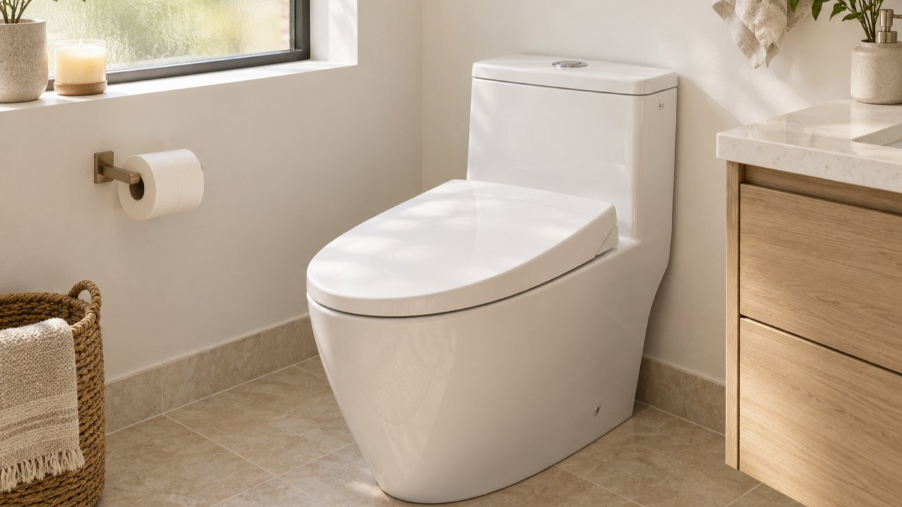
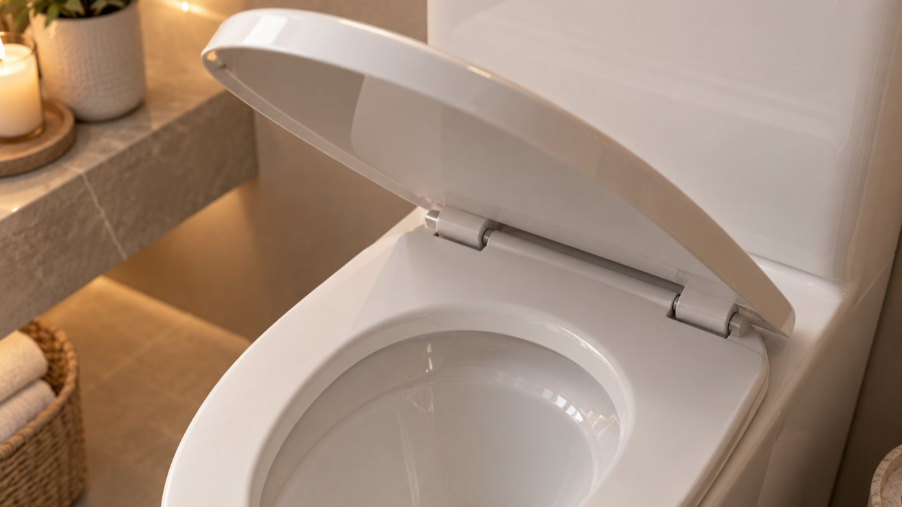
So what is an elongated toilet seat, exactly? It is an oval-shaped seat designed to fit toilets with a longer bowl profile, and it is the most common style found in American homes. If you are shopping for a replacement toilet seat elongated to match your existing bowl, the single most important detail is the measurement from the mounting bolt holes to the front rim. Get that number wrong, and the seat you order will either overhang awkwardly or fall short of the bowl edge.
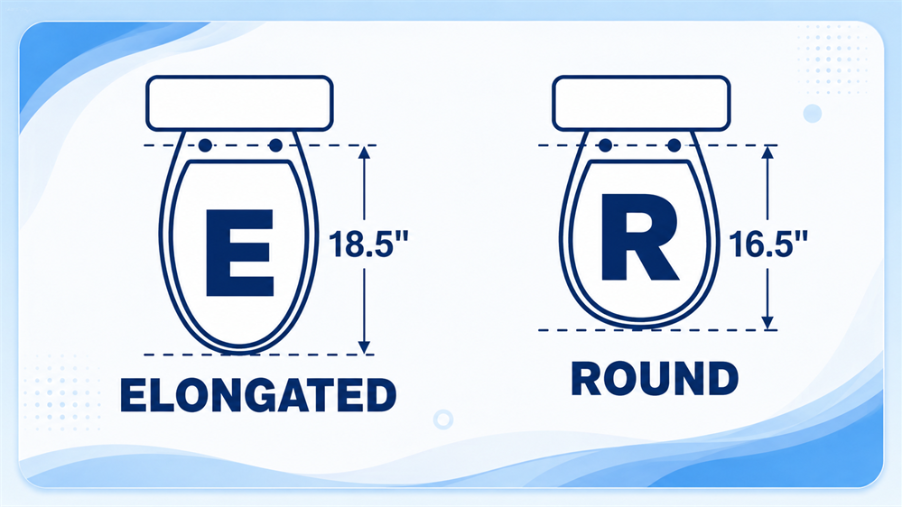
A standard elongated toilet seat measures roughly 18 to 18.5 inches from the center of the mounting bolt holes to the front of the bowl rim. A round seat, by comparison, measures approximately 16.5 inches. The bolt-hole spacing for both shapes is typically 5.5 inches center to center.
Quick Answer on Elongated Seat Dimensions
You will sometimes see elongated toilet seats labeled as "oval" in product listings and store signage. These terms are interchangeable across the industry, so do not let different wording confuse your search. The defining characteristic is that extended front-to-back length, which provides a larger seating area and extra comfort compared to a round alternative. This is also why elongated toilet seat measurements matter so much during the buying process. Even a half-inch difference in bowl length can mean the difference between a snug fit and a wobbly seat that slides forward every time someone sits down. For households that include larger adults, toilet seats for large people almost always come in the elongated shape because the oval profile distributes weight more evenly.
Common Reasons You Need a Replacement
Why do elongated toilet seats need replacing in the first place? Everyday wear takes a toll faster than most people expect. Cracked or chipped plastic is the most obvious sign, but it is far from the only one. Yellowed and stained surfaces that no amount of scrubbing can fix, loose hinges that let the seat shift sideways, and germ-harboring scratches in the finish are all signals that an upgrade is overdue. Sometimes the motivation is purely about comfort. Maybe you want a slow-close lid to stop the midnight slam, or you are looking for an extra wide toilet seat that provides a more generous seating surface. Whatever the reason, choosing the right replacement starts with confirming your bowl shape and size.
Elongated vs Round at a Glance
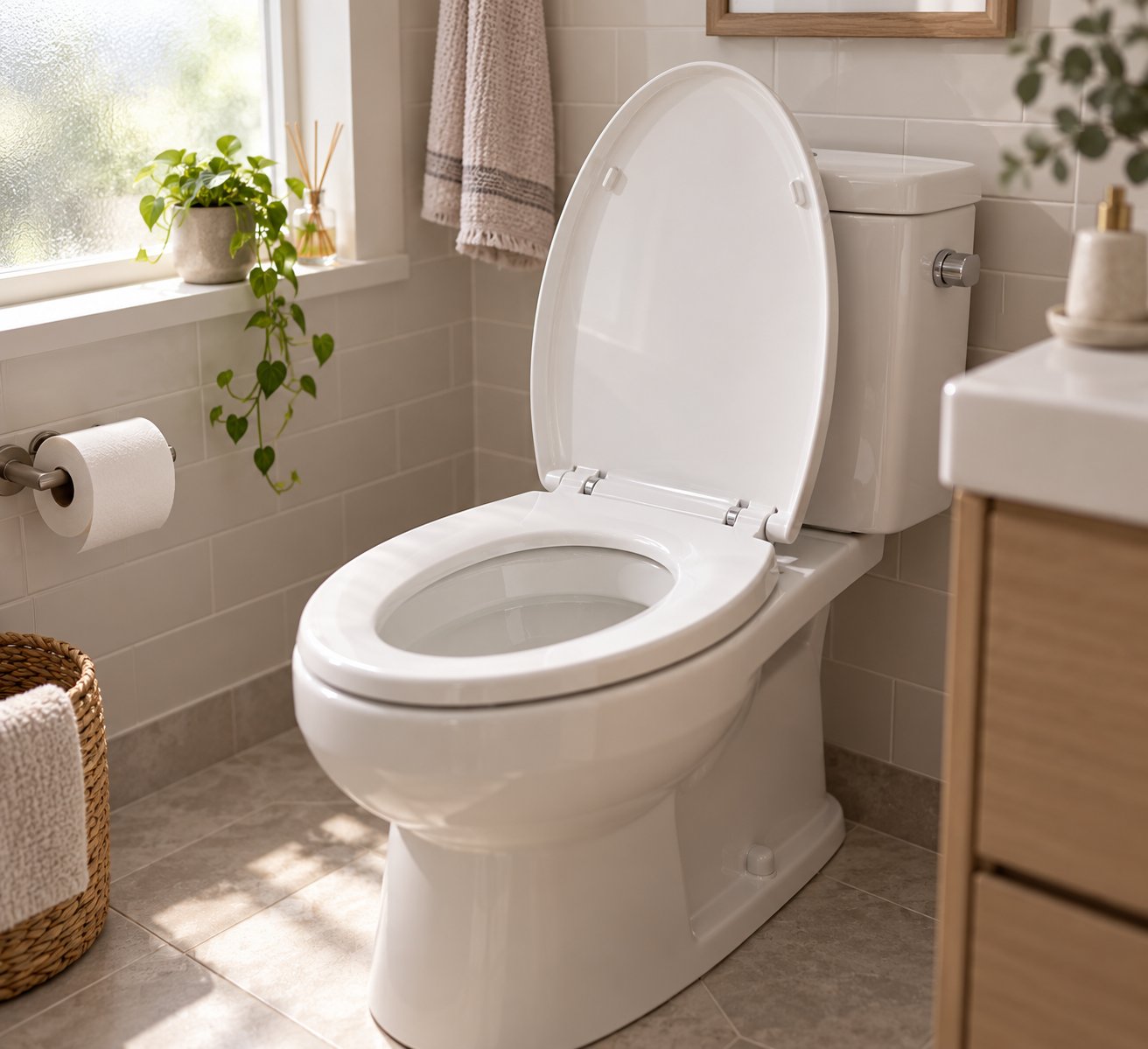
Imagine standing over your toilet and looking straight down. An elongated bowl has a distinctly oval footprint that extends further toward the front of the bathroom, while a round bowl looks like a near-perfect circle. Elongated toilets require a bit more floor space, but they tend to offer a more powerful flush and a seating area that most adults find noticeably more comfortable. The table below gives you a side-by-side snapshot.
| Feature | Elongated (Oval) | Round |
|---|---|---|
| Bowl length (bolt holes to rim) | ~18 to 18.5 inches | ~16.5 inches |
| Bolt-hole spacing | 5.5 inches | 5.5 inches |
| Best for | Most adults, larger individuals | Compact bathrooms, children |
| Seat availability | Very wide selection | Moderate selection |
Throughout this guide, you will learn how to measure your bowl accurately, understand the difference between standard and compact elongated shapes, compare material and hinge options, and install a new seat yourself without cracking the porcelain. Each section builds on the last, so by the end you will know exactly which replacement fits your toilet and your household's needs. The journey starts with a tape measure and three simple numbers.
How to Measure Your Toilet Bowl for a Perfect Fit
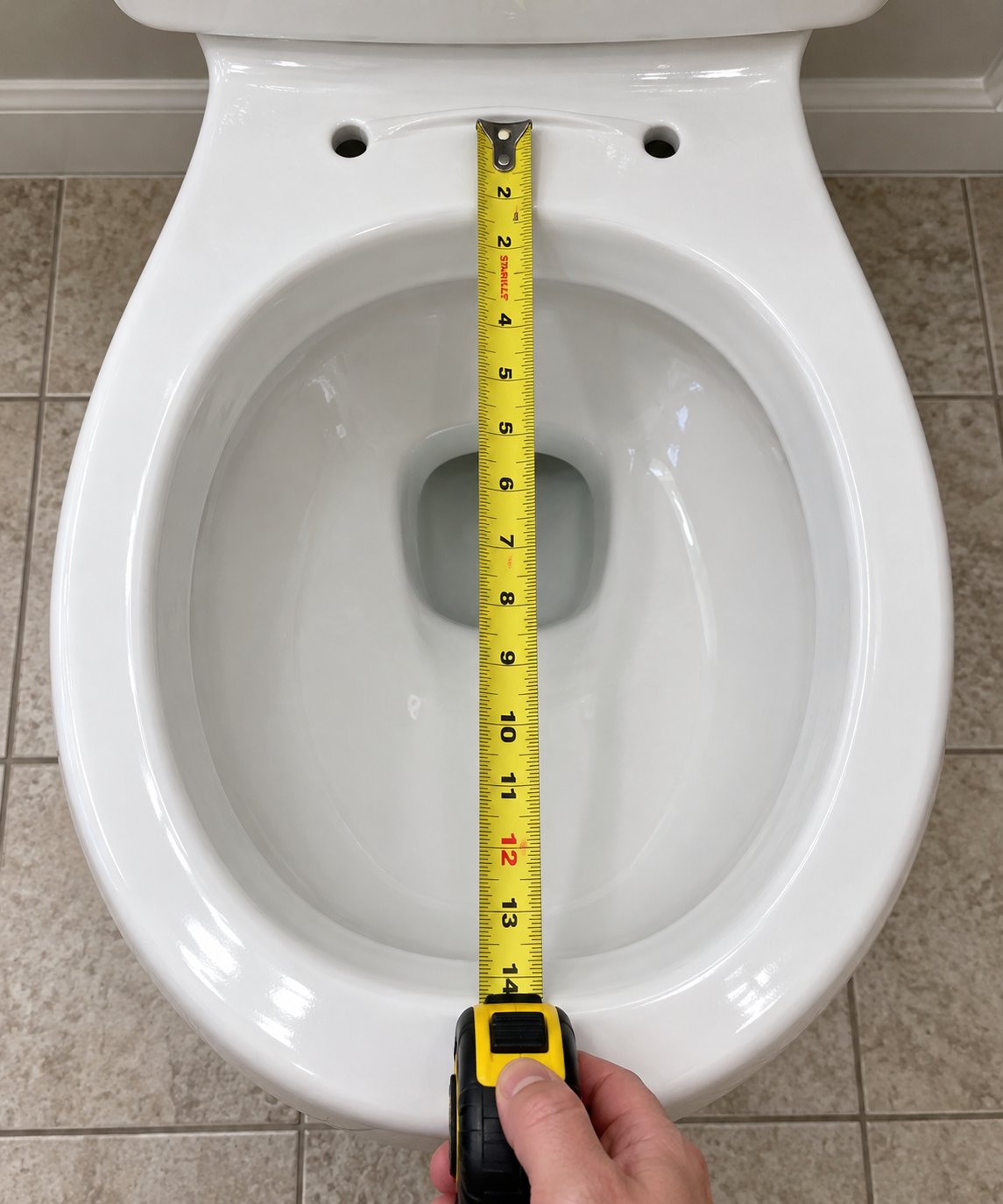
Three numbers stand between you and a toilet seat elongated to match your bowl perfectly, or one that rocks, overhangs, or leaves an ugly gap. Grabbing a tape measure before you grab your wallet is the single easiest way to avoid a return trip to the store. Below is the exact process, whether your old seat is still attached or already in the trash.
Tools You Need Before Measuring
You do not need anything fancy. A standard retractable tape measure works fine, though a flexible sewing tape can be easier to press against curved porcelain. Keep a pen and a scrap of paper nearby so you can jot down each number as you go. If the old seat is still bolted on, you can measure right over it for the bolt spread and bowl width, but you will get the most accurate bowl length by lifting the seat and lid out of the way or removing them entirely. A flathead screwdriver or pliers may help if you need to pop off bolt caps to expose the mounting holes.
Three Measurements That Confirm Elongated Sizing
Every toilet bowl, whether you are looking at an oblong toilet seat shape or a perfectly round one, can be identified by the same trio of dimensions. Work through these steps in order and you will know your bowl type within minutes.
- Bolt-hole center-to-center distance. Locate the two bolt holes at the back of the bowl rim where the seat attaches. Measure from the center of one hole to the center of the other. The standard distance is 5.5 inches. If your measurement is noticeably different, perhaps 6 inches or wider, you may have a non-standard toilet that requires brand-specific mounting hardware rather than a universal seat. Write this number down first because it determines which hinge systems will even fit your bowl.
- Bowl length from bolt holes to front rim. Place the end of your tape at the midpoint between the two bolt holes, which is the center of that 5.5-inch span. Stretch the tape straight forward to the inside front edge of the bowl rim. An elongated bowl will land in the 18 to 18.5-inch range, while a round bowl measures closer to 16.5 inches. This single measurement is the most reliable way to confirm whether you need an elongated or round replacement. If your reading falls somewhere around 17 to 17.5 inches, you likely have a compact elongated bowl, a distinction covered in detail later in this article.
- Bowl width at the widest point. Measure across the bowl opening at its widest span, typically near the center of the oval. Most elongated bowls range from 14 to 14.5 inches wide, while round bowls hover closer to 14 inches. Width matters less than length for determining shape, but it becomes important when you are shopping for a huge toilet seat or a specialty size designed for accessibility needs. Jot this number down as a secondary confirmation.
When measuring with the old seat still in place, simply lift the lid and seat to the upright position so they do not block your tape. The bolt holes should still be visible beneath the hinge covers. If the seat is already removed, you will have a completely unobstructed view of the porcelain rim, which often makes the job easier and more precise. Even half an inch of error can mean the difference between a toilet seat cut precisely for your bowl and one that wobbles every time you sit down.
Measurement Reference Table for All Bowl Shapes
The table below puts all three bowl shapes side by side so you can match your measurements instantly. Whether you are browsing decorative elongated toilet seats online or comparing elongated toilets at Home Depot in person, these ranges apply across virtually all major manufacturers.
| Measurement | Round | Compact Elongated | Standard Elongated |
|---|---|---|---|
| Bolt spread (center to center) | 5.5 inches | 5.5 inches | 5.5 inches |
| Bowl length (bolt holes to front rim) | ~16.5 inches | ~17 to 17.5 inches | ~18 to 18.5 inches |
| Bowl width (widest point) | ~14 inches | ~14 to 14.25 inches | ~14 to 14.5 inches |
| Typical seat label | Round | Compact elongated | Elongated / Oval |
Notice that the bolt spread stays consistent across all three shapes. That uniformity is what allows most universal seats to physically bolt onto any standard bowl. The critical variable is length, and that is where buyers make the fit mistake referenced in this article's title. A seat designed for an 18.5-inch elongated bowl will overshoot a compact elongated rim by roughly an inch, leaving an unsupported lip at the front that flexes under weight and looks sloppy.
One more detail worth flagging: if your bolt spread measures anything other than 5.5 inches, you are almost certainly dealing with a proprietary toilet design. Some European imports and older American models use non-standard spacing. In those cases, a generic replacement will not line up no matter what length you choose, so you will need to track down the toilet's model number, typically stamped inside the tank or on the back of the bowl, and order a seat built specifically for that unit.
Accurate measurements eliminate guesswork, but they also raise a follow-up question that trips up a surprising number of buyers: what happens when your bowl length lands in that gray zone between 17 and 17.5 inches? That middle ground belongs to the compact elongated category, and it deserves its own explanation.
Standard Elongated vs Compact Elongated Seats Explained
That 17 to 17.5-inch bowl length is exactly where confusion turns into wasted money. Buyers measure their bowl, see the oval shape, and assume they need a standard elongated seat. They order one, bolt it on, and immediately notice the front edge jutting past the porcelain rim by nearly an inch. The seat flexes when weight shifts forward, the lid does not close flush, and the whole setup looks like it belongs on a different toilet. What went wrong? They have a compact elongated bowl, not a standard one, and the distinction matters more than most product listings let on.
What Is a Compact Elongated Bowl
A compact elongated toilet is designed to deliver the oval comfort of a full-size elongated bowl while occupying roughly the same floor space as a round toilet. Think of it as a hybrid. The bowl still has that distinctive front-to-back stretch that makes toilet seats oval more comfortable for most adults, but the overall length is trimmed down to roughly 17 to 17.5 inches from mounting bolt holes to the front rim. That is about an inch shorter than a standard elongated bowl and roughly half an inch longer than a round one.
Why does this shape exist? Smaller bathrooms and powder rooms are the driving force. Homeowners want the seating comfort of an elongated profile without sacrificing precious clearance between the toilet and the vanity, door swing, or opposite wall. Brands like Kohler have leaned heavily into this category with popular models such as the Santa Rosa, Tresham, and San Souci, all labeled "compact elongated" on their spec sheets. The format has grown steadily in popularity, which means more and more buyers searching for a replacement seat are unknowingly dealing with a bowl size that does not match the standard elongated seats lining store shelves.
Why Standard Elongated Seats Do Not Fit Compact Bowls
Picture a plastic elongated toilet seat rated for an 18.5-inch bowl bolted onto a 17-inch compact elongated rim. The bolt holes align because the 5.5-inch spread is universal, so the rear portion of the seat sits perfectly. The problem is at the front. That extra inch to inch-and-a-half of seat material extends beyond the porcelain, creating an unsupported overhang. Here is why that matters in daily use:
- Safety risk. When someone sits toward the front of the bowl, their weight presses down on a section of the seat that has no porcelain beneath it. Over time, the plastic can crack at the stress point, and in the worst case, the seat snaps forward unexpectedly. This is an especially important consideration if you need a toilet seat for heavy person use, where higher loads amplify the flex.
- Visual gap. The overhanging lip creates a visible shadow line between the seat edge and the bowl rim, making the toilet look mismatched even from across the room.
- Lid misalignment. Because the seat extends past the bowl, the lid often cannot close flat, leaving it slightly angled or hovering above the rim at the front.
A round seat will not work either. At 16.5 inches, it falls short of covering the compact elongated rim, leaving exposed porcelain at the front and an uncomfortable seating edge. The only reliable solution is a seat specifically labeled "compact elongated."
How to Tell Which Type You Have
Your tape measure already gave you the answer if you followed the measurement steps in the previous section. A bowl length between 17 and 17.5 inches points directly to a compact elongated shape. Beyond the numbers, there are a few other clues:
- Check the toilet model number. Lift the tank lid and look for a number stamped into the porcelain inside the tank or on the back of the bowl near the floor. Search that number on the manufacturer's website, and the product page will specify the bowl shape.
- Look at the original seat. If you still have the old seat or its packaging, check the label. Olsonite toilet seats and other replacement brands typically print the compatible bowl shape on the underside of the seat or on the mounting hardware packaging.
- Compare the footprint to a round toilet. Stand directly above the bowl and look down. A compact elongated bowl has an oval shape, but it does not project as far forward as a standard elongated model. If the toilet takes up about the same floor depth as a round unit yet the opening is clearly oval, you are looking at a compact elongated design.
The table below consolidates the critical differences so you can match your measurements and identify your bowl type at a glance. If you have been browsing a home depot elongated toilet listing or any other retailer, cross-reference the seat's stated dimensions against these ranges before adding it to your cart.
| Specification | Round | Compact Elongated | Standard Elongated |
|---|---|---|---|
| Typical bowl length | ~16.5 inches | ~17 to 17.5 inches | ~18 to 18.5 inches |
| Typical bowl width | ~14 inches | ~14 to 14.25 inches | ~14 to 14.5 inches |
| Seat compatibility | Round seats only | Compact elongated seats | Standard elongated seats |
| Common brands using this shape | Most major brands | Kohler (Santa Rosa, San Souci, Tresham), select TOTO and American Standard models | Most major brands |
Misidentifying a compact elongated bowl as a standard one is arguably the most common fit mistake buyers make when shopping for a replacement. It is also entirely preventable with a quick tape measure check. Knowing your exact bowl type narrows the field dramatically, but it raises the next practical question: once you have confirmed whether your toilet takes a standard or compact elongated seat, should you buy a universal-fit model or one designed specifically for your toilet's brand and model?
Universal-Fit vs Brand-Specific Replacement Seats
You have confirmed your bowl is a standard elongated shape, your tape measure reads 18 to 18.5 inches, and the bolt spread is the expected 5.5 inches. A universal-fit seat should drop right on and work perfectly, right? In most cases, yes. But "most cases" is not "all cases," and the gap between those two phrases is where a surprising number of buyers end up with a seat that technically bolts on yet never quite feels secure. Understanding whether you need a universal replacement or a brand-specific one can save you a second trip to the store and a pile of stripped packaging you cannot return.
What Universal-Fit Actually Means
A universal-fit elongated seat is designed to match any toilet bowl that conforms to industry-standard dimensions: 5.5-inch bolt spacing and roughly 18.5 inches from the mounting holes to the front of the rim. Because these measurements are consistent across the vast majority of American-made toilets, a single seat model can work on bowls from dozens of different manufacturers. That is why store shelves are dominated by universal options, from basic polypropylene models to elongated molded wood toilet seat designs and everything in between.
Are elongated toilet seats universal, then? For standard bowls, the practical answer is yes. Any manufacturer's elongated seat will fit any manufacturer's standard elongated bowl, provided both adhere to the industry dimensions. This interchangeability is what makes shopping for elongated toilet seat covers and replacement seats relatively straightforward for the average homeowner. You pick a material, choose your preferred features, and bolt it on. The catch is that not every toilet qualifies as "standard," and the exceptions are more common than you might expect.
When You Need a Brand-Specific Replacement
Some toilets deviate from those universal dimensions just enough to make a generic seat fit poorly. The bolts go through the holes, the seat rests on the rim, but the contour does not match. You notice a slight wobble, a gap along one side, or a lid that does not sit centered. Brands like American Standard and Mansfield produce models with subtly unique bowl profiles, curved rims that are a fraction wider on one side or tapered differently at the front. A universal seat cannot account for those contour variations because it is engineered for the broadest possible compatibility, not a precision match to one specific bowl.
Wall-mounted toilets and skirted designs present even bigger challenges. Their mounting hardware is often concealed inside the ceramic shell, requiring proprietary bolt systems that a standard top-mount or bottom-mount seat simply cannot engage. If you have a Mansfield elongated toilet seat that came as part of a skirted one-piece unit, for example, you will almost certainly need the replacement seat sold by that same manufacturer or a licensed aftermarket version built to the same specs.
Here are the telltale signs that a universal seat will not work on your toilet:
- Non-standard bolt spacing. If the distance between your bolt holes is anything other than 5.5 inches, you need a seat matched to that specific measurement. Some European imports and older American units use wider or narrower spacing.
- Unusual bowl curvature. When the sides of your bowl flare outward or taper inward more than typical, a universal seat may sit unevenly. Run your hand along the top rim. If it feels noticeably flat on one side and rounded on the other, the bowl profile is likely proprietary.
- Integrated skirted design. Skirted toilets hide the trapway behind a smooth ceramic shell. This sleek look often means the bolt holes are recessed or accessed from the top only, ruling out standard bottom-mount hardware.
- Wall-mounted installation. Toilets that hang from the wall rather than sitting on the floor frequently use manufacturer-specific mounting brackets and bolt configurations.
- Oversized toilet seat requirement. If you need an oversized toilet seat or one rated for higher weight capacities, the hinge reinforcements and wider seat platforms sometimes require a proprietary attachment system that generic hardware cannot support.
Even a styrofoam toilet seat used as a temporary comfort layer on top of an existing seat will not fix the underlying mismatch if the base seat itself does not conform to the bowl. The foundation has to be right before any accessory on top of it can function properly.
Checking Compatibility Before You Buy
The simplest way to avoid a mismatch is to find your toilet's model number before you start shopping. Lift the tank lid and look inside. Most manufacturers stamp the model number into the porcelain on the interior wall of the tank or on the back of the bowl near the floor bolts. Write that number down and search for it on the manufacturer's website. The product page will typically list compatible seat models, and it will specify whether the bowl uses standard or proprietary dimensions.
If the model number is worn away or illegible, try these backup steps:
- Photograph the bowl from above and from the side. Capture the shape of the rim, the hinge area, and any visible branding. These images help customer service representatives identify your unit if you call the manufacturer.
- Measure all three dimensions. Bolt spread, bowl length, and bowl width together create a profile that narrows the possibilities quickly. A 5.5-inch spread with an 18.5-inch length and 14.25-inch width fits the universal category. Anything outside those ranges signals a brand-specific need.
- Check the original seat. Flip the old seat over. Many replacement brands print the compatible toilet models, bowl shape, and dimensional specs on a sticker affixed to the underside of the lid or seat ring.
For the majority of households, a universal-fit elongated seat is all you need. It bolts on cleanly, sits flush with the rim, and offers the full range of material and feature choices. But if your toilet falls into one of the exception categories listed above, investing a few extra minutes to verify the model number will steer you toward the right brand-specific option, and away from the frustration of a seat that almost fits but never quite settles.
Whether you go universal or brand-specific, the next factor that shapes your daily experience with a replacement seat has nothing to do with dimensions at all. It comes down to what the seat is actually made of, and the material differences are bigger than most buyers realize.
Material Options That Affect Durability and Comfort
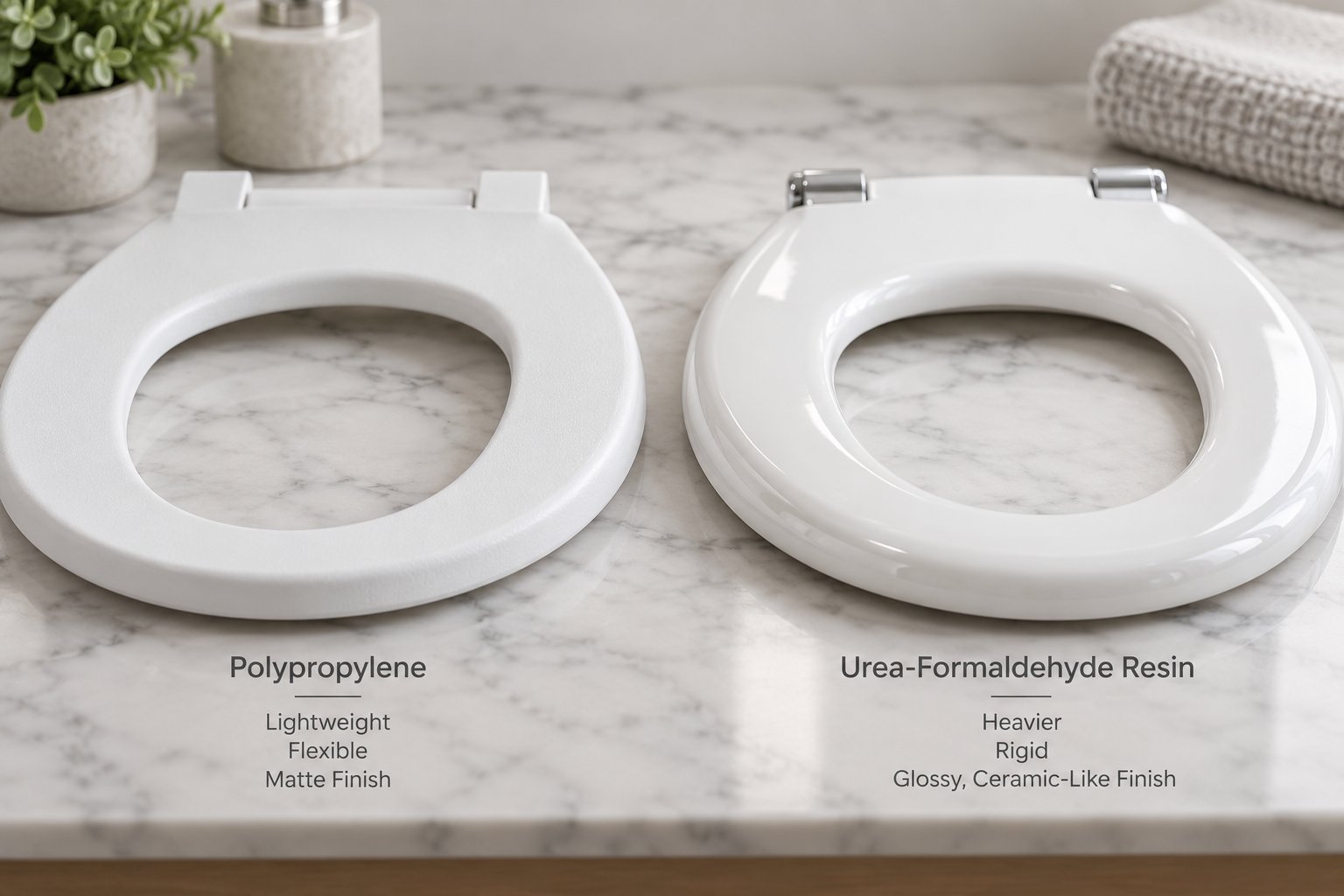
Pick up two toilet seats elongated to the same dimensions, and they can feel like entirely different products. One is feather-light and slightly flexible. The other is dense, rigid, and cool to the touch, almost like porcelain itself. The difference is material, and it influences everything from how long the seat lasts to how it feels at two in the morning. Four material families dominate the market for replacement elongated seats: polypropylene (PP) plastic, urea-formaldehyde (UF) resin, molded wood, and enameled wood. Each brings a distinct set of trade-offs.
Polypropylene and Urea-Formaldehyde Compared
PP and UF are the two materials you will encounter most often when browsing elongated toilet bowls and their matching seats. They look similar in photos, but they behave very differently in your hand and on your toilet.
Polypropylene (PP) is a thermoplastic, meaning it is injection-molded into shape and remains somewhat flexible after cooling. That flexibility is actually a strength: PP seats absorb everyday bumps without cracking, resist moisture, and hold up well against chemical bathroom cleaners. They are also the lightest option on the market, which makes installation and removal effortless. The trade-off? PP surfaces can yellow over time and are more prone to fine scratches that dull the finish after a couple of years. If you are replacing a basic seat in a rental unit or guest bathroom, PP delivers solid performance at the lowest price tier.
Urea-formaldehyde (UF) resin takes a completely different approach. It is a thermoset material, compressed and cured under heat and pressure into a rigid, cross-linked structure that cannot be remelted or reshaped after production. The result is a seat that feels substantially heavier, resists scratches far better than PP, and has a smooth, ceramic-like surface character that many homeowners associate with a premium bathroom. UF is the go-to choice for a black elongated toilet seat or any bold color finish, because the dense surface holds pigment without fading as quickly. The downside is brittleness: drop a UF lid from a height, and it can chip or crack in a way that flexible PP would simply shrug off.
For sanitary ware manufacturers, bathroom brands, or contractors evaluating material sourcing at a deeper level, Tianyun's PP and UF Toilet Seat Cover Collection provides material selection guidance, soft-close hinge matching, and OEM customization support for teams developing rigid seat and lid assemblies. It is a useful resource for anyone building or specifying elongated seat products across either material platform.
Wood and Molded Wood Seat Characteristics
Wood-based seats occupy a different niche entirely. You will find two main types: molded wood (sometimes called compressed wood or MDF-based) and enameled wood.
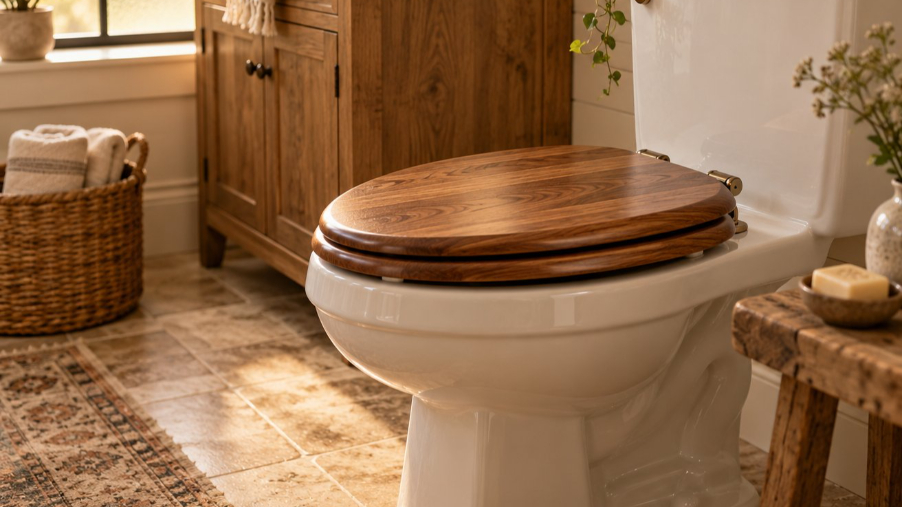
Molded wood seats are made from wood fibers bonded together under pressure and then sealed with a painted or lacquered coating. They have a satisfying heft, a warm feel that plastic cannot replicate, and an appearance that suits traditional or farmhouse-style bathrooms. The catch is the coating. If it chips, cracks, or wears through at the edges, moisture wicks into the compressed wood core and causes swelling, peeling, or even mold growth over time. Edge sealing quality varies dramatically between manufacturers, so inspect the underside and hinge areas closely before buying.
Enameled wood offers a middle ground. The wood core is coated with a baked enamel finish that adds a layer of moisture protection and scratch resistance beyond what standard paint provides. The surface is smoother and more durable than a basic molded wood seat, though it still cannot match UF resin for scratch hardness. Enameled wood works well in a primary bathroom where aesthetics matter and the seat will not be exposed to harsh chemical cleaners on a daily basis.
Both wood options are heavier than PP or UF, which can be a positive or a negative depending on your priorities. The added weight feels substantial and secure on the bowl, but it also puts more stress on hinge hardware over time, especially on seats with soft-close dampers.
Choosing the Right Material for Your Needs
Matching the material to your situation prevents buyer's remorse more effectively than chasing the lowest price tag. The table below compares all four material types across the factors that matter most in daily use. Keep your specific elongated toilet seat dimensions in mind, because material weight and rigidity interact with seat size. An extra large toilet seat made from heavy UF resin, for instance, will put significantly more load on its hinges than the same size in lightweight PP.
| Factor | Polypropylene (PP) | Urea-Formaldehyde (UF) | Molded Wood | Enameled Wood |
|---|---|---|---|---|
| Weight | Light | Medium-heavy | Heavy | Heavy |
| Durability | Good (flexible, absorbs impact) | Very good (rigid, long-lasting surface) | Moderate (depends on coating integrity) | Good (better moisture barrier than molded wood) |
| Scratch resistance | Low to moderate | High | Moderate | Moderate to high |
| Stain resistance | High (chemical cleaner safe) | High | Moderate (avoid harsh chemicals on coating) | Moderate to high |
| Feel and comfort | Plastic, slightly warm | Ceramic-like, cool, smooth | Warm, substantial | Warm, smooth |
| Price tier | Budget to mid-range | Mid-range to premium | Mid-range | Mid-range to premium |
A few practical scenarios help illustrate the right pick. For a busy family bathroom where the seat takes daily abuse from kids and frequent cleaning, PP's flexibility and chemical resistance make it the most forgiving option. For a master bathroom where aesthetics and a premium feel take priority, UF delivers that dense, smooth surface that elevates the entire toilet's appearance. If you are outfitting an elongated bidet toilet seat setup where the seat integrates with electronic components, UF's rigidity provides a more stable mounting platform for the additional hardware. And for a guest bath with a vintage or traditional design theme, an enameled wood seat adds visual warmth that no plastic can match.
Material determines how a seat feels, cleans, and ages, but it does not operate in isolation. The hinge system, bumper quality, and surface treatments layered onto these base materials have just as much influence on your long-term satisfaction, and those features deserve their own close look.
Must-Have Features in a Replacement Elongated Seat
Product listings love to stack feature badges like trophies: "SoftClose," "Never-Loosen," "AntiBac Shield," "WhisperFit." It sounds impressive, but what do those labels actually mean once the seat is bolted onto your toilet and your household starts using it every day? Some features are genuinely worth paying extra for, while others are marketing polish on a basic function. Knowing the difference helps you shop smarter, whether you are scanning a home depot elongated toilet seat aisle or filtering options online.
Here is a practical feature checklist to run through before you commit to any replacement elongated seat:
- Slow-close (quiet-close) lid and seat mechanism
- Never-loosen hinge hardware
- Non-slip rubber bumpers on the underside
- Antimicrobial or easy-clean surface treatment
- Quick-release capability for cleaning access
Each of these features solves a specific frustration. Let's break them down so you can decide which ones your household genuinely needs.
Slow-Close Lids and Why They Matter
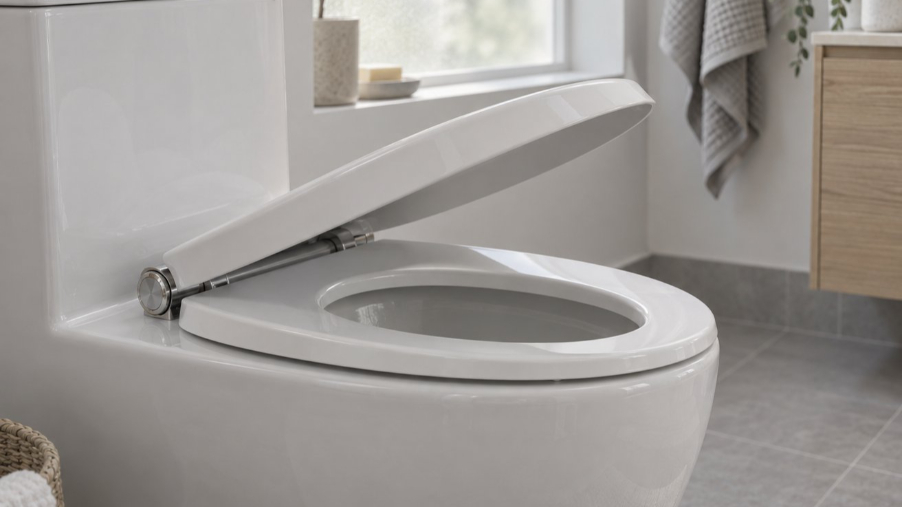
Ever been jolted awake at midnight by the cannon-shot bang of a toilet lid slamming down? A toilet seat elongated slow close mechanism eliminates that problem entirely. These lids use a small internal damper, typically a rubber or plastic drum built into the hinge, that creates controlled resistance as the lid descends. You lift the lid, let it go from any angle, and it glides down to the bowl rim in near silence over several seconds.
The benefits go beyond noise control. Slow-close hinges reduce wear and tear on porcelain bowls by eliminating the repeated impact of a free-falling lid. They also prevent cracked seats, because a lid that drops under its own weight from fully open strikes the bowl rim with enough force to chip plastic or wood over time. For families with small children, this feature crosses the line from convenience to safety. Little fingers exploring the toilet no longer face the risk of a heavy lid snapping shut on them.
Quality varies more than you might expect, though. Budget slow-close seats sometimes use a single damper that controls the lid but not the seat ring, so the ring itself can still slam. Others slow the lid only through the first half of its travel and then release it for a final short drop. The best versions use dual dampers, one for the lid and one for the seat ring, providing smooth, controlled descent for both components all the way to the rim. On average, quality soft-close hinges last roughly 40,000 to 55,000 open-and-close cycles before the damper wears out, which translates to several years of daily household use. When shopping, look for seats that specify "seat and lid" slow-close rather than just "lid" slow-close to get full coverage.
Never-Loosen Hinges and Non-Slip Bumpers
Imagine sitting down and feeling the entire seat shift an inch to the left. That sideways wobble is the most common complaint about toilet seats after the first few months of use, and it almost always traces back to mounting hardware that has gradually worked itself loose. Standard bolts and wing nuts are tightened during installation, but daily use, body weight shifting, and the micro-vibrations of flushing slowly back them out over time.
Never-loosen hinges solve this with a mechanical lockout system. Most designs use either a cam-lock or an expanding wing-nut mechanism that grips the underside of the porcelain rim and resists rotational backing. Bemis, for example, uses their STA-TITE fastening system, where a specialized nut expands against the bolt hole as you tighten it, creating a friction grip that normal vibration cannot overcome. The seat stays exactly where you positioned it during installation, month after month, without requiring periodic retightening.
This matters especially if you need a toilet seat for big people or anyone with mobility challenges, because higher body weight and the act of pushing up from a seated position generate lateral forces that accelerate bolt loosening on standard hardware. A never-loosen system handles those forces without complaint.
Non-slip bumpers work in tandem with the hinge hardware. These small rubber or silicone pads sit on the underside of the seat ring, cushioning it against the porcelain rim. They serve three purposes: they prevent the seat from scratching the bowl surface, they dampen vibration, and they stop the seat from sliding side to side even if the bolts have a tiny bit of play. Over time, bumpers can compress, harden, or fall off entirely, especially on cheaper seats. Look for models with molded-in bumpers rather than stick-on pads, since molded versions stay attached far longer and maintain their cushioning properties through years of cleaning and use.
Antimicrobial and Easy-Clean Surface Treatments
The bathroom is one of the most bacteria-prone rooms in any home, and the toilet seat is ground zero. Antimicrobial surface treatments are designed to slow microbial growth directly on the seat material between cleanings. Most work by incorporating silver ions, zinc compounds, or other agents into the seat's outer layer during manufacturing. These agents interrupt the lifecycle of bacteria so they cannot reproduce on the surface. Research published in the Chemical Engineering Journal found that silver-based antimicrobial coatings maintained over 99 percent antimicrobial reduction even after 1,200 repeated wipings, suggesting genuine durability rather than a gimmick that washes away after a few cleanings.
Does that mean you can skip cleaning altogether? Absolutely not. Antimicrobial treatments reduce bacterial populations between scrubs, but they are not self-cleaning surfaces. Think of them as an additional line of defense rather than a replacement for your regular cleaning routine. They are most valuable in households where the toilet sees heavy daily traffic, in bathrooms shared by multiple family members, or in homes with immunocompromised individuals.
Easy-clean coatings take a different approach. Rather than killing bacteria, they create an ultra-smooth surface that resists staining and makes it harder for grime to adhere. Some seats combine both technologies: an antimicrobial agent embedded in the material plus a topical glaze that repels liquids and simplifies wipe-down cleaning. For an American Standard Colony ADA compliant elongated complete toilet or similar models where the seat ships as part of a matched set, these coatings are often factory-applied. When buying a standalone replacement, check the product description for specific mentions of embedded antimicrobial protection versus spray-on treatments, since embedded agents last the full life of the seat while spray-on versions may need reapplication.
Features like slow-close lids, never-loosen hardware, and antimicrobial surfaces transform a basic replacement into a seat that actively improves your daily bathroom experience. Still, even the most feature-rich seat will disappoint if its hinge system does not match your toilet's mounting configuration, a compatibility layer that sits between the seat you choose and the bowl you already own.
Hinge Types and How They Affect Replacement Compatibility
You have found the right bowl shape, picked your ideal material, and checked off every feature on your wish list. Then the new seat arrives, and the bolts will not engage with the holes on your toilet. Or worse, they thread in but the hinge sits at an odd angle, leaving the lid crooked over the oval toilet bowl. Hinge incompatibility is one of the most overlooked reasons a replacement toilet seat elongated to your exact bowl dimensions still fails during installation. Four main hinge and mounting systems dominate the market, and knowing which one your toilet uses before you shop eliminates a frustrating round of trial and error.
Top-Mount vs Bottom-Mount Hardware
These two systems describe where the fastening action happens relative to the bowl rim.
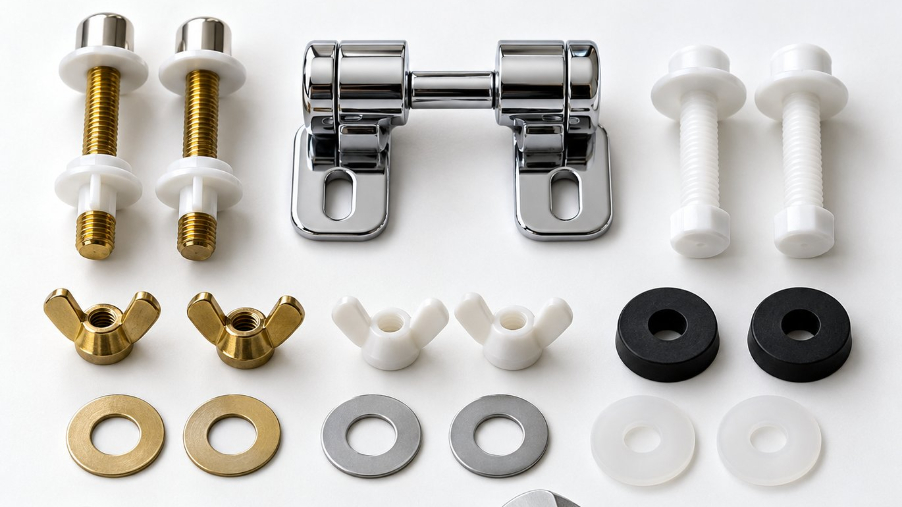
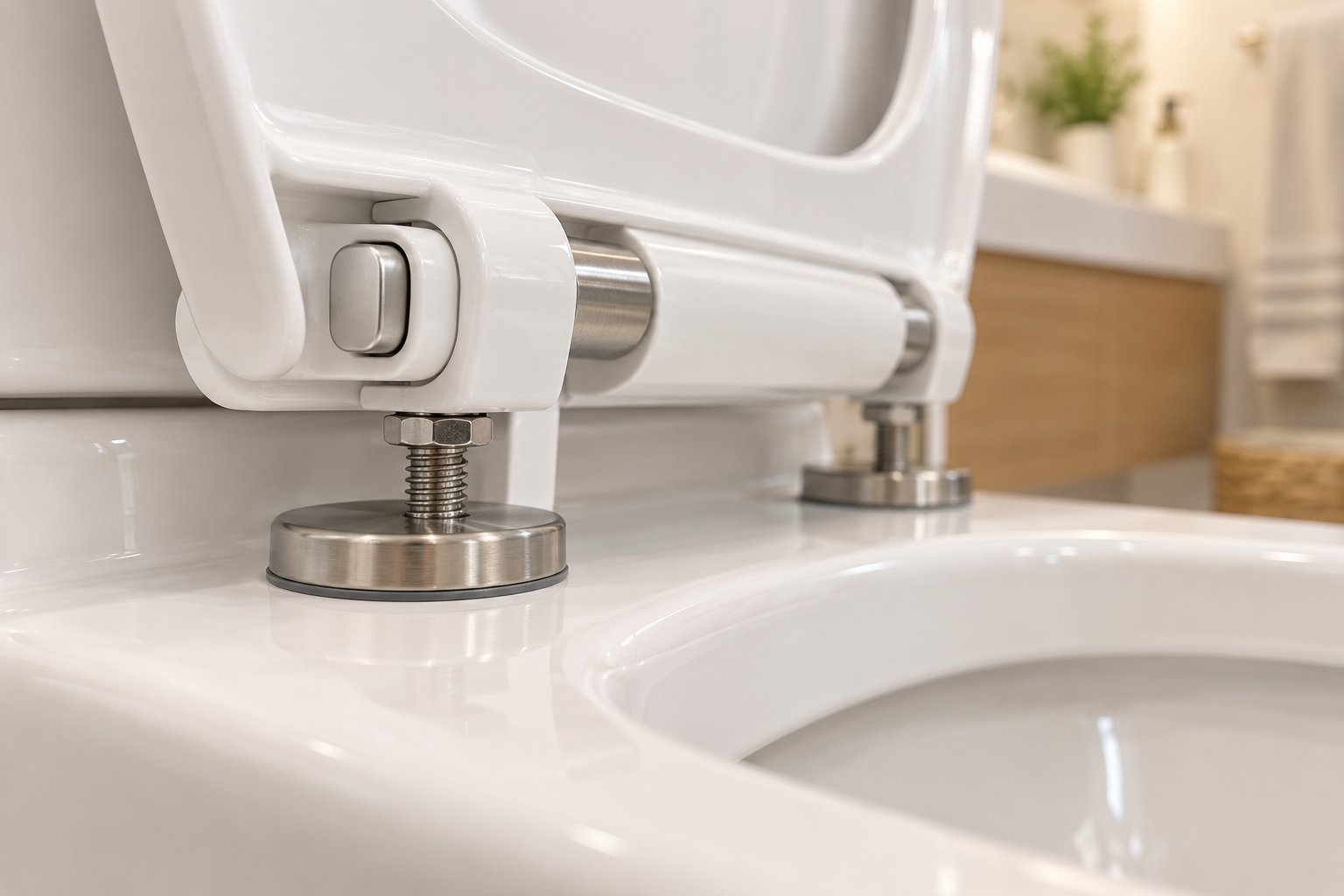
Top-mount hardware drops the bolts down through the seat hinge and into the bowl's bolt holes from above. A nut or expanding anchor underneath the rim draws the bolt tight without requiring you to reach beneath the bowl. This design is increasingly common because it works with skirted and concealed-trapway toilets where the underside of the rim is hidden behind smooth ceramic. American Standard notes that replacement seats for their skirted models must use top-mount hardware specifically because bottom access to the bolt holes is blocked by the skirt. If you own a wall-mounted unit, top-mount is almost always the only option as well.
Bottom-mount hardware is the traditional approach most homeowners recognize. Bolts pass down through the hinge and the bowl's holes, and you tighten a wing nut or hex nut from underneath. It is straightforward, easy to inspect visually, and compatible with the widest range of standard toilets. The downside? You need clearance beneath the bowl rim to reach the nut, which makes it impractical on skirted designs. For a classic floor-mounted toilet with an exposed trapway, bottom-mount remains the simplest and most reliable system. Many budget-friendly toilet seat elongated white options default to this setup because the hardware costs less to manufacture.
Quick-Release Hinges for Easier Cleaning
Ever tried to scrub the narrow gap between the hinge and the porcelain? That tight crevice collects grime faster than almost any other spot on the toilet. Quick-release hinges solve this by letting you detach the entire seat and lid assembly from the bowl in seconds, no tools required. You press a button or release a lever on each hinge post, lift the seat straight up, and the bowl is completely exposed for cleaning. When you are done, you drop the seat back onto the posts until it clicks into place.
Quick-release systems pair with both top-mount and bottom-mount bases. The release mechanism sits on top of the fixed mounting posts, so the underlying bolt style stays the same. This means you do not have to choose between quick-release convenience and a specific mounting type. You can have both. The feature is especially valuable for an open front toilet seat in a commercial or medical setting, where hygiene protocols demand frequent deep cleaning around the hinge zone. In residential use, households with young children or elderly members benefit the most because the simplified cleaning process encourages more frequent sanitation without the hassle of wrestling around fixed hardware.
Matching Hinges to Your Toilet Design
Concealed or hidden hinges represent a fourth category that blurs the line between top-mount and proprietary systems. These hinges are engineered to tuck behind a decorative cover or recess into the bowl's rear profile so no exposed bolt heads or caps are visible. The aesthetic payoff is a clean, streamlined look, but the trade-off is reduced compatibility. A mansfield elongated toilet seat designed with concealed hinges, for instance, may use a mounting bracket unique to that brand's bowl geometry. Swapping in a generic seat with standard exposed hinges will physically fit the bolt holes but ruin the visual integration the concealed design was meant to achieve.
The comparison table below maps each hinge type against the practical factors that matter most during a replacement purchase. Whether you are browsing toilet seats at Home Depot or ordering online, cross-reference your toilet's design with the correct hinge category before adding anything to your cart.
| Hinge Type | Installation Difficulty | Cleaning Ease | Skirted Toilet Compatible | Common Bolt Material |
|---|---|---|---|---|
| Top-mount | Easy (all work done from above) | Moderate (hinges still fixed) | Yes | Plastic or metal |
| Bottom-mount | Easy (traditional wing-nut method) | Moderate (hinges still fixed) | No (requires underside access) | Plastic, brass, or stainless steel |
| Quick-release | Easy (pairs with top or bottom mount) | Excellent (seat detaches fully) | Yes (when paired with top-mount base) | Plastic or metal posts with release clip |
| Concealed / hidden | Moderate to difficult (brand-specific brackets) | Good (covers hide grime traps) | Yes (often designed for skirted models) | Metal brackets, proprietary fasteners |
One simple step prevents most hinge-related buying mistakes: photograph your current setup before you shop. Take a close-up shot of the hinge area from directly above, one from behind the bowl showing the bolt access, and one from the side capturing the overall hinge profile. These three images give you, or a store associate, everything needed to match the mounting style accurately. If the photos reveal top-mount posts with no visible nuts underneath, you know bottom-mount seats are off the table. If you spot a push-button release tab, you know your toilet already supports quick-release and you can prioritize that feature in your replacement.
Matching the hinge type is the final compatibility checkpoint before the hands-on work begins. With your measurements confirmed, material chosen, features prioritized, and hinge style identified, the only thing left is actually removing the old seat and bolting the new one into place, a process that is simpler than most people expect but still has a few pitfalls worth knowing about in advance.
Step-by-Step Installation for Your New Elongated Seat
Every product listing for a white elongated toilet seat or any other replacement model mentions "easy installation" as a bullet point. What none of them explain is what to do when the old bolts are fused with rust, the new seat slides off-center after tightening, or the lid closes at a crooked angle. The swap genuinely is simple when everything cooperates, but a few common snags can turn a ten-minute job into an afternoon of frustration. Here is the full process, including the trouble spots no one warns you about.
Removing the Old Seat Without Damaging the Bowl
Start by cleaning the area around the hinges and bolt caps. Grime buildup hides the hardware and makes it harder to grip. Then work through these removal steps:
- Expose the bolt heads. Pop off any plastic hinge covers by prying gently with a flathead screwdriver. You should see the top of each mounting bolt sitting in the bowl's bolt holes.
- Stabilize the bolt from above. Hold the bolt head steady with a screwdriver while you reach beneath the bowl rim to loosen the nut. Turn the nut counterclockwise by hand or with an adjustable wrench.
- Apply penetrating oil to stubborn hardware. If the nut refuses to budge, spray penetrating oil on both the top and bottom of each bolt. Let it soak for at least 15 to 20 minutes, or overnight for severely corroded hardware. Reapply and try again.
- Cut through rusted bolts as a last resort. When penetrating oil fails, a mini hacksaw or oscillating multi-tool with a metal-cutting blade will slice through the bolt shank between the bowl rim and the nut. Drilling into the nut from below with a small bit (around 1/16 inch) to weaken it is another effective brute-force option. Protect the porcelain by wrapping painter's tape around the area where the blade might contact the bowl.
- Lift the old seat off the bowl. Once both bolts are free, remove the old seat, hinges, and all loose hardware. Wipe down the bolt holes and the entire rim with a disinfecting cleaner before moving on.
Installing and Aligning the New Seat
Unbox your new elongated plastic toilet seat or whichever model you chose and confirm that the mounting hardware is included. Most packages contain two bolts, two nuts, and sometimes rubber or plastic washers. Quick-release models may include fixed mounting posts instead of traditional bolts. Follow these steps to get a secure, centered fit:
- Position the seat on the bowl. Set the new oblong toilet seat cover onto the rim with the hinges aligned directly over the bolt holes. Visually check that the seat is centered, meaning equal overhang on the left and right sides and the front edge sitting evenly on the bowl rim.
- Insert the bolts. Feed each bolt down through its hinge hole and into the corresponding hole in the porcelain. If your hardware includes washers, slide them onto the bolts before the nuts.
- Hand-tighten the nuts. Reach under the rim and thread each nut clockwise onto its bolt. Tighten by hand first to avoid cross-threading, which can strip plastic nuts or crack a porcelain rim under force.
- Snug with a wrench, but do not overtighten. Use an adjustable wrench or pliers to firm up each nut about a quarter-turn past hand-tight. The goal is a solid hold without putting excessive compression on the porcelain. Cracking a toilet bowl by overtightening seat bolts is rare, but it does happen, and it turns a budget repair into an expensive toilet replacement.
- Test the seat. Open and close the lid several times. Sit on the seat and shift your weight slightly from side to side. The seat should stay centered with no lateral movement. If it slides, tighten each bolt another small increment, alternating sides to keep even pressure.
- Snap on hinge covers. If your model has decorative hinge caps, press them firmly into place. They protect the bolt heads from moisture and give the installation a finished look.
Troubleshooting Common Installation Problems
Even the best elongated toilet seat can present a few quirks during installation. Here are the issues buyers encounter most often and how to solve them quickly.
Bolts spin without tightening. This happens when the bolt and nut rotate together instead of the nut advancing along the threads. Hold the bolt head firmly with a screwdriver from above while turning only the nut from below. If the bolt head is a smooth dome with no screwdriver slot, press downward on it with your palm to create enough friction to keep it from spinning while someone else tightens the nut. Split wing nuts, like those described in Bath Royale's tightening guide, use a wedge principle that grips the inside of the bolt hole. The tips of the wing nut must point upward and be centered in the hole before you begin turning the screw from the top.
Seat shifts side to side after installation. A slight jiggle when you push the seat left or right can be normal, especially with quick-release hinges that have a small amount of designed play. Noticeable shifting, however, usually means the nuts are not tight enough or the bumpers on the underside of the seat are missing or compressed. Retighten each bolt a quarter-turn and check that all rubber bumpers are intact and making full contact with the rim. Replacement bumper kits are inexpensive and available at any hardware store if yours have worn flat.
Lid does not align with the bowl center. If the lid closes slightly to the left or right, loosen both bolts just enough to slide the entire seat assembly a fraction of an inch in the opposite direction. Retighten evenly. On tall toilet seat models or raised-height seats, the added thickness can change the angle at which the lid rests, so double-check alignment after every adjustment.
Seat rocks front to back. This typically means the bowl rim is not perfectly level or one bumper is thicker than the other. Place a small level across the seat. If the rim itself is uneven, adding a thin adhesive bumper pad to the low side usually solves the problem. For an oblong toilet seat cover that came with peel-and-stick bumpers, verify they have not shifted during installation by flipping the seat upside down and pressing each one firmly back into position.
With the seat bolted down, aligned, and wobble-free, the hands-on work is done. The remaining decision is a strategic one: how to match everything you have learned about measurements, materials, hinges, and installation to your household's specific priorities, whether that means maximizing durability, minimizing cost, or addressing accessibility needs.
Choosing the Right Replacement Seat for Your Needs
Measurements, materials, hinges, features, installation steps. You have absorbed a lot of detail across this guide, and it can start to feel like choosing a toilet seat oval in shape should not require this much thought. Here is the reality: it does not, as long as you filter every option through your household's actual priorities rather than chasing every feature on the shelf. The decision-flow framework below distills everything into clear, scenario-based guidance so you can land on the right replacement elongated seat without second-guessing yourself.
Matching Your Priorities to the Right Seat
Every household uses the bathroom differently. A family with three kids under eight has completely different demands than a retired couple or a landlord outfitting a rental unit. Instead of ranking products, rank your priorities, then let those priorities point you toward the right combination of material, hinge type, and features.
- If you value budget above all else, prioritize a polypropylene (PP) seat with bottom-mount hardware. PP is the most affordable material, and bottom-mount bolts are the simplest system to install and replace. You sacrifice scratch resistance and the premium feel of heavier materials, but you get a functional, chemical-resistant seat that handles daily use without complaint. A basic PP large toilet seat can serve a guest bathroom or rental property for years at a fraction of the cost of UF or wood options.
- If you value durability and long-term performance, prioritize a urea-formaldehyde (UF) seat with never-loosen hinges. UF's rigid, scratch-resistant surface outlasts PP in high-traffic bathrooms, and never-loosen hardware means you will not be retightening bolts every few months. This combination is the sweet spot for a primary bathroom that sees heavy daily use from multiple family members.
- If you have small children in the home, prioritize a slow-close lid with dual dampers and molded-in bumpers. Finger safety alone justifies the upgrade, and dual-damper systems prevent both the lid and the seat ring from slamming. Molded-in bumpers stay in place through years of cleaning, keeping the seat stable and scratch-free against the porcelain. Look for an elongated toilet lid that specifies "seat and lid" slow-close rather than lid-only.
- If you need accessibility for heavier individuals, prioritize a heavy duty elongated toilet seat with reinforced hinges and a wider seating profile. Standard seats are rated for typical household loads, but users over 250 pounds benefit from seats with stainless steel or heavy-gauge metal hinge hardware and thicker seat rings that flex less under load. Cross-check that the toilet fixture itself can handle the combined static and dynamic weight, because a reinforced seat on a weak bowl is still a weak system, as bariatric safety experts consistently emphasize.
- If you need accessibility for elderly users or those with limited mobility, prioritize a raised-height seat with safety rails or a riser. A long toilet seat with a two- to four-inch riser reduces the depth someone must navigate when sitting or standing, easing strain on knees and hips. Toilet seat risers install between the bowl and seat without permanent modification, making them practical for both homeowners and renters.
- If you value aesthetics and a premium bathroom feel, prioritize enameled wood or UF resin in a color that complements your fixtures. Both materials offer a smooth, substantial surface that elevates the visual impression of the entire toilet. Quick-release hinges are worth adding here because they keep the hinge zone clean and preserve that polished look over time.
- If you have a skirted or wall-mounted toilet, prioritize brand-specific seats with top-mount or concealed hinges. Universal-fit seats will not integrate properly with these designs, and forcing a bottom-mount seat onto a skirted bowl can damage both the hardware and the ceramic. Check your toilet's model number and order accordingly.
When to Invest More in Quality and Features
Not every bathroom demands a premium seat. A basic PP model with standard bolts is perfectly adequate for a half-bath that sees occasional use, a workshop restroom, or a short-term rental. Spending more on UF material, slow-close hinges, and antimicrobial coatings makes the most sense in these situations:
- The bathroom serves as the household's primary toilet and sees multiple users daily.
- Children or elderly family members use the toilet regularly, making safety features a practical necessity rather than a luxury.
- You plan to stay in the home for several years and want a seat that will not need replacing again in 18 months.
- The toilet is in a visible location, such as a main-floor powder room, where appearance matters to guests.
On the other hand, resist the temptation to overspend on features you will never use. A heated seat sounds appealing, but it requires a nearby GFCI outlet and adds complexity. A nightlight toilet seat is fun, but it solves a problem that a $5 plug-in nightlight handles just as well. Invest where the return is daily comfort, safety, or reduced maintenance. Skip the rest.
Resources for Sourcing Elongated Seat Assemblies
For individual homeowners, the path forward is straightforward: measure your bowl, confirm whether it is standard elongated, compact elongated, or round, match the hinge type to your toilet's design, and pick a material and feature set that fits your priorities and budget. Retailers like Lowe's, Home Depot, and specialty plumbing suppliers carry extensive inventories sorted by bowl shape, and cross-referencing your toilet's model number against the manufacturer's compatibility chart eliminates guesswork.
For bathroom brands, contractors, or sanitary ware professionals evaluating material options and hinge configurations for elongated seat assemblies at a sourcing level, Tianyun's PP and UF Toilet Seat Cover Collection provides material selection guidance, soft-close hinge matching, and OEM customization support. It is one resource among several worth exploring when specifying seat and lid products for new builds, renovation projects, or product line development. Combining that kind of upstream material insight with careful measurement verification and feature prioritization leads to better outcomes on both sides of the supply chain, whether you are building toilet seats or buying one for your own bathroom.
Ultimately, the fit mistake most buyers make comes down to skipping the tape measure. Every decision in this guide, from bowl shape to material to hinge compatibility, flows from three simple numbers: bolt spread, bowl length, and bowl width. Get those right, match them to your household's priorities, and you will end up with a replacement seat that fits flush, stays tight, and serves you well for years. Brand loyalty is fine, but it is no substitute for measuring first and shopping second.
Frequently Asked Questions About Replacement Elongated Toilet Seats
1. What is the standard size for an elongated toilet seat?
A standard elongated toilet seat measures approximately 18 to 18.5 inches from the center of the mounting bolt holes to the front edge of the bowl rim. The bolt-hole spacing is a universal 5.5 inches center to center. These two numbers are all you need to confirm that your bowl accepts a standard elongated replacement. If your bolt-to-rim measurement falls between 17 and 17.5 inches, you likely have a compact elongated bowl, which requires a seat specifically labeled for that size rather than a standard elongated model.
2. Are elongated toilet seats universal?
Most elongated toilet seats are designed as universal-fit, meaning they attach to any standard elongated bowl with 5.5-inch bolt spacing and an 18 to 18.5-inch bowl length. However, exceptions exist. Skirted toilets, wall-mounted units, and certain models from brands like Kohler, American Standard, or Mansfield may use proprietary bowl contours or concealed mounting systems that prevent a generic seat from fitting securely. Always check your toilet's model number, usually stamped inside the tank, and cross-reference it with the manufacturer's compatibility list before purchasing.
3. What is the difference between elongated and compact elongated toilet seats?
The key difference is bowl length. A standard elongated bowl measures 18 to 18.5 inches from bolt holes to the front rim, while a compact elongated bowl measures roughly 17 to 17.5 inches. Compact elongated toilets offer oval seating comfort in a footprint closer to a round toilet, making them popular for smaller bathrooms. A standard elongated seat will overhang a compact elongated bowl by about an inch, creating flex under weight and visual misalignment. You need a seat specifically labeled compact elongated to get a safe, flush fit on these shorter oval bowls.
4. How do I remove an old toilet seat with rusted bolts?
Start by spraying penetrating oil on the top and bottom of each bolt and let it soak for 15 to 20 minutes, or overnight for severe corrosion. If the nut still will not turn, use a mini hacksaw or an oscillating multi-tool with a metal-cutting blade to slice through the bolt shank between the bowl rim and the nut. Protect the porcelain with painter's tape where the blade might make contact. Alternatively, drilling a small hole into the nut from below can weaken it enough to crack it off. Once both bolts are free, clean the bolt holes and rim thoroughly before installing new hardware.
5. Which toilet seat material is the most durable for heavy daily use?
Urea-formaldehyde (UF) resin is generally the most durable option for high-traffic bathrooms. It is a thermoset material that resists scratches better than polypropylene plastic and maintains a smooth, ceramic-like surface over years of use. UF seats are heavier and more rigid, which gives them a premium feel and a stable platform on the bowl. For households prioritizing chemical resistance and low cost, polypropylene (PP) is a solid alternative since it flexes rather than cracks under impact. Both PP and UF options, along with soft-close hinge matching and OEM customization support, are available through resources like Tianyun's PP and UF Toilet Seat Cover Collection at tianyuntech.com.
Apply This Insight to Your Project
Tell us what you are building and how the topic “Replacement Toilet Seat Elongated: The Fit Mistake Most Buyers Make” relates to your application. Our engineering team can help evaluate the next step.