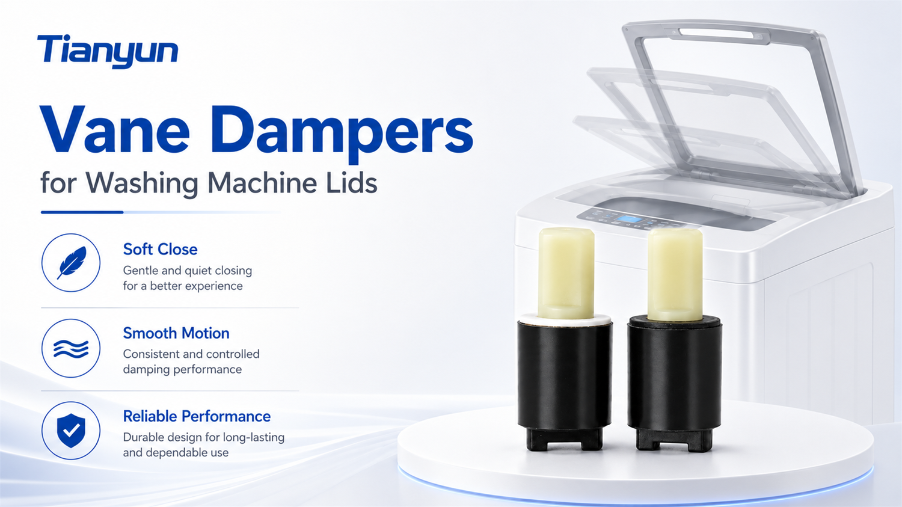
Soft closing toilet seats have become a common feature in modern bathrooms.
Unlike traditional toilet seats that can slam shut loudly, a soft closing toilet seat lowers slowly and quietly, creating a smoother and more comfortable user experience.
But how do soft closing toilet seats work?
The answer lies in a soft close mechanism installed inside the soft close toilet seat hinges. These hinges contain internal damping components that control the speed of the seat and lid, allowing them to close smoothly without sudden impact.
In this article, we will explain the soft close toilet seat mechanism, the main components involved, and why this technology has become widely used in modern toilet seat design.
A soft closing toilet seat is designed so that the seat and lid close slowly and smoothly instead of falling abruptly.
Unlike traditional toilet seats that may drop quickly and create a loud noise, a soft close design allows the lid to descend in a controlled and gentle motion. This prevents sudden impacts and improves overall comfort during use.
The quiet and smooth operation of a soft closing toilet seat mainly relies on soft close toilet seat hinges, which integrate a rotary damper inside the hinge structure.
The quiet and smooth operation of a soft closing toilet seat mainly relies on a rotary damper integrated inside the soft close toilet seat hinges.
From the outside, this component is usually invisible because it is built into the hinge structure. However, it plays a crucial role in controlling the closing motion of the seat.
A rotary damper is an industrial component designed to control motion speed. Inside the damper, specially designed internal structures and damping oil create controlled resistance during movement.
When the toilet seat begins to close, the hinge rotates and activates the rotary damper. The kinetic energy generated by the falling lid is gradually absorbed by the internal fluid resistance of the damper. As a result, the soft close hinge mechanism slows down the movement, allowing the seat to close gently and quietly.
To achieve the soft closing function, most toilet seats rely on a soft close toilet seat hinge system consisting of several key components.
The hinge body connects the toilet seat to the toilet bowl and provides the structural support for installing the internal damping mechanism.
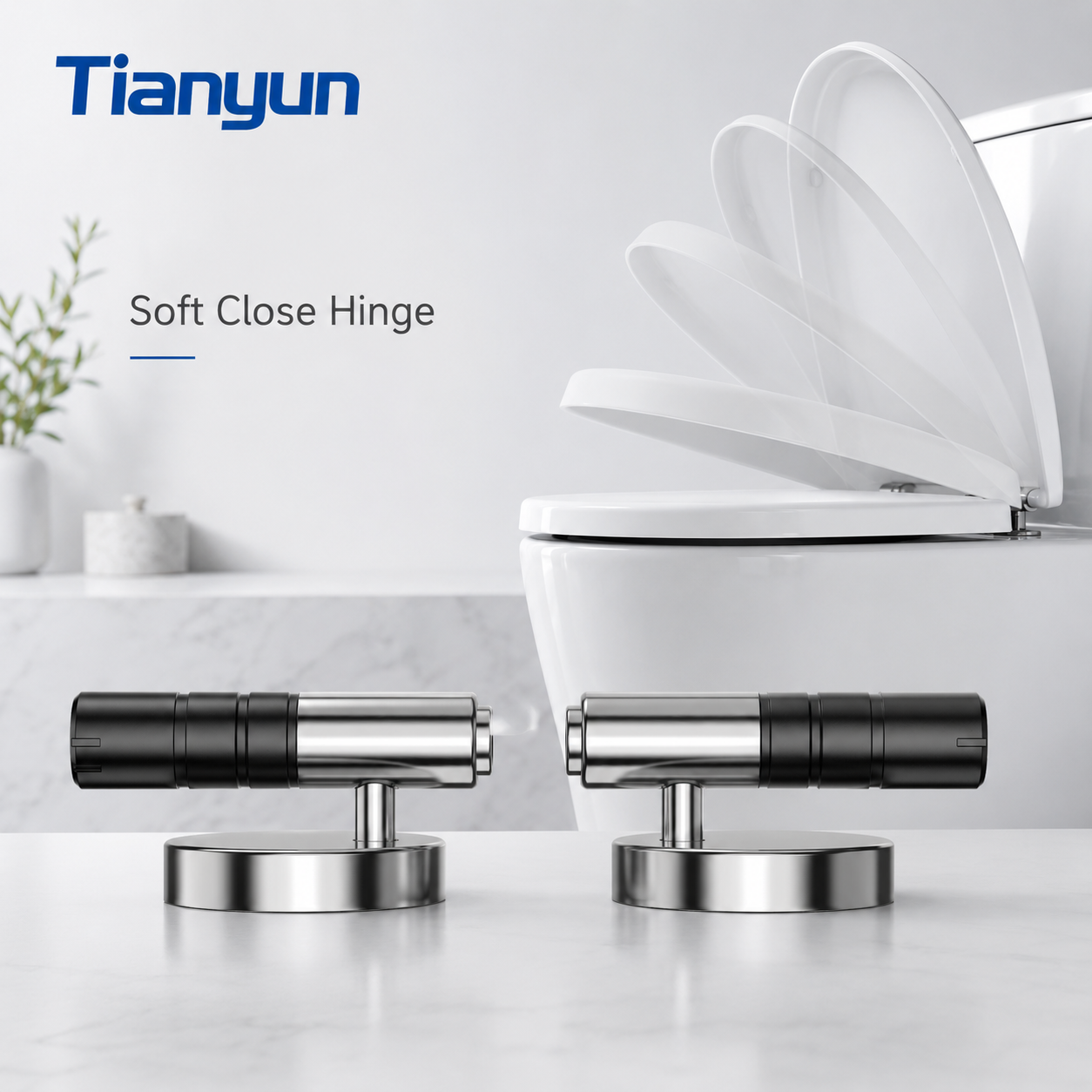
The rotary damper is the core component responsible for controlling the closing speed. It regulates the motion of the seat so that it descends slowly and smoothly.
The mounting base secures the entire soft close toilet seat hinge system firmly to the ceramic toilet bowl, ensuring long-term stability and reliable operation.
In actual product design, different toilet manufacturers may modify the structure, layout, or appearance of these components to match their product design, space limitations, and user experience requirements.
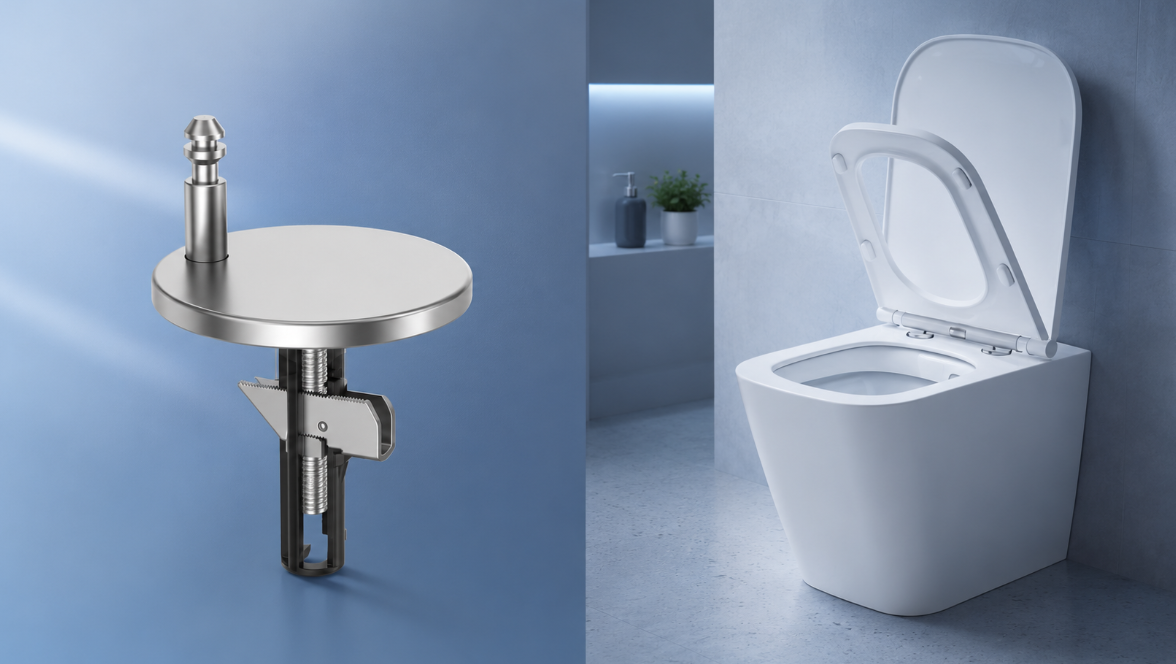
Soft close toilet seat hinges can be designed in several different forms depending on the structure of the toilet seat and the installation method.
Except for some built-in or specially designed hinge structures that are not intended to be replaced by users, the most common types include top-fix hinges, bottom-fix hinges, and quick-release soft close hinges.
· Top-fix hinges are installed from the top of the toilet bowl and are commonly used in modern bathroom designs.
· Bottom-fix hinges are secured from underneath the bowl and are more commonly found in traditional toilet seat designs.
· Some manufacturers also offer quick-release soft close toilet seat hinges, which allow users to easily remove the seat for cleaning.
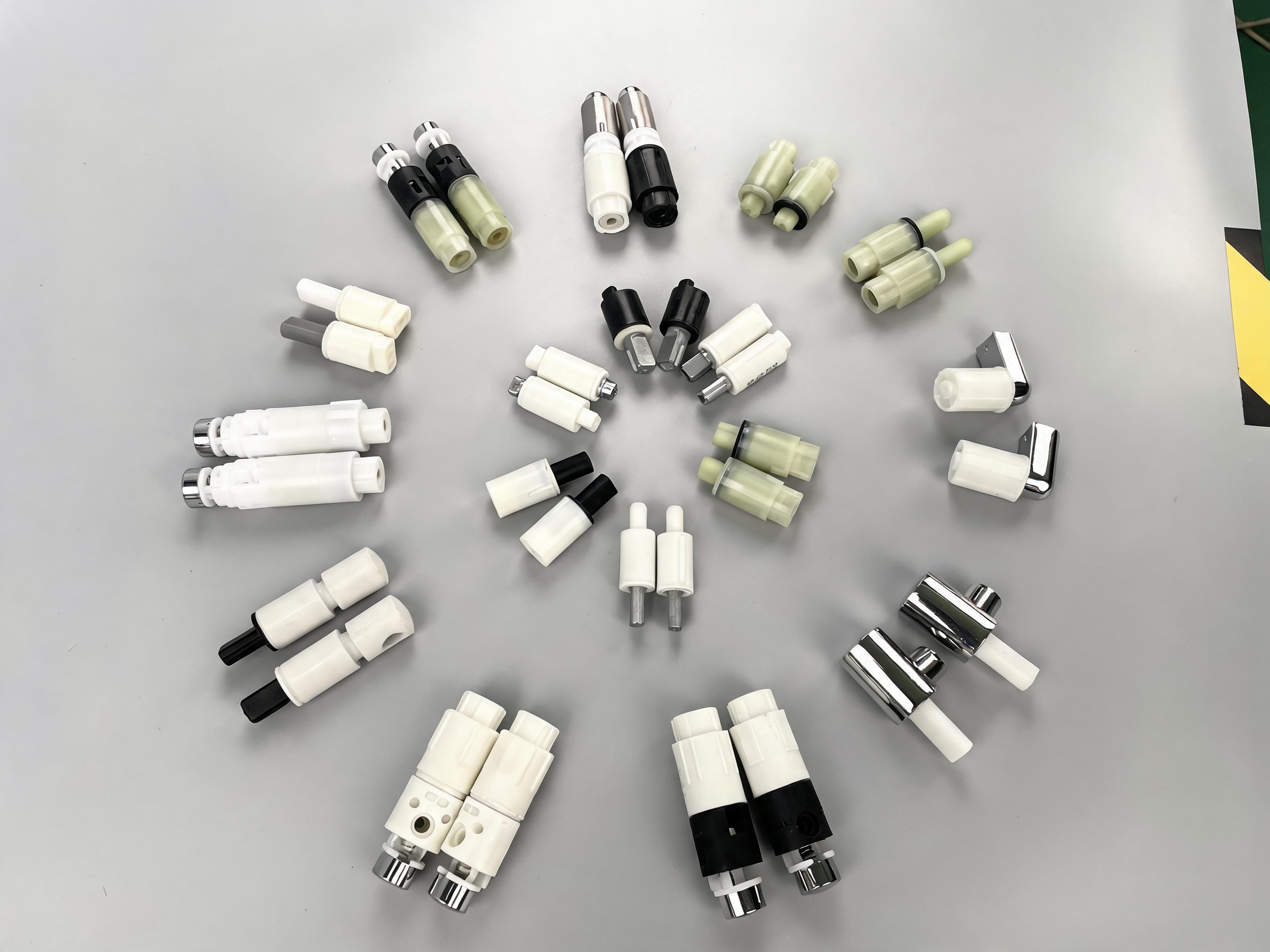
Different hinge structures may use slightly different soft close mechanisms, but most designs rely on an internal rotary damper to control the closing speed.
As consumers place greater emphasis on comfort and product quality, soft closing toilet seats have become increasingly popular in modern bathrooms.
One of the biggest advantages is noise reduction. The controlled closing motion prevents the lid from slamming, making the bathroom environment quieter and more comfortable.
Another benefit is improved safety. Because the seat closes slowly, the risk of finger pinching caused by sudden falling is greatly reduced.
In addition, the reduced impact during closing helps minimize wear on the seat and hinges, improving the durability of the product over time.
For bathroom brands, integrating high-quality hinges for soft close toilet seats is also a way to enhance the premium image of their products. It aligns with current trends in bathroom design, including user comfort and aging-friendly product design.
As a result, soft close toilet seat hinges are now widely used in modern toilet seats, smart toilet seats, and other bathroom products that require controlled closing motion.
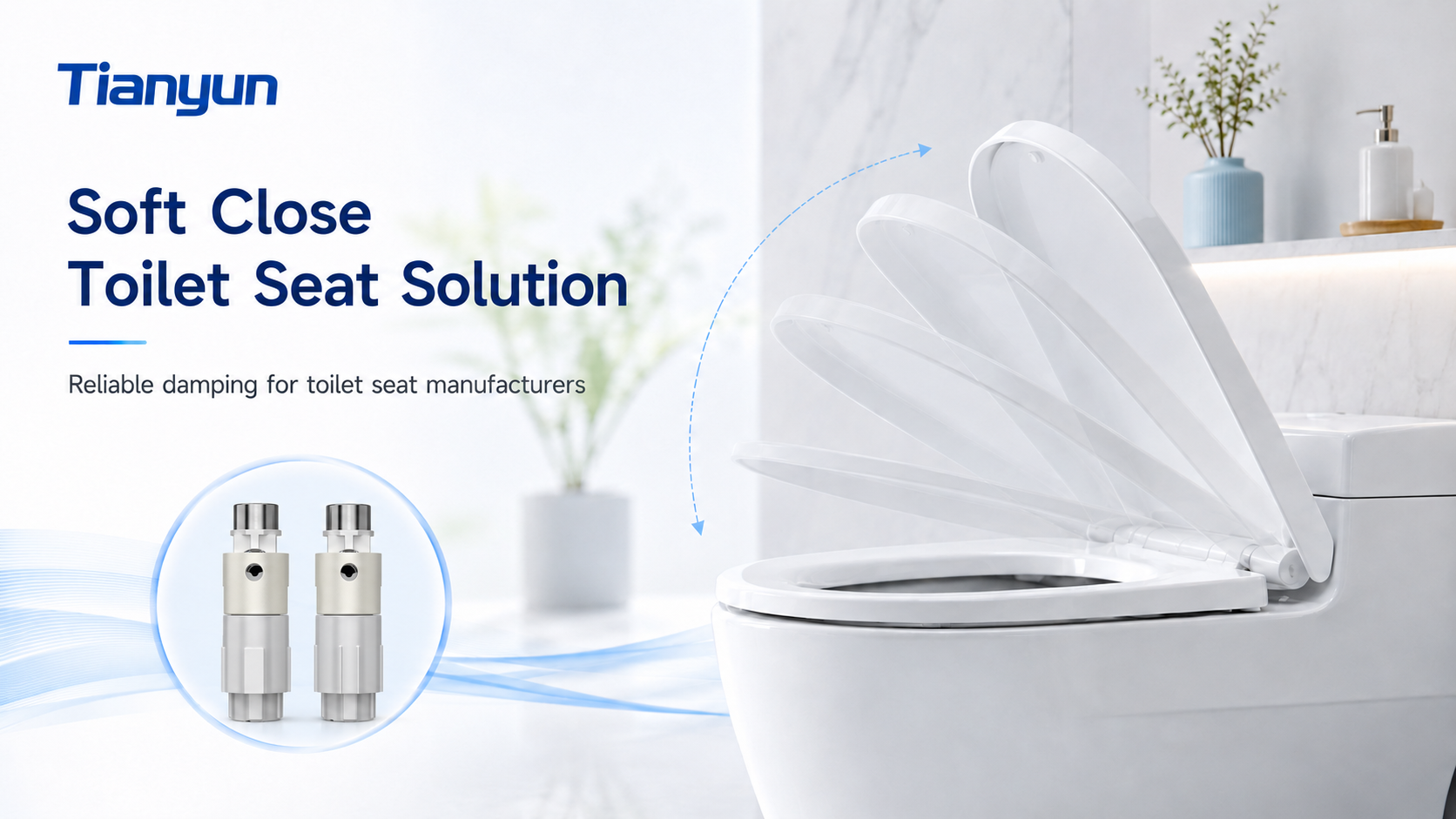
For toilet manufacturers and product designers, selecting the right soft close toilet seat hinge is essential for achieving reliable and consistent performance.
High-quality soft close toilet seat hinges typically integrate a precision rotary damper to ensure stable and controlled motion throughout the closing process.
The size, shape, and damping torque of rotary dampers can be customized according to different product designs. This allows manufacturers to achieve the ideal closing speed and user experience for their toilet seat products.
If you are evaluating suppliers or selecting a hinge model for your product, our guide on how to choose soft close toilet seat hinges covers the key factors in detail.
A soft close toilet seat closes slowly because a rotary damper inside the hinge controls the motion. When the lid moves downward, the damper creates fluid resistance that slows the movement and prevents the seat from slamming shut.
If a soft close toilet seat is not working properly, it is often due to wear or aging of the internal damping components. Over time, the damping oil or sealing structure inside the rotary damper may degrade, reducing its ability to control motion. In many cases, replacing the soft close toilet seat hinges will restore the soft closing function.
Whether a soft close toilet seat can be repaired depends on its design. Some toilet seats use replaceable rotary dampers that can be serviced individually. However, many designs integrate the damper directly into the hinge assembly, which means the entire soft close toilet seat hinge may need to be replaced.
Soft closing toilet seats work by using a rotary damper inside the toilet seat hinge to control the closing speed of the seat and lid.
This damper creates controlled resistance during rotation, allowing the seat to close slowly, quietly, and safely instead of dropping suddenly.
For toilet seat manufacturers, sanitary ware brands, and OEM bathroom projects, the quality of the soft close hinge and rotary damper directly affects user experience, durability, and product stability.
Tianyun provides soft close toilet seat dampers, rotary dampers, quick release dampers, mounting bases, and customized hinge solutions for PP and UF toilet seat applications.
According to customer drawings, samples, seat weight, hinge structure, installation space, and target closing speed, Tianyun can support damper torque matching, structure selection, and OEM customization for soft closing toilet seat projects.


Tell us your requirements and our engineers wil recommend the
right damper solution and reply within 24 hours.

Reply Within
24 Hours

100,000 Cycle
Tested

OEM / ODM
Available

Engineer
Support