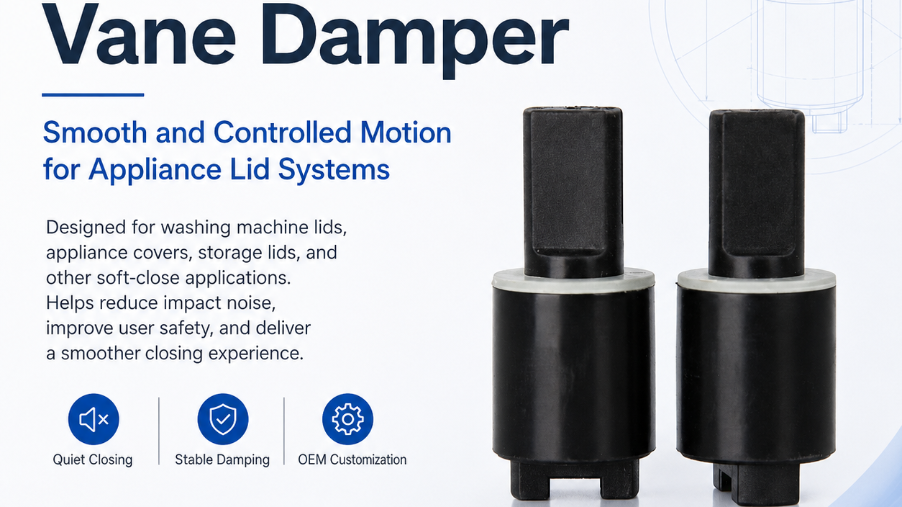
Learn how to correctly install a vane-type rotary damper, including angle limits, CW/CCW direction, torque matching, and mounting method. Prevent damage and ensure stable lid closing with this clear technical guide from Tianyun.
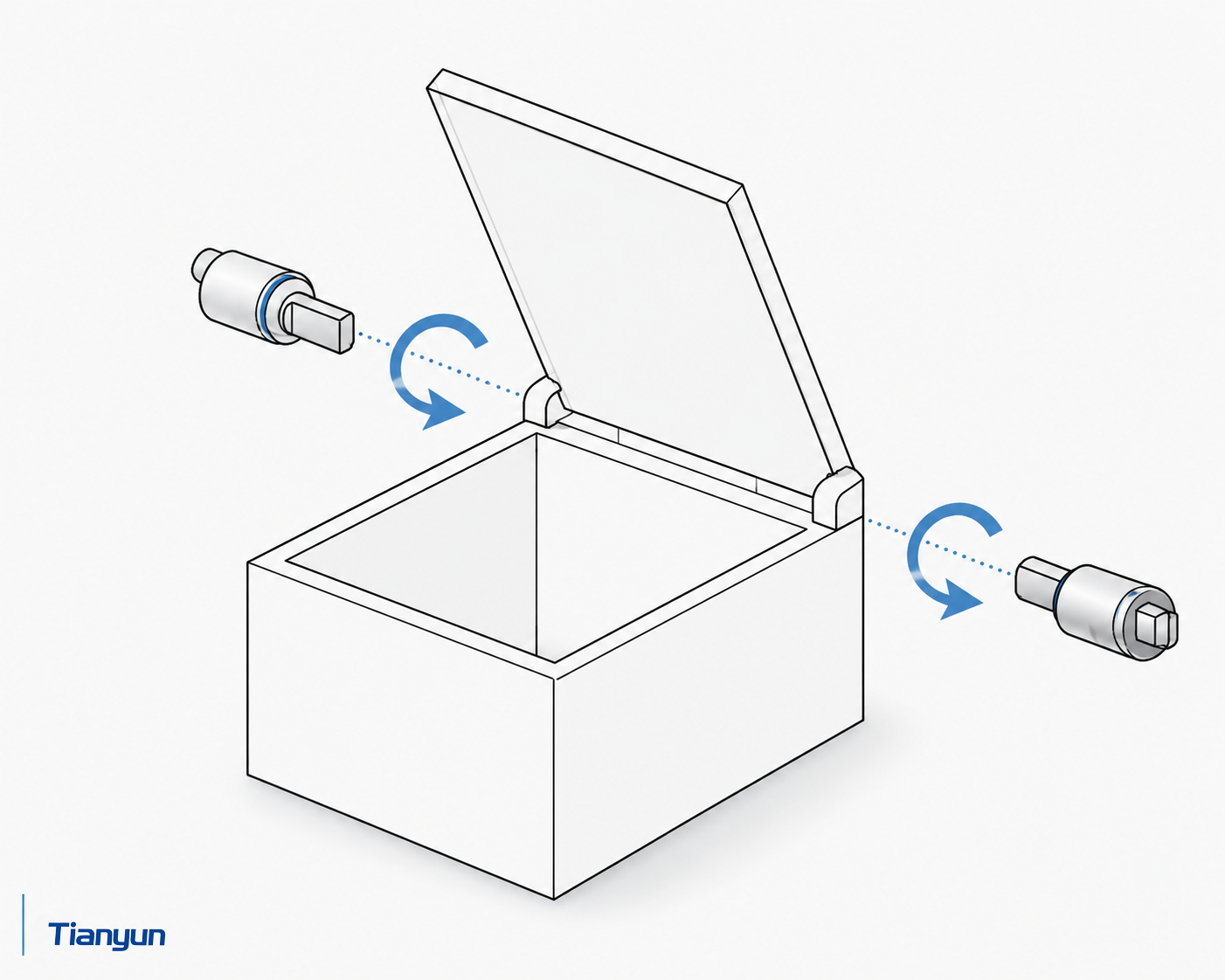
A vane damper is typically installed at the pivot point of a lid or rotating component.
· The housing is mounted on the fixed side.
· The shaft is mounted on the moving side, such as the lid.
With this arrangement, the damper provides resistance when the lid opens or closes.
Unlike other rotary dampers, vane dampers have an internal rotation angle limit due to their structural design.
Vane dampers are commonly used in soft-closing lids and controlled flip-cover products. The angle limitation prevents the lid from being pushed beyond the intended range, protecting the vane and the internal mechanism.
If the lid moves beyond the maximum angle, it may cause:
· Damper damage
· Loss of damping effect, causing fast closing
· Oil leakage
Installation must ensure the lid movement stays within the damper’s designed rotation angle.
Example:
· Damper open angle: 110°
· Clamper open angle: 70° to 110°
The installation angle should be selected according to the real lid structure and required closing movement.
Vane dampers provide one-direction damping only, so the correct direction must be selected before installation.
· CW: Clockwise damping
· CCW: Counterclockwise damping
The damper provides torque only in the specified direction.
Choose the damper that matches the lid’s closing direction.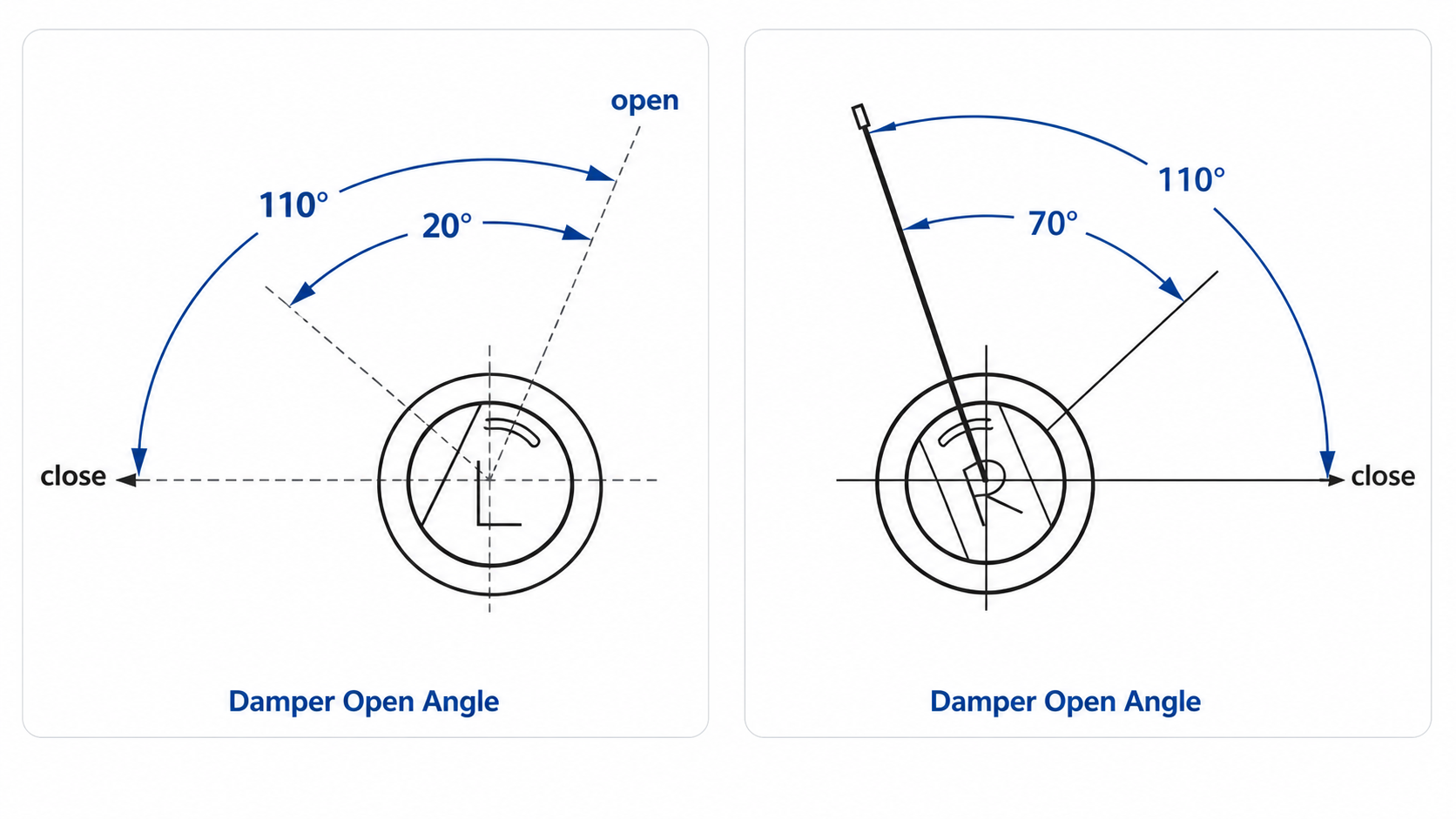
If dampers are installed on both sides of a lid, the torque values must be the same.
Otherwise, the lid will have:
· Uneven force distribution
· Twisting or misalignment
|
Side |
Direction |
Torque N m |
Notes |
|
Left |
CW |
0.2 |
Balanced example |
|
Right |
CCW |
0.2 |
Balanced example |
|
Total |
/ |
0.4 |
Lid is balanced, no twisting |
|
Side |
Direction |
Torque N m |
Notes |
|
Left |
CW |
0.2 |
Unbalanced example |
|
Right |
CCW |
0.1 |
Unbalanced example |
|
Total |
/ |
0.3 |
Lid will twist toward the side with higher torque |
|
Model |
Max Torque |
Reverse Torque |
Direction |
|
TY-D1-R353 |
3.5 N m 35kgf cm |
1.0 N m 10kgf cm |
Clockwise |
|
TY-D1-L353 |
3.5 N m 35kgf cm |
1.0 N m 10kgf cm |
Counter-clockwise |
|
TY-D2-R403 |
4 N m 40kgf cm |
1.0 N m 10kgf cm |
Clockwise |
|
TY-D2-L403 |
4 N m 40kgf cm |
1.0 N m 10kgf cm |
Counter-clockwise |
Tianyun vane dampers are suitable for toilet seats, washing machine lids, rice cooker lids, air fryer lids, appliance covers, furniture lids, storage box covers, and other controlled-motion applications.
In toilet seat applications, the vane damper helps control the closing speed and reduce sudden slamming, improving the soft-close performance of PP and UF toilet seats.
For washing machine lids, rice cooker lids, air fryer lids, water dispenser covers, and other home appliance lids, the damper can provide stable resistance during closing, helping reduce impact, noise, and hinge stress.
In furniture lids and storage box covers, Tianyun vane dampers support controlled movement and help prevent sudden lid dropping during daily use.
For OEM projects, damper direction, torque, structure, working angle, shaft design, and installation matching can be selected according to drawings, samples, lid weight, hinge structure, installation space, and application requirements.
Incorrect installation of a vane damper may result in poor damping performance or even damper damage.
For proper installation, we should:
1. Install the housing on the fixed side and the shaft on the moving side.
2. Ensure lid movement does not exceed the damper’s maximum rotation angle.
3. Choose CW or CCW according to the lid’s closing direction.
4. Use identical torque values when installing two dampers on both sides.
Tianyun vane dampers can be used for toilet seats, washing machine lids, appliance covers, furniture lids, and other controlled-motion applications. For OEM projects, damper direction, torque, structure, and installation matching can be selected according to drawings, samples, lid weight, and application requirements.


Tell us your requirements and our engineers wil recommend the
right damper solution and reply within 24 hours.

Reply Within
24 Hours

100,000 Cycle
Tested

OEM / ODM
Available

Engineer
Support